Tag Archives: HID

Kia Prices 2014 Cadenza; New Near-Luxury Model Starts at $35,900

By Kirk Seaman

Kia has announced pricing for the 2014 Cadenza, its entry into the near-luxury segment. For $35,900, buyers will get a well-equipped sedan featuring a 293-hp V-6 mated to a six-speed automatic. Kia is keeping things simple, offering only one trim level to which buyers can then add their choice of two options packages.

The base Cadenza offers standard features such as keyless entry, navigation with satellite radio and SiriusXM Traffic, Kia’s UVO infotainment, Bluetooth, an eight-inch touch screen, a 550-watt Infinity sound system with 12 speakers, rearview camera, leather seating surfaces, and heated power-adjustable front seats.

For those seeking more features, the two options packages—Luxury and Technology— are available as follows:

Luxury: $38,900; adds a full-length panoramic sunroof with a power-operated sunshade, upscale Nappa leather trim, a 12-way adjustable and ventilated driver’s seat, heated outboard rear seats, a heated steering wheel with power tilt/telescope, a seven-inch LCD instrument panel, and HID headlamps with adaptive front lighting.

Technology: $41,900; the Technology package includes all of the features of the Luxury package and adds 19-inch aluminum wheels, adaptive cruise control, blind-spot detection, and lane-departure warning. In addition, the front side windows feature “hydrophobic technology,” which repels water for increased visibility when driving in rain.


Kia is making a bold move with its pricing, making the base Cadenza a higher-priced alternative to the Toyota Avalon XLE ($31,785), the new Chevrolet Impala LT V-6 ($30,760), the Buick LaCrosse V-6 ($32,555), and the Ford Taurus V-6 ($27,495). Instead, Kia seems to be stealing buyers from the competition one rung higher up the luxury ladder, such as the Lexus ES350 ($37,265) and the Acura TL ($36,800).

Is it crazy to think that Lexus shoppers might look at an Asian manufacturer that’s new to the class? Perhaps, but then that’s what a lot of people thought back when Lexus introduced the LS400 in 1990, and look how that turned out.

From: http://feedproxy.google.com/~r/caranddriver/blog/~3/u801KuZQg1s/

Official: 2014 Kia Cadenza goes on sale this month priced from $35,100*

By Jeffrey N. Ross

Filed under:

Kia’s sedan lineup is about to get much more luxurious with the addition of the new Cadenza and range-topping Quoris models, but the Amanti-replacing 2014 Cadenza will be the first to hit dealers this month with a starting price of $35,100 (*not including $800 for destination). For those keeping record, that’s more expensive than Hyundai’s version of this car, the Azera, and about $1,000 more than the Genesis, but it sounds like the new front-wheel-drive Kia will be getting a few more advanced features than its Hyundai counterpart.

In base form, the Cadenza comes standard with leather seating, navigation and a premium Infinity 12-speaker audio system, and the $3,000 Luxury Package adds nappa leather seats with a ventilated driver’s seat, a seven-inch thin-film transistor (TFT) display, heated rear seats, power tilt and telescoping steering column, adaptive HID headlights and a panoramic sunroof. On models already equipped with the Luxury Package, buyers can also add on the Technology Package, which includes adaptive cruise control, blind spot detection, lane departure warning and hydrophobic glass on the front doors – previously, Kia stated that the Cadenza would be getting this water-repelling technology on the windshield, but this press release specifies that it will be applied to the front side windows. And if these two packages aren’t enough luxury for you, Kia’s cherry on top is a no-cost White Package that adds white nappa leather seats, woodgrain trim and a premium headliner.

All in, the 2014 Cadenza will run $41,100 with every option box checked, so we can only imagine how much the Qurois is going to cost when it makes its debut. Scroll down for the press release detailing the pricing for the new Cadenza.

Continue reading 2014 Kia Cadenza goes on sale this month priced from $35,100*

2014 Kia Cadenza goes on sale this month priced from $35,100* originally appeared on Autoblog on Fri, 19 Apr 2013 13:29:00 EST. Please see our terms for use of feeds.

Permalink | Email this | Comments

From: http://feeds.autoblog.com/~r/weblogsinc/autoblog/~3/zxrSpLNEI1w/

Come and Get It While You Can: 2014 Mitsubishi Outlander Priced

By Alexander Stoklosa

Mitsubishi might be on the fritz here in the U.S., but the company continues to push forward and keep its head just above water. To wit, the new 2014 Outlander crossover made its U.S. debut at last year’s L.A. auto show, following the plug-in hybrid version’s reveal in Paris, and it goes on sale here in June. Nothing can be sold without a price tag, however, so Mitsubishi has released some basic pricing info for the Outlander. Overall, the Outlander’s sticker doesn’t budge much, if at all, compared to the 2013 model it replaces. 


The new Outlander again comes in ES, SE, and GT trim levels; the ES and SE are powered by a 2.4-liter four-cylinder engine, while the up-level GT gets a 3.0-liter V-6. A base, front-drive 2014 Outlander ES starts at $23,820, only $300 more than last year’s model. The SE commands $24,620—$200 less than the 2013 iteration—and adds 18-inch aluminum wheels, a touch-screen infotainment display, heated front seats, dual-zone automatic climate control, and keyless entry with push-button starting. The GT starts at $28,620, $800 less than the all-wheel-drive 2013 GT, and adds the aforementioned V-6 engine, Mitsubishi’s Super All-Wheel Control all-wheel-drive setup, paddle shifters, HID headlights, and wood grain interior trim.

Mitsubishi’s future still solidly occupies the “questionable” category, but a new crossover like the Outlander perhaps gives the company its best shot yet at motivating a turnaround in this market. It’s priced in the thick of the compact SUV segment—Ford Escape, Honda CR-V, Hyundai Tucson, Jeep Cherokee, Kia Sportage, Mazda CX-5, Toyota RAV4—but is the only rig to offer a third-row seat. What, you think the tiny, three-cylinder Mirage hatchback will be Mitsu’s ark?

…read more
Source: FULL ARTICLE at Car & Driver

Official: Mitsubishi prices 2014 Outlander from $22,995*

By Zach Bowman

2014 Mitsubishi Outlander

Filed under:

Mitsubishi will gladly sell you a 2014 Outlander ES for $22,995, excluding an $835 destination fee. Buyers can step up to the middle-tier Outlander SE for $23,795, or around $200 less than last year. That stack of cash will net you 18-inch aluminum wheels, a 6.1-inch LCD information display, dual-zone climate control and other goodies. Somewhat more impressively, Mitsubishi has cut the price tag for the Outlander GT by $800. That machine will run you $27,795, and throws in a more potent V6 engine, the company’s Super All-Wheel Control system and HID headlamps.

The 2014 Outlander bows with an all-new exterior design, and base models receive a 166-horsepowr 2.4-liter four-cylinder paired with a continuously variable transmission and an all-wheel-drive system. That driveline is good for 24 miles per gallon city and 29 mpg highway. Check out the full pricing press release below and our own Jonathon Ramsey‘s first drive here.

Continue reading Mitsubishi prices 2014 Outlander from $22,995*

Mitsubishi prices 2014 Outlander from $22,995* originally appeared on Autoblog on Sat, 30 Mar 2013 15:01:00 EST. Please see our terms for use of feeds.

Permalink | Email this | Comments

…read more
Source: FULL ARTICLE at Autoblog

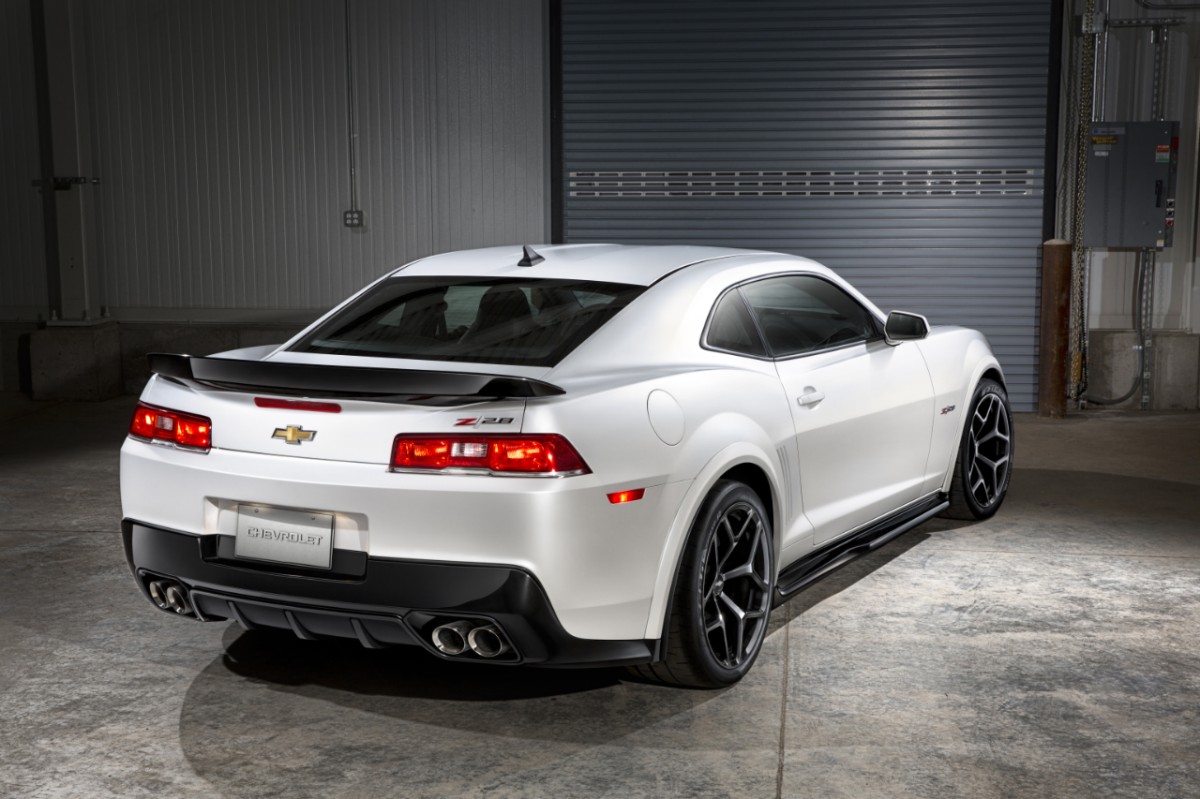
2014 Chevy Camaro Z/28 Reveal Stuns New York Auto Show

By Kurt Ernst

2014 Chevrolet Camaro Z/28 - image: GM Corp

2014 Chevrolet Camaro Z/28 – image: GM Corp

Thanks to spy photographers, loose-lipped employees and the speed of information on the internet, it’s virtually impossible for an automaker to tee up a surprise new product. Generally speaking, by the time something new does hit the auto show floor, it’s been dissected to a molecular level by journalists the world over, who will typically complain that it’s underpowered, devoid of interior style and utterly worthless since it won’t be sold in a station wagon variant.

When Chevy pulled the wraps off the 2014 Camaro Z/28 yesterday, few people saw it coming. Call it sleight of hand; after all, Chevy had recently dropped the all-new Corvette and Corvette convertible, along with its SS muscle sedan. We were expecting a moderate refresh for the 2014, not a dedicated track animal that’s capable of showing taillights to the almighty Camaro ZL1.

2014 Chevrolet Camaro Z/28 - image: GM Corp

2014 Chevrolet Camaro Z/28 – image: GM Corp

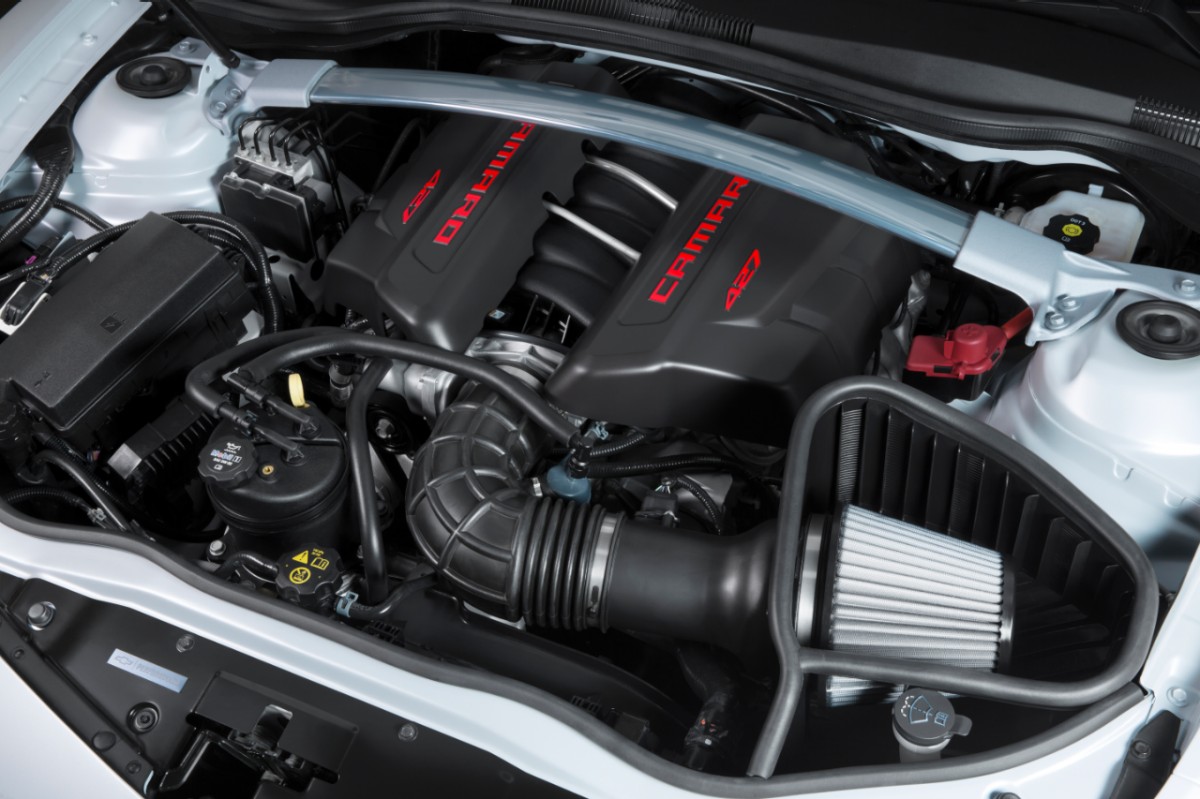
The 2014 Camaro Z/28 comes packing a tuned 7.0-liter LS7 V-8, liberated from the Corvette Z06 and rated at “at least” 500 horsepower and 470 pound-feet of torque. If you’re looking for floppy-paddle shifting, look elsewhere, since the Z/28 comes only with a six-speed manual transmission. Final gearing is 3.91:1, which Chevy calls ideally matched to the LS7’s power output.

2014 Chevrolet Camaro Z/28 - image: GM Corp

2014 Chevrolet Camaro Z/28 – image: GM Corp

The Z/28’s suspension has been tuned to deliver 1.05 g worth of cornering capability, thanks to adjustable spool-valve dampers, stiffer spring rates and suspension bushings and 19-inch wheels with 305/30ZR19 tires that shave 42-pounds of the weight of the 20-inch units used on the ZL1. If that’s not enough to blow your mind, consider this: the Z/28 also gets carbon ceramic brakes (which sounds like a great idea until you price replacement rotors).

2014 Chevrolet Camaro Z/28 - image: GM Corp

2014 Chevrolet Camaro Z/28 – image: GM Corp

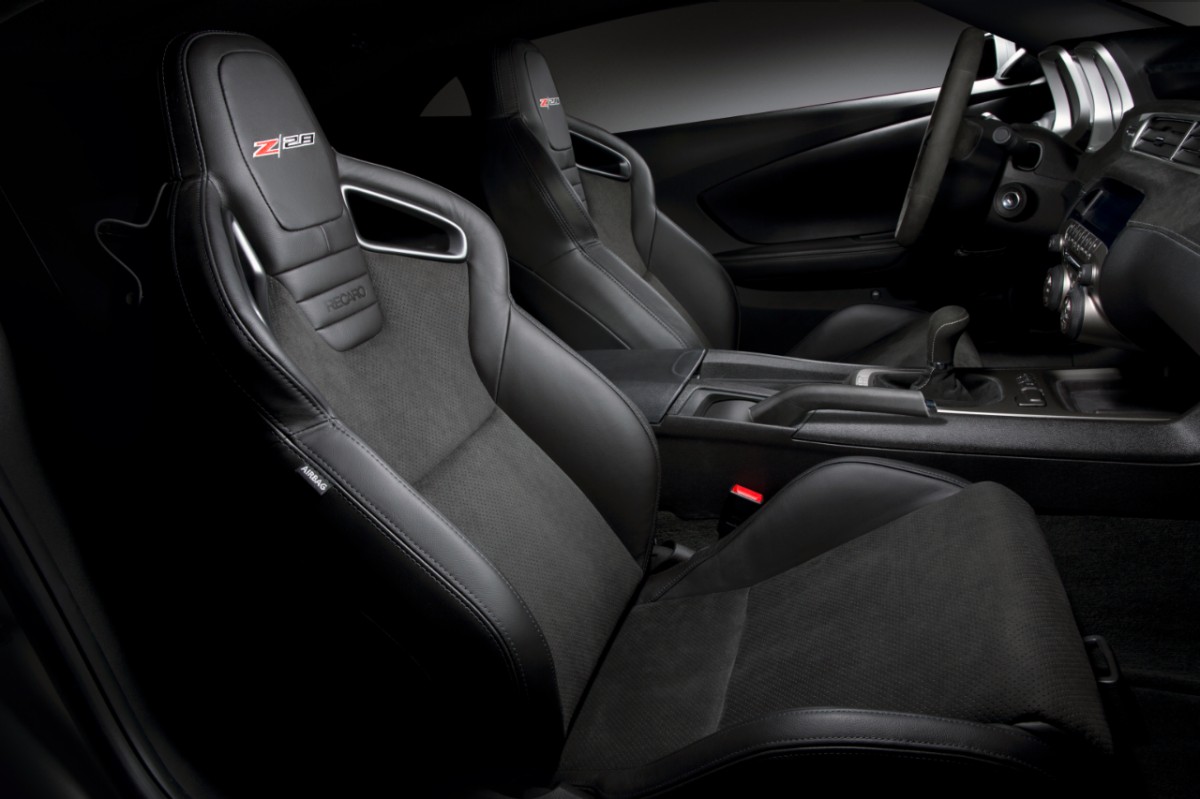
Weight savings is the key to the Z/28s performance, so the car deletes the audio system, sound deadening, tire inflator kit and air conditioning (which can be added back in as a stand-alone option). Window glass is reduced thickness, and neither HID headlights nor foglamps are available. The Z/28 retains its back seat, but eliminates the trunk pass-through and uses lightweight high-density foam. The net result is that the Z/28 weighs some 300 pounds less than the ZL1.

2014 Chevrolet Camaro Z/28 - image: GM Corp

2014 Chevrolet Camaro Z/28 – image: GM Corp

Unlike Z/28s of the past, this version is more about going fast than looking cool. We suspect that many buyers will learn the hard …read more
Source: FULL ARTICLE at Automotive Addicts

2013 Land Rover Range Rover Evoque AWD Prestige Review & Test Drive

By Harvey Schwartz

2013 Range Rover Evoque Beauty Right LA Done Small

First launched in 2012 as a two door coupe and winner of numerous awards including Motor Trend magazine’s ‘2012 SUV of the Year’.   New for the 2013 model year, amongst new technological innovations, is a five door, entry-level ‘Pure Premium’ five-door Evoque with an aluminum alloy roof and an interior trimmed in leather and Dinamica, in place of the standard panoramic laminated glass roof  inside other Evoque models, joining the lineup.

Once I turned over the engine and  took off on my way I’ve gotten positive remarks from other vehicle drivers and people in parking lots asking me “What is it?”, “Who makes it?”, and “It is incredible looking!”.  I agree as this new Land Rover Range Rover Evoque is one-of-a-kind.  It certainly doesn’t look anything like the other boxy Range Rovers.  No, the Evoque went from concept directly to the showroom and streets turning heads wherever it goes.  When approaching the trunk with the key fob the puddle lamps light up under the sideview mirrors and you’ll see the original sketch of the truck on the pavement.  I tested the new five-door Prestige model and enjoyed every minute behind the wheel driving this uniquely styled, high-performing, comfortable, luxurious and safe all-terrain sport utility vehicle.

2013 Range Rover Evoque Beauty Side LA Done Small

The uniquely styled Evoque features a dynamic profile with its rising beltline, a muscular shoulder running the length of the trunk and a distinctive taper to the roofline.  This pinches the narrow windows with an upturned line.  The sculpted corners reduce the truck’s visual front and rear overhangs.  The front fascia features a unique aluminum grille and two lower air intakes for the engine and intercooler cooling.  Just below is an aluminum chin slid plate that protrudes out helping manage air flowing under the truck and protection the engine from outside extrusion when off-road.  Powerful adaptive HID headlights and LED foglamps light up the night for enhanced safety.  From the side is a profile like no other sport utility vehicle.  The stance is low, the A-pillars are steeply raked, and a full-perimeter brushed aluminum strip rises under the windows.  The chrome strip under the doors gives it a luxurious look while the lower side extensions contribute to a lower center of gravity.  The sculpted aluminum side vents also adds to the look of motion even when parked.  The flared fenders of my Evoque Prestige model came stuffed with large 245/45R20 inch Continental Cross-Contact tires wrapped with unique five-prong spoke 20X8 inch aluminum alloy wheels.  Out back the rear window gets pinched but rearward visibility remains excellent.  On top of the window is a spoiler to enhance downforce, unique wraparound LED lamp clusters with a brushed aluminum strip tying each side together and a convenient standard power liftgate.  Down below is a black contrasted bumper with reflectors, a wide aluminum diffuser and three inch round polished stainless steel exhaust tips at the sides. The looks from the front, side and …read more
Source: FULL ARTICLE at Automotive Addicts

2013 Kia Optima Hybrid Gets More Torque, Better Mileage, Another Trim Level, and a Slightly Higher Price

By Alexander Stoklosa

2013 Kia Optima hybrid

Kia has whipped up a small batch of changes for its mid-size Optima hybrid for 2013, which improve the car’s fuel efficiency and broaden its price appeal. First introduced for 2011, the Optima hybrid was offered in just a single trim level, and we found it to be handsome, if a bit rough around the edges. Now, Kia is offering buyers two trim levels—LX and EX—both of which see a host of underhood upgrades intended to improve fuel economy and drivability.

The 2013 Optima hybrid’s engine compartment plays host to a new electric motor that packs seven more horsepower than last year’s unit; the four-cylinder engine actually loses some output, dropping from 166 horsepower to 159. The gas engine’s peak torque is unchanged at 154 lb-ft, and the new electric motor makes the same 151 lb-ft of twist as last year’s. The lithium-polymer battery pack has more capacity than before while taking up less trunk space, and contributes to a boost in overall torque—235 lb-ft from 195; combined horsepower drops by 7 to 199. The net result is an improvement from 34 mpg in the city and 39 mpg on the highway to 36/40 for the Optima hybrid LX, a 1-mpg increase in city mileage for the Optima hybrid EX model, and a claimed increase in responsiveness and performance. Regardless, the Optima’s efficiency, at least as rated by the EPA, is significantly off of the segment-leading Ford Fusion hybrid, although the LX beats the Toyota Camry hybrid on the highway. Kia says that the increase in mileage and output come via improved battery cooling and an updated software-management system.


As for pricing, the 2013 Optima hybrid LX starts at $26,675, just $125 more than last year’s single EX model, while the up-level 2013 EX starts at $32,725 and basically comes one way: loaded. Standard equipment is essentially unchanged for the base model, and all of the goodies from the 2012 model’s $5350 Premium Tech package—HID headlights, a panoramic sunroof, 17-inch aluminum wheels, an Infinity audio system, navigation, heated front and rear seats, and a cooled driver’s seat—are standard on the reloaded EX model. LX buyers can spec a Convenience package, which adds an eight-way power driver’s seat and Kia’s UVO infotainment system, for an additional $700; both items are standard on the EX, which sees an identical $125 price increase over last year’s model equipped with the Premium Tech and Convenience packages.

It’s hard to argue with more choices, more torque, and better mileage for an almost indiscernible increase in price. We look forward to trying out the updated Optima hybrid and seeing whether it drives better, and it’ll be interesting to find out if the mechanically identical Hyundai Sonata hybrid will receive the Optima’s improvements anytime soon.

…read more
Source: FULL ARTICLE at Car & Driver

How Much, Good Lookin’? 2014 Kia Forte Priced from $16,700

By Alexander Stoklosa

2014 Kia Forte EX GDI sedan

Kia’s redesigned 2014 Forte sedan is a handsome piece, and it’s larger and even better-equipped than the car it replaces. All of that added goodness, however, will only cost buyers an additional $525 relative to the least-expensive 2013 model. Kia has released pricing for the new Forte—which starts at $16,700—and released EPA fuel-economy ratings for one of the Forte’s two available powertrains. Like last year, the 2014 Forte sedan comes in LX and EX flavors, although the previously available SX trim level is absent for now. A new five-door Forte soon will replace the outgoing hatchback, but a successor to the two-door Forte Koup likely is a few years away.

The entry-level LX comes standard with a six-speed manual transmission and a 148-hp, 1.8-liter four-cylinder engine. A six-speed automatic is optional, while the uplevel EX trim level gets a standard automatic and a more powerful 173-hp, 2.0-liter four with direct injection. (Yeah, we’re just as bummed as you are that the zestier engine cannot be paired with a stick.) The 2.0-liter is rated for 24 mpg in the city and 36 on the highway, which is pretty much par for the compact class. Ratings for the 1.8-liter are forthcoming. In terms of features, the LX comes standard with power windows, steering-wheel-mounted audio controls, Bluetooth, and heated power-folding mirrors. Besides adding the burlier engine, stepping up to the EX brings Kia’s second-generation UVO infotainment system, 16-inch aluminum wheels, backup camera, cruise control, Flex Steering with three driver-selectable steering modes, leather-wrapped steering wheel and shift knob, and keyless entry. Full pricing and option breakdown below:

Forte LX: $16,700 + $1500 for six-speed automatic transmission; available Popular package ($900) adds 16-inch aluminum wheels, keyless entry, cruise control, two additional audio system speakers, sliding center armrest, rear center armrest, soft-touch front door panels, and mirrors with integrated turn indicators.

Forte EX: $20,200; available Premium package ($2600) adds sunroof, leather seats, 10-way power driver’s seat with memory, heated front and rear seats with driver’s seat ventilation, heated steering wheel, push-button start, illuminated exterior door handles, and puddle lamps; requires $300 17-inch aluminum wheels. The Technology package ($2300) brings navigation, a 4.2-inch color gauge-cluster display, HID headlights, LED taillights, and dual-zone automatic climate control; buyers must spec the Premium package to get the Tech bundle.


Compared to compact-segment stalwarts like the Ford Focus, Chevrolet Cruze, Honda Civic, Volkswagen Jetta, and the newcomer Dodge Dart, the Forte’s pricing is fairly competitive, with a base price that matches up or undercuts some of those cars’ mid-level trims. While that may not seem terribly flattering for the Kia, its bevy of standard features puts it, in base trim, closer to the other offerings’ mid-level trims. At the top end, a loaded Forte EX rings in at $25,400. A similarly spec’d Dart Limited (with the base, 2.0-liter four, not the optional 1.4-liter turbo four and dual-clutch automatic) or …read more
Source: FULL ARTICLE at Car & Driver

GE's Albeo™ LED High Bay Lighting Fixture Wins 2013 Product Innovation Award

By Business Wirevia The Motley Fool

Filed under:

GE’s Albeo™ LED High Bay Lighting Fixture Wins 2013 Product Innovation Award

EAST CLEVELAND, Ohio–(BUSINESS WIRE)– (NYSE: GE) – GE Lighting’s Albeo™ ABHX-Series LED High Bay Lighting fixture, a product of its recent acquisition of Albeo Technologies, has earned a 2013 Architectural SSL Magazine Product Innovation Award. The award recognizes cutting-edge LED and solid-state luminaires and fixtures.

GE Lighting’s Albeo(TM) ABHX-Series LED High Bay lighting fixture is an ideal solution for business owners looking for quality high bay luminaires that reduce maintenance and energy costs. (Photo: General Electric)

The ABHX-Series LED lighting fixture can replace a range of legacy lighting systems—400-watt to 1500-watt HID and four- to eight-lamp T5/T8 HIF high-bay lighting—in warehouses, storage areas and other commercial spaces with high ceilings. It can be equipped with wireless and motion controls, and it offers more lumens from fewer modules compared to the original award-winning H-Series, which was the first one-for-one LED replacement for up to 1500-watt metal-halide systems.

“Winning the Product Innovation Award from SSL validates our distinct way of approaching the high bay market,” said Jeff Bisberg, CEO of Albeo Technologies, a GE Lighting business. “LED high bay lighting has significant growth potential for industrial buildings and warehouses because of its tremendous light quality and cost savings. We are committed to offering the very best high bay products that will save business owners in maintenance and energy costs while fulfilling their unique lighting needs.”

Two dozen designers and lighting specialists comprised the judges panel, which recognized manufacturers for outstanding products with attributes, qualities, functionality and/or performance beyond industry standards.

For more information about GE‘s high bay fixtures, visit www.gelighting.com. To learn more about GE‘s commitment to innovative solutions to today’s environmental challenges while driving economic growth, visit www.ecomagination.com.

About GE Lighting

GE Lighting invents with the vigor of its founder Thomas Edison to develop energy-efficient solutions that change the way people light their world in commercial, industrial, municipal and residential settings. The business employs about 15,000 people in more than 100 countries, and sells products under the Reveal® and Energy Smart® consumer brands, and Evolve™, GTx™, Immersion™, Infusion™, Lumination™, Albeo™ and Tetra® commercial brands, all trademarks of GE. General Electric (NYS: GE) works on things that matter to build a world that works better. For more information, …read more
Source: FULL ARTICLE at DailyFinance

Quick Spin: 2013 Ford F-150 SVT Raptor Supercrew

By Michael Harley

Filed under:

I’m not normally a pickup kind of guy, but the 2013 Ford F-150 SVT Raptor won me over nearly instantly. The street-legal trophy truck – there is really no other way to accurately describe it – is big, brawny and incredibly capable. Let’s just say it’s every bit the monster it visually portrays. I spent a week pretending I was one of Ford’s Baja 1000 drivers, but lacking desert sand, I headed into the local mountains where a mild winter storm had dropped a couple inches of fresh snow on my favorite off-road park. The Ford was, for the most part, practically unstoppable.

Ford offers its SVT Raptor package on Supercab and Supercrew platforms with the five-foot, five-inch bed. The Supercrew I tested rides on a 144-inch wheelbase (about a foot longer than the Supercab). In addition to its cosmetic differences when compared to the standard F-150 – there isn’t a young boy on the planet who doesn’t think the matte black Ford grille is cool – the Raptor has a 73.6-inch track – nearly seven inches wider than the track on the standard F-150.

After upgrading the F-150 SVT Raptor significantly for the 2012 model year, there are only a few changes for 2013. The list includes standard high-intensity discharge (HID) headlamps, Hill Descent Control, forged beadlock-capable wheels, and the new matte Terrain color (aka “Desert Storm“) option seen on my test model.

Driving Notes

  • The SVT Raptor grabs plenty of attention whether driving through a grocery store parking lot or bounding down the highway. Physically massive, it is amusing to watch other drivers move out of its way – nobody even considered cutting me off. Opinions were split on the new Terrain color. People either liked it or hated it. I liked it, as it hid dirt impressively well and it was a nice contrast to the trim and optional graphics without being overly loud like the Race Red or Blue Flame.
  • Nobody will question the power coming from the big-bore 6.2-liter V8. Its exhaust note is frightening, but so is its fuel consumption. I missed the EPA‘s ratings by a long shot, never seeing double digits around town. In fact, I found it challenging to hit 13 miles per gallon on the open highway. The six-speed transmission is sturdy and only about average when it comes to smoothness, though it never skipped a beat.
  • The commanding view, comfortable seats, spacious cab and kitchen-like storage space made the Supercrew very popular with passengers. The additional row of three-passenger seating, easily accessible through the second set of full-size doors, seemed to provide more legroom than an airport shuttle Lincoln Town Car. I found the backup camera a lifesaver, as I often had no idea what those LT315/70R17 All-Terrain tires were rolling over. The Raptor needs an all-around camera system (and, why can’t the excellent front-facing camera work during parking maneuvers?)
  • Off-road, the Raptor was …read more
    Source: FULL ARTICLE at Autoblog

2013 Kia Sorento SX FWD Review & Test Drive

By Harvey Schwartz

2013 Kia Sorento SX Beauty Right Done Small

‘MORE UPGRADES AND NEW STANDARD AMENITIES’

The new 2013 Kia Sorento, Kia’s first vehicle to sell more than 100,000 units in a single year, brings to CUV customers several upgrades and new standard amenities.  Since its launch, Sorento has offered discerning consumers a refined and value-minded CUV with class-leading power while delivering outstanding fuel economy, a full roster of standard comfort and convenient features and an impressive array of safety equipment.

I tested the new SX model that was loaded with luxury, comfort, convenience and infotainment features that made the ride even more functional and enjoyable-on short or long drives.

Sorento employs a unibody design with the ability to comfortably seat up to seven passengers, and represents a modern CUV that is just the right size for today’s active lifestyle singles, couples and families the room to move passengers, cargo and trailers.  With an overall length of 183.9 in. and overall width of 74.2 in., Sorento offers a relatively compact exterior size.  The new Sorento also provides a feeling of spaciousness inside with both five-and-seven passengers configurations, making the Sorento more versatile than most of its CUV competition.  With 142.5 cu.ft. of interior volume when equipped with five seats or 149.4 cu.ft. with seven, Sorento is spacious with generous head and legroom for optimal occupant comfort.  In the five-passenger configuration, the CUV offers 37 cu.ft. of cargo space to accommodate both passenger and cargo needs for cruising around town as easily as weekends camping in the mountains.

Prominently displaying the signature grille and wraparound headlamps exhibited on all new Kia models, Sorento SX offers an aggressive stance and sleek profile.  Sorento SX features swept-back lines and dynamic presence with an angled window line, large flared-back HID headlamps, foglamps, rounded nose, stainless steel front skid plate, flared fenders with body-color wheel moldings, lower side extensions, and chrome pull-out door handles.  The view from the rear offers the same forceful attitude with a spoiler mounted on top, rounded back and LED taillights set powerfully within the rear liftgate, chrome step-up bumper and dual chrome-tip exhaust tips gathered together on the right side under the bumper.  The flared fenders are filled with 7.5X18 in. 10-spoke alloy wheels wrapped with 235/60R18 in. all-season radial tires for excellent grip and smooth and quiet ride.  The chrome roof rack is set outside the dual panoramic sunroof.

2013 Kia Sorento SX Engine Done Small

Putting power into the Kia Sorento SX is the standard 3.5 liter, all-aluminum DOHC, CVVT V6 engine that generates a class-leading 276 hp at 6,300 rpm and 248 lb.ft. of torque at 5,000 rpm.  This powerful engine is coupled to a smooth-shifting, six-speed automatic transmission with Sportmatic shifting control where you can hold each gear to optimum power.  This advanced six-speed automatic is a proprietary design that was developed, engineered and built specifically for Kia vehicles.  To further meet consumer needs, there is a choice of either front-or-all-wheel-drive configurations, the …read more
Source: FULL ARTICLE at Automotive Addicts

Marc Deslauriers: My Mythbuntu setup

I watch a lot of TV. Although I would really like to get rid of my satellite provider and switch to streaming the shows I like off of the Internet, living in Canada means a lot of the streaming video services aren’t available, and even if they were, the bandwidth required to watch them would bust my download quota.

I’m also really picky about video compression, and some of the streaming services compress so much that watching their shows on the 55” TV I have in my living room is painful. Also, for some reason, half the shows and movies on Netflix have audio sync issues on my setup.

MythTV plays a large part in my household. All shows I watch are scheduled and recorded in HD off my satellite provider. While I wait for Ubuntu TV to take shape, I’ve recently upgraded my MythTV setup to Mythbuntu 12.04.

Backend

My MythTV backend is running on an HP Pavilion a4310f, with 4GB or ram, and a 1TB HDD. It’s hooked up to a Hauppauge HD-PVR which records the video stream coming from my satellite provider’s box. I have set the satellite provider’s box to output 720p, as that gives me reasonable file sizes with an acceptable picture quality. Video is recorded over component cables, and sound is recorded in 5.1 over a TOSLINK cable. I use the IR blaster included with the HD-PVR to switch stations on the satellite box.

Instructions for setting up the HD-PVR in MythTV can be found in the wiki. This pretty much works out of the box with Mythbuntu. Although I originally had stability problems with the HD-PVR where every couple of months it would switch to recording audio at 25fps resulting in audio drift, a firmware upgrade to version 1.6.29353 has made it rock solid. I haven’t risked upgrading to the most recent 1.7.x firmware as I don’t currently have any issues.

You can obtain the script I use to change channels, my lircd configuration files, and the rc.local file I use to set the audio input here.

To set the picture control values to reasonable settings, I change the defaults for all channels in the MythTV database by running the following SQL command:

update channel set contrast=16384,brightness=32768,colour=16384,hue=3840;

I schedule programs to record using the MythTV web interface, and recorded shows are streamed in HD over the built-in UPnP server to any one of the three Playstation 3s I have around the house which also serve as Blu-ray players. I also have a dedicated MythTV frontend in the living room, which allows me to view TV shows without commercial interruption, and to delete shows once they’ve been watched. These are all connected using the wired gigabit network I installed during house construction, preventing the problems associated with streaming HD video over a wireless network.

Frontend

In the living room, which is my main TV viewing area, a dedicated MythTV frontend is used. I am using a Jetway HBJC600C99-352W-BW mini computer. I chose that model because it came with a built-in remote control, which allows me to power it on and control it from my Sony RMVL610 universal learning remote. It also features Nvidia Ion2 graphics, which enables me to use VDPAU with MythTV in order get the performance necessary to decode HD video.

I added a 1GB SO-DIMM to it, along with a cheap 32GB KingSpec SSD. It is also running Mythbuntu 12.04, and is hooked up to the gigabit wired network.

Getting the remote to work was a bit of a challenge. The device has a bogus HID report descriptor, resulting in a compatibility issue with the kernel HID drivers. Before a kernel fix was available, I discovered an application called “hid-mapper”, which allows converting any HID event into a keypress event. This is what I use on my frontend. I have packaged hid-mapper, along with some fixes, and all of the configuration scripts necessary to get it working on my frontend in my PPA.

If you do use my configuration files, please be aware that since I use a universal remote, I opted to make use of all buttons on the original remote without any regard to their placement or function. If you intend on using the original remote, you may want to reconfigure the button mappings to your liking.
Source: FULL ARTICLE at Planet Ubuntu

Quick Spin: 2013 Mitsubishi Outlander GT

By Jeffrey N. Ross

Filed under: , ,

I’m not a gambling man, but if there were a pool for an automotive death watch, my money would be on MitsubishiLincoln is a close second. To understand the plight of Mitsubishi, you only have to look at its current lineup; they all just look, feel and drive about 10 years older than they really are. With the departure of the Endeavor and merciful killing of the Eclipse (the Galant lives on, but is on hiatus for the 2013 model year), one of the worst remaining offenders is the Mitsubishi Outlander, which I recently drove in top-level GT trim for this Quick Spin.

If we had a time machine and took the 2013 Outlander GT back to 1998, it would be revolutionary. If we could take it back to 2004, it might be near the top of its class. But in the current highly competitive crossover segment of today, the Outlander just falls short. Yes, the all-new 2014 Outlander is on its way later this year, but from what we’ve seen both inside and out, the new design would look great in 2008. That being said, spending a week with any vehicle can point out surprising highs as well as lows, and there are still plenty of reasons to enjoy Mitsu’s midsize CUV.

Driving Notes

  • Unfortunately, I have to kick off my driving impressions on a negative note. There are few utility vehicles on the market that make the third row an enviable seating position, but the Outlander GT‘s rear-most seat is downright insulting. Not only is this the worst third-row seat currently on the market, it could very well be the worst ever created – that includes the uncomfortable rear-facing third row of a certain 1977 Impala station wagon I was relegated to as a kid during family road trips. The operation is clunky, the padding is lacking and the snap-on headrests are as tall as the seat back itself.
  • On the opposite end of the scale, the best part about the Outlander GT is its drivetrain and platform. Replacing the base four-cylinder engine and continuously variable transmission, the GT trim level brings a well-aged 3.0-liter V6 paired to a six-speed automatic transmission. Since it shares its underpinnings with the Mitsubishi Lancer, the Outlander also has a pretty good ride quality in just about any road condition.
  • My tester was equipped with Mitsubishi’s dynamic Super All-Wheel Control (S-AWC) sending the engine’s 230 horsepower to all four wheels, improving traction or performance depending on which driver-selectable mode has been chosen (Tarmac or Snow), and there is also an active front differential that that splits engine torque across the front axle or fully locks (in Lock setting) for better off-road performance. I didn’t have the chance to do any serious off roading in Outlander, but I was able to test out the S-AWC along sandy, gravelly roads, which the Outlander handled like a champ.
  • Thanks to a 2010 styling refresh, the Outlander is one of the better-looking budget crossovers on the market. With its gaping grille and angular HID headlights, the Outlander GT has a pretty imposing face, and the clear-lensed LED taillights are also a stylish touch to the overall look of the Outlander. While this tester’s dark blue color didn’t do its lines any favors, it’s is still a reasonably handsome midsize CUV.
  • Try as it may to look like the Lancer Evolution, the Outlander does not live up to its “GT” trim. Its car-based platform and raised stance just make it feel like a tall car rather than a sporty crossover. I didn’t have the time to put the performance aspect of S-AWC to the test, but you can tell that the Outlander is designed to be the budget-minded crossover in its segment rather than performance-minded. Speaking of budgets, the Outlander GT‘s fuel economy rating of 19 miles per gallon city and 25 mpg highway is about par for V6-powered vehicles in this segment, but it also requires premium gasoline.
  • Aside from the after-thought of a third-row seat, the rest of the Outlander’s interior isn’t all that bad. Front occupants can enjoy heated seats (with the button buried between the seat and the center console) and Mitsubishi’s easy-to-use Fuse hands-free system as standard equipment. Even the middle row provides a surprising level of comfort with a 60/40 split seat that can slide and recline allowing ample legroom and space for the unfortunate passengers in the way back. Another quirky benefit of the Outlander is the fold down tailgate that sits flat with the cargo floor making it easier to load and unload bulky items.
  • Then there’s the matter of price. Even though the Outlander starts at a reasonable $22,695, this GT tester came practically fully loaded with a $2,500 Touring Package and a $2,000 Navigation Package, which boosted the as-tested price to $33,920. You can get a lot more utility from a more stable brand for that much or lower.

2013 Mitsubishi Outlander GT originally appeared on Autoblog on Wed, 30 Jan 2013 14:58:00 EST. Please see our terms for use of feeds.

Permalink | Email this | Comments

Source: FULL ARTICLE at Autoblog

Quick Spin: 2013 Ford F-150 Limited

By John Neff

Filed under: , , ,

The Ford F-150 received yet another new model for the 2013 model year, the Limited trim, bringing the ways you can order this country’s most popular vehicle to a grand total of 10. There really is an F-150 to suit any need now, and the Limited variant slots in at the very top of the range, above the already pampering Platinum model.

While normally I would admit that I’m the least-appropriate person to test a pickup, the fact that this particular trim places a much higher premium on luxury than anything with a bed and Blue Oval badge before it means that I don’t need the workman chops of a skilled tradesman to judge how well this truck meets its true aim.

Driving Notes

  • With a base price of $52,895, the F-150 Limited is the most expensive half-ton Ford truck you can buy. Our tester came with the few options that don’t come standard, including White Platinum Metallic Tri-Coat paint ($495), a pickup bed extender ($250), tailgate step ($375) and spray-in bed liner ($475), bringing the final tally with a $995 delivery charge to $55,045.
  • The polished aluminum wheels on the Limited model are 22 inches in diameter, a full two inches larger than what’s fitted to the Platinum model. They sure are pretty, though appear appropriate for on-road use only, lest you want to scratch and nick their polished finish. Other filigree on the truck includes the single-tip chrome exhaust, ‘LIMITED‘ lettering along the box sides, the bold three-bar grille and body-colored everything.
  • Curiously, while you can have the less expensive Platinum model with your choice of three engines and two bed lengths, the Limited is only available with the twin-turbocharged EcoBoost 3.5-liter V6 engine and 5.5-foot box. Both trims, however, are limited to the four-door SuperCrew cab style only. It’s not clear why Ford went with the EcoBoost engine only in the Limited, but with 365 horsepower and 420 pound-feet of torque, the engine is up to the task and relatively efficient.
  • Speaking of which, remember a few years ago when the F-150 required a special SFE model to reach 21 miles per gallon on the highway? The F-150 Limited can technically achieve the same feat, despite all of its luxury trappings and lack of aero aids. The EPA estimates 17 mpg city and 21 mpg highway, and I managed to reach and sustain that number, though not on the highway. It was on a long stretch of 35-mph road with few lights and stop signs. On the highway traveling between 60-70 mph, the F-150 and its EcoBoost V6 still returned a respectable 16-17 mpg.
  • The headlights on the Limited model are segment-first HID lamps. They are incredibly powerful and cut a very wide swatch with sharply delineated edges. From the driver’s seat, it’s as if the truck has two poles sticking out either side of the front end with a bunch of lights hanging from them pointing forward. That said, the F-150 Limited rides high and I know those powerful low beams were at times bouncing off the rear and sideview mirrors of the cars I was following.
  • This truck is surprisingly easy to drive. Even though I feel it would be silly for someone like me, who only has the occasional need for a truck, to buy and use an F-150 Limited as a daily driver, I easily could. It’s like a truck, a minivan and a luxury sedan rolled into one – eminently capable, comfortable and cool.
  • Its ride is composed and relatively smooth, though can be skittish over rough pavement. That said, this truck emits nary a squeak, noise or rattle no matter how hard the suspension and frame are being hit.
  • The level of luxury here is very high, with running boards that automatically deploy when the doors open, a red and black leather interior that both looks and feels rich, aluminum trim, ambient lighting and the very full suite of Ford infotainment electronics that includes Sync, MyFord Touch, an eight-inch main screen and 4.2-inch info screen between the gauges.
  • At the end of my week with the pickup, I came around to the conclusion that buying an F-150 Limited makes as much sense as luxury car or sports car. All three appeal to what one wants more than what one needs. Do I need a $55k luxury pickup? No. But now I want one.

2013 Ford F-150 Limited originally appeared on Autoblog on Mon, 28 Jan 2013 14:58:00 EST. Please see our terms for use of feeds.

Permalink | Email this | Comments

Source: FULL ARTICLE at Autoblog

Detroit: 2014 Cadenza is Kia's take on the Hyundai Azera

By Steven J. Ewing

Filed under: , , ,

2014 Kia Cadenza

No, this is not the oh-so pleasantly named Quoris rear-wheel-drive flagship sedan – this is Kia’s new front-drive entry into the North American market, the Cadenza. (If that sounds familiar, it’s because Kia has long used the Cadenza name in other markets.) And while it’s a sharp-looking thing, it’s not exactly an original masterpiece. Peel away that slick exterior and you’ll find a trusty Hyundai Azera doing the grunt work.

That’s no bad thing, though; the Azera’s a smooth-sailing sedan. Under the hood is a 3.3-liter direct-injection V6 putting out 293 horsepower and 255 pound-feet of torque, mated to a six-speed automatic transmission with, oh yes, Sportmatic manual mode. That power hits the ground via a sport-tuned suspension with MacPherson struts up front and a multi-link rear configuration, matched with either 18- or 19-inch alloy wheels.

Inside, there’s a whole host of nice leather surrounded by wood and chrome accents, with a driver-focused cockpit (sort of like the Optima) with a seven-inch TFT color touchscreen display. Premium options include things like Nappa leather seats, a panoramic sunroof, Kia’s UVO infotainment system, HID headlamps with active lighting, heated seats and a heated steering wheel. Sounds comfy.

Kia will officially launch the Cadenza in the second quarter of 2013, with pricing to be announced closer to the on-sale date. Scroll down for the official press blast.

Continue reading 2014 Cadenza is Kia’s take on the Hyundai Azera

2014 Cadenza is Kia’s take on the Hyundai Azera originally appeared on Autoblog on Tue, 15 Jan 2013 11:15:00 EST. Please see our terms for use of feeds.

Permalink | Email this | Comments

Source: FULL ARTICLE at Autoblog

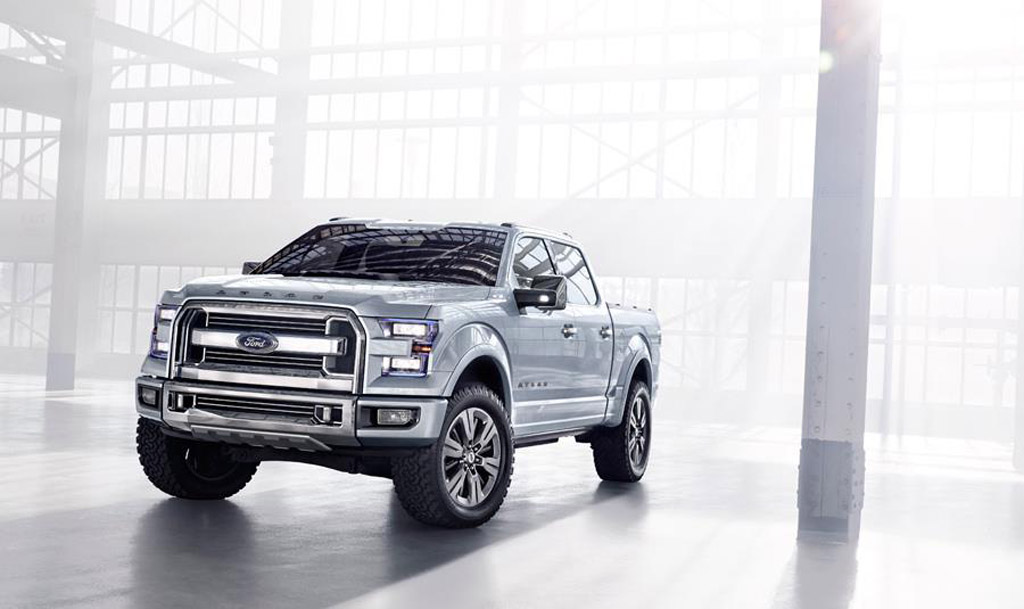
Ford Atlas Concept Bows in Detroit: The F-150 Pick-Up Truck With More Brute

By Darryl

If you are thinking Ford is contemplating a new rocket ship called the Atlas, then you would be just slightly mistaken. The new Atlas Concept, making its debut at the North American International Auto Show in Detroit this week, is a glimpse into the future of pick-up trucks from Ford. You can say the Atlas will be a virtual rocket ship in the sense of propelling the company into overdrive for the commercial pick-up truck market merging with normal consumers making an even bolder statement with more brute.

The Ford Atlas Concept will push the limits for combining fuel efficiency from Ford’s next generation EcoBoost turbocharged engines and all the capabilities you would want out of a full-sized pick-up truck, including competitive towing, rugged construction, versatile utility and a technologically functional yet comfortable cabin.

Some of the design of the Ford Atlas Concept has many traits of commercial vehicles, which is a useful aspect wanted in many new pick-up truck consumers. Turning to intensive aluminum construction to reduce weight and increase fuel economy, the Atlas will probably be offered alongside of a forthcoming F-150 having a more upscale vibe to it.

ford-atlas-concept-1
ford-atlas-concept-2
ford-atlas-concept-3
ford-atlas-concept-4
ford-atlas-concept-5
fordatlasconcept07hr
ford-atlas-concept-6
ford-atlas-concept-7
ford-atlas-concept-9
ford-atlas-concept-10
ford-atlas-concept-11
ford-atlas-concept-12
ford-atlas-concept-13

Ford Atlas Concept: The Future of Pickups

Ford Atlas Concept is the future vision for pickup trucks

• Innovative design integrates capability and smart technologies to transform customer
expectations of what Built Ford Tough® will look like in the future

• Next-generation EcoBoost® – coupled with advanced engineering and design
innovations – creates leading fuel efficiency and increased capability

• Trailer towing and cargo hauling are made easier with innovative features designed
specifically for truck owners to improve utility and confidence

DETROIT, Jan. 15, 2013 – Ford today unveiled the Ford Atlas Concept to showcase the design,
capability, fuel efficiency and smart technologies that will define future pickup trucks.
“The Ford Atlas Concept previews the innovations that will transform what people expect from
their pickup,” said Raj Nair, Ford group vice president, Global Product Development. “With 36
years as America’s best-selling pickup, we are absolutely committed to setting the agenda in the truck market.”

Design with purpose

The Ford Atlas Concept is inspired by decades of listening to customers at the places they work
and play. The result is a purpose-driven design with prominent wheel arches, a wide stance and
chiseled grille – all to reinforce its functional Built Ford Tough® image.
“We wanted the concept to reflect how Ford trucks help customers in both their worlds –
professionally and personally,” said J Mays, Ford group vice president and chief creative officer.

“Every surface and feature in the vehicle has been crafted for purpose and capability while
retaining an unmistakable Built Ford Tough look.”

Designers enhanced truck functionality, while creating new advanced features (see infographic
here). For example, multiple tie-down points are integrated within the cargo box walls and load
floor, along with 110-volt electrical outlets in the cargo box to charge power tools. An integrated roof carrying system and hidden extendable ramps give the truck unique functionality for a variety of jobs.

The interior is themed with structural styling cues and features the latest thinking in comfort, utility and refinement. Innovative, thin, lightweight seating in comfortable leather allows for extra legroom for rear passengers – along with integrated storage for smaller items. “Floating” instrument pods and glove-friendly buttons and controls keep the interior functional and ruggedly stylish.

Leading fuel efficiency

The Ford Atlas Concept features a next-generation EcoBoost® powertrain, which introduces
truck-enhanced Auto Start-Stop engine shutoff technology. Auto Start-Stop shuts off the engine
when stopped in traffic to save fuel – and smartly suspends the feature when the truck knows it
is towing.

EcoBoost engines use gasoline direct injection and turbocharging to deliver fuel-economy gains
of up to 20 percent and reduction of CO2 emissions of up to 15 percent, compared with largerdisplacement engines. More than 500,000 EcoBoost engines have been sold globally, including 250,000 in the Ford F-150.

The Ford Atlas Concept goes further to save fuel through a combination of active aerodynamic
elements that reduce wind resistance. They include:

• Active Grille Shutters: Automatic shutters behind the grille stay open when extra engine
cooling is needed, such as during low-speed stop-and-go driving or while working in hot
weather. The shutters automatically close to improve aerodynamics when cruising on
the highway at steady speeds

• Active Wheel Shutters: Automatic shutters in the wheels are hidden to improve style at
rest and low speeds, but automatically close at highway speeds to improve
aerodynamics. Self-charging batteries use energy from the wheels’ motion to power the
shutters

• Drop-Down Front Air Dam: A drop-down front wind spoiler lowers at highway speeds to
improve underbody airflow. The air dam is raised at low speeds to improve ground
clearance – helpful for off-roading

• Power Running Boards: Auto-deploying running boards help passengers enter the truck
at rest and tuck up against the truck when it is moving to improve aerodynamics and
ground clearance The combination of these fuel-saving features saves more than 2 mpg on the highway without diminishing towing or hauling capability.
Work and play smarter, not harder Ford Atlas Concept is a rolling showcase of features that improve capability, durability and productivity to meet the diverse needs of pickup truck owners. Features include:

• Dual-Purpose Tailgate Step and Cargo Cradle: The acclaimed Ford Tailgate Step goes
a step further by adding the ability to also act as a cargo cradle – lifting and holding
extra-long cargo items above the truck and freeing valuable bed space

• Trailer Backup Assist: This segment-first innovation allows drivers to back a trailer with
the twist of a knob. Ford research shows that backing a trailer is often the most
intimidating task a truck customer can face

• Dynamic Hitch Assist: Hitching a trailer can be time consuming and difficult. Dynamic
Hitch Assist helps precisely line up the truck’s hitch with the trailer coupling, eliminating
maneuvering guesswork by showing visual cues in the truck’s center display screen

• 360-Degree Point-of-View Camera: A Ford truck first, the system gives a bird’s-eye view
of the truck to help position the vehicle in tight places or when there are obstacles near
the truck – such as on a busy job site or grocery store parking lot

LED Headlamps and Taillamps: Advanced LED lighting offers better road illumination
than conventional halogen or HID lights and lasts longer. LED lamps also offer nearinstant
response, giving valuable extra warning time for following traffic

LED Cargo Box and Side Mirror Lighting: Advanced, powerful yet efficient LED lighting
brightly lights the cargo box and job site after the sun goes down with minimal battery
drain compared to standard headlights or plug-in lights

• Hidden Cargo Ramps: Lightweight, durable loading ramps stowed below the cargo box
can be quickly removed and set up to assist with loading wheeled items into the bed

Source: FULL ARTICLE at Automotive Addicts

2013 Honda Accord Sport Review & Test Drive

By Harvey Schwartz

‘A SPORTING GOOD IDEA’

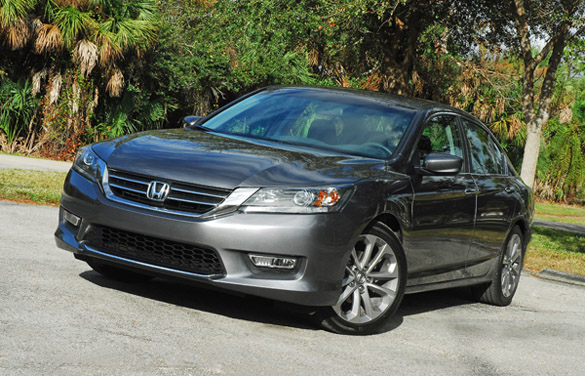
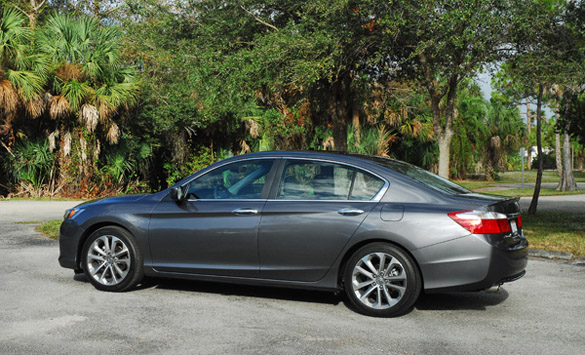
The all-new, ninth-generation, 2013 Honda Accord is a vast improvement over the last generation model.  The new Sport trim package placed just above the price for the base LX trim saves you money but gives you in return a very good performance version of the Accord.  No matter which model you choose, each is more sophisticated, higher-performing, and with a longer list of standard equipment.  The new Sport model comes with a new 189 hp 2.4 liter 4-cylinder engine, a new CVT transmission with seven gear ratios and paddle shifters, a leather-wrapped tilt/telescoping steering wheel with cruise control, audio control and Bluetooth buttons, a body color decklid spoiler, dual exhaust with chrome finishers, foglamps, and a 10-way powered driver’s seat with power lumbar control.  Filling the fenders are custom 18X8 in. machined aluminum alloy wheels wrapped with 235/45R18 in. performance tires for excellent grip and a smooth, quiet ride.

The new Accord is shorter, lower and wider than before which gives it a lower co-efficient of drag while improving its handling capabilities.  Even though it is slightly small in length, 189.2 in. versus last year’s 191 in., rear legroom and trunk room has improved.

The newly styled Sport model that I tested features more chrome and cut angles beginning with the front end showing a more angular grille with chrome around its side, bottom and inside horizontal slats.  Just below is another air-intake with a chrome strip at the bottom, and at each side are new foglamps.  The ‘cat’s-eye’ headlamps are slimmer but put out more light with standard projector beam lights or optional HID lights.  The silhouette shows the steeply raked windshield A-pillars, aero-dynamic designed side mirrors, flared fenders, a full-perimeter chrome strip around the greenhouse, deep side extensions, and pull out chrome door handles.  A nicely scallop at each door rises slightly giving it a look of motion when parked.  The tapered roof ends with a spoiler mounted onto the back of the trunk lid to enhance rear downforce.  Moving over to the rear are big, wraparound taillight/brake/backup lamp clusters tied together with a wide chrome strip.  A bold bumper with a chrome bar just above an air-diffuser underneath better manage airflow.  Under the bumper at each side are large, chrome exhaust finishers.  The new look is sleek, lower and aggressive, yet more luxurious than before.

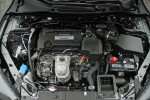
Under the hood of the Accord Sport is a new 2.4 liter 4-cylinder aluminum alloy DOHC, i-VTEC engine with direct injection.  Because of the high-flow dual exhaust system this engine pumps out 189 hp at 6,400 rpm and 182 lb.ft. of torque at 3,900 rpm compared to the standard 2.4 liter’s 185 hp and 181 lb.ft. of torque with the single exhaust.  An ECO Assist button on the left side of the dashboard decreases rpm when lightly pushing on the throttle to increase mpg.

The Accord Sport’s new engine can be mated to either a smooth shifting six-speed manual or a new Continuously Variable Transmission (CVT).  With a wider ratio range than the 5-speed automatic that it replaces and combined with greater efficiency and less weight, the new CVT is a major contributor to the Accord’s improved fuel efficiency of 21 mpg/city and 34 mpg/highway.  I tested the new CVT with steering wheel mounted paddle shifters and it was great fun changing gears when I wanted to hold to redline or downshift going into corners.  I saw 1-7 gears on the center readout plus the system wouldn’t let me advance the gears until I reached a certain speed, just like a real sequential shifting automatic.  Upshifting and downshifting was instant, great fun and sporty driving.
Most of the fun when behind the wheel is telegraphed through the new, more rigid fully independent suspension and the many electronic advancements that make the all-new Accord the most fun-to-drive and capable than ever.   The all-new chassis features a MacPherson strut setup that replaces the older, heavier double-wishbone setup.  The front includes a new steel and aluminum subframe that reduces noise, vibration and harshness, gas-charged shocks and a 17mm stabilizer bar.  The rear multi-link setup features new compliance bushings, coil springs, gas-charged shocks and a 14mm stabilizer bar.  Giving the front end more rigidity for enhanced response to your inputs is a strut tower brace.  The new electric power steering system uses an electric motor to assist to the rack & pinion steering thus reducing steering effort at slow speeds, improving precision, feel for the road and less power consumption.

When you put the gear selector in S (Sport) the engine mapping is quickened, the suspension tightens and the power steering is even more responsive giving a feeling and precision of driving a higher-priced, high-performance sport sedan.  When entering a highway on a cloverleaf I had the speedometer at 60 mph with no understeer or oversteer, partly thanks to the electronic vehicle assist and traction control that kept the wheels firmly planted as I sped around the circle.  Giving the new Accord a quieter ride than ever are standard Active Noise Control and Active Sound Control that counteract engine noise helping to create a more linear and sophisticated high-rpm engine note.

Slowing the new Accord Sport down from speed are larger, power-assisted, four-wheel steel disc brakes.  Up front are 11.4 in. vented discs clamped with dual-piston calipers and 11.1 in. solid discs clamped with single-piston calipers in the rear.  Braking control is enhanced with standard ABS, EBD and BA.

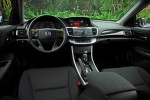
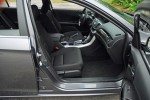
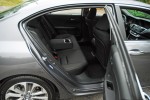
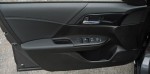
The interior of the Accord Sport is all new with more comfortable front bucket seats, new more simple instrumentation, brushed aluminum trimmed, dual tiered center stack with separate audio and climate controls sections, a center console with dual cupholders, storage bin up front and a deep and wide storage box under the padded armrest.  The leather-wrapped stick shifter is found on-line with P through S surrounded by a  chrome bezel.  All of the controls are within easy rear to use.  Although the car’s length as decreased over 3 in. and the wheelbase is almost an inch shorter, key interior dimensions have grown.  While the Accord’s sleeker shape decreases already plentiful headroom slightly, rear legroom increases over an inch, bot front and rear shoulder room increase, and trunk space is up over a cubic foot.  The larger volume trunk now features a flatter floor and more space for greater utility.  The interior shows Accord’s advancement with higher grades of soft-to-the-touch materials and greater craftsmanship.  The Sport features black plastic with a dot pattern on the dashboard, center console and door trim.

A bright, full-color 8 in. ‘intelligent’ Multi-Information Display (i-MID) serves as the control center for the Accord’s many electronic functions.  The i-MID screen displays the image from the new standard backup camera, fuel economy information, audio functions, and an available LaneWatch feature, which can help you on busy multi-lane roads by displaying a wide-angle view of the passenger side roadway of the vehicle.  A new audio with touchscreen system is standard and features a Pandora internet radio interface, and a convenient SMS text messaging function that can read incoming texts aloud and allow you to respond with factory preset text message.  A Bluetooth HandsFreeLink phone interface adds intuitive hands-free calling convenience.  Honda satellite-linked navigation system with voice recognition and FM Traffic is optional.  The all-new Accord is the first Honda product to offer available HondaLink technology, which works with the owner’s compatible smartphone to connect the Accord with music and other media sources, internet apps, roadside assistance and more to help improve the driving experience.  Aha by Harman is the first HondaLink internet app resource and future apps will expand HondaLink functionality substantially.

Standard equipment inside my Accord Sport not mentioned above included AM-FM-CD/MP3 audio system with four speakers, USB audio interface, MP3 auxiliary input jack, dual-zone climate control with air filtration system, power windows/door locks with driver-side express up/down, illuminated dual vanity mirrors, dual map lights, map pockets behind the front seatbacks, sunglass holder, cruise control, variable-speed wipers/washers, remote fuel filler door/trunk release, cargo area light, lockable glove box, exterior temperature gauge, thick cut-pile carpeting, floor maps front/rear, maintenance minder system, grab handles above each door, 60/40 split folding rear seat, and a pull-down rear armrest with dual cupholders.

Standard safety features include driver/front passenger dual stage airbags, driver/front passenger side airbags, side curtain airbags with rollover sensor, ACE body structure, tire pressure monitoring system, side impact door beams, 3-point safety belts for five with front pretensioners/load limiters, daytime running lamps and the LATCH system for child seats.

The all-new 2013 Honda Accord is a vast improvement over the last generation model with sleeker and more aerodynamic styling, more fuel efficient powertrains, a more refined and dynamic suspension system, a more spacious, refined, and comfortable interior with the latest in infotainment and safety systems.  The new Sport model that I tested gave me even greater pleasure and fun driving it around town and on the highways.  The price is surprisingly affordable at just $23,390.00 for this great looking and great performing new Accord Sport sedan.

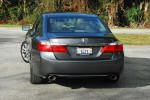
2013 Honda Accord Sport Beauty Right Up Done Small
2013 Honda Accord Sport Beauty Side Done Small
2013 Honda Accord Sport Beauty Rear Done Small
2013 Honda Accord Sport Dashboard Done Small
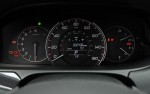
2013 Honda Accord Sport Cluster Done Small
2013 Honda Accord Sport Front Seats Done Small
2013 Honda Accord Sport Reaar Seats Done Small
2013 Honda Accord Sport Door Trim Done Small
2013 Honda Accord Sport Badge Done Small
2013 Honda Accord Sport Engine Done Small

COPYRIGHT: 2012: HARVEY SCHWARTZ

SPECIFICATIONS

  • Price: Base Accord Sedan $21,680 / As-Tested Accord Sport $23,390
  • Engine: 2.4 liter DOHC 4-cylinder 185 horsepower @ 6,400 rpm / 181 ft-lbs. torque @ 3,900 rpm
  • Transmission: CVT (Continuously Variable Transmission)
  • Wheelbase: 109.3 in.
  • Total length: 191.4 in.
  • Total width: 72.8 in.
  • Total height: 57.7 in.
  • Curb weight: 3,342 lbs.
  • Track: f/r-62.4/62.4 in.
  • Headroom: f/r-39.1/37.5 in.
  • Legroom: f/r-42.5/38.5 in.
  • Cargo volume: 15.8 cu.ft.
  • Turing circle: 39.6 ft.
  • Fuel tank: 17.2 gallons
  • 0-60 mph: 7.5 seconds

Source: FULL ARTICLE at Automotive Addicts

2013 Lexus ES300h Hybrid Review & Test Drive

By Malcolm Hogan

The business of combining luxury, exceptional fuel economy numbers and suitable performance in a functional hybrid package is no easy feat. Lexus, however, has formulated the perfect balance of what a luxury hybrid should offer for the consumer in the all-new 2013 Lexus ES300h Hybrid.

The relentless pursuit of perfection has paid off well when it comes to offering a hybrid that meshes so well into the mainstream mid-sized luxury sedan market with the new 2013 Lexus ES300h. All-new for the 2013 model year, the Lexus ES receives the newfound trademark design language with the spindle Lexus grill up front. The new hybrid ES, dubbed the ES300h, is put in the mix of the V6-powered ES350 (268 horsepower – 21 mpg city 31 mpg highway) to offer uncompromised fuel efficiency without sacrificing the relaxed but pristine driving dynamics of its more powerful sibling.

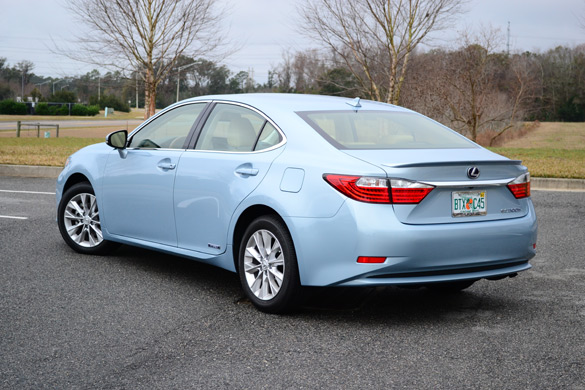
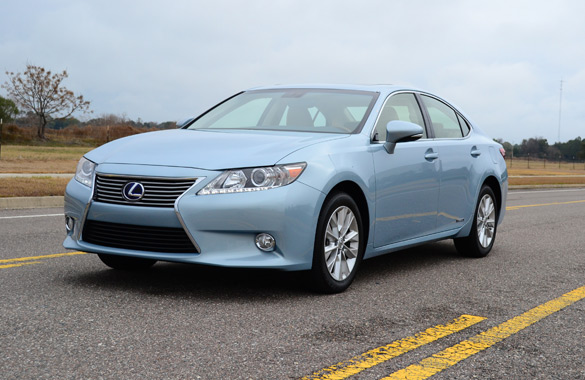
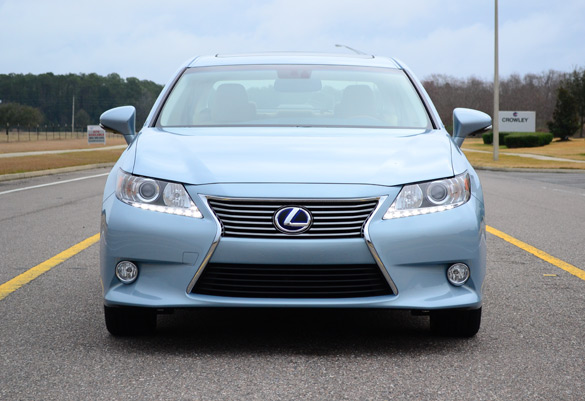
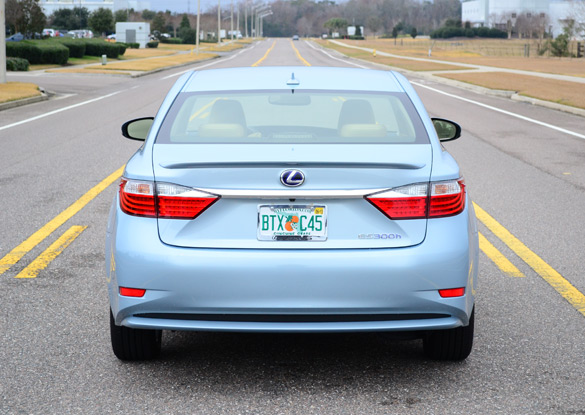
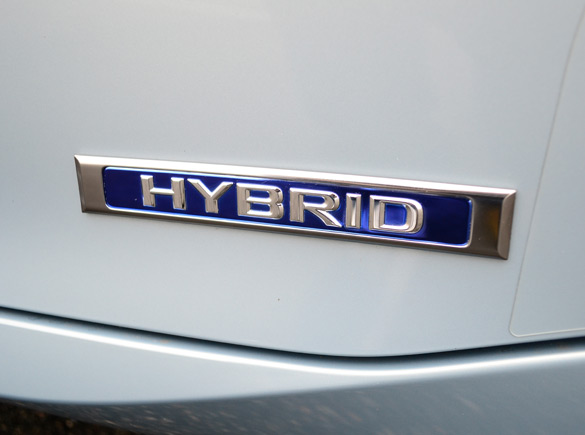
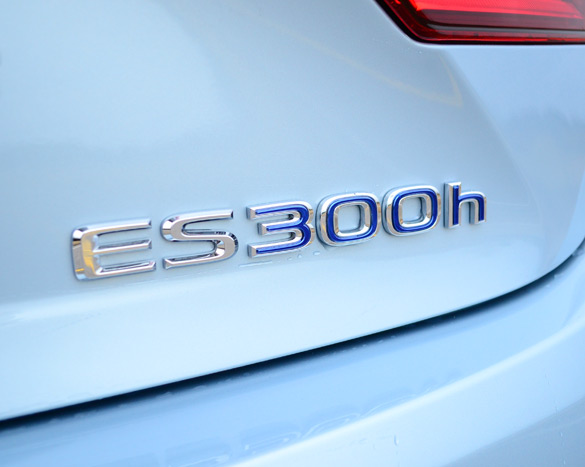
The all-new 2013 Lexus ES gets a new design carrying the new signature spindle grill found throughout the new line of Lexus vehicles. The larger dimensions of the new ES open it up to receive larger seating areas and more of a broader demeanor visually on the road. The only thing signifying the new ES300h as a hybrid apart from the ES350 is its rear passenger door ‘Hybrid’ badges, the ES300h emblem on the trunk lid, and the blue-accented Lexus emblems on the front and rear.

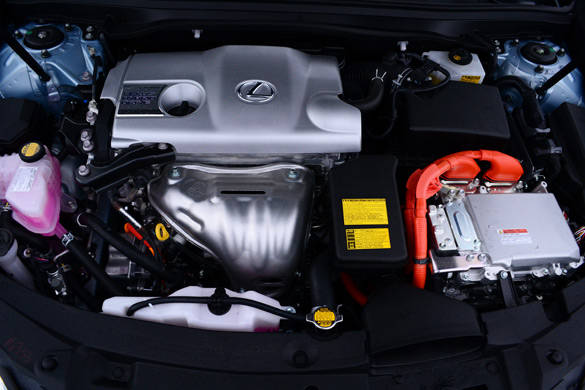
The new 2013 Lexus ES300h is powered by a 2.5-liter 4-cylinder engine and electric motor, which together produce 200 horsepower. Power is fed through a continuously variable transmission (CVT) to the front wheels. The new Lexus ES300h is able to make a dash from 0-60 mph in 8.1 seconds (about 1 second slower than ES350), which is pretty decent for a hybrid vehicle but slightly underwhelming for a midsized luxury sedan. However, the Lexus ES300h is far from a push-over when power is demanded, even when in Eco mode.

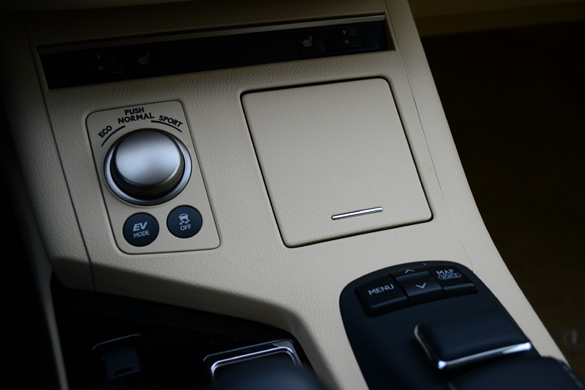
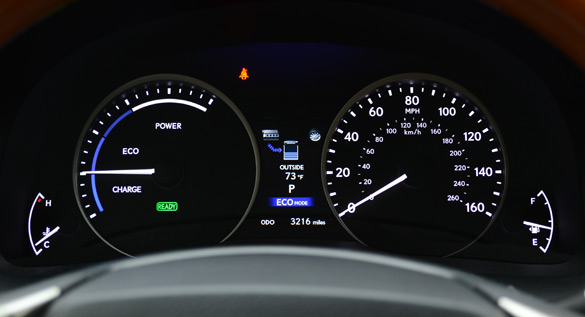
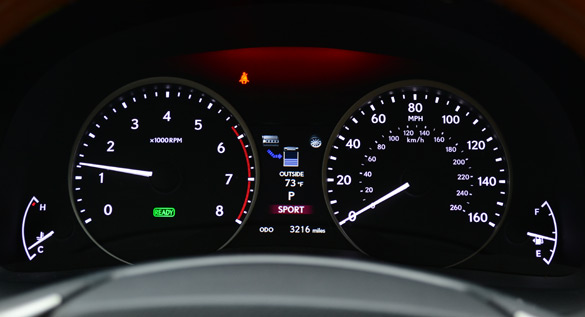
Lexus carries over their drive select mode dial into the 2013 ES300h with Eco, Normal, and Sport modes. Interestingly enough, the Eco mode can be a desirable setting as it does not limit throttle response to the level of the vehicle falling flat at mid-range gas pedal positions. Eco mode does an excellent job to automatically sort out driving conditions to optimize fuel economy without sapping too much response and feedback from the driver. Sport mode, also utilizing the traditional hybrid features such as regenerative braking and auto start/stop, spices things up a bit by adding weight to the steering wheel, advancing the throttle response, and by default, illuminating the gauge cluster with a red accent while activating an rpm tachometer in place of the Eco metering. The Sport mode can be customized in a menu set to display the Eco meter and turn off the red colored cluster illumination.

Transitions between the engine and electric motor are virtually seamless and barely noticeable. Everything about the hybrid powertrain is smooth and well-adapted to mostly any driving style. At idle, the Lexus ES300h is nearly silent even when the 4-cylinder engine is still running. The faint hum of the electric motor, mostly noticeable during deceleration, is one of the very few audible giveaways of the ES300h being a hybrid.

In the traditional sense of Toyota and Lexus hybrids, the all-new ES300h utilizes advanced control systems to activate the electric motor running solely off of battery power when proper conditions present themselves. At times I found my Lexus ES300h test vehicle humming along at 40 mph on battery power only. In mostly Eco mode the ES300h, much like the Prius hybrid, can run on battery power at speeds below 45 mph provided you are barely accelerating. The EV mode, a mode designed to keep the vehicle using the electric motor up to 27 mph, is more of a novelty that can easily be defeated if the gas pedal is pressed too fast or too much acceleration for the motor to handle is recognized by the ECU. Around town the ES300h really shines on fuel consumption figures. I saw times where I was averaging about 45 mpg while roaming around the downtown streets of St. Augustine. Many times I was maximizing my fuel economy by only using the electric motor provided I was cautions of my gas pedal position. While the stated EPA fuel consumption estimates are 40 mpg city and 39 highway, travelling at interstate speeds and above can drastically reduce fuel economy. At times traveling 5 or even 10 mph above the stated interstate speed limit, the ES300h would reduce itself to about 33 mpg. Although, keeping a steady and reasonable highway speed, you will see realistic mpg numbers around 37 and 38 mpg.

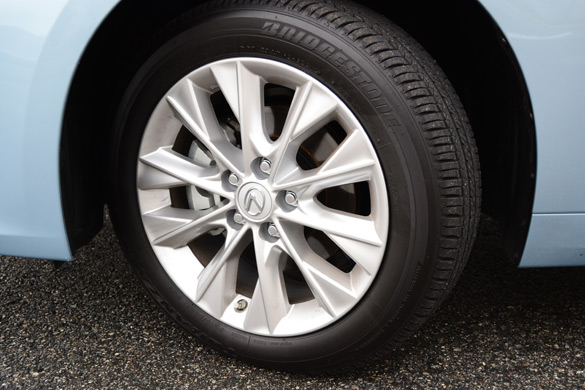
The level of refinement in the all-new 2013 Lexus ES300h is nothing short of what you would expect in a Lexus. Fit and finish is top notch while the suspension is perfectly dampened to soak up large bumps and imperfections in the road. On the enthusiastic side of things, the Lexus ES300h is still civilized and graces out of serious lateral maneuvers with a loud howl of the 17-inch low-rolling-resistance tires. I have to say, the new Lexus ES300h, despite being a mid-sized luxury hybrid, does not promote driving crazy in any way. However, the new ES300h can still handle its own among its mid-sized brethren.

In true Lexus form, the new 2013 ES300h has a quiet cabin isolating most road and wind noises. Though, the buzzing sound of the 2.5-liter 4-cylinder engine winding up when power is needed, comes through the firewall into the cabin as an unusual trait for a Lexus. The only take away from the new ES300h being anything un-Lexus-like is the buzz and slight drone sound from the engine bay when the upper rpm range is reached. Having a CVT transmission makes matters slightly worse under full throttle in keeping the 4-cylinder engine hovering near its 6000 rpm power sweet spot. Aside from the 4-cylinde engine noise, the ES300h is pure luxury.

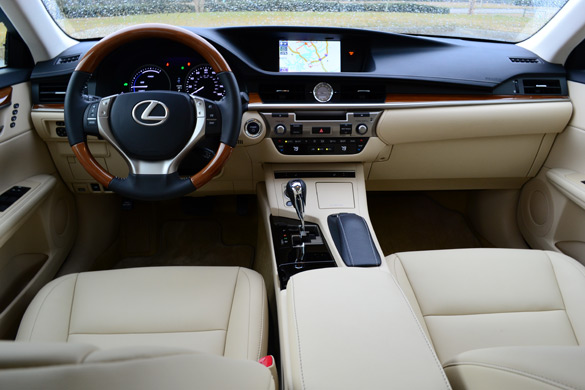
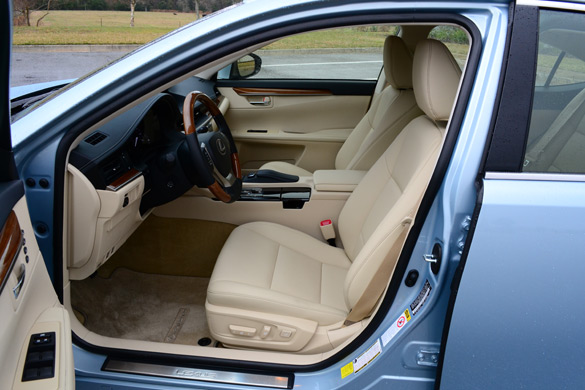
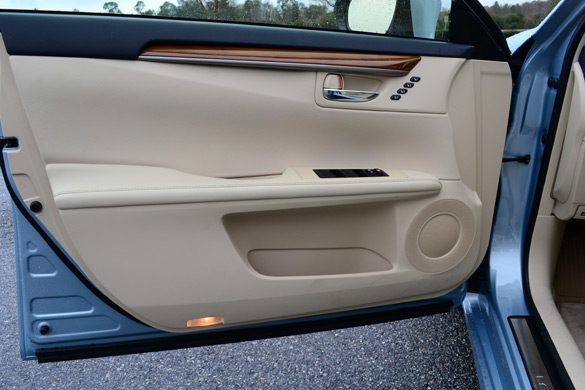
Inside of the cabin the new Lexus ES300h has well-appointed and soft leather seating areas. The entire cabin, virtually identical to the V6-powered ES350, makes the best use of plastics, soft touch buttons, accent dashboard stitching and bamboo wood trim to treat passengers to a quant taste of luxury. The use of a traditional automatic transmission shifter is a wise choice that goes a long way for those who may be new to the hybrid genre of cars -instead of the Prius’ gated hodgepodge hybrid and iRobot shifter.

The seating areas of the new ES300h are larger than ever for the ES line. No longer just a dressed up Toyota Avalon or Camry, the new ES makes its sportier mark even stronger as a more refined and luxurious entry-level Lexus, even in hybrid form.

A long list of standard safety equipment graces the new Lexus ES300h starting with antilock brakes, stability and traction control, front and rear side airbags, side curtain airbags, front knee airbags, Lexus Safety Connect w/automatic crash notification, stolen vehicle location and an emergency assist button. In addition to the safety blanket, the new ES300h hybrid gets standard 17-inch alloy wheels, auto headlights, fog lights, LED day-time-running lights, sunroof, heated mirrors, keyless ignition/entry, cruise control, dual-zone automatic climate control, eight-way power front seats w/ power lumbar adjustment, “NuLuxe” premium vinyl upholstery, a tilt-and-telescoping steering wheel, an auto-dimming rearview mirror, Lexus Safety Connect emergency communications, Bluetooth and an eight-speaker sound system with a six-CD changer, satellite radio, an auxiliary audio jack and an iPod/USB audio interface.

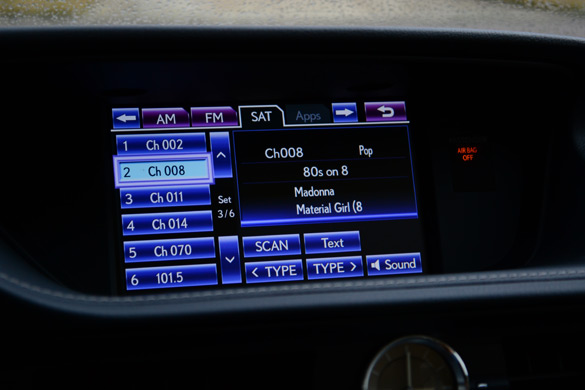
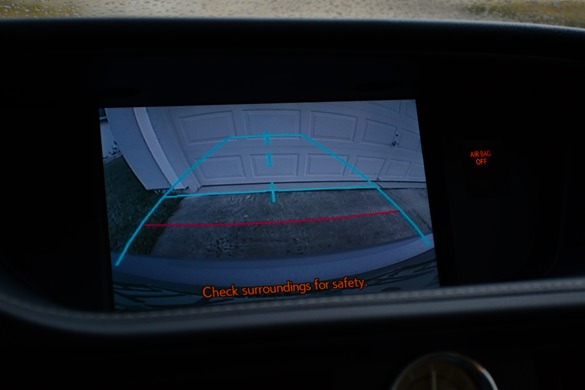
My 2013 Lexus ES300h was optioned out with a navigation system upgrade including hard-drive based GPS navigation system, backup camera, 8-inch VGA LCD screen, Lexus Enform with App Suite, Lexus Insider, voice command, in-dash DVD/CD player, HD Radio and SiriusXM Radio w/ NavTraffic. The Premium Package on my ES300h test vehicle included memory for driver’s seat, outside mirrors and power telescoping steering wheel, bamboo wood trim, and remote keyless entry-linked memory. Additional options included HID headlights, heated front seats, leather-trimmed and wood steering wheel, cargo net and trunk mat. The total as-tested price for my 2013 Lexus ES300h hybrid came to $44,524 including a $895 destination and handling charge. A base Lexus ES300h hybrid starts at just $38,850, which is about a $2,750 premium over its E350 V6-powered sibling.

2013-lexus-es300h-hybrid
2013-lexus-es300h-hybrid-side
2013-lexus-es300h-hybrid-front-angle
2013-lexus-es300h-hybrid-rear-angle
2013-lexus-es300h-hybrid-front
2013-lexus-es300h-hybrid-rear
2013-lexus-es300h-hybrid-wheel-tire
2013-lexus-es300h-hybrid-dashboard
2013-lexus-es300h-hybrid-gauge-cluster-eco-mode
2013-lexus-es300h-hybrid-gauge-cluster-sport-mode
2013-lexus-es300h-hybrid-front-seats
2013-lexus-es300h-hybrid-rear-seats
2013-lexus-es300h-hybrid-door-trim
2013-lexus-es300h-hybrid-drive-select-screen-controls
2013-lexus-es300h-hybrid-lcd-screen
2013-lexus-es300h-hybrid-backup-camera
2013-lexus-es300h-hybrid-trunk
2013-lexus-es300h-hybrid-badge
2013-lexus-es300h-hybrid-emblem
2013-lexus-es300h-hybrid-engine-cover
2013-lexus-es300h-hybrid-engine-motor

Copyright: 2012 AutomotiveAddicts.com

SPECIFICATIONS

  • Price: Base ES300h $38,850.00 / As-Tested $44,524.00
  • Engine: 2.5-liter 4-cylinder (156 horsepower) with two hybrid electric motors for total output of 200 horsepower @ 5,700 rpm / 199 lb.ft. of torque
  • Wheelbase: 111 in.
  • Overall length: 192.7 in.
  • Overall width: 71.7 in.
  • Overall height: 57.1 in.
  • Track: f/r-62.6/62 in.
  • Headroom: f/r-37.7/37.5 in. with glass sunroof
  • Legroom: f/r-41.9/40 in.
  • EPA cargo volume: 12.1 cu.ft.
  • Curb weight: 3,660 lbs.
  • Fuel tank: 17.2 gallons
  • Turning radius: 18.7 ft.
  • 0-60 mph: 8.1 seconds
  • EPA fuel economy: 40 mpg/city 39 mpg/highway
  • Range: 688 miles city / 670.8 miles highway

Source: FULL ARTICLE at Automotive Addicts