Tag Archives: Big Three

Luxury Cars Are a Booming Business

By John Rosevear, The Motley Fool

Filed under:

The U.S. economy may still be struggling in some ways, but you wouldn’t know it from looking at luxury-car sales.

Global luxury-car heavyweights Mercedes-Benz and BMW , the reigning champ, are locked in a fierce battle to lead the U.S. luxury-car market in 2013. Both reported strong sales here in the first quarter — and several of their rivals posted big gains of their own.

A small market that generates big bucks
The sales volumes are relatively small. In some months, Ford‘s sales of F-Series pickups alone are greater than the total U.S. sales of these two put together. But thanks to impressive margins, luxury cars are big business here and around the world, and BMW and Mercedes, along with Volkswagen‘s Audi brand, are the Big Three that seem to dominate it just about everywhere.

BMW posted a 13% gain in U.S. sales in March to 27,078 vehicles, marking BMW‘s best March in the U.S. ever. That increase was powered in large part by gains for its SUVs — the X3, X5, and X6 in particular, which were together up 40% over year-ago totals.

That’s a strong showing, and the company is optimistic about its chances for further gains in the coming months. BMW‘s North American chief, Ludwig Willisch, said in a statement that he expects the new entry-level 320i model to “accelerate our momentum in the months ahead.”

Meanwhile, arch-rival Mercedes-Benz posted a 6.5% year-over-year sales increase for March, with 24,646 sold — enough for its own record March and first-quarter totals. Strong points were the 34% gains for the company’s C-Class sedans, which compete directly with BMW‘s 3-Series, and a nice result for the company’s M-Class SUV.

Mercedes, which is owned by Germany’s Daimler , made much of the fact that it posted record sales without launching any new models in the first quarter. The company’s U.S. sales chief, Steve Cannon, noted in a statement that coming launches of redesigned E-Class and S-Class models could lead to Mercedes’ “strongest year on record” as 2013 continues to unfold.

Other luxury makers are looking strong
Meanwhile, German rival Audi merely posted its 27th straight month of record sales in the U.S., with a 14% gain over good year-ago totals. Continuing the theme, small sedans and SUVs were strong for Audi as well, with a 20% gain for its A4 and a 39% increase for the Q5 SUV. Those gains were achieved with minimal discounting, Audi officials noted, as VW continues to try to maximize its profits outside its troubled European home base.

Toyota‘s Lexus brand posted a 16% gain for the month and a 15% gain for the quarter behind strong sales of its ES midsized sedan. And General Motors‘ Cadillac brand continued its slow resurgence, as its ATS sedan — a surprisingly strong competitor to BMW‘s 3-Series — led the way to a 49% year-over-year gain.

Keep watching the auto market in 2013 to see whether luxury vehicles …read more

Source: FULL ARTICLE at DailyFinance

UnitedHealth Dashes, HP Crashes

By Jeremy Bowman, The Motley Fool

Filed under:

The Dow Jones Industrial Average and S&P 500 touched new record highs today led by the health-care sector, which jumped following a surprise increase in Medicare Advantage payout rates.

The Dow crossed 14,600 for the first time, gaining 0.6% or 89 points, to finish at 14,662. After hours yesterday, the Center for Medicare and Medicaid Services reversed earlier signals that it would lower Medicare Advantage payouts by 2.2% and instead decided to raise them 3.3%. Not surprisingly, health-insurance stocks rallied across the board, with UnitedHealth Group gaining 4.7% to lead all Dow stocks. Humana, which is heavily dependent on Medicare payouts, jumped 5.5%, and Aetna gained 3.7%.

Factory orders for February were also better than expected, increasing 3% on expectations of 2.6%. January orders were also revised upward from -2% to -1%. On a similar note, auto sales from the Big Three hit their best sales level in five years in March on higher demand for fuel-efficient vehicles and pick-up trucks.

Not all stocks made headway today, though. Hewlett-Packard sank 5.2 % after Goldman Sachs downgraded the PC-maker to “sell” from “hold.” The investment bank said HP may be overbought after its recent run-up, adding that investors may be overly hopeful for a turnaround, considering its key PC and printer businesses continue to decline. Goldman also that HP will have to invest much of its cash flow in research and development, putting a further strain on profits.

Elsewhere, Procter & Gamble moved up 1.6% after the consumer-goods giant said it had achieved zero waste in 25% or 45 of its manufacturing facilities worldwide, with another 20 soon to meet the sustainable standard. P&G now uses 99% of materials that enter its factories, and the news serves as a reminder that P&G continues to innovate and lets consumer know they can feel good about buying P&G products.

When President Obama was re-elected, shares of UnitedHealth and other health insurers fell immediately. Is Obamacare a death knell for health insurers, or is the market missing out on some of the opportunities the law presents? In this brand-new premium report on UnitedHealth, The Motley Fool takes a long-term view, homing in on prospects for UnitedHealth in an Obamacare world. So don’t miss out — simply click here now to claim your copy today.

var FoolAnalyticsData = FoolAnalyticsData || []; FoolAnalyticsData.push({ eventType: “TickerReportPitch”, …read more
Source: FULL ARTICLE at DailyFinance

Automakers Hit Their Best Numbers Since The Financial Crisis In March

By Agustino Fontevecchia, Forbes Staff

It’s not just housing and equity markets that seem to have climbed out of the abyss caused by the financial crisis.  In March, Detroit’s Big Three had their best sales since 2007, while Toyota, the third largest automaker in the U.S., had its best performance since the Cash for Clunkers program in 2009. …read more
Source: FULL ARTICLE at Forbes Latest

Tax time! We name the best PC-based solutions for filing your returns

The race is on. As procrastinators gather their W-2 forms and receipts, small-fry tax sites and apps battle with three full-fledged software programs—H&R Block at Home, TaxAct, and TurboTax—for your last-minute filing business. Choosing the right site, program, or app is a decision you shouldn’t make in haste, because you don’t want to find yourself lacking one or more of the forms you need, or paying more to file than you need to.

This rundown of the major Web, mobile, and software options will help you decide which option best suits your tax situation. Users with relatively modest income and tax situations might be eligible for free Web-based tax preparation and e-filing. The small-fry websites are competent—but they’re not necessarily cheaper than the Big Three programs, let alone as polished. Of the three leading packages, TurboTax is the leader (and the most expensive), H&R Block can brag about its small army of tax pros, and TaxAct is the most affordable full-fledged option. A few mobile apps for smartphones and tablets are available, but they assume that your tax-paying requirements are pretty straightforward.

One more note: Pay special attention to what it costs to prepare your return using the software, and then what it costs to file the return electronically, as opposed to printing and mailing the return. E-filing fees can get especially high for state returns.

Who gets free Web-based prep and e-filing

Good news for many taxpayers with simpler returns: You might be able to prepare and file your federal taxes online for free. To qualify, your adjusted gross income (income after deductions) must be $57,000 or less, and you can’t have Schedule C self-employment or business income, complex investment income, or deductions beyond dependents and perhaps a home mortgage. Go through the IRS’s Free File page (you can’t get to the free options through the vendors’ webpages) to find participating vendors and their requirements—age range or military service, for example. Even if you don’t qualify for FreeFile, you can use the list as a reference guide for Web-based tax prep.

To read this article in full or to leave a comment, please click here

…read more
Source: FULL ARTICLE at PCWorld

‘Mainstream Media’ Not Mainstream

By Tom Ballantyne Jr.

Media bias1 Mainstream Media Not Mainstream

I never imagined that I’d find myself quoting Bill’s one-time heart throb (okay, eons of time ago), but using her just happens to suit my purpose. (Guess Bill and I aren’t so different after all….)

A persistent (make that constant) theme I have extolled in both writing and speaking is that as Conservatives we should not fall prey to the ingrained habit of referring to the all-but-obsolete establishment media as “the mainstream” or “MSM.” Could anything be further from the truth? Stop and think about it for a minute….

As I like to tell audiences, “You’ll never see [David Gregory or Katie Couric, et al.] at a Denny’s!” It isn’t going to happen!

Back during the Roger Staubach Era, the Dallas Cowboys were affectionately referred to as “America’s Team.” As one might imagine, such a moniker would be considered the gold standard in the world of marketing or PR.

Imagine that you are starting a new grocery store chain, and through a stroke of luck you become known as “America’s Grocer.” Could it get any better than that?

Imagine, on the other hand, that you are one of the “Big Three” television and news networks – NBC, ABC, or CBS. Imagine also that over the past 50 years your viewership has plummeted from a virtual collective dominance of 100% to, say, 25% of the “news”- viewing public.

That would still represent one out of four American adults watching, but put in perspective, three out of four “news”-watchers would have rejected your collective “news” coverage. Not very good!

While that was merely a hypothetical construction on my part, here are some actual numbers for “Evening News Ratings,” obtained at MediaBistro.com:

NBC – 9,640,000 (Total Viewers)
ABC – 8,628,000 ( ” ” )
CBS – 7,482,000 ( ” ” )

Those numbers combined make 25,750,000 out of the current U.S. Population of 315,497,649. The annual population increase is estimated elsewhere (by extension) to be .76%. The U.S. Census Bureau estimated the number of adults 18 or over to be 234,564,000 in 2010, which would be roughly 240,000,000 today, in 2013.

Thus the “Big Three” viewers among the total U.S. adult population (over 18) would be approximately 10.7%…far less than my “guesstimate” of 25%.

One site I came across seemed to indicate that some 74% of adults watch at least some news program weekly. According to this site, “CNN (20%) and FOX News (18%) are the television channels adults most often turn to when they want news or information related to politics or public affairs. These are followed by the networks, including ABC (9%), NBC (8%) and CBS (7%). Other channels include MSNBC (5%), C-SPAN (3%), PBS (3%) and CNBC (1%).”

These figures – for those who watch news or “political/public affairs” programs, as opposed to strictly the “Nightly [Network] News” – show an aggregate of 24%of Adults watching the Big Three.

Getting back to the Nightly Network News (America’s staple before Cable and the Internet)…it would appear that my hypothesis was spot on among viewers …read more
Source: FULL ARTICLE at Western Journalism

Is Embraer Finally in the Clear?

By Adam Levine-Weinberg, The Motley Fool

Filed under:

Regional jet manufacturer Embraer gave investors a scare in late 2012, when slow sales of E-Jets aircraft for the 70- to 110-seat market raised the specter of production cuts. The company’s order backlog was only $12.5 billion by the end of 2012, down nearly 20% from the beginning of the year. At only 2 times annual revenue, Embraer’s order backlog is much lower than the comparable figures for competitors such as Boeing , which has a backlog equal to seven years of revenue.

Embraer does expect somewhat slower commercial aircraft production in 2013 with 90 to 95 deliveries, compared with 106 in 2012. However, the growing popularity of two class regional jets for the big U.S. network carriers creates a significant opportunity for Embraer to fill open delivery slots for the next few years while rebuilding its order backlog. Furthermore, the company is diversifying its revenue base by growing its private jet and military segments; combined, these will reach nearly half of total company revenue in 2013. These trends may have finally put Embraer on the upswing.

The growing American opportunity
While the U.S. aviation market is mature, demand for large regional jets such as Embraer’s E-Jets is very robust today. This is the result of three factors. First, the rapid rise of oil prices over the past decade has made fuel efficiency critical, and large regional jets burn much less fuel per seat than 50-seat and smaller regional jets. Second, large regional jets can accommodate a first-class section and/or premium economy seating and are more comfortable than 50-seaters in general. These amenities can help attract higher-yielding business passengers. Third, the “Big Three” airlines — Delta Air Lines , United Continental , and American Airlines — have all successfully negotiated with their pilots over the past year for the ability to increase usage of large regional jets.

Delta is the furthest ahead on this strategy and is in the midst of executing a plan that will reduce its 50-seat regional jet fleet from 313 at the end of 2012 to just 125 by the end of 2015. Many of those will be replaced by Boeing 717 mainline aircraft, but there will also be an increase in large regional jet flying.

United and American will see even more growth in large regional jet flying. According to a recently signed pilot agreement, American is permitted to operate more than 300 76-seat regional jets (such as the Embraer E-175), compared with just 47 previously. Embraer has already benefited from this change, as it recently received an order from Republic Airways for 47 E-175s to be operated for American. Deliveries will run from mid-2013 through 2015, and Republic has options for another 47 aircraft. American and its merger partner US Airways will probably look to grow their 76-seat fleet further to better compete with Delta, which gives Embraer a good chance of converting these options to firm orders.

Lastly, United’s recently completed pilot …read more
Source: FULL ARTICLE at DailyFinance

Will Ford's Mullaly Be Boeing's Next CEO?

By 24/7 Wall St.

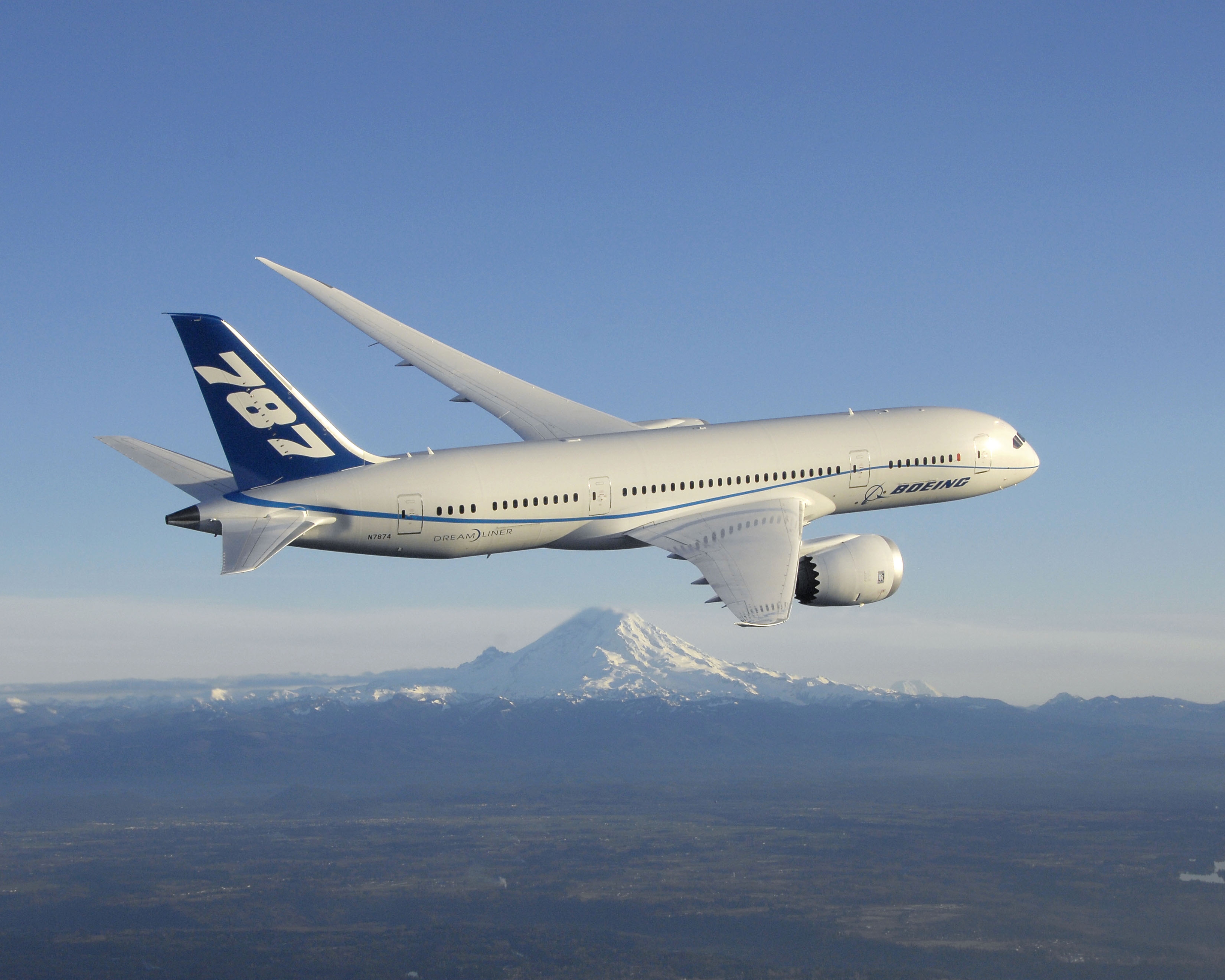
787 With Mt Rainier in DistanceK65116

Filed under:

The problems with electrical systems on the Boeing Co. (NYSE: BA) 787 Dreamliner are so severe that the plane may not fly for months. Production has backed up, and airlines almost certainly will ask for compensation. There is no doubt who is ultimately responsible for the failure — chairman and CEO W. James (Jim) McNerney, who joined Boeing in 2005, about the same time as the serious development of the 787 began. The board of Boeing cannot keep McNerney under these circumstances. The most logical person for them to turn to is Ford Motor Co. (NYSE: F) CEO Alan Mullaly.

Mullaly has engineered a spectacular turnaround at Ford and kept it from being the only one of the Big Three not to avoid bankruptcy. Ford already has begun to prepare for his retirement, which could come in little more than a year. Ford does not need a turnaround expert anymore. Mullaly’s efforts have been that successful.

Mullaly ran the Boeing Commercial Airplanes division until he was passed over for the CEO job, which went to McNerney. Mullaly left for Ford in 2006. With that background, Mullaly knows the airline industry as well as almost any executive in the world. He is an engineer who graduated from MIT and worked on versions of almost all the planes Boeing currently sells.

Boeing needs to make a move now so that it can address two problems. The first is that it must regain confidence with customers, shareholders and employees. McNerney cannot do that. His failures are too extensive. Boeing also needs a leader who can step into the job quickly and will not need months and months to learn about the company and its operations.

Today, Boeing is rudderless, perhaps the worst condition in which a large public company can find itself. Mullaly has been the rudder of Ford. It time for the Boeing board to hire him before its situation becomes much worse.

Filed under: 24/7 Wall St. Wire, Corporate Governance Tagged: BA, F

Read | Permalink | Email this | Linking Blogs | Comments

…read more
Source: FULL ARTICLE at DailyFinance

The Detroit Three After the Big Whoa: An Examination of Domestic Carmakers

By Jim Hall

The Detroit Three After the Big Whoa: An Examination of Domestic Carmakers

Long before the leaders of General Motors, Ford, and Chrysler were summoned to testify before a congressional committee in late 2008, evidence of the decline of the American carmakers was manifest. That “the Detroit Three” had replaced “the Big Three” in colloquial reference reflected a begrudging acceptance that a generation had passed since this ruling troika had set the industry’s agenda. Yet an almost British belief in “keeping calm and carrying on” was pervasive around Motown. Those who grew up in the industry were accustomed to riding out economic downturns with stopgap measures, confident that they were just one hit product—one minivan or Taurus—away from returning the champagne to executive dining-room menus. READ MORE ››

…read more
Source: FULL ARTICLE at Car & Driver

As Car Companies Roar, Detroit Collapses

By 24/7 Wall St.

ChevyLogo

Filed under:

There will be resistance from city officials, but the governor of Michigan, Rick Snyder, will appoint an emergency financial manager to run the virtually bankrupt city. He commented to a local TV station that “I look at today as a sad day, a day I wish had never happened in the history of Detroit, but also a day of optimism and promise.” Only sad to the extent to which, over decades, Detroit had the chance to fix its own trouble. As car companies pulled management and production out of Detroit, the city government did very little to react with lower costs and reduced services. Now, the emergency financial manager can gut city services, and probably re-negotiate contracts between Detroit, its workers and outside parties. The Detroit Free Press summed up the money part of the problem

A state review team concluded last week that Detroit could not do so on its own, facing $14 billion in long-term liabilities and a $327-million accumulated deficit at risk of growing by $100 million by July.

The announcement came on a day on which the Big Three released spectacular results, at least compared to those during the recession. Analysts expect 14.5 million cars and light trucks to be sold in the U.S. this year. That is not quite like the over 16 million sold in 2005 and 2006, but the car companies have cut costs so much the sales will make their North American operations profitable. February sales for GM (NYSE: GM) reached 224,313 vehicles, up 7.2% from the same month last year.  GM‘s market share is 18.8%, far short of the 50% of fifty years ago. Ford (NYSE: F) sold 195,210 vehicles, up 9.3%. Chrysler sold 139,015.

The Big Three employ very few people in Detroit. GM‘s headquarters is downtown. Ford and Chrysler have headquarters outside the city. Car production within the city limits is negligible. As each of these pulled more and more facilities out of Detroit, the city had the chance to lower its budget. Perhaps, over the years, the city council and mayors hoped the car companies would return, or be replaced by other large industries. That was a bad mistake.

The American car companies did not absolutely have to leave Detroit. They could have kept headquarters inside the city, despite the rise in unemployment, poverty, and a drop in city services. GM stayed, so the other two could have as well.

Factory presence is more complicated. Detroit’s educated labor force sized dropped. It was less expensive to locate manufacturing facilities elsewhere. But, the labor force might not have fallen so much if car production had stayed in Detroit. And the taxes from the car companies would have helped prop up city services.

The exit of the car companies from Detroit can certainly be justified by financial means. The three firms did what they believed was best to boost profits. But, as they left Detroit, they could watch the city crumble behind them. Not much of a legacy for three companies that …read more
Source: FULL ARTICLE at DailyFinance

Canada February auto sales slip; Big Three still robust

A new 2011 Chrysler Town & Country minivan is displayed in Windsor, Ontario

TORONTO (Reuters) – Canadian auto sales dropped a moderate 3.3 percent in February in a third straight monthly decline, according to industry data released on Friday, as a hardy appetite for Detroit's Big Three brands helped offset a setback for Japanese makers. Chrysler Canada was the top seller last month, pipping Ford of Canada by a few hundred units, although Ford posted a higher overall sales increase at 5 percent, compared with Chrysler's 2 percent. Carlos Gomes, an auto sector analyst at Scotiabank, said severe winter weather in part may have been responsible for the overall weakness. …

…read more
Source: FULL ARTICLE at Yahoo Business

Bernanke Loves Detroit! Ford And Chrysler See Best February In 5 Years As GM Beats

By Agustino Fontevecchia, Forbes Staff

Despite a stagnating economy, several major automakers reported their best February sales in at least five years on Friday.  Among Detroit’s Big Three and Toyota Motor, only General Motors managed to beat analysts’ estimates, yet unprecedented support from the Federal Reserve has managed to drive a boom in vehicle sales. …read more
Source: FULL ARTICLE at Forbes Latest

Prospect Maurer soaking up spring experience

By Greg Johns Brandon Maurer doesn’t have a cool nickname like the “Big Three” pitching prospects for the Mariners. But the tall right-hander with the red goatee is quickly working his way into the picture in Peoria with a strong start to his spring. And maybe he’s earning a nickname of his own along the way. Just call him the “Big Bruise.” …read more
Source: FULL ARTICLE at MLB

Solid January For Detroit As GM Predicts A Record Year; Toyota's Sales Surge

By Agustino Fontevecchia, Forbes Staff After hitting its best year in the last five in 2012, the auto industry continued its comeback into 2013, posting solid January numbers and predicting another record year.  General Motors is still number one in sales, but Ford led the way in growth among Detroit’s Big Three, delivering 22% more units than a year ago.  Toyota Motors, which had suffered setbacks over the past few years due to the Fukushima nuclear meltdown in Japan, posted even stronger growth, with sales up 26.6%.
Source: FULL ARTICLE at Forbes Latest

Remarks by the President in Welcoming the Miami Heat

By The White House

East Room

1:44 P.M. EST

THE PRESIDENT: Thank you. (Applause.) Everybody please have a seat. Well, today I am honored to welcome a little up-and-coming basketball team — (laughter) — to the White House called the world champion Miami Heat. (Applause.)

Now, for many of teams that come here, this is a lot of cameras in one place. It’s a little overwhelming. (Laughter.) But for the Heat, this is what practice looks like. (Laughter.) This is normal. I know this is the first trip for some of these players, but a few of them were here a couple of years ago for a pickup game on my birthday.

Now, I’m not trying to take all the credit, Coach, but I think that it’s clear that going up against me prepared them to take on Kevin Durant and Russell Westbrook. (Laughter.) It sharpened their skills. It gave them the competitive edge that they needed. And I think part of the reason they came back today is they want another shot at the old guy. (Laughter.)

But first, I have to congratulate the Heat on their well-earned title. This team traveled a long road to get to where they are. In 2011, the Heat got all the way to the finals only to come up short. But when you fall, the real test is whether you can ignore the naysayers, pick yourself up and come back stronger. And that’s true in basketball, but it’s also true in life. That’s exactly what these guys did.

Instead of getting down, they got better. Dwayne Wade worked on his core. LeBron learned some post moves from Hakeem. Shane Battier came on board. They became a more complete team. They got to know each other better and trust each other more. And they became more fun to watch.

In Game Four against the Thunder last year, we saw LeBron carried off the floor with cramps, only to come back a few minutes later and hit a dagger of a three-pointer to put the Heat ahead. During Game Six, we saw him pull off one of the greatest performances in basketball playoff history, dropping 45 points — and he had a scary look in his eye. (Laughter.)

We saw Dwayne Wade, the heart and soul of this team, continue to do whatever it takes to win, including leading the team in blocks. And at the post-game press conferences, he dressed well enough to land himself in GQ magazine. (Laughter.) Show them your kicks here, Dwayne. (Laughter.) If any of you can pull this off — (laughter) — other than Dwayne Wade, let me know. We saw Chris Bosh get injured, but get healthy right at the perfect time and do outstanding work throughout the rest of the playoffs.

And it wasn’t just the Big Three. Mike Miller could barely walk. Mike, you look better now. (Laughter.) You looked broke down last year — (laughter) — but still hit seven three-pointers in the final game. I don’t know how he did it because he could not walk. He looked like an old man. Mario Chalmers earned himself a nickname from Dwayne Wade that I’m not allowed to repeat. (Laughter.) But he did a great job.

Shane Battier, as always, played impeccable defense, hit big threes. Juwan Howard — “Grandpa” — became the first member of the Fab Five to win a ring. And Coach continually set the tone and kept these guys motivated the entire way.

So that team mentality — with everybody doing their part — is what finally put the Heat over the top. And it’s especially impressive when you think about everything they’ve had to deal with over the last few years. This team inspired a lot of passions on both sides. And I’m just talking about their dance moves. (Laughter.) We saw that video, LeBron. (Laughter.)

But even though I’m a little disappointed that the Bulls didn’t make it, I do want to congratulate the Heat for a well-earned championship. LeBron said, “It’s about damn time.” And I want to thank them for taking the time this afternoon to spend with wounded warriors at Walter Reed, because you guys are heroes to them but they are heroes to all of us.

And let me just say one last thing about these guys, and I mentioned this as we were coming in. There’s a lot of focus on what happens on the court, but what’s also important is what happens off the court. And I don't know all these guys, but I do know LeBron and Dwayne and Chris. And one of the things I’m proudest of is that they take their roles as fathers seriously. And for all the young men out there who are looking up to them all the time, for them to see somebody who cares about their kids and is there for them day in and day out, that's a good message to send. It’s a positive message to send, and we’re very proud of them for that. (Applause.)

So congratulations, again, to the Miami Heat. And now we are going to take a picture that makes me look very short. (Laughter.) I’m accustomed to it, but first I’m going to ask Coach to say a few words. (Applause.)

COACH SPOELSTRA: Well, on behalf of Micky Arison, Pat Riley, the entire Miami Heat organization, and our families, we want to thank you for your hospitality today to be in the White House and also to be inspired by the great men and women of the Walter Reed Hospital. We are honored and truly, truly humbled to be here.

We actually hope that this team serves as an inspiration to the nation of what a group can do when you come together and sacrifice your egos for a greater goal; to come together with a real hard-hat work ethic, and to be able to persevere through adversity and a whole heck of a lot of criticism — (laughter) — and still be able to accomplish the ultimate dream.

THE PRESIDENT: Fantastic. Thank you so much. (Applause.)
MR. JAMES: Am I supposed to say something?

THE PRESIDENT: You can if you want. It's your world, man. (Laughter.)

MR. JAMES: On behalf of myself and my teammates, we just want to thank you — to piggyback what Spo said — for the hospitality, for allowing us to be, I mean, in the White House. I mean, we're in the White House. (Laughter.) And Coach said — and the Prez said this real casual. So I mean, we're kids from Chicago and Dallas, Texas and Michigan and Ohio and South Dakota — (laughter) — Miami. And we're in the White House right now. This is like, hey, mama, I made it. (Laughter and applause.)

MR. WADE: All I've got to say is we've got a 10-day contract left?

THE PRESIDENT: Yes.

MR. WADE: Pick my man up. (Laughter.)

THE PRESIDENT: You guys could use a shooter. (Laughter.)

MR. WADE: My point guard. (Laughter.)

THE PRESIDENT: Thank you. (Applause.)

END
1:52 P.M. EST

Source: White House Press Office

Official: 2014 Toyota Tundra to debut at Chicago Auto Show

By Jeffrey N. Ross

Filed under: , ,

The fullsize pickup market is dominated by trucks from Ford, General Motors and Ram, but this segment could get some hefty competition in coming years. We’ve already reported that Nissan is planning a redesign of its Titan truck for 2015, and now Toyota has announced that it will be revealing the 2014 Tundra next month at the Chicago Auto Show.

In the brief press release posted below, Toyota says that the 2014 Tundra will be “redesigned,” but it’s unclear as to whether this means we’ll be seeing an all-new truck or just an extensive refresh. The current Tundra design has been around since 2007 and sales are hardly worrisome to the Big Three, so a new design would be a logical guess.

In any case, we only have to wait a couple more weeks for the new Tundra to debut on February 7, and we’ll be on hand to bring you plenty of live coverage from the show.

Continue reading 2014 Toyota Tundra to debut at Chicago Auto Show

2014 Toyota Tundra to debut at Chicago Auto Show originally appeared on Autoblog on Thu, 24 Jan 2013 14:58:00 EST. Please see our terms for use of feeds.

Permalink | Email this | Comments

Source: FULL ARTICLE at Autoblog

Report: Nissan to expand next-gen Titan with more engines, configurations

By Jeffrey N. Ross

Filed under: ,

Not much has changed with the Nissan Titan in the decade that it’s been on the market, but the 2015 model year could move the needle enough to turn the truck from an “also ran” in the fullsize truck market to more of a contender. Edmunds had the chance to sit down with Pierre Loing, vice president of product and advanced planning and strategy for Nissan North America, who indicated that not only will a new truck be coming for 2015, it is also expected to take a bigger chunk of the truck market currently dominated by Ford and General Motors.

For starters, the article quotes Loing saying that the next-gen Titan could sell 100,000 units, which is almost five times the number of Titans and the same number of Toyota Tundra trucks sold last year. To accomplish this, Nissan is planning to offer a wider number of models (including a regular cab version) and more powertrain options; we’re sure this means Nissan is considering offering a V6. The addition of a regular-cab, V6 Titan would also allow this truck to be more competitively priced.

Will that be enough to attract buyers away from the Big Three domestic trucks? We’ll just have to wait and see…

Nissan to expand next-gen Titan with more engines, configurations originally appeared on Autoblog on Thu, 24 Jan 2013 10:15:00 EST. Please see our terms for use of feeds.

Permalink | Email this | Comments

Source: FULL ARTICLE at Autoblog