Tag Archives: Middle Eastern

Police find body of woman taken from Michigan store

Police investigating the abduction of a 20-year-old woman from a discount store found her body Thursday in a wooded area in suburban Detroit, less than 2 miles away.

Brenna Machus, an assistant manager, was last seen Monday night at a Family Dollar store in Dearborn. A co-worker, Joseph Orlando, 20, was found fatally shot when other employees arrived for work Tuesday morning. He had been hired just last week.

The identity of the body was confirmed as Machus, said Nancy Hamood Strutz, assistant to Dearborn Police Chief Ron Haddad.

“I feel rather enraged we have another homicide in Dearborn,” Haddad told reporters earlier, when the body was found.

The store’s surveillance video captured images of a suspect, who waved as he walked into the store Monday night. Police are urging the public to call with any tips about the man who wore dark clothes with a hood over his head. His face can’t be seen on the video, but Haddad hoped someone would recognize his clothing or the way he walks.

“I just can’t believe it,” Machus’ father, Jamie Machus, told WJBK-TV.

The Family Dollar is in a busy retail area on the west side of Dearborn, sandwiched between a Middle Eastern restaurant and a hardware store.

Two women who were in the store between 7 p.m. and 7:30 p.m. Monday contacted police and are cooperating in the investigation, Lt. Patti Penman said. They are not suspects, but detectives wanted to know what they could recall about that night. One of the women finally stepped forward when her picture from store video was released to the public.

The discovery of Machus’ body was a tragic development. Friends and relatives had made a tearful public appeal Wednesday for information on her whereabouts. Lisa Machus called her daughter a “shining star.”

Tina Cable drove to the police staging area when she heard that a body had been found. Her son was Machus’ friend.

“I want them to catch who did this,” Cable said.

…read more

Source: FULL ARTICLE at Fox US News

If There Is No God – Part I

By Anthony ‘AC’ Castellitto

Atheist SC If There Is No God   Part I

“Because strait is the gate, and narrow is the way, which leadeth unto life, and few there be that find it.”

The other day, I found myself debating Dave, a conservative-athiest friend of mine. Dave was going on about all the suffering caused by religion (yes, that tired old argument). But after citing a few examples (i.e. Church of England, Middle Eastern theocracies, and the Holy Roman Empire) and finishing me off with a zinger courtesy of the late, great liberal apostate Christopher Hitchens, Dave made his most lucid point:

“It’s the absence of religion that makes our founding documents so compelling and has kept us, largely, distant from tyranny.”

This point was not lost on me as I believe there is much truth to it…

But it was time for me to go on the offensive. If I was going to affirm my worldview as the correct one, I couldn’t hold anything back.

Here’s a summary:

The argument against religion is really an argument against man. MY argument is not one in support of a religion; rather, I make my case for the One True God!

Freedom without God is anarchy. As we lose God, we lose the country. Look at all the evils and miseries the godless actions of both parties have heaped upon us. We need more God, not less. I call for a great awakening – God is the only source of true, radical change.

I have no faith in humanity. Look at the mess we’ve made – just over the last half century. The actions of men, especially those in power, attest to the depravity of the natural man as does Scripture:

Mark 7:21-23: “For from within, out of the heart of man, come evil thoughts, sexual immorality, theft, murder, adultery, coveting, wickedness, deceit, sensuality, envy, slander, pride, foolishness. All these evil things come from within, and they defile a person.”

John 3:19: “And this is the judgment: the light has come into the world, and people loved the darkness rather than the light because their deeds were evil.”

Romans 3:10-11: “None is righteous, no, not one; no one understands; no one seeks for God.”

1 Corinthians 2:14: “The natural person does not accept the things of the Spirit of God, for they are folly to him, and he is not able to understand them because they are spiritually discerned.”

Titus 3:3: “For we ourselves were once foolish, disobedient, led astray, slaves to various passions and pleasures, passing our days in malice and envy, hated by others and hating one another.”

Corruption, pride, control, deceit, dishonesty, etc. has permeated throughout Washington and Wall Street/Corporate America for many decades. Government in particular has steadily become a monster of man’s design, and it’s turning on us.

Government cannot be trusted. The media cannot be trusted. Many corporations cannot be trusted. They all have their own tainted agenda and do not have the best interests of the common man at heart.

Religious hypocrisy will seem a small offense compared to the godless ‘liberty’ that naturally evolves via radical regulatory efforts to control the population

From: http://www.westernjournalism.com/if-there-is-no-god-part-i/

Report: Protests embroil F1 in Bahrain yet again [w/video]

By Zach Bowman

Filed under:

Law enforcement in Bahrain is once again cracking down on pro-democracy protesters ahead of the upcoming Bahrain Grand Prix. The Formula One race focuses the world’s attention on the Middle Eastern kingdom each year, and protesters take the occasion to demonstrate against the ruling family.

This year, human rights organizations cried foul after the government arrested 70 people in a preemptive move to quell unrest. Around 20 people from the Dar Klaib and Shanrakan villages near the Bahrain International Circuit have been detained along with a further 50 individuals from Aldeir and Sameheij closer to the airport.

Some of the detainees are known journalists and photographers, and contrary to the government‘s hopes, the arrests have seemingly served to fuel the protests. Demonstrators hold that the F1 race lends legitimacy to the current government while the ruling party continues to oppress its people.

You can watch the full news report below for more information. The Bahrain GP is slated to take place on April 21.

Continue reading Protests embroil F1 in Bahrain yet again [w/video]

Protests embroil F1 in Bahrain yet again [w/video] originally appeared on Autoblog on Tue, 16 Apr 2013 10:58:00 EST. Please see our terms for use of feeds.

Permalink | Email this | Comments

From: http://feeds.autoblog.com/~r/weblogsinc/autoblog/~3/h0vCp20-9Kw/

Gas company says Israel taxes may deter investors

The head of the U.S. company leading natural gas exploration off Israel‘s coast on Thursday urged the country to develop a national gas export policy, warning that government tax policy was scaring off potential investors.

Charles Davidson, CEO of Texas-based Noble Energy, criticized Israel‘s decision in 2011 to nearly double tax rates on gas profits after his company had already invested $1 billion in an offshore field. He said the “very unusual” move may have driven away companies from investing in Israel‘s emerging gas sector.

He said he sensed hesitation from potential investors who could help develop the Leviathan field, a large find that is expected to produce enough gas for export.

“I felt that … companies were a little bit reluctant because of what had happened on taxes in the past,” Davidson said at the company’s local offices in the coastal town of Herzliya.

In 2011, Israel‘s government raised taxes on gas and oil finds, boosting the revenues to between 52 and 62 percent from under 30 percent.

Davidson is in Israel after gas from Tamar, one of Israel‘s new, sizable fields, started being extracted last month. He hopes to convince authorities to agree on an export policy that would provide clarity for investors looking to develop the resource. For now, the gas is being used for domestic use only and sold at fixed, previously negotiated prices.

On Wednesday, Davidson met Israeli Prime Minister Benjamin Netanyahu and said he “encouraged” him to move on export. He said Netanyahu was receptive but gave no time frame.

The Tamar field was discovered in 2009 and holds an estimated 8.5 trillion cubic feet of gas. Leviathan, found in 2010, boasts an estimated 16 to 18 trillion cubic feet and is expected to go online in 2016. Around that time, Israel is expected to begin exporting.

Israel has yet to adopt an export policy for its natural gas reserves. A 2012 inter-ministerial report concluded that Israel should preserve enough natural gas for itself for 25 years, leaving about half of its estimated reserves for potential export. The discoveries are minimal compared to gas giants Russia, Qatar or Iran but the country’s proximity to Middle Eastern and European markets could make it an important regional player.

The consortium drilling off Israel‘s coast has been pushing for Israel

From: http://feeds.foxnews.com/~r/foxnews/world/~3/B1Fde-_WeME/

Should I Buy Serco Group?

By Harvey Jones, The Motley Fool

Filed under:

LONDON — I’m window-shopping for shares again, and there are plenty of goodies for sale. Should I pop Serco Group  into my basket?

Serco soars
Prisons and hospital outsourcing company Serco Group is on a roll right now. Its share price is up 10% in the last month, after it reported a 27% rise in full-year profits for 2012 to 302 million pounds. The market understandably likes this stock right now. Should I buy it?

Recent performance is particularly impressive, because I would have expected Serco Group to struggle at the moment. It does a lot of outsourcing for the public sector, both in the U.K. and U.S., and with government budgets under pressure, its bottom line should be under pressure. It was certainly squeezed in the U.S., which makes up 20% of its sales, where federal government spending cuts knocked 14% off organic revenues. Serco more than offset these losses by winning a record 5.8 billion pounds of new global contracts, while its order book rose nearly 7% to 19.1 billion pounds. Group revenue rose 5.7% to around 4.9 billion pounds. The dividend was lifted 20% to 10.10 pence. Investors were understandably happy.

Emerging profits
I’m happy to see that Serco generates more than 45% of total group revenue outside the U.K., up from 40% in 2011. Its Australasian, Middle Eastern, Asian, and African operations posted organic growth of 22% last year, as management seeks superior growth prospects and wider margins in emerging markets. This also helps offset political risk in the U.K. While Serco has benefited from the coalition’s welfare reforms, it constantly risks political backlash. In 2011, it was pilloried for driving prisoners to court in black cabs, while last month, the National Audit Office recently accused Serco of fiddling figures to hit performance targets at its out-of-hours GP service in Cornwall. Given the political dangers and shrinking public sector budgets, I’m glad to see Serco looking farther afield.

With a 31 billion-pound pipeline of new projects, management has good reason to be confident about the future. The board is even bullish about the U.S. opportunities, although it did warn that investors should only expect “modest improvement” in organic growth this year. On a current yield of 1.7%, some investors may be hoping for more income (others will be glad to see Serco plough the money back into its business). But the recent 20% hike, covered a generous 4.2 times, suggests there is scope for further dividend growth as profits rise.

Watch and wait
Forecast earnings-per-share growth of 2% this year is disappointing, although it should rally to 10% in 2014. Revenues are expected to grow from 4.91 billion pounds in 2012 to 5.17 billion pounds this year and 5.47 billion pounds in 2014. Broker views are mixed. Credit Suisse is neutral, but JP Morgan Cazenove is overweight, and Liberum Capital and Espirito Santo both hail Serco a buy, the latter with a 7.10 pound target price. This stock looks …read more

Source: FULL ARTICLE at DailyFinance

Israel faces geopolitical tangle with natural gas

Recent discoveries of massive offshore natural gas deposits, set to begin flowing in the coming days, are turning into a mixed blessing for Israel.

The deposits are expected to provide Israel enough natural gas for decades and transform the country, famously empty of natural resources, into an energy exporter. Yet selling this gas overseas will require Israel to navigate a geo-political quagmire that risks angering allies and enemies alike. Amid this uncertainty, Israel still has not formulated an export policy.

“Instead of being an ingredient which serves to calm the tensions of the eastern Mediterranean, (the discoveries) provide instead another impetus for rivalry,” said Simon Henderson, a fellow at the Washington Institute for Near East Policy. “There is a reason this is often called diplomatically trapped gas.”

Israel discovered two large fields, Tamar and the heftier Leviathan, in 2009 and 2010. Tamar, which holds an estimated 8.5 trillion cubic feet, is set to begin pumping to the Israeli market in the coming days, while Leviathan, which boasts an estimated 16 to 18 trillion cubic feet of gas, is expected to go online in 2016, the approximate time when exports are expected to begin.

The discoveries are just a portion of the huge reserves in the Levant Basin, which the United States Geological Survey estimated in 2010 holds some 122 trillion cubic feet of recoverable natural gas.

While Israel‘s finds are minimal compared to gas giants Russia, Iran or Qatar, they are more than enough for the country’s domestic needs and would enable the country to reduce its reliance on costlier and dirtier oil and coal. Nearby Cyprus has also become newly resource-rich, and Israel‘s other neighbors, including enemies, may discover their own deposits.

In all, Israel has just the world’s 46th largest supply of proven natural gas reserves, according to the CIA Factbook. But the country’s proximity to Middle Eastern and European markets could make it an important regional player. For oil companies hoping to profit from the new wealth, the biggest hurdle remains the lack of an export policy.

“The challenge we face now is … the failure to decide on export,” said Bini Zomer, an official in Israel with Noble Energy, the Texas-based company that has led exploration efforts. “The policymakers seem to lack a sense of urgency.”

The challenges are many. Cooperating with Cyprus risks antagonizing Turkey, an important one-time ally whose relations …read more
Source: FULL ARTICLE at Fox World News

Do We Still Need the Strategic Petroleum Reserve?

By Matthew DiLallo, The Motley Fool

Filed under:

Last week T. Boone Pickens put out a video blog post questioning whether we really needed to keep our vast Strategic Petroleum Reserves, or SPR, stocked with oil. According to Pickens, we have about 750 million barrels of crude oil just sitting in storage. Given the massive oil production growth we’re seeing here in the U.S., he thinks that we should start trimming these reserves. My question is whether that’s really a good enough reason to end this insurance policy.

Before we get to that question, let’s get a quick refresher on the SPR. It was established in the aftermath of the 1973-1974 oil embargo to provide the U.S. economy with a temporary solution to alleviate future oil shocks. Currently, we have just shy of 700 million barrels of oil in the SPR and its current capacity is 727 million barrels of oil. The oil is stored in salt domes at four different sites along the Gulf Coast.

Salt domes are also widely used to store natural gas. These vast underground storage facilities offer both security and are a much cheaper storage option than aboveground storage tanks. When these reserves are needed we can draw down about 4.4 million barrels of per day for about five months.

The reserves, which are owned by the U.S. Government, cost us an average of $29.76 per barrel, which means that Uncle Sam is sitting on quite the paper profit. Boone thinks the reserves are no longer necessary and that its time to start cashing out and sell our stockpile.

The crux of his argument is that the SPR was designed to protect us from an interruption of oil imports from OPEC. He notes that we import about 4 million barrels per day from OPEC, though only about 2 million barrels per day come from the Middle East. According to Boone, with the growth of our oil production we don’t need to protect ourselves from these Middle Eastern supply shocks.

That begs the question: Are we really on pace to produce enough oil to eliminate the need for the SPR? Consider the Bakken: In January of 2011 the shale was producing about 275,000 barrels of oil per day. By last December, production had skyrocketed to 700,000 barrels of oil per day. The Bakken is probably pumping more than 800,000 barrels of oil per day now, and it has an inventory of more than 30,000 future wells that can be drilled.

It’s possible that North Dakota eventually tops Texas as the nation’s leading oil-producing state. Leading Bakken oil producer Continental Resources sees its production and proven reserves tripling between 2012 and 2017. That’s truly breathtaking growth. It’s even more remarkable when you consider that exploration and production companies with a global profile like ExxonMobil and ConocoPhillips only expect production growth to hit around 2%-5% annually over the same time frame. The truth of the matter is that both companies would face a …read more
Source: FULL ARTICLE at DailyFinance

Le Meridien Announces Comprehensive Renovation Strategy for Middle East and Africa Portfolio

By Business Wirevia The Motley Fool

Filed under:

Le Meridien Announces Comprehensive Renovation Strategy for Middle East and Africa Portfolio

In a Year of Unprecedented Growth for Le Méridien, Significant Investment in Middle East and Africa Hotels Reflects Continued Commitment to Both Established and Emerging Markets

DUBAI, United Arab Emirates–(BUSINESS WIRE)– Starwood Hotels & Resorts Worldwide, Inc. (NYS: HOT) today announced a significant commitment to its Le Méridien hotels in the Middle East and Africa (MEA) region through a comprehensive renovation strategy. Le Méridien and its ownership groups will invest more than $200 million in the renovations of 13 hotels and resorts in the MEA region over the next 3 years. The French-born brand has had a major presence in emerging Middle Eastern and African markets for more than 30 years, and as this region continues to evolve as an international business and leisure travel destination, Le Méridien has developed a focused approach to ensuring its global portfolio continues to meet high brand standards.

“Since acquiring Le Méridien in 2005, Starwood and its hotel ownership groups have made a tremendous effort to enhance and create a consistent portfolio around the world,” said Brian Povinelli, Global Brand Leader, Le Méridien and Westin. “Le Méridien now boasts the best performance measures in the brand’s history, and our focused efforts on the Middle East and Africa hotels will only help ensure Le Méridien maintains its best portfolio ever.”

Le Méridien recently announced 10 new hotel openings over the next year, an unprecedented number for the brand, and as the European-rooted brand continues to grow globally, the consistency of its portfolio remains a key priority. The 13 Le Méridien hotels and resorts completing or currently undergoing renovations include:

Arab League summit showcases Qatar's swagger

Qatar‘s emir looked over an assembly of Arab leaders Tuesday as both cordial host and impatient taskmaster. His welcoming remarks to kings, sheiks and presidents across the Arab world quickly shifted to Qatar‘s priorities: Rallying greater support for Syrian rebels and helping Palestinians with efforts such as a newly proposed $1 billion fund to protect Jerusalem’s Arab heritage.

No one seemed surprised at the paternal tone or the latest big-money initiative. In a matter of just a few years, hyper-wealthy Qatar has increasingly staked out a leadership role once held by Egypt and helped redefine how Arab states measure influence and ambition.

Little more than a spot to sink oil and gas wells a generation ago, Qatar is now a key player in nearly every Middle Eastern shakeout since the Arab Spring, using checkbook diplomacy in settings as diverse as Syria‘s civil war, Italian artisan workshops struggling with the euro financial crisis, and the soccer pitches in France as owners of the Paris Saint-Germain team.

As hosts of an Arab League summit this week, Qatar gets another chance to showcase its swagger.

With power, however, come tensions. Qatar has been portrayed as an arrogant wunderkind in places such as Iraq and Lebanon where some factions object to its rising stature, and Qatar‘s growing independent streak in policy-making has raised concerns among its Gulf Arab partners. It also faces questions — as do other Gulf nations and Western allies — over support for some Arab Spring uprisings while remaining loyal to the embattled monarchy in neighboring Bahrain.

“The adage that money buys influence could very well be the motto of Qatar,” said Abdulkhaleq Abdulla, a professor of regional politics at Emirates University outside Abu Dhabi. “But it goes beyond that. Qatar also has learned the value of being flexible and, at the same time, thinking big.”

It’s hard these days to find a point on the Mideast map without some link back to Qatar.

In recent years, Qatar mediated disputes among Lebanese factions and prodded Sudan‘s government into peace talks with rebels in the Darfur region. Qatar‘s rulers even broke ranks with Gulf partners and allowed an Israeli trade office — almost a de facto diplomatic post — before it was closed in early 2009 in protest of Israeli attacks on Gaza. And Doha has been atop the Arab media pecking order as headquarters of the pan-Arab network Al-Jazeera, which was founded with …read more
Source: FULL ARTICLE at Fox World News

Video: Range Rover covered in coins is so money

By Seyth Miersma

Coin-covered Land Rover from the Middle East - video image screencap

Filed under:

Conspicuous consumption is a vice that wealthy Americans have down to a science, but it’s safe to say that the richest members of the Middle Eastern elite have elevated it to an art.

The latest example that we’ve seen of said artistry is a Range Rover that has been elaborately festooned with coinage from some of the most oil-rich nations of the region. The work has been done by an outfit called Coins Car – we’re hoping there’s some witticism there that just doesn’t translate into English – and has seen some 57,412 coins adhered to the surface of the SUV. Following the flag markers, we see that coins from Qatar, Kuwait, Bahrain, Oman and Saudi Arabia have all been represented, and with United Arab Emirates getting more real estate than the rest of the crew.

Scroll down for a 360-degree video look at the Coins Car Land Rover, or take a moment to browse the gallery of images plucked from the company’s Facebook page.

Continue reading Range Rover covered in coins is so money

Range Rover covered in coins is so money originally appeared on Autoblog on Fri, 22 Mar 2013 14:58:00 EST. Please see our terms for use of feeds.

Permalink | Email this | Comments

…read more
Source: FULL ARTICLE at Autoblog

Middle Eastern martime traditions explored in Exeter University's dhow exhibition

By hnn

The maritime traditions of people living and travelling on the major sea routes of the western Indian Ocean are being explored in a first-of-its-kind exhibition at Exeter University, which will even feature a traditiontally constructed dhow, which has been made specially for the exhibition by artist Paul Riley in a workshop on the River Dart.

Source:
Archaeology News Network

Source URL:
http://archaeologynewsnetwork.blogspot.com/2013/03/middle-eastern-martime-traditions.html#.UUoQ3xns8k0

Date:
3-16-13

read more

…read more
Source: FULL ARTICLE at History News Network – George Mason University

New York approves realistic war-oriented textbooks for third graders

Tales of war, bombs and abduction — coming to a third-grade classroom near you.

City and state education bureaucrats have given the green light to an English curriculum for elementary schools that includes picture books with startlingly realistic portrayals of war — to be read by 8-year-olds.

They include “The Librarian of Basra,” which contains drawings of fighter planes dropping bombs on a palm-tree-lined Middle Eastern town.

In another illustration, the protagonist looks worried, peering out a window at soldiers manning machine guns on a rooftop.

The terrified townsfolk wonder, “Who among us will die?” and “Will our families survive?”

Similarly, “Nasreen’s Secret School” depicts the abduction of a young man from his home in Afghanistan by soldiers and discusses Taliban rules that forbid women to go out in public alone.

Click for more from the New York Post.

…read more
Source: FULL ARTICLE at Fox US News

Video: Watch some crazy uphill sand drag action in the UAE

By Zach Bowman

Sand dune uphill drag racing in the UAE - screencap of race truck with hood off showing massive turbo

Filed under: , , , , , , , ,

At this point, we’ve all seen videos depicting the insanity of Middle Eastern sand dune climbs. The clips that make their way to the Western world often include some sort of terrifying nose-over-tail tumble from the top, but this latest clip gives us a glimpse at exactly what sort of machine is required to run up a massive pile of sand at high speeds. Expect turbos. Lots and lots of massive turbos. This particular competition features three classes: V6 Manual, V6 Automatic and V8, and as you’d expect with any high-horsepower event, there’s as much mechanical failure as actual success.

The video below features an extensive pit walk with plenty of lingering shots inside some of the most ludicrous engine bays we’ve ever laid eyes upon. The actual racing gets going around the five-minute mark, and we can’t help bet feel there’s more than a passing resemblance between this sport and a good old-fashioned tractor pull. Check it out below.

Continue reading Watch some crazy uphill sand drag action in the UAE

Watch some crazy uphill sand drag action in the UAE originally appeared on Autoblog on Mon, 11 Mar 2013 12:45:00 EST. Please see our terms for use of feeds.

Permalink | Email this | Comments

…read more
Source: FULL ARTICLE at Autoblog

US-born former Army vet known as 'The American' fights alongside Al Qaeda

He’s a U.S.-trained soldier turned Muslim warrior who moves between America and countries where the winds of the Arab spring blow, fighting alongside jihadists and America-hating terrorists while celebrating his bloody exploits on YouTube videos.

Eric Harroun, 30, grew up in Phoenix before joining the U.S. Army in 2000. Although Harroun was never deployed during his three-year hitch, he has seen plenty of combat fighting with Syrian rebels and, more recently, Jabhat al-Nusra, a group the U.S. State Department classifies as an alias for Al Qaeda in Iraq.

“I was separated in a battle and most of my group was K.I.A. and Al-Nusra picked me up,” Harroun told FoxNews.com during one ofseveralbrief interviews conducted via Skype.

Harroun, who said he is now in Turkey, shrugged off a question about fighting alongside Al Qaeda terrorists who have joined the Syrian rebellion, saying, “the U.S. plays both sides, too.” He said the offshoot of the terror group behind the 9/11 attacks welcomed him.

“Getting into Al-Nusra is not rocket science,” he said. “It just takes balls and brains.”

Harroun, known among Syrian rebels and loyalists alike as “The American,” has moved from one country to another, joining protesters in the takedown of Egyptian President Hosni Mubarak before fighting alongside rebels attempting to depose Syria‘s Bashar al-Assad. A prolific poster of online diatribes against the infidel, he’s joined the threads of those calling for the deaths of Zionists.

His father, Darryl Harroun, told FoxNews.com that his son was discharged from the Army after he was seriously injured while riding in a pickup truck that hit a tree. He was left with full disability pay and a steel plate in his head, according to his father.

“Now he has mood swings and what-not,” said Darryl Harroun, who lives in Arizona and talks to his son by phone frequently. “He was already suffering from depression before that, and the accident just kind of multiplied it.”

Darryl Harroun said his son is seen as an adventurer by friends and relatives, who call him “Arizona Jones.”

“He just loves that part of the world,” said Darryl Harroun, who said his family has been in the U.S. for several generations and is not Muslim. “We scratch our heads and wonder what the hell he’s doing. I told him, ‘You’re never going to change those people’s minds over there.’ But he says they treat him like a hero.

“I know one day I’m going to get a message from over there, telling me my son is dead,” he said.

Darryl Harroun said he doesn’t believe the U.S. — much less his own son — has any business in Middle Eastern affairs. But at least one family member seems to believe Harroun is fighting a noble battle.

“Keep fighting Eric!” Harroun’s sister, Sarah Harroun, posted on Facebook this week. “The people of Syria and you are in my prayers.”

Harroun’s descent into Islamic fanaticism seems to have begun sometime after his discharge from the military. With seemingly no way to pursue his lifelong dream of being a soldier, he …read more
Source: FULL ARTICLE at Fox World News

Manning offers pleas to judge in WikiLeaks case

An Army private charged in the biggest leak of classified material in U.S. history offered guilty pleas Thursday to 10 of 22 charges against him and a military judge said she would allow the soldier to read a statement explaining his actions.

Pfc. Bradley Manning would plead guilty to sending hundreds of thousands of classified documents to the anti-secrecy website WikiLeaks, in violation of military regulations but not in violation of federal espionage laws.

The judge, Col. Denise Lind, must decide whether to accept the guilty pleas, which could carry a sentence of 20 years in prison. Prosecutors could still pursue a court-martial on the remaining charges, including aiding the enemy, which carries a potential life sentence.

The 25-year-old Manning is accused of sending hundreds of thousands of Iraq and Afghanistan battlefield reports, State Department diplomatic cables, other classified records and two battlefield video clips to WikiLeaks in 2009 and 2010 while working as an intelligence analyst in Baghdad.

The Obama administration has said releasing the information threatened valuable military and diplomatic sources and strained America’s relations with other governments. Experts say that by seeking to punish Manning, the administration is sending a strong message that such leaks will not be tolerated.

Manning supporters — who held events Saturday to mark his 1,000 days in confinement — consider him a whistleblowing hero whose actions exposed war crimes and helped trigger the Middle Eastern pro-democracy uprisings known as the Arab Spring in late 2010.

On Tuesday, it was revealed that Manning has submitted a written statement about the leak and the motive behind it that he wanted to read in court during Thursday’s hearing. Prosecutors objected to the statement, but the judge said Thursday she would allow him to read it.

Manning has won few significant victories in his lengthy pretrial proceedings, which included testimony from the soldier about how he was deprived of his clothing and told to stand at attention naked while on suicide watch at the maximum-security Marine Corps brig at Quantico, Virginia. He has since been transferred to medium-security confinement at Fort Leavenworth, Kan.

The judge ruled that Manning was illegally punished for part of the time he spent at Quantico and that 112 days should be cut from any prison sentence he receives if convicted.

___

…read more
Source: FULL ARTICLE at Fox US News

Orthodox rabbi seeks Israeli religious revolution

When Rabbi David Stav launched his official campaign last month to wrest control of Israel‘s top religious institution from its longtime hardline leadership, it was a long shot.

But just two weeks later, Israelis went to the polls and surprisingly shifted the country toward the center of the political spectrum — creating a rare window of opportunity for the modern Orthodox rabbi to capture the title of chief rabbi and fulfill his pledge to revolutionize the contentious role that religion plays in the Jewish state.

Stav, a 53-year-old father of nine, heads a private network of modern Orthodox rabbis that is virtually an alternative organization to Israel‘s state-sanctioned rabbinical bureaucracy. It seeks to put a friendly face on Jewish traditions for secular Israeli Jews alienated by the ultra-Orthodox functionaries that regulate religious services. The organization, called Tzohar, has gained popularity among secular Israelis with its program that sends rabbis free of charge to officiate at weddings.

Now Stav is waging a highly visible public campaign to change Israel‘s rabbinate from the inside. He is being featured frequently in media interviews, is running a Facebook campaign, and appears in large color newspaper ads placed by a group of secular Israelis.

“It’s not about public relations and niceness,” Stav said in an interview. “There is a critical problem — it’s not cosmetic — in the rabbinic system. It needs dramatic changes.”

Stav cautiously acknowledges that the stars now seem to be aligned for his hoped-for coup.

Every 10 years, two rabbis — one representing Ashkenazi, or European-descended Jews, the other of Sephardic, or Middle Eastern lineage — are appointed to co-lead the Chief Rabbinate.

It’s the country’s supreme body overseeing civil services for Jews from cradle to grave — circumcision, marriage, divorce and burial. The current ultra-Orthodox Sephardic chief rabbi will likely be allowed to stay on, but the current Ashkenazi rabbi, Yona Metzger, is vacating his post in the coming months.

For the last two decades, ultra-Orthodox Jewish political parties have wielded outsized influence in governing coalitions, and in turn held sway over the panel of 150 rabbis and politicians that appoints the new chief rabbis.

That balance of power, however, may soon tip in Rabbi Stav‘s favor.

…read more
Source: FULL ARTICLE at Fox World News

House Conservative Leader Gives Al Jazeera Deal A Pass

By Cliff Kincaid

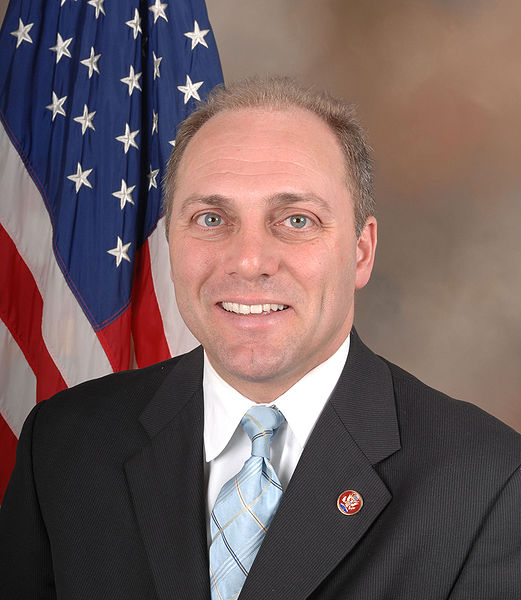
521px Steve Scalise House Conservative Leader Gives Al Jazeera Deal a Pass

Rep. Steve Scalise, a Republican from Louisiana who is the new chairman of the Republican Study Committee (RSC), believes Al Jazeera has a First Amendment right to expand its broadcasts in the United States and that a congressional investigation of Al Gore’s deal with the channel is not warranted.

Scalise, a self-described “staunch conservative,” is the new chairman of the RSC, which is the “caucus of House conservatives.” His action makes it increasingly unlikely that the House will exercise any oversight of Al Gore’s controversial sale of his Current TV channel to the mouthpiece of the Muslim Brotherhood.

The buyer is the Middle Eastern regime of Qatar, which owns Al Jazeera. The Qatar regime advertises itself as “America’s Strongest Partner in the Gulf” but has supported terrorist groups such as al Qaeda, Hezbollah, and Hamas. Osama bin Laden aide and 9/11 mastermind Khalid Sheikh Mohammed, who is currently in U.S. custody in Guantanamo Bay for acts of terrorism, lived and worked in Qatar but was allowed to leave for Pakistan as U.S. authorities were trying to apprehend him, according to the report of the 9/11 commission.

In Pakistan, Mohammed planned 9/11 and decapitated Wall Street Journal reporter Daniel Pearl, who was kidnapped while investigating the al-Qaeda networks in the Middle East.

Sarah E. Makin, Director of Conservative Coalitions and State Outreach at the House Republican Study Committee, told this journalist on Tuesday afternoon that she received an explanation of Scalise’s position on the Al Jazeera deal after consulting with aides to the congressman.

Conservatives had been asking Scalise to support an investigation on the grounds that a foreign-funded channel based in the Middle East, with a reputation for airing terrorist propaganda, should be examined for its ties to terrorist groups.

Foreigners are entitled to First Amendment protections in the United States, except when they run afoul of existing laws and engage in criminal or terrorist activities.

By offering the First Amendment excuse in favor of the deal, Scalise is ignoring the evidence that Al Jazeera is not a legitimate news operation but rather a conduit for propaganda from terrorist groups, with whom it has intimate and ongoing relations.

In the United States, it is against the law to provide material support to terrorists, with “material support” defined as including expert advice or assistance and communications equipment.

In World War II, Tokyo Rose and Axis Sally broadcast their anti-American diatribes from overseas and were apprehended by U.S. authorities after the war and sent to prison for treason. In the more shocking Al Jazeera case, the U.S. is officially still at war with global terrorism, but Al Gore is giving the channel a base of operations on American soil with access to 40-50 million homes.

Although it will be called “Al Jazeera America,” the channel will still be totally controlled and funded by the government of Qatar, which doesn’t permit freedom of the press in its own country.

Existing federal law requires that foreign propaganda broadcasts in the U.S. be labeled as such, a provision of the Foreign Agents Registration …read more
Source: FULL ARTICLE at Western Journalism

Obama to Visit Country for First Time

Obama to Visit Country for First Time

AP

President Obama has been repeatedly criticized for not traveling to one of the US‘s closest allies since he took office in 2008. Middle Eastern state he now plans to visit

Source: FULL ARTICLE at AOL

Oil down but jitters could make for choppy trade

Oil prices fell Monday following weeks of strong gains, while analysts warned that trading could be choppy amid growing tensions in the Middle East.

Benchmark oil for March delivery fell 46 cents at late afternoon Bangkok time to $97.31 per barrel in electronic trading on the New York Mercantile Exchange. The contract rose 28 cents to finish at $97.77 a barrel on the Nymex on Friday.

Israel on Sunday hinted that its air force may have been behind the airstrike on a missile site in Syria in order to destroy weapons it believes were headed for Lebanon, base of the militant anti-Israel group Hezbollah. Israel is also worried that Iran is moving closer to developing a nuclear weapon.

Nuclear talks involving all five permanent members of the U.N. Security Council plus Germany have made little headway, while several rounds of international sanctions have cut into Iran‘s oil sales and financial transactions.

“The market realizes that geopolitical jitters will escalate at the end of the U.N. talks with Iran. If Iran courts this nuclear enrichment program, then there is a risk of war in the Persian Gulf,” said Gordon Kwan, head of energy research at Mirae Asset Securities Ltd. A regional war could threaten energy supplies from Middle Eastern producers, sending oil prices higher.

Brent crude, used to price international varieties of oil, fell 38 cents to $116.42 a barrel on the ICE Futures exchange in London.

In other energy futures trading on Nymex:

— Wholesale gasoline fell 1.2 cent to $3.0418 per gallon.

— Natural gas was steady at $3.30 per 1,000 cubic feet.

— Heating oil fell 1 cent to $3.15 a gallon.

Source: FULL ARTICLE at Fox World News

Taliban peace talks flounder as troops draw down

The Afghan peace effort is floundering, fraught with mistrust and confusion among key players even though the hard-line Taliban militants show signs of softening and their reclusive, one-eyed leader made a surprise offer to share power in a post-war Afghanistan.

The U.S. and its allies hope the peace process, which began nearly two years ago, will gain traction before most international forces withdraw from the country in fewer than 23 months. But although the Taliban appear more ready to talk than ever before, peace talks remain elusive because of infighting among a rising number of interlocutors — all trying to get some kind of negotiations started.

Members of the Taliban are in contact with representatives from 30 to 40 different countries, according to senior U.S., Afghan and other officials The Associated Press interviewed in Afghanistan and Pakistan. Moreover, the relationship among the key players — the U.S., Afghanistan and Pakistan — is marked by distrust that keeps tugging momentum away from the peace process.

Many of the officials spoke on condition of anonymity because they were not authorized to speak publicly about the sensitive contacts with the Taliban.

Finding a path to the negotiating table will be a topic when Afghan President Hamid Karzai and Pakistan President Asif Zardari hold a series of meetings beginning Monday with British Prime Minister David Cameron. The meetings in London come amid fresh tensions between Kabul and its western allies.

Karzai recently warned the West not to use peace talks as a lever against his government. As well, both Kabul and Washington are frustrated that Pakistan is not monitoring the whereabouts and activities of Taliban prisoners it released in recent months. Miffed by the criticism, Pakistan says it freed the prisoners at the request of the Afghan government and doesn’t have the resources to keep tabs on them.

No one in either Pakistan or Afghanistan seems to know where the dozens of released prisoners have gone. Last week, the Taliban issued a statement by freed former Taliban Justice Minister Mullah Nooruddin Turabi on behalf of all the prisoners — an indication that at least some might have rejoined the ranks of the insurgency.

“There were no preconditions to their release and we are getting criticism from our own people inside Afghanistan about that and it is valid criticism,” said Ismail Qasemyar, a senior member of the Afghan High Peace Council.

The peace council, which Karzai set up to carry out peace negotiations, handed Pakistan the list of prisoners, including Turabi, that it wanted freed. They have also asked for the release of the Taliban’s former second in command, Mullah Abdul Ghani Baradar, but Washington has urged Pakistan not to release him, U.S. and Afghan officials said.

For its part, the United States has tried to accelerate the peace process by working with Britain, Norway and Germany to reach out to the Taliban, said a senior Western diplomat familiar with the negotiations. Both France and Tokyo have hosted meetings that have been attended by Afghan officials, opposition leaders and the Taliban, although the Taliban insist their participation should not be misinterpreted as negotiations.

One senior U.S. official said the process is so nascent and egos so fragile that it’s like negotiating a minefield. A European diplomat told the AP that there are so many backdoor talks going on that it’s hard to keep track of who is talking to whom.

This week, Karzai said he wanted an end to all these talks. Speaking at a water management conference in the Afghan capital, Karzai expressed suspicion that the peace process was being hijacked by the West to strengthen his opponents and undermine his government.

Karzai’s spokesman, Aimal Faizi, told The AP in an interview on the sprawling palace grounds in Kabul that the president was frustrated by what he perceives are attempts by his political opponents and the West, including the United States, to use the peace process to lay the groundwork for a post-2014 Afghanistan led by those hand-picked by them.

This latest flap between Karzai and the West could halt or at least delay the official opening of a Taliban office in the Middle Eastern state of Qatar. The office is intended to give the Taliban an address from which they can conduct peace talks. Faizi said Karzai supports the office “in principle,” with some conditions.

“This office should be used only as an address for talks between the Afghan government and the Taliban,” Faizi said. “This office should not be used for any other purpose.”

Faizi also said the president wants the Taliban to publicly announce that they will negotiate peace only with the Afghan High Peace Council. So far, the Taliban have resisted, although officials close to the president say privately that they appear to be softening their hard-line stance.

Taliban spokesman, Zabiullah Mujahid, seemed uncompromising when he spoke to The AP.

“There is no change in the policy of the Islamic Emirate of not talking to the Karzai government,” he said “The Karzai regime is powerless and installed by others. Real parties to the conflict are those who have committed aggression.”

But still the Taliban have shown signs of moderating their positions in recent months.

According to several Western officials, who are involved or knowledgeable about the process, the most telling sign of flexibility came in a statement issued late last year by Taliban leader Mullah Mohammed Omar. In the statement marking the Islamic holy holiday of Eid al-Adha, Omar for the first time offered to share power. He also said he had no interest in starting a civil war.

“As to the future political destiny of the country, I would like to repeat that we are neither thinking of monopolizing power nor intend to spark off domestic war,” he said.

While still firm on his demand for Sharia or Islamic law, in Afghanistan, the Taliban leader, who rarely speaks and has a $10 million bounty on his head, did seem to take a few steps back from the harsh and regressive edicts and interpretations of Islamic law that characterized the Taliban’s five-year rule. Many of those edicts were directed at women, denying them education and the right to work. He also seemed to extend an olive branch to Afghanistan‘s other ethnic groups.

“We will guarantee rights of both male and female of the country, build economic structures and strengthen social foundations and facilities of education for all people of the country,” he said.

But Omar’s flexibility only went so far. He still insisted on an Islamic education system. While the West has been pressing for secular education, many of Afghanistan‘s current leaders support a Quran-based education system.

A senior member of the High Peace Council, who met with Taliban on the sidelines of the two conferences in France and Tokyo, said they also vowed to make child marriages illegal and outlaw a common practice among ethnic Pashtuns to use their daughters as barter to settle disputes.

____

Kathy Gannon is AP Special Regional Correspondent for Afghanistan and Pakistan and can be followed on www.twitter.com/kathygannon

Source: FULL ARTICLE at Fox World News