Tag Archives: Khalid Sheikh Mohammed

Less fuss this time over NYC terror trial

The first court appearance for Osama bin Laden’s son-in-law and onetime propagandist unfolded at a Manhattan courthouse Friday without the fuss over security that the Obama administration encountered three years ago over its plan to hold a civilian trial for 9/11 mastermind Khalid Sheikh Mohammed.

There were no signs of unusual police activity around the court complex as lawyers for defendant Sulaiman Abu Ghaith entered a “not guilty” plea on his behalf. Public officials who had warned in 2009 that Mohammed’s very presence in New York would put civilians at risk said they didn’t have the same fears this time around.

“Times have changed,” said Michael Balboni, a top domestic security adviser to two New York governors.

Bin Laden is dead. Al-Qaida’s ability to launch a strike in the U.S. is greatly diminished. Other terror trials have proven the city can handle security with minimal cost and disruption. And in any case, Abu Ghaith was known as a “functionary” in the al-Qaida network, rather than a leader, and as such was far less likely to inspire reaction from bin Laden’s followers, said Balboni, New York‘s former deputy secretary of public safety.

“The NYPD is more than capable of locking down Foley Square and making sure they can protect anything going on there,” he said, referring to the part of the city where the trial is taking place.

New York City had a solid track record for handling major terrorism trials until the effort to bring Mohammed to justice collapsed amid opposition to his presence on U.S. soil. The thrust of that debate was over whether al-Qaida figures were more properly tried in a military court, but security challenges also loomed as a factor.

At the time, Mayor Michael Bloomberg said he planned to spend $200 million a year on extra security for the trial, which Obama ultimately moved to Guantanamo Bay, Cuba. Police Commissioner Raymond Kelly drew up a plan that would have created a “frozen zone” in vital business districts, involving thousands of extra officers and checkpoints for inspecting vehicles.

Since then, prosecutions of less infamous terror figures have quietly resumed in New York.

Three Queens men were prosecuted for plotting to bomb New York City’s subway system. An Egyptian preacher extradited from Great Britain is awaiting trial on charges that he conspired to set up a terrorist training camp and helped abduct American tourists …read more
Source: FULL ARTICLE at Fox US News

9/11 lawyers fear gov't eavesdropping at Gitmo

Lawyers for the five Guantanamo Bay prisoners charged in the Sept. 11, 2001, attacks want to know if U.S. government officials have been eavesdropping on their private conversations with the defendants.

The evidence for any such listening, the subject of a hearing scheduled to start Monday at this U.S. base in Cuba, is circumstantial.

At a hearing Jan. 28, the sound system in the Guantanamo courtroom was suddenly cut, to the surprise of even the judge. The judge later revealed that a government official, from an agency that the military has refused to disclose, was following the proceedings from outside the courtroom and intervened to prevent the potential release of classified information.

The judge, Army Col. James Pohl, later said the information was not classified and he ordered the undisclosed government agency to disconnect any equipment that could unilaterally cut the sound. He also released a transcript of the censored remarks.

But since the Jan. 28 incident, lawyers for the defendants say they have become more concerned about possible additional monitoring that they say would violate attorney-client privilege and make it impossible for them to represent men charged with aiding and planning the Sept. 11 attacks. At the hearing, they will be asking the judge to halt all proceedings until the issue is resolved.

“What happened in the courtroom (on Jan. 28) was shocking,” Army Capt. Jason Wright, one of the lawyers for lead defendant Khalid Sheikh Mohammed, said Sunday. “There was a wizard behind the curtain who had the power to completely cut off the audio feed to the proceedings, to censor what was being said in court. It would be foolish for us to not consider that capability in other areas where we interact with the accused.”

One concern is the audio system inside the high-tech courtroom overlooking Guantanamo Bay. The microphones at each defense table are so sensitive that officials are apparently capable of hearing even whispered conversations between the defense lawyers and their clients, attorney James Connell said. Other lawyers said they are also worried about possible monitoring of their conversations in rooms where they meet with the defendants.

The chief prosecutor, Army Brig. Gen. Mark Martins, said there is no evidence of any monitoring.

“My staff and I spent a full week diligently running every rumor to ground, and I can say unequivocally that no entity of the United States government …read more
Source: FULL ARTICLE at Fox World News

House Conservative Leader Gives Al Jazeera Deal A Pass

By Cliff Kincaid

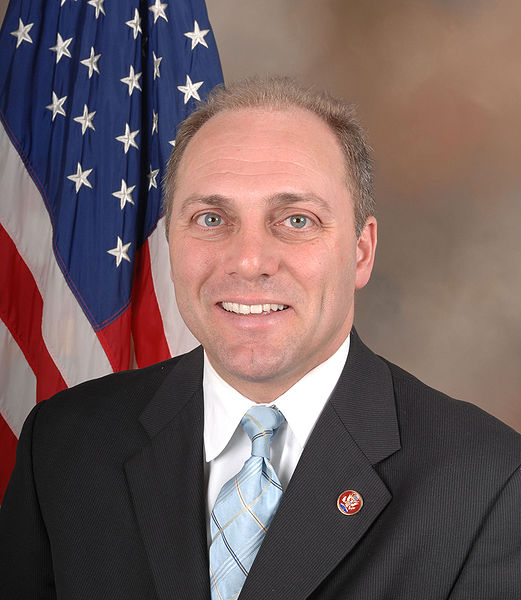
521px Steve Scalise House Conservative Leader Gives Al Jazeera Deal a Pass

Rep. Steve Scalise, a Republican from Louisiana who is the new chairman of the Republican Study Committee (RSC), believes Al Jazeera has a First Amendment right to expand its broadcasts in the United States and that a congressional investigation of Al Gore’s deal with the channel is not warranted.

Scalise, a self-described “staunch conservative,” is the new chairman of the RSC, which is the “caucus of House conservatives.” His action makes it increasingly unlikely that the House will exercise any oversight of Al Gore’s controversial sale of his Current TV channel to the mouthpiece of the Muslim Brotherhood.

The buyer is the Middle Eastern regime of Qatar, which owns Al Jazeera. The Qatar regime advertises itself as “America’s Strongest Partner in the Gulf” but has supported terrorist groups such as al Qaeda, Hezbollah, and Hamas. Osama bin Laden aide and 9/11 mastermind Khalid Sheikh Mohammed, who is currently in U.S. custody in Guantanamo Bay for acts of terrorism, lived and worked in Qatar but was allowed to leave for Pakistan as U.S. authorities were trying to apprehend him, according to the report of the 9/11 commission.

In Pakistan, Mohammed planned 9/11 and decapitated Wall Street Journal reporter Daniel Pearl, who was kidnapped while investigating the al-Qaeda networks in the Middle East.

Sarah E. Makin, Director of Conservative Coalitions and State Outreach at the House Republican Study Committee, told this journalist on Tuesday afternoon that she received an explanation of Scalise’s position on the Al Jazeera deal after consulting with aides to the congressman.

Conservatives had been asking Scalise to support an investigation on the grounds that a foreign-funded channel based in the Middle East, with a reputation for airing terrorist propaganda, should be examined for its ties to terrorist groups.

Foreigners are entitled to First Amendment protections in the United States, except when they run afoul of existing laws and engage in criminal or terrorist activities.

By offering the First Amendment excuse in favor of the deal, Scalise is ignoring the evidence that Al Jazeera is not a legitimate news operation but rather a conduit for propaganda from terrorist groups, with whom it has intimate and ongoing relations.

In the United States, it is against the law to provide material support to terrorists, with “material support” defined as including expert advice or assistance and communications equipment.

In World War II, Tokyo Rose and Axis Sally broadcast their anti-American diatribes from overseas and were apprehended by U.S. authorities after the war and sent to prison for treason. In the more shocking Al Jazeera case, the U.S. is officially still at war with global terrorism, but Al Gore is giving the channel a base of operations on American soil with access to 40-50 million homes.

Although it will be called “Al Jazeera America,” the channel will still be totally controlled and funded by the government of Qatar, which doesn’t permit freedom of the press in its own country.

Existing federal law requires that foreign propaganda broadcasts in the U.S. be labeled as such, a provision of the Foreign Agents Registration …read more
Source: FULL ARTICLE at Western Journalism

9/11 defendants won't respond to Guantanamo judge in pre-trial hearing

Two Sept. 11 defendants delayed the start of their hearing Monday at Guantanamo when they refused to respond to questions from their judge in the case.

Defense lawyers didn’t say what prompted the silent protest by self-proclaimed terrorist mastermind Khalid Sheikh Mohammed and one of five co-defendants at the military tribunal on the U.S. base in Cuba. Mohammed refused to say whether he approved the hiring of another attorney for him. Fellow defendant Walid bin Attash refused to say why he wanted a military lawyer removed from his team.

Their silence Monday delayed by about an hour the start of a four-day hearing on pretrial motions for the five Guantanamo prisoners charges in the death penalty case. The judge eventually granted the changes without statements from the men.

Source: FULL ARTICLE at Fox World News

Sept. 11 defendants won't respond to Gitmo judge

Two Sept. 11 defendants delayed the start of their hearing Monday at Guantanamo when they refused to respond to questions from their judge in the case.

Defense lawyers didn’t say what prompted the silent protest by self-proclaimed terrorist mastermind Khalid Sheikh Mohammed and one of five co-defendants at the military tribunal on the U.S. base in Cuba. Mohammed refused to say whether he approved the hiring of another attorney for him. Fellow defendant Walid bin Attash refused to say why he wanted a military lawyer removed from his team.

Their silence Monday delayed by about an hour the start of a four-day hearing on pretrial motions for the five Guantanamo prisoners charges in the death penalty case. The judge eventually granted the changes without statements from the men.

Source: FULL ARTICLE at Fox World News

Court rulings dim outlook for Guantanamo trials

A civilian appeals court has now reversed the verdicts of the only two Guantanamo Bay prisoners convicted in trials by military tribunal, casting a shadow over proceedings set to resume this week at the U.S. base in Cuba for the men accused in the Sept. 11 terrorist attack.

A federal appeals court on Friday threw out the military commission conviction of Ali Hamza al-Bahlul, who was charged with providing material support to terrorism and conspiracy for making propaganda videos for al-Qaida. That followed the dismissal in October of the conviction of Salim Hamdan, a driver for Osama bin Laden.

Al-Bahlul and Hamdan were the only prisoners convicted in a trial by the tribunals known as a military commission. The five other convictions of Guantanamo prisoners came through plea bargains.

There are two pending death penalty cases at Guantanamo: one against a prisoner accused of orchestrating the attack on the USS Cole in 2000, the other against five men accused of planning and aiding the Sept. 11 terrorist attacks. But the recent reversals have raised new questions about the use of military commissions in complex terrorism cases.

“The fact that no conviction can stand up on appeal does not bode well for the military commission system,” said James Connell, a lawyer for Ammar al-Baluchi, a Pakistani who is one of the five charged in the Sept. 11 attacks.

The U.S. Court of Appeals for the District of Columbia Circuit on Friday overturned al-Bahlul’s November 2008 conviction. In October, the court overturned Hamdan’s August 2008 conviction. In both cases, the reasoning was the same.

The court determined that before enactment of the Military Commissions Act of 2006, which authorized the tribunals for the terrorism suspects at Guantanamo, only violations of the international law of war and pre-existing federal offenses were subject to trial by military commission, a special court for wartime offenses. The court said the charges of material support for terrorism and conspiracy did not meet that standard.

The Justice Department let the deadline to appeal the Hamdan ruling expire, perhaps because he has already been released after serving his 5 ½ year sentence and is back home in Yemen with his family. But the government said it disagreed with the ruling in court papers and is likely to challenge the al-Bahlul ruling.

A Pentagon spokesman, Army Lt. Col. Todd Breasseale, said “the al-Bahlul ruling has no bearing on the substantive merits,” of the Sept. 11 case, which will be the subject of a four-day pretrial hearing scheduled to start Monday.

But the reversals hang like a cloud over the proceedings since the Sept. 11 case is vastly more complex than al-Bahlul or Hamdan, which were portrayed by officials at the time as warm-ups to the more significant prosecutions.

“It just shows just how shaky the entire military commission system is,” said Andrea Prasow, an attorney for Human Rights Watch who was part of the defense team when Hamdan was convicted at Guantanamo in August 2008.

The cases couldn’t be much more different. Hamdan was a relatively minor figure, dismissed as a “small player,” even by the military judge who presided over his trial. Al-Bahlul, now serving life at Guantanamo, didn’t even mount a defense.

The Sept. 11 case features five defendants facing the death penalty for charges that include nearly 3,000 counts of murder for their alleged roles in planning and helping orchestrate the worst terrorist attack on U.S. soil. Their May 5 arraignment was an unruly 13-hour spectacle, drawn out as the defendants refused to use the court translation system and ignored the judge, and any eventual conviction would face a multitude of appeals.

“Men’s lives are on the line,” Prasow said. “I think that’s all the more reason for the government to proceed very cautiously and make sure that it is confident that it has a firm legal basis upon which to pursue these charges.”

Already, the Hamdan and al-Bahlul cases are creating confusion in the Sept. 11 case.

The chief prosecutor for the Guantanamo tribunals, Army Brig. Gen. Mark Martins, sought to withdraw the charge of conspiracy in the Sept. 11 case, leaving seven charges against them.

“There are significant litigation risks attendant to proceeding with the joint conspiracy charge as a separate and stand-alone offense in the subject case,” Martins said in a motion released Friday.

But then his recommendation to withdraw the charge was overruled by Convening Authority Bruce MacDonald, a retired admiral who oversees the military commissions, who said the conspiracy charge was still under judicial review.

The debate over the conspiracy charge won’t be at issue at this week’s hearing. A judge set the four-day proceeding at the base hear arguments on about two dozen defense and prosecution motions that must be resolved prior to a trial that is likely at least a year away.

Among the motions is one from lawyers for the five defendants, who include self-professed terrorist mastermind Khalid Sheikh Mohammed, requiring the U.S. government to preserve the secret overseas prisons where the men were held, and subjected to harsh interrogations, before they were taken to Guantanamo. Those prisons, they argue, are potential evidence for claims that the prisoners were subjected to torture.

Source: FULL ARTICLE at Fox World News

KSM, Accused 9/11 Plotters to Face One Less Charge

By Kate Seamons The five men accused of plotting the 9/11 attacks will now face seven charges instead of eight, after the chief prosecutor yesterday moved to withdraw a conspiracy charge that he believed might not hold up on appeal. Khalid Sheikh Mohammed and four co-defendants still face charges that include just shy…
Source: FULL ARTICLE at Newser – Home