Tag Archives: Continental Resources

FTTN's Horizontal Well Speeds Toward Completion

By Business Wirevia The Motley Fool

Filed under:

FTTN’s Horizontal Well Speeds Toward Completion

BRADENTON, Fla.–(BUSINESS WIRE)– First Titan Corp. (OTCBB: FTTN) issued an update today on its horizontal well prospect in Logan County, Okla. The company reports that the first stage of a two-stage completion process has been completed.

After hitting the production zone with 4000 gallons of hydrochloric acid, workers are now pumping out the stimulation fluid from the well. In the second stage of completion, the zone will be fractured with a nitrogen foam acid.

Known as Breaux #2, the horizontal well has been engineered by its sponsor, Bedford Energy, Inc., with a reserve report that includes proven reserves of 160,000 barrels of oil and 1.5 billion cubic feet of natural gas, based on nearby wells. FTTN estimates that it could produce more than $14 million worth of resources.

Breaux #2 is one of many oil and gas assets across the U.S. in which FTTN owns a working interest. Drilling preparations are now underway at the company’s lease near South Lake Charles, La., and FTTN expects to dramatically increase its deal activity in the coming weeks as it pursues an aggressive expansion strategy.

FTTN is dedicated to continuing development of energy assets throughout the country, alongside companies such as Continental Resources, Inc. (NYS: CLR) , Chesapeake Energy Corp. (NYS: CHK) , SandRidge Energy Inc. (NYS: SD) and Ultra Petroleum Corp. (NYS: UPL) .

For more information on FTTN‘s oil and gas projects, please visit www.firsttitanenergy.com/investors.html.

About First Titan Corp.

First Titan Corp., through its wholly owned subsidiary, First Titan Energy, LLC, is committed to the exploration and development of oil and natural gas resources around the globe. The company continually seeks to partner with energy developers that are pursuing innovative new methods of oil and gas extraction, including the development of new technologies, cleaner methods and unconventional resources.

For more information about First Titan Energy, please visit www.firsttitanenergy.com. Follow us on Twitter at www.twitter.com/firsttitancorp.

Notice Regarding Forward-Looking Statements

Safe Harbor Statement under the Private Securities Litigation Reform Act of 1995: This news release contains forward-looking information within the meaning of

From: http://www.dailyfinance.com/2013/04/18/fttns-horizontal-well-speeds-toward-completion/

This State Quietly Became an Economic Powerhouse

By Travis Hoium, The Motley Fool

Filed under:

Over the past decade, no state has grown faster than North Dakota. It leads in GDP growth and personal income growth, and it has a wide lead in oil production growth. So how did one of the coldest, flattest, least populated states in the country become an economic hot spot?

The bang that led to a boom
Oil was discovered in western North Dakota in the Bakken formation in 1951, and for a long time there’s been a limited amount of drilling in that part of the state. Until recently, the technology didn’t yet exist to extract most of the oil trapped between rocks — shale oil — at an economical cost.

In the early to mid 2000s, companies such as Halliburton developed the technology to extract both oil and gas from shale plays economically, unlocking energy plays across the country. One of the largest plays in oil was the Bakken Shale in western North Dakota and eastern Montana, and companies flooded in to pick up as much land as possible.

Today, Continental Resources , Whiting Petroleum , Statoil , and Kodiak Oil & Gas have access to nearly 2 million combined acres ,equivalent to 1,280 square miles. They’re dotting the plains of western North Dakota with drilling rigs and production wells. All of this drilling has led to massive growth in oil production, which brings economic development and jobs to this once forgotten state. For a visual showing how fast oil production grew, click here to see a 25-year EIA time lapse of energy production in the Bakken. 

All of this oil production has been fabulous for the economy and the residents of North Dakota. Over the past decade, North Dakota‘s GDP has grown at an annual rate of 4.04%, which compares with 0.54% nationally. Only Oregon can compare, with 3.36% growth. Every other state in the country has grown at a compound rate of less than 2% over that time.

More jobs than the prairie can handle
The explosion in GDP growth hasn’t been enjoyed just among the oil big wigs: There’s been huge growth in personal incomes as well. According to the Bureau of Economic Analysis, since 2005 per capita personal income has grown at a compound rate of 7.25% in North Dakota, which is more than a 50% increase in salary over six years. That compares with just 2.69% in the U.S. and 4.19% in second-place Louisiana, which also benefits from the growth in oil production. Here’s a look at the top five states for personal income growth since 2005. 

Amazingly, there are 11 counties in North Dakota that have seen per capita personal income grow 11.48% or more per year over that time, nearly doubling salaries.

If you’re interested in one of these high-paying jobs, you might have to find a home on

From: http://www.dailyfinance.com/2013/04/14/how-north-dakota-quietly-became-an-economic-powerh/

China Will Take the Top Spot That America No Longer Wants

By Matt DiLallo, The Motley Fool

Filed under:

As Americans, we’re a pretty competitive bunch. We’re never thrilled to see our country slip from the top spot of any standing. However, I’d venture to say we’d be downright giddy to give up the top spot, to China no less, when it comes to our oil imports.

That’s exactly what’s on track to happen according to OPEC. The oil consortium now believes that China will overtake the U.S. as the top crude oil importer by 2014. According to the group’s analysis, China oil imports are expected to top 6 million barrels per day this year while U.S. imports are expected to decline below 6 million barrels per day by 2014.

We’re really seeing a monumental shift in demand. However, the shift isn’t completely due to China‘s voracious demand for energy. Last December, China‘s crude oil imports rose just 1.3% to 5.57 million barrels a day. What’s changing is U.S. demand, which plunged 21% last year.

Two main factors have contributed to plunging demand stateside. First, Americans have simply stopped driving as much as we had in the past. Overall, the annual driving per person has slipped by almost 8% since 2005. While the sluggish economy has played a role, it’s not the driving force behind our driving less. Instead, there seems to be an overall shift in our driving pattern which by the end of the day has us using less gas.

The other major factor contributing to the decline in our oil imports is the fact that we’re producing a lot more oil. According to OPEC, “the shale boom in the U.S. is threatening to drastically reduce America’s oil import needs.” As an American, that statement should make you feel proud.

Last year our domestic crude oil output rose to nearly 7.2 million barrels of oil per day, which is the most we’ve produced since the early 1990s. Overall, we produced 84% of our own energy needs last year. According to the International Energy Agency, we could become the largest global oil producer by 2020, while North America could be a net exporter of oil by 2030.

We’re simply seeing stunning production growth here in the U.S. In the Bakken, for example, Continental Resources projects that its production and reserves will increase threefold by 2017. Meanwhile, smaller producers like Kodiak Oil & Gas have seen production grow by triple digits every year since 2010. The company, which expects to drill 75 more wells this year, estimates that it can drill another 950 wells in the future.

Other formations with significant oil resources are still emerging. In the Mississippi Lime formation of Oklahoma and Kansas, SandRidge Energy believes it can drill 11,000 wells over the next 18 years. The company more than doubled its production year over year and it has an ambitious plan to continue growing.

Finally, more well-known production basins like the Gulf of Mexico continue to show they still have some life left. Just

From: http://www.dailyfinance.com/2013/04/13/china-will-take-the-top-spot-that-america-no-longe/

FTTN in Negotiations to Acquire Producing Oil and Gas Assets in Hardin County, Texas

By Business Wirevia The Motley Fool

Filed under:

FTTN in Negotiations to Acquire Producing Oil and Gas Assets in Hardin County, Texas

BRADENTON, Fla.–(BUSINESS WIRE)– First Titan Corp. (OTCBB: FTTN), a fast-growing energy company, announced today it is in negotiations to acquire a working interest in approximately 1,000 acres in Hardin County, Texas. The subject properties include producing assets with development upside.

Located on the Texas Gulf Coast, the assets are in an area that has been targeted by oil and gas companies for several decades. If acquired, the assets will be added to the company’s Texas portfolio, which currently includes assets in Terrell County.

April has been a busy month for FTTN. In addition to hiring new energy consultants to help scout new opportunities, the company is working to facilitate oil and gas production in Oklahoma and Louisiana. These activities are part of FTTN‘s aggressive growth strategy for 2013. FTTN hopes to announce many new acquisitions in the coming months.

FTTN is a fast-growing oil and gas company dedicated to continuing development of energy assets throughout the country, alongside companies such as Continental Resources, Inc. (NYS: CLR) , Chesapeake Energy Corp. (NYS: CHK) , SandRidge Energy Inc. (NYS: SD) and Ultra Petroleum Corp. (NYS: UPL) .

For more information on FTTN‘s oil and gas projects, please visit www.firsttitanenergy.com/investors.html.

About First Titan Corp.

First Titan Corp., through its wholly owned subsidiary, First Titan Energy, LLC, is committed to the exploration and development of oil and natural gas resources around the globe. The company continually seeks to partner with energy developers that are pursuing innovative new methods of oil and gas extraction, including the development of new technologies, cleaner methods and unconventional resources.

For more information about First Titan Energy, please visit www.firsttitanenergy.com. Follow us on Twitter at www.twitter.com/firsttitancorp.

Notice Regarding Forward-Looking Statements

Safe Harbor Statement under the Private Securities Litigation Reform Act of 1995: This news release contains forward-looking information within the meaning of Section 27A of the Securities Act of 1933, as amended, and Section 21E of the Securities Exchange Act of 1934, as amended, including statements that include the words “believes,” “expects,” “anticipate” or similar expressions. Such

From: http://www.dailyfinance.com/2013/04/11/fttn-in-negotiations-to-acquire-producing-oil-and-/

PBF Energy Announces Supply Agreement with Continental Resources for Bakken Crude Oil

By Business Wirevia The Motley Fool

Filed under:

PBF Energy Announces Supply Agreement with Continental Resources for Bakken Crude Oil

PARSIPPANY, N.J.–(BUSINESS WIRE)– PBF Energy Inc. (NYS: PBF) announced today the signing of an agreement with Continental Resources Inc. (NYS: CLR) to supply PBF with Bakken crude oil, which will be delivered by rail to PBF‘s double-loop track at its refinery in Delaware City, DE.

Commenting on the transaction, Don Lucey, PBF‘s Chief Commercial Officer, said, “We are pleased to be working directly with Continental Resources, a leader in domestic crude oil production and a major producer and supplier in the Bakken play. We look forward to growing our relationship with them.”

Continental Resources is the largest producer and leaseholder in the Bakken, with significant supply arrangements with refiners on the West Coast, the Gulf Coast, and now the East Coast. Continental Resources President and Chief Operating Officer, Rick Bott, added, “This unique transaction illustrates the emerging shift in the light sweet crude market. In addition to diversifying Continental’s customer base and streamlining our value chain, it allows us to deliver unblended premium Bakken crude to the East Coast – a market that has historically been driven by imports of foreign oil.”

PBF‘s Chief Executive Officer, Tom Nimbley, said, “PBF has made significant investments in acquiring rail cars and developing our East Coast rail delivery infrastructure to increase our access to North American crude oil, which positions PBF to benefit from these cost-advantaged crudes. Delaware City‘s heavy and light crude rail discharge facilities allow us to work directly with producers in Canada and the Mid-continent, like Continental Resources, and provide us with a competitive advantage versus northeast refiners that rely on third parties to deliver North American crude oil.”

PBF also announced that the company opened a new office in Oklahoma City. This office, along with PBF‘s Calgary, Alberta office, will focus on sourcing North American crude oils and feedstocks for the company’s refineries.

PBF: Forward-Looking Statements

Statements in this press release relating to future plans, results, performance, expectations, achievements and the like are considered “forward-looking statements” within the meaning of the Private Securities Litigation Reform Act of 1995. These forward-looking statements involve known and unknown risks, uncertainties and other factors, many of which may be beyond the company’s (PBF Energy Inc. and subsidiaries) control, that may cause actual results to differ materially from any future results, …read more

Source: FULL ARTICLE at DailyFinance

CAPScall of the Week: WPX Energy

By Sean Williams, The Motley Fool

Filed under:

For years, satirical late-night TV host Stephen Colbert has been running a series on his show called “Better Know a District,” which highlights one of the 435 U.S. congressional districts and its representative. While I am no Stephen Colbert, I am brutally inquisitive when it comes to the 5,000-plus listed companies on the U.S. stock exchanges.

That’s why I’ve made it a weekly tradition to examine one seldom-followed company within the Motley Fool CAPS database, and make a CAPScall of outperform or underperform on that company.

For this week’s round of “Better Know a Stock,” I’m going to take a closer look at WPX Energy .

What WPX Energy does
WPX Energy is an independent oil and gas exploration and production company, with wells in the Bakken and Marcellus shales, as well as the Piceance, Powder River, and San Juan basins. It also holds a majority interest in Apco Oil & Gas, which operates out of Argentina and Colombia. WPX‘s 2012 end reserves totaled 4.65 trillion cubic feet of natural gas equivalent including its overseas assets, and claimed a mixture of about 75% gas and 25% liquids (oil and natural gas liquids). 

In the fourth quarter, WPX reported 40% growth in oil production, 3% growth in natural gas liquid production, and 2% natural gas production growth during the quarter. However, WPX still lost $1.12 for the year as the company experienced a 22% decline in realized natural gas prices, and it wrote down $225 million in non-cash impairments because of the falling price of natural gas.

Whom it competes against
WPX has a triple threat it has to contend with: its competitors, the spot price for natural gas, and the rising costs of E&P.

As you might imagine, a finite amount of land available for exploration makes finding valuable natural gas and liquid assets quite the premium. According to my Foolish colleague Tyler Crowe, 12% of WPX’s assets are oil-based, of which many lie in the oil-rich Bakken Shale. This formation is known for its high-yielding oil reserves and is led by Continental Resources and EOG Resources . One smart tactic nearly all Bakken producers are using is shipping their oil production by rail to Louisiana terminals instead of selling it at the wellhead or in Cushing, Okla., because Brent prices at shipping terminals in Louisiana are paying out significantly more. In December, the North Dakota Pipeline Authority estimated that 64% of daily production was being shipped this way, which makes for plenty of extra profits for all involved — especially WPX, which saw oil production growth of 98% in the Bakken in the fourth quarter.

Realized natural gas prices can also be a friend or a foe, depending upon how you look at things. Chesapeake Energy , for example, leaned very heavily toward natural gas production as recently as early last year. However, weak natural gas prices necessitated a shift away from nat-gas drilling and production and toward Chesapeake’s more liquid-rich assets. …read more

Source: FULL ARTICLE at DailyFinance

FTTN Explores Mergers & Acquisitions as a New Expansion Strategy

By Business Wirevia The Motley Fool

Filed under:

FTTN Explores Mergers & Acquisitions as a New Expansion Strategy

BRADENTON, Fla.–(BUSINESS WIRE)– With two new oil wells scheduled to begin producing in the coming weeks, 2013 is set to be a year of major growth for First Titan Corp. (OTCBB: FTTN). The company announced today that it is now pursuing new asset acquisitions and corporate mergers to facilitate additional expansion this spring.

“While we continue to build our oil and gas asset base, we are evaluating ancillary assets such as transportation infrastructure, marketing platforms and technological innovations that would further compliment the FTTN portfolio,” said CEO Harvey S. Bryant. “We’re particularly interested in working with individuals and companies who own oil and gas assets who would benefit from our development assistance and access to the public markets.”

First Titan is currently evaluating several oil and gas asset acquisitions in Texas as potential additions to the working interests that FTTN currently owns. Drilling preparations are now underway at the company’s lease near South Lake Charles, La., and its horizontal well prospect in Logan County, Okla., is rigged up and ready for completion. FTTN expects to dramatically increase its deal activity in the coming weeks as these projects begin to pay off for the company.

FTTN is dedicated to continuing development of energy assets throughout the country, alongside companies such as Continental Resources, Inc. (NYS: CLR) , Chesapeake Energy Corp. (NYS: CHK) , SandRidge Energy Inc. (NYS: SD) and Ultra Petroleum Corp. (NYS: UPL) .

For more information on FTTN‘s oil and gas projects, please visit www.firsttitanenergy.com/investors.html.

About First Titan Corp.

First Titan Corp., through its wholly owned subsidiary, First Titan Energy, LLC, is committed to the exploration and development of oil and natural gas resources around the globe. The company continually seeks to partner with energy developers that are pursuing innovative new methods of oil and gas extraction, including the development of new technologies, cleaner methods and unconventional resources.

For more information about First Titan Energy, please visit www.firsttitanenergy.com. Follow us on Twitter at www.twitter.com/firsttitancorp.

Notice Regarding Forward-Looking Statements

Safe Harbor Statement under the Private Securities Litigation Reform Act of …read more

Source: FULL ARTICLE at DailyFinance

Is Kodiak Oil & Gas Destined for Greatness?

By Alex Planes, The Motley Fool

Filed under:

Investors love stocks that consistently beat the Street without getting ahead of their fundamentals and risking a meltdown. The best stocks offer sustainable market-beating gains, with robust and improving financial metrics that support strong price growth. Does Kodiak Oil & Gas fit the bill? Let’s take a look at what its recent results tell us about its potential for future gains.

What we’re looking for
The graphs you’re about to see tell Kodiak’s story, and we’ll be grading the quality of that story in several ways:

  • Growth: are profits, margins, and free cash flow all increasing?
  • Valuation: is share price growing in line with earnings per share?
  • Opportunities: is return on equity increasing while debt to equity declines?
  • Dividends: are dividends consistently growing in a sustainable way?

What the numbers tell you
Now, let’s look at Kodiak’s key statistics:

KOG Total Return Price data by YCharts.

Passing Criteria

3-Year* Change 

Grade

Revenue growth > 30%

3,500%

Pass

Improving profit margin

414.5%

Pass

Free cash flow growth > Net income growth

(2,468.9%) vs. 5,233.8%

Fail

Improving EPS

2,600%

Pass

Stock growth (+ 15%) < EPS growth

274.8% vs. 2,600%

Pass

Source: YCharts.
*Period begins at end of Q4 2009.

KOG Return on Equity data by YCharts.

Passing Criteria

3-Year* Change

Grade

Improving return on equity

331.7%

Pass

Declining debt to equity

694.1%

Fail

Source: YCharts.
*Period begins at end of Q4 2009.

How we got here and where we’re going
Kodiak puts up the sort of strong performance — with some caveats — that you might expect out of a fast-growing oil exploration upstart. Free cash flow is in the tank, and debt has risen dramatically, but shouldn’t investors expect such financial trends of a company that’s rapidly expanding its production capacity? The major concerns going forward will revolve around whether this dramatic growth can continue, and whether it can continue in a way that will reverse the free cash flow bleed and bring debt to equity back down again.

Some of our Foolish energy analysts have taken a closer look at Kodiak since its latest earnings report, and they’ve generally come away with positive conclusions. Contributor Matt DiLallo points out that Kodiak’s debt is offset by a fairly deep pool of liquidity, and that Kodiak has done a much better job than larger peers Chesapeake Energy and SandRidge Energy at operating within its financial capacity, which means it’s unlikely to be forced to sell large swaths of promising acreage, as both companies have in the past year. Although free cash flow remains in the dumps, Kodiak’s operating cash has moved into positive territory.

Matt points to Kodiak’s high cost of drilling a well problem as one problem area preventing stronger cash flows. At roughly $10 million per well, Kodiak’s sinking wells with far less fiscal prudence than fellow Bakken players Whiting Petroleum or Continental Resources , which both report well …read more

Source: FULL ARTICLE at DailyFinance

FTTN Hires Energy Consultants to Scout High-Potential Oil &amp; Gas Targets

By Business Wirevia The Motley Fool

Filed under:

FTTN Hires Energy Consultants to Scout High-Potential Oil & Gas Targets

BRADENTON, Fla.–(BUSINESS WIRE)– First Titan Corp. (OTCBB: FTTN) announced today that it has hired Pimuro Capital Partners, LLC, to source and evaluate high-potential oil and gas opportunities on behalf of the company.

Pimuro Capital Partners possesses strong business ties throughout the U.S. energy sector and will provide a broad base of services to FTTN. The firm’s principles have previously advised companies including ConocoPhillips, Marubeni Corporation, PetroSA, Cygnus Oil & Gas, McMoRan Exploration Co., Chevron, Sojitz, RepsolYPF and Cano Petroleum, Inc. The firm specializes in assisting companies seeking merger and acquisition advisory, general corporate finance advisory and private capital raise services.

“Pimuro will assist FTTN with sourcing and analyzing promising new opportunities as the company works to increase its oil and gas asset base in this booming industry,” said FTTN CEO Harvey S. Bryant. “Pimuro may also assist FTTN in sourcing capital to further propel the company’s growth.”

Pimuro’s assistance may soon prove invaluable as FTTN pursues a highly ambitious plan for growth in 2013. The company’s well in Alabama’s Little Cedar Creek Field is already operating at maximum permitted output, and work is now underway in Logan County, Okla., where the company is completing its horizontal well prospect. Additionally, drilling preparations have begun at the company’s lease near South Lake Charles, La.

Regardless of the high-level of activity being undertaken by the company currently, FTTN isn’t slowing down. The company is dedicated to continuing development of energy assets throughout the country, alongside companies such as Continental Resources, Inc. (NYS: CLR) , Chesapeake Energy Corp. (NYS: CHK) , SandRidge Energy Inc. (NYS: SD) and Ultra Petroleum Corp. (NYS: UPL) .

For more information on FTTN‘s oil and gas projects, please visit www.firsttitanenergy.com/investors.html.

About First Titan Corp.

First Titan Corp., through its wholly owned subsidiary, First Titan Energy, LLC, is committed to the exploration and development of oil and natural gas resources around the globe. The company continually seeks to partner with energy developers that are pursuing innovative new methods of oil and gas extraction, including the development of new technologies, cleaner methods and unconventional resources.

For more information about First Titan Energy, please visit www.firsttitanenergy.com. Follow us on Twitter …read more
Source: FULL ARTICLE at DailyFinance

The 3 Biggest Energy Story Lines of 2013

By Matt DiLallo, The Motley Fool

Filed under:

As the first quarter of 2013 draws to a close, I thought it would be a good time to take a step back and reflect on what’s happened in the energy industry so far this year. It’s been an eventful first quarter, with several themes continuing to emerge. However, three story lines are becoming what I believe to be the biggest stories in energy.

Buffett was right about the rails
When Warren Buffett’s Berkshire Hathaway bought Burlington Northern Railroad, some thought he’d lost his mind. We all know that railroads ship coal, and that’s not exactly a favorite fuel these days. However, as is so often the case, Buffett was right.

However, it’s not coal that’s driving profits at the rails; its oil. Because of pipeline constraints coming out of the Bakken and the Canadian Oil Sands, producers have turned to the rails to get the oil to market. Not only has that fueled profits at for railroads, but it’s also really helped to pad the bottom lines of refiners.

Despite the higher shipping costs, refiners love rail because they can access cheaper North American crude oil. Phillips 66 is one of the biggest champions of crude oil by rail, recently signing several deals to have cheaper crude delivered to its East and West Coast refineries. It’s using all means possible to get oil to its refineries, with rail being a key cog in the supply chain.

Expect this theme to continue to pick up steam in the coming years. It costs billions to build new pipeline infrastructure, and if the Keystone XL is any indication, it will take some major political maneuvering to get new pipeline routes approved. That just means more crude oil will be taking a ride on the rails.

The Bakken is still beautiful
One of the reasons the rails are doing so well is that the Bakken is producing more oil than our current pipeline system can handle. Top Bakken oil producer Continental Resources saw its production jump 58% in 2012. That’s just the tip of the iceberg for the company, as it expects production to grow threefold by 2017. President and COO Rick Bott sums up the story pretty well:  

“We’ve recently seen a significant improvement in Bakken oil price differentials, reflecting higher volumes being shipped by rail to the coasts and the anticipation of increased pipeline capacity. … We now have excess transportation capacity in both pipe and rail, and, with additional infrastructure projects in the planning and construction stages, capacity should remain ahead of Bakken production growth.”

This is good news for continued growth in the region, and Continental isn’t the only one enjoying this growth. Smaller producers such as Kodiak Oil & Gas have seen triple-digit annual production growth since 2010. That’s driving massive growth for the company, and wealth creation for its shareholders. Kodiak’s shares are up more than 400% over the past five years. 

Overall production in …read more
Source: FULL ARTICLE at DailyFinance

Do We Still Need the Strategic Petroleum Reserve?

By Matthew DiLallo, The Motley Fool

Filed under:

Last week T. Boone Pickens put out a video blog post questioning whether we really needed to keep our vast Strategic Petroleum Reserves, or SPR, stocked with oil. According to Pickens, we have about 750 million barrels of crude oil just sitting in storage. Given the massive oil production growth we’re seeing here in the U.S., he thinks that we should start trimming these reserves. My question is whether that’s really a good enough reason to end this insurance policy.

Before we get to that question, let’s get a quick refresher on the SPR. It was established in the aftermath of the 1973-1974 oil embargo to provide the U.S. economy with a temporary solution to alleviate future oil shocks. Currently, we have just shy of 700 million barrels of oil in the SPR and its current capacity is 727 million barrels of oil. The oil is stored in salt domes at four different sites along the Gulf Coast.

Salt domes are also widely used to store natural gas. These vast underground storage facilities offer both security and are a much cheaper storage option than aboveground storage tanks. When these reserves are needed we can draw down about 4.4 million barrels of per day for about five months.

The reserves, which are owned by the U.S. Government, cost us an average of $29.76 per barrel, which means that Uncle Sam is sitting on quite the paper profit. Boone thinks the reserves are no longer necessary and that its time to start cashing out and sell our stockpile.

The crux of his argument is that the SPR was designed to protect us from an interruption of oil imports from OPEC. He notes that we import about 4 million barrels per day from OPEC, though only about 2 million barrels per day come from the Middle East. According to Boone, with the growth of our oil production we don’t need to protect ourselves from these Middle Eastern supply shocks.

That begs the question: Are we really on pace to produce enough oil to eliminate the need for the SPR? Consider the Bakken: In January of 2011 the shale was producing about 275,000 barrels of oil per day. By last December, production had skyrocketed to 700,000 barrels of oil per day. The Bakken is probably pumping more than 800,000 barrels of oil per day now, and it has an inventory of more than 30,000 future wells that can be drilled.

It’s possible that North Dakota eventually tops Texas as the nation’s leading oil-producing state. Leading Bakken oil producer Continental Resources sees its production and proven reserves tripling between 2012 and 2017. That’s truly breathtaking growth. It’s even more remarkable when you consider that exploration and production companies with a global profile like ExxonMobil and ConocoPhillips only expect production growth to hit around 2%-5% annually over the same time frame. The truth of the matter is that both companies would face a …read more
Source: FULL ARTICLE at DailyFinance

Prep Work Begins at FTTN's Louisiana Drilling Site

By Business Wirevia The Motley Fool

Filed under:

Prep Work Begins at FTTN’s Louisiana Drilling Site

BRADENTON, Fla.–(BUSINESS WIRE)– First Titan Corp. (OTCBB: FTTN), a fast-growing domestic energy company, announced today that drilling preparations are now underway at the company’s lease near South Lake Charles, La.

The South Lake Charles prospect is one of two working interests that FTTN owns in Louisiana, one of the nation’s top energy producing states. Two wells have produced 21.3 billion cubic feet of gas and 1.7 million barrels of oil in the South Lake Charles field. There is a proved trapping fault block on the west flank of the field, up-dip to production.

Currently, FTTN and its partners are standing by while the site is cleared and leveled, access roads are completed, water is sourced, and a reserve pit is dug. When that’s complete, work will begin to rig up the location. FTTN expects drilling to begin next month.

The South Lake Charles site is one of numerous prospective wells in which FTTN owns a working interest across the U.S. Last week, the on-site drilling rig touched bottom at 7,300 feet on the partially drilled well at FTTN‘s lease in Logan County, Okla. The company expects to have three wells producing across the country in a matter of weeks—an important milestone in FTTN‘s ambitious domestic energy plans.

FTTN is dedicated to developing new energy solutions to compete in a booming global industry alongside Continental Resources, Inc. (NYS: CLR) , Chesapeake Energy Corp. (NYS: CHK) , SandRidge Energy Inc. (NYS: SD) and Ultra Petroleum Corp. (NYS: UPL) .

For more information on FTTN‘s oil and gas projects, please visit www.firsttitanenergy.com/investors.html.

About First Titan Corp.

First Titan Corp., through its wholly owned subsidiary, First Titan Energy, LLC, is committed to the exploration and development of oil and natural gas resources around the globe. The company continually seeks to partner with energy developers that are pursuing innovative new methods of oil and gas extraction, including the development of new technologies, cleaner methods and unconventional resources.

For more information about First Titan Energy, please visit www.firsttitanenergy.com. Follow us on Twitter at www.twitter.com/firsttitancorp.

Notice Regarding Forward-Looking Statements

…read more
Source: FULL ARTICLE at DailyFinance

The Next Great American Energy Play

By Tyler Crowe, The Motley Fool

Filed under:

In sports, people love to hear about the next big thing. That sense of potential makes us tune in to see what all the chatter is about. So in the spirit of seeking future greats, let’s look at an unconventional energy play in the U.S. that has some industry experts proclaiming it as the next great American energy play.

Sizing it up
Using the same sports analogy, we need a standard to compare with. Much as basketball fans use the term “the next Jordan” as the bar of excellence, oil companies use two unconventional shale plays as the standard bearers for the industry: the Eagle Ford and the Bakken. While there’s some debate as to which play is better than the other, it’s not too much of a stretch to claim that they’re head and shoulders above the other areas. 

Although both energy plays are different in many ways, they both have one thing in common: a strong liquids portfolio. So when we talk about the next great American energy play, we’re going to make sure it isn’t a gas-heavy giant like the Marcellus shale. The Bakken has a distinct advantage in the type of crude it produces. Continental Resources‘ wells in the Bakken are producing crude with an average API gravity of 42 degrees, a sulfur content about one-third less than other U.S. crudes, and one of the highest gasoline percentages of any crude in the country.

The Eagle Ford‘s advantage comes from its location. Hugging the Rio Grande just before it spills into the Gulf of Mexico, the basin has the advantage of being right next to the heart of America’s oil and gas refining. Being so close to this region, which has been in the energy business for more than a century, also gives it a robust pipeline infrastructure to move product to its final destination.  

So if you’re scoring at home, we want a liquids-heavy play with high-quality crude and immediate access to pipelines and refineries. 

So what’s the SCOOP with this new energy play? 

Source: U.S. Geological Survey

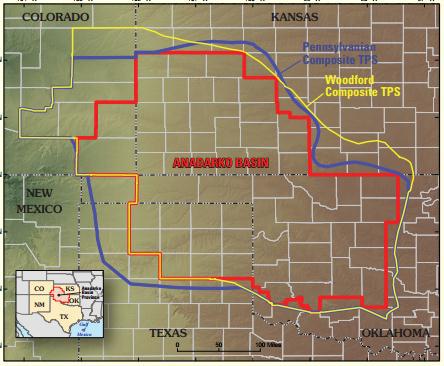
The next great energy play has yet to come up with a definitive name, because it more or less straddles the Woodford shale and the Anadarko basins. Some have come to know it as the Anadarko-Woodford formation. Others call it the South Central Oklahoma Oil Province, or SCOOP. Whatever you want to call it, you should pay attention, because it could be making a big splash in the American energy market very soon.

How does this basin rate based on the criteria I just mentioned? Like the Eagle Ford, it has multiple fairways depending upon what you want to drill for. In Continental’s recent investor-day presentation on SCOOP, it said liquids content in the oil fairway were has high as 85%, but it also has NGL and gas fairways mixed in where a company can expect as much as 40% gas. With API gravity ranging from 45 to 60 …read more
Source: FULL ARTICLE at DailyFinance

Secret Winners in the North Dakota Oil Story

By Aimee Duffy, The Motley Fool

Filed under:

North Dakota has the lowest rate of unemployment in the U.S. right now. Some of its cities are facing unprecedented population growth and still, there are jobs aplenty. Why? Because of oil. A recent post by our friends at the Energy Information Administration, or EIA, points out that at the end of last year crude oil and lease condensate production had reached an all-time high of 770,000 barrels per day. That’s impetus enough to take a closer look at the state and highlight a few investment opportunities.

The data
North Dakota‘s success is relatively new. Ten years ago the state was averaging oil production of fewer than 100,000 barrels per day. Production started to ramp up in 2008 and has grown exponentially since then:

Source: EIA

Unbelievably, production has grown by more than 200,000 barrels per day in one year and the state now accounts for more than 10% of all American oil production. 

Almost all of this growth can be attributed to horizontal drilling and hydraulic fracturing in the Bakken Shale. In fact, 95% of the wells drilled in North Dakota utilize hydraulic fracturing to bust open shale rock and free the crude oil trapped inside. 

The trend
The top three producers in North Dakota are Continental Resources, Hess , and Whiting Petroleum . Whiting and upstart Kodiak Oil & Gas have some of the lowest drilling times in the Bakken, while Hess has one of the highest.

For all intents and purposes, oil production in the Bakken is the same as it is in any shale play. Drill a well, fracture, pump oil to the surface. Once it gets there, however, the story changes. Pipeline capacity in North Dakota is woefully insufficient. As a result, 75% of the state’s oil production is loaded into a truck and taking to rail loading sites where it is then shipped out to refineries. 

Unconventional winners
With that in mind, investors will do well to consider who touches this crude as it travels from wellhead to market. And forget about what you know about the midstream industry. Traditional pipeline players like ONEOK Partners have already been burned as producers refused to commit to its Bakken crude pipeline proposal last year. Instead, look at players like Enbridge that are expanding rail infrastructure from North Dakota to the East Coast — a very lucrative market — to capitalize on this new transportation paradigm.

In fact, forget about what you know about refiners at the same time. East Coast refining was supposed to be dead, but Bakken crude is making a Frankenstein out of the industry. PBF Energy is a perfect example of this. The company has built a rail unloading facility at its Delaware City refinery and is looking to replace its slate of expensive foreign crudes with North Dakota‘s cheap stuff.

Foolish takeaway
Our first thought when oil production ramps up is to focus on the …read more
Source: FULL ARTICLE at DailyFinance

FTTN's Horizontal Well is Rigged Up and Ready for Completion

By Business Wirevia The Motley Fool

Filed under:

FTTN’s Horizontal Well is Rigged Up and Ready for Completion

BRADENTON, Fla.–(BUSINESS WIRE)– First Titan Corp. (OTCBB: FTTN) announced today that its horizontal well prospect in Logan County, Okla., is now rigged up and ready to complete.

Known as Breaux #2, the well has been engineered by its sponsor, Bedford Energy, Inc., with reserve report that includes proven reserves of 160,000 barrels of oil and 1.5 billion cubic feet of natural gas, based on nearby wells. The company estimates that it could produce more than $14 million worth of resources.

FTTN acquired a working interest in Breaux #2 last year.

This week, the on-site drilling rig touched bottom at 7,300 feet on the partially drilled well. The next step will be to begin work on the lateral hole and inserting pipe.

Executives expect that it will be an exciting spring for the company, with FTTN‘s lease near South Lake Charles, La., is now being prepped for drilling, as well.

FTTN expects to have three wells producing across the U.S. shortly. It’s only the beginning of the company’s ambitious domestic energy plans.

FTTN is dedicated to developing new energy solutions to compete in a booming global industry alongside Continental Resources, Inc. (NYS: CLR) , Chesapeake Energy Corp. (NYS: CHK) , SandRidge Energy Inc. (NYS: SD) and Ultra Petroleum Corp. (NYS: UPL) .

For more information on FTTN‘s oil and gas projects, please visit www.firsttitanenergy.com/investors.html.

About First Titan Corp.

First Titan Corp., through its wholly owned subsidiary, First Titan Energy, LLC, is committed to the exploration and development of oil and natural gas resources around the globe. The company continually seeks to partner with energy developers that are pursuing innovative new methods of oil and gas extraction, including the development of new technologies, cleaner methods and unconventional resources.

For more information about First Titan Energy, please visit www.firsttitanenergy.com. Follow us on Twitter at www.twitter.com/firsttitancorp.

Notice Regarding Forward-Looking Statements

Safe Harbor Statement under the Private Securities Litigation Reform Act of 1995: This news release contains forward-looking information within …read more
Source: FULL ARTICLE at DailyFinance

Do You Live in a Top-5 Oil-Producing State?

By Aimee Duffy, The Motley Fool

Filed under:

Yesterday, the Energy Information Administration, or EIA, published a brief post about North Dakota‘s continued growth in oil production. The state routinely makes headlines for its black gold, low unemployment, and lack of available real estate. All of the talk about North Dakota makes now a good time to step back and look at how the oil story is progressing in the rest of the United States‘ top oil-producing states: Oklahoma, Alaska, California, and Texas. Together they produce more than 60% of all of America’s oil.

First, some stats
The U.S. produced roughly 7.03 million barrels of oil per day by the end of last December. It is important to note that the EIA‘s definition of crude oil may not match exactly with another nation’s definition of crude oil.

Of that 7.03 million bpd, Texas produced 2.22 million bpd to take the title of top oil-producing state. Here is how the other states shake out:

Source: EIA 

It is important to remember that despite all of the hoopla over U.S. production, Alaska and California have both watched their oil production decline over the last five years.

5. Oklahoma
The Sooner State was averaging 262,000 barrels per day by the end of last year. Oil producers there focus on the Mississippi Lime formation, and are now beginning to target the thicker layers of the Woodford Shale. The Woodford was traditionally a gas play, but companies like Continental Resources are targeting certain sections hoping to find oil instead. Continental increased its acreage in the play 113% last year.

Oklahoma was voted the No. 1 place in the world for oil and gas investment by the Fraser Institute last year.

4. California
From an outsider’s perspective, California has arguably the most interesting oil history of any of the states on this list. Battles over black gold and pollution, an on-again, off-again offshore policy, and historic oil spills help explain why the state’s production continues to decline in the face of what some are calling unprecedented reserves. California is home to the Monterey Shale, which many — including the federal government — believe holds up to 15.4 billion barrels of crude oil. The geology is tricky in California, and as oil companies try to figure out the play’s true potential some, like Chevron, have already written it off.

3. Alaska
Production in our northernmost state has been falling for quite some time, dropping 7.3% two years ago, and 6.7% last year. Alaska is home to Prudhoe Bay, the nation’s largest oil field. Prudhoe is old and tired, and though BP has worked wonders getting it to produce far longer than most anticipated, it is not the field it once was. In an attempt to entice oil producers to reinvest and spur production increases again, Alaskan governor Sean Parnell is attempting to introduce legislation to cut taxes on oil producers by some $1.7 billion. ConocoPhillips and ExxonMobil also have …read more
Source: FULL ARTICLE at DailyFinance

A Deeper Look Heckmann's Results

By Matt DiLallo, The Motley Fool

Filed under:

Environmental solutions provider, Heckmann reported its fourth-quarter and full-year results. This past year has been a truly transformative one for the company and the fourth quarter marked its culmination as Heckmann closed its acquisition of Power Fuels. Despite some headwinds in the quarter the company really cleaned up. 

Going into the report, analysts had expected the company to lose $0.07 a share for the full year, with a consensus loss of $0.04 in the fourth quarter. Instead, the company delivered $0.03 of earnings in the fourth quarter which enabled it to eke out full-year earnings of $0.02 a share. This beat was enough to send the company’s shares up more than 10% today.

Revenue for the quarter hit $113.2 million, which is amazing when you consider that the company delivered just $156.8 million in revenue in all of 2011. This year revenue was affected by the aforementioned Power Fuels acquisition as well as the acquisition of Thermo Fluids earlier in the year. When you add it all up, the company delivered total revenue of $352 million for the full year.

This growth was despite the fact that the company’s business was affected by a fourth-quarter slowdown in drilling activity. The company was able to maneuver past this by curtailing capital expenditures to deliver a profit. The other contributing factor behind the earnings beat is that the Power Fuels business really outperformed expectations in the quarter. The company’s operations, which were solely focused on the Bakken, really benefited from the growth in oil production coming from the region.

Those Bakken production numbers have been truly outstanding with the future looking even brighter. For example, Bakken focused driller Kodiak Oil & Gas saw its oil and gas sales jump 267% last year while its proved reserves grew by 138%. The company sees 950 future drilling locations among its Bakken acres. Meanwhile, top Bakken producer Continental Resources saw its production grow 58% year over year while its reserves jumped 54% year over year. These are truly breathtaking numbers especially when you consider that a larger oil and gas company with international operations like ConocoPhillips only expects to grow its production by 3%-5% each year. 

However, the Bakken is just part of the Heckman story. This is a company that now has a national footprint that’s focused on capturing revenue alongside our domestic oil and gas production growth. Its business is focused on providing a complete environmental solution in all of the major shale plays and one that is highly levered to the growth in oil and natural gas liquids production. The company is deriving 70% of its shale-related revenue from faster-growing liquids plays. This model is one that bodes well for the company in the years ahead.

This was an exceptional quarter for the company and a great ending to a truly transformative year. Looking ahead, 2013 looks even better as the company rebrands to take its business to the next level by capturing additional …read more
Source: FULL ARTICLE at DailyFinance

FTTN: Work Set to Begin This Week on Horizontal Well Completion

By Business Wirevia The Motley Fool

Filed under:

FTTN: Work Set to Begin This Week on Horizontal Well Completion

BRADENTON, Fla.–(BUSINESS WIRE)– First Titan Corp. (OTCBB: FTTN), an energy development company that owns stakes in prospective oil and gas wells across the Southern U.S., announced today that plans call for work to begin this week on the completion of its horizontal well prospect in Logan County, Okla.

It’s big news for FTTN. The company estimates its potential production at more than $14 million worth of resources. The well, known as Breaux #2, has been engineered by its sponsor, Bedford Energy, Inc., with reserve report that includes proven reserves of 160,000 barrels of oil and 1.5 billion cubic feet of natural gas, based on nearby wells.

“We expect Breaux #2 to be a good producer for us,” said FTTN CEO Harvey S. Bryant. “All of the reporting has been tremendously positive. All that remains now is to complete the well.”

FTTN acquired a working interest in Breaux #2 last year. The well was previously drilled to a vertical depth of 5,456 feet with a lateral bore length of 2,704, and is ready for completion.

2013 is shaping up to be an exciting year for FTTN. The company’s lease near South Lake Charles, La., is now being prepped for drilling, as well.

“We’ve got many more projects in the pipeline to follow,” Bryant said. “We feel that market conditions are very favorable for us at the moment, and we’re working hard to capitalize.”

FTTN is dedicated to developing new energy solutions to compete in a booming global industry alongside Continental Resources, Inc. (NYS: CLR) , Chesapeake Energy Corp. (NYS: CHK) , SandRidge Energy Inc. (NYS: SD) and Ultra Petroleum Corp. (NYS: UPL) .

For more information on FTTN‘s oil and gas projects, please visit www.firsttitanenergy.com/investors.html.

About First Titan Corp.

First Titan Corp., through its wholly owned subsidiary, First Titan Energy, LLC, is committed to the exploration and development of oil and natural gas resources around the globe. The company continually seeks to partner with energy developers that are pursuing innovative new methods of oil and gas extraction, including the development of new technologies, cleaner methods and unconventional resources.

For …read more
Source: FULL ARTICLE at DailyFinance

After Earnings Report, What's Next for Kodiak?

By Arjun Sreekumar, The Motley Fool

Bakken-focused oil and gas junior Kodiak Oil & Gas reported fourth-quarter results on February 28 that missed Wall Street‘s estimates for both revenue and earnings.

But looking past the quarterly highlights reveals a company that has made impressive progress in increasing its reserves, production, and cash flow over the past year. In addition, major reductions in production and lease operating costs point to a management focused on financial discipline.

In the months ahead, Kodiak will be moving forward with two new pilot programs, the results of which will have massive implications for the company’s development strategy in the Williston Basin going forward.

Reduction in well costs
Over the course of 2012, one of the most distinguishable trends among oil and gas exploration and production companies was an overarching focus on reducing production costs. Kodiak was no exception.

Thanks to a meaningful reduction in spud-to-rig release days, which the company said were down to the low 20s for a typical well, and other improvements, Kodiak saw a 15%-20% reduction in well costs over the year. The company says its current well costs range from $9.7 million to $10.2 million, with drilling accounting for about a third of that cost, and completion accounting for the balance.

Different operators in the Williston Basin have reported drastically different well costs, due mainly to factors such as the location of their acreage, its depth, and bottom well pressures, as well as to variations in the completion procedures used.

For instance, Whiting Petroleum , which reported some exceptional well results in the fourth quarter, said its well costs are currently running in the range of $8-$8.5 million. And Continental Resources may have even lower well costs, saying in its most recent earnings conference call that an “impressive well pad” costs the company under $8 million per well.

However, given that the majority of Kodiak’s acreage is located in the deepest part of the Williston Basin and is characterized by lower pressure windows, its reported well costs appear quite reasonable. Over the remainder of this year, the company expects a further 5% decline in well costs through further efficiency gains.

Falling LOE and improving infrastructure
Commensurate with its priority of slashing costs, the company made major progress in reducing its lease operating expenses (LOE), which refer to the costs of operating and maintaining property and equipment on producing leasehold acreage. For the full year 2012, LOE came out to $31.7 million, or $6.04 per BOE, which represents a 30% decrease per BOE compared to the previous year.

The main drivers of the reduction in LOE were major improvements in water disposal costs, which are the largest component of LOE, and the improved availability of trucking and wastewater disposal facilities. Over the course of the year, Kodiak drilled four saltwater disposal injection wells, which — in addition to lowering LOE — reduced the company’s dependence on third-party providers of wastewater solutions.

In addition to improved water handling and disposal, Kodiak also reported major improvements in the region’s …read more
Source: FULL ARTICLE at DailyFinance

How ConocoPhillips Is Stopping its Decline in the U.S.

By Matt DiLallo, The Motley Fool

Filed under:

Recently, I took a look at international projects that ConocoPhillip is developing in order to mitigate the natural decline of its base assets. Despite spending $9 billion to add 170,000 barrels of oil equivalent per day, it is not enough to offset the decline of those assets. The good news is that Conoco’s development projects in the U.S. not only offset declines here in the states, but also offset the declines at its international operations. Let’s drill down into these projects and see how this is possible.

Alaska
Even with spending $2.5 billion in its five-year plan, ConocoPhillips can only mitigate its base decline by 3% per year. That’s actually not a bad decline rate, but it is something that the company will need to make up elsewhere if it plans on growing. Overall, the capital invested will offset about 35,000 barrels of oil equivalent per day of production by 2017. The good news is that the rest of its U.S. development capital is being invested to grow production above its decline rates.

Permian Basin
Over the five-year development plan, Conoco will spend about $3 billion on its million net acres in the Permian. By adding 40,000 barrels of oil equivalent per day of production, Conoco will not only mitigate its base decline, but will see 7% compound annual production growth through 2017. Not only is production growing here, but its oil production will go from about 30% last year, to over 75% of production over the five-year plan. That’s a great showing, with the improvement in oil production the big key here.

The Bakken
With a five-year plan to spend about $4 billion, Conoco has big plans for the Bakken. This capital will drive tremendous production growth of 45,000 barrels of oil equivalent per day, and will result in a compound annual production growth rate of 18% through 2017. Again, like the Permian, the production mix will increasingly be oil, with the production mix jumping from 20% oil last year, to a five-year average of more than 80%.

The Bakken is one of the premier oil-levered plays in the U.S. With 2012 production of less than 30,000 barrels of oil equivalent per day, Conoco is a smaller player. For perspective, its production in the play is a bit more than Kodiak Oil and Gas , which should end this year at that rate. Even with all the growth, ConocoPhillips’ projected 2017 production of more than 50,000 barrels of oil equivalent per day will be well short of current top dog Continental Resources , which already sees production topping that mark. Still, the Bakken is a key resource to develop for the company, and this is money well spent.

Eagle Ford
The biggest capital spend will be on developing its position in the Eagle Ford Shale. Conoco’s plan calls for $8 billion to be spent over the course of its five-year development. That will add …read more
Source: FULL ARTICLE at DailyFinance