Tag Archives: Senator Hagel

Press Gaggle By Principal Deputy Press Secretary Josh Earnest aboard Air Force One en route Decatur, Georgia, 2/14/2013

By The White House

Aboard Air Force One
En Route Decatur, Georgia

10:35 A.M. EST

MR. EARNEST: Good morning, everybody. And Happy Valentine's Day. I'm glad you're on board for our trip to Decatur, Georgia today. Rest assured you can — we'll be back in plenty of time for you to do something nice for your valentines this evening.

So let me begin with a brief opening statement, and then we'll open it up to questions.

As I mentioned, we're headed to Georgia this morning where the President will discuss one of the initiatives that he unveiled in the State of the Union that will expand economic opportunity for the middle class and everyone working hard to get there — high-quality preschool education for every child in America.

Studies show that for every dollar we invest in a quality preschool program, we’ll save more than 7 dollars because of the impact that a good early childhood education program has for our youngest students, including on things like graduation rates, teen pregnancy rates, and even violent crime rates. The OECD estimates that the United States ranks 28th out of 38 for our share of children that are enrolled in high-quality preschool programs.

So the point is that these programs have a profound impact on the lives of our children, and yet we're not doing enough on it. States like Georgia and Oklahoma, which are states that are run by Republican governors — and routinely vote for Republican presidential candidates, by the way — have made important investments in these kinds of programs. So there is no reason this should get bogged down in partisan politics. And the President will call on members in his remarks today — members of Congress in both parties — to act quickly on this.

With that, we’ll open it up for a few questions.

Q All right, Josh, moving straight to a political question — it sounds like the Republicans are planning a full-scale filibuster of Senator Hagel. Does the President still stand by his nomination? And how do you intend to move on?

MR. EARNEST: The President stands strongly behind Senator Hagel. The President believes that Senator Hagel would do a wonderful job in a very important role, which is leading the Department of Defense at a challenging time for our country.

Currently, we have 66,000 men and women in uniform who are deployed in Afghanistan. The President talked in his State of the Union address earlier this week about the important transition that’s underway there to bring those troops home. We need our new Secretary of Defense in place to be a part of that process.

We obviously have some looming questions about the impact of the sequester on the Department of Defense budget. The outgoing Secretary of Defense, Leon Panetta, has commented about the terrible impact that the sequester would have on our military readiness.

Next week, there is a defense ministerial …read more
Source: White House Press Office

GOP senator says she'll oppose Hagel confirmation

A moderate Republican senator said Wednesday she’ll oppose the confirmation of Chuck Hagel to become President Barack Obama‘s secretary of defense, while other GOP senators signaled they may delay a floor vote on the nomination unless the White House provides more information about the deadly attack on the U.S. diplomatic mission in Benghazi, Libya.

Sen. Susan Collins, R-Maine, had been viewed as a possible supporter of Hagel, but she said Wednesday that his views on the most critical threats facing the United States are “unsettling.”

In a four-page statement, Collins said Hagel was unwilling to ask the European Union to designate Hezbollah a terrorist organization in 2006, and he has been hesitant to back the use of all non-military options, such as unilateral sanctions, to pressure Iran into ceasing its nuclear program.

As Collins voiced her opposition, Senate Majority Leader Harry Reid, D-Nev., set the stage on Wednesday for a full Senate vote on Hagel’s nomination. Reid filed a motion to limit debate and force a vote, which is expected to be held on Friday. Democrats hold a 55-45 edge in the Senate and have the numbers to confirm Hagel on a majority vote, but would need the support of five Republicans to clear the way for an up-or-down vote on Hagel.

A bitterly divided Senate Armed Services Committee on Tuesday voted to approve Hagel by a 14-11 vote, with all the panel’s Democrats backing him to succeed Defense Secretary Leon Panetta. The committee’s Republicans were unified in their opposition to their onetime colleague, a former two-term Republican senator from Nebraska and twice-wounded Vietnam combat veteran.

“I am unable to support Senator Hagel to be the next secretary of defense because I do not believe his past positions, votes, and statements match the challenges of our time, and his presentations at his (confirmation) hearing did nothing to ease my doubts,” Collins said. “I regret having to reach that conclusion given our personal relationship and my admiration for Senator Hagel‘s military service. But I have concluded that he is not well-suited for the tremendous challenges our country faces during this dangerous era in our history.”

Collins said she would not join in a filibuster to block a final vote.

Sen. Lindsey Graham, R-S.C., said Wednesday that he would vote against ending debate on Hagel’s nomination to be defense secretary because he wants more information on Obama‘s actions on the night of the Sept. 11 raid on the mission in …read more
Source: FULL ARTICLE at Fox US News

Senate panel to vote Tuesday on Hagel nomination

Senate Democrats are pushing ahead with a vote Tuesday on Chuck Hagel‘s nomination to be defense secretary, rejecting Republican demands for more financial information from Hagel in a politically charged fight over President Barack Obama‘s second-term national security team.

In a brief statement, Sen. Carl Levin, chairman of the Armed Services Committee, said the panel would meet Tuesday afternoon with the “intention to vote on the nomination after the members have an opportunity for discussion.” Levin had hoped to hold a committee vote last Thursday, but postponed it amid complaints from Republicans that Hagel hadn’t sufficiently answered questions about his personal finances.

Not all Republicans shared that view, however.

“I have examined the information and responses to members’ questions that Senator Hagel has provided to the committee, and I believe that he has fulfilled the rigorous requirements that the committee demands of every presidential nominee to be secretary of defense,” Sen. John McCain, R-Ariz., said in a statement Monday backing Levin’s plans for a vote.

McCain’s expression of confidence in Hagel’s answers was a crucial counterpoint to GOP criticism of the nominee, who still faces Republican threats to block or delay his selection. McCain, the panel’s former top Republican, has said he’s leaning against supporting his former colleague and friend, but he made clear he would not participate in any walkout by committee Republicans over a Hagel vote.

Obama tapped Hagel, a former two-term Nebraska Republican senator and twice-wounded combat veteran in Vietnam, to succeed Defense Secretary Leon Panetta, who is stepping down after serving as CIA director and Pentagon chief in the president’s first term.

Hagel, 66, has faced strong opposition from Republicans over his past statements and votes on Israel, Iran, nuclear weapons and Iraq, in which he initially backed the war but later opposed it.

Senate Majority Leader Harry Reid, D-Nev., said Monday that the full Senate could vote either Wednesday or Thursday on the nomination, dismissing talk of a filibuster of a Cabinet nominee as unprecedented.

“There’s never in the history of the country ever been a filibuster on a defense secretary, and I’m confident there won’t be on this one,” Reid said at the start of the Senate session.

Democrats hold a 14-12 edge on the Armed Services panel and it’s likely that Hagel will win approval on …read more
Source: FULL ARTICLE at Fox US News

Press Gaggle by Press Secretary Jay Carney, 2/7/2013

By The White House

James S. Brady Press Briefing Room
10:07 A.M. EST
MR. CARNEY: Good morning, everyone. I wanted to give you a little information before I take your questions in this off-camera gaggle.
Well, first of all, as you know, the President will be speaking in an open press event to House Democrats in Leesburg later today, so you’ll have that to look forward to.
Also today, senior administration officials will meet with businesses association groups and small business association groups here at the White House. Valerie Jarrett, Jeff Zients, Gene Sperling, and Alan Krueger will be in attendance. The larger business association meeting takes place right about now. How about that? And it includes representatives from the Chamber of Commerce, the American Bankers Association, the Retail Industry Leaders Association, the Business Roundtable, the Financial Services Roundtable, and the National Retail Federation. I think we provided you a full list of participants, so I will not take up time reading them.
In the afternoon, the same senior administration officials will meet with representatives from a number of smaller business associations, including the Small Business Majority, the NFIB, the National Association of Women Business Owners, and others. The groups will discuss the President’s efforts to find a balanced approach to reduce the deficit and avoid the devastating effects of the sequester along with the discussion of the President’s approach to comprehensive immigration reform and how it fits into our broader economic agenda.
And with that, I go to your questions. Mr. AP.
Q Thanks, Jay. Senator Hagel’s confirmation vote has been postponed with Republicans saying they need more information from him. Should Senator Hagel provide Congress with more information about his past activities?
MR. CARNEY: Well, Senator Hagel has provided extensive information about his activities. I’m not sure which activities you’re referring to. I think there’s been a question about past speeches. And as you know, Senator Hagel has conducted an exhaustive search for all of his speaking engagements over the past five years, as the committee requested. He has provided all available prepared texts and transcripts from those speeches to the committee. There are some speeches that Senator Hagel gave for which there were no prepared remarks and no transcripts. A list of those speeches has also been provided to the committee.
So the broader issue here is we continue to expect the Senate to act quickly to confirm Senator Hagel. As you know, since his confirmation hearing, more senators on both sides of the aisle have announced their support for his confirmation. That includes Senators Johanns, Harkin, Gillibrand, Begich, Udall, Hagan, and Blumenthal.
We continue to urge the Senate to move quickly. This is a uniquely qualified nominee for the position of Secretary of Defense, A. And B, the position of Secretary of Defense needs to be filled. …read more
Source: FULL ARTICLE at The White House Press Office

Press Briefing by Press Secretary Jay Carney, 2/5/13

By The White House

James S. Brady Press Briefing Room

1:24 P.M. EST

MR. CARNEY: Thanks for being here. I was hoping to skip the briefing today, but apparently I'm here to take your questions.

Julie.

Q Thank you. How can the government determine that an American citizen is an imminent threat to the U.S. or U.S. interests without having any kind of specific evidence that that person is planning an immediate — an attack in the immediate future?

MR. CARNEY: Well, the question, obviously, that you ask relates to some stories out today regarding a document prepared — an unclassified document prepared for some members of Congress — and understandable questions. And I can just say that this President takes his responsibilities very seriously, and first and foremost, that’s his responsibility, to protect the United States and American citizens. He also takes his responsibility in conducting the war against al Qaeda as authorized by Congress in a way that is fully consistent with our Constitution and all the applicable laws.

We have acknowledged, the United States, that sometimes we use remotely piloted aircraft to conduct targeted strikes against specific al Qaeda terrorists in order to prevent attacks on the United States and to save American lives. We conduct those strikes because they are necessary to mitigate ongoing actual threats, to stop plots, prevent future attacks, and, again, save American lives. These strikes are legal, they are ethical and they are wise. The U.S. government takes great care in deciding to pursue an al Qaeda terrorist, to ensure precision and to avoid loss of innocent life.

As you know, in spite of these stories — or prior to these stories, this administration, through numerous senior administration officials, including Deputy National Security and Counterterrorism Advisor John Brennan, State Department Legal Advisor Harold Koh, and former Department of Defense General Counsel Jeh Johnson — have spoken publicly and at length about the U.S. commitment to conducting counterterrorism operations in accordance with all applicable domestic and international law, including the laws of war.

In March 2012, the Attorney General gave a speech at Northwestern University Law School in which he outlined the legal framework that would apply if it was necessary to take a strike against one of the “small number of U.S. citizens who have decided to commit violent acts against their own country from abroad.” The Attorney General made clear that in taking such a strike, the government must take into account all relevant constitutional considerations, but that under generations-old legal principles and Supreme Court decisions, U.S. citizenship alone does not make a leader of an enemy force immune from being targeted.

Q But how can the government decide that there’s an imminent threat if there’s no evidence that an attack is happening in the immediate future?

MR. CARNEY: As you know, Congress authorized in an authorization of the use of military force all necessary military force to be used in our fight against al Qaeda. And certainly under that authority, the President acts in the United States' interest to protect the United States and its citizens from al Qaeda.

The nature of the fight against al Qaeda and its affiliates is certainly different from the kinds of conflicts that have involved nations against nations. But this has been discussed amply, again, in the effort that we have made through our senior administration officials to explain the process that we use, by the officials I named — by John Brennan in a speech, and he addressed this very issue about “imminent.”

I would point you to the now-released — it was not meant for public release, but it's not classified — the now-released white paper, which goes into some detail on that very issue.

Q Should the American people be comfortable with the administration's definition of “imminent” if it also means that there is no specific evidence to back that up?

MR. CARNEY: Well, again, I think that what you have in general with al Qaeda senior leadership is a continuing process of plotting against the United States and American citizens, plotting attacks against the United States and American citizens. I think that’s fairly irrefutable.

What you also have is the authorization for the use of military force by Congress. You also have a President who is very mindful of the very questions that you are asking and is, in his capacity as Commander-in-Chief, taking all the necessary steps to ensure that he fulfills his constitutional obligation to protect the United States and its citizens, and does so in a way that comports with our Constitution and with our laws.

Q Did he sign off on this memo and any classified documents to back it up?

MR. CARNEY: Well, I certainly have no information on any classified documents. I don’t know the specific process by which this memo was generated.

Yes, Reuters.

Q Jay, the President’s remarks today — what sort of package is he talking — how big a package is he talking about? What’s the mix between spending cuts and revenue? Is he going to offer his own package?

MR. CARNEY: I think you heard from the President a couple of things. First that he has sought continually with leaders in Congress to achieve broad deficit reduction that would reach the target of $4 trillion over 10 years that would help put our economy on a fiscally sustainable path. He continues to seek achievement of that goal.

We have come a long way, or a significant way, towards achievement of that goal — over $2.5 trillion in deficit reduction through the combined actions that this President has signed into law — the spending cuts and revenues as well as saving through interest that we’ve achieved thus far.

The deal that he put forward to Speaker Boehner in December, which, unfortunately, the Speaker walked away from, remains on the table. The President made that clear. We are in a situation now where if Congress is not able to or willing to act immediately on this bigger deal — which would eliminate the sequester entirely as well as achieve all those other important objectives like $4 trillion in deficit reduction, like continued investment in our economy to make sure it continues to create jobs and grow — we need to not engage in a process where Washington is inflicting a wound on the economy unnecessarily. And that’s what would happen if the so-called sequester were to be allowed to kick in on March 1st.

Because we have relatively little time between now and March 1st, the President believes that we ought to — Congress ought to take action to buy down the sequester in a balanced way — which we actually just did in December so we know what the model looks like to achieve it. And he would work with — we would work with Congress on the composition of that package.

But the point is, as the President said, leaders in the Senate and the House have committed themselves to a standard budget process, a budget process that we hope would result in — and produce a package that achieves the kind of further balanced deficit reduction the President talked about, that allows the economy, which is poised to grow and create jobs in 2013, to do just that.

So we should not, while that process is underway, essentially blow it up by permitting the sequester to take effect, the result of which would be hundreds of thousands of people potentially losing jobs and a direct hit to the American economy at a time that we shouldn't be letting Washington do such a thing.

Q Republicans were talking about closing tax loopholes in lieu of a tax increase on the wealthy. But you got the tax increase on the wealthy. Why would they be in any position to support tax — closing these loopholes now?

MR. CARNEY: I've heard some folks speaking about this very issue on the Republican side, in search for I think better messaging on the same set of proposals. The problem is the proposals. It's not the communication strategy. And here's why. If it was desirable and achievable last year to raise up to $800 billion in revenue by cutting, eliminating loopholes in our tax code that benefit the wealthiest Americans and corporations, by capping deductions that benefit the wealthiest individuals, it can't possibly be the case now that that policy is good policy and that we should instead reduce our deficit further solely by asking the same people that Republican leaders now are insisting they care most about to bear the burden of deficit reduction alone. It can't be.

If $800 billion in deficit reduction were achievable through tax reform, raising revenues through tax reform, because those loopholes needed to be closed and because those deductions needed to be capped, because, in our view, hedge fund managers should not be paying at a significantly lower rate than bus drivers or clerical assistants or store managers, that has to be the — if that was true then, it's got to be true now.

And what we need to do is continue to cut spending in a responsible way, eliminate or change programs that can and should be eliminated or changed, but also raise revenue through tax reform by doing the very things that, again, outside groups have said we should and must do — Simpson-Bowles Commission and others — doing the things that have been identified by the President, by Democrats and Republicans, including the Speaker of the House just a couple of months ago.

Dan.

Q Thank you, Jay. Just to follow on drones. So is there a checklist then that will more narrowly define what “imminent threat” is? Is there a checklist that will be followed?

MR. CARNEY: I would point you to a speech by John Brennan where he talked about this issue. And again, I want to say from the outset, these are important questions and the President takes them very seriously, just as he takes his responsibility to defend the United States and its citizens very seriously.

Mr. Brennan gave a speech in which he talked about this issue of imminent threat. I think I just talked in general terms about the nature of the conflict we have with the terrorists who have set as their goal the killing of Americans and attacks on the United States. And this President and those who work for him are very mindful of the need to fulfill our responsibility to protect the United States and its citizens, and to do so in a way that is consistent with the Constitution and consistent with the laws that apply. And that is certainly something of great importance to the President.

Q So the White House doesn't believe that this is vague in any way?

MR. CARNEY: Again, I would point you to the paper that we've been talking about that generated the stories today, that as a general — in a general statement of principles on matters related to this, explains some of the legal reasoning that undergirds it.

There’s no question that in the conflict that we have been engaged in with al Qaeda, that as many more sophisticated observers than I have noted, we have significant challenges because of the nature of the attacks, how they’re planned, who plans them. But there is no question that senior operational leaders of al Qaeda are continually planning to attack the United States, to attack American citizens.

Under the authorization of Congress in the war against al Qaeda, the authorization to use military force, it is entirely appropriate for the United States to target senior operational leaders of al Qaeda.

Q Jay, on gun violence —

Q Jay, not to —

MR. CARNEY: I’m sorry, I’m taking questions here, thanks. And I’ll call on others as Dan finishes.

Q Thanks. On gun violence, how committed is the President to pushing for the assault weapons ban? And is this something that he wants to see happen initially or happen later? I mean, it almost seems like this is being separated from some of the — background checks and some of the other things that the President is pushing for.

MR. CARNEY: Well, I think there’s obviously active discussion and debate on Capitol Hill about all the measures that the President put forward in his comprehensive package of common-sense solutions to reduce gun violence, and that includes the need to institute universal background checks. It includes the need to confirm an ATF director for the first time. It includes the need to do something about limiting high-capacity ammunition clips and to reinstate an updated assault weapons ban.

The President supports all these measures. He made that clear again yesterday in Minneapolis. He has long supported the reinstatement of the assault weapons ban, and looks forward to Congress having a vote and taking action on that issue. So there’s not — the package the President put together entirely enjoys his support and he will push for all of it.

He has said, when asked and in his remarks about this effort, that he understands that these are hard things to achieve. If they weren’t hard, they surely would have been achieved already. But it is imperative that we commit ourselves to getting this done, to working with Congress, to working with organizations and groups and individuals around the country to raise awareness of the need to act, to raise voices in support of the need to act. And that’s why the President traveled yesterday on this issue and while he’ll continue — he and the Vice President and others — will continue to make the case both here in Washington and around the country.

Jon.

Q The President strongly opposed the enhanced interrogation techniques —

Q — senators are calling for the release of those papers —

MR. CARNEY: I think I called on Jon.

Q Are you going to release those papers that —

MR. CARNEY: I think I called on Jon. Go ahead.

Q The President obviously strongly opposed the enhanced interrogation techniques, so-called, from the Bush administration. He ended them. How is dropping — how does dropping a bomb on an American citizen without any judicial review, any trial, not raise the very human rights questions, or more human rights questions than something like waterboarding?

MR. CARNEY: Jon, again, as I said, the questions around this issue are important and the President takes them seriously. He takes his responsibility as Commander-in-Chief to protect the United States and its citizens very seriously. He takes the absolute necessity to conduct our war against al Qaeda and its affiliates in a way that’s consistent with the Constitution and our laws very seriously.

It is a matter of fact that Congress authorized the use of military force against al Qaeda. It is a matter of fact that al Qaeda is in a state of war against us and that senior leaders, operational leaders of al Qaeda are continually plotting to attack the United States, plotting to kill American citizens as they did most horrifically on September 11, 2001.

So again I would point you to the speeches that have been given by senior administration officials to the document that we’ve been discussing here, where the reasoning is laid out, and simply make the point that the President understands the gravity of these issues. That is why he is committed to taking very seriously his responsibilities in this and committed to the kind of process that you’ve seen in an effort to communicate publicly about it, elaborated by senior administration officials on numerous occasions.

Q But let’s be clear. This is giving a legal justification for killing American citizens without any trial whatsoever, without any evidence.

MR. CARNEY: Again, I would point you to the ample judicial precedent for the idea that someone who takes up arms against the United States in a war against the United States is an enemy, and therefore could be targeted accordingly. That’s I think established in a number of cases, and I’m not even a lawyer and I’m aware of that.

So having said that, the issues here are important and the President recognizes that. And that’s why he takes these responsibilities so seriously. That’s why he has authorized various senior administration officials to discuss publicly these issues the way that they have, and why I believe that process will continue.

Q What do you say to the ACLU that calls this a profoundly disturbing document because it gives broad power without checks, without balances?

MR. CARNEY: Again, I would point you to the legal reasoning behind what we are talking about here, and recognize that these are weighty matters that are all about the balancing of imperatives here, the need to defend the United States, defend American citizens against senior al Qaeda officials and affiliated actors who are engaged continually in an effort to attack the United States and American citizens.

So, again, you won’t get a debate with me about whether these are significant matters that merit discussion. But I think you’ve seen in the way that this President has approached them the seriousness with which he takes all of his responsibilities on this.

Q Well, what about — just one more — what about the drone strike that killed the 16-year-old son of Awlaki. Does he meet that definition of a senior operational leader as outlined in the white paper?

MR. CARNEY: Well, Jon, I’m not going to talk about individual operations that may or may not have occurred. What I can talk to you about is the general principle that had been discussed by senior administration officials, the acknowledgement that we’ve made about actions taken in countries like Yemen and Somalia, and the overriding fact that senior operational leaders of al Qaeda have, without question, engaged in plots against the United States and engaged in plots designed to kill Americans, often many, many Americans.

And that’s a reality that a Commander-in-Chief has to confront as part of his constitutional responsibility. And therefore, it is, this President believes, important that we address it in a way that acknowledges those constitutional responsibilities and the responsibility to carry out our war against al Qaeda in a way that is consistent with our values and our laws and our Constitution.

Q What about some kind of review? I mean, you're taking away a U.S. citizen's due process. And nobody is questioning particularly this President's good intentions, but you're establishing a precedent which will last beyond this administration. You're pointing to various legal decisions to back it up, but doesn’t it deserve a broader debate and a broader court hearing?

MR. CARNEY: Well, I don’t know about a specific suggestion like that. I can tell you that the administration has — and I think this is demonstrated by the public comments of senior administration officials on this matter — reviewed these issues — I think that’s demonstrated by the so-called white paper that was published today — and is continually reviewing these matters. How that process moves forward from here I'm not going to speculate. But, again, going back to what I've said before, we understand that these are weighty matters, that these are serious issues, and they deserve the kind of considered approach that this President has taken to them.

Q Shouldn’t it be considered beyond the executive branch, is what I'm asking.

MR. CARNEY: Well, I'm not going to speculate about how these issues or matters might be considered in the future. What I can tell you is that, internally, they have been reviewed and considered with great care and deliberation.

Q On the sequester, is the President asking Congress to do exactly what he suggested to the Speaker last fall?

MR. CARNEY: Well, first of all, I want to congratulate those who have taken the bait in a communications effort — you know that you've lost the argument when you start relying on a complete misinterpretation of a quote that everybody knows is wrong as the basis of an argument, which is, the President, when he said that, was talking — you're talking about vetoing — would never — “I would veto this?”

Q No. I'm just asking if — (laughter) —

MR. CARNEY: Tell me then what you're talking about. (Laughter.) Because I think that’s what you are talking —

Q Apparently it's the answer you wanted to give, but it's not the question. (Laughter.)

MR. CARNEY: Let's see what you're talking about, Bill, because I have my suspicions.

Q All right. The President and the Speaker discussed how to do this last fall. Is that what the President is asking?

MR. CARNEY: Discuss how to do what?

Q Discuss how to reduce spending.

MR. CARNEY: If you're asking me is the President's plan from — you mean last December?

Q Yes.

MR. CARNEY: Okay. Absolutely. He made very clear here that the President believes that — and encourages the Speaker of the House and Republican leaders in Congress to take up the remaining portions of the proposal that he put before the Speaker that the Speaker walked away from.

Q So that’s what he wants?

MR. CARNEY: Well, you were sitting right here. You heard the President talk about how he would be delighted if Congress were to act on that right away. Because there are only a few weeks before the sequester kicks in, he also doesn’t want — if it's not possible for Congress to do that, he doesn’t want to have the sequester kick in right at a time when leaders in Congress are committed, from both parties, to a budget process that will obviously extend beyond March 1st, and which will hopefully produce a budget that achieves the kind of balanced deficit reduction that this President supports, that Democrats and Republicans and independents support, that bipartisan commissions support.

So his point today was the big deal, if you will, remains what he seeks. We have an imminent deadline when it comes to the sequester kicking in, and we certainly oppose suggestions by some that as a political tool we should allow the sequester to kick in; that for political advantage, it would be okay to have tens and thousands or hundreds of thousands of Americans lose their jobs because of these across-the-board indiscriminate cuts in defense and nondefense spending. We shouldn’t do that, because we should not inflict harm on the economy right when it's in a position to grow and create jobs.

So we should act responsibly in a balanced way to buy down the deficit, just as we did as part of the fiscal cliff deal — the sort of unremarked-upon part of the fiscal cliff deal at the end of the year to allow Congress the time and space necessary to move forward with this budget process, which the President hopes, as a part of a return to sort of normalcy, if you will, and the way that we deal with these matters, will produce something that represents balance and the principles that he has espoused for so long.

Q One more. Israeli television says the President will visit there on March 20.

MR. CARNEY: That’s a statement. Do you have a question?

Q Yes. (Laughter.) Will he?

MR. CARNEY: When the President spoke with Prime Minister Netanyahu on January 28th, they discussed a visit by the President to Israel in the spring. The start of the President's second term and the formation of a new Israeli government offer the opportunity to reaffirm the deep and enduring bonds between the United States and Israel, and to discuss the way forward on a broad range of issues of mutual concern, including of course Iran and Syria. Additional details about the trip, including the dates of travel, will be released at a later time.

Q Jay, following on the sequester, what I wonder is if you could flesh out for us, though, what specifically the President is calling for. We remember what was on the table in December. Some of that was acted on, some of it wasn't. But, for example, I seem to remember the President saying something like he'd be willing to do $350 billion in Medicare cuts — because you were referring back to his previous budget. In this case, you only need about $85 billion to shut off the sequester. So my question is —

MR. CARNEY: You need far more than that. The sequester is $1.2 trillion.

Q I think for the short-term, though.

MR. CARNEY: Right, so the President —

Q And the President is talking about $85 billion in the short term.

MR. CARNEY: So I just want to be clear, and that is that the deal the President offered Speaker Boehner, which many of you reported on, that represented meeting Republicans at least halfway when it came to revenues as well as spending cuts, that represented some very tough choices on entitlement reforms, remains on the table in its entirety.

Q But please spell that out.

MR. CARNEY: Well, it's been spelled out. I'm happy to give you more details.

Q Unchained CPI, Social Security — what's on the table?

MR. CARNEY: Everything that was in that plan is available today to the Republicans, including the additional $600 billion in revenue that was part of the President's proposal. And that revenue could be achieved through tax reform. And that means eliminating — closing loopholes that give tax advantages to the wealthy and to corporations that average Americans and average businesses don't have. They give the ability of hedge fund managers and others who enjoy the benefit of paying tax on their income through the carried interest rule that allows them to pay a much lower percentage of tax on their income than, say, most average Americans. So that should be closed.

So there's the subsidies to oil and gas companies. There's the subsidies to corporate jet owners. These are the kinds of things that can account for — there's the cap on deductions, limiting it to 28 percent. These are proposals that are, on paper, part of the President's plan.

And if we were to move forward and try to achieve all of the remaining deficit reduction that would hit that $4 trillion target, that would far exceed what's necessary to eliminate the sequester and it would put us — because included in the President's package are targeted measures to invest in our economy and help it grow and create jobs — that would put us on a fiscally sustainable path and allow us to grow more and create jobs faster.

Q Thank you for answering that. And a follow would be then, that $600 billion you referred to, mostly you referred to deductions and capping things —

MR. CARNEY: Tax reform.

Q Tax reform. So are you closing the door on new tax rate increases as part of this? Is it just deductions?

MR. CARNEY: The President was asked this on Sunday. I think it was much discussed at the end of the year when we were doing the fiscal cliff negotiations. The President sought and achieved a return to the Clinton-era rates, a top marginal rate of 39.6 percent for top earners, for millionaires and billionaires. In the deal that was reached with Congress on the fiscal cliff, that set the threshold at $400,000 for individuals and $450,000 for families. That's a significant accomplishment that helps achieve the revenue that has contributed to the deficit reduction that we talked about, the $2.5 trillion.

Q But he wanted $250,000.

MR. CARNEY: There's no question that that was part of the deal that was reached in the fiscal cliff. Going forward, we can — if you're telling me, if you're announcing to me that Republicans want to revisit tax rates, that would be an interesting —

Q Do you want to?

MR. CARNEY: I think the President answered this question very clearly. Are you telling me you didn't watch the Super Bowl? But the President answered this question. I think we answered it frequently at the end of the year. The point is there is still revenue that must be achieved as part of a balanced package through tax reform.

And that's a principle not only that the President has articulated, it's a principle that Speaker Boehner articulated at the end of the year. And as I was saying earlier, it can't possibly be that the reforms to our tax code that were good and desirable then are somehow not worth doing now, that we shouldn't close those loopholes that allow corporations and wealthy individuals to take advantage of the tax code in a way that average folks can't.

We need to reform our tax code in a way that makes it fairer and better, and that allows us to raise some additional revenue combined with spending cuts that achieve the kind of deficit reduction we need.

Q So last thing — when he was talking about the March 1st deadline and the reason why we need a short-term solution is that Congress may not get a budget done by March 1st, a broader budget, so you've got to deal with the sequester separately. You've got the March 1 deadline on that. Why didn't he meet the deadline for submitting his own budget then? And when will we see —

MR. CARNEY: Part of what the President has talked about just in recent days is that we need to get beyond this situation where we are governing, especially with regards to our fiscal and economic matters, in a state of constant crisis, under a cloud of crisis. And as you saw with the nail-biting negotiations over the fiscal cliff, with the machinations over whether or not we would entertain default, that's what we've been doing. And that has certainly distracted from the process of producing —

Q So why not submit a budget and calm the markets and say, here's the plan?

MR. CARNEY: I think I'm answering your question — that because of these things, we are delayed in producing a budget. But, Ed, let's be clear. The President produced a budget that achieves the kind of balanced deficit reduction that everyone has called for, that the American people support. Republicans produced a budget in the House that contains no balance and asked — if it were ever to become law, even though it's not supported by the American people — that would have asked seniors and other Americans to bear the burden solely of deficit reduction while eliminating Medicare as we know it. Not a great idea.

The President, again, in his negotiations with the Speaker of the House put forward a broad $4 trillion deficit reduction package that remains available — the parts that haven't been acted on — to the Speaker right now.

So when it comes to specific plans — again, we had this debate at the end of the year — the specificity attached to the President’s proposal to Speaker Boehner is considerable compared to what we saw in return. Specificity is there. It remains available to be acted on.

What the President was announcing today is, given that we have this imminent deadline, given the unfortunate reluctance of the Speaker and others to act on that proposal at least right now, we should not allow the sequester to kick in and threaten the jobs of hundreds of thousands of Americans and deliver a blow to the economy right when we can't afford it.

Kristen.

Q Jay, thanks. A group of bipartisan senators, 11 of them wrote a letter to the President asking him to release all of the Justice Department memos relating to the subject of a suspected al Qaeda leader who might be a U.S. citizen as well. Will President Obama release those memos?

MR. CARNEY: I just have nothing for you on alleged memos regarding potentially classified matters.

Q So you can't tell us whether you're going to release —

MR. CARNEY: Again, I just don't have anything for you on that.

Q Can you address the broader question of transparency? The President has obviously talked a lot about the importance of transparency, and here you have a document being leaked, senators calling for more information. Is this transparency?

MR. CARNEY: Well, what I would say is that, as I’ve been saying, with regards to this matter and the issues around it, the President has made clear, as reflected in the statements by and speeches by senior administration officials, that we need to inform the public and explain to the public and to you the process that we’re undertaking and the reasoning behind it. And the white paper that was provided to some members of Congress — it is unclassified, it’s been released — is part of that process. And since it is out there, you should read it. I think it’s a click away.

Q It was leaked.

MR. CARNEY: Well, again, it was an unclassified document provided to, as I understand it, members of Congress with a particular oversight responsibility on these issues.

The fact is — and I encourage you to go back to look the speeches by the Attorney General, by John Brennan, remarks by Jeh Johnson and by Harold Koh on these matters, and I think they provide a pretty voluminous accounting of matters that are treated here with great deliberation and seriousness.

Q I want to just shift to immigration quickly, Jay. After the President’s meeting this morning with progressive and labor leaders, some of them came out of the meeting and said that they want — they don't want to see a path to citizenship be contingent on border security. Is that a line in the sand that the President is willing to draw as well?

MR. CARNEY: I think the President has addressed this. What we — and I have. When it comes to border security, the President’s record is extremely strong. And as we’ve said, the goals that were set out by Senator McCain and others that needed to be — that they believe needed to be met in terms of border security in order to pursue comprehensive immigration reform, while we do not agree that we needed to do it first before we move forward — the President thought we should have passed comprehensive immigration reform when he was senator, he thought we should have passed it in 2010 — the fact of the matter is close to all of those goals, if not all of those goals, have been met because of the President’s commitment to enhanced border security.

And I won’t go through it again because I think I’ve provided a substantial amount of numerical evidence to that. Senator McCain himself has said in recent days that there’s been enormous strides made when it comes to border security. So that's a fact. And the President’s — among the President’s four principles in moving forward on comprehensive immigration reform is that we have to continue to take steps to enhance our border security.

I’m not going to prejudge and he’s not going to prejudge what the Senate comes up with in this bipartisan effort to produce comprehensive immigration reform. What is clear is that the President’s commitment to border security has been amply demonstrated and is backed up by hard, cold facts.

It is also true that he remains, as part of the comprehensive immigration reform process, committed to increasing our border security further. But when we talk about comprehensive immigration reform, we’re talking about a whole package that moves as a whole. And that includes a clear path to citizenship for people who are affected here. So those are the President’s principles. I’m not going to rule in or out things in legislation that doesn't yet exist.

Julianna.

Q Thanks. On the sequester, the package that the President is talking about to temporarily delay it, does that need to meet the definition of balance?

MR. CARNEY: Yes.

Q Could that be spending cuts alone?

MR. CARNEY: Balance.

Q Because he was talking of spending cuts and tax reform, but tax reform is a —

MR. CARNEY: Tax reform that generates revenue.

Q — tall order in the next month.

MR. CARNEY: Well, when we talk about — going to Ed’s question — about the size of a temporary buy-down, there are certainly means available to achieve balance. That includes cuts and revenue that would not be that complicated. So we would look forward — the principle of balance applies in all things when this — as far as the President is concerned when we approach reducing our deficit because it can't be the right way to go in December and not the right way to go in February or March.

Q And that’s a priority over letting the sequester go into effect?

MR. CARNEY: Well, the President doesn't believe that we should ask our seniors, or families who have children with disabilities, or folks who are trying to send their kids to school, that they should bear the burden of deficit reduction alone. So a proposal that says we'll solve this problem temporarily or for the long term, either way, just by asking those folks to bear the burden is not one the President would support.

Q And on John Brennan's confirmation hearing — does the White House believe that they're going to be smooth sailing? Or do you expect to see the same sort of resistance as Senator Hagel?

MR. CARNEY: Well, let me start with Senator Hagel. I think that we've seen since his hearing an increase in the number of senators who have come out publicly to say that they will vote to confirm him. We've seen Senator McCain say, I believe yesterday, that he would oppose what would be essentially an unprecedented attempt to filibuster that nomination, and that is certainly appreciated. So we see momentum behind Senator Hagel's nomination. The President believes that he will be confirmed, and looks forward to having him serve as Secretary of Defense.

When it comes to John Brennan, that process obviously has not started, as far as hearings go. But, again, the President selected John Brennan because he knows from his experience working with him here in the White House that he would be an excellent director of Central Intelligence, and we believe that he will be confirmed.

Q Does the President believe that there are any areas that should be off limits in the confirmation hearings, such as unauthorized — renditions?

MR. CARNEY: Well, setting aside what — from the President here, I think that everyone involved in public hearings understands that the discussion of classified issues — I'm not saying that issue can't be discussed, but classified matters is not a — discussing classified matters in public hearings, generally not an appropriate thing to do or a legal thing to do.

But I'm sure that there will be — the Senate will fulfill its responsibility here. This is a process that’s important, and the President believes that Mr. Brennan will answer the senators' questions ably and that he will be confirmed.

Yes. Welcome.

Q Thank you. Two quick things. On Israel, the Jerusalem Post is apparently reporting he's also going to go to the West Bank, Egypt, Saudi Arabia and Turkey. Without obviously giving us dates and things, can you at least confirm the nature of the other countries he's going to be visiting?

MR. CARNEY: I can tell you that that report is, at least in part, incorrect. The President will —

Q We got one country wrong? (Laughter.)

MR. CARNEY: — also travel — well, I mean, but that shouldn’t be the standard, right, get it half right?

Q So Israel is right?

Q Any more?

MR. CARNEY: Were you not here? I confirmed a question earlier that the President will —

Q Not March?

MR. CARNEY: I'm not confirming dates here. We'll have more information about dates later. The President will also travel to the West Bank and Jordan to continue his close work with Palestinian Authority officials and Jordanian officials on bilateral and regional issues of mutual interest.

So there’s going to be a little correction on that report I guess.

Q And then one other thing on the transparency question involving the white paper and the memo. Seeing as how you’ve cited repeatedly today the extent to which administration officials have gone out and talked about the principles, and now you're have a 15-page white paper that kind of lays out the legal arguments, what is the administration's argument against releasing some form of the actual memos, perhaps — if nothing else, a redacted form that — since you already have now released both in written and verbal form much of the arguments that undergird them?

MR. CARNEY: Well, I think the discussions that you’ve seen in public, including in the white paper, have to do with general principles that are applied on this important matter. Without going into the alleged existence of any particular memo or action, I can say that what we cannot do is discuss classified operations. It would compromise what tend to be called sources and methods, and would do harm to our national security interests.

The fact of the matter is that the white paper that we’ve discussed was provided — was developed and produced in an unclassified manner precisely so that those general principles could be spelled out and elaborated — and I would refer you to Justice as well on this. But that’s precisely why a document like that would be produced.

Q But you will release the white paper? You’ve pointed us to it several times.

MR. CARNEY: I think it’s out there. It’s online.

Q From you? From you?

MR. CARNEY: No, no — I think it was a news organization that Kristen works for has put it out online.

Q You’ve repeatedly pointed to it, referred to it.

MR. CARNEY: I’m just saying that that document was produced by the administration, provided not for public release but provided to senators who have jurisdiction on these issues last year and for the very purposes of consideration that we’ve been discussing here. And the reason why I can talk about it openly and refer you to it is because it is an unclassified document.

Q But we request that you put it out, Jay.

MR. CARNEY: Put what out?

Q The white paper you’ve referred to dozens of times.

MR. CARNEY: Well, again, I’ll take the question. I’m sure the Justice Department can also take this question. It is out there online.

Q Not the same thing. It’s not.

MR. CARNEY: I take your point.

Ari.

Q You said that U.S. citizenship alone does not make a leader of an enemy force immune from being targeted. Talk about U.S. citizenship plus residency. Why does the U.S. believe it’s legal to kill Americans abroad but not to kill Americans at home without judicial process?

MR. CARNEY: Again, I would point you to the ample material here both in spoken presentations by senior administration officials as well as the much discussed white paper. I’m not a lawyer and these are the kinds of things that are probably best expressed and explained by lawyers. My understanding, for what it’s worth —

Q How would that —

MR. CARNEY: Thank you for your interruption. But there are issues here about, again, that have been discussed and are out there about feasibility of capture that I think are pertinent to that very question.

Q So it’s not —

MR. CARNEY: Again, I’m not a lawyer — and maybe you are. I bet you are —

Q I’m not. (Laughter.)

MR. CARNEY: But you’d make a very good one. (Laughter.) So I can’t — it’s not appropriate for me —

Q But it sounds like you’re saying there’s no constitutional distinction; it’s just that capture is feasible in the U.S. and it may not be feasible abroad.

MR. CARNEY: Again, I would look at the reasoning that underpins what we’ve been talking about here, again, available in the presentations made by senior administration officials that got far less attention than this story at the time — even collectively less attention and fewer questions, even though they were public speeches given, in some cases, before journalists. And it talked about just these issues — and also the document that we’ve been discussing, which is available.

Q But doesn’t it stand to reason that if imminence is one of the major tests, a plot in the United States conducted by a terrorist leader in the United States would be more imminent than something abroad?

MR. CARNEY: Yes, I think I've addressed this in terms of the general reasoning here and I would point you to the sources that I've just talked about.

Q Jay, on immigration, the President met with labor leaders this morning and has business CEOs coming in later today. And I'm wondering to the extent he thinks a deal might be possible between both sides in the debate on a temporary worker program. I mean, does he think that's realistic? Is he trying to help make that happen?

MR. CARNEY: Well, I think we've discussed this before or I've been asked about it before. The President will obviously look forward to working with Congress, the Senate, as it produces legislation — and the House, if it produces legislation on this matter, and will consider as part of the comprehensive deal efforts to address that question. I don't have any disposition in particular to provide to you about it. We're looking to Congress to deliberate on that issue.

Yes. Tara, how are you?

Q Fine, thanks. On the sequester, when you agreed to the two-month extension as part of the fiscal cliff deal, sort of the rationalization for the short-term nature of that was to give Congress and the White House time to come up with a solution. You're now asking for another short-term extension. Was there anything, any attempt in the last couple weeks to come up with a solution if you made a determination that would not happen by March 1st? And to speak to your point, you said here that the government can't run on a short-term extension and the President has said that. Now that you're asking for the second short-term extension or fix, how are the two — the action and the statements consistent?

MR. CARNEY: Well, there's no question, as the President made clear when he came out here, that the preferred course of action is to resolve this by accepting what the President put forward, which is a compromise solution that achieves the big deal, the $4 trillion total in deficit reduction, in a balanced way, that would allow our economy to grow and to continue to create jobs, but would also, by reducing our deficits significantly, put us on a fiscally sustainable path.

It would do it in a way that would protect seniors and middle-class families, and not ask them to bear the sole burden of the need to reduce our deficit. It would do it in a way that asks folks to play by the same rules, that says we should close loopholes in our tax code that allow wealthy individuals or corporations to enjoy tax benefits that average folks and average businesses don't enjoy.

So it remains and has been the President's preferred course. What he has also said is — as recently as 40 minutes ago — that if Congress won't act on the bigger deal or can't in the time before the sequester is scheduled to kick in, we need to take action, Congress needs to take action to make sure the sequester doesn't kick in.

Because far from being a useful political tool in someone's back pocket, the sequester, if allowed to kick in, threatens the livelihoods of tens, maybe hundreds of thousands of Americans. It would do harm to middle-class families around the country. And there’s no reason to allow it to take effect when we can agree, as we did in December, or January 1st, to buy down the sequester for a period of time to give Congress the time and space to do what it has now, in the interim, agreed to do, which is pursue a budget process that the President hopes will result in further balanced deficit reduction along the lines that he's proposed.

Q But were there any serious attempts to do it in this two-month —

MR. CARNEY: Well, there was certainly a hope that in the wake of what you all wrote was — well, I won't go there — but in the wake of the fiscal cliff deal that produced the result that it did, that there might be a greater willingness in the near term to embrace the kind of reasonable compromise the President put forward; that, again, numerically, factually, represented the President coming halfway towards Republicans, the President making some very tough decisions and leading the Democrats on those issues when it comes to entitlement reforms and spending cuts; and that maybe there would be a willingness to grab hold of that opportunity, perhaps to achieve the significant deficit reduction in a bipartisan way, claim victory for everyone here in that effort, and then move on to other issues.

That hasn't happened yet. However, the Congress has decided to move forward with a budget process that has the potential of allowing the kind of action to take place here when it comes to these matters that removes the constant state of crisis, removes the cloud of crisis that we've had over our head for so long. And the President is encouraged by that. So we should buy down the sequester so that we don’t create chaos in our economy right as we're trying to do something bigger and better.

Q Jay, is the release of the memo a threat to national security?

MR. CARNEY: I'm sorry?

Q Is the release of this memo a threat to national security?

MR. CARNEY: Which memo?

Q The drone — switching topics — (laughter) — I mean, sorry, the release of the DOJ white paper?

MR. CARNEY: No. No.

Q What's that?

MR. CARNEY: No, it was provided — it's an unclassified document.

Q So you don’t — even though it was unclassified, the fact that it's out there is —

MR. CARNEY: It wasn't designed for public release, but it's an unclassified document.

Q Okay.

MR. CARNEY: Thanks, guys.

END
2:16 P.M. EST

Source: FULL ARTICLE at The White House Press Office
Press Gaggle by Press Secretary Jay Carney, 2/4/2013

By The White House

Aboard Air Force One
En Route Minneapolis, Minnesota

11:58 A.M. EST

MR. CARNEY: I had something at the top here — oh, I meant to bring back my scarf, Margaret. It was not — I'm a Redskins fan. It was a scarf, actually, I got at the Vancouver Winter Olympics when I was traveling with the Vice President, a purchase of which I am fond.

Q It was too red.

MR. CARNEY: Yes, I wasn't really —

Q Was it 49er colors?

MR. CARNEY: No, I was — I like both teams, but I'm a Redskins fan. My son is sort of also a Redskins fan and kind of decided to go wholeheartedly in support of the Ravens. So I was happy for Baltimore. Great town. And San Francisco has won a lot of Super Bowls.

Q Did the President — did you talk about it with the President today?

MR. CARNEY: What's that?

Q The outcome? Did you talk about it with the President?

MR. CARNEY: He said — actually, I'm echoing what he said — he said, very happy for Baltimore. It was a very close, good game. It didn’t look like it was going to be that close. Lots of novel aspects to it, including the 109 return — 108-yard kickoff return and the power outage. But he said he enjoyed it, said it was a good game.

Q What did he think of the power outage? Did he comment on it?

MR. CARNEY: Based on the conversation I had with him, the initial response I think that we all had was I hope everyone is okay, it was not a security issue. And then once that became clear, it was just impatience to get the game going again.

Before I take your questions, let me just remind you that today the Senate is expected to take up a bill to reauthorize and strengthen the Violence Against Women Act. This bill was introduced by Senator Leahy and a bipartisan group of cosponsors.

If there is one issue Congress should be able to agree on it is protecting women from violence. When three women a day are killed as a result of domestic violence, and one in five have been raped in their lifetimes, we should be long past debate on the need for the Violence Against Women Act. We urge Congress to pass this critical bill without delay, and then to send it to the President's desk for his signature.

Now to your questions.

Q Jay, do you know when the President is going to send his budget, given that it looks like he's going to miss today's deadline?

MR. CARNEY: I don’t have an update on the President's budget. I mean, I saw a tweet from the Speaker's office. The President has put forward consistently budgets that achieve what the American people overwhelmingly support, which is balanced deficit reduction, deficit reduction combined with investments in areas of our economy that would help the economy grow and create jobs. What he hasn't done is submit a highly partisan budget that has no support among the American public. That, unfortunately, is what House Republicans have consistently passed in the last couple of years.

So hopefully we’ll be able to change that dynamic. Republicans will agree with the President that we need to continue to reduce the deficit in a balanced way. As you know, the President signed into law nearly $2.5 trillion in deficit reduction, combining spending cuts with revenues and the interest saved from that reduction. And he's eager to do more.

Q Does he want to submit the budget before or after the State of the Union?

MR. CARNEY: I don’t have a date for you for when that will happen.

Q Is there a reason why he can't make the deadline?

MR. CARNEY: I don’t have anything more for you on it. The President — there’s a couple of things to be aware of here that might encourage you to focus on substance over deadlines and things like that.

He has a proposal that the Speaker of the House — a budget proposal that the Speaker of the House is welcome to take up today or tomorrow, as he might wish, which represents balanced deficit reduction; would achieve, combined with all the deficit reduction signed into law already, achieve the $4 trillion magical target that would put us on a fiscally sustainable path for the rest of the decade. The President submitted, prior to that, a budget proposal that had within it both the principles of balance and very specific spending cuts and revenue increases that would achieve the balanced deficit reduction we need.

So the President hopes that he will be able to work together with Congress to achieve what's necessary here, which is removing the cloud of crisis, as he said yesterday, from the process of dealing with our finances in Washington; making responsible decisions based on compromise, based on balance, reflecting the will of the American people and the approach they want Washington to take, and ensuring that Washington doesn't inflict wounds on the economy at a time when the economy is poised to grow and create jobs, as it is this year.

Q Jay, on today's event — not all Democrats are totally behind the President's initiatives. Would he be willing to jettison aspects of his proposal, such as the assault weapons ban, to gain broader support? As time passes support is likely to dissipate in any case.

MR. CARNEY: I think you're getting ahead of a process that's still in its relatively early stages. The President supports, as he long has, the reinstatement of the assault weapons ban. He also strongly supports limits on capacity of ammunition clips, supports and strongly urges Congress to pass a universal background check system. I think if you look at public opinion on that issue in particular — and speaking of the Super Bowl, as we were earlier, there was an ad that related to this issue about past NRA support for universal background checks. And this is something we ought to be able to get done.

The President has made clear that he recognizes these are hard. All of these things are. If they weren't hard, they would have been done in the past. But we need to press forward. And he supports all aspects of the proposals that he outlined a couple weeks ago.

Q Can you also address the reports of a separate Oval Office being constructed elsewhere on the White House property? There was a discussion of an entire facility, the chance of moving there to do the President's work while there’s a renovation taking place. Can you confirm that, talk at all about that?

MR. CARNEY: Renovations and building on the White House grounds is something that's handled by the GSA and I would refer you to them.

Q You know, they haven't actually answered any questions. That’s why we have been asking you guys for a year.

MR. CARNEY: — question about construction and renovation.

Q Are there any security reasons why you couldn’t answer those questions? Or is it just a matter of not —

MR. CARNEY: I'm just not in a position to answer those questions. I don't have any information to impart about it. There's been an ongoing process that we've all seen of renovation and stuff on the grounds. But I'm just — I would refer you to GSA.

Q On that front, would you preemptively make a commitment to ongoing open access between the press and the press office regardless of the construction?

MR. CARNEY: I think there’s no question that we will maintain that commitment.

Q Yesterday, Robert Gibbs said that Chuck Hagel was unimpressive and appeared unprepared. Does the White House agree with that assessment, or how would you react to it? And also, has the President reached out to Hagel since the confirmation hearing to talk with him about how he performed?

Q I think the broader point that Robert made — and it was correct — is that focusing on this hearing, which was dominated by a rehashing of a debate between Republicans about the Iraq war, misses the overall import of this, which is that Senator Hagel is an enormously qualified, decorated war veteran and two-term Republican senator who will be an excellent Secretary of Defense.

And regardless of reviews of the hearing, both of how Senator Hagel did and how Republican critics comported themselves, the fact is since that hearing, the number of senators who have announced their firm support for Senator Hagel has increased. And that includes a Republican just yesterday I believe who announced his support.

So we remain confident that Senator Hagel will be confirmed, and confident that he will be an excellent Secretary of Defense.

Q But reacting to the comment itself, what is the White House's reaction to those two specific comments that he was unimpressive and unready —

MR. CARNEY: Again, I think you would have to look at everything that Robert said. And he made clear that — I think he pointed to an example of Tim Geithner in the early days of his administration, and, as you know, Tim just left with reviews of his performance that were pretty uniformly positive and deserved. And the issue here is how will an individual do the job, and there’s no question in the President’s mind that Senator Hagel will do the job well.

And look, broadly speaking, the President feels, we feel Senator Hagel did fine and he answered the questions that were asked of him. The fact of the matter is, as you saw if you watched the hearings, there were exponentially more questions about a war that is over and that the President ended than there were about a war that is ongoing and involves, still, 66,000 American men and women in uniform in Afghanistan. And I think that reflects an interest in refighting old battles, relitigating debates that were had five years ago — a debate that was actually the focus of the 2008 campaign and on which I think the American people were quite divisive — decisive, rather, in their opinion.

Q And has the President reached out to Hagel since it? Have they spoken?

MR. CARNEY: I don’t have any phone calls of the President to — or conversations of the President to relay. I know that members of the team are in regular conversation with Senator Hagel.

Q Just to follow on something that Mark asked on the assault weapons ban — I get that the President obviously supports reinstating the ban, and I get that he has acknowledged that it’s going to be difficult, but there is a certain point where you have to deal with reality. And Senator Reid and several other Democrats — including Senator Feinstein, who is pushing for an assault weapons ban — have said this — either they can't support this at this point, they're not making their public opinion known, or they acknowledge it's very unlikely that it's going to pass. At what point do you make a decision to put Democrats out there and have to take up a tough vote, or look to do something else that maybe has a better chance of passing, like universal background checks?

MR. CARNEY: I appreciate the question. And, again, the President recognizes, and we all recognize, that all the components of this are difficult and face challenges, some perhaps even more than others. But the President's support is firm and clear. And we're certainly not going to preemptively alter the President's set of proposals before there is even — there are even votes scheduled or this debate has been fully joined.

So I think it's just premature to start writing off the chances of any piece of this package. The fact is there is — for every piece of it, there is, at least by most public opinion polls, majority support. And we need to have this conversation. The President made clear when he talked about this on several occasions that that conversation should be, and is taking place, not just in the usual corners of the country but all around the country. And that’s very important, because this is a problem that affects the entire country in different ways and that the entire country needs to express itself on.

Q Jay, have Reid and Obama talked about the prospects for Democratic votes on an assault weapons ban?

MR. CARNEY: Has who?

Q Have Reid and Obama talked about the prospects for Democratic votes?

MR. CARNEY: I don’t know the context of their conversations about this issue.

Q Jay, to what extent is the President personally talking to any members of Congress about these gun proposals in the week since he announced them? And secondly, on terms of the timetable, how quickly does he want them to act, and how — does he feel like they're acting too slowly right now to get this legislation through, to start considering it?

MR. CARNEY: Well, I think he made his presentation with the Vice President two weeks ago — is that correct? So I wouldn’t accuse anyone of moving too slowly at this point. It was just two weeks ago.

The fact of the matter is we have two Senators on board Air Force One today and the President will be speaking with them, and he has had conversations with lawmakers and other stakeholders in this discussion, and will continue to have those conversations.

Q Who’s aboard Air Force One?

MR. CARNEY: Senators Franken and Klobuchar.

Q Is anyone else aboard Air Force One who would also be worth noting besides the people we saw board the plane?

MR. CARNEY: I'll take a scan of the aircraft and let you know.

Q Any advocates — any gun-rights advocates — anything like that? Or vice versa?

MR. CARNEY: Again, I don’t — I saw the two Senators on my way back here. I'll check and see if there’s anybody else.

Q Are they supporting the full legislative package?

MR. CARNEY: I certainly won't speak for them.

Q Can you preview what the President is doing tomorrow on immigration, the representatives who will be at the White House tomorrow?

MR. CARNEY: I can speak to that.

Q What the agenda is —

MR. CARNEY: Sure. I mean, well, just to give you a broader overview that I think demonstrates — or answers the question that some of you have had about our capacity to keep pressing on both the immigration issue and the gun violence issue, as well as the issue of economy and jobs and deficit reduction, and I can tell you that with regards to immigration reform, the President and his team will continue to highlight the importance of comprehensive immigration reform this week, meeting with key stakeholders, CEOs and law enforcement officials to discuss the benefits from an economic and a security perspective while also underscoring the historic progress that has been made when it comes to securing our nation's borders.

Secretary Napolitano will also travel to inspect border security operations and meet with law enforcement officials in California and Texas.

On Tuesday, the President will hold meetings at the White House with labor leaders and progressive leaders as well as, separately, a number of CEOs from across industries to discuss his commitment to getting a bipartisan bill passed in 2013 and how immigration reform fits within his broader agenda for economic growth and competiveness.

And just to provide a little more detail, on Monday and Tuesday, Homeland Security Secretary Napolitano will travel to San Diego and El Paso to tour border security operations on the Southwest border, meet with state and local stakeholders and discuss the department's ongoing efforts to secure the border while facilitating lawful travel and trade. This trip follows many similar trips the Secretary has made, as you know, including a recent trip to Arizona in December.

On Wednesday, following her trip, Secretary Napolitano, Assistant Attorney General Tony West and Director of Domestic Policy Council Cecilia Muñoz will meet with law enforcement officials from across the country to discuss the President's common-sense immigration reform proposal, and to underscore the unprecedented financial and human investment this administration has made in securing our borders and making borders communities safer.

So immigration reform will obviously be at the top of the agenda in his meeting with both progressive and labor leaders and CEOs tomorrow.

Q Can you say which CEOs are going to be —

MR. CARNEY: Sorry, I don’t have a manifest.

Q On foreign policy, the Vice President obviously had a series of meetings in Munich over the weekend and I just wanted to follow up on those. Does the President feel that the Vice President’s overture toward Iran and the response from Iran through the foreign minister have moved the ball at all, and why?

MR. CARNEY: I think I’d say a couple of things, which is that, as you know, the P5-plus-1 has proposed concrete dates and a venue ever since early December. After these initial proposals were not agreed to by Iran, the P5-plus-1's latest proposal is the week of February 25 in Kazakhstan. It is certainly good to hear that Foreign Minister Salehi finally confirmed this date and location. We hope the negotiating team from Iran will also confirm their participation.

It is time for Iran to come back to the negotiating table as soon as possible so that we can start dealing with substance again, and make concrete progress regarding the international community’s concerns and the nature of the Iranian nuclear program.

Q On Syria, as well — does the President have any concerns about the opposition leader's outreach that seems to go against what the U.S. is looking for? And has the President himself had any communication with the Syrian opposition leader? Or just Vice President Biden — is Vice President Biden the highest official to have that conversation at this point?

MR. CARNEY: I’ll have to check on the second question. Certainly, Vice President Biden, as you know; Secretary Clinton and others. But I would take issue with the first. During the meeting in Munich, the Vice President commended Syrian Opposition Coalition President al-Khatib recent statements expressing openness under certain circumstances to the possibility of negotiations to bring the Syrian people the leadership they deserve.

Now, the U.S. position is clear. It is also the position of the Syrian people. We support a political resolution to the crisis in Syria. And as the Syrian people have made clear, Bashar al-Assad has lost all legitimacy to enable a political solution and a democratic transition that meets the aspiration of the Syrian people.

So we will support the Syrian people as they determine which other members of the regime they can work with to facilitate a political transition that leads to a democratic, inclusive and unified Syria, that will protect the rule of law for all citizens and will hold those who have committed atrocities against the Syrian people to account.

The broader point here is support the need for and the efforts towards a political solution. We have been clear, I think the opposition has been clear, and the Syrian people have been clear that that transition cannot include Assad because he has rendered himself wholly illegitimate in the eyes of the people.

Q The opposition has already put some preconditions on the table that seem to — that Assad's regime has said they don’t want to deal with. So how realistic at this point do you think those talks are coming to fruition?

MR. CARNEY: Well, again, the point here isn't about Assad’s participation in Syria’s future because there cannot be such participation. I think the idea that the Assad regime is united and cohesive is belied by what we've seen over weeks and months in terms of defections and other problems that they’ve had as the opposition has gained momentum and won territory in its efforts.

So the fact is there has to be a political solution that cannot include, ultimately, Assad. And we support the Syrian people's efforts as they determine which members of the regime they can work with to facilitate that transition to a more democratic future for the country.

Q Jay, there’s a report this morning in The New York Times about cyber security and a legal review of the administration that showed broad powers for the President to have a preemptive strike, and I’m wondering if you have any comments on that.

MR. CARNEY: Well, I’m certainly not in a position to discuss details of classified discussions or documents. As you know, from early in the administration the President has worked to advance U.S. capabilities to defend against cyber threats, which, in May 2009, he described as, “one of the most serious economic and national security challenges we face as a nation.”

Since then, the President has established principles and process for governing cyber operations by the U.S. government in a manner consistent with the U.S. Constitution as well as other applicable laws and policies of the United States and international law. And that policy employs a whole-of-government approach to cyber activities. But I certainly — I can't comment on specifics about classified —

Q Broadly speaking, does the President of the United States have the power to strike preemptively if the U.S. finds evidence of plans for a major cyber attack?

MR. CARNEY: I would have to take that question because I’m not in a position to answer.

Q Thanks, Jay.

MR. CARNEY: That’s it?

Q Actually I have one more — on skeet shooting. Why did the White House

MR. CARNEY: I was wondering. (Laughter.)

Q Why did the White House decide to release the skeet shooting photo two days before this trip, particularly when the press corps had requested any photos of skeet shooting days earlier? And will you now release a list of friends or family or guests with whom the President has skeet shot, since you do that with golf partners? Thank you.

MR. CARNEY: Let me say this. I thought the question was going to be, why did we wait five days. The fact is the President was asked a question — did not volunteer, but was asked a question — about whether or not he had ever shot a weapon. He answered with the truth, which is that he has enjoyed shooting competitively with friends at Camp David on multiple occasions. I think it's fair to say that we believed that would have been answer enough.

And when I said from the podium that as a rule we don’t treat his private time at Camp David with friends and family as matters for public consumption, that's the truth, as you know. But there were persistent questions about this, so we decided to release a photo of the President shooting at Camp David. The timing of that I think is explained by what I just said.

Q Does he shoot skeet or trap when he shoots?

MR. CARNEY: I'm not an expert, and I don't think he would claim to be either. What I can tell you is that he has enjoyed competing with friends up there at Camp David. As you probably know, the President likes competition of all kinds.

Q Is he good?

MR. CARNEY: I think he has gotten better. But here's the thing to understand — the President has made clear he grew up in Hawaii; he spent time in his life in California and Chicago and Cambridge. I mean, this is not — he never pretended to, or suggested that he had grown up as a hunter, or engaging in sports activities with weapons. He simply said that he had — and this is the truth — that he had enjoyed shooting at Camp David. That's a fact.

Q Has he ever shot a weapon before being President?

MR. CARNEY: I'm not sure of the answer to that question. I know that he has shot weapons not just at Camp David.

Q Does he personally own any firearms?

MR. CARNEY: Not that I'm aware of, no.

Q What does that mean? You know he has shot weapons elsewhere?

MR. CARNEY: I'm just saying this is not — I don't know in terms of the timing, but I know that he has not —

Q He has — so skeet shooting at Camp David is not his only experience?

MR. CARNEY: It's not the only time he has shot a weapon.

Q So when were the other times?

MR. CARNEY: I don't have any details on that for you.

Q Could you find out?

MR. CARNEY: Again, the issue here is whether or not the President, in fact, as should have been apparent when he said it, had gone shooting at Camp David. So we released the photo to demonstrate that. But I don't have an accounting of all the times that he has shot a weapon for you.

Q Do you know whether he has fired a handgun at a shooting range or something like that, for sport?

MR. CARNEY: I don't have any more for you it, guys.

Q Thank you.

END
12:25 P.M. EST

Source: White House Press Office

Press Briefing by Press Secretary Jay Carney, 2/1/13

By The White House

James S. Brady Press Briefing Room

11:51 A.M. EST

MR. CARNEY: Good afternoon, ladies and gentlemen. Happy Friday. I have no questions — I mean, I have no announcements, so I’ll go straight to questions.

Oh, wait, I do have — you probably have in your inbox a statement from the President on Secretary Steven Chu’s departure. As you know, the President, if you’ve read it, thanks Secretary Chu for his dedicated service on behalf of the American people.

As a Nobel Prize winning physicist or scientist, “Steve brought to the Energy Department a unique understanding of both the urgent challenge presented by climate change and the tremendous opportunity that clean energy represents for our country [economy].”

This, again, is the President speaking — “During his time as Secretary, Steve helped my administration move America towards real energy independence. Over the past four years we have doubled the use of renewable energy, dramatically reduced our dependence on foreign oil, and put our country on a path to win the global race for clean energy jobs.”

You can read the full statement at your leisure. With that, I’ll go to questions.

Yes, sir.

Q Thanks, Jay. Does the President consider the attack on our embassy in Turkey to be a terrorist attack? And does he have any information about who may have perpetrated it?

MR. CARNEY: That’s an excellent question. A suicide bombing on the perimeter of an embassy is by definition an act of terror. It is a terrorist attack. However, we do not know at this point who is responsible or the motivations behind the attack. The attack itself is clearly an act of terror.

Q And on another topic, the birth control opt-out — is this a recognition that the initial rules that were put forward were an overreach?

MR. CARNEY: No, not at all. For details about the rulemaking process, on which there is news today from HHS, I refer you to HHS. I would remind you, however, of the policy that the President outlined last year, and in outlining it he said two important criteria: One, we had to ensure that women have access to preventative services, like contraception, and that the policy also respects religious beliefs. Those guidelines, those criteria have been followed by the department in promulgating this rule, this proposed rule. And as part of that process there is more comment that will be taken on it. But for details I’d refer you to HHS.

Q Senator Hagel came under hard criticism from Republicans at his hearing yesterday. His performance was also panned as being lethargic and defensive. Does the White House have concerns that his chances for nomination — confirmation may be slipping? Are you willing to wage a protracted battle to ensure that his nomination goes through? And can you say how he prepared for that hearing?

MR. CARNEY: I’ll say a couple of things. First of all, we expect the Senate to confirm Senator Hagel to the position of Secretary of Defense. By my estimates and reading of press reports, there has been a net increase in the number of confirmed “yes” votes for Senator Hagel’s confirmation since the hearing ended.

In terms of the hearing itself, what struck me was the stridency of some of the questioning from Republican critics, his former colleagues and the focus on a war that this President ended over which we can all agree there is disagreement. The President fully supports Senator Hagel’s views on this. They were the President’s views. They were the views the President expressed when he ran for office in 2008 and won. They were the views that he expressed in a campaign against Senator McCain who spent most of his time asking about Senator Hagel’s views on Iraq.

The President promised to end that war, and he did. At the time, in 2008, as I recall, Senator McCain suggested we might have troops in Iraq for 100 years. That’s certainly not a position that President Obama or then-Senator Obama subscribed to; it's obviously not a position that Senator Hagel believes was the right one. And the fact that there is a disagreement over that I think we can all posit.

What I can tell you is that the President believes that Senator Hagel will make an excellent Secretary of Defense and that he will be confirmed. And he looks forward to working with Senator Hagel in that position as we continue to advance our national security priorities.

Q I'd like to return to a topic that came up yesterday. Today's jobs data showed the unemployment rate rising to 7.9 percent. It's kind of hovered in that range for a number of months. To be sure, the economy created jobs but it's at a relatively modest pace. We had a report recently of contraction in the nation's output in the fourth quarter of last year.

Increasingly, you have people like Laura Tyson writing columns calling for the need for a plan for faster growth, not deficit reduction. What does the President tell — I know you've talked about how all the President's plans envision job creation. But what does the President tell his advisors when he sees these signs of a sluggish recovery? What is he asking in the way of things to speed recovery, create jobs, and stimulate growth?

MR. CARNEY: I'll go to the narrow question first. Every time the President meets with his economic advisors to discuss policy proposals and refinements to existing policies, the focus is on job creation and economic growth, and that includes when we have discussions about deficit reduction. As I've said many times, and as the President has made clear, deficit reduction is not a goal unto itself; it is a means to, if done right, the desired goal, which is greater growth and greater job creation as part of an overall economic policy.

I would note that today's jobs figures and the revisions that we saw in previous months' jobs figures mean that over 35 months, we have created 6.1 million private sector jobs. We created, in 2012 — and I revise from my remarks the other day when I said 2 million — we created 2.2 million, now, with the revisions, jobs in 2012. That means that we have been moving in the right direction when it comes to job creation.

What is also true is that when this President took office in January of 2009, we were in the midst of the worst recession since the Great Depression. We were in economic free fall. We were losing, we were hemorrhaging jobs at something like three- quarters of a million jobs per month. And the hole dug by that recession in jobs terms was more than 8.5 million.

We still have work to do. And we need to make sure, to your first point and the first part of your question, that when we devise economic policies and we negotiate with Congress on how to move forward, that we cannot neglect the essential responsibility to ensure that the policies we put in place promote job creation, promote economic growth.

And that is why in every proposal the President has put forward — every budget, every submission to the super committee, every document he has placed before Speaker Boehner in their negotiations — he has included within his overall deficit reduction plans specific measures to invest in our economy to ensure that it continues to grow, to ensure that it creates jobs.

Specific members that addressed some of the weaknesses in our economy — the need to grow jobs within the infrastructure, within the construction business — if the Congress had passed the American Jobs Act, those components that they refused to pass — thousands, tens of thousands of people would be — more people would be at work in the construction industry. And that’s an industry that has been rebounding of late, very importantly.

If Republicans hadn’t refused to go along with it, the substantial job loss we’ve seen in state and local employment, especially among teachers, would have been addressed through the American Jobs Act. These are ideas that the President continues to insist be part of any proposal moving forward when it comes to overall economic policy.

Yes, Jon.

Q John Kerry is quoted in the Boston Globe saying that the President offered him the job of Secretary of State a full week before Susan Rice pulled out. Is that timeline accurate?

MR. CARNEY: Well, I don’t have conversations to read out to you. What I can tell you is that — two things. One, the President is very confident that now Secretary Kerry will be an excellent member of his Cabinet and will serve auspiciously in that position. He also believes that Ambassador Rice has done and will continue to do an excellent job on the President’s national security team as our representative to the United Nations, and that she could do any job in that field very ably, and that’s what he said at the time.

Ambassador Rice made the decision to withdraw from that process. At the time — and we discussed it often back before you were in this chair, Jon, but I know you covered it from elsewhere — the really absurd obsession for political purposes by critics on Capitol Hill on the talking points provided for appearances on a Sunday show with regards to the attack in Benghazi, that remains I think an unfortunate episode, one that will not reflect well on the Senate in the long run or on those who continue to press it.

The President is very glad that Ambassador Rice is continuing to serve in his Cabinet and on his team as our Ambassador to the United Nations.

Q The reason why I ask is he apparently — Senator Kerry is — soon-to-be Secretary Kerry is —

MR. CARNEY: Moments away, I guess, yes.

Q — is reading this out. I mean, he said the President called him a week before and he said — this is Kerry, quoted, “He called me and said ‘You’re my choice. I want you to do this.’ He asked me to keep it quiet. I did, I sat on it.”

MR. CARNEY: Again, I’m not going to —

Q Now, the reason why I ask is because you from that podium told us just two days before Rice pulled out that the decision had not been made, so I’m just trying to see who is right here, you or Kerry.

MR. CARNEY: Well, I would simply say that I’m not going to read out specific conversations. I speak for the President, and the President, when he makes a decision, announces it. And that was the case.

Q Any concern that Kerry is kind of reading out a private conversation with the President?

MR. CARNEY: No. The President is enormously gratified that Senator Kerry was confirmed by such a substantial margin by his former colleagues and looks forward to what he expects to be excellent service as the head of the State Department.

Q And just one other quick one. There’s a report that an exact replica of the Oval Office is being built in the Eisenhower building while the renovations are going on. Is that accurate?

MR. CARNEY: I would refer to GSA for construction and renovation information.

Q Given the President would be in there, that's going to be tough —

MR. CARNEY: Again, I would refer to the GSA. I have no moving plans to announce.

Q Okay. What’s the balance that the administration is trying to strike with the proposed rules on contraception?

MR. CARNEY: I think it’s reflected in the criteria I just repeated for you, the criteria that he made clear were important to him as these rules were put in place, which is that we need to provide preventative services — access to preventative services for all women, and that includes contraception. And we also needed to respect religious beliefs, and that is the balance the President made clear he wanted to be kept in mind as these rules were proposed and developed.

For details on them, I honestly just don't have details on them. I would refer you to HHS. I believe they're briefing on them this afternoon.

Q Now, a couple of days ago you described what you think are changes in Republican positions on the sequester as nakedly political. So I just want to refer you —

MR. CARNEY: I stand by that.

Q Okay, I thought you might. In November of 2011, the President said, “I will veto any effort to get rid of those automatic spending cuts to domestic and defense spending. There will be no easy off-ramps on this one.”

MR. CARNEY: Well, that's a quote taken wholly out of context. That's in reference to attempts to eliminate part of the sequester and not the other, which would suggest that when the Republicans and Democrats worked together to forge the Budget Control Act and to reach that compromise that some members were crossing their fingers when they signed on the dotted line.

The fact is the sequester was designed — defense cuts, nondefense cuts, half and half; both of them onerous, both of them bad policy — specifically to compel Congress to avoid the implementation of the sequester by doing the responsible thing and coming up with $1.2 trillion in additional deficit reduction in a balanced and appropriate way. That's what the President was talking about. There were discussions underway about, oh, well, let’s just remove part of the sequester, the part we don't like, even though that was never the agreement, and it was wholly disingenuous to suggest that that was an appropriate course to take.

The entire sequester is bad policy. It was designed to be bad policy, both on the defense across-the-board cuts and the nondefense across-the-board cuts.

The negative consequences of implementation would be bad across the board. That’s the point. So Congress needs to do its job. The President has put forward compromise proposals that would eliminate the sequester entirely, achieve the $1.2 trillion and then some in additional deficit reduction, in a balanced way. He looks forward to working with Congress to do that. And that’s how it was designed, and that’s how that quote was understood at the time.

Q So the veto is a dead issue? You want the sequester removed or realigned?

MR. CARNEY: We want the sequester — we do not believe the sequester should be — we think, unlike Republicans who are now saying it’s a good political card to have in your back pocket, that it wouldn’t be so bad if it were implemented, which contradicts scores of things they said last year when it was potentially going to come to pass — the President continues to believe, consistent with his previous position, that the sequester is bad policy and we should avoid it by implementing further responsible deficit reduction in a balanced way.

So I’m not — the point is, I’m not sure what you’re asking. Does the President oppose implementation of the sequester? Absolutely, consistent with his position all along. Have some Republicans now contradicted themselves and said the sequester would be fine? Yes.

Q To follow up on Jonathan’s point, a question: So you do not, from the podium, wish to in any way correct Senator Kerry’s quote?

MR. CARNEY: I’m not going to get into private conversations between the President and a Senator or a Cabinet member. What I can tell you is that the President made an announcement. He had made a decision, he made an announcement.

Q Jay, was the HHS announcement today prompted by legal suits that challenge the contraception? And would you expect it to resolve those legal suits?

MR. CARNEY: These are details that I would have to refer you to HHS to answer. What I can tell you is that there’s a process in place, there’s a preliminary process and then a stage and a process of rulemaking that is entirely consistent with the way these things work. And the rules themselves, or the proposed rules, are in keeping with the criteria the President laid out when we had this discussion last year.

Q On the jobs numbers, there are indications from the conference, from what I believe, that more people are delaying their retirement, and that’s having an impact on youth employment. Does that trouble you?

MR. CARNEY: I haven’t seen those reports, and I would refer you for detailed analysis of the jobs report to Alan Krueger’s writings on this, the Chairman of the Council of Economic Advisors.

What I can tell you is in 2012, with the revisions, the average monthly job creation was — the average of each month at the time was 142,000 per month. It’s now been revised up to 181,000 per month. Again, that means that we had job creation in 2012 of more than 2 million jobs — 2.2 million jobs. We had an additional hundred — these are private sector jobs — additional, I believe, 166,000 private sector jobs added by businesses in January. That continues a now 35-month trend — I want to make that clear. I think the other day I said 54 — a 35-month trend of positive job growth in the private sector.

And the President believes we need to continue the work towards recovery from the terrible recession and towards further economic growth and job creation beyond that. We need to pass laws that enhance the recovery, enhance job creation, enhance middle-class security, and position this country for the kind of economic performance in the 21st century that the United States enjoyed in the 20th.

Q Jay, thanks. I want to travel more on HHS. Under the announcement, it said that the new opt-out would not expand “the universe of employer plans that would qualify for the exemptions beyond what was intended in the 2012 final rules.” How can the administration guarantee that?

MR. CARNEY: Again, Kristen, I appreciate it. I just — I do not have details on these rules. They’re briefing on them. I just am not in a position to answer questions about the specifics of the rulemaking process since HHS has done that. When I’m back on Monday, I may have more — or I think we’re traveling Monday, but when I gaggle. But at this point, they have all the information.

Q And on the sequester, can you update us on any discussions that have been going on between the White House and congressional leaders to avert the sequester? I mean, has any progress been made given that we’re getting closer to the deadline?

MR. CARNEY: Well, I would simply say that our position, which is, I believe, shared by many in Congress, is that we need to approach this in a balanced way. There are ways to do this that would eliminate the sequester, would do it in a balanced way, would allow us to continue to invest in our economy and help it grow and create jobs. And we will work with Congress to help bring that about.

I don’t have specific progress to report to you, but the President does believe that progress needs to be made; that it is not — it may be viewed by some on Capitol Hill as sound political strategy to flirt with or allow sequester to take place. The President believes that’s bad policy. We saw a 40-year record drop in defense spending in the fourth quarter that had to do in part with anticipation of the implementation of the sequester, and that obviously had negative consequences for GDP.

So we ought to get about the business of reaching an agreement on balanced deficit reduction that makes the sequester what it was always meant to be, which was eliminated by better policy.

Q Given that we’re getting so close to the deadline, has the President been in touch with congressional leaders in recent weeks?

MR. CARNEY: I don’t have any conversations to read out of the President’s, but we are engaged with Congress on this issue. We look forward to proposals from congressional leaders on how to address this in a responsible and balanced way, and we fully intend to make our views clear and our positions clear in the coming days.

Q And more broadly, Jay, obviously the President has been talking a lot about immigration, gun policies. Is he concerned that he’ll lose momentum on those issues as we get closer to the sequester and then obviously the other fiscal issues that are looming?

MR. CARNEY: Look, these are all important issues. The number-one priority that this President has is what he has always had, which is restoring economic growth and job creation in this country to a place where we, as America, are positioned for the 21st century for the kind of economic performance that we enjoyed in the 20th. And that means recovering from the worst recession since the Great Depression. It means investing in the right areas of our economy to help it grow, to help it create and develop industries that provide well-paying jobs to Americans here; that allow us to address energy issues for the 21st century in ways that produce economic benefits for this country; that allow us to ensure that our kids are getting properly educated for the 21st-century economy. And that means making investments in education. It means trying to address a situation where even as we have now for 35 straight months seen private sector job creation, we have for much of that time seen job loss in state and local governments, a vast portion of it in education, i.e. school teachers. That’s why the President has put forward proposals to Congress to try to address that problem. And he’ll continue to push forward. This is his highest priority.

It’s important to look at things like immigration reform, as businesses have very vocally and publicly, as an economic necessity. The economic benefits of comprehensive immigration reform are manifold and very important, and that’s one of the reasons — a principal reason why the President believes we need to come together in a bipartisan way and get this done.

There is no reason to delay. There is every reason, both economic and otherwise, to continue the progress that’s been made that we’ve seen and get it done, get a bill passed that represents the consensus here that’s building, that reflects the principles the President has put forward and that are shared by the bipartisan group in the Senate and make it law, make it fact.

Peter.

Q Are there any changes in the way the White House may proceed tactically to ensure Hagel is confirmed? For example, changes in the way it does outreach to the Hill, or asking members to come forward perhaps and endorse Mr. Hagel?

MR. CARNEY: Well, Peter, all I can see is what I said initially, which is that by my read of news reports, the number of senators who have said positively that they will vote to confirm Senator Hagel as Secretary of Defense has increased since the hearing yesterday. And we anticipate and hope that the Senate will act quickly to confirm him and put him in place at the Pentagon.

Q Those same news reports also panned his performance in terms of the way he answered various senators’ questions. I know you took issue with the tough questioning by Republican senators. Is the White House pleased with the way Senator Hagel answered questions?

MR. CARNEY: I think Senator Hagel answered the questions appropriately and did a fine job. Part of the — I mean, if you look, if you take all the news clips — not the whole performance, but the news clips that have dominated television reporting on this — they have focused on a series of exchanges that I think by any estimation largely represent badgering by questioners over issues like what was — why did you disagree with me over Iraq. And we are prepared to say that then-Senator Obama had a view on Iraq. It was one of the reasons why he ran for President and ran on that position and won in 2008 against Senator McCain. He vowed to end the war in Iraq in a responsible way that protected our national security interests; he has done that. And he is now focused on winding down the war in Afghanistan.

Now, somewhat bizarrely, given that we have 66,000 Americans in uniform in Afghanistan, senators yesterday, in a hearing for the nomination of a Secretary of Defense, asked very few questions about that active war; instead, they wanted to re-litigate the past. And that argument will continue, no doubt, and will be discussed by participants and then historians. We feel very comfortable about where President Obama has been and is on that, and where Senator Hagel has been and is on that, with regards to the argument and discussion and debate about Iraq.

What he's focused on, the President and Senator Hagel, is on the challenges that we have today around the world, our national security challenges. And they include Afghanistan, a subject which got relatively short shrift yesterday among the senators who were concerned about re-litigating the past.

We believe he will be confirmed. As I said before, he has — I think there has been an increase in the number of senators who have come out in support of him, not a decrease, since the hearing. And while the process is important and it's a vital function of our democracy — the confirmation process — I would be stunned if, in the end, Republican senators chose to try to block the nomination of a decorated war veteran who was once among their colleagues in the Senate as a Republican.

Q You seem very unprepared for —

Q Were Hagel's answers on Iran appropriately —

MR. CARNEY: I think the — it depends on what —

Q Elected, legitimate leadership?

MR. CARNEY: I think I addressed that yesterday. I think Senator Hagel addressed some of the questions about his answers on Iran.

Ultimately, as I said yesterday, we judge the regime in Tehran by its behavior, by its flagrant violation of its international obligations. That behavior is certainly illegitimate. Ultimately, it's for the Iranian people to judge and decide the legitimacy of their government. We deal with the government we have to deal with. And in our dealings with that government with our international partners, we have been relentless in pursuit of a policy that insists that Iran give up its nuclear weapons ambitions, get right with its international obligations. And their refusal to do that thus far has resulted in the greatest isolation that it's ever experienced, and the most punitive sanctions regime in history.

Q But Hagel's answers were appropriate and fine on Iran?

MR. CARNEY: Again, are you — you want to play a gotcha-game — I know you want to write that down. I'm saying that if you want to ask me a specific question about Iran, or a specific answer he gave, I can certainly answer that.

The Senator answered questions for something like, I don't know, hours yesterday — Seven hours, five and a half hours?

Q Eight hours.

MR. CARNEY: Eight hours, thank you. And I think conducted himself appropriately and well, and the President looks forward to his confirmation as Secretary of Defense.

Q Jay?

MR. CARNEY: Yes, and then Roger.

Q Jay, on the regarding case of attack in Ankara, a Turkish high-level official, Minister of the Interior, said the suicide bomber was likely connected to a domestic militant group, and the Prime Minister also said the attack demonstrated a need for international cooperation against terrorism. So first question, what would be your message to Turkey for its long-term terrorism problem? Second, what new steps do you think U.S. administration might be willing to take to help to Turkey?

MR. CARNEY: Well, I think this is an incident that has just occurred. I don't want to get ahead of it. It’s being investigated. We strongly condemn what was a suicide attack against our embassy in Ankara, and which took place at the embassy’s outer security perimeter. And as I said earlier, details are still emerging about what exactly happened, who was responsible. It was clearly an act of terror and it cost the life of at least one individual, a Turkish security guard, as you know.

We’ll work closely and are working closely with Turkish authorities to investigate the incident and bring the perpetrators to justice. Our thoughts and prayers go out to the families of those killed and injured, and we greatly appreciate the support we have received from our Turkish friends in responding to this terrible tragedy.

Turkey remains one of our strongest partners in the region, a NATO ally. We have worked shoulder to shoulder with the Turks to counter terror threats — this goes to your question — and this will only strengthen our resolve. Turkey has been a very important ally, broadly speaking, and in the effort to counter terrorism.

I think I had promised Roger, then — I’m sorry — and then Brianna.

Q Thanks. The President is speaking to the Democratic Senate Retreat next week in Annapolis. Do you have any sketch of the main message there?

MR. CARNEY: I don't have any scheduling announcements to make or remarks to preview.

Q All right. And is a statement on Ed Koch coming?

MR. CARNEY: Yes, I’m sure it is. Yes.

Q And what’s the President’s plans for Super Bowl?

MR. CARNEY: He will watch it. (Laughter.) With interest.

Q Friends over? Members of Congress?

MR. CARNEY: I don't know who will join him in watching the game. I know although his Bears are not in it, he looks forward to the game, some interesting dynamics there — brother versus brother. I think we all expect it to be highly entertaining.

Q Who does he think is going to win?

MR. CARNEY: I actually have not asked him. I meant to ask him yesterday and I forgot. I don't know who he favors, in fact, in this particular matchup. I think, again, absent his beloved Chicago Bears he probably just has an interest in a close and good football game.

Q Is this an opportunity to mix with members of Congress? Or is it just going to be something —

MR. CARNEY: I don't have any announcements to make about who is going to be there.

Brianna.

Q Thanks, Jay. The initial accommodation that was announced last winter on the HHS mandate, it appeared to thread a needle to appease progressive Catholics that the administration had inadvertently upset during what was arguably a very politically charged time of an election year. Why not spell out the details of the accommodation that we’re seeing today back on February 10th of last year when the President came out and said we weren’t going to spend a year doing this, we’re going to spend a week or two doing this?

MR. CARNEY: Well, because there’s a process that is required to take place, and entirely appropriately. What was announced last year was an advanced notice of proposed rulemaking — that’s the kind of phrase you could only find in Washington, right, but that’s how it works — an advanced notice of proposed rulemaking, which is then followed by a notice of proposed rulemaking, which is what we have today. And in between there, there is work on the rule. And that’s what’s happened as a result, in part, of input that’s brought it as part of the process.

But, again, for details about how this builds on and clarifies what we had last year, I would refer you to HHS. I just don’t have the details for you.

Q Are you expecting to have support from religiously affiliated employers?

MR. CARNEY: Again, the President has been clear about his views on this. He’s been very clear about what he believes are two compelling interests, which is the necessity of and the appropriateness of providing preventive services to women across the country, including contraception, and of making sure that we are mindful of religious liberty. And he has instructed those who work for him on this issue to be cognizant of those criteria as they develop the rules.

Q I mean, he came out here and made a statement. If it was such a priority for him, why couldn’t this have happened a year ago?

MR. CARNEY: Brianna, you’re talking about a process, a rulemaking process that is common in agencies that develop rules based on laws all the time. I would refer you —

Q That he got involved in to indicate that there would be an acceleration.

MR. CARNEY: Well, he answered questions about his views on it and they were very clear, those views. And those views informed the rulemaking process. In terms of how that has unfolded, I think the pace and direction is entirely within the norm, and I refer you to HHS for more details.

Q And then if employers don’t pay for the coverage and employees aren’t paying for the contraceptive coverage but insurers are paying for it, then isn’t the cost of it being absorbed by other insured folks or maybe even taxpayers?

MR. CARNEY: You’re asking me details about how this process works that HHS can answer for you. I will do a little research over the weekend and promise, if you want me to answer those questions, even though they could be answered today down the street, I will have answers for you. The details about the rulemaking process are available as we speak at the Department of Health and Human Services.

Q I mean, this is a very controversial part of this whole thing.

MR. CARNEY: Brianna, I —

Q I just — I don’t understand why the White House — obviously they’re involved; they know.

MR. CARNEY: But I suggest — you probably even have a cell phone, you could go out and call HHS now and get more details. I don’t have them at this time for you.

Q Jay, can you respond to criticism that’s just come in about HHS? (Laughter.)

MR. CARNEY: Is this the Daily Show?

Cheryl.

Q Thanks, Jay. When is the President going to sign the debt limit bill?

MR. CARNEY: I’ll have to get back to you. I'm sure he will —

Q Next week, the House is saying it’s going to vote on a bill to force the President to submit a balanced budget. What do you think about that?

MR. CARNEY: The President has put forward repeatedly budget proposals that address our fiscal challenges, that bring our — a very important deficit-and-debt-to-GDP ratios to a level that puts us on a sustainable fiscal path for a significant period of time. His proposals reflect the need for balance; the need to ensure that even as we bring our deficits down that we do not ask seniors, or families with children who have disabilities, or families who are struggling to send their kids to college to bear the burden so that we can allow hedge fund managers to keep a loophole in the tax code that results in them paying a vastly lower tax rate than most of us in this room, and most every average American out there.

That’s a balanced approach that is broadly supported by the American people and it’s the responsible way to reduce our deficit. It’s a an approach that was endorsed by several bipartisan commissions who have addressed with their own proposals the fiscal challenges we face, and it’s the approach that the President absolutely intends to put forward as he continues negotiations with Congress. It is an approach, by the way, that was the primary subject of debate in last year’s election and the American people were pretty clear about which approach they preferred.

Steve.

Q Richard Cordray — 43 Republican senators have signed a letter to the President today saying they will block any nominee for the Consumer Financial Protection Bureau unless you change the law. It’s the same stance they had in the last Congress. I’m wondering if you have any reaction to that.

MR. CARNEY: Well, I’m not aware of the letter. It is most unfortunate that a minority of the U.S. Senate continues to oppose implementation of Wall Street reform that was designed entirely to protect the American taxpayer from the kind of crisis that we saw engendered by the collapse of our financial sector in 2007 and 2008.

It was designed to protect — the establishment of the Consumer Financial Protection Bureau was to make sure that average Americans who do business with and have dealings with financial institutions have somebody in Washington looking out for their interests — because financial institutions, as you know, have plenty of people here in Washington looking out for theirs.

So it is unfortunate that Republicans, I guess, as you cited, have continued their efforts to oppose this bureau, oppose the implementation of a key component of the Wall Street reform law. And it’s a tough one to explain to the American people whose memories are not short about what this country went through and what the taxpayers had to do to prevent the total collapse of the financial sector as we dealt with institutions that were too big to fail, and both the Bush administration and the Obama administration had to make decisions that were unpopular but were necessary to save total collapse.

Fortunately, the money that was invested — the taxpayer money that was invested by this administration has been paid back. But the Wall Street reform was designed to ensure that never again would an institution that had to be unwound have to be funded in that process by the American taxpayer.

The Consumer Financial Protection Bureau is an important element of Wall Street reform. The President urges the Senate to confirm Richard Cordray to the head of that bureau. As the letter you cited demonstrates, he has substantially more than a majority of support within the U.S. Senate. That should surely be enough for confirmation.

Alexis.

Q Jay, I know you don’t want to address directly personnel or Cabinet appointments, but let me ask you a separate question. The President is going to be giving his State of the Union address on the 12th, and many folks in the federal departments are looking to the leadership that they're going to have to try to implement the President's agenda or whatever. And he's had quite a number, even in the economic departments — the USTR or Commerce or Labor — vacancies. So does the President hope to be able to point his federal workers towards the leadership that they're going to have by the State of the Union address? Can we see or expect that —

MR. CARNEY: Well, I think it's a good question, but I do not have a timetable to provide to you for further personnel announcements.

What I can say is that when it comes to Cabinet service, the President's Cabinet in the first term had remarkably low turnover, historically. And it is true now, after four years, that there have been a number of departures and, therefore, spots to fill. But the President is doing that in a very deliberate way, and will continue to make announcements of key appointments as he’s ready to make them. But he’ll do that expeditiously. And then he will hope — going back to questions about Senator Hagel — that then the Senate — and Richard Cordray — will move quickly to consider the nominations and confirm them as appropriate.

Q Jay, I was wondering if you have any reaction to the Human Rights Watch report that came out yesterday. It was very critical of the U.S. on several points — immigration policy, the fact that the U.S. is the country that has the most people in jails in the world, and also the policies — “abusive practices” in Guantanamo — on one note. And the other question is, Senator Menendez is a key point person leading the effort for immigration reform. Is the White House concerned about the Senate Ethics Committee reviewing allegations that he's involved in some sort of scandal?

MR. CARNEY: Well, I have nothing to say about that. I would refer you to the Senate.

On the broader issue, I'm not aware of the report. I think the President, when it comes to immigration, has put forward, again, comprehensive immigration reform that he believes is absolutely essential for the health of our economy and the protection of our middle class. And he looks forward to working with Republicans and Democrats in both the Senate and the House to get that confirmed. He's made the fact that that’s a priority of his very clear.

I'm not familiar with the report you cite, so I can't really respond.

Chris.

Q Jay, following the confirmation hearing yesterday, the LGBT military group, OutServe-SLDN, issued a statement saying Senator Hagel as Defense Secretary must use his authority to ban discrimination and guarantee equal opportunity for lesbian, gay, bisexual and transgender members of the military. That non-discrimination issue, like the benefits issue, has sort of forgone unaddressed during the confirmation process. Does the White House expect Senator Hagel to make this policy happen if he is confirmed as Defense Secretary?

MR. CARNEY: I would just point you to the numerous answers the Senator gave in response to questions about his support for the President's positions on issues regarding LGBT rights, including with regard to service in our military. I don’t have anything more for you, but the President’s positions on these issues are clear and he continues to intend to make progress on them, as he made clear in his inaugural.

Q Senator Hagel did express, in responses to questions, that he’d move expeditiously on the benefits issue, and he said the issue has the President’s attention. When will these benefits be enacted?

MR. CARNEY: Well, I think expeditiously is when they will get the attention, as Senator Hagel rightly answered, and hopefully with him at the Pentagon as soon as possible.

Mark.

Q Jay, has the White House been coordinating the timing of the departures of Cabinet members?

MR. CARNEY: Not that I’m aware of. I think Cabinet members have made the decisions that they’ve made and had conversations with the President about what their plans are.

Q It seems as if they’re neatly stretched out.

MR. CARNEY: Well, how do you square the two questions? One says that we’re way behind in filling these positions; another says that we’re —

Q Not that you're behind.

MR. CARNEY: Well, we need to get them all done really quickly. So the President is obviously having — has had and will continue to have conversations with the leading members of his team, including Cabinet secretaries.

Q Are all of these departures voluntary? Nobody is being pushed?

MR. CARNEY: I know of none that aren’t voluntary. And I would simply say that the President, as you’ve seen in the statements that he’s made after some of his Cabinet secretaries have announced their departures, he’s been enormously grateful for their service and their contribution to a series of policies that have helped pull this country out of the worst economy we’ve known, most of us, in our lifetimes, and have pointed us in a far better direction. And he looks forward to those who are — working with those who remain and working with those who will join the team after being confirmed by the Senate.

Q Thanks, Jay.

MR. CARNEY: Thanks, you all.

Q Week ahead?

MR. CARNEY: Oh, yes, week ahead. Hold on. On Monday, the President will travel to the Minneapolis Police Department Special Operations Center in Minneapolis, Minnesota, where he will deliver remarks and discuss with local leaders and law enforcement officials his comprehensive set of common-sense ideas to reduce gun violence.

Minneapolis is a city that has taken important steps to reduce gun violence and foster a conversation in the community about what further action is needed. The President will visit with members of the community about their experiences and discuss additional steps that can be taken at the federal level to reduce gun violence. The President will return to Washington, D.C. in the evening.

On Tuesday, the President will be here at the White House attending meetings.

On Wednesday, the President will attend the Democratic Senate Caucus Retreat in Annapolis, Maryland. A preview of the remarks I do not have.

On Thursday, the President will deliver remarks at the National Prayer Breakfast here, and then in the afternoon he will travel to Leesburg, Virginia, to deliver remarks at the House Democratic Issues Conference.

On Friday, the President will attend meetings at the White House.

Thanks very much. Happy Friday, have a good weekend.

Q Happy Super Bowl.

MR. CARNEY: And happy Super Bowl. Go, team.

END
12:36 P.M. EST

Source: White House Press Office

Press Briefing by Press Secretary Jay Carney, 2/4/2013

By The White House

James S. Brady Press Briefing Room
Please see below for a correction (marked with an asterisk) to the transcript.
1:30 P.M. EST
MR. CARNEY: Good afternoon, ladies and gentlemen. Welcome back to the briefing room for your daily briefing. I do not have any announcements to make at the top, so I will go straight to Darlene.
Q Thank you. Jay, the Jobs Council expired today and it’s not being renewed. Can you explain why that is, why it’s not being renewed?
MR. CARNEY: Well, as you know, when the President took office he created the President’s Economic Recovery Advisory Board, affectionately known as PERAB. That was an advisory group led by Paul Volcker, comprised of business leaders, economists and labor leaders who provided outside advice to the President and his economic team at the very height of the financial crisis. When PERAB’s two-year charter expired, the administration created the President’s Council on Jobs and Competitiveness, also an outside advisory board whose mission was to bring new ideas to the table from the private sector on how best to support growth and job creation. Like PERAB before it, the Jobs Council was always intended to have a two-year charter, and as you noted, that charter expires today.
The work of the Jobs Council was very valuable. While the President didn’t agree with all of its recommendations, he agreed with many of them and acted on a number of them. The Jobs Council, for example, recommended a new initiative to focus on retrofitting government and commercial buildings for energy efficiency. This administration acted on this idea to create new construction jobs through the Better Buildings Challenge.
The Jobs Council also recommended new ideas to support entrepreneurship and small business investment, like creating a one-stop shop for businesses to make accessing information, support, and application for SBA funding and other services more forward. The administration acted on that idea, launched BusinessUSA to create this one-stop shop. There are many others.
The policy — rather, the progress made by the Jobs Council on a number of specific policy issues has helped determine the next phase of our engagement with the business community and other outside groups on growth, jobs, and competitiveness. And today, we are announcing that the White House will begin a new, expanded effort to work with the business community and other outside groups to advance specific policy priorities promoted by the Jobs Council, including expanded new skills and talent initiatives, promoting entrepreneurship and small businesses, expediting permitting for infrastructure projects across the country, and continuing progress on fiscal issues and tax reform.
I think you’ve seen this President engage with, repeatedly, the business community through his Jobs Council and on issue-specific matters. In the last several months, as you know, we’ve engaged directly with business leaders on the need to avoid the so-called fiscal cliff, actively engaged on multiple occasions. And their views on that issue were extremely helpful in bringing about the resolution that we were able to bring about.
Right now, we’re appreciative of the engagement the business community is offering on the issue of immigration reform, and that engagement will continue. On Wednesday, just this week, senior members of the President’s team held a call on immigration reform with over a dozen leading business leaders, including Steve Case, Greg Brown of Motorola, Dan Akerson of GM, and Joe Echevarria from Deloitte. The President will continue this engagement with outside groups next week.
Pretty good answer.
Q Wait, what’s the — is it a new council? Like, is this an effort —
MR. CARNEY: No, we will continue — yes, we will engage in a new effort to — we will launch a new effort to engage with business leaders and other leaders — remember, the Jobs Council — the Council on Jobs and Competitiveness was not business leaders alone — on these specific areas that I discussed. I have no body to announce.
Q There’s no formal thing? Yes.
MR. CARNEY: But as I think you’ve seen from the President’s and the White House’s and the administration’s rather intense engagement with the business community, we want to — we are going to continue that on a variety of fronts.
Q But, Jay, this group —
MR. CARNEY: Can I go to Reuters? Thanks.
Q Yes. We actually had gotten a lot of that information earlier. How can you not paint this as a failure of the Jobs Council given the economic news we had just a few days ago?
MR. CARNEY: I’m sorry — it was created for two years, like PERAB, and its charter expires. And the work that the Jobs Council did was very helpful. A number of its ideas were acted on by this administration as part of the President’s overall commitment to job creation and economic growth. When we hear some of the somewhat ridiculous criticisms about this, they come from people who have — on Capitol Hill who have consistently opposed every growth initiative and job creation initiative the President has put forward, including in the American Jobs Act, including in the proposals the President put forward to Speaker John Boehner as recently as December.
When economists, independent economists look at the budget proposals that Republicans claim have been job creators, the facts are clear that they have not been job creators in the near term. The proposals the President has put forward, some of them, after consultation with his Jobs Council and other business leaders, would put construction workers back to work building our infrastructure, would put cops back on the beat, would put teachers back in the school. And time after time, Republicans have opposed those measures, preferring instead a policy that expands or continues tax breaks for wealthy Americans while asking senior citizens and others to foot the bill for deficit reduction solely.
So it’s a little ironic to hear from those who with great fervor embraced the policies that helped create the worst economic crisis of our lifetimes, who resisted the policies that have helped lead us out of that crisis and into a period of growth and job creation, be critical on this.
Q But isn’t it also, Jay, a little ironic to say, in the context of the economy having contracted, that the Jobs Council was a success?
MR. CARNEY: We have had sustained economic growth now for three years. We have had 54 months 34 months, I believe it is, of job creation; 2 million jobs in the last year alone.* We have a lot of work to do. But if the comparison — and I encourage it, those who are inclined, to go back and look at the history of the policies supported by the critics and what they resulted in compared to the policies pushed by this President when it comes to job growth and broader economic growth. The comparison does not favor the critics, I think it’s fair to say.
What is absolutely true is that if the Republicans want — those who are criticizing on this because they feel like it’s sort of a save/get key for them — if they want to embrace infrastructure investment, if they want to embrace measures that would put teachers back to work or cops on the job, if they want to embrace some of the proposals the President put forward for investment in new industries and new technologies, we would welcome that. But unfortunately, by and large, we’ve faced resistance on that.
Part of the fiscal cliff deal was the renewal of the production tax credit that, as you know, with some exceptions — notable exceptions — Republicans opposed. What we now know, because there was a report out today, is that we had historic expansion in the wind sector last year, and the production tax credit was very much a part of that.
Q Let me ask you just one question on another issue, please. The Syrian government said today, or warned of a possible surprise response to Israel’s attack. Are you concerned that this will happen and that this situation will escalate?
MR. CARNEY: Again, I would refer you to the Israeli government on matters like that.
Q Jay, on the Jobs Council
MR. CARNEY: Sorry, go ahead, Jessica.
Q Okay. Can I follow up first on Syria? In light of the Israeli strike there, how concerned is the U.S. that Hezbollah is getting weapons transferred?
MR. CARNEY: Again, I’m not going to — I don’t have anything for you on questions about those reports. I would refer you to the Israeli government.
Q A U.S. official is quoted talking about this. You can’t give us anything?
MR. CARNEY: Again, I don’t have anything for you on it.
Q Okay. In the hearing on Capitol Hill going on right now, Senator Hagel has been taking some tough questions. With regard to something he said, does the President believe the government of Iran is legitimate and elected?
MR. CARNEY: I’m sorry, say that again.
Q Does the President believe the government of Iran is legitimate and elected?
MR. CARNEY: I think our views on the last presidential election were clearly expressed, the President’s views on that matter and our views on the behavior of the regime in Tehran are expressed again and again and again. The fact is we judge Iran by its behavior — not by its words, but by its actions — and they are consistently in violation of their United Nations obligations, their international obligations. And because of that, they are enduring the most intense sanctions regime in history that has had a dramatic impact on their economy as well as on their politics. And that pressure will continue and it will increase as long as Tehran refuses to live up to its international obligations with regards to its nuclear program.
Q And on — he’s also endured some tough questioning from Republicans about the position he’s taken on nuclear disarmament. Is the President at all concerned that he’s changed his position to satisfy concerns of senators? And does the President believe — what’s the President’s view on —
MR. CARNEY: The position that Senator Hagel has taken on nuclear weapons is the same position that President Kennedy took. It is the same position that President Ronald Reagan took. It is the same position that Henry Kissinger and Sam Nunn have taken. And it is the same position that the President — this President expressed in his speech in Prague.
The world would be a better place if we could rid it of nuclear weapons. Until that time comes about, we maintain the most serious and credible nuclear deterrent, as we should. That is a — Senator Hagel’s views on this matter are very much in the mainstream of both the Republican Party and the Democratic Party and broader public opinion. What’s out of the mainstream are those who are suggesting otherwise.
Q First, on Hagel — Hagel has suggested that the military option against Iran really is not an option. I just want to be clear —
MR. CARNEY: I believe he said, as the President has said, that he takes no options off the table and every option remains on the table. That’s the President’s position and it’s a position that Senator Hagel supports.
Q Okay. On the Jobs Council, why did it only meet four times? I mean, if this was such an important tool for the administration to get input from the business community —
MR. CARNEY: The Jobs Council provided a series of ideas, many of which the President acted on. It did not require a formal meeting for those ideas to be generated or worked on by either the Jobs Council or the administration. And again, this President’s engagement with the business community I think has been amply demonstrated just in recent months and will continue. And this President’s commitment, as a matter of policy, to job creation and economic growth is judged, I think fairly, by outside economists very favorably compared to alternatives put forward by Republicans in Congress whose policies nobody judges, like the Ryan budget and others, would do anything for near-term job creation.
The President has insisted all along that as we address the need to reduce our deficit, we do it in a way that — he insists that we continue to invest in areas that allow our economy to grow, because otherwise deficit reduction is a Pyrrhic victory; it is not a worthwhile pursuit unto itself if it causes economic contraction or causes job loss, or doesn’t allow for the economy to grow or position itself for the 21st century.
Again and again in the debates that you’ve covered over these past several years with Republicans about how we move forward on economic policy, the President’s position has been one to include as part of our deficit reduction goals, job creation initiatives, economic growth initiatives. And that’s a position that is on the table with the proposal that the Republicans could take tomorrow, the proposal the President put forward in December.
Q Jay, I’m not talking about the Republicans. I mean, he hasn’t met with the Jobs Council in over a year. Isn’t that problematic?
MR. CARNEY: Why? It’s a group he created that did very effective work on behalf of the country and this administration and this President for two years. It was a two-year charter, and the charter has expired. And we will continue to engage with the business community. I mean, this fixation on an entity that the President himself created conveniently ignores all the work that the President has done towards creating jobs and fostering economic growth — work that has frequently, if not always, been resisted by those who heavily promoted the policies that helped create the worst economic crisis in our lifetimes.
Q You keep talking about a two-year charter, but if he hasn’t met with it for a year, I mean —
MR. CARNEY: I think I’ve answered your question.
Q No, but when — go back to —
MR. CARNEY: I appreciate the fact that you are more concerned with meetings than progress. And there is no creation — there is no dispute over the fact that when this President took office, the economy was cratering. The economy shrank in the quarter before he was sworn into office, in the fourth quarter of 2008, by nearly 9 percent. That is catastrophic, okay? Jobs were lost at a rate of 750,000 per month when he took office.
There is no disputing economic, cold, hard facts that because of the policies that this President pursued, that kind of economic decline was reversed. And that’s the measure of your commitment to job creation and economic growth. And the President greatly appreciates the work that the Jobs Council has done, the ideas that they’ve put forward, many of which the administration adopted. And he looks forward to his engagement with the business community going forward on a variety of issues, many of which I just enumerated.
Yes.
Q The Vice President is going to meet with Syria’s opposition leader, also with the Russian Foreign Minister when he arrives in Germany. We’ve heard varying accounts as to whether these meetings are separate or whether the three of them will meet together. Can you straighten that out?
MR. CARNEY: I would have to refer you to the Vice President’s Office. I don't — I haven’t looked into details on the schedule for his trip.
Q Would it be a good idea to have the Syrian opposition leader sit down with the Vice President and the Russian Foreign Minister?
MR. CARNEY: Again, I would refer you to the Vice President’s office. I just haven’t looked into his schedule.
Q I’d like to also ask about Iran’s announcement that it’s upgrading its centrifuges. What do you have on that?
MR. CARNEY: We have seen reports that Iran has announced its intention to install advanced centrifuges and a production unit at Natanz. There is no indication of how many such centrifuges Iran plans to install or its timeline for doing so. But this does not come as a surprise given the IAEA’s regular reports on Iran’s development of advanced centrifuges.
However, the installation of new advanced centrifuges is a further escalation and a continuing violation, as I was speaking about moments ago, of Iran’s obligations under relevant United Nations Security Council and IAEA board resolutions. It would mark yet another provocative step by Iran and will only invite further isolation by the international community.
We continue to believe that there is time and space for diplomacy to work, but actions like this undercut the efforts of the international community to resolve its concerns over Iran’s nuclear weapons.
Yes, Wendell.
Q Jay, the President’s Recovery Advisory Board arguably succeeded in stopping the recession, if you will.
MR. CARNEY: But the President — the PERAB was an advisory board. The success was the administration’s and Congress that helped vote for the recovery — that voted for the Recovery Act, that voted for measures to save the automobile industry, that voted for measures to stem the crisis in the financial sector.
There is no question that advice from PERAB, from an outside council, was valuable, but the actions were taken by those empowered to take those actions — the President and the Congress.
Q I’ll accept that. But since the Jobs Council
MR. CARNEY: I’m glad you do. (Laughter.)
Q Since the Jobs Council was created, unemployment has fallen only 1.1 percent. Where do you see success in that?
MR. CARNEY: Again, the President repeatedly talks about the need for us to do more, that we are not where we want to be when it comes to economic growth and job creation. There is no question that more people would be employed had the Republicans not refused to pass the American Jobs Act. It is a simple mathematical fact that there would be more teachers in the classroom and more policemen on the beat. There would be more construction workers on the job building roads, bridges, schools — infrastructure that will help our economy grow even more in the 21st century.
Unfortunately, Republicans adamantly refused to do that, citing the need to extend tax cuts for hedge fund managers, among others. So there’s no question that we have a dispute here about how best to grow our economy and create jobs. But the fact is that compared, especially to the record and the situation that the President inherited, we have seen economic growth and job creation, including 2 million jobs in the last calendar year.
Q I’m curious what the message will be from this White House when the Vice President goes to visit with the Syrian opposition leader in Germany in the next several days?
MR. CARNEY: Well, we have worked with our international partners in support of the Syrian opposition. We have also continued our role as the single-largest donor of humanitarian aid to the Syrian people who are suffering so mightily under the wrath of Bashar al-Assad. And we will continue to work with the Syrian opposition to help it organize itself and to help prepare — help it in its work to prepare for a post-Assad Syria, for a Syria in which the aspirations and the rights of the Syrian people are respected, which stands in stark contrast to the butchery of the Assad regime.
Q The Syrian opposition leader has expressed for the first time a willingness to meet with representatives of Assad’s government. Does the White House support a meeting of that sort?
MR. CARNEY: I saw those reports. I don't have any update on our views on this. What is absolutely the case is that Syria’s future will not and cannot include Bashar al-Assad. The Syrian people have decided that. He has long since given up any opportunity he might have had to participate in Syria’s future. His hands are drenched in blood, the blood of his own people.
Now, I’m sure that in our conversations and the conversations of our international partners with the Syrian opposition, various approaches will be discussed. But what is unquestionable I think for the Syrian opposition, for the Syrian people is that Assad has to go.
Q So given that, is there any value in meeting? Is there any value —
MR. CARNEY: Again, I don't have a particular response to that report, but our views on Assad’s future have not changed.
Q And then one other final question. There have been reports regarding Senator Bob Menendez. I’m curious if the President has full faith and confidence in the Senator?
MR. CARNEY: I’ve seen those reports. I don't have anything for you on it.
Q Does he have full faith and confidence —
MR. CARNEY: I just don't have anything.
Q — because he plays a significant role in immigration and obviously —
MR. CARNEY: Again, Peter, I just haven’t — I don't have anything for you on those reports.
Yes, Mara.
Q I have a question about tomatoes. Today a trade agreement with Mexico that sets a minimum price for Mexican tomatoes expires. What happens now?
MR. CARNEY: I understand that discussions between the Department of Commerce and the Mexican tomato growers under the current suspension agreement are ongoing. You might be able to tell I didn't write this. (Laughter.)
I know Commerce is looking to find — I know the Department of Commerce is looking to find a mutually acceptable outcome for everyone involved. But again, those discussions are ongoing, and I don't have an update for you.
Q So it’s still in effect as long as the discussions —
MR. CARNEY: I would have to refer you to Commerce. They may have more specificity on it. But the discussions between Commerce and Mexican tomato growers are ongoing.
Roger.
Q Thanks. You mentioned at the top the telephone conversations between the administration yesterday and CEOs on immigration, I think it was. Can you go into a little bit more about who was on the call? Maybe release a list of the CEOs that was on the call? And just exactly what was the administration’s pitch to them?
MR. CARNEY: Well, look, I think you’ve seen across the board very broad support in the business community for comprehensive immigration reform, and that support is welcome. And I think it’s reflective of the growing consensus across the country on the need to move forward with comprehensive immigration reform. It’s a matter of benefit to the economy. It’s a matter of fairness to the middle class. When it comes to the business sector, there are obvious interests that high- technology companies have, for example, as well as other companies.
And that's why the President has for so long promoted a comprehensive approach that ensures that we move forward on all of these issues at once because that allows us to build this consensus that we have seen, and it’s been very welcome developing with some increased intensity in the last several weeks. We’re working with Congress. We look forward to the Senate moving forward in an expeditious way to produce legislation.
As the President has said, he wants to see the Senate move forward. He hopes that they produce a bill that would gain substantial bipartisan support in the Senate that could then be passed by the House and that he could sign.
If progress stalls in the Senate or breaks down, the President is prepared to submit his own bill and ask the Senate to vote on it. This is an issue that he discussed frequently during the campaign. It’s an issue that his views have been clear on for some time.
Q What were they asked to do?
MR. CARNEY: I don't have a more detailed readout of the call to you. It wasn’t a matter so much of asking anyone to do anything. I mean, these kinds of conversations are an exchange of ideas. And there is no question that businesses — generally speaking, the business sector is supportive of comprehensive immigration reform, as are so many other sector of our society.
Q Jay, going back to the earlier question about Hagel’s comment about the Iranian government being elected and legitimate, you may recall that at the time of the last election, Vice President Biden said that there were doubts about the legitimacy of the election. So I’d like to give you a chance to put a finer point on it. Is this government elected and legitimate?
MR. CARNEY: The government that we’re dealing with is a government that has continued the unacceptable behavior that we’ve seen from Tehran for some time, its refusal to abide by its international obligations. And the President’s view on the protests in reaction to the election are very clear and remain the same.
The issue with Iran is we have pursued a policy that has imposed upon that country the most severe sanctions regime in history with significant economic consequences. We have worked with our international partners to bring about a consensus on Iran’s behavior that never existed in the past, and that, too, has increased the isolation that Tehran feels.
And the President has also made clear that when it comes to Iran’s development of nuclear weapons, that all options remain on the table. The window for diplomacy remains open, but it will not be open indefinitely.
Q So yes or no, is it legitimate?
MR. CARNEY: Look, it’s the government that we deal with, and it is the government that continues to flout its international obligations, and that behavior is illegitimate.
Cheryl.
Q Two quick questions. One, has the White House picked a date yet for the release of the President’s budget?
MR. CARNEY: I don't have one to announce today.
Q Okay. And also, the Acting OMB Director, Jeff Zients, had to actually give up the acting designation last year because of the time involved. Is the President going to appoint someone soon, nominate someone soon for OMB Director?
MR. CARNEY: I have no personnel announcements to make today. I wish I did. (Laughter.)
Reid.
Q Jay, has the President watched any of the Hagel hearings this morning?
MR. CARNEY: I was with him for some time earlier today, not around a television, so I can't — I can say that during that period, he did not. But I can't say that definitively that he hasn’t seen any of it. As you know, he doesn't spend a lot of time watching TV. But —
Q Do you know if he’s pleased with some of the reports that he’s heard yet?
MR. CARNEY: Again, I don't know. I didn't discuss the hearings with him. I know the President believes very strongly that Senator Hagel will make an excellent Secretary of Defense. And he will effectively implement the President’s policies.
If I can say, just this process is very important — the confirmation process — and it’s highly appropriate. And senators ask tough questions of nominees, and nominees answer those questions.
What we have also seen is some of the usual kind of political posturing in these hearings, at least the portion that I saw and debates about the wisdom of invading Iraq, which are interesting to have, but I think shed more light on the past than they do on the future.
The President is absolutely confident that Senator Hagel will, as I said, make an excellent Secretary of Defense.
Q Jay, I know we discussed the sequester a lot yesterday. I don't want to beat a dead horse here. But can I be clear that are you suggesting that anybody who wants to just replace the sequester with other, smarter spending cuts, the President opposes that? He is insisting on having additional revenues as part of the mix?
MR. CARNEY: The President insists on balance when it comes to dealing with our deficit reduction. The task assigned by Congress to the super committee at the time of the Budget Control Act was that it find $1.2 trillion in deficit reduction. It wasn’t find $1.2 trillion only in spending cuts. It wasn’t find $1.2 trillion extracted from Social Security and Medicare beneficiaries. It was find $1.2 trillion in deficit reduction. And the President’s proposals have, reflecting the Simpson-Bowles commission, reflecting the Rivlin-Domenici commission, always established the principle of balance. That’s what he’s brought forward in every negotiation he’s put forward, and yes, he insists on balance.
Q Forgive me for, again, belaboring this. The proposals you’re referencing were proposals for the big deal, the full thing that he would like to achieve. You acknowledged yesterday, you’ve acknowledged before that the way things are going, he’s not going to get the big deal, at least not all in one package right away.
MR. CARNEY: Well, because a portion of the big deal has already been accomplished — a not insignificant portion. What remains is roughly another $1.5 trillion in deficit reduction. And the President has put forward a proposal that meets the Republicans halfway that would achieve that. And if the Republicans want to take it up, the President would be delighted.
Q But what I’m asking is if the next step here is a subset of whatever else remains to be done, even that subset has to have some revenues as well as spending cuts?
MR. CARNEY: I mean, the basic answer to that question is yes, in that we have to have balance as we move forward in deficit reduction.
Q Jay, you’ve said several times that the Jobs Council was extremely valuable and effective, so why let the charter expire?
MR. CARNEY: It was meant to — we don’t let it expire; it was set for two years. It expired.
Q Can the President choose whether or not to let it continue?
MR. CARNEY: Again, did the Jobs Council exist before the President created it?
Q No.
MR. CARNEY: Did you ask why?
Q Why? (Laughter.)
MR. CARNEY: Did you ask his predecessor why? The point is —
Q I was still in college. (Laughter.)
MR. CARNEY: Which explains a lot. (Laughter.) Actually, I take that back. I thought you’re wiser than your years.
But the point is the President created both PERAB and the Jobs Council because they were effective and at the time that he created them for the work that was being done. The President will continue to engage the business community in the ways that I talked about — very specific ways that I talked about, and will rely on both the business community and other groups; there were labor leaders part of the Jobs and Competitiveness Council for advice about ideas for how we develop the skills we need for a 21st century economy; how we encourage more small businesses to be created and to grow and thrive.
These are things that are very much a focus of the President’s attention. They’re reflected in the proposals that he has put forward, as I said, not always enjoying the support of those who claim to care deeply about job creation. But he will continue to press forward with those ideas and he will continue to seek the council of business leaders and others for their ideas and how to move forward.
Q Does he just think his new — a new approach that you all are announcing today is a more effective way to do it than having a whole council?
MR. CARNEY: No, he just believes that the Jobs Council — Jobs and Competitiveness Council was effective in providing ideas to his administration, many of which the administration took up and acted on, and those that — there are other ideas that we have taken up and have proposed but have yet to enjoy congressional cooperation on. And he looks forward to more ideas coming from business leaders and other leaders as we continue to take measures to help this economy grow and help it create jobs.
Q When you said next week he’s going to continue his outreach to outside groups, did you mean specifically to business groups?
MR. CARNEY: Yes.
Q Any more details?
MR. CARNEY: No.
Ann.
Q Thank you. What is it about Minnesota that prompted the President to choose that for his visit on gun violence next Monday?
MR. CARNEY: Let me see. Well, it has been announced that we’re going to Minneapolis for this. I think that this is a problem that affects the whole country, and the President looks forward to — I think I was asked yesterday if not the day before, when is the President going to travel on this, and we now have announced this. And I think it demonstrates the President’s commitment to this priority and to having, as I’ve said when it comes to immigration reform, to having this conversation out in the country and not just here in Washington.
He believes that that is the right approach to take, that it reflects the interest and engagement of the American people in the debates that we’re having here. That interest is clear when it comes to the measures we need to take to reduce gun violence in America. It’s clear on the measures we need to take to enhance job creation and economic growth, and also on immigration reform and other issues.
So there’s no — just as with Nevada for the speech the other day, there’s no one single perfect choice of a place to travel. He will be having this conversation around the country.
Q Well, but there was a mass shooting there at a workplace. The sheriff was sitting next to the President on Monday of this week. Is there something specific about Minnesota — what they’re doing or what they haven’t done?
MR. CARNEY: I’ll find out more for you on the choice of the location. I think that the fact that that state and communities there have experienced the horror of a mass shooting is certainly reflective of why we are where we are and why we need to take action.
But, again, this is a conversation that, as the President said, needs to be had around the country and not just in the obvious places, and he looks forward to participating in that conversation.
Leslie.
Q Jay, back to Senator Menendez. The Associated Press reported earlier this month that immigration officials had been prepared to arrest an intern of his on immigration violations, possibly deport him, but was ordered not to “by Washington.” Was the White House aware of this at all?
MR. CARNEY: Aware of the anonymous report? I think I would refer you to DHS.
Q No, no nothing involved with that. In an earlier incident in which ICE was going to deport one of his interns.
MR. CARNEY: Right. Again, you’re citing an AP report. I don’t have anything for you on that. I would refer you to immigration authorities and DHS.
Q It’s the second time, though, that ICE has been sort of accused of waiting in a sensitive deportation case until after an election. Is there any —
MR. CARNEY: Again, I don’t know anything about it beyond the AP report that you cited, so you may want to go to ICE or DHS.
Q Thanks, Jay. Two questions — first, on the immigration bill. Marco Rubio has said that he would want to prohibit those who are on a pathway to some type of legal status from being eligible for the Affordable Care Act. Is that something the President would consider as part of his?
MR. CARNEY: I think we’ve been very clear that legal status does not confer benefits through the Affordable Care Act. So I’m not sure — that sounds like a point of agreement, not disagreement.
Q Okay. And secondly, this week it’s been reported that there may be an agreement coming between DOJ and the Oversight Committee regarding some of the Fast and Furious documents. On the whole Fast and Furious case, does the White House still at this point have any objection to former White House staffer, Kevin O’Reilly, cooperating with the committee in any way?
MR. CARNEY: I would have to take the question.
Zach.
Q Hi, Jay. Two questions. First, do you have any more details about the shooting of the girl in Chicago who had come to the inauguration and whether the President has reached out to her family?
MR. CARNEY: I think I spoke about this yesterday. Christi was here and asked me about it but I don’t have anything new for you on it. I mean, obviously, the President and the First Lady offer their condolences and prayers for the family. And this is, as I said yesterday, another tragic death from gun violence of a young person in America and another indication of why we need to address this problem.
Q And a second question — you had mentioned that Republicans had opposed the Jobs Act and other proposals that create jobs. The President has been very out there with guns and immigration. Do you expect him to take a similar public stance in the coming weeks on proposals that create jobs or address the economy?
MR. CARNEY: Zach, I know you’re kind of new to the beat, but this President has been focused on this issue more than any other, and that is job creation and economic growth. And that will not change. Everything that he does when it comes to policy is focused on the need to create an economy that is better, stronger, and is producing more jobs. And you can be sure that he will continue to talk about those issues.
I mean, for a presidency that has been, you might say, consumed by the need to pull us out of the worst recession since the Great Depression, that has been engaged in drawn-out negotiations with Congress about how best to move forward on economic policy, to ensure that we both deal with our deficits but don’t do anything that reverses the positive economic growth that we need to have, reverses the job creation that we need to have, that has been the principle and primary focus of his domestic policy and will continue to be.
April and then Goyal.
Q Jay, within the month, the next big event the President will have is the State of the Union. We’re less than a month away. What are some of the themes? We’re seeing that he’s talking about — campaigning, somewhat a campaign style on guns, immigration. What else should we expect from the State of the Union address?
MR. CARNEY: Well, I don’t want to ruin it for you by giving it all away. But I think —
Q You won’t ruin it. (Laughter.)
MR. CARNEY: Well, what I think is fair to say is that we view the State of the Union address as part of a package that the first component of which was the President’s inaugural address. And I think in keeping with pretty longstanding practice, you can expect a State of the Union address to be a little more policy-specific in terms of details and things like that. But it will build on what the President talked about in his inaugural speech.
Q Are you expecting him to make major announcements via new policy, or just keep on with some of the same themes that he’s been going on?
MR. CARNEY: I think it’s generally a good practice not to steal from the President the opportunity to make announcements himself.
Q But you create more thunder by giving us more information. (Laughter.)
MR. CARNEY: Your assessment of my powers is appreciated, but I think I would have to argue with that.
Q Thanks, Jay.
MR. CARNEY: I did promise Goyal a question.
Q Thank you. Two questions.
MR. CARNEY: Well, I promised a question. (Laughter.)
Q Stick with one. Stick with one.
Q Okay, thank you. First of all, as far as the President’s second term is concerned, India and the Indian American community played a big role here, and we are thanking him for his support in every way he was with them. My question is here now, what is the future of Indian American community and the India-U.S. relations as far as the President’s second term is concerned?
MR. CARNEY: Well, the President’s views have not changed, both on the importance and value of the Indian American community and the importance and value of the bilateral relationship that we have developed with India. India is an incredibly important country in the world, not just in the region, and the President looks forward to continuing to enhance the depth of our relationship to work together on common goals in the region and around the world. And I think you can expect in his second term that he will consider it a success if at the end of his second term that bilateral relationship is stronger even than it is today.
Q Do you have more appointments?
MR. CARNEY: I don’t anything more.
Q Jay, real quick, is he going to the D.C. Auto Show that starts tomorrow?
MR. CARNEY: I have no scheduling announcements.
Q Is he looking for a new car maybe? (Laughter.)
MR. CARNEY: He would love one.
END
2:14 P.M. EST

Source: FULL ARTICLE at The White House Press Office
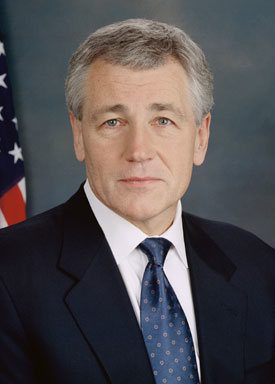
Press Briefing by Press Secretary Jay Carney, 1/31/2013

By The White House

James S. Brady Press Briefing Room
Please see below for a correction (marked with an asterisk) to the transcript.
1:30 P.M. EST
MR. CARNEY: Good afternoon, ladies and gentlemen. Welcome back to the briefing room for your daily briefing. I do not have any announcements to make at the top, so I will go straight to Darlene.
Q Thank you. Jay, the Jobs Council expired today and it’s not being renewed. Can you explain why that is, why it’s not being renewed?
MR. CARNEY: Well, as you know, when the President took office he created the President’s Economic Recovery Advisory Board, affectionately known as PERAB. That was an advisory group led by Paul Volcker, comprised of business leaders, economists and labor leaders who provided outside advice to the President and his economic team at the very height of the financial crisis. When PERAB’s two-year charter expired, the administration created the President’s Council on Jobs and Competitiveness, also an outside advisory board whose mission was to bring new ideas to the table from the private sector on how best to support growth and job creation. Like PERAB before it, the Jobs Council was always intended to have a two-year charter, and as you noted, that charter expires today.
The work of the Jobs Council was very valuable. While the President didn’t agree with all of its recommendations, he agreed with many of them and acted on a number of them. The Jobs Council, for example, recommended a new initiative to focus on retrofitting government and commercial buildings for energy efficiency. This administration acted on this idea to create new construction jobs through the Better Buildings Challenge.
The Jobs Council also recommended new ideas to support entrepreneurship and small business investment, like creating a one-stop shop for businesses to make accessing information, support, and application for SBA funding and other services more forward. The administration acted on that idea, launched BusinessUSA to create this one-stop shop. There are many others.
The policy — rather, the progress made by the Jobs Council on a number of specific policy issues has helped determine the next phase of our engagement with the business community and other outside groups on growth, jobs, and competitiveness. And today, we are announcing that the White House will begin a new, expanded effort to work with the business community and other outside groups to advance specific policy priorities promoted by the Jobs Council, including expanded new skills and talent initiatives, promoting entrepreneurship and small businesses, expediting permitting for infrastructure projects across the country, and continuing progress on fiscal issues and tax reform.
I think you’ve seen this President engage with, repeatedly, the business community through his Jobs Council and on issue-specific matters. In the last several months, as you know, we’ve engaged directly with business leaders on the need to avoid the so-called fiscal cliff, actively engaged on multiple occasions. And their views on that issue were extremely helpful in bringing about the resolution that we were able to bring about.
Right now, we’re appreciative of the engagement the business community is offering on the issue of immigration reform, and that engagement will continue. On Wednesday, just this week, senior members of the President’s team held a call on immigration reform with over a dozen leading business leaders, including Steve Case, Greg Brown of Motorola, Dan Akerson of GM, and Joe Echevarria from Deloitte. The President will continue this engagement with outside groups next week.
Pretty good answer.
Q Wait, what’s the — is it a new council? Like, is this an effort —
MR. CARNEY: No, we will continue — yes, we will engage in a new effort to — we will launch a new effort to engage with business leaders and other leaders — remember, the Jobs Council — the Council on Jobs and Competitiveness was not business leaders alone — on these specific areas that I discussed. I have no body to announce.
Q There’s no formal thing? Yes.
MR. CARNEY: But as I think you’ve seen from the President’s and the White House’s and the administration’s rather intense engagement with the business community, we want to — we are going to continue that on a variety of fronts.
Q But, Jay, this group —
MR. CARNEY: Can I go to Reuters? Thanks.
Q Yes. We actually had gotten a lot of that information earlier. How can you not paint this as a failure of the Jobs Council given the economic news we had just a few days ago?
MR. CARNEY: I’m sorry — it was created for two years, like PERAB, and its charter expires. And the work that the Jobs Council did was very helpful. A number of its ideas were acted on by this administration as part of the President’s overall commitment to job creation and economic growth. When we hear some of the somewhat ridiculous criticisms about this, they come from people who have — on Capitol Hill who have consistently opposed every growth initiative and job creation initiative the President has put forward, including in the American Jobs Act, including in the proposals the President put forward to Speaker John Boehner as recently as December.
When economists, independent economists look at the budget proposals that Republicans claim have been job creators, the facts are clear that they have not been job creators in the near term. The proposals the President has put forward, some of them, after consultation with his Jobs Council and other business leaders, would put construction workers back to work building our infrastructure, would put cops back on the beat, would put teachers back in the school. And time after time, Republicans have opposed those measures, preferring instead a policy that expands or continues tax breaks for wealthy Americans while asking senior citizens and others to foot the bill for deficit reduction solely.
So it’s a little ironic to hear from those who with great fervor embraced the policies that helped create the worst economic crisis of our lifetimes, who resisted the policies that have helped lead us out of that crisis and into a period of growth and job creation, be critical on this.
Q But isn’t it also, Jay, a little ironic to say, in the context of the economy having contracted, that the Jobs Council was a success?
MR. CARNEY: We have had sustained economic growth now for three years. We have had 54 months 34 months, I believe it is, of job creation; 2 million jobs in the last year alone.* We have a lot of work to do. But if the comparison — and I encourage it, those who are inclined, to go back and look at the history of the policies supported by the critics and what they resulted in compared to the policies pushed by this President when it comes to job growth and broader economic growth. The comparison does not favor the critics, I think it’s fair to say.
What is absolutely true is that if the Republicans want — those who are criticizing on this because they feel like it’s sort of a save/get key for them — if they want to embrace infrastructure investment, if they want to embrace measures that would put teachers back to work or cops on the job, if they want to embrace some of the proposals the President put forward for investment in new industries and new technologies, we would welcome that. But unfortunately, by and large, we’ve faced resistance on that.
Part of the fiscal cliff deal was the renewal of the production tax credit that, as you know, with some exceptions — notable exceptions — Republicans opposed. What we now know, because there was a report out today, is that we had historic expansion in the wind sector last year, and the production tax credit was very much a part of that.
Q Let me ask you just one question on another issue, please. The Syrian government said today, or warned of a possible surprise response to Israel’s attack. Are you concerned that this will happen and that this situation will escalate?
MR. CARNEY: Again, I would refer you to the Israeli government on matters like that.
Q Jay, on the Jobs Council
MR. CARNEY: Sorry, go ahead, Jessica.
Q Okay. Can I follow up first on Syria? In light of the Israeli strike there, how concerned is the U.S. that Hezbollah is getting weapons transferred?
MR. CARNEY: Again, I’m not going to — I don’t have anything for you on questions about those reports. I would refer you to the Israeli government.
Q A U.S. official is quoted talking about this. You can’t give us anything?
MR. CARNEY: Again, I don’t have anything for you on it.
Q Okay. In the hearing on Capitol Hill going on right now, Senator Hagel has been taking some tough questions. With regard to something he said, does the President believe the government of Iran is legitimate and elected?
MR. CARNEY: I’m sorry, say that again.
Q Does the President believe the government of Iran is legitimate and elected?
MR. CARNEY: I think our views on the last presidential election were clearly expressed, the President’s views on that matter and our views on the behavior of the regime in Tehran are expressed again and again and again. The fact is we judge Iran by its behavior — not by its words, but by its actions — and they are consistently in violation of their United Nations obligations, their international obligations. And because of that, they are enduring the most intense sanctions regime in history that has had a dramatic impact on their economy as well as on their politics. And that pressure will continue and it will increase as long as Tehran refuses to live up to its international obligations with regards to its nuclear program.
Q And on — he’s also endured some tough questioning from Republicans about the position he’s taken on nuclear disarmament. Is the President at all concerned that he’s changed his position to satisfy concerns of senators? And does the President believe — what’s the President’s view on —
MR. CARNEY: The position that Senator Hagel has taken on nuclear weapons is the same position that President Kennedy took. It is the same position that President Ronald Reagan took. It is the same position that Henry Kissinger and Sam Nunn have taken. And it is the same position that the President — this President expressed in his speech in Prague.
The world would be a better place if we could rid it of nuclear weapons. Until that time comes about, we maintain the most serious and credible nuclear deterrent, as we should. That is a — Senator Hagel’s views on this matter are very much in the mainstream of both the Republican Party and the Democratic Party and broader public opinion. What’s out of the mainstream are those who are suggesting otherwise.
Q First, on Hagel — Hagel has suggested that the military option against Iran really is not an option. I just want to be clear —
MR. CARNEY: I believe he said, as the President has said, that he takes no options off the table and every option remains on the table. That’s the President’s position and it’s a position that Senator Hagel supports.
Q Okay. On the Jobs Council, why did it only meet four times? I mean, if this was such an important tool for the administration to get input from the business community —
MR. CARNEY: The Jobs Council provided a series of ideas, many of which the President acted on. It did not require a formal meeting for those ideas to be generated or worked on by either the Jobs Council or the administration. And again, this President’s engagement with the business community I think has been amply demonstrated just in recent months and will continue. And this President’s commitment, as a matter of policy, to job creation and economic growth is judged, I think fairly, by outside economists very favorably compared to alternatives put forward by Republicans in Congress whose policies nobody judges, like the Ryan budget and others, would do anything for near-term job creation.
The President has insisted all along that as we address the need to reduce our deficit, we do it in a way that — he insists that we continue to invest in areas that allow our economy to grow, because otherwise deficit reduction is a Pyrrhic victory; it is not a worthwhile pursuit unto itself if it causes economic contraction or causes job loss, or doesn’t allow for the economy to grow or position itself for the 21st century.
Again and again in the debates that you’ve covered over these past several years with Republicans about how we move forward on economic policy, the President’s position has been one to include as part of our deficit reduction goals, job creation initiatives, economic growth initiatives. And that’s a position that is on the table with the proposal that the Republicans could take tomorrow, the proposal the President put forward in December.
Q Jay, I’m not talking about the Republicans. I mean, he hasn’t met with the Jobs Council in over a year. Isn’t that problematic?
MR. CARNEY: Why? It’s a group he created that did very effective work on behalf of the country and this administration and this President for two years. It was a two-year charter, and the charter has expired. And we will continue to engage with the business community. I mean, this fixation on an entity that the President himself created conveniently ignores all the work that the President has done towards creating jobs and fostering economic growth — work that has frequently, if not always, been resisted by those who heavily promoted the policies that helped create the worst economic crisis in our lifetimes.
Q You keep talking about a two-year charter, but if he hasn’t met with it for a year, I mean —
MR. CARNEY: I think I’ve answered your question.
Q No, but when — go back to —
MR. CARNEY: I appreciate the fact that you are more concerned with meetings than progress. And there is no creation — there is no dispute over the fact that when this President took office, the economy was cratering. The economy shrank in the quarter before he was sworn into office, in the fourth quarter of 2008, by nearly 9 percent. That is catastrophic, okay? Jobs were lost at a rate of 750,000 per month when he took office.
There is no disputing economic, cold, hard facts that because of the policies that this President pursued, that kind of economic decline was reversed. And that’s the measure of your commitment to job creation and economic growth. And the President greatly appreciates the work that the Jobs Council has done, the ideas that they’ve put forward, many of which the administration adopted. And he looks forward to his engagement with the business community going forward on a variety of issues, many of which I just enumerated.
Yes.
Q The Vice President is going to meet with Syria’s opposition leader, also with the Russian Foreign Minister when he arrives in Germany. We’ve heard varying accounts as to whether these meetings are separate or whether the three of them will meet together. Can you straighten that out?
MR. CARNEY: I would have to refer you to the Vice President’s Office. I don't — I haven’t looked into details on the schedule for his trip.
Q Would it be a good idea to have the Syrian opposition leader sit down with the Vice President and the Russian Foreign Minister?
MR. CARNEY: Again, I would refer you to the Vice President’s office. I just haven’t looked into his schedule.
Q I’d like to also ask about Iran’s announcement that it’s upgrading its centrifuges. What do you have on that?
MR. CARNEY: We have seen reports that Iran has announced its intention to install advanced centrifuges and a production unit at Natanz. There is no indication of how many such centrifuges Iran plans to install or its timeline for doing so. But this does not come as a surprise given the IAEA’s regular reports on Iran’s development of advanced centrifuges.
However, the installation of new advanced centrifuges is a further escalation and a continuing violation, as I was speaking about moments ago, of Iran’s obligations under relevant United Nations Security Council and IAEA board resolutions. It would mark yet another provocative step by Iran and will only invite further isolation by the international community.
We continue to believe that there is time and space for diplomacy to work, but actions like this undercut the efforts of the international community to resolve its concerns over Iran’s nuclear weapons.
Yes, Wendell.
Q Jay, the President’s Recovery Advisory Board arguably succeeded in stopping the recession, if you will.
MR. CARNEY: But the President — the PERAB was an advisory board. The success was the administration’s and Congress that helped vote for the recovery — that voted for the Recovery Act, that voted for measures to save the automobile industry, that voted for measures to stem the crisis in the financial sector.
There is no question that advice from PERAB, from an outside council, was valuable, but the actions were taken by those empowered to take those actions — the President and the Congress.
Q I’ll accept that. But since the Jobs Council
MR. CARNEY: I’m glad you do. (Laughter.)
Q Since the Jobs Council was created, unemployment has fallen only 1.1 percent. Where do you see success in that?
MR. CARNEY: Again, the President repeatedly talks about the need for us to do more, that we are not where we want to be when it comes to economic growth and job creation. There is no question that more people would be employed had the Republicans not refused to pass the American Jobs Act. It is a simple mathematical fact that there would be more teachers in the classroom and more policemen on the beat. There would be more construction workers on the job building roads, bridges, schools — infrastructure that will help our economy grow even more in the 21st century.
Unfortunately, Republicans adamantly refused to do that, citing the need to extend tax cuts for hedge fund managers, among others. So there’s no question that we have a dispute here about how best to grow our economy and create jobs. But the fact is that compared, especially to the record and the situation that the President inherited, we have seen economic growth and job creation, including 2 million jobs in the last calendar year.
Q I’m curious what the message will be from this White House when the Vice President goes to visit with the Syrian opposition leader in Germany in the next several days?
MR. CARNEY: Well, we have worked with our international partners in support of the Syrian opposition. We have also continued our role as the single-largest donor of humanitarian aid to the Syrian people who are suffering so mightily under the wrath of Bashar al-Assad. And we will continue to work with the Syrian opposition to help it organize itself and to help prepare — help it in its work to prepare for a post-Assad Syria, for a Syria in which the aspirations and the rights of the Syrian people are respected, which stands in stark contrast to the butchery of the Assad regime.
Q The Syrian opposition leader has expressed for the first time a willingness to meet with representatives of Assad’s government. Does the White House support a meeting of that sort?
MR. CARNEY: I saw those reports. I don't have any update on our views on this. What is absolutely the case is that Syria’s future will not and cannot include Bashar al-Assad. The Syrian people have decided that. He has long since given up any opportunity he might have had to participate in Syria’s future. His hands are drenched in blood, the blood of his own people.
Now, I’m sure that in our conversations and the conversations of our international partners with the Syrian opposition, various approaches will be discussed. But what is unquestionable I think for the Syrian opposition, for the Syrian people is that Assad has to go.
Q So given that, is there any value in meeting? Is there any value —
MR. CARNEY: Again, I don't have a particular response to that report, but our views on Assad’s future have not changed.
Q And then one other final question. There have been reports regarding Senator Bob Menendez. I’m curious if the President has full faith and confidence in the Senator?
MR. CARNEY: I’ve seen those reports. I don't have anything for you on it.
Q Does he have full faith and confidence —
MR. CARNEY: I just don't have anything.
Q — because he plays a significant role in immigration and obviously —
MR. CARNEY: Again, Peter, I just haven’t — I don't have anything for you on those reports.
Yes, Mara.
Q I have a question about tomatoes. Today a trade agreement with Mexico that sets a minimum price for Mexican tomatoes expires. What happens now?
MR. CARNEY: I understand that discussions between the Department of Commerce and the Mexican tomato growers under the current suspension agreement are ongoing. You might be able to tell I didn't write this. (Laughter.)
I know Commerce is looking to find — I know the Department of Commerce is looking to find a mutually acceptable outcome for everyone involved. But again, those discussions are ongoing, and I don't have an update for you.
Q So it’s still in effect as long as the discussions —
MR. CARNEY: I would have to refer you to Commerce. They may have more specificity on it. But the discussions between Commerce and Mexican tomato growers are ongoing.
Roger.
Q Thanks. You mentioned at the top the telephone conversations between the administration yesterday and CEOs on immigration, I think it was. Can you go into a little bit more about who was on the call? Maybe release a list of the CEOs that was on the call? And just exactly what was the administration’s pitch to them?
MR. CARNEY: Well, look, I think you’ve seen across the board very broad support in the business community for comprehensive immigration reform, and that support is welcome. And I think it’s reflective of the growing consensus across the country on the need to move forward with comprehensive immigration reform. It’s a matter of benefit to the economy. It’s a matter of fairness to the middle class. When it comes to the business sector, there are obvious interests that high- technology companies have, for example, as well as other companies.
And that's why the President has for so long promoted a comprehensive approach that ensures that we move forward on all of these issues at once because that allows us to build this consensus that we have seen, and it’s been very welcome developing with some increased intensity in the last several weeks. We’re working with Congress. We look forward to the Senate moving forward in an expeditious way to produce legislation.
As the President has said, he wants to see the Senate move forward. He hopes that they produce a bill that would gain substantial bipartisan support in the Senate that could then be passed by the House and that he could sign.
If progress stalls in the Senate or breaks down, the President is prepared to submit his own bill and ask the Senate to vote on it. This is an issue that he discussed frequently during the campaign. It’s an issue that his views have been clear on for some time.
Q What were they asked to do?
MR. CARNEY: I don't have a more detailed readout of the call to you. It wasn’t a matter so much of asking anyone to do anything. I mean, these kinds of conversations are an exchange of ideas. And there is no question that businesses — generally speaking, the business sector is supportive of comprehensive immigration reform, as are so many other sector of our society.
Q Jay, going back to the earlier question about Hagel’s comment about the Iranian government being elected and legitimate, you may recall that at the time of the last election, Vice President Biden said that there were doubts about the legitimacy of the election. So I’d like to give you a chance to put a finer point on it. Is this government elected and legitimate?
MR. CARNEY: The government that we’re dealing with is a government that has continued the unacceptable behavior that we’ve seen from Tehran for some time, its refusal to abide by its international obligations. And the President’s view on the protests in reaction to the election are very clear and remain the same.
The issue with Iran is we have pursued a policy that has imposed upon that country the most severe sanctions regime in history with significant economic consequences. We have worked with our international partners to bring about a consensus on Iran’s behavior that never existed in the past, and that, too, has increased the isolation that Tehran feels.
And the President has also made clear that when it comes to Iran’s development of nuclear weapons, that all options remain on the table. The window for diplomacy remains open, but it will not be open indefinitely.
Q So yes or no, is it legitimate?
MR. CARNEY: Look, it’s the government that we deal with, and it is the government that continues to flout its international obligations, and that behavior is illegitimate.
Cheryl.
Q Two quick questions. One, has the White House picked a date yet for the release of the President’s budget?
MR. CARNEY: I don't have one to announce today.
Q Okay. And also, the Acting OMB Director, Jeff Zients, had to actually give up the acting designation last year because of the time involved. Is the President going to appoint someone soon, nominate someone soon for OMB Director?
MR. CARNEY: I have no personnel announcements to make today. I wish I did. (Laughter.)
Reid.
Q Jay, has the President watched any of the Hagel hearings this morning?
MR. CARNEY: I was with him for some time earlier today, not around a television, so I can't — I can say that during that period, he did not. But I can't say that definitively that he hasn’t seen any of it. As you know, he doesn't spend a lot of time watching TV. But —
Q Do you know if he’s pleased with some of the reports that he’s heard yet?
MR. CARNEY: Again, I don't know. I didn't discuss the hearings with him. I know the President believes very strongly that Senator Hagel will make an excellent Secretary of Defense. And he will effectively implement the President’s policies.
If I can say, just this process is very important — the confirmation process — and it’s highly appropriate. And senators ask tough questions of nominees, and nominees answer those questions.
What we have also seen is some of the usual kind of political posturing in these hearings, at least the portion that I saw and debates about the wisdom of invading Iraq, which are interesting to have, but I think shed more light on the past than they do on the future.
The President is absolutely confident that Senator Hagel will, as I said, make an excellent Secretary of Defense.
Q Jay, I know we discussed the sequester a lot yesterday. I don't want to beat a dead horse here. But can I be clear that are you suggesting that anybody who wants to just replace the sequester with other, smarter spending cuts, the President opposes that? He is insisting on having additional revenues as part of the mix?
MR. CARNEY: The President insists on balance when it comes to dealing with our deficit reduction. The task assigned by Congress to the super committee at the time of the Budget Control Act was that it find $1.2 trillion in deficit reduction. It wasn’t find $1.2 trillion only in spending cuts. It wasn’t find $1.2 trillion extracted from Social Security and Medicare beneficiaries. It was find $1.2 trillion in deficit reduction. And the President’s proposals have, reflecting the Simpson-Bowles commission, reflecting the Rivlin-Domenici commission, always established the principle of balance. That’s what he’s brought forward in every negotiation he’s put forward, and yes, he insists on balance.
Q Forgive me for, again, belaboring this. The proposals you’re referencing were proposals for the big deal, the full thing that he would like to achieve. You acknowledged yesterday, you’ve acknowledged before that the way things are going, he’s not going to get the big deal, at least not all in one package right away.
MR. CARNEY: Well, because a portion of the big deal has already been accomplished — a not insignificant portion. What remains is roughly another $1.5 trillion in deficit reduction. And the President has put forward a proposal that meets the Republicans halfway that would achieve that. And if the Republicans want to take it up, the President would be delighted.
Q But what I’m asking is if the next step here is a subset of whatever else remains to be done, even that subset has to have some revenues as well as spending cuts?
MR. CARNEY: I mean, the basic answer to that question is yes, in that we have to have balance as we move forward in deficit reduction.
Q Jay, you’ve said several times that the Jobs Council was extremely valuable and effective, so why let the charter expire?
MR. CARNEY: It was meant to — we don’t let it expire; it was set for two years. It expired.
Q Can the President choose whether or not to let it continue?
MR. CARNEY: Again, did the Jobs Council exist before the President created it?
Q No.
MR. CARNEY: Did you ask why?
Q Why? (Laughter.)
MR. CARNEY: Did you ask his predecessor why? The point is —
Q I was still in college. (Laughter.)
MR. CARNEY: Which explains a lot. (Laughter.) Actually, I take that back. I thought you’re wiser than your years.
But the point is the President created both PERAB and the Jobs Council because they were effective and at the time that he created them for the work that was being done. The President will continue to engage the business community in the ways that I talked about — very specific ways that I talked about, and will rely on both the business community and other groups; there were labor leaders part of the Jobs and Competitiveness Council for advice about ideas for how we develop the skills we need for a 21st century economy; how we encourage more small businesses to be created and to grow and thrive.
These are things that are very much a focus of the President’s attention. They’re reflected in the proposals that he has put forward, as I said, not always enjoying the support of those who claim to care deeply about job creation. But he will continue to press forward with those ideas and he will continue to seek the council of business leaders and others for their ideas and how to move forward.
Q Does he just think his new — a new approach that you all are announcing today is a more effective way to do it than having a whole council?
MR. CARNEY: No, he just believes that the Jobs Council — Jobs and Competitiveness Council was effective in providing ideas to his administration, many of which the administration took up and acted on, and those that — there are other ideas that we have taken up and have proposed but have yet to enjoy congressional cooperation on. And he looks forward to more ideas coming from business leaders and other leaders as we continue to take measures to help this economy grow and help it create jobs.
Q When you said next week he’s going to continue his outreach to outside groups, did you mean specifically to business groups?
MR. CARNEY: Yes.
Q Any more details?
MR. CARNEY: No.
Ann.
Q Thank you. What is it about Minnesota that prompted the President to choose that for his visit on gun violence next Monday?
MR. CARNEY: Let me see. Well, it has been announced that we’re going to Minneapolis for this. I think that this is a problem that affects the whole country, and the President looks forward to — I think I was asked yesterday if not the day before, when is the President going to travel on this, and we now have announced this. And I think it demonstrates the President’s commitment to this priority and to having, as I’ve said when it comes to immigration reform, to having this conversation out in the country and not just here in Washington.
He believes that that is the right approach to take, that it reflects the interest and engagement of the American people in the debates that we’re having here. That interest is clear when it comes to the measures we need to take to reduce gun violence in America. It’s clear on the measures we need to take to enhance job creation and economic growth, and also on immigration reform and other issues.
So there’s no — just as with Nevada for the speech the other day, there’s no one single perfect choice of a place to travel. He will be having this conversation around the country.
Q Well, but there was a mass shooting there at a workplace. The sheriff was sitting next to the President on Monday of this week. Is there something specific about Minnesota — what they’re doing or what they haven’t done?
MR. CARNEY: I’ll find out more for you on the choice of the location. I think that the fact that that state and communities there have experienced the horror of a mass shooting is certainly reflective of why we are where we are and why we need to take action.
But, again, this is a conversation that, as the President said, needs to be had around the country and not just in the obvious places, and he looks forward to participating in that conversation.
Leslie.
Q Jay, back to Senator Menendez. The Associated Press reported earlier this month that immigration officials had been prepared to arrest an intern of his on immigration violations, possibly deport him, but was ordered not to “by Washington.” Was the White House aware of this at all?
MR. CARNEY: Aware of the anonymous report? I think I would refer you to DHS.
Q No, no nothing involved with that. In an earlier incident in which ICE was going to deport one of his interns.
MR. CARNEY: Right. Again, you’re citing an AP report. I don’t have anything for you on that. I would refer you to immigration authorities and DHS.
Q It’s the second time, though, that ICE has been sort of accused of waiting in a sensitive deportation case until after an election. Is there any —
MR. CARNEY: Again, I don’t know anything about it beyond the AP report that you cited, so you may want to go to ICE or DHS.
Q Thanks, Jay. Two questions — first, on the immigration bill. Marco Rubio has said that he would want to prohibit those who are on a pathway to some type of legal status from being eligible for the Affordable Care Act. Is that something the President would consider as part of his?
MR. CARNEY: I think we’ve been very clear that legal status does not confer benefits through the Affordable Care Act. So I’m not sure — that sounds like a point of agreement, not disagreement.
Q Okay. And secondly, this week it’s been reported that there may be an agreement coming between DOJ and the Oversight Committee regarding some of the Fast and Furious documents. On the whole Fast and Furious case, does the White House still at this point have any objection to former White House staffer, Kevin O’Reilly, cooperating with the committee in any way?
MR. CARNEY: I would have to take the question.
Zach.
Q Hi, Jay. Two questions. First, do you have any more details about the shooting of the girl in Chicago who had come to the inauguration and whether the President has reached out to her family?
MR. CARNEY: I think I spoke about this yesterday. Christi was here and asked me about it but I don’t have anything new for you on it. I mean, obviously, the President and the First Lady offer their condolences and prayers for the family. And this is, as I said yesterday, another tragic death from gun violence of a young person in America and another indication of why we need to address this problem.
Q And a second question — you had mentioned that Republicans had opposed the Jobs Act and other proposals that create jobs. The President has been very out there with guns and immigration. Do you expect him to take a similar public stance in the coming weeks on proposals that create jobs or address the economy?
MR. CARNEY: Zach, I know you’re kind of new to the beat, but this President has been focused on this issue more than any other, and that is job creation and economic growth. And that will not change. Everything that he does when it comes to policy is focused on the need to create an economy that is better, stronger, and is producing more jobs. And you can be sure that he will continue to talk about those issues.
I mean, for a presidency that has been, you might say, consumed by the need to pull us out of the worst recession since the Great Depression, that has been engaged in drawn-out negotiations with Congress about how best to move forward on economic policy, to ensure that we both deal with our deficits but don’t do anything that reverses the positive economic growth that we need to have, reverses the job creation that we need to have, that has been the principle and primary focus of his domestic policy and will continue to be.
April and then Goyal.
Q Jay, within the month, the next big event the President will have is the State of the Union. We’re less than a month away. What are some of the themes? We’re seeing that he’s talking about — campaigning, somewhat a campaign style on guns, immigration. What else should we expect from the State of the Union address?
MR. CARNEY: Well, I don’t want to ruin it for you by giving it all away. But I think —
Q You won’t ruin it. (Laughter.)
MR. CARNEY: Well, what I think is fair to say is that we view the State of the Union address as part of a package that the first component of which was the President’s inaugural address. And I think in keeping with pretty longstanding practice, you can expect a State of the Union address to be a little more policy-specific in terms of details and things like that. But it will build on what the President talked about in his inaugural speech.
Q Are you expecting him to make major announcements via new policy, or just keep on with some of the same themes that he’s been going on?
MR. CARNEY: I think it’s generally a good practice not to steal from the President the opportunity to make announcements himself.
Q But you create more thunder by giving us more information. (Laughter.)
MR. CARNEY: Your assessment of my powers is appreciated, but I think I would have to argue with that.
Q Thanks, Jay.
MR. CARNEY: I did promise Goyal a question.
Q Thank you. Two questions.
MR. CARNEY: Well, I promised a question. (Laughter.)
Q Stick with one. Stick with one.
Q Okay, thank you. First of all, as far as the President’s second term is concerned, India and the Indian American community played a big role here, and we are thanking him for his support in every way he was with them. My question is here now, what is the future of Indian American community and the India-U.S. relations as far as the President’s second term is concerned?
MR. CARNEY: Well, the President’s views have not changed, both on the importance and value of the Indian American community and the importance and value of the bilateral relationship that we have developed with India. India is an incredibly important country in the world, not just in the region, and the President looks forward to continuing to enhance the depth of our relationship to work together on common goals in the region and around the world. And I think you can expect in his second term that he will consider it a success if at the end of his second term that bilateral relationship is stronger even than it is today.
Q Do you have more appointments?
MR. CARNEY: I don’t anything more.
Q Jay, real quick, is he going to the D.C. Auto Show that starts tomorrow?
MR. CARNEY: I have no scheduling announcements.
Q Is he looking for a new car maybe? (Laughter.)
MR. CARNEY: He would love one.
END
2:14 P.M. EST

Source: FULL ARTICLE at The White House Press Office
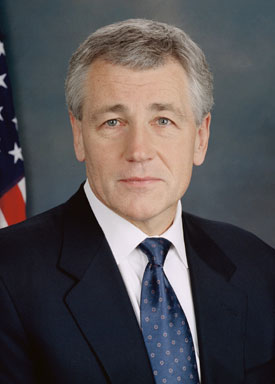
Schumer to back Hagel for Pentagon's top job

Sen. Chuck Schumer, an influential Democrat and member of the party’s leadership, said Tuesday he would back President Barack Obama‘s choice of Chuck Hagel to head the Pentagon despite earlier misgivings about the Republican’s stand on Israel, Iran and gay rights.

In a lengthy statement, Schumer said he met for 90 minutes with Hagel on Monday and received assurances on a range of issues from the former Republican senator.

“I am currently prepared to vote for his confirmation. I encourage my Senate colleagues who have shared my previous concerns to also support him,” Schumer said.

The face-to-face meeting took place in the West Wing of the White House. While there, Schumer also met with Obama in the Oval Office, according to a Senate aide. Schumer told Obama that Hagel’s responses on Israel were critical to his decision on the nomination.

Schumer telephoned Hagel Tuesday morning and informed him of his decision, according to the aide.

Hagel has faced opposition from his former Republican colleagues and lukewarm support from some Democrats before and after Obama tapped him to replace Defense Secretary Leon Panetta.

But Schumer’s support coupled with backing from Sen. Barbara Boxer, D-Calif., a senior member of the Foreign Relations Committee, will be critical to the prospects for his nomination. The two are the more prominent Jewish members of the Senate, and Schumer is the third-ranking Senate Democrat.

In a conference call with reporters, Boxer said she was unaware that Schumer had announced his support for Hagel, but the fact that the two lawmakers reached their decision independently would be a boost to his nomination.

Boxer said she was confident that Hagel would carry out Obama‘s policies.

She added: “I feel people are being very unfair to Chuck Hagel.”

Schumer said Hagel told him that he backs all steps necessary, including the use of military force, to stop Iran from obtaining a nuclear weapon. Schumer also said Hagel told him that he has always supported Israel‘s right to retaliate militarily against attacks by Hezbollah or Hamas.

Hagel drew widespread criticism for referring to the “Jewish lobby” in describing certain pro-Israel groups. Schumer said Hagel understands the sensitivity of the “such a loaded term and regrets saying it.”

“I know some will question whether Senator Hagel‘s assurances are merely attempts to quiet critics as he seeks confirmation to this critical post. But I don’t think so,” Schumer said. Senator Hagel realizes the situation in the Middle East has changed, with Israel in a dramatically more endangered position than it was even five years ago. His views are genuine, and reflect this new reality.”

Schumer said Hagel also provided assurances on gay rights and abortion rights for members of the military.

Hagel has reached out to all 100 senators and his meeting with Schumer was the first of a dozen one-on-one sessions planned over the next few weeks.

Hagel’s confirmation hearing before the Armed Services Committee will probably occur within weeks.

Boxer said late Monday that she would support Hagel’s nomination. She said he provided answers to a range of questions and promised to support Obama‘s policies “without reservation.”

The former Nebraska GOP senator has been dogged by questions of whether he’s soft on Iran, weak in his backing for Israel and opposed to gay rights.

“A lot of charges rise up and fall when the facts are presented,” Sen. Jack Reed, D-R.I., a friend of Hagel’s, said in an interview Monday. “That’s the same thing that’s going to happen here. These claims — suddenly claims are debunked — and we get on to substance.”

Backers of Hagel’s nomination counter criticism by pointing to his votes for some $40 billion in military and security aid for Israel during his 12 years in the Senate and his support for all options, including military action, to prevent Iran from developing a nuclear weapon. They argue that his position on gay rights has evolved.

Despite the support, Hagel — a Republican tapped by a Democratic president — has few advocates in either party in the Senate and a limited number of opportunities to make inroads with the GOP.

Democrats hold a 55-45 advantage in the Senate, and the party has the numbers to confirm Hagel if the vote is a simple majority. A possible Republican filibuster and a threshold of 60 votes would add even more rancor to the current fight between Democrats and Republicans over Senate rules just as the leaders are trying to negotiate a compromise.

Source: FULL ARTICLE at Fox US News

Santorum Takes Up Fight Against Hagel Nomination

By Breaking News

Rick Santorum speech 4 SC Santorum takes up fight against Hagel nomination

WASHINGTON (OfficialWire) — Republican opposition to Chuck Hagel as the next defense secretary swelled from inside and outside the Senate Thursday as a former Senate colleague launched a campaign to block his nomination.

Rick Santorum, the former Pennsylvania senator who served for a decade with Hagel, said his grassroots organization, Patriot Voices, will lead a nationwide campaign to stop Hagel from succeeding Leon Panetta as head of the Pentagon.

“While I respect Sen. Hagel’s service to America, I cannot stand by and support his nomination,” Santorum said in a statement. “His anti-Israel, pro-Iran mindset makes him uniquely unqualified to serve as our Defense secretary.”

Hagel, nominated Monday by President Barack Obama, has faced criticism that he is soft on Iran and weak in his support for Israel. Pushing back in private meetings with defense officials, he has told them this week that he backs strong international sanctions against Iran and believes all options, including military action, should be on the table.

Read More at OfficialWire . By Donna Cassata.

Photo Credit: Gage Skidmore (Creative Commons)

Source: FULL ARTICLE at Western Journalism

Hagel’s Own Words Are Fodder For Critics

By Breaking News

Chuck Hagel SC2 Hagel’s own words are fodder for critics

WASHINGTON (OfficialWire) — Chuck Hagel was blunt-spoken in the Senate, even when bucking fellow Republicans. Now opponents in his own party and elsewhere are using Hagel’s words against him.

The Vietnam veteran and former two-term senator from Nebraska will need to explain some of his comments and views as President Barack Obama’s choice for the next secretary of defense. A look at past remarks likely to come up during his confirmation hearing:

Hagel, who says he’s a strong supporter of Israel, stirred bad feelings by referring to pro-Israeli interests as “the Jewish lobby” and suggesting they wield undue power in Washington.

“The Jewish lobby intimidates a lot of people. … I’ve always argued against some of the dumb things they do, because I don’t think it’s in the interest of Israel,” Hagel told former Mideast peace negotiator and author Aaron David Miller in a 2006 interview.

Hagel continued: “I’m not an Israeli senator. I’m a United States senator. I support Israel, but my first interest is, I take an oath of office to the Constitution of the United States, not to a president, not to a party, not to Israel.”

Read More at officialwire.com . By Connie Cass.

Source: FULL ARTICLE at Western Journalism

Hagel And The Jews

By Breaking News

Chuck Hagel SC Hagel and the Jews

A friend and admirer of Senator Hagel called the other day to ask whether we’d ever met the nominee to be secretary of defense. We expressed our regrets that we hadn’t. Our friend wanted us to know that Mr. Hagel does not dislike the Jews. We said we were delighted to hear it, but we also tried to convey that the Sun doesn’t care one way or another whether Mr. Hagel likes the Jews. His private views are not what we care about. What we care about is the policy line to which Mr. Hagel would hew were he to get a chance to run the defense department and advise the President.

We’ve written before about this question of private prejudice. Harry Truman didn’t like the Jews. He didn’t like African Americans or the Chinese or Japanese either. We know this from his private correspondence as a young man. Phew! It contains the coarsest kind of bigotry. Yet Truman became one of the great civil rights presidents and one of the greatest friends of Israel. Once lifted to high office in the Senate, where he served as both a senator and as vice president, and then in the presidency, Truman came to see things in a different light and to surmount his biases.

So our concerns in respect of Senator Hagel aren’t about his views on the Jews. And we appreciate the fact that he served as an enlisted man in Vietnam, an experience we tend to credit (although neither is it dispositive). But we’ve been covering his antics for years, and where we’ve come out is that he’s just over his head in terms of policy. So he’s emerged as a shill for Israel’s most implacable foes. It doesn’t take a genius to comprehend what the mullahs in Iran are going to make of this nomination.

It’s not that Israel is our only test. We’ve been writing editorials in support of Congressman Ron Paul’s Liberty Campaign. We didn’t make an endorsement. But we’ve been defending him, even though he has a record that has convinced many that he has a personal animus in respect of Israel. We see a big difference between, say, Dr. Paul and Mr. Hagel. Dr. Paul has, over more than the 35 years that we’ve covered him, exhibited a commitment to certain libertarian, constitutional principles, most of which we share and all of which we respect.

By what deep principles is Senator Hagel guided in his long years of hanging back from anything that could be construed as helpful to the Jewish state or unhelpful to her enemies? He’s made no life’s work of sound money. He’s made no life’s work of constitutional fundamentals. We can’t think of a single over-riding principle in his career, save for an abiding sneer at Israel, in which he seems to take a certain mischievous glee. Maybe we’re missing something that will emerge during the confirmation process, but based on the record so far, we’d be surprised.

Read More at nysun.com .

Source: FULL ARTICLE at Western Journalism