Tag Archives: NFIB

Small Business To Obama: Give Us A Budget, Please

By William Dunkelberg, Contributor Small business produces half the private GDP and employs half the private sector workforce.  But it is not growing, not hiring, not borrowing and not expanding enough.  Small business owners have been depressed since 2007 and that has not changed.  In the March survey of NFIB’s 350,000 member firms, 77 percent expect the economy to be no better or even worse 6 months from now that it is currently.  Only 4 percent think the current period is a good time to expand substantially, compared to an average of 18 percent between 2003 and 2007 and 17 percent for the period 1973 to 2007.  More owners plan to reduce employment in the coming months than plan to create new jobs. More owners plan to reduce their inventories than plan to order new stocks.  The bulk of growth comes from the increase in our population of about 3 million people and the growing need to simply replace stuff that is wearing out, not enough to get the economy back to trend growth much less the strong growth needed to restore employment to 2007 levels. …read more

Source: FULL ARTICLE at Forbes Latest

Dow May Open Higher After Alcoa Beats the Street

By Roland Head, The Motley Fool

Filed under:

LONDON — Stock index futures at 7 a.m. EDT indicate that the Dow Jones Industrial Average may open 12 points higher this morning, while the S&P 500 may open up by 0.19%.

Markets in Europe edged higher this morning after U.S. aluminum giant Alcoa beat earnings forecasts and China reported that inflation fell further than expected in March, boosting hopes that the Chinese government will continue its monetary-stimulus efforts. Among the biggest risers were mining shares, which helped lift the FTSE 100 by 0.47% by 7:20 a.m. EDT. In Europe, a new OECD report sounded a warning that Slovenia could soon follow Cyprus into bankruptcy if its banking sector is not recapitalized. In the U.K., new figures showed that exports fell by 2.8% in February, while industrial output rose by 1%. German exports also fell: Exports from Europe‘s biggest economy were down by 1.5% in February, while imports fell by 3.8%.

Today’s U.S. economic reports include the NFIB small-business index for March, which fell from 90.8 in February to 89.5, slightly ahead of expectations of 89.2. At 10 a.m. EDT, wholesale inventories are expected to have risen by 0.6% in February after gaining 1.2% in January. February’s Job Openings and Labor Turnover Survey is also due at 10 a.m. EDT.

Last night Alcoa reported first-quarter adjusted earnings of $0.11 per share on sales of $5.83 billion, beating analysts’ expectations for adjusted earnings of $0.08 per share but missing the $5.88 billion consensus forecast for revenue. Alcoa is widely seen as a predictor for the wider market, and despite the revenue miss, these results have been seen as a ‘beat’ and raised hopes that corporate earnings will be stronger than expected across the S&P 500.

Other stocks that may be actively traded today include J.C. Penney. The retailer’s shares were 8.66% lower in premarket trading this morning after the company announced last night that CEO Ron Johnson will leave the company after less than two years in the post to be replaced by his predecessor, Mike Ullman. J.C. Penney’s stock price has halved since former Apple exec Johnson took control, and his turnaround plan is now widely seen as a failure that has alienated loyal customers without attracting new ones. Iron ore miner Cliffs Natural Resources was also higher in premarket trading following gains for commodity stocks in Europe.

Finally, let’s not forget that the Dow’s daily movements can add up to serious long-term gains. Indeed, Warren Buffett recently wrote, “The Dow advanced from 66 to 11,497 in the 20th Century, a staggering 17,320% increase that materialized despite four costly wars, a Great Depression and many recessions.” If you, like Buffett, are convinced of the long-term power of the Dow, you should read “5 Stocks To Retire On.” Your long-term wealth could be transformed, even in this uncertain economy. Simply click here now to download this free, no-obligation report.

The article Dow May Open Higher After Alcoa Beats the Street originally …read more

Source: FULL ARTICLE at DailyFinance

Congressman Moves To Automatically Kill Senate Gun Ban

By Congressman Steve Stockman (R-TX)

Steve Stockman official portrait Congressman moves to automatically kill Senate gun ban

WASHINGTON – Should Senate Democrats approve a sweeping new anti-gun bill, Congressman Steve Stockman (R-Texas 36th) announced Tuesday he will seek to automatically kill it using a House “blue slip.”

“The Democrat gun ban is dead on arrival.  I will introduce in the House a blue slip resolution that will automatically kill the Senate gun ban,” said Stockman. “Not only are Democrats on the wrong side of public opinion, they are on the wrong side of the Constitution.  You can’t strip Americans of their gun rights, and you certainly can’t do it by having the Senate create a national tax on firearms.  They are in violation of constitutional limits on federal power.”

A “blue slip” is a resolution that automatically returns to the Senate any bill that violates the “origination clause” of the United States Constitution.  The origination clause states “All Bills for raising Revenue shall originate in the House of Representatives.”

Blue slip resolutions are immediately considered as a matter of constitutional privilege, are debatable for an hour and are not subject to amendment.

Senate Democrats took three anti-gun bills (S. 374, S. 54 and S. 146) and quickly rammed them through the Judiciary Committee without even a committee report, then combined them into one bill (S. 649.)  The bill includes language mandating a fee for background checks for all private transfers of firearms. Similar legislation has been construed by the Supreme Court to be a tax.  By introducing a bill imposing a new tax through the Senate, Democrats have violated constitutional mandates and the bill is automatically invalid.

According to The Heritage Foundation, S.649 imposes a new tax by forcing individuals to pay for background checks when selling or giving away a firearm.  The mandate to use the National Instant Criminal Background Check System does not provide a service to the buyer or seller but to the government, making it a tax.

Additionally, the Supreme Court ruled last year in NFIB v. Sebelius that mandating citizens to pay for a service can be construed to be a tax, with Chief Justice John Roberts writing the majority opinion expanding the federal definition of a tax.

Contact:

Donny Ferguson

202-225-1555

Donny.Ferguson@mail.house.gov

…read more

Source: FULL ARTICLE at Western Journalism

50 Vetoes: How States Can Stop Obamacare

By Breaking News

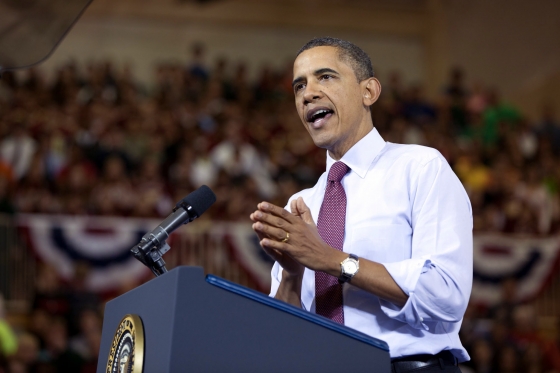
Barack Obama speech 11 SC 50 Vetoes: How States Can Stop Obamacare

Despite surviving a number of threats, President Obama’s health care law remains harmful, unstable, and unpopular. It also remains vulnerable to repeal, largely because Congress and the Supreme Court have granted each state the power to veto major provisions of the law before they take effect in 2014.

The Patient Protection and Affordable Care Act (PPACA) itself empowers states to block the employer mandate, to exempt many of their low- and middle-income taxpayers from the individual mandate, and to reduce federal deficit spending, simply by not establishing a health insurance “exchange.” Supporters of the law do not care for this feature, yet they adopted it because they had no choice. The bill would not have become law without it.

To date, 34 states, accounting for roughly two-thirds of the U.S. population, have refused to create Exchanges. Under the statute, this shields employers in those states from a $2,000 per worker tax that will apply in states that are creating Exchanges (e.g., California, Colorado, New York). Those 34 states have exempted at least 8 million residents from taxes as high as $2,085 on families of four earning as little as $24,000. They have also reduced federal deficits by hundreds of billions of dollars.

The Obama administration is nevertheless attempting to tax those employers and individuals, contrary to the plain language of the PPACA and congressional intent, and to deny millions of Americans the opportunity to purchase low-cost, high-deductible coverage. Employers, consumers, and even state officials in those 34 states can challenge those illegal taxes in court, as Oklahoma has done. States can also block those illegal taxes—and even stop the federal government from operating an Exchange—by approving a strengthened version of the Health Care Freedom Act.

The PPACA’s Medicaid expansion, which would cost individual states up to $53 billion over its first 10 years, is now optional for states, thanks to the Supreme Court’s ruling in NFIB v. Sebelius. Some 16 states have announced they will not expand their programs, while half of the states remain undecided. Yet the Obama administration is trying to coerce states into implementing parts of the expansion that the Court rendered optional. States can replicate Maine’s lawsuit challenging this arbitrary attempt to limit the Court’s ruling.

Read More at cato.org . By Michael F. Cannon.

…read more
Source: FULL ARTICLE at Western Journalism

50 Vetoes: How States Can Stop The Obama Health Care Law

By Breaking News

Barack Obama speech 11 SC 50 Vetoes: How States Can Stop the Obama Health Care Law

Despite surviving a number of threats, President Obama’s health care law remains harmful, unstable, and unpopular. It also remains vulnerable to repeal, largely because Congress and the Supreme Court have granted each state the power to veto major provisions of the law before they take effect in 2014.

The Patient Protection and Affordable Care Act (PPACA) itself empowers states to block the employer mandate, to exempt many of their low- and middle-income taxpayers from the individual mandate, and to reduce federal deficit spending, simply by not establishing a health insurance “exchange.” Supporters of the law do not care for this feature, yet they adopted it because they had no choice. The bill would not have become law without it.

To date, 34 states, accounting for roughly two-thirds of the U.S. population, have refused to create Exchanges. Under the statute, this shields employers in those states from a $2,000 per worker tax that will apply in states that are creating Exchanges (e.g., California, Colorado, New York). Those 34 states have exempted at least 8 million residents from taxes as high as $2,085 on families of four earning as little as $24,000. They have also reduced federal deficits by hundreds of billions of dollars.

The Obama administration is nevertheless attempting to tax those employers and individuals, contrary to the plain language of the PPACA and congressional intent, and to deny millions of Americans the opportunity to purchase low-cost, high-deductible coverage. Employers, consumers, and even state officials in those 34 states can challenge those illegal taxes in court, as Oklahoma has done. States can also block those illegal taxes—and even stop the federal government from operating an Exchange—by approving a strengthened version of the Health Care Freedom Act.

The PPACA’s Medicaid expansion, which would cost individual states up to $53 billion over its first 10 years, is now optional for states, thanks to the Supreme Court’s ruling in NFIB v. Sebelius. Some 16 states have announced they will not expand their programs, while half of the states remain undecided. Yet the Obama administration is trying to coerce states into implementing parts of the expansion that the Court rendered optional. States can replicate Maine’s lawsuit challenging this arbitrary attempt to limit the Court’s ruling.

Read More at cato.org . By Michael F. Cannon.

…read more
Source: FULL ARTICLE at Western Journalism

Small-Business Owners Remain Cautious

By Tim Brugger, The Motley Fool

Filed under:

The National Federation of Independent Business’ (NFIB) Small Business Optimism Index recorded a 1.9-point increase in February, the organization has reported.

Though an improvement over prior months, the index’s total of 90.8 points is equal to 2008 owner sentiment, and remains below 1991-1992 and 2001-2002 recessionary levels.

The majority of small firms in the federation’s survey reported lower sales quarter-over-quarter, and 75% of NFIB small businesses expect conditions to be the same or worse six months from now. Additionally, 43% of small business owners reported falling profits compared to prior quarters, while just 13% of small employers enjoyed profit growth. Demand for business credit also remained stagnant in February, according to the NFIB.

NFIB chief economist Bill Dunkelberg said, “The economy is clearly bifurcated, with S&P profits at record levels while GDP posts a growth rate of 0.1% (excluding government, growth would have been over 1%, still a lousy reading). The small business half of the economy is clearly languishing based on NFIB surveys of its 350,000 member firms.”

The Business Roundtable today reported that chief executives at the largest U.S. companies are much more optimistic about their sales prospects than they were three months ago, though many remain cautious about hiring.

link

The article Small-Business Owners Remain Cautious originally appeared on Fool.com.

Try any of our Foolish newsletter services free for 30 days. We Fools may not all hold the same opinions, but we all believe that considering a diverse range of insights makes us better investors. The Motley Fool has a disclosure policy.

Copyright © 1995 – 2013 The Motley Fool, LLC. All rights reserved. The Motley Fool has a disclosure policy.

(function(c,a){window.mixpanel=a;var b,d,h,e;b=c.createElement(“script”);
b.type=”text/javascript”;b.async=!0;b.src=(“https:”===c.location.protocol?”https:”:”http:”)+
‘//cdn.mxpnl.com/libs/mixpanel-2.2.min.js’;d=c.getElementsByTagName(“script”)[0];
d.parentNode.insertBefore(b,d);a._i=[];a.init=function(b,c,f){function d(a,b){
var c=b.split(“.”);2==c.length&&(a=a[c[0]],b=c[1]);a[b]=function(){a.push([b].concat(
Array.prototype.slice.call(arguments,0)))}}var g=a;”undefined”!==typeof f?g=a[f]=[]:
f=”mixpanel”;g.people=g.people||[];h=[‘disable’,’track’,’track_pageview’,’track_links’,
‘track_forms’,’register’,’register_once’,’unregister’,’identify’,’alias’,’name_tag’,
‘set_config’,’people.set’,’people.increment’];for(e=0;e<h.length;e++)d(g,h[e]);
a._i.push([b,c,f])};a.__SV=1.2;})(document,window.mixpanel||[]);
mixpanel.init("9659875b92ba8fa639ba476aedbb73b9");

function addEvent(obj, evType, fn, useCapture){
if (obj.addEventListener){
obj.addEventListener(evType, fn, useCapture);
return true;
} else if (obj.attachEvent){
var r = obj.attachEvent("on"+evType, fn);
return r;
}
}

addEvent(window, "load", function(){new FoolVisualSciences();})
addEvent(window, "load", function(){new PickAd();})

var themeName = 'dailyfinance.com';
var _gaq = _gaq || [];
_gaq.push(['_setAccount', 'UA-24928199-1']);
_gaq.push(['_trackPageview']);

(function () {

var ga = document.createElement('script');
ga.type = 'text/javascript';
ga.async = true;
ga.src = ('https:' == document.location.protocol ? 'https://ssl' : 'http://www') + '.google-analytics.com/ga.js';

var s = document.getElementsByTagName('script')[0];
…read more
Source: FULL ARTICLE at DailyFinance


Press Gaggle by Press Secretary Jay Carney, 2/7/2013

By The White House

James S. Brady Press Briefing Room
10:07 A.M. EST
MR. CARNEY: Good morning, everyone. I wanted to give you a little information before I take your questions in this off-camera gaggle.
Well, first of all, as you know, the President will be speaking in an open press event to House Democrats in Leesburg later today, so you’ll have that to look forward to.
Also today, senior administration officials will meet with businesses association groups and small business association groups here at the White House. Valerie Jarrett, Jeff Zients, Gene Sperling, and Alan Krueger will be in attendance. The larger business association meeting takes place right about now. How about that? And it includes representatives from the Chamber of Commerce, the American Bankers Association, the Retail Industry Leaders Association, the Business Roundtable, the Financial Services Roundtable, and the National Retail Federation. I think we provided you a full list of participants, so I will not take up time reading them.
In the afternoon, the same senior administration officials will meet with representatives from a number of smaller business associations, including the Small Business Majority, the NFIB, the National Association of Women Business Owners, and others. The groups will discuss the President’s efforts to find a balanced approach to reduce the deficit and avoid the devastating effects of the sequester along with the discussion of the President’s approach to comprehensive immigration reform and how it fits into our broader economic agenda.
And with that, I go to your questions. Mr. AP.
Q Thanks, Jay. Senator Hagel’s confirmation vote has been postponed with Republicans saying they need more information from him. Should Senator Hagel provide Congress with more information about his past activities?
MR. CARNEY: Well, Senator Hagel has provided extensive information about his activities. I’m not sure which activities you’re referring to. I think there’s been a question about past speeches. And as you know, Senator Hagel has conducted an exhaustive search for all of his speaking engagements over the past five years, as the committee requested. He has provided all available prepared texts and transcripts from those speeches to the committee. There are some speeches that Senator Hagel gave for which there were no prepared remarks and no transcripts. A list of those speeches has also been provided to the committee.
So the broader issue here is we continue to expect the Senate to act quickly to confirm Senator Hagel. As you know, since his confirmation hearing, more senators on both sides of the aisle have announced their support for his confirmation. That includes Senators Johanns, Harkin, Gillibrand, Begich, Udall, Hagan, and Blumenthal.
We continue to urge the Senate to move quickly. This is a uniquely qualified nominee for the position of Secretary of Defense, A. And B, the position of Secretary of Defense needs to be filled. …read more
Source: FULL ARTICLE at The White House Press Office