Tag Archives: NTSB

What Do Entry-Level Regional Pilots And McDonald's Workers Have In Common?

By John Goglia, Contributor Yes, the entry-level pilot at the controls of your flight may well be making close to the average pay of a McDonald’s or other fast food worker. The truth about regional pilot pay broke open with the crash of the Colgan Flight 3407, operating as Continental Connection, outside Buffalo, New York. Many frequent flyers were shocked to learn that the co-pilot on that flight was earning approximately $16,200 a year and commuting from her home in Seattle, Washington to her base in Newark, NJ to make ends meet. The night before her fateful flight, she slept in aircraft jump seats or crew lounges, hardly conducive to the proper rest needed to fly a jet aircraft. Sure enough, the NTSB found the probable cause of the crash to be pilot errors and further determined that both pilots’ performance was likely impaired because of fatigue. …read more

Source: FULL ARTICLE at Forbes Latest

Ethiopian 787 Fire Update: FAA To Order Inspection But Not Removal of 787 ELTs

By John Goglia, Contributor While the European Aviation Safety Agency announced that it will order the removal of emergency locator transmitters from Boeing 787s in the fleets of European carriers, the FAA is taking a wait and see approach, announcing in a press release that it is “working with Boeing to develop instructions to operators for inspection” of ELTS on 787 aircraft.  Both the FAA and EASA  announcements come in response to the British Aviation Accident Investigation Board – the UK equivalent of the NTSB – recommendations following its preliminary investigation of a fire aboard a parked Ethiopian 787 at Heathrow Airport.  According to the AAIB, the fire was located in the area of the ELT and associated wiring.  It recommended that ELTs on 787s be made “ inert” and that ELTs in other aircraft be inspected. …read more

Source: FULL ARTICLE at Forbes Latest

Asiana Airlines to sue TV station over fake pilot names report

Asiana said Monday that it will sue a San Francisco TV station that damaged the airline’s reputation by using bogus and racially offensive names for four pilots on a plane that crashed earlier this month in San Francisco.

An anchor for KTVU-TV read the names on the air Friday and then apologized after a break. The report was accompanied by a graphic with the phony names listed alongside a photo of the burned-out plane that had crashed at San Francisco International Airport on July 6, killing three and injuring dozens.

Video of the report has spread widely across the Internet since it was broadcast.

The National Transportation Safety Board has also apologized, saying a summer intern erroneously confirmed the names of the flight crew.

Asiana has decided to sue KTVU-TV to “strongly respond to its racially discriminatory report” that disparaged Asians, Asiana spokeswoman Lee Hyomin said. She said the airline will likely file suit in U.S. courts.

She said the report seriously damaged Asiana’s reputation. Asiana hasn’t determined whether to launch a similar suit against the NTSB, Lee said.

Neither the station nor the NTSB commented on where the names originated.

The four pilots, who underwent questioning by a U.S. and South Korean joint investigation team while in the U.S., returned to South Korea on Saturday. South Korean officials plan to conduct separate interviews with them, South Korea’s Ministry of Land, Infrastructure and Transport said Sunday.

…read more

Source: FULL ARTICLE at Fox US News

TV station reports bogus Asiana crash pilot names

A San Francisco Bay Area TV station has apologized after reporting bogus names of the four pilots aboard Asiana Airlines flight 214 that were a play on Asian names.

KTVU-TV co-anchor Tori Campbell read the racially offensive names on the air Friday. The report was accompanied by a graphic with the phony names listed alongside a photo of the burned out plane.

After a break, Campbell apologized for the error. She said a National Transportation Safety Board official confirmed the names to the station.

Video of the report spread across the Internet Friday.

Paul Cheung, president of the Asian American Journalists Association, released a statement saying KTVU’s reporting of the names was “not only wrong, but grossly offensive.” The phony names caricatured Asian names, said Cheung, who also is interactive and graphics editor for The Associated Press.

In a statement on its website, KTVU said it had made a mistake by not phonetically sounding out the names.

“We heard this person verify the information without questioning who they were and then rushed the names on our noon newscast,” the station said.

The NTSB also apologized and said a summer intern “acted outside the scope of his authority” when he erroneously confirmed the names of the flight crew.

“Appropriate actions will be taken to ensure that such a serious error is not repeated,” the NTSB said in a statement.

Neither the station nor the NTSB commented on where the names originated.

Flight 214 crashed Saturday at San Francisco International Airport, killing three and injuring dozens.

…read more

Source: FULL ARTICLE at Fox US News

Pilot's texting contributed to fatal copter crash, NTSB says

Texting by the pilot of a medical helicopter contributed to a crash that killed four people, federal accident investigators declared Tuesday, and they approved a safety alert cautioning all pilots against using cellphones or other distracting devices during critical operations.

It was the first fatal commercial aircraft accident investigated by the National Transportation Safety Board in which texting has been implicated. And it underscored the board’s worries that distractions from electronic devices are a growing factor in incidents across all modes of transportation — planes, trains, cars, trucks and even ships.

The five-member board unanimously agreed that the helicopter crash was caused by a distracted and tired pilot who skipped preflight safety checks, which would have revealed his helicopter was low on fuel, and then, after he discovered his situation, decided to proceed with the fatal last leg of the flight.

The case “juxtaposes old issues of pilot decision making with a 21st century twist: distractions from portable electronic devices,” said board Chairman Deborah Hersman.

The helicopter ran out of fuel, crashing into a farm field in clear weather early on the evening of Aug. 26, 2011, near Mosby, Mo., a little over a mile short of an airport. The pilot was killed, along with a patient being taken from one hospital to another, a flight nurse and a flight paramedic.

One board member, Earl Weener, dissented on the safety alert decision, saying the cases cited as the basis for it — including the medical helicopter accident — were the result of bad decisions by pilots without a direct connection to the use of distracting devices.

Other board members disagreed. “We see this as a problem that is emerging, and on that basis, let’s try to get ahead of it,” said board member Chris Hart.

The pilot, James Freudenberg, 34, of Rapid City, S.D., sent 25 text messages and received 60 more during the course of his 12-hour shift, including 20 messages exchanged during the hour and 41 minutes before the crash, according to investigators and a timeline prepared for the board.

Most of the messaging was with an off-duty female co-worker with whom Freudenberg had a long history of “frequent, intensive communications,” and with whom he was planning to have dinner that night, said Bill Bramble, an NTSB expert on pilot psychology.

Three of the messages were sent, and five were received while the helicopter was in flight, although none in the final 11 minutes before it crashed, according to the NTSB timeline.

The helicopter was operated by a subsidiary of Air Methods Corp. of Englewood, Colo., the largest provider of air medical emergency transport services in the U.S. The company’s policies prohibit the use of electronic devices by pilots during flight.

In January, the Federal Aviation Administration proposed regulations prohibiting airline flight crews from using cellphones and other wireless devices while a plane is in operation. The regulations are required by a law passed by Congress last year. Regulations already in place prohibit airline pilots from engaging in potentially distracting activities during critical phases of flight such as takeoffs, …read more

Source: FULL ARTICLE at Fox US News

PlaneWorks: A New Aviation Blog by John Goglia

By John Goglia, Contributor Welcome to my first blog for Forbes!  I hope to bring readers a view of aviation from the perspective of one who worked as a Board Member at the NTSB for ten years investigating aircraft incidents and accidents  and who, before that, worked as an airline mechanic for more than 30 years.  Since leaving the Board, I have worked as an independent aviation safety consultant, currently teach as an adjunct at Vaughn College of Aeronautics and Technology in New York and write numerous monthly or bi-weekly columns for aviation trade publications.  I have also co-authored two textbooks on safety management systems in aviation. …read more

Source: FULL ARTICLE at Forbes Latest

Investigators scold Boeing over 787 battery comments

Boeing’s comments about the smoldering batteries on its 787 have annoyed the National Transportation Safety Board.

Boeing gave its own account of two battery incidents, which included a fire, at a detailed press briefing in Tokyo last week. The problem is that the NTSB is still investigating the incidents. Boeing is a party to the investigation, meaning it provides technical experts and, in effect, gets a seat at the table as investigators try to sort out what happened.

Boeing’s “failure to inform the NTSB of the content off the recent technical briefing in Tokyo prior to its occurrence is inconsistent with our expectations for a party,” the NTSB wrote.

The letter released late Thursday noted that on the day of the battery fire in Boston, someone from Boeing had signed a certification committing it to the NTSB‘s guidelines for participating in the investigation.

“The NTSB expects parties to an investigation to comply fully with its requirements and respect the role of the agency in performing its investigative responsibilities independently and with transparency,” the agency wrote.

The NTSB is leading the investigation into the Boston fire. It is also working with Japanese authorities investigating a smoldering battery nine days later that prompted an emergency landing in Japan.

“We have received the correspondence, and remain fully committed to support the NTSB and other regulatory authorities in their investigations into the cause of the 787 battery incidents,” Boeing said in a written statement.

The 787 has been grounded for two months.

Boeing officials said several things at the Tokyo briefing that raised eyebrows. Ray Conner, who runs the company’s commercial airplanes division, said Boeing thinks it can wrap up testing soon and get approval to fly the plane within weeks, not months, sounding like Boeing was predicting how quickly the Federal Aviation Administration would let the plane fly again. Conner and other Boeing officials later said that they know the FAA will move at its own pace.

They also said there had been no fire inside the battery itself in either of the two incidents. The only flames were seen by a Japan Airlines mechanic coming from the charger connector outside the battery. But the NTSB has not ruled out a fire inside the battery. Both batteries were blackened, and the NTSB found molten steel droplets inside the case of the battery from the Boston fire.

The root cause of the battery problems isn’t known. Boeing officials said in Tokyo that it’s common for airplane flaws to be fixed even though the root cause isn’t fully understood. Executives said the improvements to the battery and its charger should reduce the chances that the problem will happen again. Still, that’s another area the NTSB has not yet weighed in on.

Boeing Co. shares rose 53 cents to $84.86 in afternoon trading.

…read more
Source: FULL ARTICLE at Fox US News

Investigators scold Boeing over 787 comments

It appears that Boeing’s comments about the smoldering batteries on its 787 have annoyed the National Transportation Safety Board.

Boeing gave its own account of two battery incidents, which include a fire, at a detailed press briefing in Tokyo last week. The problem is that the NTSB is still investigating the incidents.

In a letter to Boeing, the NTSB says failure to provide advance notice of what company officials would say at the briefing is “inconsistent with our expectations” for a party to an investigation.

Boeing officials said several things at the briefing that raised eyebrows. One was the belief that there was no fire inside the battery itself in either of the two incidents. But the NTSB has never ruled out a fire.

…read more
Source: FULL ARTICLE at Fox US News

Flash in sky before Oklahoma helicopter crash, NTSB says

The National Transportation Safety Board says a witness reported seeing a flash in the sky before a helicopter crashed near an Oklahoma City nursing home last month, killing two people.

It’s not clear what could have caused such a flash.

The preliminary report, released Wednesday, does not spell out why the helicopter crashed on Feb. 22, killing the pilot and a flight nurse. The third person onboard was seriously injured.

Investigators say satellite data showed the helicopter took off from a helipad at Integris-Baptist Medical Center in Oklahoma City, but that the data stopped less than four minutes into the flight.

The report says the helicopter was headed to Watonga, about 70 miles away, to transfer a cardiac patient to the University of Oklahoma Medical Center.

…read more
Source: FULL ARTICLE at Fox US News

Boeing Investors Can Look Skyward

By Alex Dumortier, CFA, The Motley Fool

Filed under:

On the back of yesterday’s minor gains, stocks opened lower this morning, with the S&P 500
and the narrower, price-weighted Dow Jones Industrial Average down 0.2% and 0.21%, respectively, as of 10:05 a.m. EDT.

Things are looking up for Boeing
The good news keeps on coming for investors in Dow component Boeing . Yesterday, I highlighted a report according to which the company has snagged a massive order for 200 aircraft worth $18 billion from budget airline Ryanair. Right after that, the Federal Aviation Administration approved Boeing’s measures to address the overheating problem of the 787 Dreamliner’s lithium-ion batteries, which caused the federal regulator to ground the aircraft following a series of incidents in January.

The approval means that test flights can begin, with Boeing targeting a resumption of commercial flights within three to four weeks — which is consistent with reports that surfaced last month regarding the company’s expectations.

If this schedule holds up, I’ll end up with egg on my face. In February, I wrote: “An early April reinstatement date looks optimistic. … Boeing was repeatedly over-optimistic when it came to the delivery date of the 787; investors can expect further delays in the planes’ (and the shares’) current flight schedule.”

Nevertheless, something still doesn’t sit right with me. If you look at Boeing’s proposed “fix,” it consists of:

  • Improving insulation between battery cells in order to prevent a short-circuit in one cell from igniting the entire unit.

  • Putting the battery in a fire-resistant box.

  • Allowing smoke from any overheating to vent outside the aircraft.

Where is the fix? These measures address the effects of the problem, not its cause. Indeed, the latter is, at this stage, impossible to resolve. On Monday, The Wall Street Journal reported that the National Transportation Safety Board has so far been unable to determine the root cause of the lithium-ion battery fire on a parked 787 at Boston’s Logan Airport. According to an NTSB report released last week, the battery in that incident was glowing with heat that had melted many of its most resistant components. In that context, I’m not sure that yesterday’s FAA decision is consistent with Transportation Secretary Ray LaHood’s January pledge that “those planes aren’t going to fly until we are 1,000% sure that they are safe to fly.”

With great opportunity comes great responsibility. For Boeing, which is a major player in a multitrillion-dollar market, the opportunity is massive. However, the company’s execution problems and emerging competitors have investors wondering whether Boeing will live up to its shareholder responsibilities. In this premium research report, two of the Fool’s best industrial-sector minds have collaborated to provide investors with the must-know info on Boeing. They’ll update the report as key news hits, so be sure to claim a copy today by clicking here now.

…read more
Source: FULL ARTICLE at DailyFinance

Small plane aborted landing, hit utility pole in Georgia, NTSB says

Federal authorities say a small plane aborted its landing at a Georgia airport before it hit a utility pole and crashed, killing five people onboard and leaving two hurt.

National Transportation Safety Board investigators were at the scene Thursday. NTSB board member Robert Sumwalt says the plane hit a 60-foot utility pole before crashing.

The plane then burst into flames. Sumwalt says it is not immediately known why the plane aborted its landing. He says one of the plane’s wings was cut off when it hit the pole, causing the plane to leak fuel that then ignited.

He says the plane broke into pieces and is almost completely burned out.

…read more
Source: FULL ARTICLE at Fox US News

Boeing to reportedly propose 787 battery fix to FAA

Boeing has developed a plan that it intends to propose to federal regulators to temporarily fix problems with the 787 Dreamliner’s batteries that have kept the planes on the ground for more than a month, a congressional official told The Associated Press on Wednesday.

Boeing Commercial Airplanes CEO Ray Conner is expected to present the plan to Michael Huerta, head of the Federal Aviation Administration, in a meeting on Friday, the official said. The official spoke on condition of anonymity because he wasn’t authorized to speak publicly.

Boeing Co. spokesman Marc Birtel said the company doesn’t talk in advance about meetings with federal officials.

“Everyone is working to get to the answer as quickly as possible, and good progress is being made,” Birtel said.

The FAA and overseas aviation authorities grounded all 50 of the planes in service worldwide after a lithium ion battery caught fire on a plane parked in Boston and a smoking battery led to an emergency landing by another plane in Japan. The 787 is Boeing’s newest and most technologically advanced plane. It was supposed to exemplify the future of commercial aviation, but the groundings have been a major public black eye and financial drain for Boeing, which vies with Airbus for the position as the world’s largest commercial aircraft maker.

The plane is also the first airliner to make extensive use of lithium ion batteries to help power its electrical systems. Lithium ion batteries weigh less, charge faster and hold more energy than other batteries of comparable size. But they are also more susceptible to short-circuiting that can cause fires if they are damaged, have manufacturing flaws, are exposed to excessive heat or are overcharged.

The National Transportation Safety Board is investigating the battery fire in a Japan Airlines 787 that was discovered shortly after the plane landed at Boston’s Logan International Airport on Jan. 7. Japanese authorities are investigating a battery failure in an All Nippon Airways 787 that made an emergency landing nine days after the fire. Investigators have said the batteries experienced short-circuiting and thermal runaway, a chemical reaction that causes progressively hotter temperatures, but they haven’t found the root cause of the incidents.

Japan‘s Transport Ministry said Wednesday its investigation has uncovered a new problem: The aircraft’s auxiliary power unit, which contains a lithium ion battery, was improperly connected to the main battery that overheated.

NTSB investigators found the Boston fire started with multiple short-circuits in one of the battery’s eight cells. That created an uncontrolled chemical reaction known as “thermal runaway,” which is characterized by progressively hotter temperatures. That spread the short-circuiting to the rest of the cells and caused the fire.

The board’s findings are at odds with Boeing’s initial battery testing before FAA‘s safety certification of the plane, which concluded that any short-circuiting could be contained within a single cell, preventing thermal runaway and fire from spreading.

Among the measures being discussed to make the batteries safe enough to return the 787 to the skies are adding more ceramic spacers between battery cells to contain any short-circuiting and …read more
Source: FULL ARTICLE at Fox US News

A “What Difference, At This Point, Does It Make?” Update

By Emma Karlin

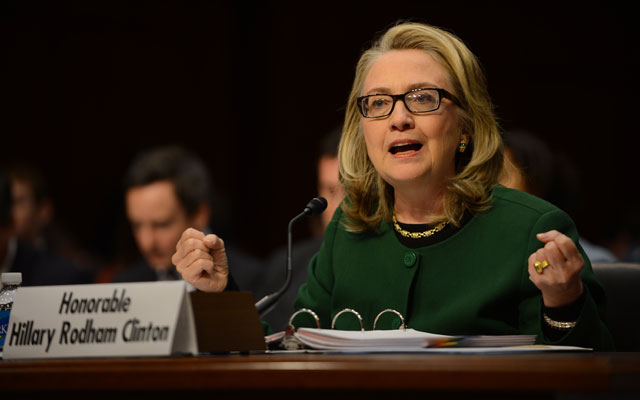
Hillary Clinton on the Hill A “What difference, at this point, does it make?” update

For pure arrogance and quintessential liberal hubris, it’s hard to beat Hillary Clinton’s “What difference, at this point, does it make?” When asked about how four innocent Americans died during the attack in Benghazi, she cleverly gave the media a way to write her guilt away with that line. It was too bad that the timid Republicans were unable to muster the courage to turn the line around on her and ask: “If that is the case, why do we do autopsies?” or “Why does the NTSB investigate airplane crashes if, at this point, it makes no difference ?” “What difference, at this point, does it make?”

Since the Republicans allowed this outrage to pass without challenge, it seems fitting to ask a few other questions that SHOULD matter; but of course, since asking them would embarrass Democrats, we never will.

Each should be read followed by “What difference, at this point, does it make?”

Three more Americans were killed by Islamist murderers in Algeria:

The GDP fell to -.1%:

It will cost $20,000 a year for Obamacare’s free medical coverage:

Pump prices are at their highest level on record for this time of year:

Chuck Hagel knows nothing about anything:

Bob Menendez sleeps with underage hookers in the Dominican Republic:

Kathleen Sebelius violated campaign finance laws:

Osama bin laden is dead, but Al Qaeda isn’t:

Military women can’t do the same things military men can:

There are no women in Obama’s top ruling circle:

Obama has killed 175 children with drone strikes:

Democrats want to track guns, but not voters:

Welfare cards are being used at strip clubs:

Abortions have reduced the number of Black people in America by 33%:

Anti-gun Democrats send their children to schools made safe by armed guards:

More Red States than Blue States run budget surpluses:

Black unemployment is twice White unemployment:

Seven of ten Americans say we are on the wrong track:

What difference, at this point, do the answers to these questions make? Well, actually a lot; but since these questions will never be asked, no difference at all.

…read more
Source: FULL ARTICLE at Western Journalism

Brakes become key issue in deadly Calif. bus crash

Investigators zeroed in on brakes as a possible cause of last weekend’s deadly tour bus crash that killed seven people, including a 13-year-old boy from San Diego and his mother and grandmother.

Victor Cabrera-Garcia, Elvira Garcia Jimenez and Guadalupe Olivas were among 38 people on a daylong trip from Tijuana, Mexico, to see the snow in the San Bernardino Mountains. The bus crashed Sunday evening near Yucaipa as it made its way down meandering state Route 38.

Beginning a review that could take months, investigators from the California Highway Patrol and the National Transportation Safety Board started collecting evidence about the bus, road conditions, and possible driver error or fatigue that could have played a role in the crash.

A team of NTSB officials was dispatched Tuesday to the offices of bus operator Scapadas Magicas LLC, in National City, near San Diego, where they interviewed owners and employees and gathered documents on the vehicle’s maintenance history.

The roadworthiness of the 1996 bus loomed as a key issue after the driver told investigators the brakes failed as it descended from the popular Big Bear ski area, and federal records pointed to a history of brake maintenance problems.

“We are going to look very closely at the brakes as we will every other mechanical system on the bus,” NTSB spokesman Eric Weiss said.

The bus, its front roof collapsed and windows shattered, was towed to an auto yard in Ontario that the CHP uses to store evidence, Officer Mario Lopez said.

The CHP‘s criminal investigation, which is routine, is “to determine if there was any criminal action that caused this collision,” Lopez added.

The bus careened out of control as it descended the mountain road, striking a sedan and flipping before slamming into an oncoming pickup truck hauling a trailer. The accident scene left even veteran investigators shaken, as debris and body parts littered the road. Dozens were injured and several remained in critical condition Tuesday.

Victor Cabrera-Garcia’s aunt, Luz Garcia, told The Associated Press she believed the boy went to see the snow with his 40-year-old mother and 61-year-old grandmother as a late present for his Jan. 13 birthday.

“It’s hard because we are suffering the pain from losing members from three generations,” Garcia said, speaking in Spanish. “Each one hurts equally. It’s horrible.”

The boy was his mother’s only son and they lived with his grandmother, Garcia said. He loved soccer and played on a local team as a goalie. One of his happiest moments, she said, was attending the championship game of Tijuana’s “Los Xolos” soccer team in December when they won the First Division title.

Others killed in the crash were Tijuana residents Liliana Camerina Sanchez Sauceda, 24; Aleida Adriana Arce Hernandez, 38; Rubicelia Escobedo Flores, 34; and Mario Garcia Santoyo, 32, authorities said.

Investigators will attempt to determine if a mechanical failure, driver error or a combination of both caused the crash. It will encompass a broad range of factors, from road conditions to witness accounts, an exhaustive review of the vehicle to an evaluation of the driver and his decisions. Investigators have also taken a blood sample from the driver.

Just before the crash, the driver, Norberto B. Perez of San Ysidro, shouted to the passengers that the brakes had failed and urged them to call emergency services, passengers said.

“If it didn’t have brakes or did have brakes, it would leave different types of evidence,” said Bob Snook, an accident consultant who recently retired from CHP after working on accident investigations for 25 years.

The investigations are “basically car autopsies, because they will go over that bus with a fine-toothed comb,” Snook said.

Even skid marks need to be analyzed carefully to determine whether, for example, they were created by the bus trying to turn too quickly or braking hard, Snook said. Investigators found skid marks at the crash site.

A special six- or seven-member CHP investigation team is typically augmented by other specialists from the agency, whose expertise can range from roadway engineering to diesel mechanics, Snook said.

Government records showed the bus recorded 22 safety violations in inspections in the year ending in October, including brake, windshield and tire problems.

“They’ll be very interested in prior contacts with this company, what prior violations they’ve had, which could be bad or extremely minor,” Snook said. A violation can be a crack in the corner of a windshield all the way up to a broken wheel or axle falling off.

Chris Medwell, an expert in heavy vehicle accident reconstruction at Bloomberg Consulting in Gulf Breeze, Fla., said investigators typically focus on several issues when examine air brakes following a crash, including wear to parts and an adjustment device that compensates for wear. Filters on air compressors that feed the system can clog, and hoses can leak, among other mechanical problems.

But human error can also be at issue.

As the name implies, air brakes use pressurized air for stopping power, rather than the hydraulic fluid used in car brakes. Heavy weight in a vehicle, combined with an inexperienced driver in rugged terrain, can have risks.

“A lot of inexperienced drivers on long grade will pump the brakes. … Descending mountain grades is a special skill,” Medwell said. “You don’t want to apply and release, and apply and release, to maintain a constant speed. That’s what taxes the system.”

___

Associated Press writer Julie Watson in San Diego contributed to this report.

Source: FULL ARTICLE at Fox US News

Dreamliner batteries can still fly despite grounding

At the time the government certified Boeing’s 787 Dreamliners as safe, federal rules barred the type of batteries used to power the airliner’s electrical systems from being carried as cargo on passenger planes because of the fire risk.

Now the situation is reversed.

Dreamliners worldwide were grounded nearly three weeks ago after lithium ion batteries that are part of the planes led to a fire in one plane and smoke in a second. But new rules exempt aircraft batteries from the ban on large lithium ion batteries as cargo on flights by passenger planes.

In effect, that means the Dreamliner’s batteries are now allowed to fly only if they’re not attached to a Dreamliner.

The regulations were published on Jan. 7, the same day as a battery fire in a Japan Airlines 787 parked at Boston’s Logan International Airport that took firefighters nearly 40 minutes to put out.

Pilots and safety advocates say the situation doesn’t make sense. If the 787’s battery system is too risky to allow the planes to fly, then it’s too risky to ship the same batteries as cargo on airliners, they said.

“These incidents have raised the whole issue of lithium batteries and their use in aviation,” said Jim Hall, a former National Transportation Safety Board chairman. “Any transport of lithium batteries on commercial aircraft for any purpose should be suspended until (an) NTSB investigation is complete and we know more about this entire issue.”

Chesley “Sully” Sullenberger, a former US Airways pilot famed for his precision flying that enabled passengers and crew to survive an emergency landing on the Hudson River in New York, said in an interview that he wouldn’t be comfortable flying an airliner that carried lithium ion aircraft batteries in its cargo hold.

The battery rules were changed in order to conform U.S. shipping requirements with international standards as required by Congress, the federal Pipeline and Hazardous Materials Safety Administration said in a statement.

The NTSB is investigating the cause of the 787 battery fire in Boston. Japanese authorities are investigating a battery failure that led to an emergency landing by an All Nippon Airways 787 on Jan. 16. All Dreamliners, which are operated by eight airlines in seven countries, have since been grounded.

Source: FULL ARTICLE at Fox US News

US investigators ask Boeing to provide history of batteries in wake of overheating problems

U.S. investigators said Wednesday they asked Boeing Co. to provide a full operating history of lithium-ion batteries used in its grounded 787 Dreamliners after Japan‘s All Nippon Airways revealed it had repeatedly replaced the batteries even before overheating problems surfaced.

National Transportation Safety Board spokesman Peter Knudson said the agency made the request after recently becoming aware of battery problems at ANA that occurred before a Jan. 7 battery fire in a 787 parked at Boston’s Logan International Airport. Boeing has already collected some of the information, he said.

ANA said it had replaced batteries on its 787 aircraft some 10 times because they didn’t charge properly or connections with electrical systems failed, and informed Boeing about the swaps. Japan Airlines also said it had replaced 787 batteries. It described the number involved as a few but couldn’t immediately give further details.

All 50 of the Boeing 787s in use around the world remain grounded after an ANA flight on Jan. 16 made an emergency landing in Japan when its main battery overheated.

The 787 is the first airliner to make wide use of lithium-ion batteries. They are prone to overheating and require additional safeguards to prevent fires. However, ANA spokeswoman Megumi Tezuka said the airline was not required to report the battery replacements to Japan‘s Transport Ministry because they did not interfere with flights and did not raise safety concerns.

Having to replace batteries on aircraft is not uncommon and was not considered out of the ordinary, she said.

Laura Brown, a spokeswoman for the U.S. Federal Aviation Administration, said in Washington that the agency was checking whether the previous battery incidents had been reported by Boeing.

Boeing in Japan said it couldn’t comment while the NSTB investigation is underway. GS Yuasa, the Kyoto, Japan-based manufacturer of the batteries, said it could not comment.

With 17 of the jets, ANA was Boeing’s launch customer for the technologically advanced airliner. The airline has had to cancel hundreds of flights, affecting tens of thousands of people, but has sought to minimize disruptions by switching to other aircraft as much as possible. ANA and Japan Airlines are among the biggest customers for the 787 and Japanese manufacturers make about 35 percent of the aircraft.

The battery problems experienced by ANA before the emergency landing were first reported by The New York Times.

Japanese and U.S. investigators looking into the Boeing 787’s battery problems shifted their attention this week from GS Yuasa to the manufacturer of a monitoring system. That company, Kanto Aircraft Instrument Co., makes a system that monitors voltage, charging and temperature of the lithium-ion batteries.

On Tuesday, the NTSB said it was conducting a chemical analysis of internal short circuiting and thermal damage of the battery that caught fire in Boston.

The probe is also analyzing data from flight data recorders on the aircraft, the NTSB said in a statement on its website.

Source: FULL ARTICLE at Fox World News

Japan's airlines replaced 787 batteries 10 times before failure

All Nippon Airways and Japan Airlines said they replaced lithium-ion batteries in their Boeing 787 Dreamliners on multiple occasions before a battery overheating incident led to the worldwide grounding of the jets.

ANA said Wednesday it replaced batteries on its 787 aircraft some 10 times because they failed to charge properly or showed other problems, and informed Boeing about the swaps. Japan Airlines said it had also replaced lithium-ion batteries on its 787 jets but couldn’t immediately give details.

All 50 of the Boeing 787s in use around the world were grounded after an ANA flight on Jan. 16 made an emergency landing in Japan when its main battery overheated. Earlier in January, a battery in a Japan Airlines 787 caught fire while parked at Boston’s Logan International Airport. Lithium-ion batteries are prone to overheating and require additional safeguards to prevent fires.

ANA spokeswoman Megumi Tezuka said the airline was not required to report the battery replacements to Japan‘s Transport Ministry because they did not interfere with flights and did not raise safety concerns. She said that having to replace batteries on aircraft is not uncommon and that it was not considered out of the ordinary.

Laura Brown, a spokeswoman for the U.S. Federal Aviation Administration spokeswoman, said in Washington that the agency was checking whether the previous battery incidents had been reported by Boeing.

The National Transportation Safety Board on Tuesday asked Boeing to provide a full operating history of the lithium-ion batteries used in its grounded 787s.

With 17 of the jets, ANA was Boeing’s launch customer for the technologically advanced airliner. The airline has had to cancel hundreds of flights, affecting tens of thousands of people, but has sought to minimize disruptions by switching to other aircraft as much as possible.

The battery problems experienced by ANA before the emergency landing were first reported by The New York Times.

Japanese and U.S. investigators looking into the Boeing 787’s battery problems shifted their attention this week from the battery-maker, GS Yuasa of Kyoto, Japan, to the manufacturer of a monitoring system. That company, Kanto Aircraft Instrument Co. makes a system that monitors voltage, charging and temperature of the lithium-ion batteries.

On Tuesday, the U.S. National Transportation Safety Board said it was conducting a chemical analysis of internal short circuiting and thermal damage of the battery that caught fire in Boston.

The probe is also analyzing data from flight data recorders on the aircraft, the NTSB said in a statement on its website.

Source: FULL ARTICLE at Fox World News

Japan airlines replaced 787 batteries many times

All Nippon Airways and Japan Airlines said they replaced lithium-ion batteries in their Boeing 787 Dreamliners on multiple occasions before a battery overheating incident led to the worldwide grounding of the jets.

ANA said Wednesday it replaced batteries on its 787 aircraft some 10 times because they failed to charge properly or showed other problems, and informed Boeing about the swaps. Japan Airlines said it had also replaced lithium-ion batteries on its 787 jets but couldn’t immediately give details.

All 50 of the Boeing 787s in use around the world were grounded after an ANA flight on Jan. 16 made an emergency landing in Japan when its main battery overheated. Earlier in January, a battery in a Japan Airlines 787 caught fire while parked at Boston’s Logan International Airport. Lithium-ion batteries are prone to overheating and require additional safeguards to prevent fires.

ANA spokeswoman Megumi Tezuka said the airline was not required to report the battery replacements to Japan‘s Transport Ministry because they did not interfere with flights and did not raise safety concerns. She said that having to replace batteries on aircraft is not uncommon and that it was not considered out of the ordinary.

Laura Brown, a spokeswoman for the U.S. Federal Aviation Administration spokeswoman, said in Washington that the agency was checking whether the previous battery incidents had been reported by Boeing.

With 17 of the jets, ANA was Boeing’s launch customer for the technologically advanced airliner. The airline has had to cancel hundreds of flights, affecting tens of thousands of people, but has sought to minimize disruptions by switching to other aircraft as much as possible.

The battery problems experienced by ANA before the emergency landing were first reported by The New York Times.

Japanese and U.S. investigators looking into the Boeing 787’s battery problems shifted their attention this week from the battery-maker, GS Yuasa of Kyoto, Japan, to the manufacturer of a monitoring system. That company, Kanto Aircraft Instrument Co. makes a system that monitors voltage, charging and temperature of the lithium-ion batteries.

On Tuesday, the U.S. National Transportation Safety Board said it was conducting a chemical analysis of internal short circuiting and thermal damage of the battery that caught fire in Boston.

The probe is also analyzing data from flight data recorders on the aircraft, the NTSB said in a statement on its website.

___

Associated Press writer Joan Lowy in Washington contributed to this report.

___

Follow Elaine Kurtenbach on Twitter at www.twitter.com/ekurtenbach

Source: FULL ARTICLE at Fox World News

Boeing 787 flying only 3 weeks before battery fire, investigators say

Federal investigators say the Boeing 787 Dreamliner that experienced a battery fire earlier this month was delivered to Japan Airlines less than three weeks before the fire.

The National Transportation Safety Board said Sunday in an update of its investigation of the incident that the airliner was delivered on Dec. 20. It had only recorded 169 flight hours and 22 round trips when the fire erupted in one of the airliner’s two lithium ion batteries on Jan. 7.

The fire occurred at Logan International Airport shortly after the plane landed. NTSB said the battery was manufactured by GS Yuasa of Japan in September 2012.

A second battery incident led to an emergency landing by another 787 in Japan on Jan. 16. The 787 fleet worldwide has since been grounded.

Source: FULL ARTICLE at Fox US News