Tag Archives: HUD

Radian Announces Settlement Agreement with CFPB Related to Legacy Captive Reinsurance Arrangements

By Business Wirevia The Motley Fool

Filed under:

Radian Announces Settlement Agreement with CFPB Related to Legacy Captive Reinsurance Arrangements

Settlement ends five-year federal investigation

PHILADELPHIA–(BUSINESS WIRE)– Radian Guaranty Inc., the mortgage insurance subsidiary of Radian Group Inc. (NYS: RDN) , today announced that it has reached a settlement agreement with the Consumer Financial Protection Bureau (CFPB) to resolve a previously disclosed federal investigation of the company’s participation in captive reinsurance arrangements. As part of this settlement, which was filed earlier today in the U.S. District Court for the Southern District of Florida, Radian agreed not to enter into new captive reinsurance arrangements for a period of ten years and to pay a civil penalty of $3.75 million.

Radian has not entered into any new captive reinsurance arrangements since 2007. In the past, Radian and other private mortgage insurers entered into captive arrangements pursuant to which affiliates of mortgage lenders reinsured a portion of the risk originated by the lenders (and insured by us) in return for a portion of the mortgage insurance premiums that would have been paid to us. Radian relied on long-standing, written guidance from the U.S. Department of Housing and Urban Development (HUD) in structuring these captive reinsurance agreements and on analyses and opinions of reputable actuarial firms that the terms of Radian’s reinsurance agreements met HUD‘s standards. During the high-claim years that followed the most recent economic downturn, captive arrangements have proven to represent a critical component of the Company’s loss mitigation strategy, effectively serving as designed to protect our capital position during a period of stressed losses. As of December 31, 2012, we had received total cash reinsurance recoveries from these captive reinsurance arrangements of approximately $750 million.

Notwithstanding these facts, since 2008, HUD has been pursuing an investigation into the captive reinsurance arrangements of private mortgage insurers, including Radian, to determine whether these arrangements constituted an unlawful payment under the federal Real Estate Settlement Procedures Act (RESPA). This investigation was transferred to the CFPB in 2011 by the enactment of the Dodd-Frank legislation. The settlement agreement announced today, which remains subject to Court approval, will conclude the CFPB‘s investigation with respect to Radian without the CFPB making any findings of wrongdoing in its investigation or in the settlement.

“We are pleased to put this behind us,” stated Teresa Bryce Bazemore, president of Radian Guaranty. “While we believe our captive arrangements complied with RESPA and caused no harm to consumers, this settlement was an opportunity to eliminate distractions at an acceptable cost so that we can continue our primary focus of writing new, profitable mortgage insurance and helping …read more

Source: FULL ARTICLE at DailyFinance

InVivo Therapeutics Receives Humanitarian Use Device Designation for Spinal Cord Injury Treatment

By Business Wirevia The Motley Fool

Filed under:

InVivo Therapeutics Receives Humanitarian Use Device Designation for Spinal Cord Injury Treatment

CAMBRIDGE, Mass.–(BUSINESS WIRE)– InVivo Therapeutics Holdings Corp. (NVIV), a developer of groundbreaking technologies for the treatment of spinal cord injuries (SCI) and other neurotrauma conditions, today announced that the Company has received approval for its request filed with the U.S. Food and Drug Administration (FDA) for Humanitarian Use Device (HUD) designation for its biopolymer scaffolding product.

HUD designation covers devices that treat rare, ‘orphan’ diseases or conditions. InVivo has received designation for the use of its biopolymer scaffolding for the treatment of recent complete spinal cord injury (no motor or sensory function) that does not involve penetrating injury or complete severing of the spinal cord.

Historically, companies that have received ‘orphan’ status have been able to expedite commercialization, bringing products to market several years faster than other regulatory paths would have allowed. The Company expects the device to be regulated and distributed under a Humanitarian Device Exemption (HDE) pending the results of a clinical trial for which InVivo also currently has a submission under review by the FDA. The trial will be conducted to determine that the device does not pose an unreasonable or significant risk of illness or injury, and that the probable benefit to health outweighs the risk of injury or illness from its use.

HUD designation is important not only for speed-to-market, but it represents a benchmark in InVivo’s commitment to patients with SCI,” said Frank Reynolds, InVivo Chief Executive Officer. “We are pleased that the FDA has recognized ‘orphan’ status for this condition and acknowledges the urgent demand for new treatment options for SCI. We’ve built out the team and the facility to manufacture products for human studies, and we’re ready to go.

“We intend to leverage our platform to further develop treatments for chronic SCI, and expect 2013 to be a springboard year for our stakeholders as we have multiple 510(k) products targeted for market entry by the end of 2014,” continued Reynolds. “Our work in 2013 will be marked by clinical SCI data and by developing treatments for additional neurotrauma conditions in the arms and legs while we engage the FDA on multiple products.”

About InVivo Therapeutics

InVivo Therapeutics Holdings Corp. is utilizing polymers as a platform technology to develop treatments to improve function in individuals paralyzed from traumatic spinal cord injuries. The company was founded in 2005 based on proprietary technology co-invented by Robert …read more

Source: FULL ARTICLE at DailyFinance

The Art of Making Gamers Cry

bmuploads2013-03-191758homeless012jpg

The most conspicuous thing about Beyond: Two Souls is just how unlike a video game it looks. During the 45 minute presentation we saw recently in Paris, we were struck by the number of video game trappings developer Quantic Dream has discarded, even by the studio’s own defiant standards. There’s nothing on the HUD. On-screen prompts are rare. Characters look less like digital puppets and more like famous actors. It’s symbolic that Cage and his gameplay team headed up by Quantic veteran Caroline Marchal have all but done away with the quick-time-events so omnipresent in the studio’s last game, Heavy Rain. Too mechanical. Too distracting from the game’s heart; its story.

Continue reading…

…read more
Source: FULL ARTICLE at IGN Video Games

Piloting a Hawken Mech with the Oculus Rift

The last time I saw the Oculus Rift, it was just hand-made prototype, wrapped in electrical tape and running Epic Citadel at CES 2013. But this week at GDC, Oculus is showing off the new Rift development kit — factory-made units with larger displays and other improvements to latency and performance. What’s more, they’re showing off the system with new games, including Hawken and Team Fortress 2.

While Epic Citadel was a demonstration of the Rift’s impact on environmental immersion, Hawken showcased how the VR headset could be used in combat. In my brief experience piloting a Hawken mech, the Oculus team emphasized how the Rift’s perspective control could allow users to visually identify when the weapons wielded by the machine’s arms were reloaded and ready to fire. To enhance the experience, the HUD was removed, but I can see how combining visual references and on-screen data could be combined for a more satisfying and realistic experience.

Continue reading…

…read more
Source: FULL ARTICLE at IGN Tech

Daniel Holbach: Ubuntu Touch summary (week 11)

I’m posting this on behalf of the Ubuntu Touch team. (Originally posted here.)


The interest in Ubuntu Touch is still going strong, many work on apps, many helped with porting, some started fixing bugs in Ubuntu Touch, so here’s a few highlights of Ubuntu Touch development of the last week:

  • Jim Hodapp worked on enabling Qt multithreaded rendering in the camera app.
  • The media app received a number of updates. Jim also enabled Qt multithreaded rendering here and greatly simplified the UI orientation/rotation support. It’s based on Screen.orientation instead of directly using QtSensors now. Renato Filho added some autopilot tests.
  • qtubuntu-media-signals (a library that coordinates qtvideo-node, qtubuntu-camera and qtubuntu-media across thread contexts) was added by Jim and Francis Ginther.
  • Gustavo Boiko put quite a bit of work into the telephony app, which was optimised to load data from telepathy-logger by reading it just once and dispatching the events to the correct model. Also some unit tests were added, the autopilot tests now pass as well. HUD actions were added and the app now uses the toolbar from the SDK.
  • Guenter Schwann worked on the gallery app, which had its event view updated to use Listview. Also “Add album” and opening the photos view from the album view were reenabled.
  • The Platform API was updated by Jim and Ricardo Mendoza to read the resolution and getting the updated rates of sensors. The accelerometer support was refactored so that it supports calling more than one observer listener per Sensor instance. Sessions can now be tracked in a different namespace than the app manager. Various tests were fixed.
  • ubuntu-session had support added for SMDK4210 (Samsung GT-I9100) by Oliver Grawert.

Many other fixes have gone into the lower levels of the stack which were not considered for this update.

The ports team was busy as well and many Ubuntu Touch ports received updates. Some of them regularly and daily (just like the normal images on cdimage.u.c). Newly added ports are:

  • working: Samsung Galaxy Tab 7.7 (GT-P6800)
  • work in progress: HTC Sensation XL, SGS III (Qualcomm AT&T), Toshiba AC100

Thanks to everyone involved for your fantastic work!

—-

Ubuntu Touch runs on tablets, phones and other devices. We are open to suggestions, fixes and new crazy ideas. If you want go get involved, please get in touch: https://wiki.ubuntu.com/Touch/Contribute

…read more
Source: FULL ARTICLE at Planet Ubuntu

Is the Financial System Safer Today Than It Was in 2007?

By Morgan Housel, The Motley Fool

Filed under:

It’s been more than four years since Wall Street collapsed. What’s happened since then?

Banks have raised tens of billions of dollars in capital. They’re less leveraged and have more liquidity than before.

Consumers have far less debt. Total debt-to-GDP has been declining for four years. 

New regulations dictate what should happen if a huge bank faces collapse, ostensibly ending bailouts (in theory, anyway).

We’ve made big strides in the right direction. But so much can still go wrong, and so much still is wrong. Is the financial system actually safer than it was five years ago?

I recently asked that question to former AIG CEO Hank Greenberg. Here’s what he had to say (transcript follows):

Morgan Housel: Do you think the global financial system is safer today than it was in 2007?

Hank Greenberg: It’s now so tight you can’t do anything.

Morgan Housel: That’s an interesting point of view. It might be as dangerous, but there’s not much we can do about it?

Hank Greenberg: I think that, if you look at the regulators that we have, and had at the time, how did all this start in housing? It started with the government.

When our governor was the head of HUD, they loosened the reins. The decision by the administration was, “We want more Americans to own their homes.” They dropped the qualifications for getting mortgages, and people who couldn’t afford a home got a home.

Morgan Housel: The mortgages are being purchased by Fannie and Freddie, right?

Hank Greenberg: Yeah.

Morgan Housel: But a tremendous amount, virtually all of the subprime that was being done in 2005-06 was all in the private market, correct?

Hank Greenberg: Yeah.

Morgan Housel: It wasn’t until 2007 that Fannie and Freddie started getting into subprime.

Hank Greenberg: No, I understand that. I understand that, but they fed on it. Once you start down that road, it became a little easier next time, to the next one, the next one, and the next one.

Then you go beyond that. The SEC, where were they when the investment banks were leveraging the capital 40 to 1? Did you hear anybody say anything?

The blame is widespread. I think if you look at some other countries — a city-state like Singapore — a tiny state, but very well run, and the regulators are terrific. They get paid as much as they would if they were in the private sector, or maybe more. They’re intelligent, smart.

We need to change the dynamics here in the regulatory structure.

For more on AIG
At the end of last year, AIG was the favorite stock among hedge fund managers. Have they identified the next big multi-bagger, or are the risks facing the insurance giant still too great? In The Motley Fool’s premium report on AIG, Financials Bureau Chief Matt Koppenheffer breaks down the key issues that you need to know about if you want to successfully invest in this stock. Simply click here …read more
Source: FULL ARTICLE at DailyFinance

Department Of Housing And Urban Development Plans Weeklong Shutdown Due To Sequestration

By The Huffington Post News Editors

WASHINGTON, March 11 (Reuters) – The U.S. Department of Housing and Urban Development on Monday said it plans to shut its doors for a total of seven days between May and September due to budget cuts and will furlough more than 9,000 employees on those days.
Across-the-board cuts known as sequestration are forcing government agencies to reduce spending. The government furloughs are a result of those $85 billion cuts that began on March 1 after a gridlocked U.S. Congress was unable to resolve fiscal fights and find a solution to replace the sequestration.
The seven furlough days will be spread out, according to HUD, and will impact HUD‘s work force at its main headquarters and all 80 field offices.
All employees will be impacted, and only staffers considered as critical would be required to work during designated closure days. The critical staffers will be scheduled for furlough on seven other days.
“Everybody will have the same number of furlough days,” said HUD spokesman Jerry Brown. “We’re trying to not have more than one furlough day per period,” referring to the federal government‘s standard two-week pay period.
The agency will determine the exact shutdown dates at a later time.
In cataloging the impact of sequestration to a Senate panel last month, HUD Secretary Shaun Donovan warned lawmakers that the government spending cuts would have harsh consequences for housing programs and could threaten Superstorm Sandy recovery efforts in the U.S. Northeast.
“The ripple effects are enormous because of how central housing is to our economy,” Donovan told lawmakers.
HUD has held a town hall meeting to go over the furlough plans, but no formal notices have been sent at this time.

Read More…
More on sequester

…read more
Source: FULL ARTICLE at Huffington Post

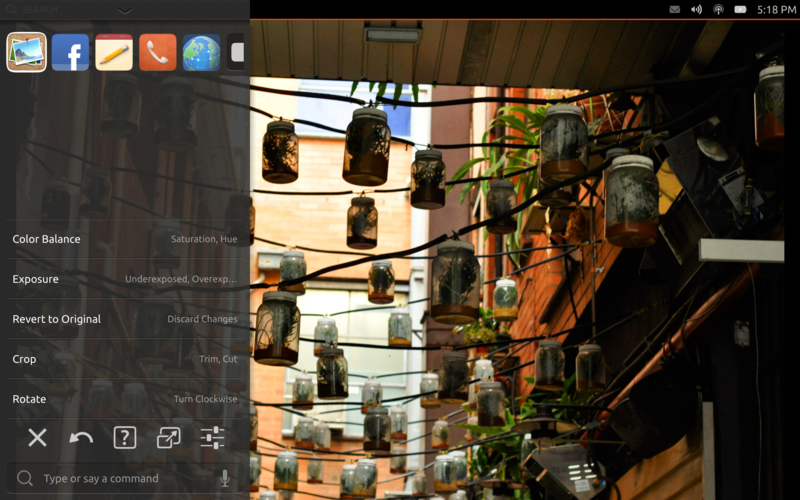
Ted Gould: Introducing HUD 2.0

Screenshot of HUD

As you might have noticed in the tablet information we’ve put some time and effort into imaging the next steps for the HUD. For the last few months I’ve been leading a team to bring that into a reality on the tablet.


Managing complexity

One of the problems facing application developers on a device like a tablet is adding functionality without making the entire interface feel cluttered. We even made the problem harder by emphasizing a content focused strategy in our SDK. Where do you put controls? There are various tools including toolbars, but none of them scale to even a moderately complex application. With the power of today’s devices ever increasing, it’s clear that tablet applications are going to become more complex.

We could just tell application authors not to do it. Save that complexity for your desktop UI. But that wouldn’t be convergence, that’d be creating silos for you applications to live in.

By using HUD we allow applications to expose rich functionality that is available to the user via search. Users can search through the actions exposed by the application to find the functionality that they need. We combine that with historical usage and recently used items to take into account what functionality the user uses in the application. It’s the rich functionality of your application, customized for the individual user.


Designed for HUD

One of the things we realized early in the HUD 2.0 efforts is that we can no longer just passively take data from applications and make things better. We needed to go beyond menu sucking to having applications actively targeting the HUD. We’re building HUD functionality directly into the SDK making it easily available for application developers to add actions that are visible in the HUD.

By providing a way for applications to export both actions and their descriptions to the HUD directly we can make that interaction much richer. We can do things like get the keywords pragmatically so that they’re included next to the original item definitions. This also allows us to define actions that have additional properties that can be adjusted with UI elements, we’re calling these parameterized actions.


Screenshot of HUD using a parameterized action

Parameterized actions provide a way for applications to create a small autogenerated UI for simple settings and items that can be quick to edit. Let’s be clear, autogenerated UI‘s aren’t the best UI‘s, but if done right can be attractive and effective. We aim to do it right. Hopefully your application has a primary UI that is beautiful and tailored for its specific task that is then supplemented with additional settings and actions in the HUD, parameterized actions are no different there.

Currently in the code we only have support for sliders of integer percentages. That’s pretty limiting. We plan on expanding that to most of the base widgets in the …read more
Source: FULL ARTICLE at Planet Ubuntu

Don’t Ban Firearms; BAN Obama And Cuomo!

By Tim Powers

Andrew Cuomo SC Dont Ban Firearms; BAN Obama and Cuomo!

Now that these two left wing liberal/communists have pushed their agendas to take our God given, Constitutional right to bear arms, I am now waiting for them to announce the forced buyback of our firearms.

As far as Obama, he can start with buying back the firearms that he has illegally sold to the Mexican drug cartels under his Fast and Furious gun running operation, as well as the weapons sold to the Muslim Brotherhood, Al Queida, and the terrorist factions that have taken over Libya and Syria. Not that anyone has bothered to check, but one has to wonder if Ambassador Stevens and the three brave Americans that were with him were killed with American-supplied weapons.

For two of the most polarizing people that ever entered the political spectrum, they sure have their fair share of issues when it comes to protecting and defending the United States Constitution.

Let’s start with Obama. Aside from the eligibility issues that have plagued him since 2007, which still to this day have not been investigated, we can add the Fast and Furious scandal, Benghazi, Solyndra, the NDAA, the BP oil spill extortion, offshore drilling bans, excessive executive orders to circumvent Congress, Obamacare, CZARs, and illegal recess appointments (and that is just off the top of my head. I am sure there is more.)

Now let’s look at Cuomo. As the HUD secretary, he was instrumental in pushing banks to lend money for mortgages to clients they KNEW did not have the means to pay the money back, knowing full well that this would lead to the collapse of not only the banking system, but the housing market as well. Cuomo was subsequently instrumental in causing this recession (more like a depression) that America still has not recovered from regardless of what the economists and media may tell us. I believe that this whole scam was set up in order to transfer private property into the government sector as up to 98 percent of the existing mortgages are guaranteed by Fannie Mae and Freddie Mac. If you look at any communist regime, you will find that ALL property is government-owned.

Some 238 years ago, our Founding Fathers faced the same kind of tyranny in the 13 Colonies. Did they just roll over and let the king of England dictate to them as we get dictated to today? No, they didn’t. They kissed their mothers, sisters, and daughters good bye, took up their arms, and stood up in one accord and proclaimed to the king “WE WILL NOT COMPLY’! I fear that if we continue on this path of destruction, we will be faced with the same choices as our Forefathers did. Will you stand up for the Constitution? Or will you just roll over and be ruled by dictators? The time is drawing short for you to make your choice. Until you choose, stay safe and always be aware of your surroundings.

Photo credit: Patja (Creative Commons)

Source: FULL ARTICLE at Western Journalism