Tag Archives: CFPB

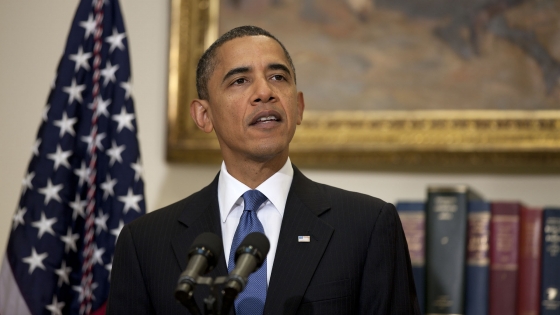
Weekly Address: Confirming Rich Cordray to Lead the CFPB

By The White House

WASHINGTON, DC— In this week’s address, President Obama discussed the Senate’s confirmation of Rich Cordray as Director of the Consumer Financial Protection Bureau. The CFPB is an independent watchdog set up to protect families from irresponsible behavior in the financial sector – one that puts mortgage lenders, student lenders, payday lenders, and credit reporting and debt collection agencies under greater scrutiny, while providing the American people a place to get some measure of justice if they don’t play by the rules.

The audio of the address and video of the address will be available online at www.whitehouse.gov at 6:00 a.m. ET, July 20, 2013.

Remarks of President Barack Obama
Weekly Address
The White House
July 20, 2013

Hi, everybody. Three years ago this weekend, we put in place tough new rules of the road for the financial sector so that irresponsible behavior on the part of the few could never again cause a crisis that harms millions of middle-class families.

As part of that reform, we set up the Consumer Financial Protection Bureau, the first-ever independent consumer watchdog with one job: to protect families from that sort of behavior.

Two years ago, I nominated a man named Rich Cordray, a former attorney general from Ohio, to run this consumer protection bureau. But Republicans in the Senate refused to give him a simple up-or-down vote, not because they didn’t think he was the right person for the job, but because they didn’t like the law that set up the consumer watchdog in the first place.

So last year, I acted on my own to put him in charge – because without a director, the CFPB couldn’t use all the tools at its disposal to protect consumers from shady mortgage lenders, or unscrupulous credit reporting agencies, or predatory lenders who targeted veterans and seniors. And I’m pleased to say that he was finally confirmed this week by a bipartisan vote.

Because of the work that’s been done at the CFPB over the past two years, today, mortgage lenders, student lenders, payday lenders, and credit reporting and debt collection agencies all face greater scrutiny. And if they don’t play by the rules, you now have somewhere to go to get some measure of justice. In fact, the CFPB has already addressed more than 175,000 complaints from every state.

Today, as part of the CFPB’s “Know Before You Owe” efforts, students and their parents can get a simple report with the information they need to make informed decisions before taking out student loans – and more than 700 colleges have stepped up to make this information clear and transparent. And if you’ve noticed that some credit card forms are actually easier to understand than they used to be, that’s because of the work that Rich’s team and others in the Administration have done.

Today, veterans have the tools they need to defend against dishonest lenders and mortgage brokers who try …read more

Source: FULL ARTICLE at The White House Press Office

Weekly Wrap Up: “Live from the White House”

By Courtney Corbisiero

Watch the West Wing Week here.

Two Presidents in the White House: Former President George H.W. Bush joined President Obama at the White House on Monday to honor the 5,000th Daily Point of Light Award winners. This award recognizes Americans that serve their communities in unique ways. At the event, President Obama announced his plan to continue President Bush’s legacy: a new Presidential Memorandum on expanding national service. The President’s initiative will help Americans become more engaged in service by tapping the full resources of the federal government.

Immigration Reform: Spanish-language television anchors from around the country were offered a unique opportunity on Tuesday – the chance to visit the White House with behind-the-scenes access and interview President Obama. After attending briefings surrounding issues important to Latinos, the reporters spoke with President Obama about the importance of comprehensive immigration reform. “Immigration is always difficult – it always has been in this country,” said President Obama. “But what’s also been true is that this is the thing that separated America from every other country on Earth. It’s part of what makes us special, and we have to continue that tradition by passing comprehensive immigration reform.”

Protecting Americans: After blocking a vote on his nomination for two years, the Senate confirmed Richard Cordray as director of the Consumer Financial Protection Bureau on Tuesday. President Obama spoke from the East Room on Wednesday about the significance of Cordray’s role – one that looks out for the financial interests of every day Americans. The President noted the accomplishments already made by the CFPB and said that with a leader in place, the Bureau would be well equipped to continue protecting consumers.

“Today, if you want to take out a mortgage or a student loan or a payday loan, or you’ve got a credit reporting agency or debt collector who’s causing you problems — maybe they're not playing by the rules, maybe they're taking advantage of you — you have somewhere to go. The CFPB has already addressed more than 175,000 complaints from all across the nation, giving people an advocate who is working with them when they're dealing with these financial institutions that may not always be thinking about consumers first.”

read more

…read more

Source: FULL ARTICLE at The White House

Senate Confirms Richard Cordray as Consumer Watchdog

By <a href="/author-detail/3699933">Megan Slack</a>

President Barack Obama listens to Richard Cordray deliver remarks following his confirmation as Director of the Consumer Financial Protection Bureau

President Barack Obama listens to Richard Cordray deliver remarks following his confirmation as Director of the Consumer Financial Protection Bureau, in the State Dining Room of the White House, July 17, 2013. (Official White House Photo by Pete Souza)

Today, President Obama thanked lawmakers from both parties for coming together confirm Richard Cordray as Director of the Consumer Financial Protection Bureau. The CFPB was established to make sure American consumers are treated fairly in the financial market place, whether applying for a credit card, taking out a loan to buy a home or pay for college, dealing with a debt collector or other activities.

“Four years ago, even as we were working on restoring the economy and dealing with the immediate crisis,” President Obama said, “we also wanted to figure out how do we set new rules for the road to make sure that a few bad apples in the financial sector couldn't break the law, or cheat consumers, or put the entire economy at risk.”

Those efforts led to the creation of the CFPB in 2011, and two years ago this week, President Obama first nominated Cordray to run the new agency. But the Senate wouldn't vote on his confirmation, and the CFPB was severly hampered without a director, President Obama said.

The CFPB wasn’t able to give consumers the information they needed to make good, informed decisions. Folks in the financial system who were doing the right thing didn’t have much certainty or clear rules of the road. And the CFPB didn’t have all the tools it needed to protect consumers against mortgage brokers, or credit reporting agencies, or debt collectors who were taking advantage of ordinary Americans.

President Obama took action to temporarily appoint Cordray as Director so CFPB could get to work. And as a result, President Obama said, Americans everywhere are better off.

Today, if you want to take out a mortgage or a student loan or a payday loan, or you’ve got a credit reporting agency or debt collector who’s causing you problems — maybe they're not playing by the rules, maybe they're taking advantage of you — you have somewhere to go. The CFPB has already addressed more than 175,000 complaints from all across the nation, giving people an advocate who is working with them when they're dealing with these financial institutions that may not always be thinking about consumers first.

read more

…read more

Source: FULL ARTICLE at The White House

Remarks by the President on the Confirmation of Richard Cordray as Director for CFPB

By The White House

State Dining Room

11:04 A.M. EDT

THE PRESIDENT: Well, for decades, the middle class in this country was the engine that powered the economy, and that allowed us to all grow together. Hard work paid off. Responsibility was rewarded. It was that basic bargain that made this country great — that no matter who you are or where you came from, you could make it if you put in enough blood, sweat and tears.

But over time, a winner-take-all philosophy began to take hold and it delivered huge rewards to those at the very top, but left everybody else working harder and harder just to stay afloat. A lot of families took on more debt just to keep up. Mortgages were sold that people really didn’t understand and, in some cases, couldn't afford. The financial sector was able to make huge bets with other people’s money. And that strain of irresponsibility eventually came crashing down on all of us.

Now, I ran for President to restore that basic bargain. I ran because I believed that our economy works best not from the top down, but from the middle out and from the bottom up, where you’ve got a rising, thriving middle class and ladders of opportunity for everybody.

So four years ago, even as we were working on restoring the economy and dealing with the immediate crisis, we also wanted to figure out how do we set new rules for the road to make sure that a few bad apples in the financial sector couldn't break the law, or cheat consumers, or put the entire economy at risk.

And I was fortunate even when I was running for President to have some friends like Elizabeth Warren, who had already done a lot of academic work on this and had a whole series of ideas about how we might start making sure that consumers were treated better, and as a consequence, take some of the risk out of the system. And because of those conversations and that work, and because of some terrific efforts by other members in Congress, we were able, for the time in history, to get a consumer watchdog on the job — to look out for the interests of everyday Americans. And I am very proud to say that last night, Rich Cordray was finally confirmed — (laughter) — by the United States Senate to keep serving as America’s consumer watchdog and as the Director of the Consumer Financial Protection Bureau. So we’re very pleased about that. (Applause.)

I first nominated Rich for this position two years ago this week. (Laughter.) He was eminently qualified. He had the support of Democrats and Republicans from across the country. A majority of state attorneys general from both parties — Rich’s former colleagues — called on him to be confirmed. And for two years, Republicans in the Senate refused to give Rich a simple yes-or-no …read more

Source: FULL ARTICLE at The White House Press Office

Press Briefing by Press Secretary Jay Carney, 7/16/2013

By The White House

James S. Brady Press Briefing Room

12:58 P.M. EDT

MR. CARNEY: Good afternoon, ladies and gentlemen. Thank you for being here, as ever, for your White House briefing. I do not have any announcements or discussions of my weekend for the top, and therefore, I will go straight to Julie Pace.

Q Thank you. Does the White House support this deal that's emerging in the Senate to move forward on some of the President’s nominees?

THE PRESIDENT: Let me say a couple things. One, any agreement that there might be between senators has yet to be formally announced, and so we will not get ahead of such an announcement if and when it comes.

We have worked very closely with Senator Reid and we have made clear our support for Senator Reid’s position in this because we share — the President shares his frustration over the obstructionism that we've seen from Republicans in the Senate when it comes to the confirmation of the President’s nominees. And we would be glad to see a resolution that results in the speedy confirmation of the President’s qualified nominees to these positions that have been at issue. And that includes Rich Cordray at CFPB; it includes Gina McCarthy at EPA and Tom Perez at Labor, and others.

So we won't have a full comment on an agreement that is yet to be announced, but we hope there is one. We simply hope that there’s a resolution that allows for the confirmation of the President’s nominees, which is why we supported all along Senator Reid in his approach to this matter.

Q Senator McCain, who has been quite involved in this process, says that he spoke with Vice President Biden and Denis McDonough over the past few days on this. Can you tell us what the White House’s role was in trying to break this impasse?

MR. CARNEY: The White House was not involved in negotiating. The White House provided information and answered questions when it came to working with Senate Republicans, including, of course, Senator McCain, who, again, as I understand it, based on what we've seen, deserves significant credit for his efforts in trying to find a resolution here — a resolution that allows for hopefully the speedy confirmation of the President’s nominees.

But this has been a — this solution that has been sought has been one that has been sought and negotiated by senators. And our position has been to communicate with and work with Senator Reid and other Democrats on this issue. But the negotiating between Democrats and Republicans has happened between senators.

Q Also, Edward Snowden has applied for temporary asylum in Russia. Has the White House reached out to the Russians since he filed his application? Is there any general comment on his taking this step?

MR. CARNEY: There are regular communications between the U.S. government and the Russian government on …read more

Source: FULL ARTICLE at The White House Press Office

The $32 Billion Bank Heist You're Paying For

By Dan Caplinger, The Motley Fool

Filed under:

Bank robberies conjure up images of famous criminals like Jesse James or Bonnie and Clyde. But nowadays, many consumer groups are accusing banks of having turned the tables on their customers, taking billions of dollars from their accounts every single year. As appalling as that sounds, it’s perfectly legal, and it all happens because so many customers voluntarily do something they could easily avoid: They overdraft their checking accounts.

Bank robbers Bonnie Parker and Clyde Barrow, also known as Bonnie and Clyde. Source: Library of Congress via Wikimedia Commons.

The appalling statistics on bank overdrafts
The amount of money involved in bank overdraft fees makes the worst bank heists in history seem like pocket change by comparison. According to a study by Moebs Services, bank customers paid $32 billion in 2012 on overdraft fees. That’s actually down from $37 billion in 2009, but it’s up slightly from 2011.

Millions of customers pay overdraft fees, with Moebs estimating that 38 million checking accounts — more than a quarter of the total number of such accounts in the nation — frequently incur overdraft fees. With a typical charge for overdrafts coming in at around $30 for banks and $27 for credit unions, incurring those fees multiple times can quickly add up to a huge burden on customers.

Payday lenders: the better alternative?
Perhaps the most surprising thing about the study is that payday lenders may actually be a lower-cost source for people short on cash than banks. As much as payday loan operators Cash America and Fast Cash Financial and pawn-shop giant EZCorp have been criticized for their high fees, the Moebs study found that typical fees at payday lenders were just $16 — well below the typical overdraft charge.

When will the fees end?
Last year, the Consumer Financial Protection Bureau took on high overdraft fees with an investigation into whether certain bank practices improperly increased the amount customers were charged. Among the areas the CFPB examined were transaction-reordering guidelines that often lead to multiple overdraft charges, as well as misleading marketing materials.

CFPB Director Richard Cordray. Source: CFPB.

If the CFPB is successful in limiting overdraft fees, the impact could be huge. Already, Bank of America , Citigroup , and other banks have ended the practice of resequencing transactions in a way that could increase fees. Yet as Fool contributor Amanda Alix noted at the time, further limits could cost banks 3% to 4% of their earnings, with B of A’s losses potentially amounting to $480 million. Until the CFPB plugs all the potential loopholes, high-cost overdrafts will continue to happen.

Protect yourself
In the end, as ridiculously simple as it sounds, the only way you can stop banks from taking your hard-earned money is to stop overdrafting your checking account. Given how common overdrafts are, though, millions of Americans don’t appear likely to …read more

Source: FULL ARTICLE at DailyFinance

Mortgage Insurers Funneled Kickbacks to Lenders, Alleges CFPB

By Molly McCluskey

Filed under: , , , ,

Getty Images

On Thursday, the Consumer Financial Protection Bureau filed complaints against four mortgage insurers who the CFPB claimed had paid kickbacks to mortgage lenders. Mortgage insurance is often required by mortgage lenders when customers are unable to make a 20 percent down payment on a home mortgage. Insurance protects the lender from a customer defaulting on their mortgage, but it also adds to the borrower’s overall monthly payments.

Lenders, rather than borrowers, typically select the mortgage insurer. Through the arrangement, lenders were able to send business to insurers that then funneled millions of dollars back to the lenders over the span of 10 years.

The CFPB found the arrangement was in violation of the Real Estate Settlement Procedures Act of 1974, which makes kickbacks in real estate transactions illegal. The Dodd-Frank Act moved enforcement of the old law to the new CFPB.

Because the practice targets homeowners with little equity, the CFPB says that inflated costs as a result of illegal kickbacks can be devastating, and increase the chances the homeowners will default on their mortgages.

“Illegal kickbacks distort markets and can inflate the financial burden of homeownership for consumers,” said CFPB Director Richard Cordray in a press release. “We believe these mortgage insurance companies funneled millions of dollars to mortgage lenders for well over a decade.”

Sponsored Linksadsonar_placementId=1505951;adsonar_pid=1990767;adsonar_ps=-1;adsonar_zw=242;adsonar_zh=252;adsonar_jv=’ads.tw.adsonar.com’;

The four companies involved in the settlement are Genworth Mortgage Insurance Corporation, based in Richmond, Virginia; the Greensboro, N.C.-based United Guaranty Corporation; Radian Guaranty of Philadelphia; and Mortgage Guaranty Insurance Corporation headquartered in Milwaukee.

The complaint against the mortgage insurers and lenders in regards to kickbacks calls for a combined penalty of $15.4 million, an end to the practice of kickbacks, and ongoing compliance monitoring.

Lenders, You’re Clearly on Notice

This isn’t the first time the CFPB has tackled predatory mortgage practices.

In January, the agency issued new rules to ban predatory lending to high-risk individuals, including interest-only and no-documentation loans. The rules included a caveat that loan payments be no more than 43 percent of a borrower’s monthly income.

In February, the CFPB issued warnings about ongoing mortgage relief scams, and are targeting companies that promise to offer help for underwater homeowners, especially those pretending to be government or government-endorsed agencies.

See the CFPB’s release for more on its complaints and proposed consent orders sent to the four major lenders.

Molly McCluskey is a contributor to The Motley Fool.

%Gallery-184788%

Permalink | Email this | Linking Blogs | Comments

…read more

Source: FULL ARTICLE at DailyFinance

Mortgage Insurers Don't Feel the Heavy Hand of Regulators' Fines

By Jessica Alling, The Motley Fool

Filed under:

A settlement was announced Thursday between the Consumer Financial Protection Bureau and four of the nation’s top mortgage insurers over the improper tactics used to win new business. The CFPB stated that the insurers — AIG , Genworth Financial , Radian Group , and MGIC Investments — paid kickbacks to lenders who placed mortgage borrowers into their insurance policies.

Since mortgage insurance is generally required for loans where borrowers put down less than 20%, the market is a lucrative one, with insurers fighting for business. But with the practices outlined in the CFPB‘s investigation, the four insurers paid to have the lenders place borrowers in more expensive policies than if true competition had won out. Though none of the insurers claimed any wrongdoing, they have promised to avoid any such dealings in the future, and all settled in order to avoid litigation and further “distraction,” as Teresa Bryce Bazemore, president of Radian Guaranty put it.

They’ll pay, but not very much
The settlement calls for $4.5 million from both AIG‘s United Guaranty segment and Genworth Financial, while Radian and MGIC will pay $3.75 million and $2.65 million, respectively. Most of the companies won’t see a dent in their bottom lines due to the regulator’s fines. In fact, the low cost to settle was another incentive to avoid litigation mentioned by several of the insurers.

The CFPB‘s investigation may not be over. The lenders that participated in the schemes may soon find themselves under the microscope. And with at least a decade of dealings involved, millions of borrowers may have an opportunity down the road to recoup excess costs due to the lack of competition.

So what does this mean?
For investors, this news isn’t going to make a big splash. Though the news wasn’t positive, only AIG saw a decline in trading after the announcement, and it was down only 0.4%.

Insurer Daily Gain (Loss) Monthly Gain (Loss)
AIG (0.42%) (1.00%)
Genworth 0.53% 4.40%
MGIC 0.00% 16.51%
Radian 3.76% 3.55%

Source: Yahoo! Finance.

As you can see in the table above, very little impact from today’s news.

With regulator settlements, it’s often a one-and-done dip in trading, but in the case of this investigation, if banks get involved, or borrowers are able to file a class action lawsuit, there may be more ramifications for the insurers. Otherwise, this is just another example of how one day’s news doesn’t make a huge difference in your stock‘s performance.

As most Fools would tell you, it’s important to know what news events will effect your portfolio, but don’t let one day’s trading get you down about a solid investment opportunity.

At the end of last year, AIG was the favorite stock among hedge fund managers. Have they identified the next big multi-bagger, or are the risks facing the insurance giant still too great? In The Motley Fool’s premium report on AIG, Financials Bureau Chief Matt Koppenheffer breaks down the key issues that you need to know about if you want to successfully invest in this stock. Simply click …read more

Source: FULL ARTICLE at DailyFinance

Radian Announces Settlement Agreement with CFPB Related to Legacy Captive Reinsurance Arrangements

By Business Wirevia The Motley Fool

Filed under:

Radian Announces Settlement Agreement with CFPB Related to Legacy Captive Reinsurance Arrangements

Settlement ends five-year federal investigation

PHILADELPHIA–(BUSINESS WIRE)– Radian Guaranty Inc., the mortgage insurance subsidiary of Radian Group Inc. (NYS: RDN) , today announced that it has reached a settlement agreement with the Consumer Financial Protection Bureau (CFPB) to resolve a previously disclosed federal investigation of the company’s participation in captive reinsurance arrangements. As part of this settlement, which was filed earlier today in the U.S. District Court for the Southern District of Florida, Radian agreed not to enter into new captive reinsurance arrangements for a period of ten years and to pay a civil penalty of $3.75 million.

Radian has not entered into any new captive reinsurance arrangements since 2007. In the past, Radian and other private mortgage insurers entered into captive arrangements pursuant to which affiliates of mortgage lenders reinsured a portion of the risk originated by the lenders (and insured by us) in return for a portion of the mortgage insurance premiums that would have been paid to us. Radian relied on long-standing, written guidance from the U.S. Department of Housing and Urban Development (HUD) in structuring these captive reinsurance agreements and on analyses and opinions of reputable actuarial firms that the terms of Radian’s reinsurance agreements met HUD‘s standards. During the high-claim years that followed the most recent economic downturn, captive arrangements have proven to represent a critical component of the Company’s loss mitigation strategy, effectively serving as designed to protect our capital position during a period of stressed losses. As of December 31, 2012, we had received total cash reinsurance recoveries from these captive reinsurance arrangements of approximately $750 million.

Notwithstanding these facts, since 2008, HUD has been pursuing an investigation into the captive reinsurance arrangements of private mortgage insurers, including Radian, to determine whether these arrangements constituted an unlawful payment under the federal Real Estate Settlement Procedures Act (RESPA). This investigation was transferred to the CFPB in 2011 by the enactment of the Dodd-Frank legislation. The settlement agreement announced today, which remains subject to Court approval, will conclude the CFPB‘s investigation with respect to Radian without the CFPB making any findings of wrongdoing in its investigation or in the settlement.

“We are pleased to put this behind us,” stated Teresa Bryce Bazemore, president of Radian Guaranty. “While we believe our captive arrangements complied with RESPA and caused no harm to consumers, this settlement was an opportunity to eliminate distractions at an acceptable cost so that we can continue our primary focus of writing new, profitable mortgage insurance and helping …read more

Source: FULL ARTICLE at DailyFinance

CFPB Will Regulate Student Loan Debt Servicers

By The Huffington Post News Editors

The Consumer Financial Protection Bureau on Thursday announced new rules aimed at cracking down on alleged abuses by companies that collect debts for student lenders, seeking to tame an area of finance accused of afflicting debt-saturated graduates with exorbitant fees.

Under the new rules, so-called loan servicers — the companies that send out bills on behalf of lenders and process payments — will be subject to audits by the CFPB, senior bureau officials told reporters in a conference call.

The bureau already claims the authority to fine servicers that violate federal statutes on governing lending. The bureau said it intends to monitor servicers, while specifically probing reports that they often mislead borrowers about their rights to modify terms of their loans, resulting in late fees and tarnished credit.

Read More…
More on Student Loans

…read more
Source: FULL ARTICLE at Huffington Post

CFPB Takes Aim at This Mortgage Player

By Amanda Alix, The Motley Fool

Filed under:

I suppose it was only a matter of time. When the government settled early last year with Bank of America, Citigroup, JPMorgan Chase, Wells Fargo, and Ally Financial over foreclosure abuses, these lenders were not only instructed to use the $25 billion to assist fraudclosure victims. They were also ordered to revamp their servicing standards, which were also fraught with problems.

Since then, many banks, namely Bank of America, have been selling off their mortgage servicing rights in order to better comply with new capital rules. The beneficiaries of these sales are mortgage servicers such as Nationstar Mortgage , Walter Investment , and Ocwen Financial , all of which have been scooping up these MSRs like there’s no tomorrow.

These companies are growing by leaps and bounds, so I wasn’t particularly surprised to see that the Consumer Financial Protection Board has been hounding Ocwen in regards to its compliance with the servicing terms contained in the National Mortgage Settlement.

Although Ocwen states that it is complying with all requests by regulators, it also notes in its 10-K form that the CFPB, along with the state Attorneys General involved in the settlement and the Multi-State Mortgage Committee, have asked Ocwen to contribute to a consumer relief fund. The servicer declined.

Not the end of the story
Ocwen is the largest of the mortgage servicers, so it’s not surprising that they are being squeezed first. It is also not unexpected because these companies are servicing a large portion of existing mortgages. Despite the company’s assertion that it is against forking over any contributions, Ocwen acknowledges that it may be liable for up to $135 million under the proposal. The servicer also concedes that its reluctance to pony up may end it in a court of law. Ocwen also reported that it had received two civil investigative demands from the Dept. of Justice regarding its new acquisition , Homeward Residential, seeking to resolve questions regarding that unit’s prior participation in the government‘s Home Affordable Mortgage Program.

Ocwen certainly has its plate full, but the other servicers are likely to be next. If Nationstar and Walter also opt out of the consumer relief pool, there may well be a whole lot of legal action going on very soon in the mortgage servicing industry. 

With housing looking peppier than ever this year, these stocks are looking at some long-lasting gains. This puts them squarely within the Motley Fool‘s investing paradigm, which is that the best investing approach is to choose great companies and stick with them for the long term. The Motley Fool‘s free report “3 Stocks That Will Help You Retire Rich” names stocks that could help you build long-term wealth and retire well, along with some winning wealth-building strategies that every investor should be aware of. Click here now to keep reading.

The article CFPB Takes Aim at This Mortgage Player originally appeared on Fool.com.

Fool contributor Amanda Alix …read more
Source: FULL ARTICLE at DailyFinance

The Feds Want Your Retirement Accounts

By Breaking News

Barack Obama 5 SC  The Feds Want Your Retirement Accounts

Quietly, behind the scenes, the groundwork is being laid for federal government confiscation of tax-deferred retirement accounts such as IRAs. Slowly, the cat is being let out of the bag.

Last January 18th, in a little noticed interview of Richard Cordray, acting head of the Consumer Financial Protection Bureau, Bloomberg reported “[t]he U.S. Consumer Financial Protection Bureau [CFPB] is weighing whether it should take on a role in helping Americans manage the $19.4 trillion they have put into retirement savings, a move that would be the agency’s first foray into consumer investments.” That thought generates some skepticism, as aptly expressed by the Richard Terrell cartoon published by American Thinker.

Days later On January 24th President Obama renominated Cordray as CFPB director even though his recess appointment was not due to expire until the end of 2013.

One day later, in the first significant resistance to President Obama’s concentration of presidential power, a three judge panel of the U.S. Court of Appeals in Washington DC unanimously said that Obama’s Recess Appointments to the National Labor Relations Board are unconstitutional. Similar litigation testing the Cordray appointment to the CFPB is in the pipeline.

The Consumer Financial Protection Bureau (CFPB) created by the 2,319 page Dodd-Frank legislation is a new and little known bureau with wide-ranging powers. Placed within the Federal Reserve, a corporation privately owned by member banks, the CFPB is insulated from oversight by either the President or Congress, its budget not subject to legislative control. It is not even clear that a new President can replace the CFPB director on taking office.

Read More at American Thinker . By John White.

…read more
Source: FULL ARTICLE at Western Journalism

More States Join Suit to Kill Consumer Financial Protection Bureau

By John Grgurich, The Motley Fool

Richard Cordray, director of the CFPB. (Getty Images)

Filed under: , , ,

Eight more states have joined a lawsuit aimed at challenging the constitutionality of parts of the Dodd-Frank Wall Street Reform and Consumer Protection Act, including the creation of the Consumer Financial Protection Bureau.

The CFPB was created in the wake of the financial crisis to protect consumers from predatory, unfair and abusive financial practices and has already taken action on many issues of concern, some of which contributed directly to the financial crisis. If the CFPB is ruled…

More States Join Suit to Kill Consumer Financial Protection Bureau originally appeared on DailyFinance.com on 2013-02-14T17:02:00Z.

Permalink | Email this | Comments

…read more
Source: FULL ARTICLE at DailyFinance