Tag Archives: GDP

Second Quarter GDP Beats Expectations At 1.7%, Bernanke Still Set To Taper This Year

By Agustino Fontevecchia, Forbes Staff

The U.S. economy continues to muddle along, failing to gain momentum in the face of fiscal drag caused by Washington’s sequester.  The Bureau of Economic Analysis released its first second quarter GDP estimate on Wednesday, showing real output expanded 1.7%, substantially above estimates.  Yet downward revisions to the past four quarters suggest underlying trend growth hasn’t picked up at all.  The silver lining: demand, which pushed up imports and supported consumption spending.  In terms of what this means to Fed Chairman Ben Bernanke, it suggests he will move forward with plans to taper quantitative easing (QE) before the end of the year. …read more

Source: FULL ARTICLE at Forbes Latest

Comprehensive GDP Revision and Advance Estimate for the Second Quarter of 2013

By Alan B. Krueger

This morning the Bureau of Economic Analysis released a comprehensive revision to the National Income and Product Accounts, covering the full history of data since 1929. The revision showed that the recovery from the Great Recession has been slightly faster than previously reported, with real gross domestic product (GDP) expanding by a cumulative 8.5% from 2009:Q2 to 2013:Q1, compared to the previous estimate of 8.1% growth over that period. Including the advance estimate for 2013:Q2, real GDP has risen by 9.0% since the business-cycle trough in 2009:Q2 (see chart). In addition, real GDP surpassed its pre-recession peak in 2011:Q2, two quarters sooner than was reported prior to the revision, and is 4.4% higher than it was at the business-cycle peak in 2007:Q4.

The revision also showed that while the contraction during the Great Recession was slightly less severe than previously reported, it remains the largest decline since quarterly data became available in 1947. Cumulatively, real GDP fell by 4.3% during the recession, less than the 4.7% drop previously reported. The steep drop in economic activity caused by the recession makes it imperative that more work is done to raise economic growth and speed job creation.

The comprehensive revision to the national accounts, which is the first since July 2009, includes additional source data received by the Bureau of Economic Analysis, as well as methodological changes designed to better reflect the evolving nature of the U.S. economy. For instance, the GDP data released today incorporates input-output tables derived from the once-every-five-years Economic Census, and adopts an expanded definition of business investment that includes spending on research and development (R&D) and the creation of original works of art like movies. All told, these and other changes raised the level of GDP in the first quarter of 2013 by $551 billion at an annual rate (or 3.4%), from $16.0 trillion to $16.5 trillion.

read more

…read more

Source: FULL ARTICLE at The White House

Zombie Economy Overshadows Fed Meeting

By CNBC

federal reserve chairman ben bernanke economy gdp earnings investing

Filed under: , , , ,

APFederal Reserve Chairman Ben Bernanke

By Patti Domm

GDP data Wednesday is expected to show a slow-moving, zombie-like economy, as the Fed meets for a second day.

Many economists expect second quarter growth to be paltry, less than one percent, and some think that data could help shape the Fed’s thinking if it’s even weaker than expected. The first quarter grew at a 1.8 percent rate.

The Fed meanwhile, isn’t expected to say much new when its meeting ends. The 2 p.m. Eastern time statement isn’t seen altering what Fed Chairman Ben Bernanke has already said about the Fed’s plans to taper bond purchases before the end of the year. But it may adjust its comments to reflect a temporary slowing of the economy. The Fed, and many economists, expect a stronger growth rate in the second half of the year.

“[Wednesday] is an action-packed today. It’s one of those weird ones where it’s so action-packed, what if it is a dud?” said George Goncalves, Treasury strategist at Nomura Americas. “We have all these high expectations — GDP, revisions to GDP, ADP, the Treasury going to announce at 8:30 their intentions for borrowing. We have the Fed later on.”

It is also the end of the month, and that could make markets more volatile as traders square positions. For July, the S&P 500 is up five percent, bringing its year to date gain to 18.2 percent, The Dow was up four percent in July so far. Markets Tuesday were in a wait-and-see mode ahead of the Fed’s announcement Wednesday. The Dow Jones industrial average (^DJI) edged 1 point lower to 15,520 and the S&P 500 (^GSPC) rose less than a point to 1,685.

Sponsored Linksadsonar_placementId=1505951;adsonar_pid=1990767;adsonar_ps=-1;adsonar_zw=242;adsonar_zh=252;adsonar_jv=’ads.tw.adsonar.com’;

The 10-year Treasury note was at 2.61 percent Wednesday. Traders are watching that yield level, as a move higher could take the market to a potential nervous zone for stocks.

“We’ve had a little bit of a backup in yields. [Month end] could amplify whatever’s happening toward the end of the day,” Goncalves said.

“I think GDP will be constructive. I think it’s still coming in on the weak side. The Fed will react to it by not being too hawkish. Then we’re going to quickly turn our attention to [nonfarm payrolls] on Friday,” he said. The Fed has said it would base its tapering decisions on economic data , and it is particularly focused on employment so some traders expect to get more new information from the jobs data than the Fed statement.

The 8:30 a.m. Eastern time GDP release is also be important because the government will release revisions in the data going back to 1929. It last issued massive revisions in 2009. “It’s clear the level of GDP is going to be higher by …read more

Source: FULL ARTICLE at DailyFinance

Upsides That Give U.S. an Edge…For Now

By Tim Ferguson, Forbes Staff

In a post earlier this month, I recounted my recent heresy in Hong Kong, a suggestion that the GDP growth rates of the U.S. and China would cross briefly in the next few years.  Therein, I laid out a case for a dramatic slowdown in China, which has since gotten more serious acknowledgment. I noted parenthetically that I would follow with a brief for a stronger U.S. rebound. So, here goes: …read more

Source: FULL ARTICLE at Forbes Latest

Is Another Recession Looming?

By Mike Patton, Contributor Since January 1948, whenever GDP has fallen below 2.0% on a year-over-year basis, a recession usually followed. This was brought to my attention by Bloomberg Economist, Rich Yamarone. The recession of 2008 ended in Mid 2009. Since then there have been 15 rolling periods (more on that in a moment). GDP has been below 2.0% in 9 of these periods, and yet, we have avoided recession. Is our luck about to run out? In this article we’ll discuss the possibility of another recession and how it could affect the stock market. Let’s begin with an overview of the methodology behind the analysis. …read more

Source: FULL ARTICLE at Forbes Latest

Did Warren Buffett Just Become The World’s Biggest Spammer?

By Floyd Brown

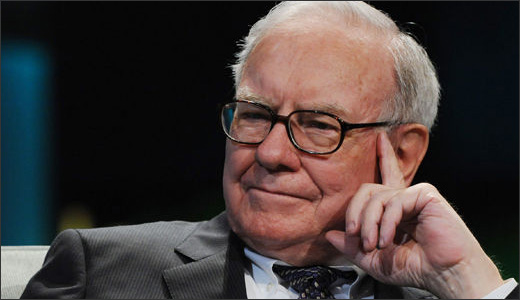
buffett SC Did Warren Buffett Just Become the Worlds Biggest Spammer?

There’s a spam email zipping around the internet that purports to be a congressional reform plan from Warren Buffett.

The problem is, the email – like so many internet missives – is full of misleading half-truths. So I wanted to set the record straight and give you a plan that would actually work to reform our broken system.

In actuality, the Buffett Plan would reform congressional budgeting – not Congress itself. He explained it during an interview on CNBC in 2011.

The outline of his proposal is relatively simple. Here’s what Buffett said: “I could end the deficit in five minutes. You just pass a law that says that any time there’s a deficit of more than 3% of GDP, all sitting members of Congress are ineligible for re-election. Yeah, yeah, now you’ve got the incentives in the right place, right? (Laughs).”

Buffett understands that working with politicians is all about incentives; and today, all the incentives are wrong. Buffett understands that what motivates members of Congress is re-election. If you want to balance the budget, just tie successful budgeting to re-election.

An Insider at Heart

Most Americans don’t remember him, but Warren Buffett’s father was a Republican congressman from Omaha. So when Buffett talks about Congress, he has an insider’s view of how the institution really works. And his budget reform plan creates the incentives necessary to make the institution work.

The incentives for members of Congress are currently upside-down. To get re-elected, congressmen spend nearly half their time raising money. To raise money, they spend hours making calls and attending events with the special interest representatives who grease the campaigns’ wheels with money.

As a result, legislation is full of crony capitalism and special interest goodies.

But with the Buffett plan, we’d get the deficit under control and likely balance the budget. And to further reform Congress, I believe we should make a few additional changes to the business of influence peddling (also known as lobbying.) You see, the most popular gig for former members of Congress is to become a lobbyist.

My first reform would be to close this revolving door by instituting a lifetime ban that keeps members of Congress from becoming lobbyists.

After former member lobbyists, the next group to join the profession in droves is congressional staff. I would also ban former staff members from lobbying their former bosses. Currently, this is one of the dirtiest secrets in Washington. You see, lobbying firms target specific congressmen. And the firms love to hire the former staff assistants of their target congressmen, giving the firm direct access to the people they’re trying to influence.

If you work for Senator X or Congressman Y, you shouldn’t be allowed to come back to your old boss and lobby him or her.

To make this ban work, we’d need to require “Lobbying Entities” to report on the former members of Congress and former congressional staff whom they employ. And that could be done with a simple website.

It All Comes Full Circle

Next, we should stiffen fines for violating the lobbying regulations. Violations should be …read more

Source: FULL ARTICLE at Western Journalism

The Markets' Worst Kept Secret

By James Gruber, Contributor

Here’s what your stockbroker and the media aren’t telling you: the world is more indebted now than it was at the height of the financial bubble in 2007. That’s right. Despite the extraordinary government intervention of the past six years. Despite continuing optimism of a recovery. Despite the reassuring words of central bankers. We’re worse off in debt terms. From this, there are several inevitable conclusions that will be discussed in depth in this piece: 1) The policies pursued since the financial crisis haven’t worked. Otherwise, debt to GDP ratios would be decreasing, not increasing. 2) Interest rates can’t rise above GDP rates, otherwise debt to GDP ratios will climb further. If they do, you can expect more money printing, budget cuts and tax rises. 3) That means low interest rates are likely to stay for many, many years. It’s the only way to bring the debt down to more sustainable levels. 4) The startling thing about the past six years is the almost total lack of reform to fix the problems which led to the 2008 debt bust. It’s ironic that a paragon of communism, China, may well be the one to soon lead the way on substantive capitalist reforms. 5) Emerging markets, including my neighbourhood of Asia, may be better off than the developed world when it comes to debt, but rising asset and commodity prices have papered over several problems. And these problems are now coming to light. 6) Debt crises happen because incomes can’t support the servicing of the debt any longer. If there is any drop-off in economic growth, a 2008 re-run could well be around the corner. That’s not trying to be dramatic; it’s just the way the math pans out. Lashing central bankers It’s been surreal to watch news of Detroit’s bankruptcy this week. Once the bastion of a thriving American automobile industry, the city is now on its knees. Meanwhile, U.S. stock market indices are hitting all-time highs. Compare and contrast… But it’s also been fascinating to see the commentary around the bankruptcy. Much of this commentary blamed a sharply declining population for the crisis and a host of other reasons. Less mentioned though was the real reason for the bankruptcy: Detroit simply spent far more than earned. And it went deeper into debt to finance the spending, until it could no more. It’s not entirely surprising that this has been largely overlooked and that Detroit is being treated as an isolated case. That’s what politicians in the U.S. and across the developed world want you to believe. That debt isn’t a big deal and that they can help their cities and countries grow their way out of indebtedness, but they just need a bit more time to achieve this. However, a recent report by the Bank Of International Settlements (BIS) – often referred to as the central banks’ bank – shows how difficult this task will be. The BIS annual report outlines, in a clear and often confronting way, the realities of the world’s indebtedness and how current money printing and low interest policies won’t fix the problems emanating from 2008. The BIS has …read more

Source: FULL ARTICLE at Forbes Latest

China May Have Ghost Cities But Rapid Growth Is No Apparition

By Stephen Leeb, Contributor

China has hit targets in virtually everything central planners have ever outlined. Plenty of naysayers cite China’s purported credit-debt bubble and its supposedly overbuilt infrastructure. Often, critics like “60 Minutes” cite China’s putative ghost cities, fully built urban areas where supposedly few to no residents live. I am not alarmed by China’s so-called ghost cities, much less Chinese overbuilding or vulnerability to a crash. The fact is, China’s urbanization goal requires that it build roughly 100 cities in the next decade, vastly greater than the scant, same five “ghost cities” belittled again and again over the last decade. Of the targets, Ordos has garnered the most publicity, probably due to its size and Mongolian desert location. But two documentary filmmakers, Adam Smith and Song Ting, offer a very different and compelling assessment. Ordos “sprang to life” on the heels of a major coal discovery. That led to massive building. Really, Ordos includes two cities, one already a vibrant metropolis of 2 million residents whose average income matches that in the U.S., the second as yet small, but as the film makers suggest, starting to catch fire. Whatever overbuilding China may have done, it was simply insufficient to create an economic crisis. The IMF authored the most comprehensive report to date on Chinese over investment. China’s debts, unlike those of the U.S. and most other countries, the IMF notes, are owed to China itself. Therefore, the risks of a full-blown Chinese economic crisis remain small. The misallocation of resources does create some economic strain. The IMF calculates that these translate into a subsidy from households to large state-owned enterprises, of roughly 4% of GDP. However, if that figure is accurate, or even somewhat higher, Chinese per capita income has nevertheless grown faster, over a much longer period of time, than in any country since the advent of capitalism. In the last 13 years, by contrast, real U.S. median incomes declined about 10%. Moreover, the IMF and Western analysts in general judge investment returns along a fairly short time horizon. China probably views returns on investment in its infrastructure, especially in energy, as heavily back-loaded. Chinese academic articles predict peak coal sometime in the next decade. Clearly, the world ought to start to prepare now, although gains will not be evident until coal supplies start to lag demand. To me, this provides yet another indication that China sits on firmer ground than many believe, and that fears of a Chinese real estate bubble in particular are way overblown. Here’s a number never cited in the U.S. press, real estate price changes relative to GDP. Broad-based measures of home or property prices in China, show that gains over several years pretty much match GDP growth. During the U.S. housing bubble, by contrast, home prices increased several times faster than annual growth in GDP. Similarly, in Japan, real estate prices during the late 1980s rose many times faster than GDP growth, while P/Es on the Nikkei in the same period often rose to triple-digit …read more

Source: FULL ARTICLE at Forbes Latest

China’s Central Bank Holding Americans Hostage

By Floyd Brown

Red China flag SC Chinas Central Bank Holding Americans Hostage

I travel around the world to uncover stories that impact Capitol Hill. Often, the most important stories need an outsider’s perspective to understand them. This week, I spoke at conference called FreedomFest 2013. This conference included some of the greatest strategic thinkers in the world, and several had chilling comments about China.

Jim Rogers, Steve Forbes, Alex Green, Mark Skousen, Joseph Farah, and Bert Dohmen are just a few of the thinkers who shared their insights about investments and governance in a world of increasing risk. I deeply value the opinions of the unique minds attending FreedomFest. And this year, an important trend has emerged. This trend is influencing events that will impact your life and your investments…

The collected voices share a great fear about what lies directly ahead for China. China’s central bank responded aggressively to the financial crisis of 2008. It responded with liquidity and easy money. And this flood of easy money has helped produce an incredible array of malinvestment. (Austrian School economists developed the concept of malinvestment to explain the consequences of a central bank providing too much monetary stimulus.)

As applied to China, the story goes something like this…

Big Trouble in… Big China

Governments and firms were required to keep the economy growing at all costs, which led them to poorly allocate the excess funds. This flood of artificially cheap money paid for projects that require huge debt service payments, but provide little economic value.

For example, highways and bridges to nowhere were built. High rise apartment buildings remain vacant, and entire cities are ghost towns waiting for businesses and inhabitants to show up. One of the most colorful descriptions I heard was of the Guangzhou South Train Station. This colossus of a station is eerily vacant. Imagine going into Grand Central Station, and not a soul is in sight…

What’s more, China’s Vice Finance Minister, Zhu Guangyao, admitted this month that local government debt levels are unknown. Official figures haven’t been released since 2010 and are likely much greater than the forecast 10.7 trillion yuan ($1.7 trillion).

Estimates of China’s local government debts range from Standard Chartered Bank’s 15% of GDP at the end of 2012, to Credit Suisse Bank’s 36%. The debt rating agency Fitch forecasts that the figure is 25% of GDP, so it downgraded China’s sovereign debt rating in April.

Collapse on the Horizon

Now that the stimulus of 2008 has worn off, the economy is in worse shape than before. China is currently dealing with an overhang of excess debt, along with too much factory inventory and housing capacity. These excess supplies have become dead weight. Therefore, China is again scrambling to stir up growth, and officials will be forced to order more stimulus. The big concern now is that the excess debt will cause a full-scale economic collapse.

The clearest sign of distress in China can be seen via the inverted yield curve. An inverted yield curve happens when short-term interest rates become higher than long-term interest rates. This means that there’s a structural problem …read more

Source: FULL ARTICLE at Western Journalism

ADB trims Asia growth forecasts on China slowdown

China’s slowing economic growth is weakening momentum throughout the rest of Asia, the Asian Development Bank said on Tuesday as it revised down its forecasts for the region.

A day after Beijing released data showing its economy slowed for a second successive month in April-June, the Manila-based ADB trimmed its outlook for developing Asia this year to 6.3 percent, from 6.6 percent.

In the update to its annual Asian Development Outlook publication, first published in April, the bank also pared its 2014 forecast for developing Asia to 6.4 percent, from 6.7 percent.

The update is only a little better that what the bank described in the report as the region’s “relatively sluggish” growth pace of 6.1 percent last year.

“The drop in trade and scaling back of investment are part of a more balanced growth path for (China), and the knock-on effect of its slower pace is definitely a concern for the region,” the bank’s chief economist, Changyong Rhee, said in a statement.

“But we are also seeing more subdued activity across much of developing Asia,” Rhee added.

Developing Asia groups 45 nations or territories from Central Asia through to the Pacific islands, but excludes Japan.

The report cited a marginally better outlook for the advanced economies, particularly Japan.

However, this did not lead to stronger demand for Asian exports, and the first-half economic performance across the region was “unexpectedly subdued”, it added.

China said Monday gross domestic product expanded 7.5 percent in the second quarter, following 7.7 percent in the previous three months and 7.9 percent in October-December.

The ADB said it now sees China’s economy growing 7.7 percent this year and 7.5 percent in 2014.

Both figures are lower than its April forecasts of 8.2 percent and 8.0 percent. The Asian economic giant grew 7.8 percent last year.

The ADB now expects Southeast Asia’s economies to expand 5.2 percent this year, down from 5.4 percent.

It also trimmed its forecast for South Asia to 5.6 percent this year, while maintaining its 6.2 percent projection for 2014.

On a positive note, the ADB said slower GDP growth was helping the region contain inflation., while expanded global natural gas production was also helping suppress energy prices.

The bank lowered its inflation forecasts for developing Asia to 3.5 percent this year and 3.7 percent in 2014, the latter on par with the 2012 rate.

…read more

Source: FULL ARTICLE at Fox World News

China's Second Quarter GDP Fell To 7.5% And Will Continue To Drop: Expect 6.9% In 2014

By Agustino Fontevecchia, Forbes Staff

The global economy may no longer be able to rely on China to be the growth engine it’s been in the past.  On Monday, China’s official statistics agency announced the world’s second largest economy grew 7.5% in the second quarter as industrial production and fixed asset investment continued to dip.  While the slowdown came in line with analysts’ expectations, it presages further slowdowns, as China’s GDP will probably average 7.5% this year, falling to 6.9% next year, Nomura’s forecasts indicate, which given the size of China’s economy has important implications for global growth going forward. …read more

Source: FULL ARTICLE at Forbes Latest

Gold To Shine Again As Global Growth Thaws Commodities

By Stephen Leeb, Contributor

Don’t let depressed commodity prices fool you. They won’t stay depressed too long. The single most important global economic reality remains resource scarcity. At last, I see short-term commodity price depressants starting to dissipate. Very shortly, the overwhelming consensus against commodities will start to shift, possibly as early as yearend. Then the long-term upward climb of commodities will resume. Commodities slid mainly due to Europe’s fixation on austerity. They began to fall in 2011 at about the time the European Union started to falter. The euro zone hasn’t posted a single quarter of GDP growth since mid-2011. Overall regional unemployment stands well into the double digits, while auto sales hit generational lows. Even Germany, Europe’s economic powerhouse, is barely growing. Weaker economies, including Spain and Greece, sit mired in full-fledged depressions. As Europe represents the largest economic entity in this deeply interconnected world, its swoon instigated a sharp drop in global growth and therefore in demand for commodities. Now Europe shows signs of starting to recover, albeit very slowly. Forward-looking indicators including the Purchasing Managers Index (PMI) surveys have gradually risen over the past year. Though the rise has been very slightly sloped, its persistence suggests that Europe, while hardly ready to boom, will soon start generating at least marginal positive growth. These glimmers of growth come as Europe’s leaders increasingly realize that austerity is a dangerous economic recipe. Chancellor Angela Merkel’s likely reelection in September and the growing danger of social unrest in Spain and Greece will spur more growth-oriented policies. Whether Europe grows at 1% or 1.5%, it will grow, and any improvement in this massive economy will alter worldwide economic dynamics for the better. One upshot will be commodities’ emergence from the doghouse. As that happens, I expect gold to start to outperform. On balance, precious metals, base metals, and oil alike tend to move in the same direction. During overall periods of rising commodity prices, precious metals outperform all the others. In commodity price slumps, precious metals tend to underperform. Since their 2011 peaks, both gold and silver have underperformed other commodities. From their highs, you can see weakness especially in commodities ETFs that track the precious metals markets.  SPDR Gold Trust (GLD) fell nearly 33% since its September 2011 high, and iShares Silver Trust (SLV), tracking silver, declined almost 60%. The price of oil, on the other hand, strong of late, stands roughly level with that of two years ago. Since oil ETFs like USO and OIL tend to have a negative bias, however, I don’t recommend them. If you have a futures account, you might want to buy long-dated oil futures, expiring at year end in 2014. In 2008, by contrast, gold outperformed, although silver did uncharacteristically underperform. The same was true in the 1970s. When commodities rose, gold climbed much faster, but mid-decade when commodities faltered, the 50% plunge in the price of gold far exceeded the decline of virtually any other commodity. Gold’s outperformance during periods of rising commodity prices is consistent …read more

Source: FULL ARTICLE at Forbes Latest

Apocalypse Soon: The U.S. Dollar's Grim Future — And How To Prepare For It

By Eamonn Fingleton, Contributor

The U.S. dollar’s predicament can be summed up in three observations: The U.S. balance of payments deficits have multiplied three-fold since the 1980s, and now typically run between 3 and 6 percent of GDP. Manufacturing’s share of GDP is down to 11 percent. Services do little exporting. Taken together, these facts spell doom for the U.S. dollar. Short of attempting – highly unrealistically – to increase its manufactured output by at least 50 percent and to sell all the increased output abroad, America can’t dig itself out of the hole. The ultimate outcome will be a total collapse of the dollar. And in that event, as the former top Reagan administration economic thinker Paul Craig Roberts has pointed out, shoppers in Walmart will feel they are in Neiman Marcus. …read more

Source: FULL ARTICLE at Forbes Latest

Biggest Fib Of The Year: China GDP Grows 7.5% In Q2

By Gordon G. Chang, Contributor Moments ago, Beijing’s National Bureau of Statistics announced that gross domestic product in the second calendar quarter increased 7.5% from the same period last year, hitting median estimates squarely on the nose.  The announcement confirms China’s growth is slowing but does not fully capture the recent falloff.   What is the real growth figure?  Seeking Alpha thinks it is around 6.7%, but even that figure is high.  Among other factors, the severe contraction of aggregate financing in June, the marked fall in exports in May and June, and the evident shrinkage of the manufacturing sector throughout the quarter all point to an economy growing in the low single digits.  Moreover, it is unlikely that NBS, in releasing the Q2 number, had made proper adjustments to account for two phenomena.  First, Beijing’s official statistics have not been adequately adjusted for inflation, as Standard Chartered’s Stephen Green has pointed out.  Second, fake trade invoicing substantially inflated GDP numbers.  Rampant falsification has resulted in the simply unbelievable report of 14.7% export growth in April, the first month of the just-ended quarter.  Although some say export growth was about 6% then, it seems like it was actually closer to 3%. The most intriguing Q2 indications, however, are the comments of China’s finance minister, Lou Jiwei.  Mr. Lou, speaking in Washington on Thursday, said growth in the first half of 2013 was probably less than 7.7%, “but not too far from it.”  Then he spoke these words: “Our expected GDP growth rate this year is 7%.”  To get to 7% for the entire year after growing 7.7% in Q1 and being “not too far” from 7.7% in Q2, Lou was indirectly telling everyone that China would be expanding at an average of 6.4% in the third and fourth quarters.   Of course, it’s theoretically possible that Lou thinks the economy will fall off the cliff only in the second half of the year, but it is much more likely he knew Q2 growth was far below 7.7% and was preparing everyone for unexpectedly poor performance.  In any event, Beijing immediately censored its finance minister.  Xinhua News Agency, for instance, omitted a striking comment from Lou about the possibility that growth could fall to 6.5% and then erased his 7% forecast for this year, claiming he in fact predicted 7.5%.  The also official—and more authoritative—People’s Daily reported the 7% prediction by carrying another—and more accurate—Xinhua dispatch. What does the utter confusion in official media tell us?  There are two principal points to keep in mind.  First, the differing versions of Lou’s remarks in China’s media suggest there is sharp disagreement among senior leaders over what to do about the economy.  Reformers generally believe—correctly—that reform will decrease growth at first so that the leadership, to allow necessary restructuring to proceed, must de-emphasize gross domestic product as a measuring stick and back off its GDP growth targets.  Lou’s admission of under-target 7% growth signaled, in a subtle way, the leadership was behind reform.  In all probability, those opposed to …read more

Source: FULL ARTICLE at Forbes Latest

Falling Consumer Confidence Another Blow to European Economic Recovery

By 24/7 Wall St.

Filed under: ,

In another blow to the recovery of the European economy, consumer confidence across the region fell in April. The reading was the lowest since December and is another marker that whatever brief recovery there might have been late last year is over.

Europe‘s number can be added to evidence in the United States that its economic activity has slowed. That leaves the world’s two largest economies tipping more negative. (The European Union is often measured as on nation for GDP measurement purposes). Some data out of China show that its normally white hot economy has flagged also.

Bloomberg said of economic confidence in Europe:

Economic confidence in the euro area decreased more than economists forecast in April as the 17- nation currency bloc struggled to emerge from a recession and the bailout of Cyprus renewed debt-crisis concerns.

An index of executive and consumer sentiment dropped to 88.6 from a revised 90.1 in March, the European Commission in Brussels said today. That’s the lowest since December. Economists had forecast a decline to 89.3, according to the median of 26 estimates in a Bloomberg News survey.

Business confidence and investor sentiment in Germany, Europe‘s largest economy, dropped more than expected in April.

Filed under: 24/7 Wall St. Wire, Economy, International Markets

Read | Permalink | Email this | Linking Blogs | Comments

Source: FULL ARTICLE at DailyFinance