Tag Archives: FCC

Ethnic Radio Programming Targets New Chinese Immigrants

By David Yin, Forbes Staff

The U.S. Census Bureau recently announced that Asians were the country’s fastest-growing ethnic group in 2012. Their population jumped 2.9%, or 530,000 to 18.9 million, with 60% of this increase coming from international migration. As many migrants have limited English proficiency, their growth in numbers has led to opportunities for media companies which serve ethnic minorities. In April Magic Broadcasting agreed to sell KDAY, a Los Angeles-based hip hop radio station that had helped bring the West Coast rap scene into prominence, to a group of Chinese investors for $19.5 million. If the deal is approved by the Federal Communications Commission (), KDAY is likely to switch from playing Jay-Z and Kanye West to a Chinese language format. I spoke to Arthur Liu, founder and chief executive of Multicultural Radio Broadcasting, to discuss his broadcasting niche and his views on the future of the industry. (Liu is not involved in the KDAY deal.) The son of a journalist, Liu was born in Shandong, China and later moved to Taiwan and the U.S.. He started the company in 1982 and launched his first radio station (WNWK, 105.9) in New York in 1992. Six years later, a change in FCC regulations allowed him to sell the station, along with another smaller station, to Heftel Broadcasting, then the nation’s largest Spanish language radio group, for $135 million. Given that Liu only paid $5 million for the station, he used most of the proceeds to buy ten more radio stations on the West Coast. Today, Liu splits his time between New York and California, managing a nationwide network of 40 radio stations and serving ethnic minorities in ten major markets. Liu says his business builds on the diversity of race, culture and language in the country. His radios stations mirror the ethnic makeup of the population, broadcasting daily in Chinese, Spanish, Vietnamese, Russian and several other languages. He specifically targets the Asian-American market because the audience in its different subcultures cannot be reached so broadly, unlike the Spanish language market. Before entering a radio market, Liu looks carefully at its geographic location and the size of its audience. He adds that the company has no Vietnamese language programing in New York but several Vietnamese language stations in southern California. To cater to the large Spanish-speaking population, Liu also leases airtime in 12 stations to Spanish language producers, who design their own content and seek their own advertising streams. While Liu says his radio business is “doing very well,” he admits that it has been greatly affected by the rise of new forms of media. He says that the company is adopting new broadcasting trends such as mobile applications and internet streaming. He cites the company’s Radio Chinese Plus, a radio application for smartphones that currently has 680,000 active users. Liu is also expanding his cable business, which complements his radio business and broadens his reach. His radio and cable branches are housed in the same buildings – in New York and Los Angeles – and …read more

Source: FULL ARTICLE at Forbes Latest

PlayStation 4 Operating Temperature Revealed

Sony’s PlayStation 4 has been passed by the FCC, meaning the retail version of the console is already deemed viable for sale to the American public.

Engadget reports that the accompanying documents reveal a “max clock frequency” of 2.75GHz, which gives us an idea of how much power the box is packing.

What’s more interesting though is the fact that the PlayStation 4’s operating temperature is listed as being being five and 35 degrees Celsius, which is cooler than the PS3. While Sony’s current console is meant to run between 45 and 55 degrees Celsius, if it peaks at over 60 degrees you could encounter the infamous Yellow Light of Death, which essentially reduces your PS3 to a paperweight.

Continue reading…

…read more

Source: FULL ARTICLE at IGN Tech

For sell Brand New Apple iPhone 5S 64GB -$350,Nokia Lumia 80

By ramadans

SERCOM LIMITED® we are one of the leading mobile phone distributorsis. We are legitimate registered company under government registration and licensed,

Registered No.05031576

SERCOM LIMITED® is an Approved dealer, specialized in the distributors of Mobile phones, Laptops, Games, Mobile accessories, computer etc. Our objective is

to develop long-term relationships with our customers. To do so we continuously provide our existing customers new products advanced designs and patented

innovations so that they can stay on the top of their markets. Mind you all the product below are brand new and they come with the minimum of 1 full

international warranty.

We supply superior quality products all products strictly follow the standards of CE, FCC and RoHS, and are carefully inspected by a responsible QA team

before packaging.

We shipout worldwide through Professional and reliable courier company e.g FEDEX EXPRESS ,DHL and UPS within 24hrs of contract sealed, Customers never

experience what is called Breach of contract since our operation, Fidelity guarantee our service, our product are 100% international warranty and guarantee.

1. Complete accessories (Well packed and sealed in original company box)

2. Unlocked / SIM FREE.

3. Brand new (original manufacturer) box – no copies

4. All phones have English language as default

5. All material (software, manual) – car chargers – home chargers – USB data cables -holsters/belt clips – wireless headsets(Bluetooth) -leather and non-

leather carrying cases – batteries.

PAYMENT METHOD: PAYPAL, BANK TRANSFER, WESTERN UNION, MONEY GRAM, LIBERTY RESERVE

Company information and contact details:

Company Name: SERCOM LIMITED®

Registered No.05031576

Sales Manager: KRZYSZTOF KUCHARSKI

Company Address:381 Ashford Road, Laleham, Staines, Middlesex, Tw18 1qg

CONTACT EMAILS & SALES INQUIRY: sales.sercomlimited@gmail.com, sercomlimited@msn.com, sercom4u@yahoo.com

WEBSITE: SerCom

BEST OFFER:

BUY 2 UNITS GET 1 FOR FREE.

BUY 4 UNITS GET 2 UNITS FOR FREE WITH FREE SHIPPING.

BUY 10 UNITS GET 5 UNITS FOR FREE WITH FREE SHIPPING.
PRICELIST: BEST OFFER:
BUY 2 UNITS GET 1 FOR FREE.
BUY 4 UNITS GET 2 UNITS FOR FREE WITH FREE SHIPPING.
BUY 10 UNITS GET 5 UNITS FOR FREE WITH FREE SHIPPING.

PRICELIST:

Apple iPads:
Apple iPad 4 Wi-Fi……………………………..$320.00
Apple iPad mini Wi-Fi…………………………$300.00
Apple iPad 3 Wi-Fi + 4G 64GB……………..$280.00
Apple iPad 3 Wi-Fi + 4G 32GB……………..$280.00
Apple iPad 3 Wi-Fi + 4G 16GB……………..$300.00
Apple iPad 2 Wi-Fi + 3G 64GB ……… $300.00
Apple iPad 2 Wi-Fi + 3G 32GB ……… $290.00
Apple iPad 2 Wi-Fi + 3G 16GB ……… $270.00
Apple Tablet iPad 64GB (Wi-Fi + 3G) ….. $ 240.00
Apple Tablet iPad 32GB (Wi-Fi + 3G) ….. $ 220.00
Apple Tablet iPad 16GB (Wi-Fi + 3G)….. $ 200.00

Apple iPhone:
Apple iPhone 5 64GB —– $350.00
Apple iPhone 5 32GB —– $350.00
Apple iPhone 5 16GB —— $350.00
Apple iPhone 4S 64GB ——- $320.00
Apple iPhone 4S 32GB —— $ 300.00
Apple iPhone 4S 16GB —– …read more

Source: DoItYourself.com

WTS New Samsung Galaxy S III-$300,Nokia 808 PureView-$320

By ramadans

SERCOM LIMITED® we are one of the leading mobile phone distributorsis. We are legitimate registered company under government registration and licensed,

Registered No.05031576

SERCOM LIMITED® is an Approved dealer, specialized in the distributors of Mobile phones, Laptops, Games, Mobile accessories, computer etc. Our objective is

to develop long-term relationships with our customers. To do so we continuously provide our existing customers new products advanced designs and patented

innovations so that they can stay on the top of their markets. Mind you all the product below are brand new and they come with the minimum of 1 full

international warranty.

We supply superior quality products all products strictly follow the standards of CE, FCC and RoHS, and are carefully inspected by a responsible QA team

before packaging.

We shipout worldwide through Professional and reliable courier company e.g FEDEX EXPRESS ,DHL and UPS within 24hrs of contract sealed, Customers never

experience what is called Breach of contract since our operation, Fidelity guarantee our service, our product are 100% international warranty and guarantee.

1. Complete accessories (Well packed and sealed in original company box)

2. Unlocked / SIM FREE.

3. Brand new (original manufacturer) box – no copies

4. All phones have English language as default

5. All material (software, manual) – car chargers – home chargers – USB data cables -holsters/belt clips – wireless headsets(Bluetooth) -leather and non-

leather carrying cases – batteries.

PAYMENT METHOD: PAYPAL, BANK TRANSFER, WESTERN UNION, MONEY GRAM, LIBERTY RESERVE

Company information and contact details:

Company Name: SERCOM LIMITED®

Registered No.05031576

Sales Manager: KRZYSZTOF KUCHARSKI

Company Address:381 Ashford Road, Laleham, Staines, Middlesex, Tw18 1qg

CONTACT EMAILS & SALES INQUIRY: sales.sercomlimited@gmail.com, sercomlimited@msn.com, sercom4u@yahoo.com

WEBSITE: SerCom

BEST OFFER:

BUY 2 UNITS GET 1 FOR FREE.

BUY 4 UNITS GET 2 UNITS FOR FREE WITH FREE SHIPPING.

BUY 10 UNITS GET 5 UNITS FOR FREE WITH FREE SHIPPING.
PRICELIST: BEST OFFER:
BUY 2 UNITS GET 1 FOR FREE.
BUY 4 UNITS GET 2 UNITS FOR FREE WITH FREE SHIPPING.
BUY 10 UNITS GET 5 UNITS FOR FREE WITH FREE SHIPPING.

PRICELIST:

Apple iPads:
Apple iPad 4 Wi-Fi……………………………..$320.00
Apple iPad mini Wi-Fi…………………………$300.00
Apple iPad 3 Wi-Fi + 4G 64GB……………..$280.00
Apple iPad 3 Wi-Fi + 4G 32GB……………..$280.00
Apple iPad 3 Wi-Fi + 4G 16GB……………..$300.00
Apple iPad 2 Wi-Fi + 3G 64GB ……… $300.00
Apple iPad 2 Wi-Fi + 3G 32GB ……… $290.00
Apple iPad 2 Wi-Fi + 3G 16GB ……… $270.00
Apple Tablet iPad 64GB (Wi-Fi + 3G) ….. $ 240.00
Apple Tablet iPad 32GB (Wi-Fi + 3G) ….. $ 220.00
Apple Tablet iPad 16GB (Wi-Fi + 3G)….. $ 200.00

Apple iPhone:
Apple iPhone 5 64GB —– $350.00
Apple iPhone 5 32GB —– $350.00
Apple iPhone 5 16GB —— $350.00
Apple iPhone 4S 64GB ——- $320.00
Apple iPhone 4S 32GB —— $ 300.00
Apple iPhone 4S 16GB —– …read more

Source: DoItYourself.com

FCC looks to update school connectivity fund

The U.S. Federal Communications Commission has voted to take the first step toward revamping its program that subsidizes Internet connections to schools and libraries, with the focus in the future on big bandwidth instead of simple connectivity.

The FCC on Friday voted to launch a notice of proposed rulemaking, or NPRM, focused on updating the 16-year-old E-Rate program. E-Rate, with a US$2.25 billion annual budget, has helped bring Internet service to nearly all U.S. schools, but the program is outdated, commissioners said.

About 80 percent of U.S. schools and libraries say they don’t have enough bandwidth, Margaret Spellings, former U.S. secretary of education, told commissioners at Friday’s FCC meeting. Schools need higher bandwidth to deliver modern technology-focused education, she said.

Commissioners agreed. “We are quickly moving from a world where what matters is connectivity to what matters is capacity,” Commissioner Jessica Rosenworcel said.

To read this article in full or to leave a comment, please click here

…read more

Source: FULL ARTICLE at PCWorld

Reining In A Rogue FCC

By Larry Downes, Contributor

Last week, I was called to testify by the House Energy and Commerce Committee on efforts to reform the troubled Federal Communications Commission.  The invitation came in response to several of my posts here on Forbes about the communications industry, and its increasingly unhealthy relationship with the FCC as well as state and local regulators.  (See the sidebar for links to some of the articles that got the Committee’s attention.) …read more

Source: FULL ARTICLE at Forbes Latest

A Missed Opportunity This Past July 4th

By Spiritof76

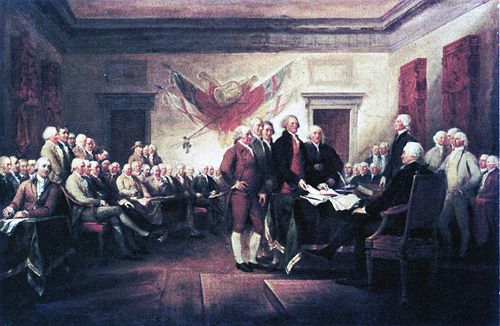
Declaration of Independence SC A Missed Opportunity This Past July 4th

July 4 refers to the day the Declaration of Independence from the British monarchical yoke was issued by some 56 noted individuals who risked their lives, fortunes, and their sacred honor for it. Several thousand American colonists fought and perished over a seven year period so that their posterity will live in a free nation governed with the consent of the people to secure their rights as free people.

The first ten amendments to the US Constitution ratified in 1791 contained the Bill of Rights that prohibits transgressions by the federal government into individual life, liberty, and pursuit of happiness.

In 2013, some 237 years later, the people have lost most of what was enshrined in the US Constitution. The federal government, instead of being limited in scope as intended, has become a dictatorial national government. Patrick Henry opposed the adoption of the Constitution as he feared the uncontained growth of the federal government by destroying the sovereignty of the individual states. He was right!

The American people lost their way in the early 1900s and allowed the concept of big government to come to fruition and to destroy the core principle of federalism during the Woodrow Wilson administration with the enactment of direct federal government taxation of Americans and the simultaneous removal of state representation in Congress by instituting the direct popular election of the Senators.

Article 1, Section 1 is in tatters as Congress has illegally delegated its legislative powers to such unelected agencies as the EPA, IRS, FCC, FDA, and the other hundreds of agencies with the full approval of the US Supreme Court. People did not bother to punish those politicians but accepted the despotic bureaucratic rule that we find today.

The First Amendment is just about erased. Political correctness depending upon the whims of the favorite political groups is allowed to override that right of free speech and declare it hate speech. There is no religious freedom today. If you do not practice what the national government dictates appropriate, you and your group will be punished with the help of the myriad of agencies it controls.

How about the freedom of the press? The government spies on the reporters, tries to intimidate their families, and prevents them from reporting anything unfavorable to it. Wilson jailed some of them for being against the American entry into WWI. Lincoln also did so in the Civil War.

The Second Amendment, whose presence in the Bill of Rights is for preserving freedom (not for hunting or sports shooting), is under severe assault. A national government that has gone rogue will disarm the citizens so that they can be turned into subjects.

The Fourth Amendment is extinct. Americans gave that up in the name of security. The US government with the guidance of the Supreme Court has eliminated the right of the people to be secure in their persons, houses, papers, and effects, against unreasonable searches and seizures without the required warrants based on probable cause. The president maintains a kill list that includes American citizens, deploys armed …read more

Source: FULL ARTICLE at Western Journalism

FCC approves Softbank's $21.6B acquisition of Sprint

The U.S. Federal Communications Commission has approved the $21.6 billion acquisition of Sprint by Japanese telecommunications group Softbank, saying it promises to bring consumers faster and more advanced wireless broadband Internet service.

The go-ahead from the FCC was the final hurdle to Softbank consummating the deal. Sprint shareholders in late June approved the acquisition that will see Softbank pay $7.64 per share, for a total of $16.64 billion in cash, and invest about $5 billion of new capital into Sprint. It will own 78 percent of the new company.

Friday’s decision also helps clear the way for Sprint to take full control of Clearwire, a struggling but spectrum-rich wireless broadband provider. Sprint already owns just over half of Clearwire, which provides the network for its 4G WiMax service, and is planning to spend $3.7 billion to acquire the rest of the company.

Clearwire shareholders are due to vote on that plan on July 8.

To read this article in full or to leave a comment, please click here

…read more

Source: FULL ARTICLE at PCWorld

U.S. carriers set up warnings to prevent 'bill shock'

U.S. mobile operators will warn subscribers when they’re heading toward a big bill, after most carriers agreed to send email or text alerts when users are about to exceed their monthly usage limits or start using international roaming.

Carriers serving 97 percent of U.S. mobile users instituted the alerts before a Wednesday deadline, the U.S. Federal Communications Commission said on Thursday. Service providers agreed to provide the alerts in 2011 after a change in the voluntary Consumer Code for Wireless Service, sponsored by the CTIA mobile trade group. Other carriers may also warn their customers but are not participating in the program.

So-called “bill shock” has made headlines over the past several years as ordinary consumers have received bills for thousands of dollars for high voice, text or data use, especially while using international roaming. A recent FCC survey showed that 30 million people in the U.S., or one out of six mobile users, had experienced bill shock, according to the agency.

The new rules don’t change what carriers charge in those situations but are designed to make sure the customer knows what’s happening.

To read this article in full or to leave a comment, please click here

From: http://www.pcworld.com/article/2035711/us-carriers-set-up-warnings-to-prevent-bill-shock.html#tk.rss_all

Cell Phone 'Bill Shock' Is History as New FCC Rules Take Effect

By FOXBusiness

Filed under: , ,

Getty Images

By

The days of opening your cell phone bill and getting slapped with unexpected charges should be over.

As of Wednesday, cell phone companies must send customers four types of alerts when they are in danger of being charged beyond their normal plan price. The practice, which tacks on unauthorized or misleading charges on a bill, is known as “cramming” and has been around for decades with landline phone bills.

A 2011 agreement between the Federal Communications Commission and major cell phone companies included today’s deadline that requires them to alert subscribers when they approach, reach and exceed limits on voice, data, text and international roaming charges. Carriers were required to provide two alerts by Oct. 17.

“This is very important consumer protection,” says Jack Gillis, Director of Public Affairs for the Consumer Federation of America. “The bottom line is that cell phone charging plans are so complicated it’s very easy to go over plans, especially with limited plans. This new requirement at the very least will save consumers thousands of dollars.”

Sponsored Linksadsonar_placementId=1505951;adsonar_pid=1990767;adsonar_ps=-1;adsonar_zw=242;adsonar_zh=252;adsonar_jv=’ads.tw.adsonar.com’;

According to a 2010 FCC survey, 30 million Americans, about one in six mobile users, have experienced “bill shock,” a sudden and unexpected increase in monthly bills not caused by a change in service plans. In 2010, the agency showcased a 66-year-old customer’s plight of facing an $18,000 bill after a promotional, limitless data plan expired without warning as why more stringent notifications were needed.

The average wireless contract includes a flat fee for a set number of minutes and data each month and any usage that goes beyond the allotment is charged at a much higher rate. The surge in use of tablets has made consuming data and in turn, exceeding limits, much easier.

The FCC and Governmental Affairs Bureau held a workshop Wednesday on bill shock and cramming and according to attendee John Breyault, vice president of Public Policy for the National Consumers League, the FCC reported the number of complaints over mammoth fees has dropped significantly since October.

The NCL advocated for the new regulations to be implemented two years ago, and Breyault says the wireless companies reported being in full compliance of the alerts on Wednesday, which covers 97 percent of the carrier market.

In some cases when companies incur higher taxes or lose a revenue stream they are forced to increase prices to make up the difference, but Breyault says wireless caries did not view overcharges “as profit centers.”

“The dissatisfaction of consumers felts over charges had the companies introduce tiered data plans … there are still problems with these plans and whether or not they are adequate and will offer enough data at a reasonable price.”

Amy Storey, spokeswoman for the wireless association CTIA, told FOX Business that the cost for the alerts

From: http://www.dailyfinance.com/2013/04/18/cell-phone-bill-shock-is-history-as-new-fcc-rules-take-effect/

US Congress panel approves Internet freedom bill

A U.S. House of Representatives subcommittee has voted to approve a bill that would make it official U.S. policy to promote an Internet “free from government control,” with promises that the Republican majority would work with critics of the bill’s wording.

The House Energy and Commerce Committee‘s communications subcommittee approved the Internet freedom bill, an attempt to discourage other countries from advocating for control of the Internet by the United Nations’ International Telecommunication Union and other international agencies.

Some trade groups and subcommittee Democrats had raised concerns that the bill would allow telecom carriers to mount new challenges to the U.S. Federal Communications Commission and prevent law enforcement agencies from prosecuting cybercriminals.

But Representative Greg Walden, an Oregon Republican and subcommittee chairman, said he didn’t intend for the bill to address domestic Internet policy. Although Walden is opposed to the FCC‘s net neutrality rules, he said a congressional policy statement cannot force an agency to change its rules.

To read this article in full or to leave a comment, please click here

From: http://www.pcworld.com/article/2033868/us-congress-panel-approves-internet-freedom-bill.html#tk.rss_all

Critics question wording of Internet freedom bill

Legislation that would make it official U.S. policy to promote a global Internet “free from government control” could restrict the U.S. Federal Communications Commission from using its authority and prevent law enforcement agencies from taking action against cybercriminals, some critics have said.

Democratic members of the U.S. House of Representatives Energy and Commerce Committee objected to the bill during a hearing to amend it Wednesday, after some digital rights groups also raised concerns this week.

Supporters of the bill said it’s an attempt to send a clear signal to other countries that the U.S. opposes a takeover of Internet governance by the United Nations’ International Telecommunication Union, but critics questioned if the legislation was a back-handed effort to limit the authority of the FCC.

The bill, similar to a sense-of-Congress resolution that passed last year before the ITU’s World Conference on International Telecommunications (WCIT), allows lawmakers to again question the FCC‘s net neutrality rules and limit the agency’s authority in a coming transition to all-IP networks by telecom carriers, said Representative Doris Matsui, a California Democrat.

To read this article in full or to leave a comment, please click here

Source: FULL ARTICLE at PCWorld

Rural carriers complain about broadband obstacles

Rural telecom and broadband providers in the U.S. face big challenges in connecting their most remote customers, as the U.S. Federal Communications Commission transitions away from old telephone subsidies, a group of providers told lawmakers.

The FCC‘s eligibility rules for carrier subsidies under the new Connect America Fund, a broadband-focused revamp of the agency’s Universal Service Fund, seem to have arbitrary caps and target carriers serving the most rural areas, said John Strode, vice president of external affairs for Ritter Communications, an Arkansas voice and broadband provider. High-cost carriers have their subsidies capped under the new fund, he noted during a Senate hearing Tuesday.

The high-cost carriers are capped “with no examination” by the FCC of why their costs are higher than other carriers, he said. Some carriers have legitimate reasons for high costs, because “some service areas are very, very expensive to serve,” Strode told the Senate Commerce, Science and Transportation Committee‘s communications subcommittee.

The new FCC rules, adopted in November 2011, make it difficult for rural carriers to plan ahead and to invest in new services, Strode said. Ritter has cut costs and laid off workers as a way to offset changes in telecom subsidies and declines in intercarrier compensation rates, he said.

To read this article in full or to leave a comment, please click here

…read more

Source: FULL ARTICLE at PCWorld

Offensiveness, Obscenity & the Washington Redskins

By Adam Thierer, Contributor

It is only a matter of time before the Washington Redskins change their team name. Public pressure is growing on the popular professional football franchise to drop a nickname many regard as a derogatory racial slur against Native Americans. Eventually that pressure will grow intense enough that team owner Daniel Snyder will be forced to cave and make a switch. A group of former Federal Communications Commission (FCC) officials and other regulatory advocates is trying to expedite that process by pressuring Snyder with the threat that the federal regulatory agency could take action if he doesn’t change the team’s name voluntarily. Despite the best of intentions, the suggestion that the FCC should treat racially sensitive terms or team names as criminal speech is misguided both as a matter of law and in terms of its implications for freedom of speech more generally. …read more

Source: FULL ARTICLE at Forbes Latest

The Window Is Closing on the Next Wireless Land Grab

By Dan Radovsky, The Motley Fool

Filed under:

Remember The Beverly Hillbillies? If you don’t, here’s the premise of the long-running sitcom, as explained in its theme song:

“Come and listen to a story ’bout a man named Jed,
A poor mountaineer, barely kept his family fed.
Then one day he was shootin’ at some food,
And up through the ground come a bubblin’ crude …
Oil, that is … black gold … Texas tea.”

It goes on to explain how finding oil gave Jed and his kinfolk the cash to leave the holler and move to Beverly Hills, where foolish hijinks involving movie stars and swimming pools would then ensue.

The Beverly Hillbillies, running nine seasons from the early ’60s into the ’70s, was a big hit for CBS during the shank of broadcast television’s golden age. However, more than 40 years after The Beverly Hillbillies’ oil well finally dried up, Jed’s good fortune now mirrors that of the denizens of broadcast television’s current backwoods — the UHF television stations.

UHF station owners are sitting on the equivalent of newly discovered oil reserves in a world that’s fighting for every last drop of crude. The valuable substance in this case is spectrum, the frequencies that the mobile operators covet as wireless broadband usage is driving the telecom industry.

The UHF channels are in the highest wireless frequency range allotted to broadcast television, and those frequencies are more useful to mobile communications than to the lower frequencies of the VHF channels used by the network affiliates and some independent stations.

Suddenly, UHF stations have become a valuable commodity — not because of their programming, audiences, or facilities, but solely for their spectrum licenses.

Spectrum is the lifeblood of wireless communications, and the major mobile operators are willing to pay big bucks for it.

AT&T tried and failed to buy T-Mobile USA and its spectrum in for $39 billion. Verizon paid $3.9 billion to Comcast and other cable companies for their cache of spectrum. Clearwire is currently being sought by Sprint Nextel for its frequencies, and now in a bit of a turnaround, T-Mobile USA wants to buy MetroPCS and its airwave resources.

To take advantage of the need for spectrum, there is a UHF station buying spree going on, according to Variety. Like real estate speculators searching out run-down properties in changing neighborhoods, investors are scooping up UHF stations for later sale to the highest bidders.

The San Francisco Bay-area UHF station, KTLN, residing on channel 47, a religious-programming broadcaster, was bought for $8 million by OTA Broadcasting, a group headed up by computer impresario Michael Dell in 2011. OTA also owns three other stations: KFFV and MeTV in Seattle, and WEBR in New York City.

But UHF station owners are also facing a dilemma. If those in the higher channels don’t sell voluntarily, they might face eviction from their current FCC-designated spectrums and be moved to a new home to share spectrum with another station on a lower …read more

Source: FULL ARTICLE at DailyFinance

FCC Could Crackdown On Phone Companies ‘Price Gouging’ Inmates For Calls

By The Huffington Post News Editors

The Federal Communications Commission is weighing whether to cap the amount phone companies can charge prison inmates for calls to their friends and families.

This week, the civil rights group Color Of Change delivered more than 25,000 public comments to the FCC urging the commission to stop what it calls “price gouging” inmates and their loved ones. The FCC is considering a proposal that would keep prison calls in line with what the general public pays.

“Indefensible price gouging for basic communication is a fact of life for millions of American families with loved ones who are currently incarcerated,” Rashad Robinson, Executive Director of ColorOfChange.org, said in a news release. “They’re a captive audience for the phone service providers awarded monopoly contracts by prison operators, and are accordingly charged 15 times — or more — than regular phone rates.”

Read More…
More on Video

…read more
Source: FULL ARTICLE at Huffington Post

T-Mobile's Legere Kicks Butt. Will It Matter?

By Dan Radovsky, The Motley Fool

Filed under:

T-Mobile has been mentioned more lately than any time since the FCC and Department of Justice pulled the company from the wide-open merger maw of AT&T-Rex last year.

That mega merger not-to-be put a few billion dollars of penalty fees in T-Mobile’s treasury, but the question of “What next?” for the Deutsche Telekom subsidiary still lingered… along with something else: the chip on T-Mobile’s shoulder from being the U.S.’ No. 4 mobile carrier (after No. 3 Sprint Nextel , no less).

Here’s T-Mobile CEO John Legere’s no-holds-barred assessment of the quality of his company’s former altar-mate at this January’s CES:

Anybody here from New York? Any of you use AT&T? Any of you that use them, are you happy? Of course not, the network’s crap.

And that was just the beginning of the colorful language, folks. He got more explicit yesterday at the T-Mobile event in NYC staged to kick off the carrier’s LTE network, confirm getting the iPhone, and announce its new “Uncarrier” plans. Legere derided the postpaid contract model pushed by Verizon , AT&T, and Sprint.

“Carriers are really nice to you … once every 23 months,” he added.

A contract is a contract is a contract
But when consumers put the Uncarrier to the sniff test, they may come away with the same assessment of the plan that Legere has of the other carriers’ plans.

The current two-year commitment consumers must make at the other three first-tier U.S. wireless carriers gives them a phone at a much lower cost than what the phone’s retail price would be. Sometimes the phone even comes free.

A base iPhone 5’s retail price of $649 falls to $199 when coupled to a two-year contract from AT&T, Verizon, and Sprint. Of course, the $450 price difference will be made up for by the 24 monthly plan payments to come.

The T-Mobile plan, on the other hand, does not subsidize the cost of the phone. An iPhone 5, which T-Mobile will begin offering on April 12, will cost the full retail price. However, if customers prefer not to — or cannot afford to — pay full price, they will have the option of buying that phone over time.

For example, the iPhone 5 from T-Mobile will cost $580 — without a contract, of course, because there are no more contracts at T-Mobile. But, one can get that same phone by putting $100 down and committing to two years’ worth of $20 monthly phone payments .

But won’t the customer have to sign a two-year contract stipulating the 24 $20 payments? Of course they will. So is there really a difference between T-Mobile and the other carriers? In reality, no.

And who is eating/subsidizing the $70 difference between Apple‘s retail price for that phone and the price charged by T-Mobile? It looks like T-Mobile will have to choke down the difference.

In the end, I think, any subscriber increase for T-Mobile will have to come from quality of service coupled …read more
Source: FULL ARTICLE at DailyFinance

Make Money in Merger Arbitrage — the Easy Way

By Selena Maranjian, The Motley Fool

Filed under:

Exchange-traded funds offer a convenient way to invest in sectors or niches that interest you. If you’d like to invest in some merging companies in your portfolio, the IQ Merger Arbitrage ETF could save you a lot of trouble. Instead of trying to figure out which companies will perform best, you can use this ETF to invest in lots of them simultaneously.

The ETF is based on the IQ Merger Arbitrage Index, which “seeks to achieve capital appreciation by investing in global companies for which there has been a public announcement of a takeover by an acquirer.”

The basics
ETFs often sport lower expense ratios than their mutual fund cousins. The IQ ETF‘s expense ratio — its annual fee — is 0.76%. The fund is very small, too, so if you’re thinking of buying, beware of possibly large spreads between its bid and ask prices. Consider using a limit order if you want to buy in.

This ETF is too new to have a sufficient track record to assess. As with most investments, of course, we can’t expect outstanding performances in every quarter or year. Investors with conviction need to wait for their holdings to deliver.

Why mergers?
Some might be interested in merging companies because there are sometimes discrepancies in their prices and also because once a buyout plan is announced, until it is completed, things can change — with new bidders occasionally emerging, for example.

Recent occupants of the ETF include Clearwire and McMoRan Exploration . Clearwire is in the process of trying to combine with Sprint Nextel and Japan’s Softbank. If the deal is approved (the FCC is expected to decide by May 29), the new entity will be a strong competitor in the telecom arena, with my colleague Anders Bylund explaining: “That three-way combination puts Sprint’s large subscriber Rolodex together with Softbank’s cash reserves and maverick business ideas, underpinned by Clearwire’s generous spectrum license catalog. This Frankencarrier should scare the snot out of its direct rivals.”

Meanwhile, Freeport McMoRan Copper & Gold is buying McMoRan Exploration and Plains Exploration and Production. The mining specialist is diversifying its operations with these energy-focused companies, a move that some welcome and others doubt, seeing it as a dilution of focus. The stock looks attractive, trading near a 52-week low and with a forward P/E ratio of just 8. It sports a 3.8% dividend, too, and management is expecting moderate growth in the near term. One worry, though, is the possibility of interest-rate increases from the Federal Reserve, which can make some alternatives to gold more attractive. Still, Freeport is a low-cost producer of copper and molybdenum, positioned to benefit quickly from upturns in metals pricing. Its fourth-quarter earnings report was stronger than expected.

The big picture
A well-chosen ETF can grant you instant diversification across any industry or group of …read more
Source: FULL ARTICLE at DailyFinance

Google's on the Forefront of Innovation — Again

By Tim Brugger, The Motley Fool

Filed under:

Being a leader in any industry requires more than stellar financials and consistent growth. Maintaining a leadership position also requires a commitment to innovation — something Google has taken to heart. Its latest effort to change the IT landscape entails using so-called ‘white space,’ the unused and unlicensed part of TV broadcast spectrum, to bring wireless connectivity to the underserved masses.

What’s white space, and who cares?
The Federal Communications Commission (FCC) adopted rules to free up white space in 2010, and Google wasted little time diving into this previously untapped market. Google isn’t alone in pursuing white space technologies, however. A couple of years ago, its mobile computing rivals Nokia and Microsoft joined 15 other companies in testing white space in the U.K.

Those trials demonstrated one of white space’s most exciting features: The ability to pass through walls. In the U.K. test, a Nokia phone connected via white space was able to use its GPS function indoors, a feature usually lost with traditional wireless spectrum. The Nokia and Microsoft tests also reinforced another upside to white space: It’s already there, and it’s cheap. Someone’s going to bring this concept to market, and though Nokia and Microsoft would certainly love to deliver the good news to market, Google is (again) leading the charge.

In keeping with the FCC regulations voted on in 2010, Google has launched its ‘spectrum database,’ a 45-day trial period with the Federal Communications Commission (FCC) that began March 4 and will run through April 17. Though available to anyone, the trial period is directed toward industry stakeholders – broadcasters, wireless spectrum providers, and the like – to test and provide feedback on the database. The objective of Google’s database is to continuously monitor TV spectrum, determining where and when white space becomes available.

This database marks a critical step in bringing white space to the masses. Traditional TV spectrum owners are concerned that utilizing white space for wireless connectivity may cause interference with their own broadcasts. On-going monitoring of available white space spectrum will ensure no one steps on the TV industry’s toes.

The idea of using essentially wasted spectrum is intriguing, to say the least. White space is a viable alternative to traditional wireless spectrum, because its low-frequency signals travel further. This makes white space perfect for rural areas and emerging countries without a wireless infrastructure. That’s exactly what Google is doing in South Africa.

Testing, testing
On Monday, Google launched a trial in 10 schools in Cape Town, South Africa, connecting the underserved market with broadband Internet connectivity using nothing but available, unlicensed white space.

In addition to monitoring wireless connectivity, Google hopes its Cape Town tests will prove that white space can be used without interfering with local TV broadcasters. If Google pulls this off, widespread use of white space in the U.S . could become a reality sooner rather than later, opening a new, potentially massive, market for Google. Of course, you can bet Nokia, Microsoft, …read more
Source: FULL ARTICLE at DailyFinance