Tag Archives: Commerce Committee

National policy sought to alert consumers of data breaches

Members of a Congressional subcommittee last week heard an essentially unanimous call from a panel of witnesses for a national data-breach notification standard to replace the wide-ranging laws currently on the books in 48 states.

The disagreement, such as it was, came in the form of how such a law should be tailored, but witnesses and lawmakers alike expressed broad support for a national law to replace what Rep. Lee Terry (R-Nebraska), the chairman of the Energy and Commerce Committee’s subcommittee on commerce, manufacturing and trade, called the “patchwork of state and territory-specific statutes.”

The word “patchwork” was uttered often as witnesses described the compliance burden of adhering to the notification requirements prescribed by the various states, which can include different triggers for sending out a notice of a breach, such as inconsistent definitions for personally identifiable information. California, which was the first state to mandate consumer notification, has expanded to require businesses report certain levels of breach to the state attorney general. A report of 2012’s security failures was recently released.

Guidance for business

“While many businesses have managed to adapt to these various laws, a properly defined data breach notification standard would go a long way to guide organizations on how to address cyber threats in their risk management policies,” said Kevin Richards, senior vice president for federal government affairs with the trade group TechAmerica.

To read this article in full or to leave a comment, please click here

…read more

Source: FULL ARTICLE at PCWorld

Lawmakers push for federal data beach notification law

U.S. lawmakers plan to resurrect national data breach notification legislation that has failed to pass in past sessions of Congress, but some advocates don’t agree on what should be included in a bill.

Six witnesses at a U.S. House of Representatives hearing Thursday called for a national law requiring businesses that lose data in hacker attacks to notify affected customers, but there were differences about whether the bill should preempt 48 existing state laws or should set a minimum standard that state laws can build on.

“Any federal law should not weaken strong state laws,” Representative Jan Schakowsky, an Illinois Democrat, said during a hearing of the Energy and Commerce Committee’s trade subcommittee. “Any federal response should establish a baseline so that every American can be assured some level of data protection, not just notification after the fact.”

Others disagreed, saying a new federal law that doesn’t preempt state laws would create a 49th data breach regulation for businesses to comply with. A national standard would be “particularly helpful to small business, many of whom cannot afford teams of lawyers to navigate 48 breach standards, should something bad actually happen,” said Kevin Richards, senior vice president for federal government affairs at trade group TechAmerica.

To read this article in full or to leave a comment, please click here

…read more

Source: FULL ARTICLE at PCWorld

Reining In A Rogue FCC

By Larry Downes, Contributor

Last week, I was called to testify by the House Energy and Commerce Committee on efforts to reform the troubled Federal Communications Commission.  The invitation came in response to several of my posts here on Forbes about the communications industry, and its increasingly unhealthy relationship with the FCC as well as state and local regulators.  (See the sidebar for links to some of the articles that got the Committee’s attention.) …read more

Source: FULL ARTICLE at Forbes Latest

Chinese hackers hurt business, Congressional committee told

As senior officials from China and the United States wrap up a series of talks in Washington about an array of economic issues, across town members of Congress probed the extent of Chinese efforts to steal intellectual property from tech companies and other U.S. businesses.

“From defense contractors to manufacturing, no American company has been immune from the scourge of Chinese intellectual property theft,” says Rep. Tim Murphy (R-Pennsylvania), the chairman of the House Energy and Commerce Committee’s oversight subcommittee.

Among the witnesses on hand was Slade Gorton, a former senator from Washington who serves on the Commission on the Theft of American Intellectual Property, a group that has been studying the economic impact of the problem, with a particular focus on China.

Gorton cited the commission’s estimate that cyber espionage and other forms of IP theft from foreign countries account for annual losses of $300 billion for U.S. companies. The group attributes between 50 percent and 80 percent of those losses to China.

To read this article in full or to leave a comment, please click here

…read more

Source: FULL ARTICLE at PCWorld

US Congress panel approves Internet freedom bill

A U.S. House of Representatives subcommittee has voted to approve a bill that would make it official U.S. policy to promote an Internet “free from government control,” with promises that the Republican majority would work with critics of the bill’s wording.

The House Energy and Commerce Committee‘s communications subcommittee approved the Internet freedom bill, an attempt to discourage other countries from advocating for control of the Internet by the United Nations’ International Telecommunication Union and other international agencies.

Some trade groups and subcommittee Democrats had raised concerns that the bill would allow telecom carriers to mount new challenges to the U.S. Federal Communications Commission and prevent law enforcement agencies from prosecuting cybercriminals.

But Representative Greg Walden, an Oregon Republican and subcommittee chairman, said he didn’t intend for the bill to address domestic Internet policy. Although Walden is opposed to the FCC‘s net neutrality rules, he said a congressional policy statement cannot force an agency to change its rules.

To read this article in full or to leave a comment, please click here

From: http://www.pcworld.com/article/2033868/us-congress-panel-approves-internet-freedom-bill.html#tk.rss_all

Critics question wording of Internet freedom bill

Legislation that would make it official U.S. policy to promote a global Internet “free from government control” could restrict the U.S. Federal Communications Commission from using its authority and prevent law enforcement agencies from taking action against cybercriminals, some critics have said.

Democratic members of the U.S. House of Representatives Energy and Commerce Committee objected to the bill during a hearing to amend it Wednesday, after some digital rights groups also raised concerns this week.

Supporters of the bill said it’s an attempt to send a clear signal to other countries that the U.S. opposes a takeover of Internet governance by the United Nations’ International Telecommunication Union, but critics questioned if the legislation was a back-handed effort to limit the authority of the FCC.

The bill, similar to a sense-of-Congress resolution that passed last year before the ITU’s World Conference on International Telecommunications (WCIT), allows lawmakers to again question the FCC‘s net neutrality rules and limit the agency’s authority in a coming transition to all-IP networks by telecom carriers, said Representative Doris Matsui, a California Democrat.

To read this article in full or to leave a comment, please click here

Source: FULL ARTICLE at PCWorld

Lawmakers to again push Internet freedom resolution

U.S. lawmakers want to make it clear that they’re against a takeover of the Internet by the U.N.’s International Telecommunication Union and member governments.

In 2012, Congress passed resolutions opposing proposals at the World Conference on International Telecommunications (WCIT) to allow the ITU to regulate the Internet, but a House of Representatives subcommittee will debate a new resolution essentially saying the same thing during a hearing next week.

The House Energy and Commerce Committee‘s communications subcommittee will debate a bill to make the language in 2012’s resolutions official U.S. government policy during a hearing starting on Wednesday and continuing Thursday. If passed, the bill would make it official U.S. government policy to “promote a global Internet free from government control and to preserve and advance the successful multistakeholder model that governs the Internet,” according to a draft bill released by the subcommittee.

The draft bill takes aim at the ITU, which convened WCIT in December. During the meeting, several countries pushed for the ITU to take over governance of the Internet and for resolutions that critics said would allow widespread censorship of Web content.

To read this article in full or to leave a comment, please click here

…read more

Source: FULL ARTICLE at PCWorld
3 Companies to Watch As Obamacare Stumbles Forward

By Keith Speights, The Motley Fool

Filed under:

Like a toddler, Obamacare is three years old but only just getting started. And also like a toddler, it appears likely to cause something of a mess. That looks to be particularly true with the health insurance exchanges slated to launch in October of this year. More than half of the states — 26 in total — opted to pass on creating a state-run health insurance exchange. Another seven states elected to go with a hybrid federal-state operation, leaving only 17 states plus the District of Columbia choosing to launch their own exchanges.

Despite the messy beginning, these health insurance exchanges could radically change the health care landscape in the U.S. in the coming years. Here are three companies to closely watch as Obamacare stumbles forward. 

1. Selling shovels
As in the days of the gold rush, sometimes it pays more to sell shovels than actually mine the gold. That could be the case with CGI Group . Perhaps no other company is as entrenched in providing the capabilities needed for health insurance exchange as this Canadian information technology firm.

Large consulting firm Accenture landed the contract with the state of California last July to build one of the largest exchanges. Accenture’s bid included sub-contracting part of the work to none other than CGI Group. That’s not surprising. CGI is also involved in helping build state-run exchanges in Colorado, Hawaii, Massachusetts, and Vermont. And remember the large number of states that decided to simply let the feds get the enjoyment of creating health exchanges? CGI is helping develop those platforms, too.

CGI‘s current valuation with a price-to-earnings multiple of nearly 160 looks ridiculously high — until you consider the future earnings expected for the company. When growth estimates are factored in, CGI‘s forward price-to-earnings multiple stands below 11. That’s relatively cheap when we look at the company’s historical valuation.

2. Playing both sides
One company is playing both sides of the fence when it comes to health insurance exchanges. UnitedHealth Group will sell health insurance through the exchanges — and help build the federally-operated exchange also. UnitedHealth’s Optum business unit bought Quality Software Services Inc., or QSSI, in September. The U.S. Department of Health and Human Services awarded a contract for helping build the federal health insurance exchange to QSSI and others, including the aforementioned CGI Group, at the beginning of 2012.

Optum’s purchase of QSSI raised eyebrows on Capitol Hill. In December, leaders of the Senate Judiciary Committee and the House Energy and Commerce Committee sent a letter to the chairman of QSSI asking pointed questions about the potential of a conflict of interest. Optum executive Andy Slavitt stated that UnitedHealth and Optum are “separately reported financially and separately managed,” noting that Optum’s clients include several UnitedHealth competitors.

Even without the QSSI purchase and its associated controversy, UnitedHealth remains a company to watch as health insurance exchanges are implemented. My interest really isn’t related so much to the financial impact on …read more
Source: FULL ARTICLE at DailyFinance

Fuel industry envisions American energy independence as domestic production rises

By Jim Angle

The U.S. has discovered so much more energy than it thought it had that some now talk about the possibility for North American energy independence.

The reason? Advances in technology such as fracking, horizontal drilling and other improvements, which have increased natural gas production by 27 percent in just four years, have made the U.S. number one in gas — with oil on its way.

“We could make OPEC ‘NOPEC’ if we really put our minds to it,” says Charles Drevna of the American Fuel and Petrochemical Manufacturers. “We’re talking decades, if not into the 100s of years, of supply in North America.”

Rep. Doug Lamborn, R-Colo., of the House Natural Resources Committee says, “It’s amazing the amount of energy in North America. When you include our Canadian and Mexican neighbors, we have so many resources that it’s mind boggling.”

And Rep. Ed Whitfield, R-Ky., of House Energy and Commerce Committee adds, “We have the unique opportunity at this particular time in our nation’s history to really be energy independent.”

Jack Gerard, president of oil industry’s American Petroleum Institute says, “It’s very realistic that we could be energy secure as a nation. … It’s been estimated by the Energy Information Agency that we could be the No. 1 oil producer in the world by 2020, surpassing Saudi Arabia. So this is a big deal. It’s a game-changing opportunity, and it’s of historic proportions.”

Even those who share the administration’s desire to reduce the reliance on petrochemicals acknowledge government projections that the U.S. will produce one third more of its own oil by 2020.

One analyst, however, says self reliance must include alternatives, such as wind, solar and more.

“We can reduce our dependence on foreign oil by shifting to electric vehicles and investing in public transportation, as well as having much more efficient cars, which are already under way,” Daniel Weiss of the Center for American Progress said.

Either way, analysts say, being more energy sufficient could bring manufacturers back to the U.S., because they’d have a cheap and reliable source of energy.

“The primary driver right now the manufacturing industry is energy costs,” Gerard said. “When you look at those potential opportunities to build new chemical plants, to expand steel capacity, bring home a lot of those jobs that left over the past decade, the primary driver is the cost of energy.”

The price of natural gas has dropped from $13 to $3, giving the U.S. a huge competitive advantage.

In fact, the U.S. is producing so much natural gas, there’s talk of actually exporting it, meaning hundreds of billions usually sent overseas to buy energy would instead stay here at home to create jobs and boost the American economy.

…read more
Source: FULL ARTICLE at Fox US News

Senate Cybersecurity Report Twists The Facts, Falsely Claims The Support Of Businesses

By Breaking News

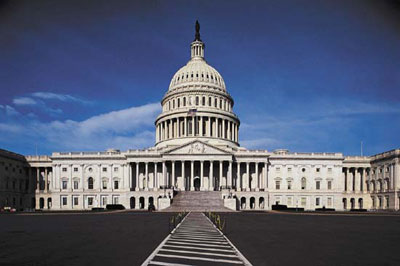
us capitol building SC Senate Cybersecurity Report Twists the Facts, Falsely Claims the Support of Businesses

Last week, the Senate Commerce Committee issued a report to their chairman, Senator Jay Rockefeller (D–WV), claiming that most businesses supported an approach to cybersecurity similar to his Cybersecurity Act of 2012 (CSA). After reading their report, however, one thing is absolutely clear—most businesses do not support Rockefeller’s approach and the Commerce Committee has only succeeded in twisting the truth.

In September of 2012, Rockefeller sent a letter to the CEOs of the Fortune 500 asking for each company’s position on cybersecurity. Executed in a way that would have made Don Corleone proud, around 300 businesses responded to the Senator’s offer. The Commerce Committee claims that most businesses that responded supported Rockefeller’s “voluntary” system for public-private collaboration on cybersecurity. There are several problems, however, with the committee’s report.

For starters, only 300 out of 500 companies responded. What about the other 200 companies? It is likely that many of these 200 companies didn’t respond because they don’t like Rockefeller’s approach and have no interest in being pawns in the Senator’s game.

Read More at heritage.org . By David Inserra.

…read more
Source: FULL ARTICLE at Western Journalism