Tag Archives: DHS

Obama’s CDC Has Stackable Coffins Ready…

By Suzanne Eovaldi

CDC Obamas CDC has stackable coffins ready...

FEMA clearly is fast becoming the Obama administration’s secret in-country military operations that is scaring citizens out of their wits.  A video narrated by Dale Bohannan has popped up online with photos of what first appear to be porta-potties.  But on closer inspection, the black plastic containers are what the narrator reveals to be as many as 125,000 outsized casket liners that are in no way there to service the needs of live American citizens!

Bohannan drove down a newly cut road through a soybean field in Madison, Georgia and spoke with the field’s owner, who told him the Center for Disease Control (CDC) owned these coffin liners and was leasing his land for their storage!   “These are cremation containers for multiple bodies–patent # 5,425,163–burnable, (and) generate very little pollution.  They are multi-use cremation containers,” says an unidentified commenter to this video.  Further information claims that the lids have been modified so they could be STACKED easily because “Americans can withstand the notion of many bodies being thrown into these coffins far better than they could the sight of bulldozers tossing bodies in big holes as was seen after the large tsunami overseas.”

Images of these black, disposable coffins cement in the minds of many Americans the notion that our government is not to be trusted and that our government is not really looking out for us, but rather is looking out for the higher ups, the politicians, and the elites in Washington, D.C.

The first Amendment guarantees “the right of the people peaceably to assemble, and to petition the Government for a redress of grievances.”  But the newly updated manual for the 3rd Infantry Division, 1st Brigade Combat Team now stationed in various American states includes, for the first time, protocols for subduing civil unrest and crowd control of US citizens.  A federal manual being used by FEMA and the Joint Terror Task Force, “…gives the government the authority to step in and IMMEDIATELY crush any civil disturbance or turmoil which might occur.  Civil disturbances are defined as riots, acts of violence, insurrection, unlawful obstruction or assemblage or other disorders prejudicial to public law and order.” But who, exactly, will define “unlawful obstruction or assemblage” or “disorders prejudicial to public law and order?”

In 1968, Operation Garden Plot was initiated by the Department of Defense for the purpose of creating “…military preparations for suppressing domestic civil disturbance…” But Americans have begun to ask who our government is preparing to fight and for what reasons! Why did Janet Napolitano’s Department of Homeland Security need 1.6 billion bullets and 7000 fully automatic rifles? (By the way, when purchased for the DHS, these rifles are called “personal defense weapons.” When you and I buy SEMI-automatic rifles, we are accused of owning “assault weapons.”)

What does she need all of those weapons for, all of those bullets? Who is the DHS preparing to kill?

DHS Advances Plan For “Public Safety” Drones

By Breaking News

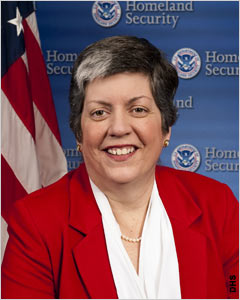
Napolitano SC DHS Advances Plan For “Public Safety” Drones

The Department of Homeland Security is advancing its plan to use surveillance drones for “public safety” applications, announcing last week that it had received a deluge of “excellent” responses from potential vendors and was set to carry out more tests of the technology.

As we first reported in July last year, DHS Secretary Janet Napolitano told a House Committee on Homeland Security that the federal agency was “looking at drones that could be utilized to give us situational awareness in a large public safety [matter] or disaster,” despite the fact that the agency had previously indicated it was reticent to use spy drones to keep tabs on the public.

This was followed by a “market research” announcement in September that confirmed the DHS was exploring a “Robotic Aircraft for Public Safety” (RAPS) project, and was asking small unmanned aerial systems (SUAS) vendors to take part.

In an update posted on the FedBizOpps website last week (PDF), the federal agency announced that, “Vendor response to our Request for Information (RFI), Number: DHS 13-01, on small unmanned aircraft systems (SUAS) was excellent and included the submission of over 70 white papers.”

The announcement added that a small number of the submissions would now be participating in the “first phase of assessments” for the technology in 2013 and 2014. The DHS refuses to specify which proposals were accepted and for what reasons.

Read More at infowars.com . By Paul Joseph Watson.

…read more
Source: FULL ARTICLE at Western Journalism

Video: Investigator: Obama’s DHS Cyber Army Targets Anti-Obama Sites

By Daniel Noe

I suppose the 2009 report released by Obama’s DHS over “right-wing extremism” was just the beginning…

…read more
Source: FULL ARTICLE at Western Journalism

Obama to Order National Defense Against Cyber Attacks Beefed Up

By Reuters

U.S. cyber security

Filed under: , , , ,

President Barack Obama plans to release a long-awaited executive order aimed at improving the nation’s defenses against cyber attacks as early as Wednesday, according to sources familiar with the matter.

The order, drawn up after Congress failed to pass cyber defense legislation last year, is meant to improve the protection of critical industries and infrastructure from cyber intrusions.

Concerns about cyber attacks, which have hit a succession of major U.S. companies and government agencies in recent months, also could be raised by Obama in his annual State of the Union address to Congress on Tuesday evening.

One of the White House‘s major goals is to improve information-sharing about attacks among private companies, and between companies and the government.

“Our biggest issue right now is getting the private sector to a comfort level so they can report anomalies, malware, incidents within their network” without undue fear of being “outed” as victims, said FBI Executive Assistant Director Richard McFeely, head of the Criminal, Cyber, Response and Services Branch.

The order is expected to give the Department of Homeland Security the lead role in protecting critical U.S. infrastructure, according to a government official who had seen a final draft of the order’s executive summary.

Sponsored Linksadsonar_placementId=1505951;adsonar_pid=1990767;adsonar_ps=-1;adsonar_zw=242;adsonar_zh=252;adsonar_jv=’ads.tw.adsonar.com’;

DHS will be tasked with setting up a system for sharing cyber threats with private industry and be responsible for protecting critical infrastructure, the official said. Most of the critical U.S. infrastructure is run by private industry.

“We know the executive order isn’t going to go as far as legislation could or will go, but it’s a good start,” the official said.

Some Republicans had wanted the Department of Defense to play the lead role instead of DHS.

Cyber security experts say the executive order — which does not have the same force as a law — is a step in the right direction and indicates Obama takes the problem seriously.

“I think this can fairly be described as a down payment on legislation,” said Stewart Baker, former National Security Agency general counsel and a past assistant secretary for policy at the Department of Homeland Security.

Stewart said he thought the executive order would make a difference in policy and practical terms “but whether it will provide practical protection from cyber attacks is still in doubt.”

The executive order will make it easier for people at private companies to get security clearances so classified information can be shared, according to earlier drafts that were leaked and posted online.

It will also make companies work with the National Institute of Standards and Technology to come up with sector-specific standards for cyber security and will then require companies to engage with their regulators to decide how those standards are implemented.

“Companies aren’t going to, at first, be required to do anything. These are voluntary standards, except …read more
Source: FULL ARTICLE at DailyFinance

Video: Is Obama Looking To Create A Civilian National Security Force?

By Daniel Noe

The Department of Homeland Security purchased 1.6 billion rounds of ammunition in just the past 10 months. The military used approximately 70-million rounds in each year of the Iraq war. Could it be that DHS is looking to arm a new civilian national security force?

…read more
Source: FULL ARTICLE at Western Journalism

Public Transit Users Now Share Commute With Big Brother

By B. Christopher Agee

Obama Big Brother SC Public transit users now share commute with Big Brother

Especially in densely populated urban areas, public transportation has been heralded by the left as nothing less than a panacea.

Whether clearing up congested roads or reducing carbon emissions, buying a bus pass is viewed by many as a meaningful step toward environmental friendliness.

The federal government, however, might have an altogether different interest in corralling the population aboard public transit vehicles.

Though the Department of Homeland Security has certainly not been publicizing the information, reports have surfaced that the agency is funding the installation of surveillance systems capable of capturing audio from private conversations. At this point, what the information will be used for seems to be anybody’s guess.

The recording systems have been installed in several cities with others planning to do so in the future.

Early adopters of this privacy invasion include the San Francisco transit system, which approved spending nearly $6 million to install the microphones on more than 350 buses and trollies. The tab was paid entirely through a DHS grant.

Baltimore, another city involved in the program, initially shied away from installing the audio-gathering equipment because of complaints from civil liberty activists.

When the state’s attorney general replied an onboard sign would quash any potential legal risks, the city went on with the installations.

The microphones can be used in conjunction with video cameras to offer authorities full surveillance – without a warrant – of anyone using public transportation.

All information gathered can be instantly reviewed or stored for later use. Reports indicate each bus in the program generally contains between four and six cameras, each with a separate microphone.

While transit officials tout the new technology’s usefulness in settling disputes and advancing safety, many feel having personal conversations recorded is an inherent breach of privacy.

The vast majority of dystopian predictions miss the mark entirely, though one – George Orwell’s depiction of the totalitarian state led by Big Brother in the classic novel “1984″ – is fast becoming reality. His prophetic work just set the date about 30 years too soon.
Click here to get B. Christopher Agee’s latest book for less than $5! Like his Facebook page for engaging, relevant conservative content daily.

Photo credit: waif69 (Creative Commons)

…read more
Source: FULL ARTICLE at Western Journalism

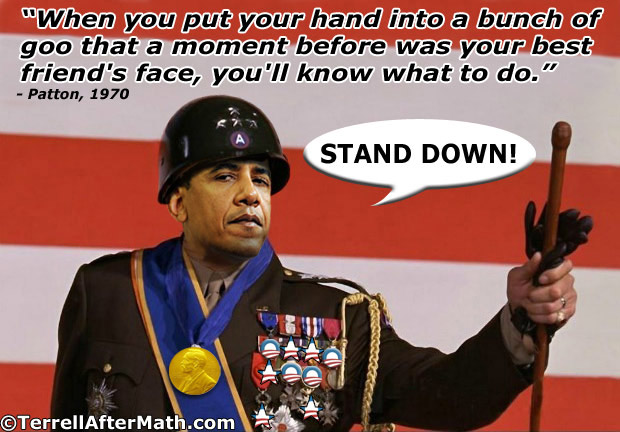
Obama Building A Personal Army At The Department Of Homeland Security

By Doug Book

General Obama Forward Stand Down SC Obama building a personal army at the Department of Homeland Security

In July of 2008, presidential candidate Barack Hussein Obama stated that Americans could no longer “…continue to rely on our military in order to achieve the national security objectives we’ve set. We’ve got to have a civilian national security force that’s just as powerful, just as strong, just as well-funded.”

It was 4 months before the election; yet no one in the “mainstream” media seemed interested in asking a presidential candidate about his promise to create a “civilian security force” with a $440 billion annual budget! What, exactly, would it do? Who would be in charge? Where would a force the size of the U.S. Military be housed? Would its members—like their military counterparts—be armed? How much authority would such a force exercise over the American people? From whom would it be derived? In his speech, Mr. Obama made it sound as though most of the members would be volunteers. If so, why would a near-half trillion dollar budget be necessary?

In the almost 5 years since Obama’s frightening pledge to put a powerful, unidentified force in charge of “national security,” the American public has discovered that:

  • though Obama has never again repeated the terms “civilian national security force,” it is obvious that the Department of Homeland Security is filling that role in the Obama Regime.
  • DHS and Immigration and Customs Enforcement (ICE) have purchased more than 450 million rounds of .40 cal, hollow point ammunition. Hollow points are expensive and wholly unnecessary for range use. It seems members of the DHS are to be armed—well armed. At the same time, Mr. Obama is working to see to it that the American people are NOT.
  • the immigration services and enforcement budgets at DHS were nearly $20 billion in 2010. Yet the Mexican-U.S. border was guarded by a “virtual fence” which leaked illegal aliens like a sieve. Some 4-5.5 million foreigners have overstayed their Visa’s in the US, yet just 8,100 arrests have been made by the DHS!

Then, in October of 2012, Barack Obama signed an Executive Order creating the “White House Homeland Security Partnership Council,”  its ostensible purpose to “…advance the federal government’s use of local partnerships to address homeland-security challenges.” But the DHS was ALREADY working with local governments across the nation. Why would Obama intercede in this way?

Because “he [wanted] to be able to dictate who gets to participate in these local partnerships – and they don’t have to be local law enforcement or local government officials to do so. These partnerships will be with ‘the private sector, nongovernmental organizations, foundations and community-based organizations.’  All of whom will be handpicked by Obama and those federal bureaucrats he appoints.”

The National Defense Authorization Act empowers Obama ON HIS OWN to determine who represents a threat to the United States and to have that individual detained and imprisoned. And the Executive Order he signed allows the president to select like-thinking “deputies” nationwide, authorized to act on Obama’s behalf. These men will have little or no concern …read more
Source: FULL ARTICLE at Western Journalism

DHS’ Infamous “Scissors” Video

By capblack

Above is a US Department of Homeland Security video advising citizens on best practices when confronted by active shooter scenarios.

Please watch it while I await, quietly humming “The Battle Hymn of The Republic.”

As a long term citizen on patrol, security professional, and Second Amendment advocate, I give it a thumbs up with reservations.

I also note no mention being made of citizens defending themselves with firearms. The only defensive weapon displayed was a hastily grabbed pairs of scissors, a feat already making the rounds in the conservative blogosphere.

Liability can be noted as the main reason to avoid even the semblance of an official endorsement of defensive lethal force usage. That could be why only a fleeting glimpse of the above captioned scissors was offered while the narrator advised “using anything” in these worst case scenarios.

That’s me being objective.

My non-objective, self-defense advocate side classifies this as the latest instance of government motivationally disarming the public.

Attendant to disarmament (motivational and literal) is criminalization where victims are instructed to hold up their hands (like suspects!), expect police to yell at them, and perhaps being forced onto the ground.

A related concern is wholesale carnage made much easier in sterile zones like airports, court houses, etc. where scissors would have been confiscated (if the owner wasn’t arrested outright.)

We live in a strange era where the will to defend oneself is viewed as criminal, despite it being still legal.

This DHS video was instructive for many reasons.

As a self-defense advocate, I can unequivocally state that psychologically and literally disarming the populace makes criminals’, individual lunatics’, and foreign agents’ brutal dreams come true more readily.

Statist Democrats and Republicans have imperiously decreed we’re unworthy of our natural right to self-defense.

I strongly suggest we reverse this trend because the bureaucrats pushing disarmament in all its forms do so behind secure structures, protective devices, and armed guards.

This safety disparity is summed up by my caveat:

“Rich People Get Bodyguards; Poor People Get Shot! ”

That’s what the DHS’ infamous “scissors” video tells me.

Cap Black The Hood Conservative
504 214-3082

Donate/Stop Socialist Hate!

http://www.gofundme.com/197xk8

” Be your OWN Superhero!”

Source: FULL ARTICLE at Western Journalism

Janet Napolitano Suggests We Fight Back Against “active Shooters”– With SCISSORS!

By Doug Book

Napolitano SC Janet Napolitano suggests we fight back against “active shooters”– with SCISSORS!

In July of 2012, Janet Napolitano’s Department of Homeland Security (DHS) produced a “show and tell” video instructing Americans on the best course of action should they suddenly find themselves in an “active shooter” situation.

Entitled Run, Hide, Fightthe Big Sis-approved, 6 minute epic provided potential victims with crucial advice, such as “run away” and “remain out of sight of the shooter.” Naturally, that’s the sort of counsel only government can provide.

Noticeably absent from the DHS tutorial, however, was any discussion of REAL weapons in the hands of prospective victims. Apparently, firearms were not permitted in the “gun free zone” building chosen by the Mayor of Houston for the making of the Department-sponsored film.

But then, to be fair, one 12 gauge pump did play a part in the video. In fact, it was used by the principal character—a muscular, clean-cut fellow who looked all the world like a former Marine D.I. or Republican congressman until he began mowing down unsuspecting fellow actors. Well, the DHS did warn us about those dangerous returning vets and Constitution-loving, right-wing extremists, didn’t it?!

This week, the Napolitano film crew introduced Options for Consideration, the 2013 version of its Run, Hide, Fight fantasy. Once again, potential victims run, hide, and fight UNARMED just as they had in 2012. But this year’s video lacks the one thing that added a sense of reality to the 2012 offering— the shooter!  Replacing that fearsome looking, faux-Republican in the 2013 video are views of people scurrying to the exits and crawling under desks. But the feel of “authenticity” is lacking.

See, in last year’s film, the scary conservative with the close-cropped hair calmly pulled his 12 gauge tactical pump from a backpack, fired all six shells, and strolled to the next populated area. Now that’s REALISM! After all, any shooter in a Democrat-imposed “gun free zone” KNOWS he has all the time in the world to reload and pick off more targets as no one in the building will be armed and able to threaten him. In fact, the murderous GOP wanna-be in Janet’s movie didn’t even feel the need to use one of those infamous “assault weapons” with a “30 round magazine”!!

But give Big Sis credit for interjecting a little humor this year. For as the serious-sounding narrator advises anyone “caught out in the open” to “try to overpower the shooter with anything at [their] disposal,” the camera actually pans to a hand removing a pair of scissors from a desk drawer!

That’s right! Just as the school-aged children of Barack Obama and other DC politicians are protected by armed guards and 535 members of Congress enjoy armed security throughout the Capitol building, we the wretched refuse are told that we needn’t worry either. For should the unexpected ever happen, all we have to do is open the nearest drawer!

But you’d better hope like Hell you can crawl in! Because scissors aren’t going to help; and if there’s a gun in there, you’ll undoubtedly be SHOT by first responders who are trained so that no “law abiding” citizen could possibly be armed.

Enjoy the Super Bowl tomorrow.

Source: FULL ARTICLE at Western Journalism

Judge Rules In Favor Of ICE Agents Suing Obama

By Breaking News

Janet Napolitano SC Judge Rules in Favor of ICE Agents Suing Obama

Federal Judge Reed O’Conner ruled on Friday that 10 ICE agents and officers indeed do have standing to challenge in Federal court the so-called Morton Memo on prosecutorial discretion and the DREAM directive on deferred action.

The agents filed their complaint in October, charging that unconstitutional and illegal directives from DHS Secretary Janet Napolitano and ICE Director John Morton order the agents to violate federal laws or face adverse employment actions. This is a major first step for the ICE agents in their case against the administration!

In his 35-page decision, Judge O’Conner found that the ICE agents and officers have standing, but that the State of Mississippi does not. He has not yet ruled, however, on the agents’ motion for a preliminary injunction to halt implementation of the DHS directives.

The primary impetus for the lawsuit came last June, when Secretary Napolitano issued a memo offering deferred action and employment authorization to illegal aliens under age 31 who meet certain criteria similar to those outlined in the DREAM Act, which has failed to pass Congress on three occasions.

Even before that, though, ICE Director John Morton essentially gutted immigration enforcement by issuing a memo on prosecutorial discretion that, in effect, prohibits ICE agents and officers from arresting or removing any but the most violent criminal aliens. Under Morton’s stated policy, most of the 12 million or so illegal aliens that the administration wants to legalize are currently safe from deportation.

This is just one of the reasons that the National Immigration and Customs Enforcement Council voted unanimously that they have no confidence in Morton’s ability to lead the agency. Aside from ordering ICE agents to not enforce federal immigration laws, Morton has also gutted worksite enforcement and the 287(g) program, which is a cooperative effort between local law enforcement and federal immigration agents.

The 10 Immigration and Customs Enforcement (ICE) agents filed a federal lawsuit against the Obama administration seeking an end of President Barack Obama’s new non-deportation policy derided as Obama’s Dream Act Light by opponents of his illegal immigration policies, according to the ICE agents’ union.

The ICE agents filed the lawsuit in federal court in one of the state’s most affected by the Obama policy — Texas. The agents allege that President Obama’s policies have reduced the number of illegal aliens who will be deported back to their country of origin.

The ICE agents allege in their lawsuit that the Obama executive order causes a confusing situation in which they must choose between enforcing federal laws and being disciplined by their commanders, or obeying their supervisors thereby violating oaths of office and a Clinton administration law — passed by a bi-partisan Congress in 1996 — that mandates the deportation of illegal aliens.

Kris W. Kobach, the secretary of state in Kansas, is representing the ICE agents in their lawsuit. Kobach has been a leading voice in support of state immigration legislation such as Arizona’s controversial law.

In the 20-page legal complaint, the agents state they’ve been ordered to ignore an entire category of illegal aliens. The agents allege they were told to stop requesting proof of citizenship or immigration status.

“Secretary of Homeland Security Janet Napolitano and her underlings want their agents and officers to just take the word of an illegal alien without verifying his or her statement,” said former police commander David Scher. “It’s as ridiculous as releasing a suspected bank robber who states he didn’t commit the robbery without any verification by police officers,” he said.

U.S. Immigration and Customs Enforcement special agent Christopher Crane, President of the National Immigration and Customs Enforcement Council, the union representing America’s more than 7,000 ICE agents and personnel, and Border Patrol agent George McCubbin, President of the National Border Patrol Council, the union representing America’s more than 17,000 border agents and personnel, both blasted President Barack Obama’s de facto “Dream Act,” and the actions of superiors at their respective agencies.

“The Administration claims it has diligently enforced immigration law and that the border is ‘more secure than ever.’ But those on the front lines know this to be untrue. They see the violence, chaos and lawlessness. They have lost confidence in the leadership of their agencies,” according to the outspoken Agent Crane.

“This administration has engaged in a sustained, relentless effort to undermine America’s immigration laws. They have handcuffed and muffled those charged with protecting the public safety and the integrity of our borders. Such action has not only weakened our security but our democracy, as well,” he stated.

“All Americans, immigrant and native born, will have a better future if our nation remains unique in the world for the special reverence it places on the rule of law and fairness in our immigration system,” Crane stated.

“It‘s impossible to understand the full scope of the administration’s changes, but what we are seeing… concerns us greatly,” Crane said.

By Jim Khouri CPP.

Source: FULL ARTICLE at Western Journalism

Press Briefing by Press Secretary Jay Carney, 2/4/2013

By The White House

James S. Brady Press Briefing Room
Please see below for a correction (marked with an asterisk) to the transcript.
1:30 P.M. EST
MR. CARNEY: Good afternoon, ladies and gentlemen. Welcome back to the briefing room for your daily briefing. I do not have any announcements to make at the top, so I will go straight to Darlene.
Q Thank you. Jay, the Jobs Council expired today and it’s not being renewed. Can you explain why that is, why it’s not being renewed?
MR. CARNEY: Well, as you know, when the President took office he created the President’s Economic Recovery Advisory Board, affectionately known as PERAB. That was an advisory group led by Paul Volcker, comprised of business leaders, economists and labor leaders who provided outside advice to the President and his economic team at the very height of the financial crisis. When PERAB’s two-year charter expired, the administration created the President’s Council on Jobs and Competitiveness, also an outside advisory board whose mission was to bring new ideas to the table from the private sector on how best to support growth and job creation. Like PERAB before it, the Jobs Council was always intended to have a two-year charter, and as you noted, that charter expires today.
The work of the Jobs Council was very valuable. While the President didn’t agree with all of its recommendations, he agreed with many of them and acted on a number of them. The Jobs Council, for example, recommended a new initiative to focus on retrofitting government and commercial buildings for energy efficiency. This administration acted on this idea to create new construction jobs through the Better Buildings Challenge.
The Jobs Council also recommended new ideas to support entrepreneurship and small business investment, like creating a one-stop shop for businesses to make accessing information, support, and application for SBA funding and other services more forward. The administration acted on that idea, launched BusinessUSA to create this one-stop shop. There are many others.
The policy — rather, the progress made by the Jobs Council on a number of specific policy issues has helped determine the next phase of our engagement with the business community and other outside groups on growth, jobs, and competitiveness. And today, we are announcing that the White House will begin a new, expanded effort to work with the business community and other outside groups to advance specific policy priorities promoted by the Jobs Council, including expanded new skills and talent initiatives, promoting entrepreneurship and small businesses, expediting permitting for infrastructure projects across the country, and continuing progress on fiscal issues and tax reform.
I think you’ve seen this President engage with, repeatedly, the business community through his Jobs Council and on issue-specific matters. In the last several months, as you know, we’ve engaged directly with business leaders on the need to avoid the so-called fiscal cliff, actively engaged on multiple occasions. And their views on that issue were extremely helpful in bringing about the resolution that we were able to bring about.
Right now, we’re appreciative of the engagement the business community is offering on the issue of immigration reform, and that engagement will continue. On Wednesday, just this week, senior members of the President’s team held a call on immigration reform with over a dozen leading business leaders, including Steve Case, Greg Brown of Motorola, Dan Akerson of GM, and Joe Echevarria from Deloitte. The President will continue this engagement with outside groups next week.
Pretty good answer.
Q Wait, what’s the — is it a new council? Like, is this an effort —
MR. CARNEY: No, we will continue — yes, we will engage in a new effort to — we will launch a new effort to engage with business leaders and other leaders — remember, the Jobs Council — the Council on Jobs and Competitiveness was not business leaders alone — on these specific areas that I discussed. I have no body to announce.
Q There’s no formal thing? Yes.
MR. CARNEY: But as I think you’ve seen from the President’s and the White House’s and the administration’s rather intense engagement with the business community, we want to — we are going to continue that on a variety of fronts.
Q But, Jay, this group —
MR. CARNEY: Can I go to Reuters? Thanks.
Q Yes. We actually had gotten a lot of that information earlier. How can you not paint this as a failure of the Jobs Council given the economic news we had just a few days ago?
MR. CARNEY: I’m sorry — it was created for two years, like PERAB, and its charter expires. And the work that the Jobs Council did was very helpful. A number of its ideas were acted on by this administration as part of the President’s overall commitment to job creation and economic growth. When we hear some of the somewhat ridiculous criticisms about this, they come from people who have — on Capitol Hill who have consistently opposed every growth initiative and job creation initiative the President has put forward, including in the American Jobs Act, including in the proposals the President put forward to Speaker John Boehner as recently as December.
When economists, independent economists look at the budget proposals that Republicans claim have been job creators, the facts are clear that they have not been job creators in the near term. The proposals the President has put forward, some of them, after consultation with his Jobs Council and other business leaders, would put construction workers back to work building our infrastructure, would put cops back on the beat, would put teachers back in the school. And time after time, Republicans have opposed those measures, preferring instead a policy that expands or continues tax breaks for wealthy Americans while asking senior citizens and others to foot the bill for deficit reduction solely.
So it’s a little ironic to hear from those who with great fervor embraced the policies that helped create the worst economic crisis of our lifetimes, who resisted the policies that have helped lead us out of that crisis and into a period of growth and job creation, be critical on this.
Q But isn’t it also, Jay, a little ironic to say, in the context of the economy having contracted, that the Jobs Council was a success?
MR. CARNEY: We have had sustained economic growth now for three years. We have had 54 months 34 months, I believe it is, of job creation; 2 million jobs in the last year alone.* We have a lot of work to do. But if the comparison — and I encourage it, those who are inclined, to go back and look at the history of the policies supported by the critics and what they resulted in compared to the policies pushed by this President when it comes to job growth and broader economic growth. The comparison does not favor the critics, I think it’s fair to say.
What is absolutely true is that if the Republicans want — those who are criticizing on this because they feel like it’s sort of a save/get key for them — if they want to embrace infrastructure investment, if they want to embrace measures that would put teachers back to work or cops on the job, if they want to embrace some of the proposals the President put forward for investment in new industries and new technologies, we would welcome that. But unfortunately, by and large, we’ve faced resistance on that.
Part of the fiscal cliff deal was the renewal of the production tax credit that, as you know, with some exceptions — notable exceptions — Republicans opposed. What we now know, because there was a report out today, is that we had historic expansion in the wind sector last year, and the production tax credit was very much a part of that.
Q Let me ask you just one question on another issue, please. The Syrian government said today, or warned of a possible surprise response to Israel’s attack. Are you concerned that this will happen and that this situation will escalate?
MR. CARNEY: Again, I would refer you to the Israeli government on matters like that.
Q Jay, on the Jobs Council
MR. CARNEY: Sorry, go ahead, Jessica.
Q Okay. Can I follow up first on Syria? In light of the Israeli strike there, how concerned is the U.S. that Hezbollah is getting weapons transferred?
MR. CARNEY: Again, I’m not going to — I don’t have anything for you on questions about those reports. I would refer you to the Israeli government.
Q A U.S. official is quoted talking about this. You can’t give us anything?
MR. CARNEY: Again, I don’t have anything for you on it.
Q Okay. In the hearing on Capitol Hill going on right now, Senator Hagel has been taking some tough questions. With regard to something he said, does the President believe the government of Iran is legitimate and elected?
MR. CARNEY: I’m sorry, say that again.
Q Does the President believe the government of Iran is legitimate and elected?
MR. CARNEY: I think our views on the last presidential election were clearly expressed, the President’s views on that matter and our views on the behavior of the regime in Tehran are expressed again and again and again. The fact is we judge Iran by its behavior — not by its words, but by its actions — and they are consistently in violation of their United Nations obligations, their international obligations. And because of that, they are enduring the most intense sanctions regime in history that has had a dramatic impact on their economy as well as on their politics. And that pressure will continue and it will increase as long as Tehran refuses to live up to its international obligations with regards to its nuclear program.
Q And on — he’s also endured some tough questioning from Republicans about the position he’s taken on nuclear disarmament. Is the President at all concerned that he’s changed his position to satisfy concerns of senators? And does the President believe — what’s the President’s view on —
MR. CARNEY: The position that Senator Hagel has taken on nuclear weapons is the same position that President Kennedy took. It is the same position that President Ronald Reagan took. It is the same position that Henry Kissinger and Sam Nunn have taken. And it is the same position that the President — this President expressed in his speech in Prague.
The world would be a better place if we could rid it of nuclear weapons. Until that time comes about, we maintain the most serious and credible nuclear deterrent, as we should. That is a — Senator Hagel’s views on this matter are very much in the mainstream of both the Republican Party and the Democratic Party and broader public opinion. What’s out of the mainstream are those who are suggesting otherwise.
Q First, on Hagel — Hagel has suggested that the military option against Iran really is not an option. I just want to be clear —
MR. CARNEY: I believe he said, as the President has said, that he takes no options off the table and every option remains on the table. That’s the President’s position and it’s a position that Senator Hagel supports.
Q Okay. On the Jobs Council, why did it only meet four times? I mean, if this was such an important tool for the administration to get input from the business community —
MR. CARNEY: The Jobs Council provided a series of ideas, many of which the President acted on. It did not require a formal meeting for those ideas to be generated or worked on by either the Jobs Council or the administration. And again, this President’s engagement with the business community I think has been amply demonstrated just in recent months and will continue. And this President’s commitment, as a matter of policy, to job creation and economic growth is judged, I think fairly, by outside economists very favorably compared to alternatives put forward by Republicans in Congress whose policies nobody judges, like the Ryan budget and others, would do anything for near-term job creation.
The President has insisted all along that as we address the need to reduce our deficit, we do it in a way that — he insists that we continue to invest in areas that allow our economy to grow, because otherwise deficit reduction is a Pyrrhic victory; it is not a worthwhile pursuit unto itself if it causes economic contraction or causes job loss, or doesn’t allow for the economy to grow or position itself for the 21st century.
Again and again in the debates that you’ve covered over these past several years with Republicans about how we move forward on economic policy, the President’s position has been one to include as part of our deficit reduction goals, job creation initiatives, economic growth initiatives. And that’s a position that is on the table with the proposal that the Republicans could take tomorrow, the proposal the President put forward in December.
Q Jay, I’m not talking about the Republicans. I mean, he hasn’t met with the Jobs Council in over a year. Isn’t that problematic?
MR. CARNEY: Why? It’s a group he created that did very effective work on behalf of the country and this administration and this President for two years. It was a two-year charter, and the charter has expired. And we will continue to engage with the business community. I mean, this fixation on an entity that the President himself created conveniently ignores all the work that the President has done towards creating jobs and fostering economic growth — work that has frequently, if not always, been resisted by those who heavily promoted the policies that helped create the worst economic crisis in our lifetimes.
Q You keep talking about a two-year charter, but if he hasn’t met with it for a year, I mean —
MR. CARNEY: I think I’ve answered your question.
Q No, but when — go back to —
MR. CARNEY: I appreciate the fact that you are more concerned with meetings than progress. And there is no creation — there is no dispute over the fact that when this President took office, the economy was cratering. The economy shrank in the quarter before he was sworn into office, in the fourth quarter of 2008, by nearly 9 percent. That is catastrophic, okay? Jobs were lost at a rate of 750,000 per month when he took office.
There is no disputing economic, cold, hard facts that because of the policies that this President pursued, that kind of economic decline was reversed. And that’s the measure of your commitment to job creation and economic growth. And the President greatly appreciates the work that the Jobs Council has done, the ideas that they’ve put forward, many of which the administration adopted. And he looks forward to his engagement with the business community going forward on a variety of issues, many of which I just enumerated.
Yes.
Q The Vice President is going to meet with Syria’s opposition leader, also with the Russian Foreign Minister when he arrives in Germany. We’ve heard varying accounts as to whether these meetings are separate or whether the three of them will meet together. Can you straighten that out?
MR. CARNEY: I would have to refer you to the Vice President’s Office. I don't — I haven’t looked into details on the schedule for his trip.
Q Would it be a good idea to have the Syrian opposition leader sit down with the Vice President and the Russian Foreign Minister?
MR. CARNEY: Again, I would refer you to the Vice President’s office. I just haven’t looked into his schedule.
Q I’d like to also ask about Iran’s announcement that it’s upgrading its centrifuges. What do you have on that?
MR. CARNEY: We have seen reports that Iran has announced its intention to install advanced centrifuges and a production unit at Natanz. There is no indication of how many such centrifuges Iran plans to install or its timeline for doing so. But this does not come as a surprise given the IAEA’s regular reports on Iran’s development of advanced centrifuges.
However, the installation of new advanced centrifuges is a further escalation and a continuing violation, as I was speaking about moments ago, of Iran’s obligations under relevant United Nations Security Council and IAEA board resolutions. It would mark yet another provocative step by Iran and will only invite further isolation by the international community.
We continue to believe that there is time and space for diplomacy to work, but actions like this undercut the efforts of the international community to resolve its concerns over Iran’s nuclear weapons.
Yes, Wendell.
Q Jay, the President’s Recovery Advisory Board arguably succeeded in stopping the recession, if you will.
MR. CARNEY: But the President — the PERAB was an advisory board. The success was the administration’s and Congress that helped vote for the recovery — that voted for the Recovery Act, that voted for measures to save the automobile industry, that voted for measures to stem the crisis in the financial sector.
There is no question that advice from PERAB, from an outside council, was valuable, but the actions were taken by those empowered to take those actions — the President and the Congress.
Q I’ll accept that. But since the Jobs Council
MR. CARNEY: I’m glad you do. (Laughter.)
Q Since the Jobs Council was created, unemployment has fallen only 1.1 percent. Where do you see success in that?
MR. CARNEY: Again, the President repeatedly talks about the need for us to do more, that we are not where we want to be when it comes to economic growth and job creation. There is no question that more people would be employed had the Republicans not refused to pass the American Jobs Act. It is a simple mathematical fact that there would be more teachers in the classroom and more policemen on the beat. There would be more construction workers on the job building roads, bridges, schools — infrastructure that will help our economy grow even more in the 21st century.
Unfortunately, Republicans adamantly refused to do that, citing the need to extend tax cuts for hedge fund managers, among others. So there’s no question that we have a dispute here about how best to grow our economy and create jobs. But the fact is that compared, especially to the record and the situation that the President inherited, we have seen economic growth and job creation, including 2 million jobs in the last calendar year.
Q I’m curious what the message will be from this White House when the Vice President goes to visit with the Syrian opposition leader in Germany in the next several days?
MR. CARNEY: Well, we have worked with our international partners in support of the Syrian opposition. We have also continued our role as the single-largest donor of humanitarian aid to the Syrian people who are suffering so mightily under the wrath of Bashar al-Assad. And we will continue to work with the Syrian opposition to help it organize itself and to help prepare — help it in its work to prepare for a post-Assad Syria, for a Syria in which the aspirations and the rights of the Syrian people are respected, which stands in stark contrast to the butchery of the Assad regime.
Q The Syrian opposition leader has expressed for the first time a willingness to meet with representatives of Assad’s government. Does the White House support a meeting of that sort?
MR. CARNEY: I saw those reports. I don't have any update on our views on this. What is absolutely the case is that Syria’s future will not and cannot include Bashar al-Assad. The Syrian people have decided that. He has long since given up any opportunity he might have had to participate in Syria’s future. His hands are drenched in blood, the blood of his own people.
Now, I’m sure that in our conversations and the conversations of our international partners with the Syrian opposition, various approaches will be discussed. But what is unquestionable I think for the Syrian opposition, for the Syrian people is that Assad has to go.
Q So given that, is there any value in meeting? Is there any value —
MR. CARNEY: Again, I don't have a particular response to that report, but our views on Assad’s future have not changed.
Q And then one other final question. There have been reports regarding Senator Bob Menendez. I’m curious if the President has full faith and confidence in the Senator?
MR. CARNEY: I’ve seen those reports. I don't have anything for you on it.
Q Does he have full faith and confidence —
MR. CARNEY: I just don't have anything.
Q — because he plays a significant role in immigration and obviously —
MR. CARNEY: Again, Peter, I just haven’t — I don't have anything for you on those reports.
Yes, Mara.
Q I have a question about tomatoes. Today a trade agreement with Mexico that sets a minimum price for Mexican tomatoes expires. What happens now?
MR. CARNEY: I understand that discussions between the Department of Commerce and the Mexican tomato growers under the current suspension agreement are ongoing. You might be able to tell I didn't write this. (Laughter.)
I know Commerce is looking to find — I know the Department of Commerce is looking to find a mutually acceptable outcome for everyone involved. But again, those discussions are ongoing, and I don't have an update for you.
Q So it’s still in effect as long as the discussions —
MR. CARNEY: I would have to refer you to Commerce. They may have more specificity on it. But the discussions between Commerce and Mexican tomato growers are ongoing.
Roger.
Q Thanks. You mentioned at the top the telephone conversations between the administration yesterday and CEOs on immigration, I think it was. Can you go into a little bit more about who was on the call? Maybe release a list of the CEOs that was on the call? And just exactly what was the administration’s pitch to them?
MR. CARNEY: Well, look, I think you’ve seen across the board very broad support in the business community for comprehensive immigration reform, and that support is welcome. And I think it’s reflective of the growing consensus across the country on the need to move forward with comprehensive immigration reform. It’s a matter of benefit to the economy. It’s a matter of fairness to the middle class. When it comes to the business sector, there are obvious interests that high- technology companies have, for example, as well as other companies.
And that's why the President has for so long promoted a comprehensive approach that ensures that we move forward on all of these issues at once because that allows us to build this consensus that we have seen, and it’s been very welcome developing with some increased intensity in the last several weeks. We’re working with Congress. We look forward to the Senate moving forward in an expeditious way to produce legislation.
As the President has said, he wants to see the Senate move forward. He hopes that they produce a bill that would gain substantial bipartisan support in the Senate that could then be passed by the House and that he could sign.
If progress stalls in the Senate or breaks down, the President is prepared to submit his own bill and ask the Senate to vote on it. This is an issue that he discussed frequently during the campaign. It’s an issue that his views have been clear on for some time.
Q What were they asked to do?
MR. CARNEY: I don't have a more detailed readout of the call to you. It wasn’t a matter so much of asking anyone to do anything. I mean, these kinds of conversations are an exchange of ideas. And there is no question that businesses — generally speaking, the business sector is supportive of comprehensive immigration reform, as are so many other sector of our society.
Q Jay, going back to the earlier question about Hagel’s comment about the Iranian government being elected and legitimate, you may recall that at the time of the last election, Vice President Biden said that there were doubts about the legitimacy of the election. So I’d like to give you a chance to put a finer point on it. Is this government elected and legitimate?
MR. CARNEY: The government that we’re dealing with is a government that has continued the unacceptable behavior that we’ve seen from Tehran for some time, its refusal to abide by its international obligations. And the President’s view on the protests in reaction to the election are very clear and remain the same.
The issue with Iran is we have pursued a policy that has imposed upon that country the most severe sanctions regime in history with significant economic consequences. We have worked with our international partners to bring about a consensus on Iran’s behavior that never existed in the past, and that, too, has increased the isolation that Tehran feels.
And the President has also made clear that when it comes to Iran’s development of nuclear weapons, that all options remain on the table. The window for diplomacy remains open, but it will not be open indefinitely.
Q So yes or no, is it legitimate?
MR. CARNEY: Look, it’s the government that we deal with, and it is the government that continues to flout its international obligations, and that behavior is illegitimate.
Cheryl.
Q Two quick questions. One, has the White House picked a date yet for the release of the President’s budget?
MR. CARNEY: I don't have one to announce today.
Q Okay. And also, the Acting OMB Director, Jeff Zients, had to actually give up the acting designation last year because of the time involved. Is the President going to appoint someone soon, nominate someone soon for OMB Director?
MR. CARNEY: I have no personnel announcements to make today. I wish I did. (Laughter.)
Reid.
Q Jay, has the President watched any of the Hagel hearings this morning?
MR. CARNEY: I was with him for some time earlier today, not around a television, so I can't — I can say that during that period, he did not. But I can't say that definitively that he hasn’t seen any of it. As you know, he doesn't spend a lot of time watching TV. But —
Q Do you know if he’s pleased with some of the reports that he’s heard yet?
MR. CARNEY: Again, I don't know. I didn't discuss the hearings with him. I know the President believes very strongly that Senator Hagel will make an excellent Secretary of Defense. And he will effectively implement the President’s policies.
If I can say, just this process is very important — the confirmation process — and it’s highly appropriate. And senators ask tough questions of nominees, and nominees answer those questions.
What we have also seen is some of the usual kind of political posturing in these hearings, at least the portion that I saw and debates about the wisdom of invading Iraq, which are interesting to have, but I think shed more light on the past than they do on the future.
The President is absolutely confident that Senator Hagel will, as I said, make an excellent Secretary of Defense.
Q Jay, I know we discussed the sequester a lot yesterday. I don't want to beat a dead horse here. But can I be clear that are you suggesting that anybody who wants to just replace the sequester with other, smarter spending cuts, the President opposes that? He is insisting on having additional revenues as part of the mix?
MR. CARNEY: The President insists on balance when it comes to dealing with our deficit reduction. The task assigned by Congress to the super committee at the time of the Budget Control Act was that it find $1.2 trillion in deficit reduction. It wasn’t find $1.2 trillion only in spending cuts. It wasn’t find $1.2 trillion extracted from Social Security and Medicare beneficiaries. It was find $1.2 trillion in deficit reduction. And the President’s proposals have, reflecting the Simpson-Bowles commission, reflecting the Rivlin-Domenici commission, always established the principle of balance. That’s what he’s brought forward in every negotiation he’s put forward, and yes, he insists on balance.
Q Forgive me for, again, belaboring this. The proposals you’re referencing were proposals for the big deal, the full thing that he would like to achieve. You acknowledged yesterday, you’ve acknowledged before that the way things are going, he’s not going to get the big deal, at least not all in one package right away.
MR. CARNEY: Well, because a portion of the big deal has already been accomplished — a not insignificant portion. What remains is roughly another $1.5 trillion in deficit reduction. And the President has put forward a proposal that meets the Republicans halfway that would achieve that. And if the Republicans want to take it up, the President would be delighted.
Q But what I’m asking is if the next step here is a subset of whatever else remains to be done, even that subset has to have some revenues as well as spending cuts?
MR. CARNEY: I mean, the basic answer to that question is yes, in that we have to have balance as we move forward in deficit reduction.
Q Jay, you’ve said several times that the Jobs Council was extremely valuable and effective, so why let the charter expire?
MR. CARNEY: It was meant to — we don’t let it expire; it was set for two years. It expired.
Q Can the President choose whether or not to let it continue?
MR. CARNEY: Again, did the Jobs Council exist before the President created it?
Q No.
MR. CARNEY: Did you ask why?
Q Why? (Laughter.)
MR. CARNEY: Did you ask his predecessor why? The point is —
Q I was still in college. (Laughter.)
MR. CARNEY: Which explains a lot. (Laughter.) Actually, I take that back. I thought you’re wiser than your years.
But the point is the President created both PERAB and the Jobs Council because they were effective and at the time that he created them for the work that was being done. The President will continue to engage the business community in the ways that I talked about — very specific ways that I talked about, and will rely on both the business community and other groups; there were labor leaders part of the Jobs and Competitiveness Council for advice about ideas for how we develop the skills we need for a 21st century economy; how we encourage more small businesses to be created and to grow and thrive.
These are things that are very much a focus of the President’s attention. They’re reflected in the proposals that he has put forward, as I said, not always enjoying the support of those who claim to care deeply about job creation. But he will continue to press forward with those ideas and he will continue to seek the council of business leaders and others for their ideas and how to move forward.
Q Does he just think his new — a new approach that you all are announcing today is a more effective way to do it than having a whole council?
MR. CARNEY: No, he just believes that the Jobs Council — Jobs and Competitiveness Council was effective in providing ideas to his administration, many of which the administration took up and acted on, and those that — there are other ideas that we have taken up and have proposed but have yet to enjoy congressional cooperation on. And he looks forward to more ideas coming from business leaders and other leaders as we continue to take measures to help this economy grow and help it create jobs.
Q When you said next week he’s going to continue his outreach to outside groups, did you mean specifically to business groups?
MR. CARNEY: Yes.
Q Any more details?
MR. CARNEY: No.
Ann.
Q Thank you. What is it about Minnesota that prompted the President to choose that for his visit on gun violence next Monday?
MR. CARNEY: Let me see. Well, it has been announced that we’re going to Minneapolis for this. I think that this is a problem that affects the whole country, and the President looks forward to — I think I was asked yesterday if not the day before, when is the President going to travel on this, and we now have announced this. And I think it demonstrates the President’s commitment to this priority and to having, as I’ve said when it comes to immigration reform, to having this conversation out in the country and not just here in Washington.
He believes that that is the right approach to take, that it reflects the interest and engagement of the American people in the debates that we’re having here. That interest is clear when it comes to the measures we need to take to reduce gun violence in America. It’s clear on the measures we need to take to enhance job creation and economic growth, and also on immigration reform and other issues.
So there’s no — just as with Nevada for the speech the other day, there’s no one single perfect choice of a place to travel. He will be having this conversation around the country.
Q Well, but there was a mass shooting there at a workplace. The sheriff was sitting next to the President on Monday of this week. Is there something specific about Minnesota — what they’re doing or what they haven’t done?
MR. CARNEY: I’ll find out more for you on the choice of the location. I think that the fact that that state and communities there have experienced the horror of a mass shooting is certainly reflective of why we are where we are and why we need to take action.
But, again, this is a conversation that, as the President said, needs to be had around the country and not just in the obvious places, and he looks forward to participating in that conversation.
Leslie.
Q Jay, back to Senator Menendez. The Associated Press reported earlier this month that immigration officials had been prepared to arrest an intern of his on immigration violations, possibly deport him, but was ordered not to “by Washington.” Was the White House aware of this at all?
MR. CARNEY: Aware of the anonymous report? I think I would refer you to DHS.
Q No, no nothing involved with that. In an earlier incident in which ICE was going to deport one of his interns.
MR. CARNEY: Right. Again, you’re citing an AP report. I don’t have anything for you on that. I would refer you to immigration authorities and DHS.
Q It’s the second time, though, that ICE has been sort of accused of waiting in a sensitive deportation case until after an election. Is there any —
MR. CARNEY: Again, I don’t know anything about it beyond the AP report that you cited, so you may want to go to ICE or DHS.
Q Thanks, Jay. Two questions — first, on the immigration bill. Marco Rubio has said that he would want to prohibit those who are on a pathway to some type of legal status from being eligible for the Affordable Care Act. Is that something the President would consider as part of his?
MR. CARNEY: I think we’ve been very clear that legal status does not confer benefits through the Affordable Care Act. So I’m not sure — that sounds like a point of agreement, not disagreement.
Q Okay. And secondly, this week it’s been reported that there may be an agreement coming between DOJ and the Oversight Committee regarding some of the Fast and Furious documents. On the whole Fast and Furious case, does the White House still at this point have any objection to former White House staffer, Kevin O’Reilly, cooperating with the committee in any way?
MR. CARNEY: I would have to take the question.
Zach.
Q Hi, Jay. Two questions. First, do you have any more details about the shooting of the girl in Chicago who had come to the inauguration and whether the President has reached out to her family?
MR. CARNEY: I think I spoke about this yesterday. Christi was here and asked me about it but I don’t have anything new for you on it. I mean, obviously, the President and the First Lady offer their condolences and prayers for the family. And this is, as I said yesterday, another tragic death from gun violence of a young person in America and another indication of why we need to address this problem.
Q And a second question — you had mentioned that Republicans had opposed the Jobs Act and other proposals that create jobs. The President has been very out there with guns and immigration. Do you expect him to take a similar public stance in the coming weeks on proposals that create jobs or address the economy?
MR. CARNEY: Zach, I know you’re kind of new to the beat, but this President has been focused on this issue more than any other, and that is job creation and economic growth. And that will not change. Everything that he does when it comes to policy is focused on the need to create an economy that is better, stronger, and is producing more jobs. And you can be sure that he will continue to talk about those issues.
I mean, for a presidency that has been, you might say, consumed by the need to pull us out of the worst recession since the Great Depression, that has been engaged in drawn-out negotiations with Congress about how best to move forward on economic policy, to ensure that we both deal with our deficits but don’t do anything that reverses the positive economic growth that we need to have, reverses the job creation that we need to have, that has been the principle and primary focus of his domestic policy and will continue to be.
April and then Goyal.
Q Jay, within the month, the next big event the President will have is the State of the Union. We’re less than a month away. What are some of the themes? We’re seeing that he’s talking about — campaigning, somewhat a campaign style on guns, immigration. What else should we expect from the State of the Union address?
MR. CARNEY: Well, I don’t want to ruin it for you by giving it all away. But I think —
Q You won’t ruin it. (Laughter.)
MR. CARNEY: Well, what I think is fair to say is that we view the State of the Union address as part of a package that the first component of which was the President’s inaugural address. And I think in keeping with pretty longstanding practice, you can expect a State of the Union address to be a little more policy-specific in terms of details and things like that. But it will build on what the President talked about in his inaugural speech.
Q Are you expecting him to make major announcements via new policy, or just keep on with some of the same themes that he’s been going on?
MR. CARNEY: I think it’s generally a good practice not to steal from the President the opportunity to make announcements himself.
Q But you create more thunder by giving us more information. (Laughter.)
MR. CARNEY: Your assessment of my powers is appreciated, but I think I would have to argue with that.
Q Thanks, Jay.
MR. CARNEY: I did promise Goyal a question.
Q Thank you. Two questions.
MR. CARNEY: Well, I promised a question. (Laughter.)
Q Stick with one. Stick with one.
Q Okay, thank you. First of all, as far as the President’s second term is concerned, India and the Indian American community played a big role here, and we are thanking him for his support in every way he was with them. My question is here now, what is the future of Indian American community and the India-U.S. relations as far as the President’s second term is concerned?
MR. CARNEY: Well, the President’s views have not changed, both on the importance and value of the Indian American community and the importance and value of the bilateral relationship that we have developed with India. India is an incredibly important country in the world, not just in the region, and the President looks forward to continuing to enhance the depth of our relationship to work together on common goals in the region and around the world. And I think you can expect in his second term that he will consider it a success if at the end of his second term that bilateral relationship is stronger even than it is today.
Q Do you have more appointments?
MR. CARNEY: I don’t anything more.
Q Jay, real quick, is he going to the D.C. Auto Show that starts tomorrow?
MR. CARNEY: I have no scheduling announcements.
Q Is he looking for a new car maybe? (Laughter.)
MR. CARNEY: He would love one.
END
2:14 P.M. EST

Source: FULL ARTICLE at The White House Press Office

Press Briefing by Press Secretary Jay Carney, 1/31/2013

By The White House

James S. Brady Press Briefing Room
Please see below for a correction (marked with an asterisk) to the transcript.
1:30 P.M. EST
MR. CARNEY: Good afternoon, ladies and gentlemen. Welcome back to the briefing room for your daily briefing. I do not have any announcements to make at the top, so I will go straight to Darlene.
Q Thank you. Jay, the Jobs Council expired today and it’s not being renewed. Can you explain why that is, why it’s not being renewed?
MR. CARNEY: Well, as you know, when the President took office he created the President’s Economic Recovery Advisory Board, affectionately known as PERAB. That was an advisory group led by Paul Volcker, comprised of business leaders, economists and labor leaders who provided outside advice to the President and his economic team at the very height of the financial crisis. When PERAB’s two-year charter expired, the administration created the President’s Council on Jobs and Competitiveness, also an outside advisory board whose mission was to bring new ideas to the table from the private sector on how best to support growth and job creation. Like PERAB before it, the Jobs Council was always intended to have a two-year charter, and as you noted, that charter expires today.
The work of the Jobs Council was very valuable. While the President didn’t agree with all of its recommendations, he agreed with many of them and acted on a number of them. The Jobs Council, for example, recommended a new initiative to focus on retrofitting government and commercial buildings for energy efficiency. This administration acted on this idea to create new construction jobs through the Better Buildings Challenge.
The Jobs Council also recommended new ideas to support entrepreneurship and small business investment, like creating a one-stop shop for businesses to make accessing information, support, and application for SBA funding and other services more forward. The administration acted on that idea, launched BusinessUSA to create this one-stop shop. There are many others.
The policy — rather, the progress made by the Jobs Council on a number of specific policy issues has helped determine the next phase of our engagement with the business community and other outside groups on growth, jobs, and competitiveness. And today, we are announcing that the White House will begin a new, expanded effort to work with the business community and other outside groups to advance specific policy priorities promoted by the Jobs Council, including expanded new skills and talent initiatives, promoting entrepreneurship and small businesses, expediting permitting for infrastructure projects across the country, and continuing progress on fiscal issues and tax reform.
I think you’ve seen this President engage with, repeatedly, the business community through his Jobs Council and on issue-specific matters. In the last several months, as you know, we’ve engaged directly with business leaders on the need to avoid the so-called fiscal cliff, actively engaged on multiple occasions. And their views on that issue were extremely helpful in bringing about the resolution that we were able to bring about.
Right now, we’re appreciative of the engagement the business community is offering on the issue of immigration reform, and that engagement will continue. On Wednesday, just this week, senior members of the President’s team held a call on immigration reform with over a dozen leading business leaders, including Steve Case, Greg Brown of Motorola, Dan Akerson of GM, and Joe Echevarria from Deloitte. The President will continue this engagement with outside groups next week.
Pretty good answer.
Q Wait, what’s the — is it a new council? Like, is this an effort —
MR. CARNEY: No, we will continue — yes, we will engage in a new effort to — we will launch a new effort to engage with business leaders and other leaders — remember, the Jobs Council — the Council on Jobs and Competitiveness was not business leaders alone — on these specific areas that I discussed. I have no body to announce.
Q There’s no formal thing? Yes.
MR. CARNEY: But as I think you’ve seen from the President’s and the White House’s and the administration’s rather intense engagement with the business community, we want to — we are going to continue that on a variety of fronts.
Q But, Jay, this group —
MR. CARNEY: Can I go to Reuters? Thanks.
Q Yes. We actually had gotten a lot of that information earlier. How can you not paint this as a failure of the Jobs Council given the economic news we had just a few days ago?
MR. CARNEY: I’m sorry — it was created for two years, like PERAB, and its charter expires. And the work that the Jobs Council did was very helpful. A number of its ideas were acted on by this administration as part of the President’s overall commitment to job creation and economic growth. When we hear some of the somewhat ridiculous criticisms about this, they come from people who have — on Capitol Hill who have consistently opposed every growth initiative and job creation initiative the President has put forward, including in the American Jobs Act, including in the proposals the President put forward to Speaker John Boehner as recently as December.
When economists, independent economists look at the budget proposals that Republicans claim have been job creators, the facts are clear that they have not been job creators in the near term. The proposals the President has put forward, some of them, after consultation with his Jobs Council and other business leaders, would put construction workers back to work building our infrastructure, would put cops back on the beat, would put teachers back in the school. And time after time, Republicans have opposed those measures, preferring instead a policy that expands or continues tax breaks for wealthy Americans while asking senior citizens and others to foot the bill for deficit reduction solely.
So it’s a little ironic to hear from those who with great fervor embraced the policies that helped create the worst economic crisis of our lifetimes, who resisted the policies that have helped lead us out of that crisis and into a period of growth and job creation, be critical on this.
Q But isn’t it also, Jay, a little ironic to say, in the context of the economy having contracted, that the Jobs Council was a success?
MR. CARNEY: We have had sustained economic growth now for three years. We have had 54 months 34 months, I believe it is, of job creation; 2 million jobs in the last year alone.* We have a lot of work to do. But if the comparison — and I encourage it, those who are inclined, to go back and look at the history of the policies supported by the critics and what they resulted in compared to the policies pushed by this President when it comes to job growth and broader economic growth. The comparison does not favor the critics, I think it’s fair to say.
What is absolutely true is that if the Republicans want — those who are criticizing on this because they feel like it’s sort of a save/get key for them — if they want to embrace infrastructure investment, if they want to embrace measures that would put teachers back to work or cops on the job, if they want to embrace some of the proposals the President put forward for investment in new industries and new technologies, we would welcome that. But unfortunately, by and large, we’ve faced resistance on that.
Part of the fiscal cliff deal was the renewal of the production tax credit that, as you know, with some exceptions — notable exceptions — Republicans opposed. What we now know, because there was a report out today, is that we had historic expansion in the wind sector last year, and the production tax credit was very much a part of that.
Q Let me ask you just one question on another issue, please. The Syrian government said today, or warned of a possible surprise response to Israel’s attack. Are you concerned that this will happen and that this situation will escalate?
MR. CARNEY: Again, I would refer you to the Israeli government on matters like that.
Q Jay, on the Jobs Council
MR. CARNEY: Sorry, go ahead, Jessica.
Q Okay. Can I follow up first on Syria? In light of the Israeli strike there, how concerned is the U.S. that Hezbollah is getting weapons transferred?
MR. CARNEY: Again, I’m not going to — I don’t have anything for you on questions about those reports. I would refer you to the Israeli government.
Q A U.S. official is quoted talking about this. You can’t give us anything?
MR. CARNEY: Again, I don’t have anything for you on it.
Q Okay. In the hearing on Capitol Hill going on right now, Senator Hagel has been taking some tough questions. With regard to something he said, does the President believe the government of Iran is legitimate and elected?
MR. CARNEY: I’m sorry, say that again.
Q Does the President believe the government of Iran is legitimate and elected?
MR. CARNEY: I think our views on the last presidential election were clearly expressed, the President’s views on that matter and our views on the behavior of the regime in Tehran are expressed again and again and again. The fact is we judge Iran by its behavior — not by its words, but by its actions — and they are consistently in violation of their United Nations obligations, their international obligations. And because of that, they are enduring the most intense sanctions regime in history that has had a dramatic impact on their economy as well as on their politics. And that pressure will continue and it will increase as long as Tehran refuses to live up to its international obligations with regards to its nuclear program.
Q And on — he’s also endured some tough questioning from Republicans about the position he’s taken on nuclear disarmament. Is the President at all concerned that he’s changed his position to satisfy concerns of senators? And does the President believe — what’s the President’s view on —
MR. CARNEY: The position that Senator Hagel has taken on nuclear weapons is the same position that President Kennedy took. It is the same position that President Ronald Reagan took. It is the same position that Henry Kissinger and Sam Nunn have taken. And it is the same position that the President — this President expressed in his speech in Prague.
The world would be a better place if we could rid it of nuclear weapons. Until that time comes about, we maintain the most serious and credible nuclear deterrent, as we should. That is a — Senator Hagel’s views on this matter are very much in the mainstream of both the Republican Party and the Democratic Party and broader public opinion. What’s out of the mainstream are those who are suggesting otherwise.
Q First, on Hagel — Hagel has suggested that the military option against Iran really is not an option. I just want to be clear —
MR. CARNEY: I believe he said, as the President has said, that he takes no options off the table and every option remains on the table. That’s the President’s position and it’s a position that Senator Hagel supports.
Q Okay. On the Jobs Council, why did it only meet four times? I mean, if this was such an important tool for the administration to get input from the business community —
MR. CARNEY: The Jobs Council provided a series of ideas, many of which the President acted on. It did not require a formal meeting for those ideas to be generated or worked on by either the Jobs Council or the administration. And again, this President’s engagement with the business community I think has been amply demonstrated just in recent months and will continue. And this President’s commitment, as a matter of policy, to job creation and economic growth is judged, I think fairly, by outside economists very favorably compared to alternatives put forward by Republicans in Congress whose policies nobody judges, like the Ryan budget and others, would do anything for near-term job creation.
The President has insisted all along that as we address the need to reduce our deficit, we do it in a way that — he insists that we continue to invest in areas that allow our economy to grow, because otherwise deficit reduction is a Pyrrhic victory; it is not a worthwhile pursuit unto itself if it causes economic contraction or causes job loss, or doesn’t allow for the economy to grow or position itself for the 21st century.
Again and again in the debates that you’ve covered over these past several years with Republicans about how we move forward on economic policy, the President’s position has been one to include as part of our deficit reduction goals, job creation initiatives, economic growth initiatives. And that’s a position that is on the table with the proposal that the Republicans could take tomorrow, the proposal the President put forward in December.
Q Jay, I’m not talking about the Republicans. I mean, he hasn’t met with the Jobs Council in over a year. Isn’t that problematic?
MR. CARNEY: Why? It’s a group he created that did very effective work on behalf of the country and this administration and this President for two years. It was a two-year charter, and the charter has expired. And we will continue to engage with the business community. I mean, this fixation on an entity that the President himself created conveniently ignores all the work that the President has done towards creating jobs and fostering economic growth — work that has frequently, if not always, been resisted by those who heavily promoted the policies that helped create the worst economic crisis in our lifetimes.
Q You keep talking about a two-year charter, but if he hasn’t met with it for a year, I mean —
MR. CARNEY: I think I’ve answered your question.
Q No, but when — go back to —
MR. CARNEY: I appreciate the fact that you are more concerned with meetings than progress. And there is no creation — there is no dispute over the fact that when this President took office, the economy was cratering. The economy shrank in the quarter before he was sworn into office, in the fourth quarter of 2008, by nearly 9 percent. That is catastrophic, okay? Jobs were lost at a rate of 750,000 per month when he took office.
There is no disputing economic, cold, hard facts that because of the policies that this President pursued, that kind of economic decline was reversed. And that’s the measure of your commitment to job creation and economic growth. And the President greatly appreciates the work that the Jobs Council has done, the ideas that they’ve put forward, many of which the administration adopted. And he looks forward to his engagement with the business community going forward on a variety of issues, many of which I just enumerated.
Yes.
Q The Vice President is going to meet with Syria’s opposition leader, also with the Russian Foreign Minister when he arrives in Germany. We’ve heard varying accounts as to whether these meetings are separate or whether the three of them will meet together. Can you straighten that out?
MR. CARNEY: I would have to refer you to the Vice President’s Office. I don't — I haven’t looked into details on the schedule for his trip.
Q Would it be a good idea to have the Syrian opposition leader sit down with the Vice President and the Russian Foreign Minister?
MR. CARNEY: Again, I would refer you to the Vice President’s office. I just haven’t looked into his schedule.
Q I’d like to also ask about Iran’s announcement that it’s upgrading its centrifuges. What do you have on that?
MR. CARNEY: We have seen reports that Iran has announced its intention to install advanced centrifuges and a production unit at Natanz. There is no indication of how many such centrifuges Iran plans to install or its timeline for doing so. But this does not come as a surprise given the IAEA’s regular reports on Iran’s development of advanced centrifuges.
However, the installation of new advanced centrifuges is a further escalation and a continuing violation, as I was speaking about moments ago, of Iran’s obligations under relevant United Nations Security Council and IAEA board resolutions. It would mark yet another provocative step by Iran and will only invite further isolation by the international community.
We continue to believe that there is time and space for diplomacy to work, but actions like this undercut the efforts of the international community to resolve its concerns over Iran’s nuclear weapons.
Yes, Wendell.
Q Jay, the President’s Recovery Advisory Board arguably succeeded in stopping the recession, if you will.
MR. CARNEY: But the President — the PERAB was an advisory board. The success was the administration’s and Congress that helped vote for the recovery — that voted for the Recovery Act, that voted for measures to save the automobile industry, that voted for measures to stem the crisis in the financial sector.
There is no question that advice from PERAB, from an outside council, was valuable, but the actions were taken by those empowered to take those actions — the President and the Congress.
Q I’ll accept that. But since the Jobs Council
MR. CARNEY: I’m glad you do. (Laughter.)
Q Since the Jobs Council was created, unemployment has fallen only 1.1 percent. Where do you see success in that?
MR. CARNEY: Again, the President repeatedly talks about the need for us to do more, that we are not where we want to be when it comes to economic growth and job creation. There is no question that more people would be employed had the Republicans not refused to pass the American Jobs Act. It is a simple mathematical fact that there would be more teachers in the classroom and more policemen on the beat. There would be more construction workers on the job building roads, bridges, schools — infrastructure that will help our economy grow even more in the 21st century.
Unfortunately, Republicans adamantly refused to do that, citing the need to extend tax cuts for hedge fund managers, among others. So there’s no question that we have a dispute here about how best to grow our economy and create jobs. But the fact is that compared, especially to the record and the situation that the President inherited, we have seen economic growth and job creation, including 2 million jobs in the last calendar year.
Q I’m curious what the message will be from this White House when the Vice President goes to visit with the Syrian opposition leader in Germany in the next several days?
MR. CARNEY: Well, we have worked with our international partners in support of the Syrian opposition. We have also continued our role as the single-largest donor of humanitarian aid to the Syrian people who are suffering so mightily under the wrath of Bashar al-Assad. And we will continue to work with the Syrian opposition to help it organize itself and to help prepare — help it in its work to prepare for a post-Assad Syria, for a Syria in which the aspirations and the rights of the Syrian people are respected, which stands in stark contrast to the butchery of the Assad regime.
Q The Syrian opposition leader has expressed for the first time a willingness to meet with representatives of Assad’s government. Does the White House support a meeting of that sort?
MR. CARNEY: I saw those reports. I don't have any update on our views on this. What is absolutely the case is that Syria’s future will not and cannot include Bashar al-Assad. The Syrian people have decided that. He has long since given up any opportunity he might have had to participate in Syria’s future. His hands are drenched in blood, the blood of his own people.
Now, I’m sure that in our conversations and the conversations of our international partners with the Syrian opposition, various approaches will be discussed. But what is unquestionable I think for the Syrian opposition, for the Syrian people is that Assad has to go.
Q So given that, is there any value in meeting? Is there any value —
MR. CARNEY: Again, I don't have a particular response to that report, but our views on Assad’s future have not changed.
Q And then one other final question. There have been reports regarding Senator Bob Menendez. I’m curious if the President has full faith and confidence in the Senator?
MR. CARNEY: I’ve seen those reports. I don't have anything for you on it.
Q Does he have full faith and confidence —
MR. CARNEY: I just don't have anything.
Q — because he plays a significant role in immigration and obviously —
MR. CARNEY: Again, Peter, I just haven’t — I don't have anything for you on those reports.
Yes, Mara.
Q I have a question about tomatoes. Today a trade agreement with Mexico that sets a minimum price for Mexican tomatoes expires. What happens now?
MR. CARNEY: I understand that discussions between the Department of Commerce and the Mexican tomato growers under the current suspension agreement are ongoing. You might be able to tell I didn't write this. (Laughter.)
I know Commerce is looking to find — I know the Department of Commerce is looking to find a mutually acceptable outcome for everyone involved. But again, those discussions are ongoing, and I don't have an update for you.
Q So it’s still in effect as long as the discussions —
MR. CARNEY: I would have to refer you to Commerce. They may have more specificity on it. But the discussions between Commerce and Mexican tomato growers are ongoing.
Roger.
Q Thanks. You mentioned at the top the telephone conversations between the administration yesterday and CEOs on immigration, I think it was. Can you go into a little bit more about who was on the call? Maybe release a list of the CEOs that was on the call? And just exactly what was the administration’s pitch to them?
MR. CARNEY: Well, look, I think you’ve seen across the board very broad support in the business community for comprehensive immigration reform, and that support is welcome. And I think it’s reflective of the growing consensus across the country on the need to move forward with comprehensive immigration reform. It’s a matter of benefit to the economy. It’s a matter of fairness to the middle class. When it comes to the business sector, there are obvious interests that high- technology companies have, for example, as well as other companies.
And that's why the President has for so long promoted a comprehensive approach that ensures that we move forward on all of these issues at once because that allows us to build this consensus that we have seen, and it’s been very welcome developing with some increased intensity in the last several weeks. We’re working with Congress. We look forward to the Senate moving forward in an expeditious way to produce legislation.
As the President has said, he wants to see the Senate move forward. He hopes that they produce a bill that would gain substantial bipartisan support in the Senate that could then be passed by the House and that he could sign.
If progress stalls in the Senate or breaks down, the President is prepared to submit his own bill and ask the Senate to vote on it. This is an issue that he discussed frequently during the campaign. It’s an issue that his views have been clear on for some time.
Q What were they asked to do?
MR. CARNEY: I don't have a more detailed readout of the call to you. It wasn’t a matter so much of asking anyone to do anything. I mean, these kinds of conversations are an exchange of ideas. And there is no question that businesses — generally speaking, the business sector is supportive of comprehensive immigration reform, as are so many other sector of our society.
Q Jay, going back to the earlier question about Hagel’s comment about the Iranian government being elected and legitimate, you may recall that at the time of the last election, Vice President Biden said that there were doubts about the legitimacy of the election. So I’d like to give you a chance to put a finer point on it. Is this government elected and legitimate?
MR. CARNEY: The government that we’re dealing with is a government that has continued the unacceptable behavior that we’ve seen from Tehran for some time, its refusal to abide by its international obligations. And the President’s view on the protests in reaction to the election are very clear and remain the same.
The issue with Iran is we have pursued a policy that has imposed upon that country the most severe sanctions regime in history with significant economic consequences. We have worked with our international partners to bring about a consensus on Iran’s behavior that never existed in the past, and that, too, has increased the isolation that Tehran feels.
And the President has also made clear that when it comes to Iran’s development of nuclear weapons, that all options remain on the table. The window for diplomacy remains open, but it will not be open indefinitely.
Q So yes or no, is it legitimate?
MR. CARNEY: Look, it’s the government that we deal with, and it is the government that continues to flout its international obligations, and that behavior is illegitimate.
Cheryl.
Q Two quick questions. One, has the White House picked a date yet for the release of the President’s budget?
MR. CARNEY: I don't have one to announce today.
Q Okay. And also, the Acting OMB Director, Jeff Zients, had to actually give up the acting designation last year because of the time involved. Is the President going to appoint someone soon, nominate someone soon for OMB Director?
MR. CARNEY: I have no personnel announcements to make today. I wish I did. (Laughter.)
Reid.
Q Jay, has the President watched any of the Hagel hearings this morning?
MR. CARNEY: I was with him for some time earlier today, not around a television, so I can't — I can say that during that period, he did not. But I can't say that definitively that he hasn’t seen any of it. As you know, he doesn't spend a lot of time watching TV. But —
Q Do you know if he’s pleased with some of the reports that he’s heard yet?
MR. CARNEY: Again, I don't know. I didn't discuss the hearings with him. I know the President believes very strongly that Senator Hagel will make an excellent Secretary of Defense. And he will effectively implement the President’s policies.
If I can say, just this process is very important — the confirmation process — and it’s highly appropriate. And senators ask tough questions of nominees, and nominees answer those questions.
What we have also seen is some of the usual kind of political posturing in these hearings, at least the portion that I saw and debates about the wisdom of invading Iraq, which are interesting to have, but I think shed more light on the past than they do on the future.
The President is absolutely confident that Senator Hagel will, as I said, make an excellent Secretary of Defense.
Q Jay, I know we discussed the sequester a lot yesterday. I don't want to beat a dead horse here. But can I be clear that are you suggesting that anybody who wants to just replace the sequester with other, smarter spending cuts, the President opposes that? He is insisting on having additional revenues as part of the mix?
MR. CARNEY: The President insists on balance when it comes to dealing with our deficit reduction. The task assigned by Congress to the super committee at the time of the Budget Control Act was that it find $1.2 trillion in deficit reduction. It wasn’t find $1.2 trillion only in spending cuts. It wasn’t find $1.2 trillion extracted from Social Security and Medicare beneficiaries. It was find $1.2 trillion in deficit reduction. And the President’s proposals have, reflecting the Simpson-Bowles commission, reflecting the Rivlin-Domenici commission, always established the principle of balance. That’s what he’s brought forward in every negotiation he’s put forward, and yes, he insists on balance.
Q Forgive me for, again, belaboring this. The proposals you’re referencing were proposals for the big deal, the full thing that he would like to achieve. You acknowledged yesterday, you’ve acknowledged before that the way things are going, he’s not going to get the big deal, at least not all in one package right away.
MR. CARNEY: Well, because a portion of the big deal has already been accomplished — a not insignificant portion. What remains is roughly another $1.5 trillion in deficit reduction. And the President has put forward a proposal that meets the Republicans halfway that would achieve that. And if the Republicans want to take it up, the President would be delighted.
Q But what I’m asking is if the next step here is a subset of whatever else remains to be done, even that subset has to have some revenues as well as spending cuts?
MR. CARNEY: I mean, the basic answer to that question is yes, in that we have to have balance as we move forward in deficit reduction.
Q Jay, you’ve said several times that the Jobs Council was extremely valuable and effective, so why let the charter expire?
MR. CARNEY: It was meant to — we don’t let it expire; it was set for two years. It expired.
Q Can the President choose whether or not to let it continue?
MR. CARNEY: Again, did the Jobs Council exist before the President created it?
Q No.
MR. CARNEY: Did you ask why?
Q Why? (Laughter.)
MR. CARNEY: Did you ask his predecessor why? The point is —
Q I was still in college. (Laughter.)
MR. CARNEY: Which explains a lot. (Laughter.) Actually, I take that back. I thought you’re wiser than your years.
But the point is the President created both PERAB and the Jobs Council because they were effective and at the time that he created them for the work that was being done. The President will continue to engage the business community in the ways that I talked about — very specific ways that I talked about, and will rely on both the business community and other groups; there were labor leaders part of the Jobs and Competitiveness Council for advice about ideas for how we develop the skills we need for a 21st century economy; how we encourage more small businesses to be created and to grow and thrive.
These are things that are very much a focus of the President’s attention. They’re reflected in the proposals that he has put forward, as I said, not always enjoying the support of those who claim to care deeply about job creation. But he will continue to press forward with those ideas and he will continue to seek the council of business leaders and others for their ideas and how to move forward.
Q Does he just think his new — a new approach that you all are announcing today is a more effective way to do it than having a whole council?
MR. CARNEY: No, he just believes that the Jobs Council — Jobs and Competitiveness Council was effective in providing ideas to his administration, many of which the administration took up and acted on, and those that — there are other ideas that we have taken up and have proposed but have yet to enjoy congressional cooperation on. And he looks forward to more ideas coming from business leaders and other leaders as we continue to take measures to help this economy grow and help it create jobs.
Q When you said next week he’s going to continue his outreach to outside groups, did you mean specifically to business groups?
MR. CARNEY: Yes.
Q Any more details?
MR. CARNEY: No.
Ann.
Q Thank you. What is it about Minnesota that prompted the President to choose that for his visit on gun violence next Monday?
MR. CARNEY: Let me see. Well, it has been announced that we’re going to Minneapolis for this. I think that this is a problem that affects the whole country, and the President looks forward to — I think I was asked yesterday if not the day before, when is the President going to travel on this, and we now have announced this. And I think it demonstrates the President’s commitment to this priority and to having, as I’ve said when it comes to immigration reform, to having this conversation out in the country and not just here in Washington.
He believes that that is the right approach to take, that it reflects the interest and engagement of the American people in the debates that we’re having here. That interest is clear when it comes to the measures we need to take to reduce gun violence in America. It’s clear on the measures we need to take to enhance job creation and economic growth, and also on immigration reform and other issues.
So there’s no — just as with Nevada for the speech the other day, there’s no one single perfect choice of a place to travel. He will be having this conversation around the country.
Q Well, but there was a mass shooting there at a workplace. The sheriff was sitting next to the President on Monday of this week. Is there something specific about Minnesota — what they’re doing or what they haven’t done?
MR. CARNEY: I’ll find out more for you on the choice of the location. I think that the fact that that state and communities there have experienced the horror of a mass shooting is certainly reflective of why we are where we are and why we need to take action.
But, again, this is a conversation that, as the President said, needs to be had around the country and not just in the obvious places, and he looks forward to participating in that conversation.
Leslie.
Q Jay, back to Senator Menendez. The Associated Press reported earlier this month that immigration officials had been prepared to arrest an intern of his on immigration violations, possibly deport him, but was ordered not to “by Washington.” Was the White House aware of this at all?
MR. CARNEY: Aware of the anonymous report? I think I would refer you to DHS.
Q No, no nothing involved with that. In an earlier incident in which ICE was going to deport one of his interns.
MR. CARNEY: Right. Again, you’re citing an AP report. I don’t have anything for you on that. I would refer you to immigration authorities and DHS.
Q It’s the second time, though, that ICE has been sort of accused of waiting in a sensitive deportation case until after an election. Is there any —
MR. CARNEY: Again, I don’t know anything about it beyond the AP report that you cited, so you may want to go to ICE or DHS.
Q Thanks, Jay. Two questions — first, on the immigration bill. Marco Rubio has said that he would want to prohibit those who are on a pathway to some type of legal status from being eligible for the Affordable Care Act. Is that something the President would consider as part of his?
MR. CARNEY: I think we’ve been very clear that legal status does not confer benefits through the Affordable Care Act. So I’m not sure — that sounds like a point of agreement, not disagreement.
Q Okay. And secondly, this week it’s been reported that there may be an agreement coming between DOJ and the Oversight Committee regarding some of the Fast and Furious documents. On the whole Fast and Furious case, does the White House still at this point have any objection to former White House staffer, Kevin O’Reilly, cooperating with the committee in any way?
MR. CARNEY: I would have to take the question.
Zach.
Q Hi, Jay. Two questions. First, do you have any more details about the shooting of the girl in Chicago who had come to the inauguration and whether the President has reached out to her family?
MR. CARNEY: I think I spoke about this yesterday. Christi was here and asked me about it but I don’t have anything new for you on it. I mean, obviously, the President and the First Lady offer their condolences and prayers for the family. And this is, as I said yesterday, another tragic death from gun violence of a young person in America and another indication of why we need to address this problem.
Q And a second question — you had mentioned that Republicans had opposed the Jobs Act and other proposals that create jobs. The President has been very out there with guns and immigration. Do you expect him to take a similar public stance in the coming weeks on proposals that create jobs or address the economy?
MR. CARNEY: Zach, I know you’re kind of new to the beat, but this President has been focused on this issue more than any other, and that is job creation and economic growth. And that will not change. Everything that he does when it comes to policy is focused on the need to create an economy that is better, stronger, and is producing more jobs. And you can be sure that he will continue to talk about those issues.
I mean, for a presidency that has been, you might say, consumed by the need to pull us out of the worst recession since the Great Depression, that has been engaged in drawn-out negotiations with Congress about how best to move forward on economic policy, to ensure that we both deal with our deficits but don’t do anything that reverses the positive economic growth that we need to have, reverses the job creation that we need to have, that has been the principle and primary focus of his domestic policy and will continue to be.
April and then Goyal.
Q Jay, within the month, the next big event the President will have is the State of the Union. We’re less than a month away. What are some of the themes? We’re seeing that he’s talking about — campaigning, somewhat a campaign style on guns, immigration. What else should we expect from the State of the Union address?
MR. CARNEY: Well, I don’t want to ruin it for you by giving it all away. But I think —
Q You won’t ruin it. (Laughter.)
MR. CARNEY: Well, what I think is fair to say is that we view the State of the Union address as part of a package that the first component of which was the President’s inaugural address. And I think in keeping with pretty longstanding practice, you can expect a State of the Union address to be a little more policy-specific in terms of details and things like that. But it will build on what the President talked about in his inaugural speech.
Q Are you expecting him to make major announcements via new policy, or just keep on with some of the same themes that he’s been going on?
MR. CARNEY: I think it’s generally a good practice not to steal from the President the opportunity to make announcements himself.
Q But you create more thunder by giving us more information. (Laughter.)
MR. CARNEY: Your assessment of my powers is appreciated, but I think I would have to argue with that.
Q Thanks, Jay.
MR. CARNEY: I did promise Goyal a question.
Q Thank you. Two questions.
MR. CARNEY: Well, I promised a question. (Laughter.)
Q Stick with one. Stick with one.
Q Okay, thank you. First of all, as far as the President’s second term is concerned, India and the Indian American community played a big role here, and we are thanking him for his support in every way he was with them. My question is here now, what is the future of Indian American community and the India-U.S. relations as far as the President’s second term is concerned?
MR. CARNEY: Well, the President’s views have not changed, both on the importance and value of the Indian American community and the importance and value of the bilateral relationship that we have developed with India. India is an incredibly important country in the world, not just in the region, and the President looks forward to continuing to enhance the depth of our relationship to work together on common goals in the region and around the world. And I think you can expect in his second term that he will consider it a success if at the end of his second term that bilateral relationship is stronger even than it is today.
Q Do you have more appointments?
MR. CARNEY: I don’t anything more.
Q Jay, real quick, is he going to the D.C. Auto Show that starts tomorrow?
MR. CARNEY: I have no scheduling announcements.
Q Is he looking for a new car maybe? (Laughter.)
MR. CARNEY: He would love one.
END
2:14 P.M. EST

Source: FULL ARTICLE at The White House Press Office

Arreglando Nuestro Sistema de Inmigración Para Que Todos Jueguen Bajo las Misma Reglas

By The White House

THE WHITE HOUSE
Oficina del Secretario de Prensa


PARA PUBLICACIÓN INMEDIATA
29 de enero, 2013

Arreglando Nuestro Sistema de Inmigración Para Que Todos Jueguen Bajo las Misma Reglas

El sistema de inmigración de los Estados Unidos está averiado. Existen muchos empleadores que hacen trampa con el sistema al contratar a trabajadores indocumentados y existen 11 millones de personas viviendo en las sombras. Ninguna de estas opciones es buena para la economía o para el país.

Ya es hora de actuar para arreglar el averiado sistema de inmigración y hacerlo de tal manera que requiera de la responsabilidad de todos —de los trabajadores que están aquí ilegalmente y de aquellos que los contratan—y que garantice que todos jueguen acatando las mismas reglas.

La sensata propuesta de reforma de inmigración del Presidente Obama cuenta con cuatro partes. Primero, continuar con el fortalecimiento de nuestras fronteras. Segundo, acabar con las empresas que contratan trabajadores indocumentados. Tercero, hacer que los inmigrantes indocumentados se responsabilicen antes de que puedan ganarse su ciudadanía; es decir, que sea un requisito que los trabajadores indocumentados paguen sus impuestos y una sanción, que se vayan al final de la línea, que aprendan inglés y que pasen revisiones de antecedentes. Cuarto, agilizar el sistema legal de inmigración para las familias, los trabajadores y los empleadores.

Juntos podemos edificar un sistema de inmigración justo, eficaz y sensato a la altura de nuestro patrimonio como una nación de leyes y una nación de inmigrantes.

El Presidente piensa que los principios clave que deben incluirse en una reforma sensata de inmigración son:

  • Continuar con el fortalecimiento de la seguridad en las fronteras: El Presidente Obama ha duplicado el número de agentes de la Patrulla Fronteriza desde el 2004 y en la actualidad la seguridad en la frontera es la más fuerte que ha existido que en ningún otro momento en la historia. Pero todavía queda trabajo por hacer. La propuesta del Presidente otorga a las agencias de seguridad pública las herramientas necesarias para proteger a nuestras comunidades del crimen. De igual manera, la propuesta del Presidente mejora nuestra infraestructura y tecnología fortaleciendo nuestra habilidad para expulsar a criminales y capturar y procesar legalmente las amenazas de seguridad nacional.
  • Acabar con empleadores que contratan trabajadores indocumentados: Nuestras empresas solamente deben contratar a personas autorizadas para trabajar legalmente en los Estados Unidos. Los negocios que a sabiendas, contratan a trabajadores indocumentados, están explotando el sistema para tomar la ventaja sobre negocios que juegan acatando las reglas. La propuesta del Presidente está diseñada para poner un alto a estar prácticas injustas de contratación y responsabilizar a dichas empresas. Al mismo tiempo, esta propuesta ofrece a los empleadores que quieren jugar acatando las reglas, una forma confiable de verificar que sus empleados estén aquí legalmente.
  • Una ciudadanía merecida: Simplemente no es práctico deportar a 11 millones de inmigrantes que viven dentro de nuestras fronteras. La propuesta del Presidente ofrece a los inmigrantes indocumentados una forma legal de ganarse la ciudadanía lo cual los invitará a salir de las sombras para que paguen sus impuestos y jueguen acatando las mismas reglas que seguimos todos los demás. Los inmigrantes que viven aquí ilegalmente deben responsabilizarse por sus acciones y pasar revisiones de seguridad nacional y de antecedentes penales, pagar impuestos y una sanción, irse al final de la línea y aprender inglés antes de que puedan merecer su ciudadanía. No va a existir ninguna incertidumbre sobre su habilidad de convertirse en ciudadanos estadounidenses si pueden cumplir con este criterio de elegibilidad. La propuesta también dejará de castigar a jóvenes inocentes que llegaron al país sin culpa alguna sino por la culpa de sus padres y les dará la oportunidad de merecer su ciudadanía más rápidamente si ofrecen sus servicios en el ejército o si se dedican a buscar una educación superior.
  • Agilización de la inmigración legal: Nuestro sistema de inmigración debe recompensar a todos aquellos dispuestos a trabajar duro y jugar acatando las reglas. Por el bienestar de nuestra economía y de nuestra seguridad, la inmigración legal debe ser simple y eficiente. La propuesta del Presidente atrae a las mejores mentes a los Estados Unidos ya que ofrece visas a emprendedores extranjeros que buscan iniciar un negocio aquí y ayudando a los estudiantes extranjeros en ciencia y matemáticas más prometedores a quedarse en este país después de su graduación, en lugar de que se lleven sus destrezas a otros países. La propuesta del Presidente también reunificará a familias de una forma oportuna y humana.

Continuar con el fortalecimiento de la seguridad en las fronteras

  • Fortaleciendo la seguridad y la infraestructura de la frontera La propuesta del Presidente fortalece y mejora la infraestructura en los puertos de entrada, facilita las alianzas públicas y privadas enfocadas a aumentar la inversión extranjera en el procesado de visitantes extranjeros, y continúa con el apoyo del uso de tecnologías que ayudan a asegurar las fronteras terrestres y marítimas de los Estados Unidos.
  • Luchar contra las organizaciones criminales transnacionales. La propuesta del Presidente genera nuevas sanciones criminales dedicadas a combatir a las organizaciones criminales transnacionales que trafican con drogas, armas y dinero y que introducen ilegalmente a personas a lo largo de las fronteras. Asimismo amplía el ámbito de la ley actual para permitirle la confiscación de herramientas y ganancias de estas organizaciones criminales. A través de este enfoque, reafirmaremos nuestros esfuerzos para depravar a las empresas criminales de su infraestructura y ganancias, incluyendo aquellas que operan a lo largo de la frontera suroeste.
  • Mejorar la colaboración con comunidades fronterizas y las agencias de seguridad pública. La propuesta del Presidente aumenta nuestra habilidad para trabajar con nuestros socios de seguridad pública al otro lado de la frontera. La confianza y la cooperación entre comunidades son clave para un cumplimiento eficaz de la ley. En este punto, el Departamento de Seguridad Nacional de los EE.UU. (DHS, por sus siglas en inglés) establecerá enlaces con la comunidad fronteriza para mejorar la comunicación y colaboración con las comunidades fronterizas, para fomentar el financiamiento para los socios de las tribus del gobierno y así, reducir las actividades ilegales en sus tierras, y fortalecer la capacitación sobre derechos y libertades civiles para los oficiales de DHS.
  • Acabar con las redes criminales involucradas en el fraude de pasaportes y visas y el tráfico humano. La propuesta del Presidente genera fuertes sanciones criminales para el tráfico de pasaportes y documentos de inmigración y esquemas de fraude, incluyendo aquellos que asechan a los inmigrantes vulnerables a través de los fraudes de notario. También fortalece las sanciones para combatir los anillos de tráfico humano.
  • Deportaciones de criminales. La propuesta del Presidente amplia los esfuerzos inteligentes de seguridad pública dirigidos específicamente a los criminales condenados en instalaciones correccionales federales o estatales, permitiendo con esto expulsarlos de los Estados Unidos al final del cumplimiento de su sentencia sin que vuelvan a entrar a nuestras comunidades. A la vez, protege a aquellos que tienen un miedo verosímil de regresar a sus países de origen.
  • Expulsión agilizada de seguridad nacional y amenazas a la seguridad pública no inmigrante. La propuesta del Presidente genera una proceso administrativo de expulsión agilizado para aquellos que se quedaron por más tiempo del permitido por su visa y a los cuales se ha determinado que representan un amenaza a la seguridad nacional y a la seguridad del público.
  • Mejoras a los tribunales de inmigración de nuestra nación. La propuesta del Presidente invierte en nuestros tribunales de inmigración. Aumentando el número de jueces de inmigración y su personal, invirtiendo en capacitación para el personal del tribunal y mejorar el acceso a información legal para los inmigrantes, todas estas reformas mejorarán la eficiencia del tribunal. Esto permite a DHS enfocarse más sus recursos de detención en la seguridad pública y las amenazas de seguridad nacional al ampliar las alternativas a detención y reducir los costos globales de detención. También ofrece una mayor protección a aquellos que no son capaces de representarse ellos mismos.

Acabar con empleadores que contratan trabajadores indocumentados

  • Verificación obligatoria y electrónica de empleo en fases La propuesta del Presidente ofrece herramientas a los empleadores para que aseguren una fuerza laboral legal al usar la base de datos del gobierno federal para verificar que la gente que contraten tenga autoridad para trabajar en los Estados Unidos. Las sanciones por contratar trabajadores indocumentados han aumentado de manera importantes, y se han creado nuevas sanciones por cometer fraude y robo de identidad. El nuevo programa obligatorio asegura la privacidad y confidencialidad de toda la información personal de los trabajadores e incluye importantes protecciones en los procedimientos. La verificación electrónica de empleo obligatoria se aplicará por fases durante un periodo de cinco años exceptuando ciertos pequeños negocios.
  • Combatir el fraude y el robo de identidad. La propuesta también incluye una tarjeta de seguro social antifraude e inalterable y requiere que los trabajadores usen documentos antifraude e inalterables para comprobar su autorización para trabajar en los Estados Unidos. La propuesta también busca establecer un programa piloto voluntario para evaluar nuevos métodos para certificar la identidad y combatir el robo de identidad.
  • Protección para todos los trabajadores. La propuesta del Presidente protege a los trabajadores contra represalias por ejercer sus derechos laborales. Aumenta las sanciones para los empleadores que contratan a trabajadores indocumentados para evadir los estándares en el lugar de trabajo que protegen a todos los trabajadores. Genera además un “fondo laboral de cumplimiento de ley” para ayudar a asegurar que las industrias que emplean un número significativo de inmigrantes cumplan con las leyes laborales.

El Camino a la Ciudadanía Lograda

  • Creación de un estatus legal provisional. Los inmigrantes indocumentados deben presentarse y registrarse, someter datos biométricos, pasar revisiones de antecedentes penales y de seguridad nacional, y pagar aranceles y sanciones antes el poder ser elegibles para estatus legal provisional. Los trabajadores agrícolas y quienes entraron a los Estados Unidos siendo niños serían elegibles para el mismo programa. Las personas deben esperar hasta que se pongan al día los atrasos existentes en el procesamiento de la inmigración legal antes de poder anotarse para aplicar a la residencia permanente legal (es decir, la “tarjeta de residencia”) y, a la larga, a la ciudadanía estadounidense. Consistente con la ley actual, las personas con estatus legal provisional no serán elegibles para asistencia social ni otros tipos de prestaciones federales, incluyendo subsidios o créditos impositivos al amparo de la nueva ley de salud.
  • Creación de estrictos requisitos para calificar para estatus de residencia permanente. Las personas que apliquen para la tarjeta de residencia deben pagar sus impuestos, pasar revisiones adicionales de sus antecedentes penales y de seguridad nacional, inscribirse para el Servicio Selectivo (cuando corresponda), pagar aranceles y sanciones adicionales, y aprender inglés y educación cívica estadounidense. Al igual que con la ley actual, cinco años después de recibir la tarjeta de residencia, las personas serán elegibles para solicitar la ciudadanía estadounidense como cualquier otro residente permanente legal.
  • Los DREAMers podrán ganarse la ciudadanía. Los niños traídos aquí ilegalmente sin culpa alguna de ellos por sus padres serán elegibles para la ciudadanía lograda. Asistiendo a la universidad o sirviendo honorablemente las Fuerzas Armadas por al menos dos años, estos niños debieran recibir una oportunidad acelerada para ganarse la ciudadanía. La propuesta del Presidente saca de las sombras a estos inmigrantes indocumentados.
  • Creación de una revisión administrativa y judicial. Una persona cuyo estatus legal provisional haya sido revocado o denegado, o cuya aplicación para ajustar estatus haya sido denegada, tendrá la oportunidad de buscar la revisión administrativa y judicial de dichas decisiones.
  • Aporte de nuevos recursos para combatir el fraude. La propuesta del Presidente autoriza fondos que permitan al Departamento de Seguridad Nacional (DHS), al Departamento de Estado, y otras agencias federales relevantes establecer programas para la prevención del fraude que ofrecerá capacitación al personal adjudicante, permitirá auditorías regulares de las solicitudes con el fin de identificar esquemas de fraude y abuso, e incorporará otras medidas comprobadas para la prevención del fraude.

Optimización de la Inmigración Legal

  • Mantenimiento de la unión de las familias. La propuesta tiene por objeto eliminar los atrasos existentes en el sistema de inmigración por patrocinio familiar recuperando visas no utilizadas y aumentando temporalmente el número anual de visas. La propuesta también aumenta el tope anual existente para países de un 7 por ciento al 15 por ciento para el sistema de inmigración por patrocinio familiar. También trata a las familias del mismo sexo como familias otorgando a los ciudadanos estadounidenses y a los residentes permanentes legales la capacidad de pedir una visa en base a una relación permanente con una pareja del mismo sexo. La propuesta también modifica las prohibiciones de presencia ilegal actuales y concede mayor discreción para condonar prohibiciones en casos de apremios.
  • Eliminación de la burocracia para los empleadores. La propuesta también elimina los atrasos para la inmigración patrocinada por empleo eliminando los topes anuales para países y agregando visas adicionales al sistema. Programas obsoletos de inmigración legal se reforman para satisfacer exigencias actuales y futuras eximiendo ciertas categorías de los límites anuales de visas.
  • Mejoramiento de los viajes y el turismo. La Administración está dedicada a aumentar los viajes y el turismo en EE. UU. promoviendo los viajes legítimos y a la vez protegiendo la seguridad de nuestra nación. Consistente con la Orden Ejecutiva del Presidente sobre los viajes y el turismo, la propuesta del Presidente agiliza de manera segura el procesamiento de las visas y visitas extranjeras. También fortalece la cooperación entre las agencias del orden público mientras conserva las robustas iniciativas para compartir información de actividades delictivas y antiterroristas. Facilita viajes más eficientes permitiendo mayor flexibilidad para designar a países que puedan participar en el Programa de Exención de Visas, lo que permite a ciudadanos de países designados visitar los Estados Unidos sin obtener visa. Y, por último, permite al Departamento de Estado condonar los requisitos de una entrevista para ciertos solicitantes de visa de muy poco riesgo, permitiendo que se enfoquen los recursos en solicitantes de mayor riesgo y crea un programa piloto para el procesamiento superior de visas.
  • Tarjetas de residencia “engrapadas” a diplomas en estudios avanzados en STEM. La propuesta alienta a los estudiantes extranjeros de estudios graduados educados en los Estados Unidos quedarse aquí y contribuir a nuestra economía, “engrapando” una tarjeta de residencia a los diplomas en ciencias, tecnología, ingeniería y matemáticas (STEM, por sus siglas en inglés) de los estudiantes que se hayan graduado con un doctorado o una maestría de universidades estadounidenses calificadas y que hayan encontrado empleo en los Estados Unidos. También requiere que los empleadores paguen un arancel destinado a la educación y capacitación para desarrollar la próxima generación de trabajadores estadounidenses en carreras en las áreas de STEM.
  • Creación de una “visa de arranque” para emprendedores que crean empleos. La propuesta permite a emprendedores extranjeros que atraigan financiamiento de inversionistas estadounidenses o rentas de clientes estadounidenses arrancar y crecer sus negocios en los Estados Unidos, y quedarse permanentemente si sus compañías crecen aún más, crean empleos para trabajadores estadounidenses, y fortalecen nuestra economía.
  • Expansión de las oportunidades para visas de inversionistas y para el desarrollo económico de Estados Unidos. La propuesta autoriza permanentemente oportunidades de visa de inmigrante para programas de inversión regional (inversión colectiva); ofrece incentivos a solicitantes de visa para que inviertan en programas que respalden prioridades nacionales, incluyendo el desarrollo económico en regiones rurales y deprimidas económicamente; agrega nuevas medidas para combatir el fraude y amenazas a la seguridad nacional; incluye la recopilación de datos sobre el impacto económico; y crea un programa piloto para que funcionarios de los gobiernos estatales y locales promuevan el desarrollo económico.
  • Creación de una nueva categoría de visa para empleados de laboratorios federales para ciencias y tecnología de la seguridad nacional. La propuesta crea una categoría de visa nueva para que un número limitado de inmigrantes altamente capacitados y especializados trabajen en laboratorios federales de ciencias y tecnología en las necesidades críticas de seguridad nacional después de estar en los Estados Unidos por dos años y pasar rigurosas revisiones de antecedentes penales y seguridad nacional.
  • Responde mejor a las inquietudes humanitarias. La propuesta optimiza las leyes de inmigración para proteger mejor a los inmigrantes vulnerables, incluyendo a quienes son víctimas de delitos y violencia familiar. También protege mejor a quienes escapan de la persecución eliminando las limitaciones existentes que impiden a individuos calificados solicitar asilo.
  • Fomenta la integración. La propuesta promueve la ciudadanía lograda y los esfuerzos para integrar lingüística, cívica y económicamente a los inmigrantes en sus nuevas comunidades norteamericanas.

Source: White House Press Office

FACT SHEET: Fixing our Broken Immigration System so Everyone Plays by the Rules

By The White House

America’s immigration system is broken. Too many employers game the system by hiring undocumented workers and there are 11 million people living in the shadows. Neither is good for the economy or the country.

It is time to act to fix the broken immigration system in a way that requires responsibility from everyone —both from the workers here illegally and those who hire them—and guarantees that everyone is playing by the same rules.
President Obama’s commonsense immigration reform proposal has four parts. First, continue to strengthen our borders. Second, crack down on companies that hire undocumented workers. Third, hold undocumented immigrants accountable before they can earn their citizenship; this means requiring undocumented workers to pay their taxes and a penalty, move to the back of the line, learn English, and pass background checks. Fourth, streamline the legal immigration system for families, workers, and employers.
Together we can build a fair, effective and commonsense immigration system that lives up to our heritage as a nation of laws and a nation of immigrants.
The key principles the President believes should be included in commonsense immigration reform are:
  • Continuing to Strengthen Border Security: President Obama has doubled the number of Border Patrol agents since 2004 and today border security is stronger than it has ever been. But there is more work to do. The President’s proposal gives law enforcement the tools they need to make our communities safer from crime. And by enhancing our infrastructure and technology, the President’s proposal continues to strengthen our ability to remove criminals and apprehend and prosecute national security threats.

  • Cracking Down on Employers Hiring Undocumented Workers: Our businesses should only employ people legally authorized to work in the United States. Businesses that knowingly employ undocumented workers are exploiting the system to gain an advantage over businesses that play by the rules. The President’s proposal is designed to stop these unfair hiring practices and hold these companies accountable. At the same time, this proposal gives employers who want to play by the rules a reliable way to verify that their employees are here legally.

  • Earned Citizenship: It is just not practical to deport 11 million undocumented immigrants living within our borders. The President’s proposal provides undocumented immigrants a legal way to earn citizenship that will encourage them to come out of the shadows so they can pay their taxes and play by the same rules as everyone else. Immigrants living here illegally must be held responsible for their actions by passing national security and criminal background checks, paying taxes and a penalty, going to the back of the line, and learning English before they can earn their citizenship. There will be no uncertainty about their ability to become U.S. citizens if they meet these eligibility criteria. The proposal will also stop punishing innocent young people brought to the country through no fault of their own by their parents and give them a chance to earn their citizenship more quickly if they serve in the military or pursue higher education.

  • Streamlining Legal Immigration: Our immigration system should reward anyone who is willing to work hard and play by the rules. For the sake of our economy and our security, legal immigration should be simple and efficient. The President’s proposal attracts the best minds to America by providing visas to foreign entrepreneurs looking to start businesses here and helping the most promising foreign graduate students in science and math stay in this country after graduation, rather than take their skills to other countries. The President’s proposal will also reunify families in a timely and humane manner.

Continuing to Strengthen Border Security

  • Strengthen border security and infrastructure. The President’s proposal strengthens and improves infrastructure at ports of entry, facilitates public-private partnerships aimed at increasing investment in foreign visitor processing, and continues supporting the use of technologies that help to secure the land and maritime borders of the United States.

  • Combat transnational crime. The President’s proposal creates new criminal penalties dedicated to combating transnational criminal organizations that traffic in drugs, weapons, and money, and that smuggle people across the borders. It also expands the scope of current law to allow for the forfeiture of these organizations’ criminal tools and proceeds. Through this approach, we will bolster our efforts to deprive criminal enterprises, including those operating along the Southwest border, of their infrastructure and profits.

  • Improve partnerships with border communities and law enforcement. The President’s proposal expands our ability to work with our cross-border law enforcement partners. Community trust and cooperation are keys to effective law enforcement. To this end, the U.S. Department of Homeland Security (DHS) will establish border community liaisons along the Southern and Northern borders to improve communication and collaboration with border communities, boost funding to tribal government partners to reduce illegal activity on tribal lands, and strengthen training on civil rights and civil liberties for DHS immigration officers.

  • Crack down on criminal networks engaging in passport and visa fraud and human smuggling. The President’s proposal creates tough criminal penalties for trafficking in passports and immigration documents and schemes to defraud, including those who prey on vulnerable immigrants through notario fraud. It also strengthens penalties to combat human smuggling rings.

  • Deporting Criminals. The President’s proposal expands smart enforcement efforts that target convicted criminals in federal or state correctional facilities, allowing us to remove them from the United States at the end of their sentences without re-entering our communities. At the same time, it protects those with a credible fear of returning to their home countries.

  • Streamline removal of nonimmigrant national security and public safety threats. The President’s proposal creates a streamlined administrative removal process for people who overstay their visas and have been determined to be threats to national security and public safety.

  • Improve our nation’s immigration courts. The President’s proposal invests in our immigration courts. By increasing the number of immigration judges and their staff, investing in training for court personnel, and improving access to legal information for immigrants, these reforms will improve court efficiency. It allows DHS to better focus its detention resources on public safety and national security threats by expanding alternatives to detention and reducing overall detention costs. It also provides greater protections for those least able to represent themselves.

Cracking Down on Employers Who Hire Undocumented Workers

  • Mandatory, phased-in electronic employment verification. The President’s proposal provides tools for employers to ensure a legal workforce by using federal government databases to verify that the people they hire are eligible to work in the United States. Penalties for hiring undocumented workers are significantly increased, and new penalties are established for committing fraud and identity theft. The new mandatory program ensures the privacy and confidentiality of all workers’ personal information and includes important procedural protections. Mandatory electronic employment verification would be phased in over five years with exemptions for certain small businesses.

  • Combat fraud and identity theft. The proposal also mandates a fraud‐resistant, tamper‐resistant Social Security card and requires workers to use fraud‐and tamper‐resistant documents to prove authorization to work in the United States. The proposal also seeks to establish a voluntary pilot program to evaluate new methods to authenticate identity and combat identity theft.

  • Protections for all workers. The President’s proposal protects workers against retaliation for exercising their labor rights. It increases the penalties for employers who hire undocumented workers to skirt the workplace standards that protect all workers. And it creates a “labor law enforcement fund” to help ensure that industries that employ significant numbers of immigrant workers comply with labor laws.

Pathway to Earned Citizenship

  • Create a provisional legal status. Undocumented immigrants must come forward and register, submit biometric data, pass criminal background and national security checks, and pay fees and penalties before they will be eligible for a provisional legal status. Agricultural workers and those who entered the United States as children would be eligible for the same program. Individuals must wait until the existing legal immigration backlogs are cleared before getting in line to apply for lawful permanent residency (i.e. a “green card”), and ultimately United States citizenship. Consistent with current law, people with provisional legal status will not be eligible for welfare or other federal benefits, including subsidies or tax credits under the new health care law.

  • Create strict requirements to qualify for lawful permanent resident status. Those applying for green cards must pay their taxes, pass additional criminal background and national security checks, register for Selective Service (where applicable), pay additional fees and penalties, and learn English and U.S. civics. As under current law, five years after receiving a green card, individuals will be eligible to apply for U.S. citizenship like every other legal permanent resident.

  • Earned citizenship for DREAMers. Children brought here illegally through no fault of their own by their parents will be eligible for earned citizenship. By going to college or serving honorably in the Armed Forces for at least two years, these children should be given an expedited opportunity to earn their citizenship. The President’s proposal brings these undocumented immigrants out of the shadows.

  • Create administrative and judicial review. An individual whose provisional lawful status has been revoked or denied, or whose application for adjustment has been denied, will have the opportunity to seek administrative and judicial review of those decisions.

  • Provide new resources to combat fraud. The President’s proposal authorizes funding to enable DHS, the Department of State, and other relevant federal agencies to establish fraud prevention programs that will provide training for adjudicators, allow regular audits of applications to identify patterns of fraud and abuse, and incorporate other proven fraud prevention measures.

Streamlining Legal Immigration

  • Keep Families Together. The proposal seeks to eliminate existing backlogs in the family-sponsored immigration system by recapturing unused visas and temporarily increasing annual visa numbers. The proposal also raises existing annual country caps from 7 percent to 15 percent for the family-sponsored immigration system. It also treats same-sex families as families by giving U.S. citizens and lawful permanent residents the ability to seek a visa on the basis of a permanent relationship with a same-sex partner. The proposal also revises current unlawful presence bars and provides broader discretion to waive bars in cases of hardship.

  • Cut Red Tape for Employers. The proposal also eliminates the backlog for employment-sponsored immigration by eliminating annual country caps and adding additional visas to the system. Outdated legal immigration programs are reformed to meet current and future demands by exempting certain categories from annual visa limitations.
  • Enhance travel and tourism. The Administration is committed to increasing U.S. travel and tourism by facilitating legitimate travel while maintaining our nation’s security. Consistent with the President’s Executive Order on travel and tourism, the President’s proposal securely streamlines visa and foreign visitor processing. It also strengthens law enforcement cooperation while maintaining the program’s robust counterterrorism and criminal information sharing initiatives. It facilitates more efficient travel by allowing greater flexibility to designate countries for participation in the Visa Waiver Program, which allows citizens of designated countries to visit the United States without obtaining a visa. And finally it permits the State Department to waive interview requirements for certain very low-risk visa applicants, permitting resources to be focused on higher risk applicants and creates a pilot for premium visa processing.

  • “Staple” green cards to advanced STEM diplomas. The proposal encourages foreign graduate students educated in the United States to stay here and contribute to our economy by “stapling” a green card to the diplomas of science, technology, engineering and mathematics (STEM) PhD and Master’s Degree graduates from qualified U.S. universities who have found employment in the United States. It also requires employers to pay a fee that will support education and training to grow the next generation of American workers in STEM careers.

  • Create a “startup visa” for job-creating entrepreneurs. The proposal allows foreign entrepreneurs who attract financing from U.S. investors or revenue from U.S. customers to start and grow their businesses in the United States, and to remain permanently if their companies grow further, create jobs for American workers, and strengthen our economy.

  • Expand opportunities for investor visas and U.S. economic development. The proposal permanently authorizes immigrant visa opportunities for regional center (pooled investment) programs; provides incentives for visa requestors to invest in programs that support national priorities, including economic development in rural and economically depressed regions ; adds new measures to combat fraud and national security threats; includes data collection on economic impact; and creates a pilot program for state and local government officials to promote economic development.

  • Create a new visa category for employees of federal national security science and technology laboratories. The proposal creates a new visa category for a limited number of highly-skilled and specialized immigrants to work in federal science and technology laboratories on critical national security needs after being in the United States. for two years and passing rigorous national security and criminal background checks.

  • Better addresses humanitarian concerns. The proposal streamlines immigration law to better protect vulnerable immigrants, including those who are victims of crime and domestic violence. It also better protects those fleeing persecution by eliminating the existing limitations that prevent qualified individuals from applying for asylum.

  • Encourage integration. The proposal promotes earned citizenship and efforts to integrate immigrants into their new American communities linguistically, civically, and economically.

Source: FULL ARTICLE at The White House Press Office

Press Gaggle by Press Secretary Jay Carney aboard Air Force One en route Las Vegas, NV, 1/28/2013

By The White House

Aboard Air Force One
En Route Las Vegas, Nevada

10:07 A.M. EST

MR. CARNEY: Good morning, everyone. Thanks for being here aboard Air Force One as we make our first trip of the second term.

I think you probably saw that the President today announced the approval of an additional $155 million in humanitarian assistance to Syria. This new commitment brings America’s total humanitarian aid to Syria to $365 million, making us the largest single donor of humanitarian assistance to the Syrian people.

This new American aid will provide medicine, flour, wheat and clean water, clothing, blankets, boots, and stoves; health care for victims of sexual violence, and field hospitals for the wounded.

The dangers of operating in Syria mean that many Syrians may not know that the aid they are receiving is provided by the United States. It is a cruel fact that humanitarian aid providers and recipients are being deliberately targeted in Syria. Our priority is to get American aid to those in need without endangering them or our humanitarian partners, which is why much of our aid is provided quietly and without fanfare and acknowledgement.

Q Jay, could you talk generally about the President’s mission today? Is he negotiating the terms of comprehensive immigration reform? Does he see his role more now as beginning to rebuild public support or trigger his campaign for passage of reform? Can you talk about that a little bit?

MR. CARNEY: Sure. The President is traveling today to essentially continue a conversation with the American people about the need for comprehensive immigration reform. He talked about it a lot during the campaign. He has supported it for much longer than that and pressed for it.

It was very clear both from the campaign itself and the results that the American people have — that there is a consensus developing in the United States on the need to do this. And you’ve heard him speak frequently about it since the election and his commitment to move quickly to try to enact comprehensive immigration reform. That requires partners in Congress. And he will certainly note today the promising signs we’ve seen in Congress, most specifically the bipartisan principles put together by a group of senators that mirror his own principles. And that is cause for hope.

And what you’ll hear from the President today is how we need to take these initial positive steps and continue to move forward so that actual legislation is produced that can earn bipartisan support and that meets his principles so that he can sign it into law.

So this is I think — we are at a stage here that is very positive and welcome and that reflects a consensus building around some principles that the President has long supported and an approach that the President has long espoused. We welcome the fact that Republican senators, including Senators McCain, Rubio and Graham who have — in the case of Senator McCain, in particular, who has long been associated with this issue, that he is taking it up again. And we look forward to working with Congress to achieve this major goal.

Q Mr. Rubio has said that he won’t support this — any kind of reform that doesn't have strict standards for border security. Does the President believe that that can be achieved if it’s not tied to earned citizenship standards?

MR. CARNEY: I would note that under President Obama we have had the most comprehensive border security program in history, and the results bear that out. Since 2004, we have doubled the number of boots on the ground along the border, raising the number of agents from approximately 10,000 to more than 21,000. The number of Border Patrol agents along the northern border has increased 700 percent since 9/11. More than 21,000 Customs and Border Protection officers, including 3,800 along the northern border, manage the flow of people and goods at our ports of entry and crossings.

Additionally, since 2009, Immigration and Customs Enforcement has deployed a quarter of all its operational personnel to the southwest border region. We’ve also taken steps to enhance investigative resources, to step up surveillance along those borders. And the effect of this can be measured by the fact that fewer people have been attempting to illegally cross our borders. We’ve seen in Fiscal Year 2012 apprehensions totaled nearly 365,000 nationwide; that's a 50 percent decrease from 2008. And I will also be able to provide with you more information about the steps that we’ve taken to enhance border security.

We’ve also refocused our efforts when it comes to deportations to ensure that we’re going after those who pose a threat — criminals and others who pose a threat to our national security. And the facts back up the success and the progress of that effort.

So you’ll hear from the President today that we need to continue to enhance our border security, that that is part of comprehensive immigration reform. But I think it’s very clear from this President’s record that he’s very serious about this issue.

Q But should the rest of an immigration reform package, as some Republicans are demanding, be linked to certain guideposts on border security?

MR. CARNEY: I think we’ve discussed it. I’m not going to negotiate the details here. What you guys seem to be missing is the enormous consequence of the fact that the bipartisan principles put forward by senators include an acceptance of the need for a pathway to citizenship, and that is something the President and others who have supported this effort have long supported. And the fact is the principles that the senators put forward mirror very closely to what the President has put forward.

Q But some of them want to link that pathway to their own border security ideas.

MR. CARNEY: Well, obviously these are going to — the reason why you’ll hear the President today call for action and no delay is that we need to move from principles to legislation, and details need to be worked out. But when it comes to border security, A, this President’s record is very strong already; and, B, he will make clear that as part of his approach to comprehensive immigration reform enhancing our border security needs to be included.

Q You said that he today will note the encouraging signs coming from Congress. Are there any plans for him to sit down with the Senate working group or even, for example, to reach out to Senators McCain or Rubio and welcome them for coming on board and supporting a pathway to citizenship, for example?

MR. CARNEY: I don’t have any meetings or conversations to preview for you today. But you can be sure that the President, the White House, the administration looks forward to working with members of both parties in both houses to get this done, and that includes, obviously, the leaders of this bipartisan effort.

Q There’s already been a lot of response today from on some Republicans in the House coming out saying that they won’t necessarily support this, so is there a concern that the appetite that we’re seeing in the Senate might not be mirrored on the House side?

MR. CARNEY: Look, this is a hard issue and there's no question that we will have to work together with Democrats and Republicans to make sure that we can get something that will pass both houses and the President can sign into law. The fact that some members, lawmakers are not entirely supportive at this moment is not really the news. The news this week is the progress that's been made towards bipartisan support for these principles and movement by members in the direction of comprehensive immigration reform, which the President supports. And we want to build on that momentum, compel everyone to move forward so that we can actually take this moment and have it lead to actual legislation that can become law.

Q Gay rights advocated were disappointed that the Senate framework did not include extending immigration benefits for same-sex couples. Is that a problem for the President and the administration?

MR. CARNEY: The President believes that it should be included and that should come as no surprise. As we've said all along, this is consistent with the principles he has laid out over the last four years. And the President has long believed that Americans with same-sex partners from other countries should not be faced with the painful choice between staying with the person they love or staying in the country they love. And the President's position on this is consistent with how we've approached prosecutorial discretion at DHS and others. So I think it should not be a surprise and it would be entirely inconsistent not to have that position.

Q So you have anything more on Egypt? The army chief there today warned that the country could possibly collapse if these protests and the political crisis there continues. Do you share that assessment?

MR. CARNEY: Well, I think you heard from me yesterday our concern about the violence in Egypt and our call to all Egyptians to express themselves peacefully. And we call on all Egyptian leaders across the political spectrum to make clear that violence and looting is not acceptable and to actively work to prevent further violence. Egyptians need to engage in a peaceful process in order to reach a lasting solution to the current unrest. This democratic process must adhere to the rights of all Egyptians. And we look to the government of Egypt to ensure that the people's right to due process is protected.

We're closely monitoring what's happening in Egypt. And, again, as I said yesterday, a long-term solution here has to adhere to the rights of all Egyptians.

Q Jay, was the decision on the additional humanitarian aid in Syria prompted by any sense of a specific deterioration and conditions on the ground or by feedback from other outside groups, the U.N. special rep, or anything like that?

MR. CARNEY: I think for specifics, you might want to address that to the State Department. The situation on the ground has obviously been a concern to the United States and other nations. The aid that we announced today comes on top of significant aid we've already provided. We already were the largest donor of humanitarian aid. And the aid we've announced today represents the administration's commitment to the Syrian people and assisting them in this very difficult time.

But I don't know of a specific trigger to that. The amount of humanitarian aid has obviously been building as the crisis has continued.

Q There was a report that the U.S. signed a status of forces agreement in Niger, I believe it was, to have the option to put military personnel on the ground there. Does that open the door to potential basing of drones in there or elsewhere in West Africa?

MR. CARNEY: Well, I would refer you to the Defense Department for possible basing options in the future. I don’t have anything on that for you.

Q We got an alert on LaHood right before we took off. Do you have anything on is he leaving?

MR. CARNEY: Secretary LaHood is announcing that he is stepping down. And you will hear — will have a statement from the President about his appreciation for Secretary LaHood's exceptional service in his Cabinet, and his friendship. But, yes, I believe that’s being announced as we fly west.

Thanks, guys.

END
10:25 A.M. EST

Source: White House Press Office

Government Lies About So-Called ‘Assault Weapons’

By Avg Joe

Assault Weapons Flickr Creative Commons Chayak Government Lies About So Called Assault Weapons

Lies and half-truths is all that we seem to be getting from the government these days. The latest lie is that military-style guns have no legitimate purpose in the hands of civilians. Of course the media is in on it. The government can’t really do anything without the media. The media is the machine that carries the lies out to the uneducated masses.

There has been a lot of debate about these weapons and a lot of terms being used, inappropriately, by both sides. So I am not going to go into the detailed operation of each firearm type and the proper nomenclature, except for one. The term “assault weapon” was high jacked by the government and gun control crowd, from the term “assault rifle” which is used to describe a military firearm capable of “selective fire.”

An “assault rifle” is a firearm that could be used in two different ways. It is a combination rifle; one that is suitable for a rifleman or infantry in one mode and also suitable for storming an occupied position where rapid fire of multiple rounds is necessary to subdue the enemy.

Since these terms are very similar, the media gets it wrong most of the time and that is why the government likes it so much. Now that it is an accepted term, to describe any military-looking weapon or “scary” weapons, the gun grabbers are now saying that no one needs these weapons for self-defense, and they are not very good for self-defense, and we should ban them.

If you look at an M16 military assault rifle, there is a three-position switch on the side of the receiver. It has positions for Safe, Semi, and Auto. This is a selective fire weapon. Semi mode is for the rifleman who is picking out targets at range to efficiently fire rounds hitting targets. Auto mode is for assaulting multiple targets that are in close quarters or massed together and laying down suppressive fire. Suppressive fire is just that, keeping the enemy’s heads down by shooting at them so your men can move from one position to another without getting hit. These selective fire weapons are not available to the public without stringent and specific licenses. All civilian models do not have, nor can they be converted without extensive knowledge, to selective fire.

If you have followed the terminology so far, and understand that the combination of an assault weapon or submachine gun was a fully automatic firearm and a rifleman’s rifle was an auto-loading rifle designed for accuracy, together in one firearm coined the term “assault rifle.” The liberals highjacked the “assault weapon” term and are now using it to describe neither of these firearm types.

To further compound the lie, the government does not use any of these terms when procuring weapons for its own use. They are called Personal Defense Weapons or (PDW) which is the term describing a selective fire weapon in a government procurement request. Additionally, “DHS and its components have a requirement for a 5.56x45mm NATO, select-fire firearm suitable for personal defense use in close quarters and/or when maximum concealment is required.”

So the government on one hand is telling us that these weapons are not suitable for personal defense and on the other hand it is saying that they are. By the way they want to buy 7,000 of them for Border patrol, ICE, and FPS agents.

Honey mixed with poison, America: The government is mixing lies and half-truths to disarm Americans.

Source: FULL ARTICLE at Western Journalism

The Fork That Buzzed CES 2013

By Dan Munro My annual trek to Las Vegas for CES included no less than 3 separate events (among many to chose from). The New Media Expo (NMX), The Digital Health Summit (DHS) and the big show itself ? the Consumer Electronic Show (CES). Needless to say, it was a full week.
Turns out this was also the largest CES in the show’s 45 year history with over 3,250 exhibitors unveiling some 20,000 new products to more than 150,000 attendees (35,000 of which trekked in from 170+ countries outside the U.S.). As with every year, there’s no way to really capture all of CES, so I don’t even try. These are just some of the highlights I saw at the growing intersection of consumer electronics and healthcare.
Similar to last year, my primary interest was the Digitial Health Summit which included Nationally recognized healthcare thought leaders like Dr. Sanjay Gupta, Dr. Mehmet Oz, Dr. Reed Tuckson and Dr. Otis Brawley. Given the clinical and often insular nature of traditional healthcare events (HIMSS, mHealth and AHIP Institute to name a few), it’s refreshing to see healthcare embedded so directly into both the CES conference and exhibit hall. My biggest single takeaway is that the bright line between clinical health and personal wellness (especially as it relates to data collection) is definitely blurring ? and that’s a good thing. DHS added live interviews this year and many of those can be seen on the DHS YouTube channel (including my own ad-hoc interview with Dr. Otis Brawley).
Source: FULL ARTICLE at Forbes Health

Standing Our Ground

By Michael Connelly

Tea Party SC Standing Our Ground

It’s time for a reality check. The election is over; and according to the results, the majority of the people residing in this country voted to abolish our Republican form of government and trash the Constitution. They voted for virtually unlimited government, redistribution of wealth through higher taxes, limits on individual liberties, and out of control spending and debt. They voted to end the free market economic system and place an unmanageable burden on their own children and grandchildren so they can collect their free stuff now.

The leftists in this country now feel that they are in a position to do what they have wanted to do for decades: impose their elitist views on the population and take control of how we live, what we do, what we think, and what God we can worship. They are confident that they can succeed in destroying our country and our way of life for good because they have a President in the White house who is committed to establishing himself as a dictator. They also control the schools, the universities, the mainstream media, many of the courts, the United States Senate, and most of the largest cities in the country.

The left believes that this is their moment in history when they impose their will on the American people, the time when we all submit to their will and become compliant subjects who will acknowledge their intellectual superiority and march in lockstep to the beat of their corrupt drummers. They truly believe this, and yet they are very frightened. They are frightened of a document called the Constitution, most specifically of the Bill of Rights and the 2nd Amendment.

The elitists like Barack Obama, Harry Reid, Diane Feinstein, Nancy Pelosi, and their lackeys in academia, the news media, and Hollywood are cowards. They are willing to lie, cheat, and steal to get what they want; but they are not willing to pick up a weapon and fight for what they profess to believe. They will rely on others to do that.

Yet, they know that in order to be successful, they must take an important step and disarm the American people. They must abolish the 2nd Amendment to the Constitution; and they must do it now. The effort has already begun, and it is an all-out assault. Bills are being introduced in the House and Senate to ban so-called assault weapons, certain magazines, various types of ammunition, and certain handguns. This is all supposed to be an effort to protect our children from another Sandy Hook tragedy.

That is where the reality check comes in. The left has always been willing to exploit tragedy to get its way. All of this proposed legislation is just window dressing to lay the ground work for the ultimate goal of outlawing the private ownership of all firearms in the United States. Once that is accomplished, the government will move to confiscate all of those in private hands.

That is why the Obama administration is purchasing millions of rounds of ammunition for federal bureaucracies, and FEMA and DHS are training thousands of people to engage in urban warfare. Not urban warfare against foreign or domestic terrorists, but against American citizens who attempt to exercise the 2nd Amendment rights that have been upheld by the U.S. Supreme Court. In fact, the left is already calling for the people who believe in gun rights to be declared terrorists and arrested not only for supporting the 2nd Amendment, but also for exercising our 1st Amendment rights.

This is not an obscure conspiracy theory, but is happening now. It is for real. I have people telling me that it will never happen because these bills will not pass Congress. I agree that with an all-out effort, we can defeat the legislation in the House of Representatives; but Obama and the left plan to simply bypass Congress and impose gun control by Executive order and by signing the UN Small Arms treaty.

Therefore, our most critical battles may be in the Courts. For over 38 years, I have defended the 2nd Amendment of the Constitution both in and out of the courtrooms. As the new Executive Director of the United States Justice Foundation (USJF), I will make sure that the foundation is in the forefront of the fight.

This is not just a battle that we must win; this is the war that will decide the fate of our nation. We cannot compromise, and we cannot surrender. The 2nd Amendment was placed in the Constitution to ensure that the American people would be able to defend themselves against any future government that sought to become a tyranny. That is what is happening now, and we must not give up our weapons.

A friend and fellow veteran just forwarded a quote by the great Russian writer and patriot Aleksandr I. Solzhenitsyn, who said this about the lack of resistance to the communist takeover of his country:

And how we burned in the camps later, thinking: What would things have been like if every Security operative, when he went out at night to make an arrest, had been uncertain whether he would return alive and had to say good-bye to his family? Or if, during periods of mass arrests, as for example in Leningrad, when they arrested a quarter of the entire city, people had not simply sat there in their lairs, paling with terror at every bang of the downstairs door and at every step on the staircase, but had understood they had nothing left to lose and had boldly set up in the downstairs hall an ambush of half a dozen people with axes, hammers, pokers, or whatever else at hand?…

The Organs would very quickly have suffered a shortage of officers and transport and, notwithstanding all of Stalin’s thirst, the cursed machine would have ground to a halt! If……if……We didn’t love freedom enough. And even more—-we had no awareness of the real situation…….We purely and simply deserved everything that happened afterward.

Enough said. Fight back now!

Michael Connelly blog

www.usjf.net

Constitutional Law Alliance

Photo credit: formatted_dad (Creative Commons)

Source: FULL ARTICLE at Western Journalism