Tag Archives: HSBC

Everything You Need to Know About Gold and Silver

By Christopher Barker, The Motley Fool

Filed under:

If I had to condense everything I’ve ever sought to convey about gold and silver into one quick article, it would look something like this.

The game is rigged
I have watched the daily dynamics of gold and silver with uninterrupted focus for nearly a decade, and the one overarching conclusion I have personally drawn with the greatest degree of certainty is that the gold and silver markets have been systematically and intentionally manipulated by too-big-to-jail financial interests. CFTC Commissioner Bart Chilton has himself declared that “there have been fraudulent efforts to persuade and deviously control” the price of silver. Now, after dragging its heels for more than four years with its investigation of misconduct in the silver market, the CFTC is reportedly examining whether banks have colluded to manipulate gold prices.

A word to the wise: Don’t hold your breath awaiting some consequential outcome here. In an age when an Assistant Attorney General to these United States can be heard conceding that “the entire banking system would have been destabilized” if the Justice Department had brought criminal charges against HSBC for laundering money for drug cartels and terrorists, we mustn’t remain so naïve as to presume that truth, transparency, or justice will prevail in this deeply compromised financial system of ours. What gold and silver investors can do, meanwhile, is ensure that they do not select investment vehicles for gold or silver where these major banks are the declared “custodians” of reported physical bullion holdings. For the record, HSBC is the custodian for reported gold holdings of the SPDR Gold Trust , while JPMorgan Chase is custodian for the iShares Silver Trust .

Paper is not bullion
Ultimately, I believe that suppression of gold and silver prices will fail, and that one likely mechanism for that failure lies in enhanced demand for physical bullion as opposed to the leveraged financial instruments that are routinely mistaken as bullion equivalents. If a financial professional tried to convince you today that mortgage-backed securities are a viable cash alternative, you’d turn around and walk out the door, right?

But the same ruse persists in the markets for gold and silver, where opaque derivative markets, leveraged as high as 100-to-1 over the available supply of physical collateral, underscores the dangerous house of cards that most investors mistake as the markets for physical gold and silver. The Gold Anti-Trust Action Committee (GATA) has been educating the investment world about this important distinction for years, and for every investor considering a position in gold or silver, this remains a story that must be told. Germany‘s bold move to repatriate a portion of its gold holdings was, I maintain, emblematic of a resurgent distinction between actual gold and gold-related IOUs. CNBC’s Rick Santelli gets it. In this latest classic Santelli rant, he stated this week:

Gold’s been securitized. I don’t even look at gold as gold anymore. Gold is just another piece …read more
Source: FULL ARTICLE at DailyFinance

Banking on Quicksand

By Andrew Marder, The Motley Fool

Filed under:

U.K. banks are sitting on a $38 billion hole, according to the Bank of England. The regulator announced the shortfall today but did not say which banks were looking thin. The move to shore up reserves is driven by the fear of weakness in the European economy and a need for banks to hit the capital requirements of Basel III. By 2018, banks will need to meet a 7% capital ratio, and recent crackdowns have made that a harder target for banks to hit.

While not every bank is in dire need, the consensus is that both RBS and Lloyds are going to need to go back to the table. HSBC reportedly has one of the largest capital ratios, which was bolstered late last year when the company sold off its Ping An holding. In the middle sits Barclays , which has gone on record to say that it will work through 2013 to improve its capital position.

As the deadline for capital requirements approaches, investors need to watch out for banks that fall short. Raising capital will mean selling off valuable assets, diluting shareholder earnings through new offerings, or cutting back on dividends to retain extra capital.

Loops get closed
Earlier this month, the Basel Committee announced that it was going to treat insured risk differently, making it harder for banks to boost their capital by simply insuring against default. Up to this point, banks had been able to purchase protection for their risky assets, in effect making them less risky. While the premise is sound — and not nearly as close to the rererereinsured mortgage portfolios of 2008 as one might think — banks were abusing the practice. Shocker.

The problem was that banks could buy the insurance, but spread their premiums out over a long timeframe. That meant banks profited immediately on their capital requirements, but didn’t take on the risk of having to pay off the insurance for years. That deferral of risk is one of the things that central banks and regulators have been trying to fight, and Basel decided to crack down on the system.

To this point, banks from Citigroup to Goldman Sachs had been reportedly engaging in the practice to help their balance sheets. While those firms will still be able to insure their risk and add to their capital, they must now recognize the costs associated with that insurance upfront.

Sticky wicket
I know it’s not really like a sticky wicket, but come on. Banks in the U.K. have been fighting to meet these new requirements since their inception. Lloyds is now reported to need about 2.5 billion pounds in order to meet its goal, and the bank has begun selling off some of its holdings to increase its funds. Lloyds came under new public scrutiny this week when the bank confirmed that 25 of its employees had been paid over 1 million pounds in 2012. The drivers of the outcry …read more
Source: FULL ARTICLE at DailyFinance

Should I Buy HSBC Holdings or Standard Chartered?

By Roland Head, The Motley Fool

Filed under:

LONDON — Investing in emerging markets like Asia, Africa, and Latin America is one of the best ways to access high levels of growth — but buying shares directly in foreign companies can be complicated and risky, and it isn’t suitable for all private investors.

One way to have your cake, and eat it, is to buy shares in the banks that finance growth in emerging markets, such as HSBC Holdings  and Standard Chartered  .

Both of these FTSE 100 banks generate the majority of their income abroad and escaped the worst of the financial crisis — but which one looks to be the better buy for the next five years?

HSBC vs. Standard Chartered
I’m going to start with a look at a few key statistics that can be used to provide a quick comparison of these two companies based on their 2012 results:

  HSBC Standard
Chartered
Turnover 50,087 million pounds 12,711 million pounds
Operating margin 27.3% 35.8%
2012 dividend growth 9.8% 10.5%
Price to tangible book ratio 1.37 1.66

The figures above show that Standard Chartered is significantly smaller than HSBC and was more profitable last year.

Both provided near-identical dividend increases to their shareholders, although HSBC‘s historic yield of 4.2% is considerably higher than Standard Chartered‘s 3.2%.

One of the reasons for Standard Chartered‘s superior profitability is that it does much less business in the U.K. and Europe than HSBC, reducing its exposure to the loss-making, stagnant economies of the western world.

However, it’s fair to say that both banks look healthy and profitable at the moment.

What’s next?
Are the trends we identified above about to change, or should we expect more of the same?

Analysts’ forecasts are notoriously unreliable, but FTSE 100 companies generally get the benefit of the most comprehensive analysis, and tend to deliver fewer surprises than smaller companies.

With that in mind, let’s take a look at some forward-looking numbers for HSBC and Standard Chartered. These apply to the companies’ current financial years:

  HSBC Standard
Chartered
Forecast P/E ratio 10.5 10.7
Forecast dividend yield 4.6% 3.5%
Forecast dividend growth 11.6% 8.9%
Forecast earnings per share growth 69.8% 18.2%

These figures, which are based on the companies’ guidance figures and analysts’ forecasts, place an almost identical P/E valuation on both banks, despite the huge earnings per share increase forecast for HSBC.

One reason for this is probably that HSBC‘s U.K. and European operations are expected to return to profit in 2013, after losing $3.4bn in 2012. Such a big shift will provide a noticeable uplift to earnings per share, but it isn’t a sign of a long-term trend, so doesn’t deserve a premium P/E rating.

Both banks are expected to increase their dividends by around 10% in 2013, but HSBC‘s current 4.6% forward dividend yield looks especially attractive to me.

Which share should I buy?
HSBC and Standard Chartered are both attractive investments, and in my view, which one you choose depends on what you are looking for.

The majority of HSBC‘s income comes from Asia, plus the U.K. and Europe. Standard Chartered offers similar Asian exposure, …read more
Source: FULL ARTICLE at DailyFinance

Should You Buy HSBC Holdings Today?

By Royston Wild, The Motley Fool

Filed under:

LONDON — British banking leviathan HSBC Holdings   continues to be stalked by bad news relating to trading improprieties. It was announced this week that authorities in Argentina are investigating claims the bank used fake receipts to carry out money laundering and tax evasion. This development follows the $1.9 billion fine the firm paid last year to settle a money-laundering suit in the U.S.

I believe, however, that the long-term prospects for the bank remain strong. HSBC is one of the least-exposed U.K. banks to the ongoing economic strife swirling on mainland Europe, while its global operations should continue yielding lucrative returns from emerging markets.

Developing geographies ready to power future profits
HSBC‘s full-year results released earlier this month showed pre-tax profits slipping 6% to $20.6 billion in 2012, which was caused by a 16.5% slide in profits from Europe to $3.4 billion.

However, the results did reveal continued growth in the lucrative markets of Asia — profit before tax emanating from the bank’s activities in Hong Kong and the Asia-Pacific region leapt 37% and 51% respectively last year, to $7.6 billion and $10.4 billion.

Combined with the 11.6% rise to $2.4 billion from operations in Latin America, developing regions now account for more than half of total profits. I expect surging GDP growth rates in these places to shove HSBC higher in coming years.

Bank on excellent earnings growth
City brokers expect earnings per share to ignite from this year onwards. Growth of 31%, to 64 pence, is expected in 2013 before advancing a further 12% next year to 72 pence.

I believe the current share price does not reflect these super earnings growth projections — the bank currently changes hands on P/E readings of 11.2 and 10 for 2013 and 2014 respectively. Indeed, HSBC‘s bargain rating is compounded by a price/earnings to growth (PEG) figure of 0.4 and 0.9 for the next two years. A readout below 1 is broadly classified as decent value for money.

Deluxe dividend yields
HSBC is also an attractive proposition for income investors. Last year, the company hiked its dividend some 10%, to around 31.3 pence per share, and broker forecasts put the 2013 and 2014 payouts at 32.4 pence per share and 36.5 pence per share respectively.

Although projected dividend growth is down from that realised in 2012, the estimated payouts still represent yields of 4.5% and 5.1% for the next two years, well north of the 3.5% FTSE 100 average.

Furthermore, prospective payments are also well protected, with coverage of 2 times for the next two years, bang on the readout deemed to provide stellar investor protection.

The expert view to growth elsewhere
If you already own HSBC shares and are looking to significantly boost your investment returns elsewhere, check out this special Fool report, which outlines the steps you might wish to take if you are hoping to become seriously rich from other shares.

Our “Ten Steps to Making a Million in the Market” report …read more
Source: FULL ARTICLE at DailyFinance

Argentina: HSBC helped launder money, evade taxes

The British banking giant HSBC is being accused of facilitating money laundering and tax evasion in Argentina.

The South American government’s tax chief, Ricardo Echegaray, says HSBC‘s Argentina subsidiary created an illegal scheme that helped its clients evade more than $100 million in taxes. He says the scheme included a criminal organization and fake receipts used to launder money for various companies.

HSBC‘s Latin America spokeswoman, Lyssette Bravo, issued a statement Monday promising to cooperate with authorities.

It says “HSBC takes compliance with the law, wherever it operates, very seriously and strongly supports the efforts of governments and regulators to detect unlawful activity and take appropriate action.”

…read more
Source: FULL ARTICLE at Fox World News

HSBC Could Lay Off Thousands

By 24/7 Wall St.

Bank

Filed under: ,

The restructuring of the financial services industry, which has ranged from 30,000 layoffs at Bank of America Corp. (NYSE: BAC) to cuts at Citigroup Inc. (NYSE: C) and Barclays PLC (NYSE: BCS), has reached multinational HSBC Holdings PLC (NYSE: HBC). According to the Financial Times:

Stuart Gulliver, HSBC‘s chief executive, said when he announced annual results last week that he would “fixate on costs” over the coming year and promised to find a further $1 billion of annual savings in 2013.

The job cuts target has still to be fixed but people close to the bank suggested up to 5,000 staff could go as part of the $1 billion savings plan. If HSBC maintained the recent rate of staff cuts to cost savings, the number would be closer to 10,000.

Shares of HSBC are down fractionally in premarket trading, to $54.40 in a 52-week range of $38.56 to $57.37.

Filed under: 24/7 Wall St. Wire, Banking & Finance, Jobs Tagged: BAC, BCS, C, HBC

Read | Permalink | Email this | Linking Blogs | Comments

…read more
Source: FULL ARTICLE at DailyFinance

What's Important in the Financial World (3/18/2013)

By 24/7 Wall St.

Tax

Filed under:

HSBC Job Cuts

The restructuring of the financial services industry, which has ranged from 30,000 layoffs at Bank of America Corp. (NYSE: BAC) to cuts at Citigroup Inc. (NYSE: C) and Barclays PLC (NYSE: BCS), has reached multinational HSBC Holdings PLC (NYSE: HBC). According to the Financial Times:

Stuart Gulliver, HSBC‘s chief executive, said when he announced annual results last week that he would “fixate on costs” over the coming year and promised to find a further $1 billion of annual savings in 2013.

The job cuts target has still to be fixed but people close to the bank suggested up to 5,000 staff could go as part of the $1 billion savings plan. If HSBC maintained the recent rate of staff cuts to cost savings, the number would be closer to 10,000.

Chinese Home Prices

One of the most substantial concerns about the Chinese economy is that inflation in securities, food prices and real estate could create bubbles. The central government has hoped to keep this under control with mortgage rules. Recent data show that has not worked. Bloomberg reports:

China‘s new home prices posted the broadest advance since December 2011, a test for new Premier Li Keqiang as he seeks to prevent a bubble without damping economic growth.

Prices climbed in 62 cities of the 70 the government tracks in February from a year earlier, the National Bureau of Statistics said today. Beijing prices jumped 5.9 percent from a year earlier, the biggest since February 2011, while they advanced 8.1 percent in Guangzhou, the most since January 2011.

Brand new efforts to cool the market go into effect this month. However, they may be no more effective than the slew of such efforts instituted in the past.

Pay-TV Shake Up

Verizon Communications Inc. (NYSE: VZ) wants to turn the model for payment to creators of premium content on its head. Its proposal is to pay based on the audience that shows and movies produce. According to The Wall Street Journal:

Verizon Communications Inc. is proposing to shake up the pay-television business based on a simple premise: it wants to tie the fees it pays to carry TV channels to how many people actually watch them.

Verizon, whose FiOS TV is the nation’s sixth-biggest pay-TV provider, with 4.7 million subscribers, has begun talks with several “midtier and smaller” media companies about paying for their channels based on audience size, according to Terry Denson, the phone company’s chief programming negotiator. He declined to identify any of the media companies.

Under existing arrangements, distributors like cable and satellite operators pay a monthly, per-subscriber fee to carry channels based on the number of homes in which they agree to make the channels available, regardless of how many people watch those channels.

Filed under: 24/7 Wall St. Wire, Market Open Tagged: BAC, BCS, C, HBC, VZ

Read | Permalink | Email this | <a target=_blank href="http://www.technorati.com/cosmos/search.html?rank=&fc=1&url=http://www.dailyfinance.com/2013/03/18/whats-important-in-the-financial-world-3182013/" …read more
Source: FULL ARTICLE at DailyFinance

Stunning Revelations From Eric Holder

By Alan P. Halbert

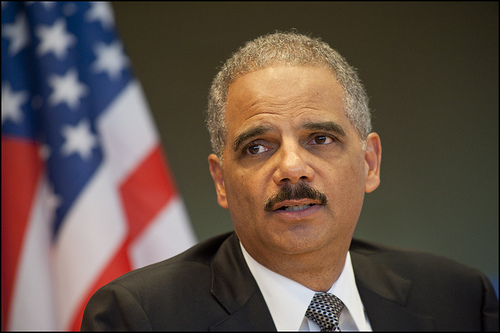
Eric Holder 13 SC Stunning revelations from Eric Holder

John Cruz, a former HSBC (global Swiss Bank) Senior Vice President for Relationship Management has charged Obama’s Department of Justice under Eric Holder as handing them a virtual “slap on the wrist” for being a criminal enterprise. HSBC agreed to pay a fine of $1.92 billion dollars for money laundering profits from Mexican and Columbian drug cartels, which is the least offensive crime they commit on an ongoing basis, to end the matter and DOJ involvement.

A Senate hearing on this matter was held last week in what has become standard operating procedure (SOP) for the Obama administration on the corruption of the “Rule of Law.”

In effect, Mr. Holder believes that some “banks” are too big to prosecute for illegal and criminal activity, as it will cause irreparable harm to the national and world economy. It makes no difference that this action gives tacit approval to the financing of global terrorism or drug cartel efforts to spread their poison onto our streets (and allows the American people to pay a heavy price for this lawlessness in increased criminal activity.) Chicago’s horrendous murder rate comes to mind as just one consequence…culminating in over 510 homicides in Chicago last year alone, with a majority fueled by the illegal drug trade.

The following excerpts are from Eric Holder’s revealing testimony before the Judiciary Committee as relayed in an article from WND (video of John Cruz, parts 1 and 2, at the end of the article is worth watching):

“Banks the size of HSBC are “too big to jail,” as a member of the Senate panel put it.

“I am concerned that the size of some of these institutions becomes so large,” the attorney general confessed, “that it does become difficult for us to prosecute them when we are hit with indications that if you do prosecute, if you do bring a criminal charge, it will have a negative impact on the national economy, perhaps even the world economy.

“And I think that is a function of the fact that some of these institutions have become too large,” said Holder.”

Holder’s later testimony showed the callous indifference to the workings of a criminal enterprise that has engaged in money laundering, financing of terrorism, and outright fraud. A criminal enterprise that is masquerading as a legitimate bank that can affect the entire world’s economy is in desperate need of investigation and prosecution as relayed by Sen. Grassley:

Sen. Charles Grassley, R-Iowa, asked Holder to explain why federal and state authorities decided not to indict HSBC after it admitted funneling cash to Mexican drug cartels, helping rogue regimes avoid sanctions and assisting Saudi banks tied to terrorism.

The senator said, “I’m concerned that we have a mentality of too-big-to-jail in the financial sector of spreading from fraud cases to terrorist financing and money laundering cases – and I cite HSBC.”

Holder replied: “The concern that you have raised is one that I, frankly, share.”

However, Holder said he was not specifically referring to HSBC, because it would not be “appropriate.”

“Again, I’m not …read more
Source: FULL ARTICLE at Western Journalism

CBRE Group, Inc. Announces Completion of Offering of $800 Million of 5.00% Senior Unsecured Notes Du

By Business Wirevia The Motley Fool

Filed under:

CBRE Group, Inc. Announces Completion of Offering of $800 Million of 5.00% Senior Unsecured Notes Due 2023

LOS ANGELES–(BUSINESS WIRE)– CBRE Group, Inc. (NYS: CBG) today announced the completion of the offering of $800 million in aggregate principal amount of 5.00% Senior Notes due 2023 (the “Notes”). The Notes have an interest rate of 5.00% per annum and were issued at a price equal to 100% of their face value. The Notes were issued by the Company’s wholly-owned subsidiary, CBRE Services, Inc., and guaranteed by the Company and its subsidiaries that guarantee its senior secured credit facility, on a full and unconditional basis.

The Company estimates that the net proceeds from the offering will be approximately $785.2 million, after deducting the underwriters’ discounts and estimated offering expenses. The Company intends to use the net proceeds from such offering of the Notes to repay a portion of its outstanding indebtedness under its senior secured credit facilities.

BofA Merrill Lynch, J.P. Morgan, Credit Suisse, Wells Fargo Securities, HSBC, Scotiabank, Barclays Capital and RBS acted as joint book-running managers for the offering of the Notes. The offering of the Notes was made only by means of a prospectus supplement and accompanying base prospectus, which may be obtained for free by visiting EDGAR on the SEC‘s website at www.sec.gov. Alternatively, copies may be obtained from: BofA Merrill Lynch, 222 Broadway, 11th Floor, New York, NY 10038, Attention: Prospectus Department, or email: dg.prospectus_requests@baml.com.

This press release shall not constitute an offer to sell or the solicitation of an offer to buy, nor shall there be any sale of the Notes, in any jurisdiction in which such offer, solicitation or sale would be unlawful prior to registration or qualification under the securities laws of any such jurisdiction.

“Safe Harbor” Statement Under the Private Securities Litigation Reform Act of 1995: This press release contains forward-looking statements within the meaning of Section 27A of the Securities Act of 1933, as amended, and Section 21E of the Securities Exchange Act of 1934, as amended. These forward-looking statements include, but are not limited to, statements related to the offering of the Notes and the anticipated use of proceeds therefrom. These forward-looking statements involve known and unknown risks, uncertainties and other factors discussed in the Company’s filings with the Securities and Exchange Commission (the “SEC“). Any forward-looking statements speak only as of the date of the press releases and, except to the extent …read more
Source: FULL ARTICLE at DailyFinance
3 Shares to Race Ahead of the FTSE 100

By G. A. Chester, The Motley Fool

Filed under:

LONDON — The FTSE 100 is on a terrific bull run, finishing today’s trading session at 6,529 points after soaring 16% in four months.

I don’t think you necessarily have to back risky recovery stocks or speculative small caps to outperform the market if this bull run continues. I reckon three companies that are giants in their respective sectors should do well — not perhaps delivering the outsize returns that some poorer-quality companies will notch up (if you can pick the right ones!), but returns ahead of the market all the same.

My three for a continuing bull run are: mining giant BHP Billiton , banking behemoth HSBC , and heavyweight asset-manager Schroders .

BHP Billiton
If the stock market bull run is to have real legs, it will require a truly improving economy. Stocks can’t go higher indefinitely on sentiment alone. A global economic recovery will inevitably be allied to demand for resources in China and other industrializing countries. Step forward, mining giant BHP Billiton.

All miners had a poor 2012, dogged by weak prices and rising costs. But analysts are tentatively penciling in improving revenues and earnings going into 2014. In BHP Billiton’s case, after it took an earnings hit of more than 40% during the first half of the current year, the City expects the decline to have moderated to about 30% by the company’s June year-end.

For fiscal year 2014, the consensus is for BHP‘s earnings to rise about 30% — and this forecast has been ticking up from where it was three months ago. At a current share price of about 2,100 pence, you’re paying not much more than 10 times forecast FY 2014 earnings.

HSBC
Valued by the market at more than 130 billion pounds, HSBC is more than three times the size of its nearest Footsie banking peer, Standard Chartered.

While the fortunes of Standard Chartered, Royal Bank of Scotland, Lloyds Banking, and Barclays are all — to a greater or lesser degree — tied to the economies of a single country or region, HSBC is a truly global giant with revenue well-balanced between Europe, the Americas, and the Asia-Pacific region. As such, HSBC is poised to thrive in a recovering world economy.

A current price-to-book value of 1.3 may not sound too attractive, but HSBC‘s net assets are forecast to increase rapidly over the next couple of years. If the group makes analyst estimates of 660 pence per share in net assets by the end of 2013 and the market ups its P/B rating to two (let’s not forget the P/B was between 2.5 and three before the financial crisis), then HSBC‘s shares could trade at more than 1,300 pence compared withabout 725 pence today.

Schroders
The reason why an asset manager such as Schroders can be expected to race ahead in a bull market is really quite simple. If Schroders can increase assets under management and keep the cost base low, the …read more
Source: FULL ARTICLE at DailyFinance

My Top 2 Stocks: Portfolio Recovery Associates and Biglari Holdings

By Jim Gillies, The Motley Fool

Filed under:

“Lethargy bordering on sloth remains the cornerstone of our investment style.” — Warren Buffett, 1990 Chairman’s Letter to shareholders of Berkshire Hathaway

I like buying small companies with a long growth runway, dedicated and involved leaders, buying at a discount to my perception of fair value, holding for the long term, and periodically adding shares at opportune prices. I embrace “lethargy with every stock purchase, vowing to do nothing unless a game-changing thesis-breaker arrives. If chosen well and left alone, the gains can be very satisfactory. My two largest individual stocks Portfolio Recovery Associates   and Biglari Holdings  — each roughly 10% of my portfolio — have both reached such status by being bought well and then left alone. Each offers lessons for investors today.

Giving debt collection a good name
Portfolio Recovery buys defaulted consumer debt from credit card providers such as MasterCard, Visa, and Discover; it also collects bankruptcy paper and has acquired a diversifying set of fee-for-service businesses in such exciting industries as back tax collection, class action lawsuit collections, and auto-loan collateral tracking (skip-tracing). It buys debt for pennies on the (face value) dollar and then turns that debt over to its collector workforce, which collects two to three times the purchase price over the next seven years.

Simple, right? The reality is that it requires experience to appropriately value debt, discipline to purchase the debt at reasonable prices, and well-trained collectors to work the paper. Overpaying is akin to burning money, and excellent pricing models are of questionable use if the collector can’t cajole debtors to pony up. Fortunately, disciplined pricing and collection has long been Portfolio Recovery‘s strength.

This is a “knowledge business,” and thus Portfolio Recovery is heavily reliant on the expertise of its management. Fortunately, they’re a gold standard team, led by co-founders CEO Steve Fredrickson, and CFO Kevin Stevenson after the pair did similar work at a division of HSBC. Attractive about Portfolio’s management is what they don’t do. They don’t provide earnings guidance or try to manage investors’ expectations. They don’t sacrifice long-term shareholder value for near-term reported earnings. They don’t get fancy perks like country club memberships, cars, or corporate jets, and the company eschews option compensation in favor of modest restricted stock grants. Senior executives are required to own stock alongside common shareholders.

Over the years, management has diversified its revenue: adding and aggressively ramping up unsecured bankruptcy account collections, legal collections on debtors identified as “can-pay-but-won’t-pay,” and controlled expenses to maintain profitability. I first purchased shares of Portfolio in 2004. Since then the steady hand of management has increased cash collections, revenues, and earnings 25%, 23%, and 20% annually, respectively.

And because there’s no shortage of debt, and thus charged off debt, Portfolio’s growth still has a long runway. I’ve added shares over the years based on a quick valuation heuristic I developed. My method compares the company’s adjusted enterprise value (market capitalization plus net debt, less an estimate …read more
Source: FULL ARTICLE at DailyFinance

CBRE Group, Inc. Announces Pricing of $800 Million of 5.00% Senior Unsecured Notes Due 2023

By Business Wirevia The Motley Fool

Filed under:

CBRE Group, Inc. Announces Pricing of $800 Million of 5.00% Senior Unsecured Notes Due 2023

LOS ANGELES–(BUSINESS WIRE)– CBRE Group, Inc. (NYS: CBG) today announced the pricing of its offering of $800 million in aggregate principal amount of 5.00% senior notes due 2023 (the “Notes”). The Notes will have an interest rate of 5.00% per annum and are being issued at a price equal to 100% of their face value. The Notes will be issued by the Company’s wholly-owned subsidiary, CBRE Services, Inc., and guaranteed by the Company and the subsidiaries that guarantee its senior secured credit facility, on a full and unconditional basis.

The Company estimates that the net proceeds from the offering will be approximately $785.2 million, after deducting the underwriters’ discounts and estimated offering expenses. The Company intends to use the net proceeds from such offering of the Notes to repay a portion of its outstanding indebtedness under its senior secured credit facilities.

BofA Merrill Lynch, J.P. Morgan, Credit Suisse, Wells Fargo Securities, HSBC, Scotiabank, Barclays Capital and RBS are acting as joint book-running managers for the offering of the Notes.

The Notes are being offered pursuant to an effective shelf registration statement that the Company previously filed with the Securities and Exchange Commission (the “SEC“). The offering of the Notes will be made only by means of a prospectus supplement and accompanying base prospectus, which may be obtained for free by visiting EDGAR on the SEC‘s website at www.sec.gov. Alternatively, copies may be obtained from: BofA Merrill Lynch, 222 Broadway, 11th Floor, New York, NY 10038, Attention: Prospectus Department, or email: dg.prospectus_requests@baml.com.

This press release shall not constitute an offer to sell or the solicitation of an offer to buy, nor shall there be any sale of the Notes, in any jurisdiction in which such offer, solicitation or sale would be unlawful prior to registration or qualification under the securities laws of any such jurisdiction.

Forward-Looking Statements

This press release contains forward-looking statements within the meaning of Section 27A of the Securities Act and Section 21E of the Securities Exchange Act of 1934, as amended. These forward-looking statements include, but are not limited to, statements related to the offering of the Notes and the anticipated use of proceeds therefrom. These forward-looking statements involve known and unknown risks, uncertainties and other factors discussed in CBRE Group, Inc.’s filings with the SEC. …read more
Source: FULL ARTICLE at DailyFinance

Should I Buy WPP?

By Harvey Jones, The Motley Fool

Filed under:

LONDON — It’s time to go shopping for shares again, but where to start? There are loads of great stocks to choose from, and I’ve got my wallet out. So should I buy WPP ?

Ad men
If you want to know how to get ahead in advertising, ask WPP. It’s one of the world’s largest advertising and marketing groups, an established presence in both developed and emerging markets, notably China. It owns several agencies, including Ogilvy & Mather, and boasts a raft of big-name clients including American Express, Colgate-Palmolive, GlaxosmithKlineHSBCMcDonald’sMicrosoft, Nestle, Unilever, and Vodafone. Impressive. So should I buy it?

Ugly beautiful
The market likes this stock, and with good reason. WPP has enjoyed a relentless run of share-price growth, up 85% over five years, 67% over three years, and 30% over 12 months. Its recently published full-year results beat expectations to deliver a 7% rise in profits before tax to 1.3 billion pounds. 2012 revenues rose 2.9% to 10.37 billion pounds, the second successive year revenues have topped 10 billion pounds. WPP may look like a rare beauty, with operating margins hitting a record high of 14.8%, but it got there the ugly way, admits CEO Martin Sorrell. Although it posted 4% growth, difficult market conditions sparked a 1% drop in like-for-like revenues.

As football managers say, there’s an art to winning ugly. WPP has shown it has the resilience to what Sorrell calls the four “grey swans” of global uncertainty: Europe, the Middle East, China, and the U.S. Strong global diversification helps, with a powerful performance across Asia-Pacific, Latin America, the Middle East, and Africa offsetting weakness in the U.S. and Europe. 2013 looks like another tough year, with the U.S. a particular worry, although WPP expects the 2014 World Cup in Brazil to lift everybody’s spirits. Its forward-looking digital strategy should also reap rewards, as more companies switch their efforts online.

Reaping dividends
After a few days to digest the results, brokers came out in favour of WPP, which currently trades at 10.76 pounds. Last week, JP Morgan lifted its target price from 10.54 pounds to 12.82 pounds and maintained its overweight rating. Goldman Sachs has hiked its target price from 11.05 pounds to 11.55 pounds, while Investec lifted its target price by 25 pence to 11.75 pounds. Both rate WPP a buy. If you like this stock, you’re in good company. WPP isn’t the biggest-yielding stock on the FTSE 100 at just 2.6% a year, but management is pursuing a progressive dividend policy and has just hiked its payout by a mighty 16%. Since the dividend is covered 2.7 times, there should be scope for future growth. The yield is forecast to rise to 3.4% by Dec. 2014.

These are tricky conditions for advertising and marketing companies, and projected earnings-per-share (EPS) growth of 3% in 2013 reflect that, but that should rise to 10% in 2014. WPP isn’t cheap, trading at 14 times earnings and on a PEG ratio of 1.5, but that’s hardly surprising, …read more
Source: FULL ARTICLE at DailyFinance

Should I Buy HSBC Holdings for My ISA?

By Roland Head, The Motley Fool

Filed under:

LONDON — U.K. banks have not covered themselves in glory during the last five years, and while HBSC Holdings   has managed to remain profitable and avoided a bailout, a $1.9bn fine for money laundering last year was hardly the firm’s proudest moment.

Despite the fine, I reckon HSBC is the best of the U.K. banks and has a lot to offer ISA investors interested in building up a diversified, tax-efficient portfolio (just click here for more details on the tax benefits of ISAs).

Emerging-market growth
HSBC describes itself as “the world’s local bank,” and for me, this is its main attraction. The majority of HSBC‘s business is in Asia, where growth rates remain high.

For example, the latest figures from China show the country’s industrial production rose by 9.9% during the first two months of 2013, during which time retail sales rose by 12.3%. Yet both figures were lower than expected and were considered a mild disappointment by the markets!

That kind of growth is driving huge amounts of banking activity, and HSBC is positioned well to benefit, as its profits for 2011 and 2012 show:

Region 2012 Pre-Tax Profits 2011 Pre-Tax Profits
Europe -$3,414m $4,671m
Hong Kong & Asia-Pacific $18,030m $13,294
Middle East & N. Africa $1,350m $1,492m
North America $2,299m $100m
Latin America $2,384m $2,315m
Total $20,649m $21,872m

Source: HSBC company reports.

This year, HSBC‘s bumper Asian profits underpinned the losses it incurred in Europe and helped ensure that overall profits fell by just 6%.

Dividend boost
HSBC increased its dividend by 10% last year, taking its 2012 payout to 31.3 pence per share, equivalent to a dividend yield of 3.9%, at the bank’s recent 730 pence share price.

Although HSBC‘s share price has risen by 30% during the last six months, to therefore reduce its dividend yield, the company remains the highest-yielding U.K. bank share, and its forward dividend yield of 4.3% still appears very attractive.

Invest globally with U.K. shares
I think the world’s emerging markets are likely to continue to outgrow stagnant Western economies for many more years. I want exposure to this growth in my ISA portfolio, but I don’t want the risk and complexity of owning foreign shares.

As one of the largest banks in the Asia-Pacific region, HSBC will be involved in funding and supporting much of the economic growth in those markets — and will profit accordingly if things go well, as I expect them to.

By owning shares in HSBC, I enjoy direct exposure to these key growth markets, but I also benefit from the safety and simplicity of owning ISA-friendly shares in a FTSE 100 company that pays a solid dividend.

2013’s top ISA income stock?
If you like the idea of using an ISA to hold high-yielding income shares, then I recommend you take a look at the Motley Fool‘s latest free report, “The Top ISA Income Stock for 2013.”

The company in question offers a yield of 5.7%, and the Fool’s expert analysts believe that its current share price of 700 pence could be 20% below its true value. To learn more, just click here to …read more
Source: FULL ARTICLE at DailyFinance

Why the Dow Hit Rock Bottom 4 Years Ago

By Alex Planes, The Motley Fool

Filed under:

The bear market that ended four years ago was a once-in-a-lifetime event. In the Dow Jones Industrial Average‘s century-plus history, only the Great Depression produced a steeper decline in market prices, and no other bear market in the Dow’s history has ever endured a larger drop in corporate earnings. More than 4 million homes went into foreclosure between 2006 and 2011. Nearly 500 banks failed, and hundreds more were kept afloat by a massive injection of government bailout money.

The Dow’s final closing price of 6,547.05 was 54% lower than an all-time high of 14,164.53 set a year and a half earlier. The S&P 500, which had peaked on the same day as the Dow in 2007, reached its bear-market low point on the same day as the Dow as well. Its closing price of 676.53 had last been seen in the fall of 1996.

How did the market fall so far? Could it happen again? Below, you’ll find a timeline of the key events leading up to the bear-market low of 2009, which may help you better understand the unique economic situation that caused it and realize how unlikely we are to see a repeat performance anytime soon.

Timeline of a collapse
Feb. 8, 2007: British bank HSBC warns of $10.5 billion in potential losses at its U.S. mortgage arm as a result of the housing slowdown. The Dow closes at 12,637.63, down 0.2%.

Feb. 27, 2007: Freddie Mac ceases its purchases of the riskiest subprime mortgages and mortgage-backed securities. The Dow closes at 12,216.24, down 3.3%.

April 2, 2007: Major subprime lender New Century Financial files for bankruptcy. The Dow closes at 12,382.30, up 0.2%.

July 24, 2007: Leading subprime lender Countrywide Financial, in a financial filing, warns of difficult housing and mortgage conditions for the rest of 2007. The Dow closes at 13,716.95, down 1.6%.

July 31, 2007: Bear Sterns initiates bankruptcy proceedings for two of its mortgage-focused hedge funds. The Dow closes at 13.211.99, down 1.1%.

Aug. 9, 2007: European bank BNP Paribas suspends redemptions on three investment funds, leading to a credit crunch that forces the European Central Bank to inject roughly $135 billion into a number of banks on the continent. The Dow closes at 13,270.68, down 2.8%.

Aug. 10, 2007: The Federal Reserve makes its discount window ready to provide liquidity in the event of “dislocations in money and credit markets.” The Dow closes at 13,239.54, down 0.2%.

Aug. 16, 2007: Fitch downgrades Countrywide, which immediately draws its entire available credit line of $11.5 billion. The Dow closes at 12,845.78, down 0.1%.

Aug. 17, 2007: The Federal Reserve warns that “financial market conditions have deteriorated” and “the downside risks to growth have increased appreciably.” The Dow closes at 13,079.08, up 1.8%.

Oct. 9, 2007: The Dow reaches its peak of 14,164.53 points, up 0.9%. Investors ignore the warnings of low corporate-earnings growth and instead focus on the latest Fed meeting notes, which indicate another interest rate cut by year-end.

Nov. …read more
Source: FULL ARTICLE at DailyFinance

HSBC Selling Piece of U.S. Loan Portfolio for $3.2 Billion

By Dan Radovsky, The Motley Fool

Filed under:

British bank HSBC Holdings has agreed to sell a portfolio of U.S. mortgages and unsecured loans held by its subsidiary HSBC Finance, the company announced today.

The buyer of the loans is SpringCastle Acquisition, a Delaware-based company owned by Springleaf Finance and Newcastle Investment . Springleaf is also buying the HSBC Finance loan servicing facility and other assets in London, Ky. The total payment from SpringCastle and Springleaf is $3.2 billion in cash.

Most of the HSBC employees at the Kentucky facility will become employees of Springleaf when the transaction is completed in the fourth quarter of 2013, the company said.

“These agreements accelerate the run-off of the legacy consumer mortgage and lending business and are a continuation of HSBC‘s strategy to reposition its U.S. operations,” said Patrick Burke, CEO of HSBC Finance.

link

The article HSBC Selling Piece of U.S. Loan Portfolio for $3.2 Billion originally appeared on Fool.com.

Fool contributor Dan Radovsky has no position in any stocks mentioned. The Motley Fool has no position in any of the stocks mentioned. Try any of our Foolish newsletter services free for 30 days. We Fools may not all hold the same opinions, but we all believe that considering a diverse range of insights makes us better investors. The Motley Fool has a disclosure policy.

Copyright © 1995 – 2013 The Motley Fool, LLC. All rights reserved. The Motley Fool has a disclosure policy.

(function(c,a){window.mixpanel=a;var b,d,h,e;b=c.createElement(“script”);
b.type=”text/javascript”;b.async=!0;b.src=(“https:”===c.location.protocol?”https:”:”http:”)+
‘//cdn.mxpnl.com/libs/mixpanel-2.2.min.js’;d=c.getElementsByTagName(“script”)[0];
d.parentNode.insertBefore(b,d);a._i=[];a.init=function(b,c,f){function d(a,b){
var c=b.split(“.”);2==c.length&&(a=a[c[0]],b=c[1]);a[b]=function(){a.push([b].concat(
Array.prototype.slice.call(arguments,0)))}}var g=a;”undefined”!==typeof f?g=a[f]=[]:
f=”mixpanel”;g.people=g.people||[];h=[‘disable’,’track’,’track_pageview’,’track_links’,
‘track_forms’,’register’,’register_once’,’unregister’,’identify’,’alias’,’name_tag’,
‘set_config’,’people.set’,’people.increment’];for(e=0;e<h.length;e++)d(g,h[e]);
a._i.push([b,c,f])};a.__SV=1.2;})(document,window.mixpanel||[]);
mixpanel.init("9659875b92ba8fa639ba476aedbb73b9");

function addEvent(obj, evType, fn, useCapture){
if (obj.addEventListener){
obj.addEventListener(evType, fn, useCapture);
return true;
} else if (obj.attachEvent){
var r = obj.attachEvent("on"+evType, fn);
return r;
}
}

addEvent(window, "load", function(){new FoolVisualSciences();})
addEvent(window, "load", function(){new PickAd();})

var themeName = 'dailyfinance.com';
var _gaq = _gaq || [];
_gaq.push(['_setAccount', 'UA-24928199-1']);
_gaq.push(['_trackPageview']);

(function () {

var ga = document.createElement('script');
ga.type = 'text/javascript';
ga.async = true;
ga.src = ('https:' == document.location.protocol ? 'https://ssl' : 'http://www') + '.google-analytics.com/ga.js';

var s = document.getElementsByTagName('script')[0];
s.parentNode.insertBefore(ga, s);
})();

Read | Permalink | Email this | …read more
Source: FULL ARTICLE at DailyFinance

10 Shares Trading Near 52-Week Highs

By David O’Hara, The Motley Fool

Filed under:

LONDON — You know it’s a bull market when 46 companies in the FTSE 100 are trading within 3% of their high for the year.

Here are the 10 of those 46.

Company

Price (pence)

P/E (2013 forecast)

Yield (2013 forecast)

Market Cap (millions of pounds)

HSBC

728

10.8

4.5%

134,000

Unilever

2,657

18.9

3.2%

75,266

British American Tobacco

3,508

15.4

4.2%

67,721

SABMiller

3,325

20.8

2%

53,031

Diageo

1,972

19.2

2.4%

49,478

Reckitt Benckiser

4,501

17.3

3%

32,372

Tesco

370

11.6

4%

29,708

National Grid

725

13.4

5.7%

26,376

Prudential

987

12.8

3%

25,222

Centrica

355

12.8

4.9%

18,450

Five stood out in particular.

1. Unilever
Consumer brands companies are prominent in my top 10, and Unilever owns some of the foremost food and domestic brands. The Anglo-Dutch giant is behind Lynx, Domestos, Magnum, and Hellmann’s. These brands and their recognition with consumers means that Unilever products sell in large numbers. This gives Unilever economies of scale, meaning that the company can make a larger percentage profit at the same retail price. Pricing is helped further by the fact that, to many retailers, Unilever’s products are “must stock” items.

Unilever shares are not just at a high for the year; they currently trade at an all-time high.

With 1.77 euros in earnings per share forecast for 2014, Unilever shares trade at a premium to the rest of the market. However, that premium is well justified. I would not be surprised if the shares continued to make new highs in 2013.

2. Diageo
Just like Unilever, Diageo owns brands that shops and bars must stock, e.g., Smirnoff, Guinness, Captain Morgan, Baileys, and Jose Cuervo, to name a few.

Similar to Unilever’s, Diageo shares have also been making new highs recently. In the last year, the shares are up 31.1%. So far in 2013, they have advanced 10.4%. That’s a pretty sharp rise for a 50 billion pound blue chip. The share price movement at Diageo shows that it is possible to make big, quick returns on large caps.

For 2013 and 2014, earnings growth at an average rate of 10.8% a year is forecast. Dividend growth is expected at a similar rate. With the forecast 2013 yield on the shares now down to 2.4%, some investors are worrying that Diageo has become overpriced.

3. SABMiller
There’s not much between SABMiller and Diageo. Like Diageo, SABMiller owns big beer brands: Grolsch, Peroni, Pilsner Urquell, and Miller Genuine Draft are just four.

Like Diageo’s, SABMiller shares trade at an all-time high. The shares are also on a high valuation: The 2014 price-to-earnings ratio is 18.5, with a forecast yield of 2.3%. SABMiller is forecast to grow earnings and dividends faster than Diageo. For the next two years, 13.8% in average annual EPS growth is expected. This is forecast to be met by dividend per share growth of 11.6% per year.

There is little point agonizing between SABMiller and Diageo. If you are happy to pay the premiums that the market is demanding, just buy both.

4. Reckitt Benckiser
Like Unilever, Reckitt Benckiser owns a portfolio of household name brands. Harpic, Calgon, and Dettol are all Reckitt Benckiser products. The company also owns Brasso, Gaviscon, and Mr Sheen.

The strength of RB‘s brands has helped the company to …read more
Source: FULL ARTICLE at DailyFinance

Should I Buy Royal Bank of Scotland or Lloyds Banking Group?

By Roland Head, The Motley Fool

Filed under:

LONDON — Royal Bank of Scotland Group   and Lloyds Banking Group   were both forced into humiliating tax-payer funded bailouts during the financial crisis — and last week, both banks reported hefty losses for 2012, suggesting that they haven’t yet managed to put their problems behind them.

I believe that both banks will eventually recover and that it’s only a question of time until the government sells its shareholdings back into the private sector.

Today, I’m going to look at both banks to see which offers the greater potential for new investors.

RBS vs. Lloyds
I’m going to start with a look at a few key statistics that can be used to provide a quick comparison of these two companies, based on their 2012 results:

  RBS Lloyds
Price to tangible book value 0.69 0.94
Core Tier 1 ratio 10.3% 12%
Group net interest margin 1.93% 1.93%
Group loan to deposit ratio 100% 121%

RBS remains — in theory at least — a strong value play, trading at around 69% of its tangible asset value, whereas Lloyds’ share price has pretty much caught up with its book value, leaving very little upside in this area.

However, both banks are continuing to sell off non-core assets, and RBS especially is likely to do more in this area over the next year, meaning the underlying book value of the business could shrink further.

Looking at the other statistics, Lloyds has moved ahead of RBS with a substantially higher core tier 1 ratio and a stronger group loan to deposit ratio, which gives it the ability to extend its lending when attractive opportunities arise, without compromising the security of its balance sheet.

What’s next?
Are the trends we identified above about to change, or should we expect more of the same?

Analysts’ forecasts are notoriously unreliable, but FTSE 100 companies generally get the benefit of the most comprehensive analysis, and tend to deliver fewer surprises than smaller companies.

With that in mind, let’s take a look at some forward-looking numbers for RBS and Lloyds. These apply to the companies’ 2013 financial years:

  RBS Lloyds
Forecast P/E ratio 12.8 11.3
Forecast dividend yield 0.4% 0.6%
Forecast earnings per share 24p 4.5p

These figures, which are based on the companies’ guidance figures and analysts’ consensus forecasts, suggest that both banks are expected to return to profit in 2013, ending the run of impairments and exceptional charges that drove both of them into the red in 2012.

Analysts are also hoping that dividend payments will begin — although even if it is financially prudent, this will be a politically sensitive subject, and I wouldn’t be surprised if dividends get postponed until 2014.

Which share should I buy?
For me, the main point in buying RBS or Lloyds is because you want to profit from the recovery potential of the shares. If you want to invest in a healthy, dividend-paying bank, then you are more likely to buy BarclaysHSBC, or Standard Chartered instead.

On this basis, I would buy RBS, because its less advanced recovery …read more
Source: FULL ARTICLE at DailyFinance

Earnings Drop 19% at HSBC Holdings

By Nate Weisshaar, The Motley Fool

Filed under:

LONDON — HSBC   reported a 19% drop in earnings per share in 2012, as fines and struggling European operations marred a strong year in the bank’s Asian operations. Despite these issues, the bank raised its dividend 10% for the year and plans to raise the first three dividends in 2013 11%.

As with most banks, it takes a little digging to find out what is going on with the business because they report a few different measures of profitability. Add in HSBC‘s global operations, and the story easily gets muddled.

In general, however, Hong Kong and the rest of Asia are doing rather well for the bank, while the U.S. and Europe are providing headaches — and not just because the bank has run afoul of regulators surprisingly frequently of late. Despite these troubles, HSBC appears to be working its way through the troubled loans on its books in these two regions as provisions for bad loans were down 2.8 billion pounds, or almost 30%.

Like most European banks HSBC is in a rebuilding mode, but it seems to be making slightly better progress than its London-listed peers. It has shed 43 businesses in the past two years, generating 2.4 billion pounds in annual savings, and is investing heavily in its profitable Asian operations — in fact, taking advantage, as many of the banks on the Continent pull back from the region to take care of domestic issues.

Importantly, HSBC appears to have a strong capital base ready to meet the stringent requirement increases expected go into force in coming years. Perhaps more importantly to investors is the fact that HSBC pays a dividend, which provides something close to the market average yield — something its London-listed competitors cannot say.

A superior yield and geographic diversification are two reasons HSBC is trading at a premium to its book value — roughly 1.2 times book value in fact — while the likes of BarclaysLloyds, and RBS all trade at discounts. However, this is still well below the multiples it traded at before the global financial crisis.

Investors need to ask themselves if they think HSBC can clean up its act in its developed markets and continue its success in emerging markets. If so, the shares could be attractive at today’s prices.

If you already own HSBC or are looking for a share that can provide a market beating yield you will want to read this special free report from The Motley Fool.

The report describes an opportunity that offers a super 5.6% income, whose shares might be worth 850p versus around 730 pence now — and has just been declared “The Motley Fool’s Top Dividend Stock for 2013.” Just click here to discover more.

The article Earnings Drop 19% at HSBC Holdings originally appeared on Fool.com.

Nate does not own any shares discussed above.
 The Motley Fool has a disclosure policy. We Fools may not all hold the same opinions, but we all …read more
Source: FULL ARTICLE at DailyFinance