Tag Archives: Eagle Ford

EOG Resources Is Running Away From the Competition

By David Lee Smith, The Motley Fool

Filed under:

I simply can’t avoid bringing Fools up to date on the key trends and metrics that EOG Resources laid out for attendees at last week’s Howard Weil’s Annual Energy Conference. After you’ve considered the company’s heady information, I think you’ll agree that an extensive search is unlikely to yield a more successful independent producer than the Houston-based operator.

The company’s accomplishments aren’t on the proverbial come, awaiting a ratcheting up of commodities prices, as is the case with, say, Chesapeake Energy . Solely for the sake of perspective, I’ll remind you that in its most recent quarter, EOG topped the analysts’ per-share earnings consensus by an unusually high $0.24, or 17%. And when compared with its year-earlier per-share results, the differential was 40%.

EOG Resources is hardly tethered to North America. It currently is involved in the promising Neuquen Basin of Argentina, China’s Sichuan Basin, offshore Trinidad and Tobago, and the Irish Sea. In addition, the company operates in several smaller or more nascent U.S. onshore plays. But the areas that have made it especially power-packed are the Eagle Ford of south Texas, the Bakken and Three Forks of North Dakota, and the revitalized Permian Basin of southwestern Texas and southeastern New Mexico.

Scoring with an eagle
As CEO Mark Papa said during the company’s post-release conference call last month: “The Eagle Ford continues to be our flagship oil asset…” And why not? Taking into account all of the companies that are working in the hot play, total production was 373,000 barrels a day in January, up from 248,403 barrels daily for the same month of 2012. That, if my calculation is correct, represents a 50% hike. EOG is the Eagle Ford‘s leader, with a total of 644,000 net acres. That’s more than 30% above Chesapeake’s 490,000 net acres.

But not only does EOG own sizable acreage in the play, it also conducts its operations there wisely and efficiently. In part for that reason, it is the largest horizontal crude oil producer in the U.S. by a whopping two-to-one ratio. Further, with natural gas prices remaining in the doldrums and unlikely to emerge anytime soon, it’s noteworthy that fully 88% of EOG‘s revenues for 2013 are expected to be tied to oil and natural gas liquids.

As the company has become more familiar with the Eagle Ford, it’s become convinced of the efficacy of decreased spacing between wells. That clearly has been the case. From 130-acre spacing, management has moved to a range of 65-acre to 90-acre spacing, with 40-acrer to 65-acre spacing probably in the offing.

A key result last year was an impressive jump from the previously estimated 900 million barrels of recoverable oil from EOG‘s Eagle Ford acreage to 1.6 billion barrels. That number could move to about 2.2 billion barrels. And with its production infrastructure (e.g. roads, etc.) already in place, the present value of the company’s production in the play has risen …read more
Source: FULL ARTICLE at DailyFinance

The Next Great American Energy Play

By Tyler Crowe, The Motley Fool

Filed under:

In sports, people love to hear about the next big thing. That sense of potential makes us tune in to see what all the chatter is about. So in the spirit of seeking future greats, let’s look at an unconventional energy play in the U.S. that has some industry experts proclaiming it as the next great American energy play.

Sizing it up
Using the same sports analogy, we need a standard to compare with. Much as basketball fans use the term “the next Jordan” as the bar of excellence, oil companies use two unconventional shale plays as the standard bearers for the industry: the Eagle Ford and the Bakken. While there’s some debate as to which play is better than the other, it’s not too much of a stretch to claim that they’re head and shoulders above the other areas. 

Although both energy plays are different in many ways, they both have one thing in common: a strong liquids portfolio. So when we talk about the next great American energy play, we’re going to make sure it isn’t a gas-heavy giant like the Marcellus shale. The Bakken has a distinct advantage in the type of crude it produces. Continental Resources‘ wells in the Bakken are producing crude with an average API gravity of 42 degrees, a sulfur content about one-third less than other U.S. crudes, and one of the highest gasoline percentages of any crude in the country.

The Eagle Ford‘s advantage comes from its location. Hugging the Rio Grande just before it spills into the Gulf of Mexico, the basin has the advantage of being right next to the heart of America’s oil and gas refining. Being so close to this region, which has been in the energy business for more than a century, also gives it a robust pipeline infrastructure to move product to its final destination.  

So if you’re scoring at home, we want a liquids-heavy play with high-quality crude and immediate access to pipelines and refineries. 

So what’s the SCOOP with this new energy play? 

Source: U.S. Geological Survey

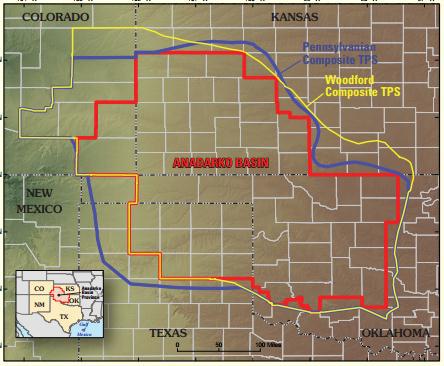
The next great energy play has yet to come up with a definitive name, because it more or less straddles the Woodford shale and the Anadarko basins. Some have come to know it as the Anadarko-Woodford formation. Others call it the South Central Oklahoma Oil Province, or SCOOP. Whatever you want to call it, you should pay attention, because it could be making a big splash in the American energy market very soon.

How does this basin rate based on the criteria I just mentioned? Like the Eagle Ford, it has multiple fairways depending upon what you want to drill for. In Continental’s recent investor-day presentation on SCOOP, it said liquids content in the oil fairway were has high as 85%, but it also has NGL and gas fairways mixed in where a company can expect as much as 40% gas. With API gravity ranging from 45 to 60 …read more
Source: FULL ARTICLE at DailyFinance

This Week's Best and Worst Energy Stocks

By Dan Dzombak, The Motley Fool

Filed under:

Oil prices were on the move this week as fear rose that the events in Cyprus would damage the European economy. For the week, Brent crude was down 1.14% to $107.66 and WTI crude was up 1.5% to $93.71. U.S. natural gas was up 1% to $3.93.

This week’s best two energy stocks
This week’s energy-stocks leader was Nordic American Tankers , up 18.2% to $11.15. While the stock had a one-month gain of 24.2%, it’s down 27% over the past 12 months. On Wednesday, the company announced that it had entered into an agreement to acquire a double-hull Suezmax tanker, its 21st ship, for $55 million. Shipping tanker companies were hammered the past five years as high rates caused a boom in shipbuilding, leading to a massive oversupply and a precipitous decline in dayrates. While Nordic American still continues to post losses, the company is in a good position if rates rebound, and Wednesday’s acquisition shows that management is confident in the future.

Second among oil and gas stocks today was Abraxas Petroleum, up 11.7% to $3.11. The exploration and production company reported 2012 earnings and an operational update last Friday. While the fourth-quarter results were mixed, CEO Bob Watson reiterated management’s guidance for 2013: “Strong production volumes in February and early March, along with incremental well performance and the efficiency gains in the Eagle Ford, give us confidence in our 2013 guidance of 4,900-5,200 boepd on a $70 million capex budget.”

This week’s worst energy stock
The worst performer on the week was Harvest Natural Resources , down 34.5% to $3.71. On Tuesday, Harvest filed with the SEC a notice that it will file its annual report late because of certain errors in its financial statements and said it will have to “revise and possibly restate its financial statements for certain periods in 2010, 2011, and 2012.” The company also said it expects a net loss of approximately $9.6 million, or $0.26 per diluted share. Scariest of all, the company announced that when it does file its annual report, “our auditors have informed us that their opinion will include a going concern qualification.” In layman’s terms, the auditors are going to include a warning that the company is not in a condition to continue operating for the following year. While Harvest Natural Resources has significant assets, with everything going on in Venezuela, it remains to be seen if they will ever be able to sell them.

Big news
There were a few big pieces of news in the U.S. energy space this week.

Schlumberger reported weaker-than-expected drilling activity in the U.S. during the first quarter. The news was further confirmed on Friday as the Baker Hughes rig count fell for the third time in the past month, now down to 1,746, 11.2% less than at the same time last year.

On Tuesday, Hess announced that it had sold 43,000 acres in South Texas for $265 million to …read more
Source: FULL ARTICLE at DailyFinance

3 Companies That Could Save America From $250 Oil

By Tyler Crowe, The Motley Fool

Filed under:

Despite increased oil production in the U.S. from unconventional sources such as the Bakken and Eagle Ford shales, oil prices haven’t gone down. In fact, the price for a barrel of West Texas Intermediate crude is at about $93 and climbing. What’s even worse is that one international group believes that the price of oil is poised to go up — way up.

Who is proclaiming this bad news? The Organization of Economic Cooperation and Development, or OECD. Based on its models, a barrel of oil could be in the range of $150 to $270 by the end of the decade. Let’s look at why they could be right and how we could avoid the sting of surging oil prices.

Why they could be right
Despite the large increase in domestic production, it costs more to access these new sources, and demand is still outpacing supply. According to EIA, demand for oil was about 1 million barrels per day higher than supply in 2011, and the projections for global demand are expected to continue to climb, thanks in large part to two countries: China and India.

On a worldwide proven-reserve basis, China and India are not well endowed, nor do they have a copious amount of deposits. Collectively, the two countries have only about 20.4 billion barrels of proven reserves, or about 1.3% of the world’s total supply. Also, a few weeks ago, the U.S. Department of Energy reported that China had surpassed the U.S. as the world’s largest importer of oil. From a raw numbers perspective, India doesn’t hold a candle to China, but it still imports about 80% of its oil needs. With China and India — the two most populous countries in the world — growing GDP at roughly 8% and 6% annually, demand will more than likely skyrocket.

Why they could be wrong
Models are great, and they can give a decent window into the future — if the correct assumptions are made. The OECD admits that these projections could be thrown off by two things: a slowing of global GDP, and the potential for oil substitutes to capture market share. Obviously, a slowing economy would put a dent in oil demand, but growing oil prices could be what brings GDP down as well. According to the IMF, imbalances in oil supply and demand could affect global GDP growth by as much as 1% annually — a bit of a Catch-22.

With oil potentially getting that expensive, we need to seriously consider the potential of seeing another energy source replace oil demand. In the past 23 years, gasoline prices and the price for a barrel of West Texas intermediate in the U.S. have traded at a multiple of roughly 33.1. Based on the OECD‘s projections, this could mean that gasoline in the U.S. would cost somewhere in the range of $6.05 to $10.85. With current prices already causing a consideration of alternative fuels, $10 a gallon certainly would tip the scales …read more
Source: FULL ARTICLE at DailyFinance

Abraxas Files Preliminary Proxy Materials and Sets Record Date for Annual Meeting

By Business Wirevia The Motley Fool

Filed under:


Abraxas Files Preliminary Proxy Materials and Sets Record Date for Annual Meeting

Board Recommends Shareholders Vote FOR Abraxas’ Incumbent Directors

SAN ANTONIO–(BUSINESS WIRE)– Abraxas Petroleum Corporation (NAS: AXAS) today announced that it has filed its preliminary proxy statement with the Securities and Exchange Commission (“SEC”) in connection with its 2013 Annual Meeting of Shareholders. The Company has established March 22, 2013, as the record date for shareholders entitled to vote at the 2013 Annual Meeting, which has not yet been scheduled.

The Abraxas Board of Directors unanimously recommends that shareholders vote for the Board’s three incumbent, independent directors – Harold D. Carter, Brian L. Melton and Edward P. Russell.

Abraxas notes that its Board of Directors comprises nine directors, eight of whom are independent, and the other of whom serves as the Company’s President and Chief Executive Officer. Abraxas’ directors are proven business leaders with a broad range of management, financial and operational experience, as well as expertise in the oil and gas industry. Under the current Board’s leadership, Abraxas continues to execute on its plan to reduce debt, enhance liquidity and focus on the Company’s highest returning basins. Abraxas has strengthened its core business through the divestiture of non-core assets such as its Nordheim project in the Eagle Ford shale, the Company’s Alberta Basin properties and various non-core assets in Louisiana, Oklahoma, North Dakota and Montana. The Company has also retained an investment bank to divest a larger package consisting of its non-operated assets in the Bakken/Three Forks.

The Company also today announced that it has received notice from Clinton Group, Inc. announcing its intent to nominate three director candidates for election to the Abraxas Board at the Company’s 2013 Annual Meeting of Shareholders. The Clinton group has beneficial ownership of approximately 3.54 percent of Abraxas’ outstanding shares. The Clinton Group has informed the Company that it intends to nominate Katherine Taaffe Richard, William H. Armstrong III and James Wylie McFarland.

The independent Directors who serve on the Nominating and Corporate Governance Committee of the Abraxas Board have interviewed and carefully considered the Clinton Group‘s nominees. Following a thorough review of their skills, experience, and other qualifications, the Committee and the Board unanimously determined that reelecting Abraxas’ incumbent directors will best serve the interests of all shareholders. The Board is open …read more
Source: FULL ARTICLE at DailyFinance

The Biggest Oil Winners in Texas

By Aimee Duffy, The Motley Fool

Filed under:

At the end of 2012, oil production in the state of Texas had reached a level not seen since the late 1990s. The state was cranking out more than 2.2 million barrels per day in December, accounting for roughly 31% of all U.S. oil production. This resurgence can present an opportunity for investors, and with that in mind today we will take a look at the five top producers in the great state of Texas.

The list
The most important thing about the 2012 list is that it did not look the same in 2011. The emergence of the Eagle Ford Shale in East Texas, and the application of horizontal drilling and hydraulic fracturing in certain segments of the Permian Basin has caused some changes:

Company

Avg. Daily
Production

Annual
Production

% State

Occidental Petroleum

116,911

42.7 M

8.0%

EOG Resources

109,776

40.1 M

7.5%

Pioneer Natural
Resources

62,507

22.8 M

4.3%

Apache

57,876

21.1 M

4.0%

Kinder Morgan Energy Partners

51,705

18.9 M

3.5%

Source: Texas Railroad Commission 

In 2011, all of these companies were on the list, but in a different order. Kinder Morgan ranked second then, but almost failed to rank this year, and no one outside of Occidental was posting production numbers over 52,000 barrels per day, let alone 100,000. Things will continue to change, no doubt, so let’s take a closer look at what these companies are up to.

The players
Occidental Petroleum is the top producer in the Permian Basin. The company has mastered the art of using carbon dioxide in tertiary recovery to increase well production by 15%-25% in certain fields. Kinder Morgan, aside from using CO2 to produce oil and natural gas liquids, sources and distributes the gas to other producers in the play. If you’re looking for a diversified operator in the Permian, that’s the company for you.

Apache is another Permian player with the potential to rise up on this list next year. The chart above reflects an annual average number for daily production, but by the end of 2012 Apache was producing 134,123 barrels per day in the Permian. While some of that production was outside of Texas on the New Mexico side, the company has really ramped up its growth in the Texas shale portion of the Permian. 

Pioneer Natural Resources is double dipping, exploiting both the Permian and the Eagle Ford for its benefit. The company is really doing it all right now, as far as drilling goes. It is focused on vertical wells in the Spraberry section of the Permian, horizontal wells in the Wolfcamp region of the same play, and of course horizontal wells in the Eagle Ford. If you include the state’s Barnett Shale, the company plans to spend about $2.4 billion drilling in Texas …read more
Source: FULL ARTICLE at DailyFinance

CAPScall of the Week: Sanchez Energy

By Sean Williams, The Motley Fool

Filed under:

For years, satirical late-night TV host Stephen Colbert has been running a series on his show called “Better Know a District,” which highlights one of the 435 U.S. congressional districts and its representative. While I am no Stephen Colbert, I am brutally inquisitive when it comes to the 5,000-plus listed companies on the U.S. stock exchanges.

That’s why I’ve made it a weekly tradition to examine one seldom-followed company within the Motley Fool CAPS database, and make a CAPScall of outperform or underperform on that company.

For this week’s round of “Better Know a Stock,” I’m going to take a closer look at Sanchez Energy .

What Sanchez Energy does
Sanchez Energy is an oil and gas exploration and production company. Its primary assets are liquid fuels (e.g., oil and liquid natural gas) in the Eagle Ford Shale region, where it holds approximately 95,000 acres. Sanchez also has undeveloped acreage interests in the Bakken Shale and Haynesville Shale. Sanchez currently has 34 wells in operation with an additional 17 in various stages of drilling or completion.

For 2012, Sanchez Energy reported 468.8 million barrels of oil equivalent production, or MBOE, which was a 170% improvement over its production in 2011. Although production volume surged, average production per well dipped as demand dropped and the company spent heavily in bringing 19 new wells online. Revenue for the year grew 197% to $43.2 million despite a dramatic drop in natural gas prices, although the company produced a loss of $0.56 for the year. 

Whom it competes against
As you might imagine, competition is at a premium for acreage in the Eagle Ford Shale. Although natural gas drilling has abated with prices down in the doldrums, NGL and oil drilling remains as profitable as ever. EOG Resources is the king of the Eagle Ford region, having produced in excess of 29.5 million barrels of oil through the first 11 months of 2012. By comparison, Burlington Resources was a distant second at 16.1 million barrels of oil produced. Sanchez is a relative newcomer, so obtaining additional acreage has been difficult.

Unlike its Eagle Ford Shale acreage, which it nearly owns outright, many of its undeveloped acreage is shared interest. Sanchez has 1,500 net acres in the Haynesville Shale region of Louisiana, which it listed in its S-1 prospectus as operated by Chesapeake Energy and EnCana . Neither of these two natural gas behemoths have been looking to splurge recently with natural gas prices down, so this 1,500 acres, while small, could be a troublesome asset to sell if Sanchez has no plans to utilize it.

In the Palmetto region, which is located in the Eagle Ford Shale, it does share a 50/50 working interest with Marathon Oil . With the Palmetto area more rich in volatile oils, it’s not devastating for a company like Sanchez to share its working interests here. The key is that its Maverick region is ripe with black oil, and it …read more
Source: FULL ARTICLE at DailyFinance

Chesapeake Energy: Threats Investors Need to Watch

By Joel South, The Motley Fool

Filed under:

Chesapeake Energy continues to improve its long-term outlook with asset sales in addition to new leadership, but the United States‘ second-largest natural gas producer still has plenty of headwinds to fight. The company’s 2013 capital expenditures are earmarked for liquids production, but natural gas is still the future of the company, so without natural gas price appreciation, Chesapeake will remain discounted. 

In addition to natural gas prices, Chesapeake has lofty liquids growth targets and if the company continues to divest assets at discounted prices, the firm might have to unload valuable liquids plays. If the market corners Chesapeake into selling large portions of midcontinent and Eagle Ford assets, the company could fall short of hitting its liquids growth projections and further depress its share price. 

Chesapeake continues to trade at a deep discount, but the natural gas giant is taking steps to help mitigate current headwinds. To learn more about Chesapeake and its enormous potential, you’re invited to check out The Motley Fool’s brand-new premium report on the company. Simply click here now to access your copy.

var FoolAnalyticsData = FoolAnalyticsData || []; FoolAnalyticsData.push({ eventType: “TickerReportPitch”, contentByline: “Joel South”, contentId: “cms.23576”, contentTickers: “NYSE:CHK”, contentTitle: “Chesapeake Energy: Threats Investors Need to Watch”, hasVideo: “True”, pitchId: “122”, …read more
Source: FULL ARTICLE at DailyFinance

Sanchez Energy Acquires Eagle Ford Assets from Hess

By 24/7 Wall St.

Drilling Rig

Filed under:

Small-cap independent oil and gas producer Sanchez Energy Corp. (NYSE: SN) this morning announced that it had purchased approximately 43,000 net acres in the Eagle Ford shale play in South Texas from Hess Corp. (NYSE: HES) for $265 million in cash. The acquisition adds about 13.4 million barrels of oil equivalent to Sanchez’s proved reserves and about 4,500 barrels a day to the growing company’s daily production.

Sanchez also announced this morning the private placement of $175 million in newly created Series B preferred stock and its intention to offer additional preferred shares up to an amount totaling $250 million. Today’s offering is expected to yield net proceeds of $168.4 million and if the company raises the offering, net proceeds are expected to reach $241 million.

The company will use some of the proceeds from the sale of preferred shares to pay for today’s announced acquisition. The preferred shares will pay an annual dividend of $3.25 and carry a liquidation preference value of $50 a share. Preferred shares may be converted to common stock at an initial conversion rate of 2.3370 shares of common stock for each preferred share. Sanchez may not redeem the preferred shares, but has the option to convert them to common stock under certain conditions on or after April 6, 2018.

In announcing its acquisition of the Eagle Ford assets, Sanchez said it had obtained financing commitments of $325 million. The acquisition is expected to close in the second quarter of this year.

Shares of Sanchez are up about 0.8% in the premarket this morning, at $19.60 in a 52-week range of $16.37 to $25.37.

Filed under: 24/7 Wall St. Wire, Commodities, Oil & Gas, Secondary Offering Tagged: HES, SN

Read | Permalink | Email this | Linking Blogs | Comments

…read more
Source: FULL ARTICLE at DailyFinance

With Financing Cheap, Share Buybacks Reach the Billions

By Russ Krull, The Motley Fool

Filed under:

New issues in U.S. corporate bond markets topped $43 billion last week, with foreign-based borrowers taking down more than half the total. Here’s a look at who’s doing the borrowing and what they’re doing with the money.

The biggest dose of borrowing came from GlaxoSmithKline , with three-, 10-, and 30-year prescriptions totaling $3 billion. The SEC filing didn’t provide many details, reading: “We intend to use the net proceeds for general corporate purposes, which may include the refinancing of existing indebtedness. We may also invest the net proceeds in marketable securities as part of our liquidity management process.”

Enterprise Products Partners piped $2.25 billion of fresh cash through its operating subsidiary with 10- and 30-year paper. The midstream partnership will use the money to repay maturing notes and pay down a credit facility and commercial paper.

Goldcorp dug up $1.5 billion spread over five- and 10-year notes. Most of the new money will be used to repay maturing convertible notes, with the rest going for capital expenditures or working capital.

Discovery Communications found some buyers for $1.2 billion split between 10- and 30-year channels. The possible uses for the money listed in Discovery’s press release include “the acquisition of companies or businesses, repayment and refinancing of debt, working capital, capital expenditures and the repurchase by the Company of its capital stock.”

Union Pacific loaded up $650 million between 10- and 30-year tranches. The money will be used to repurchase stock under the company’s share repurchase program.

Viacom entertained the bond market with 10- and 30-year notes totaling $550 million. The money will go toward paying down debt and share repurchases.

DCP Midstream Partners energized its cash levels by selling $500 million of 10-year paper through its operating subsidiary. The money will be used to finance the drop-down of a bigger piece of its Eagle Ford joint venture, announced in the company’s quarterly earnings last month.

Refinancing and share buybacks continue to be popular reasons for companies to tap credit markets, and there’s no sign of the cheap money supply drying up.

The growing production of natural gas from hydraulic fracturing and horizontal drilling is flooding the North American market and resulting in record-low prices for natural gas. Enterprise Products Partners, with its superior integrated asset base, can profit from the massive bottlenecks in takeaway capacity by taking on large-scale projects. To help investors decide whether Enterprise Products Partners is a buy or a sell today, click here now to check out The Motley Fool’s brand-new premium research report on the company.

var FoolAnalyticsData = FoolAnalyticsData || []; …read more
Source: FULL ARTICLE at DailyFinance

Why Chesapeake Is Poised to Bounce Back

By Brian Pacampara, Pacampara, The Motley Fool

Filed under:

Based on the aggregated intelligence of 180,000-plus investors participating in Motley Fool CAPS, the Fool’s free investing community, natural gas giant Chesapeake Energy has earned a respected four-star ranking.

With that in mind, let’s take a closer look at Chesapeake and see what CAPS investors are saying about the stock right now.

Chesapeake facts

Headquarters (founded)

Oklahoma City (1989)

Market Cap

$14.5 billion

Industry

Oil and gas exploration and production

Trailing-12-Month Revenue

$12.3 billion

Management

CFO Domenic Dell’Osso

COO Steven Dixon

Return on Equity (average, past 3 years)

6.7%

Cash / Debt

$291.0 million / $12.9 billion

Dividend Yield

1.6%

Competitors

Anadarko Petroleum

BP

ConocoPhillips

Sources: S&P Capital IQ and Motley Fool CAPS.

On CAPS, 97% of the 7,656 members who have rated Chesapeake believe the stock will outperform the S&P 500 going forward.

Just last week, one of those Fools, All-Star Quaker08, succinctly summed up the Chesapeake bull case for our community:

New chairman of board (Archie Dunham) is starting to clean up this mess. Expect an experienced new CEO in the next few months to bring some accountability back to the company. I expect sales of non-core assets to continue until [Chesapeake] is focused on only a handful of basins (Eagle Ford, Marcellus, Niobrara, and Utica). This transformation could unlock the value in [Chesapeake’s] assets.

In fact, energy investors would be hard-pressed to find another company trading at a deeper discount than Chesapeake Energy. Its share price depreciated after negative news surfaced concerning the company’s management and spiraling debt picture. While the debt issues still persist, giant steps have been taken to help mitigate the problems. To learn more about Chesapeake and its enormous potential, you’re invited to check out The Motley Fool’s brand-new premium report on the company. Simply click here now to access your copy.

var FoolAnalyticsData = FoolAnalyticsData || []; FoolAnalyticsData.push({ eventType: “TickerReportPitch”, contentByline: “Brian Pacampara, Pacampara”, …read more
Source: FULL ARTICLE at DailyFinance

This Misunderstood Energy Company Is Poised for Big Profits

By Tyler Crowe, The Motley Fool

Filed under:

Every once in a while, a new company comes about in an emerging industry and investors don’t quite know how it works. These misunderstood companies are evaluated with the traditional metrics of the industry, but those very metrics might not accurately reflect the changing dynamics of the industry. Let’s check in with one of these companies, Heckmann , and see how a traditional metric for oil services might not do this company justice. 

Oh, Wall Street, please don’t let me be misunderstood
To the surprise of many, Heckmann soundly beat earnings expectations this quarter and ended in the black. What’s also encouraging is that the report included numbers from Power Fuels only for December, so we won’t see the full impact of the merger be until next quarter. Much of the consensus on this company has been that its outlook will be down for 2013, but there are three reasons that may not be the case.

1. Traditional oil-services metrics don’t really work for Heckmann. One of the metrics for gauging the health of the oil-services sector is rig count. It’s a decent metric for the likes of Nabors , which leases rigs, but it doesn’t necessarily hold up for a company like Heckmann. What also needs to be considered is increased drilling efficiency. As more companies become better at drilling and move to pad drilling techniques, fewer rigs are needed to drill the same amount of wells. So even though the total amount of rigs would seem to indicate a decline, that isn’t necessarily the case. Take a look at the Bakken. Even though rig counts are expected to remain flat throughout 2013, it’s expected that the run rate of completed wells will increase almost 10%.  

Source: Heckmann investor presentation.

So while a company like Nabors will need to fight against its competitors to keep its rigs out in the field, Heckmann’s realm is still growing, and pretty well.

2. Drilling and water use are not directly correlated. So fewer rigs will be used, but we can expect some marginal improvements when it comes to total wells drilled. This is decent news for drilling companies such as Haliburton  and Schlumberger , but it isn’t anything to write home about. While some water is used in drilling, the lion’s share that’s used to complete a well comes during the fracking stage. Fracking does happen in conjunction with drilling, but it can also be done multiple times afterwards to reopen the shale and increase production for a more mature well. It takes about 4 million to 6 million gallons of water to frack a well, according to a recent New York Times article, so the potential for Heckmann’s business goes well beyond the drilling phase.  

There’s also another industry trend working in Heckmann’s favor: a move toward more water recycling and reuse for drilling and fracking. In places such as the Eagle Ford formation, where oil and gas are plentiful and water …read more
Source: FULL ARTICLE at DailyFinance

These Winners Couldn't Save the Dow's Record Streak

By Dan Caplinger, The Motley Fool

Filed under:

No market can go up forever, and the Dow Jones Industrials finally gave in to the inevitable, failing to set its ninth straight record and instead closing down 25 points. All in all, though, the stock market was still pretty optimistic, allowing neither inflationary pressure on consumer prices nor weaker consumer confidence cause a major reversal. Broader market measures also finished modestly lower, with the S&P 500 finishing less than five points below its own all-time record high.

But some stocks in the Dow certainly tried their best to extend the average’s winning streak. Bank of America soared almost 4% on news that it would buy back more than $10 billion in common and preferred shares, finally delivering on the much-anticipated hope that the company would return capital to shareholders. Yet those wanting higher dividends than the token $0.01 quarterly payout per share have to be disappointed by the emphasis on buybacks, especially with the shares trading almost 150% above where the company could have repurchased them in late 2011.

Boeing also finished higher, rising more than 2% as the company said it believes that its grounded 787 Dreamliner could be back in the air within weeks after it implements a fix for its lithium-ion battery problems. Once that problem is finally in the past, investors should be able to refocus on the trillion-dollar potential that the aerospace industry has for Boeing in the coming decades.

Outside the Dow, Comstock Resources vaulted higher by 13% after fellow independent oil and gas producer Rosetta Resources agreed to buy Comstock assets in West Texas in the Permian Basin area. The move will help diversify Rosetta’s heavy concentration in the Eagle Ford area, but it will give Comstock more cash to spend on capital expenditures to build up its Eagle Ford presence.

More records in store?
Even though the Dow’s record streak may be over for now, the stock market isn’t doomed to fall further. The strength of these winning stocks is just one example of how, even in a down market, you can find winners that will serve you well both now and for the long run.

The big question that Bank of America shareholders are trying to figure out is whether the stock can keep winning after having doubled in 2012. In The Motley Fool’s premium research report on B of A, analysts Anand Chokkavelu and Matt Koppenheffer lift the veil on the bank’s operations, giving the pros and cons of investing in Bank of America right now. Don’t wait another minute — click here now to claim your copy.

var FoolAnalyticsData = FoolAnalyticsData || []; …read more
Source: FULL ARTICLE at DailyFinance

Why Comstock Resources' Shares Popped

By Travis Hoium, The Motley Fool

Filed under:

Although we don’t believe in timing the market or panicking over market movements, we do like to keep an eye on big changes — just in case they’re material to our investing thesis.

What: Shares of Comstock Resources jumped as much as 18% today after announcing an asset sale.

So what: Comstock is selling 53,306 net acres in the West Texas Permian Basin to Rosetta Resources for $768 million. The money will be used to pay off debt and increase its drilling program in the Eagle Ford shale.

Now what: Capital expenditures are now expected to be $410 million for drilling activities, of which $312 million will be spent in Eagle Ford. I think the move to reduce debt and improve liquidity will be a positive for shareholders going forward. Still, I’d like to see consistent profits before jumping in, especially at this elevated price.

Interested in more info on Comstock Resources? Add it to your watchlist by clicking here.

The article Why Comstock Resources’ Shares Popped originally appeared on Fool.com.

Fool contributor Travis Hoium has no position in any stocks mentioned. The Motley Fool has no position in any of the stocks mentioned. Try any of our Foolish newsletter services free for 30 days. We Fools may not all hold the same opinions, but we all believe that considering a diverse range of insights makes us better investors. The Motley Fool has a disclosure policy.

Copyright © 1995 – 2013 The Motley Fool, LLC. All rights reserved. The Motley Fool has a disclosure policy.

(function(c,a){window.mixpanel=a;var b,d,h,e;b=c.createElement(“script”);
b.type=”text/javascript”;b.async=!0;b.src=(“https:”===c.location.protocol?”https:”:”http:”)+
‘//cdn.mxpnl.com/libs/mixpanel-2.2.min.js’;d=c.getElementsByTagName(“script”)[0];
d.parentNode.insertBefore(b,d);a._i=[];a.init=function(b,c,f){function d(a,b){
var c=b.split(“.”);2==c.length&&(a=a[c[0]],b=c[1]);a[b]=function(){a.push([b].concat(
Array.prototype.slice.call(arguments,0)))}}var g=a;”undefined”!==typeof f?g=a[f]=[]:
f=”mixpanel”;g.people=g.people||[];h=[‘disable’,’track’,’track_pageview’,’track_links’,
‘track_forms’,’register’,’register_once’,’unregister’,’identify’,’alias’,’name_tag’,
‘set_config’,’people.set’,’people.increment’];for(e=0;e<h.length;e++)d(g,h[e]);
a._i.push([b,c,f])};a.__SV=1.2;})(document,window.mixpanel||[]);
mixpanel.init("9659875b92ba8fa639ba476aedbb73b9");

function addEvent(obj, evType, fn, useCapture){
if (obj.addEventListener){
obj.addEventListener(evType, fn, useCapture);
return true;
} else if (obj.attachEvent){
var r = obj.attachEvent("on"+evType, fn);
return r;
}
}

addEvent(window, "load", function(){new FoolVisualSciences();})
addEvent(window, "load", function(){new PickAd();})

var themeName = 'dailyfinance.com';
var _gaq = _gaq || [];
_gaq.push(['_setAccount', 'UA-24928199-1']);
_gaq.push(['_trackPageview']);

(function () {

var ga = document.createElement('script');
ga.type = 'text/javascript';
ga.async = true;
ga.src = ('https:' == document.location.protocol ? 'https://ssl' : 'http://www') + '.google-analytics.com/ga.js';

var s = document.getElementsByTagName('script')[0];
s.parentNode.insertBefore(ga, …read more
Source: FULL ARTICLE at DailyFinance

Rosetta Resources Buying Permian Basin Assets From Comstock Resources

By Aimee Duffy, The Motley Fool

Filed under:

Houston-based Rosetta Resources plans to acquire 53,306 net acres in the Permian Basin from Comstock Resources for $768 million, the company announced today.

Approximately 40,000 acres are located in the Wolfbone area of the Permian, and current production there is about 3,300 barrels of oil equivalent per day.  Rosetta is anticipating a serious upside to this acreage, identifying close to 800 net well locations for vertical drilling.  The company also said there may be further upside if horizontal drilling is possible.

The remaining 13,000 acres are undelineated and are considered more of an exploration opportunity.

CEO Jim Craddock is enthused about Rosetta’s buy: “This transaction provides entry into the prolific Permian Basin with both existing production and strong growth potential in proven delineated areas as well as prospective exploration targets on undeveloped acreage,” he is quoted as saying in the company press release.  The Permian Basin is indeed a prolific play, accounting for 20% of U.S. production outside of Alaska.

The deal is subject to standard regulatory approvals, and is expected to close by May 15.

Comstock said it intends to use the proceeds from the sale to reduce debt and fund an increase to its 2013 drilling program in the Eagle Ford shale. The company plans to spend $410 million in 2013 on drilling activities and $12 million on exploratory leasehold.

link

The article Rosetta Resources Buying Permian Basin Assets From Comstock Resources originally appeared on Fool.com.

Fool contributor Aimee Duffy has no position in any stocks mentioned. The Motley Fool has no position in any of the stocks mentioned. Try any of our Foolish newsletter services free for 30 days. We Fools may not all hold the same opinions, but we all believe that considering a diverse range of insights makes us better investors. The Motley Fool has a disclosure policy.

Copyright © 1995 – 2013 The Motley Fool, LLC. All rights reserved. The Motley Fool has a disclosure policy.

(function(c,a){window.mixpanel=a;var b,d,h,e;b=c.createElement(“script”);
b.type=”text/javascript”;b.async=!0;b.src=(“https:”===c.location.protocol?”https:”:”http:”)+
‘//cdn.mxpnl.com/libs/mixpanel-2.2.min.js’;d=c.getElementsByTagName(“script”)[0];
d.parentNode.insertBefore(b,d);a._i=[];a.init=function(b,c,f){function d(a,b){
var c=b.split(“.”);2==c.length&&(a=a[c[0]],b=c[1]);a[b]=function(){a.push([b].concat(
Array.prototype.slice.call(arguments,0)))}}var g=a;”undefined”!==typeof f?g=a[f]=[]:
f=”mixpanel”;g.people=g.people||[];h=[‘disable’,’track’,’track_pageview’,’track_links’,
‘track_forms’,’register’,’register_once’,’unregister’,’identify’,’alias’,’name_tag’,
‘set_config’,’people.set’,’people.increment’];for(e=0;e<h.length;e++)d(g,h[e]);
a._i.push([b,c,f])};a.__SV=1.2;})(document,window.mixpanel||[]);
mixpanel.init("9659875b92ba8fa639ba476aedbb73b9");

function addEvent(obj, evType, fn, useCapture){
if (obj.addEventListener){
obj.addEventListener(evType, fn, useCapture);
return true;
} else if (obj.attachEvent){
var r = obj.attachEvent("on"+evType, fn);
return r;
}
}

addEvent(window, "load", function(){new FoolVisualSciences();})
addEvent(window, "load", function(){new PickAd();})

var themeName = 'dailyfinance.com';
var _gaq …read more
Source: FULL ARTICLE at DailyFinance

3 Exciting Energy Growth Plays

By Matt DiLallo, The Motley Fool

Filed under:

We are in the midst of an energy revolution like we never dreamed possible. Trapped beneath our great country are vast oil and gas resources that we’re still learning how to access. Our oil and gas production is expected to grow rapidly over the coming decade; as it does, three tiny energy companies have the potential for very big futures.

Just the Bakken, please
Weighing in at an enterprise value just shy of $4 billion, Kodiak Oil & Gas is the largest company on this list but a real runt when compared to more well-known energy companies. The company is almost solely focused on oil and gas production in the Bakken, which has helped it to grow its production at an unbelievable rate. In fact, from 2011 to 2012 it grew  production by a staggering 270% and it’s projected to double production again this year. To get there, the company is planning to spend nearly $750 million to drill 75 new wells.

With an inventory of more than 950 future wells, Kodiak still has a huge growth runway ahead. This is especially true when you consider the company currently has just 125 wells. With its shares up more than 300% over the past five years, its returns over the next five could be even better. If you want to invest in the growth of the Bakken, Kodiak is certainly worth a deeper look. 

I’ll take the Marcellus, with a side of Utica
If you thought Kodiak was small, tiny Rex Energy weighs in at an enterprise value of just over a billion dollars. Don’t let its small size fool you: This energy underdog could grow up to be a top dog someday. Its operations are mainly focused on the Marcellus Shale, with emerging growth coming from the Utica Shale. Since 2009 the company has grown its production by a compound annual rate of 50%.

Rex is planning to spend about $250 million to grow production over the next year and expects to see those funds to yield a 30%-40% boost in production. The big story here is that the growth will be in the all-important liquids department — overall liquids growth will come in at 70%, with oil and condensate growth coming in at 55% of that. If you want to stake your claim to the potential growth in the Marcellus and Utica, then Rex Energy is a name you want to get to know.

I want it all, and I want the Eagle Ford too!
The final name on my list is Magnum Hunter Resources . With an enterprise value of around $1.5 billion, it’s around the same size as Rex, however, there’s a much bigger story at Magnum Hunter. What’s intriguing here is the company has acreage in the Bakken like Kodiak, and has its own Marcellus and Utica Shale positions like Rex, but it really goes over the top with further diversification …read more
Source: FULL ARTICLE at DailyFinance

Which Asset Will Chesapeake Sell Next?

By Arjun Sreekumar, The Motley Fool

Filed under:

Following a recent joint venture agreement with Chinese oil company Sinopec , Chesapeake Energy is back to contemplating which asset it will part with next, as the company seeks to plug a sizable funding gap.

Last month, the ailing natural gas producer announced that it would sell half its interest in some 850,000 of its net leasehold acres in the Mississippi Lime to Sinopec. The metrics of the deal came as a major disappointment, with Chesapeake set to receive less than $2,400 per acre for its assets – less than a third of what the company said the land was worth in a presentation last year.

With that deal wrapped up, Chesapeake is hoping for more favorable terms on future asset sales. The company’s onerous debt situation, which has pushed its cost of capital higher, makes it all the more urgent to whittle down its funding gap as quickly as possible.

Looking ahead, Chesapeake could sell parts of its undeveloped acreage in plays such as the Eagle Ford, the Utica, the Marcellus, the Haynesville, and the Powder River/DJ Basin. Let’s take a closer look at which of these assets might be next to go.

Potential gassy assets up for sale
Analysts at JP Morgan upgraded Chesapeake in January, suggesting that the company may have another major asset sale opportunity “up its sleeve.” In a research note, the bank highlighted the company’s Marcellus and Haynesville assets as prime candidates for divestiture.

In the gassy Haynesville Shale play of northwest Louisiana and East Texas, Chesapeake holds the title of largest leaseholder, with roughly 530,000 net acres, of which 195,000 net acres are prospective for the Bossier Shale, a formation that lies directly above the Haynesville.

And in the Marcellus Shale, Chesapeake is also the largest leasehold owner with 1.8 million net acres under its belt. The majority of this acreage – about 1.5 million – is in the northern dry gas portion of the play, while the remaining acreage is in the southern “wet gas” portion of the play. The company currently has five rigs operating in the dry gas portion and three rigs operating in the wet gas portion.

Experts think Marcellus assets next to go
In considering future asset sales, it would make more sense for Chesapeake to part with a large block of undeveloped acreage, since selling producing acreage by itself would not only lead to a sharp reduction in cash flow, but also wouldn’t be accretive to multiples, according to a recent note by TPH Energy Research.

Given these criteria, TPH analysts believe the Marcellus is likely to be the next gassy asset to go. They estimate that Chesapeake’s acreage in the Marcellus could fetch $8 billion before tax or $6.4 billion after tax. While this would cover the company’s funding gap for the year, it would have negative consequences for Chesapeake’s cash flow and aggregate production.

TPH estimates that a sale of Chesapeake’s Marcellus assets would lower 2013 cash flow by …read more
Source: FULL ARTICLE at DailyFinance

Swift Energy to Update Operations at 2013 Analyst/Investor Meeting

By Business Wirevia The Motley Fool

Filed under:


Swift Energy to Update Operations at 2013 Analyst/Investor Meeting

HOUSTON–(BUSINESS WIRE)– Swift Energy Company (NYS: SFY) will host a meeting with financial analysts, portfolio managers and investors today beginning at 8:00 a.m. CDT at the Hilton Houston North on Greenspoint Drive in Houston, Texas. At this meeting, Swift Energy‘s management team will provide its annual briefing that will feature an update on certain operational initiatives and detail operational and financial plans and guidance for full year 2013. A live audio webcast accompanied with the slides of the presentation will be available on the Company’s website www.swiftenergy.com by clicking on the event hyperlink.

Terry Swift, CEO of Swift Energy, stated, “We are excited about recent developments in our South Texas operations. Stronger well performance in South Texas has resulted directly from targeting the laterals of our horizontal wells more precisely in a defined higher quality zone of the Lower Eagle Ford shale. We believe that the rock properties within this higher quality zone improve the effectiveness of the fracture stimulation and production results. Horizontal Eagle Ford wells, drilled laterally in this target zone, have demonstrated stronger initial production rates and have caused us to increase the estimated ultimate recoveries associated with them.

“Additionally, improving well performance and data suggesting our acreage will support more tightly downspaced drilling patterns indicates that our total resource potential in South Texas is significantly larger than we initially thought.”

Operations Update:


South Texas Operations

In the Company’s South Texas core area, six operated wells have been completed to date in the first quarter. In McMullen County, four operated Eagle Ford wells and one Olmos well were completed with one operated Eagle Ford well completed in La Salle County as well.

The Blessing That is the Eagle Ford Shale

By David Blackmon, Contributor

If you have wondered why the Texas economy has out-performed the rest of the country in recent years, you need look no further than that familiar check mark-shaped portion of South Texas that delineates the boundaries of the Eagle Ford Shale.  It is a blessing for Texas that the first successful Eagle Ford well was drilled in 2008, at about the same time the US economy was falling into a deep recession. …read more
Source: FULL ARTICLE at Forbes Latest

Matador Resources Company Reports Fourth Quarter and Full Year 2012 Results and Provides Operational

By Business Wirevia The Motley Fool

Filed under:

Matador Resources Company Reports Fourth Quarter and Full Year 2012 Results and Provides Operational Update

DALLAS–(BUSINESS WIRE)– Matador Resources Company (NYS: MTDR) (“Matador” or the “Company”), an independent energy company currently focused on the oil and liquids rich portion of the Eagle Ford shale play in South Texas, today reported financial and operating results for the three months and year ended December 31, 2012. Headlines, all of which represent record results for the Company, include the following:

  • Oil production of 1,214,000 Bbl for the year ended December 31, 2012, a year-over-year increase of almost eight-fold from 154,000 Bbl produced in 2011.
  • Average daily oil equivalent production of 9,000 BOE per day for the year ended December 31, 2012, consisting of 3,317 Bbl of oil per day and 34.1 MMcf of natural gas per day, a year-over-year BOE increase of 28% from 7,049 BOE per day, consisting of 422 Bbl of oil per day and 39.8 MMcf of natural gas per day, produced in 2011.
  • Total realized revenues of $170.0 million in 2012, including $14.0 million in realized gain on derivatives, a year-over-year increase of 129% from total realized revenues of $74.1 million, including $7.1 million in realized gain on derivatives, reported for the year ended December 31, 2011.
  • Oil and natural gas revenues of $156.0 million in 2012, a year-over-year increase of 133% from $67.0 million reported for the year ended December 31, 2011.
  • Adjusted EBITDA of $115.9 million for the year ended December 31, 2012, a year-over-year increase of 132% from $49.9 million reported for the year ended December 31, 2011.
  • Oil production of 426,000 Bbl for the fourth quarter of 2012, a sequential quarterly increase of 41% from 303,000 Bbl produced in the third quarter of 2012 and a ten-fold year-over-year increase from 41,000 Bbl produced in the …read more
    Source: FULL ARTICLE at DailyFinance