

South African swimmer Chad le Clos celebrated the one year anniversary of his Olympic 200 metres butterfly gold in perfect fashion Wednesday as he added the world title in the event in Barcelona. …read more
Source: FULL ARTICLE at Fox World News
South African swimmer Chad le Clos celebrated the one year anniversary of his Olympic 200 metres butterfly gold in perfect fashion Wednesday as he added the world title in the event in Barcelona. …read more
Source: FULL ARTICLE at Fox World News

Olympic golden boy Chad le Clos carries South Africa’s medal hope at swimming’s world championships, which start Sunday, after the Rainbow Nation’s swim team solved its cash concerns. …read more
Source: FULL ARTICLE at Fox World News
Civil rights activists and human rights lawyers Monday demanded that Nigeria arrest Sudanese leader Omar al-Bashir and deliver him to the International Criminal Court to stand trial for crimes in Darfur.
President Goodluck Jonathan was urged “to support the demand by the international community for justice for the victims of genocide and war crimes,” by the Socio-Economic Rights and Accountability Project.
Human rights lawyers are going to court to argue for an order to force the arrest, said Chino Obiagwu of Nigeria’s Legal Defense and Assistance Project.
Human Rights Watch was contacting diplomats to add to the pressure. They are urging Nigeria’s international partners “to signal that Nigeria should show leadership and not host ICC fugitive Bashir,” said Elise Keppler of the New York-based organization’s International Justice Program.
Nigeria is a member of the International Criminal Court and “has international legal obligations to ensure that this country does not become a safe haven for alleged perpetrators of crimes under international law like al-Bashir,” said Adetokunbo Mumuni, executive director of the rights and accountability project.
A failure to arrest al-Bashir could have “huge legal ramifications” and lead to sanctions by the U.N. Security Council, he warned, though Chad and Djibouti have welcomed al-Bashir in the past year without suffering any consequences.
Human Rights Watch said Nigeria’s stand is “a stark contrast” to that taken by most African countries.
South Africa, Malawi, Uganda, Kenya, Zambia, and Central Africa Republic “have specifically made clear Bashir will be arrested on their territory, seen to it that other Sudanese officials visit instead of Bashir, relocated conferences or otherwise avoided his visits,” said Obiagwu, who also heads the Nigerian Coalition on the International Criminal Court.
The International Criminal Court in The Hague indicted the Sudanese leader in 2009 and 2010 for crimes including extermination, forcible transfer of population, torture and rape. He was the first sitting African head of state to be indicted by the court.
Al-Bashir arrived in Nigeria on Sunday to a red carpet welcome with full military honors. He is here to attend a health summit of the African Union, which has told its 53 members not to cooperate with the ICC. Some Africans argue that the European-based court is racist in its targeting of Africans.
Source: FULL ARTICLE at Fox World News
Sudan’s President Omar al-Bashir travelled on Sunday to a health summit in Nigeria, official media said, after Human Rights Watch urged authorities in Abuja to arrest him for war crimes charges.
Bashir “left today for the Nigerian capital Abuja to participate in the African Union summit about HIV, TB and malaria to be held over two days,” the state SUNA news agency said.
Nigeria is a member of The Hague-based International Criminal Court, which in 2009 and 2010 issued two warrants against Bashir for war crimes, genocide and crimes against humanity allegedly committed in Sudan’s Darfur region.
His visit marks “a real test of Nigeria’s commitment to the ICC”, Elise Keppler, associate director of the International Justice Programme at Human Rights Watch, told AFP ahead of Bashir’s trip.
Some ICC members including Chad, Djibouti and Kenya have allowed visits by Bashir, but others like Botswana, South Africa and Uganda have ensured that he stays away.
A number of states “have found a way out of this problem and Nigeria should do the same,” Keppler said, urging Nigeria to arrest him if he sets foot in the country.
Nations that have signed on to the world’s only permanent court for war crimes and crimes against humanity have a legal obligation to arrest any indicted suspect found within their territory.
Source: FULL ARTICLE at Fox World News
By ESPN.com news services The Los Angeles Dodgers have placed Chad Billingsley on the 15-day disabled list for pain in his troublesome right elbow six days after the right-hander’s second start of the season.
Pratik Patel gazed glumly as the herder’s scrawny brown dogs moved between piles of bones to eat the rotting elephant flesh. He pointed to the nearby road and wondered aloud: How could poachers kill an elephant just 5 kilometers (3 miles) from Tanzania‘s main safari highway?
Conservationists have long warned of the existential danger that poachers pose to Africa‘s elephants. And it’s in Tanzania, home of the Serengeti game reserve and one of the world’s two largest elephant populations, that the scale of the killings and the involvement of government employees may be the most chilling.
The three elephant corpses seen by an Associated Press reporter eight weeks ago lay in a game park just a few miles from a busy junction outside Arusha, a city of 500,000 people.
“Twenty-four elephants were shot within 10 square miles over the last three months. Thirty miles from here there are another 26 carcasses,” said Patel, a safari tour operator trying to raise the alarm about the country’s dying elephants. “And this is just a teaser. If we go to southern Tanzania I can show you 70 carcasses in one day,” he said, referring to the Selous, the world’s largest game reserve.
The man tasked with saving Tanzania‘s elephants is Khamis Suedi Kagasheki, minister for natural resources and tourism. Patel believes Kagasheki, a former intelligence officer, is trying hard to beat the poachers, but is up against a government cabal unwilling to give up illegal profits.
Much of the demand for ivory is in Asia, especially China, luring poachers across Africa to slay the giants and cut out their tusks for rewards far beyond the daily wage. According to CITES, the international body that monitors endangered species, the illegal ivory trade has more than doubled since 2007.
Every week brings new reports of elephant deaths and the government workers alleged to have killed them — soldiers, game wardens, police, customs officials, all complicit in the killings of the top tourism treasure for this poor East African nation of 50 million people.
Botswana, the Central African Republic, Chad, Congo and Kenya are also suffering from elephant poaching. But Iain Douglas-Hamilton, the founder of the London-based nonprofit Save The Elephants, says he is most worried about Tanzania‘s because of its huge population — somewhere between 40,000 and 70,000.
Poaching here “is far bigger than is happening anywhere else
From: http://feeds.foxnews.com/~r/foxnews/world/~3/G-KIuua16Ro/
Mali‘s interim president on Friday sought to reassure international partners that the country fighting a war against radical Islamic fighters will be ready to hold democratic elections by July as promised.
President Dioncounda Traore made the comments before a meeting in the capital that included representatives from the United Nations, the European Union, the African Union, and the West African regional bloc known as ECOWAS.
“We know that with the support of all the friends of Mali we can hold elections by this deadline,” Traore said the beginning of a meeting in Mali‘s capital. “Mali is almost free, though it still needs to be secured.”
Presidential elections are tentatively scheduled for July 7, while legislative elections are to take place July 21.
Critics, though, have questioned how Mali will be able to hold such a vote given the fact that hundreds of thousands have been displaced by the political turmoil that began in March 2012 after a coup deposed the democratically elected president.
At least 282,000 Malians remain displaced within the country, while more than 175,000 others have sought refuge in the neighboring countries of Mauritania, Niger and Burkina Faso, according to U.N. figures.
Radical Islamic fighters linked to al-Qaida took over much of northern Mali, and many residents fled to escape their strict interpretation of Islamic law known as Shariah that meted out punishments including public executions, whippings and amputations.
Security also remains a key concern ahead of elections, especially in the northern cities of Gao, Kidal and Timbuktu, where remnants of the terror groups have staged suicide bombings in the months since they were ousted from power by the French-led military operation that began in January.
The meeting in Mali‘s capital also is aimed at how to best secure these cities ahead of July. France has said it intends to have only about 1,000 soldiers in the country by yearend from a deployment peak of about 4,000. About 6,000 troops from African countries are presently in Mali, though Chad says it is pulling its 2,000 soldiers.
From: http://feeds.foxnews.com/~r/foxnews/world/~3/Z32zONNEtHk/
By Copeland, Kareem Is Blaine Gabbert still the quarterback of the future for the Jacksonville Jaguars? He thinks so, but Gabbert will have to prove he’s capable of beating Chad Henne for the starting job.
Chad‘s president says his country’s troops are ill-suited to fight armed Islamic extremists in a guerrilla war in Mali and have begun pulling out.
President Idriss Deby said the French-led mission of seizing northern Mali‘s cities from the extremists has been accomplished. After France, Chad‘s 2,000 soldiers were the second-largest of the international force fighting in Mali and are the targets of militant attacks, including a suicide bombing last week that killed three Chadian soldiers.
“Chad‘s army has no ability to face the kind of guerrilla fighting that is emerging in northern Mali. Our soldiers are going to return to Chad. They have accomplished their mission,” he said in a joint interview recorded Saturday with Le Monde newspaper, TV5 Monde and RFI radio. He said one battalion is already leaving.
From: http://feeds.foxnews.com/~r/foxnews/world/~3/XgN303c4p4k/
Central African Republic rebel leader Michel Djotodia has been elected president by the National Transitional Council.
Djotodia was the only candidate and was elected unanimously Saturday by the 105 members of the National Transitional Council in a ceremony that was attended by political leaders, the press and representatives of international organizations accredited in Central African Republic.
Djotodia led the Seleka rebels who overthrew President Francois Bozize three weeks ago. Djotodia has 18 months to set up elections to select a new leader, according to guidelines set by neighboring countries in the Economic Community of Central African States.
Leaders of the neighboring countries are expected to attend a summit on April 15, 2013 in N’Djamena, Chad, to consider the situation in Central African Republic.
From: http://feeds.foxnews.com/~r/foxnews/world/~3/L70fXtAUp6E/
By The Huffington Post News Editors
N’DJAMENA, April 12 (Reuters) – Some 50,000 Sudanese have fled into southeastern Chad in the past week following fresh tribal conflict in the restive Darfur region, U.N. and Chadian officials said on Friday.
Melissa Fleming, a spokeswoman for the U.N. High Commission for Refugees, said the fighting had spread as each side received reinforcements from tribal allies and had become more violent, with entire villages being razed.
A total of 74,000 refugees had fled to Chad in the past two months, she said.
“People are arriving wounded and telling us their houses are destroyed and their villages completely burned down, with many people killed,” she told a news conference in Geneva.
The refugees have fled to an arid area along the Chad, Sudan and Central African Republic border.
“The area they are arriving in is very remote. They left with nothing: there is no water, no food. They are sleeping under trees,” Fleming said, adding there was a risk of disease.
General Moussa Haroun Tirgo, the governor of the Sila region of southeastern Chad where the refugees have fled, told Reuters that about 52 wounded had arrived since Thursday.
“The situation is worrying given that the zone does not have enough medical infrastructure,” Tirgo said. “We’re evaluating the needs with the help of NGOs but the situation is very serious.”
Conflict has ravaged Sudan‘s western Darfur region since 2003 when mainly non-Arab rebels took up arms against the Arab-led government, accusing it of politically and economically marginalising the region.
Violence has subsided from its peak in 2003 and 2004, but a surge has forced more than 130,000 people to flee their homes this year, according to the United Nations. (Reporting by Madjiasra Nako in N’djamena and Stephanie Nebehay in Geneva; Writing by Bate Felix; Editing by Daniel Flynn and Jon Hemming)
From: http://www.huffingtonpost.com/2013/04/12/darfur-fighting_n_3068644.html
A local official says that a suicide bombing by members of an al-Qaida branch in North Africa has killed at least three Chadians in northern Mali.
Kidal’s deputy mayor, Abda Ag Kazina, said Friday that two suicide bombers were also killed in the operation.
Lalla Maiga, a humanitarian worker in Kidal, says that the Chad soldiers were targeted in a market where one suicide bomber exploded his belt. Maiga said that many civilians were also injured in the attack.
This is the third suicide bombing attack in Kidal since the French forces entered Mali to fight al-Qaida-linked militants. Chad soldiers are helping back French troops in the mountains of the north Kidal region where elements of al-Qaida in the Islamic Maghreb are now hiding out.
From: http://feeds.foxnews.com/~r/foxnews/world/~3/Q80dNHlw0ew/
Central African Republic‘s self-appointed leader says he’s created a new council that now will choose a president to lead the country until elections can be held.
Michel Djotodia, whose fighters moved into the capital on March 23 and eventually overthrew the president of a decade, issued the order on Saturday.
Under the arrangement, the interim president will serve until elections can be held. Djotodia says a vote will take place within 18 months after initially saying he would hold power until 2016.
The shortened timeframe follows pressure from regional neighbors, who held a summit in Chad several days ago on the political crisis.
Djotodia’s advisers have said he is not excluded from being considered for the interim presidential position.
Former President Francois Bozize fled to neighboring Cameroon after being overthrown.
Source: FULL ARTICLE at Fox World News
An alliance of opposition parties says it’s withdrawing from the new government created only days ago by self-appointed President Michel Djotodia.
Djotodia, whose rebel fighters overthrew the country’s president of a decade about a week ago, had announced a new list of government ministers late Sunday.
However, the opposition parties say they were disappointed to learn about the appointments from state radio like everyone else.
Prime Minister Nicolas Tiangaye, a longtime opposition leader, said Tuesday that the other opposition members couldn’t be forced to participate.
Tiangaye is leading a delegation from Central African Republic to neighboring Chad on Wednesday, where regional leaders are due to discuss the country’s ongoing political crisis.
Central African Republic‘s new president says he plans to rule until elections in 2016.
By The Huffington Post News Editors
Sure, we love Rob Lowe, but just like in “Star Wars”, there is another. And that other Lowe is Chad… Chad Lowe.
You probably remember him as Becca’s HIV positive boyfriend on “Life Goes On”, or as “crying husband” during Hilary Swank‘s first Oscar acceptance speech, or as “Holy sh*t, that’s Chad Lowe” in Season 6 of “24”.
But however you remember him, the important thing is that YOU DO remember him. Because Chad Lowe exists. He’s not Rob Lowe… not at all. But he’s Chad. Chad Lowe.
Read More…
More on April Fools Day
Astrophotographer Chad Blakey (lightsoverlapland.com) captured the comet on the horizon and northern lights at Abisko National Park on March 23rd, 2013. You can join Chad on one of his photo expeditions. Check Here: facebook.com/lightsoverlapland …read more
Source: FULL ARTICLE at Space.com
France says Al Qaeda-linked North African warlord Abou Zeid was killed in combat with French troops in Mali in February.
In a statement Saturday the office of French President Francois Hollande said the death was “definitively confirmed” and that Zeid’s death “marks an important step in the fight against terrorism in the Sahel.”
Chad‘s president had said earlier this month that Chadian troops had killed Abou Zeid. He was a pillar of the southern realm of Al Qaeda in the Islamic Maghreb, or AQIM, responsible for the death of at least two European hostages.
The French military moved into Mali on Jan. 11 to push back militants linked to Abou Zeid and other extremist groups who had imposed harsh Islamic rule.
France says Al-Qaida-linked North African warlord Abou Zeid was killed in combat with French troops in Mali in February.
In a statement Saturday the office of French President Francois Hollande said the death was “definitively confirmed” and that Zeid’s death “marks an important step in the fight against terrorism in the Sahel.”
Chad‘s president had said earlier this month that Chadian troops had killed Abou Zeid. He was a pillar of the southern realm of al-Qaida in the Islamic Maghreb, or AQIM, responsible for the death of at least two European hostages.
The French military moved into Mali on Jan. 11 to push back militants linked to Abou Zeid and other extremist groups who had imposed harsh Islamic rule.
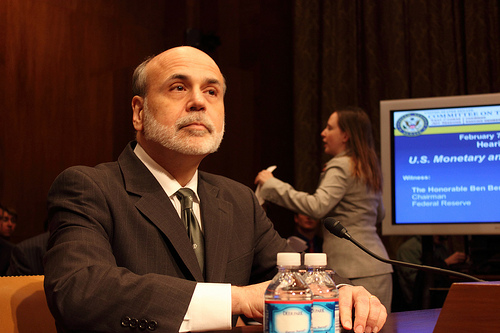
Editor’s note: Below is the text of a speech given by Mr. Fisher at the Conservative Political Action Conference (CPAC) on March 16th, 2013:
Thank you, Chad [Barth].
I gather you all held a big dinner last night in honor of Ronald Reagan. My father-in-law, the late Congressman Jim Collins, was a good friend of the president. During the Convention of 1984, which was held in Dallas, Congressman Collins invited me to join a handful of family and friends to visit with Mr. Reagan. The president was in remarkable form and, great raconteur that he was, told this story:
Paddy McCoy, a hardworking Irish farmer, received a visit from an inspector of the Department for Works and Pensions.
“Tell me about your staff,” he asked of Paddy.
“Well,” said Paddy, “there are the farmhands. I pay them 240 a week and they have use of a free cottage.”
“That’s good,” said the inspector.
“Then there’s the housekeeper. She gets 190 a week, along with free board and lodging.”
“That sounds fine,” said the inspector.
Paddy went on to tell of the rest of his staff, all to the pleasant reception of the inspector. And then he said, “Now, there’s also the half-wit. He bears all the risk of this business, works a 16-hour day, nets about 25 a week when all is said and done, but takes down a bottle of whiskey and, as a special treat, occasionally gets to sleep with my wife.”
“That’s disgraceful, Paddy,” said the inspector. “I need to interview the half-wit.”
“Well,” said Paddy, “you’re lookin’ at him.”
Paddy McCoy was no half-wit: He simply represented the plight of the hardworking souls who want to be left alone to labor day and night to put food on the table for their employees and family. They ask for no advantage, just a level playing field and fair treatment. I am here today to speak of the plight of hardworking Main Street bankers who simply want to be given a level playing field and fair treatment in competing with megabanks.
Chad, the last time I spoke to an audience here in the nation’s capital, I was introduced by a descendant of the iconic patriot Patrick Henry.
In one of Patrick Henry’s greatest speeches, he noted that, “Different men often see the same subject in different lights.” And then he went on to appeal to all perspectives to do right: “This is no time for ceremony,” he said, for it “… is one of awful moment to this country.”
The great patriot was, of course, addressing the injustice of operating under the thumb of the British Crown. This morning, I am going to address what I consider the injustice of operating our economy under the thumb of financial institutions that are so large they are considered “too big to fail” (TBTF).
I will argue that these institutions operate under a privileged status that exacts an unfair tax upon the American people.
I will argue that they represent not only a threat to financial stability but to fair and open competition, that they are the practitioners …read more
Source: FULL ARTICLE at Western Journalism

A group of poachers last week massacred 89 elephants in one night near the town of Ganba in southern Chad, the World Wildlife Fund (WWF) said in a statement Tuesday. …read more
Source: FULL ARTICLE at Phys.org


