Tag Archives: Brookings Institution

Get Ready For The All-Hail-Hillary Movies

By Breaking News

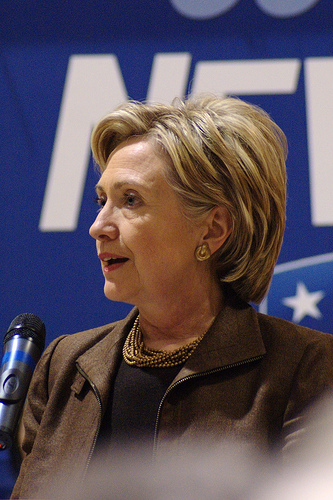
Hillary Clinton speech 9 SC Get Ready for the All Hail Hillary Movies

I wasn’t surprised to learn that sometime before the 2016 election, NBC will be releasing a four-hour miniseries about Hillary Clinton starring Academy Award nominee Diane Lane. What did surprise me was that the series will cover none of her life before the Monica Lewinsky scandal, which took place five years into her husband’s second term as president and when Hillary was already 51 years old. It’s as if her first half-century will be airbrushed away, along with the many scandals that dogged her in those decades.

While the series will still have a lot of ground to cover — impeachment and the “vast right-wing conspiracy” she suspected, her successful 2000 Senate race, her loss to Barack Obama in the 2008 primaries, her time as secretary of state and her role in the Benghazi debacle — it’s striking that so much rich material will be excluded even before footage is discarded on the cutting-room floor.

Just consider what we’ll be missing.

Health-Care Gate: In 1997, federal judge Royce Lamberth levied $286,000 in sanctions against Bill Clinton’s administration for “running amok” in a “cover-up” of Hillary Clinton’s health-care task force. The scandal began when deputy White House counsel Vincent Foster made contradictory assertions about the first lady’s job status, in an attempt to keep the work of the task force secret. Foster later committed suicide, and a Secret Service agent saw Hillary Clinton’s chief of staff, Margaret Williams, carry boxes of papers out of Foster’s office before investigators showed up to seal it.

Read More at National Review . By John Fund.

Photo Credit: marcn Creative Commons

…read more

Source: FULL ARTICLE at Western Journalism

The Deceptive Appeal of the Responsibility to Protect | The National Interest Blog

By Dave Robbins

The Working Group on the Responsibility to Protect, a panel of impressive foreign-policy figures convened jointly by the U.S. Institute of Peace, the Brookings Institution and the U.S. Holocaust Memorial Museum, has just released its final report to much fanfare. Read More: The Deceptive Appeal of the Responsibility to Protect | The National Interest Blog.

The post The Deceptive Appeal of the Responsibility to Protect | The National Interest Blog appeared first on Endtime Ministries | End Of The Age | Irvin Baxter.

…read more

Source: Endtime Ministries

Brookings Analysts Say New Medicare Rule Sets Dangerous Precedent By Undermining Doctors

By Matthew Herper

This guest post was written by Dr. Kavita Patel and John Rother. Patel is managing director for clinical transformation and delivery at the Engelberg Center for Health Care Reform at the Brookings Institution and a practicing primary care internist. She also served in the Obama Administration as director of policy for the Office of Intergovernmental Affairs and Public Engagement in the White House. Rother is the President and CEO of the National Coalition on Health Care, a coalition of major businesses, labor unions, insurers, providers, state based benefit programs, and consumers promoting an affordable, sustainable, and fair health system. Previously, he served as Executive Vice President for Policy, Strategy, and International Affairs at AARP. …read more

Source: FULL ARTICLE at Forbes Health

Hillary Clinton Book Expected In 2014

By Breaking News

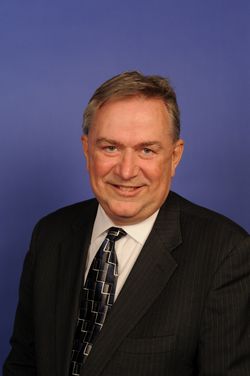
Steve Stockman official portrait Congressman moves to automatically kill Senate gun ban

NEW YORK— Former Secretary of State Hillary Rodham Clinton has a book deal.

She is working on a memoir and policy book about her years as secretary of state, Simon & Schuster told The Associated Press. The book has yet to be titled and is tentatively scheduled for June 2014. Financial terms weren’t disclosed. Clinton reportedly received $8 million for the 2003 memoir, “Living History,” also published by Simon & Schuster.

Hillary Clinton’s extraordinary public service has given her a unique perspective on recent history and the challenges we face,” Jonathan Karp, president and publisher of the Simon & Schuster Publishing Group and the book’s editor, said in a statement Thursday. “This will be the ultimate book for people who are interested in world affairs and America’s place in the world today.”

By launching her book tour in June 2014, Clinton will travel the country as Democrats work to recapture the House in the fall midterm elections. Her itinerary will be closely scrutinized for any signs she may run for president in 2016 — any book tour events in early voting states like Iowa, New Hampshire and South Carolina would receive broad attention.

As with “Living History,” Clinton was represented by Washington attorney Robert Barnett, who has handled deals for President Barack Obama and Clinton’s husband, former President Bill Clinton. Karp previously served as editor for another Barnett client, Sen. Edward M. Kennedy, and his memoir “True Compass.”

Read More at OfficialWire . By Hillel Italie.

Photo Credit: US Embassy New Zealand Creative Commons

…read more

Source: FULL ARTICLE at Western Journalism

10 Flabbergasting Costs of America's Obesity Epidemic

By Keith Speights, The Motley Fool

Filed under:

Obesity is costing us big time. Three times more Americans are obese now than were in 1960. Six times more Americans are now extremely obese than a half-century ago. Unfortunately, everyone is paying for this obesity epidemic. How much? Here are 10 flabbergasting numbers related to the costs of obesity.

1. $190 billion — That’s the amount of added medical costs every year that are estimated to stem from obesity-related problems. This total amounts to nearly 21% of total U.S. health care expenditures.  

2. 105% — According to a study conducted by the Brookings Institution, this is the increased amount that obese Americans pay for prescription drugs compared to individuals who aren’t obese.

3. $3.4 billion — Call this the cost of the laws of physics. Cars burn around 938 million gallons of gasoline per year more than they would if Americans weighed what they did in 1960. At the current average U.S. gasoline cost of $3.64 per gallon, that adds up to $3.4 billion per year. 

4. $164 billion — The Society of Actuaries estimates that U.S. employers lose this amount in productivity annually due to obesity-related issues with employees. 

5. $6.4 billion — Every year this amount is estimated to be lost due to employee absenteeism related to obesity

6. $1 billion —  Another laws of physics annual cost. U.S. airlines consume an extra 350 million gallons of fuel per year due to overweight passengers. At an average jet fuel cost of $2.87 per gallon, those dollars add up. 

7. $14.3 billion — This is how much childhood obesity costs the U.S. each year, according to a published study from the Brookings Institution

8. $62 billion — Medicare and Medicaid spend nearly this amount every year on obesity-related costs. Of course, this really means that taxpayers spend this amount. 

9. $66 billionColumbia University researchers say that if current trends don’t change, obesity-related annual medical costs in the U.S. could increase this amount by 2030 — on top of current expenditures. 

10. $580 billion — The Robert Wood Johnson Foundation predicts that annual economic productivity loss due to obesity could hit this staggering amount by 2030 unless the current situation changes. 

Tipping the scales
Unfortunately, things are getting worse. Just look at the best state in the U.S. when it comes to obesity. Colorado’s adult obesity rate in 1995 was 13.9%. The worst state, Mississippi, had a rate of 19.4%. Fast-forward the clock to today. Colorado is still the best. However, the state’s adult obesity rate now stands at 20.7% — higher than the worst state less than two decades ago.

Is there any good news that could tip the scales in the battle against obesity? Thankfully, yes. Many states have taken action by implementing legislation that could help, including school programs that target better nutrition.

Wellness programs show the potential to reduce obesity — and they’re cost-effective. Studies have found that employers can save up to $6 per person for …read more

Source: FULL ARTICLE at DailyFinance

China punishes North Korea for nuclear tests as US asks for more

China is trying to punish ally North Korea for its nuclear and missile tests, stepping up inspections of North Korean-bound cargo in a calibrated effort to send a message of Chinese pique without further provoking a testy Pyongyang government.

Freight handlers and trading companies at ports and cities near the North Korean border complain of more rigorous inspections and surprise checks that are raising the costs to doing business with an often unpredictable North Korea. Machinery, luxury goods and daily necessities such as rice and cooking oil are among the targeted products, the companies said, and business is suffering.

“Some business orders we don’t dare take. We don’t dare do that business because we fear that after the orders are taken, we will end up unable to ship them,” said a Mr. Hu, an executive with Dalian Fast International Logistics Co. in the northeastern port city of Dalian, across the Yellow Sea from the North Korean port of Nampo. Hu said the company’s business is off by as much as 20 percent this year.

North Korea‘s economic lifeline, China is showing signs of getting tough with an impoverished neighbor it has long supported with trade, aid and diplomatic protection for fear of setting off a collapse.

The moves to crimp, but not cut off trade with North Korea come as Beijing falls under increased scrutiny to enforce new U.N. sanctions passed after last month’s nuclear test, Pyongyang’s third. Targeted in the sanctions are the bank financing and bulk smuggling of cash that could assist North Korea‘s nuclear and missile programs as well as the luxury goods that sustain the ruling elite around leader Kim Jong Un. Pyongyang has reacted with fury and threatening rhetoric against South Korea and the U.S.

U.S. officials in Beijing for two days of talks to lobby China on enforcement said Friday that they were heartened by Chinese expressions of resolve. Spurring Beijing to cooperate, the U.S. officials said, is a concern that North Korean behavior had begun threatening China‘s interests in a region vital to its economic and security.

“There’s reason to believe the Chinese are looking at the threat in a real way,” Treasury Undersecretary David Cohen told reporters.

China‘s change of tack with North Korea unlikely foreshadows a total end to Beijing‘s support. For Beijing, North Korea remains a pivotal strategic buffer between China and a U.S.-allied South Korea, and Chinese leaders worry that too much pressure could upend an already fragile North Korean economy and cause the Kim government to collapse, leaving Beijing with a security headache and possible refugee crisis.

But North Korea watchers said between blind support and complete abandonment there’s much Beijing is doing and can do to try to rein in Pyongyang.

“We have to get away from the binary thinking that either they support North Korea or they pull the plug. That’s not the way the world works,” said Jonathan Pollack of the Brookings Institution, a Washington think-tank. “The interesting thing is not what happens at the UN but what happens beneath the radar in terms …read more
Source: FULL ARTICLE at Fox World News

White House Announces New Coordinator for Defense Policy, Countering Weapons of Mass Destruction, and Arms Control

By The White House

Today, National Security Advisor Tom Donilon announced that Special Assistant to the President and Senior Director for European Affairs Elizabeth Sherwood-Randall will be moving to a new position on the National Security Staff as the White House Coordinator for Defense Policy, Countering Weapons of Mass Destruction, and Arms Control. She will take up her duties on April 8.

National Security Advisor Donilon said, “As one of the President’s closest advisors for the past four years, Liz’s leadership and advice have been instrumental as we have successfully strengthened our alliances and partnerships across Europe, helped to revitalize NATO, and worked with Europe to advance the President’s global agenda. Liz brings deep expertise and a track record of accomplishment in defense issues and in proliferation prevention. The President will look to her to bring significant energy and capability to his second term as we pursue the ambitious goals he set forth in his Prague speech in 2009 and prepare our military to defend the American people and our allies against the threats we face today and in the future.”

During the Clinton Administration, Dr. Sherwood-Randall served as Deputy Assistant Secretary of Defense for Russia, Ukraine, and Eurasia, where she played a central role in the denuclearization of Ukraine, Kazakhstan, and Belarus. She has also held positions at Harvard University, Stanford University, the Council on Foreign Relations, and the Brookings Institution, and previously served as the Chief Foreign Affairs and Defense Policy Advisor to Senator Joseph R. Biden, Jr.

…read more
Source: White House Press Office

Peter Blair Henry: How America Can Bounce Back From The Economic Crisis

By Dan Schawbel, Contributor

I spoke to Peter Blair Henry, who is the Dean of the Stern School of Business at NYU, about his new book “Turnaround: Third World Lessons for First World Growth”. Before taking this position in January 2010, he was the Konosuke Matsushita Professor of International Economics at Stanford, where he was a faculty scholar, the Associate Director of the Center for Global Business and the Economy at Stanford’s business school, and a Senior Fellow at the Stanford Institute for Economic Policy Research. He served as a member of the Obama transition team and is a member of the President’s Commission on White House Fellowships. He is also a board member at the National Bureau of Economic Research, a member of the Board of Directors of Kraft Foods, a nonresident Senior Fellow at the Brookings Institution, and a member of the Council on Foreign Relations. …read more
Source: FULL ARTICLE at Forbes Latest

White House Announces New Coordinator for the Middle East, North Africa, and the Gulf Region

By The White House

Today, National Security Advisor Tom Donilon announced that Philip Gordon will be joining the National Security Staff as Special Assistant to the President and White House Coordinator for the Middle East, North Africa, and the Gulf Region. He will take up his duties beginning on March 11.

National Security Advisor Donilon said, “Phil has been a key member of President Obama’s foreign policy team for the past four years and his work with our European Allies and partners has been indispensable in helping us to formulate policy and address issues around the globe, including Libya, Syria and Iran. His work on international security, international economics and European and Middle Eastern Affairs make him the perfect person to coordinate our policy in this time of great challenge and opportunity in the Middle East, North Africa and the Gulf. His appointment further strengthens a superb team that includes Puneet Talwar, Special Assistant to the President and Senior Director for the Gulf States, Iran and Iraq, and Prem Kumar, Acting Senior Director for the Middle East and North Africa.”

Since May 2009, Dr. Gordon has served as Assistant Secretary of State for European and Eurasian Affairs. As Assistant Secretary he was responsible for U.S. policy with regard to 50 countries in Europe and Eurasia as well as NATO, the EU and the OSCE. Prior to joining the Administration, Dr. Gordon was a senior foreign policy advisor to the 2008 presidential campaign of then-Senator Barack Obama, and served as: a Senior Fellow at the Brookings Institution in Washington, DC; Director for European Affairs at the National Security Council under President Bill Clinton; and a Senior Fellow at the International Institute for Strategic Studies, London.

He has a Ph.D. and M.A. in international relations from Johns Hopkins University School of Advanced International Studies (SAIS) and a B.A. from Ohio University.

…read more
Source: White House Press Office

Al Qaeda tipsheet on how to avoid drones found in Mali

One of the last things the bearded fighters did before leaving this city was to drive to the market where traders lay their carpets out in the sand.

The Al Qaeda extremists bypassed the brightly colored, high-end synthetic floor coverings and stopped their pickup truck in front of a man selling more modest mats woven from desert grass, priced at $1.40 apiece. There they bought two bales of 25 mats each, and asked him to bundle them on top of the car, along with a stack of sticks.

“It’s the first time someone has bought such a large amount,” said the mat seller, Leitny Cisse al-Djoumat. “They didn’t explain why they wanted so many.”

Military officials can tell why: The fighters are stretching the mats across the tops of their cars on poles to form natural carports, so that drones cannot detect them from the air.

The instruction to camouflage cars is one of 22 tips on how to avoid drones, listed on a document left behind by the Islamic extremists as they fled northern Mali from a French military intervention last month. A Xeroxed copy of the document, which was first published on a jihadist forum two years ago, was found by The Associated Press in a manila envelope on the floor of a building here occupied by Al Qaeda of the Islamic Maghreb.

The tipsheet reflects how Al Qaeda‘s chapter in North Africa anticipated a military intervention that would make use of drones, as the battleground in the war on terror worldwide is shifting from boots on the ground to unmanned planes in the air. The presence of the document in Mali, first authored by a Yemeni, also shows the coordination between Al Qaeda chapters, which security experts have called a source of increasing concern.

“This new document… shows we are no longer dealing with an isolated local problem, but with an enemy which is reaching across continents to share advice,” said Bruce Riedel, a 30-year veteran of the CIA, now the director of the Intelligence Project at the Brookings Institution.

The tips in the document range from the broad (No. 7, hide from being directly or indirectly spotted, especially at night) to the specific (No 18, formation of fake gatherings, for example by using dolls and statues placed outside false ditches to mislead the enemy.) The use of the mats appears to be a West African twist on No. 3, which advises camouflaging the tops of cars and the roofs of buildings, possibly by spreading reflective glass.

While some of the tips are outdated or far-fetched, taken together, they suggest the Islamists in Mali are responding to the threat of drones with sound, common-sense advice that may help them to melt into the desert in between attacks, leaving barely a trace.

“These are not dumb techniques. It shows that they are acting pretty astutely,” said Col. Cedric Leighton, a 26-year-veteran of the United States Air Force, who helped set up the Predator drone program, which later tracked Usama bin Laden in Afghanistan. “What it does is, …read more
Source: FULL ARTICLE at Fox World News
North Korea's defiant nuclear test could test ally China's patience

North Korea‘s nuclear test Tuesday could push China to take a tougher stance against its longtime ally.

Beijing had earlier signaled a growing unhappiness with Pyongyang by agreeing to tightened U.N. sanctions after North Korea launched a rocket in December, surprising China watchers with its unusually tough line, which prompted harsh criticism from Pyongyang.

And while China isn’t expected to abandon its communist neighbor, it appears to be reassessing ties a year after new North Korean leader Kim Jong Un took office. The question is for how long China, itself under new leader Xi Jinping, will continue to back North Korea‘s nettlesome policies.

“Perhaps Kim Jong Un thinks Xi Jinping will indulge him. Perhaps he’s in for a surprise,” said Richard Bush, Director of the Center for Northeast Asian Policy Studies at the Brookings Institution in Washington D.C.

The Foreign Ministry did not immediately respond to faxed requests for comment on Tuesday, a public holiday in China marking the Lunar New Year.

China‘s state broadcaster reported on the earthquake that was the first indication that North Korea might have conducted a test. CCTV quoted residents living along the North Korean border in Jilin province as saying they felt the ground shaking for about one minute around the time the quake hit. North Korea later confirmed carrying out the test.

China is feeling spurned by Kim. Although China welcomed his ascension after his father died in December 2011 and maintained flows of aid and investment, Kim has ignored China‘s interests in a stable neighborhood with his two rocket launches and nuclear test plan. North Korea announced last month it would conduct a test to protest the toughened U.N. sanctions.

“At the start, China gave him a warm welcome and, I think, some aid. But we got no gratitude. They take us for granted,” said Jin Canrong, an international affairs expert at Renmin University in Beijing. “China tried to get closer to him, but it was not successful. China has become very disappointed.”

Yet Beijing also sees Pyongyang as a crucial buffer against U.S. troops based in South Korea and Japan. It also deeply fears a regime collapse could send swarms of refugees across its border. For those reasons, Beijing is unlikely to cut Pyongyang adrift, even if it pushes North Korea harder to end its nuclear provocations and reform its broken-down economy.

China‘s not ready to turn the support to North Korea switch to `off’ at this stage,” said Roger Cavazos, a North Korea watcher at the Nautilus Institute for Security and Sustainability.

North Korea‘s apparent reluctance to reform its economy ranks among Beijing‘s biggest frustrations, and the thorny nature of the bilateral relationship is on show along the frigid Yalu River, which forms part of the border Chinese troops crossed to rescue North Korean forces during the 1950-53 Korean War.

Last week, ahead of the Lunar New Year holiday, dozens of North Korean trucks lined up at a customs checkpoint in the northeastern Chinese border city of Dandong, loaded with bags of rice, cooking oil, cheap electronics and other daily items …read more
Source: FULL ARTICLE at Fox World News

China's patience with North Korea wearing thin

China‘s patience with North Korea is wearing thin, and a widely-expected nuclear test by the latter could bring that frustration to a head.

Beijing signaled its growing unhappiness by agreeing to tightened U.N. sanctions after North Korea launched a rocket in December, surprising China watchers with its unusually tough line, which prompted harsh criticism from Pyongyang.

And while China isn’t expected to abandon its communist neighbor, it appears to be reassessing ties a year after new North Korean leader Kim Jong Un took office. The question is for how long China, itself under new leader Xi Jinping, will continue to back North Korea‘s nettlesome policies.

“Perhaps Kim Jong Un thinks Xi Jinping will indulge him. Perhaps he’s in for a surprise,” said Richard Bush, Director of the Center for Northeast Asian Policy Studies at the Brookings Institution in Washington D.C.

China is feeling spurned by Kim. Although China welcomed his ascension after his father died in December 2011 and maintained flows of aid and investment, Kim has ignored China‘s interests in a stable neighborhood with his two rocket launches and nuclear test plan. North Korea announced last month it would conduct a test to protest the toughened U.N. sanctions.

“At the start, China gave him a warm welcome and, I think, some aid. But we got no gratitude. They take us for granted,” said Jin Canrong, an international affairs expert at Renmin University in Beijing. “China tried to get closer to him, but it was not successful. China has become very disappointed.”

Yet Beijing also sees Pyongyang as a crucial buffer against U.S. troops based in South Korea and Japan. It also deeply fears a regime collapse could send swarms of refugees across its border. For those reasons, Beijing is unlikely to cut Pyongyang adrift, even if it pushes North Korea harder to end its nuclear provocations and reform its broken-down economy.

China‘s not ready to turn the support to North Korea switch to ‘off’ at this stage,” said Roger Cavazos, a North Korea watcher at the Nautilus Institute for Security and Sustainability.

North Korea‘s apparent reluctance to reform its economy ranks among Beijing‘s biggest frustrations, and the thorny nature of the bilateral relationship is on show along the frigid Yalu River, which forms part of the border Chinese troops crossed to rescue North Korean forces during the 1950-53 Korean War.

…read more
Source: FULL ARTICLE at Fox World News

NKorean uranium nuclear test would raise stakes

As North Korea warns that it plans its third nuclear test since 2006, outside governments and analysts are trying to determine a crucial question: Just what will Pyongyang’s scientists explode?

The last two tests are believed to have been of plutonium devices, but the next logical step for Pyongyang’s ambitious nuclear program could be to conduct a highly enriched uranium explosion. That would be a major accomplishment for North Korea — and a worrying development that would raise already high stakes for the United States and its allies.

Here’s why:

EASY TO HIDE:

Nuclear bombs can be produced with highly enriched uranium or plutonium. North Korea is believed to have exploded plutonium devices in the two tests it has conducted so far, in 2006 and 2009.

Uranium bombs worry Washington and North Korea‘s neighbors because plants making highly enriched uranium are much easier to hide than plutonium facilities. The latter are larger and generate more heat than uranium enrichment plants, making them simpler for outsiders to monitor and for satellites to detect.

Uranium can be enriched for use in bombs by using centrifuges that can be operated almost anywhere: in small factories or even in tunnels and caves. They can be spread around the country out of sight of nuclear inspectors. And it would take a relatively small amount of highly enriched uranium to build a simple bomb similar to the one dropped on Hiroshima at the end of World War II.

“A uranium test would be a big deal because a centrifuge plant is much easier to conceal than a plutonium reactor, which is practically impossible to hide,” said Daniel Pinkston, a Seoul-based expert on North Korea with the International Crisis Group think tank.

It is also simpler in some ways to build a nuclear bomb with highly enriched uranium than one with plutonium.

“While a plutonium bomb requires the assembly of a complicated weapons system to deal with pre-detonation issues, a HEU bomb is relatively easy to construct,” Harvard physicist Hui Zhang wrote in an analysis for the Bulletin of the Atomic Scientists. “Moreover, unlike plutonium, HEU poses no significant health hazards during the construction phase because of its low level of radiation.”

Scientist and nuclear expert Siegfried Hecker said plutonium is considered better for building small warheads, which North Korea is believed to be attempting to develop so it can threaten the U.S. with long-range nuclear-tipped missiles.

“Switching to HEU at this point actually increases the technical challenge” for North Korean scientists to build miniaturized nuclear warheads, James Acton, a physicist at the Carnegie Endowment for International Peace, said in an email.

It’s not clear whether North Korea has made bomb-grade uranium. But Pyongyang confirmed long-held worries that it was enriching uranium in late 2010, when it showed foreign experts a facility at its well-known Yongbyon nuclear reactor site. Analysts strongly suspect Pyongyang has other uranium enrichment facilities, and it is feared that hidden plants could be producing large amounts of weapons-grade uranium.

EASY TO DIG UP:

North Korea says the program is for peaceful, energy-generating purposes. But while uranium enriched to low levels is used in power reactors, centrifuges can also be made to enrich uranium to the high levels needed for bombs.

North Korea apparently decided a few years ago to focus on highly enriched uranium rather than plutonium, Acton said. That’s probably because its leaders realized that “with a given amount of investment, it could produce more bombs-worth of HEU than plutonium,” he said.

North Korea has large deposits of uranium ore, and is far less able to acquire plutonium.

Hecker estimated that Pyongyang has only 24 to 42 kilograms of plutonium — enough for perhaps four to eight rudimentary bombs similar to the plutonium weapon used on Nagasaki in World War II. It does not appear to making more; its plutonium reactor north of Pyongyang was shut down during disarmament negotiations.

“It’s only logical that it would now test an HEU device, since that would be most helpful for designing its future arsenal,” Acton said, though he didn’t exclude the possibility of a plutonium test.

Acton, Hecker and other analysts have raised the possibility that North Korea may try to test both plutonium and uranium devices simultaneously.

AN OPEN SECRET:

Even as Pyongyang negotiated with the world to scrap its plutonium efforts in the latest round of nuclear disarmament talks, which began in 2003 and were last held in late 2008, its scientists were apparently working on a secret uranium program.

Outsiders have long raised suspicions of such a program.

James Kelly, a U.S. envoy during the George W. Bush administration, confronted North Korean officials with claims about uranium enrichment during a 2002 visit to Pyongyang, sparking a nuclear crisis that led to the creation of the now-stalled six-nation disarmament talks.

Former Pakistani President Pervez Musharraf has said North Korea worked with A.Q. Khan, creator of Pakistan‘s atomic bomb, to obtain the centrifuges needed for uranium enrichment before Khan’s operation was disrupted in 2003. Musharraf wrote in his 2006 memoir that Khan transferred nearly two dozen centrifuges to North Korea.

In 2007, then-U.S. nuclear envoy Christopher Hill said Washington knew Pyongyang had bought equipment only used for uranium enrichment.

North Korea finally revealed at least some of its uranium enrichment equipment in November 2010 to visiting Americans. They saw what appeared to be a sophisticated, modern uranium enrichment facility with 2,000 centrifuges.

Pyongyang’s long pursuit of uranium “is the clearest indication that North Korea intends to retain and enhance its nuclear weapons capabilities and has no intention to give up these capabilities,” according to Jonathan Pollack, a North Korea analyst at the Brookings Institution think tank in Washington. “That is the fundamental fact that all outside powers must address.”

Source: FULL ARTICLE at Fox World News