Tag Archives: Xi Jinping

Chinese court executes man without telling family

A Chinese court executed a man on death row without notifying his family and then defended its actions, sparking anger online, local media reported Sunday.

Businessman Zeng Chengjie was executed on Friday after being sentenced in 2011 for fraud and illegal fundraising involving 3.4 billion yuan ($550 million), the Beijing Times said.

His daughter complained on Sina Weibo, a Twitter-like microblog, that the court in Changsha, central China, had not notified the family beforehand.

The court replied via its own weibo account on Saturday, saying “the law does not have a written rule that convicts being executed must see their families”.

It generated criticism online with users criticising the “ice cold” response.

The court then apologised in a second post, stressing that its weibo account managers had not studied the law closely enough, the Beijing Times said.

It later issued a third post, saying Zeng was given the option to see his family but declined.

Weibo users dismissed the court’s replies — which along with all other posts on its account were later blocked from view — though netizens and media outlets shared images of the earlier statements.

Zeng’s daughter said: “Everything they did should be condemned”.

The controversy comes as China’s leaders have called for a more credible judiciary, even although it is largely beholden to political authorities.

“China has a long, long way to go before it has the rule of law,” weibo user Lin Lvshan wrote.

Xu Xin, a law professor, wrote online that the court had “severely damaged public confidence in judicial bodies”.

China’s new leader Xi Jinping has called in recent months for a fairer and more transparent judiciary that delivers justice for ordinary Chinese.

But China’s courts lack independence. Many cases, particularly sensitive ones, are decided beforehand by political authorities, and the country’s conviction rate is high.

…read more

Source: FULL ARTICLE at Fox World News

China's First Lady was crooner to troops who suppressed Tiananmen Square protests

By hnn

BEIJING — A photo of China’s new first lady Peng Liyuan in younger days, singing to martial-law troops following the 1989 bloody military crackdown on pro-democracy protesters, flickered across Chinese cyberspace this week.

It was swiftly scrubbed from China’s Internet before it could generate discussion online. But the image — seen and shared by outside observers — revived a memory the leadership prefers to suppress and shows one of the challenges in presenting Peng on the world stage as the softer side of China.

The country has no recent precedent for the role of first lady, and also faces a tricky balance at home. The leadership wants Peng to show the human side of the new No. 1 leader, Xi Jinping, while not exposing too many perks of the elite. And it must balance popular support for the first couple with an acute wariness of personality cults that could skew the consensus rule among the Chinese Communist Party’s top leaders….

Source:
WaPo

Source URL:
http://www.washingtonpost.com/world/asia_pacific/past-as-military-propaganda-singer-complicates-first-ladys-emergence-as-icon-of-softer-china/2013/03/28/a160f422-9793-11e2-b5b4-b63027b499de_story.html

Date:
3-28-13

…read more
Source: FULL ARTICLE at History News Network – George Mason University

Dateline China: Xi Making All the Right Moves…for China

By Doug Guthrie, Contributor China’s Xi Jinping arrived to much fanfare last November when he was named secretary general of the Communist Party of China and chairman of the Central Military Commission. Recently, he added another title to that impressive list when the National Party Congress elected him president of China. It was more ritual than election, but it marked the official start of his leadership. …read more
Source: FULL ARTICLE at Forbes Latest

Putin: Russia, China help build new world order

Ahead of a visit by China‘s new president, Russian President Vladimir Putin says the Moscow-Beijing partnership is aiding global security and helping create a fairer world order.

Russia is Xi Jinping‘s first foreign destination as China‘s president. Xi’s talks with Putin on Friday are set to focus on oil and gas as China seeks to secure new energy resources to fuel its growing economy.

Putin told the ITAR-Tass news agency that Xi’s choice of Moscow for the trip underscored a “special character of strategic partnership” between the two former Cold War rivals.

He added that Russia and China have set an example of a “balanced and pragmatic approach” to international crises — an apparent reference to their lockstep opposition to U.N. sanctions against Syrian President Bashar Assad‘s regime.

…read more
Source: FULL ARTICLE at Fox World News

China lawmakers know their role: 'Raise our hands'

This is how delegates in China‘s highest legislature voted for president: Each was handed a ballot with one name on it: Xi Jinping. Each dropped it in a box.

No mark was required to vote for Xi, so calling it rubberstamping suggests more work than there actually was.

Any suspense about the choice of the Communist Party leadership was lifted in November, when Xi became the ruling party’s general secretary. Thursday’s vote by nearly 3,000 delegates for Xi’s more ceremonial title of president was a mere ritual.

“Our job is to raise our hands,” said Han Deyun, a lawyer from the megacity of Chongqing and one of the few National People’s Congress delegates who are not from the ruling party. Delegates like him are supposed to add a veneer of democracy to the proceedings.

“We raise our hands to give them legitimacy,” he said in an interview with The Associated Press.

This week, in a legislative session that ends on Sunday, the Communist Party is wrapping up the country’s once-a-decade power transition through what it calls election for key government posts. In reality, there’s usually one candidate per slot, all candidates are trusted insiders and the results are pre-determined.

The highly choreographed congress serves a practical purpose, installing a president, a premier and other ministers who will oversee the world’s second-largest economy. But some Chinese are tired of what they see as a hollow affair.

“The voting by the national delegates is completely meaningless,” Chinese writer Murong Xuecun said in an interview. “If they were replaced with 3,000 machines, the result would be the same. On this matter, the free will of those deputies has been taken away.”

The comments by Han and Murong Xuecun reflect a growing tendency among a minority of Chinese — especially intellectuals and often in online forums — to openly call out the contradictions in the country’s political system.

“It could be a vocal minority,” said David Bandurski, a researcher with Hong Kong-based China Media Project. “But still, that’s important.”

To be sure, many Chinese and most NPC delegates still toe the party line, as spread by a propaganda machine that touts China‘s election system as a true, advanced democracy, and presses …read more
Source: FULL ARTICLE at Fox World News

China's new leadership faces myriad challenges

China named the Communist Party‘s No. 2 leader, Li Keqiang, premier on Friday as a long-orchestrated leadership transition nears its end, leaving the new leaders to confront uneven economic growth, unbridled corruption and a severely befouled environment that are stirring public discontent.

The rubber-stamp legislature endorsed Li for the post, voting 2,940 in favor, with three opposed and six abstaining. A day earlier, the legislature similarly appointed Xi Jinping to the ceremonial post of president, making him China‘s pre-eminent leader following his ascent last November to head the Communist Party and the military.

Though the outcome of the legislative session was a foregone conclusion, it’s the result of years of fractious behind-the-scenes bargaining. They hail from different factions: Li Keqiang (pronounced lee kuh chahng) is a protege of the now-retired President Hu Jintao while Xi Jinping (pronounced shee jin ping) is the son of a revolutionary veteran with backing among party elders.

After Li’s selection was announced, he and Xi shook hands and smiled for photographers in the Great Hall of the People. Evidence of their and their patrons’ ability to forge consensus will be seen Saturday when appointments to the Cabinet and other top government posts are announced.

The son of a revolutionary veteran, Xi cuts an authoritative figure with a confidence and congeniality that was lacking in his predecessor, the aloof and stiff Hu. New Premier Li, from a low-level officials’ household, has appeared to be a cautious administrator, like Hu, and has not been associated with particular policies on his rise.

Together, Xi and Li now steer a rising global power beset with many domestic challenges that will test their leadership. Chief among them are a sputtering economy that’s overly dominated by powerful state industries.

Chinese leaders want to nurture self-sustaining growth based on domestic consumption and reducing reliance on exports and investment. Consumer spending is rising, but not as fast as Beijing wants, which has forced the government to support an economic recovery with spending on public works and investment by state companies.

“If the official data is to be believed, China has been moving in the wrong direction for the past decade — towards ‘more investment, less consumption,'” wrote Standard Chartered economists Stephen Green and Wei Li in a research note. “This could create problems.”

An increasingly vocal Chinese public is expressing impatience with the government‘s unfulfilled promises to curb …read more
Source: FULL ARTICLE at Fox World News

Xi Jinping Formally Elected President Of China By National Legislature

By The Huffington Post News Editors

BEIJING — China’s new leader Xi Jinping capped his rise to the top Thursday by adding the largely ceremonial title of president, though he will need more time and cautious maneuvering to consolidate his power and build support from a public that is increasingly clamoring for change.

The elevation of Xi to the presidency by the rubberstamp national legislature gave him the last of the three titles held by his predecessor, Hu Jintao. The move was expected after Xi was named head of the Communist Party and chairman of its military, positions of true power, last November in a once-a-decade handover to a new group of leaders that has been years in the making.

Read More…
More on China

…read more
Source: FULL ARTICLE at Huffington Post

China names Xi Jinping new president after he took helm of Communist Party

China‘s new leader Xi Jinping capped his rise to the top Thursday by adding the largely ceremonial title of president, though he will need more time and cautious maneuvering to consolidate his power and build support from a public that is increasingly clamoring for change.

The elevation of Xi to the presidency by the rubberstamp national legislature gave him the last of the three titles held by his predecessor, Hu Jintao. The move was expected after Xi was named head of the Communist Party and chairman of its military, positions of true power, last November in a once-a-decade handover to a new group of leaders that has been years in the making.

Despite being formally in charge, it will be within the party’s top ranks — in which powerful people are often divided by patronage, ideology or financial interests — that Xi will find the biggest challenges.

This will be doubly so if he follows through on his pledge to tackle the endemic graft he has pinpointed as detrimental to the party’s survival, said Willy Lam, a China politics watcher at the Chinese University of Hong Kong. Graft is deeply ingrained in the party’s patronage-based culture and those at the top — many of whose families have benefited from their political connections — are believed to be most resistant to anti-corruption measures that diminish their prerogatives.

“He has to walk a fine line,” Lam said. “If he were really serious about going after senior cadres, he might establish his authority within the rank and file, however, that would also jeopardize his relationship with the power blocs and with the holders of vested interests.”

Xi’s accession marks only the second orderly transfer of power in more than six decades of communist rule. He was the only candidate for president in Thursday’s vote. Delegates to the country’s figurehead parliament, the National People’s Congress, voted 2,952-to-1 for Xi in balloting that amounts to a political ritual echoing the decisions of the party leadership. Three delegates abstained.

Named vice president in a vote of 2,839-80 was Li Yuanchao, a liberal-minded reformer and a close ally for decades of Hu. The move breaks with the practice of recent years, because Li is not in the party’s seven-member ruling inner sanctum, but is seen as a concession to Hu’s lingering influence and as a reward to a capable if not wholly popular official.

Xi takes charge at a time when the public is looking for leadership that can address sputtering economic growth and mounting anger over widespread graft, high-handed officialdom and increasing unfairness. A growth-at-all-costs model that defined the outgoing administration’s era has befouled the country’s air, waterways and soil, adding another serious threat to social stability.

Underlying public unhappiness with the party is a deficit in trust.

“At present, the party and the government have very little public credibility,” said Zhang Ming, a China politics expert at the prestigious Renmin University in Beijing. “The way to regain credibility is to at least show some results, but at this point that can’t be seen and …read more
Source: FULL ARTICLE at Fox World News

China names Xi Jinping president, capping his rise

China‘s new leader Xi Jinping capped his rise to the top Thursday by adding the largely ceremonial title of president, though he will need more time and cautious maneuvering to consolidate his power and build support from a public that is increasingly clamoring for change.

The elevation of Xi to the presidency by the rubberstamp national legislature gave him the last of the three titles held by his predecessor, Hu Jintao. The move was expected after Xi was named head of the Communist Party and chairman of its military, positions of true power, last November in a once-a-decade handover to a new group of leaders that has been years in the making.

Despite being formally in charge, it will be within the party’s top ranks — in which powerful people are often divided by patronage, ideology or financial interests — that Xi will find the biggest challenges.

This will be doubly so if he follows through on his pledge to tackle the endemic graft he has pinpointed as detrimental to the party’s survival, said Willy Lam, a China politics watcher at the Chinese University of Hong Kong. Graft is deeply ingrained in the party’s patronage-based culture and those at the top — many of whose families have benefited from their political connections — are believed to be most resistant to anti-corruption measures that diminish their prerogatives.

“He has to walk a fine line,” Lam said. “If he were really serious about going after senior cadres, he might establish his authority within the rank and file, however, that would also jeopardize his relationship with the power blocs and with the holders of vested interests.”

Xi’s accession marks only the second orderly transfer of power in more than six decades of communist rule. He was the only candidate for president in Thursday’s vote. Delegates to the country’s figurehead parliament, the National People’s Congress, voted 2,952-to-1 for Xi in balloting that amounts to a political ritual echoing the decisions of the party leadership. Three delegates abstained.

Named vice president in a vote of 2,839-80 was Li Yuanchao, a liberal-minded reformer and a close ally for decades of Hu. The move breaks with the practice of recent years, because Li is not in the party’s seven-member ruling inner sanctum, but is seen as a concession to Hu’s lingering influence and as a reward to a capable if not wholly popular official.

Xi takes charge at a …read more
Source: FULL ARTICLE at Fox World News

No more lobster: China's new leader bans official extravagance

Pack your own toothbrush. That’s an order.

Military officials descending on China‘s capital for the country’s biggest political event have been told to bring their own toiletries. Legislative delegates arriving at the airport no longer find welcoming teams of photogenic, waving women, and police aren’t clearing their way through Beijing‘s traffic snarl. Once feted with banquets of lobster and sharks’ fin, the delegates now serve themselves at drab buffets, and stay in guesthouses instead of luxury hotels.

China‘s new leader Xi Jinping has declared a ban on official extravagance, and that has banished some of the usual pomp from this year’s gathering of the National People’s Congress.

“There’s basically no more meat for breakfast now. We’re eating at buffets as if we’re traveling with an ordinary travel agency that has put us up in a hotel with no star grading,” said Han Deyun, a lawyer from the southwestern megacity of Chongqing who has been a congress delegate for 11 years. “Lunch and dinners are also simpler, four or five hot dishes, but no seafood.”

Wednesday’s lunch offerings for the Beijing delegation featured the relatively mundane egg drop soup, boiled corn, stir fried bokchoy and sticky rice with pork.

Widespread corruption and the lavish lifestyles of officials — who often drive luxury cars, own multiple villas and send their children to elite foreign universities — have become the biggest sources of public anger at the ruling Communist Party. They serve as a stark reminder of the unfairness of a system that’s enabled a small fraction of people with high-level political connections to accrue massive wealth.

Xi has seized on the issue since coming into office in November, warning that the graft threatens the party’s survival and ordering officials to cut out the excesses. He’s been depicted as eating only four dishes and a soup — down from the usual 10-or-so-course meals — while on inspection tours and has demanded that elaborate welcoming ceremonies and traffic diversions be done away with.

The anti-graft fight also featured prominently in the government work report that opened the congress Tuesday, though it remains to be seen whether Xi’s administration can introduce deeper, more painful, reforms such as requiring all levels of China‘s officialdom to declare personal assets.

To be sure, canceling banquets and the like are not the solution to rooting out graft. Anti-corruption experts point out that correcting official profligacy attacks only the symptoms.

And not all delegates to this week’s legislative meetings have even gotten the anti-extravagance message: Some high-profile members of a government advisory panel — mostly celebrities or entrepreneurs — have been spotted toting designer handbags and belts. But it’s a lot less than in recent years, when volunteer corruption hunters on the Internet posted photos of officials wearing Swiss watches and designer suits.

Daniel Wu, a luxury aficionado who studies photos of officials and their watches, said that while he’s seen fewer fancy timepieces this year, he attributes it to image-minding rather than any willingness to sacrifice the perks of power.

“Everyone has become more cautious and Xi’s new government keeps …read more
Source: FULL ARTICLE at Fox World News

China defends booming military spending as official budget numbers to be released

China defended its booming military spending on Monday, saying vast investments in the armed forces have contributed to global peace and stability, despite concerns among the U.S. and Beijing‘s Asian neighbors over sharpening territorial disputes.

However, in a break with previous years, no figure for this year’s defense budget was presented at a news conference held Monday on the eve of the annual legislative session. Spokeswoman Fu Ying said the figure would appear in the overall budget to be released Tuesday.

Approving the budget is among the key tasks of the session, which this year will see new leaders placed into top government positions after they were elevated at November’s Communist Party congress.

Party leader Xi Jinping will take over from Hu Jintao as president, as well as head of the government‘s Central Military Commission, as part of China‘s once-a-decade power transition. In addition, the session approves top Cabinet appointments such as the defense minister.

Chinese defense spending has grown substantially each year for more than two decades, and last year rose 11.2 percent to $106.4 billion an increase of about 67 billion.

Only the United States spends more on defense.

Fu said China maintained a strictly defensive military posture and cited U.N. peacekeeping missions and anti-piracy patrols in the Gulf of Aden as examples of Beijing‘s contribution to world peace and stability.

“As such a big country, China‘s inability to ensure its own security would not be good news for the world,” Fu said. “Our strengthening of our defense is to defend ourselves, to defend security and peace, and not to threaten other countries.”

This year’s legislative session comes amid a continuing standoff with Japan over disputed islands in the East China Sea. Ships and planes from both sides have repeatedly confronted each other in the area, and another Chinese spokesman on Saturday warned that Japan would bear full responsibility for any “unintended clashes.”

China‘s feuds with Vietnam and the Philippines over territory in the South China Sea have also flared periodically in recent months, while Beijing has been unnerved by the U.S. military’s renewed focus on the Asia-Pacific, including plans to station marines in northern Australia on training missions.

Outside concerns about China‘s military buildup are also fed by doubts over the reliability of the defense budget figure, which is widely believed to exclude foreign military purchases and other items. In its 2012 report on China‘s military, the Pentagon estimated actual spending of $120-180 billion in 2011, well above China‘s official figure that year of $91.5 billion.

…read more
Source: FULL ARTICLE at Fox World News

China's Xi rides high hopes ahead of presidency

China’s fawning state media, jaded social media commentators and even poor corn and cabbage farmers agree: new Communist Party chief Xi Jinping is off to a good start.

General Secretary Xi doesn’t put on any airs. He talks like an ordinary person,” said 69-year-old farmer Tang Rongbin. The new leader visited Tang’s sparse, dimly lit farmhouse in Luotuowan village in December, bearing gifts of cooking oil, flour and a blanket.

Xi has styled himself as an economic reformer, an iron-fisted graft-buster, a staunch nationalist and a no-frills man-of-the-people — spurring expectations for change. But as he prepares to be appointed to the largely ceremonial role of president, pressure will be growing on him to deliver.

China faces rising public anger over endemic corruption, a burgeoning rich-poor gap and the degradation of the country’s air, soil and waterways. Slower economic growth and territorial disputes, especially with Japan, add to the tension.

Mounting protests over environmental issues, land seizures and high-handed officialdom point to the underlying social discontent. Days before the party conclave that brought Xi to power last year, thousands of protesters in the eastern city of Ningbo faced off against riot police outside government offices, calling on officials to halt a chemical plant expansion.

“I think there has been a revolution of rising expectations,” said Willy Lam, an expert on party politics at the Chinese University of Hong Kong. “People realize they can get away with even demonstrations to make their wills heard.”

Joining the clamor for change this past week were dozens of prominent intellectuals who signed a petition urging the government to ratify an international treaty on protecting human rights and the rule of law. Also, a group of about 100 parents of gays and lesbians urged lawmakers to legalize gay marriage.

The annual session of the national legislature, which opens Tuesday, will complete the once-a-decade handover of power that began in November when Xi and his leadership team assumed the top positions in the Communist Party. At the end of the session, Xi will take the title of president from his predecessor as party leader, Hu Jintao.

Deputies to the National People’s Congress will rubber-stamp appointments of senior officials to the State Council, or Cabinet, to run economic and foreign policies; Xi and other party leaders finalized the personnel changes at a closed-door meeting last week. The No. 2 party leader, Li …read more
Source: FULL ARTICLE at Fox World News

Buchanan: Has The Bell Begun To Toll For China?

By Breaking News

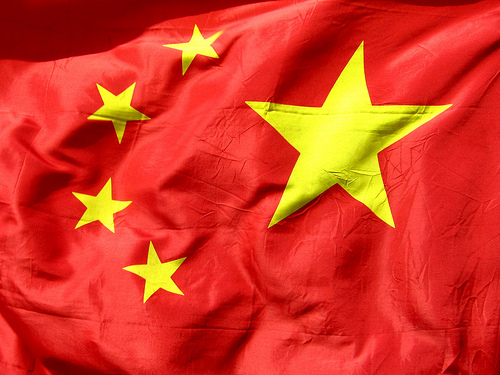
Red China flag SC Buchanan: Has The Bell Begun To Toll For China?

“Why did the Soviet Union disintegrate? Why did the Soviet Communist Party collapse? An important reason was that their ideals and convictions wavered,” China’s new leader, Xi Jinping, told a closed meeting of party elite in Guangdong province.

“Finally all it took was one quiet word from Gorbachev to declare the dissolution of the Soviet Communist Party, and a great party was gone,” said Xi, according to notes obtained by The New York Times.

“Everyone is talking about reform, but in fact everyone has a fear of reform,” said Chinese historian Ma Jong. “The question is: Can society be kept under control while you go forward? That is the test.” That is indeed the test.

What is it that gives a party its legitimacy, its right to rule? What holds a nation together when its cradle faith, its founding ideology, has been abandoned by both elites and the people? That is China’s coming crisis.

With victory in the civil war with the Nationalists in 1949, Mao claimed to have liberated China from both Japanese imperialists and Western colonialists, and restored her dignity. “China has stood up!” he said.

Read More at Human Events . By Patrick J. Buchanan.

Photo Credit: johntrathome Creative Commons

…read more
Source: FULL ARTICLE at Western Journalism

China's Xi affirms goal of unification with Taiwan

Chinese leader Xi Jinping reaffirmed China‘s desire to bring Taiwan under its control in a meeting Monday in Beijing with the honorary head of the island’s ruling party.

Xi told Nationalist Party honorary chairman Lien Chan that he and other Communist Party leaders who took office in November will continue developing ties and pushing for unification with the island, which China claims as part of its territory.

“The new Communist Party ruling collective will continue to push forward the peaceful development of relations between the two sides and advance the cause of peaceful unification,” Xi told Lien at their meeting at the Great Hall of the People, the seat of the legislature in downtown Beijing.

Xi promised to “pragmatically forge ahead” to achieve new achievements in relations that would enrich residents on both sides of the Taiwan Strait.

The meeting is the first between Xi and a leading Taiwanese politician since Xi assumed the party leadership in November, and comes weeks before he assumes the title of state president at the legislature’s annual session.

Taiwan split from China amid civil war in 1949. The Nationalists, once bitter Cold War rivals with China‘s Communists, support eventual unification with mainland China but only under a still-to-be negotiated framework.

Recent years have seen considerable growth in relations following years of tensions under former President Chen Shui-bian, whose Democratic Progressive Party advocated the island’s formal independence — something China threatens to prevent by military force.

China dropped its threatening rhetoric following the election of Nationalist president Ma Ying-jeou in 2008. Trade, tourism and private visits have grown exponentially since then.

Lien, who lost two presidential races to Chen, is a former premier and vice president whose 2005 visit to China was seen as a breakthrough in long-frosty relations between the Communists and Nationalists.

Xi, considered a relative hardliner on Taiwan and China‘s external relations, has considerable experience on Taiwan economic issues dating from his time as a leader in coastal provinces facing the island. Some observers have speculated he may push for political talks between the sides, starting with the exchange of permanent liaison offices.

…read more
Source: FULL ARTICLE at Fox World News

No Retirement For China's Banking Elite Amid Political Transition

By Simon Montlake, Forbes Staff

China‘s once-in-a-decade leadership change has put a new generation in the hot seat, led by Xi Jinping, the president-in-waiting. Last November‘s congress elevated Xi to secretary-general of the ruling party and head of a seven-man central committee. China‘s new cabinet will be confirmed next month when the national legislature meets in Beijing, with President Hu Jintao keeping a low profile as he prepares to hand over the baton to his successor. But not everyone is going quietly into the night. Central bank governor Zhou Xiaochuan, who recently turned 65 and had been expected to step down after the legislative meeting, now appears to be digging in his heels. Reuters reported Wednesday that Zhou would avoid compulsory retirement by joining a national consultative assembly as a vice-chairman, which would put him at a sufficient rank to hold onto the governor’s post. The South China Morning Post also cited unnamed sources as saying that Zhou would stay on and wanted to see through his financial reform agenda, including the gradual unshackling of China‘s currency. He has served as governor of the People’s Bank of China since 2002. …read more
Source: FULL ARTICLE at Forbes Latest

North Korea's defiant nuclear test could test ally China's patience

North Korea‘s nuclear test Tuesday could push China to take a tougher stance against its longtime ally.

Beijing had earlier signaled a growing unhappiness with Pyongyang by agreeing to tightened U.N. sanctions after North Korea launched a rocket in December, surprising China watchers with its unusually tough line, which prompted harsh criticism from Pyongyang.

And while China isn’t expected to abandon its communist neighbor, it appears to be reassessing ties a year after new North Korean leader Kim Jong Un took office. The question is for how long China, itself under new leader Xi Jinping, will continue to back North Korea‘s nettlesome policies.

“Perhaps Kim Jong Un thinks Xi Jinping will indulge him. Perhaps he’s in for a surprise,” said Richard Bush, Director of the Center for Northeast Asian Policy Studies at the Brookings Institution in Washington D.C.

The Foreign Ministry did not immediately respond to faxed requests for comment on Tuesday, a public holiday in China marking the Lunar New Year.

China‘s state broadcaster reported on the earthquake that was the first indication that North Korea might have conducted a test. CCTV quoted residents living along the North Korean border in Jilin province as saying they felt the ground shaking for about one minute around the time the quake hit. North Korea later confirmed carrying out the test.

China is feeling spurned by Kim. Although China welcomed his ascension after his father died in December 2011 and maintained flows of aid and investment, Kim has ignored China‘s interests in a stable neighborhood with his two rocket launches and nuclear test plan. North Korea announced last month it would conduct a test to protest the toughened U.N. sanctions.

“At the start, China gave him a warm welcome and, I think, some aid. But we got no gratitude. They take us for granted,” said Jin Canrong, an international affairs expert at Renmin University in Beijing. “China tried to get closer to him, but it was not successful. China has become very disappointed.”

Yet Beijing also sees Pyongyang as a crucial buffer against U.S. troops based in South Korea and Japan. It also deeply fears a regime collapse could send swarms of refugees across its border. For those reasons, Beijing is unlikely to cut Pyongyang adrift, even if it pushes North Korea harder to end its nuclear provocations and reform its broken-down economy.

China‘s not ready to turn the support to North Korea switch to `off’ at this stage,” said Roger Cavazos, a North Korea watcher at the Nautilus Institute for Security and Sustainability.

North Korea‘s apparent reluctance to reform its economy ranks among Beijing‘s biggest frustrations, and the thorny nature of the bilateral relationship is on show along the frigid Yalu River, which forms part of the border Chinese troops crossed to rescue North Korean forces during the 1950-53 Korean War.

Last week, ahead of the Lunar New Year holiday, dozens of North Korean trucks lined up at a customs checkpoint in the northeastern Chinese border city of Dandong, loaded with bags of rice, cooking oil, cheap electronics and other daily items …read more
Source: FULL ARTICLE at Fox World News

China's patience with North Korea wearing thin

China‘s patience with North Korea is wearing thin, and a widely-expected nuclear test by the latter could bring that frustration to a head.

Beijing signaled its growing unhappiness by agreeing to tightened U.N. sanctions after North Korea launched a rocket in December, surprising China watchers with its unusually tough line, which prompted harsh criticism from Pyongyang.

And while China isn’t expected to abandon its communist neighbor, it appears to be reassessing ties a year after new North Korean leader Kim Jong Un took office. The question is for how long China, itself under new leader Xi Jinping, will continue to back North Korea‘s nettlesome policies.

“Perhaps Kim Jong Un thinks Xi Jinping will indulge him. Perhaps he’s in for a surprise,” said Richard Bush, Director of the Center for Northeast Asian Policy Studies at the Brookings Institution in Washington D.C.

China is feeling spurned by Kim. Although China welcomed his ascension after his father died in December 2011 and maintained flows of aid and investment, Kim has ignored China‘s interests in a stable neighborhood with his two rocket launches and nuclear test plan. North Korea announced last month it would conduct a test to protest the toughened U.N. sanctions.

“At the start, China gave him a warm welcome and, I think, some aid. But we got no gratitude. They take us for granted,” said Jin Canrong, an international affairs expert at Renmin University in Beijing. “China tried to get closer to him, but it was not successful. China has become very disappointed.”

Yet Beijing also sees Pyongyang as a crucial buffer against U.S. troops based in South Korea and Japan. It also deeply fears a regime collapse could send swarms of refugees across its border. For those reasons, Beijing is unlikely to cut Pyongyang adrift, even if it pushes North Korea harder to end its nuclear provocations and reform its broken-down economy.

China‘s not ready to turn the support to North Korea switch to ‘off’ at this stage,” said Roger Cavazos, a North Korea watcher at the Nautilus Institute for Security and Sustainability.

North Korea‘s apparent reluctance to reform its economy ranks among Beijing‘s biggest frustrations, and the thorny nature of the bilateral relationship is on show along the frigid Yalu River, which forms part of the border Chinese troops crossed to rescue North Korean forces during the 1950-53 Korean War.

…read more
Source: FULL ARTICLE at Fox World News

AP Exclusive: Mysterious China blogger comes out

A mysterious blogger who tantalized fellow Chinese with a microblog of candid snapshots of China‘s new leader apparently taken by citizen journalists during Xi Jinping‘s travels has revealed his identity — and it’s not what many expected.

Contrary to speculation that Xi’s own team had created the microblog as a way of humanizing the new leader, Zhang Hongming has told The Associated Press in an exclusive interview that he is a college dropout and migrant worker.

He says he is a genuine fan of Xi, but that he also wants to make him more accessible to the general public. Zhang says Chinese leaders generally appear out of reach for the masses, and that he wants to portray Xi as an ordinary person.

…read more
Source: FULL ARTICLE at Fox World News

Leaner New Year: China tones down the celebrations

Chinese New Year is traditionally a time for colorful and noisy displays of fireworks and generous-portioned banquets. This year, the festivities are likely to be a little more austere.

Authorities have asked the public to set off fewer fireworks in Beijing to reduce pollution, a new anti-extravagance drive has prompted government officials and state-owned companies to cancel their banquets at high-end hotels and a campaign against food waste is leading to half-portions in restaurants. Even ads for luxury goods were pulled ahead of Saturday’s opening of the seven-day holiday.

All in all, China‘s Lunar New Year is shaping up to be a Leaner New Year.

Following a call by China‘s new leader Xi Jinping to oppose waste, a village just outside of Beijing has canceled its mass dumpling festival that has been taking place for the past 30 years, involves hundreds of people and draws television cameras.

“We planned to make about 50,000 dumplings and now the plan has been canceled,” said a woman surnamed Wang from the Liuminying village committee’s tourist office. “The flour bought for the festival will be distributed to the villagers and we haven’t bought the meat yet. Villagers will make dumplings at home with their own families and they may feel like this is a new experience for them since they haven’t done it that way for such a long time.”

Xi recently called for people to be more frugal and oppose waste following a “Clear the Plate” campaign by netizens calling on restaurants to cut down food waste. His words sparked off an anti-food waste campaign in state media.

He had already launched a crackdown against government extravagance, aimed at cutting corruption by officials, which angers the general public and threatens the party’s hold on power.

Capsulizing the new mood, the website of the Global Times newspaper on Wednesday displayed a photo of workers at a power supply company in eastern Anhui province writing “cut down waste” slogans on balloons.

The Beijing city government together with catering associations announced that the restaurant industry should reduce food waste. Ten companies with a total of 749 branches have responded with a plan to offer half-portions and encourage people to take away their leftovers, according to the Beijing News.

A lot of people are already asking for the half portions, …read more
Source: FULL ARTICLE at Fox World News