Tag Archives: Atlantic Power

Can Dead Dividends Deliver Growth?

By Justin Loiseau, The Motley Fool

Filed under:

On Feb. 26, Atlantic Power did something responsible: It slashed its dividend by 66% in the name of long-term value creation. But the aftermath of its actions shows that dividend haircuts don’t always look good. Let’s dig deeper into Atlantic’s decision, peek into the past for some much-needed perspective, and check out the new look of another company that recently received a dividend haircut.

Dawn of the dead dividend
As part of Atlantic’s Q4 2012 earnings report, CEO Barry Welch noted that the utility’s board decided that “it was in the best interest of the company and its shareholders to establish a lower and more sustainable Payout Ratio that balances yield and growth and is at the same time consistent with our outlook for current and prospective projects under a range of scenarios.”

In real numbers, this announcement represented a 66% drop in the company’s monthly payouts, a move that would’ve devastated the utility’s 10.2% dividend yield – if not for its share price plummet.

Source: AT data by YCharts

But the cause for Atlantic’s crash didn’t come from its dividend cut. Since its announcement, three law firms have filed class action lawsuits against Atlantic for intentionally misleading investors about its current cash flow and the impending deadlines of key contracts. If the allegations turn out to be true, Atlantic’s dividend cut did nothing more than reveal an inevitable bald spot in the company’s receding hairline.

Look into the past…
Dividend cuts happen. This Friday, TECO Energy will celebrate the 10th anniversary of the day it dropped its dividend 46% to balance its books and refocus on its core businesses.

CEO Robert Fagan’s carefully chosen words during the announcement hint at what he was sure would amount to Wall Street suicide: “We recognize the greatest impact will be on our retail shareholders. However, we believe that it will be in their interests longer-term… This level of dividend positions TECO Energy to return to… long-term dividend growth when conditions improve.” But since that fateful day, TECO‘s stock has stepped up a respectable 66% alongside its growing dividend.

Source: TE data by YCharts

Beware the “Stairmaster”
Companies must decide for themselves whether dividends are the best method to return value to shareholders. Although it’s never inherently a bad idea to boost dividends, investors should beware the “Stairmaster.” A dividend stock that flexes its financial muscles quarter after quarter may not be using its resources intelligently. Step after step, Southern Company and Xcel Energy have pushed their dividends higher through the worst of the Great Recession.

Source: SO Dividend data by YCharts

Atlantic, why can’t you be more like Exelon?
Atlantic wasn’t the only utility to dice up its dividend this past quarter. Exelon announced on Feb. 7 that it would slash its dividend by a whopping 40%. But unlike Atlantic, Exelon’s stock has risen 12% since its earnings report. That’s 4.5 percentage …read more

Source: FULL ARTICLE at DailyFinance

2 More Law Firms File Suit Against Atlantic Power

By Justin Loiseau, The Motley Fool

Filed under:

Two more law firms announced last week that they’re suing Atlantic Power on charges of misleading or failing to disclose key business factors to its shareholders. The Law Offices of Todd M. Garber (announced by Reuters; link opens in PDF) and Levi & Korsinky say they find concern with management’s statements on the sustainability of Atlantic’s dividend, and on the future prospects of soon-to-expire contracts.

Although both firms allege longer-term mismanagement, the foundation of both companies’ complaints stems from Atlantic’s Feb. 26 earnings report, when the utility announced that it would reduce its dividend by 66%.

Both firms are filing suits on behalf of investors who purchased Atlantic stock between July 23, 2010, and March 4 of this year. These latest lawsuits follow a similar filing by Robins Geller Rudman & Dowd on March 14.

The article 2 More Law Firms File Suit Against Atlantic Power originally appeared on Fool.com.


Fool contributor Justin Loiseau has no position in any stocks mentionedbut he does use electricity. You can follow him on Twitter, @TMFJLo, and on Motley Fool CAPS, @TMFJLo.


…read more

Source: FULL ARTICLE at DailyFinance

SHAREHOLDER ALERT: Levi & Korsinsky Notifies Investors with Losses on Their Investment in Atlantic P

By Business Wirevia The Motley Fool

Filed under:

SHAREHOLDER ALERT: Levi & Korsinsky Notifies Investors with Losses on Their Investment in Atlantic Power of Class Action Lawsuit and the Deadline of May 7, 2013 to Seek a Lead Plaintiff Position

NEW YORK–(BUSINESS WIRE)– Levi & Korsinsky announces that a class action lawsuit has been commenced in the United States District Court for the District of Massachusetts on behalf of investors who purchased Atlantic Power Corporation (“Atlantic Power” or the “Company”) (TSX:ATP) (NYS: AT) stock between July 23, 2010 through March 4, 2013.

For more information, click here:http://zlk.9nl.com/atlantic-power-at/.

The complaint alleges that during the class period, defendants issued materially false and misleading statements regarding the Company’s business practices and financial results. Specifically, the complaint alleges that: (a) cash flows the Company was using to pay a dividend payout were being funded by revenues derived from companies Atlantic Power was spending millions of dollars to acquire; (b) Atlantic Power‘s losses from operations were mounting, jeopardizing the Company’s ability to maintain the outsized dividend payment; and (c) defendants knew that many of the Company’s project contracts were scheduled to expire over the course of 2013, meaning cash flows from those projects would be substantially lower after those contracts ended, and unbeknownst to investors, Atlantic Power was not replacing those contracts-further jeopardizing its ability to maintain the outsized dividend payment that was supporting its stock price. As a result of defendants’ materially false and misleading statements, Atlantic Power common stock traded at artificially inflated prices throughout the class period.

If you suffered a loss in Atlantic Power you have until May 7, 2013to request that the Court appoint you as lead plaintiff. Your ability to share in any recovery doesn’t require that you serve as a lead plaintiff. To obtain additional information, contact Joseph E. Levi, Esq. either via email at jlevi@zlk.com or by telephone at (877) 363-5972, or visit http://zlk.9nl.com/atlantic-power-at/.

Levi & Korsinsky is a national firm with offices in New York, New Jersey, and Washington D.C. The firm has extensive expertise in prosecuting securities litigation involving financial fraud, representing investors throughout the nation in securities and shareholder lawsuits. Attorney advertising. Prior results do not guarantee similar outcomes.

Levi & Korsinsky, LLP
Joseph Levi, Esq.
Eduard Korsinsky, Esq.
Tel: 212-363-7500
Toll Free: 877-363-5972
Fax: 866-367-6510
www.zlk.com

KEYWORDS:   United States  North America  New York

INDUSTRY KEYWORDS:

…read more

Source: FULL ARTICLE at DailyFinance

4 Stocks That Have Gotten Cut in Half in 2013

By Dan Caplinger, The Motley Fool

Filed under:

The stock market is trading at record highs, and many investors have cashed in on the market‘s gains. But some companies haven’t let their shareholders join the party, as they’ve not only missed out on the big bull rally but have seen their shares plunge precipitously.

Let’s take a closer look at four stocks that have lost half their value so far this year and the reasons for their respective downfalls.

Atlantic Power — down 54%
Atlantic Power is a small utility that has gotten a lot bigger in recent years by making numerous acquisitions. Until last month, the company was a favorite among dividend investors, with monthly payouts that equated to a 10% yield for shareholders adding onto solid share performance from late 2009 through the third quarter of last year. But the cracks started appearing last November, when the utility missed quarterly estimates on earnings and sales.

At the beginning of March, the real plunge came for Atlantic Power, as it not only reported a much worse loss than in the previous year but also slashed its dividend by two-thirds. That sent the shares down 30% in a single week and left many dividend investors with far less reason to hold the stock. The lesson: Some lucrative dividends are simply unsustainable.

Cliffs Natural Resources  — down 53%
Cliffs Natural specializes in iron ore and metallurgical coal production. During better times, those key components for steelmaking were in high demand, allowing Cliffs to pay a high dividend and enjoy strong growth prospects. But in February, Cliffs shares lost a quarter of their value in a single day as Cliffs cut its quarterly dividend payout by more than 75%, citing extremely weak prices for both iron ore and coal. It also announced secondary share offerings — never a pretty sight after a big share-price plunge.

Now, many analysts doubt whether iron ore prices will bounce back anytime soon. Meanwhile, Cliffs’ operational challenges could continue to weigh on the company’s financials going forward. With the company planning to idle an iron-pellet plant in Quebec by the end of this quarter, Cliffs doesn’t seem to foresee better times in the immediate future.

Allied Nevada Gold — down 52%
Unlike Cliffs and Atlantic Power, Allied Nevada has fallen fairly steadily during 2013. In mid-January, the precious-metals miner gave 2013 guidance for 225,000 to 250,000 ounces of gold and 1.5 million to 1.8 million silver ounces at its Hycroft mine, implying solid growth but still disappointing investors, who sent shares down 5% after the announcement. The company’s full quarterly report in late February only added to the pessimism, as it increased its capital expenditure estimates.

In general, mining companies have faced high production costs and pressures from stalling gold and silver prices. Allied Nevada‘s 11% drop yesterday alone reflected further declines in precious metals. Until those prices reverse course, Allied Nevada will have trouble bouncing back.

Millennial Media …read more
Source: FULL ARTICLE at DailyFinance
ExxonMobil Wins Either Way With Natural Gas Exports

By Tyler Crowe, The Motley Fool

Filed under:

The funny thing about the natural gas export debate is that both sides are claiming the exact same thing — that they will help create more American jobs and bring down the trade deficit through more exports. So how can we tell which side offers the better argument? Dow Chemical and ExxonMobil , have been two of the most vocal advocates on opposite sides of the debate, and have recently taken a couple of shots across each others’ bows.

What makes this story even more interesting, though, is that ExxonMobil is poised to do well no matter what side wins this debate. Let’s take a look at why these two sides of the argument are claiming the same benefits for the U.S. and how ExxonMobil could come out on top no matter what.

The debate
Thanks to the recent surge in natural gas production, many have debated the merit of exporting liquified natural gas, or LNG. Certainly a market opportunity exists, but is this market opportunity in the best interests of the nation? On the side for exporting LNG is ExxonMobil, which claims that it would spur an even further increase in natural gas production, and in turn create more jobs and lower the country’s trade deficit. Exxon isn’t the only one on this side of the debate, either. Over 17 different sites in the U.S. have been identified as potential locations for LNG export, and 10 of them have gone to the Federal Energy Regualtory Commission for an export license.

As of right now, Cheniere Energy has the only approved license to export to countries that are not members of a free trade agreement. The license allows them to export at a rate of about 2 billion cubic feet per day, or about 3% of the total current U.S. production. While it is difficult to determine how much production would increase if more of these proposed facilities were to come online, certainly we can assume that the percentage of production going to exports would increase significantly.

On the other side of the coin, we have a large base of manufacturers in the U.S. that claim by not exporting natural gas, we would be able to use this advantaged feedstock to power the manufacturing industry in the U.S. This would in turn create American jobs and decrease our trade deficit by exporting finished goods.

Dow Chemical is one of the first companies that comes to mind on this side of the debate because chemical manufacturing has seen some of the most immediate effect from cheap natural gas as a chemical feedstock. Other sectors that also see major advantages from not exporting natural gas are energy intensive endeavors like power generation and aluminum and steel manufacturing.

Atlantic Power generates almost 66% of its power exclusively from natural gas, and the cheaper cost of generating power could potentially inspire power hungry industries to consider the U.S. Also, steelmaker Nucor has plans to resurrect one of its steel mills in Louisiana …read more
Source: FULL ARTICLE at DailyFinance
Atlantic Power Names New COO

By Justin Loiseau, The Motley Fool

Filed under:

Atlantic Power has appointed Edward “Ned” Hall as its new COO, effective April 2. Hall will be joining Atlantic from AES , where he currently serves as COO of Global Generation.

Hall will be responsible for  all of Atlantic Power‘s operations, asset management, environmental health & safety, and engineering functions. He has also been named executive vice president.

“Ned is a great addition to our executive management team, bringing a valuable combination of operational, asset management and development capabilities, senior corporate experience and extensive knowledge and working network within the independent power, utility and infrastructure sectors,” said Atlantic President and CEO Barry Welch in a statement today. “Bringing Ned onboard continues to strengthen our operational focus on optimizing performance of our existing plants and finding synergies among existing and new plants we acquire and build.”

At AES, Hall managed 3,400 employees operating 28,000MW across 20 countries with $6 billion of revenue.. .

The article Atlantic Power Names New COO originally appeared on Fool.com.

Fool contributor Justin Loiseau has no position in any stocks mentioned, but he does use electricity. You can follow him on Twitter, @TMFJLo, and on Motley Fool CAPS, @TMFJLo.


…read more
Source: FULL ARTICLE at DailyFinance

1 Dark Tale of a Dying Dividend

By Justin Loiseau, The Motley Fool

AT Chart

Filed under:

Before March 1, Atlantic Power was at the top of its game, doling out monthly dividends to the tune of 10% a year. Sure, there were skeptics who questioned how a small growth-by-acquisition utility could return that much cash directly back to shareholders, but the truth was this: Atlantic’s dividend knocked every other utilities’ out of the water.

But on March 1, the company reported quarterly earnings and announced a 66% dividend cut, shocking income investors who couldn’t sell their shares fast enough. Atlantic, the company that had pumped profits into their brokerage account month after month, was waving the white flag. Its stock plummeted:

AT data by YCharts.

Atlantic wasn’t the only utility to recently announce a dividend haircut. Exelon sliced its dividend by 40%, ending its 6.8% dividend yield for Q2 2013. But on Feb. 7, the day of the announcement, Exelon’s stock bounced up.

EXC data by YCharts.

Not all dividends are created equal
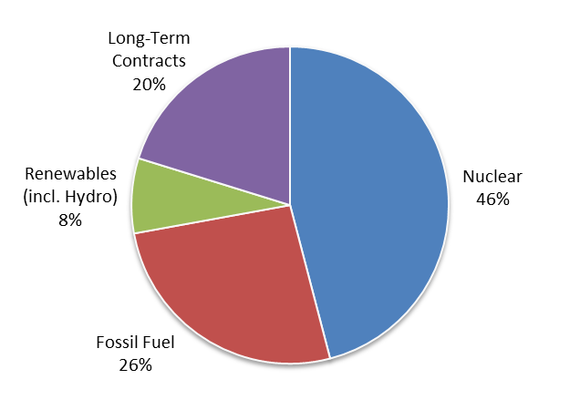
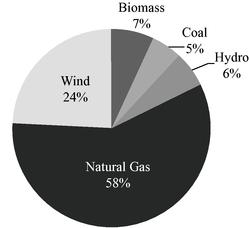
The reason for this mismatch is simple enough: Big dividends do not imply big profits, and Atlantic and Exelon are different companies. Their market caps alone put them in different bullpens, but each utility is in its own unique position. Their energy portfolios are different:

Source: Author; data from 10-K 

Source: Atlantic Power 10-K 

Their sales are headed in opposite directions, even as both utilities have acquired other businesses :

AT Revenue Quarterly Chart

AT Revenue Quarterly data by YCharts.

And, most importantly, each is in a very different debt situation:

EXC Debt to Equity Ratio Chart

EXC Debt to Equity Ratio data by YCharts.

Insult to injury
After Atlantic’s earnings report, I asked readers: Can it get any worse? The short answer: Yes.

As of last week, Atlantic may be in more trouble than even its books let on. Law firm Robins Geller Rudman & Dowd announced last Thursday that it is filing a class action lawsuit against Atlantic over allegedly misleading and/or false statements regarding its business and finances.

In its official complaint, the firm notes that “as the market learned the truth about Atlantic Power‘s mounting losses and its inability to maintain its outsized dividend through a number of misleading financial disclosures between Nov. 7, 2012, and March 4, 2013, more than $1 billion of the company’s market capitalization disappeared.”

These are serious allegations, and only time will tell whether Atlantic is found guilty of cooking its books. But either way, the once picture-perfect story of a darling dividend just grew darker.

Sustainable dividend
Big dividends don’t imply big profits, but they don’t imply big losses, either. Duke Energy‘s 0.23 cash dividend payout ratio ensures that its above-average 4.4% yield should be maintained for years to come, even as it dishes out $12 billion to modernize its aging generation fleet. Likewise, Ameren‘s 4.8% yield is …read more
Source: FULL ARTICLE at DailyFinance

This Dividend Stock Just Chose Natural Gas. Duh.

By Justin Loiseau, The Motley Fool

Filed under:

Atlantic Power just sold off a transmission project to raise cash and funnel funds toward natural gas and renewable generation. “Focusing on ____” is a common theme among utilities as each carves out its own corporate corner, but a bad niche could turn into a bad itch on your portfolio’s profits. Let’s take a look at five utilities’ new-found niches and decide whether their focus will work for your wallet.

Transmission omission
On Monday, Atlantic Power announced that it will pass off its Path 15 transmission project to Duke Energy and American Transmission for $193 million in cash and debt handoffs. The deal is expected to close in Q2 2012 and will help reduce the utility’s $2 billion debt load by around 6.5%.

Atlantic CEO Barry Welch noted that while the project enjoyed “relatively stable cash flow,” his company will be carving out its new niche in renewable and natural gas generation. In 2012, Path 15 revenue clocked in at $31 million, with net income of $5.1 million.

If Welch calculates that consolidation will save Atlantic more than $5 million a year, then the move makes sense. The company already has a major focus on natural gas, and its wind portfolio recently mushroomed with Atlantic’s Ridgeline Energy acquisition. But if the sale is just a quick way to balance books, I’d rather Atlantic kick around in the red to make its return to black more sustainable. Either way, this utility needs all the strategy it can get with a slashed dividend and abysmal Q4 earnings.

Source: Atlantic Power 10-K. 

H2O is a no-go
NextEra Energy
, the nation’s largest renewable-energy producer, kicked out its last hydro assets last week. CEO Armando Pimentel cited resource concentration on greater growth as the primary reason for his company’s decision. Hydropower plays an important part in most major utilities’ generation portfolios, but it accounted for just 2% of NextEra’s generation capacity in 2012. With limited prospects for new hydro facilities and tax credits flowing in for wind and solar, NextEra’s decision gets my stamp of approval.

Source: NextEra 10-K 

Regulation over generation
Ameren
stumbled this quarter as the company reorganizes itself to focus on its regulated division. The utility will exit its generation business in 2013 and take a $1.5 billion to $2 billion non-cash impairment charge to clear its books. While other utilities have poured money into massive modernization projects, Ameren will focus funds on its 2.4 million customers across Missouri and Illinois.

In direct contrast to Atlantic, the company is also investing $2.2 billion over the next four years to upgrade its transmission division. These funds will help keep costs low for its regulated division and should provide steadier income than its aging generation fleet could offer.

Nuclear for the win?
NextEra may be the biggest renewable player around, but Exelon offers the …read more
Source: FULL ARTICLE at DailyFinance

Law Firm Files Class Action Suit Against Atlantic Power

By Justin Loiseau, The Motley Fool

Filed under:

Law firm Robins Geller Rudman & Dowd LLP announced this week that it’s suing Atlantic Power for alleged false and/or misleading statements concerning the utility’s business and finances.

The official complaint (link opens in PDF) charges Atlantic Power with violations of the Securities Exchange Act of 1934 and alleges that the company knowingly supported its 10% payout with unsustainable cash flows even as many of its project contracts were set to expire in 2013.

According to a Robins Geller press release statement, “As the market learned the truth about Atlantic Power‘s mounting losses and its inability to maintain its outsized dividend through a number of misleading financial disclosures between Nov. 7, 2012, and March 4, 2013, more than $1 billion of the company’s market capitalization disappeared.”

The class action suit applies to all Atlantic Power stock purchases between July 23, 2010, and March 4 of this year. As of this writing, Atlantic Power hasn’t publicly responded to the firm’s allegations.

The article Law Firm Files Class Action Suit Against Atlantic Power originally appeared on Fool.com.


Fool contributor Justin Loiseau has no position in any stocks mentionedbut he does use electricity. You can follow him on Twitter, @TMFJLo, and on Motley Fool CAPS, @TMFJLo.

The Motley Fool has no position in any of the stocks mentioned. Try any of our Foolish newsletter services free for 30 days. We Fools don’t all hold the same opinions, but we all believe that considering a diverse range of insights makes us better investors. The Motley Fool has a disclosure policy.

Copyright © 1995 – 2013 The Motley Fool, LLC. All rights reserved. The Motley Fool has a disclosure policy.

(function(c,a){window.mixpanel=a;var b,d,h,e;b=c.createElement(“script”);
b.type=”text/javascript”;b.async=!0;b.src=(“https:”===c.location.protocol?”https:”:”http:”)+
‘//cdn.mxpnl.com/libs/mixpanel-2.2.min.js’;d=c.getElementsByTagName(“script”)[0];
d.parentNode.insertBefore(b,d);a._i=[];a.init=function(b,c,f){function d(a,b){
var c=b.split(“.”);2==c.length&&(a=a[c[0]],b=c[1]);a[b]=function(){a.push([b].concat(
Array.prototype.slice.call(arguments,0)))}}var g=a;”undefined”!==typeof f?g=a[f]=[]:
f=”mixpanel”;g.people=g.people||[];h=[‘disable’,’track’,’track_pageview’,’track_links’,
‘track_forms’,’register’,’register_once’,’unregister’,’identify’,’alias’,’name_tag’,
‘set_config’,’people.set’,’people.increment’];for(e=0;e<h.length;e++)d(g,h[e]);
a._i.push([b,c,f])};a.__SV=1.2;})(document,window.mixpanel||[]);
mixpanel.init("9659875b92ba8fa639ba476aedbb73b9");

function addEvent(obj, evType, fn, useCapture){
if (obj.addEventListener){
obj.addEventListener(evType, fn, useCapture);
return true;
} else if (obj.attachEvent){
var r = obj.attachEvent("on"+evType, fn);
return r;
}
}

addEvent(window, "load", function(){new FoolVisualSciences();})
addEvent(window, "load", function(){new PickAd();})

var themeName = 'dailyfinance.com';
var _gaq = _gaq || [];
_gaq.push(['_setAccount', 'UA-24928199-1']);
_gaq.push(['_trackPageview']);

(function () {

var ga = document.createElement('script');
ga.type = 'text/javascript';
ga.async = true;
ga.src = ('https:' == document.location.protocol ? 'https://ssl' : 'http://www') + '.google-analytics.com/ga.js';

…read more
Source: FULL ARTICLE at DailyFinance

Robbins Geller Rudman &amp; Dowd LLP Announces Expanded Class Period in Class Action Suit against Atlant

By Business Wirevia The Motley Fool

Filed under:

Robbins Geller Rudman & Dowd LLP Announces Expanded Class Period in Class Action Suit against Atlantic Power Corporation

NEW YORK–(BUSINESS WIRE)– Robbins Geller Rudman & Dowd LLP (“Robbins Geller“) (http://www.rgrdlaw.com/cases/atlanticpower/) today announced that a class action has been commenced in the United States District Court for the District of Massachusetts on behalf of purchasers of Atlantic Power Corporation (“Atlantic Power” or the “Company”) (TSX:ATP) (NYS: AT) common stock during an expanded class period from July 23, 2010 through March 4, 2013, inclusive (the “Class Period“).

If you wish to serve as lead plaintiff, you must move the Court no later than 60 days from March 8, 2013. If you wish to discuss this action or have any questions concerning this notice or your rights or interests, please contact plaintiffs’ counsel, Samuel H. Rudman or David A. Rosenfeld of Robbins Geller at 800-449-4900 or 619-231-1058, or via e-mail at djr@rgrdlaw.com. If you are a member of this class, you can view a copy of the complaint as filed or join this class action online at http://www.rgrdlaw.com/cases/atlanticpower/. Any member of the putative class may move the Court to serve as lead plaintiff through counsel of their choice, or may choose to do nothing and remain an absent class member.

The complaint charges Atlantic Power and certain of its officers and directors with violations of the Securities Exchange Act of 1934. Defendant Atlantic Power is a power generation and infrastructure company with a portfolio of assets in the United States and Canada. The Company is engaged in power generation through hydro, natural gas and coal fired power plants.

The complaint alleges that during the Class Period, defendants issued materially false and misleading statements regarding the Company’s business practices and financial results. Specifically, the complaint alleges that: (i) the cash flows the Company was using to pay a 10% dividend payout were being funded by revenues derived from companies Atlantic Power was spending tens of millions of dollars to acquire during the Class Period; (ii) Atlantic Power‘s losses from operations were mounting, jeopardizing the Company’s ability to maintain the outsized dividend payment; and (iii) defendants knew that many of the Company’s project contracts were scheduled to expire over the course of 2013, meaning cash flows from those projects would be substantially lower after those contracts ended, and unbeknownst to investors, Atlantic Power was not replacing those contracts – further jeopardizing its ability to maintain the outsized dividend payment that was supporting its stock price. As a result of defendants’ materially false and misleading …read more
Source: FULL ARTICLE at DailyFinance

5 Superball Stocks

By Rich Smith, The Motley Fool

Filed under:

When stocks fall fast and far, they sometimes set themselves up for remarkable rebounds. The following equities suffered dramatic drops over the past week. With help from the 180,000 members of Motley Fool CAPS, we’ll see whether any of them have the potential to bounce back.

It’s been a while, but thanks to last week’s sell-off, we once again have a chance to stand beneath Mr. Market’s silverware drawer in hopes of snagging a bargain. Let’s meet today’s contenders.

Company

How Far From 52-Week High?

Recent Price

CAPS Rating (out of 5)

Liquidity Services

52%

$32.01

*****

Atlantic Power

63%

$5.43

***

VirnetX Holding

19%

$33.80

*

Direxion Financial Bear 3X

65%

$10.75

*

Direxion Small Cap Bear 3X

61%

$9.54

*

Companies are selected by screening on finviz.com for abrupt 5% or greater price drops last week. Recent price and 52-week-high data provided by finviz.com. CAPS ratings from Motley Fool CAPS.

Five super falls — one superball
What a week. Every day for the past five days, the Dow Jones Industrial Average has gone higher and higher. Four days in a row, we hit four new record, all-time highs. Yet despite all the good news, somehow, more than 1,700 separate stocks actually lost money last week. So what went wrong?

Beginning at the bottom of the list, we find a couple of obvious answers. Direxion Financial Bear 3X and Direxion Small Cap Bear 3X are, respectively, exchange-traded funds that bet heavily on financial stocks and small-cap stocks going down, rather than up. In theory, at least, every time these stocks-as-groups decline one point, the ETFs that bet against them gain three points. So you can imagine what happens when the stocks they’re betting against, instead of declining in price, hit new all-time highs.

Less clear is the case against VirnetX Holding. Two weeks ago, the company won a big court victory  in its patent suit against Apple. The prospect of being able to collect on its $368 million jury verdict should be good news for VirnetX. On the other hand, though, investors may be starting to wonder: Even assuming the company gets to collect its $368 million, what is there to justify the remaining $1.36 billion worth of this profitless, revenue-less company’s market cap? (And if the answer turns out to be “nothing,” then why would you want to own it at this price?)

Next up: Atlantic Power. This one looked more like a Power-outage last week, when its Q4 earnings report featured a big revenue miss, “dismal” earnings, and a halving of the dividend. When a company’s expected to earn only a nickel yet somehow manages to lose $0.45 a share instead, you can’t expect investors to react well to that news — and they didn’t.

But enough of the bad news. For a change …read more
Source: FULL ARTICLE at DailyFinance

Is Hydro Draining Your Portfolio's Profits?

By Justin Loiseau, The Motley Fool

Filed under:

NextEra Energy announced this week that it officially sold off the last of its hydro assets. Once lauded as the clear and clean future of electricity generation, it has had its future recently called into question by economists and environmentalists alike. Let’s take a look at where hydro stands, who’s behind it, and whether hydro-heavy utilities know something NextEra doesn’t.

All dried up
After announcing its intention to sell last December, NextEra emptied its electricity generation bucket of its remaining hydro assets this week. The utility handed off 19 facilities and eight storage reservoirs to Brookfield Renewable Energy Partners, a Canada-based pure-play renewable power platform.

NextEra CEO President and CEO Armando Pimentel called the assets an “attractive portfolio in many respects” but cited generation optimization and concentration of resources as primary reasons for his company’s decision.

NextEra has an eye toward “greater growth potential,” and hydro’s heyday seems to be behind it. The majority of all facilities were built in the 1970s, and generation has remained fairly steady over the past 40 years. In contrast, other renewables, primarily wind and solar, have nearly quadrupled capacity since 1990.

Source: eia.gov.

But there’s no discounting the continued importance of hydropower. It currently comprises 8.2% of total U.S. generation, and a whopping 63% of renewable power.

Source: eia.gov. 

The future of renewables

Looking ahead, hydro is the slow and steady tortoise of renewable energy. From now through 2040, increases in non-hydro renewables are expected to account for 32% of total growth, while hydropower output should continue at current levels.

Source: eia.gov. 

Despite hydropower’s lackluster growth potential, there’s good reason that capacity hasn’t decreased. Most of the “best” sites in the U.S. have been filled, and hydropower offers a “clean” and “steady” source of electricity, with its major capital expenditure days behind it.

The quotation marks are necessary caveats, since some recent analyses of hydropower question the environmentalism of larger dams. A recent Sierra Club position paper supports existing run-of-river dams producing less than 10 MW, but large dams don’t make the cut. If the EPA were to adopt similar views that hydroelectric plants cause ecological damage and significant greenhouse gas emissions from reservoirs, the helping hand of green energy policy might pull back from hydro.

Who’s hanging on to hydro?
Many utilities have small but significant hydro assets that help to keep costs low and steady when water levels are high and other fuel prices take a turn for the worse.

Atlantic Power‘s stock recently plummeted on news of a slashed dividend and dismal quarter, and the company’s counting on renewables to put it back in business. The utility currently generates 5% of its energy from four hydroelectric facilities and expects to keep assets steady as it focuses on solar and wind. Compared with hydro’s limited expansion and capital intensiveness, wind’s production tax credit and solar’s investment tax …read more
Source: FULL ARTICLE at DailyFinance

Atlantic Power Shareholder Alert: Briscoe Law and Powers Taylor Investigate Possible Breaches of Fid

By Business Wirevia The Motley Fool

Filed under:

Atlantic Power Shareholder Alert: Briscoe Law and Powers Taylor Investigate Possible Breaches of Fiduciary Duty by Officers and Directors

DALLAS–(BUSINESS WIRE)– Former United States Securities and Exchange Commission attorney Willie Briscoe, founder of The Briscoe Law Firm, PLLC, and the securities litigation firm of Powers Taylor, LLP announce an investigation into potential violations of federal securities laws by certain officers and directors of Atlantic Power Corporation, Inc. (“Atlantic Power” or “Company”) (NYS: AT) during the period of July 23, 2010 to March 1, 2013 (the “Class Period”).

If you are an affected investor and you want to learn more about the lawsuit or join the action, contact Willie Briscoe at The Briscoe Law Firm, PLLC, (214) 239-4568, or via email at WBriscoe@TheBriscoeLawFirm.com, or Zachary Groover at Powers Taylor, LLP, toll free (877) 728-9607. There is no cost or fee to you.

The investigation centers around allegedly misleading statements regarding the Company’s dividend and the ability to pay that dividend. After the February 28, 2013 announcement of the 65% dividend payment cut the price of Atlantic Power‘s stock plummeted.

“Recent revelations about alleged improper business practices and procedures regarding key aspects of Atlantic Powerbusiness and other misleading financial statements have prompted the firms to investigate possible breaches of fiduciary duties and other violations of state law by Atlantic Power‘s officers and directors. Based on our investigation, we are prepared to pursue litigation to preserve the company and the value of Atlantic Power stock for all shareholders,” said shareholder rights attorney Patrick Powers.

The Briscoe Law Firm, PLLC is a full service business litigation, commercial transaction, and public advocacy firm with more than 20 years of experience in complex litigation and transactional matters.

Powers Taylor, LLP is a boutique litigation law firm that handles a variety of complex business litigation matters, including claims of investor and stockholder fraud, shareholder oppression, shareholder derivative suits, and security class actions.

The Briscoe Law Firm, PLLC
Willie Briscoe, 214-239-4568
WBriscoe@TheBriscoeLawFirm.com
or
Powers Taylor, LLP
Zachary Groover, 877-728-9607

KEYWORDS:   United States  North America  Texas

INDUSTRY KEYWORDS:

The article Atlantic Power Shareholder Alert: Briscoe Law and Powers Taylor Investigate Possible Breaches of …read more
Source: FULL ARTICLE at DailyFinance

Investor Alert: Holzer Holzer &amp; Fistel, LLC Announces Investigation into Atlantic Power Corporation

By Business Wirevia The Motley Fool

Filed under:

Investor Alert: Holzer Holzer & Fistel, LLC Announces Investigation into Atlantic Power Corporation

ATLANTA–(BUSINESS WIRE)– Holzer Holzer & Fistel, LLC is investigating whether Atlantic Power Corporation (“Atlantic Power” or the “Company”) (NYS: AT) and/or certain of its officers complied with the federal securities laws when making statements to investors between July 23, 2010 and March 1, 2013. Specifically, the investigation focuses on statements issued by Atlantic Power during that time regarding the Company’s dividend. On February 28, 2013, Atlantic Power announced that it would be reducing its dividend payment by 65% and that it had adopted a “poison pill” in advance of the disclosure. The price of Atlantic Power‘s stock fell dramatically on the news.

If you purchased Atlantic Power common stock between July 23, 2010 and March 1, 2013 and have questions concerning your legal rights, you are encouraged to contact Holzer Holzer & Fistel, LLC and its attorneys Michael I. Fistel Jr., Esq. or Marshall P. Dees, Esq. via email at mfistel@holzerlaw.com, or mdees@holzerlaw.com, or via toll-free telephone at (888) 508-6832.

Holzer Holzer & Fistel, LLC is an Atlanta, Georgia law firm that dedicates its practice to vigorous representation of shareholders and investors in litigation nationwide, including shareholder class action and derivative litigation. More information about the firm is available through its website, www.holzerlaw.com and upon request from the firm. Holzer Holzer & Fistel, LLC has paid for the dissemination of this promotional communication, and Michael I. Fistel, Jr. is the attorney responsible for its content.

Holzer Holzer & Fistel, LLC
Michael I. Fistel, Jr., Esq.
Marshall P. Dees, Esq.
888-508-6832 (toll-free)
mfistel@holzerlaw.com
mdees@holzerlaw.com

KEYWORDS:   United States  North America  Georgia

INDUSTRY KEYWORDS:

The article Investor Alert: Holzer Holzer & Fistel, LLC Announces Investigation into Atlantic Power Corporation originally appeared on Fool.com.

Try any of our Foolish newsletter services free for 30 days. We Fools may not all hold the same opinions, but we all believe that considering a diverse range of insights makes us better investors. The Motley Fool has a disclosure policy.

Copyright © 1995 – 2013 The Motley Fool, LLC. All rights reserved. The Motley Fool has a disclosure policy.

(function(c,a){window.mixpanel=a;var b,d,h,e;b=c.createElement(“script”);
b.type=”text/javascript”;b.async=!0;b.src=(“https:”===c.location.protocol?”https:”:”http:”)+
‘//cdn.mxpnl.com/libs/mixpanel-2.2.min.js’;d=c.getElementsByTagName(“script”)[0];
d.parentNode.insertBefore(b,d);a._i=[];a.init=function(b,c,f){function d(a,b){
var …read more
Source: FULL ARTICLE at DailyFinance

Will These Dividends Die in 2013?

By Justin Loiseau, The Motley Fool

Filed under:

The days of dreamy dividends are over. Utilities nationwide are feeling the squeeze of slowing sales amid rising energy prices, and seemingly untouchable dividends are getting the guillotine. But refocusing finances elsewhere isn’t always a bad thing, and could ultimately give investors more bang for their buck. Let’s take a look at two utilities that recently revised dividends, three that haven’t, and decide which stocks deserve a slice of our portfolio.

Why are all the dividends dying?
Companies don’t reduce dividends because of a bad quarter – or for that matter, even a bad year. Income investors go gaga for growing dividends, and any corporation that cuts theirs also risks cutting itself off from a chunk of its shareholders.

Nonetheless, shrinking sales forecasts are forcing many utilities to rethink their own investments. A January report from the Department of Energy estimates that electricity use will ooze forward at a miserly 0.58% compound annual growth rate for the next decade.

This means that utilities will have to focus on their bottom lines instead of relying on top-line growth to push profits higher. And bottom-line growth (i.e. efficiency) requires the same thing dividends do: cold hard cash.

Dividend haircuts… looking good?
As Q4 earnings reports continue to stream in, two corporations announced massive dividend cuts as part of larger financial restructuring initiatives. Exelon will cut its dividend by 40% starting in Q2 2013, while Atlantic Power plans to slice its monthly dividend by 66% starting in March.

The two utilities’ CEO‘s had uncannily similar statements on the matter, citing macro concerns, a renewed focus on growth, and a more long-term perspective as key reasons for their dividend haircuts. Buzz words like “flexibility,” “consistent with our outlook,” “enhance,” and “attractive total return” call for plenty of reading between the lines, but each executive delivered an underlying and undeniable message: times are changing, and we’re changing with them.

Before the reduction, Exelon and Atlantic offered yields around 7% and 10%, respectively. With the average yield for utilities clocking in at 4.1% annually, these utilities’ offerings were easily overgenerous considering their cash dividend payout ratios.

Dividends without end?
Canada-based Brookfield Infrastructure Partners currently offers a $0.43 quarterly dividend (around 4.3% yield) that has grown around 160% since the utilities and timber holding company first launched its IPO in 2008. Its dividend isn’t alone in growth – its stock has jumped 128% in the same time period, delivering quarterly earnings and longtime growth for shareholders. Motley Fool’s Inside Value found this diamond in the rough back in its beginnings, but its current P/E ratio of 77 has pushed its stock up enough to put any new purchases on the back burner. Even the best dividends have a price.

FirstEnergy‘s dividend is, unfortunately, an example of silly status quo. After it merged with Allegheny Energy in 2011, FirstEnergy became one of the largest utilities nationwide by customer size. But customers’ consumption can change, and FirstEnergy’s …read more
Source: FULL ARTICLE at DailyFinance

Atlantic Power Earnings: Can It Get Any Worse?

By Justin Loiseau, The Motley Fool

AT Revenue Annual Chart

Filed under:

Atlantic Power‘s shares plummeted 30% last week when the utility reported dismal earnings and slashed its dividend in half. With bargain bin prices, now might seem like the perfect time for a value grab, but the company’s dreary quarter could be the first of many. Here’s what you need to know.

Number crunching
There’s no beating around the bush: Atlantic had an absolute mess of a quarter. On the top line, its $114 million in sales came up 27% short of analyst estimates, and 9.3% lower than Q4 2011’s GAAP reported sales.

But falling sales were a common trend for utilities this quarter — the real trouble comes from the company’s bottom line. The utility reported GAAP EPS of -$0.50, a whopping $0.45 below Mr. Market’s expectations and almost double the loss Atlantic reported for 2011’s fourth quarter. This most recent news marks the sixth straight quarter that the utility has underwhelmed Wall Street.

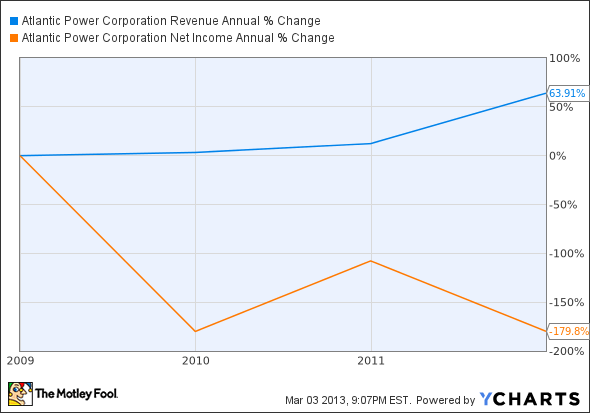
Atlantic is tiny compared to many of its competitors, and its acquisition-based strategy  has pushed sales higher even as profit has plummeted. Revenue has rocketed 64% over the last five years, while net income fell into the red in 2009 and has dropped 180% in the same time period.

Source: AT Revenue Annual data by YCharts.

The dividend drop
Corporations use shareholders’ money to create value in three main ways:

  • Invest in the company itself (maintenance, acquisitions, etc.), thereby increasing the inherent value of the company and its stock
  • Buy back shares, thereby directly increasing the stock price
  • Distribute dividends, thereby directly returning cash to shareholders

Atlantic has historically had one of the “best” dividend yields around, estimated at 10.2% before last week. But the utility’s payout was highly unsustainable, and Atlantic just announced that it will slash its dividend 66% from Cdn$0.096 to Cdn$0.033 per month starting in March.

As energy overhauls put the squeeze on many companies’ seemingly stalwart profits, dividends don’t always offer investors the best bang for their bucks. Exelon also dropped its dividend 40% this past quarter to keep its books balanced and free up cash flow for capital expenditures.

Speaking to shareholders, Atlantic CEO Barry Welch noted that:

In evaluating our financial position, cost of capital and updated financial projections, and how they fit with our growth strategy and ability to deliver attractive total return to shareholders, the board, supported by management’s recommendation, determined that it was in the best interest of the company and its shareholders to establish a lower and more sustainable Payout Ratio that balances yield and growth and is at the same time consistent with our outlook for current and prospective projects under a range of scenarios. We believe a lower Payout Ratio will improve our financial flexibility in order to deliver on our objective of providing a combination of sustainable income and solid growth from accretive acquisitions, construction ready and development projects, which we believe will enhance shareholder value over …read more
Source: FULL ARTICLE at DailyFinance

Atlantic Power Net Loss Deepens, Dividend Cut

By Eric Volkman, The Motley Fool

Filed under:

Atlantic Power has reported its Q4 and 2012 results. For the quarter, revenue was nearly $114 million, up from the $79 billion in the same period the previous year. Attributable net loss, on the other hand, deepened considerably to almost $58 million ($0.50 per diluted share) from Q4 2011’s red figure of just under $30 million ($0.27).

For the full year, top line was $440 million, or more than four times the 2011 figure of $94 million. But net loss was also much greater, landing at $113 million ($0.97 per diluted share) for the year against 2011’s $38 million ($0.50).

The company cut its dividend. It will now pay an annual rate of $0.40 ($0.39) per share of its common stock, or $0.03333 ($0.32) on a monthly basis. The new rate will kick in with the March 2013 dividend, which will be paid on April 30 to stockholders of record as of March 28. Its previously declared monthly disbursement was C$0.09583 ($0.93).

The article Atlantic Power Net Loss Deepens, Dividend Cut originally appeared on Fool.com.

Fool contributor Eric Volkman has no position in Atlantic Power, and neither does The Motley Fool. Try any of our Foolish newsletter services free for 30 days. We Fools may not all hold the same opinions, but we all believe that considering a diverse range of insights makes us better investors. The Motley Fool has a disclosure policy.

Copyright © 1995 – 2013 The Motley Fool, LLC. All rights reserved. The Motley Fool has a disclosure policy.

(function(c,a){window.mixpanel=a;var b,d,h,e;b=c.createElement(“script”);
b.type=”text/javascript”;b.async=!0;b.src=(“https:”===c.location.protocol?”https:”:”http:”)+
‘//cdn.mxpnl.com/libs/mixpanel-2.2.min.js’;d=c.getElementsByTagName(“script”)[0];
d.parentNode.insertBefore(b,d);a._i=[];a.init=function(b,c,f){function d(a,b){
var c=b.split(“.”);2==c.length&&(a=a[c[0]],b=c[1]);a[b]=function(){a.push([b].concat(
Array.prototype.slice.call(arguments,0)))}}var g=a;”undefined”!==typeof f?g=a[f]=[]:
f=”mixpanel”;g.people=g.people||[];h=[‘disable’,’track’,’track_pageview’,’track_links’,
‘track_forms’,’register’,’register_once’,’unregister’,’identify’,’alias’,’name_tag’,
‘set_config’,’people.set’,’people.increment’];for(e=0;e<h.length;e++)d(g,h[e]);
a._i.push([b,c,f])};a.__SV=1.2;})(document,window.mixpanel||[]);
mixpanel.init("9659875b92ba8fa639ba476aedbb73b9");

function addEvent(obj, evType, fn, useCapture){
if (obj.addEventListener){
obj.addEventListener(evType, fn, useCapture);
return true;
} else if (obj.attachEvent){
var r = obj.attachEvent("on"+evType, fn);
return r;
}
}

addEvent(window, "load", function(){new FoolVisualSciences();})
addEvent(window, "load", function(){new PickAd();})

var themeName = 'dailyfinance.com';
var _gaq = _gaq || [];
_gaq.push(['_setAccount', 'UA-24928199-1']);
_gaq.push(['_trackPageview']);

(function () {

var ga = document.createElement('script');
ga.type = 'text/javascript';
ga.async = true;
ga.src = ('https:' == document.location.protocol ? 'https://ssl' : 'http://www') + '.google-analytics.com/ga.js';

var s = document.getElementsByTagName('script')[0];
s.parentNode.insertBefore(ga, s);
})();

Read …read more
Source: FULL ARTICLE at DailyFinance