By Helen H. Wang, Contributor China’s incoming president Xi Jinping has struck a new tone: “the Chinese Dream.” In a visit to the “Road to Revival” exhibit at the National Museum in Beijing, Xi delivered a speech, calling for the revival of China into a strong nation.
Source: FULL ARTICLE at Forbes Latest
Tag Archives: Xi Jinping
US businesses concerned over China market barriers
A U.S. business group voiced concern Monday over market access barriers in China, which it said likely contributed to a drop in foreign investment there last year.
The U.S.-China Business Council’s president, John Frisbie, said that in a recent survey of its 230 member companies, nearly 10 percent of respondents reported that they had stopped or delayed a planned investment in China because of foreign ownership restrictions.
China, the world’s second-largest economy, is recovering from its own downturn. It reported last month that its foreign investment inflows from all sources fell 4 percent in 2012 compared with 2011.
“I think the decline in foreign direct investment that China saw last year in part reflects the investment barriers,” Frisbie said in a briefing to journalists after a visit to China. He added that those obstacles were a more predominant reason than the uncertain global economic environment for U.S. businesses withholding investment.
According to China‘s official investment catalog, there are ownership restrictions in nearly 100 sectors, including financial services, agriculture, cloud computing, health insurance and hospitals, refining and petrochemicals and energy-intensive industries.
Frisbie said this was “moving higher up the scale of concern” for the council, which was formed 40 years ago to advocate for American companies working in China. It estimates the country is a $250 billion market for the U.S. that will only grow as China‘s middle class expands in the coming decade.
The survey, published in October, garnered responses from both U.S. and China-based executives and represents the views of the council’s members. It included companies involved in manufacturing, services and primary industries such as agriculture and oil and gas.
Despite the overall drop in foreign investment into China last year, that from American companies still actually rose slightly, Frisbie said, although it was less than half the amount of Chinese direct investment into the U.S., which hit record levels.
The council advocates stronger ties between the U.S. and China. Frisbie described the current bilateral relationship as “fairly good” and on an upward trajectory despite continuing distrust. He suggested the two sides consider holding annual presidential summits.
He said it was too early to gauge the direction of reform under new Communist Party leader Xi Jinping, who becomes president in March. Washington is looking for Beijing to dilute the heavy state involvement in many sectors of China‘s economy.
Among its other recommendations, the council is warning that cyber security concerns threaten the commercial relationship. Frisbie urged the two governments to address it. He steered clear of making specific recommendations other than for American companies to have the best information technology protections in place, regardless of where the cyber attacks are coming from.
Last week, The New York Times and The Wall Street Journal reported that their computer systems had been infiltrated by China-based hackers, putting a spotlight on cyber intrusions that are becoming a growing economic and national security concern for Washington.
Source: FULL ARTICLE at Fox US News
Japan PM says he's open to talks with China leader
Japan‘s prime minister says he is willing to meet with Chinese leader Xi Jinping to help mend ties hurt by an island dispute.
Prime Minister Shinzo Abe told a television talk show Tuesday that high-level talks are more significant in difficult times.
Ties between Japan and China have deteriorated since Tokyo nationalized uninhabited islands in the East China Sea claimed by both. The step triggered violent protests against Japanese businesses in China.
Abe said there is no room to negotiate ownership of the islands, but urged both sides to avoid letting the territorial spat hurt their economic ties.
China has sent surveillance ships regularly to waters near the islands, and aircraft from the two sides have trailed each other, raising the risk of missteps that could trigger a clash.
Source: FULL ARTICLE at Fox World News
China leader says no compromising sovereignty
Chinese leader Xi Jinping says he won’t permit the country’s sovereignty, security or development to suffer damage. His comments are part of a foreign policy address amid ongoing territorial disputes with Japan and other neighboring states.
Xi told members of the ruling Communist Party’s Politburo on Tuesday that China would stick to its policy of peaceful development but would never sacrifice its legitimate rights or core interests. Foreign nations shouldn’t expect China to compromise or cut deals in ways that would sacrifice its national interests.
Xi’s comments reflect observers’ views that he would take a relatively tough stand in foreign affairs in keeping with China‘s recent assertiveness over its territorial claims. Beijing has been routinely sending ships to confront the Japanese coast guard in islands both claim in the East China Sea.
Source: FULL ARTICLE at Fox World News
China police pressure whistleblower for sex tapes
A Chinese whistleblower holding secretly filmed sex tapes featuring city bureaucrats has come under pressure from police to hand them over for an investigation into an embarrassing scandal that has already cashiered 11 officials.
Police questioned Zhu Ruifeng, a former journalist who triggered the scandal in the southwestern city of Chongqing, for seven hours Monday about the tapes and said he could be liable for prosecution if he did not surrender them.
“The police were very polite but they said they wanted the videos. I firmly refused to give it to them because I have to protect my source. This is impossible,” said Zhu, who lives in Beijing but was, he said, interviewed by Chongqing police officers. “They threatened me with the law, saying I could be accused of concealing evidence.”
The first high-profile case broke in November after Zhu released online a video of a 50-something Communist Party district official having sex with a woman allegedly hired by developers in an extortion bid.
The leak led to the official’s firing but the scandal broadened Friday as 10 other officials also caught on sex tapes were sacked.
Few details have been officially released but state media reports say the bureaucrats had sex with women hired by developers who secretly videotaped the trysts and later used the footage to extort construction deals from them.
The expanding scandal comes as China‘s newly installed leadership has vowed to crack down on rampant official corruption that threatens the party’s legitimacy. Even as China‘s new Communist Party chief Xi Jinping has repeatedly pledged to strike hard against graft, authorities have been faced with a steady stream of bribery cases and other malfeasance.
Zhu said Monday’s interview followed a visit by two police officers to his home in Beijing late on Sunday night in which they banged on the door and yelled at him to let them in.
Police are entitled to question a witness and request evidence in the process of an investigation, said one of Zhu’s lawyers, Li Heping, who accompanied Zhu at the police station. But the whistleblower should also have a right to refuse on the basis of needing to protect his source, Li said.
He said such police pressure could discourage others from reporting official malfeasance. Zhu says he obtained the video from someone inside the Chongqing Public Security Bureau who gave it on condition of anonymity.
“If a person acts as a whistleblower and police come and demand that they hand over everything, it will not be helpful for fighting corruption and protecting media freedom,” Li said.
An officer who answered the phone at the Beijing Dewai district police station where Zhu was questioned said he was not clear about the case. He referred further questions to the city’s public security bureau, which did not immediately respond to a faxed list of questions.
Source: FULL ARTICLE at Fox World News
Justice Postponed For China's Communist Politico, Movie Actress
By Simon Montlake, Forbes Staff Ever since his removal from political office last March, Bo Xilai has been waiting for his day in court. First, it was his wife Gu Kailai standing trial for the murder of a British consultant (guilty). Then his former police chief Wang Lijun stood accused of abusing his power (guilty). The third and final act will be Bo’s trial. Last week a pro-Beijing newspaper in Hong Kong reported that the trial would begin Monday in Guiyang. This now appears to be false. Another newspaper said that a trial would likely follow the National People’s Congress held in March. In any event, there is no reason for haste, since Bo’s political career is over. Cynics might ask why a trial even matters, since a guilty verdict is a foregone conclusion. But how the trial plays out, and the severity of the sentence, carries weight within the party, where Bo’s rise and fall resonates. It also has implications for new leader Xi Jinping‘s anti-corruption drive, since this is ostensibly a story of ill-gotten gains, though it speaks more broadly to the abuse of political power in China. Xi said last week that no cadre would be spared, leading to speculation over a ‘big fish’ (or ‘tiger’) arrest.
Source: FULL ARTICLE at Forbes Latest
US, China meet and warn more North Korea nuke tests will lead to isolation
Washington and Beijing agreed Friday that any North Korean nuclear test will lead to North Korea‘s further isolation and set back efforts to restart regional talks, a U.S. envoy said.
After talks in Beijing with senior Chinese officials, U.S. envoy for North Korea Glyn Davies said that both sides are opposed to North Korea‘s conducting a nuclear test and said ridding North Korea of nuclear weapons remained a condition for bringing stability to the region.
“We reached strong consensus that a nuclear test will be troubling and will set back efforts to de-nuclearize the Korean Peninsula. De-nuclearization is a necessary precondition to peace and stability on the Korean peninsula,” Davies told reporters.
He said that North Korea has a choice to test and further isolate itself or return to the regional talks that involve South Korea, Japan and Russia as well as the U.S. and China.
“We judge North Korea by its actions, not its words,” he said.
Davies’ Beijing parlay comes amid visits to South Korea and Japan to discuss what to do about North Korea. His tour also comes as tensions are rising and China is showing signs it wants to rein in its North Korean ally. Beijing fell into rare agreement with Washington this week, allowing the U.N. to tighten sanctions against North Korea as punishment for last month’s rocket launch.
In response, the North Korean Defense Commission, which commands the military, said it is prepared to conduct a nuclear test and made clear its missiles are capable of reaching the United States.
Another nuclear test by North Korea would pose a challenge to Beijing‘s newly installed Communist Party leader Xi Jinping, unsteadying South Korea, Japan and the United States. Relations between the three and Beijing are strained, and their trade and investment help to keep the buoyant Chinese economy growing.
Asked about Davies’ visit, China‘s Foreign Ministry said that given the current tensions, all sides need to keep calm. “The current situation of the peninsula is complicated and sensitive. We hope the relevant sides can stay calm, strengthen dialogue, avoid any acts that will escalate tension and jointly maintain peace and stability of the peninsula,” ministry spokesman Hong Lei told a routine daily media briefing.
China provides all of North Korea‘s fuel and a good deal of its food and accounts for an increasing share of trade and investment. But in more than a decade of recurring missile launches, two nuclear tests and other provocations by North Korea, China has been reluctant to use its economic leverage, fearing it could destabilize its neighbor.
Source: FULL ARTICLE at Fox World News
US: US, China oppose North Korea nuclear test
Washington and Beijing agreed Friday that any North Korean nuclear test will lead to North Korea‘s further isolation and set back efforts to restart regional talks, a U.S. envoy said.
After talks in Beijing with senior Chinese officials, U.S. envoy for North Korea Glyn Davies said that both sides are opposed to North Korea‘s conducting a nuclear test and said ridding North Korea of nuclear weapons remained a condition for bringing stability to the region.
“We reached strong consensus that a nuclear test will be troubling and will set back efforts to de-nuclearize the Korean Peninsula. De-nuclearization is a necessary precondition to peace and stability on the Korean peninsula,” Davies told reporters.
He said that North Korea has a choice to test and further isolate itself or return to the regional talks that involve South Korea, Japan and Russia as well as the U.S. and China.
“We judge North Korea by its actions, not its words,” he said.
Davies’ Beijing parlay comes amid visits to South Korea and Japan to discuss what to do about North Korea. His tour also comes as tensions are rising and China is showing signs it wants to rein in its North Korean ally. Beijing fell into rare agreement with Washington this week, allowing the U.N. to tighten sanctions against North Korea as punishment for last month’s rocket launch.
In response, the North Korean Defense Commission, which commands the military, said it is prepared to conduct a nuclear test and made clear its missiles are capable of reaching the United States.
Another nuclear test by North Korea would pose a challenge to Beijing‘s newly installed Communist Party leader Xi Jinping, unsteadying South Korea, Japan and the United States. Relations between the three and Beijing are strained, and their trade and investment help to keep the buoyant Chinese economy growing.
Asked about Davies’ visit, China‘s Foreign Ministry said that given the current tensions, all sides need to keep calm. “The current situation of the peninsula is complicated and sensitive. We hope the relevant sides can stay calm, strengthen dialogue, avoid any acts that will escalate tension and jointly maintain peace and stability of the peninsula,” ministry spokesman Hong Lei told a routine daily media briefing.
China provides all of North Korea‘s fuel and a good deal of its food and accounts for an increasing share of trade and investment. But in more than a decade of recurring missile launches, two nuclear tests and other provocations by North Korea, China has been reluctant to use its economic leverage, fearing it could destabilize its neighbor.
Source: FULL ARTICLE at Fox World News
China elder Jiang Zemin takes a public step back
Influential Chinese ex-President Jiang Zemin has been moved down the top leadership’s pecking order — at least in public — as the ruling Communist Party prepares for the final stages of a generational handover in power.
The official Xinhua News Agency said Wednesday in a brief dispatch that Jiang asked party leaders to group him with other retired elders when announced and seated at major formal events. Jiang used to be second to current President Hu Jintao in the protocol at major events, reflecting his status as former president.
Xinhua praised Jiang’s request as “reflecting the noble character and sterling integrity and open-mindedness of a Communist.”
The announcement comes as the party lays the groundwork for the final phase of its leadership transition this spring, when Vice President Xi Jinping will become president and other top Communist officials will be appointed to government positions. Xi succeeded Hu as party leader in November at a pivotal congress, in a transition that had been planned years earlier.
Analysts said Jiang’s move has symbolic significance, but it remained unclear whether he would relinquish his behind-the-scenes influence on party affairs.
“In terms of the symbolism, this is a step forward to mitigate and to guard against the so-called geriatric politics: the old men interfering, retired old cadres who have no position still having a big say in party affairs,” said Willy Lam, a China politics expert at the Chinese University of Hong Kong.
“But on a practical level, it’s difficult to prevent Jiang Zemin from still trying to do whatever he can to interfere in party affairs,” Lam said. “In the Chinese context, tradition dies hard and you have a long record of retired party elders still interfering in party politics.”
It is unclear if Hu will fill the seat in the public hierarchy after Jiang vacates it. Hu has indicated a desire to fully retire from politics and urged greater transparency within party affairs based on equality and “democratic principle.”
China‘s political transitions are still in their infancy, since the days of strongman leaders such as Deng Xiaoping.
China‘s party elders, many among them veteran revolutionaries, enjoy tremendous clout even though they typically have no official posts any more. They continue to make their preferences known and work behind the scenes to promote their proteges and allies to top posts. That burnishes the credentials of retired leaders, ensures them some say in affairs of state, and — perhaps most importantly — protects them and their families from being investigated over corruption or other improprieties committed while in office.
Foremost among the former leaders is Jiang, who oversaw a four-fold expansion of the economy, the reversion of Hong Kong from British to Chinese rule, and the country’s entry into the World Trade Organization. Jiang stepped down as party leader in 2002, although he led the commission that controls the armed forces for another two years.
Unlike Jiang, Hu stepped down from his post as chairman of the military commission at the same time as he handed over the party leadership to Xi, and his decision won plaudits from the military and praise from Xi. Hu’s example could have laid pressure on Jiang to move aside.
When Hu retired as party general secretary and head of the military commission, “Xi Jinping very heavily praised him,” University of Chicago political scientist Dali Yang said. “But it also read almost like kind of a rebuke of Jiang because many people saw that if Hu is being heavily praised for retiring cleanly, then what about Jiang? That really put Jiang on the defensive.”
Source: FULL ARTICLE at Fox World News
Japanese envoy in Beijing to talk about islands
China welcomed a Japanese envoy Tuesday for talks as both sides took steps to cool tensions over an island dispute that has raised fears of an armed confrontation.
In a sign of the importance Beijing attached to the visit, state media gave prominent coverage to the arrival of Natsuo Yamaguchi, leader of a junior party in the ruling coalition of Prime Minister Shinzo Abe.
Yamaguchi, whose schedule has not been announced, is not a member of the government so his meetings in Beijing represent a type of quiet diplomacy that could allow for a franker exchange of views than official talks might.
Yamaguchi’s visit is part of China‘s “normal relations and contact with friendly Japanese political parties and organizations,” Chinese Foreign Ministry spokesman Hong Lei told reporters at a regularly scheduled briefing. “The dealings can help solve problems and move forward healthy relations,” Hong said.
Yamaguchi made no comments upon his arrival but told reporters in Tokyo he hoped his four-day trip would help ease months of friction over the uninhabited East China Sea islands that are controlled by Japan but claimed by China.
“It is important for us to have consultations to normalize our relationship,” Yamaguchi said.
However, he said Tokyo‘s assertion that the islands are Japanese territory is unchanged, rejecting Chinese demands that Japan acknowledge a dispute over their sovereignty. Both nations have called for dialogue recently, and Chinese state broadcaster CCTV led its noon news broadcast with a live report on Yamaguchi’s arrival.
Chinese media reported that Yamaguchi would deliver a letter from Abe addressed to Chinese leader Xi Jinping.
Tensions soared after Japan‘s government bought the uninhabited islands, known in Chinese as Diaoyu and Japanese as Senkaku, from their private Japanese owners in September. Trade and tourism between the countries have dropped off sharply and almost all bilateral meetings between their officials have been canceled.
The islands are surrounded by rich fishing grounds and have a potential wealth of gas, oil and other undersea resources. For China, they also mark a strategic gateway to the Pacific Ocean and represent the deeply emotional legacy of Japan‘s conquest of Chinese territory beginning in 1895, as well as its brutal World War II occupation of much of the country.
Placed under U.S. control after World War II, the islands were returned to Japan in 1972, although Beijing says they have been Chinese territory for centuries. Taiwan also claims the islands.
Japan‘s nationalization of the islands sparked violent anti-Japanese rioting in China and prompted Beijing to dispatch marine surveillance ships to them on a regular basis to confront Japanese coast guard cutters assigned to protect the area.
That standoff has also moved to the skies. Earlier this month, both sides scrambled fighter jets to trail each other’s planes — underscoring the potential for accidents or miscalculations sparking a clash that could draw in Japan‘s treaty partner the United States.
Beijing has since ratcheted down its verbal attacks on Japan and last week hosted a visit by China-friendly former Japanese Prime Minister Yukio Hatoyama for informal talks on the dispute.
Source: FULL ARTICLE at Fox World News
Senior China leader urges island talks with Japan
A high-level Chinese official has called for talks with Japan over a disputed island chain, in an apparent attempt by Beijing to cool tensions that have seen both sides scramble jet fighters to the area in recent days.
Jia Qinglin, the head of China‘s top political advisory body, made the gesture at a meeting in Beijing with former Japanese Prime Minister Yukio Hatoyama, the official China Daily newspaper reported Thursday.
Japan has steadfastly refused China‘s past calls to hold talks over the islands, with Tokyo arguing that it holds sovereignty over the islets and thus there is nothing to negotiate.
Jia is believed to be the highest-ranking Chinese official to publicly issue such a call, and the mild tenor of his remarks — omitting China‘s standard accusation that Japan is wholly responsible for the frictions — was seen as a signal Beijing hopes to arrest momentum toward an all-out crisis.
“The two sides should appropriately handle questions surrounding the Diaoyu islands and other and other issues on which their stances’ differ,” Jia said, using the Chinese term for the tiny uninhabited islands lying north of Taiwan. Japan, which controls the islands, calls them the Senkakus.
Jia is due to retire in March and Hatoyama has long been an advocate of closer ties with China, though he has lost influence under new Japanese Prime Minister Shinzo Abe. China‘s call for talks in a meeting Wednesday could represent a way to ask for talks that is less risky than an official, high-level exchange.
However, Japan showed no sign of budging from its position.
Responding to reports that Hatoyama had agreed with Jia on the need for negotiations, Japan‘s chief Cabinet spokesman Yoshihide Suga expressed the Abe government’s disapproval. “This is clearly not a comment that reflects the position of the Japanese government and we very much regret that someone who was once the prime minister of our country would make such remarks,” Suga told reporters in Tokyo.
Feng Wei, a researcher at Fudan University’s Japanese Studies Center in Shanghai, said that Jia represents “the official stance, which is to ease tensions.”
“That’s also why he (Hatoyama) was invited to China in the first place. It’s highly symbolic.”
Also Thursday, Kurt Campbell, the top U.S. diplomat for East Asia, called for “quiet diplomacy” between Japan, China and South Korea over territorial disputes in northeast Asia, but said Washington would not play the role of mediator.
The islands are surrounded by rich fishing grounds and a potential wealth of gas, oil, and other undersea resources. For China, they also mark a strategic gateway to the Pacific ocean and represent the deeply emotional legacy of Japan‘s conquest of Chinese territory beginning in 1895 as well as its brutal World War II occupation of much of the country.
Tensions mounted in September after Beijing responded furiously to Tokyo‘s purchase of the islands from private Japanese owners. Placed under U.S. control after World War II, the islands were returned to Japan in 1972, although Beijing says they have been Chinese territory for centuries. Taiwan also claims the islands.
Japan‘s move to nationalize the islands sparked violent anti-Japanese rioting in China and prompted Beijing to dispatch marine surveillance ships to them on a regular basis to confront Japanese Coast Guard cutters assigned to protect the area.
That standoff has also moved to the skies. Last week, both sides dispatched fighter jets to trail each other’s planes. While no contact was reported, that move underscored the potential for accidents or miscalculations sparking a clash that could draw in Japan‘s treaty partner the United States.
Outspoken Chinese generals have added to those fears with warnings that stepped-up Japanese actions, such as the firing of warning shots at Chinese aircraft, would be seen as acts of war.
“China doesn’t actually want a military confrontation. It is using the dispatch of ships and planes as a means of putting pressure on Japan to at least admit that a dispute over the islands exist,” said Zhu Feng, a security expert at Peking University’s School of International Studies.
Zhu said Jia’s comments to Hatoyama represent an extension of that strategy, but are unlikely to produce results as long as Abe hews to the line of refusing to acknowledge that the islands are in dispute. Further complicating matters, Abe, like new Chinese leader Xi Jinping, is still establishing himself in power and doesn’t wish to be seen as weak on national security matters, Zhu said.
“Nothing will change right away since Abe is taking a hard line and is busy building up his popularity and consolidating his power,” Zhu said.
___
Associated Press writer Didi Tang contributed to this report.
Source: FULL ARTICLE at Fox World News
Censorship Row Shows China’s Tight Grip On Media
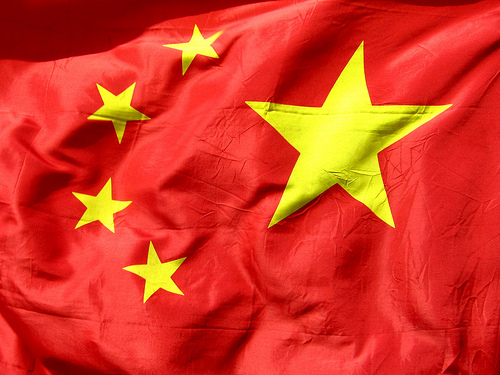
GUANGZHOU, China (OfficialWire) — China’s new Communist Party leaders want to appear more open, but they’re not about to give up control of the media. That’s the lesson of a dustup involving an influential newspaper whose staff briefly rebelled against especially heavy-handed censorship.
The staff of Southern Weekly returned to work after some controls were relaxed, but public demands for the ouster of the top censor were ignored. Some observers took solace in the fact that no journalists were punished — at least not yet.
“The fact that no one is being immediately punished is a victory. That is not insignificant,” said Steve Tsang, a China politics expert at the University of Nottingham in Britain. “It’s a smart use of the party’s power but it’s not actually making any compromise in terms of the basic fundamental principles of the party staying fully in control on anything that really matters.”
China’s new leader, Xi Jinping, has raised reformist hopes and struck an especially populist note in vowing to tackle official corruption. In an early December speech he praised China’s constitution and said people’s rights must be respected, comments that helped set the stage for the censorship clash.
Read More at OfficialWire . By Didi Tang.
Photo Credit: johntrathome (Creative Commons)
Censorship row shows China's tight grip on media
China‘s new Communist Party leaders want to appear more open, but they’re not about to give up control of the media. That’s the lesson of a dustup involving an influential newspaper whose staff briefly rebelled against especially heavy-handed censorship.
The staff of Southern Weekly returned to work after some controls were relaxed, but public demands for the ouster of the top censor were ignored. Some observers took solace in the fact that no journalists were punished — at least not yet.
China‘s new leader, Xi Jinping, has raised reformist hopes and struck an especially populist note in vowing to tackle official corruption. But this is not the first time new leadership has raised hopes of liberalizing China, only to push back against people trying to test the limits.
Source: FULL ARTICLE at Fox World News
Hong Kong moves to limit info on company directors
Hong Kong is proposing to restrict the amount of personal information available on company directors in the wake of investigative news reports that used the data to help expose fortunes linked to Chinese leaders.
Under the proposed changes, home addresses and ID card or passport numbers of directors would be obscured in filings starting from the first quarter of 2014. The details could also be removed from historical filings on request.
Currently, anyone can access these details online for a nominal fee. The new law would restrict access to certain groups including law enforcement, regulators and liquidators.
The provisions were contained in a consultation document submitted to the legislature this week. They have worried investors and the media as the changes could make it harder to document cases of corruption or malfeasance.
In one high-profile case last year, a detailed report by Bloomberg on the wealth of relatives of China‘s new top leader, Xi Jinping, relied on identity card numbers mined from company filings. The New York Times also used such data for articles about the wealth of Premier Wen Jiabao‘s family.
The changes proposed by the Financial Services and Treasury Bureau and the Companies Registry are aimed at updating existing regulations and increasing privacy protection, according to the consultation document.
The Hong Kong Journalists Association worried that openness was being sacrificed.
The group said in a statement that access to the information has helped uncover illegal activities by government officials, politicians and business people.
_____
Online:
Consultation document: http://bit.ly/VOLuHq
Source: FULL ARTICLE at Fox World News
China newspaper publishes after deal ends standoff
An influential weekly newspaper whose staff rebelled to protest heavy-handed censorship by China‘s government officials published as normal Thursday after a compromise that called for relaxing some intrusive controls but left lingering ill-will among some reporters and editors.
The latest edition of the Southern Weekly bore no hints of the dispute that erupted last week over a New Year‘s editorial that was rewritten to praise the Communist Party and that drove some staff to stop work in protest. Still fuming, some editors and reporters tried late Wednesday to insert a carefully-worded commentary praising the newspaper as a tribune of reform, but were rebuffed by management, an editor said.
The editor, who asked not to be named because he had been repeatedly warned not to talk to foreign media, described the mood among editorial staff as indignant. He predicted that some would resign, either voluntarily out of anger or forced out by management.
Academics spoke of a coming reckoning by authorities to reassert control at the Southern Weekly and any other media that might take encouragement.
“Overall, the authorities do not want this situation to spread,” Peng Peng, a political science researcher at the Guangdong province Social Sciences Academy, told reporters.
The weeklong fracas at the Southern Weekly evolved quickly from a row over censorship at one newspaper to a call for free speech and political reform across China, handing an unexpected test to the party leadership headed by Xi Jinping just two months into office.
Hopes that the dispute would strike a blow against censorship initially ran high. Internet microblogs crackled with messages of support. Liberal-minded academics wrote open letters. And hundreds of people this week gathered outside the newspaper’s offices off a busy street in the southern commercial center of Guangzhou, waving signs that called for freedom of expression.
But expectations for change began fizzling Wednesday as a compromise to end the dispute took shape. Under the deal, according to the editor and another staff member, editors and reporters would not be punished for protesting, and propaganda officials would no longer directly censor content prior to publication, though directives, self-censorship, threats of dismissal and many other longstanding measures would stay in place to ensure obedience to the party.
The outpouring challenged one of the key levers of party rule — its right to control the media and dictate content — and officials pushed back this week to reassert authority.
“This crisis rings alarm bells for journalists and liberal intellectuals. The new government might kick-start economic reforms in certain areas, to ensure continued growth. But swift political reforms are not on the top leaders’ agenda, as they are still calculating resistance from conservative blocs,” Zhang Hong, deputy editor-in-chief of the business newspaper Economic Observer, wrote in a commentary Thursday in Hong Kong’s South China Morning Post.
In a further sign of tightening, police attempted Thursday to prevent more of the protests outside the compound housing the Southern Weekly and its parent company, the Nanfang Media Group, in Guangzhou, a city long at the forefront of reforms. About 30 police officers guarded the area and ordered people to move on, chasing away any who wouldn’t and detaining at least one local university student who came with a group of friends.
The standoff at the Southern Weekly echoed through the newsroom of the Beijing News, which is co-owned by Nanfang Media and has a reputation for aggressive reporting. Editors at the newspaper all week defied an order to run a commentary that many other newspapers carried that blamed resistance to censorship on meddling foreign forces, but a propaganda official visited the newspaper late Tuesday and forced publication of the commentary.
The Southern Weekly dispute was touched off after provincial propaganda chief Tuo Zhen rewrote the New Year‘s editorial, which called for better constitutional government, to insert heavy praise for the party. The revised editorial was not submitted for review by editors before publication, violating an unwritten practice in censorship and enraging the staff, which saw it as an attack.
The Southern Weekly has been a standard-bearer for hard-edged reporting and liberal commentary since the 1990s. Throughout, senior party politicians and propaganda functionaries have repeatedly attempted to rein in the newspaper, cashiering editors and reporters who breach often unstated limits.
The special commentary that reporters and editors tried late Wednesday to insert into Thursday’s edition was meant to extol that legacy, said the editor. Many other editors and reporters declined comment or refused to answer phone calls and emails. Dai Zhiyong, the columnist who drafted the original New Year‘s editorial, also declined comment, but posted to his Twitter-like microblog account an essay he had written three years ago; its title: “Before becoming free, one must suffer.”
Even if censorship largely remains intact, the standoff has showed the breadth of support independent-minded media like Southern Weekly have among many Chinese, who are wired to the Internet and increasingly sophisticated in their expectations of the government. Peng, the politics scholar, said the confrontation showed that the party’s censorship system needs to change, though the pace may not be as quick as many in the media would like.
“To put it simply, the media cannot go beyond the existing system to pursue radical reform, but the management method also needs to change,” said Peng.
___
Associated Press writers Gillian Wong and Charles Hutzler and researchers Zhao Liang and Flora Ji in Beijing contributed to this report.
Source: FULL ARTICLE at Fox World News