Tag Archives: USDA

Cooper Tire and Consortium Partners Update Progress on $6.9 Million USDA Grant to Develop Guayule Po

By Business Wirevia The Motley Fool

Filed under:

Cooper Tire and Consortium Partners Update Progress on $6.9 Million USDA Grant to Develop Guayule Polymer for Tire Applications

FINDLAY, Ohio–(BUSINESS WIRE)– Consortium partners Cooper Tire & Rubber Company, Yulex Corporation, Arizona State University (ASU), and the Agricultural Research Service (ARS) of the U.S. Department of Agriculture (USDA) met recently at the Cooper Tire & Vehicle Test Center near San Antonio to review initial progress on their $6.9 million Biomass Research and Development Initiative (BRDI) grant from the USDA and the U.S. Department of Energy (DOE). The BRDI is a joint effort between the USDA and the DOE to promote the development and analysis of feed stocks, biofuels and biobased products.

The consortium partnersreceived the four-year BRDI grant in June 2012. The grant focuses on research efforts aimed at developing enhanced manufacturing processes for the production of guayule solid rubber as a biomaterial for tire applications, as well as evaluating the plant’s residualbiomass for biofuel applications. The consortium membersaim to harness biopolymers extracted from guayule as a replacement for petroleum-based synthetics and tropical-based natural rubber used in the manufacture of tires. If successful, new jobs in the growing and processing of guayule would be created for American workers.

Cooper Tire is leading the overall grant program along with developing all related tire technology.Yulex is taking the lead on developing commercial processes to produce guayule natural rubber for the tire industry. ARS is leading the genomic and agronomic development of guayule while ASU is evaluating the sustainability impact these biomaterial and bioenergy industries have on the American Southwest, where guayule is grown.

The consortium partner meeting highlighted significant progress being made in several areas, including guayule plant genome sequencing needed for future breeding tools, irrigation studies to maximize rubber content in the plant, and completing laboratory testing to develop a guayule tire-grade polymer specification for future commercialization.

Guayule is an industrial crop and a natural source of rubber that can replace petroleum-based synthetics and does not compete against food or fiber crops. Through agronomic development, materials science, and sustainable biorefinery extraction processes, 100 percent of the guayule plant can be used to produce consumer, industrial, medical and energy products, including tires and advanced biofuels.

“This is the first major report-out from the BRDI team on the status of grant milestones,” said Chuck Yurkovich, Cooper’s Vice President of Global Research and Development. “These meetings serve to foster dialogue and strengthen ties between the partners and allow us to continue to scale up our efforts collectively in order to achieve grant targets. We have everything …read more
Source: FULL ARTICLE at DailyFinance

Lion mauls, kills female intern at California animal sanctuary

Authorities are trying to determine what caused a lion to maul and fatally attack a female intern volunteer at a private wild animal park in California Wednesday.

Q13 Fox reports 26-year-old Seattle native Dianna Hanson was identified as the victim of the attack by her father, Paul Hanson.

The victim was attacked and killed when she entered the lion’s enclosure, Cat Haven founder and executive director Dale Anderson said. Anderson was crying as he read a one-sentence statement about the fatal mauling at the exotic animal zoo he has operated since 1993.

KMPH reports deputies shot and killed the lion, a 4-year-old named Cous Cous that has been raised at Cat Haven since it was 8 months old, in order to provide medical attention to Hansen.

Sheriff’s deputies responding to an emergency call from Cat Haven, in the Sierra Nevada foothills about 45 miles east of Fresno, found the woman severely injured and still lying inside the enclosure with the lion nearby, Fresno County sheriff’s Lt. Bob Miller said.

Investigators were trying to determine why the intern was inside the enclosure and what might have provoked the attack, sheriff’s Sgt. Greg Collins said. The facility is normally closed on Wednesdays, and only one other worker was there when the mauling happened, Collins said.

Cat Haven is a 100-acre facility just west of Kings Canyon National Park. Since the property opened in 1993, it has housed numerous big cats, including tigers, leopards and other exotic species. It is permitted to house exotic animals by the California Department of Fish and Wildlife and is regulated as a zoo by the U.S. Department of Agriculture.

Results of the last 13 inspections by the Department of Agriculture’s Animal and Plant Health Inspection Service show no violations dating back to March 2010. The most recent inspection was Feb. 4, USDA records show.

Despite state regulations that require annual inspections, the California Department of Fish and Wildlife most recently inspected the facility in January 2011.

“We have to do the best we can with the resources we’re provided,” said department spokeswoman Jordan Traverso.

The inspector’s written comments were “facility in good condition.” The inspector checked gates, enclosures, water supplies, drainage, cleanliness, ventilation and the general health of the animals.

Department spokeswoman Janice Mackey said she was unaware if any state regulations would prohibit an employee from entering an exotic animal’s enclosure.

She said each species is identified on the permit, and the animals must be used for scientific or educational purposes only.

“We don’t allow them to be used as pets,” Mackey said.

Actress Tippi Hedren, who founded the Shambala Preserve in Southern California, home to 53 seized or abandoned exotic pets, expressed dismay over the killing of the lion.

“It wasn’t the lion’s fault. It’s the human’s fault always. I’ve got 40 years behind me. I know what I’m talking about,” Hedren said.

A movie was made at Shambala several years ago and several people were injured. “Two were nearly killed,” she said.

“Lions are one of the four most dangerous animals in the world. There is nothing you can do. When …read more
Source: FULL ARTICLE at Fox US News

This Is One Incredible CEO

By Sean Williams, The Motley Fool

Filed under:

The Motley Fool’s readers have spoken, and I have heeded your cries. After months of pointing out CEO gaffes and faux pas, I’ve decided to make it a weekly tradition to also point out corporate leaders who are putting the interests of shareholders and the public first and are generally deserving of praise from investors. For reference, here is last week’s selection.

This week, we’ll turn our attention to the first female CEO to ever take the helm of food giant Campbell Soup , Denise Morrison.

Kudos to you, Ms. Morrison
It’s both an exciting and scary time to be a food producer. The exciting part stems from the sheer number of deals we’ve seen over the past year that are consolidating a generally slow-growth sector. Ketchup maker Heinz agreed to a $23.2 billion buyout last month led by Warren Buffett’s Berkshire Hathaway and Brazilian private equity firm 3G Capital. Considering the tight range Heinz had been trading in, and the slow but steady growth experienced by shareholders, the immediate 20% premium was gladly welcomed.

Another great example is Kellogg which picked up the Pringles brand from Procter & Gamble after its sale with Diamond Foods fell through. After lowering its outlook twice in 2012, Kellogg’s latest quarterly report demonstrated that Pringles sales kicked in 5% domestic growth and 1% overseas, helping to boost results past Wall Street‘s expectations.

On the other hand, inflation costs continue to rear their head in nearly every facet of food production. In fruits and vegetables, Dole Food disappointed investors in early January when it offered a full-year EPS forecast that was below the Street’s projections. Dole blamed the shortfall on ongoing contract negotiations as well as rising banana costs. Meat producers have shared similar woes, with Tyson Foods commenting at the Goldman Sachs annual agribusiness conference that its second quarter has been “challenging.” Margin compression from its pork and beef business caused by rising livestock feed prices, compounded with an expected USDA meat inspector furlough, which will slow production as a direct result of federal budget cuts, isn’t giving shareholders much to sink their teeth into.

Luckily for Campbell’s shareholders, Morrison’s company has walked this fine line with success — relying on its steady cash cow that is the soup business while also conservatively introducing new products to target younger age groups.

Campbell’s success lies in the fact that it controls approximately 60% of all soup market share. While a steady business, consumers also don’t tend to consume that much more soup each year, leaving cost-cutting, price increases, and overseas expansion as its primary growth driver in the soup arena. In its recently concluded second quarter, Campbell’s noted that it was able to grow its U.S. soup business despite lower ad spending thanks to its brand-building efforts over the years. Simply put, Morrison understands that with higher taxes come smaller discretionary budgets, which take big price increases off the table unless you want to completely scare away …read more
Source: FULL ARTICLE at DailyFinance

How Sequestration Will Affect the Health-Care Sector and Your Pocketbook

By Sean Williams, The Motley Fool

Filed under:

Stop me if you’ve heard this joke before: “Two political parties walk into a bar; both point the finger at each other for the country’s fiscal mess, yet neither is willing to budge an inch from their underlying views…” My guess is you’ve heard this one all too often and it’s not even funny anymore… because the truth rarely is.

The highly anticipated sequestration, aimed at removing $1.1 trillion out of the federal budget over the next decade, kicked into effect on March 1, and is set to gradually, but decisively, remove $85 billion from the federal budget. These cuts are going to come from all walks of government – from USDA inspectors, to military spending, and even entitlement programs like Medicare, which is expected to see approximately a 2% reduction in reimbursements.  

Today, I want to take a closer look at how sequestration could impact the health care sector.

As you might imagine, many of the effects of removing government funding tend to be negative — but it’s not as cut-and-dried as it might appear on the surface.

How it’ll affect safety
The most immediate impact of sequestration appears to be whether patient and consumer safety will be affected negatively. On the surface I’d say this is a distinct possibility with the Centers for Disease Control and Prevention seeing nearly a $450 million cut in its budget and the FDA, whose expenses are predominantly tied to its personnel costs, alluding that a $318 million reduction in funds will result in layoffs or furloughs totaling 2,100 USDA food inspectors.

Food safety looks like a clear loser with Tyson Foods and Smithfield Foods projected to suffer from USDA furloughs. By law, processed meat cannot be sold in stores without having been inspected, leaving Tyson and Smithfield in a big bind come the summer time when these furloughs are expected to hit the hardest. The end result may be less meat on supermarket shelves and higher prices because of it.

The bigger concern here actually stems from the CDC‘s reduced budget. As GlobalData analysts noted this past week, one of the CDC‘s primary functions is to provide educational and preventative materials and products to curb the spread of infectious diseases such as hepatitis and HIV. A lack of funding here could result in higher occurrences of these infectious diseases. However, I disagree with their analysis that this negative occurrence could have the hidden benefit of driving down costs as providers opt for cheaper drugs in the HIV space, hurting the launch of expensive new offerings like . Gilead Sciences‘   four-in-one HIV medication, Stribild. Made with all in-house compounds, if Stribild supplants Gilead’s current best-selling HIV treatment, Atripla, it will result in higher margins for the company. Keeping things in perspective, I wouldn’t expect a huge spike in HIV occurrences, but I wouldn’t be surprised if documented cases rose year-over-year.

How it’ll affect research and development
Research …read more
Source: FULL ARTICLE at DailyFinance

Global Ecology Corporation Explores Second Production Facility & Governmental Support from the State

By Business Wirevia The Motley Fool

Filed under:

Global Ecology Corporation Explores Second Production Facility & Governmental Support from the State of Hawaii

MONTCLAIR, N.J.–(BUSINESS WIRE)– Global Ecology Corporation, (OTC QB: GLEC), through its subsidiary GEC Organics Corp.(“GECO“), has concluded its first visit to the State of Hawaii to discuss the development of a second soil amendment production facility. GECO has completed the infrastructure in Castleberry, Alabama for its first location and is now in the process of implementing the marketing plan for the production phase of its natural soil amendment products.

We have presented our technology to and proposed a strategic relationship with various state agencies in the State of Hawaii, which closely aligns itself with Governor Neil Abercrombie’s “New Day in Hawaii” initiative. Our team which consists of GECO management, investors, advisors and local representatives in Hawaii was well received in the initial meetings with Hawaiian governmental officials. Our group had meetings with state, county and local officials to understand their needs and present solutions through the use of our USDA certified, organic, high-grade soil amendment.

“One of the most important means for creating and retaining more investment in Hawaii, is the productive use of the land for agricultural purposes. We plan to provide the expertise to enrich existing farmland and develop acreage which has not been suitable for farming,” stated Peter Ubaldi, President & CEO. “Our goal is to expand in Hawaii and use the Alabama location as a template for the development of future sites throughout the United States,” added Ubaldi.


Forward-Looking Statements

This release contains certain forward-looking statements (under Section 27A of the Securities Act of 1933, as amended, and Section 21E of the Securities Exchange Act of 1934, as amended) with respect to the development of second production facility for the Company’s soil amendment product; whether we will be able to reach an agreement with the State of Hawaii for the develop of such a facility; whether such a facility will be profitable and generate sufficient revenue to sustain such a facility and be beneficial to the financial growth of the Company; and whether such a facility would be economically beneficial to the State of Hawaii, the Company and its shareholders. Because such statements include risks, uncertainties and contingencies, actual results may differ materially from those expressed or implied by such forward-looking statements. These risks, uncertainties and contingencies include, but are …read more
Source: FULL ARTICLE at DailyFinance

Teucrium Announces the Launch of "The Corn ClockSM"

By Business Wirevia The Motley Fool

Teucrium Announces the Launch of “The Corn Clock SM

Illustrates the Increasing Demand for Corn as the Planet’s Population Grows

BRATTLEBORO, Vt.–(BUSINESS WIRE)– Teucrium Trading, LLC, a sponsor of a suite of six single commodity ETPs that include energy and agriculture and one core agriculture commodity ETP, is pleased to announce the launch of the Teucrium Corn ClockSM, a real-time dynamic flip clock which displays each second how many bushels of corn will be required for that year just to supply the needs of the additional population up to that point in time.

In commenting on the Corn Clockwhich is displayed on the Teucrium website, Brandon Riker, Director – Strategic Marketing and Analysis, said, “Teucrium’s goal in establishing the Corn Clockis to visually illustrate and create awareness about how population growth can drive demand and thus impact the supply necessary to meet this demand.”

Riker said that according to the U.S. Census Bureau, about 2.44 people are added to the planet each second and each person uses, on average, about 4.85 bushels of corn per year¹. As an example, since the beginning of the year through 11:59:59 pm on February 28, 2013, the planet had added over 12.4 million people. To support the demand for corn from just these 12.4 million people, the world will need to produce about 60.3 million bushels of corn this year.

With the global population increasing by around 75 million people each year, about twice the population of California, and each person using about 4.85 bushels of corn¹, that means just to provide for that demand, the planet must produce approximately 363.8 million additional bushels of corn.

Riker additionally noted, “Based on current world-wide yield from the USDA, this would mean about 4.87 million additional acres (an area about the size of the state of New Jersey) would need to be planted to meet the growing demand. However, all land is not created equal and there are often issues, for example, with access to water and infrastructure.”²

Supply is a function of yield per acre and arable land under cultivation and although historical yield per acre for many crops including corn has increased, the yield change is not consistent year over year or ever increasing, and does decline from time to time³.

Additionally, according to a United Nations Food and Agriculture Organization report, “Much of the suitable land not yet in use is concentrated in a few …read more
Source: FULL ARTICLE at DailyFinance
Sen. Coburn urges USDA to nix wine-tasting 'getaways' amid sequester warnings

Instead of furloughing meat inspectors, why not cancel the wine-tasting getaway in California?Sen. Tom Coburn, R-Okla., posed that question this week to Agriculture Secretary Tom Vilsack, noting that two USDA-sponsored conferences are coming up despite the budget anxiety in Washington over the sequester.

…read more
Source: FULL ARTICLE at Fox News – Politics

Pimi Agro Announces First U.S. Order for SweetGuard™ Green Post-Harvest Treatment for Sweet Potatoes

By Business Wirevia The Motley Fool

Filed under:

Pimi Agro Announces First U.S. Order for SweetGuard™ Green Post-Harvest Treatment for Sweet Potatoes

Reports Successful Trial Results for CitruWashTM – Green Post-Harvest Treatment for Citrus

KIBBUTZ ALONIM, Israel–(BUSINESS WIRE)– Pimi Agro CleanTech, Inc. (OTCBB: PIMI), a developer and marketer of environmentally friendly alternative solutions for post-harvest treatment of fruits and vegetables, announced today its first commercial order for SweetGuard™ to a U.S. customer, which will utilize SweetGuard™ in the post-harvest treatment of sweet potatoes. SweetGuard™ enhances the sweet potatoes’ bright appearance due to its cleaning effects.

SweetGuard Order

This milestone first order follows two years of development work and extensive customer engagement, resulting in an environmentally friendly product that effectively improves the appearance and color of sweet potatoes. SweetGuard has the added benefit of also preventing decay of sweet potatoes which may occur during storage and distribution.

Pimi’s CEO, Ami Sivan, commented, “We are very excited about this initial order which opens a new market for us in the treatment of sweet potatoes, which was not part of our initial line of business. According to the National Agricultural Statistics Service, USDA, in 2010 the United States produced approximately 1.1 million tons of sweet potatoes, with a production value of $478 million. Pimi’s proprietary and green CleanTech approach also means that there is less exposure to harmful chemicals which is good news for consumers. Pimi successfully markets SweetGuard in Spain and in Israel and negotiates further orders of SweetGuard with several U.S. sweet potato packers.”

Successful Trial Results Reported for CitruWash™ for Treatment of Citrus

In January-February 2013, Pimi performed a large-scale commercial trial of CitruWash™ treatment with Sun Pacific – one of the biggest suppliers of fruits and vegetables in the United States. The trial was carried out in Sun Pacific’s citrus packing house in Maricopa, CA, one of the biggest Clementine packing houses in the U.S. The purpose of the trial was to demonstrate that CitruWash™ was more effective at reducing micro flora load on citrus surface. The trial was successful and clearly indicated significant advantages of utilizing CitruWash™ on citrus fruits in comparison with other current treatments and materials.

CitruWash is formulated to clean citrus on packing lines and is intended to replace soap and chlorine that are currently used as cleansers in citrus packing lines, prior to fungicide treatment. …read more
Source: FULL ARTICLE at DailyFinance

CORRECTING and REPLACING Pimi Agro Announces First U.S. Order for SweetGuard™ Green Post-Harvest Tre

By Business Wirevia The Motley Fool

Filed under:

CORRECTING and REPLACING Pimi Agro Announces First U.S. Order for SweetGuard™ Green Post-Harvest Treatment for Sweet Potatoes

Reports Successful Trial Results for CitruWashTM – Green Post-Harvest Treatment for Citrus

KIBBUTZ ALONIM, Israel–(BUSINESS WIRE)– Company ticker in first graph, first sentence of release should read: OTCBB: PIMZ (sted OTCBB: PIMI).

The corrected release reads:

PIMI AGRO ANNOUNCES FIRST U.S. ORDER FOR SWEETGUARD™ GREEN POST-HARVEST TREATMENT FOR SWEET POTATOES

Reports Successful Trial Results for CitruWashTM – Green Post-Harvest Treatment for Citrus

Pimi Agro CleanTech, Inc. (OTCBB: PIMZ), a developer and marketer of environmentally friendly alternative solutions for post-harvest treatment of fruits and vegetables, announced today its first commercial order for SweetGuard™ to a U.S. customer, which will utilize SweetGuard™ in the post-harvest treatment of sweet potatoes. SweetGuard™ enhances the sweet potatoes’ bright appearance due to its cleaning effects.

SweetGuard Order

This milestone first order follows two years of development work and extensive customer engagement, resulting in an environmentally friendly product that effectively improves the appearance and color of sweet potatoes. SweetGuard has the added benefit of also preventing decay of sweet potatoes which may occur during storage and distribution.

Pimi’s CEO, Ami Sivan, commented, “We are very excited about this initial order which opens a new market for us in the treatment of sweet potatoes, which was not part of our initial line of business. According to the National Agricultural Statistics Service, USDA, in 2010 the United States produced approximately 1.1 million tons of sweet potatoes, with a production value of $478 million. Pimi’s proprietary and green CleanTech approach also means that there is less exposure to harmful chemicals which is good news for consumers. Pimi successfully markets SweetGuard in Spain and in Israel and negotiates further orders of SweetGuard with several U.S. sweet potato packers.”

Successful Trial Results Reported for CitruWash™ for Treatment of Citrus

In January-February 2013, Pimi performed a large-scale commercial trial of CitruWash™ treatment with Sun Pacific – one of the biggest suppliers of fruits and vegetables in the United States. The trial was carried out in Sun Pacific’s citrus packing house in Maricopa, CA, one of the …read more
Source: FULL ARTICLE at DailyFinance

Join First Lady Michelle Obama in Google+ Hangout about Let’s Move! on Monday

By <a href="/author-detail/475">Colleen Curtis</a>

Ed. note: This post was originally published on the official Let's Move website. You can read that post here.

Last week, First Lady Michelle Obama traveled around the country to celebrate the third anniversary of Let’s Move!, her initiative to ensure that all our children grow up healthy and reach their full potential.

Mrs. Obama highlighted great progress being made in schools, towns and businesses across America. She also announced several new programs that will help families make healthier choices and will enable our kids to be more physically active, including a new MyPlate partnership that identifies recipes that meet USDA nutrition standards on the largest food sites on the web, and the launch of Let's Move Active Schools, which empowers schools to find free or low-cost ways to incorporate movement before, during, and after the school day.

On Monday, March 4th at 11:10 a.m. ET, the celebration continues as the First Lady joins her first ever Google+ Hangout.

Mrs. Obama will participate in a completely virtual conversation from the Blue Room of the White House, speaking with families from around the country. The hangout will be moderated by Kelly Ripa, co-host of LIVE with Kelly and Michael, and we hope you’ll join, too!

read more

…read more
Source: FULL ARTICLE at The White House

First Lady Michelle Obama Announces New Effort to Make Healthier, MyPlate Recipes Easy to Find and Share

By The White House

America’s Largest Media Companies Are Compiling and Promoting Thousands of Recipes that Align with USDA’s Guidance for Healthier Eating

WASHINGTON, DC –Today, five of America’s largest media companies, as well as Pinterest, announced a new collaboration in support of Let’s Move! to make it easier for their millions of online visitors to put nutritious meals on the table every day. Condé Nast, Hearst Magazines, Meredith, Food Network and Time, Inc. in collaboration with the Partnership for a Healthier America and USDA’s MyPlate have identified thousands of nutritious recipes that meet the guidance that supports USDA’s MyPlate, and are labeling, compiling and promoting these recipes on their most popular cooking websites, which collectively garnered 150 million views in January alone. More than 3,000 recipes have been identified across 18 websites, and today nearly 1,000 of these recipes have been collected on a new Pinterest page associated with the effort, providing a one-stop-shop where parents, beginner home cooks and even the most experienced chefs can find and share healthier recipes.

“As a mom, I know how challenging it can be to think of new meal ideas that your kids will like and that will be good for them,” said First Lady Michelle Obama. “This partnership takes the guess work out of finding healthier recipes and gives parents the information and the tools they need to make healthy choices for their families every day.”

Below is a list of publications participating in this collaborative effort:
Allrecipes.com
Better Homes & Gardens
CookingLight.com
CountryLiving.com
Delish.com
Diabeticliving.com
EatingWell.com
Epicurious.com
Everyday with Rachael Ray
FamilyCircle.com
FoodNetwork.com
GoodHousekeeping.com
MyRecipes.com
Parents.com
RealSimple.com
Redbook.com
Recipe.com
Woman’sDay.com

For more information on this partnership, visit www.pinterest.com/MyPlateRecipes

…read more
Source: White House Press Office

Grocery Jargon: 10 Terms to Know Before You Hit the Aisles

By Lisette Mejia

The last thing you want to be confused about is the food you’re eating, but with all the grocery buzzwords out there, it can feel like you’re staring at some insider jargon. To break it down, we’ve put together meanings behind common terms that you’ll find all along your supermarket ailes. Hopefully this will make it easy to remember why the labels are there in the first place – to help you make better decisions about what you’re consuming and what’s worth your money.

  • Free-range: This is a bit of a tricky one because, according to the FDA, free-range simply means that the birds have access to the outside; that doesn’t necessarily mean that they actually spend large amounts of time outside. In contrast, cage-free typically describes birds raised outside of a cages, but it doesn’t imply much else.
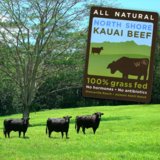
  • Grass-fed: Instead of being fed grains, these cows have only eaten grass throughout their lives. Advocates of grass feeding say it’s a win-win for the cow, the consumer, and the planet because it requires less energy, there’s less fat, and it’s more humane.
  • MSG: In scientific speak, MSG stands for monosodium glutamate. In regular speak, it’s a salt that’s added to food to taste better. It’s extremely hard to find items without MSG – it’s in everything from frozen foods to restaurant meals – and there are different opinions on its effects. Some say it doesn’t hurt, while others claim it’s harmful to the body.
  • Whole grain: This means that the entire grain is used in the product, including the parts of the kernel with the most nutrients. Rye and brown rice are common examples of whole grain. It shouldn’t be confused with multigrain, which simply means that more than one grain is used in the product.
  • GMOs: Also known as genetically modified organisms, this term refers to organisms that have been altered to grow faster, to have a longer shelf life, to be disease-resistance, to change color, and so on. Certain GMO-products don’t require labeling for different reasons, so it’s important to research before buying.
  • Natural: It’s hard to believe, but just about anyone can slap a “natural” sticker on their product; that’s because there’s no set definition of the term from the FDA or USDA, so it can mean many different things. For example, even sodas have been labeled natural.
  • Organic: To be labeled “organic” means a product must go through rigorous federal regulations. Essentially, you can rest assured that something organic has gone through strict farming or production practices and is made without pesticides, other toxins, GMOs, or artificial growth hormones. Many people say the quality of the product is worth its higher price tag.
  • Gluten-free: We should first understand what gluten is. The protein, commonly found in wheat and barley, gives dough its elasticity and allows it to keep its shape. Gluten-free diets have become increasingly popular these days, and they’re essential for people who suffer from digestive diseases, because it can damage their intestines. It typically doesn’t affect others that strongly, but many are …read more
    Source: FULL ARTICLE at fashionologie