Tag Archives: Labor Party

Australia PM says he'll scrap carbon tax 1 year early

Australia’s Prime Minister Kevin Rudd said Tuesday a deeply unpopular carbon tax will be replaced by a less-severe emissions trading scheme a year ahead of schedule, in a bid to lower power bills for households as a tight national election looms.

The carbon tax on Australia’s worst industrial polluters, including its coal-reliant power producers, went into effect in July 2012 and was supposed to remain in place until 2015. At that point, it was set to be replaced by an emissions trading scheme, in which the cost of emitting a ton of carbon would be determined by buyers and sellers in a carbon market.

Rudd is advancing that timeline by a year, with the emissions trading scheme now beginning on July 1, 2014. The move will reduce the cost of carbon from a predicted 25.40 Australian dollars ($22.40) per metric ton in July next year to an estimated AU$6 per metric ton, Rudd said.

“This is the fiscally responsible thing to do,” Rudd told reporters in the northern city of Townsville. “The nation’s 370 biggest polluters will continue to pay for their carbon pollution, but the cost will be reduced, meaning less pressure on consumers.”

The move is expected to save Australian households an average of AU$380 a year, Rudd said. The savings would largely be in the form of lower energy bills.

The government will make up for a predicted $3.8 billion shortfall in the federal budget with spending cuts, including scaling back funding for some environmental programs.

The carbon tax was enacted under the previous prime minister, Julia Gillard, who was ousted by Rudd last month in an internal Labor Party coup. Rudd had been ousted as prime minister by Gillard in her own internal coup three years earlier.

Under Gillard, Labor looked set for an overwhelming defeat at this year’s elections. But recent polls suggest the race has tightened since Rudd took back the reins. Gillard had set elections for Sept. 14, though Rudd can hold them between August and November. He has refused to publicly announce a date, though said “there’s not going to be a huge variation” from Sept. 14.

Gillard pushed through the carbon tax in a bid to gain needed support from the minor Greens party, despite a campaign promise not to do so. The government defended the move as a necessary weapon against climate change. Australia is one of the world’s worst greenhouse gas emitters per capita because of its heavy reliance on massive coal reserves to generate electricity.

But the backlash from the public was intense, with some dubbing Gillard “Ju-liar.” Conservative opposition leader Tony Abbott has repeatedly hammered Labor over the tax, using it to paint the ruling party as untrustworthy.

On Tuesday, Abbott criticized Rudd for saying the government was terminating the tax.

“All he’s done is simply brought forward Julia Gillard’s carbon tax changes by 12 months. He’s not the terminator — he’s the exaggerator. He’s not the terminator, he’s the fabricator,” Abbott told reporters in the island state of Tasmania. “He’s changed its name, but he hasn’t abolished …read more

Source: FULL ARTICLE at Fox World News

Australia tax revenue falls as mining boom cools

australia‘s government has revealed its tax revenue has continued to fall in recent months as company profits declined and the mining boom that kept the nation out of recession cools.

Prime Minister Julian Gillard said Monday that revenue for the fiscal year ending June 30 will be 12 billion Australian dollars ($12.4 billion) less than the Treasury’s forecast in October when a slender budget surplus of AU$1.1 billion was predicted.

Tax revenue is now expected to reach AU$340 billion in the current fiscal year. Economists expect a deficit of between AU$10 billion and AU$20 billion.

Gillard warned that a tough annual budget would be released on May 14, her center-left Labor Party government’s last before general elections in September that it faces an uphill battle to win.

Source: FULL ARTICLE at Fox World News

Maggie's Critics Each Owe her $3,000

By Paul Roderick Gregory, Contributor   England yesterday laid to rest former Prime Minister Margaret Thatcher with pomp and circumstances not seen since the Queen Mom’s funeral of 2002. Thatcher’s detractors turned their backs to her passing coffin, held signs “Rest in Shame,” and pushed the song “Ding Dong the Wicked Witch is Dead” to the top of the charts. Margaret Thatcher’s enemies will never forgive her for breaking the unions’ stranglehold, for her support of budgetary discipline, her privatization of England’s decaying state companies, and for deregulation. Her detractors will not forgive her alliance with Ronald Reagan against the USSR’s evil empire. They will not forgive her support of the first war against Saddam Hussein. Thatcher’s detractors will never concede that she reversed England’s fifty years decline as the “sick man of Europe” and restored her country to the top ranks of world economic powers. When I began teaching comparative economics in 1970, I showed students that it was rare for countries to undergo dramatic changes in their relative economic position. The rise of Japan starting in the 1870s was one of the few exceptions of a rising economic power. England – at the turn of the 20th century the world’s richest economy — was the rare exception of a country in an economic tailspin relative to its neighbors. I taught a whole chapter about the “British disease” plagued by runaway unions, ineffective demand management, decaying state enterprises, and overregulation. The British disease was evident in the many anecdotes of British economic inefficiency, but it was even more apparent in the collapse of England’s relative economic position in Europe:  In 1950, Germany and France’s per capita GDPs were between two third and three quarters of England’s. When Thatcher became Prime Minister in 1979, Germany and France were between ten and fifteen percent richer than England.  In 1950, England was twice as affluent as Italy. By 1979, the two had essentially the same per capita income. The mighty England was reduced to being Italy! Notably, the Thatcher Revolution did not end with Thatcher.  Thatcherism convinced the Labor Party to become New Labor. New Labor, unlike Old Labor, could win elections, and it continued the policies of Thatcher. After forty years of Thatcher and New Labor policies, England is again more affluent than rivals France and Germany, and it has left Italy behind in the dust. Over England’s half century of “British Disease,” various labor and Tory governments sought cures. None succeeded until Thatcher. I would challenge any economist to come up with an answer for the cure of the British disease other than the Thatcher reforms.  Unless those who hate Mrs. Thatcher can come up with another reason for England’s recovery, they should admit that her policies have made them on average $3,000 better off each year based on the following calculation:   In 1979, Germany and France’s combined GDP per capita was 14 percent higher than the UK. Under the favorable assumption that a UK without Thatcher could have maintained that deficit, its current GDP

From: http://www.forbes.com/sites/paulroderickgregory/2013/04/18/maggies-critics-each-owe-her-3000/

Security raised at Norway party convention

Norway‘s governing Labor Party has tightened security at its first convention since a far-right extremist who railed against the party’s immigration policies killed 77 people in a bombing and shooting massacre.

Labor officials cited an “overall assessment” of the situation in Norway, but wouldn’t say whether the raised security level was linked to Anders Behring Breivik‘s attacks on July 22, 2011, or the explosions at the Boston Marathon this week.

The four-day convention starts Thursday with Prime Minister Jens Stoltenberg leading a memorial service for the victims of Breivik’s violence.

The anti-Muslim fanatic detonated a bomb that killed eight in Oslo before killing 69 people, mostly teenagers, at the Labor Party‘s youth summer camp. He’s serving a 21-year sentence that can be extended for as long as he’s considered dangerous.

From: http://feeds.foxnews.com/~r/foxnews/world/~3/9T95RmmZLNQ/

Remembering Margaret Thatcher

By Michael Reagan

Margaret Thatcher SC Remembering Margaret Thatcher

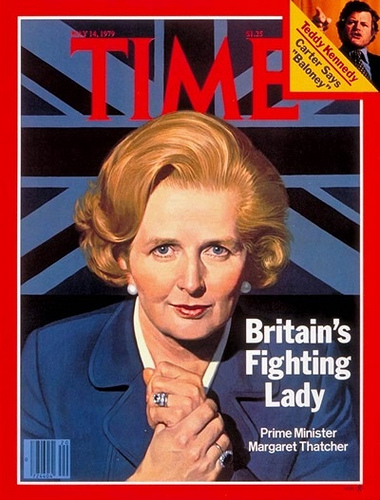
Margaret Thatcher, who served as prime minister of Britain from 1979 to 1990, is most famous for teaming up with my father Ronald Reagan and Pope John Paul II to peacefully end the Cold War and bring about the collapse of the Soviet Union.

But at home, the “Iron Lady’s” intellect, political will, and love of freedom and capitalism also saved Britain from its long, slow death by socialism.

Prime Minister Thatcher freed up Britain’s economy by deregulating business, privatizing government-owned industries, and breaking the back of the powerful unions that were smothering her country to death.

Not that The New York Times can bring itself to give Lady Thatcher much credit for any of this in its coverage of her death from a stroke on Monday at age 87.

Paul Krugman, the pathetic Times’ in-house apologist for the serial failures of the Obama Economy, dug out some arcane data that he said raises doubts that Thatcher’s pro-capitalist policies actually did anything to turn around Britain’s economy.

Meanwhile, a so-called news article in the Times on Wednesday about the debate over Thatcher’s legacy in the British Parliament is the latest example of how the Paper of Record’s liberal bias is always at work.

Two Times writers — John F. Burns and Alan Cowell — said, “The Thatcher era is generally recalled as a time when a capitalist revolution crushed labor unions, decimated staid industries that had once formed the nation’s economic base, and inaugurated a period of robust economic growth that sanctified a generation’s acquisitiveness.”

No bias there, right?

I think Burns and Cowell spent more time describing what nasty things Thatcher’s left-wing critics in the Labor Party had to say about her than mentioning her triumphs.

But Lady Thatcher doesn’t need the support of The New York Times or Hollywood to make it into the history books. Her accomplishments on the world stage will speak for themselves forever.

I’ll never forget meeting Lady Thatcher several times in London and in the United States. But my greatest memory of her occurred in 2004 when, despite being very ill, she attended my father’s funeral at the Reagan Library.

The morning after the funeral, as I was eating at the hotel with my family, I greeted Lady Thatcher when she came in for breakfast.

“Oh, Michael,” she said in that great accent of hers. “Think of how much we could have accomplished if your father had been elected in 1976, not 1980.”

Lady Thatcher,” I said with the greatest respect, “I think God chooses the time for many of the things that happen in the world. And 1976 wasn’t that time; 1980 in fact was.”

“Why would you say that?” she said.

“Simply because I look at 1976 and I say, ‘Where was Margaret Thatcher? Where was Pope John Paul II? Where was Lech Walesa and Helmut Kohl and Mikhail Gorbachev?’ In 1976, none of you were in positions of power to do anything.

“But 1980 was the right time,” I said to Lady Thatcher.

“You were prime minister. Pope John Paul was pope. And you had

From: http://www.westernjournalism.com/remembering-margaret-thatcher/

Australian PM names Cabinet emphasizing loyalty

Prime Minister Julia Gillard emphasized loyalty over experience in new Cabinet selections named Monday after a bungled leadership challenge laid bare intra-government turmoil further damaging her party’s image months before an election.

Five ministers resigned or were sacked from their executive jobs for promoting a challenge by Gillard’s predecessor Kevin Rudd that failed when he decided against running on the ballot within the ruling Labor Party.

Gillard called the leadership mess “appalling” in remarks Monday to reporters.

“It was an unseemly display,” she said. “Today as a government we can be united and with a sense of purpose,” she added.

Most of the lawmakers whom Gillard promoted were known loyalists in the longstanding rivalry between Gillard and Rudd.

The Resources and Energy Ministry, crucial to Australia‘s mining-oriented economy, was given to Special Minister of State Gary Gray, a former gas company executive from resource-rich Western Australia state. The position had been filled to acclaim by Rudd supporter Martin Ferguson since the Labor government was first elected under Rudd’s leadership in 2007.

Transport Minister Anthony Albanese stayed, even though he had been tipped to be deputy prime minister if Rudd regained the leadership. Reports have said ministers urged Albanese not to resign because he was too important to the government.

Gillard promoted Albanese by giving him the portfolios Regional Development and Local Government. Those ministries had been held by Simon Crean, whom Gillard dumped for publicly calling for a leadership ballot.

Gillard said she was confident of Albanese’s loyalty.

“I have always been able to work with Minister Albanese well,” she said. “He’s been very central to the life of this government and I believe he will serve very well and with a very strong sense of loyalty into the future.”

Australian National University political scientist Michael McKinley said the promotions were clearly not made on merit.

“If they were any good, they would have been in the Cabinet already,” he said.

Foreign Minister Bob Carr, who has denied media reports that he had been prepared to back a Rudd challenge, remained in his post.

…read more
Source: FULL ARTICLE at Fox World News

Norway mass murderer wants to attend mom's funeral

Norwegian mass murderer Anders Behring Breivik has said he would like to attend the funeral of his mother, his lawyer said Saturday.

Breivik and his mother Wenche Behring Breivik met earlier this month at Ila Prison where Breivik is being held, Tord Jordet said. She died Friday after a long illness, according to her lawyer Ragnhild Torgersen. She was 66.

“He was allowed to say goodbye. They both knew it would be the final meeting,” Jordet told The Associated Press. “I spoke to him this morning. He was grieving. It was very sad news to him. “

Breivik and Jordet also discussed whether the confessed mass murder would like to attend her funeral. “He would like to do so but it is up to the prison (board) to decide,” Jordet said.

The 34-year-old right-wing fanatic killed 77 people in twin attacks on July 22, 2011, in Norway‘s worst peacetime massacre. He detonated a car bomb outside government offices in Oslo killing eight people and then drove to the island of Utoya where he massacred 69 in a shooting spree at the summer camp of the governing Labor Party‘s youth wing.

Five years before the massacre, Breivik had moved back to live with his mother and ended all social contacts. His mother never attended Breivik’s 10-week trial for health reasons, but in a statement read in court she said Breivik had fabricated information.

Breivik and his mother had telephone contacts in recent months because she was not able to visit him in prison for health reasons, Jordet said.

“He told me they had completely opposite ideological views but they had a good mother and son relationship,” the lawyer said. “He regarded her as a good mother.”

Last year, the Oslo District Court found Breivik guilty of terrorism and premeditated murder for the attacks. He was given a 21-year prison sentence that can be extended if he’s considered a threat.

The self-styled anti-Muslim militant denied criminal guilt, saying he’s a commander of a resistance movement aiming to overthrow European governments and replace them with “patriotic” regimes that will deport Muslim immigrants. Police said they found no evidence of Breivik belonging to any such group.

…read more
Source: FULL ARTICLE at Fox World News

Australia's Gillard calls for leadership ballot

Prime Minister Julia Gillard has called for a leadership ballot Thursday as her party faces the growing prospect of a sound election defeat later this year.

She said the ballot of a leader and deputy leader of the Labor Party would be held in the afternoon, hours after a senior minister called on her to hold a vote.

Minister Simon Crean said he would nominate as the deputy and wanted former prime minister Kevin Rudd to stand as the candidate for the top post.

…read more
Source: FULL ARTICLE at Fox World News

Speculation mounts of Aussie leadership challenge

Speculation is intensifying that Prime Minister Julia Gillard will be challenged soon for her party’s leadership as opinion polls increasingly suggest her government would be crushed at Australia‘s upcoming elections.

Center-left Labor Party government lawmakers publically stood by their beleaguered leader Wednesday. But The Australian Financial Review newspaper reported three unnamed senior Gillard backers saying support among government ranks for her predecessor Kevin Rudd was growing.

Part of Rudd’s appeal is opinion polling that shows Rudd would be a far more popular choice as prime minister than Gillard.

Rudd led Labor to victory at elections in 2007, then was deposed by his then-deputy Gillard in an internal party coup in 2010. He challenged her last year but was roundly defeated in a ballot of Labor lawmakers by 71 votes to 31.

Members of her inner circle told the newspaper Rudd might now have the support of most of the party or could be as close as five votes away from a majority.

Nine Network television news reported Tuesday that Rudd backers had raised with colleagues the prospect of a leadership challenge which could happen this week before Parliament is adjourned for seven weeks.

Rudd has ruled out mounting a second challenge himself but has left open the possibility his colleagues could nominate him.

Gillard told Parliament on Tuesday that she would lead her government to victory over the conservative opposition coalition led by Tony Abbott at elections Sept. 14.

“It will be a contest counter-intuitive to those believing in gender stereotypes, but a contest between a strong feisty woman and a policy-weak man, and I’ll win it,” she said.

A party leadership change could trigger earlier elections. Gillard rules a minority government with the support of two independent lawmakers and a legislator from the Greens party.

But one of those independents, Tony Windsor, warned on Wednesday that he would not necessarily support a government led by Rudd.

“Essentially the deal would be off if there’s a leadership change,” Windsor said. “I haven’t signed up to be a camp follower of the Labor Party and all its machinations.”

…read more
Source: FULL ARTICLE at Fox World News

Australia gets first Aboriginal government leader

Australia has its first Aboriginal leader of a provincial government, in a development welcomed by the prime minister as a historic moment for the nation’s impoverished indigenous population.

Adam Giles was sworn in Wednesday as government head of the Northern Territory, one of two Australian mainland territories which are largely treated as equals to the six states.

He became leader in an internal coup within the ruling conservative Country Liberal Party while the former chief minister Terry Mills was in Japan on a business trip.

Prime Minister Julia Gillard, who leads a center-left Labor Party government, told Federal Parliament on Thursday that Giles’ promotion deserved national recognition.

She said: “This is a moment in history for indigenous Australians and it’s appropriate that we mark it in this chamber.”

…read more
Source: FULL ARTICLE at Fox World News

Malta swears in new premier after big election win

The tiny Mediterranean country of Malta has sworn in as premier the 39-year-old leader of the Labor Party, who captured the biggest electoral victory since independence.

Joseph Muscat was cheered by huge crowds of supporters Monday as he became the second-youngest premier in Malta‘s history.

His party won 55 percent of the vote in Saturday’s national election to oust the Nationalist Party after 15 years in power which garnered 43 percent of the vote. It was the largest victory by a political party since the archipelago obtained independence from Britain in 1964.

The Labor Party is expected to have a nine-seat majority in Parliament, a contrast from the Nationalist Party‘s one-seat majority in the last legislature.

Muscat’s first duty is to appoint ministers before an EU summit Thursday.

…read more
Source: FULL ARTICLE at Fox World News

Maltese hold national elections

Maltese head to the polls Saturday to decide whether to grant the center-right Nationalist Party a fourth straight term or give the opposition a shot at government after 15 years.

The ruling Nationalist Party has campaigned on its strong employment record, with Malta boasting Europe‘s lowest unemployment rate of 4.3 percent. Prime Minister Lawrence Gonzi, 59, also has promised more education and health spending and lower income taxes.

The opposition Labor Party, led by Joseph Muscat, 39, has pledged to reduce water and electricity rates, a major bone of contention in the past legislature, along with greater civil liberties, less bureaucracy and action to fight corruption.

Some 330,000 Maltese are eligible to vote between 7 a.m. and 10 p.m. Results are expected Sunday afternoon.

)

…read more
Source: FULL ARTICLE at Fox World News

2 Australian government ministers quit politics

Two senior Australian government ministers announced Saturday that they are quitting politics only days after beleaguered Prime Minister Julia Gillard said elections will be held in September.

Government leader in the Senate Chris Evans, the third most senior government minister, and Attorney General Nicola Roxon announced they have resigned from Cabinet.

Evans, the minister for tertiary education, skills, science and research, said he will quit the Senate within months. Roxon will leave the Parliament at the next election.

Both said they were quitting politics for personal reasons and praised Gillard’s leadership.

“Like Chris, I believe we can win the next election. I believe that we will win the next election,” Roxon told reporters as she stood beside Evans and Gillard at a news conference at Parliament House.

Gillard said she will swear in a new Cabinet on Monday before Parliament sits for the first time this year on Tuesday.

It will be the final reshuffle before the center-left Labor Party government faces likely defeat at the next election to a conservative coalition led by Tony Abbott.

Gillard said she had known for months that neither minister wanted to remain in Parliament past the next election.

She praised the two for their contributions, and rejected journalists’ suggestions that the timing of the resignations after the election date was set reflected a government in chaos.

“I’ve always had it in my mind that this was the time to announce new arrangements,” she said.

Gillard surprised Australians on Wednesday by announcing the Sept. 14 election date. Australian governments traditionally give the opposition little more than a month’s notice to keep a strategic advantage.

Her government narrowly scraped through the last elections in August 2010 to form a minority government with the support of independent legislators and a lawmaker from the minor Greens party.

Since then, every major opinion poll has shown the government lagging well behind the opposition. A glimmer of hope for the government is that polls show Gillard is the more popular choice for national leader than her rival, Abbott.

Since Gillard set the election date, triggering what commentators have described as the longest election campaign in Australia history, her party has been tarnished by scandal.

Independent lawmaker Craig Thomson, who quit the Labor Party at Gillard’s insistence in April last year over longstanding allegations that he misused trade union funds in his previous career as a union official, was arrested by police on Thursday on fraud charges stemming from those allegations.

While Gillard had sidelined Thomson from the ruling party in the hope of reviving public confidence in her government, her opponents remind her that she had previously long stated her full confidence in the lawmaker.

A corruption inquiry in New South Wales, Australia‘s most populous state, has heard evidence daily this week of illegal profiteering from insider knowledge on coal mining applications involving senior members of the previous Labor state government, which suffered a crushing defeat at elections in 2011.

Federal ministers agree that evidence of corruption in the party’s state branch is harming their chances of re-election at the federal elections.

Source: FULL ARTICLE at Fox World News

Australian PM announces Sept. 14 elections

Prime Minister Julia Gillard surprised Australians on Wednesday by announcing that elections will be held Sept. 14, in a country where governments have traditionally given the opposition little more than a month’s notice to keep a strategic advantage.

In a speech to the National Press Gallery, Gillard said she wanted to create an environment in which voters could more easily focus on national issues by removing uncertainty around the timing.

“I reflected on this over the summer and I thought it’s not right for Australians to be forced into a guessing game, and it’s not right for Australians to not face this year with certainty and stability,” she said, referring to her holiday break during the current southern summer.

Opinion polls suggest the conservative opposition coalition led by Tony Abbott is likely to win convincingly.

Gillard’s center-left Labor Party narrowly scraped through the last elections on Aug. 21, 2010, to form a minority government with the support of independent legislators and a lawmaker from the minor Greens party.

She said she had consulted on her decision on the date with Deputy Prime Minister Wayne Swan and senior colleagues. Independent lawmakers who support her government, Rob Oakeshott and Tony Windsor, said they were informed of the date Tuesday night.

Gillard said that given the poll date certainty, the opposition would have no excuse to delay the release of the details and costs of their campaign platform.

While the announcement was a surprise, the date was not. Gillard had to set a date between August and the end of the year. Sept. 14 had been touted by commentators as a likely date.

Oakeshott and Windsor said Gillard had agreed in 2010 to hold the next election in September or October.

Source: FULL ARTICLE at Fox World News

Before Israelis vote, peace is not on agenda

Benjamin Netanyahu seems poised for re-election as Israel‘s prime minister in Tuesday’s voting, the result of the failure of his opponents to unite behind a viable candidate against him — and the fact that most Israelis no longer seem to believe it’s possible to reach a peace settlement with the Palestinians.

The widely held assumption of a victory by Netanyahu comes despite his grim record: there is no peace process, there is growing diplomatic isolation and a slowing economy, and his main ally has been forced to step down as foreign minister because of corruption allegations.

Even so, Netanyahu has managed to convince enough Israelis that he offers a respectable choice by projecting experience, toughness and great powers of communication in both native Hebrew and flawless American English.

He was also handed a gift by the opposition. Persistent squabbling by main figures divided among main parties in the moderate camp has made this the first election in decades without two clear opposing candidates for prime minister. Even Netanyahu’s opponents have suggested his victory is inevitable.

“His rivals are fragmented,” said Yossi Sarid, a dovish former Cabinet minister who now writes a column for the Haaretz newspaper. “He benefits by default,” he told The Associated Press in an interview.

The confusion and hopelessness that now characterize the issue of peace with the Palestinians has cost the moderates their historical campaign focus.

Many Israelis are disillusioned with the bitter experience of Israel‘s unilateral pullout from the Gaza Strip in 2005 that led to years of violence. Others believe Israel‘s best possible offers have been made and rejected already, concluding that they cannot meet the Palestinians’ minimal demands.

Former Prime Minister Ehud Olmert has said in 2008 he offered the Palestinians roughly 95 percent of the West Bank, and additional territory from Israel in a “land swap.” He also said he offered shared control of Jerusalem, including its holy sites. The Palestinians have disputed some of Olmert’s account and suggested they could not close a deal with a leader who was by then a lame duck.

“There can’t be peace because we’ve tried everything already. All the options have been exhausted. They apparently don’t want to make peace, said Eli Tzarfati, a 51-year-old resident of the northern town of Migdal Haemek. “It doesn’t matter what you give them — it won’t be enough.”

Tzarfati expressed what seems to be a common sentiment.

A poll conducted last week in Israel by the New Wave Polling Research Institute found that 52 percent of respondents support the establishment of a Palestinian state alongside Israel as part of a peace agreement. Yet 62 percent said they do not believe the Palestinian president, Mahmoud Abbas, is a partner for peace — and an identical number said it is not possible to reach a peace agreement. The survey questioned 576 people and had a margin of error of 4.1 percent.

In the absence of peace talks, those who wanted to end Israel‘s occupation of Palestinian lands used to speak of a unilateral pullout from at least some of the territories. But that idea has been mostly removed from the table because of the Gaza pullout, which led to the territory’s takeover by Hamas militants and years of rocket fire into Israel.

This situation leaves many Israelis at a loss over what to do next.

Since most of the Palestinians are now living in autonomous zones inside the West Bank and prevented from entering Israel, and violence has largely subsided, the most attractive option to Israelis seems to be ignoring the issue.

That is what the main opposition party chose to do in this campaign. Labor Party leader Shelly Yachimovich has mostly focused on a populist social message in hopes of attracting working-class citizens who might otherwise vote for the hard-liners. In the past, Labor has been the leader of Israel‘s peace camp.

Another member of the moderate camp, former TV personality Yair Lapid, argues primarily for ending the costly government subsidies and draft exemptions granted to Israel‘s ultra-Orthodox minority.

Only one party with national leadership ambitions, the new “Movement” formed by former Foreign Minister Tzipi Livni, has made Mideast peace the centerpiece of its campaign. Polls show the party gaining little traction.

Sarid dismissed current public opinion as a “weather vane” that can easily shift.

Israel has gone to war seven, eight times. It never despaired of going to war,” he said. “If after seven attempts at war you don’t despair, and after the first attempt at peace you do, that seems strange, no?”

Whatever the results for individual parties, the operative question is whether all the right-wing parties together can secure at least 61 seats of the 120 in parliament, the minimum for a majority coalition. Although all polls predict they will, several major polls last Friday showed the right with only 63 seats, versus 57 for the parties of the center-left.

Though the trend has been constant, the gap falls close to the margin of error of the polls, and they have been wrong in the past.

Should the right wing and religious parties fail to muster a majority, there will be a mad scramble on the center-left to try to form a coalition on their own. Under such a shocking result, the prime minister could end up being Yachimovich, a former radio journalist who admitted once backing Israel‘s Communist party.

Netanyahu has maintained a lead with a message that the country needs a tough-minded and experienced leader to face down dangers including the Iranian nuclear program, potentially loose chemical weapons in Syria and the rise of fundamentalist Islam in Egypt and other countries in the Arab Spring.

By comparison, the Palestinian issue seems less important to many Israelis.

Netanyahu’s Likud-Yisrael Beitenu alliance is dominated by lawmakers who say the conflict can be managed, but not resolved. The surging pro-settler Jewish Home party has gone even further. It advocates annexation of large chunks of the West Bank, the heartland of any future Palestinian state.

Critics warn that Israelis are ignoring the issue at their peril. First, there are increasing signs that the current lull in violence may be temporary — both because the Palestinian street is getting frustrated and because Abbas’ Palestinian Authority may cease the security cooperation which even Israeli officials have credited with the halt in violence.

Beyond that, there is a persistent chorus warning that the status quo is ultimately self-defeating for Israel because the default outcome is a single entity in the Holy Land — comprising Israel and all the areas it seized in the 1967 war. Based on current birthrates, most experts believe that Arabs would soon be the majority.

Palestinian officials say that Abbas has repeatedly warned Israeli visitors in recent months that Israel could end up like an “apartheid-style” state with a Jewish minority ruling over a disenfranchised Arab minority. At that point, the Arabs would turn their struggle away from independence and instead seek equality in a single state.

“Sooner or later the Israeli public should come to the realization that the longevity, security and legitimacy of their state are dependent on their treatment of the Palestinian people and their commitment to peace and justice, not to the subjugation of a whole nation,” Hanan Ashrawi, a senior official in the Palestine Liberation Organization, wrote in Haaretz.

Source: FULL ARTICLE at Fox World News

Palestinians despair over likely Netanyahu win

Palestinian officials largely view Benjamin Netanyahu‘s expected re-election with despair, fearing the Israeli hard-liner’s ambitious plans for settlement construction over the next four years could prove lethal to their dreams of a state.

Some in Palestinian President Mahmoud Abbas’ circle hold out hope that President Barack Obama will re-engage in the Israeli-Palestinian conflict, and, freed from domestic electoral considerations in his second term, get tougher with Netanyahu on settlements. One aide suggested Europe is ready to jump in with its own peace plan if Washington is not.

But short of trying to rally international opinion, it seems Abbas can do little if Netanyahu wins Tuesday.

Israeli polls indicate that a majority of seats in Israel‘s 120-member parliament will go to right-wing, pro-settler or Jewish ultra-Orthodox religious parties, with Netanyahu’s Likud the largest among them. Netanyahu could comfortably form a coalition government with these parties, seen as his natural ideological allies.

Even if he adds a centrist party to the mix, he’s unlikely to shift course from the pro-settler policies of his current government.

Under Netanyahu, construction reportedly began on nearly 6,900 settlement homes in the West Bank, captured by Israel in the 1967 war, along with Gaza and east Jerusalem. The Palestinians want to set up a state in the three territories.

That’s a bit less than what was started by Netanyahu’s predecessor, but many of the new homes are deeper in the West Bank, the Israeli anti-settlement group Peace Now said this week. Thousands more apartments are in various stages of planning, Peace Now said, predicting an “explosion” of settlement construction in coming years.

Since 1967, Israel has moved more than half a million of its citizens to the West Bank and east Jerusalem.

The conflict with the Palestinians and the fate of the occupied lands, hotly debated in Israel for decades, were largely missing from Israeli political discourse this campaign season. The centrist Labor Party, which led peace talks with the Palestinians in the past, has shifted almost exclusively to domestic concerns, such as growing income gaps.

A research department in the Palestine Liberation Organization, reviewing Israeli party platforms, concluded that most parties proposed to manage the conflict with the Palestinians, not end it.

“This appears to scorch all hopes for the internationally endorsed two-state solution,” the department wrote in an internal memo distributed to Palestinian officials and foreign diplomats.

Abbas aide Mohammed Ishtayeh said he and other senior officials have been watching the Israeli campaign closely.

“The first strong impression is that peace is not on the agenda of the Israeli parties, and it’s clear that Netanyahu is winning,” he said.

A Netanyahu victory “will be hard for us because it means more and more building in the settlements.” he added.

Palestinians believe hopes for their state are slipping further away with each new settlement home, and that partition of the land between the Mediterranean and the Jordan River may soon no longer be possible.

Abbas has warned in a series of meetings with visiting Israeli politicians and mayors in recent months that Netanyahu’s policies will force Israelis and Palestinians to live in a single state, said an Abbas aide who spoke on condition of anonymity because he was not authorized to talk about closed-door discussions.

President Abbas warned Israeli party leaders that in the short run, this one state imposed by Netanyahu will be an apartheid state, but in the long run, our grandchildren will ask for equality,” the aide said.

Settlements are at the core of the paralysis in peace efforts talks since late 2008. Netanyahu refuses to freeze construction, rebuffing Abbas who says there is no point in negotiating while settlements steadily gobble up more of the occupied lands.

The standoff is likely to continue, though the Palestinians believe their diplomatic leverage has improved.

In November, the U.N. General Assembly recognized a state of Palestine in the West Bank, Gaza and east Jerusalem. The vote, while largely symbolic, affirmed the 1967 frontier which the Palestinians want to be the base line for future border talks. Netanyahu, while willing to negotiate, wont’ recognize the 1967 lines as a point of reference and wants to keep all of Jerusalem and parts of the West Bank.

Some Palestinian officials hope Obama will now be tougher with Netanyahu. Palestinians were disappointed in Obama‘s performance in his first term, with the president seen as having backed down in a showdown with Netanyahu over settlements.

Earlier this week, there were signs of a more assertive president.

An American columnist with close ties to the White House described Obama‘s disdain for Netanyahu, warning that Israel‘s relations with the U.S. could suffer if the Israeli government doesn’t change its policies. The columnist, Jeffrey Goldberg, quoted the president as saying that “Israel doesn’t know what its own best interests are.”

Nabil Shaath, another Abbas aide, said the Obama administration needs to become more assertive.

The Americans “keep talking about negotiations and the need to restart the negotiations,” said Shaath. “But what is needed is for the U.S. to pressure Israel to stop settlement activities and to go to real negotiations, to reach an agreement within six months.”

Europe might also get more involved, he said. France, Britain and Germany are working on a peace initiative and are trying to get the U.S. on board, he said, adding that “there is nothing written on paper.”

Palestinian officials have said they might also try to challenge a Netanyahu-led Israel in other ways, including by seeking war crimes charges at the International Criminal Court over settlement building. However, such a move would likely anger the U.S. and Abbas has not taken any concrete steps in that direction.

While those around Abbas privately agonize over four more years of Netanyahu, many ordinary Palestinians seem indifferent to the outcome of the vote.

Wajdi Sbeih, an electrical engineer from the West Bank town of Ramallah, said he’ll watch the results Tuesday night, but won’t care much. “The Labor Party came, the Likud came, but when it came to the Palestinians, they all had the same politics,” he said.

___

Laub reported from Jerusalem. Associated Press writer Dalia Nammari in Ramallah contributed.

Source: FULL ARTICLE at Fox World News

Israel's Labor head poised to be Netanyahu gadfly

Just seven years after quitting her job as a high-profile media commentator, the leader of Israel‘s Labor Party appears to be on track to become head of the country’s second-largest parliamentary faction and the leading voice against Prime Minister Benjamin Netanyahu.

And if Netanyahu’s coalition somehow falls short of a majority in next week’s election, Shelly Yachimovich would likely wind up with a far more important job: prime minister of Israel.

Yachimovich, 52, took over Labor, the once-storied movement that led Israel to independence, in late 2011 at one of its lowest points. Buoyed by a social protest movement, she revitalized the party by veering away from its traditional dovish platform of promoting peace with the Arabs and focusing almost entirely on the economy, jobs and the country’s various social ills.

Her political ascent, along with the strength of the Israeli right wing, underscores that pursuing peace with the Palestinians is not a winning campaign issue among Israelis, who appear to have lost faith that West Bank lands can be traded for peace.

Skeptical Israelis point to the rising strength of Hamas militants in Gaza Strip, the uncertainty roiling the region as the Arab Spring unfolds, and the wide gaps with moderate Palestinian President Mahmoud Abbas that have kept negotiations deadlocked the past four years. Even when Israeli leaders proposed what they considered far-reaching offers, during the 2000-2001 negotiations and again in 2008, no deal was reached.

Netanyahu’s Likud-Beiteinu bloc remains far ahead in the polls before the Jan. 22 vote, and Yachimovich has vowed not to serve in a Netanyahu government. As a result, she looks likely to become the country’s new opposition leader, a forum that could allow the articulate populist to further burnish her credentials for any future race for prime minister.

Yachimovich appears set nearly to double Labor’s presence from eight to as many as 18 seats in the 120-seat parliament. That would leave it well behind Likud-Beitenu but still the second-largest party in parliament.

Although Labor‘s roots were socialist, Yachimovich’s economy-focused approach has alienated some of Labor’s traditional supporters. Critics accuse her of turning Labor — which dominated Israeli politics for the country’s first 30 years and produced prime ministers like David Ben-Gurion, Shimon Peres and Yitzhak Rabin — into a niche party that ignores Israel‘s diplomatic and security challenges and fails to present a viable alternative to the security-obsessed right.

Last week, acclaimed Israeli author Amos Oz attacked Yachimovich for neglecting the Palestinian issue, saying she was worse than former Labor leader Ehud Barak, who serves as Netanyahu’s defense minister. Barak’s defection from the party in 2011 opened the way for Yachimovich to take the helm.

“He (Barak) says there is no solution. She (Yachimovich) says there is no problem,” said Oz, one of the most eloquent voices of Israel‘s left.

Yachimovich has also tiptoed around some of the traditional targets of the left — the huge government outlays on West Bank settlers and ultra-Orthodox Jews — in an effort to appeal to working-class voters who like Netanyahu’s hard line on security but have been hurt by his economic policies.

Israel Radio political analyst Hanan Kristal gave Yachimovich high marks for making the party younger, more dynamic and “changing its DNA.” But he said she was not a strong prime ministerial candidate like Netanyahu, or Barak and Ehud Olmert before him, because of her narrow focus.

“She’s channeled the Labor Party into a one-issue party,” he said. “That’s her ideology, but it’s also her strong suit. She’s not as strong when it comes to diplomacy and security.”

Public opinion polls confirm that most Israelis do not see her as prime ministerial material, and overwhelmingly see Netanyahu as best suited for the job. But if pre-election polls prove dramatically wrong and Netanyahu and his allies don’t win enough support to form the next government, that task could fall to her.

Yachimovich’s one-time mentor-turned-rival, former Defense Minister Amir Peretz, abruptly left Labor last month to team up with former Foreign Minister Tzipi Livni in a new party whose focus is resolving the Israeli-Palestinian conflict. Peretz, a former Labor leader, assailed Yachimovich for avoiding the conflict with the Palestinians.

“Labor gave up its historic role as the leader of the peace movement,” he charged.

Yachimovich told the Yediot Ahronot newspaper website recently that Labor “is not a leftist party and never was. … It strived for peace out of pragmatism and not out of some romantic dream of peace.”

“It is much harder to deal with the socio-economic agenda,” she added.

As a journalist, author and radio show host, Yachimovich made her name as a passionate advocate for the downtrodden. She has acknowledged voting in the past for Hadash, a party which has communist leanings. The daughter of Holocaust survivors from Poland, Yachimovich often invokes her working-class roots by mentioning that her father worked in construction. She has two children and lives in Tel Aviv.

In politics, she has been an energetic lawmaker, passing legislation on behalf of the poor and promoting woman’s rights. But it was the mass grassroots protests against Israel‘s high cost of living that erupted in the summer of 2011, drawing hundreds of thousands into the streets, that provided her tail wind.

Taking aim at Netanyahu, she has depicted him as a cold capitalist out of touch with the average Israeli.

While the country has a per capita income approaching Western Europe’s, the gaps between rich and poor are wide, and many people have trouble making ends meet. Few seem to have benefited from the country’s impressive economic growth while many have suffered from the erosion of social welfare safeguards.

Unlike Netanyahu, Yachimovich tends to favor a strong government safety net.

Netanyahu’s campaign has focused on how he has fought Palestinian militants and stood strong against Iran’s suspected nuclear program. But this week’s news that Israel‘s 2012 national deficit ballooned to twice its initial projection, roughly $10.5 billion, played right into Yachimovich’s hands.

“Netanyahu is leading the Israeli economy to total collapse,” she said. “Four more years with him, and the damage will be irreversible.”

Source: FULL ARTICLE at Fox World News