Tag Archives: James Madison

James Madison Earns Date With Indiana By Defeating LIU Brooklyn In First Four

By The Huffington Post News Editors

DAYTON, Ohio — After winning the program’s first NCAA tournament game in 30 years, James Madison sounds as if it’s not done.

A.J. Davis, who stepped in as a starter because the leading scorer was suspended for a half, led the way with 20 points as the Dukes beat LIU Brooklyn 68-55 on Wednesday night in the First Four.

Read More…
More on March Madness

…read more
Source: FULL ARTICLE at Huffington Post

The Beginning and End of the 2 Great Crashes of the 21st Century

By Alex Planes, The Motley Fool

Filed under:

On this day in economic and financial history …

The Dow Jones Industrial Average reached the end of its financial crisis bear-market slide on March 9, 2009. This was only the second bear market to destroy more than half of the Dow’s value and thus was the second most devastating crash in Dow history, behind only that which began the Great Depression. It also became the second most volatile bear market in history, with the exception of the very brief crash of 1987 — an average trading day during the financial crisis slide saw the Dow’s change by an average of 1.51% in either direction.

The causes and consequences of this collapse continue to be debated and explored years later, and investors remain on edge, the memory of wealth destruction fresh in their minds. Nearly four years to the day after the crash ended, the Dow surpassed its previous heights, returning to levels first reached in 2007. Will this new level endure? Only time will tell.

Click here to see an in-depth timeline of the financial-crisis crash, from the early warning signs to the first days of recovery.

Wealth of Nations
Adam Smith’s An Inquiry Into the Nature and Causes of the Wealth of Nations was first published on March 9, 1776. It is now widely regarded as one of the cornerstone texts of classical economics, and it has influenced economics writers for centuries in the same way that Isaac Newton advanced physics and Charles Darwin revolutionized biology. Founding Father Alexander Hamilton pushed back against it in 1791, but both James Madison and Thomas Jefferson found wisdom in its pages. Jean-Baptiste Say (of Say’s Law) and economic demographer Thomas Malthus both drew inspiration from it. So did Austrian economist Ludwig von Mises, who embraced Smith’s support of generally unfettered capitalism.

Smith put forth the concept of gross domestic product as a measurement of national wealth, supported a division of labor into specialist fields for greater productivity, recognized the two-way benefits of trade, and identified the underlying efficiency in the apparent chaos of free markets. These are only some of the key elements of Smith’s 950-page magnum opus. Few (if any) economics texts come close to matching it in importance, with the possible exception of John Maynard Keynes’ General Theory of Employment, Interest, and Money.

Barbie girl in a Barbie world
Barbie, the world’s best-selling toy, made her debut for Mattel on March 9, 1959. The doll’s launch was the result of a multiyear development process that began, simply enough, when Ruth Handler, the wife of Mattel co-founder Elliot Handler, noticed how much her daughter Barbara enjoyed playing with paper dolls. A 1956 trip to Europe exposed Ruth Handler to the German Bild Lilli doll, which bears a distinct resemblance to Barbie, with its blonde hair, movable head and limbs, and mature (for a plastic …read more
Source: FULL ARTICLE at DailyFinance

The Case For Celebrating George Washington’s Birthday

By G. Michael Fielding

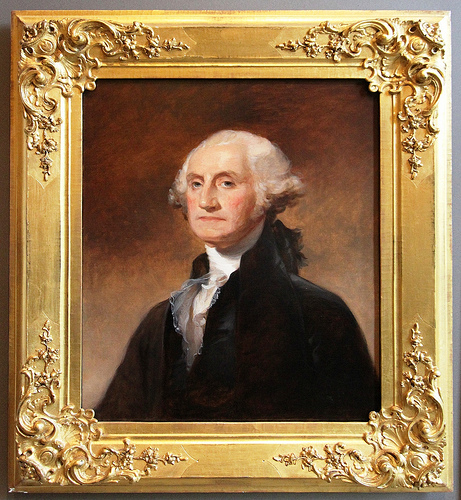
George Washington 2 SC The Case For Celebrating George Washingtons Birthday

Merriam-Webster defines a Statesman as a “wise, skillful, and respected political leader.” The same dictionary describes a politician as “a person experienced in the art or science of government.”  It also gives the definition:  “a person engaged in conducting the business of a government.”

When we think of a President today, who do we think of?  Our first thought may well come towards our current President.  Or we may think of JFK, or Ronald Reagan, or Franklin Roosevelt.  But if we are honest with ourselves, what exactly comes to our minds when we think of our current President?  Could it be intimidation, class-warfare, or an iron fist of demands that must “take place or else”?  The problem with our current President is that he wasn’t elected to be President.  What came to be, as a result of the media outlets and the entertainment industry, is the election of “Hollywood” to be our leader.  Not Hollywood in the real sense of the word such as film, actors, movies, and film producers, but a political celebrity.

Now, when we look in our wallets and pull out a dollar bill, does anyone take the time to think about the face on that bill?  It is a man we refer to as the “Father of our Country,” George Washington.  Our first President was not the intellectual beast that graced such men as Benjamin Franklin, John Adams, or James Madison.  As a matter of fact, Washington’s educational background was minimal with no more than maybe five years of formal education, with the rest of his learning occurring through his mother and self-teaching.  He didn’t come across as a particularly affectionate man; and according to the Catholic Exchange, he spoke little in public meetings and “lacked the charisma of many of his successors. Defeating the British with his ragtag army was an impressive feat, but he was not a traditional military hero. He won no spectacular victories during the Revolutionary War. Although he is widely admired as an outstanding president, few of his policies were stupendous successes.”

What was it that set this leader aside from most leaders in America during his day?  His character and statesmanship was what gained respect from those who far exceeded Washington in so many areas, including intellect.  He was a master at mastering self-control.  Washington wrote to his friend and aide de camp Alexander Hamilton: “I hope I shall always possess firmness and virtue enough to maintain (what I consider the most enviable of all titles) the character of an honest man.”

Though he was not a master of great military exploits, he was nonetheless a master of himself.  Virtue and character were the great President’s high marks as nothing was more profound than when he resigned as Commander and Chief of the Continental Army and then declining a third term as President of the United States.  Keep in mind that this man could very easily have ran a third, a fourth, and a fifth term; and every time, Washington would’ve received a perfect electoral vote.  Every time!  Does anyone feel the same could be said of the most “cool and hip” President of this generation?  Voting for a leader should never be based on race, which is something the milquetoast G.O.P needs to get through their thick skulls.  But if it must, hypothetically speaking, please consider Allen West.  Because if there is one thing we all need to remember this upcoming President’s Day, it is that true leadership doesn’t rest with leaning on the backs of racist, misogynist “rap artists” but rather in the mastery of one’s character and virtue.

Photo Credit: OZinOH (Creative Commons)


Source: FULL ARTICLE at Western Journalism

When Politicians Demand Gun Control, Remember Our Founders

By Leon Puissegur

Many are asking the question “Why should we allow guns?” Those who want gun control at the levels that Senator Dianne Feinstein (D-CA) has put forth have the idea that citizens do not need certain types of weapons. However, those same people will be very quick to say that our government will never turn on the very people they intend on keeping from acquiring these arms. Just by placing the “assault weapons ban” bill on the record, Senator Feinstein has violated the Oath of her office (and as such has committed an act of treason.)

Now back in 1946, a local sheriff had developed a political machine that had taken over the area known as Athens, Tennessee. The political machine had forced people to leave the voting booth, and those who opposed them faced a beating for their oppposition. Now had the gun control ideology of present day been in effect in 1946, the people of Athens would not have been able to take back the ballot boxes that were about to be filled with fraudulent ballots by those who had taken over the town of Athens. There is a plaque showing that a number of World War 2 veterans stood up for their fundamental rights of a fair election; but this was done due to a very powerful part of the United States Constitution, the Second Amendment. An interesting video was made about this action taken by the Citizens of Athens, Tennessee, which displays that the government not only can, but did, go way out of control.

It should not only be watched but shown to all who have the false idea that the government would not go beyond the law.

It has become a very dark day within the United States today when the Senator from California presents a bill that really does nothing at all that would help ensure that another Sandy Hook massacre does not happen (but does infringe on the Second Amendment rights of law abiding citizens.) No one has addressed the root of the problem at all; instead, they go after the legal gun owners. Senator Feinstein has forgotten that Lanza had broken about 20+ laws before even going to the school. She also seems to forget that the man had a very serious mental problem and that if he had been under watch, he would have been stopped from stealing his mother’s guns (not to mention breaking nearly every gun control law on the books in Connecticut.)

Many people will quickly and wrongly say that the Second Amendment was never meant to allow people to have weapons like those now attempting to be banned, but they are totally wrong. When we look back at many of the statements by the men who started the United States and signed the Constitution, we see the exact opposite of what is being put forth in the legislative process today.

“(The Constitution preserves) the advantage of being armed which Americans possess over the people of almost every other nation… (Where) the governments are afraid to trust the people with arms.” –James Madison

“The right of the people to keep and bear…arms shall not be infringed. A well-regulated militia, composed of the people, trained to arms, is the best and most natural defense of a free country…” 
–James Madison, I Annals of Congress 434 (June 8, 1789)

“A free people ought not only to be armed, but disciplined; to which end a uniform and well-digested plan is requisite; and their safety and interest require that they should promote such manufactories as tend to render them independent of others for essential, particularly military, supplies.” – George Washington

“What country can preserve its liberties if their rulers are not warned from time to time that their people preserve the spirit of resistance. Let them take arms.” – Thomas Jefferson

“Those who beat their swords into plowshares usually end up plowing for those who didn’t.
” – Ben Franklin

“When governments fear the people, there is liberty. When the people fear the government, there is tyranny. The strongest reason for the people to retain the right to keep and bear arms is, as a last resort, to protect themselves against tyranny in government.” – Thomas Jefferson

“The best we can hope for concerning the people at large is that they be properly armed.” 
– Alexander Hamilton, The Federalist Papers

These great men either wrote, signed, or fought for the Constitution of the United States; and their words show clearly what they had in mind with the Second Amendment. It was with such forethought that they knew that if the people were properly armed, they would “preserve” liberty and freedom. This cannot be denied, and any individual who acts against the Second Amendment acts in a way that should be declared as treason against the very Constitution they took an oath to “support and defend”!

It has come down to “We the People” to preserve the founders’ ideology and not be drawn into the extreme Socialistic views of the far left “progressive” party.

It also must be stated that it is very bad to kill children; but our nation allows the murder of 4,000 children every day through abortion, and very little is done about that. They have heartbeats at 4 days, but our government has legalized their premeditated murder. With this in mind, why is it that our nation seems to take such strong action for 26 people being killed by guns when the very people crying about the innocent children being killed will turn a blind eye to 4,000 being killed each day?

While the issue in Athens, Tennessee was about a ballot box and fraudulent voting, the issue in America today is about much more; and there is far more at stake. However, in the end, the same problem exists; there are lawless men and women who wish to force their ideology on the people by undermining and even directly attacking the United States Constitution.

Source: FULL ARTICLE at Western Journalism

The Significance Of The United States Constitution: Then And Now

By AK Fielding

constitution 2 SC The Significance of the United States Constitution:  Then and Now

Degrading the United States Constitution seems to be the latest fad in our country.  Most recently, in a debate with author Ben Shapiro, British journalist Piers Morgan attacked the Constitution and called it a “little book.”  Morgan lives and works in the United States but is clearly unaware that the United States Constitution is not a “little book” but the supreme law of the land.  Morgan is not alone in his berating of the Constitution; the current administration continuously tries to bend the law to its will at every opportunity.  The latest attack against the Second Amendment is hardly a response to a new situation but an outcome of years of planning to eradicate the Constitutional rights of law-abiding Americans.  Ironically, those attacking the Second Amendment unhesitatingly hide behind the First Amendment to cover their disparaging remarks about the same Constitution they despise.  For people such as Morgan, clearly unfamiliar with United States history, a short lesson on the Constitution is in order.

On May 14, 1787, the Federal Convention met at the Independence Hall in Philadelphia.  The plan was to correct errors in the loosely tied Articles of the Confederation.  By June, it was evident that the Articles of Confederation was incapable of supporting the form of government required by the new Republic.  Hence, the delegates worked methodically to create an entirely new type of document that represented the co-operation of all.

Lest someone feel the process involved in writing the Constitution and ratification was an easy one, a few points are worth noting.  To begin with, the delegates to the Convention arrived in Philadelphia under the steady onslaught of daily rain.  Unfortunately, far from cooling the city, the rain simply added in making it more humid and unbearable.  It may seem a minor problem to us today because of the advent of air-conditioning but for delegates of the Constitutional Convention, the heat, humidity, and flies alone created a nettlesome atmosphere often leading to escalated tensions in the meetings.

Despite the heat, 55 of the appointed 74 delegates arrived in Philadelphia.  Many of them remained in the city, the others traveled back and forth from their respective states to attend the sessions.  Yes, it required more than one session because they did not automatically agree on all terms of the Constitution.  Indeed, it took four long months to convince enough of the delegates to sign the Constitution.  The opposition was heavy from the beginning.  Alexander Hamilton, for example, arrived from the dissenting state of New York straddled with two other delegates, both anti-federalists.  Many of them favored one possibility over another and it would take several gruesome hours daily to convince all to agree upon one resolution.  For instance, James Madison and George Washington favored the Virginia Plan that called for a bicameral legislative branch, an executive branch led by a single person, and a judicial branch headed by a supreme court.  Others such as Benjamin Franklin, John Lansing and William Paterson backed the New Jersey Plan that suggested a unicameral legislative branch, and an executive council.  After giving an uninterrupted six-hour long speech on an alternative plan, Hamilton retired to New York, leaving the delegates behind with a milder opinion of the Virginia Plan.

Even after Hamilton’s grandiose speech, far from reaching common ground immediately, the delegates fought over the specifics and only came to an agreement on September 17, 1787 to sign the new Constitution.  The signatures secured a new Constitution at the convention but it still needed ratification to become law.  Anti-federalists such as Patrick Henry and George Clinton worked diligently to undermine the ratification process.  In response, Hamilton, Madison, and John Jay fired away in support of ratification of the Constitution in a series of essays and articles noted for the magnitude of their literary and political beauty.  The Federalist Papers have long become a masterpiece in political discourse and should be on the bookshelf of every American citizen.  The final ratified Constitution included a Bill of Rights that carefully laid out the rights of individuals without which we may never have had the final product we see today.

The Constitution stands as the lifeblood of our great nation.  To undermine its authority is to undermine the intelligence, wisdom, hard work, dedication, and sacrifices of the Founders who worked against all odds to create a law to safeguard the natural rights of people.  Therefore, We the People must respect the Constitution for through its provisions our rights remain protected against those who tread upon us.  It is our duty as Americans and patriots to honor the supreme law of our land and to correct those who ridicule it or try to minimize its relevance.  It is true that we no longer live in the eighteenth century, but our Founding Fathers had the foresight to devise the Constitution to last beyond their time; and for over 200 years, it has done so remarkably well.

Follow on Twitter:  @AKFielding

BLOG:  http://akfielding.blogspot.com/

Source: FULL ARTICLE at Western Journalism

Episcopal priest chosen for inaugural benediction

The pastor of the Episcopal parish closest to the White House will give the benediction at President Barack Obama‘s inauguration.

The Rev. Luis Leon of St. John’s Church has been chosen for the honor. He replaces Atlanta megachurch pastor Luis Giglio. Giglio bowed out last week after a sermon he gave years ago surfaced in which he criticized the gay rights movement. A spokeswoman for the Presidential Inaugural Committee said the person chosen to give the prayer would reflect the administration’s beliefs.

The Episcopal Church blesses same-sex relationships and elects bishops who live openly with same-gender partners.

St. John’s Church is known as “the Church of the Presidents.” The National Park Service says every president since James Madison has attended a service there.

The presidential inaugural will be held Monday.

Source: FULL ARTICLE at Fox US News

Presidential Proclamation — Religious Freedom Day

By The White House

RELIGIOUS FREEDOM DAY, 2013

– – – – – – –

BY THE PRESIDENT OF THE UNITED STATES OF AMERICA

A PROCLAMATION

Foremost among the rights Americans hold sacred is the freedom to worship as we choose. Today, we celebrate one of our Nation's first laws to protect that right — the Virginia Statute for Religious Freedom. Written by Thomas Jefferson and guided through the Virginia legislature by James Madison, the Statute affirmed that “Almighty God hath created the mind free” and “all men shall be free to profess . . . their opinions in matters of religion.” Years later, our Founders looked to the Statute as a model when they enshrined the principle of religious liberty in the Bill of Rights.

Because of the protections guaranteed by our Constitution, each of us has the right to practice our faith openly and as we choose. As a free country, our story has been shaped by every language and enriched by every culture. We are a nation of Christians and Muslims, Jews and Hindus, Sikhs and non-believers. Our patchwork heritage is a strength we owe to our religious freedom.

Americans of every faith have molded the character of our Nation. They were pilgrims who sought refuge from persecution; pioneers who pursued brighter horizons; protesters who fought for abolition, women's suffrage, and civil rights. Each generation has seen people of different faiths join together to advance peace, justice, and dignity for all.

Today, we also remember that religious liberty is not just an American right; it is a universal human right to be protected here at home and across the globe. This freedom is an essential part of human dignity, and without it our world cannot know lasting peace.

As we observe Religious Freedom Day, let us remember the legacy of faith and independence we have inherited, and let us honor it by forever upholding our right to exercise our beliefs free from prejudice or persecution.

NOW, THEREFORE, I, BARACK OBAMA, President of the United States of America, by virtue of the authority vested in me by the Constitution and the laws of the United States, do hereby proclaim January 16, 2013, as Religious Freedom Day. I call on all Americans to commemorate this day with events and activities that teach us about this critical foundation of our Nation's liberty, and show us how we can protect it for future generations at home and around the world.

IN WITNESS WHEREOF, I have hereunto set my hand this sixteenth day of January, in the year of our Lord two thousand thirteen, and of the Independence of the United States of America the two hundred and thirty-seventh.

BARACK OBAMA

Source: FULL ARTICLE at The White House Press Office

Questions and answers about upcoming inauguration

With his wife and two daughters at his side, President Barack Obama will raise his right hand and place his left on two stacked Bibles as he takes the oath of office for another four-year term. His second inauguration promises the pageantry of the first, but on a smaller scale than 2009, when a record 1.8 million people filled the nation’s capital to witness Obama making history as America’s first black president.

Obama has chosen to use two Bibles during his swearing-in — one owned by Martin Luther King Jr. and the other by Abraham Lincoln. He used the Lincoln Bible while taking the oath four years ago. He is adding King’s Bible for an inaugural ceremony that will take place on Jan. 21, the federal holiday honoring the civil rights leader.

At the 57th presidential inauguration a week from Monday, Chief Justice John Roberts will administer the oath of office to Obama and Supreme Court Justice Sonia Sotomayor will administer the oath to Vice President Joe Biden. It’s a day rich in history and tradition.

A look at the inauguration, in question-and-answer form:

Q: Why is the inauguration on Jan. 21 instead of Jan. 20?

A: The Constitution’s 20th Amendment, passed by Congress in March 1932 and ratified by the necessary states the following January, sets the inauguration date as Jan. 20 at noon.

Because that’s a Sunday this year, Obama will take the official oath of office that day in a private ceremony. A public ceremony will be held Jan. 21 on the west front of the U.S. Capitol. Local officials are planning for an estimated 600,000 to 800,000 people to crowd onto the National Mall to witness the oath-taking ceremony.

This is the seventh time the inauguration date has fallen on a Sunday. Inaugural ceremonies, however, are not traditionally held on Sundays because courts and other public institutions are closed.

Before 1933, the president had been sworn in on March 4, typically the final day of the congressional season. But the stretch between the November elections and the March 4 inauguration led to a lengthy lame-duck sessions of Congress and became a concern during times of national crisis.

Sen. George Norris, R-Neb., suggested the 20th Amendment, which called for a new Congress to begin on Jan. 3 and for the president to be inaugurated on Jan. 20. President Franklin Roosevelt’s first inauguration, in 1933, was the last swearing-in ceremony held on March 4.

___

Q: What is the oath the president recites?

A: “I do solemnly swear (or affirm) that I will faithfully execute the office of president of the United States, and will to the best of my ability, preserve, protect and defend the Constitution of the United States.”

Those words transform citizen to president and mark the beginning of a new administration.

Franklin Pierce, in March 1853, became the only president to “affirm” instead of “swear” that he would protect and defend the Constitution. There are Internet mentions suggesting that Herbert Hoover also opted to affirm, but the Herbert Hoover Presidential Library Association in Iowa says Hoover did not repeat the oath in 1929, and simply said “I do” after it was read to him.

___

Q: Does the chief justice of the United States always administer the oath?

A: Traditionally, it is the chief justice who presides over the swearing-in ceremony. But there have been about a half-dozen exceptions including in 1923 and 1963.

In 1923, Vice President Calvin Coolidge took the oath of office at his father’s residence in Plymouth, Vt., following the death of President Warren Harding. Coolidge’s father, Col. John Coolidge, was a notary public and he administered the oath to his son.

In 1963, Sarah Hughes, a U.S. district judge in Texas, administered the oath to Vice President Lyndon Johnson aboard Air Force One at Love Field in Dallas, after the assassination of President John F. Kennedy. Hughes became the first woman to swear in a president.

___

Q: When was the parade first started?

A: The first organized parade occurred at the inauguration of James Madison in 1809. But the tradition dates back the country’s first inauguration of a president, George Washington, in 1789.

Local militias joined Washington’s procession as it passed through towns on his journey from Mount Vernon to New York City, where he was met by the Continental Army, government officials and other prominent citizens who escorted him to his swearing-in ceremony at Federal Hall.

During Abraham Lincoln‘s second inauguration in 1865, African-Americans marched in the parade for the first time. Woodrow Wilson‘s second inauguration in 1917 saw women, for the first time, take part in the inaugural parade. Obama‘s parade four years ago included the Lesbian and Gay Band Association for the march along Pennsylvania Avenue to the White House. The association was the first lesbian and gay group in history to participate in a president’s inaugural parade.

___

Q: How many inaugural balls are there?

A: Historically it’s varied.

The first inaugural ball was held in 1789 to honor Washington, and came one week after he was sworn in during a ceremony in New York City.

The tradition of the inaugural ball really began in 1809 when Dolley Madison hosted a gala for her husband, James Madison. Four hundred tickets were sold for $4 each. The tradition took hold as supporters reveled in the idea of a night to fete their new president with dancing and music.

Some presidents shunned the idea and wanted to avoid an elaborate celebration. Presidents Franklin Pierce, Woodrow Wilson and Warren Harding requested no balls at all.

In more recent times, President Bill Clinton went from 11 inaugural balls in 1993 to a record 14 in 1997.

Obama had 10 official inaugural balls in 2009, but has decided to cut the number to two this year amid a struggling economy. One ball will be the invitation-only Commander In Chief’s Ball, started by President George W. Bush for members of the armed forces. Tickets will be free for invited guests, including active duty, reserve and Medal of Honor recipients, among others. The other ball, called The Inaugural Ball, is open to the public, though only a limited number of $60 tickets were made available.

___

Q: Who pays for all this?

A: Much of the tab is picked up by supporters and other private donors, as it has been for years. In 2009, Obama raised $53 million in private money for his inauguration. The private money pays for the official inaugural balls, the traditional parade, giant TV screens on the mall for the swearing-in and thousands of portable toilets.

Public money is used for security, which is harder to put a price tag on. Secret Service doesn’t discuss it, but the federal government reimbursed the District of Columbia $44 million for the 2009 inauguration. That was just for city costs, not Secret Service or military personnel.

Other public money that has been set aside for this inaugural:

— The Architect of the Capitol has $4.2 million to spruce up the Capitol grounds for the swearing-in ceremony on the west front. That money also pays for the inaugural platform under construction, along with bleachers and barricades.

— Nearly $2 million has been approved for U.S. Capitol Police.

— $1.2 million has been budgeted for the Joint Congressional Committee on Inaugural Ceremonies, which handles all of the events taking place at the Capitol grounds for the inaugural.

____

Q: Who plans and coordinates the inaugural festivities?

A: The Presidential Inaugural Committee, chosen by the president-elect, coordinates all of the official events outside the Capitol, where the swearing-in takes place. The committee handles the parade, official inaugural balls and planning for the crowds on the National Mall.

The Joint Congressional Committee on Inaugural Ceremonies is responsible for staging the day’s activities on the Capitol grounds, meaning the swearing-in ceremony and the traditional inaugural luncheon that follows for the president and vice president.

For the Department of Defense, the Joint Task Force National Capital Region coordinates the military’s participation in inaugural activities. That includes marching bands, color guards, firing details and salute batteries for the parade as well as security and medical support for inaugural activities. About 5,000 service members are expected to take part in this inaugural.

____

Sources: Presidential Inaugural Committee 2013, Joint Congressional Committee on Inaugural Ceremonies, the Department of Defense, and the Library of Congress.

Source: FULL ARTICLE at Fox US News