Tag Archives: Free Software

Paul Tagliamonte: The Deprecation of Google Latitude

I’m a bit disappointed Google is shutting down Google Latitude – I’ve been an avid user of latitude since it came out – I always found it really quite neat.

It was a bit creepy knowing the last few years of my exact location every day were sitting on a Google server, but at the same time, the API let me use this data for all sorts of personal projects. In fact, all my machines use my current latitude data in some form or another.

As a result, I’m looking for a replacement. Anyone know of a good Free Software application I can install on my Android (Nexus 4) phone, and push real-time latitude and longitude data to my server?

Any advice at all would be great.

…read more

Source: FULL ARTICLE at Planet Ubuntu

Standing up against verbal abuse

Seriously, Linus?

Kernel hacker Sarah Sharp has stood up against the way of communication common on the Linux Kernel Mailing List. I have quite a few thoughts about this, and I thought I’d share them here. Quoting Sarah:

I’m standing up against verbal abuse on LKML. I will happily stand alone, however you can also support this cause. Please speak up, either here on Google+ by resharing this post, or commenting on this post with words of support. If you dare, you can also reply to my lkml email.

http://marc.info/?l=linux-kernel&m=137390362508794&w=2

Thanks for posting this, Sarah. You’re bringing up an important topic here, which is avoided all too often.

Sarah are completely right, and entitled to demand an abuse-free working environment. Thank you for making this explicit, and standing up against those that think it’s not necessary. You’re speaking for a silent crowd, that is now not so silent anymore.

If people really think they can only be productive when using abusive language, they need a reality check and grow up, especially if these people are highly regarded personalities such as Linus Torvalds. What they do is settings a bad example at best, and being actively harmful and divisive at worst.

I wouldn’t care much if that this abusive behavior were happening in their private living room, but in a public place that is not acceptable. It harms our whole community. It cultivates a macho culture of fat white men, while what we really need is diversity.

Within KDE, we have created a culture of friendliness and mutual respect. We have codified this in a code of conduct, and it has grown into the baseline for making work and leisure in the community more fun and less stressful. It also allows us to grow beyond an in-bred bunch of geeks, and become a diverse team, with the skills needed to not just create Free Software, but to contribute to Free Culture (which I think Free software is part of).

Food for thought: If we want Asian hardware manufacturers to work with us on, e.g. drivers for their hardware, and do it upstream, it simply won’t happen in a rude atmosphere that is entirely incompatible with Asian culture (where critique has to be much more subtile). Of course it’s a general problem with cultural diversity.

…read more

Source: FULL ARTICLE at Planet KDE

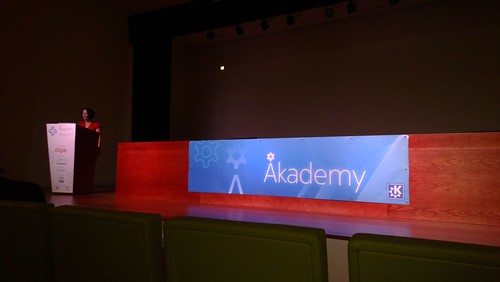
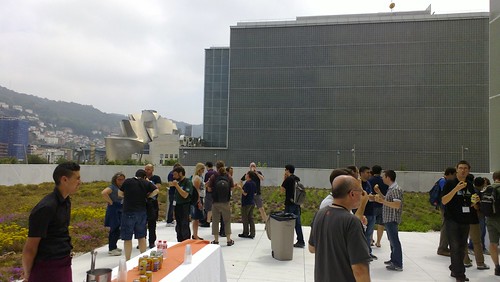
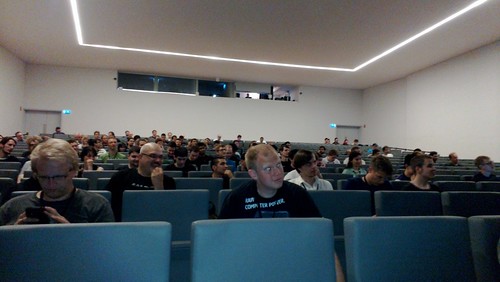
Jonathan Riddell: Akademy 2013 Day 1 in Photos

13070001

KDE Project:

…read more

Source: FULL ARTICLE at Planet Ubuntu

The Luminosity of Free Software, episode 10

Last week went without a LofS show, sadly, due to me laying about in bed being ill after what had been a very enjoyable and blissfully peaceful Easter weekend get away. That’ll teach me for having fun, right? 😉 Well, I’m back and that means another episode this week. Due to my schedule this week, it will once again be on Friday but I will be returning to the “full length” format. So what will we be exploring this week?

  • Plasma Workspaces 2: Next week there is an extremely important meeting taking place in Nürnberg, Germany to devise answers to some of the remaining open questions, draft a roadmap to the first Plasma Workspaces 2 release and hack until dawn. With this event coming up, I’ll take some time to explain the main changes that are coming with Plasma Workspaces 2 and how it will make your usage experience a bit better.
  • What is QML? After an interesting set of discussions recently with people about just what is QML, I thought a segment on this topic from someone who has actually been there from pretty much the start, who has actually read through things like the parser code and worked extensively with it (namely: me 😉 could be interesting. In a nutshell: we’ll look at how QML gets process from text files into pixels on your screen.
  • Vivaldi’s open hardware: I’ll share some photos of the silicon we’ve developed for the upcoming Vivaldi that is just now coming out of the factories along with some descriptions of the technologies we’ve decided to use, including how we’ve created what will probably be the first upgradable tablet to hit the market.
  • Q&A: The usual game of “throw a question at Aaron”, this time sparkles and rainbows! Well, maybe sparkles and rainbows. Definitely answers, though.
So, yes, this episode is a little more self-indulgent than past episodes in that I’ll be talking about things that I’m involved with in some fashion or another .. but perhaps that’s a fun way to celebrate hitting episode #10.
I look forward to your questions, comments and feedback. You can leave questions for the show in the comments below or drop them live during the show in #luminosity on irc.freenode.net.
We’ll go live at 20:00 UTC this Friday, the 12th of April. See you then!

…read more

Source: FULL ARTICLE at Planet KDE

Wannabe nix guru starting a new os

By donkey42

after much searching around there isn’t a “TOSS” (True Open Source) solution, personally I did like OSS however now i believe that “so called” Free Software should be free & Free From any license restrictions

so as I feel that way I’ve decided to write new OS and I was thinking of basing it loosely on the Downloadable Solaris source code, or maybe someone could suggest a better base, I don’t expect it will be very popular, I just happen to think that people (namely me) deserve a truly free OS

I also on hardwarefofums.com here:

Code:

http://www.hardwareforums.com/threads/oss-open-source-software-what-a-joke.38264/


a while ago so you know it’s not a pie in the sky idea that will never take flight

I’m also thinking this would be a very good way to learn how nix works practically
I know this will be hard very bumpy road to travel, so i appreciate any help / advise offered

thank you very much for taking the time to read this,

thankies xxx

…read more

Source: FULL ARTICLE at The UNIX and Linux Forums

Help wanted to promote KDE at the French RMLL

From 6th to 11th July the RMLL will be in Bordeaux France. This is probably the biggest Free Software event in France. There is no proper “KDE France” but nevertheless we managed to get a KDE booth. Now we need people to staff the booth and demonstrate all the greatness of KDE.
If you are willing to help and can come 1 day or more, please add a comment to this blog or/and contact the French Events mailing list. Thanks in advance and see you there hopefully! I will arrange to either come during the week but with a few kids or for the week-end and alone but I need to check this with the rest of the family! …read more

Source: FULL ARTICLE at Planet KDE

Randa – 2

The KDE-Edu team is very productive in Randa. On the second day we started with a Logo session.
Our eyes keep seeing logos in the everyday life and we have been wanting a logo for years.
At the meeting, Alexandre from Brazil, a professional designer, watched us the whole first day when we talked about who we are, what are our targets and about our programs. He then started to work on a logo concept: he defined a few verbs about KDE-Edu and came up with the conclusion that KDE-Edu makes people’s knowledge grow. So the main idea behind the concept
is “growing knowledge”. The logo is still in its infancy so please don’t comment like “I don’t like it” or whatever without being productive. We as a group, after the logo was presented, did not do a “like/hate” unproductive waste of time session.
We agreed that the concept idea was good. One thing Alex also said is that if a logo looks good as a stamp, in black and white, it’ll look good anywhere.
It’ll come into several versions and glossy stuff for websites, more simple design for t-shirts and so on. The concept version is only black and white, the concept horizontal version is here
and theconcept vertical version is here.

We write down proceedings of the sessions linked from the schedule. If you want to add something, you can do so, just edit the wiki page and add your name or whatever on the bottom and add your comment. Just
make it clear it’s an outside input but we’ll be very pleased to gather your input on the various topics.

So far we noticed we have great apps that we do not really know how to make users know about. We need more ways to get people make their content for the program (words for KHangMan for example). About formats, we need to use widely spread open formats and when we define our own format, we need to use it in every possible program (like we do with KVTML). We have some narrow-targetted programs such as KBruch and several test programs that we would need to combine in a single framework.

The interaction with Sabine and Berto from Vox Humanitatis and Ambaradan is very very nice and productive. They have content like lists of translated words we can use in Parley and KHangMan, they have dictionaries, we have the free software.
Thanks to them for being there and being so nice in understanding what Free Software is and how we work.

Thanks to the awesome cook who keeps us well feeded and happy. The Free Beer maker was there as well, awesome beer! …read more

Source: FULL ARTICLE at Planet KDE

Luminosity of Free Software, Episode 9

Today I will be recording the 9th episode of “Luminosity” and it will be a short episode, in part because of time constraints I’m facing today but also because I’d like to experiment with the setup of the show to see if it can fit into a 30 minute form and how the viewing audience finds that.

So .. there will be only one topic this week plus the usual Q&A session:

  • Mer: A (not so) new (mobile Linux) hope. The project and the community, a history and an update. We will look at what the Mer project provides and who uses it, visit the community structure and introduce the brand new build service that rolled out to replace the MeeGo build service that is being closed down.
  • Q&A: Ask me anything, and I might answer it .. history shows the likelihood of that is actually pretty high.
See you there on Google+ Hangouts at 20:00 UTC. Chat and questions can be found on irc.freenode.net in #luminosity.

…read more
Source: FULL ARTICLE at Planet KDE

KDE joins the Outreach Program for Women

Outreach Program For Women Logo. CC-BY-SA – artists: Máirín Duffy, Liansu Yu, Hylke Bons

KDE will – for the first time this year – participate in the “Outreach Program for Women”. This was originally started by GNOME, but has also other participating organisations like Wikimedia, Mozilla, Fedora and others.

With KDAB as our sponsor we will be offering one internship. This is in no way only limited to coding, but includes user experience design, graphic design, documentation, web development, marketing, translation and other types of tasks needed to sustain a Free Software project.

The deadline for task submission is March 27. Please all in the KDE Community, suggest suitable tasks on our wiki page and volunteer to mentor. Feel free to contact me or Lydia for more information.

Prerequisites for application: Any woman who has not previously participated in an Outreach Program for Women or Google Summer of Code internship is welcome to apply, provided she is available for a full-time internship during this time period. This program is open to anyone who identifies as a woman regardless of gender presentation or assigned sex at birth. Genderqueer and genderfluid people are welcome to apply.

The application deadline for candidates is already on May 1st, while the program runs from June 17 to September 23.

…read more
Source: FULL ARTICLE at Planet KDE

Luminosity of Free Software, episode 8

This week’s Luminosity of Free Software show will be recorded tomorrow on Friday, instead of the usual Thursday time slot. I have another engagement tonight, and it will be interesting to see how viewership changes, if at all, on Fridays.

Topics tomorrow will include:

  • Plasma Media Center: .. or “PMC” as we lovingly refer to it, had its first stable release this week We’ll take a peek behind the scenes to see what drives it. We’ll also glance at it’s goals, purpose and future.
  • freedesktop.org Summit: If you haven’t heard of this event that’s happening in three weeks time, don’t feel bad as it wasn’t announced very broadly at all. I’ll share with you what I’ve learned about the event and speculate on what we can hope to come from it.
  • Lernstick: Not just “Bootable Linux on a USB device”, but also a log in key that can automatically create the user on the stick and mount the USB device as the home directory. Pulling this off is trickier than one might think. I’ll examine how this device designed for schools works as well as look at where it is in use today.
  • Q&A: Otherwise known as “chaotic happy fun time” in which you ask questions and I do my best to foment further discussion. 🙂
See you there on Google+ Hangout tomorrow (Friday) at 20:00 UTC. You can watch the live feed (assuming all that magical hangout stuff decides to work) or afterwards at your leisure on my Youtube channel. I watch the chats in G+, Youtube as well as in #luminosity on irc.freenode.net during the show. Ask questions and offer additional information there.

…read more
Source: FULL ARTICLE at Planet KDE

Aaron Toponce: Tiny Tiny RSS – The Google Reader Replacement

With all the weeping, wailing and gnashing of teeth about Google killing Reader, I figured I’d blog something productive. Rather than piss and moan, here is a valid solution you can build for at most two bucks, using entirely Free Software, running on your own server, under your control. The solution is to install Tiny Tiny RSS on your own server, and if you have an Android smartphone, the official Tiny Tiny RSS app ($2 for the unlock key (support the developer- this stuff rocks)). Here are the step-by-step installation directions that should get you an up-and-running Reader replacement in less than 30 minutes.

First, create a directory on your webserver where you will install Tiny Tiny RSS. You will need Apache, lighttpd, Cherokee, or some other web server, PHP with the necessary modules as well as the PHP CLI interpreter, and either MySQL or PostgreSQL as prerequisites.:

# mkdir /var/www/rss
# wget https://github.com/gothfox/Tiny-Tiny-RSS/archive/1.7.4.tar.gz
# tar -xf 1.7.4.tar.gz -C /var/www/rss/
# chown -R root.www-data /var/www/rss/
# chmod -R g+w,o+ /var/www/rss/

Pull up the web interface by navigating to http://example.com/rss/ (replace “example.com” with your domain name). The default login credentials are “admin” and “password”. Make sure to change the default password. Also, Tiny Tiny RSS uses a multiuser setup by default. You can add additional users, including one for yourself that isn’t “admin”, or you can change it to single user mode in the preferences.

After the setup is the way you want it, you’ll want to get your Google Reader feeds into Tiny Tiny RSS. Navigate to Reader, and export your data. This will take you to Google Takeout, and you’ll download a massive ZIP archive, that contains an OPML file, as well as a ton of other data. Grab your “subscriptions.xml” from that ZIP file, and import them into your Tiny Tiny RSS installation.

One awesome benefit of Tiny Tiny RSS, is that it has a built-in mobile version, if browsing the install from a mobile browser. It looks good too.

The only thing left to do, is navigate to the preferences, and enable the external API. There are additional 3rd party desktop-based readers that have Tiny Tiny RSS support, such as Liferea and Newsbeuter. Even the official Android app will need the option enabled. This will give you full synchronization between the web interface, your Android app, and your desktop RSS reader.

Unfortunately, Tiny Tiny RSS doesn’t update the feeds by default. You need to setup a script that manages this for you. The best solution is to write a proper init script that starts and stops the updating daemon. I didn’t do this. Instead, I did the next best thing. I put the following into my /etc/rc.local configuration file:

#!/bin/sh -e
#
# rc.local
#
# This script is executed at the end of each multiuser runlevel.
# Make sure that the script will "exit 0" on success or any other
# value on error.
#
# In order to enable or disable this script just change the execution
# bits.
#
# By default this script does nothing.

sudo -u www-data php /var/www/rss/update_daemon2.php > /dev/null&
exit 0

A couple …read more
Source: FULL ARTICLE at Planet Ubuntu

Scott Kitterman: Kubuntu vUDS

Kubuntu held it’s own mid-release cycle virtual meeting today.  The primary technical output was an agreed community position on the latest release management proposal.  Rather than quote the whole thing here, I’ll provide a link to the message I sent on behalf of Kubuntu to the Ubuntu Technical Board.  The bottom line is that this is a pretty good proposal from our point of view.

It’s also worth (I think) mentioning that we did this with Free Software using Mumble (it is, however, possible that some restricted wifi drivers were in use, I’m not sure).  One of the real disadvantages to the online format for UDS is that it removes the incentive for project wide, contemporaneous focus on what comes next.

…read more
Source: FULL ARTICLE at Planet Ubuntu

NHS Lothian Tech Managers' Ignorance to be Saved by NHS Hack Scotland

KDE Project:

There’s been chat that my NHS Hack Scotland post implies there’s no
point in going to the event, that in light of the NHS Lothian FOI request anything created at the weekend has no chance of being used in the NHS. I wouldn’t be attending (and judging!) if that were true!

The tide of opinion on Free Software in public services in Scotland is turning for the better. In the Scottish
Government’s Digital Strategy
they talk about ensuring that “the public sector has an understanding of the advantages of open source material” – there’s a review going on at the moment to turn that into reality. Some organisations might take longer than others to get to this understanding, – in an ideal world they’d all wake up and realise
that Free Software is awesome and fits perfectly with public services, but at the moment even baby steps are progress.

NHS Hack Scotland is at least partially about raising the profile of Open Source software in the NHS, about showing the great things the Open Source community can produce and that it’s not something to be scared of. If it’s a success it means medics and managers will be going back to their health boards all over Scotland and making a noise about the great stuff they made and the friendly, creative people they made it with.

NHS Lothian might not have an Open Source policy but ignorance doesn’t mean prohibition, they run plenty copies of Firefox. Now’s the perfect time for them (and other health boards) to get a little push from staff that have seen the light.

…read more
Source: FULL ARTICLE at Planet KDE

Luminosity of Free Software, episode 7

I’ve started prepping for tomorrow’s Luminosity of Free Software show, in which the following topics will be covered:

  • Decentralized online communication: This was suggested by a viewer in a blog comment last week, and I think it’s an important topic. I’ll be looking at this from three angles: why it is important, what has gained traction and what has not, and what tools exist right now with an emphasis on “real time” communication ala Jabber and identi.ca.
  • Node.js: I’ve been using Node.js for a while and have found it to be an interesting approach to web services. This neatly fits with the first topic in some way, so what better excuse than to give a “50,000 foot view” of this rather cool project along with maybe making a case for why we should care about this stuff more on the desktop, too.
  • Color management: Also a viewer suggested topic, this is another area of progress for Free software when it comes to graphics. We’ll look at some of the management tools and what it does for the desktop, applications and people doing serious graphics work.
  • Q&A: Otherwise known as “chaotic happy fun time” in which you ask questions and I do my best to foment further discussion. 🙂
See you there on Google+ Hangout tomorrow (Thursday) at 20:00 UTC. You can watch the live feed (assuming all that magical hangout stuff decides to work) or afterwards at your leisure on my Youtube channel.

…read more
Source: FULL ARTICLE at Planet KDE

I Agree with Canonical

DSCF7389

KDE Project:

Really I do, dunno why some people think I unfairly critisise them. They want to fix bug number 1, “Microsoft has a majority market share”. The obvious way to do that was with the existing community made desktop software but after many years that still had minimal traction. Actually lots of nice rollouts around the world in educational institutions, every region/nation in Spain made their own Ubuntu derivative and of course Kubuntu has had the world’s biggest Linux desktop rollout in Brazil. But nothing to get it directly into the hands of consumers. Dell did a half hearted attempt to pre-load Ubuntu on laptops but somehow it never went very far.

In the mean time Apple did fix Bug No 1 by using shiny design and new form factors. There’s some Free Software in Apple’s catalogue including a web browser engine from KDE but it’s otherwise more closed than Microsoft. Netbooks came and went and Linux to the consumer didn’t have much success there.

Then Google started fixing Bug No 1 with Android and maybe even Chromebook will go somewhere. They’re a lot more Free Sofware but also not openly community developed.

So it’s entirely sensible for Canonical to reason that community developed consumer software isn’t going to fix Bug No 1 any time soon and want to start looking at models which do. Hiring a design team to create their own software is more Free Software than Apple and more Open Source then Google. I wish Ubuntu (Unity) luck in taking over the world and fixing Bug No 1.

But people who like to work on a community driven project will be a bit put off by that which is why we’ve seen some high profile departures recently from Ubuntu. But as I say there are many parts of Ubuntu which are very community driven so I’m hanging around to be part of that community. Come and join us.

…read more
Source: FULL ARTICLE at Planet KDE