Tag Archives: FDIC

A Proposed Rule That Could Cause Another Mortgage Crisis

By Richard Finger, Contributor

What do the Federal Reserve (FED), the FDIC, the Office of the Comptroller of the Currency (OCC), the Securities and Exchange Commission (SEC), the Department of Housing and Urban Development (HUD), and the Federal Housing Finance Agency have in common? Each one of these bureaucratic quagmires is in the latter stages of offering input to “tweak” what the final draft of bank mortgage lending rules will look like under implementation of the mostly horrific Dodd Frank laws. Just when it …read more

Source: FULL ARTICLE at Forbes Latest

You Wish Your Brand's Reputation Was As Bad as Wall Street's

By Jonathan Salem Baskin, Contributor

Financial services firms are suffering a “reputation crisis” according to one PR firm poll. Another global survey of public opinion says that 86% of comments shared on social media about banks was negative. A former chairperson of the FDIC sees “a sea change” of attitude toward banks going against them. A somewhat incessant stream of scandals, lawsuits, and the lingering detritus from the economic collapse late last decade qualifies financial services and banking as “the least trusted industries” (according to another poll), and one insider says Wall Street’s reputation is all but doomed to stay “in the doghouse.” …read more

Source: FULL ARTICLE at Forbes Latest

5 Ways to Pay the IRS Less Next April

By Dan Caplinger

Filed under: , , , , ,

Cassandra Hubbart, DailyFinance

April 15 has come and gone, and most people have put another year of tax-return preparation behind them. But a recent Gallup poll shows that an increasing number of people believe they pay too much in taxes, with the fewest Americans since 2001 believing that the amount they pay is fair.

If you’re still in shock from the amount of taxes you just had to pay, you should start working now to reduce your tax bill for April 2014 and beyond. Here are five ways you can get on track to write a smaller check to the IRS next year.

1. Put more money toward your retirement. The best way to shrink your taxable income is to save for retirement using IRAs, 401(k) plan accounts, and other tax-favored retirement savings accounts. This advice tops our list because the amounts you can save are big enough to have a real impact on your taxes. Those younger than age 50 can save $17,500 in a 401(k) plan this year and another $5,500 in an IRA. If you’re 50 or older, those limits are even higher, topping out at $23,000 for 401(k)s and $6,500 for IRAs. Using them in combination can cut thousands off your tax bill.

2. Hold onto winning investments longer. When the stock market is rising, many people sell off their winners quickly to make sure their paper gains don’t turn into losses. But that short-term mentality leaves you paying much higher rates on short-term profits, with some taxpayers losing more than half their gains to federal and state taxes. If you hold onto winning investments for more than a year, you’ll qualify for much lower long-term capital gains rates, which can cut your tax bill on those gains in half — or even eliminate it entirely for some lower-income taxpayers.

3. Take a look at tax-free municipal bonds. With interest rates as low as they are, paying taxes on the paltry amounts of income you can earn from bank CDs and most bonds just adds insult to injury. But especially if you’re in a fairly high tax bracket, you’ll want to take a closer look at tax-free municipal bonds for income. Right now, the muni bond market is in a somewhat unusual position in which yields are actually higher than what you’ll get from Treasury bonds or FDIC-insured bank accounts, even before you take their tax advantage into account. So don’t ignore municipal bonds as a potential source of valuable income as well as tax savings.

Sponsored Linksadsonar_placementId=1505951;adsonar_pid=1990767;adsonar_ps=-1;adsonar_zw=242;adsonar_zh=252;adsonar_jv=’ads.tw.adsonar.com’;

4. Boost your withholding. If you didn’t have enough taken out of your paycheck last year, you not only had to write a big check at the end of the year but also might have owed penalties

From: http://www.dailyfinance.com/2013/04/19/pay-less-taxes-next-year-irs-deductions-credits/

Tired of Wrangling With Your Bank? There's a Simple Solution

By Bruce Watson

Filed under:

Simple
Once upon a time, banking was easy. You dropped off your money in your friendly neighborhood savings and loan, knowing that it was safely insured by the FDIC, and that you would be paid a small amount of interest for letting the bank use it. Over time, your savings would increase, your interest would compound and you would build a nice little nest egg, ready to be used for retirement, a down payment, a college education, or whatever you might want. Your bank was secure and friendly, a great place to park your money with people you trusted.

Over the last few years, though, the smooth banking relationships of yesteryear have disappeared. Interest has become a thing of the past, replaced by fees and surcharges. The bank account — the first step on the road to financial adulthood — has become a shortcut to high-interest credit cards and, all too often, crushing debt. The CARD Act of 2009 cut out a lot of hidden fees and other financial traps, but in the years since then, banks have figured out ways to introduce dozens of other tiny fees, chipping away at their customers in a sort of death by a thousand cuts.

In the past, I’ve written about low-cost banking alternatives, including Credit Unions and Walmart cards. Recently, though, another option has cropped up. A new company, Simple, is a sort of online bank crossed with a financial literacy site. On the banking side, it functions much like a traditional (read: pre-fee) bank; accounts are held by FDIC-insured partner Bancorp. Simple issues Visa debit cards, which its customers can use for free at any store that takes Visa cards and any of the 50,000 ATMs in the Allpoint network. As an added benefit, Simple doesn’t charge for out-of-network ATM transactions, although the ATM owners probably would.

But that’s where the similarities to traditional banks end. Simple doesn’t have any brick-and-mortar locations; its customers process most transactions through smartphones. To deposit a check, Simple users sign it, take a picture of it and post the image to their accounts. The bank then verifies the check and posts the money to the user’s account. After a few days, the user is supposed destroy the original check.

Simple

Fees are another place where Simple differs from a standard bank. Most transactions are free, although premium transactions like stopping checks and getting treasurer’s checks come with a charge. For that matter, some transactions that would be free at a traditional bank incur a slight charge at Simple. For example, if you want to walk into a bank and withdraw $100 in cash, Simple will charge $1. Similarly, while Simple makes it easy to access bank records online, getting a paper copy of a bank statement costs $5.

Another place where Simple differs from a traditional bank

From: http://www.dailyfinance.com/2013/04/12/simple-online-bank-low-fees/

Bank of the Ozarks, Inc. Announces First Quarter 2013 Earnings

By Business Wirevia The Motley Fool

Filed under:

Bank of the Ozarks, Inc. Announces First Quarter 2013 Earnings

LITTLE ROCK, Ark.–(BUSINESS WIRE)– Bank of the Ozarks, Inc. (NAS: OZRK) today announced that net income for the quarter ended March 31, 2013 was $20.0 million, an 11.1% increase from $18.0 million for the first quarter of 2012, but a decrease of 3.2% from $20.7 million for the fourth quarter of 2012. Diluted earnings per common share for the first quarter of 2013 were $0.56, a 7.7% increase from $0.52 for the first quarter of 2012, but a decrease of 5.1% from $0.59 for the fourth quarter of 2012.

During the fourth quarter of 2012, the Company completed its acquisition of Genala Banc, Inc. (“Genala”) and its wholly owned subsidiary, The Citizens Bank, in Geneva, Alabama. This acquisition resulted in a gain, net of acquisition and conversion costs, of approximately $1.1 million after taxes, or approximately $0.03 of diluted earnings per common share.

The Company’s returns on average assets and average common stockholders’ equity for the first quarter of 2013 were 2.06% and 15.77%, respectively, compared to 1.91% and 16.75%, respectively, for the first quarter of 2012.

In commenting on these results, George Gleason, Chairman and Chief Executive Officer, stated, “We are very pleased to report an excellent first quarter. While our results for the quarter, including loan and lease growth, reflect some of the headwinds typically encountered during the first quarter, our excellent net interest margin, superb asset quality, near-record mortgage lending income and good control of non-interest expenses provide a great start for 2013.”

Loans and leases, excluding loans covered by FDIC loss share agreements (“covered loans”) and purchased loans not covered by loss share (“purchased non-covered loans”), were $2.16 billion at March 31, 2013, a 14.2% increase from $1.89 billion at March 31, 2012, and a 2.0% increase from $2.12 billion at December 31, 2012. Including covered loans and purchased non-covered loans, total loans and leases were $2.74 billion at March 31, 2013, a 3.4% increase from $2.65 billion at March 31, 2012, but a 0.5% decrease from $2.75 billion at December 31, 2012.

Mr. Gleason stated, “Our balance of loans and leases outstanding, excluding covered loans and purchased non-covered loans, increased $42 million in the quarter just ended. Our unfunded balance of closed loans increased $20 million during the first quarter, growing from $769 million at December 31, 2012 to $789 million at March 31, 2013. This significant unfunded balance of closed loans has favorable implications for future growth in our

From: http://www.dailyfinance.com/2013/04/11/bank-of-the-ozarks-inc-announces-first-quarter-201/

Schwab Announces Its Interim Business Update

By Business Wirevia The Motley Fool

Filed under:

Schwab Announces Its Interim Business Update

SAN FRANCISCO–(BUSINESS WIRE)– The Charles Schwab Corporation announced today that it has scheduled an Interim Business Update for institutional investors on Thursday, April 25, 2013. This Update, which will be held via webcast, is part of an ongoing series designed to help the investment community keep abreast of recent developments and management’s strategic focus. The program is scheduled to run from 8:00 a.m. – 9:00 a.m. PT, 11:00 a.m. – 12:00 p.m. ET. Participants will include Walt Bettinger, President & Chief Executive Officer, and Joe Martinetto, Chief Financial Officer.

The Update will be accessible at schwabevents.com/corporation.

About Charles Schwab

The Charles Schwab Corporation (NYS: SCHW) is a leading provider of financial services, with more than 300 offices and 8.8 million client brokerage accounts, 1.6 million corporate retirement plan participants, 881,000 banking accounts, and $2.04 trillion in client assets as of February 28, 2013. Through its operating subsidiaries, the company provides a full range of securities brokerage, banking, money management and financial advisory services to individual investors and independent investment advisors. Its broker-dealer subsidiary, Charles Schwab & Co., Inc. (member SIPC, www.sipc.org), and affiliates offer a complete range of investment services and products including an extensive selection of mutual funds; financial planning and investment advice; retirement plan and equity compensation plan services; compliance and trade monitoring solutions; referrals to independent fee-based investment advisors; and custodial, operational and trading support for independent, fee-based investment advisors through Schwab Advisor Services. Its banking subsidiary, Charles Schwab Bank (member FDIC and an Equal Housing Lender), provides banking and lending services and products. More information is available atwww.schwab.com and www.aboutschwab.com.

MEDIA:
Charles Schwab
Greg Gable, 415-667-0473
or
INVESTORS/ANALYSTS:
Charles Schwab
Rich Fowler, 415-667-1841

KEYWORDS:   United States  North America  California

INDUSTRY KEYWORDS:

The article Schwab Announces Its Interim Business Update originally appeared on Fool.com.

Try any of our Foolish newsletter services free for 30 days. We Fools may not all hold the same opinions, but we all believe that considering a diverse range of insights makes us better investors. The Motley Fool has a disclosure policy.

Copyright © 1995 – 2013 The Motley Fool, LLC. All rights reserved. The Motley Fool has

From: http://www.dailyfinance.com/2013/04/11/schwab-announces-its-interim-business-update/

HomeStreet, Inc. Schedules First Quarter 2013 Earnings Call for Monday, April 29, 2013

By Business Wirevia The Motley Fool

Filed under:

HomeStreet, Inc. Schedules First Quarter 2013 Earnings Call for Monday, April 29, 2013

SEATTLE–(BUSINESS WIRE)– HomeStreet, Inc. (NAS: HMST) , the parent company of HomeStreet Bank, will conduct a quarterly earnings conference call on Monday, April 29, 2013 at 10:00 a.m. PDT (1:00 p.m. EDT). Mark K. Mason, President and CEO, will discuss first quarter 2013 results and provide an update on recent activities. A question and answer session will follow the presentation. Shareholders, analysts and other interested parties may join the call by dialing 1-888-317-6016 (1-855-669-9657 in Canada) shortly before 10:00 a.m. PDT. A rebroadcast will be available approximately one hour after the conference call by dialing 1-877-344-7529 and entering passcode 10027245.

The information to be discussed in the conference call will be available on the company’s web site prior to the opening of the market on Monday, April 29, 2013.

About HomeStreet

HomeStreet, Inc. (NAS: HMST) is a diversified financial services company headquartered in Seattle, Washington and the holding company for HomeStreet Bank, a state-chartered, FDIC-insured savings bank. HomeStreet Bank offers consumer and business banking and investment and insurance products and services in Washington, Oregon, Idaho, California and Hawaii. For more information, visit http://ir.homestreet.com.

Investor Relations & Media Contact:
HomeStreet, Inc.
Terri Silver, 206-389-6303
terri.silver@homestreet.com
http://ir.homestreet.com

KEYWORDS:   United States  North America  Washington

INDUSTRY KEYWORDS:

The article HomeStreet, Inc. Schedules First Quarter 2013 Earnings Call for Monday, April 29, 2013 originally appeared on Fool.com.

Try any of our Foolish newsletter services free for 30 days. We Fools may not all hold the same opinions, but we all believe that considering a diverse range of insights makes us better investors. The Motley Fool has a disclosure policy.

Copyright © 1995 – 2013 The Motley Fool, LLC. All rights reserved. The Motley Fool has a disclosure policy.

(function(c,a){window.mixpanel=a;var b,d,h,e;b=c.createElement(“script”);
b.type=”text/javascript”;b.async=!0;b.src=(“https:”===c.location.protocol?”https:”:”http:”)+
‘//cdn.mxpnl.com/libs/mixpanel-2.2.min.js’;d=c.getElementsByTagName(“script”)[0];
d.parentNode.insertBefore(b,d);a._i=[];a.init=function(b,c,f){function d(a,b){
var c=b.split(“.”);2==c.length&&(a=a[c[0]],b=c[1]);a[b]=function(){a.push([b].concat(
Array.prototype.slice.call(arguments,0)))}}var g=a;”undefined”!==typeof f?g=a[f]=[]:
f=”mixpanel”;g.people=g.people||[];h=[‘disable’,’track’,’track_pageview’,’track_links’,
‘track_forms’,’register’,’register_once’,’unregister’,’identify’,’alias’,’name_tag’,
‘set_config’,’people.set’,’people.increment’];for(e=0;e<h.length;e++)d(g,h[e]);
…read more

Source: FULL ARTICLE at DailyFinance

GE Capital is Administrative Agent on $195 Million Credit Facility for Electrical Components Interna

By Business Wirevia The Motley Fool

Filed under:

GE Capital is Administrative Agent on $195 Million Credit Facility for Electrical Components International

NORWALK, Conn.–(BUSINESS WIRE)– GE Capital, Corporate Finance today announced it is administrative agent on a $195 million cash flow credit facility for Electrical Components International, Inc. (ECI), a leading wire harnesses manufacturer. The proceeds will refinance debt, support ongoing working capital needs and be used for other corporate purposes. GE Capital Markets served as joint lead arranger and joint book runner.

Founded in 1953 and based in St. Louis, MO, ECI is a leading global manufacturer of wire harnesses and provider of assembly services. ECI‘s wire harness products are used in a variety of applications such as major appliances, agricultural and construction equipment, heating, ventilating and air conditioning, specialty transportation, commercial appliance and the commercial electronic industries. ECI has more than 14,000 employees, and global manufacturing and logistics facilities.

“We’ve worked with GE for over 20 years and they’ve come to know our company well,” said David Webster, CEO of ECI. “We value having GE‘s industry knowledge and expertise to help meet our business and capital needs.”

“Manufacturers today benefit from working with proactive lenders with debt capital markets expertise,” said Tom Quindlen, president and CEO of GE Capital, Corporate Finance. “We provide smart capital to middle-market companies to help them meet business objectives.”

About GE Capital, Corporate Finance

GE Capital, Corporate Finance provides asset-based, cash flow and structured loans and leases to mid-size and large U.S. businesses. Funding may be provided through GE Capital, Corporate Finance‘s affiliate, GE Capital Financial. Inc., Member, FDIC. Financing supports working capital, growth, acquisitions, turnarounds and balance sheet optimization in key sectors: Aerospace and defense; automotive and transportation; chemicals and plastics; construction and building products, corporate aircraft; energy; food and beverage; manufacturing; marine; metals and mining; paper, packaging and forest products; retail; and technology and electronics. With Access GE, clients also benefit from access to GE‘s best practices to help build their business. Visit gelending.com/clnews or follow @GELendLease on Twitter.

GE Capital offers consumers and businesses around the globe an array of financial products and services. For more information, visit gecapital.com or follow company news via Twitter (@GECapital). GE (NYS: GE) works on things that matter. The best people and the best technologies taking on the toughest challenges. Finding solutions in energy, health and …read more

Source: FULL ARTICLE at DailyFinance

The Surprising Way to Earn More Interest on Your Savings

By Dan Caplinger, The Motley Fool

Filed under:

If you have a savings account, you know how low interest rates have gotten lately. It’s hard to get much income from your savings without taking drastic measures like investing it in the stock market.

But there’s one way you can boost your income on your savings without taking any risk at all. You’ll find that solution in an unexpected place: simple savings bonds.

How savings bonds will pay you more
If you thought the savings bond that your grandparents gave you when you were born was the last one the U.S. Treasury ever issued, you’re not alone. But certain savings bonds remain a smart savings option, especially given the low rates available elsewhere. In particular, Series I savings bonds, whose returns are linked to inflation, offered rates that knock the socks off similar alternatives — and they offer extra benefits that those alternatives don’t.

Right now, I bonds pay a rate of 1.76%. You have to hold the bond for a minimum of one year, and if you cash them in before five years pass, you have to pay a penalty of three months’ interest. Rates change every six months based on the rate of inflation. For instance, the previous rate on I bonds was 2.20%.

But even with those terms, compare I bond rates with what you can get elsewhere:

  • Among the top one-year bank CDs, only a few manage to top the 1% mark. General Electric‘s GE Capital division offers 1.05% right now, but the average rate nationally is just 0.26%.
  • If you lock up your savings for five years in a bank CD, the best rates are still solidly below 2%. AIG‘s banking division pays only 0.65% on a five-year CD.
  • Even if you’re willing to give up FDIC insurance protection, offerings like Ford‘s Interest Advantage and Caterpillar‘s PowerInvestment notes still don’t match up. Ford pays a bit above 1% right now, while Caterpillar is slightly lower.

Those companies pay such low rates because they mostly don’t need capital from outside sources right now. With access to credit markets so easy and cheap, paying up for ordinary savers doesn’t make business sense.

Other advantages of savings bonds
Another great benefit of savings bonds is that you don’t have to pay taxes on the interest until you cash in the bond. Compared with regular CDs and savings accounts, that feature can let you defer between $10 and $40 in potential tax liability for every $100 in interest you get. If you later use the proceeds for educational purposes, that interest becomes tax-free for many taxpayers.

I bonds’ floating rates do introduce some uncertainty into the savings decision. But with their flexibility, they may be your best savings option even if you do end up needing to take out money sooner rather than later.

Learn more about savings bonds at the Treasury’s website.

GE has stepped back from its financial division in recent years, returning to its industrial …read more

Source: FULL ARTICLE at DailyFinance

Dow Plummets on More Weak Labor Market News

By Jessica Alling, The Motley Fool

Filed under:

The Dow Jones Industrial Average is planted firmly in the red this morning following the third data release to signal a weakening labor market this week. Down 122 points as of 11 a.m. EDT, the index has a steep climb back to breakeven, with little help on the way from additional economic data releases.

And it was going so well…
Jobs data has been a big thorn in the market‘s side all week. Following two other disappointing data points, this morning’s employment situation report was no different. Though analysts had expected an addition of 200,000 jobs in March, the month only delivered a paltry 88,000. And though the overall unemployment rate fell 10 basis points to 7.6%, it was mostly due to people dropping out of the labor market, according to the Labor Department — not a good sign. 

The new trend of a weakening labor market may induce broader effects on the economy, as GDP may be revised to show lower consumer spending. It will also take its toll on the financial sector, which is following the Dow south this morning.

Financials fall again
American Express is one of the Dow’s biggest losers this morning, down 2.65% so far in trading. The personal finance company was at a 52-week high just a little over a week ago following the news of FDIC insurance being added to its prepaid cards, as well as a 150-million-share buyback program. But continued concerns over the labor market may have hit the premium credit card company, which relies on consumer spending to generate revenues through interest. Another blow may have come in the form of a downgrade to “hold” by Jefferies Group analysts yesterday. Though other firms have reiterated buys and higher price targets, the company’s average rating remains a hold.

Travelers Companies is down 0.87% so far this morning, making it the second-biggest financial loser for the Dow. Despite being a hedge fund and analyst favorite, the insurer is down — though unlikely to stay there. Though insurance firms have to rely on consumer spending as well, their products are more necessary than items purchased on a credit card, for instance. Several firms have reiterated “buy”s for the company in the past week, with a price target of $88. The stock traded this morning at $83.61.

JPMorgan has been on a downward trend for the past few weeks, with continued scrutiny from federal investigators regarding its London Whale losses likely to incite a continued sense of uncertainty among investors. But the bank recently won a substantial victory in a court case that may help it avoid some other legal uncertainty in the future. The victory came in the form of a judge dismissing a large portion of the case, in which European bank Dexia charged that JPM knowingly sold it bad mortgage-backed securities before the financial crash. Though not all securities in question were thrown out of the lawsuit, …read more

Source: FULL ARTICLE at DailyFinance

Small business loans up in 4Q, 1st gain since 2010

Small business lending is showing small signs of growth, according to data compiled by the government.

The total amount of small business loans outstanding at the end of the fourth quarter came to $586 billion, up from $584 billion in the third quarter, according to the Federal Deposit Insurance Corp. That was the first quarterly gain in small business lending since the FDIC began tracking loans on a quarterly basis at the start of 2010. The FDIC is a government agency that insures bank deposits and oversees financial companies.

Despite the year-end improvement, the lending environment for small business remains weak. The December number was down from $598 billion in the final quarter of 2011 and $626 billion at the end of 2010.

The FDIC numbers included commercial and industrial loans, along with commercial real estate loans under $1 million.

Surveys have shown that small business owners remain cautious about borrowing. Low demand has been one of the factors behind weak lending since the recession ended.

On Tuesday a survey released by Thomson Reuters and PayNet showed that small businesses grew more reluctant to take out loans to buy equipment or expand in February as federal budget cuts approached. That continued a weak trend in lending that the two companies saw throughout 2012 and into the new year. PayNet provides credit ratings on small businesses.

The Thomson Reuters/PayNet Small Business Lending Index fell to 101.3 from 111.7 in January. The January reading was revised downward from a previously reported 113.1. In December the index stood at 115.

Small businesses have been reluctant to borrow since the recession because they’ve wanted to lower their debt burden, and because they’ve been uncertain about the economy and gridlock in Washington that has led to $85 billion in budget cuts. They’re also uneasy about borrowing while they wait to see how much health insurance will cost them next year, when the government‘s health care overhaul is fully implemented.

The Thomson Reuters/PayNet study was compiled from data on commercial loans and leases in PayNet’s database.

…read more
Source: FULL ARTICLE at Fox US News

Dow Spotlight Stock of the Week: American Express

By Matt Thalman, The Motley Fool

Filed under:

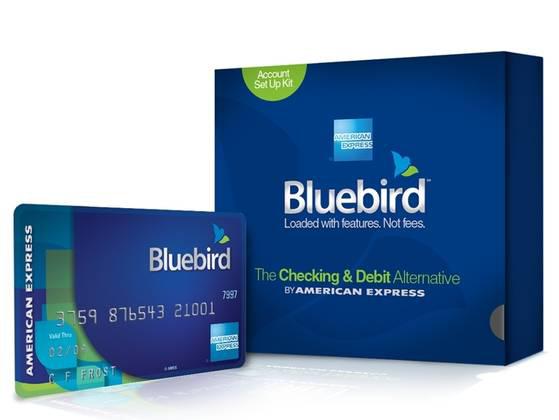
In October 2012, the Dow Jones Industrial Average‘s only credit card company, American Express , and the index’s largest retailer, Wal-Mart teamed up to release a prepaid debit card, called Bluebird. It was marketed to those who wanted an alternative to a traditional checking account but the convenience of a debit card.

Photo: Wal-Mart.

At the time it was released, Bluebird had no monthly, annual, or overdraft fees, carried no minimum balance requirements, had the capability for direct deposit, could be used at an ATM, and had a smartphone app that card holders could use to pay bills. As of Tuesday, the card gained some new features, the most important of which is that it’s now FDIC insured. Even though American Express is a very strong and stable company, many Americans have been leery of the large institutions in its sector ever since the financial crisis hit. Now, since the card’s funds are protected by the government, consumers may more widely accept it

Before the most recent changes, 575,000 account holders had already loaded $275 million onto the card. Of those accounts, 85% of them are new to American Express. That means there are more than 488,000 new opportunities for American Express to make money here. It certainly stands to make some decent money on transaction charges, which are usually 2% of the total purchase price. That may not sound like much — and when you consider that MasterCard processed 34 billion transactions last year alone, it really isn’t — but for every $50 purchase those 575,000 Bluebird members make, AmEx takes in $1.  

Perhaps just as important to AmEx is that Bluebird essentially poses very little risk. Credit card companies take on a huge amount of risk when they lend. Consider that AmEx’s most recent quarterly statement showed that the credit card side of the business had more than $431 million in loans to cardholders that were more than 90 days outstanding, and that the company’s current write-off percentage is 2.1%. But since Bluebird is prepaid, AmEx’s risk is essentially zero while offering a massive potential for upside gain.

Furthermore, I believe American Express is currently the best option for those looking to invest in the industry. Compared with Visa or MasterCard, I believe American Express has the most potential for future growth, while offering the lowest risk. At a price-to-earnings ratio of just 17, compared with Visa’s 47 or MasterCard’s 24, AmEx is also the cheapest stock at today’s prices.

American Express also pays a solid dividend, and with its current yield of 1.2%, it easily beats Visa’s dividend yield of 0.8% and crushes MasterCard’s 0.4%.

If you’re on the lookout for high-yielding stocks, The Motley Fool has compiled a special free report outlining our nine top dependable dividend-paying stocks. It’s called “Secure Your Future With 9 Rock-Solid Dividend Stocks.” You can access your copy today at no cost! Just click …read more
Source: FULL ARTICLE at DailyFinance

HomeStreet Declares Cash Dividend

By Business Wirevia The Motley Fool

Filed under:

HomeStreet Declares Cash Dividend

SEATTLE–(BUSINESS WIRE)– HomeStreet, Inc. (“the Company”) (NAS: HMST) announced today that its board of directors has approved a cash dividend of $0.11 per common share, payable on or about April 22, 2013 to shareholders of record as of the close of business on April 11, 2013. This is the first dividend paid by the Company since it completed its initial public offering in February 2012.

“We are very pleased to be able to pay a dividend to our shareholders,” said Vice Chairman and CEO Mark K. Mason. “Assuming our continued success, we anticipate continuing to declare dividends going forward.”

Concurrently, HomeStreet Bank (“the Bank”), a wholly owned subsidiary of HomeStreet, Inc., will pay a dividend of $3.5 million to the Company. This will be the first dividend distribution from the Bank to the Company since 2007.

About HomeStreet, Inc.

HomeStreet, Inc. (NAS: HMST) is a diversified financial services company headquartered in Seattle, Washington, and the holding company for HomeStreet Bank, a state-chartered, FDIC-insured savings bank. HomeStreet Bank offers consumer and business banking, investment and insurance products and services in Washington, Oregon, Idaho, Hawaii and California. Certain information about our business can be found on our investor relations web site, located at http://ir.homestreet.com. The information contained or linked through our web site is not incorporated into, and does not form a part of, this release.

Certain statements set forth in this release are “forward-looking statements” within the meaning of the Securities Exchange Act of 1934. These statements represent management’s current expectations based on circumstances known as of the date of this release, and are subject to various risks and uncertainties. In particular, readers should not construe the special dividend as indicative of future dividend policies, and any such dividends will be contingent upon, among other things, the adequacy of our revenues from operations, cash flow and financial condition, as well as our compliance with various restrictions arising under banking laws and regulations and under the terms of our trust preferred securities. Other factors that may pose risks to our operations in general, and to the payment of dividends in particular, are set forth in the section of our Annual Report on Form 10-K entitled “Risk Factors.” Readers should note that the statements in this release are accurate as of the date hereof, and we cannot undertake to update these statements as of a future date.

JPMorgan Drags on the Dow

By Dan Carroll, The Motley Fool

Filed under:

The Dow Jones Industrial Average has been anything but consistent this week, dropping back into the red today after yesterday’s gains. As of 2:15 p.m. EDT, the blue-chip index has shed 40 points, or 0.3%, with most member stocks in negative territory. Investors are still jittery over the proceedings in Europe, but there’s a lot more than Cyprus going on in the market. Let’s catch up on the movers you need to know about today.

JPMorgan under siege
It’s been a tough day for JPMorgan shareholders. The bank stock has fallen 1.9% to lead the Dow lower as pressure rises from Washington and other prosecutors regarding the company’s recent missteps. Some prosecutors are looking into whether or not the bank violated laws by insufficiently alerting authorities to Bernie Madoff‘s fraudulent scheme, which was revealed in 2008. Eight federal agencies are investigating the bank, including the FDIC and the SEC. Investors should rightly be worried about whether or not the federal bull’s-eye on the bank will threaten its future, although it’s impossible to say with certainty what will happen to JPMorgan until definitive data emerges from these investigations.

Merck is also on the downswing today, with shares down 0.8% to rank among the worst Dow laggards. The company’s facing ongoing pushback from parents and other groups across America over its HPV vaccine Gardasil. While the drug has sold well (more than $1.6 billion last year), HPV vaccination rates for children remain far behind other well-known and recommended vaccines, such as the Tdap shot for tetanus, diphtheria, and pertussis. Merck could use a boost, as patent expirations — particularly on bestseller Singulair — have hit the company’ s revenue. If public sentiment turns in Gardasil’s favor, Merck could face a sales bonanza.

Not all stocks are down today despite the Dow’s dip, however. UnitedHealth Group leads the index higher, with shares up 1.8%. Investors welcomed news that the Medicare program could raise its payments to insurers. That’s an extra layer of insurance for UnitedHealth as it enters a post-Obamacare world. While it’s hard to predict exactly how health care reform will impact the company, the new law‘s restrictions on denying patients with pre-existing conditions, among other changes to national health-care legislation, will force UnitedHealth to adapt to an influx of new customers.

Finally, Microsoft shares also rose by a more modest 0.7% today after reports emerged that telecom company Ericsson is considering acquiring the former’s mobile TV service. Microsoft is interested in the sale so it can focus more on its Xbox streaming service as it promotes its gaming console as a centerpiece of home entertainment.

With big finance firms still trading at deep discounts to their historical norms, investors everywhere are wondering if this is the new normal or if finance stocks are a screaming buy today. The answer depends on the company, so to help you figure out whether JPMorgan is a buy today, I invite …read more
Source: FULL ARTICLE at DailyFinance

HomeStreet, Inc. Announces Termination of Regulatory Order

By Business Wirevia The Motley Fool

Filed under:

HomeStreet, Inc. Announces Termination of Regulatory Order

SEATTLE–(BUSINESS WIRE)– HomeStreet, Inc. (“HomeStreet” or “the Company”) (NAS: HMST) today announced that it has received notification from its regulator, the Federal Reserve Bank of San Francisco, that the Company is in full compliance with its Cease and Desist Order, dated May 2009, and the order has been terminated effective March 26, 2013.

“This is a tremendous acknowledgement of the accomplishments of our Company over the last four years,” said Vice Chairman and CEO Mark K. Mason. “HomeStreet’s board of directors and management have worked closely with our regulator to meet the requirements of the order, and we are deeply gratified by this recognition of the successful recapitalization and strong financial condition of our institution.”

About HomeStreet, Inc.

HomeStreet, Inc. (NAS: HMST) is a diversified financial services company headquartered in Seattle, Washington, and the holding company for HomeStreet Bank, a state-chartered, FDIC-insured savings bank. HomeStreet Bank offers consumer and business banking, investment and insurance products and services in Washington, Oregon, Idaho, Hawaii and California. http://ir.homestreet.com.

HomeStreet, Inc.
Terri Silver, 206-389-6303
VP, Investor Relations/Corporate Communications
terri.silver@homestreet.com

KEYWORDS:   United States  North America  New York  Washington

INDUSTRY KEYWORDS:

The article HomeStreet, Inc. Announces Termination of Regulatory Order originally appeared on Fool.com.

Try any of our Foolish newsletter services free for 30 days. We Fools may not all hold the same opinions, but we all believe that considering a diverse range of insights makes us better investors. The Motley Fool has a disclosure policy.

Copyright © 1995 – 2013 The Motley Fool, LLC. All rights reserved. The Motley Fool has a disclosure policy.

(function(c,a){window.mixpanel=a;var b,d,h,e;b=c.createElement(“script”);
b.type=”text/javascript”;b.async=!0;b.src=(“https:”===c.location.protocol?”https:”:”http:”)+
‘//cdn.mxpnl.com/libs/mixpanel-2.2.min.js’;d=c.getElementsByTagName(“script”)[0];
d.parentNode.insertBefore(b,d);a._i=[];a.init=function(b,c,f){function d(a,b){
var c=b.split(“.”);2==c.length&&(a=a[c[0]],b=c[1]);a[b]=function(){a.push([b].concat(
Array.prototype.slice.call(arguments,0)))}}var g=a;”undefined”!==typeof f?g=a[f]=[]:
f=”mixpanel”;g.people=g.people||[];h=[‘disable’,’track’,’track_pageview’,’track_links’,
‘track_forms’,’register’,’register_once’,’unregister’,’identify’,’alias’,’name_tag’,
‘set_config’,’people.set’,’people.increment’];for(e=0;e<h.length;e++)d(g,h[e]);
a._i.push([b,c,f])};a.__SV=1.2;})(document,window.mixpanel||[]);
mixpanel.init("9659875b92ba8fa639ba476aedbb73b9");

function addEvent(obj, evType, fn, useCapture){
if (obj.addEventListener){
obj.addEventListener(evType, fn, useCapture);
return …read more
Source: FULL ARTICLE at DailyFinance

Dow Surges Thanks to These Stocks

By Matt Thalman, The Motley Fool

Filed under:

With housing prices rising and durable-goods sales increasing, investors pushed the markets higher today. The Dow Jones Industrial Average managed to gain 111 points, or 0.77%, while the S&P 500 surged higher by 0.78%, and the Nasdaq rose 0.53%.

The catalyst for these moves were probably the 5.7% increase in durable goods in February and the Case-Schiller Index showing that home prices in the nation’s top 20 cities rose 8.1% in January.

In also helped the index that a number of its components rose more than 1% today.

A few Dow winners
Shares of Johnson & Johnson rose by 1.47% today, after UBS upgraded the company. Analysts at the Swiss bank increased their target price to $87 per share. UBS clearly believes in the future of this company, and I think most investors would agree that Johnson & Johnson will be around for a long time to come. But as my Fool colleague Rich Smith noted earlier today, the company already trades at 21 times earnings at a time when management expects to grow those earnings by only the mid-single digits over the next few years.  

American Express surged higher by 1.62% today, on the heels of the announcement that the company’s Bluebird prepaid cards will now be FDIC-insured. This gives the card a legitimate status for individuals who were previously thinking about using the card but were concerned with the safety of their money. Cardholders can now also have funds directly deposited onto the Bluebird, write checks with it, and use it at ATMs. These new features and the insurance should both help the card gain more users and dramatically increase American Express‘ transaction fee count.  

Lastly, shares of Boeing rose 2.09% following the company’s first 787 Dreamliner test flight with its new lithium battery system. While the news is seen as a positive event, shareholders and management surely would have rather never been in this situation in the first place. The FAA grounded the plane back on Jan. 16. One fire and another emergency landing have kept the plane on the ground while engineers rework the battery system and safety components. Yesterday’s flight is a sign that progress is being made and that the FAA will soon allow the plane to begin flying again.

Boeing operates as a major player in a multitrillion-dollar market in which the opportunities and responsibilities are absolutely massive. However, emerging competitors and the company’s execution problems have investors wondering whether Boeing will live up to its shareholder responsibilities. In our premium research report on the company, two of The Motley Fool’s best minds on industrials have collaborated to provide investors with the key, must-know issues surrounding Boeing. They’ll be updating the report as key news hits, so don’t miss out — simply click here now to claim your copy today.

…read more
Source: FULL ARTICLE at DailyFinance

American Express' Prepaid Bluebird Card Now FDIC-Insured

By John Divine, The Motley Fool

Filed under:

The Wal-Mart and American Express prepaid Bluebird card can now boast that it’s FDIC-insured. While the $250,000 coverage may make some users more at ease, other benefits that come with being FDIC-insured could attract a swath of new Bluebird users. The card now allows for the direct deposit of government payments, allowing for government employees to deposit paychecks directly into their accounts; other inflows such as tax refunds and Social Security checks can also go right on the card.

Now that the card offers many services that a traditional bank account does, customers can do things like write and deposit checks, withdraw cash from an ATM, and, of course, buy products wherever American Express is accepted. Part of Wal-Mart’s role with the program is to increase the availability and convenience of Bluebird accounts. The retailer sells the cards for $5 at its stores and also allows customers to add funds to their accounts at the register.

The article American Express’ Prepaid Bluebird Card Now FDIC-Insured originally appeared on Fool.com.

Fool contributor John Divine has no position in any stocks mentioned. 
You can follow him on Twitter,

@divinebizkid

, and on Motley Fool CAPS,

@TMFDivine

.
The Motley Fool recommends American Express. Try any of our Foolish newsletter services free for 30 days. We Fools don’t all hold the same opinions, but we all believe that considering a diverse range of insights makes us better investors. The Motley Fool has a disclosure policy.

Copyright © 1995 – 2013 The Motley Fool, LLC. All rights reserved. The Motley Fool has a disclosure policy.

(function(c,a){window.mixpanel=a;var b,d,h,e;b=c.createElement(“script”);
b.type=”text/javascript”;b.async=!0;b.src=(“https:”===c.location.protocol?”https:”:”http:”)+
‘//cdn.mxpnl.com/libs/mixpanel-2.2.min.js’;d=c.getElementsByTagName(“script”)[0];
d.parentNode.insertBefore(b,d);a._i=[];a.init=function(b,c,f){function d(a,b){
var c=b.split(“.”);2==c.length&&(a=a[c[0]],b=c[1]);a[b]=function(){a.push([b].concat(
Array.prototype.slice.call(arguments,0)))}}var g=a;”undefined”!==typeof f?g=a[f]=[]:
f=”mixpanel”;g.people=g.people||[];h=[‘disable’,’track’,’track_pageview’,’track_links’,
‘track_forms’,’register’,’register_once’,’unregister’,’identify’,’alias’,’name_tag’,
‘set_config’,’people.set’,’people.increment’];for(e=0;e<h.length;e++)d(g,h[e]);
a._i.push([b,c,f])};a.__SV=1.2;})(document,window.mixpanel||[]);
mixpanel.init("9659875b92ba8fa639ba476aedbb73b9");

function addEvent(obj, evType, fn, useCapture){
if (obj.addEventListener){
obj.addEventListener(evType, fn, useCapture);
return true;
} else if (obj.attachEvent){
var r = obj.attachEvent("on"+evType, fn);
return r;
}
}

addEvent(window, "load", function(){new FoolVisualSciences();})
addEvent(window, "load", function(){new PickAd();})

var themeName = 'dailyfinance.com';
var _gaq = _gaq || [];
_gaq.push(['_setAccount', 'UA-24928199-1']);
_gaq.push(['_trackPageview']);

(function () {

var ga = document.createElement('script');
ga.type = 'text/javascript';
ga.async = true;
ga.src = ('https:' == document.location.protocol ? 'https://ssl' : 'http://www') + …read more
Source: FULL ARTICLE at DailyFinance

Boeing Helps the Dow Soar Higher

By Jessica Alling, The Motley Fool

Filed under:

The Dow Jones Industrial Average took a beating yesterday after investors were spooked by comments about the Cypress bailout plan becoming a template for fixing other troubled economies in the eurozone. Though the initial news of the bailout sent the index higher, Eurogroup President Jeroen Dijsselbloem‘s comments created quite a stir, even after he later backtracked. Today, the Dow is rebounding thanks to good news from the housing markets and the Commerce Department.

The Case-Shiller home price index rose by 1% in January, which beat analyst estimates of a 0.9% gain. The index is 8.1% higher than a year ago, making the past 12 months’ gains the largest since 2006. Durable goods orders grew 5.7% in February as more and more transportation equipment is demanded — a rebound for that sector of goods, according to the Commerce Department. Analysts had expected a 3.8% increase after the orders had declined by 4.9% in January.

Dow winners
The index is led this morning by Boeing , which is up 2.13% so far in trading. The company is celebrating after the successful test flight of its 787 Dreamliner with a newly revised battery system. The test flight was two hours, with all systems checks going according to plan. The success of the first test flight will allow Boeing to complete a second round of tests, during which it will collect data to give to the FAA for review and possible subsequent approval for the Dreamliner fleet to be used in commercial flights. This new development in the 787 saga is a great one for Boeing, which is losing an estimated $50 million per week that the fleet is not in use after all 50 Dreamliners were grounded in January.

American Express is helping Boeing lead the Dow higher this morning. The personal finance company is up 1.25% as of this writing, thanks in part to its announcement yesterday that it will buy back 150 million of its outstanding shares, in addition to a 15% boost in its quarterly dividend. These plans will lead to a $3.2 billion expenditure on shares over the next three quarters and a $0.23 per-share dividend starting in the second quarter. AmEx is also reaping the rewards of its recent announcement with Wal-Mart that their joint Bluebird accounts will now be FDIC insured, up to the standard $100,000, and that all government payments (Social Security, tax refunds, etc.) can now be direct-deposited into the accounts. Wal-Mart is only up marginally on the news this morning, gaining 0.04%.

The Bluebird account venture is aimed at customers who are not satisfied with their current banks and/or are unwilling to bank with traditional institutions. Outside the Dow, Green Dot is after the same demographic, and enjoying the spoils of unhappy bank customers. Recently upgraded to “outperform” by analysts, Green Dot is on the rise this morning, gaining as much as 7.8% in trading. The company’s gains …read more
Source: FULL ARTICLE at DailyFinance

First Northern Bank Expands Into Walnut Creek With Commercial Loan Production Office

By Business Wirevia The Motley Fool

Filed under:

First Northern Bank Expands Into Walnut Creek With Commercial Loan Production Office

DIXON, Calif.–(BUSINESS WIRE)– First Northern Bank today announced its plans to open a commercial loan production office in Walnut Creek. The new loan office is expected to open in mid-April in the Mt. Diablo Plaza. The address for the Bank’s new loan office will be 2175 N. California Blvd, Suite 310, Walnut Creek, California 94596.

“Expanding into Contra Costa County is a natural progression for our bank, as it is contiguous to Solano County,” explained Louise A. Walker, President and Chief Executive Officer. “The East Bay Area has experienced a quicker rebound from the recession compared to the greater Sacramento region, and we believe it is a good time to expand the Bank’s brand and grow our footprint into Contra Costa County.”

The Walnut Creek Commercial Lending Office will be staffed by a team of commercial lending experts from the greater East Bay area. Carlos Chavez is Senior Vice President/East Bay Region Commercial Loan Team Manager; Lorraine M. Sue is Vice President/Commercial Lending Officer; Margaret Lowell is Vice President/Commercial Lending Officer; and Gloria Rocha is Assistant Vice President/Credit Analyst. “They are a welcome addition to the First Northern Bank family. They bring a wealth of knowledge and a depth of experience with a combined total of over 75 years in the banking industry. We are extremely excited to have a team of this caliber onboard,” Walker added. The new loan office will originate, process, underwrite and fund a full range of lines of credit, equipment loans and leases, owner and investor commercial real estate loans, construction loans, Commercial & Industrial loans, SBA 504 and 7A loans, letters of credit, and business acquisition loans for small to medium sized businesses throughout Contra Costa County.

First Northern Bank, an independent community bank headquartered in Solano County since 1910, serves Solano, Yolo, Sacramento, Placer and the west slope of El Dorado County. First Northern has 10 branches located in Dixon, Davis, West Sacramento, Fairfield, Vacaville, Winters, Woodland, Downtown Sacramento, Roseville, and Auburn, and has a full service Trust Department in Sacramento. First Northern Bank also offers 24/7 real estate mortgage loans, SBA loans, and non-FDIC insured Investment & Brokerage Services at each branch location. Real Estate Mortgage Loan offices are located in Davis and Roseville, and real estate loan representatives are available to meet customers at any of the Bank’s branches by appointment. The Bank specializes in relationship banking and employs experts in the area of small business, commercial, agribusiness, and real estate lending, as well as wealth management, and is rated as …read more
Source: FULL ARTICLE at DailyFinance