Tag Archives: PTSD

UK soldier suicides 'exceed' Afghanistan war deaths

A total of 50 serving and veteran British soldiers committed suicide last year, more than were killed fighting the Taliban in Afghanistan, according to figures reported on Sunday.

The Ministry of Defence confirmed that seven serving soldiers killed themselves in 2012 and a further 14 died in suspected suicides, although inquests have not yet been held.

An investigation by the BBC found that at least 29 veterans also took their lives last year. There are no official figures.

A total of 40 British soldiers died in action in Afghanistan in the same period, while serving as part of a decade-long British deployment that reached 9,500 troops at its peak.

Relatives of those who killed themselves told the BBC the military should do more to tackle post-traumatic stress disorder (PTSD) and treat it like a physical injury.

One soldier who committed suicide, Dan Collins, had twice survived being shot in Helmand, was blown off his feet by a roadside bomb and then witnessed a close friend killed in front of him.

He was diagnosed with PTSD and given treatment, but after 10 months the army said he had recovered. He was later released back home and on New Year’s Eve 2011, he hanged himself.

“You’ve got units for soldiers that are severely injured and they’re treated. You should have a unit for treating soldiers with PTSD,” said his mother Deana Collins.

A spokesman for the Ministry of Defence said: “Every suicide is a tragedy and our thoughts remain with the families of all those who have sadly taken their own lives.

“Mental health of our personnel and veterans is a top priority for the government, that is why we have committed ??7.4 million ($11 million, 8.5 million euros) to ensure there is extensive mental health support in place for everyone who needs it.”

…read more

Source: FULL ARTICLE at Fox World News

Arias defense tries to discredit state witness

Testimony resumes in Jodi Arias‘ murder trial as a defense attorney attacks the credibility of a prosecution witness who says the defendant wasn’t a battered woman and doesn’t suffer from post-traumatic stress disorder.

Clinical psychologist Janeen DeMarte has been on the stand since Tuesday after the defense rested its case. The prosecutor is now calling rebuttal witnesses.

DeMarte is working to discredit defense experts who diagnosed Arias with PTSD, amnesia and battered woman’s syndrome.

DeMarte resumes testimony Thursday after explaining this week Arias suffers from none of the disorders.

Arias claims self-defense but faces a potential death sentence if convicted of first-degree murder in Travis Alexander‘s 2008 killing.

___

Brian Skoloff can be followed at https://twitter.com/bskoloff

From: http://feeds.foxnews.com/~r/foxnews/national/~3/VrxJe715xtg/

Video: Obama Disarms America

By Kris Zane

Uncle Joe Biden recently mocked Americans who were concerned that the government was trying to take away their Second Amendment rights, referring to us as the “black helicopter crowd.”

Apparently, Uncle Joe didn’t get the memo that the government is already confiscating guns.

The Veterans Administration has sent out tens of thousands of letters to so-called “incompetent” veterans, mandating them to turn in their guns and ammunition. The letter says in part:

A determination of incompetency will prohibit you from purchasing, possessing, receiving, or transporting a firearm or ammunition. If you knowingly violate any of these prohibitions, you may be fined, imprisoned, or both…

Of course, the letter doesn’t actually state what “incompetency” entails, which means a bureaucrat sitting in an office can arbitrarily determine whether to nullify the Second Amendment rights of a veteran.

It is presumed that one of the criteria for disarming a veteran is being diagnosed with PTSD—Post-Traumatic Stress Disorder—a mental condition in which the symptoms are so vague that virtually any veteran can be deemed to have PTSD.

One of the “benefits” of having PTSD, however, is that often the veteran is placed on psychotropic drugs (which is a plus for the drug companies) and a way to disqualify a veteran from owning a gun.

Coincidentally—or not so coincidentally—this is the same strategy being used in New York to disarm citizens.

New York police have begun confiscating guns from anyone taking anti-anxiety medication—that is, psychotropic drugs.

And we learned this week that the State of Missouri has turned over to the Social Security Administration the complete database of Missouri citizens who possess concealed carry permits. It was deemed a “mistake,” although the “mistake” apparently occurred twice. What is clear is that the Feds are trying to match up citizens with so-called “mental problems” who possess a concealed carry permit in order to duplicate what is being done in New York.

Perhaps we’re just a bunch of knuckle-dragging conspiracy theorists for thinking Barry Obama would try to nullify the Second Amendment.

Perhaps it is just a coincidence that there is currently a nationwide shortage of ammunition, which has been blamed on the Obama administration having stockpiled a staggering two billion rounds of ammunition.

Perhaps it is just a coincidence that Obama and his minions are wringing their hands decrying those evil assault weapons, while quietly ordering 7000 AR-15s for the Department of Homeland Security.

And perhaps Fast and Furious really was a mistake. Thousands of assault weapons were probably shipped to Mexican drug cartels because of a few low-level bureaucrats. Eric Holder probably knew nothing about it. Maybe it really wasn’t about blaming gun dealers for the violence in Mexico in order to clamp down on the public being able to purchase guns.

Or maybe, just maybe, Obama is doing what he said he wanted to do while a state senator: to enact a total gun ban.

Goodbye Second Amendment, hello Comrade Obama

Recognizing Sexual Assault Awareness Month

By csponn

Every April, we recognize Sexual Assault Awareness Month. This year, with rape in the headlines nearly every day, we speak out with even greater urgency to honor survivors and prevent sexual violence.

We know the devastating the statistics: 1 in 5 women and 1 in 71 men have been raped in their lifetimes. That’s 18 million women in this country who have been raped, and more than 1 million rapes that occur every year. The vast majority of these assaults occur when the victims are under the age of 25, and those under the age of 18 are at the greatest risk. These numbers are real, but they don’t tell the whole story. They don’t tell of the broken trust when the attacker is a friend, a trusted colleague, or a family member. They don’t tell of the suicidal feelings, the depression, or of the PTSD. And, they don’t tell of the courage survivors demonstrate when they work every day to put their lives back together.

Across the federal government, we are working to support survivors and to prevent sexual violence. Last year, the Department of Justice modernized the definition of rape used to collect our nation’s crime statistics. This year, the Department of Justice is working with law enforcement agencies to implement this change and develop new guidelines for investigating sexual assault cases. The Office on Violence Against Women is funding training that will help communities address their backlogs of rape kits and improve prosecution of sexual assault crimes. The Office of Victims of Crime is supporting the development of a telemedicine center that will help bring sexual assault forensic exams to victims in rural and isolated communities.

read more

…read more

Source: FULL ARTICLE at The White House

40th anniversary of Vietnam withdrawal stirs memories

The last U.S. combat troops left Vietnam 40 years ago Friday, and the date holds great meaning for many who fought the war, protested it or otherwise lived it.

While the fall of Saigon two years later is remembered as the final day of the Vietnam War, many had already seen their involvement in the war finished — and their lives altered — by March 29, 1973.

U.S. soldiers leaving the country feared angry protesters at home. North Vietnamese soldiers took heart from their foes’ departure, and South Vietnamese who had helped the Americans feared for the future.

Many veterans are encouraged by changes they see. The U.S. has a volunteer military these days, not a draft, and the troops coming home aren’t derided for their service. People know what PTSD stands for, and they’re insisting that the government takes care of soldiers suffering from it and other injuries from Iraq and Afghanistan.

Below are the stories of a few of the people who experienced a part of the Vietnam War firsthand.

——

`MORE INTERESTED IN GETTING BACK’

Dave Simmons of West Virginia was a corporal in the U.S. Army who came back from Vietnam in the summer of 1970. He said he didn’t have specific memories about the final days of the war because it was something he was trying to put behind him.

“We were more interested in getting back, getting settled into the community, getting married and getting jobs,” Simmons said.

He said he was proud to serve and would again if asked. But rather than proudly proclaim his service when he returned from Vietnam, the Army ordered him to get into civilian clothes as soon as he arrived in the U.S. The idea was to avoid confrontations with protestors.

“When we landed, they told us to get some civilian clothes, which you had to realize we didn’t have, so we had to go in airport gift shops and buy what we could find,” Simmons said.

Simmons noted that when the troops return today, they are often greeted with great fanfare in their local communities, and he’s glad to see it.

“I think that’s what the general public has learned — not to treat our troops the way they treated us,” Simmons said.

Simmons is now helping organize a Vietnam Veterans Recognition Day in Charleston that will take place Saturday.

“Never again will one generation of veterans abandon another. We stick with that,” said Simmons, president of the state council of the Vietnam Veterans of America. “We go to the airport. … We’re there when they leave. We’re there when they come home. We support their families when they’re gone. I’m not saying that did not happen to the Vietnam vet, but it wasn’t as much. There was really no support for us.”

——

A RISING PANIC

Tony Lam was 36 on the day the last U.S. combat troops left Vietnam. He was a young husband and father, but most importantly, he was a businessman and U.S. contractor furnishing dehydrated rice to South Vietnamese troops. He also ran a fish meal plant and a …read more
Source: FULL ARTICLE at Fox US News

Pentagon Must Do More To Prevent Sexual Assaults, Report Says

By The Huffington Post News Editors

WASHINGTON — A new report required by Congress calls on the Department of Defense to assess how well commanding officers handle sexual assault and harassment complaints as a condition of their job.

The Institute of Medicine said that military sexual assault appears to be an important factor in the development of post-traumatic stress disorder. It cited previous research indicating that female veterans with a reported history of military sexual trauma were nine times more likely to have PTSD compared to other female veterans.

Read More…
More on Rape

…read more
Source: FULL ARTICLE at Huffington Post

Arias defense works to restore expert credibility

Jodi Arias’ defense attorney worked Wednesday to undo any damage to the credibility of an expert witness who diagnosed the defendant with post-traumatic stress disorder and amnesia after a withering cross-examination that called into question his techniques and testing procedures.

Psychologist Richard Samuels testified for a fourth day Wednesday after telling jurors he diagnosed Arias with PTSD and dissociative amnesia, which explains why she can’t remember much from the day she killed her lover. Samuels said he met with Arias a dozen times for more than 30 hours over three years while she was jailed.

Prosecutor Juan Martinez previously seized on multiple lies Arias told Samuels throughout the process of his evaluation, at one point getting the psychologist to acknowledge that he should have re-administered at least one test he used to come to his PTSD diagnosis. Martinez questioned how Samuels could have come to any definitive conclusion for a diagnosis based upon Arias’ lies.

Samuels insisted his diagnosis was accurate.

“The process of forming a diagnosis is not a simple process,” Samuels testified Wednesday. “The fact is that it’s necessary to obtain information from as many different sources as you can.”

Arias faces a possible death sentence if convicted of first-degree murder in the June 2008 killing of Travis Alexander in his suburban Phoenix home. Authorities say she planned the attack in a jealous rage. Arias initially told authorities she had nothing to do with it then blamed it on masked intruders. Two years after her arrest, she said it was self-defense.

Defense attorney Jennifer Willmott spent much of Wednesday questioning Samuels about his testing procedures. When Samuels initially began his evaluation of Arias, she was sticking to the intruder story.

Willmott went over each question and Arias’ answers with Samuels.

“Did she think her life was in danger?” Willmott asked.

“Yes,” Samuels replied.

“Did she feel helpless?” Willmott asked.

“Yes,” Samuels said, explaining later that his diagnosis would have remained unchanged whether Arias was responding to the questions still telling the intruder story or claiming self-defense.

“If the answers remained yes before and yes after, would it have changed the score at all?” Willmott asked.

“No,” Samuels said.

He said Arias also answered “no” to a question about whether she was having nightmares.

“This is a score where you could exaggerate if your intent was to skew the score in your favor,” Samuels said.

He said the PTSD test was merely one tool used to come to his diagnosis.

“I based the information primarily on my interviews, the crime scene photographs and descriptions, interviews with family members, police reports, emails, text messages and the psychological tests,” Samuels said.

Martinez had also questioned Samuels’ credibility, accusing him of blurring the line between objective observer and therapist when he bought Arias a self-help book about building self-esteem.

Samuels denied the accusation.

“Is there ever blurring of the lines between evaluator and therapist?” Willmott asked Wednesday.

“There should not be,” Samuels replied, explaining that sending Arias the book is not considered therapy.

Trial adjourned early on Wednesday after a woman in the gallery vomited.

Samuels was set to return to the witness stand Thursday …read more
Source: FULL ARTICLE at Fox US News

GOP Lawmakers Who Voted Against Iraq War Stand Their Ground 10 Years Later

By The Huffington Post News Editors

WASHINGTON — When Congress voted to authorize the Iraq War in October 2002, only seven Republicans voted against it — and they took heat for bucking their party. Looking back now, on the 10-year anniversary of the invasion, many of those Republicans maintained they were right all along and believe the war wasn’t worth the costs, both financially and in human lives.

In interviews with The Huffington Post, five of those seven Republicans explained why they broke ranks and opposed the war resolution, which authorized President George W. Bush to “use any means necessary” against Iraq. Two of those Republicans — Rep. John Duncan (Tenn.) and former Rep. John Hostettler (Ind.) — did not respond to interview requests.

“To me, it was about growing up in the Vietnam era and not wanting to go through that again,” said Rhode Island Gov. Lincoln Chafee, who, in 2002, was the only GOP senator to vote against invading Iraq. “I remember the difficulty the soldiers had coming back here after Vietnam. They had the same issues: PTSD, re-immersion, alcoholism. You have to be prepared to take all that on.”

Read More…
More on Iraq

…read more
Source: FULL ARTICLE at Huffington Post

Arias prosecutor attacks witness credibility in Arizona murder trial

Jodi Arias lied repeatedly throughout her evaluation conducted by a psychologist hired by the defense, who diagnosed her with amnesia and post-traumatic stress disorder, but most of the falsities were irrelevant to his ultimate conclusions about her mental state, the psychologist testified Tuesday at Arias’ murder trial.

She faces the death penalty if convicted of first-degree murder in the June 2008 death of Travis Alexander in his suburban Phoenix home. Authorities say she planned the attack in a jealous rage. Arias initially told authorities she had nothing to do with it then blamed it on masked intruders. Two years after her arrest, she said it was self-defense.

Psychologist Richard Samuels took the witness stand for a third day Tuesday after testifying that he diagnosed Arias with PTSD and dissociative amnesia, which explains why she can’t remember much from the day she killed Alexander. He said he met with Arias a dozen times for more than 30 hours over three years while she was jailed.

Prosecutor Juan Martinez then began seizing on multiple lies Arias told Samuels throughout the process of his evaluation, at one point getting the psychologist to acknowledge he should have re-administered at least one test he used to come to his PTSD diagnosis.

On Tuesday, Martinez again questioned Arias’ repeated lies to Samuels, and asked how he could conduct a conclusive evaluation of the defendant without truthful answers.

“They can lie to about 10, 15, 20, 30, 50 things that you consider irrelevant … and t and said she ran into his closet to retrieve a gun he kept on a shelf and fired in self-defense but has no memory of stabbing him.

She has acknowledged trying to clean the scene of the killing, dumping the gun in the desert and leaving the victim a voicemail on his cellphone hours later in an attempt to avoid suspicion. She said she was too scared and ashamed to tell the truth.

Since the trial began, none of Arias’ allegations of Alexander’s violence, that he owned a gun and had sexual desires for young boys, has been corroborated by witnesses or evidence. She has acknowledged lying repeatedly but insists she is telling the truth now.

…read more
Source: FULL ARTICLE at Fox US News

Richard Samuels, Key Witness In Jodi Arias Trial, Admits To ‘Oversight’

By The Huffington Post News Editors

A key expert witness for murder defendant Jodi Arias admitted Monday under cross examination that he should have reexamined Arias after she admitted to lying.

Psychologist Richard Samuels earlier testified that Arias suffered from acute stress disorder, which developed into post-traumatic stress disorder. Samuels said he came to this conclusion after reviewing evidence in the case, examining Arias, and administering a test to diagnose PTSD.

During cross-examination, Juan Martinez pointed out Arias was given the test for PTSD before she admitted killing her ex-boyfriend, Travis Alexander. At the time the test was given, in January 2010, Arias was claiming two unknown intruders had killed Alexander.

Read More…
More on Jodi Arias

…read more
Source: FULL ARTICLE at Huffington Post

Vet who saved many in Iraq couldn't escape demons

He had a knack for soothing soldiers who’d just seen their buddies killed by bombs. He knew how to comfort medics sickened by the smell of blood and troops haunted by the screams of horribly burned Iraqi children.

Capt. Peter Linnerooth was an Army psychologist. He counseled soldiers during some of the fiercest fighting in Iraq. Hundreds upon hundreds sought his help. For nightmares and insomnia. For shock and grief. And for reaching that point where they just wanted to end it all.

Linnerooth did such a good job his Army comrades dubbed him The Wizard. His “magic” was deceptively simple: an instant rapport with soldiers, an empathetic manner, a big heart.

For a year during one of the bloodiest stretches of the Iraq war, Linnerooth met with soldiers 60 to 70 hours a week. Sometimes he’d hop on helicopters or join convoys, risking mortars and roadside bombs. Often, though, the soldiers came to his shoebox-sized “office” at Camp Liberty in Baghdad.

There they’d encounter a raspy-voiced, broad-shouldered guy who blasted Motorhead, Iron Maiden and other ear-shattering heavy metal, favored four-letter words and inhaled Marlboro Reds — once even while conducting a “stop smoking” class. He was THAT persuasive.

Linnerooth knew when to be a friend and when to be a professional Army officer. He could be tough, even gruff at times, but he also was a gentle soul, a born storyteller, a proud dad who decorated his quarters with his kids’ drawings and photos. He carried his newborn daughter’s shoes on his ruck sack for good luck.

Linnerooth left Iraq in 2007, a few months short of the end of his 15-month tour. He couldn’t take it anymore. He’d heard enough terrible stories. He’d seen enough dead and dying.

He became a college professor in Minnesota, then counseled vets in California and Nevada. He’d done much to help the troops, but in his mind, it wasn’t enough. He worried about veteran suicides. He wrote about professional burnout. He grappled with PTSD, depression and anger, his despair spiraling into an overdose. He divorced and married again. He fought valiantly to get his life in order.

But he couldn’t make it happen.

As the new year dawned, Pete Linnerooth, Bronze Star recipient, admired Army captain, devoted father, turned his gun on himself. He was 42.

He was, as one buddy says, the guy who could help everybody — everybody but himself.

——

He liked to jokingly compare himself to an intrepid explorer stranded in one of the most remote corners of the earth.

Linnerooth’s best buddy, Brock McNabb, recalls how they’d laugh and find parallels to the plight of Ernest Shackleton, whose ship, Endurance, became trapped in the Antarctic during an early 20th-century expedition. The crew ended up on an ice floe, scrambling to survive.

This was the 100-degree desert, of course, but for them, the analogy was apt: Both were impossible missions — Linnerooth and two teammates were responsible for the mental stability and psychological care of thousands — and both groups leaned on one another for emotional sustenance.

“There’s no cavalry to save the …read more
Source: FULL ARTICLE at Fox US News

Jury awaits answer to key question in Arias murder trial: Why should we believe you?

By Dan Gallo

After more than 200 questions last week, it’s now apparent that some of the 18 jurors (6 will become alternates) in the Jodi Arias murder trial are not buying her story. And they have submitted more questions, which will be asked after prosecutor Juan Martinez wraps up his latest round of questioning with Arias when the trial resumes Wednesday.

Defense attorney Kirk Nurmi tried repairing the holes in Arias’ story after the prosecutor and jurors tore it up. But there is one juror question that lingers: After all the lies you told, why should we believe you now?

Nurmi even called it “the ultimate question” and ended on Thursday by asking Arias one more time: Why should jurors believe you? It was a remarkable moment, as the defendant had one more chance to explain why she should be trusted after all her lies and coverups.

She began by repeating what she has said numerous times in this trial: She didn’t want people to find out just how bad of a person Travis Alexander was, so she lied to protect his reputation. But her answer ended with some words that shed light on her defense team’s next steps:

“If I’m convicted, that’s because of my own bad choices.”

Once Arias leaves the stand (nobody can say for sure when that will be, but we’re getting close) the defense will call at least two expert witnesses — psychologists hired by the Arias defense team.

In documents filed with the court, the defense says one of these witnesses “will testify regarding the abusive nature of the relationship between Ms. Arias and Mr. Alexander in an effort to help the jury understand the reasonable person assessment they must make….”

These witnesses must explain why a woman would make such bad choices — before, on and after June 4, 2008.

Why would she continue sleeping with a pedophile, an abusive sexual deviant? Why would a woman who killed in self-defense attempt to clean up the scene, take the gun and not call 911? And why would this same woman lie over and over again about killing a man, if it were truly in self-defense?

These are questions the defense hopes to answer in the coming days. They are questions that some jurors apparently want answered, too.

Waiting in the wings is Alyce LaViolette, a domestic abuse expert and experienced expert witness in criminal trials. Her resume lists nearly 30 appearances as an expert witness, dating back to 1984 when she was involved in a first-degree murder case involving “a battered woman who allegedly killed her husband.”

LaViolette wrote a book about domestic abuse in 2000. More recently, she gave a speech called, “Why Do People Hurt the Ones They Love?” at a 2011 conference for military families that focused on domestic abuse and post-traumatic stress disorder.

PTSD is expected to be a major explanation for Arias’ behavior and LaViolette has plenty of experience talking about it. This will likely be the main factor in explaining Arias’ blackout or “fog” on June 4, 2008, as well as explaining …read more
Source: FULL ARTICLE at Fox US News

Report details flaws in Army's handling of PTSD

The Army has more than doubled its number of military and civilian behavioral health workers in the past five years, but a litany of shortcomings still plagues the force when it comes to diagnosing and treating soldiers for post-traumatic stress disorder, according to an Army report being released Friday.

Confusing paperwork, inconsistent training and guidelines, and incompatible data systems have hindered the service as it tries to deal with behavioral health issues, the report said. It’s a crucial issue: After a decade of war, soldier suicides outpace combat deaths.

Last May, the Army commissioned a task force to conduct a sweeping review of how it evaluates soldiers for mental health problems at all its facilities. The review came under pressure from Democratic Sen. Patty Murray, of Washington, who was upset to learn that hundreds of soldiers at Madigan Army Medical Center south of Seattle had had their PTSD diagnoses reversed by a forensic psychiatry team, resulting in a potential cut to their benefits and questions about whether the changes were made to save money.

About 150 of those soldiers eventually had their diagnoses restored.

“I am pleased that the Army completed this review and has vowed to make fixes over the next year, though I am disappointed it has taken more than a decade of war to get to this point,” Murray said in a statement. “Many of the 24 findings and 47 recommendations in this report are not new. Creating a universal electronic health record, providing better rural health access, and standardizing the way diagnoses are made, for instance, have been lingering problems for far too long. Our service members and their families deserve better.”

The report noted that the Army had made strides in some areas, including cutting how long it takes soldiers to obtain a disability evaluation and publishing a guide to the process.

The task force interviewed 750 people stationed around the globe, conducted listening sessions with 6,400 others and reviewed more than 140,000 records. The Army’s Medical Command reviewed diagnoses for all soldiers evaluated for behavioral health problems from October 2001 until last April.

Since September 2001, the report found, 4.1 percent of all soldiers deployed wound up with a behavioral health diagnosis such as PTSD or traumatic brain injury. Many can remain on active duty.

Nationwide, the report said, 6,400 soldiers had behavioral health diagnoses “adjusted” by medical evaluation boards, …read more
Source: FULL ARTICLE at Fox US News

Report Details Flaws In Army’s Handling Of PTSD

By Breaking News

US Army 2 SC Report details flaws in Army’s handling of PTSD

SEATTLE— The Army has more than doubled its number of military and civilian behavioral health workers in the past five years, but a litany of shortcomings still plagues the force when it comes to diagnosing and treating soldiers for post-traumatic stress disorder, according to an Army report being released Friday.

Confusing paperwork, inconsistent training and guidelines, and incompatible data systems have hindered the service as it tries to deal with behavioral health issues, the report said. It’s a crucial issue: After a decade of war, soldier suicides outpace combat deaths.

Last May, the Army commissioned a task force to conduct a sweeping review of how it evaluates soldiers for mental health problems at all its facilities. The review came under pressure from Democratic Sen. Patty Murray, of Washington, who was upset to learn that hundreds of soldiers at Madigan Army Medical Center south of Seattle had had their PTSD diagnoses reversed by a forensic psychiatry team, resulting in a potential cut to their benefits and questions about whether the changes were made to save money.

About 150 of those soldiers eventually had their diagnoses restored.

“I am pleased that the Army completed this review and has vowed to make fixes over the next year, though I am disappointed it has taken more than a decade of war to get to this point,” Murray said in a statement. “Many of the 24 findings and 47 recommendations in this report are not new. Creating a universal electronic health record, providing better rural health access, and standardizing the way diagnoses are made, for instance, have been lingering problems for far too long. Our service members and their families deserve better.”

Read More at OfficialWire . By Gene Johnson.

Photo credit: The U.S. Army (Creative Commons)

…read more
Source: FULL ARTICLE at Western Journalism

Breast Cancer Diagnosis Linked To PTSD Risk

Twenty-three percent of women who are newly diagnosed with breast cancer have PTSD (post-traumatic stress disorder) symptoms, researchers from the Herbert Irving Comprehensive Cancer Center (HICCC) at New York-Presbyterian/Columbia University Medical Center reported in the Journal of the National Cancer Institute …read more
Source: FULL ARTICLE at Medical News Today

Parents of gun range killings suspect thank victim

The parents of the man accused of killing former Navy SEAL Chris Kyle on a Texas gun range are publicly thanking the celebrated sniper for helping their son deal with post-traumatic stress disorder.

The mother of Eddie Ray Routh said Tuesday she and her husband want others with PTSD “to know their struggle is recognized.”

In a statement, Jodi Routh also expressed hope that the tragedy will “somehow help in getting care and assistance for those in need.”

Eddie Ray Routh is charged with a capital murder count and two murder counts stemming from the killings of Kyle and his friend Chad Littlefield on Feb. 2.

The 25-year-old Routh has been described as a troubled vet who was hospitalized for mental problems.

Kyle wrote the best-selling book “American Sniper.”

…read more
Source: FULL ARTICLE at Fox US News

Disarming America’s Heroes

By Michael Connelly

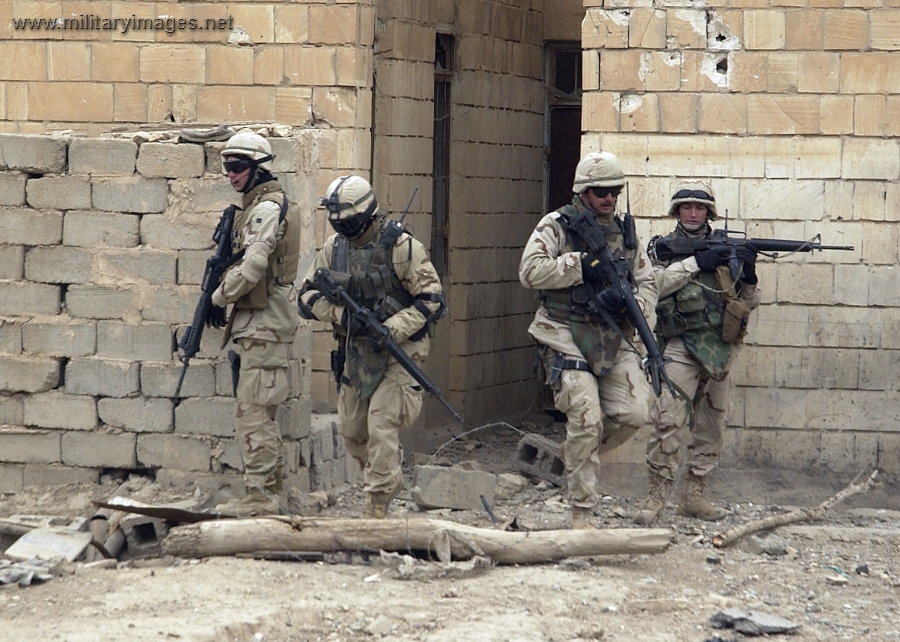
Fallujah Iraq Dec 8 2004 1 Disarming Americas Heroes

How would you feel if you received a letter from the U.S. Government informing you that because of a physical or mental condition that the government says you have, it is proposing to rule that you are incompetent to handle your own financial affairs? Suppose that letter also stated that the government is going to appoint a stranger to handle your affairs for you at your expense? That would certainly be scary enough but it gets worse.

What if that letter also stated: “A determination of incompetency will prohibit you from purchasing, possessing, receiving, or transporting a firearm or ammunition. If you knowingly violate any of these prohibitions, you may be fined, imprisoned, or both pursuant to the Brady Handgun Violence Prevention Act, Pub.L.No. 103-159, as implemented at 18, United States Code 924(a)(2).”?

That makes is sound like something right from a documentary on a tyrannical dictatorship somewhere in the world. Yet, as I write this I have a copy of such a letter right in front of me. It is being sent by the U.S. Department of Veterans Affairs to hundreds, perhaps thousands, of America’s heroes. In my capacity as Executive Director of the United States Justice Foundation (USJF) I have been contacted by some of these veterans and the stories I am getting are appalling.

The letter provides no specifics on the reasons for the proposed finding of incompetency; just that is based on a determination by someone in the VA. In every state in the United States no one can be declared incompetent to administer their own affairs without due process of law and that usually requires a judicial hearing with evidence being offered to prove to a judge that the person is indeed incompetent. This is a requirement of the Fifth Amendment to the U.S. Constitution that states that no person shall “…be deprived of life, liberty, or property without due process of law…”.

Obviously, the Department of Veterans Affairs can’t be bothered by such impediments as the Constitution, particularly since they are clearly pushing to fulfill one of Obama’s main goals, the disarming of the American people. Janet Napolitano has already warned law enforcement that some of the most dangerous among us are America’s heroes, our veterans, and now according to this letter from the VA they can be prohibited from buying or even possessing a firearm because of a physical or mental disability.

Think about it, the men and women who have laid their lives on the line to defend us and our Constitution are now having their own Constitutional rights denied. There are no clear criteria for the VA to declare a veteran incompetent. It can be the loss of a limb in combat, a head injury, a diagnosis of PTSD, or even a soldier just telling someone at the VA that he or she is depressed over the loss of a buddy in combat. In none of these situations has the person been found to be a danger to themselves or others. If that was …read more
Source: FULL ARTICLE at Western Journalism

Veteran charged with killing Navy SEAL had been in mental hospital, records show

The Iraq War veteran charged with killing a former Navy SEAL sniper and his friend on a Texas shooting range had been taken to a mental hospital twice in the past five months and told authorities that he was suffering from post-traumatic stress disorder, police records show.

Eddie Ray Routh, 25, also told his sister and brother-in-law after the shootings that he “traded his soul for a new truck,” according to an Erath County arrest warrant affidavit obtained by WFAA-TV. Police said that Routh was driving the truck of victim and ex-Navy SEAL Chris Kyle at the time of arrest.

Routh is charged with one count of capital murder and two counts of murder in the shooting deaths of Kyle, author of the best-selling book “American Sniper,” and his friend Chad Littlefield at a shooting range Saturday in Glen Rose. He is on suicide watch in the Erath County Jail, where he’s being held on $3 million bond, Sheriff Tommy Bryant said.

Routh, a member of the Marines Corps Reserve, was first taken to a mental hospital on Sept. 2 after he threatened to kill his family and himself, according to police records in Lancaster, where Routh lives. Authorities found Routh walking nearby with no shirt and no shoes, and smelling of alcohol. Routh told authorities he was a Marine veteran who was suffering from post-traumatic stress disorder.

“Eddie stated he was hurting and that his family does not understand what he has been through,” the report said.

Routh’s mother told police that her son had been drinking and became upset when his father said he was going to sell his gun. She said Routh began arguing with them and said he was going to “blow his brains out.”

Police took Routh to Green Oaks Hospital for psychiatric care.

Dallas police records show Routh was taken back to the same mental hospital in mid-January after a woman called police and said she feared for Routh’s safety.

Green Oaks will not release patient information, citing privacy laws. Most people brought by police to the hospital are required to stay at least 48 hours.

In May, Routh’s mother reported a burglary that included nine pill bottles and her son was involved, according to a Lancaster police report. No other details were available.

Authorities say Routh, Kyle and Littlefield arrived at the sprawling Rough Creek Lodge at about 3:15 p.m. Saturday, and a hunting guide called 911 about two hours later after discovering the bodies. Kyle and Littlefield were shot multiple times, and numerous guns were at the scene, according to the affidavit.

Routh drove to his sister’s house, and told her that he killed two people and that he planned to drive to Oklahoma to evade Texas authorities, the affidavit said. Routh’s sister then called police, and he was arrested after a short police pursuit in Lancaster.

Jailers used a stun gun on Routh on Sunday night after he appeared ready to assault them when they entered his cell after he refused to return his food tray, the sheriff said. Then they put Routh in a chair that restrains his arms and legs in his solitary confinement cell, Bryant said.

Bryant said Routh has an attorney but hasn’t met with him at the jail in Stephenville, about 75 miles southwest of Fort Worth.

Attempts by The Associated Press to reach Routh’s mother and sister were unsuccessful Monday.

Sundae Hughes, an aunt of Routh’s, said she watched him grow up but hasn’t seen him since his high school graduation in 2006. Hughes was in disbelief that her nephew could be involved in such an incident.

“He has a kind heart (and was) someone willing to jump in and help, no matter what it was,” she said.

Routh joined the Marines in 2006 and rose to the rank of corporal in 2010. His military specialty was small-arms technician, commonly known as an armorer. He had been stationed at Camp Lejeune, N.C., and served in Iraq from 2007-08 and in the Haiti disaster relief mission in 2010.

He is now in the individual ready reserve. He could be called to duty, but it’s uncommon unless he volunteers, 1st Lt. Dominic Pitrone of the Marine Forces Services public affairs office said.

Travis Cox, director of FITCO Cares — the nonprofit that Kyle set up to give in-home fitness equipment to physically and emotionally wounded veterans — said he believes that Kyle and Littlefield were helping Routh work through PTSD.

Cox didn’t know how Routh and Kyle knew each other. He said the shooting range event was not a FITCO session.

Kyle, 38, left the Navy in 2009 after four tours of duty in Iraq, where he earned a reputation as one of the military’s most lethal snipers. “American Sniper” was the No. 3 seller of paperbacks and hardcovers on Amazon as of Monday, and the hardcover was out of stock.

Littlefield, 35, was Kyle’s friend, neighbor and “workout buddy,” and also volunteered his time to work with veterans, Cox said.

Source: FULL ARTICLE at Fox US News

Ex-Navy SEAL died pursuing his passion

The former top Navy SEAL sniper who authorities say was killed at a Texas shooting range was devoted to maintaining camaraderie and helping his fellow veterans find their way after leaving active duty.

Chris Kyle, author of the best-selling book “American Sniper,” and his friend Chad Littlefield apparently were doing just that Saturday when, officials say, they were shot and killed by former Marine Eddie Ray Routh.

Kyle, 38, had left the Navy in 2009 after four tours of duty in Iraq, where he earned a reputation as one of the military’s most lethal snipers. But he quickly found a way to maintain contact with his fellow veterans and pass on what had helped him work through his own struggles. By late 2011, he filed the paperwork to establish the nonprofit FITCO Cares, which received its nonprofit status the following spring, said FITCO director Travis Cox.

“Chris struggled with some things,” Cox said. “He’d been through a lot and he handled it with grace, but yeah he did struggle with some things. And he found a healthy outlet and was proactive in his approach to deal with those issues and wanted to help spread his healing, what worked for him, to others. And that’s what he died doing.”

For Kyle that healthy outlet was exercise. At the heart of FITCO was giving in-home fitness equipment to physically and emotionally wounded veterans, as well as families who had lost a veteran, Cox said.

Littlefield, a 35-year-old friend and neighbor, was Kyle’s “workout buddy,” and also volunteered his time to work with veterans, Cox said. He was married and had children as well.

“He’s a very gentle, sweet-hearted man, just a great man, kind of quiet,” Cox said of Littlefield. “He just really cared. … He wanted to do whatever he could to help veterans and help see that vision of serving others that Chris had. He shared that vision with all of us. He was a great man.”

Cox said he understood that Kyle and Littlefield were helping Routh work through his own PTSD, but that he did not know how they came into contact. He said it was not a FITCO session.

Erath County Sheriff Tommy Bryant on Sunday offered a similar description of the situation.

“It’s my understanding that the suspect may have been suffering from some type of mental illness from being in the military himself,” he said of Routh.

He said Routh’s mother may have reached out to Kyle for help with her son.

“We kind of have an idea that maybe that’s why they were at the range for some type of therapy that Mr. Kyle assists people with,” Bryant said.

Bryant didn’t know whether Routh was on any medication or whether he had been diagnosed with post-traumatic stress disorder.

Authorities say the three men arrived at the Rough Creek Lodge southwest of Fort Worth around 3:15 p.m. Saturday. A hunting guide discovered the bodies of Kyle and Littlefield around 5 p.m. and called 911.

Routh allegedly left in Kyle’s pickup and went to his sister’s in Midlothian. He told what he had done and left. She called police and Routh was eventually found at his home in Lancaster. After a short pursuit he was arrested.

Routh was being held on $3 million bail in the Erath County Jail. Authorities said they believed he had requested a court-appointed attorney. Calls to his home were not answered Sunday.

Kyle was also president of a security training firm Craft International. Craft had scheduled a $2,950-per-person civilian training event at Rough Creek Lodge called the “Rough Creek Shoot Out!” for March 1-3. The price included lodging, meals and shooting instruction. Kyle was scheduled to teach the first class, called “precision rifle.”

But the work with veterans through FITCO was Kyle’s passion, Cox said.

FITCO Cares offered life coaching for veterans, a daily support group and weekly group counseling. Sometimes veterans in other states would video conference in to counseling sessions, Cox said.

Kyle was always recognized at events, but would deflect attention to other veterans, quickly introducing and praising those around him.

“That camaraderie is usually missed once the veteran gets out of the military,” said Cox, himself a former Marine sniper. “The authentic relationships that you develop in the military, especially overseas and in combat are some of the most meaningful, authentic relationships that one can have and it’s missed. And so we tried to create a means through this group of veterans that can gather and talk about things that they’re dealing with.”

“He (Kyle) didn’t have any fear at all as far as working with an extreme case,” Cox said. “Just like in combat he would take it on head on and do whatever he could to give these guys assistance. There was no fear in helping anyone that may have an extreme case. He was willing to help anyone in need.”

__

Christopher Sherman contributed reporting from McAllen, Texas.

Source: FULL ARTICLE at Fox US News

Ex-Navy SEAL was reportedly helping alleged murderer work through PTSD

The former top Navy SEAL sniper who authorities say was killed at a Texas shooting range was devoted to maintaining camaraderie and helping his fellow veterans find their way after leaving active duty.

Chris Kyle, author of the best-selling book “American Sniper,” and his friend Chad Littlefield apparently were doing just that Saturday when, officials say, they were shot and killed by former Marine Eddie Ray Routh.

Kyle, 38, had left the Navy in 2009 after four tours of duty in Iraq, where he earned a reputation as one of the military’s most lethal snipers. But he quickly found a way to maintain contact with his fellow veterans and pass on what had helped him work through his own struggles. By late 2011, he filed the paperwork to establish the nonprofit FITCO Cares, which received its nonprofit status the following spring, said FITCO director Travis Cox.

“Chris struggled with some things,” Cox said. “He’d been through a lot and he handled it with grace, but yeah he did struggle with some things. And he found a healthy outlet and was proactive in his approach to deal with those issues and wanted to help spread his healing, what worked for him, to others. And that’s what he died doing.”

For Kyle that healthy outlet was exercise. At the heart of FITCO was giving in-home fitness equipment to physically and emotionally wounded veterans, as well as families who had lost a veteran, Cox said.

Littlefield, a 35-year-old friend and neighbor, was Kyle’s “workout buddy,” and also volunteered his time to work with veterans, Cox said. He was married and had children as well.

“He’s a very gentle, sweet-hearted man, just a great man, kind of quiet,” Cox said of Littlefield. “He just really cared. … He wanted to do whatever he could to help veterans and help see that vision of serving others that Chris had. He shared that vision with all of us. He was a great man.”

Cox said he understood that Kyle and Littlefield were helping Routh work through his own PTSD, but that he did not know how they came into contact. He said it was not a FITCO session.

Erath County Sheriff Tommy Bryant on Sunday offered a similar description of the situation.

“It’s my understanding that the suspect may have been suffering from some type of mental illness from being in the military himself,” he said of Routh.

He said Routh’s mother may have reached out to Kyle for help with her son.

“We kind of have an idea that maybe that’s why they were at the range for some type of therapy that Mr. Kyle assists people with,” Bryant said.

Bryant didn’t know whether Routh was on any medication or whether he had been diagnosed with post-traumatic stress disorder.

Authorities say the three men arrived at the Rough Creek Lodge southwest of Fort Worth around 3:15 p.m. Saturday. A hunting guide discovered the bodies of Kyle and Littlefield around 5 p.m. and called 911.

Routh allegedly left in Kyle’s pickup and went to his sister’s in Midlothian. He told what he had done and left. She called police and Routh was eventually found at his home in Lancaster. After a short pursuit he was arrested.

Routh was being held on $3 million bail in the Erath County Jail. Authorities said they believed he had requested a court-appointed attorney. Calls to his home were not answered Sunday.

Kyle was also president of a security training firm Craft International. Craft had scheduled a $2,950-per-person civilian training event at Rough Creek Lodge called the “Rough Creek Shoot Out!” for March 1-3. The price included lodging, meals and shooting instruction. Kyle was scheduled to teach the first class, called “precision rifle.”

But the work with veterans through FITCO was Kyle’s passion, Cox said.

FITCO Cares offered life coaching for veterans, a daily support group and weekly group counseling. Sometimes veterans in other states would video conference in to counseling sessions, Cox said.

Kyle was always recognized at events, but would deflect attention to other veterans, quickly introducing and praising those around him.

“That camaraderie is usually missed once the veteran gets out of the military,” said Cox, himself a former Marine sniper. “The authentic relationships that you develop in the military, especially overseas and in combat are some of the most meaningful, authentic relationships that one can have and it’s missed. And so we tried to create a means through this group of veterans that can gather and talk about things that they’re dealing with.”

“He (Kyle) didn’t have any fear at all as far as working with an extreme case,” Cox said. “Just like in combat he would take it on head on and do whatever he could to give these guys assistance. There was no fear in helping anyone that may have an extreme case. He was willing to help anyone in need.”

Source: FULL ARTICLE at Fox US News