Tag Archives: Jim Rogers

China’s Central Bank Holding Americans Hostage

By Floyd Brown

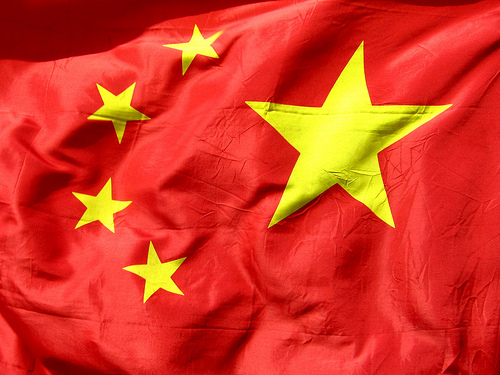
Red China flag SC Chinas Central Bank Holding Americans Hostage

I travel around the world to uncover stories that impact Capitol Hill. Often, the most important stories need an outsider’s perspective to understand them. This week, I spoke at conference called FreedomFest 2013. This conference included some of the greatest strategic thinkers in the world, and several had chilling comments about China.

Jim Rogers, Steve Forbes, Alex Green, Mark Skousen, Joseph Farah, and Bert Dohmen are just a few of the thinkers who shared their insights about investments and governance in a world of increasing risk. I deeply value the opinions of the unique minds attending FreedomFest. And this year, an important trend has emerged. This trend is influencing events that will impact your life and your investments…

The collected voices share a great fear about what lies directly ahead for China. China’s central bank responded aggressively to the financial crisis of 2008. It responded with liquidity and easy money. And this flood of easy money has helped produce an incredible array of malinvestment. (Austrian School economists developed the concept of malinvestment to explain the consequences of a central bank providing too much monetary stimulus.)

As applied to China, the story goes something like this…

Big Trouble in… Big China

Governments and firms were required to keep the economy growing at all costs, which led them to poorly allocate the excess funds. This flood of artificially cheap money paid for projects that require huge debt service payments, but provide little economic value.

For example, highways and bridges to nowhere were built. High rise apartment buildings remain vacant, and entire cities are ghost towns waiting for businesses and inhabitants to show up. One of the most colorful descriptions I heard was of the Guangzhou South Train Station. This colossus of a station is eerily vacant. Imagine going into Grand Central Station, and not a soul is in sight…

What’s more, China’s Vice Finance Minister, Zhu Guangyao, admitted this month that local government debt levels are unknown. Official figures haven’t been released since 2010 and are likely much greater than the forecast 10.7 trillion yuan ($1.7 trillion).

Estimates of China’s local government debts range from Standard Chartered Bank’s 15% of GDP at the end of 2012, to Credit Suisse Bank’s 36%. The debt rating agency Fitch forecasts that the figure is 25% of GDP, so it downgraded China’s sovereign debt rating in April.

Collapse on the Horizon

Now that the stimulus of 2008 has worn off, the economy is in worse shape than before. China is currently dealing with an overhang of excess debt, along with too much factory inventory and housing capacity. These excess supplies have become dead weight. Therefore, China is again scrambling to stir up growth, and officials will be forced to order more stimulus. The big concern now is that the excess debt will cause a full-scale economic collapse.

The clearest sign of distress in China can be seen via the inverted yield curve. An inverted yield curve happens when short-term interest rates become higher than long-term interest rates. This means that there’s a structural problem …read more

Source: FULL ARTICLE at Western Journalism

The End of Utilities?

By Sara Murphy, The Motley Fool

Filed under:

NRG Energy has made some fascinating moves recently that suggest it’s written the first few drafts of a Dear John letter to utilities. It’s not the only one disrupting the status quo, either. As energy demand surges in response to a growing global population and emerging-market development, and a changing climate forces us to get serious about constraining greenhouse gas emissions, all signs point to an energy future that bears little resemblance to what we know today.

Paradigm disruption
Renewables are making tons of headway lately, and 2013 promises to be a very good year for energy sources such as wind and solar. Their growing share of generating capacity presents challenges to the old-school utilities, though: Given that solar photovoltaics and wind are randomly variable energy sources, traditional power plants and transmission lines that were designed for steady supply struggle to accommodate the power fluctuations of renewables.

This means that as companies such as SolarCity push their sun-powered energy systems further into the marketplace, they do so at traditional utilities’ expense. In furnishing consumers with their own generation capacity, SolarCity bypasses utilities. The company’s partnerships with electric-vehicle manufacturers further subvert the legacy systems.

Disintermediation
This process of cutting out the middleman is one we’ve seen before. If you have doubts, ask yourself this: When was the last time you used a travel agent? Exactly. As companies like SolarCity offer customers renewable energy that is typically cheaper than power from the grid, they erode the need for utilities at all. And utilities have noticed.

In an interview with Bloomberg, Duke Energy‘s chairman and CEO, Jim Rogers, directly acknowledged the trend’s potential threat to his company over the long term. Duke is the United States‘ largest utility owner, and Rogers conceded that businesses like his could become less important in the long run.

“If the cost of solar panels keeps coming down, installation costs come down, and if they combine solar with battery technology and a power management system, then we have someone just using us for backup,” Rogers said. He also said Duke was considering a move into rooftop solar, describing it as a short-term opportunity.

At a 2012 energy conference, Susan Story — CEO of Southern‘s services division — directly acknowledged the shifting energy landscape. Southern, the United States‘ largest vertically integrated utility, has been making strides toward a smarter grid and has dramatically shifted its fuel sources. Traditionally coal-reliant, Southern burned more natural gas than coal for the first time in 2012.

Edge power
But are companies like Southern and Duke moving quickly enough to survive the disruption that appears to be under way? Incumbents tend to weather disruptive events poorly, and this could be no exception. Especially when you consider “edge power.”

Edge power is a new and evolving concept, but its core components are distributed generation, distributed storage, and distributed energy management systems. The idea is …read more
Source: FULL ARTICLE at DailyFinance