Tag Archives: Dodge Dart

Submit your questions for Autoblog Podcast #318 LIVE!

By Dan Roth

Filed under: , , , , , ,

Autoblog Podcast graphic

We record Autoblog Podcast #318 tonight, and you can drop us your questions and comments regarding the rest of the week’s news via our Q&A module below. Subscribe to the Autoblog Podcast in iTunes if you haven’t already done so, and if you want to take it all in live, tune in to our UStream (audio only) channel at 10:00 PM Eastern tonight.

Discussion Topics for Autoblog Podcast Episode #318

[RSS] Add the Autoblog Podcast feed to your RSS aggregator

var vhm_widget_settings = { eventId: 3156480, colorScheme: ‘redblack’, width: 628, height: 550, sizeClass: 3};Can’t see the EventBox? Click Here.

Voices Heard Media

Submit your questions for Autoblog Podcast #318 LIVE! originally appeared on Autoblog on Mon, 28 Jan 2013 17:15:00 EST. Please see our terms for use of feeds.

Permalink | Email this | Comments

Source: FULL ARTICLE at Autoblog

Autoblog Podcast #317

By Dan Roth

Filed under: , , , , , , , ,

Mitsubishi Mirage, Toyota thinks of beefing up US production, Marchionne on Alfa, Dart and minivans, Ford Atlas concept, Honda Gear concept autoblog podcast logo

Episode #317 of the Autoblog Podcast is here, and this week, Dan Roth, Jeff Ross and Michael Harley bookend the other podcast topics with a pair from the Montreal Auto Show, the Mitsubishi Mirage and Honda Gear concept, and in between we talk about Toyota building all its US-market cars stateside, Hyundai building a Nurburgring test facility, Sergio Marchionne‘s latest words about Alfa Romeo, Dodge Dart powertrains and the future of Chrysler vans. Some chatter about the Ford Atlas concept finishes up the meat of the ‘cast and then we wrap with your questions. For those of you who hung with us live on our UStream channel, thanks for taking the time. Keep reading for our Q&A module for you to scroll through and follow along, too. Thanks for listening!

Autoblog Podcast #317:

Topics:

In the Autoblog Garage:
2013 Volvo C30
2013 Dodge Journey
2013 Nissan Altima

Hosts: Dan Roth, Jeff Ross, Michael Harley

Runtime: 01:50:11


Get the podcast
[UStream] Listen live on Mondays at 10PM Eastern at UStream
[iTunes] Subscribe to the Autoblog Podcast in iTunes
[RSS] Add the Autoblog Podcast feed to your RSS aggregator
[MP3] Download the MP3 directly

Feedback
Email: Podcast at Autoblog dot com

Review the show in iTunes

Continue reading Autoblog Podcast #317

Autoblog Podcast #317 originally appeared on Autoblog on Wed, 23 Jan 2013 17:50:00 EST. Please see our terms for use of feeds.

Permalink | Email this | Comments

Source: FULL ARTICLE at Autoblog

Official: Dodge Dart Registry helps you crowdsource money for your next ride [w/video]

By Jeffrey N. Ross

Filed under: , , , ,

Dodge Dart Registery screencap

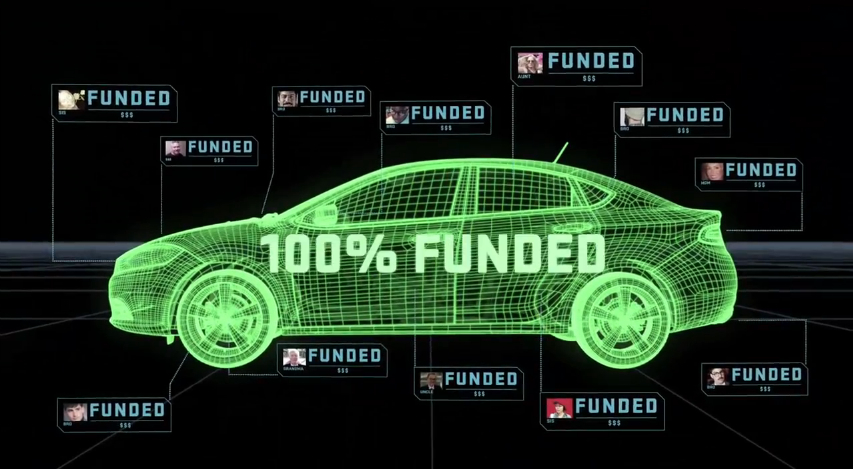
To be honest, we’re surprised something like this didn’t pop up sooner. Chrysler is riffing on gift registries for couples getting married or expecting babies and cross-pollinating it with a social media funding website like Kickstarter to help customers buy its 2013 Dodge Dart. The Dodge Dart Registry allows people to build and customize a new Dart exactly how they want it, then let other people purchase some or all of the components as gifts.

The registry lets you add features like dark headlights, dual exhaust, various wheels and even interior options without choosing a specific trim level. This sounds a lot like the system Scion uses to let its customers configure cars, and this could be a great idea for Dodge. Of course, this system has the added benefit of being a social media affair for you to share with your friends… you know, so they can help pay for some of the parts, too.

The best thing about the registry is that you can configure your dream Dart from the comfort of your home computer, which strikes us as much better than walking around Bed, Bath and Beyond for the better part of an afternoon with an electronic scanner. The one thing that Dodge doesn’t offer? “Thank You” cards. Those are on you.

For more information about how to get your friends and family to help buy you a Dodge Dart, Chrysler has provided a video and press release, which we’ve posted below.

Continue reading Dodge Dart Registry helps you crowdsource money for your next ride [w/video]

Dodge Dart Registry helps you crowdsource money for your next ride [w/video] originally appeared on Autoblog on Wed, 23 Jan 2013 14:15:00 EST. Please see our terms for use of feeds.

Permalink | Email this | Comments

Source: FULL ARTICLE at Autoblog

Dodge Dart Sales, Aston Martin Rapide S, Air Hybrid: Car News Headlines

Today at The Car Connection, we took a look at why the Dodge Dart isn’t selling well and how recent auctions of Chevrolet Corvettes have managed to raise nearly $1.6 million for charity. We also learned about a new type of hybrid drivetrain that instead of using a heavy and expensive electric system relies on compressed air–yes, air!–to help…
Source: FULL ARTICLE at The Car Connection

Why Isn't The Dodge Dart Selling?

When the all-new Dodge Dart debuted at last year’s Detroit Auto Show, the media was excited. It marked the revival of a once-loved nameplate and the first major collaboration between Chrysler and its new Italian owners (since the Dart is based on a Fiat platform). And for a reasonably priced compact sedan, the 2013 Dart offered a range of options…
Source: FULL ARTICLE at The Car Connection

Report: Chrysler expecting up to 200,000 9-speed transmissions for 3 models this year

By Jeffrey N. Ross

Filed under: , , ,

Camouflaged 2014 Jeep Liberty replacement prototype - spy shot

Striving for improved fuel economy, we already knew that Chrysler will begin using a nine-speed automatic transmission in some of its new products this year, but what we haven’t known is that volume at which this gearbox will be used. According to Bloomberg, Chrysler CEO Sergio Marchionne has been quoted as saying that the automaker expects to sell close to 200,000 units equipped with this new transmission in 2013. Those gear-rich trannies will be spread out across three models, consisting of the redesigned Chrysler 200, the still-unnamed Jeep Liberty replacement and the Dodge Dart.

This transmission should play a pivotal role in making Chrysler vehicles more competitive in their respective segments. Just for comparison, one of the Dart’s key competitors, the Toyota Corolla, still uses a four-speed automatic, and a previous report indicates that the next-generation 200 could get up to 38 miles per gallon on the highway, which is better than most non-hybrid midsize sedans on the market. Marchionne says that the new Jeep model is expected during the second quarter of this year, but there is no word as to when the new 200 or nine-speed Dart will debut, but clearly Dodge would like to have the transmission in its compact yesterday. As for that volume figure, it definitely doesn’t seem out of reach since the Dart, Liberty and 200 combined for a total of more than 225,000 units in 2012.

How many more gears can we expect in future cars? Probably not many more, since the CEO of transmission-builder ZF, Stefan Sommer, previously stated that nine speeds was the “natural limit” for transmissions.

Chrysler expecting up to 200,000 9-speed transmissions for 3 models this year originally appeared on Autoblog on Tue, 22 Jan 2013 08:46:00 EST. Please see our terms for use of feeds.

Permalink | Email this | Comments

Source: FULL ARTICLE at Autoblog

Marchionne on Alfa's US return, Dodge Dart's powertrain weakness and minivan plans

By David Kiley

Filed under: , , , ,

Chrysler/Fiat boss Sergio Marchionne at Chrysler press conference

As a reporter covering an auto show, the one opportunity you never want to miss is going to the Sergio Marchionne press briefing.

“This undertaking to bring Alfa back is a one-shot deal… We are not going to do this twice.”

There just aren’t that many real characters left in the auto industry. Marchionne, who sits atop both Chrysler and Fiat, is not only one of the smartest execs in the business, but also the most frank. Herein, a sample of the quotable always-sweatered executive:

A controversial remark on the return of Alfa Romeo to the United States:

“This undertaking to bring Alfa back is a one-shot deal… We are not going to do this twice… Alfas must have ‘wop’ engines… and we don’t have the powertrains worked out just yet.. we won’t put any Chrysler engines in Alfas, or Maseratis.”

The production Alfa Romeo 4C sports car, which may be unveiled at the Geneva Motor Show in March, is not ready for a US launch, Marchionne said earlier this week at the Detroit Auto Show. But then, on January 18 at the INforum breakfast in Detroit, Marchionne reportedly reversed course and said the 4C will be ready for US dealers by the end of this year. Given how many delays have been suffered in Alfa’s return plans, we’ll file this under “wait and see.”

Continue reading Marchionne on Alfa’s US return, Dodge Dart’s powertrain weakness and minivan plans

Marchionne on Alfa’s US return, Dodge Dart’s powertrain weakness and minivan plans originally appeared on Autoblog on Fri, 18 Jan 2013 19:01:00 EST. Please see our terms for use of feeds.

Permalink | Email this | Comments

Source: FULL ARTICLE at Autoblog

Dodge Implements Crowdsourced Funding For Its Dart: Video

By Kurt Ernst

Crowdsourced Dodge Dart

This is either a stroke of genius or the downfall of Western civilization: Dodge has just announced a plan to allow crowdsourced purchases of its Dart compact sedan though funding website Kickstarter.

If you’re familiar with bridal gift registries and how they work, you know the basic concept. Here, someone says “I want a Dodge Dart for my birthday,” then Kickstarter sends out gift requests to the sender’s contact list. If you have enough friends, you can probably fund the car in its entirety; if you don’t, we assume the money donated will go towards lowering the purchase price of the car.

For Dodge, this is pure marketing genius. Even if no one takes advantage of the scheme, it gives the automaker something to talk about, while drawing attention to its slow-selling Dart.

On the other hand, it pretty much torpedoes the idea of working hard for what you want. Saving money towards a goal is hard, but asking friends and family to give you money for that same goal is a lot easier. Plus, when someone else is buying you a car, you have plenty of disposable cash for beer, pizza and live music, which is way more important than putting money aside to buy a car.

Is it genius, or just one more indication that our values have completely fallen in the toilet? You decide.

Source: FULL ARTICLE at Automotive Addicts

Official: Mazda3, CX-5 earn IIHS Top Safety Picks

By Jonathon Ramsey

Filed under: , , ,

Mazda technologies like SkyActiv-Body and SkyActiv-Chassis, plus ultra-high-tensile steel, six airbags, “crusable” brake and accelerator pedal assembly and collapsible steering column have helped the 2013 Mazda3 and 2014 Mazda CX-5 win Top Safety Pick laurels from the Insurance Institute for Highway Safety (IIHS). It’s the second year in a row for the Mazda3.

The accolade is earned by receiving “Good” marks for frontal moderate overlap crashes, side and rear impact crashes, and tests of roof strength. Remember, the small overlap test that the IIHS commenced in August 2012 has lately tripped up some makers who have excellent safety reputations.

The Mazda3 and CX-5 join offerings like the Dodge Dart, Hyundai Elantra, Mitsubishi Outlander Sport and Subaru Forester among the 117 vehicles so far declared Top Safety Picks – which is different than the 13 named Top Safety Picks+, mind you – for this year. Have a read of the press release below for more information.

Continue reading Mazda3, CX-5 earn IIHS Top Safety Picks

Mazda3, CX-5 earn IIHS Top Safety Picks originally appeared on Autoblog on Thu, 17 Jan 2013 10:01:00 EST. Please see our terms for use of feeds.

Permalink | Email this | Comments

Source: FULL ARTICLE at Autoblog

Spy Shots: Jeep Liberty replacement takes shape

By Steven J. Ewing

Filed under: , , ,

Jeep Liberty replacement spy shots

Now that the Liberty has left us for greener pastures and the Compass and Patriot are entering their final model year, it’s time to start looking into the future of Jeep. The next all-new vehicle for the off-road brand will be the midsize SUV you see here, effectively replacing the Liberty, and not necessarily carrying on with that name.

From the sides, the prototype you see here sort of looks like a miniature version of the handsome Grand Cherokee, albeit with a bit more in the way of body sculpting. Up front, the seven-slat grille will be front and center, with completely revised headlamp designs that are reportedly angular and sweep well into the front fenders (you can sort of see what we’re talking about in the side profile). That doesn’t sound very Jeep-like, but we’ll reserve judgment until we, you know, see the thing.

The bigger question with the Liberty replacement will be whether or not its off-road chops will be up to snuff. After all, the two previous generations of Liberty models were body-on-frame traditional SUVs, whereas this new Jeep rides on a larger version of the Dodge Dart platform.

We’ll likely see the new Jeep debut at the New York Auto Show this spring, though we’ll no doubt spot some less-camouflaged testers before then.

Jeep Liberty replacement takes shape originally appeared on Autoblog on Wed, 16 Jan 2013 17:15:00 EST. Please see our terms for use of feeds.

Permalink | Email this | Comments

Source: FULL ARTICLE at Autoblog

Marchionne Says Nine-Speed Auto Still in the Works for Dodge Dart [2013 Detroit Auto Show]

By Daniel Pund

In a press conference today at the Detroit auto show, Fiat head honcho Sergio Marchionne acknowledged that the C-segment Dodge Dart has been something of a sales disappointment for the company.

Marchionne places the blame for the weak sales on the Dart’s available transmissions. Marchionne describes the six-speed manual (with which the Dart launched) and the six-speed dual-clutch automatic that came shortly after as, “not the ideal solution for this market.” Based on our test drives of the manual and the dual-clutch, we think his description is something of an understatement.


In hopes of delivering to the market a product that does not annoy buyers, Chrysler will add a ZF-sourced nine-speed automatic gearbox that will be seen first in the replacement for the Jeep Liberty this spring. Unlike the dual-clutch unit currently available, the nine-speed will be a conventional torque-converter that Marchionne (and us) anticipate will better suit the expectations of American C-segment buyers.

Source: FULL ARTICLE at Car & Driver

Report: 2014 Jeep Patriot and Compass ditch CVT for six-speed auto

By Jonathon Ramsey

Filed under: , ,

2013 Jeep Patriot - front three-quarter view

It was reported in Automotive News a few months ago, but a new report on Allpar.com adds some details to news that the 2014 Jeep Compass and Patriot will get a six-speed automatic to replace the CVTs they currently use. According to a tip provided to Allpar, the 2014 models will begin production in March and be on sale sometime in the summer. The Jatco-sourced CVT in use until now – Jatco is owned by Nissan and Mitsubishi – has been often criticized, and many won’t be sad to see it go.

The incoming six-speed automatic is said to be an all-wheel-drive cog-swapper that’s the work of Hyundai and Magna and has been paired with the DynaMax AWD system used in the Hyundai ix35 and Kia Sportage. It won’t be the only Chrysler product using a transmission with ties to Hyundai: the six-speed automatic in the Dodge Dart comes from Powertech, which is a wholly-owned subsidiary of Hyundai. With the Patriot and Compass said to be driving down the trail for the last time this year, it will be a short run for the new tranny and the rumored addition of a backup camera and power rear liftgate on the Compass.

2014 Jeep Patriot and Compass ditch CVT for six-speed auto originally appeared on Autoblog on Mon, 07 Jan 2013 14:15:00 EST. Please see our terms for use of feeds.

Permalink | Email this | Comments

Source: FULL ARTICLE at Autoblog

Toyota joins list of cars with wireless phone charging

Slowly but surely, car makers are adapting to the smartphone age.

First came increased connectivity with features like Ford’s Sync AppLink and in-car Wi-Fi hotspots. Now, Toyota and other car makers are planning to add wireless charging pads to their vehicles, so drivers with supported smartphones can power up without clumsy cables.

Toyota says it plans to offer wireless charging in its 2013 Avalon high-end sedan. Chrysler also plans to offer a $200 wireless charging option in next year’s Dodge Dart, but it’ll be handled by Mopar, the company’s after-market arm.

Wireless charging isn’t a new idea–phones like the failed Palm Pre included the feature back in 2009—but it’s starting to see a resurgence. LG’s Nexus 4, Nokia’s Lumia 920 and HTC’s Windows Phone 8X all have wireless charging capabilities built in. Nokia’s Lumia 820 and variants also support wireless charging with an optional shell.

To read this article in full or to leave a comment, please click here

Source: PCWorld

2013 North American Car and Truck of the Year Finalists Announced [2013 Detroit Auto Show]

By Ron Sessions

The jury for the North American Car and Truck/Utility of the Year awards has selected six finalists from among dozens of new or substantially revised vehicles for 2013. Read on for the list, as well as our takes on each.

Three car finalists, the Cadillac ATS, the Ford Fusion, and the Honda Accord, tallied more votes than other nominees on a shortlist consisting of the BMW 3-series, Chevrolet Malibu, Dodge Dart, Lincoln MKZ, Nissan Altima, Scion FR-S, Subaru BRZ, and Toyota Avalon. On the truck/utility side, another three finalists—the Ford C-Max, Mazda CX-5, and Ram 1500—gathered more votes than the nominated Acura RDX, Audi Allroad, BMW X1, Ford Escape, Hyundai Santa Fe, Infiniti JX35, and Nissan Pathfinder. All six are decent vehicles, to be sure; the winners will be announced this January 14 at the 2013 Detroit auto show.

The ATS is the smallest, lightest Cadillac since the early-’80s Cimarron. It’s a true, compact rear-wheel-drive sedan with the size, chassis, and speed to run with the 10Best Cars-winning BMW 3-series, narrowly losing a head-to-head comparison test. Demerits include the lack of a V-6/manual-transmission combo (although the manual isn’t very satisfying where it is offered), a peaky four-cylinder turbo, the small back seat and trunk, some confounding switchgear, and the distracting and somewhat reticent CUE infotainment system.

The Fusion displays a design flair Ford cribbed from its once-captive Aston Martin subsidiary that makes it look more expensive than it is. Along with a wide selection of powertrain choices, including two turbo fours and two hybrid systems (one being of the plug-in variety), the Fusion gets high marks for its sharp steering, stiff structure, pinpoint brakes, and excellent body control. We don’t like the snug back seat, narrow trunk opening, smallish fuel tank, and ungainly MyFord Touch infotainment system. Still, it’s pretty good: It finished second to the Honda Accord in a recent six-car comparo.

Honda’s all-new ninth-generation Accord secured another 10Best trophy for 2013. Marking a return to form, we love the all-new Accord’s well-balanced, agile handling; sharp steering; and capacious rear seat and trunk, as well as the small-on-the-outside, big-on-the-inside packaging; well-tuned CVT; and sharp-shifting manual transmission. We’d prefer more exciting styling and better fuel economy, but this car is sweet.

The Ford C-Max is sold in North America only as a hybrid. Based on the Focus platform, the C-Max shares that car’s DNA in its well-damped suspension, sharp steering, firm brake feel, and stiff structure. Acceleration is lively for the class, too. However, stopping distances are on the long side and fuel economy drops sharply when you deign to drive it like a real car.

Comparison Test: 2013 Cadillac ATS vs. 2012 BMW 328i
Comparison Test: 2013 Mazda CX-5 vs. 2013 Escape, 2012 CR-V, 2012 Tucson, 2012 Sportage, 2012 RAV4
Comparison Test: 2013 Honda Accord vs. 2013 Ford Fusion vs. 2013 Nissan Altima vs. 2012 Volkswagen Passat

Mazda’s CX-5 is our current small crossover champion, having bested five other recently redesigned stuff-haulers. A fantastic chassis, great sightlines, and class-leading fuel economy are key reasons we love it, but with only 155 hp to move its 3500 pounds and a fuel-economy-oriented shift schedule, it’s awfully slow. Good thing the 2014 will offer a larger, more-powerful 2.5-liter four-cylinder.

The Ram 1500 pickup is the sole actual truck among the NACTOY finalists, although its plush ride (especially with optional air suspension) and quiet, carlike comfort are pretty damn coddling. A slick-shifting eight-speed transmission and refined Pentastar V-6 add to that perception. On the minus side, the Ram’s new rotary shifter takes some getting used to and, like every full-size pickup on the planet, the bottom line can swell big time once you get frisky with options.

2013 Detroit Auto Show full coverage

Source: Car & Driver

Report: Maserati planning second smaller SUV?

By Jonathon Ramsey

Filed under: , , ,

Maserati’s product plans have taken a few wild turns, but as we get closer to production dates for the long-awaited offerings things are getting a wee bit clearer. The the sixth-generation Maserati Quattroporte is here, and a quick recap according to a report in Car and Driver has the smaller Ghibli sedan on Chrysler‘s LX/LY platform next, then the next-generation GranTurismo coupe and cabrio on a Maserati platform, then the Kubang SUV concept (pictured) that, for production, will become the larger Jeep-Cherokee-based Levante SUV.

All of which gets us to 2015. That same year, according to the report, the Levante will get a brother: a smaller SUV or crossover, perhaps sized like the Kubang concept, to challenge the Audi Q5 and the Porsche Macan. It is predicted to use the Compact US Wide platform, built for front-wheel and all-wheel-drive vehicles, that supports the Dodge Dart and 2014 Alfa Romeo Giulia. In addition to giving the premium brand a competitor in what is a very popular segment, a Maserati move slightly downmarket can help fill a gap while Fiat brass figures out what to do with Lancia.

Maserati planning second smaller SUV? originally appeared on Autoblog on Sun, 16 Dec 2012 11:57:00 EST. Please see our terms for use of feeds.

Permalink | Email this | Comments

Source: Autoblog

The Ads for the Dodge Dart? They’re Smart, and Here’s Why [The Ad Section]

By Don Klein

The Ads for the Dodge Dart? They’re Smart, and Here’s Why [The Ad Section]

Award-winning ad man-cum-auto journalist Don Klein knows a good (or bad) car commercial when he sees one; the Ad Section is his space to tell you what he thinks of the latest spots. The ad’s rating is depicted via the shift pattern at the bottom, but everyone has an opinion when it comes to advertising, so hit Backfires below and tell us what you think, too.

Dodge’s portfolio of television commercials for the 2013 Dart isn’t just an ad campaign; it’s a miniature film festival that both educates and entertains. It’s got action, drama, humor, excitement, and a killer soundtrack. The casting and acting are top-notch too, as are the occasional cameo celebrity appearances. Yet these commercials are so jam-packed with relevant product information, they could be used as training videos for dealership personnel. You know what’s wrong with them? Nothing.

Hitting a creative home run is difficult even when the assignment is relatively uncomplicated. But in Dart’s case, the agency (Portland-based Wieden+Kennedy), had to accomplish a number of difficult objectives, including several that are intangible. Cool, for example, is a difficult quality to bestow by simple assertion, especially when the product’s name conjures up images of an ancient, slant-six powered econobox. Yet these commercials are definitely cool.

First, a little background. Compacts account for approximately 15 to 20 percent of U.S. auto industry sales, yet Chrysler hasn’t been a player in this arena since the last Neon rolled off the assembly line in 2005. In addition to contributing unit sales, compacts play the important role of introducing buyers to the brand: It’s a lot easier to keep happy customers in the tent than it is to lure converts after they’ve had a good experience elsewhere. And while Chrysler’s been asleep at the switch regarding this critical category, its competitors clearly haven’t: Ford, Chevy, Honda, Toyota, VW, and Mazda are just some of the marques that have been honing their compact game. (Have you driven a Ford Focus—or the ST?)

Comparison Test: 2013 Dodge Dart Rallye vs. 2012 Ford Focus SE
Instrumented Test: 2013 Dodge Dart Limited 1.4T DCCT
Instrumented Test: 2013 Dodge Dart Limited 1.4T Manual

And as every player knows, if you come to the party late, you’d damned well better bring something worth waiting for. But how many times has that been tried in car advertising before? A million? Three million? At least. And it rarely works, because most of the time, those commercials start out showcasing the end result of their alleged greatness and rely on a voiceover to explain how they got there. But the Dart commercials start at the beginning and show you how they achieved their goal with easy to digest, snack-sized visuals that illustrate the copy points.

And the journey isn’t always pretty. For example, in the spot called “How To Change Cars Forever”, we suffer along with the designers (all young and hipster-like) as they chug coffee, skip meals, and pull all-nighters until they’re satisfied. We cheer them on from our couches when they destroy not-quite-there sketches and prototypes, “ignore the committees,” and literally kick the finance guy out the door, all to the pumping beat of Jay-Z and Kanye West’s “No Church in the Wild.” This is car building the way we would do it! Less compromise! More power! Cool apps! Tom Brady! Low price! I want one!

5th Gear RatingOf course it’s just an ad. But advertising is still the way most of us get our information about the things we buy. True, enthusiasts will dig deeper, do their own research, and listen to the voices they trust most. If that weren’t true, Car and Driver wouldn’t be in business. But if car companies relied just on enthusiast buyers, they wouldn’t be in business. Like it or not, advertising plays a major role in the auto industry, and Chrysler’s betting heavily on the Dart campaign to deliver prospects to their showrooms. I have no doubt that these commercials will do just that. Whether they’ll be happy with their Dart—we’d avoid the bummer-tastic dual-clutch gearbox, for example—is another matter entirely.

Source: Car & Driver

Maserati’s Lineup Expansion to Include a Compact Crossover

A compact crossover looks to fit into Maserati’s lineup beneath the Levante, which is previewed by this Kubang concept
Maserati is going for volume. Besides the new Quattroporte and the upcoming, next-generation GranTurismo and GranTurismo convertible, the brand has officially confirmed a slightly smaller sedan called the Ghibli, and an SUV called the Levante—which was previewed by the Kubang concept that debuted last year. That’s quite the undertaking for a brand who’s lineup has consisted of an evolving pair of core models and their variants for the past decade. Now, we have learned from an industry source that the brand also is preparing a more compact SUV, targeting the Audi Q5 and the upcoming Porsche Macan.
First in the sequence of new models is the sixth-generation Quattroporte, which makes use of Maserati’s in-house developed platform. Before the end of 2013, production of the Ghibli will begin, which will be developed from the Chrysler LX/LY platform whose heritage stems back to the mid-1990s Mercedes-Benz W210 E-class.
In 2014, we will see the next-generation GranTurismo, followed in 2015 by GranTurismo cabriolet, which is called the GranCabrio almost everywhere else. Maserati chief designer Lorenzo Ramaciotti has said that it would be a more sports-car-like vehicle than the current, rather large and heavy model. But the GranTurismo will keep a Maserati platform, partly derived from that of the Quattroporte.

First Drive: 2013 Maserati GranTurismo Sport Coupe and Convertible
Comparison Test: Porsche Panamera S vs. BMW 750i, Maserati Quattroporte Sport GT S
First Drive: 2013 Ferrari California

Also in 2015, the brand will launch the Levante, a derivative of the Jeep Grand Cherokee and thus a close relative of the current Mercedes-Benz M-class. But the surprising news is that one year after that, there will be a second and yet unnamed SUV, more compact than the Levante and directly targeting the Audi Q5 and the upcoming Porsche Macan. It will be based on neither an existing Maserati nor a Chrysler platform; instead, it will use Fiat’s long-wheelbase Compact U.S. Wide platform. This Maserati, therefore, will be a close relative of the Dodge Dart, the Chinese-market Fiat Viaggio, and the upcoming Alfa Romeo Giulia.
A compact Maserati crossover would make quite a bit of sense, providing the Fiat Group with a product that could fit into the somewhat-downmarket void left by Lancia’s glaring irrelevance. That would explain why information surrounding an upcoming, somewhat luxurious Alfa Romeo SUV suspiciously has dried up.

Source: Car & Driver

Dodge Dart

The Dodge Dart compact four-door sedan resurrects an old and respected name and applies it to a modern new car with edgy styling. Technically, it replaces the Dodge Caliber hatchback, which will be mourned by few. But it’s really the company’s first arguably competitive sedan in the compact segment since the Dodge Neon, more than a decade ago…
Source: The Car Connection

How to do a "Control Break" (Algorithm)?

A vast amount of problems asked in “Shell Programming an Scripting” can be traced back to be an application of a basic algorithm called a Control Break. Every programmer – and script writers are programmers nonetheless – should immediately recognize problems of this sort and know how to deal with them. We will first discuss the problem in theory, then implement a shell script dealing with an example data set to show the ropes.

The Single Control Break

The most basic form is the single control break. It occurs when some record-oriented data is sortable by a key and all the records with an identical key value are to be processed somehow.

Too complicated? Perhaps, but in fact it is really easy: suppose you have a file of customers (the key) and their purchase values. The goal is to get the purchase totals for every customer. You build a sum (the processing) for all entries with the same customer ID (the identical key values). Lets see:

Code:
Alan 75
Bill 50
Charlie 75
Bill 40
Charlie 55
Alan 25
Bill 30
The first thing we have to do is to identify our key – the part we want to use to differentiate between customers, their names – and the data we need to do our processing – in this case the purchase values. This is easy in our example, but can be quite tricky in real-world applications

By the way: do not confuse “key” and “key value”. Key is the part of the line we sort on. Here it is the first word. Key value is the value the key part holds in each record. The key value for line 1 is “Alan”, while for line 5 it is “Charlie”:

Code:

Alan 75
Bill 50
Charlie 75
Bill 40
Charlie 55
Alan 25
Bill 30
The next step is really easy for shell programmers, because there is a genuine UNIX command for it: we need to sort our input data set for the key we have identified. In our case this simply means:
sort , without any options.

Data after applying “sort”

Code:
Alan 25
Alan 75
Bill 30
Bill 40
Bill 50
Charlie 55
Charlie 75

Suppose we read this, line by line. Because it is sorted we can rely on all the identical key values coming right one after the other. That is, once we read a line with “Bill”, there will be no “Alan”s any more. Keep this in mind while we set up a simple read-loop for the file:

Script.version1.sh:

Code:
#! /bin/ksh

typeset customer=””
typeset -i value=0
typeset infile=”./input”

sort “$infile” |
while read customer value ; do
print – “Customer is: $customertt Purchase is: $value”
done

exit 0
OK, we got the reading of the input correctly, as we have seen from the sample output. So let us come back on our last idea: every time the value of the key changes, one “group” (one certain customer) is finished and a new one begins.

Every time the key value changes from one to the next line we need to output the total. Let us see if we get the line where this happens correctly – we will just mark it, do nothing else:

Script.version2.sh:

Code:
#! /bin/ksh

typeset customer=””
typeset -i value=0
typeset infile=”./input”
typeset lastcustomer=””

sort “$infile” |
while read customer value ; do
if [ “$lastcustomer” != “$customer” ] ; then
print – “Here needs to be a total.”
fi
print – “Customer is: $customertt Purchase is: $value”

lastcustomer=”$customer”
done

exit 0
Well – almost, yes? Two things which aren’t quite right.

First, the first total is requested in the first line, which is nonsense. It happens because the value of “lastcustomer” is pre-set to “” which is of course different of the first customer name we actually read in. Still, there should be no total there.

Second, the last total, for “Charlie”, is missing at all. The reason is that after the last record, which would end the group of “Charlie”s, the loop is simply left. So let us fix the code to take care of these two problems:

Script.version3.sh:

Code:
#! /bin/ksh

typeset customer=””
typeset -i value=0
typeset lastcustomer=””
typeset infile=”./input”

sort “$infile” |
while read customer value ; do
if [ “$lastcustomer” != “$customer” -a “$lastcustomer” != “” ] ; then
print – “Here needs to be a total”
fi
print – “Customer is: $customertt Purchase is: $value”

lastcustomer=”$customer”
done
print – “Here needs to be a total”

exit 0
Very well! Now let us implement the total: we already know, where we need to output it. We need to sum up every value read in in a sum variable. Upon the “control break” happening, when the key value changes, we have to output the sum, then reinitialize the sum variable with zero again and continue. Let’s do it:

Code:
#! /bin/ksh

typeset customer=””
typeset -i value=0
typeset lastcustomer=””
typeset infile=”./input”
typeset -i sum=0

sort “$infile” |
while read customer value ; do
if [ “$lastcustomer” != “$customer” -a “$lastcustomer” != “” ] ; then
print – “— Total for $lastcustomer is $sum”
(( sum = 0 ))
fi
print – “Customer is: $customertt Purchase is: $value”
(( sum = sum + value ))

lastcustomer=”$customer”
done
print – “— Total for $lastcustomer is $sum”

exit 0
That was really easy, wasn’t it? In fact, that was all – we solved the problem! But suppose we would have had to calculate the average of the purchases instead of the total for each customer. You sure know by now how this works, no?

OK, don’t read any further! Instead, do it yourself and compare your solution to mine:

Code:
#! /bin/ksh

typeset customer=””
typeset -i value=0
typeset lastcustomer=””
typeset infile=”./input”
typeset -i sum=0 # total of the purchases
typeset -i avg=0 # average purchase
typeset -i num=0 # number of purchases

sort “$infile” |
while read customer value ; do
if [ “$lastcustomer” != “$customer” -a “$lastcustomer” != “” ] ; then
(( avg = sum / num )) # calculate average
print – “— Average purchase of $lastcustomer is $avg”
(( sum = 0 )) # clear counters
(( num = 0 ))
(( avg = 0 ))
fi
print – “Customer is: $customertt Purchase is: $value”
(( sum = sum + value ))
(( num = num + 1 ))

lastcustomer=”$customer”
done

(( avg = sum / num ))
print – “— Average purchase of $lastcustomer is $avg”

exit 0
Very well! But you see, when the “end processing” gets more and more complicated there is more and more redundant code to be written: once inside the main loop, once after it. It is therefore a good idea – at least for anything less trivial than summation – to move the end processing of each group to a function you can call:

Code:
#! /bin/ksh

pEndProcessing ()
{
typeset cust=”$1″
typeset -i sum=$2
typeset -i num=$3
typeset -i avg=$(( sum / num ))

print – “— Average purchase of $cust is $avg”
print – “” # insert extra line feed for easier reading

return 0
}

# main ()
typeset customer=””
typeset -i value=0
typeset lastcustomer=””
typeset infile=”./input”
typeset -i sum=0 # total of the purchases
typeset -i num=0 # number of purchases

sort “$infile” |
while read customer value ; do
if [ “$lastcustomer” != “$customer” -a “$lastcustomer” != “” ] ; then
pEndProcessing “$lastcustomer” $sum $num
(( sum = 0 )) # clear counters
(( num = 0 ))
fi
print – “Customer is: $customertt Purchase is: $value”
(( sum = sum + value ))
(( num = num + 1 ))

lastcustomer=”$customer”
done

pEndProcessing “$lastcustomer” $sum $num

exit 0
Perfect! This was our final transformation and i promise you will be able to solve all kinds of simple control break type problems using this blueprint and adapting it. That’s all!

The Multiple Control Break

You might already have sensed it from the innocent word “single”: this wasn’t really all there is. Where there is “single” there is “multiple” and the same is true here. So here is the multiple control break, which is of course more complex than the single one. But don’t panic! The solution is really easy to grasp for experts of the single control break – you!

Suppose that every group you have to process consists of several subgroups you have to process too. Sounds complicated again? Well, an example will clear that up. This is a list of the cars our customers purchased:

file input2

Code:
Bell Dodge Charger
Craig VW Touareg
Graham VW Golf
Jones Dodge Dart
Leslie Dodge Dart
Myers Dodge Avenger
Rock Dodge Avenger
Loman VW Beetle
Smith Dodge Dart
Smyth VW Beetle
You see, we have several models as well as several manufacturers. In the end i not only want to know how many of every model we sold, but also, how the manufacturers fared. So we need a sum over all the “Dodge”s and the “VW“s, but also a sub-sum for the Dodge Charger, one for the Dodge Dart, etc..

At first we start again with identifying the key(s): now, every key consists of a main key and a sub-key. If the main key value changes, we have a “primary control break”, if only the sub-key value changes we have a “secondary control break”. Instead of the single-layer control break we had in our first example we have now a two-layer hierarchy. Having anything else than a single layer – instead of the 2 levels here there could be several – means executing a multiple control break.

This time the sorting process is way more complex. I suggest you consult the man page of
sort if you are not absolutely sure what the following command does:

Code:
# sort -bk 2 input2
Myers Dodge Avenger
Rock Dodge Avenger
Bell Dodge Charger
Jones Dodge Dart
Leslie Dodge Dart
Smith Dodge Dart
Loman VW Beetle
Smyth VW Beetle
Graham VW Golf
Craig VW Touareg
As you have already gotten that far, i am sure the following code will be obvious to you. I changed the totalling function a bit to do either a “big” total (for the manufacturers) or a “small” total (for the models). But beware: i have introduced a very subtle weakness in the program and you might want to try to find it. Spoilsports will find it below, but if you want to try your debugging expertise – be my guest.

And now, without further ado, here is the “double control break”:

Code:
#! /bin/ksh

pEndProcessing ()
{
typeset type=”$1″
typeset manu=”$2″
typeset mod=”$3″
typeset -i num=$4

case “$type” in
small)
print – “Total sold $manu $mod’s: $num”
;;

big)
print – “——– Total sold $manu’s: $numn”
;;

*)
print -u2 – “Error: i cannot handle mode $type”
;;
esac

return 0
}

# main ()
typeset customer=””
typeset manufacturer=””
typeset model=””
typeset -i nummanu=0
typeset -i nummodel=0
typeset infile=”./input2″

sort -bk 2 “$infile” |
while read customer manufacturer model ; do
if [ “$lastmodel” != “$model” -a “$lastmodel” != “” ] ; then
pEndProcessing small “$lastmanufacturer” “$lastmodel” $nummodel
if [ “$lastmanufacturer” != “$manufacturer” ] ; then
pEndProcessing big “$lastmanufacturer” “$lastmodel” $nummanu
(( nummanu = 0 ))
fi
(( nummodel = 0 ))
fi

(( nummanu = nummanu + 1 ))
(( nummodel = nummodel + 1 ))
lastmodel=”$model”
lastmanufacturer=”$manufacturer”
done

pEndProcessing small “$lastmanufacturer” “$lastmodel” $nummodel
pEndProcessing big “$lastmanufacturer” “$lastmodel” $nummanu

exit 0
Have you found the weakness? You probably need a hint. OK, the problem is in this line:

Code:
if [ “$lastmodel” != “$model” -a “$lastmodel” != “” ] ; then
Still not sure? OK, here is the last hint: replace the input file “input2” with the following “input3” and let it run again:

Code:
Bell MaA A
Craig MaB C
Graham MaB D
Jones MaA A
Leslie MaA B
Myers MaA C
Rock MaA A
Loman MaB D
Smith MaA C
Smyth MaB E
Solution follows:

When you look at the sorted file, you will notice that the “last” model of “MaA” has the same name as the “first” model of “MaB”. Because of this the “big” control break for the manufacturer is not executed. The weakness in the line is, that it implies a “big” group change to contain a “small” group change too. This does not necessarily have to be the case. Modify the line therefore like this:

Code:
if [ ( “$lastmodel” != “$model”
-o “$lastmanufacturer” != “$manufacturer”
) -a “$lastmodel” != “” ] ; then
and you will see the program can even process the “input3” file.

Happy shell programming.

bakunin
Source: The UNIX and Linux Forums

When Are the Future Jeeps Coming? Timeline for New Models, Diesels, and SRT

2011 Jeep Grand Cherokee V6 Laredo 4X4
Five models populate Jeep showrooms these days—well, Jeep-Dodge-Chrysler-Fiat-SRT-Ram showrooms—but among them, only the Grand Cherokee and Wrangler are fresh. Deservedly, then, those two trucks have been runaway hits for Jeep, and make up about two-thirds of the brand’s sales. Jeep isn’t standing still, though: we’re coming up on replacements for the rather decrepit Liberty, Compass, and Patriot, while the brand prepares to add a subcompact model, and more engine choices. Here’s what’s in the seven-slatted pipeline, with all timing coming directly from high-ranking sources at Jeep:
January 2013: Jeep Grand Cherokee Diesel
A diesel option comes to the Grand Cherokee this winter, its debut scheduled for the Detroit auto show in January. The “EcoDiesel 3.0″ is an Italian-designed V-6, and will deliver 224 hp and 406 lb-ft of torque. Assuming Jeep offers the diesel across several Grand Cherokee trim levels (and not just the range-topping Overland), it should be the least-expensive diesel vehicle with four-wheel drive in the U.S.

May 2013: New Jeep Liberty
Jeep’s upright, truckish Liberty is a relic from an older era, but it’s still a strong seller, and the company’s managers chalk that up in part to its genuine off-road look and ability. The replacement will launch in the second quarter of 2013 on a vaguely Fiat-related platform. There’s a small chance it’ll return to the Cherokee name. Either way, the new truck will see huge improvements in weight, fuel economy, and on-road handling, all helping to attract customers who’d ordinarily shop Toyota’s RAV4 and the Ford Edge. Jeep’s next-gen all-wheel-drive system should give the Liberty all the off-road capability customers demand. Brand CEO Mike Manley says there’s an “interesting business case” for a diesel engine in this truck.
Jeep Mighty FC concept
2013: Mystery Wrangler Option
Next year, “we’ll give our customers the opportunity to do something very special with their Wrangler that they’ve never been able to do before,” a high-level Jeep executive told us. Based on the context of the discussion, we think it’ll be something along the lines of the JK-8 pickup-truck conversion kit that Jeep introduced last year. Two prime options are the Mighty FC and J-12 concepts, spectacular retro one-offs based on the Wrangler; both received hot receptions after bowing at the annual Moab Easter Safari event last year.

Early 2014: Single Replacement for the Jeep Compass and Patriot
After the Chrysler Sebring-cum-200, the Compass and the Patriot may be the biggest pariahs of the American auto industry. Even after a face lift fixed the Compass’s emetic snout, the two remain dull and slow, outclassed in every way by the competition. We’ll see a far-better successor in 2014, which could retain the Patriot name, riding on the new Compact-U.S.-Wide architecture introduced with the Dodge Dart.
Some Time in 2014: Subcompact B-Segment Jeep, Imported from Italy
Jeep will expand downward in its lineup, targeting baby crossovers like the Mini Countryman, the Nissan Juke, and a future Honda spun off from the Fit. An exec has told us that Jeep will get more playful with this vehicle than its other, stern-faced trucks, so that it’ll be very “youthful and fun,” but still will be “immediately recognizable” as a Jeep. There will be a Trail-Rated version, too, although this ain’t a full trip back to basics like the 1953 CJ pictured above.
2008 Jeep Commander
2014? Next-Gen Jeep Commander or Grand Wagoneer
We don’t have a good feeling about this on-again, off-again product seeing the light of day. The Chrysler Group’s needs for a seven-passenger SUV are met by the Dodge Durango, and CEO Sergio Marchionne has said how displeased he is by overlapping products.

2011 Jeep Grand Cherokee V6 Laredo 4X4 – Long-Term Road Test
2012 BMW X5 M vs. 2012 Jeep Grand Cherokee SRT8, 2012 Mercedes-Benz ML63 AMG, 2012 Porsche Cayenne Turbo – Comparison Test
2012 Jeep Wrangler Unlimited Rubicon vs. 2012 Mercedes-Benz G550 – Comparison Tests


Where’s the SRT? And the Diesel?

Sorry, everyone, there’s no way to sugar coat the “no” here. Manley confirmed that no other Jeeps will go SRT: Sticker prices would be too high to make sense, and there aren’t enough shoppers interested in smaller performance SUVs. It’s a similar sob story on the diesel front. After the Grand Cherokee, the Liberty is the only other Jeep that’s in the running for a diesel engine. The EPA and state of California have set such high standards for diesel certification and emissions that the costs—for both Jeep and potential customers—don’t make sense.

Source: Car & Driver