A spokesman for Uganda’s police says authorities have arrested the leader of a protest movement on the day he planned a new round of anti-government demonstrations across the country. …read more
Source: FULL ARTICLE at Fox World News
A spokesman for Uganda’s police says authorities have arrested the leader of a protest movement on the day he planned a new round of anti-government demonstrations across the country. …read more
Source: FULL ARTICLE at Fox World News
An attorney says four men who worked for a renegade Ugandan general have been charged with plotting to overthrow Uganda’s long-serving president.
Lawyer Ladislaus Rwakafuuzi said Friday the men — who worked as intelligence agents in the office of a wanted Ugandan general — will face a court martial for alleged “treachery,” an offense as serious as treason under Ugandan military law and which carries the death penalty.
He said the men are charged with “activities intended to overthrow the legitimate government of Uganda.”
This charge highlights the seriousness of the case against Gen. David Sejusa, a spy chief who defected to London after criticizing President Yoweri Museveni for allegedly grooming his son to succeed him as Uganda’s next president. Sejusa has postponed his return, saying his life is in danger.
Source: FULL ARTICLE at Fox World News
A military spokesman in Somalia says that government forces will help to replace Ethiopian troops who vacated a Somali town in recent days.
The pull-out by Ethiopian troops from the town of Baidoa on Sunday and Monday increases the pressure on African Union and Somali forces to fill the vacuum before Islamist militants take over the region.
Col. Ali Aden Houmed, the spokesman of the African Union force in Somalia, said Wednesday that the AU and Somali forces would secure the town.
Ethiopia’s withdrawal raises questions as to how long Ethiopia will continue to deploy troops in western Somalia cities. The Ethiopian government didn’t immediately respond to a request for comment.
African Union forces primarily from Uganda, Burundi and Kenya are helping the Somali government fight against militants from al-Shabab.
Source: FULL ARTICLE at Fox World News

Downy mildew (Pernospora belbahrii Thines) is a relatively new disease to North America. First reported in 1933 in Uganda, downy mildew has spread rapidly across the globe. Early detection of downy mildew is crucial for control of the disease, which can devastate both greenhouse and field basil crops. However, the signs and symptoms of basil downy mildew can be difficult to differentiate from those caused by environmental stresses such as nutrient deficiency. As part of an ongoing project to develop downy mildew–resistant plants, researchers at The City University of New York and Rutgers, The State University of New Jersey, have developed a novel procedure that enables early detection and identification of downy mildew in basil. …read more
Source: FULL ARTICLE at Phys.org
Rwanda’s military spokesman said two mortar bombs were fired into the country from neighbouring Democratic Republic of Congo on Monday.
He said the bombs, which caused no injuries, were fired in mid-afternoon “deliberately” and blamed the DRC army – the FARDC – and the UN force MONUSCO on the grounds they were fired from territory they control.
“Two bombs landed at Kageshi and Gasiza,” Joseph Nzabamwita said in a statement, referring to two villages in Rubavu district in northwestern Rwanda which borders the troubled eastern DR Congo.
Nzabamwita said the attack was a “provocative and deliberate act by FARDC and MONUSCO since there was no fighting nearby between the warring factions.”
His accusation came amid fierce clashes across the border between the DRC army and M23 rebels, which flared again Sunday around the flashpoint Congolese city of Goma, leaving at least 130 dead, according to a government spokesman.
Rwanda, along with neighbouring Uganda, has been accused of backing the M23, a charge both countries have denied.
Meanwhile Kigali has accused the DRC of co-operating with Rwandan Hutu rebels from the Democratic Forces for the Liberation of Rwanda (FDLR) whose leaders are wanted for their alleged involvement in the 1994 Rwandan genocide.
Nzabamwita said the army had “credible information” that FDLR rebels were “currently embedded” in the DRC army.
The M23 briefly seized control of Goma, the capital of DRC’s North Kivu province last November but then pulled out.
The rebel group has since been weakened by an outright split into two factions and ensuing internal fighting that resulted in heavy casualties and a wave of desertions.
Talks in the Ugandan capital Kampala destined to restore calm to North Kivu started in December but have made little headway.
Since the talks started the only outbreak of fighting recorded between M23 and the army was in May.
The M23 however is just one of a myriad of armed groups operating in eastern Congo and other groups are involved in skirmishes and abuses against the civilian population on a regular basis.
Source: FULL ARTICLE at Fox World News
Civil rights activists and human rights lawyers Monday demanded that Nigeria arrest Sudanese leader Omar al-Bashir and deliver him to the International Criminal Court to stand trial for crimes in Darfur.
President Goodluck Jonathan was urged “to support the demand by the international community for justice for the victims of genocide and war crimes,” by the Socio-Economic Rights and Accountability Project.
Human rights lawyers are going to court to argue for an order to force the arrest, said Chino Obiagwu of Nigeria’s Legal Defense and Assistance Project.
Human Rights Watch was contacting diplomats to add to the pressure. They are urging Nigeria’s international partners “to signal that Nigeria should show leadership and not host ICC fugitive Bashir,” said Elise Keppler of the New York-based organization’s International Justice Program.
Nigeria is a member of the International Criminal Court and “has international legal obligations to ensure that this country does not become a safe haven for alleged perpetrators of crimes under international law like al-Bashir,” said Adetokunbo Mumuni, executive director of the rights and accountability project.
A failure to arrest al-Bashir could have “huge legal ramifications” and lead to sanctions by the U.N. Security Council, he warned, though Chad and Djibouti have welcomed al-Bashir in the past year without suffering any consequences.
Human Rights Watch said Nigeria’s stand is “a stark contrast” to that taken by most African countries.
South Africa, Malawi, Uganda, Kenya, Zambia, and Central Africa Republic “have specifically made clear Bashir will be arrested on their territory, seen to it that other Sudanese officials visit instead of Bashir, relocated conferences or otherwise avoided his visits,” said Obiagwu, who also heads the Nigerian Coalition on the International Criminal Court.
The International Criminal Court in The Hague indicted the Sudanese leader in 2009 and 2010 for crimes including extermination, forcible transfer of population, torture and rape. He was the first sitting African head of state to be indicted by the court.
Al-Bashir arrived in Nigeria on Sunday to a red carpet welcome with full military honors. He is here to attend a health summit of the African Union, which has told its 53 members not to cooperate with the ICC. Some Africans argue that the European-based court is racist in its targeting of Africans.
Source: FULL ARTICLE at Fox World News
Sudan’s President Omar al-Bashir travelled on Sunday to a health summit in Nigeria, official media said, after Human Rights Watch urged authorities in Abuja to arrest him for war crimes charges.
Bashir “left today for the Nigerian capital Abuja to participate in the African Union summit about HIV, TB and malaria to be held over two days,” the state SUNA news agency said.
Nigeria is a member of The Hague-based International Criminal Court, which in 2009 and 2010 issued two warrants against Bashir for war crimes, genocide and crimes against humanity allegedly committed in Sudan’s Darfur region.
His visit marks “a real test of Nigeria’s commitment to the ICC”, Elise Keppler, associate director of the International Justice Programme at Human Rights Watch, told AFP ahead of Bashir’s trip.
Some ICC members including Chad, Djibouti and Kenya have allowed visits by Bashir, but others like Botswana, South Africa and Uganda have ensured that he stays away.
A number of states “have found a way out of this problem and Nigeria should do the same,” Keppler said, urging Nigeria to arrest him if he sets foot in the country.
Nations that have signed on to the world’s only permanent court for war crimes and crimes against humanity have a legal obligation to arrest any indicted suspect found within their territory.
Source: FULL ARTICLE at Fox World News
African Nations Championship (CHAN) holders Tunisia were eliminated this weekend in the first qualifying round.
They drew 0-0 away to Morocco in the second leg, but fell 1-0 on aggregate after losing at home last Saturday.
Packed with stars from CAF title-winning clubs Esperance, Etoile Sahel, CS Sfaxien, Club Africain and CA Bizertin, Tunisia were expected to advance.
But a last-minute breakaway goal from striker Abdessamad Mbarki in Mediterranean resort Sousse proved decisive over two defence-dominated games.
Tunisia won the second edition of the tournament for home-based footballers with a 3-0 drubbing of Angola in Sudan two years ago.
But coach Nabil Maaloul chose only goalkeeper Farouk Ben Mustapha from the title-winning squad to confront the Moroccans.
The 16-nation 2014 tournament is scheduled for January 11-February 1 in South Africa and Morocco will appear at the finals for the first time.
South Africa qualify automatically as hosts and Ghana and Libya have secured places after opponents Benin and Algeria withdrew.
Uganda are set to join them after building a 1-0 away advantage over Tanzania in an east Africa derby.
Midfielder Brian Majwega was the architect of the 48th-minute winner, setting up defender Denis Iguma to fire across goalkeeper Juma Kaseja into the net.
Tanzania had more possession in the eagerly anticipated Dar es Salaam showdown, but were let down by woeful finishing.
Mrisho Ngasa was repeatedly off target with long-range shots and striker John Bocco also disappointed when offered scoring opportunities.
It was the third consecutive victory for Serb coach Milutin Sredojevic since succeeding sacked Scot Bobby Williamson as Uganda coach last month.
He guided the ‘Cranes’ to World Cup qualifying wins over Liberia and Angola, and a victory over Senegal during September would take them to the play-offs.
However, Sredojevic cautioned against premature celebrations, especially given the Ugandan habit of snatching defeat from the jaws of victory.
“By winning the first leg we have got only the passports for South Africa and now we need to get the visas by winning the return match,” he told reporters.
Ethiopia host Rwanda later on Sunday in the remaining fixture this weekend with second-leg fixtures scheduled for late July.
Source: FULL ARTICLE at Fox World News
An aid group says about 60,000 Congolese have fled to Uganda after a rebel attack on a town by the border, stretching humanitarian capacities.
Catherine Ntabadde of the Uganda Red Cross said Sunday that her organization had already registered 41,000 refugees and that 20,000 more are yet to be registered.
The refugee influx continues three days after a Ugandan-led rebel group attacked the Kamango town and killed some people on Thursday, according to Ugandan military officials.
That group — the Allied Democratic Forces — had been hibernating in the jungles of eastern Congo for years since a military assault ousted it from Ugandan territory. It was formed in the early 1990s by Ugandan Muslims who want to install Shariah law in Uganda and who staged deadly terrorist attacks in the 1990s.
Source: FULL ARTICLE at Fox World News
More than 55,000 refugees from eastern Democratic Republic of Congo have arrived in Uganda after fleeing a rebel attack, Red Cross officials said on Sunday, a dramatic rise from earlier estimates.
“Given such numbers there is need for urgent humanitarian assistance, as some of the refugees are sick and have left all their belongings in Congo,” Uganda Red Cross official Catherine Ntabadde told AFP.
Tallies made late Saturday estimated 55,000 refugees had crossed the border, up from 30,000 the day before, she added.
Refugees have streamed across the border into western Uganda’s Bundibugyo district since the attack on Thursday, although the numbers of new arrivals crossing on Sunday had slowed to a trickle.
“Many new arrivals are also reported to be staying in the community,” United Nations refugee agency official Karen Ringuette said. “New arrivals are staying at five primary schools and various other sites.”
Thousands crowded into the grounds of schools in Bundibugyo — about 20 kilometers (12 miles) from the border with Congo — offered as a temporary shelter, with many building makeshift shelters or simply sleeping out in the open.
The Red Cross are working with the United Nations and other aid agencies to set up a camp further inside Uganda, although many refugees appeared reluctant to leave.
“The (Ugandan)government has found a transit camp eight kilometres (five miles) from Bundibugyo town … There we can start registering them afresh,” Ntabadde said.
However, an AFP photographer said that long lines of refugees crossing into Uganda seen in recent days had declined, and that large crowds were waiting to return back into DR Congo.
Ugandan police however were encouraging people to move to the new camp, refugees said.
The town of Kamango in the northernmost part of DR Congo’s North Kivu province was attacked and briefly occupied Thursday by a Ugandan-led rebel group, the Allied Democratic Forces (ADF).
Residents of Kamango said that public buildings and the hospital had been pillaged but no toll was given of possible casualties.
In Bundibugyo, refugees carried their belongings piled on their heads, including rolled-up mattresses, cooking pots and chickens.
Some refugees complained that while they had seen food delivered by the UN World Food Programme, they had not yet received any.
“We have nothing to eat, because when we ran from the rebels we could only grab what we had around us and could carry,” said Teresa Zaki, who fled from Kamango on Thursday.
The ADF was formed in the mid-1990s in the Rwenzori mountains in western Uganda, close to the DR Congo border.
Part of the ADF is now based in DR Congo after Ugandan government forces attacked their bases two years ago.
It has been relatively quiet in recent years, and it was not immediately clear what sparked the ADF attack on Kamango.
Source: FULL ARTICLE at Fox World News
More than 30,000 refugees from eastern Democratic Republic of Congo fleeing a rebel attack on the town of Kamango have arrived in neighbouring Uganda, UN officials said on Saturday.
Streams of refugees have crossed the border into western Uganda’s Bundibugyo district since the attack on Thursday.
United Nations refugee agency official Karen Ringuette said that as of late Friday, more than 30,000 had entered Uganda, updating a previous tally of at least 23,000.
So far, there had been no further updates of numbers arrived on Saturday, Ringuette added.
The town of Kamango in the northernmost part of North Kivu province was attacked and briefly occupied Thursday by a Ugandan-led rebel group, the Allied Democratic Forces (ADF).
Ugandan army spokesman Paddy Ankunda said Saturday that troops have been sent to reinforce positions along the border with Congo.
“We have deployed enough forces on our common border to ensure these terrorists (ADF) do not cross the line, because Uganda is their target,” Ankunda told AFP.
“We are in contact with Congolese army and the situation is getting back to normal, but people have continued to enter Uganda fearing the rebels will kill them.”
The ADF was formed in the mid-1990s in the Rwenzori mountains in western Uganda, close to the DR Congo border.
Part of the ADF is now based in DR Congo after Ugandan government forces attacked their bases two years ago.
Source: FULL ARTICLE at Fox World News
Nearly two decades after the Rwandan genocide, thousands of refugees living in a camp in Uganda say they fear being forced to return to their home country.
The ethnic Hutu refugees told The Associated Press from a refugee camp in Nakivale, Uganda that they consider Rwanda unsafe for them.
Uganda hosts thousands of Rwandan refugees. But 8,000 Rwandans will cease being refugees with legal protection in just over two months. Hutu refugees say they fear reprisal attacks by Tutsis inside Rwanda. During the 1994 genocide, at least 500,000 Tutsis and moderate Hutus were killed in a campaign of mass murder orchestrated by Hutu extremists.
Rwanda‘s government said in a statement Friday that refugees who hesitate to return home lack information on the current situation in Rwanda.
From: http://feeds.foxnews.com/~r/foxnews/world/~3/HNpTMJ0d8Mk/
A spokesman for the Congolese rebel group M23 says peace talks with the Congolese government have resumed in the Ugandan capital.
Rene Abandi, who heads M23’s delegation to the talks in Kampala, said Monday that both parties had met separately with their Ugandan mediator.
The talks, which started in December under the banner of a regional bloc, had been put on hold after a rift emerged within the ranks of M23 in late February.
M23 is the most prominent of many rebel groups that operate in Congo‘s volatile east. It is made up of hundreds of mostly Tutsi fighters who deserted the Congolese national army after accusing the government of failing to respect the terms of a peace deal reached in 2009.
Source: FULL ARTICLE at Fox World News
The fugitive African warlord Joseph Kony is jettisoning women and children in a possible desperate bid to keep his weakened group lean and mobile, an expert said Friday, after three women freed by the Lord’s Resistance Army arrived home in Uganda after spending years in the bush.
Kasper Agger of the U.S.-based Kony watchdog group Enough Project said the release late last month of 28 LRA abductees by LRA fighters in Congo also suggests the group is undergoing turmoil amid a manhunt — supported by U.S. military advisers — for its leaders.
“It could be an indication that they are trying to become more mobile,” Agger said of the LRA, a small but active group of fighters whose rebellion originated in Uganda in the 1980s. “We have seen this before but not on this scale.”
Kony, a suspected war criminal who is wanted by the International Criminal Court for war crimes, possibly is also freeing women to punish commanders of questionable loyalty, Agger said. The LRA rarely releases women, who are often captured as young girls who then become sex slaves for commanders and some fighters. Many women have raised families in captivity, and Kony himself is said to have taken scores of women and sired many children.
In the Ugandan capital, Kampala, three of the 28 women and children freed by the LRA in Congo said Friday they believed Kony gave the order for their release but had no idea why. One of them was pregnant with an LRA fighter’s child, said Grace Ocitti, a Ugandan official who was debriefing the women.
This week the U.S. announced a $5 million reward for information leading to the arrest of the elusive Kony, who last year became the subject a wildly popular online video that highlighted his crimes, including the use of child soldiers.
Ugandan Brig. Dick Olum, the commander of African Union troops tasked with eliminating the LRA, said Friday that Kony was believed to be constantly crossing from Central African Republic to Congo and back. Olum said the decision to free some abductees was not an act of charity and that it was likely taken by a junior LRA commander under pressure to free a wife or girlfriend about to be killed in firefights.
“The LRA, when they know that they are going to lose their families, that’s what they do,” he said.
Source: FULL ARTICLE at Fox World News
U.S. officials say the Obama administration will offer up to $5 million in rewards for information leading to the capture of Lord’s Resistance Army chief Joseph Kony, two of his top aides and a Rwandan rebel leader suspected of crimes against humanity.
The State Department will announce the bounties on Wednesday, according to the officials who spoke on condition of anonymity because they were not authorized to publicly preview the move. The money is being offered under a provision in the War Crimes Rewards Program authored by Secretary of State John Kerry when he was a senator.
Kony is accused of ordering widespread atrocities during a brutal campaign for power that originated in Uganda in the 1980s. He is now believed to be hiding in the Central African Republic.
Humans have used the papyrus sedge for millennia. The Ancient Egyptians wrote on it, it can be made into highly buoyant boats, it is grown for ornamentation and parts can even be eaten. Now, writing in the International Journal of Environmental Technology and Management, researchers in Uganda have demonstrated that growing papyrus can be used to soak up toxins and other noxious residues from abattoir effluent. …read more
Source: FULL ARTICLE at Phys.org
By Ruth Brown Jason Russell’s naked meltdown didn’t stop the hunt for Joseph Kony, but a Central African coup has—at least temporarily. Uganda has suspended its 3,000-troop-strong search for Africa‘s most wanted warlord following the recent rebel takeover of Central African Republic, Reuters reports. “These rebels have been openly hostile to… …read more
Source: FULL ARTICLE at Newser – Home
Uganda‘s top military official says African Union troops have suspended the hunt for the fugitive warlord Joseph Kony in Central African Republic because the new government there is not cooperating with the mission.
Gen. Aronda Nyakairima, the Ugandan army chief, said Wednesday that Uganda-led African forces in Central African Republic stopped operations against Kony until their status is clarified by the African Union.
About 3,000 African troops under the AU‘s mandate are currently deployed against Kony’s Lord’s Resistance Army in Central African Republic, where rebels deposed a president last month and announced a new government. The African forces are supported by about 100 U.S. military advisers.
Nyakairima said Ugandan troops would stay in Central African Republic until the AU itself asks them to leave.
Sudanese officials say the government has released seven political prisoners, including a female politician, under an amnesty declared by President Omar al-Bashir.
The official news agency says the prisoners were released Monday at midnight from Kober prison in Sudan‘s capital Khartoum, after they were held there for over two months without trial.
The detainees were all involved in the preparation and signing of the “New Dawn Charter,” a document calling for the use of force to oust longtime leader al-Bashir. The document was signed in Kampala, Uganda, early this year.
An unspecified number of politicians, and military and intelligence officers remain in jail accused of plotting to overthrow al-Bashir, who seized power in a military coup in 1989.
Al-Bashir has said he intends to step down in 2015.
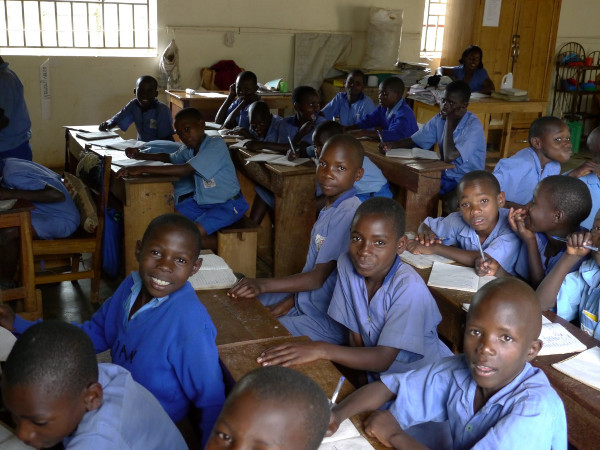
Independently of where you stand in the Vim versus Emacs infamous battle, it is hard to deny that Vim is an amazing text editor, but did you knew about Vim’s peculiar license? Vim is charityware, with a GPL-compatible license. It’s distributed freely, but they ask that if you find it useful you make a donation to help children in Uganda through the ICCF.
Bram Moolenaar, author and maintainer of Vim, helped establish a foundation called ICCF Holland that works to support to a children’s center in Uganda. He encourages users to consider making a donation to ICCF Holland or the Kibaale Children’s Fund. He serves as treasurer of the foundation and visits the site in Uganda nearly every year to monitor the center’s progress.
You can become a registered user by sponsoring 10 euros or more, and you can vote for new features. Amazing.
Inside Vim try :help sponsor, and :help uganda, for more information. …read more
Source: FULL ARTICLE at Planet Ubuntu

