Tag Archives: Sunni Muslims

Kirkuk, Iraq Bomb Attack Kills Dozens

By The Huffington Post News Editors

(Corrects byline)
By Mustafa Mahmoud
KIRKUK, Iraq, July 12 (Reuters) – A bomb attack on a tea house in the ethnically mixed Iraqi city of Kirkuk killed at least 31 people on Friday, police and medics said.
The blast tore through the tea shop where people had gathered after breaking their fast for the Muslim holy month of Ramadan in a southern district of Kirkuk, 250 km (155 miles) north of the capital Baghdad.
The violence is part of a sustained campaign of militant attacks since the start of the year that has prompted warnings of wider conflict in a country where ethnic Kurds and Shi’ite and Sunni Muslims have yet to find a stable power-sharing compromise.
“I left the cafe to go to my shop opposite. When the explosion happened the glass of my shop shattered and I was injured by the fragments. I rushed to the scene … some bodies were dismembered,” said Mohammed, a witness to the blast in the district of Wahed Huzeiran.
Kirkuk is rich in oil and lies on the front line of a dispute between the Shi’ite-led central government in Baghdad and ethnic Kurds who want the city to be incorporated into their autonomous region in the north of the country.
A referendum to determine Kirkuk’s status was supposed to be conducted in 2007, but political discord prevented it being carried out.
The city is located in a band of territory known as the “disputed areas” that run along the contested internal boundary between the Kurdistan region and Arab Iraq, stretching from Syria in the west to Iran in the east.
No one immediately claimed responsibility for the attack, but insurgents have been regaining strength in recent months, recruiting from the country’s Sunni minority, which resents Shi’ite domination since the U.S.-led invasion of 2003.
Iraq’s delicate ethno-sectarian balance has come under growing strain from the conflict in neighbouring Syria, where mainly Sunni rebels are fighting to …read more

Source: FULL ARTICLE at Huffington Post

New video shows Egyptian police allowing deadly attack on Coptic cathedral

Newly-emerged video appears to show Egyptian police standing idly by – and even helping attackers during a deadly assault earlier this month on a Coptic cathedral where Christians were mourning five men killed in an earlier clash with Muslims.

The video shot April 7 and first obtained by MidEast Christian News, shows a men shooting guns, wielding machetes and hurling stones and possibly Molotov cocktails as mourners carry caskets out of St. Mark’s Coptic Orthodox Cathedral in the Abbassia District of Cairo as uniformed police watch, unmoving. At one point, a police officer appears to help a gunman take aim at a courtyard full of mourners who had spilled out of the church. The attack left two Copts dead and another 84 people injured, including 11 police officers.

When it was over, the only arrests made were of four Copts. Christians, who were already outraged over a three-day attack that began April 4 attack in Khosous which saw the four men killed and homes, a nursery and a church burned, said the events show how elusive justice is for Christians, who make up about 10 percent of the nation’s population.

Two Copts were killed during the attack on the Cathedral; four more died in Khosous, yet not one of their attackers has been arrested,” said Andrew Johnston, advocacy director for Christian Solidarity Worldwide. “These arrests come at a time when the Coptic community in Egypt is still coming to terms with an unprecedented attack on the headquarters of the Coptic Orthodox Church and the violence in Khosous. Such discrepancies in the discharge of justice contribute to impunity, and can only foster more sectarianism.”

Tensions between Egypt‘s Christians and the majority Sunni Muslims have grown dramatically since President Hosni Mubarak was ousted in 2011 and replaced by the Muslim Brotherhood-led government of Mohammed Morsi.

“There is a general feeling among citizens about the absence of law and the prestige of the state,” said a report released Wednesday by the Egyptian National Council for Human Rights. “Such a feeling could push the citizens to the violence and sectarianism without fearing from any deterrence, ” reads a passage from the report.

“The recent incident proved the shrinking of the role of the state to control the actions of the individuals especially those people who think that they talk on the behalf of God,” the report continued. “There is a need for implementing the law strictly to treat such incidents.”

Source: FULL ARTICLE at Fox World News

Activists: Syrian troops battle rebels near Homs

Activists say Syrian government forces are battling rebels near the central city of Homs.

The Britain-based Syrian Observatory for Human Rights says heavy clashes between soldiers and opposition fighters are underway west of Homs. The fighting is near a string of villages close to Syria‘s border with Lebanon, said the Observatory’s director, Rami Abdul-Rahman.

The area is populated mostly by Shiite Muslims, who have supported President Bashar Assad‘s regime during Syria‘s two-year conflict.

Sunni Muslims dominate the opposition ranks, with many fighting on the side of the rebels.

The conflict started as peaceful protests against Assad’s regime in March 2011 but turned into a civil war that has increasingly taken sectarian overtones.

More than 70,000 people have been killed, according to the United Nations.

From: http://feeds.foxnews.com/~r/foxnews/world/~3/dDn2NogO2ig/

Egypt denies hardliners halted Iran tourism

Egypt‘s presidential spokesman says tourist flights from Iran were not suspended because of pressure from “any particular groups.”

Ehab Fahmy‘s comments come after an outcry by hardline Sunni Muslims, known as Salafis, who were angered by the Egyptian government’s push to improve ties with Shiite Iran.

The spokesman did not explain why the flights were suspended until June.

Speaking to reporters in Cairo on Wednesday, he said Egypt‘s first concern with Iranian tourists is ensuring that their visits do not affect the country’s sovereignty.

Egypt is Sunni and will remain a Sunni bastion of moderation and centrism in Islam,” he said, referring to concerns by some Salafis that the Iran aims to spread its practices among Sunni Muslims.

He added that President Mohammed Morsi does not make decisions under pressure.

Source: FULL ARTICLE at Fox World News

Iran hopes to restore tourist flights to Egypt

Iran says it hopes Egypt can resume tourist flights to the country to improve relations.

“We hope to witness more visits between the two nations,” said Foreign Ministry spokesman Ramin Mehmanparast on Tuesday.

Egypt suspended tourist flights from Iran on Monday. It did not give a reason but the move followed an outcry from hard-line Sunni Muslims angered about visitors from the mostly Shiite country, only a week after direct flights between the two countries resumed for the first time in more than three decades.

Last week, protesters from the ultraconservative Salafi movement tried to storm the residence of Iran‘s top diplomat in Cairo.

In reaction, a group of Iranian students went Tuesday to Egypt‘s interest section in Tehran and handed it flowers as a gesture of friendship.

…read more

Source: FULL ARTICLE at Fox World News

Egypt suspends tourist flights with Iran

Egypt has suspended tourist flights from Iran until June amid an outcry by ultraconservative Sunni Muslims angered over visitors from the mostly Shiite country.

The move comes just over a week after the first flights between the two countries resumed in more than three decades.

Tourist Minister Hesham Zaazoua didn’t give a reason for the suspension late on Sunday, according to comments carried by Egypt‘s state news agency.

About 50 Iranian tourists visited south Egypt last week but drew criticism and protests from Egypt‘s ultraconservative Sunni Muslims who claim Iran is trying to spread its faith in the Sunni world.

Diplomatic relations were frozen after Egypt signed the 1979 peace treaty with Israel and Iran underwent its Islamic Revolution but ties warmed following the June election of Egypt‘s Islamist president.

…read more

Source: FULL ARTICLE at Fox World News

The Military’s Assault On Christianity

By Breaking News

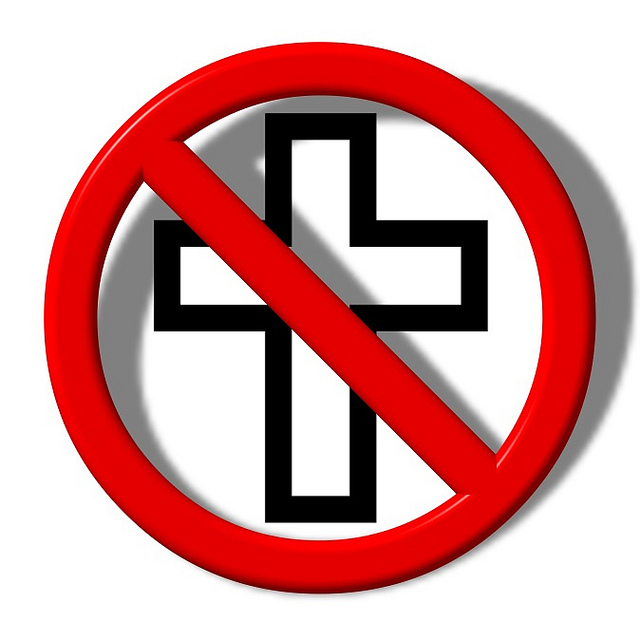
Flickr Creative Commons Greendyker No Christianity logo The Militarys Assault On Christianity

The U.S. Army listed Evangelical Christianity and Catholicism as examples of religious extremism along with Al Qaeda and Hamas during a briefing with an Army Reserve unit based in Pennsylvania, Fox News has learned.

“We find this offensive to have Evangelical Christians and the Catholic Church to be listed among known terrorist groups,” said Ron Crews, executive director of the Chaplain Alliance for Religious Liberty. “It is dishonorable for any U.S. military entity to allow this type of wrongheaded characterization.”

The incident occurred during an Army Reserve Equal Opportunity training brief on extremism. Topping the list is Evangelical Christianity. Other organizations listed included Catholicism, Al Qaeda, Hamas, the Ku Klux Klan, Sunni Muslims, and Nation of Islam.

The military also listed “Islamophobia” as a form of religious extremism.

Army spokesman George Wright told Fox News that the briefing happened last year and is just now coming to light.

Read more at Townhall. By Todd Starnes.

…read more

Source: FULL ARTICLE at Western Journalism

Over 50 Iranian tourists visit southern Egypt

More than 50 Iranian tourists visited sites in southern Egypt on Sunday amid tight security as part of a bilateral tourism promotion deal that has generated some controversy.

The tourists, who according to a security official arrived on some of the first commercial flights between the two countries in three decades, will be restricted in their movement following objections from some ultraconservative Sunni Muslims to receiving visitors from Shiite Iran. Members of the Salafi movement in Egypt consider Shiites heretics, and fear Iran is trying to spread its faith in the Sunni world.

After visiting the city of Aswan Sunday, the group is expected to travel to the ancient city of Luxor in a boat down the Nile on Monday. The official spoke on condition of anonymity because he was not allowed to speak to the media.

On Saturday, a private Air Memphis flight carried eight Iranians, including two diplomats, to Tehran on the re-opened route from Egypt. The ministry of civil aviation said in a statement Sunday that the routes will operate in southern cities and Red Sea resorts, not Cairo.

Following the June election of Egypt‘s Islamist president, Mohammed Morsi, Egypt and Iran agreed to promote tourism between the two countries, in a sign of warming relations. Diplomatic relations were frozen after Egypt signed its 1979 peace treaty with Israel and Iran underwent its Islamic Revolution.

Egypt‘s Foreign and Civil Aviation Ministries have set regulations restricting the number and movement of Iranian tourists in Egypt, keeping Iranian tourists from visiting the capital Cairo — mainly because several shrines of revered Shiite figures are located there.

Iranian tourists would only be allowed to visit certain sites, such as the ancient cities of Luxor and Red Sea resort areas like Sharm el-Sheikh.

…read more
Source: FULL ARTICLE at Fox World News

Iraq War Cost $800 Billion, And What Do We Have To Show For It?

By The Huffington Post News Editors

For the past few months, a strange thing has been happening in the central Iraq town of Fallujah. Thousands of citizens, virtually all of them Sunni Muslims, have been gathering in public squares to protest the oppressive Shiite-led government in Baghdad. Sleeping in tents and wielding Twitter feeds and YouTube accounts, the young Sunnis have attempted to take democracy, and a certain sectarian disaffection, into their own hands.

It’s not quite the Iraqi Arab Spring — although that’s what it’s been tentatively called by some — but it is a reminder of the stark failure of nearly a decade of American-led warfare in that country.

When President George W. Bush announced the invasion into Iraq in March 2003, the goal was to remove a dangerous dictator and his supposed stocks of weapons of mass destruction. It was also to create a functioning democracy and thereby inspire what Bush called a “global democracy revolution.”

Read More…
More on War Wire

…read more
Source: FULL ARTICLE at Huffington Post

Syria Using Militias for Mass Killings: UN

By Evann Gastaldo The latest travesty the Syrian government has been accused of: using local militias to carry out mass killings. UN human rights investigators say these “Popular Committees” commit killings that sometimes have “sectarian overtones,” Reuters reports. (The rebels in Syria are mainly Sunni Muslims, while President Bashar al-Assad has ties to… …read more
Source: FULL ARTICLE at Newser – Home

Abdul Hazara: Shiite Killings In Pakistan Are ‘Genocide’

By The Huffington Post News Editors

QUETTA, PakistanPakistan‘s minority Shiite Muslims have started using the word “genocide” to describe a violent spike in attacks against them by a militant Sunni group with suspected links to the country’s security agencies and a mainstream political party that governs the largest province.

Lashkar-e-Jhangvi, a group of radical Sunni Muslims, who revile Shiites as heretics, has claimed responsibility for dozens of attacks throughout Pakistan. Linked to al-Qaida, it has been declared a foreign terrorist organization by the U.S., yet it operates with relative ease in Pakistan‘s populous Punjab province, where Lashkar-e-Jhangvi and several other violent jihadi groups are based.

Read More…
More on Islam

…read more
Source: FULL ARTICLE at Huffington Post

Shiite leader: Sectarian attacks are 'genocide'

Pakistan‘s minority Shiite Muslims have started using the word “genocide” to describe a violent spike in attacks against them by a militant Sunni group with suspected links to the country’s security agencies and a mainstream political party that governs the largest province.

Lashkar-e-Jhangvi, a group of radical Sunni Muslims, who revile Shiites as heretics, has claimed responsibility for dozens of attacks throughout Pakistan. Linked to al-Qaida, it has been declared a foreign terrorist organization by the U.S., yet it operates with relative ease in Pakistan‘s populous Punjab province, where Lashkar-e-Jhangvi and several other violent jihadi groups are based.

The violence against Shiites has ignited a national debate — and political arguments — about a burgeoning militancy in Pakistan. The latest attack was a massive bombing earlier this month that ripped apart a Shiite neighborhood in Pakistan‘s largest city of Karachi, killing 48 people, many of them as they left a mosque after saying their evening prayers. So far this year nearly 300 Shiites have been killed in devastating bombings, target killings and executions.

The unrelenting attacks also have focused the nation’s attention on freedoms that Pakistani politicians give extremists groups, staggering corruption within the police and prison systems and the murky and protracted relationship between militant groups and Pakistan‘s military and intelligence agencies.

“The government doesn’t have the will to go after them and the security agencies are littered with sympathizers who give them space to operate,” Hazara Democratic Party chief Abdul Khaliq Hazara, told The Associated Press in a recent interview in Quetta, the capital of Baluchistan where some of the most ferocious anti-Shiite attacks have occurred.

He labeled the killings as the “genocide of Hazaras,” whom are mostly Shiites and easily identified by their Central Asian facial features.

“I have a firm belief that our security agencies have not yet decided to end all extremists groups,” said Hazara. “They still want those (militants) that they think they can control and will need either in India or Afghanistan,” he said referring to allegations that Pakistan uses militants as proxies against hostile India to the east and Afghanistan to the west.

The army has a history of supporting militant Islamists using them as proxies to fight in Kashmir, a region divided between Pakistan and India and claimed by both in its entirety. It is repeatedly criticized by the United States and Afghanistan for not doing enough to deny Afghan insurgents sanctuary in the tribal regions …read more
Source: FULL ARTICLE at Fox World News

Series of bombings in Iraq kill at least 19

A series of bombings struck Baghdad and a livestock market south of the Iraqi capital on Thursday, killing at least 19 and wounding dozens in areas that are home to mostly Muslim Shiites — the latest evidence of rising sectarian discord in Iraq.

The deadliest attack occurred around sunset when a pair of bombs exploded nearly simultaneously in Shula in northwestern Baghdad. One was a car bomb that was detonated outside a fast food restaurant and the other blast occurred near a soccer field. The double-bombing killed 15 people and left at least 40 wounded, officials said.

There was no immediate claim of responsibility, but car bombings in Shiite areas are a favorite tactic of Sunni extremists such as al-Qaida’s local affiliate. The group, known as the Islamic State of Iraq, considers Shiites to be heretics and accuses them of being too closely aligned with neighboring Shiite powerhouse Iran.

Earlier in the day, a car bomb tore through the crowded livestock market in the town of Aziziyah, 55 kilometers (35 miles) southeast of Baghdad. That attack killed three people and wounded eight.

A few hours later, a roadside bomb missed a passing police patrol in western Baghdad but killed a bystander and wounded eight people.

Police and hospital officials provided details of the attacks and the casualty figures. They spoke on condition of anonymity because they were not authorized to talk to the media.

Violence in Iraq has fallen since the height of sectarian fighting in 2006 and 2007, but deadly attacks still happen frequently. The latest attacks appear aimed at shaking Iraqis’ confidence in the Shiite-led government. For the past two months, Sunni Muslims have been protesting what they describe as unfair treatment by the country’s Shiite-led government. The protests have been largely peaceful.

Meanwhile, Iraqi authorities released a new batch of inmates from a Baghdad prison in a move aiming at calming the Sunni protesters. Deputy Prime Minister Hussain al-Sharistani announced the release of 160 prisoners, including 13 women, during a ceremony at the prison on Thursday.

He said 4,000 prisoners have been released since a government committee was set up earlier this year to consider protesters’ demands. The Sunni protests were sparked by the arrest of bodyguards assigned to Finance Minister Rafia al-Issawi, a senior Sunni politician, in December.

…read more
Source: FULL ARTICLE at Fox World News

Iraq gunmen kill 7 Sunni fighters, officials say

Attackers disguised in military uniforms killed seven anti-al-Qaida militiamen in Iraq early on Friday as anti-government protests once again raged in Iraq‘s Sunni provinces.

The militiamen, members of the Sahwa group, were killed outside the town of Tuz Khormato, about 210 kilometers (130 miles) north Baghdad. Police said they were lured to a checkpoint where gunmen overpowered them, tied them up and executed each with a gunshot to the head.

Sahwa joined forces with U.S. troops to fight al-Qaida during the Iraq war. Ever since then, it has been a target for Sunni insurgents who consider its members to be traitors.

Elsewhere, in a northern suburb of Baghdad, a car bomb killed one civilian bystander and wounded three policemen when it hit a police convoy, police said. Hospital officials confirmed the casualties. All officials spoke on condition of anonymity because they are not authorized to brief reporters.

The killings happened hours before tens of thousands of Sunnis rallied in several cities to complain about perceived discrimination by the government of Prime Minister Nouri al-Maliki.

They renewed threats to march on the capital if the government continues to ignore their demands, echoing comments a prominent sheik, Ahmed Abu Risha, made to The Associated Press earlier this week.

“The people urged you (the government) to end the injustice and the discrimination, but we’ve only seen negligence and heard empty promises,” Sunni cleric Mohammed Taha told the thousands-strong crowd at Friday prayers in the city of Samarra.

Taha’s speech was interrupted several times by protesters who chanted “Baghdad we are coming to you” and “Baghdad will be returned to its people.”

Organizers considered holding mass prayers in the capital last week but later backed off after government forces sealed off approaches to the city.

In the western cities of Fallujah and Ramadi — former insurgent strongholds — demonstrators as in past weeks poured onto the main highway to preform Friday noon prayers. In Mosul, thousands gathered in the northern city’s main square.

For the past two months, Sunni Muslims have been protesting what they describe as unfair treatment by the country’s Shiite-led government, extending concerns over rising sectarian tension in the country.

…read more
Source: FULL ARTICLE at Fox World News

Sunnis gather in major cities in mass protests

Tens of thousands of Sunni Muslims have gathered in several Iraqi cities to protest against what they describe as unfair treatment by the country’s Shiite-led government.

In the western cities of Fallujah and Ramadi, former insurgent strongholds, demonstrators blocked the main highway to Jordan and Syria to perform Friday noon prayers. Others gathered in main squares in the northern cities of Samarra and Mosul, and outside a prominent Sunni mosque in the Baghdad.

In the capital, security forces blocked roads leading from Sunni-dominated provinces and sealed off all Sunni neighborhoods.

Sunnis have staged mass rallies since late December, demanding Shiite Prime Minister Nouri al-Maliki step down and calling for an end to raids in their areas and measures against former regime officials, as well as for the release of prisoners.

…read more
Source: FULL ARTICLE at Fox World News

No priest, no sheik means no marriage in Lebanon

She was an English language tutor with an easy smile and an independent streak. He was a gym receptionist who wanted to better himself.

They met for English lessons, swapped views on life and fell in love. Three months ago, a notary married them before their friends and family — but not in the eyes of the Lebanese government.

The government has not recognized the marriage of Kholoud Sukkarieh and Nidal Darwish because a religious official did not register it. The case has sparked a fierce debate in Lebanon over civil marriage and how its legalization would affect the country’s tenuous sectarian system.

Public figures have spoken up, with the president suggesting a new law and the top Sunni cleric threatening Muslims who support it with damnation.

Underlying these arguments is the deep sectarianism of Lebanon, where religious affiliation is often tied to where one lives, how one speaks and which TV station one watches. Many Lebanese seem to have a sixth sense for divining others’ sects based on dress, hometown and other factors.

Reflecting these divides — and perpetuating them, some argue — is a political system in which posts are allocated to specific religious groups. The parliament and Cabinet must be half Muslim and half Christian, while an unwritten agreement ensures, for example, that the president is a Christian, the prime minister is a Sunni Muslim and the speaker of parliament is a Shiite Muslim.

All significant political parties have well-known sectarian affiliations that are usually more important than their policies in attracting voters.

Defenders of this system say it is the only way that 4.2 million people from 18 recognized sects can share their tiny country without killing each other. Indeed, many of the sensitivities and arrangements trace back to the country’s brutal 15-year civil war and the agreement that ended it in 1990.

Others note that Lebanon‘s system allows more freedom than the dictatorships in other Arab countries — exempting it from the recent uprisings against autocratic regimes.

Still, tensions are always high. Consider these recent news items:

— For weeks, Lebanese politicians have been arguing about revising a law that determines how sects’ votes are counted.

— On Jan. 24, a Christian allegedly shot and killed a Shiite and his son during a dispute over gravel, causing residents of the Shiite man’s village to block a major thoroughfare with burning tires.

— That same day, a hardline Muslim cleric took busloads of supporters to a ski resort in a Christian area, causing a tense stand-off and brief fisticuffs with residents. The army intervened.

Critics of the sectarian system, including the newlyweds, say it exacerbates such tensions and limits rights by viewing people primarily as members of a religious community.

“The underlying issue is how the Lebanese citizen relates to the state,” said Nadim Houry of Human Rights Watch. “Does he relate only through his religious community, which he was born into, or does he relate as a citizen with a set of rights directly from the state?”

The couple’s attempt to register their civil marriage is a push for latter.

“We dream of a country that is not sectarian and where people don’t just have rights from their sect,” said Sukkarieh, the bride. “We’re working to get rid of the sectarian system.”

Under conventional Lebanese law, marriages must be between members of the same sect and registered by a religious authority.

If people from different sects wish to marry, their only options are for one partner to convert or to marry abroad. This option is so common that Lebanese travel agents offer “civil marriage” packages, usually to Cyprus.

Darwish and Sukkarieh — who are Shiite and Sunni Muslims, respectively — tried to subvert this system by basing their marriage contract on a 1936 law they say permits civil marriage for those with no religious affiliation.

With the help of legal activists, they went through a months-long process to strike their sects from their government records, then signed a civil marriage contract with a notary, who sent it to the Interior Ministry for registration.

The ministry has yet to respond, but news of the couple’s “civil marriage” unleashed a tidal wave of reactions.

On Jan. 20, President Michel Suleiman expressed support on his Facebook page for a law legalizing civil marriage, calling it “a very important step in eradicating sectarianism and solidifying national unity.” The post garnered hundreds of comments and nearly 8,000 “likes.”

This week, Lebanon‘s top Sunni cleric, Grand Mufti Mohammed Rashid Kabbani, fired back, blasting the effort to “plant the germ of civil marriage in Lebanon” with a religious edict declaring any Muslim official who participated in its legalization an “apostate.”

Such officials will “bear the sins of any Muslim sons or daughters who enter into this illegal relationship until judgment day,” he said.

Christian leaders have been less outspoken, although they have opposed such laws in the past.

Father Abdo Abou Kassm, director of the Catholic Media Center, said the church recognizes only religious marriages, and that those married elsewhere can’t participate in sacraments like baptism or communion until they right themselves.

He said if civil marriage became legal in Lebanon, the church would follow the laws, but noted that other personal status issues like divorce and inheritance are also handled by religious authorities. Changing that would require a host of new laws that he said are unlikely to pass.

“To do this would mean separating religion from the state, and I don’t think you can do that in Lebanon,” he said.

Most doubt the couple’s marriage will be approved or that Lebanese politicians will push to legislate civil marriage. No one has proposed such a law since 1998, and Prime Minister Najib Miqati has dismissed the issue as too divisive to address at this time.

Paul Salem of the Carnegie Middle East Center said religious authorities would fiercely oppose any such law because officiating marriages and divorces preserves their influence in society and earns them money.

“Civil marriage is a break in all of those dikes,” he said. “It really is a test case for how the sectarian system protects itself.”

Source: FULL ARTICLE at Fox World News

Knife and gun-wielding Assad forces killed 37 in Syrian town, activists say

Activists said Thursday that forces loyal to President Bashar Assad wielding knives and guns swept through a small farming village in central Syria earlier this week, torching houses and killing at least 37 people, including women and children.

A government official in Damascus denied the reports of carnage in the hamlet of Haswiyeh just outside the city of Homs, saying no such killings took place at all in the area.

Omar Idilbi of the Local Coordination Committees activist group said the government attack took place on Tuesday and left at least 37 people dead. He said his figure has not been updated since Wednesday and that more bodies have been found since then.

Youssef al-Homsi, an activist based in Homs, also said at least 100 people were killed, including dozens of women and children. He sent The Associated Press via Skype a list of 100 names said to have been killed on Tuesday. In addition to whole families, the list included individual names of 15 women and 10 children.

Another activist group, the Britain-based Syrian Observatory for Human Rights, put the death toll at 106 people, and said some of the dead were “burnt inside their homes while other were killed with knives” and other weapons. It added that there are reports that “whole families were executed, one of them made up of 32 members.”

It was not possible to confirm the activist reports because of severe reporting restrictions in Syria.

The area around Haswiyeh witnessed clashes earlier this week between troops and rebels, who still control several neighborhoods in the nearby city of Homs as well as other areas. Homs is Syria‘s third largest city, and has been the site of heavy fighting since shortly after the country’s crisis began in March 2011.

Haswiyeh is not far from the region of Houla, where 108 people were killed over two days last May. The U.N. described the Houla killings as a war crime perpetrated by the government forces and shabiha militia backing Assad’s regime.

The Observatory and al-Homsi said all of the dead appeared to be Sunni Muslims, suggesting that the killings may have been sectarian in nature. Sunnis make the majority of Syria‘s 23 million people, while Assad and most of the top officials in his regime belong to the minority Alawite sect, an off-shoot of Shiite Islam.

Al-Homsi said locals have said that many of the attackers came from the nearby village of Mazraa, which he said is predominantly Shiite.

In the capital Damascus, a government official rejected any government role in the alleged killings, and said “the army protects civilians and their properties.” The official, who spoke on condition of anonymity in line with regulations, said troops are suffering casualties around Syria because rebels are using civilians as “human shields. He did not elaborate.

Source: FULL ARTICLE at Fox World News
Syrian activists say dozens killed in village

Activists said Thursday that forces loyal to President Bashar Assad swept through a small farming village in central Syria earlier this week, torching houses and killing at least 37 people including women and children.

A government official in Damascus denied the reports of carnage in the hamlet of Haswiyeh just outside the city of Homs, saying no such killings took place at all in the area.

Omar Idilbi of the Local Coordination Committees activist group said the government attack took place on Tuesday, and left at least 37 people dead in Haswiyeh. He said his figure has not been updated since Wednesday and that more bodies have been found since then.

Another activist group, the Britain-based Syrian Observatory for Human Rights, put the death toll at 106 people, and said some of the dead were “burnt inside their homes while other were killed with knives” and other weapons. It added that there are reports that “whole families were executed, one of them made up of 32 members.”

The area around Haswiyeh witnessed clashes earlier this week between troops and rebels, who still control several neighborhoods in the nearby city of Homs as well as nearby areas. Homs is Syria‘s third largest city, and has been the site of heavy fighting since shortly after the country’s crisis began in March 2011.

Youssef al-Homsi, an activist based in Homs, also said at least 100 people were killed, including dozens of women and children. He sent The Associated Press via Skype a list of 100 names said to have been killed on Tuesday. In addition to whole families, the list included individual names of 15 women and 10 children.

The Observatory and al-Homsi said all of the dead appeared to be Sunni Muslims, suggesting that the killings may have been sectarian in nature. Sunnis make the majority of Syria‘s 23 million people, while Assad and most of the top officials in his regime belong to the minority Alawite sect, an off-shoot of Shiite Islam.

Al-Homsi said locals have said that many of the attackers came from the nearby village of Mazraa, which he said is predominantly Shiite.

In the capital Damascus, a government official rejected any government role in the alleged killings, and said “the army protects civilians and their properties.” The official, who spoke on condition of anonymity in line with regulations, said troops are suffering casualties around Syria because rebels are using civilians as “human shields. He did not elaborate.

It was not possible to confirm the activist reports because the severe restrictions on journalists to work in Syria.

But the reported killings appear to be similar to those that occurred in the nearby region of Houla in May last year where 108 people were killed in two days. The U.N. described the Houla killings as a war crime perpetrated by the government forces and shabiha militia backing Assad’s regime.

Source: FULL ARTICLE at Fox World News