Al-Qaida’s branch in Iraq has claimed responsibility Tuesday for a wave of bombings across the country that killed at least 58 people, most of them in predominantly Shiite Muslim areas. …read more
Source: FULL ARTICLE at Fox World News
Al-Qaida’s branch in Iraq has claimed responsibility Tuesday for a wave of bombings across the country that killed at least 58 people, most of them in predominantly Shiite Muslim areas. …read more
Source: FULL ARTICLE at Fox World News
By The Huffington Post News Editors
BAGHDAD — A coordinated wave of car bombings tore through commercial streets in Baghdad on Saturday night, killing more than 30 and wounding dozens as insurgents kept up a relentless offensive during the holy month of Ramadan.
The blasts struck in Shiite Muslim areas of the Iraqi capital. Although there was no claim of responsibility, coordinated bombings against Shiites are a favorite tactic of al-Qaida’s Iraq branch.
Source: FULL ARTICLE at Huffington Post
A bomb exploded inside a Sunni mosque in central Iraq during midday prayers Friday, killing at least 17 people in the latest outburst of deadly violence targeting worshippers during the holy month of Ramadan.
Suicide attacks, car bombings and other violence have killed nearly 200 people since the faithful began daytime fasting to mark the Islamic holy month, which started earlier in July.
The violence is an extension of a surge that has ripped through Iraq for months, reviving fears of a return to the widespread sectarian bloodshed that pushed the country to the brink of civil war after the 2003 U.S.-led invasion.
Diyala provincial councilman Sadiq al-Husseini said Friday’s explosion hit the Abu Bakir al-Sideeq mosque in the town of Wijaihiya, which is about 50 miles northeast of Baghdad. He said it killed at least 17.
Diyala province, where the attack occurred, was once the site of some of the fiercest fighting between U.S. forces and insurgents in Iraq. It remains a hotbed for terrorist attacks. The area is religiously mixed and witnessed some of the worst atrocities as Shiite militias battled Sunni insurgents for control in the years after the invasion.
“Terrorism is targeting all sects in Diyala mainly by attacking Sunni and Shiite mosques, funerals and football fields to draw the province into a sectarian conflict. All the victims were civilians,” al-Husseini said, appealing for calm. “I call on all Diyala residents to show self-restraint.”
Police and hospital officials, who spoke on condition of anonymity because they weren’t authorized to release the information to media, confirmed the death toll. They also reported that more than 50 were wounded in the explosion, and warned that the number of dead could rise.
The attack struck while Iran’s outgoing president, Mahmoud Ahmadinejad, wrapped up a two-day trip to Iraq with visits to Shiite Muslim holy cities of Najaf and Karbala south of Baghdad. There was no indication the mosque blast was related to his trips.
Violence across Iraq has risen sharply since a heavy-handed crackdown by security forces on a Sunni protest camp in the northern town of Hawija on April 23. That raid followed months of rallies by Iraq’s minority Sunnis against the Shiite-led government over what they contend is second-class treatment and the unfair use of tough anti-terrorism measures against their sect.
The surge in bloodshed has left more than 2,800 people dead and many more wounded since the start of April.
Attacks on Sunni mosques, for years a relatively rare target in Iraq, have picked up significantly in recent months.
There has been no claim of responsibility for Friday’s bombing or many of the other recent attacks.
Sunni extremists such as al Qaeda’s Iraq arm that seek to undermine the Shiite-led government are frequently blamed for bombing attacks targeting civilians. They could be behind the Sunni mosque bombings too, hoping to incite a sectarian backlash against Shiites. So could Shiite militias that have been remobilizing following years of relative quiet.
Source: FULL ARTICLE at Fox World News
A police officer says a bomb blast has killed six supporters of a Pakistani Shiite politician at his campaign office in country’s northwest.
Mujtaba Hussain says the Sunday attack on the outskirts of Kohat city also wounded around 10 people.
He says the politician, Syed Noor Akbar, is running as an independent candidate for a national assembly seat in general elections to be held on May 11.
No one has claimed responsibility. The politician was not present at the office.
Hussain says Akbar belongs to Pakistan‘s minority Shiite Muslim sect, adding that this could have been a motive for the attack.
Pakistani Taliban in recent weeks have attacked candidates from secular, left-leaning parties, killing several people over their liberal views and support for army offensives against militants.
Source: FULL ARTICLE at Fox World News
Syrian forces battled rebels in the central province of Homs near the border with Lebanon on Friday as part of a counteroffensive aimed at regaining control of territory around the country and along strategic border areas.
With a fresh influx of weapons, opposition fighters have made significant gains in the past weeks, particularly in the southern province of Daraa, where rebels have been advancing in the region between the Jordanian border and the capital, Damascus.
The province of Homs and its capital of the same name were the scenes of some of the heaviest fighting during the first year of Syrian conflict. The violence has escalated there in recent weeks, with Syrian war planes hitting the city daily. On Friday, troops clashed with rebels on the edges of the province along the Lebanese border.
The border area is strategically important to both sides fighting in Syria‘s civil war and battles there have been frequent in past weeks, particularly in and around the town of Qusair in Homs province. The area is considered vital to the Syrian regime because of its location along a road linking Damascus with the city of Homs, a strategic supply route for the military. The rebels also have been using the road to transport supplies and weapons from Sunni supporters in Lebanon.
The Britain-based Syrian Observatory for Human Rights said Friday’s clashes between soldiers and opposition fighters were concentrated around Qusair. There were no immediate reports of casualties.
Overlooking Qusair from the Lebanese side are villages populated mostly by Shiite Muslim supporters of the Hezbollah militant group, who have supported Assad’s regime during Syria‘s two-year conflict. The rebels fighting to topple Assad, a member of the minority Alawite sect, are overwhelmingly Sunni Muslim. The Alawites are an offshoot of Shiite Islam.
The conflict started with largely peaceful protests against Assad’s regime in March 2011 but eventually turned into a civil war that has increasingly taken sectarian overtones. More than 70,000 people have been killed in the war, according to the United Nations.
Also on Friday, Syrian warplanes carried out airstrikes around the country, hitting targets in Daraa in the south, in Hasaka province in the north east near the border with Turkey and in the northern city of Aleppo, parts of which have been under rebel control since last summer.
The airstrikes come a day after a U.S.-based human right group accused
From: http://feeds.foxnews.com/~r/foxnews/world/~3/KNVieI1m_Rs/
Here is a look at the deadliest attacks in Iraq since the withdrawal of U.S. troops on Dec. 18, 2011:
— Mar. 18, 2013: A wave of bombings mainly targeting Shiite areas in Baghdad kills 65.
— Mar. 14, 2013: Militants unleash a carefully planned assault on the Justice Ministry, killing 30.
— Mar. 4, 2013: Gunmen attack a convoy of Syrian soldiers who had crossed into Iraq for refuge, killing 48.
— Feb. 17, 2013: Car bombs tear through shopping areas in Shiite neighborhoods in Baghdad, killing at least 37.
— Jan. 23, 2013: A suicide bomber strikes a packed funeral ceremony at a Shiite mosque in northern Iraq, killing at least 25.
— Jan. 17, 2013: Insurgents unleash a string of bomb attacks mainly targeting Shiite Muslim pilgrims across Iraq, killing at least 26.
— Jan. 16, 2013: A wave of bombings against the offices of a major Kurdish party and Kurdish security forces headquarters in Kirkuk province kills at least 33.
— Nov. 27, 2012: Insurgents launch attacks against Shiite mosques, security forces, and other targets in central and northern Iraq, killing at least 30.
— Nov. 6, 2012: A suicide bomber detonates his explosives-laden car near a military base north of Baghdad, killing at least 33.
— Sept. 9, 2012: Insurgents gun down soldiers at an army post, bomb police recruits waiting in line to apply for jobs, and stage other attacks that kill 92.
— Aug. 16, 2012: A blistering string of bombings and shootings across the country kills at least 93.
— July 23, 2012: Attacks aimed largely at security forces kill 115 in the country’s deadliest single day in two years.
— July 3, 2012: Bombs pound six cities and towns, killing some 40 and raising suspicion that security forces may be assisting attacks on Shiites.
A powerful political party in Pakistan‘s largest city is backing down from calls for a city-wide strike intended to pressure the government to arrest militants behind a bombing in a Shiite Muslim neighborhood that killed 48 people on Sunday.
Raza Haroon, a lawmaker from the Muttahida Qaumi Movement, on Wednesday appealed to the city’s business community to observe an indefinite strike. Then hours later he told reporters they were withdrawing the strike after the city’s business community lobbied against it.
The MQM is the dominant political party in Karachi, which is Pakistan‘s economic hub.
An extended strike could have negatively affected the rest of Pakistan.
No one has claimed responsibility for Sunday’s attack. Sunni militant groups who don’t believe Shiites are true Muslims have claimed responsibility for similar incidents.
A Pakistani surgeon says the death toll from a massive car bombing in the southern port city of Karachi has jumped from 37 to 45 as more victims died overnight.
Dr. Jalil Qadir says that 146 people were also wounded in the Sunday evening explosion. At least 32 of them are still in serious condition.
The blast targeted members of the minority Shiite Muslim sect who were leaving a mosque when the bomb went off.
There was no immediate claim of responsibility but Sunni militant groups who do not consider Shiites to be true Muslims have carried out such attacks in the past.
The city shut down on Monday for a day of mourning.
Egypt‘s tourism minister flew to Tehran on Monday in a bid to lure Iranian tourists to help his country’s ailing economy as relations between the two regional heavyweights continues to slowly improve.
Hesham Zazou is heading a 14-person delegation that will spend five days in Iran for meetings with tour operators, travel agents and officials centered on how to promote tourism to Cairo, an Egyptian diplomat traveling with the group said.
The head of Egypt‘s Civil Aviation Authority, Mohammed Ibrahim Sharif, said the visit by Zazou also aims to develop use of an Iranian-Egyptian accord allowing direct flights between the two countries. To date, he said, no carriers had applied for a license to operate under the agreement, which allows for 28 direct flights per week — 14 from each nation.
The agreement was first signed under former President Hosni Mubarak in 2010.
The Egyptian efforts underline how much has changed since Mubarak was ousted in an uprising two years ago. His successor, President Mohammed Morsi, reached out with a visit to the Shiite Muslim nation just months after winning elections last year. It was the first such trip by an Egyptian leader in decades.
Egypt was once closely allied to Iran and its former ruling shah. The two countries severed relations after the 1979 Islamic Revolution. Relations soured even more after Egypt signed a peace treaty with Israel.
In a reciprocal first visit by President Mahmoud Ahmadinejad to Egypt earlier this month, he said that Iran will lift visa requirements for Egyptian tourists and businessmen.
He also said he anticipated that many of the eight to 10 million Iranians who holiday abroad every year will start coming to Egypt.
“I came from Iran to say that both people have to support each other, and we consider the progress and strength of Egypt as the progress and strength of Iran,” Ahmadinejad told reporters in Cairo at the time.
However, the sight of Iranian women, should they choose to wear the traditional Shiite cloak known as a chador, is likely to anger Egypt‘s ultraconservative Salafis — Sunni Muslims who follow a doctrine similar to that of the Wahhabi movement in Saudi Arabia.
Saudi Arabia and Iran are regional …read more
Source: FULL ARTICLE at Fox World News
Gunmen from rival Sunni and Shiite Muslim villages in northern Syria have freed more than 200 people snatched in tit-for-tat kidnappings this month, easing tensions that threatened to touch off more sectarian violence, activists said Friday.
In Syria‘s largest city of Aleppo, three explosions that appeared to be caused by missiles killed at least 14 people, activists said, adding that dozens of others were feared to be trapped under the rubble of damaged buildings.
The wave of abductions in a rural part of Idlib province highlighted how much the civil war between the regime of President Bashar Assad and the hundreds of rebel groups seeking his ouster has enflamed tensions between Syria‘s myriad religious groups.
The Syrian regime, established more than four decades ago by Assad’s father, Hafez, has largely stocked the upper ranks of the country’s security agencies and armed forces with members of the ruling family’s minority Alawite sect, an offshoot of Shiite Islam. Most of the rebels fighting Assad’s forces are poor, rural members of Syria‘s Sunni majority. Other religious minority communities, like Christians and Druze, have largely remained on the sidelines.
As the conflict approaches its third year, its sectarian divide is worsening. This month, clashes broke out between Sunni and Shiite villages in the area of Qusair, near the Lebanese border. Islamic extremists who have joined the rebels have destroyed Christian liquor stores, and sometimes refer to their dead adversaries with derogatory names insulting their sects.
The Idlib kidnappings showed how quickly sectarian tensions can escalate, but also that local communities are still capable of pulling back from the brink.
Opposition activists say the abductions began Feb. 14 when a bus carrying dozens of Shiite civilians, mostly women and children, disappeared on the road to Damascus. Gunmen from the area’s two Shiite villages, Fua and Kifarya, responded by snatching civilians from the Sunni villages nearby.
Some of the Sunnis were nabbed at makeshift checkpoints on rural roads, while others were taken while entering the provincial capital, which government troops still control. Many of the Sunnis captives, too, were woman and children.
“They started taking over buses from the opposition villages that were heading to Idlib city,” said activist Hamza Abu al-Hassan from the village of Binnish. “Some of them had government jobs or had to file papers or were just going to visit their families.”
Gunmen from rival Sunni and Shiite Muslim villages in northern Syria have freed more than 200 people snatched in tit-for-tat kidnappings this month, easing tensions that threatened to touch off sectarian violence, activists said Friday.
The wave of abductions in a rural part of the Idlib province has highlighted how much the civil war between the regime of President Bashar Assad and the hundreds of rebel groups seeking his ouster has enflamed tensions between Syria‘s myriad religious groups.
The Syrian regime, established more than four decades ago by Assad’s father, Hafez, has largely stocked the upper ranks of the country’s security agencies and armed forces with members of the ruling family’s minority Alawite sect, an offshoot of Shiite Islam. Most of the rebels fighting Assad’s forces are poor, rural members of Syria‘s Sunni majority. Other religious minority communities, like Christians and Druze, have largely remained on the sidelines.
As the conflict approaches its third year, its sectarian nature is worsening. This month, clashes broke out between Sunni and Shiite villages in the area of Qusair, near the Lebanese border. Islamic extremists who have joined the rebels have destroyed Christian liquor stores, and sometimes refer to their dead adversaries with derogatory names insulting their sects.
The Idlib kidnappings, showed how quickly sectarian tensions can escalate, but also that local communities are still capable of pulling back from the brink.
Opposition activists say the abductions began Feb. 14 when a bus carrying dozens of Shiite civilians, mostly women and children, disappeared on the road to Damascus. Gunmen from the area’s two Shiite villages, Fua and Kifarya, responded by snatching civilians from the Sunni villages nearby.
Some of the Sunnis were nabbed at makeshift checkpoints on rural roads, while others were taken while entering the provincial capital, which government troops still control. Many of the Sunnis captives, too, were woman and children.
“They started taking over busses from the opposition villages that were heading to Idlib city,” said activist Hamza Abu al-Hassan from the village of Binnish. “Some of them had government jobs or had to file papers or were just going to visit their families.”
The total number of those kidnapped remains unclear. Abu al-Hassan said they included about 35 Shiites and more than 250 Sunnis. Other activists gave higher numbers.
It also remains unclear who hijacked the bus. Local activists said no rebels claimed responsibility, possibly because the kidnappers were criminals seeking ransom or because the move was immediately criticized by opposition groups.
Local rebels threated to storm the Shiite villages, whose residents they say have been armed by the government. But the crisis was resolved early Thursday when the Shiite captives returned home, followed by the release of the Sunni captives later in the day, activists said.
Residents of the Shiite villages could not be reached for comment, though a Facebook page for the larger of the villages, Fua, said in a post Thursday that the captives had returned.
“With God’s help we have liberated our kidnapped sisters from hands of the enemies of God,” the post said. It also called for …read more
Source: FULL ARTICLE at Fox World News
A power outage plunged Damascus and southern Syria into darkness late Saturday, Syria‘s state news agency said, while anti-regime activists reported a string of tit-for-tat, sectarian kidnappings in the country’s north.
The news agency, SANA, quoted Electricity Minister Imad Khamis as saying that the failure of a high voltage line had left the country’s south without power.
The blackout affected Syria‘s capital, Damascus, and the southern provinces of Daraa and Sweida, which abut the Jordanian border.
An Associated Press reporter in Damascus reported dark streets across the capital. A fuel shortage makes it hard for residents to run backup generators.
A similar blackout struck Damascus and southern Syria on Jan. 20, leaving many residents with no way to heat their homes on a cold winter night. The government blamed that outage on a rebel attack, and power was restored to most areas the following day.
The Syrian capital’s 2.5 million residents have grown used to frequent power cuts as the country’s conflict has damaged infrastructure and sapped the government‘s finances.
Meanwhile, anti-regime activists reported a string of kidnappings in recent days that have enflamed tensions between Sunni and Shiite Muslim villages that back opposite sides in the country’s civil war.
The activists differed on the number kidnapped from both sides, with reports ranging from a few dozen to more than 300.
The kidnappings point to the dark sectarian overtones of Syria‘s civil war, which pits a predominantly Sunni Muslim rebellion against a regime dominated by President Bashar Assad‘s minority Alawite sect, an offshoot of Shiite Islam. The country is also home to Christian, Kurdish, Armenian and Shiite communities, all of whom have been swept up in the conflict.
The kidnappings took place between two Shiite villages in the northern Idlib province and a number of Sunni villages that surround them.
The Britain-based Syrian Observatory for Human Rights said 42 Shiites, including mainly women and children, were snatched Thursday from a bus that was traveling from the Shiite villages of Foua and Kfarya to the capital Damascus. Observatory director Rami Abdul-Rahman, said it was not clear who took them, adding that Shiites have refused to give the names of those kidnapped or details about the make or color of the bus.
Since then, however, Shiite gunmen from the two villages have kidnapped more than 300 people from nearby Sunni villages, Abdul-Rahman said.
The kidnappings highlighted how much the civil war has heightened sectarian tensions. Kidnapping for ransom has grown common across Syria since the crisis began in March 2011, but sectarian and political abductions have been rare.
Anti-regime activists in Idlib reached via Skype confirmed the kidnappings, but gave much lower numbers for the number of people involved.
Activist Fadi al-Yassin Al-Yassin said Foua and Kfarya are being used by the regime to bombard nearby villages and towns, saying the regime has turned them into “castles of shabiha,” referring to pro-government gunmen.
In retaliation for the bus kidnappings, members of the pro-government Popular Committees set up a checkpoint around the two Shiite villages and on Thursday and Friday were taking people from cars they stopped, the …read more
Source: FULL ARTICLE at Fox World News
Pakistani police say a bombing at a vegetable market has killed 15 people and wounded 50 others in the country’s southwest.
Senior police officer Wazir Khan Nasir said the bomb was detonated by remote control in a Shiite Muslim-dominated residential area of Quetta. Women and children were among the victims, he said, adding that the death toll could rise.
Quetta is the capital of Baluchistan province, where the Shiite minority has been attacked several times in recent months. Baluch nationalist groups are fighting an insurgency there to try to gain a greater share of income from the province’s gas and mineral resources. Islamic militants and the banned sectarian group Lashker-e-Jhangvi are also active in the province.
Iran is rejecting accusations that weapons seized on a ship in Yemen last month and allegedly bound for Shiite insurgents there were exported from Iran.
Iranian Foreign Ministry spokesman Ramin Mehmanparast said Tuesday that reports on the ship and the weapons are “incorrect and a lie.”
On Saturday, Yemen‘s interior minister said that an investigation had determined that the Iranian-made missiles, rockets and other weapons confiscated on the vessel were loaded onto the ship in Iran and destined for Yemeni insurgents.
Mehmanparast called the accusations “irresponsible” and said Iran respects the sovereignty and integrity of Yemen. He warned that such allegations could damage future cooperation.
For years, Yemen has been fighting Shiite Muslim insurgents near the country’s border with Saudi Arabia. Iran is the region’s Shiite power.
Yemen‘s interior minister said Saturday that his country was disappointed to find that a large and diverse cache of weapons seized on a ship last month had been exported from Iran, a finding Washington said underscores Tehran’s ongoing evasion of U.N. resolutions.
Speaking in a press conference in the Yemeni capital of Sanaa, Interior Minister Abdel-Qader Kahtan said a Yemeni investigation found that the weapons were destined for armed insurgents. He did not elaborate, saying only that an investigation is ongoing.
He said he had hoped Iran would not “export weapons to Yemen“. It was the first acknowledgement by a Yemeni official on the record to hold Iran responsible for the shipment.
The U.S. State Department said in a statement that the initial findings of the Yemeni investigation show that “Iran continues to defy the international community through its proliferation activities and support for destabilizing action in the region.”
The State Department said Yemeni government officials noted that their investigation thus far shows that the weapons were loaded onto the vessel in Iran.
Kahtan’s statement came days after Yemen asked the U.N. Security Council to investigate the cargo of Iranian-made missiles, rockets and other weapons. Yemeni President Abed Rabbo Mansour Hadi has warned Iran to “stop meddling” in the affairs of his country, which has for years been fighting Shiite Muslim insurgents near the country’s border with Saudi Arabia.
Yemen‘s Defense Ministry first announced in a statement Wednesday that the country’s authorities seized the Iranian ship last month, carrying material for bombs and suicide belts, explosives, Katyusha rockets, surface-to-air missiles, rocket-propelled grenades and large amounts of ammunition. Iran is governed by Shiite clerics.
The U.N.’s envoy to Yemen has not confirmed allegations that the shipment was loaded in Iran, saying that is up to a U.N. investigation to determine.
Pakistani officials say the death toll from a pre-dawn Taliban assault on an army post in the country’s northwest has risen to eight. They say 12 attackers also died.
The Saturday assault followed a suicide bombing at a Shiite Muslim mosque elsewhere in the northwest on Friday that killed 24 people. It was the latest in a rising number of sectarian attacks in the country.
The Pakistani Taliban claimed responsibility for both attacks. The group has been waging a bloody insurgency against the government for years and has carried out previous attacks on the country’s minority Shiite sect.
A security official said the raid on the army post in Serai Naurang town in Khyber Pakhtunkhwa province killed two civilians and six security force personnel. He spoke anonymously, as is customary.
Source: FULL ARTICLE at Fox World News
She was an English language tutor with an easy smile and an independent streak. He was a gym receptionist who wanted to better himself.
They met for English lessons, swapped views on life and fell in love. Three months ago, a notary married them before their friends and family — but not in the eyes of the Lebanese government.
The government has not recognized the marriage of Kholoud Sukkarieh and Nidal Darwish because a religious official did not register it. The case has sparked a fierce debate in Lebanon over civil marriage and how its legalization would affect the country’s tenuous sectarian system.
Public figures have spoken up, with the president suggesting a new law and the top Sunni cleric threatening Muslims who support it with damnation.
Underlying these arguments is the deep sectarianism of Lebanon, where religious affiliation is often tied to where one lives, how one speaks and which TV station one watches. Many Lebanese seem to have a sixth sense for divining others’ sects based on dress, hometown and other factors.
Reflecting these divides — and perpetuating them, some argue — is a political system in which posts are allocated to specific religious groups. The parliament and Cabinet must be half Muslim and half Christian, while an unwritten agreement ensures, for example, that the president is a Christian, the prime minister is a Sunni Muslim and the speaker of parliament is a Shiite Muslim.
All significant political parties have well-known sectarian affiliations that are usually more important than their policies in attracting voters.
Defenders of this system say it is the only way that 4.2 million people from 18 recognized sects can share their tiny country without killing each other. Indeed, many of the sensitivities and arrangements trace back to the country’s brutal 15-year civil war and the agreement that ended it in 1990.
Others note that Lebanon‘s system allows more freedom than the dictatorships in other Arab countries — exempting it from the recent uprisings against autocratic regimes.
Still, tensions are always high. Consider these recent news items:
— For weeks, Lebanese politicians have been arguing about revising a law that determines how sects’ votes are counted.
— On Jan. 24, a Christian allegedly shot and killed a Shiite and his son during a dispute over gravel, causing residents of the Shiite man’s village to block a major thoroughfare with burning tires.
— That same day, a hardline Muslim cleric took busloads of supporters to a ski resort in a Christian area, causing a tense stand-off and brief fisticuffs with residents. The army intervened.
Critics of the sectarian system, including the newlyweds, say it exacerbates such tensions and limits rights by viewing people primarily as members of a religious community.
“The underlying issue is how the Lebanese citizen relates to the state,” said Nadim Houry of Human Rights Watch. “Does he relate only through his religious community, which he was born into, or does he relate as a citizen with a set of rights directly from the state?”
The couple’s attempt to register their civil marriage is a push for latter.
“We dream of a country that is not sectarian and where people don’t just have rights from their sect,” said Sukkarieh, the bride. “We’re working to get rid of the sectarian system.”
Under conventional Lebanese law, marriages must be between members of the same sect and registered by a religious authority.
If people from different sects wish to marry, their only options are for one partner to convert or to marry abroad. This option is so common that Lebanese travel agents offer “civil marriage” packages, usually to Cyprus.
Darwish and Sukkarieh — who are Shiite and Sunni Muslims, respectively — tried to subvert this system by basing their marriage contract on a 1936 law they say permits civil marriage for those with no religious affiliation.
With the help of legal activists, they went through a months-long process to strike their sects from their government records, then signed a civil marriage contract with a notary, who sent it to the Interior Ministry for registration.
The ministry has yet to respond, but news of the couple’s “civil marriage” unleashed a tidal wave of reactions.
On Jan. 20, President Michel Suleiman expressed support on his Facebook page for a law legalizing civil marriage, calling it “a very important step in eradicating sectarianism and solidifying national unity.” The post garnered hundreds of comments and nearly 8,000 “likes.”
This week, Lebanon‘s top Sunni cleric, Grand Mufti Mohammed Rashid Kabbani, fired back, blasting the effort to “plant the germ of civil marriage in Lebanon” with a religious edict declaring any Muslim official who participated in its legalization an “apostate.”
Such officials will “bear the sins of any Muslim sons or daughters who enter into this illegal relationship until judgment day,” he said.
Christian leaders have been less outspoken, although they have opposed such laws in the past.
Father Abdo Abou Kassm, director of the Catholic Media Center, said the church recognizes only religious marriages, and that those married elsewhere can’t participate in sacraments like baptism or communion until they right themselves.
He said if civil marriage became legal in Lebanon, the church would follow the laws, but noted that other personal status issues like divorce and inheritance are also handled by religious authorities. Changing that would require a host of new laws that he said are unlikely to pass.
“To do this would mean separating religion from the state, and I don’t think you can do that in Lebanon,” he said.
Most doubt the couple’s marriage will be approved or that Lebanese politicians will push to legislate civil marriage. No one has proposed such a law since 1998, and Prime Minister Najib Miqati has dismissed the issue as too divisive to address at this time.
Paul Salem of the Carnegie Middle East Center said religious authorities would fiercely oppose any such law because officiating marriages and divorces preserves their influence in society and earns them money.
“Civil marriage is a break in all of those dikes,” he said. “It really is a test case for how the sectarian system protects itself.”
Source: FULL ARTICLE at Fox World News
President Jalal Talabani’s unexpected exit from Iraqi politics couldn’t have come at a worse time for his nation, threatened by mounting antagonism among Kurds, Sunnis and Shiites.
The 79-year-old Talabani, who suffered a stroke six weeks ago, had assumed the role of father figure, the only leader seemingly capable of transcending Iraq‘s sectarian politics, including his own as a Kurdish nationalist.
The wily political veteran was also seen as an important counterweight to Prime Minister Nouri al-Maliki, a Shiite Muslim accused by opponents of trying to impose authoritarian rule.
Talabani fell ill at a time of escalating confrontations between al-Maliki’s government and the country’s large Kurdish and Sunni minorities.
The government and the Kurds, who have autonomy in northern Iraq, have traded threats and dispatched troops in recent weeks in their dispute over oil contracts and contested oil-rich areas.
Tens of thousands of Sunni protesters, complaining of official discrimination, have called for al-Maliki’s resignation after a senior Sunni politician’s bodyguards were arrested.
“One of the biggest problems with him (Talabani) being ill is that there is no check on al-Maliki,” said former U.S. diplomat Peter W. Galbraith. “Simply, al-Maliki respected him. He felt he couldn’t be quite as dictatorial in the presence of Talabani.”
The prime minister’s supporters deny he is a dictator-in-the-making, saying he has not exceeded his constitutional powers.
Iraq has been roiled by sectarian-based political crises, particularly since Iraq‘s inconclusive 2010 election, in which a Sunni-led bloc emerged as the largest party in parliament, but short of a ruling majority, allowing al-Maliki to keep his job with a broader Shiite coalition.
The political turmoil and a rise in attacks by Sunni insurgents, particularly since the 2011 departure of U.S. troops, have prompted concerns the country could fall apart or descend into another round of sectarian strife, similar to bloody fighting in 2006-2007.
Stephen Wicken of the Washington-based Institute for the Study of War said al-Maliki may have overplayed his hand and that Iraq seems to be at greater risk of disintegration.
“Antagonizing the Kurds to the extent that he did at the end of 2012, and turning on the Sunni Arabs really raised the stakes and ratcheted up tensions,” Wicken said.
Toby Dodge, an author on Iraqi politics, said al-Maliki has restricted the space for dissent, but argued that the prime minister commands a strong enough armed force to keep the country together.
Iraq‘s sectarian conflicts have always seemed insurmountable, even for a mediator as skilled as Talabani. But at least, said Galbraith, a long-time friend, “he was able to talk to everyone.”
Talabani, overweight and afflicted by heart problems, suffered a stroke in December and was flown to Germany. A spokesman for his office, Barazan Sheik Othman, said Talabani “can hear the voices around him,” but needs more rest, suggesting the president is far from recovery.
Talabani has two years left on his second four-year term. His largely ceremonial post has not been declared vacant — a step that would start the countdown toward replacing him in 30 days. Iraq‘s factions seem to prefer to wait for Talabani’s possible return and avoid a potential succession fight.
As a politician, Talabani seemed able to rise above sectarian considerations. “Contrary to all Iraqi politicians, Talabani believes that making concessions to other groups in order to save his country does not represent a humiliation to his personal dignity,” said analyst Hadi Jalo.
During Sunni-Shiite violence in 2006 and 2007, Talabani approved the dispatch of Kurdish troops to Baghdad to act as a buffer. In 2010, he refused to sign off on hanging one of Saddam Hussein’s closest aides, arguing that 70-year-old Tariq Aziz was too old for execution.
Last year, he sheltered Vice President Tariq al-Hashemi, a leading Sunni politician whom the government accused of running death squads. After staying at Talabani’s guest house, al-Hashemi, who dismissed the charges as politically motivated, escaped to Turkey and was later convicted in absentia.
Before falling ill, Talabani tried unsuccessfully to defuse the confrontation between the Kurdish regional government and al-Maliki’s government over the Kirkuk region claimed by both.
In the latest sign of tensions over oil contracts, Iraq‘s oil minister told energy company Exxon Mobil this week it must choose between its oil deal in Kurdistan and a project in southern Iraq. Kurdish officials, meanwhile, urged the British oil company BP to abandon plans to work in Kirkuk under Baghdad‘s auspices.
In Kurdistan, Talabani’s absence could reopen rifts between his party, the Patriotic Union of Kurdistan, and the Kurdish Democratic Party of Massoud Barzani, president of the Kurdish region.
The two parties waged a power struggle in the 1990s, but then forged an alliance. The parties “are holding constant meetings to overcome any problems that might emerge in the post-Talabani era,” said Alla Talabani, a Kurdish legislator and distant relative.
Kurds and Shiites, persecuted under Saddam, had become political allies after the U.S.-led invasion of Iraq and the fall of the Sunni dictator a decade ago. Sunnis, privileged in the Saddam era, now complain of discrimination and demand the cancellation of anti-terrorism laws and other policies they believe overwhelmingly target them.
Wicken said al-Maliki seems to be goading his opponents into uniting against him with his tactics. Last weekend, parliament approved a law with the help of Sunni and Kurdish lawmakers that would limit prime ministers, presidents and parliament speakers to two terms. It was seen as a warning to al-Maliki, though largely symbolic, since Iraq‘s supreme court could quash the measure.
Last year, Talabani blocked an attempt to unseat al-Maliki with a no-confidence vote in parliament. Some, portraying Talabani as beholden to Shiite-led Iran, say he averted the vote to save the al-Maliki government, which has close ties to Iran. Others argue that Talabani tried to end a potentially destabilizing contest that had little chance of success.
For many Iraqis, Talabani’s departure is just one more thing to worry about. “Talabani enjoys the respect of all Iraqis and his absence has contributed to the spread of the crisis … in the country,” said Akram Ali, a 32-year-old Shiite trader from Baghdad.
Source: FULL ARTICLE at Fox World News
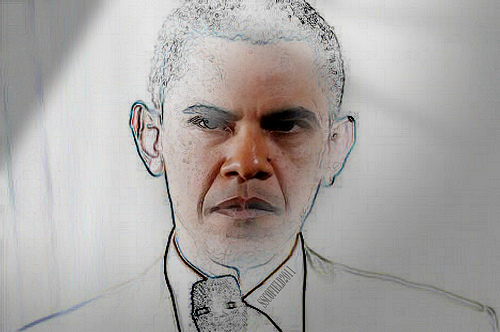
It should come as no surprise to those of us who read classic literature that those who make pacts with the devil eventually meet with desolation. Daniel Webster understood this, as do many preachers who stand in their pulpits and proclaim that you cannot enjoy the avails of sin for long. The pleasures, though real, are short-lived; and judgment always follows.
It seems obvious to those who watched the rise of the impertinent sham in the White House that something almost “magical” had accompanied his ascendancy, something other than his silver tongue and the ever-present teleprompter. How could an unknown with no track record for accomplishing anything of significance ascend to the Mt. Everest of power in our known universe?
These are questions that will likely persist for some years; until then, it is obvious to all but his most devoted followers that something has changed dramatically in the sphere of President Barack Obama since 2008. As though an angel had pulled the plug, we have seen an increasingly bumbling, fumbling shlub on the campaign trail. From time to time, Obama has waxed almost incoherent, a departure from his tightly-scripted, messianic oratory of 2008 and his cool, collected, “don’t you wish you were me?” presence.
In a less corrupted environment, this would bring Obama’s detractors almost pure joy. Instead, we have the feeling in the pit of our stomachs that ultimately, inevitably, this is a fraud sustained by those whose cravings for power and full pockets have led to their total submission to the myth that sits in the Oval Office. Though the myth is losing its lustre as the wheels of state begin to fall off, Muslims in the Middle East are showing their solidarity with Obama, just as he predicted.
Why have some religious leaders in the East speculated as to whether President Barack Obama might be Islam’s Mahdi, or Twelfth Imam? The prophecy of the Mahdi is, for the uninitiated, the Muslim approximation of the Jewish or Christian Messiah. He is embodied in different ways depending on the branch of Islam with which one is dealing and is of different levels of significance.
Shiite Muslim sect places the greatest stock in the Mahdi
At present, the Shiite Muslim sect places the greatest stock in the Mahdi and the entire Iranian paradigm as expressed by their leadership centers around this figure, his rise to power, and Iran’s role in bringing about his advent. This is largely the reason for their current political comportment, as they believe that fomenting an Islamic revolution is part of this process. The Mahdi, once in power, is prophesied to subjugate (read: “kill”) all remaining infidels and establish Islam in the four corners of the Earth.
Good enough. But how would Obama figure into this? Granted that some of the advertised similarities between the prophetic figure and the US president are superficial, some are not so superficial. Certain physical similarities are right on the mark (yes, they purport to know what this fellow will look like); yet others fall far off. More practically significant are the things that Obama has done during his tenure, which definitely speak to this apocalyptic prophecy.
Although some Muslims overseas are said to despise Obama with a purple passion, let us examine some of his dubious accomplishments from the perspective of the more contemplative Islamic zealot…
Obama facilitated the “Arab Spring”
Although the Western press fails to acknowledge this, it is practically common knowledge that Obama facilitated the “Arab Spring.” He’s also thrown Israel under the bus and done his level best to cripple America economically and in the areas of defense and national security.
Add to that his amity with the Muslim Brotherhood (having aided them in expanding their sphere of influence not only in the Muslim world but within the US), and you have someone who has probably garnered more support than enmity among Muslims. The only thing Obama really has going against him is having systematically taken out key al-Qaeda leaders, and this could be explained away as a matter of characteristically convoluted Muslim doctrine. How many Muslims have been killed by other Muslims via suicide attacks in recent years?
What we must understand is that the hatred the Muslim world has for the US is not rooted in national identity, practices, or culture. It is rooted in its Christianity. Christianity had its genesis in Judaism; thus they have hated us since the days of Ishmael and Hagar (his Mother) and the disrespect shown the founder of the Arab peoples. This has never been forgotten. The fact that Israel sprang from the seed of Abraham (and thus the Arabs and Jews are related) is lost in the shuffle. God promised that there would always be “enmity” between the two races; and as usual, He has proven to be correct.
Obama’s unequivocal defense of Islam at the expense of every other religion – Christianity in particular
In the time of Christ, there was a forebear of His coming. John the Baptist declared that the Jews would need to prepare; for the promised one was near. Would Obama be the Mahdi himself, or “the voice crying in the wilderness,” making the way for his appearance? One thing that has been made plain is his unequivocal defense of Islam at the expense of every other religion – Christianity in particular.
In the practical sense, our problem is indeed wrapped up in what or who Barack Hussein Obama is (or thinks he is) and why he does what he does. Is it one of today’s more complex questions, or is it as simple as a fake bringing down the most Christian nation on the planet?
Whether his “deal with the devil” has played out, or he’s simply worn out his welcome, he has proven his ability to mobilize the forces of evil, to the peril of us all.
Photo credit: SS&SS (Creative Commons)