Tag Archives: premiums

As ACA Implementation Continues, Consumer Health Care Cost Growth Has Slowed

By Alan Krueger

Prices for personal consumption expenditures (PCE) on health care goods and services rose just 1.1 percent over the twelve months ending in May 2013, the slowest rate of increase in nearly 50 years. The slowdown in PCE health care inflation has been widespread, with important contributions from two large components: hospital and nursing home services (which comprise 42 percent of total health care expenditures) and outpatient services (which comprise 34 percent of total health care expenditures). As the chart below shows, since March 2010, these two components of health spending have made notably smaller contributions to overall consumer health care inflation than in previous years.

The slowdown in consumer health care price inflation is consistent with a broad array of other evidence suggesting that the growth rate of health care costs is slowing:

  • Data from the Bureau of Labor Statistics’ Employer Costs for Employee Compensation survey indicate that for private sector employers offering health insurance, the annualized growth rate of real (inflation-adjusted) costs for workers’ health insurance has slowed from 2.2 percent a year from 2006:Q4 to 2009:Q4 to 1.8 percent a year from 2009:Q4 to 2012:Q4, with a particularly marked slowdown occurring at smaller establishments. For establishments with fewer than 50 employees, employers’ real costs for workers’ health insurance grew just 1.0 percent a year from 2009:Q4 to 2012:Q4, half the rate observed over the preceding three years.
  • During the past several years, the Congressional Budget Office reports that it “has made a series of downward adjustments to its projections of spending for Medicaid and Medicare.” For example, “mostly reflecting the slower growth in the programs’ spending in recent years,” CBO now expects combined spending on the two programs to be about $200 billion lower in 2020 than what it forecast three years ago.
  • From 2009 to 2011, nationwide real per capita health expenditures grew at the slowest pace since reporting began in 1960.
  • In 2012, premium growth for employer-sponsored insurance was at its lowest rate (3 percent) since the Medical Expenditure Panel Survey started in 1996.

  • In 13 states that have publicly reported premiums for 2014, the average of the lowest-cost plan is nearly 20 percent below projections based on CBO premiums. This includes New York State, which recently announced that health insurance rates in 2014 will be at least 50 percent lower, on average, than the plans currently available in the state. These substantially more affordable plans will soon be available through the new Health Insurance Marketplace established by the Affordable Care Act.

read more

…read more

Source: FULL ARTICLE at The White House

When Is A Law, Not A Law? When Obama Says So

By Alan Caruba

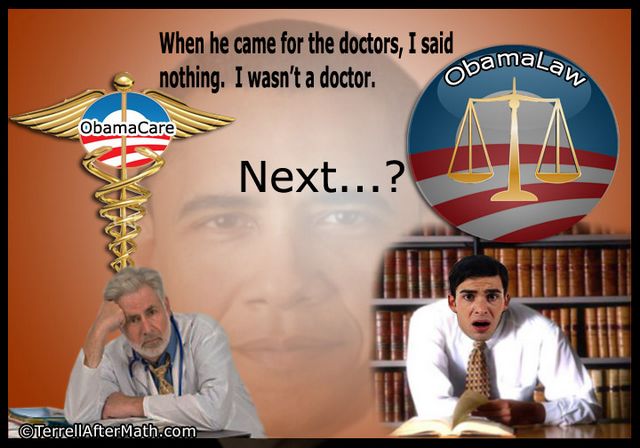
Obama Obamacare Obamalaw SC When is a Law, Not a Law? When Obama Says So

Obamacare has been showing signs of being so unenforceable, so expensive, and so utterly stupid that Obama’s administration has had to engage in all manner of patently illegal waivers and delays to maintain their lies about it.

In the words of the late Chinese Communist dictator, Mao Zedong, Obamacare has been “a great leap forward” to reform healthcare in America. In China, the Great Leap killed an estimated forty million people between 1958 and 1961. There is no way of knowing how many Obamacare would kill when (and if) it is fully implemented.

Presidents are not allowed to decide what part of what laws-or any laws-they do not want to enforce. Michael W. McConnell, a professor of law and director of the Constitutional Law Center at Stanford Law School and a senior fellow at the Hoover Foundation, recently noted that “Article II, Section 3, of the Constitution states that the president ‘shall take care that the laws be faithfully executed.’ This is a duty, not a discretionary power. While the president does have substantial discretion about how to enforce a law, he has no discretion about whether to do so.”

In Clinton v. City of New York, 1998, Supreme Court Justice John Paul Stevens wrote that “There is no provision in the Constitution that authorizes the president to enact, to amend, or to repeal statutes.” MConnell cites this, saying “The employer mandate in the Affordable Care Act contains no provision allowing the president to suspend, delay or repeal it.”

Bearing in mind that Obamacare essentially authorizes the government to seize control of one sixth of the nation’s economy, not to mention intrusively getting between a physician and his patient, it is such a legislative monstrosity, so poorly conceived and written, that it has been subject to a series of desperate efforts by the Obama administration to “fix” what is essentially unfixable.

Obamacare’s effect on the economy has already been felt: slowing hiring, moving full-time employees to part-time status, causing the cost of premiums to skyrocket, and contributing to 54 months of economic stagnation. It has become a political liability to Democrats who will run for office in the 2014 midterm elections.

Just slightly more than half the States refused to set up the “exchanges” in which individuals would select their insurance plans. This has forced the federal government to set up their own, and that is not going well. In April, the administration announced that workers will not be able to choose plans from different health insurers in the small business exchanges next year.

The IRS announced it would implement the law’s tax credits, subsidies, and taxes in states with federal exchanges, even though the Act “clearly, repeatedly, consistently, and intentionally prohibits the IRS from doing so,” according to Michael Cannon of the Cato Institute. “The IRS has literally asserted the authority to tax, borrow, and spend more than $1 trillion contrary to the express will of Congress,” citing Section 4980H of the Act that requires it begin after December 31, 2013.

Congress found the Act’s long-term entitlement to …read more

Source: FULL ARTICLE at Western Journalism

Obama Extols Health Care Law Amid Public Doubts

By Breaking News

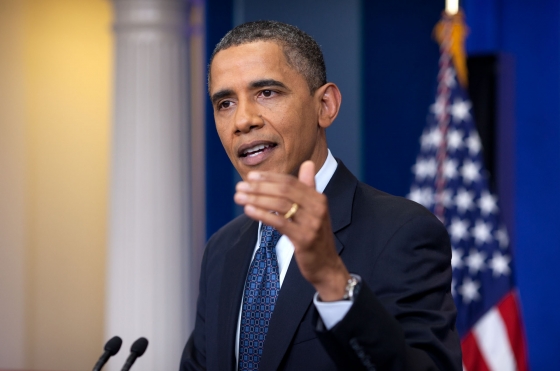
Barack Obama speech hand 2 SC Obama Extols Health Care Law Amid Public Doubts

WASHINGTON – Facing public doubts and embarrassing setbacks to his signature health care law, President Barack Obama stepped forward Thursday to extol the program’s benefits, emphasizing that some Americans already are receiving insurance rebates and lower premiums.

Obama said the program is working the way it was supposed to with “better benefits, stronger protections, more bang for your buck.” The assertion was ridiculed by Republicans, with House Speaker John Boehner calling the Affordable Care Act “a train wreck” that he will keep working to repeal.

Obama dismissed the GOP’s so-far-futile votes – the House logged its 38th attempt to repeal or scale back the law on Wednesday – with an exasperated sigh and shake of his head during a White House speech.

“What I’ve heard is just the same old song and dance,” Obama said of his critics. “We’re just going to blow through that stuff and just keep on doing the right thing for the American people.”

While the fate of the health care law will play a major role in defining his legacy, Obama has not devoted much time or energy to selling it to the country, speaking on the subject only occasionally as Republicans have pressed a determined campaign to undermine the program. Obama is returning to the subject now because enrollment begins Oct. 1 for subsidized private coverage through new online markets.

Read More at Real Clear Politics . By Nedra Pickler.

…read more

Source: FULL ARTICLE at Western Journalism

Obama Touts False Benefits of Health Insurance Rebates

By Robert Book, Contributor

Today, both at a press conference and on the White House web site, the President touted the “success” of his health care law in part due to the law’s Medical Loss Ratio (MLR) rule. The rules specifies that insurers spend a minimum percentage of their premiums on paying medical costs, as opposed to other costs – and to pay a rebate to consumers if the medical costs turned out, at the end of the year, to be “too low” as a percentage of the premiums In the individual and small-employer markets, the minimum MLR is 80%; for large employers the minimum is 85%. (For employers, the rule applies only to fully insured health plans; the self-funded plans offered by most large employers are exempt.) …read more

Source: FULL ARTICLE at Forbes Latest
FEMA's Flood Maps Are Way Out of Date

By John Johnson

FEMA is constantly putting out new flood maps for different parts of the country, which seems like a good thing. Except for this: A ProPublica investigation finds that the maps are often based on outdated information, resulting in huge headaches for homeowners whose insurance premiums are based on them. Countless… …read more

Source: FULL ARTICLE at Newser – Home

Live Blog: Obama Speaks On Affordable Care Act

By Matthew Herper, Forbes Staff After a delay of one part of the Affordable Care Act led to criticism of the implementation of the law, President Obama is today speaking out publicly about the law. He was introduced by a  a woman who got a $267  reimbursement check from her health insurer because the insurer was not spending enough of her premiums on her health care. You can watch the press conference here: …read more

Source: FULL ARTICLE at Forbes Latest

How To Save For Retirement When It Seems Impossible

By Nancy Anderson, Contributor

Baby Boomers aren’t saving enough.  According to the Ameriprise Financial study Across Generations II, only 27% of Baby Boomers say they are very confident that they will be able to continue their current lifestyles in retirement compared to 44% in 2007.  How are they supposed to fund their retirement when health insurance premiums have increased and raises are stagnant?  According to the Milliman Medical Index, employees have seen a yearly average increase in their medical premiums of 8-9%.  In the past couple of years, what have wages done? Not much. Despite some recent good news from the Labor Department’s June job report showing an increase of 10 cents in the average hourly wage, it’s still challenging for many to get ahead. …read more

Source: FULL ARTICLE at Forbes Latest
The NY Times Tries — And Fails — To Protect Obamacare From Health Insurance 'Rate Shock'

By Avik Roy, Contributor

Yesterday, fans of Obamacare were cheering. A front-page story in the New York Times announced that individuals shopping for health insurance in New York would see their premiums halved, based on figures released by the Cuomo administration. It was an “extraordinary decline” that “demonstrates the profound promise” of Obamacare, said one supporter of the law. But the cheerleaders are wrong. New York’s premiums will remain among the costliest in the nation, after Obamacare becomes fully operational. And the unique history of how the Empire State destroyed its individual health-insurance market—using policies quite similar to Obamacare’s—will translate, at best, to only a handful of other states. …read more

Source: FULL ARTICLE at Forbes Latest

Press Briefing by Press Secretary Jay Carney, 7/17/2013

By The White House

James S. Brady Press Briefing Room

1:05 P.M. EDT

MR. CARNEY: Good afternoon, everyone. Thanks for being here. I apologize for the slight delay. I was just rereading, for the pure enjoyment the article above the fold in The New York Times today about projected decline in health care premiums. (Laughter.) Highly recommend it.

Before I take your questions, on Thursday the President will deliver remarks to discuss how the Affordable Care Act is holding insurance companies accountable and putting money back into the pockets of over 8.5 million Americans. We hear a lot about what the law might do or could do, but tomorrow the President will detail one concrete way that Americans who have health insurance today are affected by the law.

This summer 8.5 million consumers are receiving half a billion dollars in rebates. The average consumer rebate is around $100. This is just one of the many ways the Affordable Care Act is giving consumers a better value for their health care dollar and making our health care system stronger.

As I mentioned earlier, you may have seen this morning that New York State announced the health insurance plan rates for insurers seeking to offer coverage through New York’s health insurance marketplace. Not only will new insurers be entering the market to offer plans to consumers, the cost for even the most comprehensive plans will be down by over 50 percent, according to the state. This is despite the fact that New York’s health care costs are much higher than the national average.

But this is in line with what we’ve seen in other states, like California and Oregon. Competition and transparency in the marketplaces, plus the hard effort by those committed to making the law work, are leading to affordable, new, and better choices for families.

I noticed in that article that, for example, an individual whose premium this year is $1,000 might see his or her premium drop in New York next year to $308. There is a particular poignancy to this story today, because for the 38th, 39th, 40th time — I’ve lost count; I think they have, too — the House of Representatives will be voting to repeal the Affordable Care Act today.

In other words, they’ll be voting, through their measure to delay implementation of the individual mandate, to keep those rates at $1,000 for the individual in New York, rather than $308, to ensure that everyone out there who worries about whether they have or a family member has a preexisting condition, and whether or not they’ll get health insurance coverage, will continue to worry. That worry doesn’t exist now because of the Affordable Care Act, but if Republicans in the House had their way, Americans could worry again about that prospect.

So they go about the business, again, of trying to overturn a law that is providing enormous benefits, and as we’ve seen again, will provide even more benefits to the …read more

Source: FULL ARTICLE at The White House Press Office

President Obama to Deliver Remarks on the Affordable Care Act

By The White House

WASHINGTON, DC – On Thursday, July 18th, President Obama will deliver remarks at the White House to discuss how the Affordable Care Act is holding insurance companies accountable and putting money back into the pockets of over 8.5 million Americans.

Under the ACA, insurance companies are required to spend at least 80 percent of premium dollars on medical care and health care quality improvement, rather than on administrative costs. If they don’t, the insurance companies must provide a rebate to their customers. As a result of this provision, 8.5 million consumers nationwide will receive half a billion dollars in rebates this summer, with an average rebate of around $100 per family. This new standard and other ACA policies together helped consumers save approximately $3.9 billion on premiums in 2012.

…read more

Source: White House Press Office

Ticket Prices for MLB's All Star Game Are High, But Can't Compete with NBA Edition

By Jesse Lawrence, Contributor

Until recently, All Star games in major league sports were purely exercises in exhibition.  Then in 2003 baseball added some significance to the game, by giving the winning league home field advantage in the World Series. This change, however, has not elevated the Mid-Summer classic to the most sought after All Star ticket.  That title belongs to the NBA. Along with Bloomberg, TiqIQ analyzed the premium paid for the last 11 All Star contests across Baseball, Basketball, Football and Hockey.  The get this premium we divided the average price of the All Star Game by the league ticket average during then corresponding regular season.  As the below chart illustrates, the NBA is the clear winner, with premiums of  1,852% in 2011, 1,674% last year in Houston and 710% in 2010 in Orlando.  Comparatively, the highest premium for a Major League baseball All Star game in the last three years is 1,196% for this year’s game at Citi Field, followed by 1,016% for last year’s game at Kauffman Stadium in Kansas City. Tuesday’s All-Star game at Citi Field marks the second time the Mets have hosted the game and the 7th time that a New York team has hosted the midsummer classic. As far as baseball All Star Games go, this one ranks high on the demand curve.  In fact, it’s the most expensive MLB All Star Game over the last three years, with an average price of $855 compared to $576 last year and $294 in Arizona in 2011.  The cheapest 500-level ticket on TiqIQ is $310 from our partner eBay and the cheapest 100-level ticket is $365 from our partners at Razorgator. At the other end of the premium spectrum is the NFL’s All Star Game, the Pro Bowl. Played annually in Hawaii, it’s the only game that comes at the end of the season, as opposed to at the midway point.  Whether it is the timing or the location, the Pro Bowl has historically been a dud at the box office.  Last year, the average price to the Pro Bowl actually sold at a discount to the league’s season average, by -16.2%. …read more

Source: FULL ARTICLE at Forbes Latest

Obamacare’s California Insurance Premiums Are Soaring – This Is Fact

By Peter Ferrara, Contributor

The great American experiment in democracy is currently failing. In proof of that, I give you Exhibit A: We cannot even agree on the basic fact of whether health insurance premiums are rising or falling under Obamacare. Note, this is not a matter even of opinion. It is a matter of simple fact, right or wrong. But if we can’t agree on what the basic facts are, we cannot analyze Obamacare, or even discuss it intelligently. 

The problem began with contentious California bureaucrats running the California Obamacare Exchange, named Covered California. They released the rates that insurance companies bid to sell the required insurance to individual purchasers on the California Obamacare Exchange. See if you can immediately spot the dishonest fallacy in the key summary statement in the Covered California press release: “The rates submitted to Covered California for the 2014 individual market ranged from 2 percent above to 29 percent below the 2013 average premium for small employer plans in California’s most populous regions.”

This is like a California Chevy dealer in a year when the price of new Chevys has soared, issuing a press release that says, “The prices for new Chevy autos and trucks this year ranged from 2 percent above to 29 percent below the average price this year for new Cadillac autos and trucks in California’s most populous regions.”

Actually, it is worse even than that. Because the Covered California press release compared the prices of individual insurance to the prices for small business insurance, it is more like a Chevy dealer press release that says, “The prices for new Chevy autos and trucks this year ranged from 2 percent above to 29 percent below the average price this year for new small buses and dump trucks.”

But that misstatement of the basic facts is all it took for media organs of Leftist so-called Progressivism to crank up the celebratory pipes. Peter Lee, Executive Director of the Covered California Exchange kicked off the dishonest, misleading rhetoric, proclaiming regarding the newly announced rates, “This is a home run for consumers in every region of California.” He reached that conclusion by comparing Yankee Stadium home runs to Lambeau Field touchdowns.

Next up to bat at the free throw line was logic arsonist Paul Krugman, whose writing always makes you feel like the First Amendment was a mistake. On the basis of the data comparing apples to Orangutans, he concluded that “the real Obamacare shock will be one of unexpected success,” explaining that the ultimate result of Obamacare will be “millions of Americans will suddenly gain health coverage, and millions more will feel much more secure knowing that such coverage is available if they lose their jobs or suffer other misfortunes. Only a relative handful of people will be hurt at all.”

He overlooks the equal millions of Americans that will suddenly not get health coverage under “universal” Obamacare, the millions more who will choose not to get health insurance “secure knowing that such coverage is available” if they get sick later, the tens of millions who will lose their employer provided health insurance, regardless of whether they like that coverage or not, the millions more who will lose their full time jobs for part time jobs with lower incomes and no benefits, becoming truly middle class in the Obama/Krugman era, where middle class is just another word for declining real incomes, and the millions more who will be denied access to the best health practitioners and facilities, and to the new, innovative, health care breakthroughs that were never financed, under the restrictive Obamacare choices allowed by the social justice of “progressive,” political health care.

Krugman reveals his true “Progressivism,” saying the end result will be that “the sheer meanspiritedness of the Obamacare opponents will become ever more obvious,” argument collapsing into sheer name calling being the hallmark of a truly “progressive” discussion.

The simplest and most direct discussion of the issue, failing to grasp any relevant distinctions at all, was provided by my fellow Forbes contributor Rick Ungar, who reported in one of his columns, echoing of course Krugman, “Upon reviewing the data, I was indeed shocked by the proposed premium rates, but not in the way you might expect. The jolt that I was experiencing was not the result of out-of-control premium costs but the shock of rates far lower than what I expected – even at the lowest end of the age scale.” Either Ungar failed to understand the distinction between Chevys and Cadillacs, or between the family Chevy and a bus, or he decided that the truly progressive course was to play along with the California bureaucrat misrepresentation, rather than disclose the fallacy to his readers. Apple or Orange, Rick?

But Ungar went on to explain, “what we are now seeing in states like California is that the desire on the part of the health insurance companies to increase market share – thanks to the large influx of customers as a result of Obamacare – is driving prices downward.” We will see about that large influx of customers. Personally, I am not buying an Obamacare policy until I am sick, and I am already well over 40 years old. And I don’t expect to be paying any penalty for that decision either.

It took Avik Roy to explain the real story in his column, also at Forbes. He examined health insurance policies currently offered on the unofficial, private sector, non-political ehealthinsurance exchange and concluded, “Obamacare, in fact, will increase individual-market premiums by as much as 146 percent.”

“[F]or the typical 25 year old male non-smoking Californian,” Roy added, “Obamacare will drive premiums up by between 100 and 123 percent.” For a 40 year old male non-smoker” Obamacare will increase individual-market premiums by an average of 116 percent.” Roy summarized, “For both 25-year-olds and 40-year-olds, then, Californians under Obamacare who buy insurance for themselves will see their insurance premiums double.” That is a conservative understatement of his actual results.

But Ungar responded in his next column, objecting to Roy’s methodology with Alinskyite ridicule: “my first reaction was to laugh. eHealthinsurance.com? Seriously?” Ungar’s complaint was that Roy’s comparisons were based on so-called “teaser rates” on the eHealthinsurance website, explaining “I mean, you don’t have to be a healthcare policy expert to know that websites like eHealthinsurance.com always flash low rates in front of you—prices that maybe one person in a thousand might actually hope to achieve—to tickle the interest of a potential customer.” That “knowledge” is based on what?

Ungar continued, “It’s not that the flashing low prices are necessarily false as there is always going to be someone who can qualify for the exceptionally low rate.” But “have you ever suffered a migraine headache? If you have, be prepared for a substantial increase over the teaser price stated on a website like eHealthinsurance.com. Ever experience a summer of hay fever? Your rate will skyrocket as a result. Did you have acne as a teenager? Uh-oh…price is going up.”

Next Page »

Source: FULL ARTICLE at Forbes Latest