Tag Archives: Islamic Republic

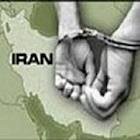
Another Christian Convert Tried in Iran

By George Whitten

iran-christian

By Joseph DeCaro, Worthy News Correspondent

TEHRAN, IRAN (Worthy News)– A Christian convert was tried in July by Branch 2 of the Revolutionary Court in Robat Karim.

Ebrahim Firouz was tried for attempting to launch a Christian website, contacting suspicious foreigners, running online church services and promoting Christian Zionism, according to Mohabat News.

Firouz was apprehended by four security officers in plainclothes who raided his workplace in March; they also confiscated his personal property that included books about Christianity.

After spending 53 days in custody, Firouzi was temporarily released from Evin Prison after posting $15,000 (USD) bail; he was later transferred back to Evin where he was subjected to ten days of intense interrogation.

In its annual report, the U.S. Commission on International Religious Freedom revealed that Iran was one of the worst violators of religious freedom in the world; the report accused Iran frequently arresting and harassing religious minorities, thereby creating an atmosphere of terror amongst them.

Although the Iranian Constitution recognizes religious freedom and the rights of non-Islamic faiths, the Islamic Republic of Iran doesn't even observe its own laws, much less the international convention it signed to provide religious freedom to its own citizens.

…read more

Source: Worthy News

Tehran says Israel PM aims to damage Iran's status

Iran’s foreign ministry is saying Israel’s prime minister seeks to damage relations between Iran and the world, referring to the Jewish state as “a warmonger regime.”

The Tuesday remarks by ministry spokesman Abbas Araghchi come two days after Israeli Prime Minister Benjamin Netanyahu urged the world to step up pressure on Tehran to halt its disputed nuclear program with tougher sanctions and threats of military action.

Araghchi said Iran views Israel as “angry” about moderate Hasan Rouhani’s victory in June presidential elections, claiming that Israel appears concerned the world will ease pressure in order to engage the Islamic Republic’s next president.

Iran denies Western charges that it is pursuing nuclear weapons, saying its program is for peaceful purposes.

…read more

Source: FULL ARTICLE at Fox World News

Beloved Bollywood villain Pran cremated

Veteran Indian actor Pran, who played villains and character roles in more than 400 movies, was cremated on Saturday in the western city of Mumbai following his death at the age of 93.

Pran Sikand, dubbed the “godfather of Indian villains” and best known by his first name, was one of Bollywood’s most beloved actors for nearly six decades.

Pran, who died late Friday after a bout of ill health, ruled the industry with his baritone voice and his ability to bring charm to his villainy.

In a condolence message, Prime Minister Manmohan Singh said: “Pran entertained several generations of Indians with his riveting performances in hundreds of celluloid roles.

“He worked with doyens of film industry among which he was an icon.”

Family, fans, friends and Bollywood celebrities attended his funeral in Mumbai.

Pran’s roles had an enormous impact on Indian audiences and parents stopped naming their children ‘Pran’ (life) at the height of his fame because of his role as a “Bollywood baddie”.

Born into a wealthy family in New Delhi, Pran grew up in Lahore where he pursued a course in photography before landing his first film role.

After British rule over the subcontinent ended with its split into mainly Hindu India and the Islamic Republic of Pakistan, Pran moved to the entertainment capital of Mumbai and worked his way into more film roles.

Pran appeared in over 400 films and played the villain opposite all the top cinema heroes of his era — from Dilip Kumar, Dev Anand and Raj Kapoor to Rajesh Khanna and Amitabh Bachchan.

“Truly the end of a magnificent and glorious era. He was a gentleman superstar,” tweeted leading Bollywood director Karan Johar.

In his private life, Pran was renowned as a gentleman — far removed from the dark characters he played on screen.

The actor is survived by his wife Shukla, daughter Pinky, sons Arvind and Sunil as well as grandchildren.

…read more

Source: FULL ARTICLE at Fox World News
Diplomats: Top aide to UN nuke chief resigns

A top aide to the chief of the U.N. nuclear agency has unexpectedly resigned, suggesting tensions among the organization’s top leadership, diplomats said Friday.

The move by IAEA Assistant Director General Rafael Mariano Grossi comes at a critical time for the International Atomic Energy Agency. It is the outside world’s only window on Iran‘s nuclear program, which some nations fear is close to the ability to make atomic arms — a goal Iran strenuously denies.

IAEA inspectors monitor Tehran’s known nuclear facilities including its expanding uranium enrichment program, which Tehran says is meant only to produce nuclear power and for other peaceful uses. But the United States, Israel, their allies and other nations fear the Islamic Republic could use the technology to make the core of a nuclear weapon.

The agency also is trying to kick-start a probe of suspicions that Iran has secretly worked on developing nuclear weapons after more than five years of stagnation. Iran denies such work and says the allegations are based on falsified intelligence from Israel and the West. The two sides plan to resume talks on the issue in mid-May.

Two diplomats demanded anonymity in exchange for speaking The Associated Press about the resignation because they were not authorized to discuss internal IAEA matters with reporters.

One of them said Grossi told Amano he was quitting earlier this week after being told that his contract was not being extended. He said Grossi would now become the chief delegate of his country, Argentina, to the IAEA and other Vienna-based U.N. organizations. He was also expected to become Argentine ambassador to Austria.

IAEA officials said the agency had no comment.

Grossi had been widely seen as a possible successor to Amano, who was re-elected for a second term earlier this year.

A career diplomat, he had assumed an increasingly visible role over the past year, accompanying senior technical and legal experts on trips to Tehran in attempts to restart the probe into Iran‘s alleged secret nuclear work. His presence in the delegation was seen as a move by Amano to have more direct reporting from those trips.

From: http://feeds.foxnews.com/~r/foxnews/world/~3/4HKT-DZ5dMI/

Video: CIA Spy: “Iranian Regime Responsible For Boston Marathon Bombing”

By Bobby Powell

A former CIA spy who had once been embedded inside the Iranian Revolutionary Guard Corps and maintains contacts within the regime today says that a highly placed source inside the Iranian intelligence apparatus has said that the Islamic Republic of Iran is responsible for the bombings at the Boston Marathon that took the lives of three people and injured 176 more (many of the injured suffering traumatic amputation.)  Contains some graphic images.

SOURCEhttp://bobpowell.blogspot.com/2013/04/cia-spy-iranian-regime-responsible-for.html

From: http://www.westernjournalism.com/cia-spy-iranian-regime-responsible-for-boston-marathon-bombing/

Tehran Turns Up The Heat (On Azerbaijan)

By Ilan Berman, Contributor

With international pressure over its nuclear program mounting, and the recent collapse of its latest round of negotiations with the West, this might seem like a strange time for Iran to pick a fight with its neighbors. Yet on at least one front, that is exactly what it appears to be doing. Recent days have seen a marked downturn in the already-troubled relationship between the Islamic Republic and Azerbaijan, its neighbor to the northwest.

Source: FULL ARTICLE at Forbes Latest

Iranian lawmaker says Iran will never halt its nuclear program

A top Iranian lawmaker declared Sunday that Iran will never halt its nuclear development program, a day after the latest round of international talks failed to reach agreement on the issue.

Alaeddin Boroujerdi said the talks were “considered effective and a step forward,” but he added, “the Islamic Republic of Iran will never stop uranium enrichment activities.”

Boroujerdi, who heads a parliamentary committee on national security and foreign policy, said the talks should continue. He was quoted by the ISNA news agency.

Western powers are concerned that Iran may move toward production of nuclear weapons. Iran denies that, insisting that its program is peaceful.

World powers have repeatedly demanded that Iran close down its Fordo underground uranium enrichment plant that is enriching uranium up to 20 percent. Uranium that is enriched to 90 percent can be used in weapons.

The U.N. has enacted four rounds of economic sanctions against Iran to try to force it to curtail its program, but Iran has remained defiant.

“If one day the (Iranian) administration decides to close down Fordo, the parliament will oppose the decision, definitely,” Boroujerdi was quoted as saying. He said Iran will continue reinforcing the plant because of foreign threats. Both the U.S. and Israel have hinted at military action against Iran‘s nuclear facilities if diplomacy fails.

Ali Akbar Velayati, an adviser to Iran‘s Supreme Leader Ayatollah Ali Khamenei, blamed the West for failure at the weekend talks in Almaty, Kazakhstan. “The talks showed that the West is not honest in its remarks,” he told reporters.

He said Western powers cannot achieve progress “if they do not acknowledge Iran‘s natural rights” to enrich uranium.

Velayati is seen a leading candidate for June elections to pick a successor to President Mahmoud Ahmadinejad.

The comments were the first by top Iranian officials after the talks Friday and Saturday between Iran and the five permanent members of the U.N. Security Council plus Germany.

…read more

Source: FULL ARTICLE at Fox World News

Kennedy joins Iranian exiles protesting in Sweden

Hundreds of supporters of an Iranian opposition group have rallied in Stockholm, denouncing the Islamic Republic‘s regime and urging the U.N. to better protect the group’s members in neighboring Iraq.

Former U.S. Congressman Patrick Kennedy was among the speakers Saturday at the demonstration in support of the Mujahedin-e Khalq, or MEK.

The crowd waved Iranian flags and chanted “down with Mullahs’ regime” before marching toward the Swedish Parliament.

The MEK fought alongside Saddam Hussein‘s forces in the Iran-Iraq war and until recently was listed by the U.S. as a terrorist organization. The group says it renounced violence in 2001.

The U.N. says more than 3,000 MEK members live at a former U.S. military base in Iraq. Iraq still considers MEK a terrorist group and wants it out of the country.

…read more

Source: FULL ARTICLE at Fox World News

Western diplomat says Iran nuclear talks with 6 nations already troubled

Talks seeking to find common ground between Iran and a group of six nations over concerns that Tehran might misuse its nuclear program to make weapons appeared to run into trouble shortly after they began Friday.

A Western diplomat said Iran had failed to deliver “a clear and concrete response” to the offer on the table from the group and instead offered a “reworking” of proposals it made last year at talks that broke up in disagreement.

The diplomat said the move was puzzling for the six nations. He demanded anonymity in exchange for discussing the confidential talks taking place Friday and Saturday in the Kazakh commercial capital, Almaty.

Iran is demanding international recognition of its right to advanced nuclear technology, but other countries are concerned that the Islamic Republic wants to misuse that expertise to make atomic arms.

Comments by representatives of the sides laid out starkly different visions of what each sought from the other.

The six insist Iran cut back on its highest grade uranium enrichment production and stockpile, fearing Tehran will divert it from making nuclear fuel to form the material used in the core of nuclear warhead. They say Iran must make that move — and make it first — to build confidence that its nuclear program is peaceful.

Iranian negotiator Ali Bagheri challenged the six countries on that point, telling reporters “what is being referred to as confidence-building measures are actions that both sides … need to take” simultaneously.

He gave no specifics, but the comment could be an allusion to Iranian demands of sweeping sanctions relief instead of the offer from the six offering only a limited lifting of sanctions.

It also wants any nuclear concessions it makes to have specific limits instead of leading to others. Alluding to that demand, Bagheri said his country wanted to nail down “the start of the process, the dimensions of the process and the final outcome of the process.”

And he described any would-be nuclear deal as only “part of a comprehensive process,” suggesting Iran was still holding to its earlier demands of a broader deal also addressing security issues.

Such views were unlikely to sit well with the six — the United States, Russia, China, Britain, France and Germany.

At the talks in the Kazakh city of Almaty they are asking Tehran only to greatly limit its production and stockpiling of uranium enriched to 20 percent, which is just a technical step away from weapons-grade uranium. That would keep Iran‘s supply below the amount needed for further processing into a weapon.

But they view that only as a first step toward the process. Iran is operating more than 10,000 centrifuges. While most are enriching below 20 percent, this material, too could be turned into weapons-grade uranium, although with greater effort than is the case for the 20-percent stockpile.

Tehran also is only a few years away from completing a reactor that will produce plutonium, another pathway to nuclear arms.

The U.N. Security Council has demanded a stop to both that effort and all enrichment in a series of resolutions …read more

Source: FULL ARTICLE at Fox World News

Iran, 6 powers meet Thursday for nuclear talks

Iran and six world powers trying to curb Tehran’s nuclear progress are meeting Thursday with the window shrinking on diplomacy.

Tehran is moving closer to the ability to make atomic arms, posing a risk of Mideast conflict.

Israel says the Islamic Republic is only a few months away from the threshold of having material to turn into a bomb and has vowed to use all means to prevent it from reaching that goal. The United States also has insisted it will not tolerate an Iran armed with nuclear weapons.

Tehran denies any interest in atomic arms, insists its nuclear program serves only peaceful needs and says it has a right to its activities under the Nuclear Nonproliferation Treaty.

…read more

Source: FULL ARTICLE at Fox World News

Ahmadinejad roadshow: Pitching his political heir

During a celebration last week to mark the Persian new year, President Mahmoud Ahmadinejad did something quietly remarkable: He stood modestly to the side and let his favored aide have the spotlight.

The gesture was far more than just a rare demure moment from the normally grandstanding leader. It was more carefully scripted stagecraft in Ahmadinejad’s longshot efforts to promote the political fortunes of his chief of staff — and in-law — and seek a place for him on the June presidential ballot that will pick Iran‘s next president.

In the waning months of Ahmadinejad’s presidency — weakened by years of internal battles with the ruling clerics — there appears no bigger priority than attempting one last surprise. It’s built around rehabilitating the image of Esfandiari Rahim Mashaei and somehow getting him a place among the candidates for the June 14 vote.

To pull it off, Ahmadinejad must do what has eluded him so far: Come out on top in a showdown with Supreme Leader Ayatollah Ali Khamenei and the other guardians of the Islamic Republic. Ahmadinejad has been slapped down hard after bold — but ultimately doomed — attempts in recent years to push the influence of his office on policies and decisions reserved for the ruling clerics.

That has left him limping into the end of his eight-year presidency with many allies either jailed or pushed to the political margins. Mashaei is part of the collateral damage.

He’s been discredited as part of a “deviant current” that critics say seeks to undermine Islamic rule in Iran and elevate the values of pre-Islamic Persia. The smear campaign has even included rumors that Mashaei conjured black magic spells to cloud Ahmadinejad’s judgment.

The prevailing wisdom is that the backlash has effectively killed Mashaei’s chances for the presidential ballot. The ruling clerics vet all candidates and, the theory follows, they seek a predictable slate of loyalists after dealing with Ahmadinejad’s ambitions and disruptive power plays. In short: Friends of Ahmadinejad need not apply.

Khamenei and others, including the powerful Revolutionary Guard, also are hoping to quell domestic political spats that they fear project a sense of instability during critical negotiations with the West over Tehran’s nuclear program.

Yet none of this seems to have discouraged Ahmadinejad, whose son is married to Mashaei’s daughter. Ahmadinejad has been …read more
Source: FULL ARTICLE at Fox World News

Saudi Arabia says spy ring worked for Iran

Saudi Arabia says its investigations have shown that members of a spy ring arrested last week were working for Iranian intelligence.

The official Saudi Press Agency quoted an Interior Ministry statement as saying Tuesday that material evidence and detainees’ confessions prove that members of the group had received money from the Islamic Republic for information on vital locations in the kingdom.

The ministry said on March 19 that security authorities had arrested an 18-member spy ring, including an Iranian, a Lebanese and 16 Saudis.

Iran denied on Sunday any involvement in espionage in Saudi Arabia. The two countries have a hostile relationship and frequently trade accusations.

…read more
Source: FULL ARTICLE at Fox World News

Iran says it's not opposed to direct talks with US

Iran‘s Supreme Leader says he’s not opposed to direct talks with the U.S. to resolve its nuclear standoff with the West.

But Ayatollah Ali Khamenei says he’s not optimistic that such talks would yield results unless Washington stops imposing sanctions against the Islamic Republic.

Khamenei says the offer of direct bilateral talks with Iran is an American tactic to deceive the public and impose its will on Tehran.

He says problems could be resolved if the U.S. would stop imposing sanctions, harming Iran‘s economy and acting against Iran‘s territorial integrity.

Khamenei spoke on Thursday to a crowd in northeastern Iran on the first day of the new Persian calendar year.

The U.S. and its allies fear Iran could ultimately develop a nuclear weapon, a charge Tehran denies.

…read more
Source: FULL ARTICLE at Fox World News

Cleric: West 'insane' to deny Iran nuclear rights

A top Iranian cleric says Western countries must be “insane” because they do not recognize Iran‘s rights to pursue nuclear energy.

Ayatollah Ahmad Jannati, who is head of the hard-line Guardian Council constitutional watchdog group, also said in an address for Friday prayers carried on state radio that Iranians must be patient to endure the Western sanctions imposed on the Islamic Republic over its nuclear program.

The West says Iran‘s program is aimed at developing weapons technology. Iran insists its program is for peaceful purposes.

…read more
Source: FULL ARTICLE at Fox World News

Afghan president orders US special forces to leave province over torture-related allegations

Afghanistan‘s president on Sunday ordered all U.S. special forces to leave a strategically important eastern province within two weeks because of allegations that Afghans working with them are torturing and abusing other Afghans.

The decision seems to have caught the coalition and U.S. Forces Afghanistan, a separate command, by surprise. Americans have frequently drawn anger from the Afghan public over issues ranging from Qurans burned at a U.S. base to allegations of civilian killings.

“We take all allegations of misconduct seriously and go to great lengths to determine the facts surrounding them,” the U.S. forces said in a statement.

Also Sunday, a series of attacks in eastern Afghanistan showed insurgents remain on the offensive even as U.S. and other international forces prepare to end their combat mission by the end of 2014.

Suicide bombers targeted Afghanistan‘s intelligence agency and other security forces in four coordinated attacks in the heart of Kabul and outlying areas in a bloody reminder of the insurgency’s reach nearly 12 years into the war.

Presidential spokesman Aimal Faizi said the decision to order the American special forces to leave Wardak province was taken during a meeting of the National Security Council because of the alleged actions of Afghans who are considered linked to the U.S. special forces.

He said all special forces operations were to cease immediately in the restive province next to Kabul, which is viewed as a gateway to the capital and has been the focus of counterinsurgency efforts in recent years.

The Taliban have staged numerous attacks against U.S.-led coalition forces in the province. In August 2011, insurgents shot down a Chinook helicopter, killing 30 American troops, mostly elite Navy SEALs, in Wardak. The crash was the single deadliest loss for U.S. forces in the war.

Afghan forces have taken the lead in many such special operations, especially so-called night raids.

“Those Afghans in these armed groups who are working with the U.S. special forces, the defense minister asked for an explanation of who they are,” Faizi said. “Those individuals should be handed over to the Afghan side so that we can further investigate.”

A statement the security council issued in English said the armed individuals have allegedly been “harassing, annoying, torturing and even murdering innocent people.”

Ceasing all such operations could have a negative impact on the coalition’s campaign to go after Taliban leaders and commanders, who are usually the target of such operations.

Faizi said the issue had already been brought up with the coalition.

The U.S. statement said only that the announcement was “an important issue that we intend to fully discuss with our Afghan counterparts. But until we have had a chance to speak with senior Government of the Islamic Republic of Afghanistan officials about this issue, we are not in a position to comment further.”

The brazen assaults, which occurred within a three-hour timespan, were the latest to strike Afghan forces, who have suffered higher casualties this year as U.S. and other foreign troops gradually take a back seat and shift responsibility for security to the government.

The deadliest attack occurred just after …read more
Source: FULL ARTICLE at Fox World News

Iranians rally for 1979 revolution anniversary

Iranians are rallying across the country to mark the 34th anniversary of the 1979 revolution that deposed a pro-West monarch and brought in the Islamic Republic.

State TV broadcast live on Sunday gatherings in Tehran and elsewhere across the country.

Many demonstrators were chanting “Down with the U.S.” and “Death to Israel,” slogans traditionally used to denounce the Islamic Republic‘s arch-enemies.

Iran has in recent years used the occasion to demonstrate defiance against Western pressure over its nuclear program.

In the last year the West has tightened sanctions to stop activities that it claims are used to develop weapons technology. Iran denies the charge, saying its nuclear program is peaceful.

The official IRNA news agency says celebrations will be held in some 5,000 sites across the country.

…read more
Source: FULL ARTICLE at Fox World News

Analysis: Diplomatic window closing on Iran

Judging by its expanding nuclear program, harsh sanctions against Iran have done little but impose hardship on its people, while diplomacy has also failed to slow the Islamic Republic‘s atomic progress. And while more talks are planned for later this month, there is a growing sense that the nuclear standoff between Iran and the international community is reaching a tipping point.

Iran can theoretically back down. But because it insists that all of its nuclear work is peaceful and protected by international law it is unlikely to go further than repeating its top leader’s religious edicts against nuclear weapons in pushing for an end to sanctions. That in turn will lead to another negotiating failure — and mounting pressure for military intervention to prevent Tehran from becoming a threshold nuclear weapons power.

Each side wants what the other is bringing to the table at the planned Feb. 25 talks in Kazakhstan. The problem is that both want the other to blink first.

For the P5 +1 — the five permanent U.N. Security Council members plus Germany — the onus is on Iran. They want Tehran to stop enriching uranium to 20 percent — a grade that is only a technical step away from the level used to arm nuclear warheads. Then, they want it to transfer its 20-percent stockpile out of the country. They also demand that Iran shut down Fordo — the bomb-resistant underground bunker where Iran is enriching uranium to 20 percent. Only then are they ready to discuss sanctions relief on Iranian oil and financial transactions.

But Iran insists it is enriching only to make reactor fuel and for scientific and medical programs — a right that all nations have. It denies any interest in nuclear weapons, considers Security Council demands that it stop enrichment invalid, and U.N. and other sanctions illegal. Tehran wants a promise that non-U.N. sanctions at least will be lifted if it makes even the smallest commitments on uranium enrichment.

Demands and counter-demands have shifted since the talks began in 2003 between Iran and Britain, France and Germany, later expanded to include the United States, Russia and China. But one constant remains: failure not only to reach a breakthrough but even to make substantive progress.

Neither side is known to be bringing new proposals beyond what was in play the last time they met, in June in Moscow. Success seems even more elusive thanks to Iran‘s recent announcement that it would speed up the pace of its uranium enrichment, and with planned new U.S. sanctions to take effect Wednesday.

“The situation has changed for the worse for both sides since last summer,” says Mark Fitzpatrick, a non-proliferation expert and former senior official at the U.S. State Department. With further enriching, Iran already has enough material for several nuclear weapons, and Fitzpatrick says that since the Moscow talks, Iran has produced enough additional low-enriched uranium to produce an additional weapon with further enrichment. As for Tehran, “the sanctions bite has gotten worse” since the two sides last met.

Even ahead of the new U.S. penalties, Iran‘s revenues from oil and gas exports are now down by 45 percent from normal levels. That, and severe restrictions on its ability to access international banking networks led the rial, Iran‘s currency, to lose 45 percent of its value last year. Over three years, it is 350 percent down.

But Iran shows no sign of budging, and Israel‘s threat to hit Tehran’s nuclear targets if negotiations fail stands, as does the possibility that such a move would draw the United States into the conflict. Iran could enrich uranium to arm one weapon within half a year even though analysts say it would take years longer for it to actually create a full working nuclear weapon.

That is a longer time line than Israel accepts. But independently of Israel, President Barack Obama may not have more than a year or two to decide whether Iran has embarked on making nuclear weapons or whether it has only reached the ability to do so. If it’s the latter, he has to judge whether Iran is content to stay on the nuclear threshold and if America can tolerate that status.

For diplomacy to succeed, “both sides need to move with greater urgency and flexibility toward a lasting solution,” says Daryl Kimball, executive director of the Arms Control Association. “Iran apparently does not yet have the necessary ingredients for an effective nuclear arsenal, but its capabilities are improving. “

An Iran with the capability to make the bomb might choose not to do so. Iran could be shaping its nuclear ambitions after Japan, which has the full scope of nuclear technology — including the presumed ability to produce warhead-grade material — but has stopped short of actually producing a weapon. It creates, in effect, a de facto nuclear power with all the parts but just not pieced together.

In that light, Supreme Leader Ayatollah Ali Khamenei‘s recent repetition of his fatwa, a proclamation that nuclear weapons are banned by Islam, could be another way of stating Iran‘s nuclear goals — ready to assemble weapons but doing so only if threatened.

Israeli Prime Minister Benjamin Netanyahu has vowed that he would not allow the Islamic Republic to reach that level of weapons capability. But he is unlikely to attack without U.S. military backing — and he and Obama may have different interpretations of when such action may be needed.

“Our policy toward Iran‘s nuclear program has been defined by Obama‘s red lines, not Netanyahu’s, meaning that the U.S. isn’t likely to use military force unless and until it’s clear that Iran is taking active steps to weaponize its program,” says Karim Sadjadpour, an Iran specialist at the Carnegie Endowment for International Peace.

___

EDITOR’S NOTE: Jahn, the AP‘s Vienna bureau chief, has reported on Iran‘s nuclear program since 2003. Murphy, the AP‘s bureau chief in Dubai, has reported on Iran for more than 12 years. He reported from Dubai.

___

Associated Press international political writer Steven R. Hurst contributed from Washington.

Source: FULL ARTICLE at Fox World News

Kerry blasts Iran over imprisonment of American Christian pastor

By Perry Chiaramonte

On the day he was confirmed as Secretary of State, John Kerry went farther than his predecessor had in condemning Iran for imprisoning an American citizen, a Christian pastor who was sentenced this week to eight years in prison for evangelizing in the Islamic Republic.

Kerry, the longtime Democratic senator from Massachusetts, made the statement in response to a written query from fellow Sen. Marco Rubio, R-Fla., who asked if Kerry, as secretary of state, would join the National Security Council‘s call for Saeed Abedini‘s release.

“We remain deeply concerned about the fairness and transparency of Mr. Abedini’s trial,” Kerry told Rubio. “I, along with the U.S. government, condemn Iran‘s continued violation of the universal right of freedom of religion and call on the Iranian authorities to respect Mr. Abedini’s human rights and release him.”

Abedini, a 34-year-old father of two, denied evangelizing in Iran and claims he had only returned to his native land to help establish an orphanage. Authorities pulled him off a bus last August and threw him into the notorious Evin Prison in Tehran.

The exact crimes he is accused of only became public on Monday, when the prosecutor outlined charges that Abedini undermined the Iranian government by creating a network of Christian house churches and that he was attempting to sway Iranian youth away from Islam. Rubio and other supporters of Abedini believe the charges stem from Abedini’s 2000 conversion to Christianity and his involvement several years ago with house churches in Iran.

Although Abedini‘s lawyer is appealing Monday’s sentence, experts following the case think Abedini’s only chance at freedom lies with a grant of clemency from the religious clerics that rule Iran. The State Department under outgoing Secretary of State Hillary Clinton was criticized by Abedini’s supporters for not doing more to win his freedom, even though the U.S. has not had diplomatic ties with Iran since the 1979 revolution there.

“It’s encouraging to see Sen. Kerry condemn Iran and call for the release of U.S. citizen Saeed Abedini. His recognition and involvement in Pastor Saeed‘s case would send a very strong message to Iran and to the rest of the world – the imprisonment of a U.S. citizen because of his religious beliefs is simply unacceptable,” Jordan Sekulow, executive director for the American Center for Law and Justice, said in a written statement.

“With his confirmation today and his soon-to-be swearing-in, Sen. Kerry has a unique opportunity to put a global spotlight on this case and come to the aid of an American who is facing years of beatings and torture because of his faith,” Sekulow said. “It is our hope that as secretary of state, Sen. Kerry will engage this issue fully and put the full weight of his office behind efforts to free Pastor Saeed.”

Source: FULL ARTICLE at Fox World News

Hell on Earth: Inside Iran's brutal Evin prison

By Perry Chiaramonte

It is known as Evin University, but it’s no school — it is one of the world’s most brutal and infamous prisons. And barring intervention by Iran‘s religious leaders, it could be the home of American citizen and Christian Pastor Saeed Abedini for the next eight years.

Beatings, torture, mock executions and brutal interrogations are the norm at Evin prison, where for four decades the anguished cries of prisoners have been swallowed up by the drab walls of the low-slung lockup in northwestern Tehran. Standing at the foot of the Alborz Mountains, it is home to an estimated 15,000 inmates, including killers, thieves and rapists. But the prison has also held ayatollahs, journalists, intellectuals and dissidents over the years, and few if any who have survived time in Evin could be surprised by claims of torture and abuse made by Abedini’s supporters.

“To many Iranians, the concept of Evin prison is synonymous with political repression and torture,” Gissou Nia, executive director of the Iran Human Rights Documentation Center, told FoxNews.com. “Today, anyone who is perceived to be a threat to the Iranian regime, including human rights defenders … is kept within the confines of Evin and other notorious prisons in Iran.”

Evin House of Detention was built during the reign of Mohammad Reza Pahlavi — known to Americans as the Shah of Iran. Before he was ousted from power in the 1979 revolution, the prison housed some of the very radicals and sympathizers who would one day rule the Islamic Republic. During the 10-year reign of Ayatollah Ruhollah Khomeini, thousands of political prisoners were systematically murdered at Evin, according to Nia. After Khomeini’s death in 1989, Evin continued to serve as a holding pen for some of Iran‘s most prominent intellectuals, activists and journalists, earning it the nickname “Evin University.”

Following Mahmoud Ahmadinejad‘s election as president in 2005, arrests related to political opposition mounted, reaching a frightening apex during the failed “Green Revolution,” that followed Ahmadinejad’s disputed 2009 re-election.

“Much of the oppositionwas sent, without pretense, to Evin,” Nia said.

What they found was a house of horrors little changed over the years.

Marina Nemat was just 16 in 1981 when she was arrested and thrown into Evin during the mass arrests of students. She recalls the experience vividly.

“When you clear the gates, you are immediately blindfolded and brought underground,” Nemat told FoxNews.com. “They take you for interrogation. They take you to a hallway and sit you down. You are there for a long time. If you move or say anything you are beaten. You must sit perfectly still, while still blindfolded, and you can wait for hours, days or even weeks.”

Broken captives are then taken to an interrogation room, where the goal of inquisitors has little to do with getting at the truth.

“They are not looking for information,” said Nemet, now a professor at University of Toronto and author of “Prisoner of Tehran,” a 2007 book detailing her ordeal. “What they want is for you to admit that you affected the national security of Iran.”

The bare feet of troublesome prisoners are lashed with cable to loosen their tongues. They’re made to walk on swollen feet before the lashings resume, said Nemet, who added that many prisoners have died during this phase of interrogation.

Nemat survived and then endured six months of solitary confinement in Evin’s 209 section, where cells typically had a toilet, a sink and no bed..

“The cells were just large enough to lie down,” she said. “When you lay down at night if you stretched out your arms, you could touch the walls. Every day felt like 3,000 years.”

But the most harrowing experience Nemat went through at Evin came when jailers blindfolded her and led her out of a cell and down a corridor. When the blindfold was removed, she was facing a firing squad. As she waited for the cluster of rifle reports that would end her life, a guard pulled her away.

“He brought me back to my cell,” she said. “He told me that I was sentenced to death in court. I told him that I never had a trial and he said, ‘Yes you had a trial, you just weren’t there.'”

Like many other prisoners issued a death sentence, Nemat’s was reduced to life in prison. She spent another 15 months in another section of Evin, where she shared a cell with as many as six other inmates.

“Food was bare minimum and we were always hungry,” she said. “The prison had closed-circuit television and they showed religious propaganda all day and they also showed the recorded confessions of the leaders of opposition groups who had broken under torture. We had only religious books about the Koran to read. Visitations were extremely limited and if we showed any sign of distress during visitation to our families, we would be tortured.”

Nemet spent three years at Evin before getting a new trial, where her sentence was reduced to time served. Although she and countless other inmates at Evin never were told what their supposed crimes were, the charge of compromising national security is the typical catch-all. It is punishable by death.

Journalist and human rights advocate Roxana Saberi went to Iran back in 2003 to work on a book about Iranian society and spent nearly six years in the country gathering material. She was arrested and sent to Evin in January 2009 as she was getting ready to leave the country.

“My captors said it wasn’t possible that I could be interviewing such a large number of people only to write a book, so they claimed it was a cover for espionage for the CIA,” Saberi, who now lives in New York, told FoxNews.com. “I denied the accusation, but cut off from the world, without access to an attorney, and threatened by my captors during terrifying interrogations, I gave in to their pressures and falsely confessed I was a spy.

“I later recanted the false confession but was sentenced in a sham trial to eight years in prison,” added Saberi, who wrote a book titled “Between Two Worlds: My Life and Captivity in Iran.” “I was very lucky to be released after 100 days. I believe that media coverage, along with people’s efforts such as signing petitions, writing letters to Iranian officials, and speaking out for me helped pressure the Iranian authorities to release me after my appellate trial.”

Such media coverage also may have helped win freedom for Youcef Nadarkhani, an Iranian Christian pastor who was recently released after serving three years in Evin for compromising national security by converting from Islam to Christianity. Nadarkhani, 35, was freed after Fox News and other media outlets drew attention to his plight, but his attorney, Mohammed Ali Dadkhah, remains imprisoned in Evin, where his health is rapidly deteriorating, according to his family. He has been jailed for advocating for Nadarkhani and others, which in the eyes of a twisted and oppressive justice system, also falls under the familiar charge of compromising national security.

Ali Golchin, 31, was arrested in 2010 after officers from the Iranian National Police entered his home and confiscated several Bibles as well as his ID card and computer. He spent nearly three months locked up inside Evin prison.

“I was accused of evangelizing, and [creating] propaganda against Islamic Republic,” Golchin told FoxNews.com. “I didn’t have any life at Evin. I was just in solitary confinement.”

In harrowing interrogation sessions that often stretched for as long as eight hours, Golchin was threatened with death and told his family would be punished for his supposed crimes. Released after posting a bail of 200 million tomans (approximately $100,000), Golchin was later summoned back to court and sentenced to another year in prison. With the horror of Evin fresh in his mind, Golchin fled his homeland. Living in Turkey, Golchin fears for family members still in Iran.

Abbas Sadeghi was held for 40 days at Evin when he was accused in December 2010 of conspiring to overthrow the regime and for his involvement with the Elam ministry, an international Christian network that seeks to spread the Bible’s message to Iranians and is known by the slogan “The love of Christ for Iran and beyond.”

“My life in prison was limited just to interrogations,” Sadeghi said. “They were taking me blindfolded to the interrogation room every morning and mocking my belief. They were saying to me that I was foolish to have converted to Christianity. They said they even have arrested [Jesus] Christ and that he was in the other cell.”

Sadeghi was granted bail, then later sentenced to six years prison. Like Golchin, he fled to Turkey rather than return to Evin prison.

“I had no choice but to flee Iran,” he said.

Source: FULL ARTICLE at Fox World News