The Virginia governor’s race is shaking up what has otherwise been a quite, off-off election year.
Tag Archives: election

Cambodia opposition chief in new election setback

Cambodian opposition leader Sam Rainsy lost his bid to regain lawmaker status Thursday in a new setback to his efforts to challenge strongman premier Hun Sen in this weekend’s election. …read more
Source: FULL ARTICLE at Fox World News

In India's Polarizing Election Of 2014, Twitter and Facebook Already Winners

Earlier this month, Gujarat chief minister and BJP’s prime ministerial contender Narendra Modi ousted Congress minister Shashi Tharoor as the Indian politician with the most followers on Twitter. Modi is closing in on 2 million followers while Tharoor, who had long-reigned as the most popular, trails just behind. Modi’s presumed rival for the prime ministerial post, the Congress’ Rahul Gandhi is conspicuous by his nonexistence on Twitter. Modi and Gandhi are going head-to-head on Facebook where their fan pages are garnering a multitude of “likes”. As India’s general election nears, the colorful political rallies and raucous sloganeering is yet to begin. But the digital face-off between political parties and their leaders has already reached a shrill extreme. The main Congress and BJP have set up what are dubbed ‘digital war rooms’ and mandated that leaders get active on Twitter. Each party is mobilizing thousands of impassioned supporters on social networks. Even the newly-launched Aam Admi Party (Hindi for common man’s political party) of anti-corruption crusader Arvind Kejriwal is vociferous on social media. With even more frenetic social media activity forecast in the coming months, India’s upcoming general election is giving an inadvertent, huge boost for Twitter and Facebook. “Politics, and indeed democracy, is moving from the old model of one-way political rhetoric sans any real participation to an increasingly voluble, energetic, fractious, interactive engagement on social media,” said Rajeev Chandrasekhar, an independent member of the Indian parliament, who formerly founded and then sold telecom operator BPL Mobile. “On social networks, politicians cannot hide from scrutiny and interactivity.” India has the third-largest base, after the United States and China, of internet users. In reality, the reach of the internet, and consequently social media, is limited, as its nearly 150 million users represent a fraction of the total population. Of these, however, two out of three users are said to access social networks daily. India is shaping up to be an important market for online advertising. Google currently leads in online revenues in India, followed by Facebook. India’s Twitter base, about 20 million users as per a study by the Internet and Mobile Association of India, is growing rapidly. Meanwhile Facebook said in a recent SEC filing that India and Brazil represent key growth regions in the first quarter of 2013 compared to the period a year ago. It reported 78 million monthly active users (MAUs) in India in the March quarter of 2013. India could boast of the world’s largest base of 277 million Facebook users by 2017. While social networks’ growth is slacking off in the West, populous countries such as Brazil, India and Russia offer plenty of growth room. Social media’s new relevance in Indian electoral politics is highlighted by the fact that the small population active on these networks is influential in urban constituencies. One study says that Facebook and Twitter could help decisively swing votes in 160 of India’s 543 parliamentary constituencies. That could be the change. In the past, India’s urban, educated voters have largely shied …read more
Source: FULL ARTICLE at Forbes Latest

Mali election frontrunner visits former rebel stronghold

One of the favourites in Mali’s presidential election took his campaign to the restive northeastern former rebel stronghold of Kidal on Wednesday, calling it a gesture of unity. …read more
Source: FULL ARTICLE at Fox World News

Zimbabwe's diaspora doubtful over polls

Many of the millions of Zimbabweans living abroad won’t return home for key general elections next week, sceptical of a fair outcome after years of election violence. …read more
Source: FULL ARTICLE at Fox World News
HUFFPOST HILL – Weinergate 2: The Sextening
By The Huffington Post News Editors
Steve King thinks most young undocumented immigrants haul “75 pounds of marijuana across the desert,” though he might be confusing them with Coachella attendees. Anthony Weiner sexted through 2012, begging the question: What the hell has to happen for someone to finally switch to Snapchat? And if the last two days have taught us anything about media strategy, it’s that Syria’s rebels need to start giving birth to royals and/or snapping photos of their man parts ASAP. This is HUFFPOST HILL for Tuesday, July 23rd, 2013:
HOUSE REPUBLICANS COALESCING AROUND DREAMER REFORMS – Elise Foley: “House Republicans made clear on Tuesday that some are open to allowing Dreamers, the young undocumented immigrants who came to the country as children, to become citizens. Their parents, though, may be left out in the cold. ‘I do not believe that parents who made the decision to illegally enter the U.S. while forcing their children to join them should be afforded the same treatment as these kids,’ Judiciary Committee Chairman Bob Goodlatte (R-Va.) said at an immigration subcommittee hearing. ‘Because let’s be clear — parents bringing their young children to the U.S. illegally is not something we want to encourage.’ The hearing comes after Goodlatte and Republican Majority Leader Eric Cantor (R-Va.) announced they are working on a bill, tentatively named the KIDS Act, to offer Dreamers a path to citizenship. The legislators haven’t yet released any details of their bill, including the cutoff age for Dreamers and what would be required for children to secure citizenship. While the bill is still just a concept, it’s already receiving praise and criticism from both sides — particularly from Democrats who say the piecemeal approach is unfair and calling it a smokescreen for Republicans’ refusal to address the broader undocumented population.” [HuffPost]
John Boehner says no one has worked as hard on immigration reform as he has. Chris Frates asked whether the speaker would continue his “hands off” approach this fall. “Whoa, whoa, whoa. Stop. Let’s get back to the premise of the question. Nobody spent more time trying to fix a broken immigration system than I have,” Boehner said. “I talked about it the day after the election, and I’ve talked about it a hundred times since. And while some may disagree about how we’re going about fixing the broken immigration system, it’s been a big goal of mine.” [National Journal]
Source: FULL ARTICLE at Huffington Post

Did Warren Buffett Just Become The World’s Biggest Spammer?
By Floyd Brown

There’s a spam email zipping around the internet that purports to be a congressional reform plan from Warren Buffett.
The problem is, the email – like so many internet missives – is full of misleading half-truths. So I wanted to set the record straight and give you a plan that would actually work to reform our broken system.
In actuality, the Buffett Plan would reform congressional budgeting – not Congress itself. He explained it during an interview on CNBC in 2011.
The outline of his proposal is relatively simple. Here’s what Buffett said: “I could end the deficit in five minutes. You just pass a law that says that any time there’s a deficit of more than 3% of GDP, all sitting members of Congress are ineligible for re-election. Yeah, yeah, now you’ve got the incentives in the right place, right? (Laughs).”
Buffett understands that working with politicians is all about incentives; and today, all the incentives are wrong. Buffett understands that what motivates members of Congress is re-election. If you want to balance the budget, just tie successful budgeting to re-election.
An Insider at Heart
Most Americans don’t remember him, but Warren Buffett’s father was a Republican congressman from Omaha. So when Buffett talks about Congress, he has an insider’s view of how the institution really works. And his budget reform plan creates the incentives necessary to make the institution work.
The incentives for members of Congress are currently upside-down. To get re-elected, congressmen spend nearly half their time raising money. To raise money, they spend hours making calls and attending events with the special interest representatives who grease the campaigns’ wheels with money.
As a result, legislation is full of crony capitalism and special interest goodies.
But with the Buffett plan, we’d get the deficit under control and likely balance the budget. And to further reform Congress, I believe we should make a few additional changes to the business of influence peddling (also known as lobbying.) You see, the most popular gig for former members of Congress is to become a lobbyist.
My first reform would be to close this revolving door by instituting a lifetime ban that keeps members of Congress from becoming lobbyists.
After former member lobbyists, the next group to join the profession in droves is congressional staff. I would also ban former staff members from lobbying their former bosses. Currently, this is one of the dirtiest secrets in Washington. You see, lobbying firms target specific congressmen. And the firms love to hire the former staff assistants of their target congressmen, giving the firm direct access to the people they’re trying to influence.
If you work for Senator X or Congressman Y, you shouldn’t be allowed to come back to your old boss and lobby him or her.
To make this ban work, we’d need to require “Lobbying Entities” to report on the former members of Congress and former congressional staff whom they employ. And that could be done with a simple website.
It All Comes Full Circle
Next, we should stiffen fines for violating the lobbying regulations. Violations should be …read more
Japan Election Somewhat Bullish for Gold Prices
By Kitco News, Contributor (Kitco News) -Although Japan’s election results are seen as bullish for gold, it will only have a secondary effect on the yellow metal, said analysts. …read more
Source: FULL ARTICLE at Forbes Latest
Mali's 1st election since coup threatened by massive problems in voter list
Mali election officials say the country’s presidential election is set to go ahead on Sunday despite massive logistical and technical lapses, including a voters’ roll which inexplicably is missing the names of tens of thousands of registered voters. …read more
Source: FULL ARTICLE at Fox World News

ESPN Poaches Nate Silver From New York Times
By Jeff Bercovici, Forbes Staff

Nate Silver, the blogger whose unerring predictions made him perhaps the most important political byline at The New York Times during the last presidential election, is leaving the paper to join ESPN. An official announcement is expected later today. …read more
Source: FULL ARTICLE at Forbes Latest

Indonesia: Churches Closed Under Islamic Law
By Joseph DeCaro, Worthy News Correspondent
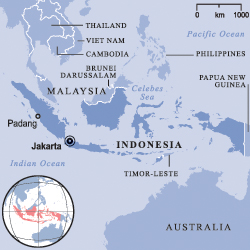
ACEH, INDONESIA (Worthy News)– Within one year and without any legal pretext, 17 churches and chapels in the province of Aceh, Indonesia, have been closed under Islamic law.
During his election campaign, the Islamization of Aceh was promised by its new governor, Zaini Abdullah. Abdullah said he would not hesitate to apply Islamic law in the province, and shortly after his election, that promise has become reality for religious minorities struggling in the most populous Muslim nation in the world .
However, the central government is seeking to restore equity to Aceh.
“Indonesia exercises a spirit of pluralism and must continue to do so,” said Interior Minister Gamawan Fauzi. “Tolerance must be guaranteed and the majority can not crush the minority violating their civil rights”.
Source: Worthy News

Looking Back at Mexico's Masked Guerilla Uprising
By Nathaniel Parish Flannery, Contributor

On January 1, 1994 three thousand wiry rebels, dressed in black vests, carrying a mix of ancient hunting shotguns, homemade rifles, and modern AK-47s descended from the hills into the cloud-covered cobblestone streets of San Cristobal, a colonial city in the state of Chiapas, Mexico. As the rebel fighters clashed with police and army units, they succeeded in bringing their state and their political movement out from an isolated corner of Mexico’s southern border onto the global stage. After being ignored for years, they were making their voices heard. Over the course of the twentieth century, Mexico’s central state expanded into the periphery, building roads and encouraging the development of large-scale farms and the cultivation of cash crops for export. At the same time, many of the farmhands who had worked on Chiapas plantations for hundreds of years, forayed out into the unpopulated stretches of jungle on Chiapas’ southern border with Guatemala. As the century progressed, Mexico’s government implemented a set of policies that favored industrial development, cash crop cultivation, and the prioritization of the urban political exigencies over rural residents’ interests. With the help of export earnings and oil revenues, from World War II until the 1970s Mexico’s government jerry-horned a policy mix that pulled together Mexico’s disparate political interests under the umbrella of the Partido Revolucionario Institucional (PRI). In the 1980s, however, as the global economy sputtered and Mexico buckled and nearly broke under the weight of debt accumulated during the boom years. Tested by economic crisis in the eighties, the PRI’s pathological mix of urban industrialization and politically motivated pro-poor policies in the rural periphery began to fall apart. Over the course of the 1980s Mexico’s government scaled back subsidies for small farmers in the south but continued to work to attract investment in the industrial north. As Mexico’s public chaffed at the continued rule of the PRI, Mexico’s long-time ruling elite pushed forward a new agenda of populist transfer programs and election-rigging to maintain power. Over the course of the 1980s under the strain of rising debt obligations and a slowing global economy, the gulf between the official rhetoric and the political reality opened into a wide crevasse. The Zapatistas’ uprising forced the government to acknowledge the existence of the disaffected rural poor in Chiapas and admit that many communities in Mexico had been left behind as the country modernized. Even today, despite the fact that Starbucks, a company which earned nearly $1.4 billion in net income in fiscal 2012 sources much of its shade-grown Mexican coffee in Chiapas, the state remains the poorest in Mexico. …read more
Source: FULL ARTICLE at Forbes Latest

Voter cards distributed in Mali as calm returns

Voter registration cards went out Monday in an atmosphere of calm in the northern Malian town where election officials were briefly kidnapped Saturday, one of the freed workers told AFP. …read more
Source: FULL ARTICLE at Fox World News
Cambodian election body rejects opposition chief's bid to vote and run in next week's polls
Cambodia’s national election body has rejected a late bid by the country’s opposition leader to register as a candidate and vote in next week’s general election. …read more
Source: FULL ARTICLE at Fox World News

Despite Summer Lull 3 Central Banks Have Work to Do
By Dean Popplewell, Contributor

Despite the onset of the summer doldrums, a busy weekend in Moscow, Tokyo, and Beijing will possibly inject some life into the financial markets. Japanese Prime Minister Shinzo Abe got what he wanted over the weekend: control of the upper house of parliament. The Liberal Democratic Party-New Komeito coalition Abe leads now holds 135 seats after the election, regaining a majority and surpassing the “stable majority” threshold of 129 seats that enabled the coalition to control the house. Abe’s coalition already owns 325 seats and enjoys the so-called “super majority” in the lower house. Armed with a new, strong mandate, the country’s political stability is on solid footing for the first time in six years as Abe presses ahead with his economic reforms. …read more
Source: FULL ARTICLE at Forbes Latest
Obama, Nancy Pelosi And Harry Reid Joining OFA Meeting
By The Huffington Post News Editors
By KEN THOMAS, THE ASSOCIATED PRESS
WASHINGTON — President Barack Obama is meeting Monday with his most loyal supporters to discuss ways to promote his agenda on issues like immigration reform and the economy as lawmakers prepare to return home for their annual summer break.
Obama was being joined by Senate Majority Leader Harry Reid, D-Nev., and House Democratic leader Nancy Pelosi of California at a meeting of Organizing for Action, a super political action committee formed from the president’s 2012 re-election campaign.
Source: FULL ARTICLE at Huffington Post

Cambodia opposition chief barred from poll

Cambodia’s newly returned opposition leader cannot be a candidate in upcoming polls, election authorities ruled Monday, rejecting his application to stand against strongman Premier Hun Sen. …read more
Source: FULL ARTICLE at Fox World News
Retirement incomes policy needs to link to older worker sustainability policy
In the pile of issues that politicians think will give them traction in the forthcoming election, Australia’s ageing population it seems won’t be one of them. Maybe it doesn’t come up in the focus group research, or is not deemed relevant in the family-focussed marginal electorates. So far I haven’t heard a word about it. …read more
Source: FULL ARTICLE at Phys.org

Japan ruling bloc pledges reforms after election win

Japan’s ruling coalition pledged Monday it would push on with rebuilding the economy and turning the corner on two lost decades after securing a handsome majority in weekend upper house polls. …read more
Source: FULL ARTICLE at Fox World News

Tsvangirai warns Zimbabwe's election body

Zimbabwe’s Prime Minister Morgan Tsvangirai on Sunday warned the body overseeing this month’s presidential election he will be “closely monitoring” it to ensure a fair vote. …read more
Source: FULL ARTICLE at Fox World News