By John Johnson 
Source: FULL ARTICLE at Newser – Home
Tag Archives: Joint Chiefs
Panetta defends military response in Libya attack
Defense Secretary Leon Panetta said Thursday that the speed of the attack on the U.S. Consulate in Benghazi, Libya, last September kept U.S. armed forces from responding in time to save the four Americans who were killed.
Testifying for likely the last time on Capitol Hill before he steps down, Panetta defended the U.S. military’s response on a chaotic Sept. 11 day as the Obama administration tried to assess the threat from protests in Tunisia, Egypt, the Libyan capital of Tripoli and other countries.
He insisted that there were no specific signs of an imminent attack on the diplomatic mission that killed Ambassador Chris Stevens and three other Americans. But soon after the initial attack, Panetta dispatched various military teams to Benghazi, including Marines from Spain and a special operations force that was training in Central Europe.
He pushed back against questions about why more firepower, such as gunships or fixed-wing fighter jets weren’t sent. He said they were not in the vicinity and would have required at least nine to 12 hours to deploy.
“This was, pure and simple, a problem of distance and time,” Panetta said.
Panetta testified before the Senate Armed Services Committee with Army Gen. Martin Dempsey, chairman of the Joint Chiefs of Staff.
Dempsey reminded the committee that it was “9-11 everywhere” when the consulate was attacked and that U.S. armed forces were prepared to respond to a wide variety of threats around the world.
U.S. posts and facilities in many countries throughout Africa and southwest Asia were operating under heightened protection levels, he said.
“We positioned our forces in a way that was informed by and consistent with available threat estimates,” Dempsey said.
Panetta is retiring after a Washington career that has stretched over four decades, with years as a California congressman, budget chief, White House chief of staff to President Bill Clinton and CIA director who oversaw the hunt and killing of terrorist leader Osama bin Laden.
The Defense Department is bidding farewell to Panetta, who has served as defense secretary since June 2011, in a ceremony on Friday. The committee gave Panetta a round of applause as Chairman Carl Levin, D-Mich., praised the Pentagon chief’s integrity. President Barack Obama has nominated former …read more
Source: FULL ARTICLE at Fox US News
Why Is Obama Selling Military Assets To An Unstable Egypt?
By D. Cox
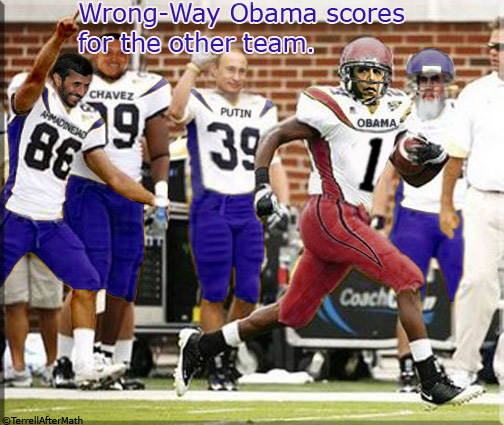
Congress recently struck down an amendment to the debt ceiling extension bill to prohibit the sale of military armament to Egypt by a 79 to 19 vote. The amendment was introduced by Senator Rand Paul (R-KY) in an effort to block all current and remaining sales.
Now – follow the money. The most recent sale was for 125 M1A1 Abrams tank kits at the price of $1.3 billion, approved in August of 2011. These tanks went to Mohamed Morsi of the Muslim Brotherhood. The 24 F-16 fighter jets, approved in October of 2009, was when Hosni Mubarak was still President. For this illustration, we will focus on the tanks. Why did Paul’s block to the sale fail?
There is a bi-partisan alliance being created in Washington, but it’s not what you think. It is their alliance with each other, counting on the ignorance of Americans. They have made agreements of sorts to attack each other in order to pass the buck about what is really going on – and it’s all about the Benjamins.
The fact is we have none. It is no surprise that our nation is broke. Many have warned us, including the Joint Chiefs of Staff and the Secretary of Defense, that our “national debt poses the greatest threat to our national security.” Here’s why.
The American government is under contract to buy a certain amount of military hardware. These contracts are with companies like Lockheed Martin, Boeing, General Dynamics, and others. These are multi-year agreements that cannot be broken. I’ll use tanks to highlight the current dilemma with Egypt.
In the 2012 defense appropriations bill, Congress provided an additional $255 million to the Army to buy 42 more tanks that the Army did not need. The money was intended to keep the General Dynamics Land Systems’ production line open in Lima, Ohio.
According to Secretary of the Army, John McHugh, this is still 28 tanks shy of what is need to keep the plant open. It would cost the Army up to $800 million to close and later reopen the plant, which would be less than the $3 billion to keep it open during the same time. The solution – continue to sell the difference.
This is not new. In the past, the way we made up the deficit was to sell them to our allies. It was a win-win. We already have a mutual aid treaty with them by our common membership in NATO; so if they are more armed, it was in our national interest. Plus it gave us the ability to continue to purchase enough military hardware to keep the defense sector thriving.
Here’s the problem: Egypt is not an Ally. They are a mutual partner with whom we have had a good relationship since the Israeli-Egyptian Peace Accord of 1979. We have been selling tanks to Egypt for so long, we now co-op build the Abrams tanks – in Egypt. Specifically, we purchase them from General Dynamics who makes initial parts here, then they are shipped to Egypt for the final parts made there, and then they are assembled.
In 2011, if Congress would have not purchased the extra tanks and sold the remainder, the plant would have shut down. This would have put thousands of people in the unemployment lines during Obama’s re-election – most in Republican districts. The job losses would have looked bad for both the White House and Republicans, so the sale was approved against the recommendations of senior defense officials.
This is a money problem.
The exact thing has just happened again. Except this time, Egypt added a little pressure. The Muslim Brotherhood stated “what was acceptable before the revolution is no longer”, implying that if the US cuts aid, then they would not be so motivated to abide by the peace accord.
Enter now the deal with the devil. Congress caved. Some things cannot be undone – and this is one of them. This may sound like the possibility of a perfect storm. But when we as a Nation begin to negotiate aid with a foreign power via a threat of war, I see it more as an inevitable super-storm.
We have been paying off our enemies for decades, and we are now out of money. Our nation is almost bankrupt; and similar to our own family finances when we do not have enough money, payday advances and bad credit become a very real solution – and a very poor decision made out of financial duress.
Our nation is currently in the same predicament. Our poor defense decisions are only compounding the problem of national security we already had with North Korea, Iran, and China. We no longer are able to stand strong because we are weak, and the world knows it.
If Congress were to have blocked the sale, how do you think the thousands of American workers would feel to be out of a job? It is inevitable; it will get worse before it gets better. The scary part is since we have been subsidizing the problem for the last 10 years, I fear the worst of it has not yet even begun.
Every time we have hit a problem, we have paid our way through it. The bailouts, the stimulus, and quantitative easing have come and gone; and the treasury is running out of ink. This was not an Egypt problem. This was not a defense problem. This is a debt problem that has become a defense problem.
Soon, I fear, it will be everyone’s problem.
“Think for Yourself!” Follow other stories of interest by “Liking’ my Facebook page at http://www.facebook.com/centeredpolitically
Read more about it by visiting the source links below:
DSCA 36(b) Arms Sales Notifications: http://www.dsca.osd.mil/pressreleases/36-b/36b_index.htm
Army to Congress, No New Tanks: http://www.defensenews.com/article/20120307/DEFREG02/303070011/U-S-Army-Congress-No-New-Tanks-Please
Tank sales to Egypt 2011: http://www.jpost.com/International/Article.aspx?id=228506
Debt Ceiling Suspended: http://www.nasdaq.com/article/senate-approves-bill-suspending-debt-ceiling-20130131-01687
Aid to Egypt 2012: http://www.nytimes.com/2012/03/24/world/middleeast/once-imperiled-united-states-aid-to-egypt-is-restored.html?_r=0
Security threat of high debt: http://thehill.com/homenews/administration/105301-mullen-reiterates-threat-excessive-debt-poses-to-nation#ixzz2JreUVgZg
Photo credit: terrellaftermath
Panetta, general to testify on Libya attack
The Senate Armed Services Committee says Defense Secretary Leon Panetta and Gen. Martin Dempsey, the chairman of the Joint Chiefs of Staff, will testify on Thursday about the deadly assault on the U.S. Consulate in Libya last September.
Panetta, Dempsey to testify on Libya attack
The Senate Armed Services Committee says Defense Secretary Leon Panetta and Gen. Martin Dempsey, the chairman of the Joint Chiefs of Staff, will testify on Thursday about the deadly assault on the U.S. Consulate in Libya last September.
The Sept. 11 attack in Benghazi killed U.S. Ambassador Chris Stevens and three other Americans.
Republicans have pressed for Obama administration officials to testify on the raid. Hillary Rodham Clinton, then secretary of state, defended the administration in her appearance last month.
The testimony by Panetta, who is stepping down, could be his last on Capitol Hill. President Barack Obama has nominated former two-term Republican Sen. Chuck Hagel to replace him, a choice that has faced GOP opposition.
Source: FULL ARTICLE at Fox US News
Statement by the President on the Opening of Combat Units to Women
Today, by moving to open more military positions—including ground combat units—to women, our armed forces have taken another historic step toward harnessing the talents and skills of all our citizens. This milestone reflects the courageous and patriotic service of women through more than two centuries of American history and the indispensable role of women in today’s military. Many have made the ultimate sacrifice, including more than 150 women who have given their lives in Iraq and Afghanistan—patriots whose sacrifices show that valor knows no gender.
Earlier today I called Secretary of Defense Panetta to express my strong support for this decision, which will strengthen our military, enhance our readiness, and be another step toward fulfilling our nation’s founding ideals of fairness and equality. I congratulate our military, including the Joint Chiefs of Staff, for the rigor that they have brought to this process. As Commander in Chief, I am absolutely confident that—as with the repeal of ‘Don’t Ask, Don’t Tell’—the professionalism of our armed forces will ensure a smooth transition and keep our military the very best in the world. Today, every American can be proud that our military will grow even stronger with our mothers, wives, sisters and daughters playing a greater role in protecting this country we love.
Source: White House Press Office
Press Gaggle by Press Secretary Jay Carney, 1/24/2013
James S. Brady Press Briefing Room
10:32 A.M. EST
MR. CARNEY: Good morning. Welcome to the first gaggle of the second term. (Laughter.)
Q Historic.
MR. CARNEY: Precisely. The first only comes once.
So, as you know, the President is — you’ll see the President later this afternoon. He has a personnel announcement, and therefore I decided to move my meeting with you to the morning, do an off-camera gaggle, something that a number of you have asked that we do a little more frequently and I’m happy to oblige.
We’re going to do this — for those of you who aren’t familiar with it — kind of try to, in keeping with tradition — efficient, no seven questions for members of the first row before we get to move it around. Maybe one way that I think this has been done is sort of one topic per person so we can move around, try to do this in 20 minutes, and so you guys can get back to work.
With that, I’ll go to the Associated Press.
Q Thanks. On the Pentagon’s announcement on women in combat, can you explain what the President’s role was in that decision?
MR. CARNEY: I can tell you that the President is very pleased with the announcement that Secretary Panetta and Chairman Dempsey will be making official on this important policy change later today. I’ll let the Secretary and the Chairman discuss the details.
The President fully supports this effort to expand opportunities for women, to serve in our armed forces. As you know, women are already serving in critical roles throughout our military, and the President believes strongly that we should continue to remove these unnecessary gender-based barriers to service.
Despite the existence of these barriers heretofore, as you know, women have fought and bled and died in Iraq and Afghanistan in uniform, and the President believes that this is a very appropriate policy change.
Q Did he ask Secretary Panetta to take this on?
MR. CARNEY: This is something that he and the Secretary have discussed in their regular meetings over time. But obviously, this is a decision that is generated by the Joint Chiefs and the Secretary, which is appropriate — not a directed decision. But it’s certainly one that the President believes is appropriate, and I think that’s a position he’s held for some time.
Q And does he think it’s appropriate for women to serve in all combat forces, including Special Forces, like the SEALs or the Delta Force?
MR. CARNEY: I’ll let Secretary Panetta and Chairman Dempsey talk about the details this afternoon before we go into the details here. I think that’s appropriate given that this is a military decision that’s being I think recommended by the Joint Chiefs to the Secretary, so we’ll let them present. And then I’m sure tomorrow I can take more questions on it.
Q Jay, North Korean officials have made some belligerent comments, including talking about how there are rockets and tests targeted at the United States. Could you comment on that, and also talk about whether any repercussions are in the offing?
MR. CARNEY: North Korea’s statement is needlessly provocative, and a test would be a significant violation of United Nations Security Council resolutions. Further provocations would only increase Pyongyang’s isolation, and its continued focus on its nuclear and missile program is doing nothing to help the North Korean people.
As you know, the U.N. Security Council in a resolution adopted just two days ago expressed its determination to take significant action in the event of a further launch or nuclear test. Resolution 2087 is a strong message of the international community’s opposition to North Korea’s provocations, and these tightened sanctions will help impede the growth of weapons of mass destruction programs in North Korean programs — in North Korea rather — and the United States will be making — taking additional steps in that regard. But I have nothing more for you on it.
Q Do these comments tell you anything about the direction of the regime of Kim Jong-un?
MR. CARNEY: Look, we judge North Korea by its actions, and provocations like these are significant violations. And we act accordingly. We certainly haven’t seen a noticeable change in behavior.
Q John Boehner — Speaker Boehner was quoted saying that “the President’s goal is to annihilate the Republican Party.” What’s the President’s reaction to that?
MR. CARNEY: Well, I haven’t spoken to the President about that, but I know it’s not his goal. His goal is to work together with Congress, with members of both parties to achieve progress on behalf of the American people. You heard him say in the inaugural address that even though we have profound differences and differences that we will not resolve necessarily in the next year or two or three or four, it is imperative that we come together and act on behalf of the American people. And there are things that we can and must do together.
The President believes that a strong two-party system is the foundation of our democracy and looks forward to working with Republicans as well as Democrats to get things done.
Q He wouldn’t object to the annihilation of the Republican Party, would he? (Laughter.)
MR. CARNEY: I think he would object to — he believes that the two-party system is part of the foundation of our democracy, and that it is a healthy aspect of our democracy even if it’s contentious.
Ours is not the only politics in the world that is contentious and appropriately so. What he believes, however, is that we need to have spirited debates but not debates that paralyze us. We need to compromise, not be absolutists, but agree that the call — that the need to act on behalf of the American people should compel us to make reasonable compromise while we stick to our principles. And that's the approach he’s taken since he entered the White House, and it’s the approach he intends to take in the second term.
Q Without betraying anything that happened in his private conversations on Inauguration Day, second Inauguration Day, did anything in any of his meetings with the leaders who were here or up on the Hill lead him to believe that there will be more comity, or was there any — c-o-m-i-t-y —
MR. CARNEY: I applaud the use of that word.
Q — or goodwill, or was there any exchange of promises?
MR. CARNEY: I don't have any specific information about conversations that took place on Inauguration Day. I think that it was appropriately a day where we celebrated as Americans, not as Democrats or Republicans. And it is a remarkable thing that we have, without drama, these peaceful transitions of power or extensions of time in office. And that's something to celebrate as Americans, and the President feels that way.
But we — as I said yesterday, I believe, and previous to that, some of the decisions that Republicans have made recently, including a decision to abandon a strategy in their approach to the debt ceiling, is a welcome development.
One of the things that the President believes firmly is that we are not helping ourselves or helping the American people, or helping the American economy when we govern from crisis to crisis — manufactured crisis to crisis. And we understand — he understands that there will be tough negotiations over how to further reduce our deficit, for example, in a balanced way, but that we can do that if we, all of us, approach the task with compromise in mind and not confrontation and crisis.
Even with some of the positive signs we've seen and avoiding the debt ceiling crisis, I think there are Republican leaders on record saying they want a shutdown, for example, because it would be good for member management. That's a hard thing to sell to the American people, right? That's not a great strategy, I think in the President’s view. But, again, we'll see how things unfold. The President looks forward to working cooperatively with members of both parties in Congress.
Q Jay, which of those regulated by the SEC know about Mary Jo White’s qualifications? And does it suggest a new level of aggressiveness of regulatory enforcement?
MR. CARNEY: Well, I can confirm that the President, later today, will announce his intention to nominate Mary Jo White to serve as chair of the Securities and Exchange Commission. I'll obviously leave some of this to the President, but it’s certainly out there and been confirmed.
Mary Jo White — for those of us, as you were, here in the ‘90s, know of her extraordinary record as a U.S. attorney in the Southern District of New York. I mean, she prosecuted a number of large-scale white-collar crimes in complex securities and financial institution fraud. She brought justice to the terrorists responsible for the bombing of the World Trade Center and for the bombing of American embassies in Africa. She also served as a director of the Nasdaq Stock Exchange.
As you know, the SEC plays an essential role in the implementation of Wall Street reform and rooting out reckless behavior in the financial industry. The President believes that that appointment and the other one — the re-nomination he’s making today — demonstrate the commitment that he has to carrying out Wall Street reform, making sure that we have the rules of the road that are necessary and that are being enforced in a way that ensures we don't have the kind of financial crisis that we had that led to the worst economic crisis that we've seen since the Great Depression.
Q Don’t mess with the SEC.
MR. CARNEY: Look, she's got an incredibly impressive résumé, and the President is very pleased to be able to nominate her.
Q Jay, to follow up — the debt ceiling having now been shuffled back to May, the next deadline is the return of the sequester. Is the President going to submit a proposal of his to replace the sequester, which he doesn't like?
MR. CARNEY: The President has submitted a proposal, as you know, and as I said yesterday, that proposal stands. He has put forward significant spending cuts and additional revenues gleaned from tax reform and closing of loopholes and capping of deductions that would significantly go beyond, in terms of size, the sequester.
Q I thought that's a larger-scale thing —
MR. CARNEY: It is. But the whole point of a big deal was that it would eliminate both the sequester and achieve broader deficit reduction for the long term, and that the President still believes that we need to come together to finish the job; that instead of doing in whole, we've been doing in steps to achieve $4 trillion-plus over a decade of deficit reduction through spending cuts, entitlement reforms, and increased revenues.
Q So that's the way he's going to attack this is to go back to trying to get the big deal, as opposed to —
MR. CARNEY: I don't have specifics to play out for you in terms of what tactical approaches we'll take. But the President's broad principle and the specifics of how he believes we can responsibly cut spending as opposed to taking a hatchet in an across-the-board way, which is what the sequester does — and nobody supports that enactment. And as a counter to that, he's put forward very specific proposals.
Q I understand that. I'm just saying that the immediate deadline is the sequester. So he's not going to try and deal just with the sequester? He could —
MR. CARNEY: Again, you're asking me what like specifically we may have to propose for that in however many weeks or months. Broadly speaking, the sequester is —
Q Four weeks away.
MR. CARNEY: Yes, so weeks — fair, right? Or a month. Anyway, I don't have anything specific for you beyond what the President has already put on the table, which is detailed and substantial and which the President looks forward to discussing with congressional leaders.
Q Jay, we know that probably a few minutes from now, Dianne Feinstein is going to introduce the assault weapons ban. The Vice President will be in Richmond tomorrow with the Governor and some others discussing this. Can you give us a little bit of a sense — given the fact that for a lot of Democrats this is challenging, sort of treacherous territory — how the White House views pursuing what were three of his top priorities, which are magazines, assault weapons, and background checks if the order by which you pursue that is significant and how he sort of prioritizes going about that to be able to accomplish the biggest change?
MR. CARNEY: Well, I'm not going to lay out to you a legislative strategy. We're obviously working with Senator Feinstein and other leaders in Congress on this matter. As the President made clear, the fact that some of these are hard to achieve — all of them in many ways are hard to achieve, some of his goals — doesn't mean that we should not work aggressively to achieve them. There's broad public support for taking action.
Not a single one of the President's proposals that he put forward last week would take a gun away from a single, law-abiding American citizen. He believes that the Second Amendment right to bear arms is important and he supports it. But we ought to be able to take common-sense measures to reduce the amount of gun violence in this country and to increase the amount of security for our people, most especially our children.
Q How does pursuing the assault weapons ban first not make it more challenging to pursue the others, given that's the one with the most opposition?
MR. CARNEY: Again, I just don't have a lot of process answers to give you and tactical or strategic answers to give you. We're working with Congress. The things you've mentioned are the — represent the legislative portion of the President's proposals, and they mirror in many ways action that members of Congress, Senator Feinstein as you mentioned being one of them, want to take. And we'll work with them on moving forward with congressional leaders on how they will move forward on these proposals.
And the President made clear that he will use the power of his office, as will the Vice President, to help bring about these important reforms.
Robert.
Q Thanks. A two-parter. Do you expect any troubles with Cordray and the confirmation this time, given the recess appointment history last time?
MR. CARNEY: Well, I would say two things. One, when the President nominated Richard Cordray to this very important post, which provides important reforms to protect consumers, he was widely praised by Republicans and Democrats. He had worked with Republicans and Democrats in his position in Ohio. There were no objections on substance to his nomination. Unfortunately, it was blocked because — for political considerations, because some folks in Congress don't believe that we should have an effective Consumer Finance Protection Bureau. The President strongly disagrees. The American people strongly disagree.
Hopefully, the fact that Richard Cordray has substantial bipartisan support out in the country and at the time — and we can provide that to you — was praised by Republicans and Democrats — former Attorneys General, as he was — hopefully it will convince the Senate to move forward and allow the up-or-down vote that he deserves.
Q So you expect clear sailing then pretty much?
MR. CARNEY: That's not what I said at all. (Laughter.) I wouldn’t want to predict an outcome except to say that there are no objections to him on substance. He is absolutely the right person for the job. He has done an excellent job in his position, and the President hopes very much the Senate will confirm him.
Q Okay. Can you update us a little bit on Jack Lew? Mr. Geithner’s last day I believe is either today or tomorrow.
MR. CARNEY: I didn't see him today. I don't know when his — I can't remember. Tomorrow.
Q Are you expecting an acting —
MR. CARNEY: Well, again I’m not going to predict how the Senate will handle any particular nomination. It’s the Senate’s prerogative to confirm nominees. The President feels very strongly that Jack Lew is an excellent and highly qualified nominee, and we hope — he hopes that the Senate will move expeditiously to confirm him. We have a highly qualified deputy Treasury Secretary who remains in place — Neal Wolin. And again, we just — we hope the Senate moves quickly.
Q Thanks very much. On immigration, has the President given any more thought on moving forward on immigration — whether you can do it in one full package, whether he’ll end up breaking it up into separate pieces? And has he reached out at all to Marco Rubio whose plan has been out there, and the President’s has been somewhat receptive —
MR. CARNEY: Well, I haven’t seen a plan and I don't think anybody else has. He’s spoken about it. And the principles, as I said the other day, reflect very closely the blueprint that is available on WhiteHouse.gov for the President’s approach to comprehensive immigration reform, and we find that a good thing.
The President looks forward to working with Congress, members of both parties. He has always said that this is the kind of thing that has to be bipartisan and has in the past enjoyed bipartisan support from Republican leaders as well as rank-and-file senators and members of Congress.
President George W. Bush, as you know, was a strong proponent of comprehensive immigration reform, as was Senator McCain. And the President looks forward to working with Republicans and Democrats in achieving comprehensive immigration reform. He does absolutely believe that we need to do this in a comprehensive way, that that's the appropriate way to move forward to ensure that we put in place the kind of comprehensive reform that achieves all the goals that are necessary here.
Q How soon will we see something —
MR. CARNEY: The President has made clear that he intends to act very quickly —
Q How soon?
MR. CARNEY: I'm not going to hem him in by putting a timetable on it, but I think you can expect him to be true to his word, which is to take up this issue very early in his second term. And, by the way, this is the third full day of his second term.
I think John, I said, and then Peter.
Q Two more, Jay. Will the President ask or has he already asked the Vice President to take a lead role in dealing with Congress on these budget issues — sequester and debt ceiling?
MR. CARNEY: The Vice President has always played an important role in these issues and will continue to play. There’s not a set negotiation right now over these issues, but the Vice President has and always will play a role in working with Congress on financial and budget issues, on issues related to gun violence and immigration reform. And that's one of the things that the President counts on with the Vice President, is being able to have the Vice President take a role because of his substantial relationships on Capitol Hill.
Q But are we talking about the kind of direct and active role that we saw him play in December on the fiscal cliff?
MR. CARNEY: I don't think we're in a position to say how the endgame of these things will play out. We hope that this moves forward in a way that allows us to achieve a bipartisan solution that is balanced, that protects seniors and families with disabled children, people trying to send their kids to college; that reforms entitlements in a way that strengthens them, makes sure they’re there for future generations; that enacts tax reform that makes sure that corporations and wealthy individuals are paying their fair share and that the burden is not being borne entirely by the middle class or vulnerable communities.
And those are the President’s principles. They’re embodied in the proposals he’s put forward. And his entire team will be working with Congress to try to achieve them.
Peter.
Q Can I go back to the first question on the women in combat? The way you suggested it makes it sounds like the President was more of a passive player rather than a decider on this. Were there deputy meetings? Were there principal meetings? Is this something that the —
MR. CARNEY: I don't have a process to read out to you. I would ask you to wait for the formal announcement later today from Secretary Panetta and the Chairman of the Joint Chiefs. Again, this is something the President has supported, believes is important. I think it in many ways formalizes a reality that has been taking place on the ground, but it also opens up enormous possibilities in terms of positions for women in the armed forces, and the President views that as a very, very good development.
But it’s also very important that this be something that is — that comes through the military, because the military, our armed forces, will be implementing it. And that's a welcome thing.
So I'll allow —
Q But he’s the Commander-in-Chief, though. Does he have to sign off on it, as opposed to just simply supporting it?
MR. CARNEY: He is Commander-in-Chief.
Q Right, so does he just support it, or does he have to sign off on it?
MR. CARNEY: Well, again, why don't we wait for the announcement. He is — he’s the boss.
Yes, all the way in the back. One more and then we'll go.
Q Thank you, Jay. About — because we saw yesterday, there could be some senators holding a press conference and saying they were sending a letter to the President pressing him to — how to make his decision on the XL Keystone Pipeline faster. How close are we to a decision on this?
MR. CARNEY: I would refer you to the State Department. We appreciate input from lawmakers, but as you know, as is in keeping with longstanding tradition, multi-administration tradition, these reviews are conducted by the State Department, and when the State Department concludes that process, we'll move forward, there will be a decision. But I'm not going to get ahead of that process.
So the timeline will be —
Q Has he received this letter?
MR. CARNEY: I'm aware of the letter. I don't — I'm sure we have it. But again, it’s not — this is not an issue to be decided that way. We're keeping with formal tradition here. The State Department reviews it, and I refer you to them for the timeline.
Thanks very much.
END
10:58 A.M. EST
Panetta Set To Announce Expanded Military Role For Women
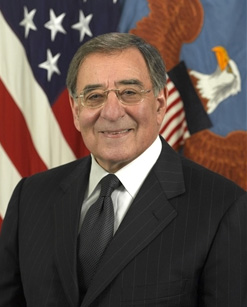
Secretary of Defense Leon Panetta spoke Thursday morning on lifting the ban on women in combat in advance of a more formal announcement later in the day.
“As secretary of defense, I know that opening more opportunities for our most qualified men and women in uniform strengthens our ability to fight and to win the nation’s wars,” Panetta said Thursday at a Martin Luther King Jr. remembrance event.
Remarks by the President at Commander-in-Chief Ball
Walter E. Washington Convention Center
Washington, D.C.
8:48 P.M. EST
THE PRESIDENT: Let me begin by just saying you all dress up pretty nice. (Applause.) I hope everybody is having a wonderful time. Now, those of you who are in uniform, you look outstanding. Your dates do look better, though. (Applause.) I just want to point this out. (Laughter.)
I’m not going to give a long speech. What I really want to do is come down and express the extraordinary gratitude not just of me as your Commander-in-Chief, but more importantly, the thanks of all the American people.
I want to start by thanking some of our outstanding leaders who are here: our hosts, our Senior Enlisted Advisors from all five branches of our military. (Applause.) The Chairman of the Joint Chiefs of Staff, General Marty Dempsey, who promised to sing sometime tonight, so you should hold him to it. (Laughter.) The Vice Chairman, Sandy Winnefeld, and all our outstanding members of the Joint Chiefs. Our Secretary of Veterans Affairs and Vietnam veteran, Ric Shinseki, who is here.
And we’re honored to be joined by some truly extraordinary Americans, our wounded warriors, who inspire us with their incredible strength and resolve. (Applause.) Our enlisted men and women and junior officers — the backbone of our military. (Applause.) Our amazing military families — (applause) — including the families of the fallen — our Gold Star families — we will stand with you always.
The members of the legendary Tuskegee Airmen in the house. (Applause.) And the recipients of our nation’s highest military decoration — the Medal of Honor. We are honored by your presence. (Applause.)
Today, we experienced the majesty of our democracy; a ritual only possible in a form of government that is of, and by and for the people; a day made possible because there are patriots like each and every one of you who defend our freedom every single day.
So this little party is just another way to say something we can never say enough: thank you. (Applause.) Thank you for volunteering. Thank you for stepping up. Thank you for keeping us strong. Thank you for always making us proud. I have no greater honor than being your Commander-in-Chief. (Applause.)
It’s because of you that with honor we were able to end the war in Iraq. Because of you that we delivered justice to Osama bin Laden. (Applause.) Because of you that it’s even possible to give Afghans a chance to determine their own destiny. We are going forward, and we’ll keep our military the finest fighting force that the world has ever known.
Now, tonight, we’re also joined by some of our servicemembers in Afghanistan. They can’t see us, but we can see them on this monitor.
Who we got there? General, are you there? Abe?
MAJOR GENERAL ABRAMS: Sir, good evening. Mr. President, congratulations on your inauguration. It is Major General Abrams, commanding general of the 3rd Infantry Division and Regional Command-South. We’re honored to be able to join you there this evening.
Sir, I’m joined tonight by some fantastic airmen and non-commissioned officers and soldiers serving here in Kandahar.
SERGEANT JACKSON: Congratulations, Mr. President. Sergeant First Class Orlando Jackson from Lake Charles, Louisiana — 3rd Infantry Division, Falcon Brigade, Task Force Light Horse. I just wanted to congratulate you on a job well done.
MASTER SERGEANT SKOWRONSKI: Mr. President, Master Sergeant Robert Skowronski, Superintendent 807th Expeditionary Air Support Operations Squadron, hailing from Detroit, Michigan. I want to say, go Tigers! (Applause.)
SERGEANT WOOD: Good evening, Mr. President. My name is Sergeant First Class David Wood. I'm out of Monument, Colorado — 3rd Infantry Division, Falcon Brigade, Task Force Light Horse. Thank you very much for having us here at your party. Congratulations. (Applause.)
MASTER SERGEANT GODLEWSKI: Good evening, Mr. President — Master Sergeant James Godlewski. I'm the Operations Superintendent, the 807th Expeditionary Air Support Operations Squadron and the world's greatest Air Force. (Applause.) I want to say congratulations on tonight. I hope you guys have a blessed evening. (Applause.)
MAJOR GENERAL ABRAMS: Mr. President, we're honored to be able to join you tonight. And we've got one more thing for all of you there — Rock of the Marne! (Applause.)
THE PRESIDENT: (Laughter.) Well listen, to all of you who are there, we know it's tough being away from your families. We know the incredible sacrifices and challenges that you meet every single day. But I can tell you that you've got a room full of patriots here. (Applause.) And although I've got to admit that they're a little spiffied up right now — (laughter) — their heart and soul, their dedication, their sense of duty is at one with every single one of the folks who are in Kandahar right now.
And I want you to know that when I was standing on the steps of the Capitol today, looking out over close to a million people, the single-biggest cheer that I always get — and today was no different at my Inauguration — was when I spoke about the extraordinary men and women in uniform that preserve our freedom and keep our country strong. (Applause.) So know that every single day we are thinking of you.
We're going to make sure that you've got the equipment, the strategy, the mission that allows you to succeed and keep our country safe. Know that we are going to be looking after and thinking about your families every single day, and that when you get back home you're going to be greeted by a grateful nation, and that you will be on our minds tonight and every single night until our mission in Afghanistan is completed.
Can everybody please give our comrades-in-arms a huge round of applause? (Applause.) And please, all of you give our very best to your families back home, because I know it's just as tough, if not tougher for them to see you in harm's way and away from the family. God bless you. God bless the United States of America. Thank you. (Applause.)
There's one last thing I've got to do. I've got a date with me here. (Applause.) She inspires me every day. She makes me a better man and a better President. (Applause.) The fact that she is so devoted to taking care of our troops and our military families is just one more sign of her extraordinary love and grace and strength. I'm just lucky to have her. (Applause.)
I said today at the lunch over at the Congress that some may dispute the quality of our President, but nobody disputes the quality of our First Lady. (Applause.)
Ladies and gentlemen, my better half and my dance partner, Michelle Obama. (Applause.)
END
9:00 P.M. EST
Colin Powell Goes After Birthers
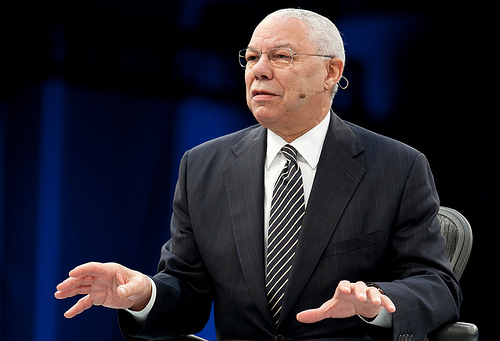
In an interview with ABC’s Diane Sawyer and George Stephanopoulos during ABC’s special inauguration day coverage this morning, former Secretary of State Colin Powell lashed out at people in the Republican Party who spent the last four years spreading “birther nonsense” and other “things that demonize the president,” calling on GOP leaders to denounce such talk — publicly.
“Republicans have to stop buying into things that demonize the president. I mean, why aren’t Republican leaders shouting out about all this birther nonsense and all these other things? They should speak out. This is the kind of intolerance that I’ve been talking about where these idiot presentations continue to be made and you don’t see the senior leadership of the party say, ‘No, that’s wrong.’ In fact, sometimes by not speaking out, they’re encouraging it. And the base keeps buying the stuff.
“And it’s killing the base of the party. I mean, 26 percent favorability rating for the party right now. It ought to be telling them something. So, instead of attacking me or whoever speaks like I do, look in the mirror and realize, ‘How are we going to win the next election?”
But Powell, who served as National Security Adviser under President Ronald Reagan, Chairman of the Joint Chiefs of Staff under George H.W. Bush and as the nation’s top diplomat under President George W. Bush, didn’t stop there.
“The Republican Party ought to be out there not restricting voting by voter ID, but saying we want everybody to vote,” he told Sawyer and Stephanopoulos. “It’s a party that has to stop saying, ‘We are going to appeal to you with new messages.’ You need policies — the country is becoming more minority.”
Powell, who endorsed President Obama’s reelection bid in October, said that his critiques of the GOP have left some wondering, “Why are you still a Republican?”
Read More at ABC News . By Michael Falcone.
Photo Credit: jdlaisca (Creative Commons)