Tag Archives: Diosdado Cabello

7 killed in post-election protests in Venezuela, chief prosecutor says

Venezuela‘s chief prosecutor said Tuesday that seven people have been killed and 61 injured in protests following presidential elections in which the opposition candidate is demanding a recount.

Prosecutor Luisa Ortega did not provide any details about the deaths or injuries or how they occurred. But she said the seven killed were humble members of the working class, a suggestion that the opposition might be to blame.

Chavez’s chosen successor Nicolas Maduro was certified the winner of a presidential election Monday amid questions about his ability to lead after squandering a double-digit lead in the race despite an outpouring of sympathy for his party following Chavez’s death.

But protests across the country are posing a challenge even before he deals with Venezuela‘s mounting problems.

Opposition leader Henrique Capriles is demanding a recount of Sunday’s election that he narrowly lost. As the National Electoral Council proclaimed Maduro the victor, people stood on their balconies in Caracas apartment buildings banging pots and pans in protest. Across town, thousands of students briefly clashed with National Guard troops who fired tear gas and plastic bullets.

Protests continued on Tuesday.

In the city center, a divided district, government supporters tried to drown out the noise by setting off deafening firecrackers. Some drove trucks with megaphones, shouting pro-Chavista slogans through megaphones. Pedestrians shouted “Chavez lives! Maduro continues!”

Anti-Maduro protests also broke out in other regions, including Chavez’s home state of Barinas.

Late Monday, Maduro announced he had met with a newly created “anti-coup” command at the military museum that holds Chavez’s remains. He accused opposition protesters of attacking government clinics and the house of electoral council President Tibisay Lucena, without offering details. He said the government was investigating a possible death.

Maduro isn’t without advantages. The presidency was made immensely stronger by the charismatic Chavez during his 14 years in power, and the ruling socialists will dominate the National Assembly for at least two more years before new elections are held.

Government leaders and military leaders closed ranks around Maduro on Monday in a series of television appearances to defend the official vote count and accuse Capriles of trying to foment violence.

Still, hours before the show of unity, a key Chavista leader showed a flash of discontent.

Diosdado Cabello, the National Assembly president who many consider Maduro’s chief rival within the “Chavismo” movement, expressed dismay in two Twitter messages after the electoral council president announced the election results. In the first, he called for a “profound self-criticism” within Chavista ranks. In the second, he wrote: “We should look for our faults under the rocks if we have to.”

Diego Moya-Ocampos, an analyst with the London-based consulting firm IHS Global Insight, said members of the ruling socialist party PSUV “realize that Maduro is not the man to guarantee continuity of the Chavista movement.”

Cabello expressed disbelief at Capriles’ strong showing, asking why “sectors of the poor population would vote for their exploiters of old.”

That might not be such a mystery.

Among Venezuela‘s problems are crumbling infrastructure, persistent shortages of food and medicine, and double-digit inflation. The nonprofit Venezuelan Violence Observatory estimates

From: http://feeds.foxnews.com/~r/foxnews/world/~3/UHYPHUYDcRs/

Employees: Last anti-Chavez TV station to be sold

Employees of the last remaining opposition television channel in Venezuela say it is being sold to a businessman friendly to the government.

They say Globovision’s editorial line is sure to change, and many sobbed Monday when informed of the sale, certain some would lose their jobs.

The employees said the sale would occur after April 14 elections, which Hugo Chavez‘s hand-picked successor is favored to win.

One employee present at a meeting convened by Globovision President Guillermo Zuluaga quoted him as saying the buyer is Juan Domingo Cordero, president of the insurance company La Vitalicia.

The employee says Cordero is friendly with officials such as National Assembly speaker Diosdado Cabello.

The employee spoke on condition of anonymity for fear of losing his job.

Company officials declined to comment when contacted.

…read more
Source: FULL ARTICLE at Fox World News

Maduro leans on Chavez's charisma for popularity

Nicolas Maduro so far has led by imitation, seeking to fill the shoes of a president whose uncanny vigor, mischievous humor and political wiles sowed a revolution and transformed a nation.

As Hugo Chavez did during his 14-year presidency, Maduro has stoked confrontation, and shed tears.

While steering Venezuela through the trauma of Chavez’s death, Maduro has pinned his move to the top on his beloved predecessor.

Yet there are serious doubts, even among die-hard Chavistas, about his ability to lead the nation.

At his swearing-in Friday evening as acting president in the National Assembly chamber where less than a decade ago he was just another lawmaker, Maduro pledged his “most absolute loyalty” to Chavez.

Then he launched into another fiery, lionization-of-the-masses speech punctuated by tears, Chavez-style harangues and attacks on capitalist elites and the international press.

“This sash belongs to Hugo Chavez,” he said, choked up, after assembly speaker Diosdado Cabello slid the presidential band over his head. Hours earlier at Chavez’s funeral, Maduro delivered a speech similarly strident in content and tone.

Maduro, 50, hasn’t stopped idolizing the outsized leader who made him Venezuela‘s foreign minister, then vice president and, before going to Cuba for a final cancer surgery in December, publicly selected him as the presidential successor.

The National Electoral Council is expected on Saturday to set a date for a special presidential election as early as April.

Filling the leadership void since Chavez disappeared from public view after his surgery, Maduro has verbally sowed conflict and polarization. But many Venezuelans find him bland and uninspiring. Some blame his lack of education, noting the former bus driver never went to college.

Others say it goes much further. After all, Brazil‘s hugely popular former president, Luiz Inacio Lula da Silva, also started out as a union leader.

Nicolas Maduro does not embody Chavismo. He’s not in touch with the people,” said Carlos Borrola, a 57-year-old member of a “colectivo,” a radical pro-Chavez citizen’s militia.

“You can try to imitate the aggressivity of speech. You can try to imitate the conjuring of imaginary …read more
Source: FULL ARTICLE at Fox World News

High court affirms Maduro acting president

Venezuela’s Supreme Court says Vice President Nicolas Maduro became acting president the moment Hugo Chavez died, and can run for president.

The decision comes just hours before Maduro is to be sworn in as acting president before the National Assembly and it was issued during the state funeral for Chavez.

National Assembly speaker Diosdado Cabello had earlier announced the planned swearing-in, which the opposition says it is boycotting.

In a tweet, opposition leader Henrique Capriles called Friday’s court ruling “a constitutional fraud.”

The constitution specifies that the National Assembly speaker should have become interim president as Chavez was never able to assume office before he died Tuesday.

Chavez was re-elected on Oct. 7 but never sworn in. He anointed Maduro his successor.

…read more
Source: FULL ARTICLE at Fox World News

Even after death, Chavez gets choice of successor

CARACAS, Venezuela (AP) — Venezuelans stripped of their larger-than-life leader awoke to an uncertain future on Wednesday, with jittery throngs flocking to supermarkets and gas stations to stock up, and anti-American vitriol infusing official statements and the chants of the street.

Hugo Chavez‘s body was being brought from the hospital where he died to a military academy where it will remain until the late president’s funeral Friday, an event that promises to draw leaders from all over Latin America and the world. Already, the presidents of Argentina, Uruguay and Bolivia have arrived for the ceremony.

Even in death, Chavez’s orders were being heeded. The man he anointed to succeed him, Vice President Nicolas Maduro, will continue to run Venezuela as interim president and be the governing socialists’ candidate in an election to be called within 30 days.

In a late night tweet, Venezuelan state-television said Defense Minister Adm. Diego Molero had pledged military support for Maduro’s candidacy against likely opposition candidate Henrique Capriles, despite a constitutional mandate that the armed forces play a non-political role.

The streets of Caracas were free of the usual weekday morning traffic as public employees, schoolchildren and many others stayed home on the first day of a week of national mourning. The only lines were at gas stations where Venezuelans could fill up their tanks for pennies a gallon thanks to generous government subsidies.

For diehard Chavistas who camped out all night outside the military hospital where the former paratrooper died, Wednesday was the first full day without a leader many described as a father figure, an icon in the mold of the early 19th century liberator Simon Bolivar. Others saw the death of a man who presided over Venezuela as a virtual one-man show as an opportunity to turn back the clock on his socialist policies.

For both sides, uncertainty ruled the day.

It was not immediately clear when the presidential vote would be held, or where or when Chavez would be buried following Friday’s pageant-filled funeral.

Venezuela‘s constitution specifies that the speaker of the National Assembly, currently Diosdado Cabello, should assume the interim presidency if a president can’t be sworn in.

But the officials left in charge by Chavez before he went to Cuba in December for his fourth cancer surgery have not been especially …read more
Source: FULL ARTICLE at Fox World News

Chavez's hand-picked successor takes command in Venezuela

Even in death, Hugo Chavez‘s orders are being followed. The man he anointed to succeed him, Vice President Nicolas Maduro, will continue to run Venezuela as interim president and be the governing socialists’ candidate in an election to be called within 30 days.

Foreign Minister Elias Jaua confirmed that Tuesday, just hours after Maduro, tears running down his face, announced the death of Chavez, the larger-than-life former paratroop officer who had presided over Venezuela as virtually a one-man show for more than 14 years.

It was not immediately clear when the presidential vote would be held.

Considerable funereal pageantry was expected to honor Chavez, the political impresario widely adored among Venezuela‘s poor for putting the oil-rich state in their service.

Seven days of mourning were declared, all school was suspended for the week and friendly heads of state were expected in this economically challenged and violence-afflicted nation for an elaborate funeral Friday. No date or place were announced for Chavez’s burial.

Venezuela‘s constitution specifies that the speaker of the National Assembly, currently Diosdado Cabello, should assume the interim presidency if a president can’t be sworn in.

But the officials left in charge by Chavez before he went to Cuba in December for his fourth cancer surgery in a little less than two years have not been especially assiduous about heeding the constitution, and human rights and free speech activists are concerned they will flaunt the rule of law.

Some in anguish, some in fear, Venezuelans raced for home and stocked up on food and water after the government announced Chavez’s death, declining to say what exactly killed him. On Monday night, the government had said the president had been weakened by a severe, new respiratory infection.

Tuesday was a day fraught with mixed signals, some foreboding. Just a few hours before announcing Chavez’s death, Maduro virulently accused enemies, domestic and foreign and clearly including the United States, of trying to undermine Venezuelan democracy. The government said two U.S. military attaches had been expelled for allegedly trying to destabilize the nation.

But in announcing that the president was dead, Maduro shifted tone, calling on Venezuelans to be “dignified heirs of the giant man.”

“Let there be no weakness, no violence. Let there be no hate. In our hearts there should only be one sentiment: Love. Love, peace and discipline.”

Opposition leader Henrique Capriles, who lost to Chavez in the October presidential election and is widely expected to be the opposition’s candidate to oppose Maduro, was conciliatory in a televised address.

“This is not the moment to highlight what separates us,” Capriles said. “This is not the hour for differences; it is the hour for union, it is the hour for peace.”

Capriles, the youthful governor of Miranda state, has been bitterly feuding with Maduro and other Chavez loyalists who accused him of conspiring with far-right U.S. forces to undermine the revolution.

Across downtown Caracas, shops and restaurants begin closing and Venezuelans hustled for home, some even breaking into a run. Many looked anguished and incredulous.

“I feel a sorrow so big I can’t speak,” said Yamilina …read more
Source: FULL ARTICLE at Fox World News

Venezuela's foreign minister says VP Maduro is interim president

Venezuela‘s foreign minister said Tuesday that Vice President Nicolas Maduro will be interim president in the wake of Hugo Chavez‘s death and run as the governing party candidate in elections to be called within 30 days.

It was not immediately clear when presidential elections would be held.

Four hours after Chavez’s death was announced, Foreign Minister Elias Jaua told the Telesur network that the president had clearly stated in December what should occur if he died.

Chavez said Maduro should be the socialist party candidate and suggested he should oversee the convening of new elections.

Venezuela‘s constitution specifies that the speaker of the National Assembly, currently Diosdado Cabello, should assume the interim presidency if a president can’t be sworn in.

Chavez was re-elected in October but never sworn in.

…read more
Source: FULL ARTICLE at Fox World News

BREAKING: Hugo Chavez Dead

By Breaking News

Hugo Chavez SC BREAKING: Hugo Chavez dead

CARACAS, Venezuela — Venezuela’s vice president announced that President Hugo Chavez died on Tuesday, ending 14 years of rule by the firebrand socialist but leaving his party firmly in control of the nation.

Vice President Nicolas Maduro said that Chavez died “after battling a tough illness for nearly two years.”

The death apparently sets up a presidential election to replace Chavez, whose illness prevented him from taking the oath of office for the term to which he was re-elected last year.

Under the constitution, the head of Congress, Diosdado Cabello, would assume the interim presidency.

The announcement came just hours after Maduro announced the government had expelled two U.S. diplomats from the country.

Read more at Official Wire. By Fabiola Sanchez.

Photo credit: www_ukberri_net (Creative Commons)

…read more
Source: FULL ARTICLE at Western Journalism

Foe alleges conflict brewing between Chavez allies

An opponent of Hugo Chavez alleged Sunday that conflicts are brewing within Venezuela‘s ruling party and argued that alleged differences between the president’s close confidants have prompted them to postpone the socialist leader’s inauguration.

Opposition lawmaker Julio Borges told a news conference Sunday that a rivalry between Vice President Nicolas Maduro and National Assembly President Diosdado Cabello was behind the postponement of Chavez’s swearing-in ceremony. Chavez has not been able to return to Venezuela from Cuba following a Dec. 11 operation, his fourth surgery for an undisclosed type of pelvic cancer.

“While the president is sick in Havana, they have a power conflict,” Borges said. “That’s why they are engendering this violation of the constitution.”

The Venezuelan Constitution states the presidential oath should be taken Jan. 10 before lawmakers in the National Assembly. But it says that the president may also take the oath of office before the Supreme Court if the president is unable to be sworn in before the assembly.

The government revealed last week that Chavez is fighting a severe lung infection and receiving treatment for “respiratory deficiency.”

There have been no public signs of friction between Maduro and Cabello, who appeared side by side waving to supporters after a legislative session on Saturday. The two men have repeatedly rejected speculation they are at odds and have vowed to remain united.

“Come here, Nicolas. You’re by brother, friend. They don’t understand that,” Cabello said, hugging Maduro before the crowd outside the National Assembly.

Borges, however, alleged that the two men were putting on a show.

“That big hug between Nicolas Maduro and Diosdado Cabello was set up to reflect unity that does not exist,” he said.

Earlier Sunday, Venezuelan athletes who support Chavez prayed for the socialist leader’s recovery.

Formula One driver Pastor Maldonado, IndyCar Series driver Ernesto Jose Viso and others attended a Mass at a church in downtown Caracas. Athletes wearing jackets with the colors and stars of Venezuela‘s flag stood before an altar, solemnly reciting prayers.

Maldonado, who is sponsored by Venezuela‘s state oil company Petroleos de Venezuela SA, expressed confidence that Chavez would soon recover and return to Venezuela.

The F1 driver voiced hope that “very soon he’s here with all of us.”

Viso said he and millions of other Chavez supporters have “much faith that he’s recovering.”

“We wish him the best,” Viso said.

___

Christopher Toothaker on Twitter: http://twitter.com/ctoothaker

Source: FULL ARTICLE at Fox World News

Venezuela assembly re-elects legislative chief amid Chavez health crisis

Allies of cancer-stricken President Hugo Chavez on Saturday chose to keep the same National Assembly president — a man who could be in line to step in as a caretaker leader in some circumstances.

The vote to retain Diosdado Cabello as legislative leader signaled the ruling party’s desire to stress unity and continuity amid growing signs the government plans to postpone Chavez’s inauguration for a new term while he fights a severe respiratory infection nearly a month after cancer surgery in Cuba.

The opposition and some legal experts have argued that if Chavez is unable to be sworn in as scheduled on Thursday, the president of the National Assembly should take over on an interim basis.

Cabello’s selection quashed speculation about possible political reshuffling in the midst of Chavez’s health crisis, and it came as Vice President Nicolas Maduro joined other allies in suggesting that Chavez could remain president and take the oath of office before the Supreme Court later on if he isn’t fit to be sworn in on the scheduled date.

“It strikes me that the government has decided to put things on hold, to wait and see what happens with Chavez’s health and other political factors, and figure out the best way to insure continuity,” said Michael Shifter, president of the Inter-American Dialogue think tank in Washington. “Maduro and Cabello are clearly the key players within Chavismo today, each heading separate factions, but for the time being the idea is to reaffirm both and project a sense of unity.”

Cabello, a former military officer who is widely considered to wield influence in the military, was re-elected by a show of hands by Chavez’s allies, who hold a majority of the 165 congressional seats.

Pro-Chavez party leaders ignored calls to include opposition lawmakers among the legislative leadership, and opposition lawmaker Ismael Garcia said the choices represented “intolerance.” None of the opposition lawmakers supported the new legislative leaders.

Hundreds of Chavez’s supporters gathered outside the National Assembly to show their support, some holding flags and pictures of the president.

The Venezuelan Constitution says the presidential oath should be taken Jan. 10 before the National Assembly. It also says that if the president is unable to be sworn in before the Assembly, he may take the oath before the Supreme Court, and some legal experts in addition to Chavez allies have noted that the sentence referring to the court does not mention a date.

“When, it doesn’t say. Where, it doesn’t say either,” Cabello told supporters after the session. Apparently alluding to possible protests by opponents over the issue of delaying the inauguration, Cabello told supporters: “The people have to be alert on the street so that there is no show.”

Without giving details, Cabello urged them to “defend the revolution.”

Maduro argued that Chavez, as a re-elected president, remains in his post after Jan. 10 regardless of whether he has taken the oath of office on that date. “When he can, he will be sworn in,” Maduro said.

The latest remarks by the two most powerful men in Chavez’s party sent the strongest signals yet that the government wants to delay the 58-year-old president’s inauguration.

Former Supreme Court magistrate Roman Duque Corredor disagreed with Maduro, saying that “the constitution doesn’t allow an extension” of a presidential term.

“An extension of a term can’t be discussed,” Duque said told The Associated Press a phone interview. “What would be right is to definitively determine what the president’s state of health is.” He said the Supreme Court should designate a board of doctors to determine whether Chavez’s condition prevents him from continuing to exercise his duties temporarily or permanently.

If Chavez dies or is declared incapacitated, the constitution says that a new election should be called and held within 30 days, and Chavez has said Maduro should be the candidate. There have been no public signs of friction between the vice president and Cabello, who appeared side-by-side waving to supporters after the session and vowed to remain united.

“Come here, Nicolas. You’re by brother, friend. They don’t understand that,” Cabello said, hugging Maduro before the crowd. Referring to government opponents, he said: “They’re terrified of that, unity.”

But opposition lawmaker Julio Borges said the government‘s choices of legislative leaders pointed to an arrangement aimed at containing an internal “rupture.”

Borges told reporters that he believes there is a behind-the-scenes “fight” in the president’s party to avoid Cabello assuming powers temporarily if Chavez is unable to be sworn in on schedule. The lawmaker asserted that there are serious tensions between those who support a “model that’s kidnapped from Havana” and a military-aligned wing in Chavez’s movement.

Cabello sought to cut off such speculation, saying: “We will never betray the will of the Venezuelan people. We will never betray the orders and instructions of Commander Chavez.”

The National Assembly president also dismissed the possibility of dialogue with Chavez’s opponents, saying: “There is no conciliation possible with that perverse right.”

Both Maduro and Cabello have reasons for presenting a united front, political analyst Vladimir Villegas said.

“They have the responsibility to keep Chavismo united because the division of Chavismo would be the ruin of both of them. For that reason, they’re going to do everything possible to stay united,” Villegas said.

If the government delays the swearing-in and Chavez’s condition improves, the president and his allies could have more time to plan an orderly transition and prepare for a new presidential election.

Opposition leaders have argued the constitution is clear that the inauguration should occur Thursday, and one presidential term ends and another begins. They have demanded more information about Chavez’s condition and have said that if Chavez can’t make it back to Caracas by Thursday, the president of the National Assembly should take over provisionally.

If such a change were to occur, it might not lead to any perceptible policy shifts because Cabello is a longtime Chavez ally who vows to uphold his socialist-oriented Bolivarian Revolution movement. But the latest comments by pro-Chavez leaders indicate they intend to avoid any such changes in the presidency, at least for now.

“We’re experiencing political stability,” Soto Rojas said as he announced the choices of legislative leaders put forward by Chavez’s United Socialist Party of Venezuela. Referring to Chavez, the former legislative leader said: “Onward, Comandante.”

Shifter said the government‘s stance has left opposition on the defensive, with its only tactic being to insist that Jan. 10 is the established date.

“The opposition’s strong objections to the government‘s plan are unlikely to get much political traction,” Shifter said. “What the government is doing may be of dubious constitutionality but it fits a familiar pattern under Chavez’s rule and will probably have minimal political costs.”

Chavez was re-elected in October to another six-year term, and two months later announced that his pelvic cancer had returned. Chavez said before the operation that if his illness prevented him from remaining president, Maduro should be his party’s candidate to replace him in a new election.

Chavez hasn’t spoken publicly or been seen since before his Dec. 11 operation, his fourth cancer-related surgery since June 2011 for an undisclosed type of pelvic cancer. The government revealed this week that Chavez is fighting a severe lung infection and receiving treatment for “respiratory deficiency.”

That account raised the possibility that he might be breathing with the assistance of a machine. But the government did not address that question or details of the president’s treatment, and independent medical experts consulted by the AP said the statements indicated a potentially dangerous turn in Chavez’s condition, but said it’s unclear whether he is attached to a ventilator.

Source: FULL ARTICLE at Fox World News

Disputes brewing over Hugo Chavez's inauguration

President Hugo Chavez is due to be sworn in for a new term in less than a week and his closest allies still aren’t saying what they plan to do if the ailing leader is unable to return from a Cuban hospital to take the oath of office.

Chavez hasn’t been seen or heard from since his Dec. 11 cancer surgery, and speculation has grown that his illness could be reaching its final stages. The president’s elder brother Adan joined a parade of visitors to Havana this week, while the vice president apparently delayed plans to return home after at least two bedside visits with Chavez. The government has provided few details but describes Chavez’s condition, after complications due to a respiratory infection, as “delicate.”

His health crisis has raised contentious questions ahead of the swearing-in set for Jan. 10, including whether the inauguration could legally be postponed, whether Supreme Court justices might travel to Havana to administer the oath of office, and, most of all, what will happen if Chavez can’t begin his new term.

The main fault lines run between Chavez’s backers and opponents.

But while the president’s allies so far appear united, analysts have speculated that differences might emerge between factions led by Nicolas Maduro, Chavez’s chosen successor and vice president, and Diosdado Cabello, the president of the National Assembly, who is thought to wield power within the military and who would be in line to temporarily assume the presidency until a new election can be held.

Cabello has dismissed rumors of any discord within the socialist party and issued a Twitter message on Wednesday asserting “the unbreakable will of revolutionary unity.”

“We Chavistas are very clear on what we will do,” he said in another message, telling the opposition it should “take care of what you all will do.”

But as of Thursday, the plans of Chavez’s allies remained a mystery.

The Venezuelan Constitution says the presidential oath should be taken Jan. 10 before the National Assembly, and officials have raised the possibility that Chavez might not be well enough to do that, without saying what will happen if he can’t.

Chavez said before his fourth cancer-related operation that if his illness prevented him from remaining president, Maduro should finish his current term and be his party’s candidate to replace him in a new election.

The constitution says that if a president or president-elect dies or is declared unable to continue in office, presidential powers should be held temporarily by the president of the National Assembly, who is now Cabello. It says a new presidential vote should be held within 30 days.

Opposition leaders have argued Chavez, who was re-elected to a six-year term in October, seems no longer fit to continue as president and have demanded that a new election be held within 30 days if he isn’t in Caracas on inauguration day.

“On Jan. 10 the current presidential term ends and another begins,” opposition leader Ramon Guillermo Aveledo said Wednesday. “If the president-elect can’t attend the swearing-in for reasons related to his health … the president of the National Assembly should temporarily take charge of the presidency.”

But some of Chavez’s close confidants dismiss the view that the inauguration date is a hard deadline, saying Chavez could be given more time to recover from his surgery if necessary.

Cabello noted last month that the constitution says if a president is unable to be sworn in by the legislature, he may be sworn in by Supreme Court justices, who were appointed by the mostly pro-Chavez legislature.

“When? It doesn’t say. Where? It doesn’t say where,” Cabello recently told a crowd of government supporters. His indication that the constitution does not specify where a president-elect should be sworn in by the Supreme Court has led to speculation that justices could travel to Cuba for the ceremony.

Opposition leaders chafe at the suggestion that Chavez could take office from a foreign country, saying the president made it clear before he left for the operation that his health was deteriorating by designating Maduro as his successor.

Opposition lawmaker Julio Borges said the president’s announcement revealed that he knew he would be not able to continue governing, but his allies have failed to accept it and have kept the state of Chavez’s health a secret to avoid losing their grip on power.

“The only one who has not recently lied regarding this issue is Chavez, who said that he’s very sick,” Borges said. “He made it clear that we are nearing an election, for which he already chose his candidate.”

Law professor Vicente Gonzalez de la Vega, however, agrees with Cabello’s view that the constitution is ambiguous regarding the time and place of a swearing-in ceremony before the Supreme Court.

Supreme Court President Luisa Estella Morales said following Cabello’s proposal last month that justices could rule on whether it’s constitutional to postpone the date of the swearing-in ceremony. The issue has not yet been brought before the court, but Morales said Dec. 20 that the court could take up such issues if asked and would have the final word.

The constitutional conundrum facing the country has additional complexities, said Gonzalez, a constitutional scholar and professor at the Central University of Venezuela.

Before Chavez’s inauguration date could be postponed, Gonzalez said, lawmakers would have to approve a 90-day extension of Chavez’s “temporary absence” granted for his trip to Cuba for surgery. The president of the National Assembly would then be sworn in as an interim president for 90 days, Gonzalez said.

In order for that to occur, though, Gonzalez said the Supreme Court would need to appoint a panel of doctors to examine Chavez to determine whether his health could improve and whether he might be capable of continuing his duties as president.

“If a temporary absence is going to be declared, the medical team will have to determine that it’s not about an absolute absence: That is to say that the president has the possibility of recuperating,” Gonzalez said.

More than three weeks after Chavez’s cancer surgery, government officials have been providing vague and shifting updates on his condition. Maduro announced over the weekend that Chavez had suffered complications due to a respiratory infection and was in “delicate” condition.

Information Minister Ernesto Villegas released a letter Thursday saying the opposition-aligned television channel Globovision had erroneously referred to Maduro as the “acting president” and calling for a correction. Villegas said in Wednesday’s letter to station Vice President Maria Fernanda Flores that he wanted to remind her “Hugo Chavez is the only president” in office.

Aveledo reiterated the opposition’s demand for the government to provide a full medical report.

He said sending a medical team to Cuba to assess Chavez’s condition would be an option, if necessary. In the meantime, he said, “There are two keys here to facing this and any situation, which are the truth and the constitution.”

Some of the brewing disagreements could begin to be aired Saturday, when the National Assembly, which is controlled by a pro-Chavez majority, convenes to select legislative leaders. That session will be held just five days before an inauguration day that continues to be very much up in the air.

___

Christopher Toothaker on Twitter: http://twitter.com/ctoothaker

Source: FULL ARTICLE at Fox World News
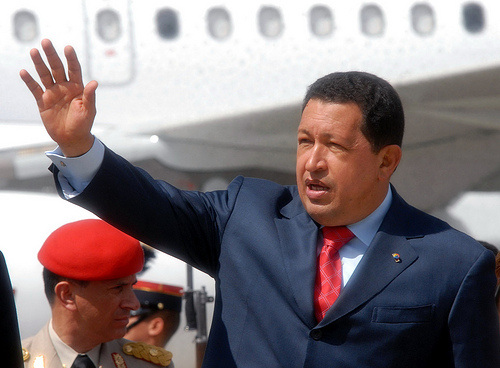
Chavez ally defends idea of postponing swearing-in

Venezuela’s National Assembly president is defending his suggestion that President Hugo Chavez’s Jan. 10 inauguration could be postponed — a statement that has fed uncertainty about the president’s recovery from cancer surgery in Cuba.

Diosdado Cabello defended his proposal on Thursday after Vice President Nicolas Maduro said that he didn’t want to speculate about such a scenario and said that the Supreme Court could settle any such question if needed.

The apparent disagreement between Cabello and Maduro has emerged as speculation grows about Chavez’s condition more than a week after an operation in Cuba during which the president suffered complications. The government said on Tuesday that Chavez had a respiratory infection but said it had been controlled.

Source: Fox World News

Chavez ally floats idea of postponing inauguration

The president of Venezuela’s National Assembly has floated the idea of postponing President Hugo Chavez’s Jan. 10 inauguration while he recovers from cancer surgery in Cuba.

Diosdado Cabello tells reporters that it’s simply his personal opinion and not an official proposal. Cabello’s remarks were published by the newspaper El Nacional on Wednesday.

The constitution says the president should be sworn in for a new term on Jan. 10. But Information Minister Ernesto Villegas last week said that if it’s not possible for him to return in time, Venezuelans should understand it.

Chavez has not spoken publicly since his Dec. 11 surgery, and on Tuesday the government said he had a respiratory infection, though it was controlled.

Source: Fox World News

Sympathy for Chavez a factor in Venezuela politics

Smarting after a bruising loss in state elections, Venezuela‘s opposition will now be forced to reassess its strategy and rebuild quickly to prepare for presidential elections that many expect could be called to replace ailing leftist President Hugo Chavez.

Chavez’s increasingly bleak outlook after his fourth cancer-related surgery in Cuba appears to have galvanized his supporters, making Vice President Nicolas Maduro a tough candidate to beat in new elections, which under the constitution would be called within 30 days if the president dies, is incapacitated or steps down.

“It is a 30-day period that is going to be infused with all of the heightened emotion around Chavez’s departure,” said Cynthia Arnson, an analyst at Woodrow Wilson International Center for Scholars in Washington. “The sympathy vote and the fervor of the Chavista base to come out and vote for the continuation of the revolution will be very high.”

Maduro would also get a boost from a socialist party that swept 20 of 23 state elections in Sunday’s gubernatorial elections. One of the three anti-Chavez candidates who held off the onslaught was Henrique Capriles, who lost to Chavez in October’s presidential vote but is now widely considered the opposition’s best hope against Maduro.

Capriles played down that possibility when asked if he would run for president again.

“It isn’t the time to be making those calculations,” Capriles told reporters Sunday night. “There will be time.”

He added that it was Chavez’s government that raised the possible scenario of new elections, and he questioned the idea of a hand-picked successor inheriting power.

“Leaders aren’t decreed. They’re built,” said Capriles, who seemed in campaign mode wearing a baseball cap and track suit emblazoned with the yellow, blue and red of the Venezuelan flag.

On a national level, Chavez’s allies won 4.7 million votes in the state elections, much less than the 8.1 million who voted for Chavez in October but still more than 970,000 votes ahead of the opposition.

The 53 percent voter turnout on Sunday was considerably lower than the more than 80 percent who cast ballots in October’s presidential vote, and the high abstention affected both camps.

The vote was the first in Chavez’s nearly 14-year-old presidency in which he has been unable to actively campaign. He hasn’t spoken publicly since Tuesday’s surgery for pelvic cancer, and he remained out of sight while recovering in Cuba, accompanied by his four children and son-in-law.

The strong showing in the vote will likely give the president’s confidants a freer hand to deepen his socialist policies, including a drive to fortify grass-roots citizen councils that are directly funded by the central government.

Arnson said she expects that Chavez’s blessing for Maduro, amid an outpouring of emotion over the president’s departure, would be a powerful ingredient for an election campaign.

The 50-year-old Maduro, a burly former bus driver, has shown unflagging loyalty and become a leading spokesman for the leftist leader as his foreign minister during the past six years. Chavez appointed Maduro as vice president after winning re-election in October.

Maduro stood in for Chavez on Monday presiding over an annual ceremony marking the death anniversary of independence hero Simon Bolivar. Troops stood at attention outside the National Pantheon while an orchestra and choir performed, led by star conductor Gustavo Dudamel. State television showed images of Bolivar’s flag-draped coffin.

Afterward, Maduro called the elections an important victory but also noted that one government candidate, in Bolivar state, nearly lost due to a vote split by a second pro-Chavez contender. He said there had been similar problems in a few states.

“What would have happened if they had lost in those states?” Maduro told reporters. “We should reflect, and in those states where there were parallel candidacies we need to have a process of reunification. … We’re going to reunify all the patriotic, revolutionary forces.”

“For the love of the nation, for the love of Chavez, we’re going to unite our forces for the battles to come,” Maduro said, without elaborating.

The government in the past two years has spent heavily on social programs and new public housing projects that have sprung up around the country, and that spending helped Chavez’s image ahead of his re-election win in October. The government in the coming months is expected to face new constraints on spending as its debt has grown and the country’s currency has rapidly slipped on the black market.

“With all its economic difficulties, the government will be hard-pressed to create new programs in the coming months. But it doesn’t really need to,” Arnson said. “Chavez’s incapacity or death will trigger a tremendous outpouring of emotion, some of which is directly rooted in the social benefits that people have already received.”

She and other analysts predict that Maduro would face challenges in trying to maintain unity within Chavez’s party, and that he would constantly need to negotiate with different factions.

The loss of ground by anti-Chavez candidates in Sunday’s vote raises tough questions for the opposition. It lost five of its governorships, including the country’s most populous state, Zulia, an important center of the oil industry that is Venezuela‘s economic lifeblood.

Chavez is due to be sworn in for another term on Jan. 10. But if his condition forces him to step down before then, the president of the National Assembly, Diosdado Cabello, would take over temporarily until elections are held.

Opposition coalition leader Ramon Guillermo Aveledo said in an interview on the Venezuelan television channel Globovision that the defeat was “a very strong blow” that points to a need for the opposition to analyze what went wrong.

The opposition continues to be stymied by “the lack of a clear programmatic alternative to Chavez,” said Miguel Tinker Salas, a Latin American studies professor at Pomona College in Claremont, California. He pointed out that Capriles tried to campaign against Chavez in the presidential vote by espousing more moderate policies akin to those of former Brazilian President Luiz Inacio Lula da Silva, including keeping social programs for the poor, and he still lost.

“In this election, except for their dislike of Chavez, most candidates did not offer an alternative,” he said.

Analyst Mariana Bacalao, a professor of public opinion at Central University of Venezuela said the results of the elections reflected apathy and “a sense of failure” among Chavez’s opponents after repeated electoral defeats.

Bacalao said the opposition “should sit down and rethink itself.”

___

Associated Press writers Vivian Sequera in Caracas and Frank Bajak in Lima, Peru, contributed to this report.

Source: Fox World News