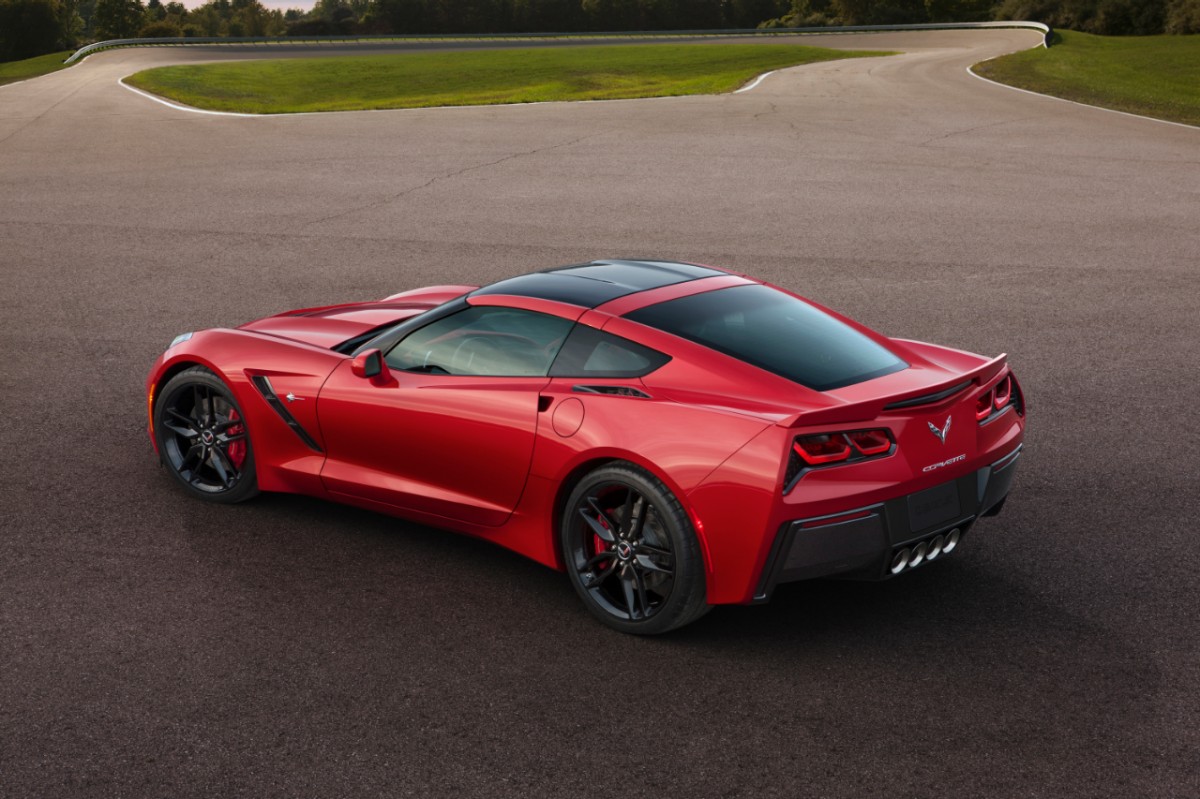
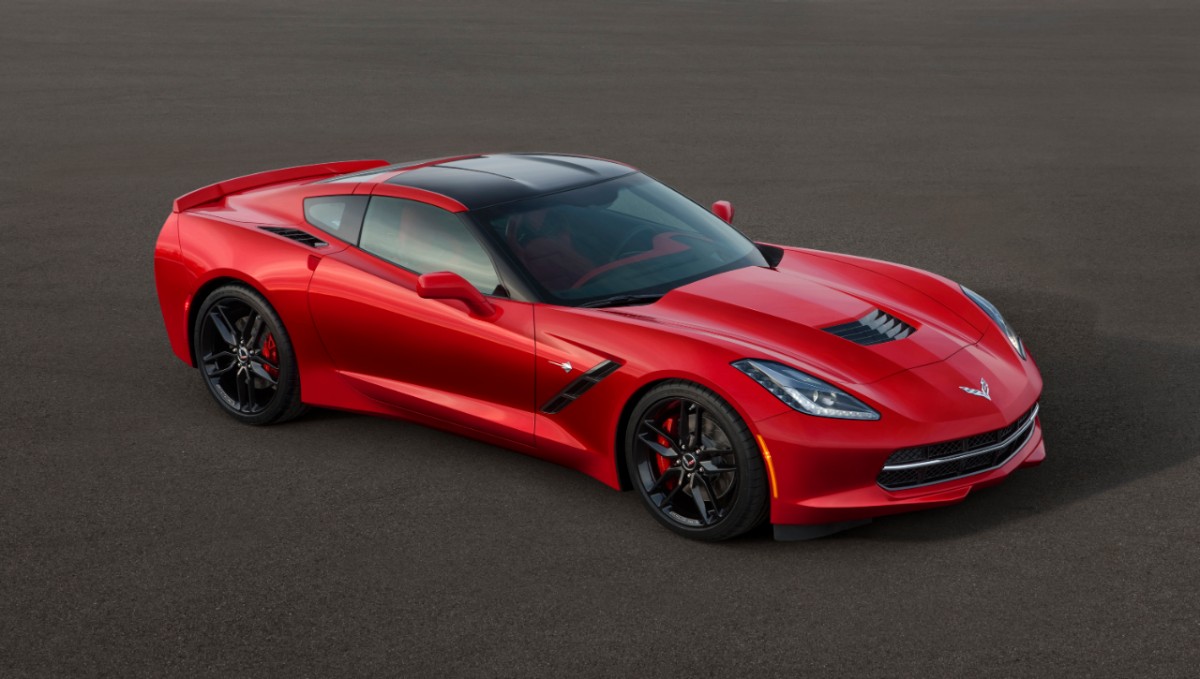
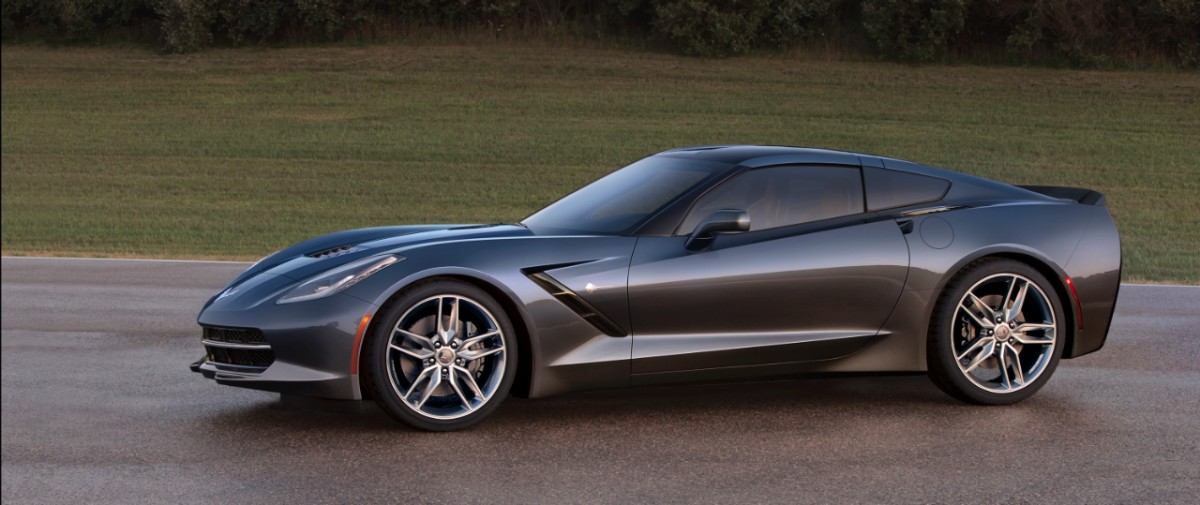
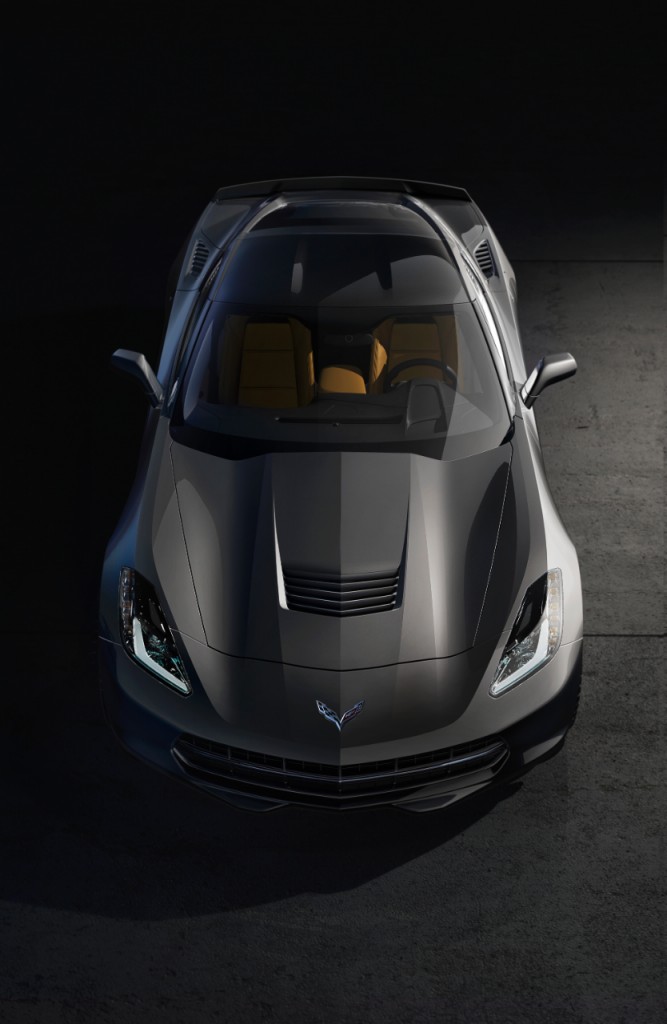
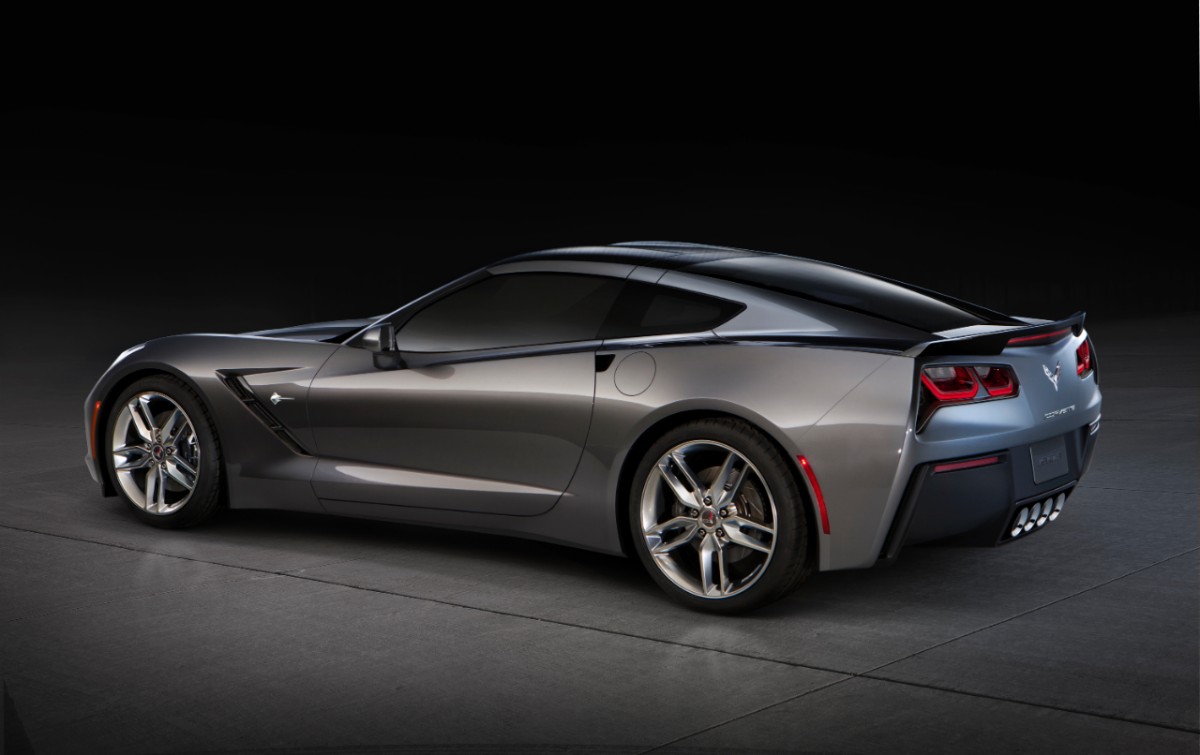
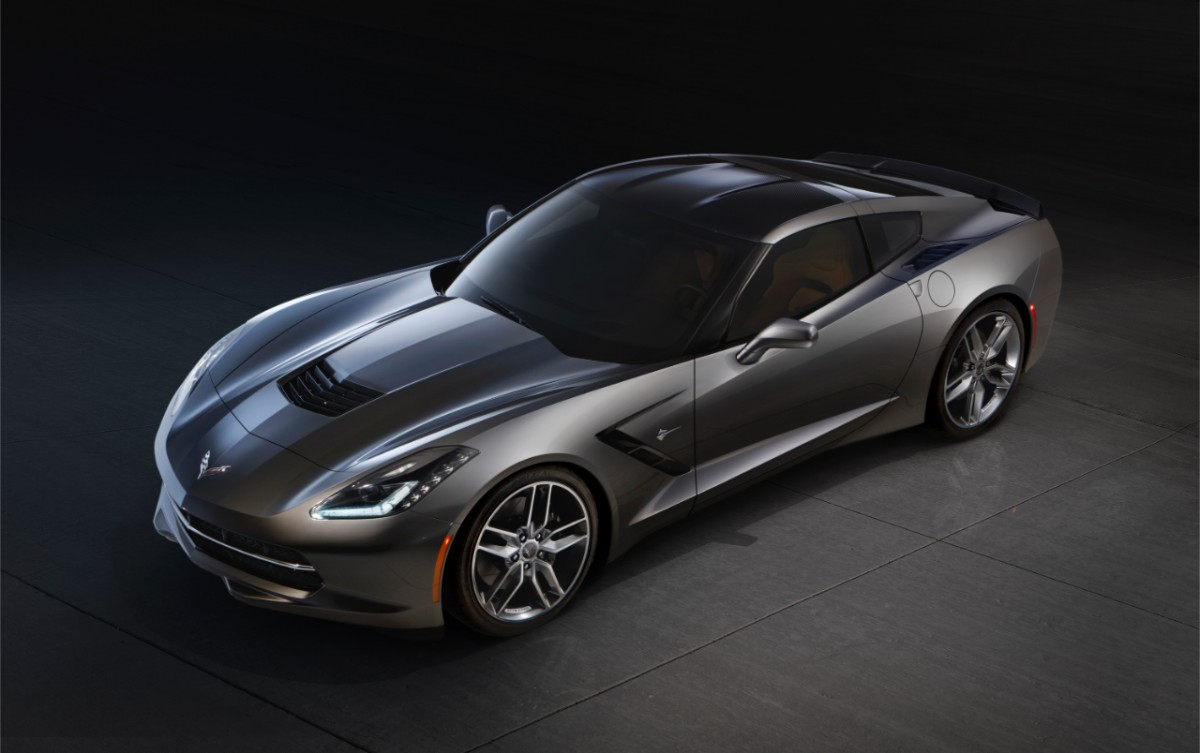
After many months (years for some) of anticipating the all-new 2014 Corvette C7, the time has come to see what the best of American engineering and pride of the world’s best nation has to serve up . Chevrolet has taken the wraps of one of the most highly anticipated sports cars in years at the 2013 Detroit Auto Show today. What you see here is reminiscent of the many spy shots, renderings and leaked photos over the course of many months last year. Now, we have the real deal to see in the flesh – the all-new 2014 Chevrolet Corvette Stingray.
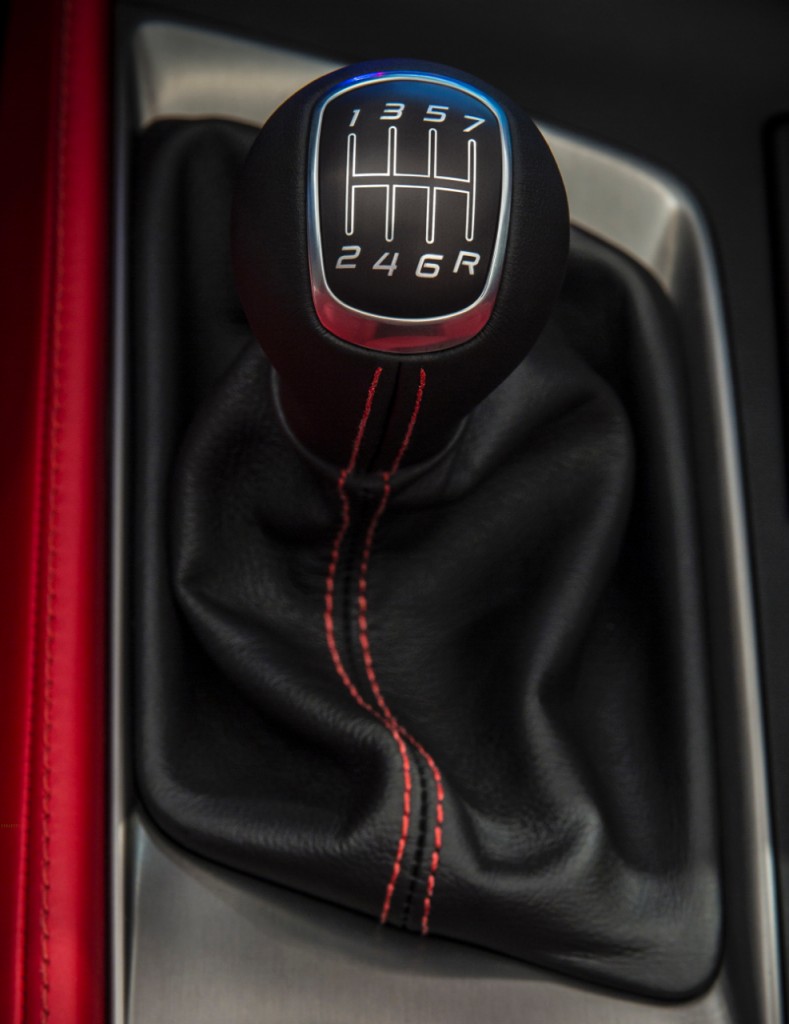
The new 2014 Chevrolet Corvette is all-new from the ground up featuring the new 6.2-liter 450 horsepower and 450 ft-lbs. of torque direct-injection V8 engine, 57% stiffer body construction, 99 pounds lighter, state-of-the-art aluminum frame, new 7-speed manual transmission, and a carbon fiber roof and hood starting with the entry level Vette. 0-60 mph times are claimed to be under 4 seconds with an expectation of higher performance in upper trim level Vettes.
It is almost like no stone was left unturned in the development and design of the all-new 2014 Corvette. Virtually all design aspects are functional from providing additional downforce or added cooling. The stance is now wider, longer and wider. The Vette has an international flare with the true character of a Corvette not to be confused with any other sports car.
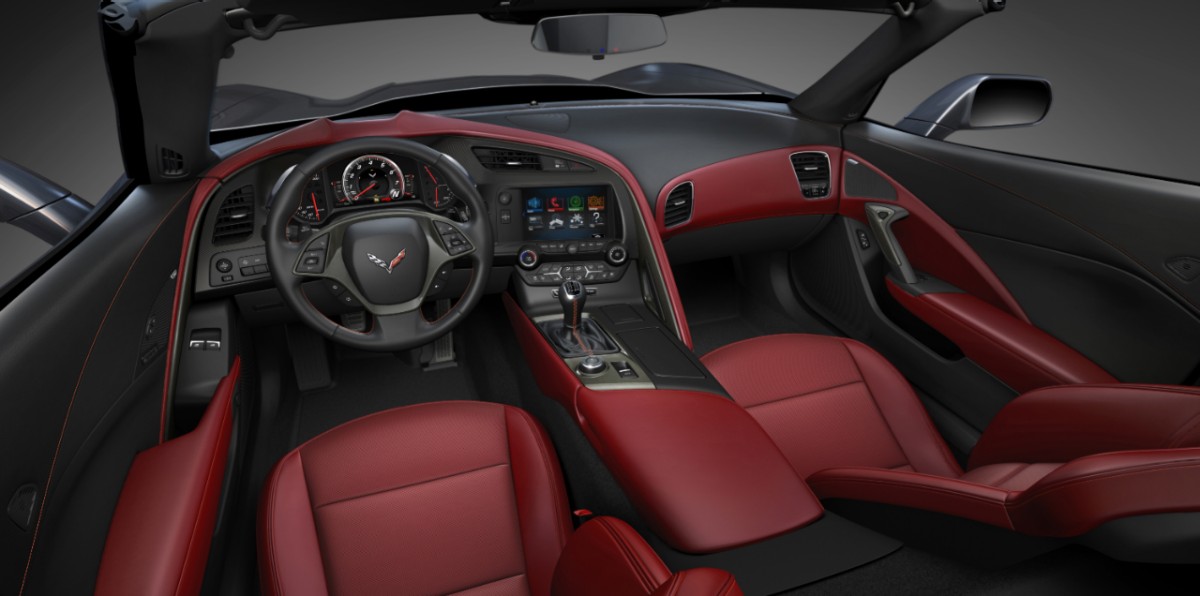
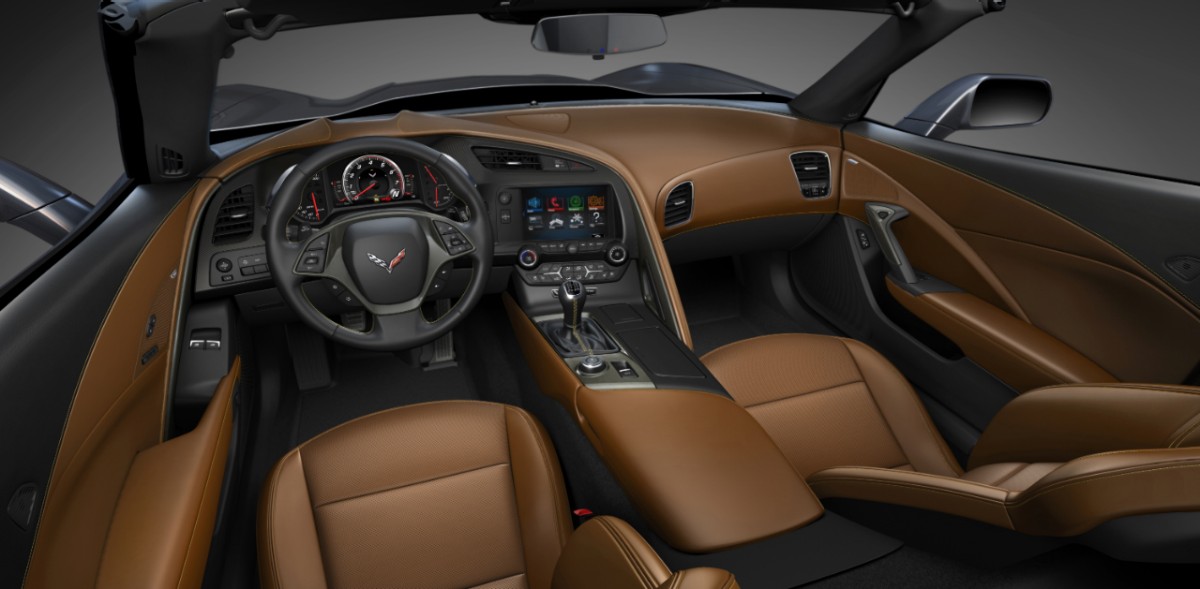
All materials of the interior are new featuring real carbon fiber bits, trim and a driver focused environment with a strong emphasis put in place from a race car driver’s perspective. There is no doubt that this is the best Vette yet.
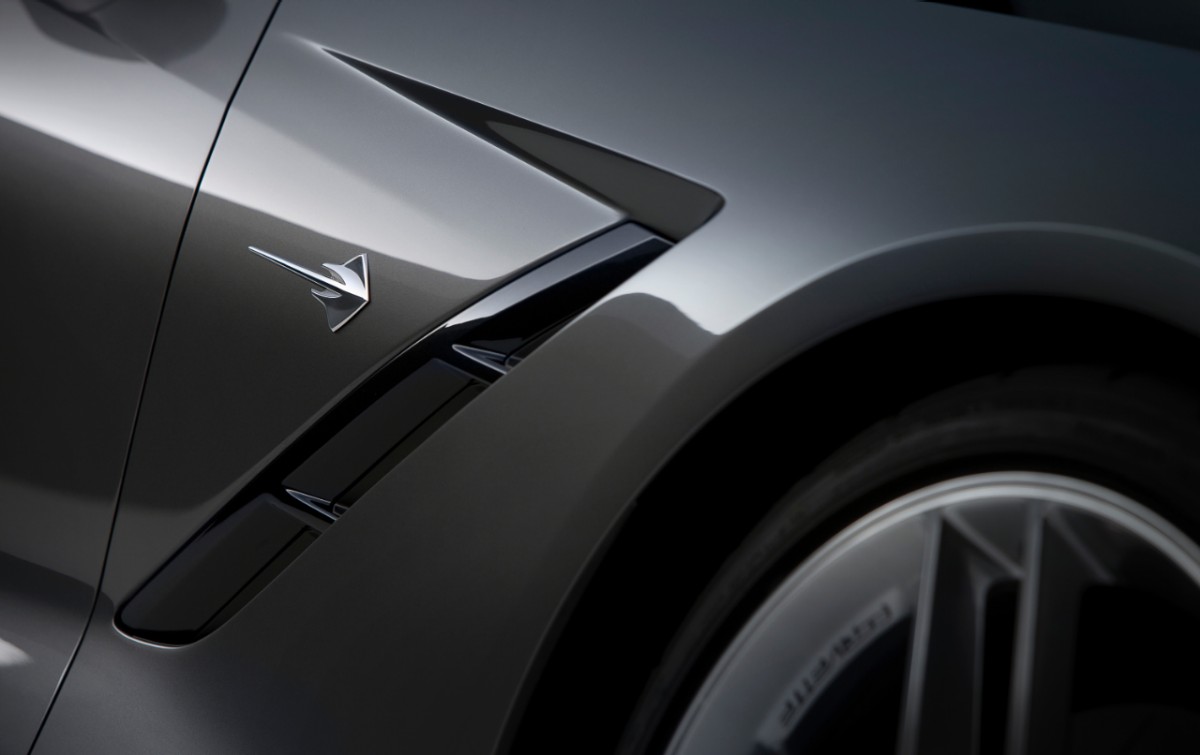
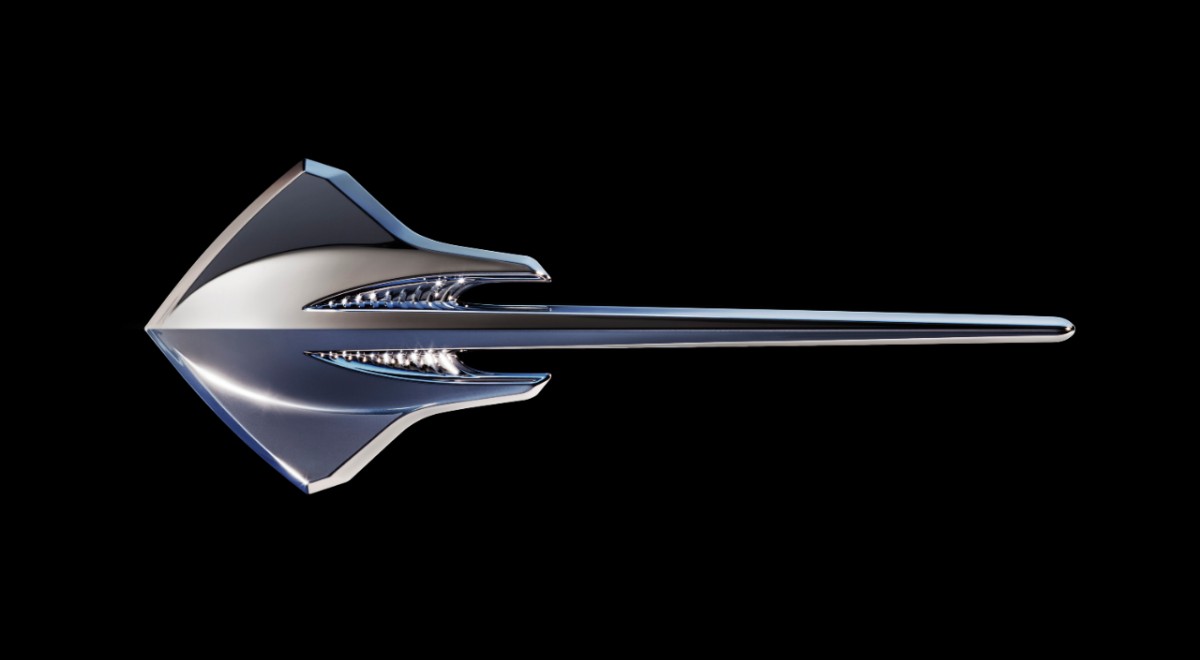
Bringing back the heritage of the Stingray name plays homage not only to the historical nameplate for the Vette, but is new design character with many aspects incorporating that recognizable look.
We welcome you to check out the new photos and official press release below of the all-new 2014 Chevrolet Corvette Stingray.
Return of the Stingray: The 2014 Chevrolet Corvette
DETROIT – Chevrolet is redefining modern performance with today’s debut of the all-new Corvette Stingray. And only a Corvette with the perfect balance of technology, design and performance can wear the iconic Stingray designation.
The 2014 Corvette Stingray is the most powerful standard model ever, with an estimated 450 horsepower (335 kW) and 450 lb.-ft. of torque (610 Nm). It is also the most capable standard model ever, able to accelerate from 0-60 in less than four seconds and achieve more than 1g in cornering grip. It is expected to be the most fuel-efficient Corvette, exceeding the EPA-estimated 26 mpg of the current model.
“Like the ’63 Sting Ray, the best Corvettes embodied performance leadership, delivering cutting-edge technologies, breathtaking design and awe-inspiring driving experiences,” said GM North America President Mark Reuss. “The all-new Corvette goes farther than ever, thanks to today’s advancements in design, technology and engineering.”
The all-new Corvette Stingray shares only two parts with the previous generation Corvette. It incorporates an all-new frame structure and chassis, a new powertrain and supporting technologies, as well as completely new exterior and interior designs. Highlights include:
• An interior that includes real carbon fiber, aluminum and hand-wrapped leather materials, two new seat choices – each featuring a lightweight magnesium frame for exceptional support – and dual eight-inch configurable driver/infotainment screens
• Advanced driver technologies, including a five-position Drive Mode Selector that tailors 12 vehicle attributes to the fit the driver’s environment and a new seven-speed manual transmission with Active Rev Matching that anticipates gear selections and matches engine speed for perfect shifts every time
• An all-new 6.2L LT1 V-8 engine combines advanced technologies, including direct injection, Active Fuel Management, continuously variable valve timing and an advanced combustion system that delivers more power while using less fuel
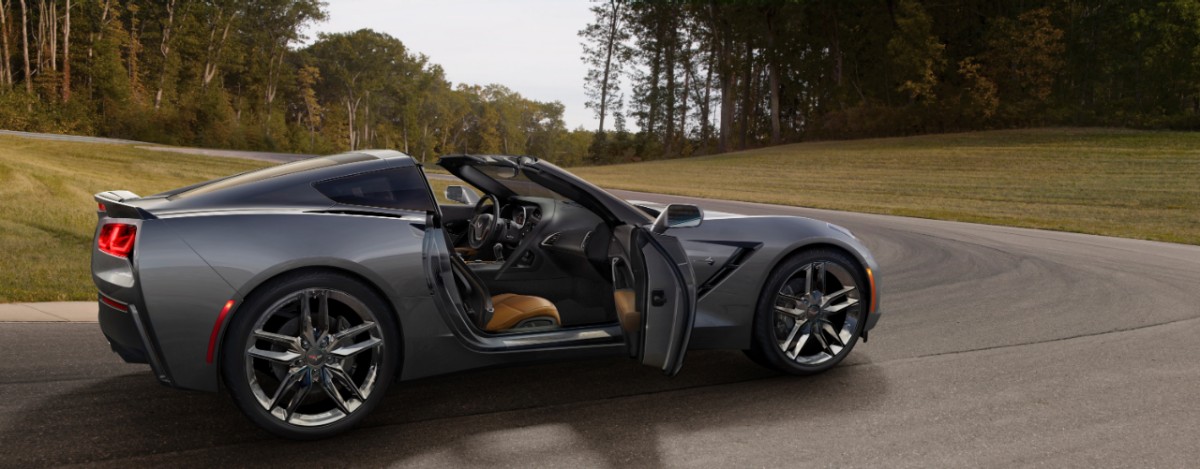
• Lightweight materials, including a carbon fiber hood and removable roof panel; composite fenders, doors and rear quarter panels; carbon-nano composite underbody panels and a new aluminum frame help shift weight rearward for an optimal 50/50 weight balance that supports a world-class power-to-weight ratio
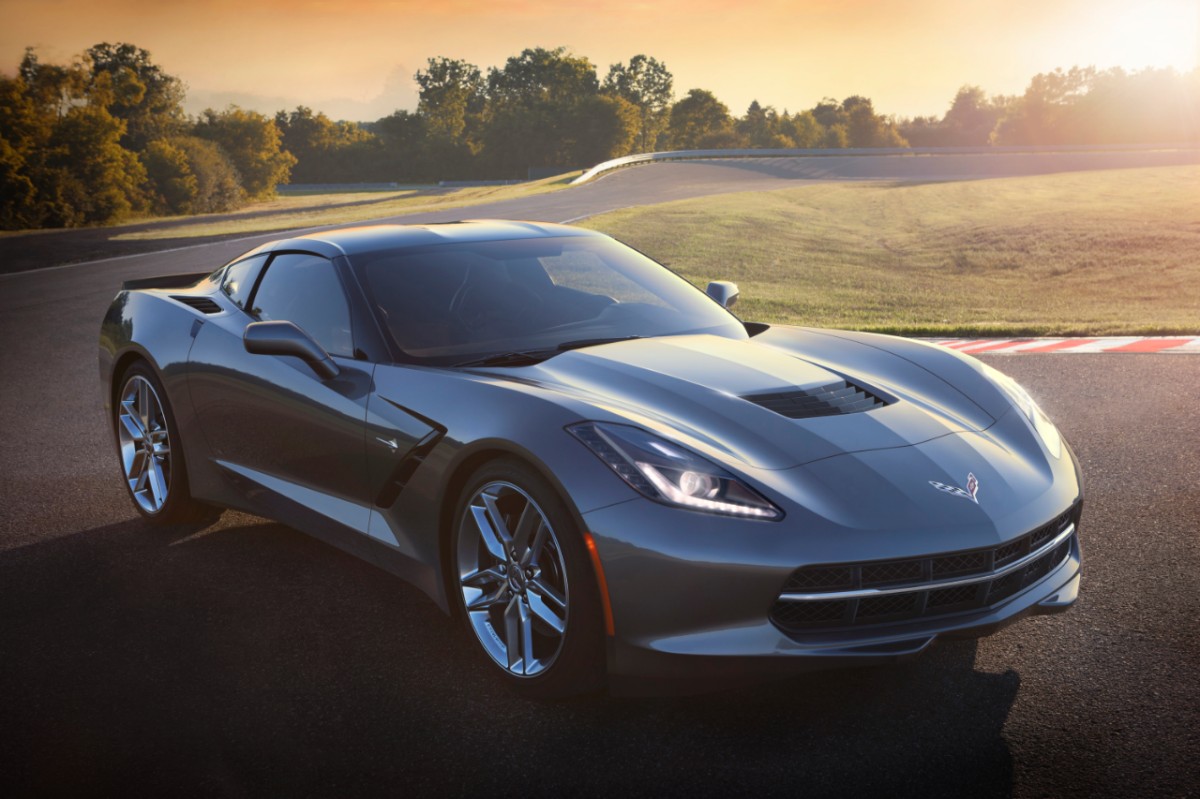
• A sculptured exterior features advanced high-intensity discharge and light-emitting diode lighting and racing-proven aerodynamics that balance low drag for efficiency and performance elements for improved stability and track capability
• Track-capable Z51 Performance Package including: an electronic limited-slip differential, dry-sump oiling system, integral brake, differential and transmission cooling, as well as a unique aero package that further improves high-speed stability.
“Stingray is one of the hallowed names in automotive history,” said Ed Welburn, GM vice president of global design. “We knew we couldn’t use the Stingray name unless the new car truly lived up to the legacy. The result is a new Corvette Stingray that breaks from tradition, while remaining instantly recognizable as a Corvette the world over.”
The new Corvette Stingray will be built at GM’s Bowling Green, Ky., assembly plant, which underwent a $131-million upgrade, including approximately $52 million for a new body shop to manufacture the aluminum frame in-house for the first time.
“We believe the Corvette represents the future of modern performance cars because it delivers more power, more driving excitement and better fuel efficiency,” said Tadge Juechter, Corvette chief engineer. “The result is better performance by every measure. The 2014 Corvette delivers the fastest acceleration, the most cornering grip, the most track capability, the best braking performance and what we expect to be the best fuel economy ever for a standard Corvette.”
The 2014 Corvette Stingray coupe goes on sale in the third quarter of 2013.
Handcrafted, high-tech interior
• Premium materials including genuine aluminum and available carbon fiber trim
• More connected driving experience through the smaller-diameter steering wheel and two new seat choices
• Advanced technologies including standard dual, high-resolution information screens and available color head-up display.
The new Corvette Stingray interior blends fine materials and craftsmanship with advanced technologies that contribute to a more connected and more engaging driving experience, said Helen Emsley, interior design director.
“Every feature and detail in the interior is designed to enhance the driver’s connection to the Corvette,” Emsley said. “It starts with the fighter jet inspired wraparound cockpit; continues to build with the smaller steering wheel, more supportive seats, and high-definition, configurable screens, and is finished in gorgeous materials.”
The smaller, 14.1-inch-diameter (360 mm) steering wheel fosters a more direct, immediate feel to directional inputs. The attention to the driver extends to the smallest details, including the flat, precise stitching on the steering wheel designed to provide a smooth, consistent feel.
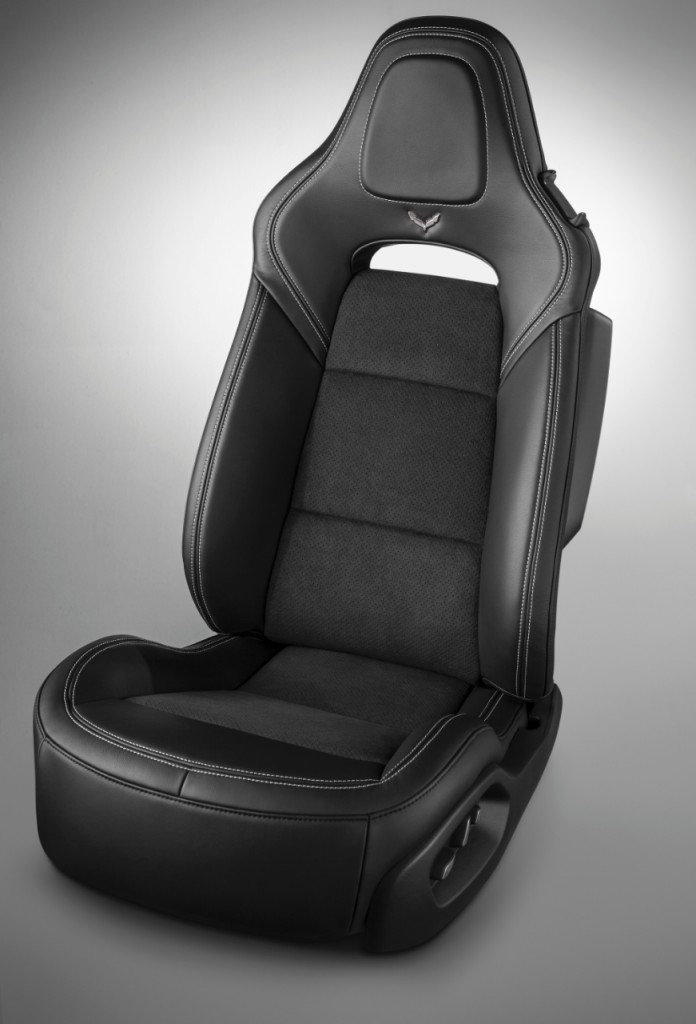
Precise and elegant stitching also is seen in the available Napa leather trim of the all-new seats.
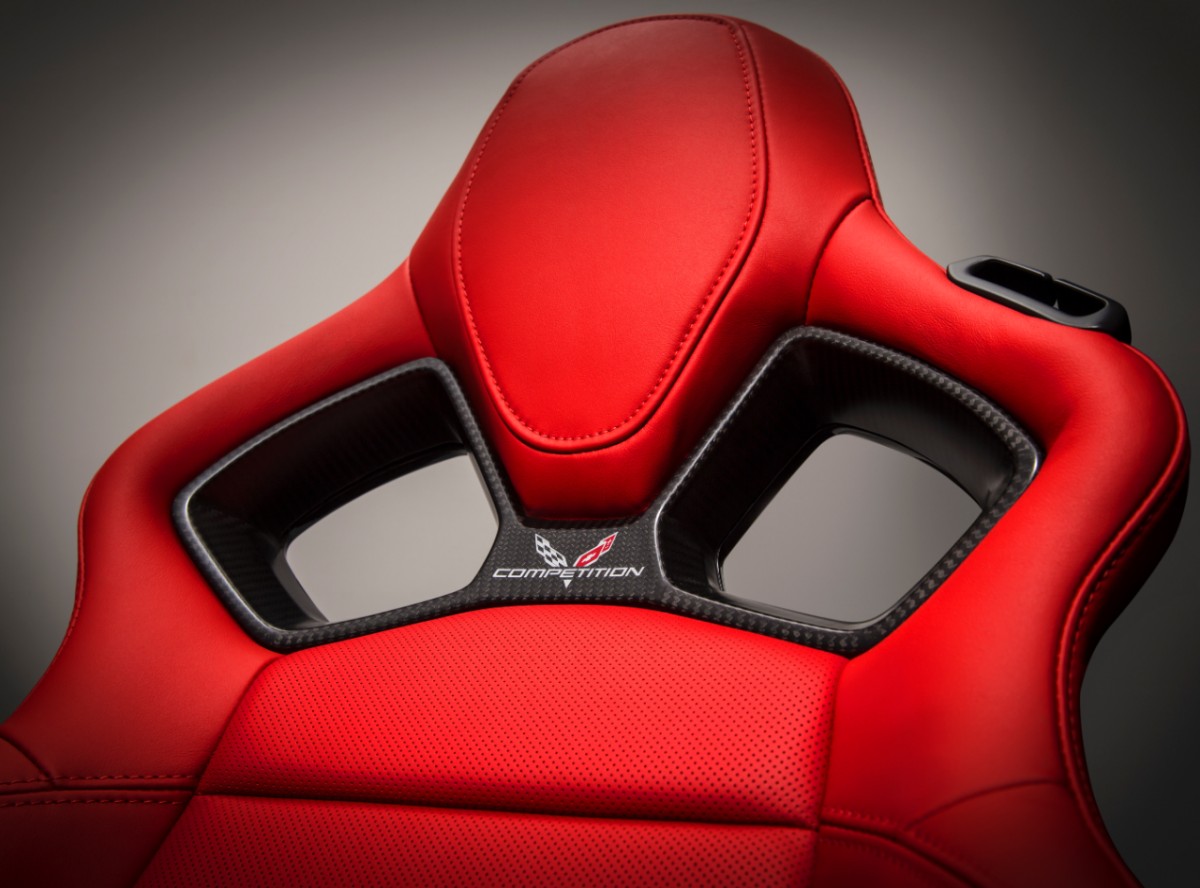
Two seating choices will be offered: a GT seat for all-around comfort and a Competition Sport seat with more aggressive side bolstering which provides greater support on the track.
The frame structure for both seats is made of magnesium for greater strength and less weight than comparable steel frames. They’re also more rigid, contributing to the enhanced feeling of support during performance driving.
Additional performance-enhancing details of the interior resulted from designers’ “field trips” to GM’s Proving Ground in Milford, Mich., where high-performance driving experiences spurred the design and implementation of several features, including a steel-reinforced grab bar on the center console for the passenger and soft-touch materials on the edge of the console, where the driver naturally braces during high-load cornering.
High-performance driving also influenced elements of the configurable display screens and available head-up display, which vary depending on the driving mode, including the Track display inspired by the C6.R.
The performance-supporting elements inside the new Corvette Stingray are complemented by unprecedented attention to detail and build quality, including the sweeping arch motif over the driver cockpit trim and the seamless transition of the line from the instrument panel to the door.
All models feature a fully-wrapped interior, where every surface is covered with premium, soft-touch materials. Available materials, depending on the trim level, include Napa leather, aluminum, carbon fiber and micro-suede.
A blend of hand craftsmanship and machined precision is intended to ensure the fit, finish and ambience of the cabin is first-rate. The leather-wrapped instrument panel, for example, features hand-selected and hand-stretched materials for better grain matching with stitching performed by robots that deliver perfect seams.
There’s even a micro-LED screen for the passenger’s climate control placed below the vent on the on the dash away from the performance features on the instrument panel.
“To ensure the high quality of the interior, we spent time working on the line alongside the team that builds the Corvette every day at Bowling Green Assembly Plant,” said Ryan Vaughan, interior design manager. “And thanks to that collaboration between design, engineering and manufacturing, we were able to make adjustments that allowed us to maintain the integrity of the design, improve the assembly process and ultimately deliver what we believe to be a world-class interior.”
Driver-oriented technologies
• Driver Mode Selector optimizes 12 vehicle attributes
• Configurable screens and head-up display can be tailored to the driver’s preference
• Central touch screen uses gesture-recognition technology.
At the core of the Corvette Stingray’s driver-focused technologies is the cockpit-mounted Driver Mode Selector, which allows drivers to optimize the car for their driving preference and road conditions via five settings: Weather, Eco, Tour, Sport and Track.
“The all-new Corvette Stingray is really three cars in one: It provides the comfort and functionality of a long-distance GT car, the connectedness and infotainment of a daily driver and the acceleration, grip and braking of a capable track car,” said Harlan Charles, product manager.
“With the Driver Mode Selector, we wanted to give the driver an easy way to tailor virtually every aspect of the car to fit their driving environment. The result is a more rewarding, more confident experience, whether you’re commuting in a downpour or charging through the corkscrew at Laguna Seca.”
The Driver Mode Selector is easy to use via a rotary knob near the shifter. The Tour mode is the default setting for everyday driving; Weather mode is designed primarily for added confidence while driving in rain and snow; Eco mode is for achieving optimal fuel economy; Sport mode is for spirited road driving and Track mode is for track use.
“Early in the development process, we spent time on the track, driving Corvettes hard. That experience shaped many parts of the interior, such as the instrument display in Track Mode,” said Vaughn. “At 120 mph, you experience a sort of tunnel vision, as you concentrate on the next turn. At that moment, you don’t need to know the next song playing on the radio.”
Twelve performance parameters are adjusted with the selection of each mode, including:
• Gauge cluster configuration: The Tour, Eco and Weather modes feature displays for trip data, audio and navigation; Sport mode shows classic, easy-to-read sports car gauges; and Track mode’s configuration shows a gauge design based on the Corvette Racing C6.R race car display with lap timer
• ETC (Electronic Throttle Control): Adjusts the throttle input curve for the selected mode for improved responsiveness
• Paddle-shift automatic transmission: Adjusts shift comfort and shift points
• Active Fuel Management: in normal mode, the LT1 engine uses V-8 power during acceleration and V-4 power when coasting; in Eco mode the engine remains in V-4 mode to improve fuel economy until aggressive acceleration is needed
• Exhaust (active exhaust system): The system adjusts the timing of the electronically controlled exhaust valves to enhance audible feedback from the V-8 depending on the drive mode
• Electronic limited-slip differential (Z51): Adjusts the rate at which the limited slip engages, to balance between steering response and stability in different driving conditions; more aggressive performance in Sport and Track modes
• Steering: Assist effort is adjusted in the modes to provide the driver with the correct steering feel for the driving condition
• Magnetic Ride Control: Adjusts shock damping based on road conditions, from optimized comfort to performance driving
• Launch control: Available in Sport and Track modes for manual and automatic transmissions, providing maximum off-the-line acceleration
• Active handling (StabiliTrak stability control): A “competitive” setting is available in Sport and Track modes and is more suited for on-track conditions. It can also be disabled, giving the driver complete control
• Traction control: Weather mode tailors traction control and engine torque for driving in inclement conditions
• Performance Traction Management: Available in the Sport and Track modes and offers five settings of torque reduction and brake intervention for track driving.
Three configurable displays, including a pair of eight-inch screens and color head-up display, deliver personalized information and convey the different performance parameters of each drive mode.
The two eight-inch screens offer excellent visibility in direct sunlight, with 650 cd/m2 of brightness for the one integrated into the instrument cluster and 1,000 cd/m2 of brightness for the one in the center stack, making it among the brightest screens in the industry. The screen in the center stack also features touch-screen control with gesture recognition and can be lowered to reveal a hidden storage that includes a USB input for device charging or uploads.
The Corvette Stingray delivers an advanced infotainment system, featuring Chevrolet MyLink and high-definition radio, as well as enhanced OnStar with 3D navigation maps. An additional USB port in the center console, a stand-alone audio input jack and an SD card slot provide seamless connectivity.
An available premium 10-speaker audio system includes a bass box and two subwoofers – and speakers with rare-earth magnets that deliver greater sound quality with reduced weight and size.
Every line counts on Corvette Stingray’s functionally elegant exterior
• Aerodynamic design integrates strategies from Corvette racing
• Signature lighting includes distinctive frosted light-emitting diode daytime driving lights, high-intensity discharge headlamps and indirect-LED taillamps
• Carbon fiber hood and removable roof panel enhance front/rear weight balance
Corvette Stingray’s provocative exterior styling is as functional as it is elegant, said Ken Parkinson, executive director of global design.
“Developing a new Corvette, while every designer’s dream, is not an easy task,” Parkinson said. “The goal was a bold design statement that embraced the advanced technology of the car, while enhancing its overall performance in everything from the wind tunnel to the track. The result is a new Corvette Stingray – a fantastic car that breaks new ground yet remains true to the fundamental elements that make a Corvette a Corvette.”
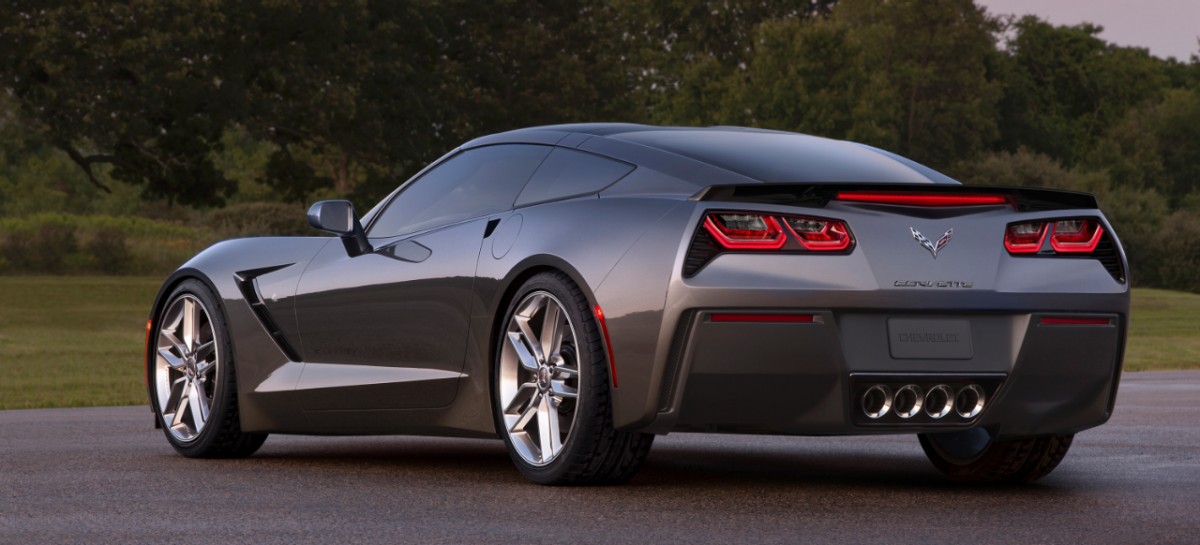
While no single detail is repeated from previous generations, the new Corvette Stingray include the distinctive profile defined by a long dash-to-axle ratio and the greenhouse evoking the canopy of a fighter jet with dual-element taillamps. To this foundation, designers built a form vocabulary from two very different sources: aerospace and nature.
“For the new Corvette to be called a Stingray, it had to deliver an incredible, purposeful visual impact – just as the original did in 1963,” said Tom Peters, exterior design director. “That visual impact is evident in fighter jets and the Stingray animal itself. Their beauty comes from their purpose, designed to cut through air or water as quickly and efficiently as possible. As with aircraft and living forms, every transition on every surface of the Corvette Stingray serves a purpose executed with beauty and proportion.”
Lighting is a signature element of the Corvette Stingray’s design and reinforces its high-tech aesthetic. At the front, indirect white LED lamps form a distinctive daytime styling cue. They are set in a black-chrome lamp housing with standard HID projector headlamps. The turn signals feature edge-lit amber LED lighting.
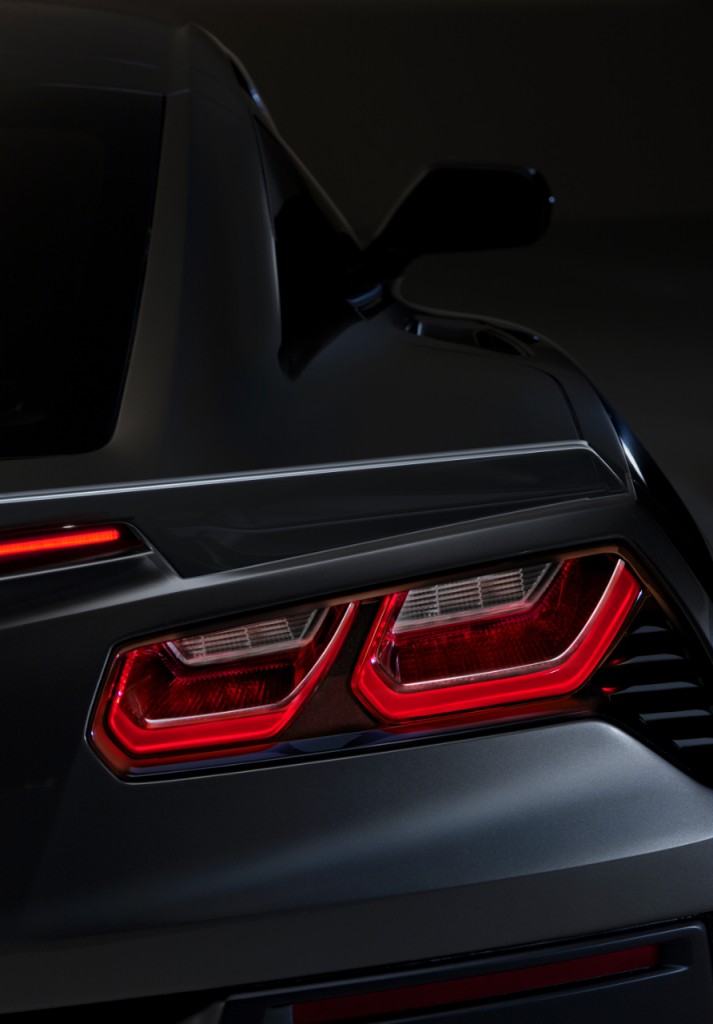
All-new, dual-element taillamps represent the greatest departure from tradition and are among the car’s most dramatic elements. The three-dimensional, sculpted lenses house innovative indirect LED lighting. The state-of-the-art lighting uses hidden LED lamps that cast their light up from the bottom of the housing into a reverse reflector, creating an even glow. LED lamps are also used for the white backup lamps. The taillamps integrate functional aircraft-style air outlets for the available differential and transmission coolers.
“From the front or rear, the signature lighting brings the new Corvette to life,” said Peters. “It looks beautiful, sinister and more than a little intimidating. It gives the Corvette a nighttime appearance unlike anything else on the street.”
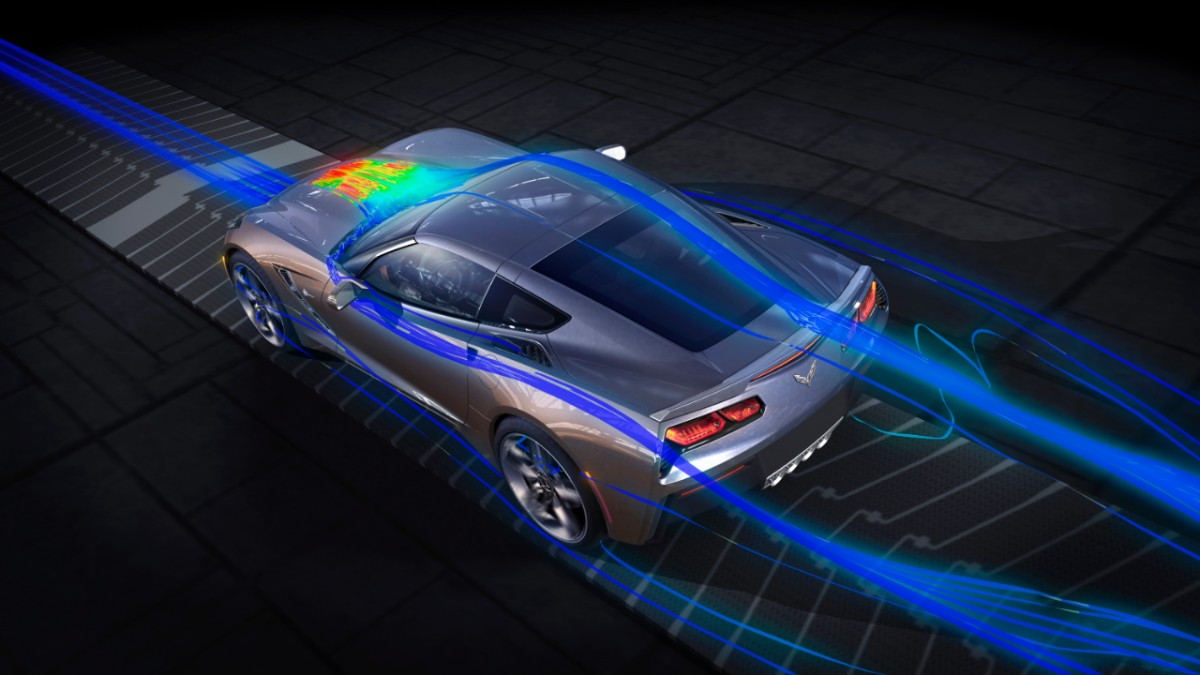
When it comes to aerodynamics, the new Stingray is in a league of its own. Advanced computer-aided modeling programs were employed to predict and track airflow over, under and through the new Corvette’s body. Engineers and designers also relied on data gleaned from the Corvette Racing program – the most successful program ever in the American Le Mans Series and the 2012 GT class champion – to help balance front and rear grip for high-speed stability.
Many hours were spent in the wind tunnel hand-sculpting surfaces for aesthetics and performance. Functional exterior elements include:
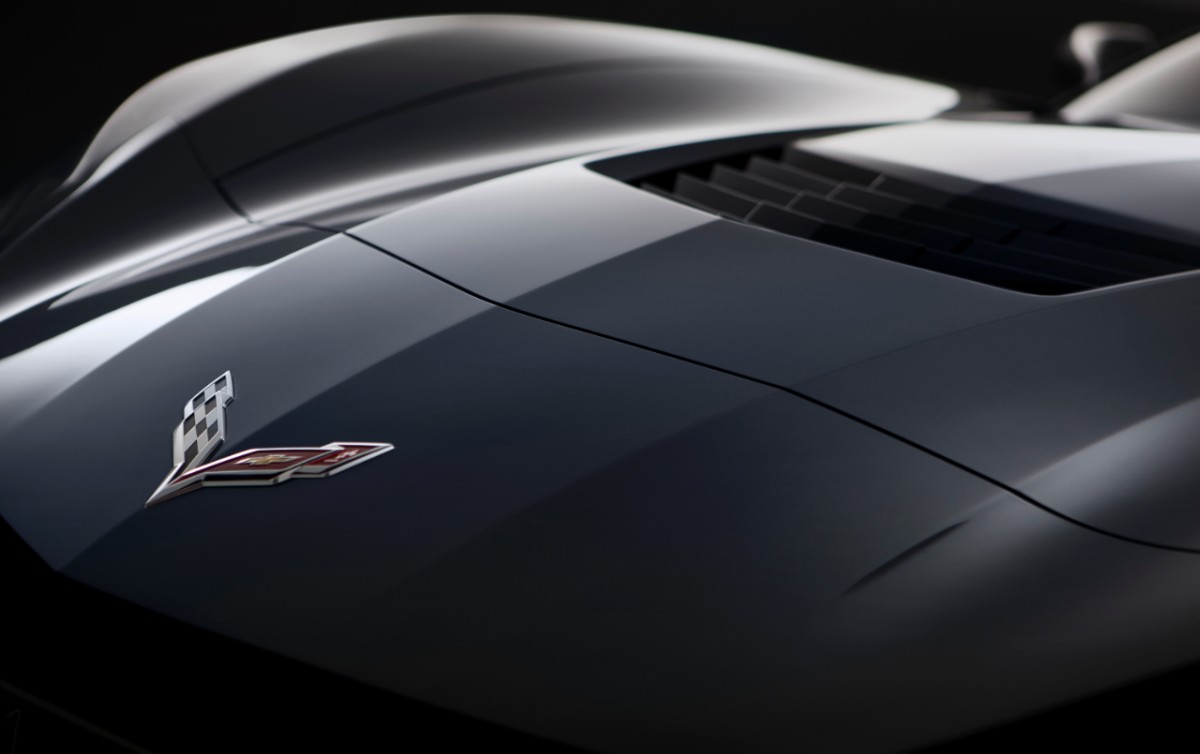
• All models have a new grille/radiator arrangement and hood vents. Venting air out of the hood reduces total front-end lift for improved steering response at high speeds
• The front fender side coves also help vent underhood air pressure to reduce aerodynamic drag
• Models with the automatic transmission or Z51 Performance Package feature a functional vent on driver’s left side directing air over a heat exchanger for the transmission fluid and a similar arrangement on the passenger side that directs air
• over a heat exchanger for the electronic limited slip differential
• Airflow through the differential and transmission heat exchangers exit through the aircraft-inspired taillamp vents and lower-rear fascia air outlets
• The Z51 Performance Package also includes brake-cooling ducts, a unique rear spoiler and additional air deflectors for enhanced track capability.
“Every square inch of the 2014 Corvette’s exterior is designed to enhance high-performance driving,” said Kirk Bennion, exterior design manager. “The team delivered a great balance of low drag for efficiency and performance elements for improved stability and track capability – all in a sculpted design that excites in all the ways that a Corvette has for six decades.”
Engineered to race, built for the road
• New aluminum frame structure is 57-percent stiffer and 99 pounds (45 kg) lighter than the current steel frame
• Innovative use of composite materials, including carbon fiber the hood and roof panels, lightweight Sheet Molded Compound for the fenders, doors and rear quarter panels, and carbon-nano composite for the underbody panels help reduce the weight of the body by a 37 pounds (17 kg)
• New LT1 V-8 uses advanced technologies to produce more power with less fuel and is paired with an industry-exclusive seven-speed manual transmission with Active Rev Matching for more precise up and down shifts.
The new Corvette Stingray takes advantage of lightweight materials, advanced manufacturing techniques and technology transfer from the Corvette Racing program to produce an ideal 50/50 weight balance and to deliver a world-class power-to-weight ratio.
“Chevrolet has a long history of using racing to improve production cars, and nowhere is that more evident than with Corvette,” said Jeuchter. “We continually apply technologies and strategies developed for Corvette Racing directly to the production car. That influence can be seen in virtually every aspect of the new Corvette Stingray, from the aerodynamic design to the use of carbon fiber, to the cooling techniques and even in the brake system
The technologically advanced foundation is an all-new aluminum frame structure that is 57 percent stiffer and 99 pounds (45 kg) lighter. The greater torsional rigidity reduces unwanted noise and improves ride and handling.
Compared to the previous generation, which used continuous hydroformed main frame rails with a constant 2mm wall thickness, the new Corvette’s frame features main rails composed of five customized aluminum segments, including aluminum extrusions at each end, a center main rail section and hollow-cast nodes at the suspension interface points. Each segment is tuned – varying in thickness from 2mm to 11mm – tailoring the gauge, shape and strength properties to optimize the requirements for each frame section with minimal weight.
The frame is assembled at an all-new welding shop at the Bowling Green Assembly Plant using a unique laser welding process in which a computer-controlled beam of high energy joins the components with exceptional precision and tolerances of about 0.001-inch.
Supporting the frame’s greater strength and lower weight are complementing chassis elements, including hollow-cast aluminum front and rear cradles that are approximately 25-percent lighter and 20-percent stiffer than the solid cradles used on the previous structure.
The innovative use of materials includes a standard carbon fiber hood and roof panel, as well as underbody panels created with carbon-nano composite technology, an advanced blend of traditional composite material and carbon fiber, which allows lighter underbody panels without a loss of strength or stiffness. Fenders, doors, rear quarter panels and the rear hatch panel are made with lighter-density Sheet Molded Compound than the previous generation. Combined, these materials save approximately 37 pounds (17 kg) versus the previous body structure.
The lightweight elements of the Stingray contribute to the ideal 50/50 weight balance. Combined with its estimated 450 horsepower (335 kW), the new Corvette delivers a better power-to-weight ratio than the Porsche 911 Carrera or Audi R8.
Those 450 horses are generated by an all-new LT1 6.2L Small Block V-8 engine, which produces an estimated 450 lb.-ft. of torque (610 Nm). More importantly, it generates 50 lb.-ft. more low-end torque than the previous 6.2L engine, matching the 7.0L LS7 engine from the 2013 Corvette Z06 from 1,000 to 4,000 rpm.
The engine’s performance comes from combining advanced technologies like direct injection, Active Fuel Management and continuously variable valve timing with an advanced combustion system. More than 10 million hours of computational analysis went into the new Small Block’s design, including more than 6 million hours alone on the combustion system.
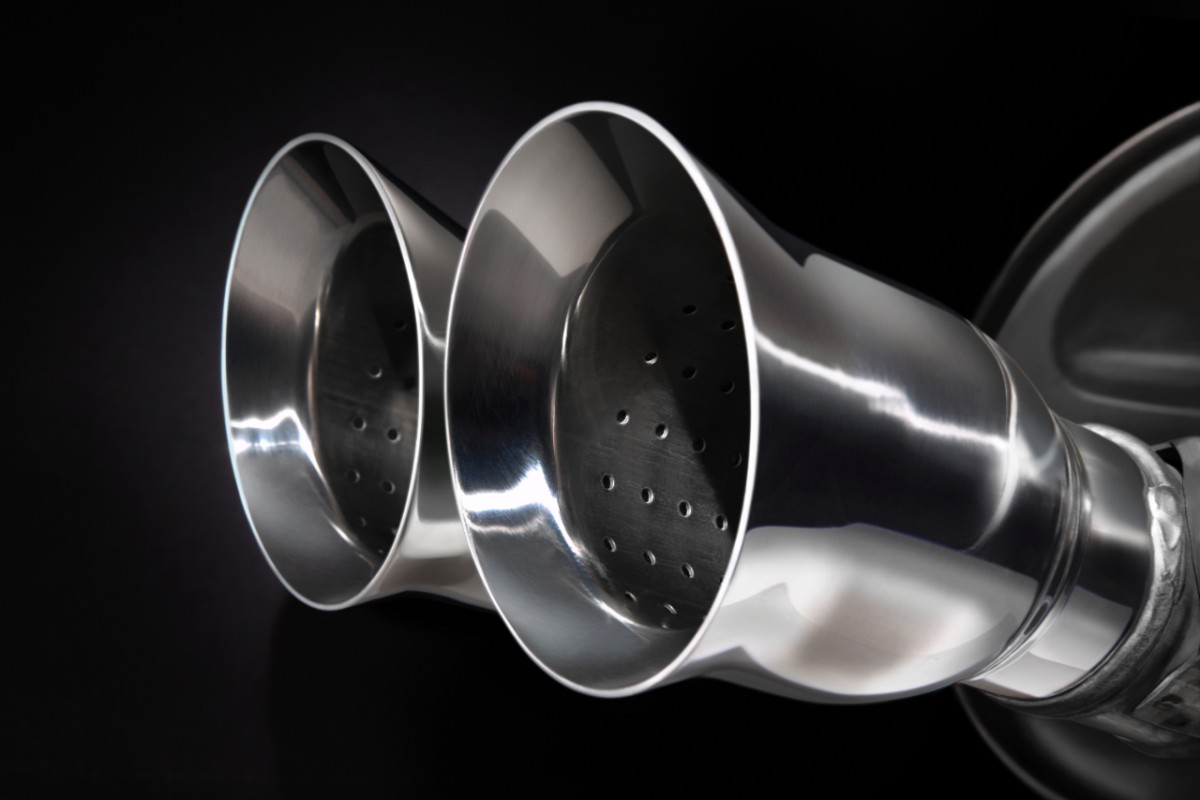
The LT1 is backed by a choice of active exhaust systems that are less restrictive than the previous generation, due in part to an increase in diameter from 2.5 inches to 2.75 inches. The standard system offers a 13-percent improvement in airflow and features a pair of butterfly valves that contribute to greater refinement at cruising speeds when the engine is operating in fuel-saving V-4 mode.
An available dual-mode active exhaust system offers a 27-percent improvement in airflow. It features two additional valves that open to a lower-restriction path through the mufflers. When open, these valves increase engine performance and produce a more powerful exhaust note.
The LT1 is mated to either a six-speed paddle-shift automatic transmission or an industry-exclusive TREMEC TR6070 seven-speed manual with Active Rev Matching. The Corvette retains its distinctive rear transaxle layout for optimal weight balance.
The seven-speed manual incorporates rev-matching technology for upshifts and downshifts. This driver-selectable feature can be easily engaged or disengaged via paddles on the steering wheel. The seven-speed is used with a new dual-mass flywheel and dual-disc clutch, which deliver greater shift quality and feel through lower inertia. The transmission with the Z51 Performance Package includes specific close-ratio gearing for more aggressive driving.
“Active Rev Matching makes the new Corvette easier and more fun to drive in performance conditions,” said Jeuchter. “It anticipates the next gear selection and electronically ‘blips’ the throttle to match engine speed for a seamless gear change.”
A six-speed Hydra-Matic 6L80 paddle-shift automatic is also available. It is optimized for use with Active Fuel Management and features a lower-inertia torque converter for improved shift quality and shift speeds. In addition, shift feel and shift points can be adjusted through the Driver Mode Selector.
More direct, more connected driving feel
• Third-generation Magnetic Ride Control for greater comfort and control
• Electric power steering system tailors steering response and feel
• Electronic limited-slip differential delivers optimal traction
The new Corvette Stingray’s chassis and suspension are designed to take advantage of the lighter, stiffer structure. The reduced structural flex allowed engineers to more precisely tune the suspension and steering for a more nimble and responsive driving experience.
“An important goal for the seventh-generation Corvette was to create a more intimate and connected driving experience, said Mike Bailey, chassis vehicle system engineer. “Whether on the open road or on the track, we wanted drivers to feel comfortable and confident behind the wheel.”
While the Corvette Stingray retains the racing-proven short/long-arm suspension design, front and rear, the components are all-new. Improvements to the suspension include hollow lower control arms which save approximately nine pounds (4 kg) per vehicle and new aluminum rear toe links which save 2.4 pounds (1.1 kg) over previous steel links.
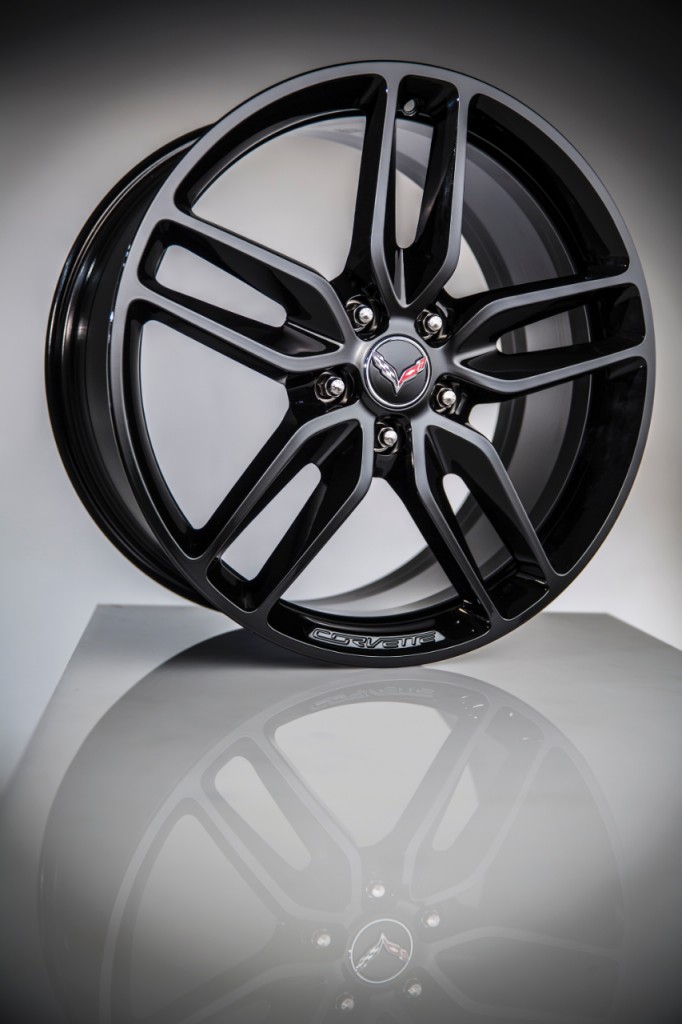
The Corvette Stingray rides on new 18 x 8.5-inch front and 19 x 10-inch rear wheels, while models with the Z51 Performance Package roll on 19 x 8.5-inch front and 20 x 10-inch rear forged aluminum wheels. New Michelin Pilot Super Sport run-flat tires developed specifically for the seventh-generation Corvette deliver comparable levels of grip than the wider tires of previous models.
As a result, the track-oriented Corvette Stingray with the Z51 Performance Package is capable of 1g in cornering acceleration – comparable to the 2013 Corvette Grand Sport. Significantly, that is achieved with narrower and lighter wheels and tires. The reduced “footprint” reduces rolling resistance, steering effort and road noise, contributing to a more nimble feel, more immediate steering response and greater touring comfort and efficiency.
Dimensionally, the new Corvette’s wheelbase is approximately an inch longer than the previous generation, with front and rear tracks that are almost an inch wider. Those changes provide a more stable feel, particularly at high speeds, while the turning radius is decreased by approximately two feet for greater maneuverability in tight turns.
The Corvette Stingray features standard 35mm-piston Bilstein monotube shocks that connect to dual-path aluminum shock mounts that separate the shock rod and shock body load paths. The Z51 Performance Package comes with 45mm-piston Bilstein dampers for more aggressive body control and track capability. Z51 is available with the third-generation Magnetic Ride Control, which features a new twin-wire/dual-coil damper system that reacts 40 percent faster, enabling improved ride comfort and body control.
The new electric power steering system offers variable ratios and variable effort to tailor responsiveness and feel for each driving situation. It also delivers more precise control and feedback to the driver, along with greater variability of effort for high-performance driving and greater on-center sensitivity and linearity. Steering feel was further improved by increasing steering column stiffness by 150 percent, increasing intermediate shaft torsional stiffness by 600 percent, and mounting the steering gear to the front cradle structure. As a result the steering system is five times stiffer than the previous generation.
A smart electronic limited-slip differential (eLSD) is included in the Z51 Performance Package and continuously makes the most of the torque split between the rear wheels. The system features a hydraulically actuated clutch that can infinitely vary clutch engagement and can respond from open to full engagement in tenths of a second. It shifts torque based on a unique algorithm which factors in vehicle speed, steering input and throttle position to improve steering feel, handling balance and traction.
“The electronic limited-slip differential transforms the Stingray by optimizing handling for the driving situation,” said Mike Bailey, vehicle systems engineer, chassis. “By continuously modulating the torque split between the rear wheels, the eLSD can improve traction accelerating out of corner, improve stability on the highway and enhance steering turn-in and responsiveness.”
The eLSD is fully integrated with StabiliTrak and Performance Traction Management systems. Its calibrations vary among three modes, based on the Drive Mode Selector setting:
• Mode 1 is the default setting for normal driving and emphasizes vehicle stability
• Mode 2 is engaged when electronic stability control is turned off in the Sport or Track Driver Modes. This calibration enables more nimble turn-in and traction while accelerating out of a corner
• Mode 3 is automatically selected when Performance Traction Management is engaged. This calibration has the same function as Mode 2, but is fine-tuned to work with Performance Traction Management.
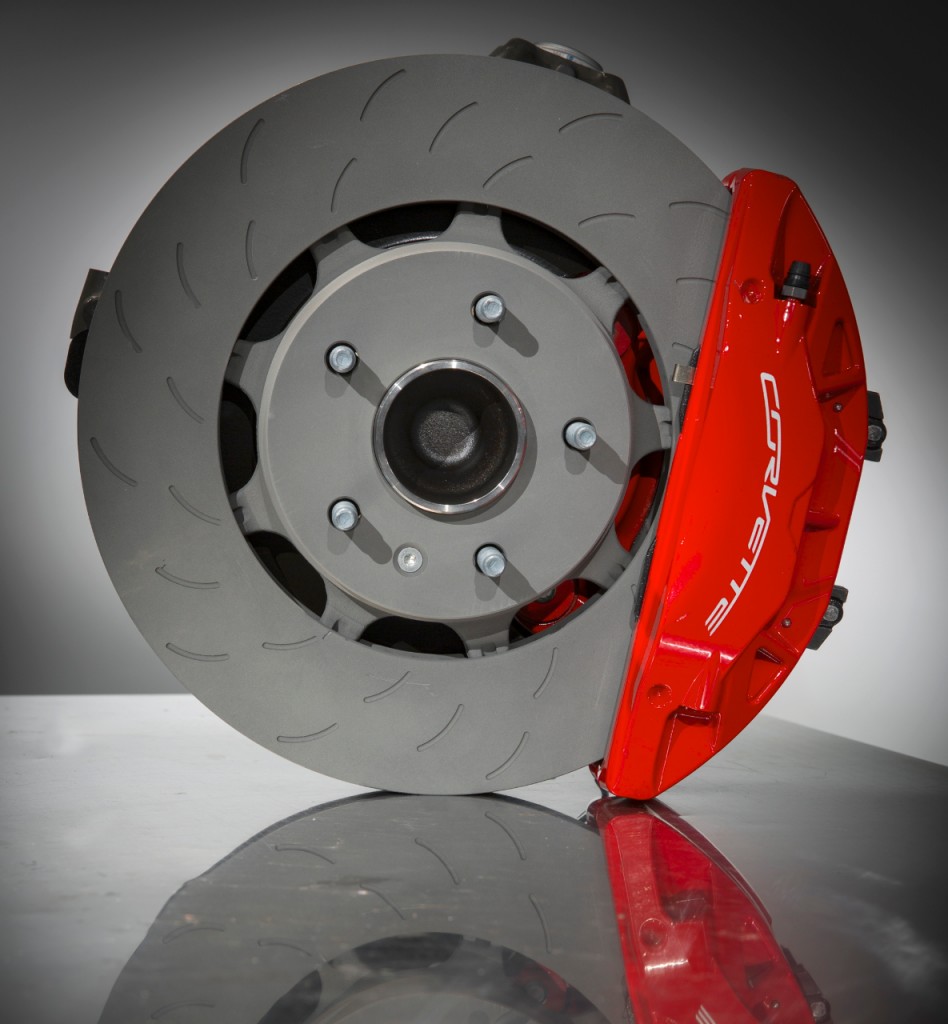
Standard Brembo brakes, with four-piston fixed calipers derived from racing, deliver exceptional stopping power on the street or track. System highlights include:
• 12.6-inch (320 mm) front rotors and 13.3-inch (338 mm) rear rotors are standard and have 35 percent more swept area than previous-generation brakes. Consequently stopping distance is improved 9 percent
• Dual-cast, slotted 13.6-inch (345 mm) front rotors and 13.3-inch (338 mm) slotted rear rotors are included with Z51 Performance Package. They have 6percent more swept area than the previous-generation Grand Sport and are cooled front and rear for improved track capability. Consequently stopping distance is improved 5 percent
• All brake packages have fixed front and rear calipers are stiffer for more even pad wear, reduced drag and improved modulation.
Founded in 1911 in Detroit, Chevrolet is now one of the world’s largest car brands, doing business in more than 140 countries and selling more than 4 million cars and trucks a year. Chevrolet provides customers with fuel-efficient vehicles that feature spirited performance, expressive design, and high quality. More information on Chevrolet models can be found at www.chevrolet.com.



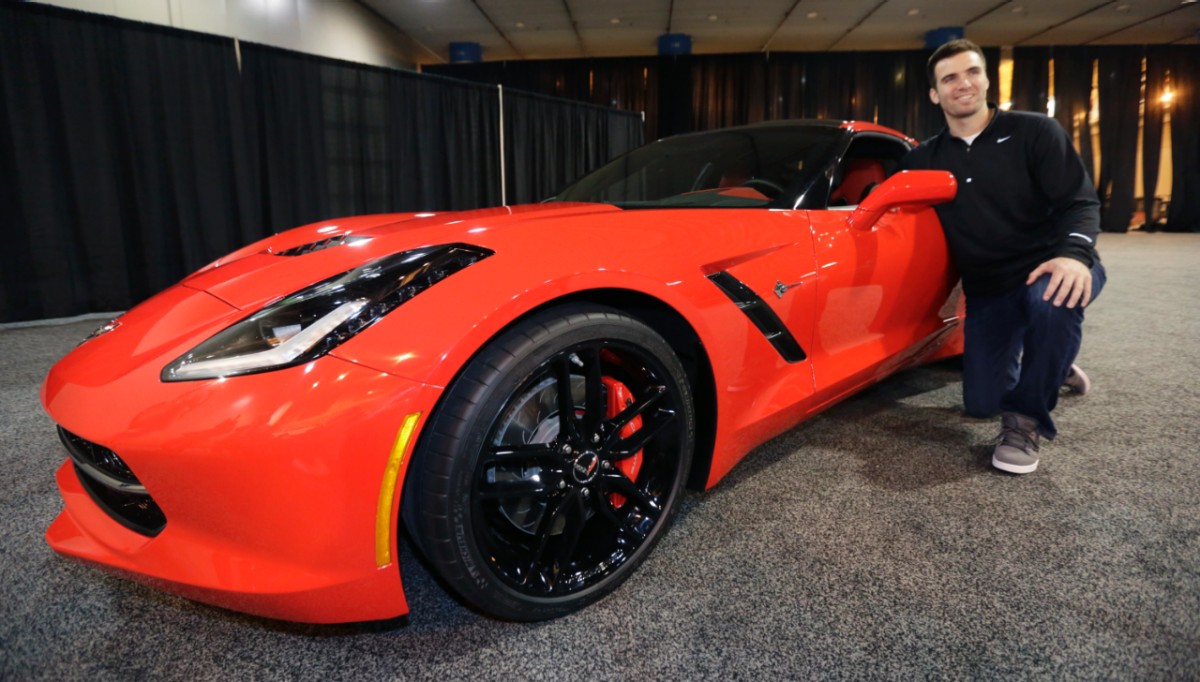


 Among iconic automotive names, few conjure up the visceral reaction of the Corvette Stingray. Originally applied to the short-lived C2 Corvette (built for the 1963-1967 model years), the Stingray name came to be associated with advances in both styling and performance. It’s fitting, then, that Chevrolet is applying the Stingray name to the…