Tag Archives: LCD

CES: Samsung Unveils New Wi-Fi Sharing Cameras

Today at CES, Samsung unveiled five new point-and shoot cameras for your pointing and shooting pleasure. The company’s WB series is getting three new models of long-zoom cameras – the WB250F/WB200F (which boasts an 18x optical zoom), the WB800F (21x), and the ultra-slim WB30F (10x).

Samsung’s Dual View line will see the addition of the 16.2-megapixel DV150F, which has a 2.7-inch LCD to assist with portrait shots. Finally, the ST150F model was also announced, which lacks the bells and whistles of the previously mentioned cameras but has a 25-millimeter F2.5 lens and 5x optical zoom.

All five cameras will come with built-in Wi-Fi sharing capabilities and have been designed to work with Samsung’s new Smart Camera application, which is available for iOS users. This app allows you to do access image editing tools in the go.

Continue reading…

Source: FULL ARTICLE at IGN Tech

Samsung puts apps in the fridge

LAS VEGAS—Samsung on Monday added a trio of interactive appliances to its 2013 lineup, such as the T9000 refrigerator with an LCD screen that lets you share lists on Evernote, check the weather, and program schedules in Google Calendar.

“The kitchen is the hub of the home and the refrigerator is the center of the kitchen,” said Joe Stinziano, vice president of Samsung Electronics America, while showcasing the refrigerator at a Monday press conference. It’s almost like your fridge is part of the family.

The French-door refrigerator is also able to expand its freezer capacity with the touch of a button. A compartment can become a freezer then switch back to regular refrigerator temps.

People are expecting their appliances to do more for them and meet a variety of needs, Samsung Electronics President Boo-Keun Yoon said during opening remarks at the press conference. “We developed appliances that understand you and your home,” he said. The refrigerator is an example of a product “that helps keep the family organized, entertained, and connected,” he added.

To read this article in full or to leave a comment, please click here

Source: FULL ARTICLE at PCWorld

CES: Sharp announces 32-inch 4K monitors

Sharp announced two new 4K LCD monitors, which will display images at close to four times the overall resolution of traditional 1080p high-definition monitors available Monday.

The new 32-inch LCD monitor series will display images at a 3840 by 2160-pixel resolution, Sharp announced at the International CES show in Las Vegas. The monitors will be available in touch and non-touch models, and pricing was not immediately available.

Sharp refers to the new class of ultra-high resolution displays as UltraHD, which is the standard name being adopted for the next generation of high-definition TVs and displays. Sharp also said it is will show off a prototype UltraHD TV set at CES.

UltraHD TVs are also referred to as 4K TVs and made a splash at last year’s IFA trade show in Berlin with companies such as Sony and LG announcing TV sets with ultra-high resolutions. More UltraHD announcements are expected at CES with companies like Toshiba, LG and Samsung set to announce new TVs.

To read this article in full or to leave a comment, please click here

Source: FULL ARTICLE at PCWorld

CES: Sharp Isn't Just Talking 4K TVs; Here Comes 8K

By Eric Savitz, Forbes Staff Looking sharp: CES Press Day 2013 Sharp this morning is making a big push for its IGZO – Indium gallium zinc oxide – LCD display technology. The company contends the technology offers a combination of higher power life, improved resolution and improved battery life that makes it appropriate for a range of […]
Source: FULL ARTICLE at Forbes Latest

Android moves into the kitchen with Dacor’s Discovery smart oven

LAS VEGAS—Lazy or inexperienced cooks across America long for a future where appliances instinctively know how to make a meal. Well, the future is almost here.

Luxury appliance maker Dacor expects to introduces its 30-inch, Android-powered Discovery wall oven this week at the International CES.

The company says the smart oven lets you surf the Internet, view recipes, and even enter a guided cooking mode for novice chefs. It was not available for a hands-on at the CES Unveiled event Sunday.

You might not know how long to cook that rack of lamb, but if you key its weight into the 7-inch LCD screen, called the Discovery IQ controller, at the top of the oven, the Discovery does the rest of the work by setting the temperature and a timer.

To read this article in full or to leave a comment, please click here

Source: FULL ARTICLE at PCWorld

China Fines Asian LCD Producers $57 Million For Price-Fixing

By Simon Montlake Four months after a U.S. court convicted a Taiwanese company of fixing the price of LCD panels, China has followed suit. The National Development and Reform Commission (NDRC) said Friday that it had levied fines totalling $57 million on six Taiwanese and South Korean companies that had conspired to overcharge Chinese flat-screen TV manufacturers. The ruling is based on China‘s Price Law, not its newer anti-trust law, which has been criticised for failing to take on domestic monopolies. The Chinese case follows U.S. and European Union investigation into LCD price-fixing by several Asian companies between 2001 and 2006, when executives were accused of setting up an industry cartel to drive up prices. In September, Taiwan’s AU Optronics was ordered to pay $500 million by a U.S. court, one of the largest ever anti-trust settlements. U.S. prosecutors also collected substantial fines from South Korea’s Samsung and LG ($240 million and $380 million, respectively).
Source: FULL ARTICLE at Forbes Technology

Leaked drawings of the C7 Corvette hit the web

By Jonathon Ramsey

Filed under: , , , , ,

Hope Santa’s got some coal left, because someone else has earned it for yet another holiday season leak. Alongside leaked shots for the 2013 Bentley Continental GT Speed Convertible and Mercedes-Benz CLA, a Corvette Forum member recently uploaded a number of drawings of the C7 Corvette that he says someone has been sending him. The post has since been removed from the forum, the original poster, “Blue Ox,” writing “the information I posted is less ‘public’ than was originally thought and… someone’s job could be in danger.”

There are no take-backs on the Internet, though. The drawings look to be from an owner’s manual or a service guide and show the coupe’s exterior, rear end and inside the rear hatch, then cover details of the cockpit, seats and engine bay. There’s a new steering wheel inside, and a large central screen with a new array of HVAC buttons underneath. Pilots will get to sit in new sports seats that finally appear to have the proper amount of bolstering for a Corvette.

The dash cluster that was teased in a video not long ago looks like it could be a central LCD screen flanked by analogue gauges for the speedo, water temp and fuel tank, not an all-LCD display. There will be a Track Overlay feature that tracks the car on a track and monitors speed, brake and throttle application, gear selection, G force and direction, lap time and steering angle, and it displays a graph for the Performance Traction Management. This will likely work with the (or is a display for) the Performance Data Recorder that is said to be able to save vehicle data, as well as video and audio, to an SD card.

Not shown in the photos but thrown into the discussion is Active Rev Match for cars equipped with manual transmissions, said to match engine speed to the next gear for both upshifts and downshifts. Last but not least, an Engine Sound Management system will alter the ‘robustness’ of the engine note via seven settings: Auto, Stealth, City, Tour, Sport, Track and Off.

There are just three weeks left until the C7 is revealed at the Detroit Auto Show. We wouldn’t mind leaving something left to surprise us on the official day, but we won’t be surprised if that doesn’t happen.

Leaked drawings of the C7 Corvette hit the web originally appeared on Autoblog on Tue, 25 Dec 2012 18:54:00 EST. Please see our terms for use of feeds.

Permalink | Email this | Comments

Source: Autoblog

Review: Epson WorkForce WF-2540 All-in-One Printer

The $130 (as of 12/24/2012) Epson Workforce WF-2540 All-in-One Printer (copy/fax/print/scan) has a 30-page automatic document feeder, it outputs nice text
and graphics, and it has triple-threat USB, Ethernet, and Wi-Fi connectivity. Those are attractive features on any color inkjet multifunction, but there’s bad news:
Ink costs are high, and glossy photos print at some of the slowest times we’ve ever seen. Scan speed is nothing to write home about, either.

Setting up the WF-2540 is a breeze. With USB, Ethernet, and Wi-Fi all on board, you’re free to attach it to a PC or network in any location you wish. The
WF-2540’s smallish non-operational footprint: 15.4 inches wide, by 14.8 inches deep, by 8.7-inch high also aids in the versatile placement. However, those
numbers (shown in a photo on Epson’s Web site), are a tad misleading. When you extend the guide for the 100-sheet rear vertical feed (there is no flat input tray),
the height climbs to 11 or so inches. With both the guide and control panel in operating position, the depth is more like 17 inches. That’s still
relatively compact, but not as small as it would be with a bottom-mounted tray.

The WF-2540’s software bundle is basic, but capable. The Epson Scan program is intuitive and mature, and it will handle any scanning task you throw at it.
That would be everything except automatic two-sided scanning, which the WF-2540 does not support. Abbyy FineReader Sprint 9.5 is on hand to take care of OCR
chores and there’s also the full gamut of Web and local wireless printing options.

I didn’t find using the WF-2540 quite as intuitive as many printers. The 2.5-inch LCD display, buttons, and keypad are fine; there’s just something a
little off in the implementation. You’re forced to hit the OK button at times when the menu/home button would normally function, and there are just enough
other little oddities to make the experience less than top-shelf. You’ll get used to it, but it could be done better.

To read this article in full or to leave a comment, please click here

Source: PCWorld

2013 Lincoln MKS AWD EcoBoost Review & Test Drive

By Harvey Schwartz

‘READY TO JOIN A SELECT GROUP’

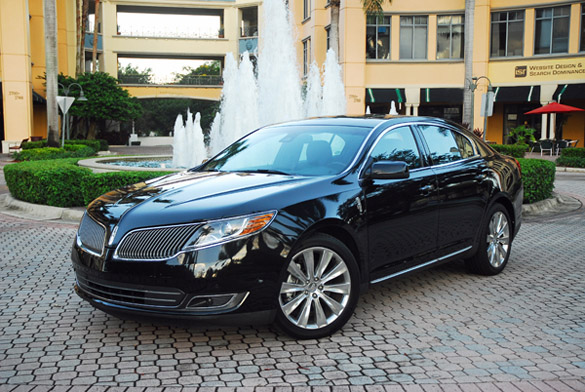
With an all-new sleeker front and rear fascias, a completely new interior, an all- new adaptive suspension system and the latest in luxury, convenience and infotainment features, the new, updated 2013 Lincoln MKS AWD luxury sport sedan is now very close to joining a very selective group of world-class luxury sedans.  I tested the fully-loaded MKS AWD and was very impressed with the updated model that now will be a competent competitor to the M-B S550, BMW 750i, Audi A8, Jaguar XJ, and Lexus LS460 luxury sport sedans.

New Lincoln MKS AWD highlights include Lincoln Drive Control that is an automatic system that delivers an ideal balance of a smooth ride with confident handling as it intuitively responds to your driving commands and the road itself.  Lincoln Drive Control helps make the 2013 model the most refined and engaging MKS ever.  Additionally, the Lincoln Drive Control enables you to purposefully change the on-road personality of the MKS.  Moving the gear selector from Drive to Sport automatically shifts handling performance, ride firmness, throttle response, shift feel, steering response and traction control/electronic stability control parameters.

The 3.5 liter gasoline twin-turbo direct-injected ‘Eco-Boost’ DOHC all-aluminum V6 engine now pumps out a healthy 365 hp at 5,700 rpm, 10 more hp than last year, and an expansive torque curve that plateaus at 350 lb.ft. of torque from 1,500 to 5,250 rpm.  Fuel economy of the Eco-Boost AWD model is 17mpg/city and 25mpg/highway.  It is the most powerful V6 engine in its segment.  It is designed to deliver performance feel that is smooth, effortless and confident.  I felt the power every time I put my foot down on the throttle.

Also new this year is significantly larger brake components that increase braking power and fade resistance while improving pedal feel.  Improved quietness inside is made possible with additional noise barriers and absorbers that are placed in the front wheel wells, around the shock towers, under the hood and in the trunk.  Redesigned exterior rearview mirrors further reduce wind noise.

An expanded SYNC functionality includes standard Operator Assist and local Wi-Fi hotspot capabilities for laptops and tablets.  New collision warning, new Lane Keeping Alert and new Lane Keeping Aid technologies help warn drivers of potentially dangerous situations and can help avoid common accidents.

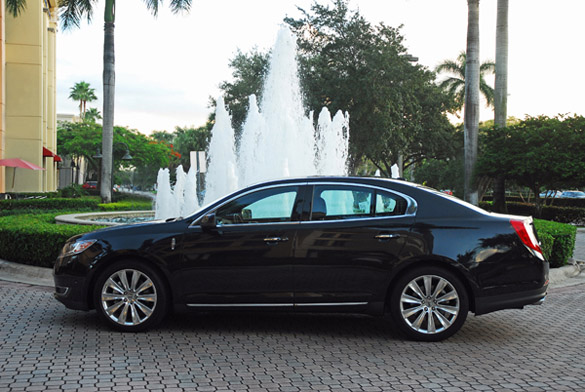
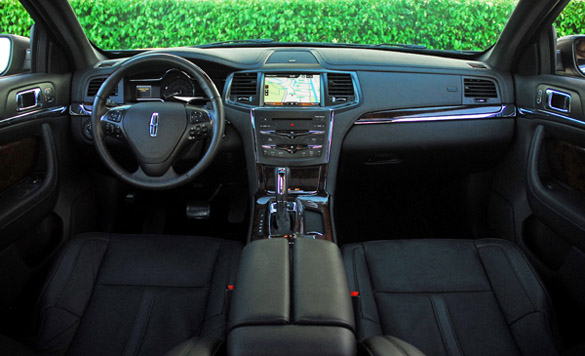
Exterior styling updates include a new grille, hood, front fenders, HID headlamps, front fascia, 20 in. aluminum wheels, decklid rear fascia, LED taillights and dual exhaust tips.  On the inside newly crafted features include an all-new instrument panel completely cover in leather, chrome and Burl wood and MyLincoln Touch.
A closer look at these new enhancements, styling and technologies is in order.  Throughout 13 decades of the automobile’s development, suspension engineers have worked tirelessly to find an ideal balance between smooth ride and satisfying, confident handling.  Traditionally, smooth-riding cars have not handled well and sharp-handling cars have ridden harshly.  Standard CCD delivers a more confident drive experience that introduces a key new Lincoln DNA-the balance of ride comfort and impressive handling.  Regardless of road conditions, you will enjoy a markedly smoother, more controlled ride because CCD is always tuning and refining the ride quality.  The result of some 4,000 hours of development time, CCD delivers its on-road benefit by significantly extending the chassis’ capabilities compared to a chassis with non-adjustable struts and shock absorbers known as ‘dampers’ by chassis engineers.

Compared with the fixed-rate dampers fitted to the 2012 MKS AWD, the new CCD dampers for the 2013 MKS offer dramatically expanded control range.  CCD utilizes an array of 46 inputs to feed data to a sophisticated control unit that continuously monitors more than 23,000 packets of information per second.  Algorithms react to the data by calculating the optimal damping force every 2-milliseconds or 500 times per second.  The system commands damping force changes 20 times per second (20Hz).  On average, large damper force adjustments (such as firm to soft) occur in just 11 milliseconds.  For engineers, mechanical actions that occur in less than 13 milliseconds are considered real-time actions.  The independent front suspension features these continuously controlled dampers using MacPherson struts, rear-facing L-shaped lower controls arms with an isolated subframe and a 26mm stabilizer bar.  The rear independent multi-link setup includes the continuously controlled dampers over coil springs, stamped steel lower control arms and cast upper control arms.
The system’s powerful processing speed and fast-acting mechanicals enable CCD to constantly read the road surface and continuously adjust damping rates in real time across the three selectable ranges-Sport, Normal and Comfort.  CCD operates so quickly that it can act pre-emptively.

CCD recognizes, for example, when the car is encountering a pothole and can instantly tighten damper control to prevent the wheel and tire from experiencing the full depth of the pothole.  Typically, the damping rate increases by more than 150% versus the system’s softest setting, helping to smooth out an otherwise harsh and jarring event.  The system is so quick that inputs received at the front wheels are then used to prepare the rear wheels to deliver a more refined driving experience.  CCD is always active and it underpins the expanded dynamic capabilities of the new MKS.  It also prevents body roll by up to 20%.  Understeer on the MKS has been reduced by approximately 25%, so the car feels more eager and ready to response.  Further enhancing the refined suspension system is a strut tower brace over the engine to add to the rigidity up front to quicken reaction to your steering inputs.

Lincoln Drive Control is where the magic happens because it pulls all of the car’s adjustable elements-suspension, steering, engine, and gearbox-into one harmonized system.  With Lincoln Drive Control, the new MKS AWD feels sporty, nimble and connected, yet the smooth and quiet Lincoln ride is still there.
Lincoln Drive Control is always at work refining the vehicle’s driving dynamics.  Enabled by features including CCD and electric power-assisted rack & pinion steering, the system continuously integrates handling performance, ride firmness, throttle response, shift feel, steering response and traction control/electronic stability control parameters.  Additionally, Lincoln Drive Control allows you to purposely change the on-road personality of the MKS AWD-Drive Mode-When the gear selector is in Drive, Lincoln Drive Control automatically delivers the ideal Lincoln ride, balancing comfort with confident control and handling.  Many drivers will find this setting perfect for everyday driving as it provides a comfortable drive experience and a direct connection to the road without sacrificing the composure and smooth expected from a luxury sedan.  Sport Mode-When the gear selector is in Sport, Lincoln Drive Control transforms the vehicle’s personality to deliver a more performance-oriented driving experience.  The following systems change settings in Sport Mode-The CCD suspension switches from operating in its comfort range to its firmest sport range, emphasizing handling; the electric power-assisted steering recalibrates to provide more road feel and great steering effort; the engine responds more directly to your inputs; the transmission upshifts at higher rpms. Downshifts become more aggressive and the transmission holds gears longer and during cornering.  Additionally, sixth gear is locked out.  The standard paddle shifters mounted on the steering wheel come into play as you can change or hold the gears without taking your hands off the wheel.
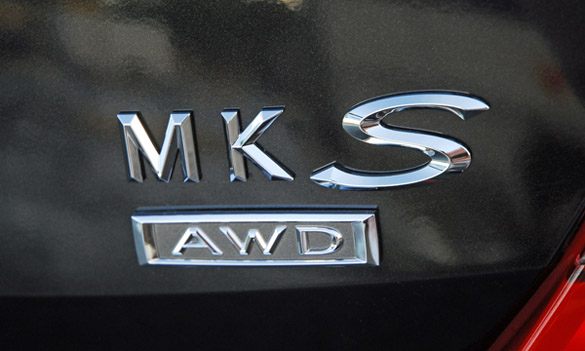
Handling the 365 hp and 350 lb.ft. of torque generated by the 3.5 liter twin-turbo direct injected V6 engine is the heavy-duty 6F-55 six-speed automatic sequential transmission which benefits from high-energy friction materials, a larger ring gear and a specific torque converter to handle the high torque output of the twin-turbo.  All-wheel drive is standard with the twin-turbo 3.5 liter V6.  In good weather, over smooth roads at modest speeds and when AWD is not needed, the system intelligently routes power only to the front wheels for improved fuel efficiency.  When driver input or road conditions indicate that slip might occur, the system sends power to the rear wheels to help prevent tire slip, for example on rain-soaked or snow-covered roads.  Beyond providing more traction, AWD also improves handling by helping to reduce understeer, the tendency of the vehicle to ‘push’ in a corner at high speeds.  A myriad of inputs enables the computer-controlled system immediately to identify and react in as little as 16 milliseconds to changing road conditions and drive demands.  The amount of torque sent to the rear axle varies depending on road conditions and dynamic needs.

The MKS AWD steering system receives a thorough makeover for 2013.  The gear ratio is quicker (15:1 vs. 17:1) making the steering more immediately responsive at all speeds.  Additionally, steering boost is now electric rather than hydraulic.  The new electric power-assisted steering (EPAS) complements CCD in contributing to the driver-tunable Lincoln Drive Control experience.

Other enhancements contribute to the system’s overall improved performance.  The steering gear is now solid mounted to the chassis’ front subframe.  Additionally, a brace has been added under the vehicle (across the transmission tunnel) to strengthen the subframe’s mounting points to the chassis.  These details help significantly improve your feeling of being connected to the road through the steering wheel.  Overall steering response for the new 2013 MKS is improved by up to 25%.  EPAS offers additional benefits.  At lower speed, when parking, EPAS provides additional boost for effortless maneuverability.  At higher speeds, EPAS increases steering effort and feedback, giving you a more precise steering feel.  It really works and at high speeds the feel is great and linear.  Also, by replacing the traditional hydraulic assist-steering pump with an electric motor, the EPAS operates only when assistance is needed and it is much lighter.  Furthermore, software-based technologies, undetectable by you, boost the capability of EPAS.  Pull-drift compensation detects road conditions such as a crowned surface or crosswinds and adjusts EPAS to compensate.  Active nibble control automatically cancels some unwanted steering wheel vibrations at interstate speeds.  These actions are designed to give you reassurance and maximum control under all driving conditions.

Drivers are most likely to notice Lincoln’s new Torque Vectoring Control (TVC) system when Lincoln Drive Control is set to Sport Mode.  TVC helps the MKS drive through corners with greater balance and poise.  TVC individually influences the speed of the front wheels to enhance cornering agility by mitigating against a dynamic condition engineers refer to as understeer.  When accelerating through corners and the system detects a drop in traction, TVC precisely applies brake force to the inside front wheel (that has less grip) causing a transfer of engine torque to the outside wheel (that has more grip).  This helps keep the MKS tracking on the driver’s intended line through the corner.  You can now slice through curves with the greatest of ease.
EPAS is also the primary technology behind the optional active parking assist (APA) system.  Once engaged via a switch on the center console, ultrasonic sensors precisely measure open spaces to find a suitable parallel parking spot.  With a few actions (gear shifting, acceleration and braking) the MKS steers itself into the open space.  The driver retains full control of throttle, brakes and shifting the entire time the APA is engaged.

To match the engine’s extra power and the suspension’s additional handling prowess, Lincoln has significantly upgraded the MKS braking system giving you more confidence and control.  New vented front discs measure 13.86 in. more than an inch larger than last year’s model.  They are clamped with dual-piston calipers in aluminum housing.  To enhance brake cooling, the ‘hat’ portion of the front brake disc is also vented, a unique design developed by Ford.  The diameter of the rear discs are 13.58 in. 0.58 in. larger than last year’s model, and they are also vented.  The rear brakes are clamped with single-piston calipers in aluminum housing.  When braking the feel is more direct and linear.  An excellent improvement in confidence building when driving at high speeds!

Another improvement that is privy to Ford is the next generation of the award-winning SYNC system that continues to become easier to use and more robust in its operation.  New, simpler screen designs improve the user interface.  Larger and bolder fonts make screens easier to read.  SYNC’s voice recognition experience, powered by Nuance, also is improved.  Microsoft’s Windows Embedded Auto software platform continues to be the operating platform that will deliver faster response times.  SYNC has evolved from a stand-alone module for communication and entertainment to become a fully integrated operating system for Lincoln vehicles with MyLincoln Touch.  As a further enhancement to the SYNC experience, the standard system in the 2013 MKS provides Operator Assist as a standard SYNC Services feature, allowing users to connect with a live persona free of charge.  SYNC also enables the interior of the MKS to become a Wi-Fi hot spot when linked to a data-enabled cellular device.  With active Wi-Fi, passengers can link to the Web on their tablets or laptops.

More safety technologies include a Lane Keeping System that complements the Lane Keeping Alert with the Lane Keeping Aid that sounds an audio alert then a friendly suggestion of a cup of coffee graphic will appear on the left-hand 4/2 in. instrument cluster.  Collision Warning helps prevent common traffic accidents as forward-looking, long distance radar identifies potential obstacles.  Collision warning is paired with adaptive cruise control because both features use the forward-looking radar system.  Blind Spot Information System with cross-traffic alert can detect vehicles in blind sports during normal driving as well as traffic approaching from the sides when you are reversing out of a parking spot.  Lastly is MYKEY which allows parents or other concerned owners to restrict certain Lincoln MKS features when in the hands of a MyKey driver.  Owners can simply program the vehicle key through the message center to incorporate features such as a limited top speed of 80 mph, prevent deactivation of the Traction Control system that limits tire spin; audio system volume limited to 44% of maximum volume; a speed alert chime at 45,55, or 65 mph.

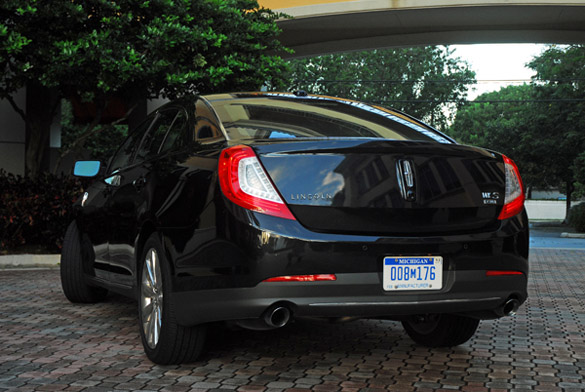
The dedicated Lincoln design studio has developed a contemporary new look for the 2013 MKS.  Every exterior surface from the A-pillar forward is new, including the grille, HID headlamps, front fascia, hood and front fenders.  Continuing the new look are new 20 in. aluminum wheels.  At the rear, MKS get a new fascia, LED taillights, exhaust tips and anew decklid design that improves access to the trunk.  The styling of the new MKS adds both refinement and elegance to the car while visually lowering and widening the front end.  The continuous bright surround linking the grille and headlights is particularly rich and adds something significant to what is already an expressive balanced design.  The new MKS looks sporty and luxurious from any angle.
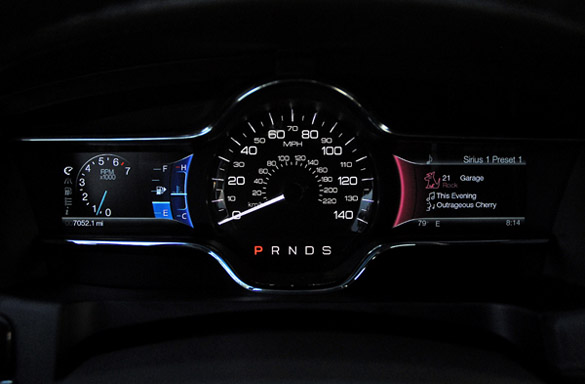
Moving over to the interior is a true enjoyment for both body and mind.  It is much more inviting and engaging, with new capactive controls and MyLincoln Touch.  The previous MKS was very linear and horizontal, now MKS is dominated by lines that sweep up from the center stack and flow out to the sides.  Subtle ambient lighting throughout adds to the interior’s luxurious, high-tech environment.  The integration of MyLincoln Touch to the new MKS complements Lincoln’s most advanced instrumentation and controls to date.  The main instrument cluster features a center speedometer flanked by two full-color reconfigurable LCD screens.  Content for the 4.2 in. LCDs is controlled by two five-way buttons on the steering wheel (much easier to use than a central dial on the center console since you do not have to take your eyes off the road to make changes).  An 8 in. multi-function LCD touch screen dominates the center stack and provides the visual and control interface for the entertainment system, phone, navigation and climate controls.

The new MKS offers two audio systems, both controlled through MyLincoln Touch.  The standard system includes AM-FM-CD-MP3-Satilliate sources playing through a 210-watt system driving 10-speakers.  The optional, world-class system is the THX II Certified Audio System with AM-FM-CD-DVD-MP3-HD radio capability and 16-speakers, including a 10 in. subwoofer.  Sirius XM Traffic and Sirius XM Travel link with voice-activated navigation controls also are optional.  MyLincoln Touch and SYNC enable voice-activated navigation control.  In addition to an easily updatable navigation database, additional Sirius XM Travel link features include coast-to-coast weather date, forecasts, fuel prices, sports scores, movie listing and more.

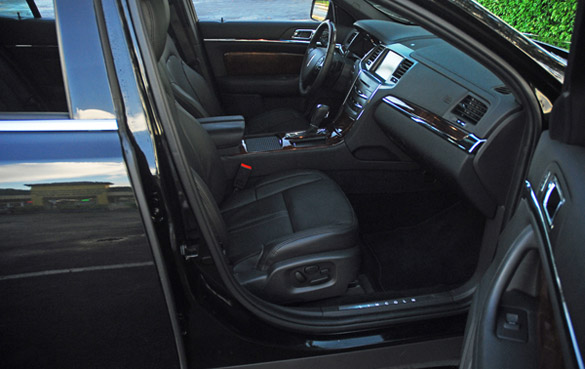
Lincoln style is supported by equipment that enhances occupant comfort.  Standard heated and cooled 12-way adjustable front seats are so comfortable and supportive, adjustable pedals and a power tilt/telescoping/leather and wood wrapped steering feels perfect in your hands and allows a wide range of drivers to feel immediately at home behind the wheel.  Class-leading available equipment also includes a retractable rear sun shade and new multi-contour adjustable front seats and a heated steering wheel.  The optional multi-contour seats incorporate seven computer-controlled air bladders to provide front occupants with maximum adjustment.  Four sections in the seat bottom and three in the seat back can be adjusted.  Both driver and passenger seats feature individual static settings as well as dynamic massage settings.  The seat surfaces are provided by world-renowned leather maker Bridge of Weir leather company.  Sourced from Scotland, Bride of Weir leather also can be found in luxury jets, yachts and furniture.  Connoisseurs of fine materials appreciate these leathers for their nature beauty and the company uses a unique organic tanning method which produces a material free of chromium making it one of the most environmentally friendly, and fully recyclable.  New woods (Prussian Burl and Brown Swirl Walnut and leather colors (Hazelnut and Light Dune) complete the extensive list of interior changes of the new MKS.

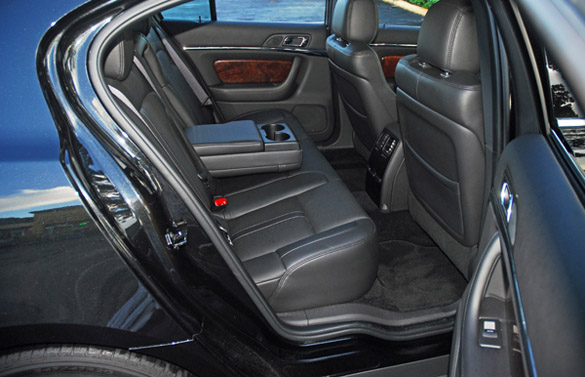
Standard equipment not mentioned above includes foglamps, heated power mirrors with memory, easy-exit seats/steering column, dual-zone climate control, rear vents and pull-down center armrest in the rear, remote start, all express power windows/door locks, 19X8 in. aluminum wheels/tires, power reverse sensing system, center console with leather-wrapped shift knob, dual cupholders, storage bin with leather armrest, rear reading lamps, dual map lamps, grab handles above all passenger door, thick cut-pile carpeting/floor mats front/rear, and remote trunk release.  Options not mentioned above include rearview camera, active front/rear parking assist, navigation system, heated rear seats, dual panel sunroof.
Standard safety systems include front and side airbags upfront, side curtain airbags, AdvanceTrak with Electronic Stability Control, SOS post-crash system anti-theft system, 3-point airbags with front pretensioners/load limiters, front/rear crumple zones, steel beams in each door, engine immobilizer, LATCH system for child seats and child-proof rear door locks.

The newly updated Lincoln MKS AWD EcoBoost full-size luxury sport sedan is ready to attain what it has been seeking for many years, to be on par with the world’s great full-size luxury sport sedans from M-B, BMW, Audi, Lexus LS and Infiniti M.  With 365 hp the MKS needs just a little more horsepower that can fix that deficiency and become a great choice for luxury buyers throughout the world.  It has everything, and more, that the competition has.

2013 Lincoln MKS AWD Beauty Right Done Small
2013 Lincoln MKS AWD Beauty Side Done Small
2013 Lincoln MKS AWD Beauty Rear Done Small
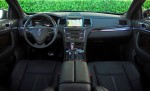
2013 Lincoln MKS AWD Dashboard Done Small
2013 Lincoln MKS AWD Cluster Done Small
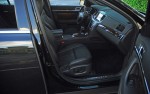
2013 Lincoln MKS AWD Front Seats Done Small
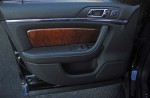
2013 Lincoln MKS AWD Door Trim Done Small
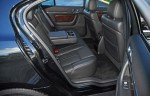
2013 Lincoln MKS AWD Back Seats Done Small
2013 Lincoln MKS AWD Badge Done Small
2013 Lincoln MKS AWD Engine Done Small

COPYRIGHT: 2012: HARVEY SCHWARTZ

SPECIFICATIONS

Price: $49,800.00 base/$58,265.00 loaded including destination charges
Turning circle: 39.4 ft.
Wheelbase: 112.9 in.
Total length: 205.6 in.
Total width: 79.4 in.
Total height: 61.6 in.
Track: f/r-64.9/65.1 in.
Headroom: f/f-39.7/38.5 in.
Legroom: f/r-41.9/38.6 in.
Curb weight: 4,436 lbs.
Cargo volume: 19.2 cu.ft.
Total passenger volume: 105.8 cu.ft.
Fuel tank: 19 gallons
EPA mileage: 17mph/city, 25mpg/highway

Source: Automotive Addicts

Samsung rumored to be working on 6.3-inch Galaxy Note III

Just when you thought smartphones couldn’t get any bigger, rumor has it that Samsung will put a 6.3-inch OLED display into its Galaxy Note III.

The report comes from Korea Times, citing officials from local parts suppliers as part of a larger story on Samsung’s transition from LCD to OLED displays. The story doesn’t provide any other details or a release date for the Galaxy Note III, but a mid- to late-2013 launch seems likely, given that the Note II launched in October.


Samsung’s original Galaxy Note had a 5.3-inch screen, while the Note II had a 5.5-inch screen. (Samsung also changed the aspect ratio from 16:10 to 16:9.) Although jumbo-size smartphones have their detractors, the concept has proven popular. Samsung sold more than 5 million Galaxy Note II handsetswithin two months of launch.
To read this article in full or to leave a comment, please click here
Source: PCWorld

GM Reveals New Full-Size Trucks: 2014 Chevrolet Silverado & 2014 GMC Sierra Details


With most new automobiles going the way of ‘uber-efficency’, some may have thought full-size pickup trucks were doomed just like the dinosaurs 65 million years ago. Here in America, that thought has been buried along with the notion of full-sized trucks become soft as GM introduces their new 2014 Chevrolet Silverado and 2014 GMC Sierra.


The Chevy Silverado 1500 and GMC Sierra 1500 have been boasting the same design since 2007 literally pulling the duty alongside of a short list of full-sized pickups from other automakers. For the 2014 model year, GM takes personalization to a new level considering how full-sized trucks are serving dual purposes being the family vehicle and work truck at the same time. New offerings such as the new MyLink in the Chevy and IntelliLink in the GMC combining Bluetooth connectivity, Pandora streaming audio and natural-language voice commands all fed through a color 8-inch LCD touch-screen.

When it comes to a truck, the cargo, including passengers of course, must not be left out of the comfort equation. With that said, the new line of trucks get new innovative features such as a new damping system for the tailgate, LED bed lighting, a rear-bumper cargo-step system for easy access and movable tie-downs. Crew-cab models will get wider door openings while extended cabs get front-hinged doors. The backseat space has also been increased.

When it comes to a full-size truck, you really cannot cut corners with power output and towing capacity. The good news is a new small-block EcoTec3 engine family do not slack on the job with some added fuel efficiency. The standard engine is a completely new 4.3-liter V6 based on GM’s latest V8s – not related to last generation V6 engines. 5.3-liter and 6.2-liter V8 engines are also available. All engines get direct injection, cylinder deactivation technology and continuously variable valve timing. Power ratings and EPA fuel consumption figures have yet to be released but we expect to see numbers slightly bettering all of the previous generation GM trucks.

Continuing to merge many innovative amenities and safety features found in cars into the new Chevy Silverado and GMC Sierra, GM offers Forward Collision Alert and Land Departure Warning to options list.

Both the 2014 Chevy Silverado and 2014 GMC Sierra will be built at the current Fort Wayne, Indiana and Silao, Mexico plants. We expect to get additional details and specifications with a release date when the new 2014 Chevrolet Silverado and 2014 GMC Sierra go on display at the Detroit Auto Show next month.

Source: Automotive Addicts

Iomega StorCenter px2-300d NAS: A pretty performer

The Iomega px2-300d is a two-bay NAS box that delivers very good performance, excellent backup and surveillance features, and a helpful LCD that reports on the unit’s status (IP address, current time, storage remaining, and so on). Its EMC LifeLine operating system is also one of the more feature-rich ones in the industry. But you should buy this box bare—Iomega populates it with enterprise-class hard drives that jack up the price.

The px2-300d’s HTML administration interface (you use a browser to access it as with nearly all NAS boxes) is attractive and easy to use. The box itself sports a metal shell with easy-change, hot-swappable drive bays hidden behind a door on the front of the unit. Ports include two gigabit ethernet ports that support load balancing, link aggregation, and failover. There are also two USB 2.0 ports on the back of the unit and a single front-mounted USB 3.0 port. A VGA port allows direct viewing of security cameras controlled by the SecureMind surveillance software that Iomega includes with the box. The px2-300d is more than suitable as the brains of an ad hoc video security system—all you need are the cameras. SecureMind supports up to 16 of those, but you’ll want to make sure it’s compatible with any existing cameras you already own (my one-year-old D-Link DCS-942L was not).

The px2-300d supports JBOD and RAID 0 (striping), but our test unit arrived configured as RAID 1, where each drive is a mirror of the other. That’s how most businesses with two-bay boxes should roll, unless they’re backed up to the hilt, which brings us to another strength of the px2-300d: backup. Iomega provides portal-based access to other Iomega NAS devices for data replication, in addition to apps that let you back up to Amazon’s S3 service as well as EMC MozyConnect, Atmos, and Avamar services (EMC is Iomega’s parent company). The px2-300d supports rsync, too, so you can mirror data between it and a NAS box from Synology, QNAP, or any other manufacturer that supports that standard.

Other software features include iTunes and DLNA-certified media servers, plus full administration and user control including Active Directory support. Support for Apple File Sharing, FTP, SFTP, TFTP, NFS, SNMP, WebDAV, Windows DFS, Windows File Sharing, and iSCSI round out the accessibility features, and you can gain wireless connectivity by plugging in a USB Bluetooth adapter.
To read this article in full or to leave a comment, please click here
Source: PCWorld

Inspirations from FOSS.in 2012

a young visitor to HampiI’ve attended FOSS.in in Bangalore two weeks ago. FOSS.in is the largest Indian Free software conference, and has been on my list of conferences to ever attend for a long time. I’m back home for a good week now, so it’s time to recap a bit my experiences there. I travelled together with Lydia, a.k.a. Nightrose, who was attending on behalf of Wikimedia to tell about Wikidata. For the conference, I was scheduled for a talk about Plasma Active, and we also did a workshop on creating device-adaptive interfaces. More on that later.
Lydia and I went a few days earlier, to have some time to see Bangalore and surroundings. It was my first time in India, so also a good opportunity to see a few new things here and there, and to acclimatize. On the first day, we went around the city a bit, and later were invited to PES-IT, a renowned Indian IT college, where a 24hour open source hackathon would take place. Lydia and I held ad-hoc presentations about getting involved with KDE and Plasma Active respectively, followed by hands-on demos and discussions about both technical and non-technical issues. The students and professors were very friendly, and it was awesome to see enthusiastic students spending their weekend together hacking. We only arrived late at night back at our hotel, after some long and enlightening discussions about Free software and Indian culture. What struck me in particular (and in a very positive way) was the number of girls attending, about one third. In most “Western” countries, information technology is very much a male trade, Dutch universities for example struggle to attract more than one or maybe two girls each year for their computer science courses. India is way ahead there, which one the one hand is great to see, but on the other hand raises the question what is going wrong in my home country. Free software communities suffer from the same skewed demographic, so the same question applies here.
Hampi
Jean-Baptiste (j-b) of VLC arrived two days after us, and we all hopped on a nightbus to Hampi, a UNESCO heritage site, an old capital of a long-gone empire and religious centre a few hours North-West of Bangalore. There, we spend an unforgettable day, from watching and (and participating) in the morning ritual of washing your body in the river in the morning, sipping a glass of chai, having a wonderful breakfast under the Mango Tree, watching temples in a beautiful surrounding, more wonderful curries, chais, temples and friendly people to enjoying the sunset from the top of a mountain.
Aakash
Holy cows feeding on trashOn Thursday, FOSS.in started. One of the booths that struck me first was the stand of Aakash, which is a low-cost tablet meant for students. The tablet is procured by the Indian government under the supervision of the Indian Institute of Technology in Bombay (IIT-Bombay). It is running a dualboot Linux/Android system right now. The Aakash people have already looked into Plasma Active (they prefer it much to Android, but there were some problems getting it to run on their hardware. The hardware is a 7″ tablet with a a capacitive screen, 512MB RAM and otherwisee an Allwinner A13 chip with Mali400 GPU. That should just be powerful to enough to run Plasma Active. I got demoed a few applications, both under Android and Linux which quickly revealed why Android was not the best choice: Android basically made a lot of apps run 3 times slower. In the course of the next days, I sat down with IIT’s developers to look into problems they had with getting PA to run. We made some progress, and fletched out strategies how to get it to run. One bigger hurdle is the lack of a good graphics driver, other tasks involve “relatively simple” system integration tasks. Doable, it seems, and a wonderful opportunity to bring KDE’s software to a very large new group of users.One thing that struck me as genius in this project is that it is not limited to procuring hardware and getting it to boot, but a large part (60+% of the budget) is allocated to content creation. Software is created under the GPL, content under Creative Commons, non-commercial licenses. Translation of content is an integral part of the project, so this initial Freeing of educational content has the potential of being very useful far outside of India as well. Visionary.As with any big project, there are also critical voices. Hardware is one issue, building a relationship of trust with Chinese manufacturers is not easy, as is getting the manufacturer to understand the constraints and requirements of Free software. I wish the Aakash project all the success it needs however, and we will continue to support the goals of the project. This could be the beginning of a wonderful thing. 🙂
Plasma Active Presentation and Workshop
On the first day, I held a presentation about Plasma Active, its approach, technology, goals and so on. The talk took place in the main hall and was well attended. I collected some valuable feedback, and am happy that people understand the ideas and believe them to be right. The next day, we held a KDE miniconf, where Shantanu and me did a workshop on developing device-adaptive apps. In the workshop, we outlined the process from idea to running code on a device, and dug into details. We had about 50 interested visitors, the workshop itself was quite interactive, and we did some live-coding, it was a lot of fun to do.
conf.kde.in 2013?
During the conference it became evident, that the Indian KDE and Free software community would very much like to organize an Indian KDE conference again. After conf.kde.in 2011, which was a great success, this seemed like a good idea, so we did some planning on that, asked if people were willing to volunteer in the organization and outlined a few possible options. The discussion has moved on to the kde-india mailinglist, so if you are among the people who would love to see conf.kde.in 2013 happen, join the list and add your ideas and man/girlpower!
The Internet of Things
One of the presentations I attended during conf.kde.org was by Priya Kuber, who works for Arduino. Arduino produces a open source hardware microcontroller aimed at educational purposes. The talk was very inspiring, so I wondered if I could use this for some home automation tasks, as simple example a remote power switch to turn on my workstation in the office, or somesuch. Priya sat down with me and quickly got me going with my own basic programme for the Arduino microcontroller, and it was all very easy and fun. Back home I ordered an Arduino starter kit, which has already arrived and contains basically what I’d call a kid’s microcontroller wet dream, it has the Arduino Uno board, LEDs, sensors for light, temperature, an LCD display and a bunch of other small electronic components along with a nice book. Surely something to spend the calmer Christmas days with, old style. :)Still in India, I sat down for an afternoon and hacked up some code to use with this little project, and got already quite far. The idea is to connect the Arduino to my RaspberryPi (which is energy-efficient enough to run 24/7), run a small http server on the RPi and use that to remote control physical devices at home from a remote location (I’d like to think of a tropical island here ;)). I’ve implemented the server in twisted Python, it presents a JSON interface, which can be directly consumed from a QML Plasmoid, on either my laptop or any Plasma Active device. I didn’t get around to doing the actually interesting hardware part, yet. Maybe this is the feable start of using KDE technologies for home automation and domotica?
I would like to thank the KDE e.V., the foundation for the KDE community, for supporting my trip. You can also pitch in here, to make participation of KDE contributors in this kinds of events possible by Joining the Game.
Source: Planet KDE

High-tech glasses wow with new advances

High-tech glasses are becoming more advanced and could one day give you options to get directions, place video calls or check into social networks.

The augmented reality vision that Arnold Schwarzenegger’s cyborg character used to track people in the Terminator movies isn’t here yet, but researchers and tech companies are making progress building on similar concepts.

While it will take a few years for wearable computing to mature, recent developments show there’s a lot of interesting activity taking place in the field.

The Centre of Microsystems Technology at Ghent University in Belgium announced this week it has developed a rounded and curved LCD display that can be used in contact lenses and turn them into sunglasses or a highly pixilated display.
To read this article in full or to leave a comment, please click here
Source: PCWorld

Wii U Was Once a Wii Zapper Prototype

Over the past several months, Nintendo has revealed much of its thinking behind Wii U, including how it originally approached development of the system. Within these origin stories have been demonstrations of early Wii U GamePad prototypes, or more specifically what some teams – like the Miiverse team – crafted to crudely test dual-screen layouts. In that case, the GamePad was a cardboard cutout, with pen and paper being used to simulate a LCD screen.
In a new Iwata Asks column, however, the Nintendo Land development team revealed the true origins of the Wii U GamePad, before the console itself even existed.
Continue reading…
Source: IGN Tech