Tag Archives: Kengor Editor

The Progressive Income Tax Turns 100

By Paul G. Kengor

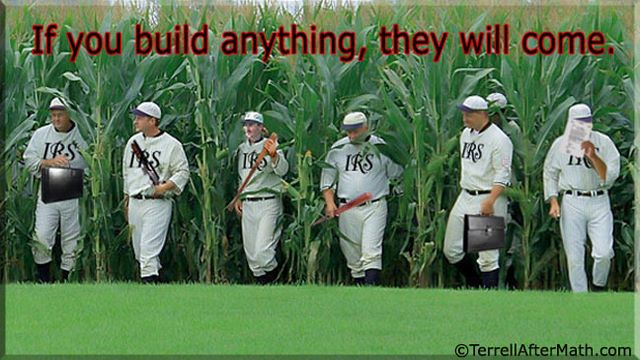
Build It IRS Will Come SC The Progressive Income Tax Turns 100

Editor’s note: A version of this article first appeared at Investor’s Business Daily.

Maybe it’s a measure of progressives’ refusal to look back, to always move “forward.” Otherwise, they should be celebrating right now. In fact, President Obama and fellow modern progressives/liberals should be ecstatic all this year, rejoicing over the centenary of something so fundamental to their ideology, to their core goals of government, to their sense of economic and social justice—to what Obama once called “redistributive change.”

And what is this celebratory thing to the progressive mind?

It is the progressive income tax. This year, it turns 100. Its permanent establishment was set forth in two historic moments: 1) an amendment to the Constitution (the 16th Amendment), ratified February 3, 1913; and 2) its signing into law by the progressive’s progressive, President Woodrow Wilson, October 3, 1913. It was a major political victory for Wilson and fellow progressives then and still today. By my math, that ought to mean a long, sustained party by today’s progressives, a period of extended thanksgiving.

President Obama once charged that “tax cuts for the wealthy” are the Republicans’ “Holy Grail.” Tax cuts form “their central economic doctrine.” Well, the federal income tax is the Democrats’ Holy Grail. For progressives/liberals, it forms their central economic doctrine.

As merely one illustration among many I could give, former DNC head Howard Dean and MSNBC host Lawrence O’Donnell were recently inveighing against Republican tax cuts. Dean extolled “what an increase in the top tax rate actually does.” He insisted: “that’s what governments do—is redistribute. The argument is not whether they should redistribute or not, the question is how much we should redistribute…. The purpose of government is to make sure that capitalism works for everybody …. It’s government’s job to redistribute.”

What Dean said is, in a few lines, a cornerstone of the modern progressive manifesto. For Dean and President Obama and allies, a federal income tax based on graduated or progressive rates embodies and enables government’s primary “job” and “purpose.” They embrace a progressive tax for the chief intention of wealth redistribution, which, in turn, allows for income leveling, income “equality,” and for government to do the myriad things that progressives ever-increasingly want government to do.

And so, in 1913, progressives struck gold. The notion of taxing income wasn’t entirely new. Such taxes existed before, albeit temporarily, at very small levels and for national emergencies like war. The idea of a permanent tax for permanent income redistribution broke new ground. The only debate was the exact percentage of the tax. In no time, progressives learned they could never get enough.

In 1913, when the progressive income tax began (and the first 1040 form, with instructions, was only four pages long), the top rate was a mere 7 percent, applied only to the fabulously wealthy (incomes above $500,000). By the time Woodrow Wilson left office in 1921, the great progressive had hiked the upper rate to 73 percent. World War I (for America, 1917-18) had given Wilson

From: http://www.westernjournalism.com/the-progressive-income-tax-turns-100/

Preserving Hugo Chavez

By Paul G. Kengor

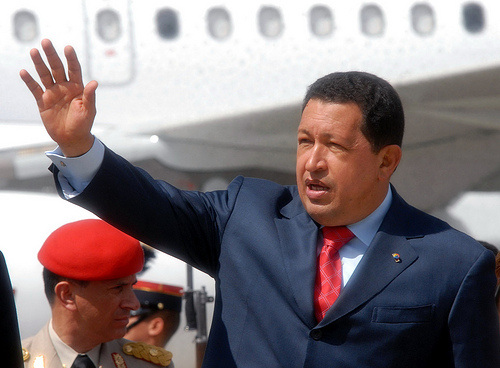
Hugo Chavez SC Preserving Hugo Chavez

Editor’s note: A version of this article first appeared at American Spectator.

The gushing, almost angelic praise for Hugo Chavez by the left in America and around the world has been shocking to behold, but hardly surprising. I will not bother repeating the litany here. Rather, I’d like to focus on another surreal aspect of Chavez’s death—namely, the rush to preserve and display his body so the faithful may pilgrimage and pay homage for decades to come.

Here again, I’m sadly not surprised. The far left has never been shy about venerating its heroes. This is supremely ironic, given that many of the subjects of veneration, as well as those doing the venerating, were not merely agnostics and atheists but militantly so. Recent examples include Asian communists Mao Tse-Tung and Ho Chi Minh, but the best example remains Vladimir Lenin.

Upon his death in January 1924, Lenin’s body was embalmed and preserved in a tomb, actually a shrine, in Red Square, whereby the faithful could forever honor the Great One. Etched in the marble holding the Bolshevik godfather’s body is this inscription: “Lenin: The Savior of the World.”

For an atheist state angrily committed to a war on religion, this would seem odd. In fact, however, it is precisely what we came to expect from communist regimes. In short order after Lenin’s death, poems and songs were written in praise of the “eternal” Lenin who “is always with us.” Yuri Gagarin, the first Soviet cosmonaut, visited Lenin’s mausoleum immediately before his flight so he could meditate over Lenin’s rotting flesh and draw strength for his mission. Later, Gagarin returned to the sacred site to report to Lenin on his mission.

The “Leninization” of the Soviet state’s spiritual life quickly took flight. Throughout the USSR, “Lenin Corners” were established, modeled on the Icon Corners of the Russian Orthodox Church. These mini-shrines included icon-like paintings of Lenin along with his words and writings.

A “secular religion” was established, one that, as noted by Dmitri Volkogonov, Lenin’s biographer, demanded “unquestioning obedience” from its disciples. So certain was the Party of Lenin’s infallibility that in 1925, one year after his death, the Politburo established a special laboratory to remove, dissect, and study Lenin’s inactive brain. The purpose, said Volkogonov, was to show the world that the man’s great, infallible ideas had been hatched from an almost supernatural mind.

This nonsense (if not blasphemy) continued for decades. Just ask any former Soviet citizen who suffered through the extended nightmare. A Ukrainian citizen, Olena Doviskaya, once told me: “Everywhere you went, there were statues everywhere of Lenin. They wanted you to worship Lenin.”

Most curious about this Lenin reverence and mysticism is the fact that Lenin himself considered any worship of a divinity an outrage. Lenin blasted the notion of “god-building.” He thought the most horribly unimaginable things about religion, calling religion “abominable” and “a necrophilia.” A vicious, hateful man, Lenin might have hastily shot those responsible for deifying him.

Nonetheless, communists and certain elements of the far left have engaged in such behavior for …read more
Source: FULL ARTICLE at Western Journalism

Hugo Chavez: Faithful To Death

By Paul G. Kengor

Hugo Chavez SC Hugo Chavez: Faithful to Death

Editor’s note: A version of this article first appeared at American Spectator.

There’s an old joke from the Cold War. It went like this: Hardline East German communist Walter Ulbricht (who erected the Berlin Wall) died and went to hell. There, the devil gave him a choice between the socialist sector and the capitalist sector. Devoted to the end, Ulbricht stuck to the faith, saying: “I’ll go to the socialist sector.” “Good choice,” averred the devil. “Over in the capitalist sector, they’re getting the full hellfire treatment. But in the socialist sector, they’ve run out of coal.”

Say what you want of Hugo Chavez, of his tactics, of his beliefs, and (as many are doing) of perhaps where he might be right now. But this much is certain: he stuck to the faith.

Many of us were downright amazed when Chavez, in his late 50s and desperately ill from cancer, opted to go to Cuba for treatment. It was a surefire death sentence. Only the most hopelessly devoted communist would be so naïve. Loaded with vast wealth he stole from his people, Chavez effectively chose acupuncture over the 21st-century healthcare widely available anywhere in the West.

And yet, the Venezuelan dictator clung to his religion. He went to Havana.

Chavez apparently gained some measure of comfort near the aging breast of his dying, beloved Fidel. He had so much in common with Castro, admiring the totalitarian’s unparalleled, unprecedented seizure of power and resources, all in the name of redistribution and “social justice.” Like Fidel, he pilfered enough riches from the ostracized affluent class to make himself one of the world’s wealthiest leaders. As he did, he churned the propaganda, blaming his nation’s every ill on his predecessors and on the alleged criminality of the very same rich—as Fidel has done, as the left generally has done.

A few years back, my wife and I were in Washington meeting with an old friend from grad-school days, a native of Venezuela named Daria. When we introduced her to another acquaintance, she remarked with a sad smile, “I’m from Venezuela. We’re communist now.”

In Chavez’s partial defense—and this isn’t saying much—he never achieved the scales of collectivism and depths of depravity of Fidel Castro, or of the world’s really bad communists. Venezuela didn’t become Cuba or the Soviet Union. Needless to say, Hugo Chavez was no Joe Stalin—even as, remarkably, he died on the 60th anniversary of Stalin’s death.

Nonetheless, like any man of the left, he had his enemy groups, and he used them to full advantage. Some of these assorted villains were flagged in a curious Washington Post obituary which headlined Chavez as a “passionate” albeit “polarizing” figure. What earned him even this slight compliment from the Post? Who knows? The same article noted that Chavez referred to the Catholic Church hierarchy as “devils in vestments.” But perhaps the Post was impressed less with Chavez’s opprobrium for the Catholic Church than his encomiums for Barack Obama.

Of course, Chavez was a big fan of Obama. He made …read more
Source: FULL ARTICLE at Western Journalism

The Presidential Blame-Game

By Paul G. Kengor

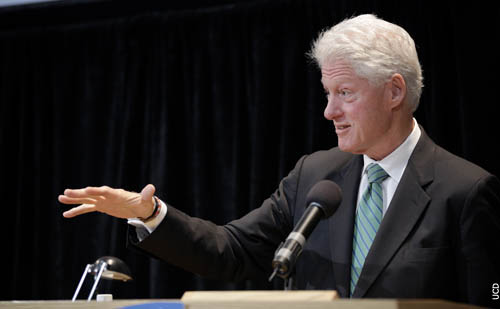
President Clinton SC The Presidential Blame Game

Editor’s note: A longer version of this article first appeared at American Spectator.

February is the month of presidents. It includes Washington’s birthday, Lincoln’s birthday, Ronald Reagan’s birthday, and, of course, Presidents Day. Given that I teach and write about presidents, this time of year always prompts me to strange musings. This year is no exception, as I’m thinking about six particular presidents: Barack Obama, George W. Bush, FDR, Herbert Hoover, Bill Clinton, and Harry Truman. How could I possibly connect these six?

Bear with me—I’ll start and end with Obama.

Barack Obama, and particularly his re-election campaign, has achieved something quite dubious of a sitting president. Namely, he has managed to successfully blame nearly every woe of the last four years on his predecessor. Never mind that every economic indicator under Obama is not only worse than under George W. Bush, but far worse. Obama has presided over a steadily worsening economic disaster, one that is stacking up as one of the most dreadful economic records of any president in history. And yet, as he does, he passes the buck to his predecessor, blaming George W. Bush.

This is unbecoming of an American leader; it’s precisely what our presidents don’t do; they don’t treat each other like this, having much more respect for the job and those who have held it. There is a long-time gentlemen’s understanding, honored by nearly every president, that you don’t blame your predecessor for your problems.

Nonetheless, George W. Bush has become Obama’s go-to scapegoat.

For the record, Obama is not completely alone in mastering this ignoble tactic. Franklin Delano Roosevelt, like Obama, conjured up various demons to advance his “progressive” agenda, with the rich atop his enemies list. But FDR also dumped on his Republican predecessor. He blamed everything on Herbert Hoover.

Notably, this really upset Hoover. Hoover was hurt deeply by FDR constantly trashing him, his record, and his policies. FDR did not treat Hoover the way we Americans expect our presidents to treat one another. Their relationship became toxic. FDR’s successor, Harry Truman, took notice. “Roosevelt couldn’t stand him,” said Truman of Hoover, “and he [Hoover] hated Roosevelt.”

Even sadder, FDR, like Obama, got away with this blame-game. FDR successfully pinned everything on Hoover in re-election upon re-election. As for Obama, a literal majority (60 percent, according to one exit poll) who voted for him in 2012 agreed with him that the terrible economy was totally Bush’s fault. They swallowed Obama’s Bush blame-game hook, line and sinker.

How do Harry Truman and Bill Clinton relate to this?

Truman and Clinton, like Obama and FDR, were, of course, both Democrats. Truman, however, was willing to put party aside to do what was right. He had character by the boatload. Truman saw how troubled Hoover was by FDR’s mistreatment. A good man, Truman did what he could to remedy the situation. (This is detailed nicely by Nancy Gibbs and Michael Duffy in their excellent new book: “The Presidents Club.”) He reached out to Hoover …read more
Source: FULL ARTICLE at Western Journalism

God For Obamacare … Dr. Ben Carson’s Heresy

By Paul G. Kengor

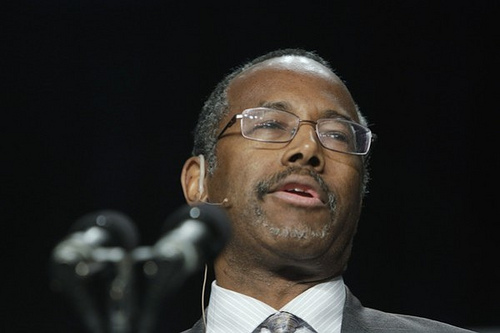
Ben Carson 2 SC God for Obamacare … Dr. Ben Carsons Heresy

Editor’s note: A longer version of this article first appeared at American Spectator.

Liberals are apoplectic over remarks by Dr. Ben Carson at the National Prayer Breakfast. Carson, a prominent pediatric surgeon from Johns Hopkins University, dared to weigh in on healthcare—something he knows something about. In the liberal mind, Carson committed a grave transgression; he disagreed with President Obama on healthcare at a faith venue, and in Obama’s presence.

In discussing Carson’s moral effrontery, Candy Crowley, host of CNN’s “State of the Union,” asked panelists if they were offended by Carson’s comments. “He [Carson] was talking about the idea of, you know, weaving the Bible into some objections he appears to have with the president’s approach,”said Crowley. Count Democratic Congresswoman Jan Schakowsky among the offended. She told Crowley: “I think it’s … not really an appropriate place to make this kind of political speech and to invoke God as his [Carson’s] support for that kind of point of view.”

In truth, what the likes of Crowley and Schakowsky object to is the mere fact that Carson publicly disagreed with Obama on healthcare, especially in the context of faith. For liberal Democrats, conservative Republicans should never use their faith to disagree; only liberal Democrats enjoy such freedoms. I could give a thousand examples illustrating the point; I’ve written entire books doing so. For now, however, here are some particularly salient examples involving Obama, liberals, and healthcare reform:

From the first year of Obama’s presidency, the religious left (Obama included) incessantly claimed God’s support for their vision of healthcare reform.

In August 2009, Obama addressed a “virtual gathering” of 140,000 religious left individuals—a huge conference call to liberal Christians, Jews, and other people of faith. Obama told them he was “going to need your help” in passing healthcare. Obama penitently invoked a period of “40 days,” a trial of deliverance from conservative evildoers. He lifted up the brethren, assuring them “We are God’s partner in matters of life and death.”

Like a great commissioning, in the 40 days that followed, the religious left was filled with the spirit. A group called the Religious Institute—led by Rev. Debra Hafner and representing 4,800 clergy—went wild stumping for Obamacare. Other religious left faithful joined the crusade.

A group of 59 leftist nuns sent Congress a letter urging passage of Obamacare. This was in direct defiance of the U.S. Conference of Catholic Bishops, which insisted the bill “must be opposed” because of its refusal to explicitly ban abortion funding. The liberal media cheered on the nuns, gleefully exaggerating their influence. In a breathtaking display, the Los Angeles Times beamed: “Nuns’ support for health-care bill shows [Catholic] Church split.” Amazingly, the Times reported that the nuns’ letter represented not 59 nuns—but 59,000! Like Jesus with the loaves, the Times (normally militantly secular) had demonstrated miraculous powers of multiplication.

The nuns’ brazenness was matched by Speaker of the House Nancy Pelosi, a Roman Catholic, who, in March 2010, invoked the Solemnity of the Feast of St. Joseph on behalf of Obamacare. …read more
Source: FULL ARTICLE at Western Journalism

The End Of The Reagan Era?

By Paul G. Kengor

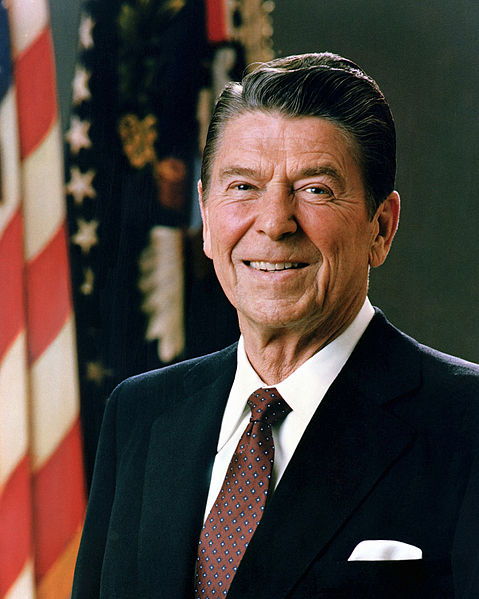
Ronald Reagan The End of the Reagan Era?

Editor’s note: A longer version of this article first appeared at American Spectator.

With Barack Obama’s second inauguration, liberals are touting an altogether new epoch: the end of the Reagan era.

Unfortunately, I believe they are largely correct. We are witnessing a period of left-wing ascendance, marked by gay marriageforced taxpayer funding of abortion, an exploding government class, and big government. As to the latter, Ronald Reagan had declared in his first inaugural: “government is not the solution … government is the problem.” The first Democrat to follow Reagan, Bill Clinton, similarly stated “the era of big government is over.” Clinton’s affirmation was also an affirmation of the Reagan era.

Then came Barack Obama. Just days after his 2009 inauguration, Obama proclaimed: “the federal government is the only entity left with the resources to jolt our economy back into life.” He said “only government” could alter our “vicious cycle.”

Obama had repudiated Reagan, and the electorate would again reward him four years later. What Obama called for in 2009 seems to be the new American spirit in 2013.

But is it? Well, the answer is complicated.

For one, Barack Obama is undoing the Reagan era courtesy of an American public that exhibits utterly schizophrenic voting behavior. Let history record a confounding reality that will baffle future historians: The Obama era supplanted the Reagan era thanks to a voting public that adores Reagan, judges him our greatest of presidents, and overwhelmingly calls itself conservative rather than liberal. All unbelievable, yes, but true. Consider the facts:

For a long time now, starting with the Reagan presidency, Americans have described themselves as “conservative” rather than “liberal” by margins of roughly two-to-one. Generally, self-identified liberals have hovered around the 20 percent level, while conservatives have ranged in the upper-30 percent, sometimes above 40 percent.

Surely this must have changed in 2008, with Obama’s election? No; despite Obama winning the presidency by 54 to 46 percent, 21 percent of Americans who voted said they were liberal vs. 38 percent who said they were conservative.

If that seems contradictory for a nation that voted for a man from the far left as president … well, it is. But it gets worse.

A major Gallup poll conducted from January to May 2009, at the height of “Obama mania,” found more self-described conservatives than liberals not only by 40 percent to 21 percent but in literally all 50 states. That’s correct, all 50 states, from California to Massachusetts. And that electorate chose Obama.

It also chose Reagan. During that same period, a remarkable survey was done by Clarus Research Group, which asked Americans which president should be the model for Barack Obama in shaping his presidency. Their top choice was America’s most conservative president: Ronald Reagan.

How could that be? Answer: it cannot. It is impossible.

And yet, it isn’t a shock that Americans would look to Reagan as their model. Two years after the Clarus survey, a Gallup poll released for Presidents Day 2011 ranked Reagan the “greatest president” of all time, garnering 19 percent of the vote among 44 presidents (beating Lincoln fairly soundly, who finished second at 14 percent). Gallup began asking the “greatest president” question in 1999. Of the 13 times Gallup has done the survey, the public placed Reagan first four times—2001, 2005, 2011, and 2012.

How does that same citizenry twice elect Barack Obama? That’s a very good question.

Well, maybe this long admiration for Reagan conservatism suddenly changed in November 2012?

No, though liberals did draw a little closer. According to CNN exit polling, 35 percent of voters on November 6, 2012 described themselves as “conservative” and 25 percent chose “liberal.” This was identical to a Pew poll.

Importantly, some observers dispute these self-designations, insisting that many of those who call themselves conservative really aren’t. Here and there, that may be true. Overall, however, I think the designations are fairly accurate. When you break down the data and ask questions like whether voters prefer more taxes and more government, they generally don’t—even when they vote that way.

So, what does all of this mean?

It means that a self-described conservative, Reagan-loving electorate has twice voted for a hardcore leftist, Barack Obama, to, in effect, end the Reagan era. That wasn’t the intent, but that’s the result.

I’ll end with a dose of Reagan optimism: It also means that the Reagan ideal is not over. I believe that most Americans (for now) still prefer Reagan’s principles and view of government over Obama’s. The Reagan principles are ultimately time-tested and true; they are the universal, unalienable principles of the Founders, rooted in eternal Judeo-Christian beliefs and Natural Law.

The Reagan vision and values are already here, ready to be tapped and again prevail. They merely require the right spokesman (and Barack Obama’s exit from the presidency.)

Source: FULL ARTICLE at Western Journalism