By Richard Larsen
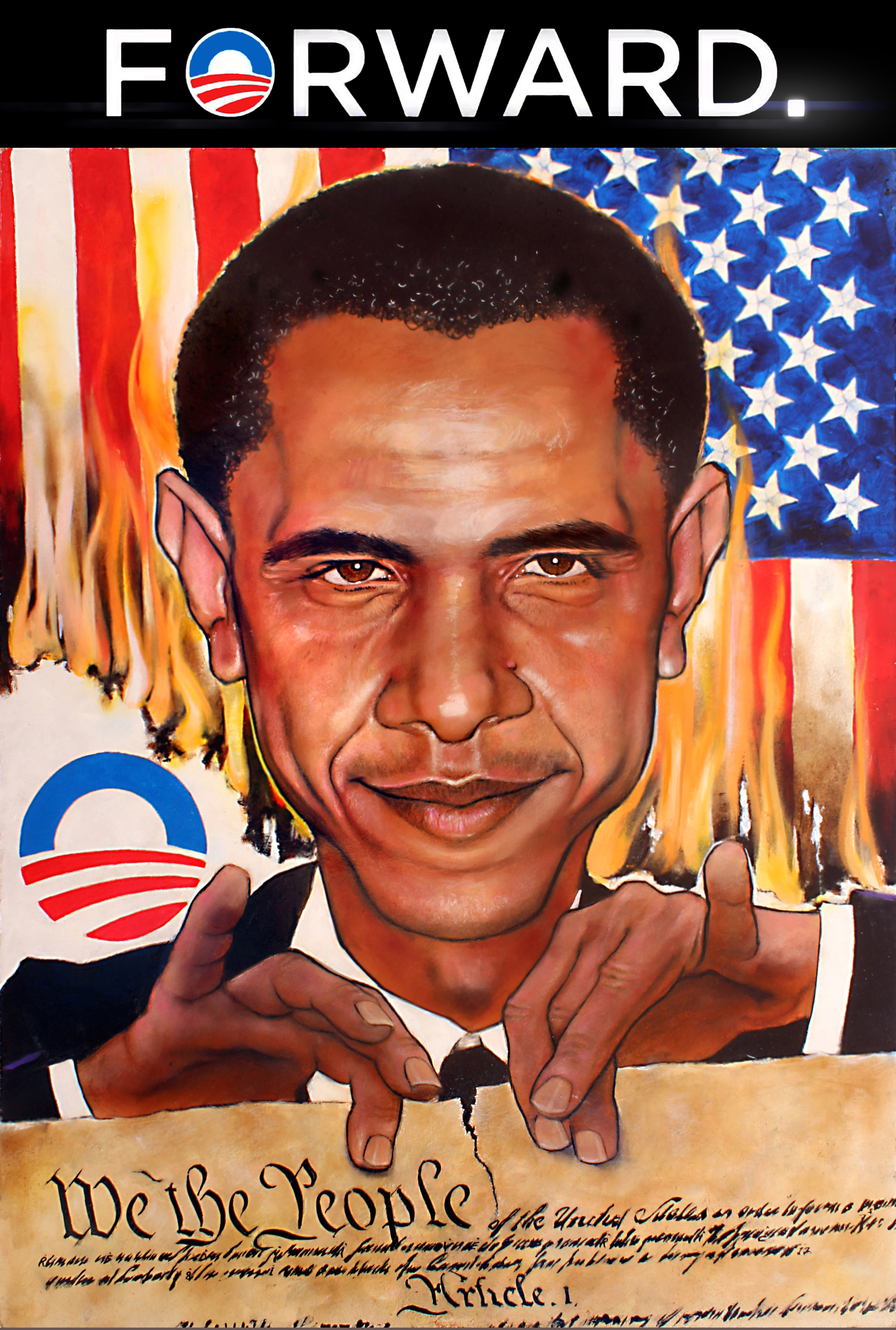
Historically, Presidential Inaugural Addresses have sought to inspire and unite the nation and provide directional leadership for the next presidential term. Perhaps to some, Monday’s speech did that. But to adherents of American exceptionalism, it was disconcerting. The president’s speech was laced with references to our founding principles; but their meanings were twisted, misrepresented, and stripped of their historical and definitional significance.
God was mentioned seven times in the address, which may exceed the number of times the Almighty has been invoked by Obama over the past four years, which made their invocation seem superficial. The Constitution was mentioned once, at the very beginning, citing his second term as evidence of its “enduring strength” (in spite of the fact that he has stretched and distorted that document’s limitations on the executive branch beyond recognition of the founding fathers so dramatically during his first term.)
Even the Declaration of Independence was cited along with those eternal classical-liberal ideals of life, liberty, and the pursuit of happiness that led to the severance of our relationship with Great Britain and the perceived tyranny of King George. It was no surprise that he was reticent regarding the breadth and scope of our current federal government, which arguably wields immensely more tyranny over the American people than the British crown held over colonial America.
Even free market economics were mentioned, although it was in the context that the omnipotent and omniscient federal government must constrain and control it.
Clearly, through artistry and manipulation, precept-by-precept, the principles upon which the American republic was established were being redefined. Those tenets, which are distinctly and singularly American, which once were the pillars that the nation stood upon, were going through a historical revision right before our eyes. They were being reframed, redefined, and reshaped to fit a new progressive lexicon of American patriotic buzzwords that vitiate their original meanings.
The Constitution seems to have relevance since it returned him to power for another four years. But in terms of governance, it seems that to him, it has lost its applicability to 21st century American politics since he can issue Executive and Administrative Orders that circumvent the very document he moments earlier swore he would uphold and defend.
God has no relevance in the godless, morally relativistic, and warped values of the ideology that seeks to make omnipotent government the central component in every American life, replacing an omnipotent deity. As the president’s campaign website so proudly portrays with its “Life of Julia”, the government is to be there at every turn and juncture in the life of the average American: governing, regulating, “helping,” and “supporting.”
And perhaps most invidious of all, Obama presented a perverted sense of “liberty.” No spurious redefinition of liberty could be more antithetical to the founder’s intent than “being true to our founding documents … does not mean we all define liberty in exactly the same way.”
In any language and any culture, liberty is synonymous with freedom. Not just a freedom “to,” as in “to do something,” but also a freedom “from,” as in freedom from control, repression, and tyranny. Each time liberty or freedom were mentioned, the words rang increasingly hollow and meaningless. For freedom to, and freedom from, have an inverse relationship to government growth, government power, and government control, which have dramatically increased over the past four years.
With each incremental Executive Order or legislative Act that broadens and expands central governmental authority, and with every dollar taken out of the pockets of Americans to fund the insatiable spending appetite of government, individual liberty and freedom are disproportionately diminished. As government grows, individual liberty decreases. No wonder, then, that he would frame the concept of individual freedom in the context of “collective action.” The progressive statist agenda is always based on collectivism, not individuality.
It’s difficult to separate the causation, or at least correlation, of the massive expansion of governmental power, and the alarming growth of government debt of the past four years, from the perceived elusiveness of the American Dream. Four years ago, over 52% of Americans still believed the “American Dream” was attainable. That has now dropped to less than 40%, according to pollsters at Zogby.
And regrettably, the perception seems accurate. Between legislative Act, presidential declarations, and bureaucratic regulatory expansion, Investor’s Business Daily now calculates that the government has direct or indirect control of more than 60% of the entire U.S. economy. Energy production, oil production and distribution, banking and finance, manufacturing, logging, mining, health care, insurance, automobile manufacturing, and more are all now controlled by the central government. A strict political classification of such an economy is clearly fascistic, where government controls, not necessarily owns, the means of production. Individual and collective freedoms are sacrificed when government wields so much power over the entire economy.
Clearly typifying the moral relativism of our dysfunctional culture, the phrase “We cannot mistake absolutism for principle” perverts the very meaning of principle. After all, a principle is “a fundamental truth or proposition that serves as the foundation for a system of belief or behavior or for a chain of reasoning.” As such, a principle is definitionally absolute. When they are no longer absolute, they are no longer principles; they’re simply good ideas. Such facile application of relativism to fundamental tenets like individual freedom and liberty diminishes the principled foundation of our republic.
The implications for the next four years are indeed ominous if this Inaugural Address represents the ideologically tortured state of our founding principles. With fundamental precepts marginalized through redefinition, token relevance accorded the Constitution, and free markets only viable with governmental control of the means of production, we are well on our way to the president’s desired “fundamental transformation of America.”
AP award winning columnist Richard Larsen is President of Larsen Financial, a brokerage and financial planning firm in Pocatello, Idaho, and is a graduate of Idaho State University with a BA in Political Science and History and former member of the Idaho State Journal Editorial Board. He can be reached at rlarsenen@cableone.net.
Photo credit: Dave Merrick
Source: FULL ARTICLE at Western Journalism