Tag Archives: GT

Quick Spin: 2013 Mercedes-Benz SLS AMG GT Coupe

By Michael Harley

Filed under: , , ,

2013 Mercedes-Benz SLS AMG GT

Mercedes-Benz upgraded its SLS flagship Coupe and Roadster for the 2013 model year, and the changes are marked with them new “GT” nomenclature. Both SLS models arrive with a retuned naturally aspired 6.2-liter V8 delivering 583 horsepower and 479 pound-feet of torque (the horses are up from 563, but the torque remains the same) mated to a revised seven-speed AMG Speedshift dual-clutch gearbox. Rounding out the mechanical upgrades is a redeveloped AMG two-mode adaptive suspension. Physically, the revised models are differentiated by their new “GT” badging, darkened headlight/taillight buckets, red brake calipers, unique wheel colors and high gloss finish on the front grille, exterior mirrors and hood/fender fins. Inside the cabin are new red seatbelts, Alcantara upholstery and contrasting red stitching.

As it is nearly impossible to experience the aluminum gullwing beast on public roads, Mercedes invited out to Southern California’s Willow Springs to wring out the 2013 SLS GT Coupe on a racing circuit.

Driving Notes

  • It was impossible to feel the horsepower bump from the driver’s seat (the track’s 2,000-foot elevation negated the increase anyway), but the free-breathing V8 sounds even more spectacular each time I meet it. Gobs of low-end torque, a responsive throttle and a willingness to race to redline (7,200 rpm) make it a near-perfect driver’s companion. The automaker quotes a 0-60 time of 3.7 seconds – traction at launch is a problem – with a top speed of 197 miles per hour. The SLS attacked the Streets of Willow with voraciousness. I’ve driven hundreds of laps on the circuit, but never in a vehicle so powerful that I needed to brake hard to make Turn One after rocketing down the straight (running clockwise).
  • After finding myself bumping off the limiter repeatedly while using the wheel-mounted paddles in manual mode (an LED shift light blinks red at the top of the cluster), I put the gearbox in Sport Plus and let computers do the thinking. Overall, I was pleased with its intuitiveness and I really enjoyed the throttle blips on the downshifts.
  • A near complete lack of body roll and very firm AMG Sport suspension (I chose the damper’s softest setting to combat the surface’s broken pavement) meant the rear end would break loose mid-corner if the power was applied abruptly. Smoothness and consistent throttle applications were imperative to keeping the rear end planted and exiting the corner with the nose pointed down the track. Overall balance was impressively neutral and weight distribution, fore and aft, was easily controlled with the accelerator pedal.
  • The 15.4-inch perforated front steel rotors could take plenty of abuse, but I preferred the optional carbon-ceramic brake setup as they felt unaffected by the heat generated on the tight track. As an added benefit, they weigh less and look even better through the forged spokes on the wheels.
  • Driven back-to-back on the track, the updated Coupe and Roadster were nearly identical dynamically (they both weigh 3,573 pounds). From a driver’s perspective, the exhaust note is more pronounced in the Roadster and there was more wiggle room for my helmeted head beneath its soft convertible top. Still, I wouldn’t want to give up those signature gullwing doors.

2013 Mercedes-Benz SLS AMG GT Coupe originally appeared on Autoblog on Thu, 31 Jan 2013 14:58:00 EST. Please see our terms for use of feeds.

Permalink | Email this | Comments

Source: FULL ARTICLE at Autoblog

Grid 2 Release Date Announced

Grid 2 will be released on Xbox 360, PlayStation 3 and PC on May 31st.

Codemasters has also released details of the Grid 2 Special Edition, which can be pre-ordered now, and will feature extra content that can be redeemed via PlayStation Network, and Xbox LIVE for Xbox 360 and Windows PC.

If you live in the UK, you’ll be able to pick up the Grid 2: Brands Hatch Edition by pre-ordering online or in store with Game. This special edition contains two additional packs, including the McLaren Racing Pack, containing the McLaren MP4-12C GT3 and two new routes around the Brands Hatch track, and the Head Start Pack, which includes the exclusive Mercedes-Benz SLR McLaren 722 GT and discounts in the Car Upgrades Store and a unique RaceNet bonus.

Continue reading…

Source: FULL ARTICLE at IGN Video Games

Quick Spin: 2013 Mitsubishi Outlander GT

By Jeffrey N. Ross

Filed under: , ,

I’m not a gambling man, but if there were a pool for an automotive death watch, my money would be on MitsubishiLincoln is a close second. To understand the plight of Mitsubishi, you only have to look at its current lineup; they all just look, feel and drive about 10 years older than they really are. With the departure of the Endeavor and merciful killing of the Eclipse (the Galant lives on, but is on hiatus for the 2013 model year), one of the worst remaining offenders is the Mitsubishi Outlander, which I recently drove in top-level GT trim for this Quick Spin.

If we had a time machine and took the 2013 Outlander GT back to 1998, it would be revolutionary. If we could take it back to 2004, it might be near the top of its class. But in the current highly competitive crossover segment of today, the Outlander just falls short. Yes, the all-new 2014 Outlander is on its way later this year, but from what we’ve seen both inside and out, the new design would look great in 2008. That being said, spending a week with any vehicle can point out surprising highs as well as lows, and there are still plenty of reasons to enjoy Mitsu’s midsize CUV.

Driving Notes

  • Unfortunately, I have to kick off my driving impressions on a negative note. There are few utility vehicles on the market that make the third row an enviable seating position, but the Outlander GT‘s rear-most seat is downright insulting. Not only is this the worst third-row seat currently on the market, it could very well be the worst ever created – that includes the uncomfortable rear-facing third row of a certain 1977 Impala station wagon I was relegated to as a kid during family road trips. The operation is clunky, the padding is lacking and the snap-on headrests are as tall as the seat back itself.
  • On the opposite end of the scale, the best part about the Outlander GT is its drivetrain and platform. Replacing the base four-cylinder engine and continuously variable transmission, the GT trim level brings a well-aged 3.0-liter V6 paired to a six-speed automatic transmission. Since it shares its underpinnings with the Mitsubishi Lancer, the Outlander also has a pretty good ride quality in just about any road condition.
  • My tester was equipped with Mitsubishi’s dynamic Super All-Wheel Control (S-AWC) sending the engine’s 230 horsepower to all four wheels, improving traction or performance depending on which driver-selectable mode has been chosen (Tarmac or Snow), and there is also an active front differential that that splits engine torque across the front axle or fully locks (in Lock setting) for better off-road performance. I didn’t have the chance to do any serious off roading in Outlander, but I was able to test out the S-AWC along sandy, gravelly roads, which the Outlander handled like a champ.
  • Thanks to a 2010 styling refresh, the Outlander is one of the better-looking budget crossovers on the market. With its gaping grille and angular HID headlights, the Outlander GT has a pretty imposing face, and the clear-lensed LED taillights are also a stylish touch to the overall look of the Outlander. While this tester’s dark blue color didn’t do its lines any favors, it’s is still a reasonably handsome midsize CUV.
  • Try as it may to look like the Lancer Evolution, the Outlander does not live up to its “GT” trim. Its car-based platform and raised stance just make it feel like a tall car rather than a sporty crossover. I didn’t have the time to put the performance aspect of S-AWC to the test, but you can tell that the Outlander is designed to be the budget-minded crossover in its segment rather than performance-minded. Speaking of budgets, the Outlander GT‘s fuel economy rating of 19 miles per gallon city and 25 mpg highway is about par for V6-powered vehicles in this segment, but it also requires premium gasoline.
  • Aside from the after-thought of a third-row seat, the rest of the Outlander’s interior isn’t all that bad. Front occupants can enjoy heated seats (with the button buried between the seat and the center console) and Mitsubishi’s easy-to-use Fuse hands-free system as standard equipment. Even the middle row provides a surprising level of comfort with a 60/40 split seat that can slide and recline allowing ample legroom and space for the unfortunate passengers in the way back. Another quirky benefit of the Outlander is the fold down tailgate that sits flat with the cargo floor making it easier to load and unload bulky items.
  • Then there’s the matter of price. Even though the Outlander starts at a reasonable $22,695, this GT tester came practically fully loaded with a $2,500 Touring Package and a $2,000 Navigation Package, which boosted the as-tested price to $33,920. You can get a lot more utility from a more stable brand for that much or lower.

2013 Mitsubishi Outlander GT originally appeared on Autoblog on Wed, 30 Jan 2013 14:58:00 EST. Please see our terms for use of feeds.

Permalink | Email this | Comments

Source: FULL ARTICLE at Autoblog

Official: Kia shows Cee'd GT and Pro_cee'd GT ahead of Geneva debut

By Jeffrey N. Ross

Filed under: , , , ,

Kia has been releasing a lot of new models lately, showcasing improvements in both design and luxury, but a pair of introductions at the 2013 Geneva Motor Show could bring the automaker into the performance mindset. The five-door Kia Cee’d and three-door Pro_cee’d will be getting new GT trim levels that bring a little more horsepower and sportier styling to the compact hatchbacks.

For added power, the 1.6-liter direct-injected inline-four packs a new turbocharger that bumps engine output to 201 horsepower and 195 pound-feet of torque (an increase of 68 hp and 74 lb-ft), which is good enough to quicken the cars’ 0-60 times to under eight seconds flat. Unfortunately, it doesn’t appear that there are any suspension upgrades, but the cars do get a dual exhaust system and 18-inch alloy wheels. Red brake calipers and a unique front fascia finish off the exterior styling, while Recaro buckets and a “GT” embroidered steering wheel can be found inside.

Both the Cee’d GT and Pro_cee’d GT will be on sale by the end of this year, and although we don’t expect to see these cars in the US, adding a GT model to the Rio or Forte doesn’t seem like it wouldn’t be that hard.

Continue reading Kia shows Cee’d GT and Pro_cee’d GT ahead of Geneva debut

Kia shows Cee’d GT and Pro_cee’d GT ahead of Geneva debut originally appeared on Autoblog on Wed, 30 Jan 2013 14:29:00 EST. Please see our terms for use of feeds.

Permalink | Email this | Comments

Source: FULL ARTICLE at Autoblog

2013 Rolex 24 Hours of Daytona Wrap-Up and Mega Gallery

By John Lamm

There was a time when the 24-hour sports-car race at Daytona International Speedway was something of an oddity. We loved it for being the first serious race of the year, but it also was like the poor step child of the Daytona 500. The crowds were okay, but not crushing. Not anymore. These days the infield is crammed with fans, the grid walk before the start a mass of well-wishers straining to see the likes of Dario Franchitti or Juan Pablo Montoya. The 2013 entry list ran to 57 race cars in three classes: the Daytona Prototypes running for the overall win, 34 GTs ready to duke it out, plus a small-but-new class, the GX cars.

Top dogs were, of course, the DP cars, which are not only fast and wonderfully noisy, but have a driver’s list that includes not just Grand-Am heroes like Scott Pruett and Alex Gurney, but some from IndyCars—Franchitti, Scott Dixon, Paul Tracy, and newly-crowned champ Ryan Hunter-Reay—and NASCAR’s Montoya, Jamie McMurray, and Marcos Ambrose.

Cool, but what also makes you smile are the GTs, the cars we often hunger after for the road. Porsche once owned this class—and there were 18 Porsche 911 GT3 Cup cars entered this year—but now Audi and Ferrari have stepped up with their R8 Grand-Ams and 458s. Throw in a handful of Corvettes, a Viper, a Camaro, a pair of BMW M3s, and a hangover Mazda RX-8, all crowding each other, and it’s gotta make you smile.

Then there were the six GX machines, a fledgling class meant to draw new technology, which it did with the three Mazda 6s and their Skyactiv-D turbo-diesel engines. There also was a trio of Porsche Caymans, one—seen above—painted in the same colors and scheme as the Psychedelic Hippie 917L from the 1970 24 Hours of Le Mans.

Throw in that crowded infield with its Ferris wheel and fireworks and it’s quite an all-night party with decided overtones of wood smoke, barbecue, and beer.


So who were the winners? Chip Ganassi’s team did it again, Pruett taking his fifth win, tying the legendary Hurley Haywood for most all time. Pruett’s teammates were Montoya, Dixon, Charlie Kimball, and Memo Rojas. Audi finished one-two in GT, the leading team being Filipe Albuquerque, Dion von Moltke, Oliver Jarvis, and Edoardo Mortara. Porsche took the GX win thanks to David Donohue, Jim Norman, Shane Lewis, and Nelson Canache in the Psychedelic Hippie Cayman.

Next year’s party promises to be even better with the integration of Grand-Am and the American Le Mans Series. Come to think of it, the infield at Daytona would make for a legendary Super Bowl party.

24 Hours of Daytona Race Recap

Source: FULL ARTICLE at Car & Driver

Audi Nearly Sweeps The GT Class In The Rolex 24 At Daytona

By Kurt Ernst

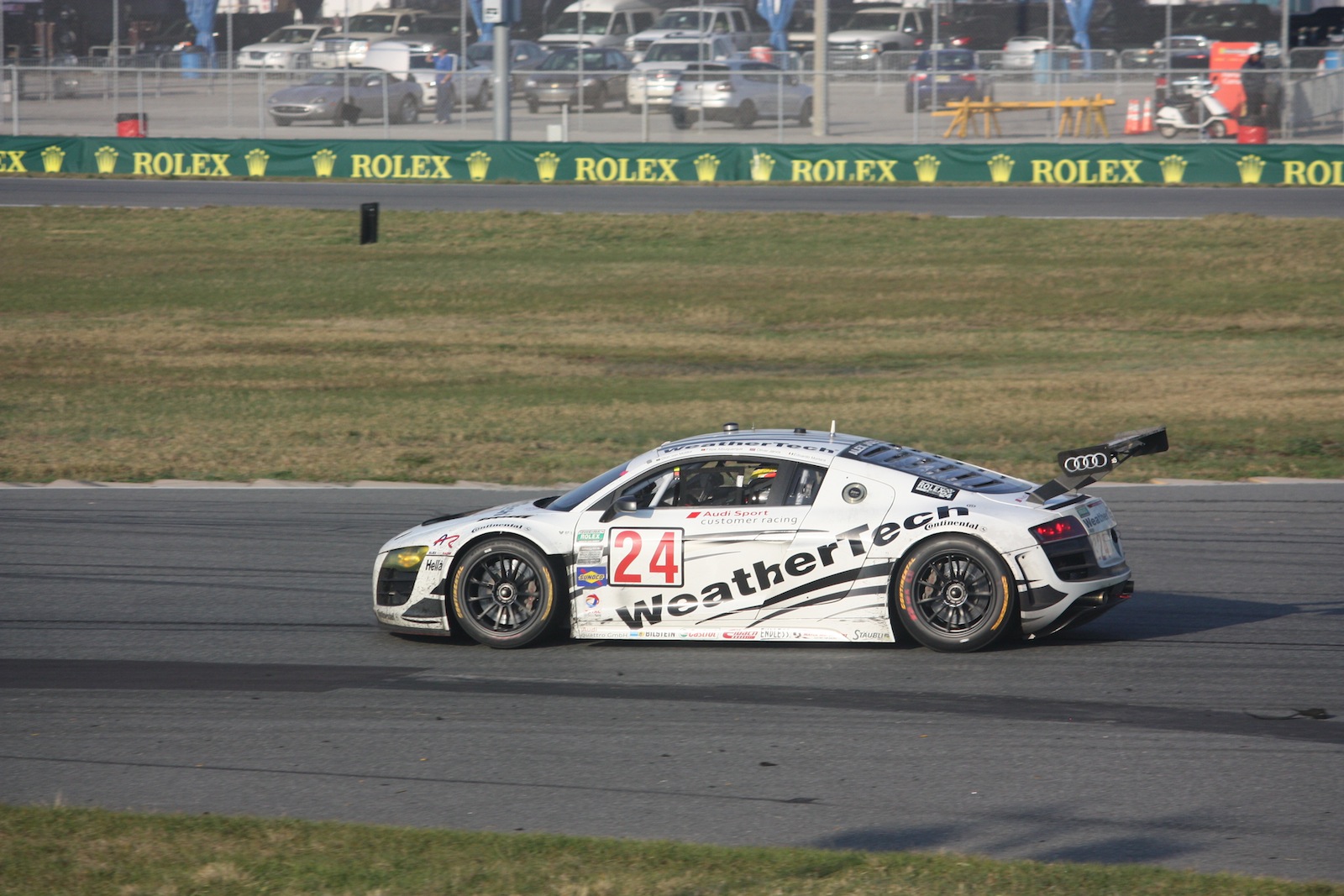
The GT Class winning Audi R8 of Alex Job Racing

The GT Class winning Audi R8 of Alex Job Racing

Consider this: 18 of the 33 GT Class cars that started last weekend’s Rolex 24 at Daytona were Porsche 911 GT3 Cup cars, either running the new 4.0-liter flat-six engine (with a restrictor on the intake) or the proven (and unrestricted) 3.8-liter flat-six. Seven entrants were Ferrari 458 Italias, followed by four Audi R8s, followed by a Camaro, a Corvette, a BMW M3 and a Dodge Viper.

In terms of percentages, nearly 55-percent of the cars on the GT Class starting grid were 911s, which have long been the dominant car at Daytona. Blame it on rule changes or blame it on Audi’s sheer will to win, but the first Porsche 911 GT3 Cup car to cross Daytona’s checkered finish line did so in fifth place (13th overall), behind a pair of Ferraris (taking third and fourth spots) and a pair of Audi R8s (taking first and second).

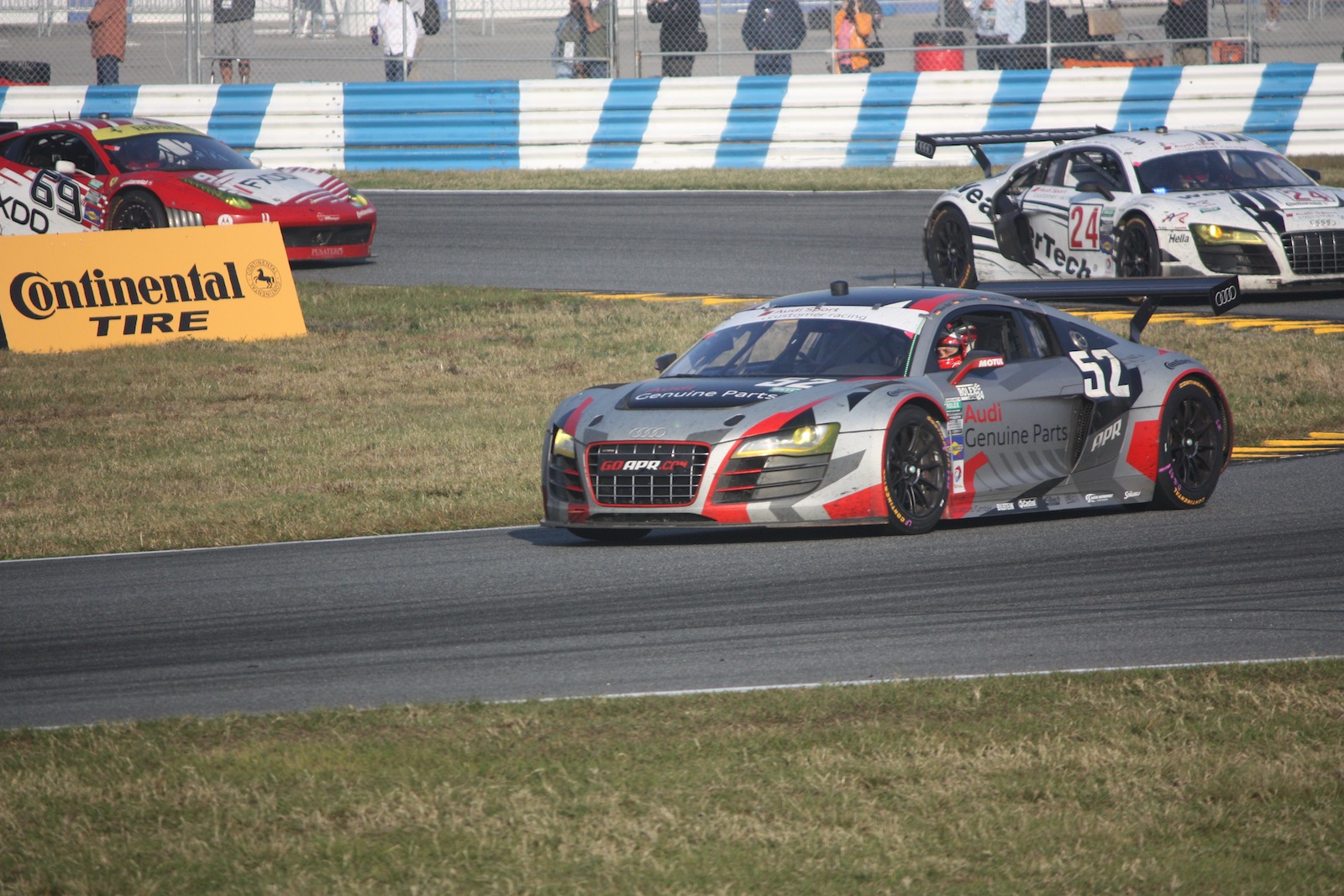
The second-place Audi R8 of APR Motorsports

The second-place Audi R8 of APR Motorsports

Filipe Albuquerque drove a near-perfect stint race to bring the #24 Audi Sport Customer Racing / Alex Job Racing R8 across the finish line first in class, despite transmission problems at the end of the race. It was the driver’s first visit to Daytona, making the win that much more impressive. Rene Rast brought the #52 Audi Sport Customer Racing / APR Motorsport R8 across the line in second place, after holding off the #69 AIM Autosport Team FXDO With Ferrari 458 Italia in the closing laps.

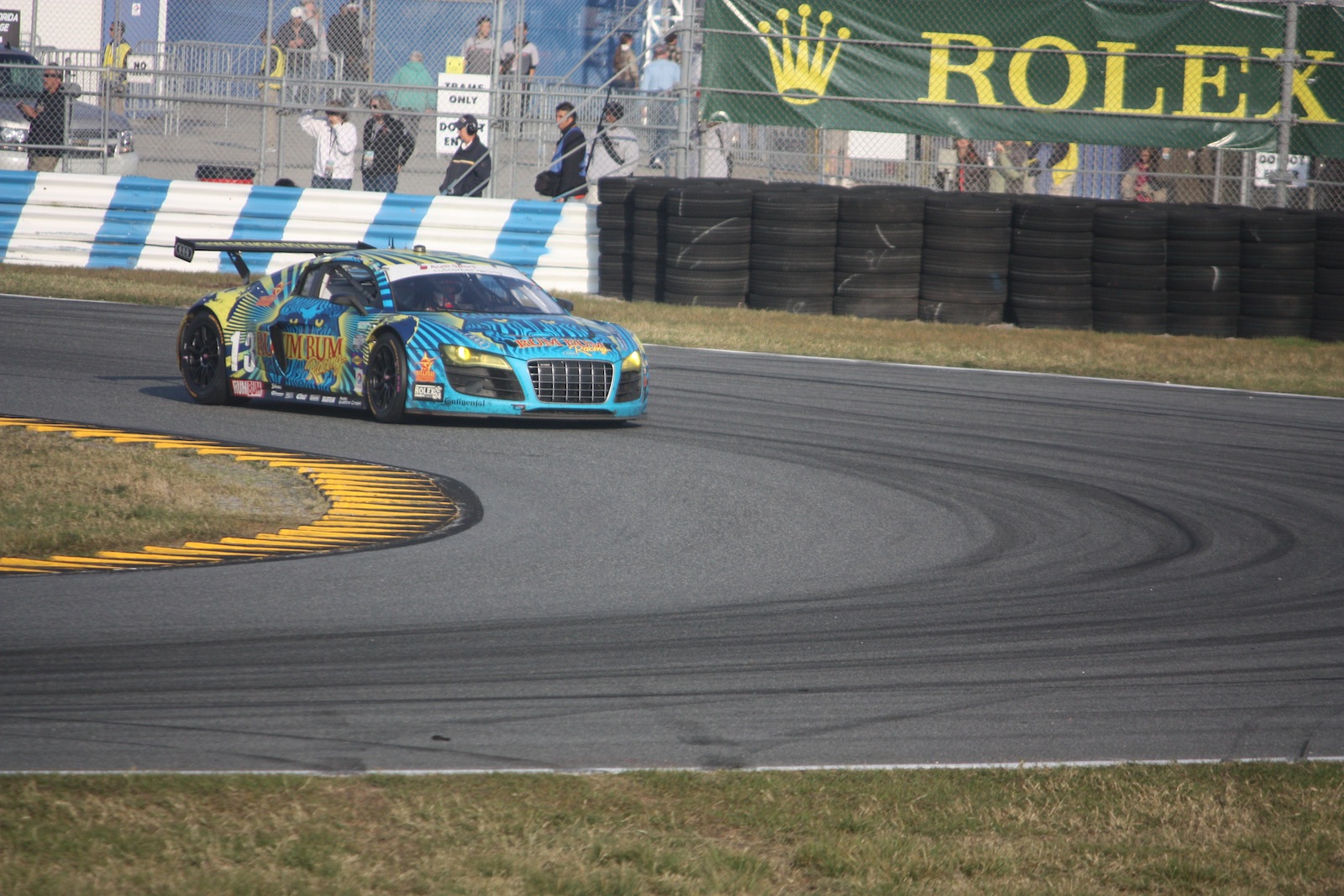
Had the #13 Audi Sport Customer Racing / Rum Bum Racing Audi R8 not run short of fuel in the closing laps, it almost surely would have been a clean podium finish for Audi. The Audi R8 Grand Am has come a long way since last year, when two cars were entered and finished a disappointing 44th and 45th overall.

Rum Bum Racing's R8 hits the International Horseshoe

Rum Bum Racing’s R8 hits the International Horseshoe

Aside from the Audi R8s and Ferrari 458 Italias, the GT class is in danger of becoming a Porsche 911 spec series, as the Camaros, Corvettes and Vipers have all been rendered non-competitive by rule changes. Let’s hope that changes before too much longer, since the world already has all the Porsche 911 spec series it needs.

Source: FULL ARTICLE at Automotive Addicts

BMW-Riley of Ganassi Racing & WeatherTech Audi R8 Win Rolex 24 at Daytona

By Malcolm Hogan

rolex-24-01-ganassi-bmw

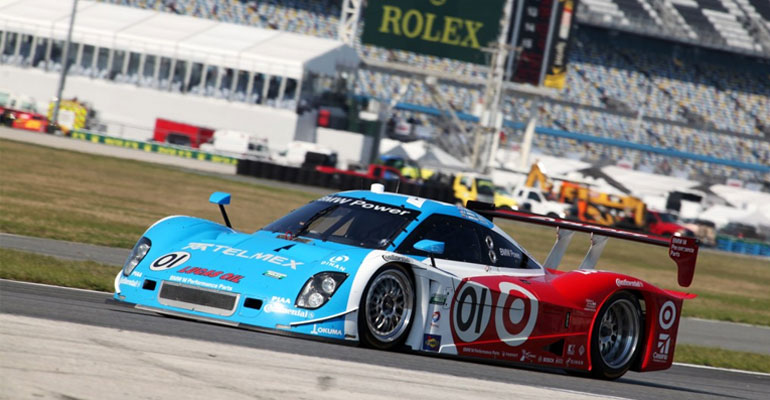
Piloting the #1 Chip Ganassi Racing BMW-Riley protype, Scott Pruett (fifth over-all win), Rojas, Montoya, Kimball and Dixon take home the win for Rolex 24 Hour at Daytona for DP class this year, while the #24 Audi Sport Customer Racing/AJR WeatherTech Audi R8 of Alburquerque, Jarvis, Mortara, and Von Moltke take the checkered flag for GT class. The Napleton Racing #16 Porsche Cayman won in the GX series with Shane Lewis, David Donohue, Dr. Jim Norman and Nelson Canache.

weathertech-audi-r8

There was no doubt that this year’s Rolex 24 at Daytona was eventful with an exciting last couple hours thought to come down to a fuel-racing-game. All through the night there were only a few incidents while the race as a whole did not have many serious mishaps. Scott Pruett will surely get a nod in the history books as he ties Hurley Haywood with a record 5 Rolex 24 at Daytona wins.

NASCAR drivers Marcos Ambrose and A.J Allmendinger (one of last year’s Rolex 24 at Daytona winner) finished third. Jamie McMurray in the #02 car for CG finished in 32nd position. Clint Bowyer and Michael Waltrip in the GT series finished 15th overall.

Source: FULL ARTICLE at Automotive Addicts

Motorsports: Mega Galleries: All day and into the night at the Rolex 24 at Daytona

By Jonathon Ramsey

Filed under:

The Rolex 24 at Daytona is still running, and we spent yesterday and a healthy portion of the evening absorbing the agitato thunder of the Daytona Prototypes, the mezzo-soprano howl of the GT cars, the RVs, the bonfires, the numerous full-course yellows, the back-course braking into the Bus Stop and, of course, the ferris wheel.

We’ll be back with a race recap after the victors are decided, so for now enjoy some photos of what we’ve seen so far.

Mega Galleries: All day and into the night at the Rolex 24 at Daytona originally appeared on Autoblog on Sun, 27 Jan 2013 14:56:00 EST. Please see our terms for use of feeds.

Permalink | Email this | Comments

Source: FULL ARTICLE at Autoblog

Video: Mazda6 GX Grand-Am racer goes where no diesel sedan has gone before

By Jonathon Ramsey

Filed under: , , , , ,

There has never been a four-door diesel sedan in the Grand-Am series, until now: The blunt, bewinged grille of the Mazda6 GX has blown right through that wall. It’s said that racing improves the breed, but usually the breed has gone on sale when the racing begins. One of the unusual aspects of the Mazda6 GX, on the other hand, is that while the diesel won’t go on sale to the public until later this year, it will already have tasted racing blood by the end of the day. That kind of reversal is more likely found with super coupes like the Lexus LFA and Honda NSX.

Mazda has taken class wins at Daytona’s 24-hour race a whopping 23 times since 1975, most recently in 2010 with the RX-8 in the GT class. This year the Hiroshima company decided to show off its SkyActiv technology, then turned things up to eleven by opting for its SkyActiv-D instead of the more conventional SkyActiv-G gas engine to run in the new GX class. It will be joined by competitors like the Lotus Evora and Porsche Cayman in the class, nevertheless, at 2.4 liters, it’s the smallest engine on the grid.

Time has not been a friend, either – Mazda said that the first five SkyActiv-D engines off the production line went to Speed Source in Coral Gables, Florida, the company that preps Mazda’s race vehicles. Still, race driver Jonathan Baumarito on the #70 car said that although the engine’s been on the dyno since February of last year, it’s only been in the car for about a month and there have been only a couple of test days.

Speed Source owner, team driver and multiple 24-hour winner Sylvain Tremblay – he drove in the teams that won in 2008 and 2010 in the RX-8 – said the big challenge right now is getting the gearing right. Both Tremblay and Baumarito said that the diesel’s torque is a plus through the Bus Stop section at the back of the course, entered after coming off the high-speed banked turn. But Tremblay said that the first infield section of horseshoes is more trying because the SkyActiv-D needs to be on boost to get its power on, and that doesn’t happen until after 3,500; maintaining that through slow-speed turns and having enough to get the job done through the high-speed ovals is the test.

There are three Mazda6 GXs competing, Everyone is cautiously optimistic about how things might go during the race, but in fairness this has to be looked at as a 24-hour testing session. Road & Track rode shotgun for a lap in the #00 Visit Florida Racing car, you can check out the sounds of diesel at Daytona in the video below.

Continue reading Mazda6 GX Grand-Am racer goes where no diesel sedan has gone before

Mazda6 GX Grand-Am racer goes where no diesel sedan has gone before originally appeared on Autoblog on Sat, 26 Jan 2013 19:03:00 EST. Please see our terms for use of feeds.

Permalink | Email this | Comments

Source: FULL ARTICLE at Autoblog

Aston Martin Rapide S Unveiled w/ 550 British Ponies

By Malcolm Hogan

Aston-Martin-Rapide-S-1

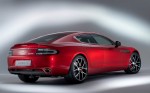
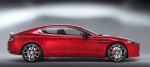
The long-awaited Aston Martin Rapide S has been unveiled as Aston Martin’s most powerful 4-door vehicle yet. Now with 550 horsepower and 457 pound-feet of torque from a 6.0-liter V12 engine, the British 4-door is good for reaching 0-60 mph in just 4.7 seconds and top out at 190 mph.

Receiving a fresh new style and update from its predecessor, the new Rapide S gets more of a sporty character as what the “S” label probably represents. New adaptive suspension and three driver select modes, Normal, Sport and Track, make the most out of the new Rapide S’ new-found handling abilities and extra power.

Aston-Martin-Rapide-S-8

The over-all exterior styling profile has been updated to have more of a coupe look where the rear doors almost dissolve into the wide fender-flared rear-end. Its distinctive looks are yet only one aspect to set it apart from anything else on the road. A newly design front grill, still resembling other Astons, gets a reshape. Other design elements include Carbon Fiber from a new optional Carbon Exterior Pack for all major exterior trim pieces.

Aston-Martin-Rapide-S-10

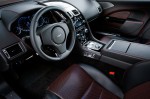
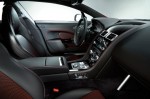
The internet basically remains the same, which is not a bad thing considering how it was perceived by many to be plush, luxurious and functionally timeless. Updated is a new piano black interior pack and Dutone perforated red and black leather.

Aston-Martin-Rapide-S-1
Aston-Martin-Rapide-S-2
Aston-Martin-Rapide-S-3
Aston-Martin-Rapide-S-4
Aston-Martin-Rapide-S-5
Aston-Martin-Rapide-S-6
Aston-Martin-Rapide-S-7
Aston-Martin-Rapide-S-8
Aston-Martin-Rapide-S-9
Aston-Martin-Rapide-S-10
Aston-Martin-Rapide-S-11
Aston-Martin-Rapide-S-12

Aston Martin Rapide S Press Release

The Aston Martin Rapide S: more power, more beauty, same soul

• Rapide S is the most powerful four-door Aston Martin to date
• Peak output jumps 17% as new 6.0-litre V12 engine produces 550bhp
• More assertive new look emphasises Rapide S’ sports car character

Gaydon, England – 23 January 2013 – The stunning new Aston Martin Rapide S is making its debut with yet more luxury and yet more power on offer in its quintessentially elegant four-door silhouette.

The iconic British car maker’s new luxury GT has been sympathetically redesigned and painstakingly re-engineered to reassert its position as the world’s most beautiful, and beautifully balanced, four-seat sports car.

Aside from the extensive design and engineering improvements, the luxurious new Rapide S – which replaces the outgoing Rapide in markets worldwide – is now even more refined thanks to a range of additions to the four-seater’s sumptuous interior.

Still instantly recognisable as an Aston Martin, of course, the new Rapide S now boasts an imposing and assertive new ‘face’, created by virtue of the impressive and striking new full grille.

Imbuing the new car with an even more sporting, forceful demeanour, the revised front end design is matched at the back by a striking new rear deck profile which includes a more pronounced boot lid ‘flip’. The aerodynamic and aesthetic upgrades both reinforce the sporting nature of new Rapide S and work to counteract lift at higher speeds.

Aston Martin Chief Executive Officer, Dr Ulrich Bez said: “The Rapide S is to me, without doubt, the most beautiful four-door sports car on the market today. This is, very clearly, the power of luxury in action.

“The car’s stunning visual appeal is now matched by a much more powerful and yet more efficient engine – our exceptional new AM11 V12 – which increases massively both the excitement and performance potential of the Rapide S.

“It is a four-door sports car that uniquely combines luxury, style and sporting excitement in Aston Martin’s most flexible and accommodating silhouette. Purity of proportion and exceptional elegance are mixed with truly sensational dynamic performance – this is the four-door sports car in its most versatile form and I am sure our customers around the world are going to love it!”

Engineered to excel
Changes under the new Rapide’s skin are comprehensive, with a version of the new AM11 naturally-aspirated 6.0-litre V12 powerplant delivering unprecedented power and improved in-gear acceleration.

Power from the new engine jumps significantly versus that of its predecessor: up by 17% or a massive 80 bhp from 470 bhp at 6,000 rpm to a now very substantial 550 bhp at 6,750 rpm.
Peak torque increases, too, up from 443 lb.ft (600 Nm) to 457 lb.ft (620 Nm) at 5,000 rpm. Meanwhile an even more marked improvement in torque occurs lower down the rev range, as pulling power rises by more than 30 lb ft (40 Nm) between idle and 4,000 rpm with an additional 37 lb ft (50 Nm) available at 2,500 rpm.

Naturally, increases in power and torque lead to even swifter performance as befits a four-door sports car. New Rapide S shaves 0.4 seconds off its 0-60 mph time, which drops from the 5.1 seconds of the current car to just 4.7 seconds for the new model. Top speed climbs, meanwhile, to 190 mph.

The 5,935 cc naturally aspirated V12 boasts race car technology – developments derived directly from Aston Martin Racing’s successful WEC GT campaign – to maximise both performance and efficiency. The new AM11 engine thus boasts fully CNC machined combustion chambers and lighter, hollow, cam shafts.

Dual variable camshaft timing, knock sensing, even the fully catalysed stainless steel exhaust system – these are all engineering advances developed to preserve the V12′s position as a mainstay of the Aston Martin range.

The engine is now even more efficient, too. Despite the very significant increase if peak power and torque, the Rapide S is appreciably more economical than before. European CO2 emissions drop by seven per cent – from 355 g/km to 332 g/km – while fuel economy now stands at 19.9 mpg on the official EU combined cycle (US data to be confirmed).

A product of the latest generation of Aston Martin’s world-renowned VH engineering philosophy, which debuted in 2003, the new car of course benefits from many elements of the current Gen4 VH architecture.

The carefully conceived engineering changes continue as the new Rapide now offers even sharper agility and even quicker responses to driver input. The new AM11 engine – a key Gen4 component – has been lowered by 19 mm versus the position of the powerplant in the previous car, with a corresponding reduction in the sports car’s centre of gravity.

The changes also lead to a tangible improvement in front end turn-in – no mean feat for a car that was already acknowledged as a leader in dynamic performance.

Aston Martin engineers at the company’s global HQ in Gaydon have worked to revise the car’s dynamic stability control (DSC) in line with its significant increases in both power and torque.
As befits the more sporting nature of new Rapide S the car benefits from the latest Gen4 iteration of Aston Martin’s hi-tech Adaptive Damping System (ADS). The system now offers three distinct settings: ‘Normal’, ‘Sport’ and ‘Track’, with the character of each being tailored to the nature of Rapide S.

The ADS automatically alters the suspension settings to ensure the driver has high levels of control at all times, with the ability to respond quickly to different driving conditions. The different damping modes help to significantly broaden the character of the Rapide S, adapting its set-up to suit the driver’s mood and requirements. Thus it can be a luxurious GT car in Normal mode with the capacity to morph into a more assertive sports car in Sport and Track modes.

The damper settings are determined by an electronic control unit which takes sensor readings from the car’s systems, including throttle position, brake position, steering wheel rotation and vehicle speed. This data establishes the prevailing driving conditions and the demands the driver is making on the car.

Head of Product Development at Aston Martin, Ian Minards, explains: “Growing the power in a luxury sports car is all very well, but maximising control and ‘usability’ of that increased power is, just as much, the engineers’ challenge.

“Balance, poise and control are the keys to a successful sports car and the dynamic improvements we have made with Rapide S showcase our efforts to make this not just the most beautiful, but also the most beautifully balanced, car in its class.”

He added: “Transmission calibration, ADS refinement, braking capability and engine output optimisation are among the many ‘ingredients’ which the team here at Gaydon have used to create a sports car of unerring quality and excitement.”

Meanwhile, as with the new DB9, the new Rapide S achieves compliance with the latest European pedestrian protection regulations courtesy of its innovative new front grille design.
The lowered engine, new bonnet, new front bumper construction and new grille combine to deliver a uniquely innovative approach to pedestrian impact protection.

The patent-pending design – which features a unique ‘keystone’ construction – enables the grille to move rearwards on impact, whilst the central and outboard chin stiffeners give rigidity to the lower structure and support achievement of the leg impact regulations. Cut-outs on the front wing catwalks contribute to the achievement of the headform regulation.

The solution means Aston Martin can remain true to its design ethos, and avoid the use of plastic grilles and nose cone bumpers that stretch up in front of the bonnet.

First class cabin
As luxurious as it is thrilling, the new car now boasts a host of new luxury- or sports– orientated options, allowing buyers to more precisely tailor the car to their specific style.

The new optional Carbon Exterior Pack, for instance, immediately dials up the Rapide’s sporting attitude. Front splitter, rear diffuser, mirror caps and rear lamp infills all fashioned from carbon fibre clearly signal the sporting nature of this 550 bhp four-seater.

More pronounced luxury, on the other hand, comes from the new piano black interior pack that adds a deep, rich, mirror-like shine to the facia, transmission tunnel centre plate and door handles of the Rapide S. A darker surround in the instrument binnacle and steering wheel with black horn-push surround round off the pack’s sumptuous additions. Luxurious blend headlinings in either tan or grey emphasise the luxury still further inside.

As would be expected of a modern Aston Martin, handcrafting is the order of the day in the Rapide S with the standard-fit pure glass transmission selector switches in the centre console one small yet important example of the truly authentic, bespoke, nature of the car’s cabin.
However those with a desire for a more sporting ambience in their sports car will not be disappointed. Optional Duotone perforated red and black leather makes its Aston Martin debut here – delivering a captivating visual combination that’s unique to the new Rapide S.

Luxury is enhanced by the removal of extraneous ‘noise’ and the enhancement of desirable ‘sound’ – a fine distinction but one that helps the new car deliver an aural experience like no other. Improved NVH (noise, vibration and harshness) characteristics are derived from the likes of the new bonnet lining and revised windscreen cowl.

Flexibility comes in the form of four seats – the rearmost two capable of accommodating adults in a uniquely sporting setting – while at the touch of a button the individual back seats fold down to almost triple the Aston Martin’s load space.

Options to further enhance the luxurious look and feel of the Rapide S include, subject to market, a reversing camera and twin screen rear seat entertainment system with wireless headphones, remote control and six-disc DVD changer.

Those seeking the ultimate in luxury and personalisation can also consider the ‘Q by Aston Martin’ service which offers uniquely-tailored options for individualisation. The Q service focuses on fashioning colour and materials with limitless boundaries precisely to customer choice and specification, enabling owners to give free rein to the creativity and indulge their desire for bespoke luxury.

The new Aston Martin Rapide S will be available to order through the brand’s 146 dealers worldwide next month with prices confirmed closer to the on-sale date.

Aston Martin Rapide S Specification

Body
• Four-door sports car with four seats
• Extruded bonded aluminium VH body structure
• Aluminium, magnesium alloy and composite body
• Extruded aluminium door side-impact beams
• Single bi-xenon headlamps with integrated LED side lights and direction
indicators
• Clear LED rear lamps

Engine
• All-alloy, quad overhead camshaft, 48 valve, 5,935cc, V12
• Front mid-mounted engine, rear-wheel drive
• Fully catalysed stainless steel exhaust system with active bypass valves Max power: 550 bhp (558 PS) at 6,750 rpm
Max torque: 457 lb ft (620 Nm) at 5,500 rpm
Acceleration: 0-60 mph in 4.7 seconds
Max speed: predicted 190 mph (306 km/h)

Transmission
• Rear mid-mounted ‘Touchtronic 2′ six-speed transmission with electronic shift-by- wire control system
• Alloy torque tube with carbon fibre propeller shaft
• Limited slip differential
• Final drive ratio 3.46:1

Wheels & Tyres
• 20-inch, 20-spoke, silver painted alloy wheels
• Front wheel: 8.5J x 20-inch
• Rear wheel: 11J x 20-inch
• Front tyre: Bridgestone Potenza 245/35 ZR20
• Rear tyre: Bridgestone Potenza 295/30 ZR20
• Tyre repair kit

Dimensions
Length: 197.6” (5019mm)
Wheelbase: 117.7” (2989mm)
Front Track: 62.6” (1589mm)
Rear Track: 63.5” (1613mm)
Width: 84.3” (2140mm) (inc. mirrors) 75.9” (1929mm) (exc. mirrors)
Fuel tank capacity: 19.9 Imp.galls, 23.9 US galls (90.5 litres)
Height: 53.5” (1360mm)
Weight: 4387lb (1990 kg)

Steering
• Rack and pinion, servotronic speed-sensitive power-assisted steering, 3.0 turns lock-to-lock
• Column tilt and reach adjustment

Brakes
• Front: dual cast discs, 398 mm diameter with six-piston monobloc calipers
• Rear: dual cast discs, 360 mm diameter with four-piston monobloc calipers
• Grey painted brake calipers
• Dynamic Stability Control (DSC) with track mode
• Anti-lock Braking System (ABS)
• Electronic Brakeforce Distribution (EBD)
• Emergency Brake Assist (EBA)
• Traction Control (TC)

Suspension
• Three Stage Adaptive Damping System (ADS) with Normal, Sport and Track modes
• Front: independent double wishbones incorporating anti-dive geometry, coil springs, anti-roll bar and monotube adaptive dampers
• Rear: independent double wishbones with anti-squat and anti-lift geometry, coil springs, anti-roll bar and monotube adaptive dampers

Specification
• Full-grain leather interior
• Walnut facia trim with graphite centre console finish and iridium silver surround
• Leather sports steering wheel
• Electrically adjustable front seats with side airbags
• Memory front seats & exterior mirrors (three positions)
• Dual-stage driver/front passenger front airbags
• Front occupant side airbags
• Powerfold exterior heated mirrors
• Heated front and rear seats
• Heated rear screen
• Automatic temperature control
• Organic Electroluminescent (OEL) displays
• Trip computer
• Cruise control
• Bluetooth® telephone preparation1
• Satellite navigation1,2
• Auto-dimming interior rear-view mirror
• Auto-dimming interior rear-view mirror with garage door opener (USA and
Canada only) 1
• Satellite radio system (USA only) 1
• Front and rear parking sensors
• Tyre pressure monitoring system1
• Alarm and immobiliser
• Remote-control central door locking and boot release
• Glass ECU
• Tracking device1,3 (UK only)
LED map-reading lights
• Boot-mounted umbrella
• 1000-watt Bang & Olufsen BeoSound audio system with ICEpower® technology
• Integrated Apple iPod®,4 connector
• USB Connector with Waveform Audio Format (WAF), Windows Media Audio
(WMA) and MPEG (MP3) audio file compatibility
• 3.5 mm auxiliary input socket

Options
• 20-inch multi-spoke alloy gloss black painted wheels with diamond turned finish
• 20-inch ten-spoke alloy silver painted wheels with diamond-turned finish
• 20-inch ten-spoke alloy black painted wheels with diamond-turned finish
• 20-inch 20-spoke polished alloy wheels
• Alternative brake caliper finish – black, red, or silver
• Magnum Silver rear lamp infills
• Delete model badge
• Delete protective tape
Carbon Exterior Pack
• Optional facia trims – Piano Black, bamboo, tamo ash, mahogany
• Piano Black Pack
• Matching wood door trim
• Personalised sill plaques
• Semi-aniline leather
• Duotone black and red perforated leather
• Colour-keyed steering wheel
• Embroidered Rapide S seat logo
• Carbon Interior Pack
• Twin-screen rear-seat entertainment system with six-disc DVD player, auxiliary
input, wireless headphones and remote control
• Auto-dimming interior rear-view mirror with garage door opener 1
• Alarm upgrade (volumetric and tilt sensor)
• Ventilated front and rear seats
• Smoker’s pack (ashtray and cigar lighter)
• Second glass key
• Tracking device (UK category five)1,3
• First-aid kit
1 Not available in all markets
2 Includes Traffic Messaging Channel (TMC) in Continental Europe
3 Complies with UK Thatcham Category 5 requirements. Excludes subscription. Standard in UK
4 iPod is a trademark of Apple Inc., registered in the US and other countries

Source: FULL ARTICLE at Automotive Addicts

Official: McLaren confirms 12C GT3 competition model details

By Zach Bowman

Filed under: , , , , ,

McLaren 12C GT3

McLaren has given the 12C GT3 the once over for the 2013 competition season. Those who already own one of the race-spec cars can order the tweaks as a stand-alone package, effectively updating their vehicles to 2013 spec. McLaren says the updates are designed to improve drivability, reliability and efficiency while simultaneously simplifying the machine’s mechanicals. A new aerodynamic package, refreshed ECU, electrical system and revised suspension dampers are all part of the kit. Buyers can look forward to improved cooling thanks to a new hood and extensive duct work.

Engineers claim the changes should allow the new 12C GT3 to compete at higher temperatures for longer periods of time, and the new aero work will reduce tire wear over the course of a race.

Last year, the 12C GT3 competed in a total of 98 race events, and brought home 19 outright wins and an additional 19 podium finishes. Moving forward, the car will be available to GT teams around the world as well as private collectors. You can check out the full press release below for more information on the revised 2013 McLaren 12C GT3.

Continue reading McLaren confirms 12C GT3 competition model details

McLaren confirms 12C GT3 competition model details originally appeared on Autoblog on Sat, 19 Jan 2013 13:58:00 EST. Please see our terms for use of feeds.

Permalink | Email this | Comments

Source: FULL ARTICLE at Autoblog

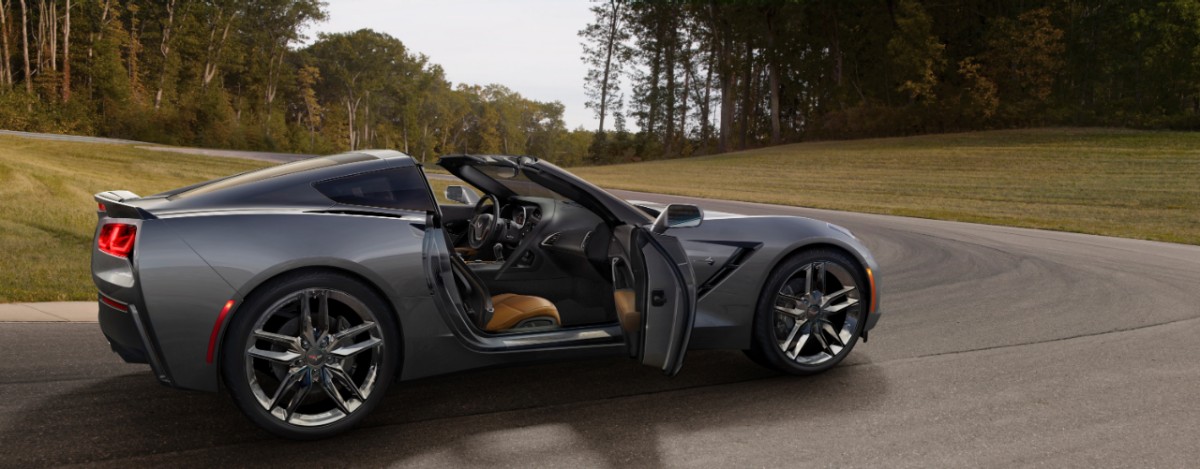
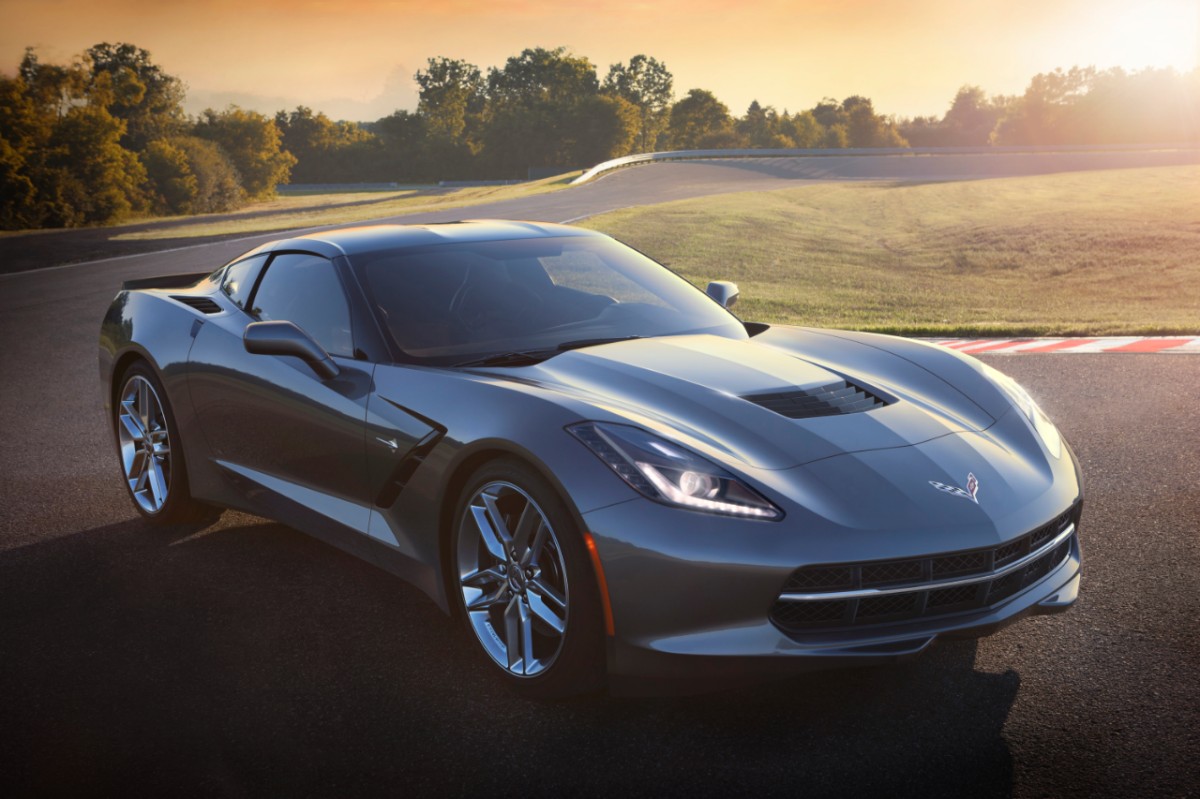
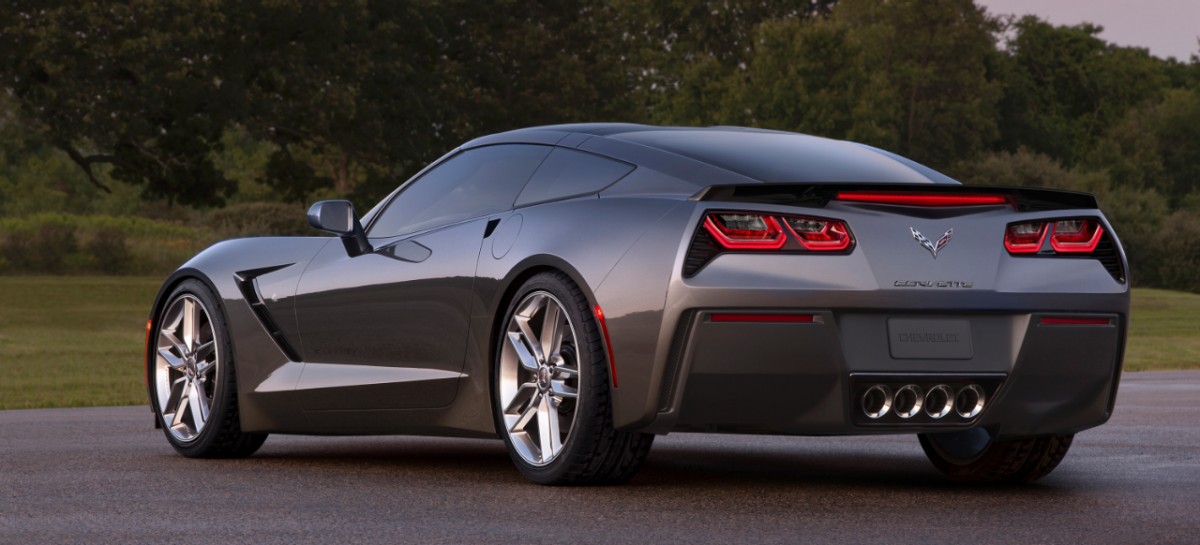
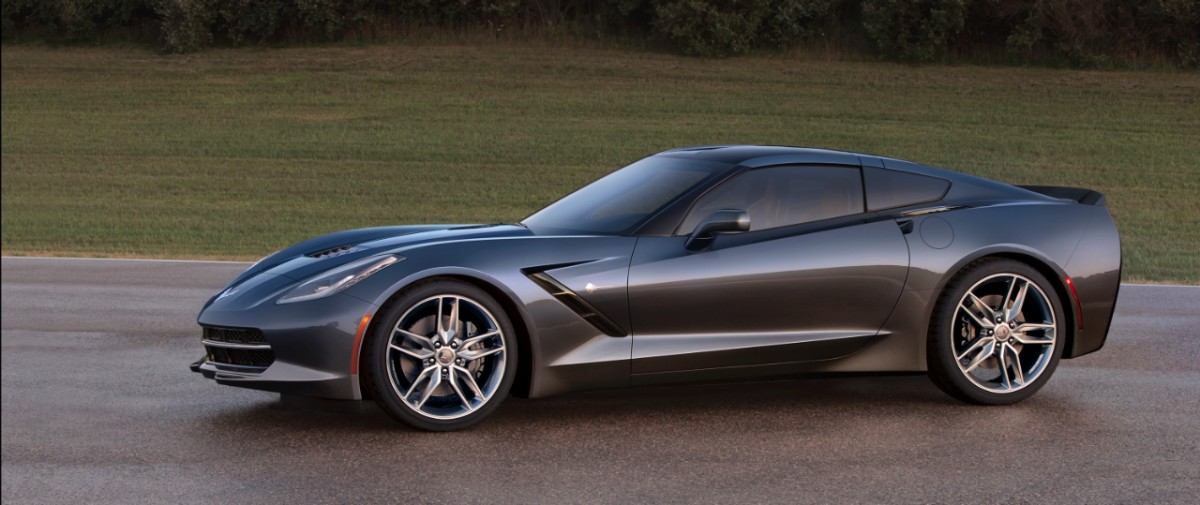
Chevrolet Officially Reveals All-New 2014 Corvette Stingray

By Malcolm Hogan

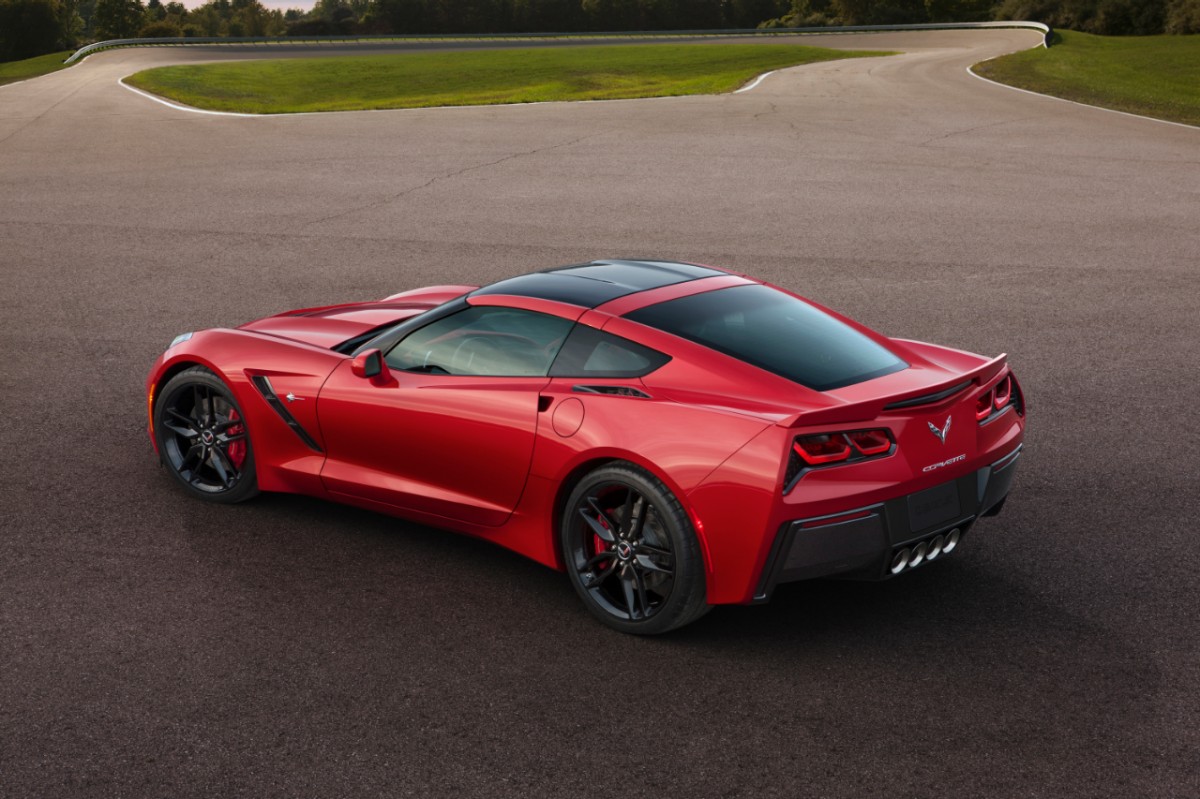
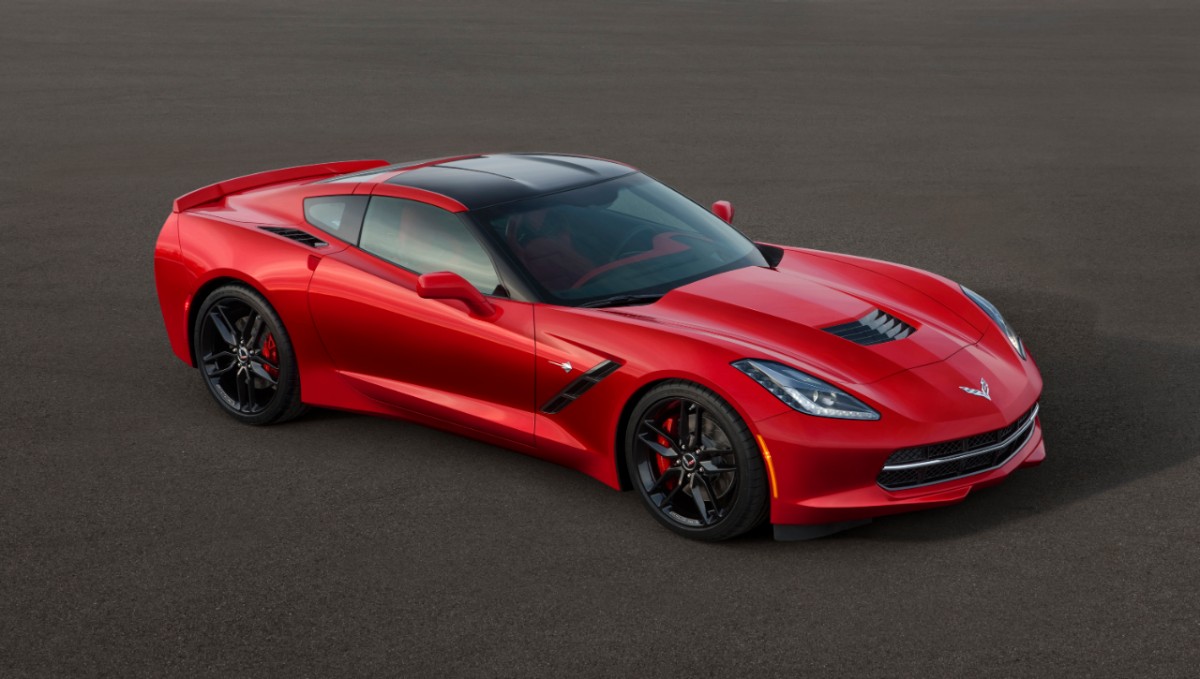
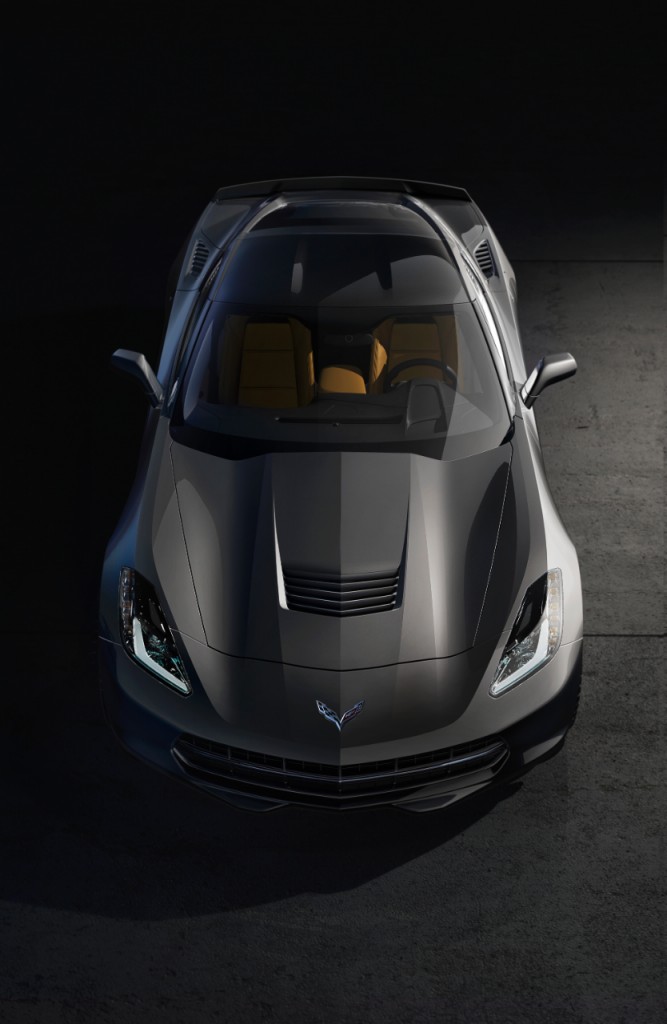
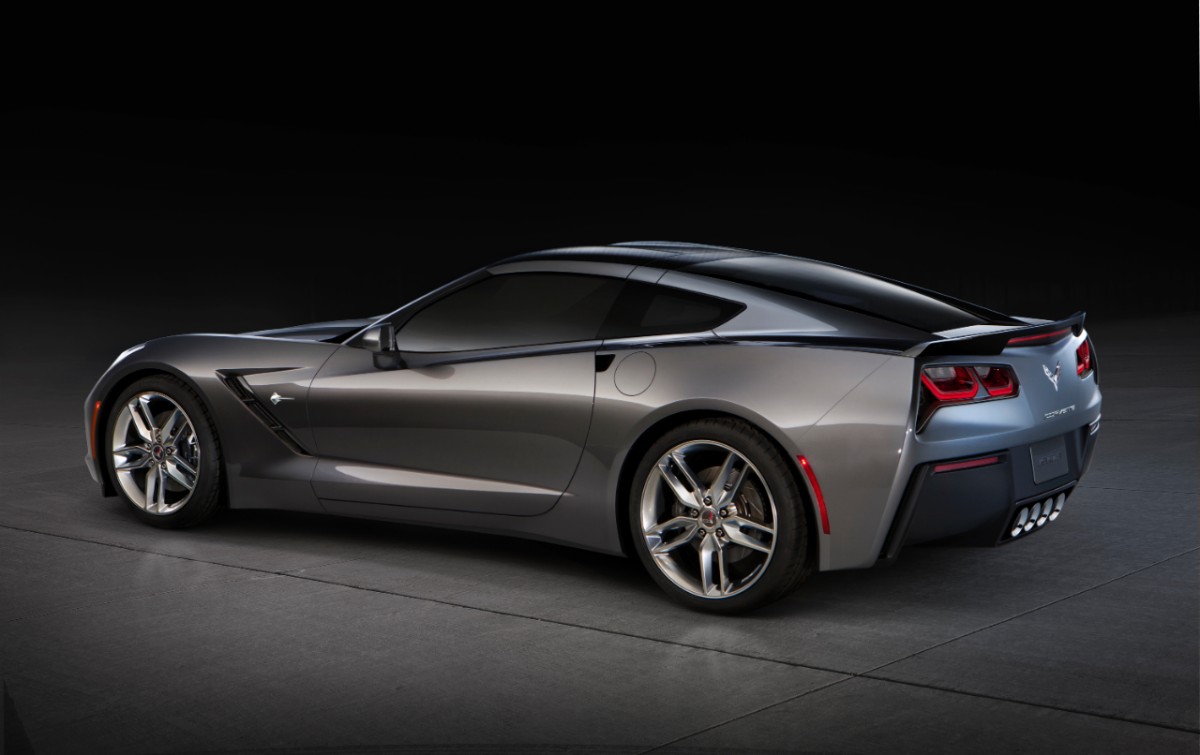
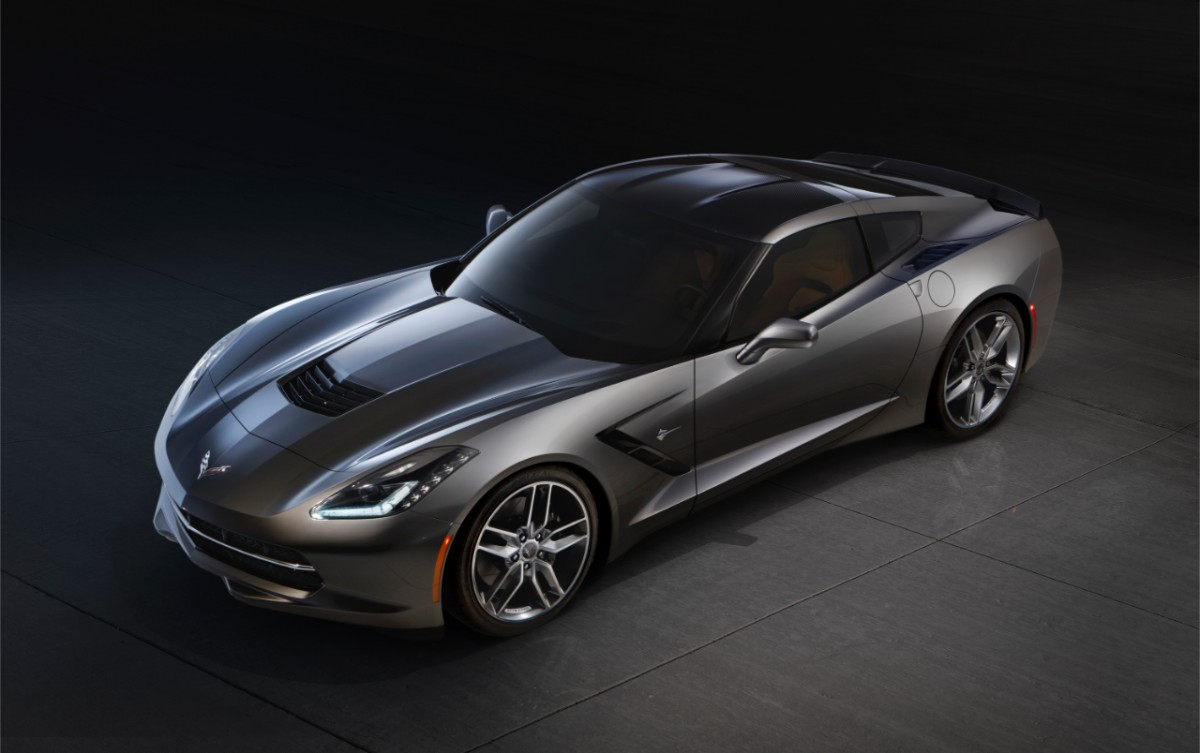
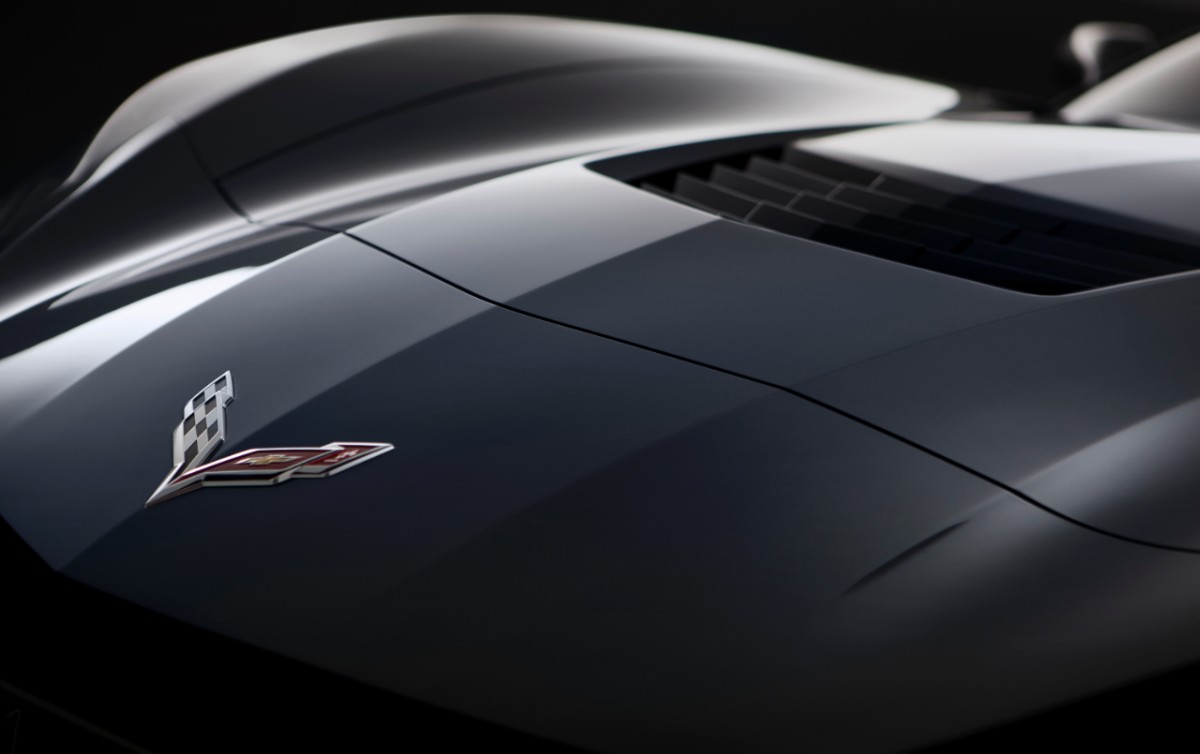
After many months (years for some) of anticipating the all-new 2014 Corvette C7, the time has come to see what the best of American engineering and pride of the world’s best nation has to serve up . Chevrolet has taken the wraps of one of the most highly anticipated sports cars in years at the 2013 Detroit Auto Show today. What you see here is reminiscent of the many spy shots, renderings and leaked photos over the course of many months last year. Now, we have the real deal to see in the flesh – the all-new 2014 Chevrolet Corvette Stingray.

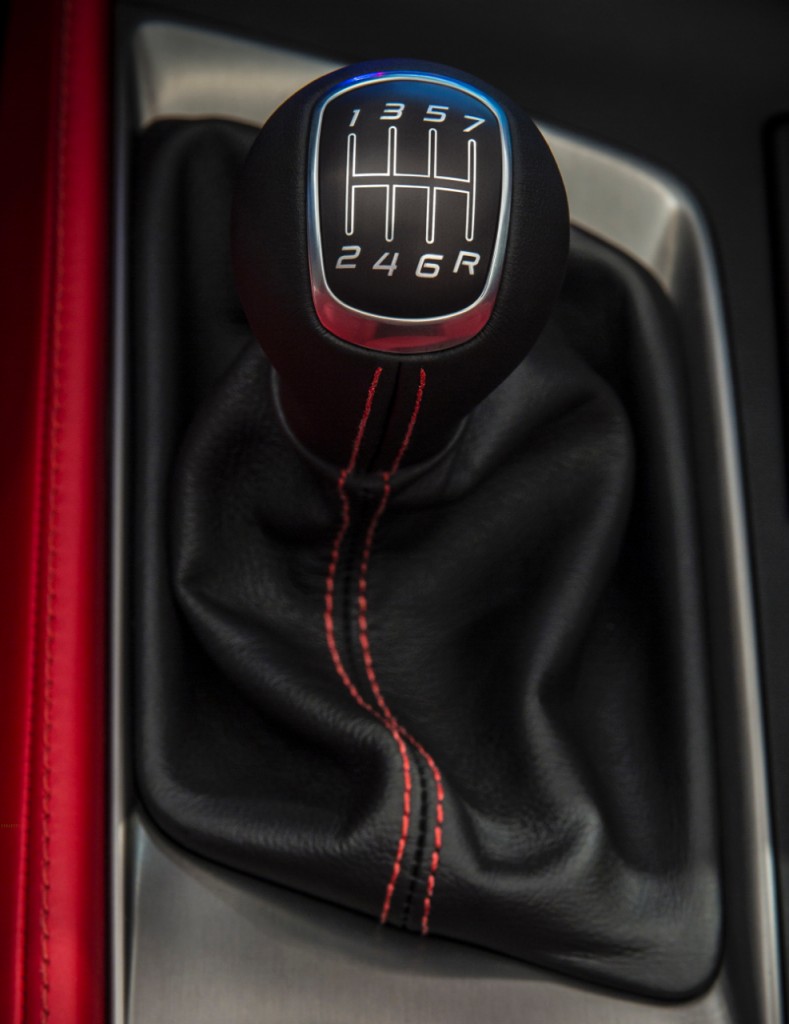
The new 2014 Chevrolet Corvette is all-new from the ground up featuring the new 6.2-liter 450 horsepower and 450 ft-lbs. of torque direct-injection V8 engine, 57% stiffer body construction, 99 pounds lighter, state-of-the-art aluminum frame, new 7-speed manual transmission, and a carbon fiber roof and hood starting with the entry level Vette. 0-60 mph times are claimed to be under 4 seconds with an expectation of higher performance in upper trim level Vettes.

It is almost like no stone was left unturned in the development and design of the all-new 2014 Corvette. Virtually all design aspects are functional from providing additional downforce or added cooling. The stance is now wider, longer and wider. The Vette has an international flare with the true character of a Corvette not to be confused with any other sports car.

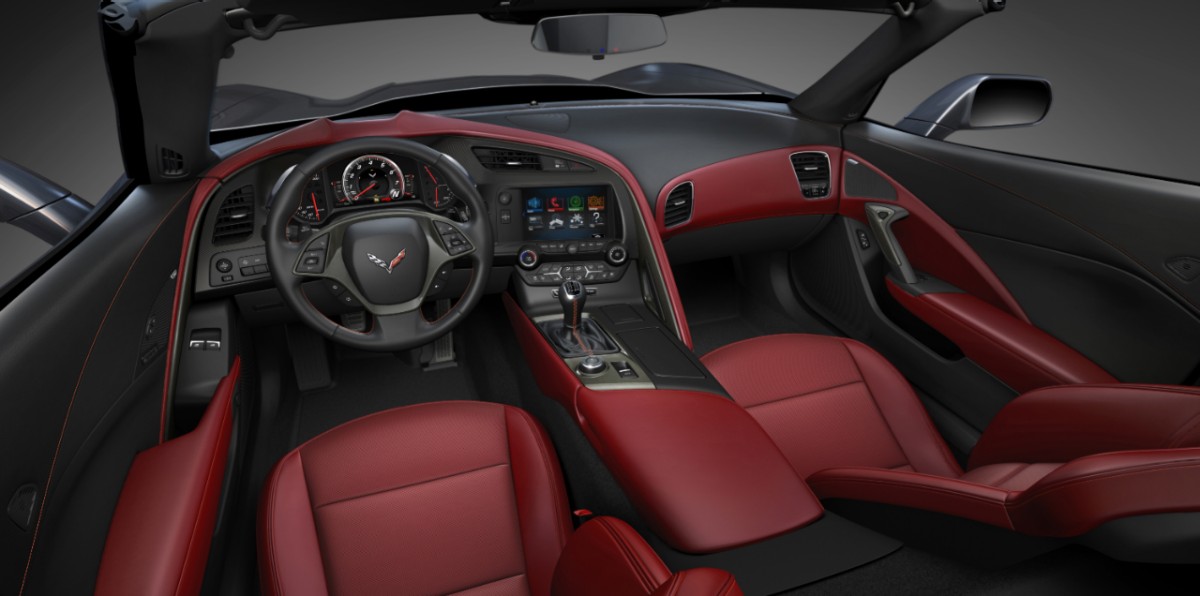
All materials of the interior are new featuring real carbon fiber bits, trim and a driver focused environment with a strong emphasis put in place from a race car driver’s perspective. There is no doubt that this is the best Vette yet.

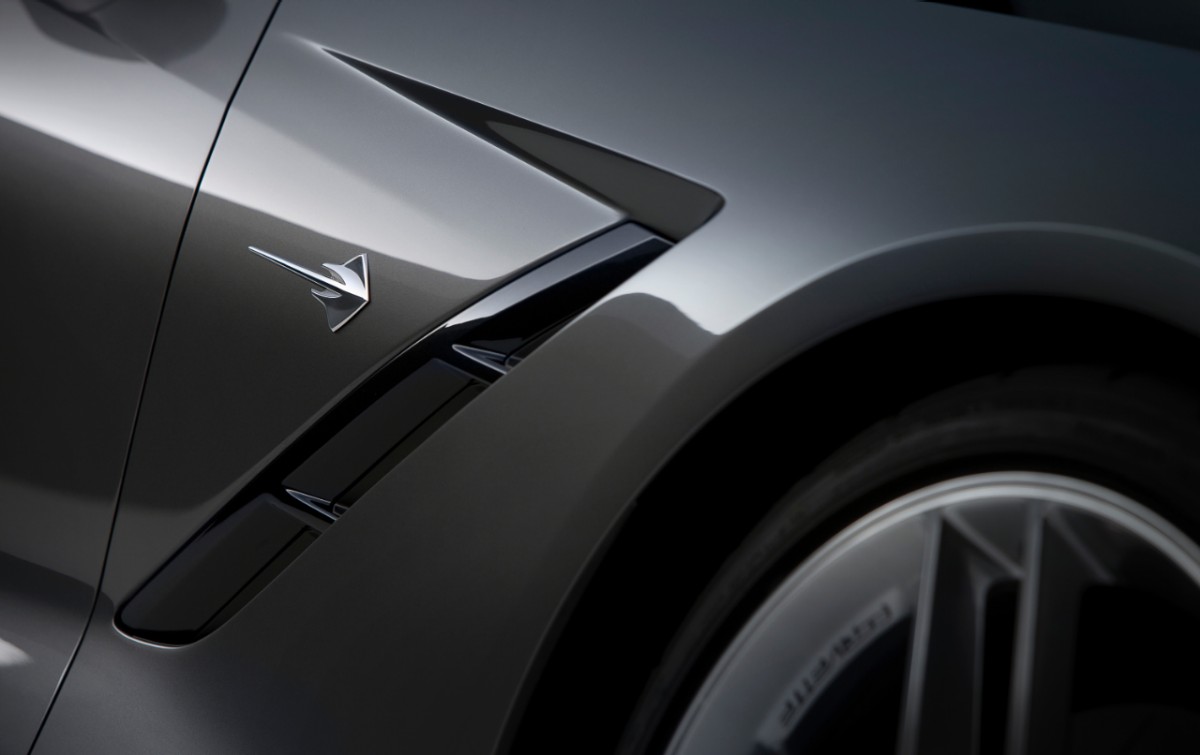
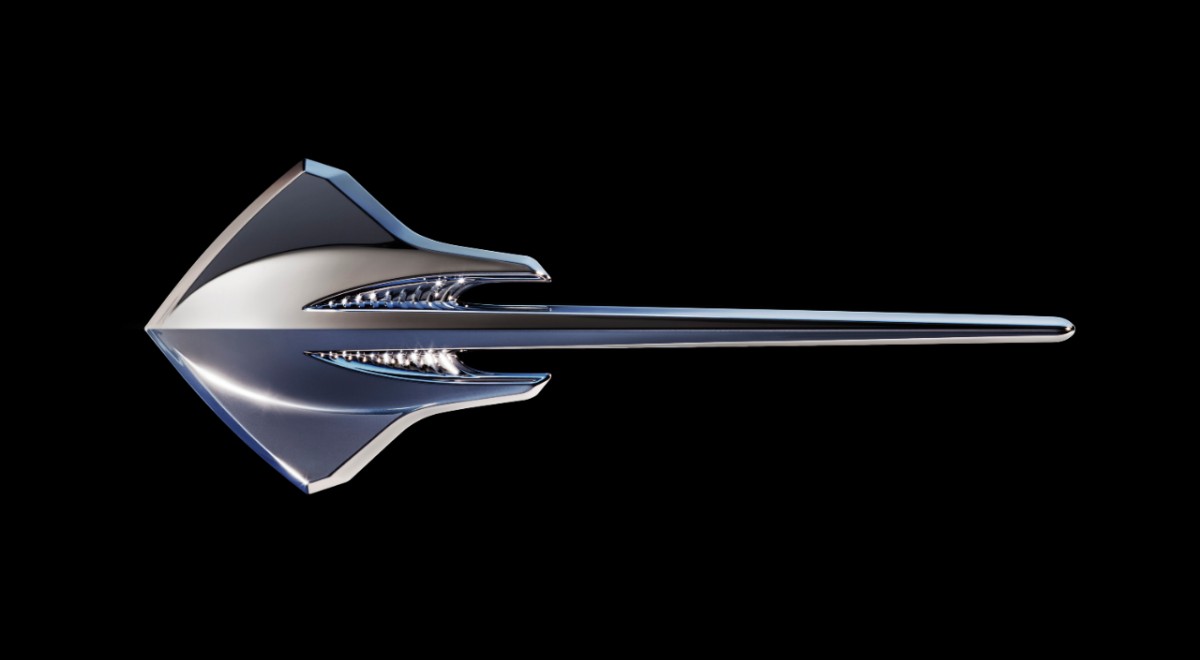
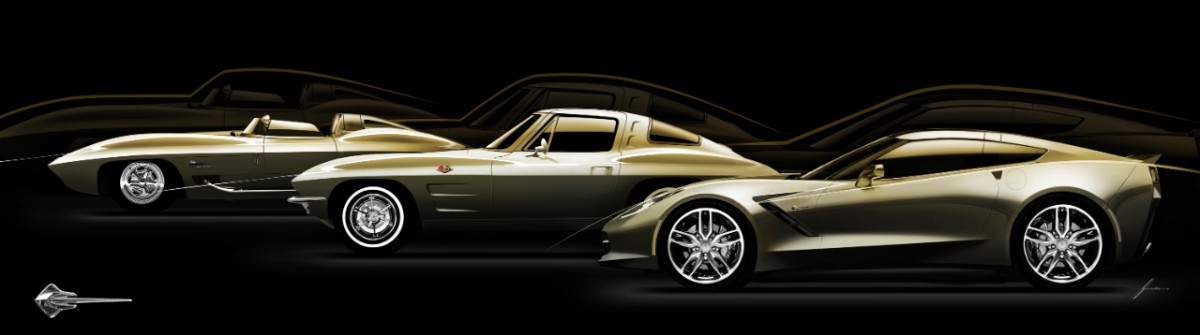
Bringing back the heritage of the Stingray name plays homage not only to the historical nameplate for the Vette, but is new design character with many aspects incorporating that recognizable look.

We welcome you to check out the new photos and official press release below of the all-new 2014 Chevrolet Corvette Stingray.

2014-Chevrolet-Corvette-045-medium
2014-Chevrolet-Corvette-044-medium
2014-Chevrolet-Corvette-043-medium
2014-Chevrolet-Corvette-019-medium
2014-Chevrolet-Corvette-018-medium
2014-Chevrolet-Corvette-017-medium
2014-Chevrolet-Corvette-016-medium
2014-Chevrolet-Corvette-015-medium
2014-Chevrolet-Corvette-008-medium
2014-Chevrolet-Corvette-006-medium
2014-Chevrolet-Corvette-005-medium
2014-Chevrolet-Corvette-004-medium
2014-Chevrolet-Corvette-003-medium
2014-Chevrolet-Corvette-002-medium
2014-Chevrolet-Corvette-001-medium
2014-Chevrolet-Corvette-012-medium
2014-Chevrolet-Corvette-025-medium
2014-Chevrolet-Corvette-010-medium
2014-Chevrolet-Corvette-014-medium
2014-Chevrolet-Corvette-011-medium
2014-Chevrolet-Corvette-009-medium
2014-Chevrolet-Corvette-020-medium
2014-Chevrolet-Corvette-021-medium
2014-Chevrolet-Corvette-022-medium
2014-Chevrolet-Corvette-023-medium
2014-Chevrolet-Corvette-024-medium
2014-Chevrolet-Corvette-013-medium

Return of the Stingray: The 2014 Chevrolet Corvette

DETROIT – Chevrolet is redefining modern performance with today’s debut of the all-new Corvette Stingray. And only a Corvette with the perfect balance of technology, design and performance can wear the iconic Stingray designation.

The 2014 Corvette Stingray is the most powerful standard model ever, with an estimated 450 horsepower (335 kW) and 450 lb.-ft. of torque (610 Nm). It is also the most capable standard model ever, able to accelerate from 0-60 in less than four seconds and achieve more than 1g in cornering grip. It is expected to be the most fuel-efficient Corvette, exceeding the EPA-estimated 26 mpg of the current model.

“Like the ’63 Sting Ray, the best Corvettes embodied performance leadership, delivering cutting-edge technologies, breathtaking design and awe-inspiring driving experiences,” said GM North America President Mark Reuss. “The all-new Corvette goes farther than ever, thanks to today’s advancements in design, technology and engineering.”

The all-new Corvette Stingray shares only two parts with the previous generation Corvette. It incorporates an all-new frame structure and chassis, a new powertrain and supporting technologies, as well as completely new exterior and interior designs. Highlights include:

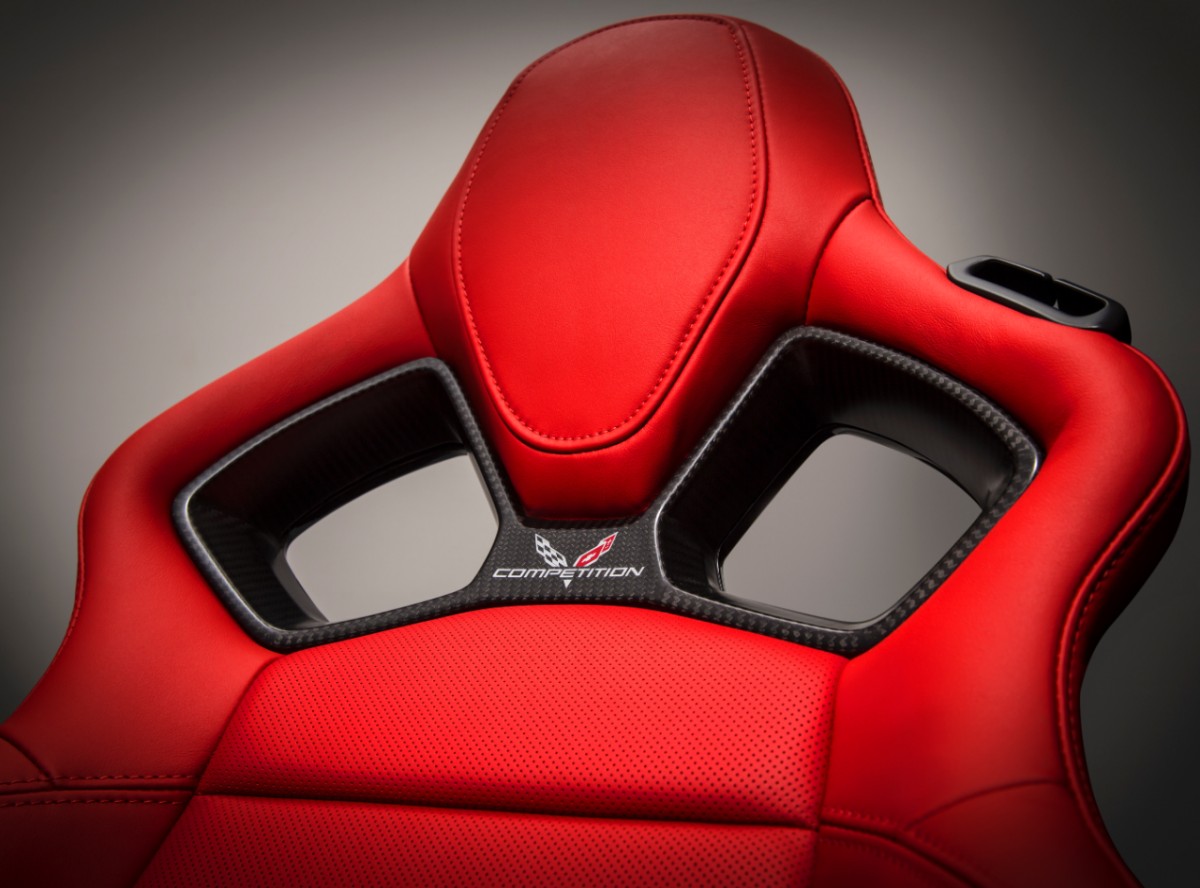
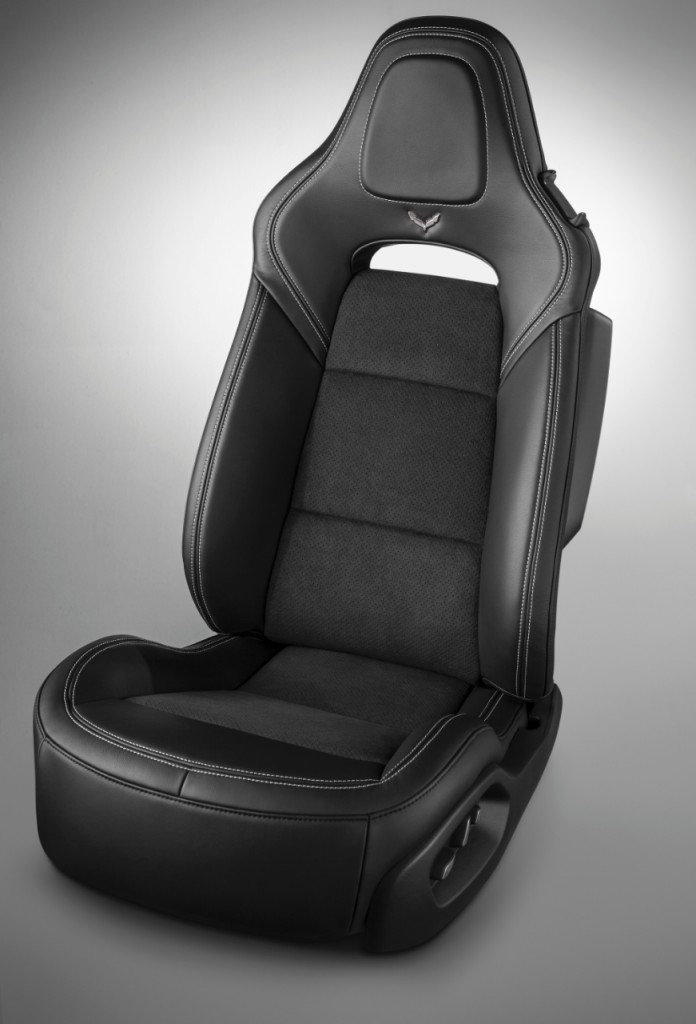
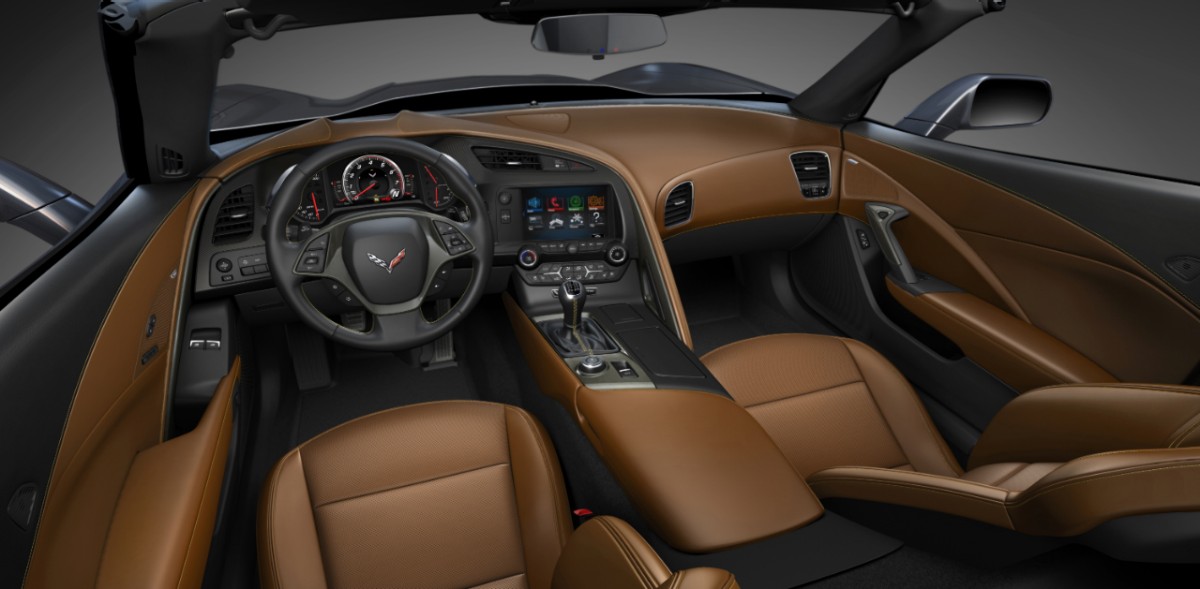
• An interior that includes real carbon fiber, aluminum and hand-wrapped leather materials, two new seat choices – each featuring a lightweight magnesium frame for exceptional support – and dual eight-inch configurable driver/infotainment screens
• Advanced driver technologies, including a five-position Drive Mode Selector that tailors 12 vehicle attributes to the fit the driver’s environment and a new seven-speed manual transmission with Active Rev Matching that anticipates gear selections and matches engine speed for perfect shifts every time
• An all-new 6.2L LT1 V-8 engine combines advanced technologies, including direct injection, Active Fuel Management, continuously variable valve timing and an advanced combustion system that delivers more power while using less fuel
• Lightweight materials, including a carbon fiber hood and removable roof panel; composite fenders, doors and rear quarter panels; carbon-nano composite underbody panels and a new aluminum frame help shift weight rearward for an optimal 50/50 weight balance that supports a world-class power-to-weight ratio
• A sculptured exterior features advanced high-intensity discharge and light-emitting diode lighting and racing-proven aerodynamics that balance low drag for efficiency and performance elements for improved stability and track capability
• Track-capable Z51 Performance Package including: an electronic limited-slip differential, dry-sump oiling system, integral brake, differential and transmission cooling, as well as a unique aero package that further improves high-speed stability.

“Stingray is one of the hallowed names in automotive history,” said Ed Welburn, GM vice president of global design. “We knew we couldn’t use the Stingray name unless the new car truly lived up to the legacy. The result is a new Corvette Stingray that breaks from tradition, while remaining instantly recognizable as a Corvette the world over.”

The new Corvette Stingray will be built at GM’s Bowling Green, Ky., assembly plant, which underwent a $131-million upgrade, including approximately $52 million for a new body shop to manufacture the aluminum frame in-house for the first time.

“We believe the Corvette represents the future of modern performance cars because it delivers more power, more driving excitement and better fuel efficiency,” said Tadge Juechter, Corvette chief engineer. “The result is better performance by every measure. The 2014 Corvette delivers the fastest acceleration, the most cornering grip, the most track capability, the best braking performance and what we expect to be the best fuel economy ever for a standard Corvette.”

The 2014 Corvette Stingray coupe goes on sale in the third quarter of 2013.

Handcrafted, high-tech interior

• Premium materials including genuine aluminum and available carbon fiber trim
• More connected driving experience through the smaller-diameter steering wheel and two new seat choices
• Advanced technologies including standard dual, high-resolution information screens and available color head-up display.

The new Corvette Stingray interior blends fine materials and craftsmanship with advanced technologies that contribute to a more connected and more engaging driving experience, said Helen Emsley, interior design director.

“Every feature and detail in the interior is designed to enhance the driver’s connection to the Corvette,” Emsley said. “It starts with the fighter jet inspired wraparound cockpit; continues to build with the smaller steering wheel, more supportive seats, and high-definition, configurable screens, and is finished in gorgeous materials.”

The smaller, 14.1-inch-diameter (360 mm) steering wheel fosters a more direct, immediate feel to directional inputs. The attention to the driver extends to the smallest details, including the flat, precise stitching on the steering wheel designed to provide a smooth, consistent feel.

Precise and elegant stitching also is seen in the available Napa leather trim of the all-new seats.
Two seating choices will be offered: a GT seat for all-around comfort and a Competition Sport seat with more aggressive side bolstering which provides greater support on the track.

The frame structure for both seats is made of magnesium for greater strength and less weight than comparable steel frames. They’re also more rigid, contributing to the enhanced feeling of support during performance driving.

Additional performance-enhancing details of the interior resulted from designers’ “field trips” to GM’s Proving Ground in Milford, Mich., where high-performance driving experiences spurred the design and implementation of several features, including a steel-reinforced grab bar on the center console for the passenger and soft-touch materials on the edge of the console, where the driver naturally braces during high-load cornering.

High-performance driving also influenced elements of the configurable display screens and available head-up display, which vary depending on the driving mode, including the Track display inspired by the C6.R.

The performance-supporting elements inside the new Corvette Stingray are complemented by unprecedented attention to detail and build quality, including the sweeping arch motif over the driver cockpit trim and the seamless transition of the line from the instrument panel to the door.

All models feature a fully-wrapped interior, where every surface is covered with premium, soft-touch materials. Available materials, depending on the trim level, include Napa leather, aluminum, carbon fiber and micro-suede.

A blend of hand craftsmanship and machined precision is intended to ensure the fit, finish and ambience of the cabin is first-rate. The leather-wrapped instrument panel, for example, features hand-selected and hand-stretched materials for better grain matching with stitching performed by robots that deliver perfect seams.

There’s even a micro-LED screen for the passenger’s climate control placed below the vent on the on the dash away from the performance features on the instrument panel.

“To ensure the high quality of the interior, we spent time working on the line alongside the team that builds the Corvette every day at Bowling Green Assembly Plant,” said Ryan Vaughan, interior design manager. “And thanks to that collaboration between design, engineering and manufacturing, we were able to make adjustments that allowed us to maintain the integrity of the design, improve the assembly process and ultimately deliver what we believe to be a world-class interior.”

Driver-oriented technologies

Driver Mode Selector optimizes 12 vehicle attributes
• Configurable screens and head-up display can be tailored to the driver’s preference
• Central touch screen uses gesture-recognition technology.

At the core of the Corvette Stingray’s driver-focused technologies is the cockpit-mounted Driver Mode Selector, which allows drivers to optimize the car for their driving preference and road conditions via five settings: Weather, Eco, Tour, Sport and Track.

“The all-new Corvette Stingray is really three cars in one: It provides the comfort and functionality of a long-distance GT car, the connectedness and infotainment of a daily driver and the acceleration, grip and braking of a capable track car,” said Harlan Charles, product manager.

“With the Driver Mode Selector, we wanted to give the driver an easy way to tailor virtually every aspect of the car to fit their driving environment. The result is a more rewarding, more confident experience, whether you’re commuting in a downpour or charging through the corkscrew at Laguna Seca.”

The Driver Mode Selector is easy to use via a rotary knob near the shifter. The Tour mode is the default setting for everyday driving; Weather mode is designed primarily for added confidence while driving in rain and snow; Eco mode is for achieving optimal fuel economy; Sport mode is for spirited road driving and Track mode is for track use.

“Early in the development process, we spent time on the track, driving Corvettes hard. That experience shaped many parts of the interior, such as the instrument display in Track Mode,” said Vaughn. “At 120 mph, you experience a sort of tunnel vision, as you concentrate on the next turn. At that moment, you don’t need to know the next song playing on the radio.”

Twelve performance parameters are adjusted with the selection of each mode, including:

• Gauge cluster configuration: The Tour, Eco and Weather modes feature displays for trip data, audio and navigation; Sport mode shows classic, easy-to-read sports car gauges; and Track mode’s configuration shows a gauge design based on the Corvette Racing C6.R race car display with lap timer
• ETC (Electronic Throttle Control): Adjusts the throttle input curve for the selected mode for improved responsiveness
• Paddle-shift automatic transmission: Adjusts shift comfort and shift points
Active Fuel Management: in normal mode, the LT1 engine uses V-8 power during acceleration and V-4 power when coasting; in Eco mode the engine remains in V-4 mode to improve fuel economy until aggressive acceleration is needed
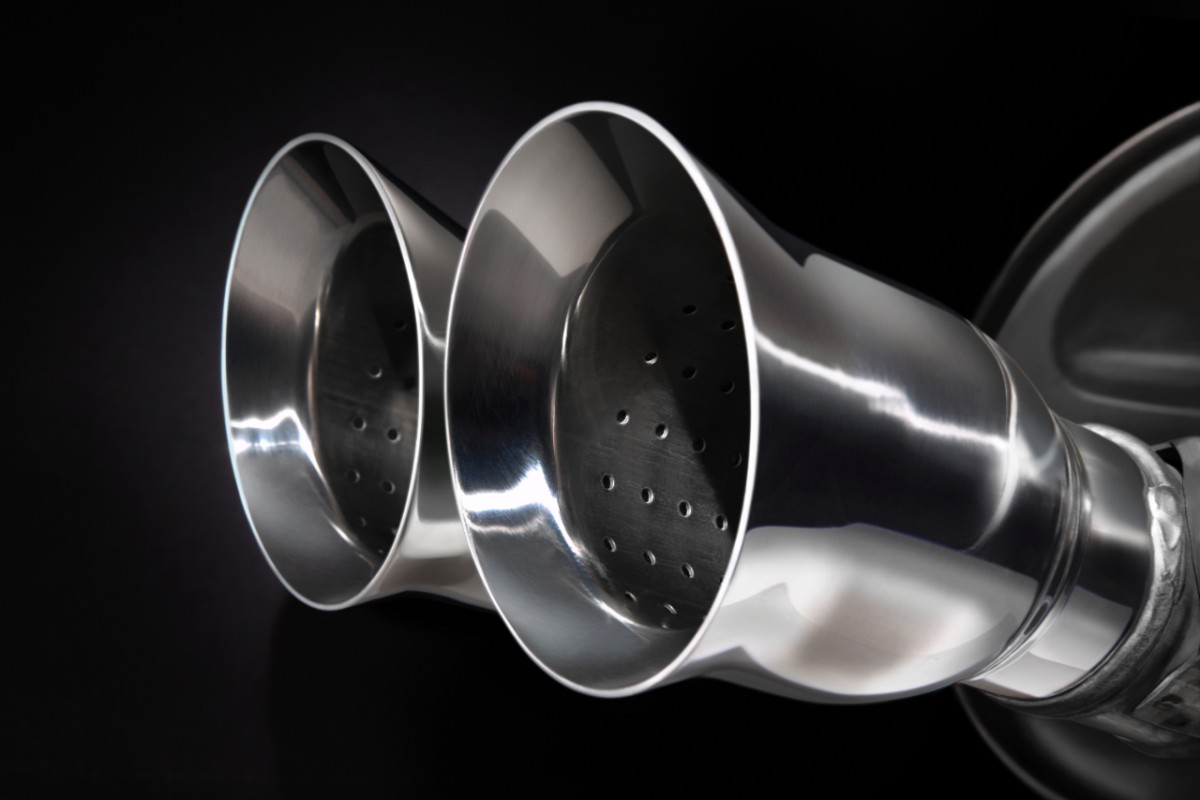
• Exhaust (active exhaust system): The system adjusts the timing of the electronically controlled exhaust valves to enhance audible feedback from the V-8 depending on the drive mode
• Electronic limited-slip differential (Z51): Adjusts the rate at which the limited slip engages, to balance between steering response and stability in different driving conditions; more aggressive performance in Sport and Track modes
• Steering: Assist effort is adjusted in the modes to provide the driver with the correct steering feel for the driving condition
Magnetic Ride Control: Adjusts shock damping based on road conditions, from optimized comfort to performance driving
• Launch control: Available in Sport and Track modes for manual and automatic transmissions, providing maximum off-the-line acceleration
• Active handling (StabiliTrak stability control): A “competitive” setting is available in Sport and Track modes and is more suited for on-track conditions. It can also be disabled, giving the driver complete control
• Traction control: Weather mode tailors traction control and engine torque for driving in inclement conditions
Performance Traction Management: Available in the Sport and Track modes and offers five settings of torque reduction and brake intervention for track driving.

Three configurable displays, including a pair of eight-inch screens and color head-up display, deliver personalized information and convey the different performance parameters of each drive mode.

The two eight-inch screens offer excellent visibility in direct sunlight, with 650 cd/m2 of brightness for the one integrated into the instrument cluster and 1,000 cd/m2 of brightness for the one in the center stack, making it among the brightest screens in the industry. The screen in the center stack also features touch-screen control with gesture recognition and can be lowered to reveal a hidden storage that includes a USB input for device charging or uploads.

The Corvette Stingray delivers an advanced infotainment system, featuring Chevrolet MyLink and high-definition radio, as well as enhanced OnStar with 3D navigation maps. An additional USB port in the center console, a stand-alone audio input jack and an SD card slot provide seamless connectivity.

An available premium 10-speaker audio system includes a bass box and two subwoofers – and speakers with rare-earth magnets that deliver greater sound quality with reduced weight and size.

Every line counts on Corvette Stingray’s functionally elegant exterior

• Aerodynamic design integrates strategies from Corvette racing
• Signature lighting includes distinctive frosted light-emitting diode daytime driving lights, high-intensity discharge headlamps and indirect-LED taillamps
• Carbon fiber hood and removable roof panel enhance front/rear weight balance

Corvette Stingray’s provocative exterior styling is as functional as it is elegant, said Ken Parkinson, executive director of global design.

“Developing a new Corvette, while every designer’s dream, is not an easy task,” Parkinson said. “The goal was a bold design statement that embraced the advanced technology of the car, while enhancing its overall performance in everything from the wind tunnel to the track. The result is a new Corvette Stingray – a fantastic car that breaks new ground yet remains true to the fundamental elements that make a Corvette a Corvette.”

While no single detail is repeated from previous generations, the new Corvette Stingray include the distinctive profile defined by a long dash-to-axle ratio and the greenhouse evoking the canopy of a fighter jet with dual-element taillamps. To this foundation, designers built a form vocabulary from two very different sources: aerospace and nature.

“For the new Corvette to be called a Stingray, it had to deliver an incredible, purposeful visual impact – just as the original did in 1963,” said Tom Peters, exterior design director. “That visual impact is evident in fighter jets and the Stingray animal itself. Their beauty comes from their purpose, designed to cut through air or water as quickly and efficiently as possible. As with aircraft and living forms, every transition on every surface of the Corvette Stingray serves a purpose executed with beauty and proportion.”

Lighting is a signature element of the Corvette Stingray’s design and reinforces its high-tech aesthetic. At the front, indirect white LED lamps form a distinctive daytime styling cue. They are set in a black-chrome lamp housing with standard HID projector headlamps. The turn signals feature edge-lit amber LED lighting.

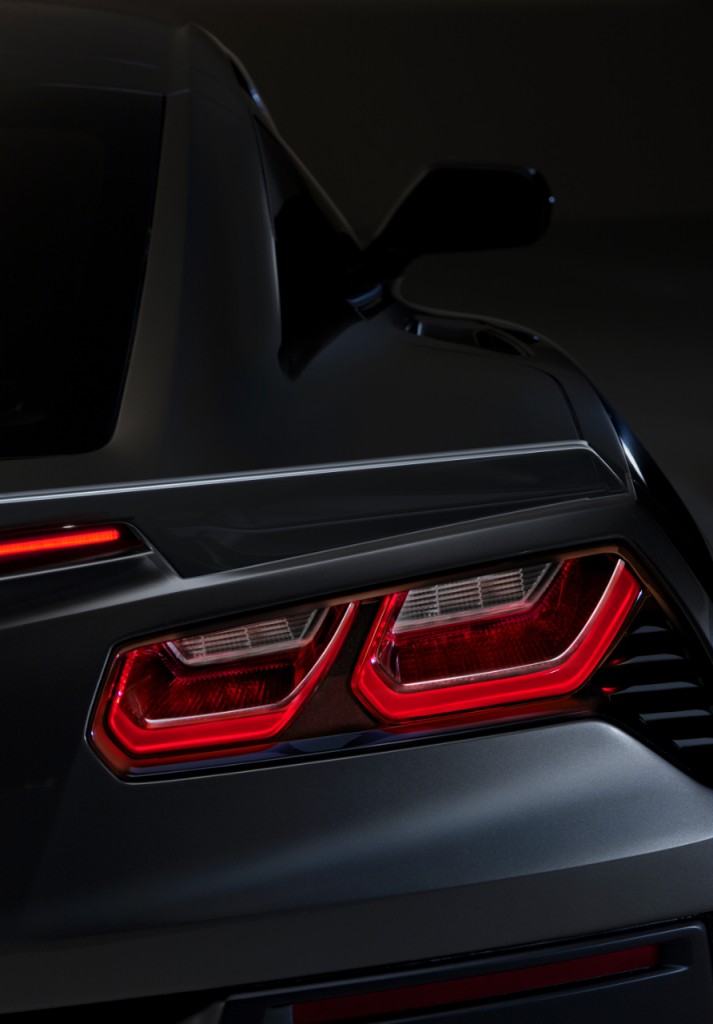
All-new, dual-element taillamps represent the greatest departure from tradition and are among the car’s most dramatic elements. The three-dimensional, sculpted lenses house innovative indirect LED lighting. The state-of-the-art lighting uses hidden LED lamps that cast their light up from the bottom of the housing into a reverse reflector, creating an even glow. LED lamps are also used for the white backup lamps. The taillamps integrate functional aircraft-style air outlets for the available differential and transmission coolers.

“From the front or rear, the signature lighting brings the new Corvette to life,” said Peters. “It looks beautiful, sinister and more than a little intimidating. It gives the Corvette a nighttime appearance unlike anything else on the street.”

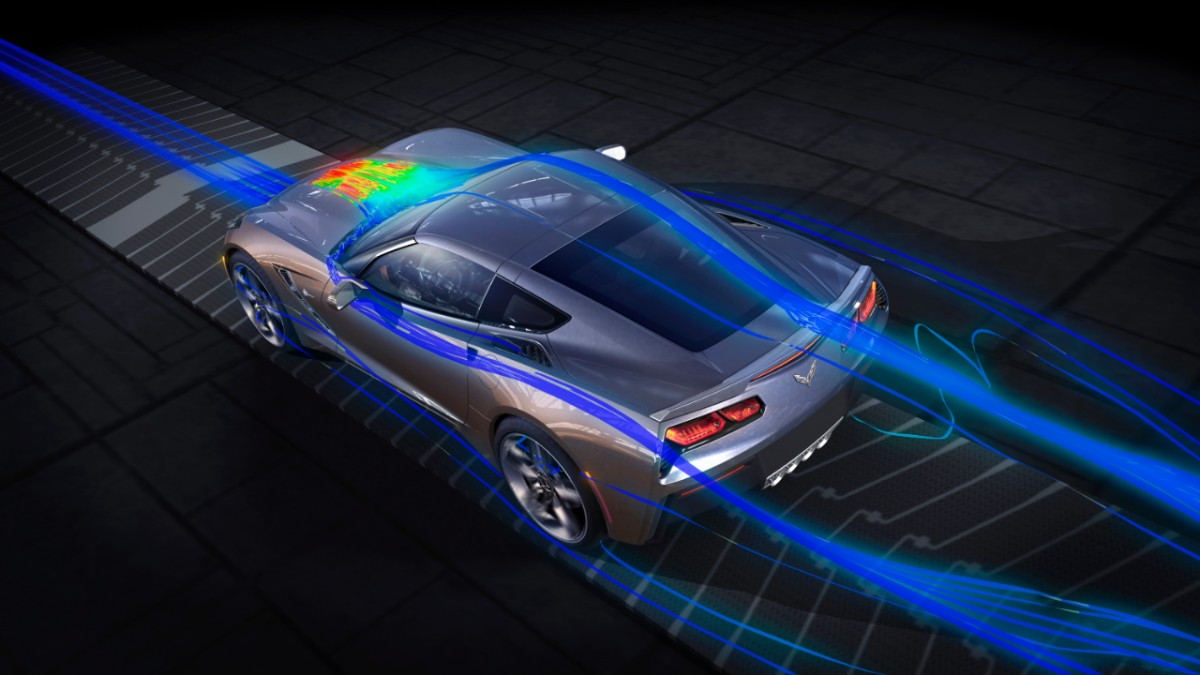
When it comes to aerodynamics, the new Stingray is in a league of its own. Advanced computer-aided modeling programs were employed to predict and track airflow over, under and through the new Corvette’s body. Engineers and designers also relied on data gleaned from the Corvette Racing program – the most successful program ever in the American Le Mans Series and the 2012 GT class champion – to help balance front and rear grip for high-speed stability.

Many hours were spent in the wind tunnel hand-sculpting surfaces for aesthetics and performance. Functional exterior elements include:
• All models have a new grille/radiator arrangement and hood vents. Venting air out of the hood reduces total front-end lift for improved steering response at high speeds
• The front fender side coves also help vent underhood air pressure to reduce aerodynamic drag
• Models with the automatic transmission or Z51 Performance Package feature a functional vent on driver’s left side directing air over a heat exchanger for the transmission fluid and a similar arrangement on the passenger side that directs air
• over a heat exchanger for the electronic limited slip differential
• Airflow through the differential and transmission heat exchangers exit through the aircraft-inspired taillamp vents and lower-rear fascia air outlets
• The Z51 Performance Package also includes brake-cooling ducts, a unique rear spoiler and additional air deflectors for enhanced track capability.

“Every square inch of the 2014 Corvette’s exterior is designed to enhance high-performance driving,” said Kirk Bennion, exterior design manager. “The team delivered a great balance of low drag for efficiency and performance elements for improved stability and track capability – all in a sculpted design that excites in all the ways that a Corvette has for six decades.”

Engineered to race, built for the road

• New aluminum frame structure is 57-percent stiffer and 99 pounds (45 kg) lighter than the current steel frame
• Innovative use of composite materials, including carbon fiber the hood and roof panels, lightweight Sheet Molded Compound for the fenders, doors and rear quarter panels, and carbon-nano composite for the underbody panels help reduce the weight of the body by a 37 pounds (17 kg)
• New LT1 V-8 uses advanced technologies to produce more power with less fuel and is paired with an industry-exclusive seven-speed manual transmission with Active Rev Matching for more precise up and down shifts.

The new Corvette Stingray takes advantage of lightweight materials, advanced manufacturing techniques and technology transfer from the Corvette Racing program to produce an ideal 50/50 weight balance and to deliver a world-class power-to-weight ratio.

“Chevrolet has a long history of using racing to improve production cars, and nowhere is that more evident than with Corvette,” said Jeuchter. “We continually apply technologies and strategies developed for Corvette Racing directly to the production car. That influence can be seen in virtually every aspect of the new Corvette Stingray, from the aerodynamic design to the use of carbon fiber, to the cooling techniques and even in the brake system

The technologically advanced foundation is an all-new aluminum frame structure that is 57 percent stiffer and 99 pounds (45 kg) lighter. The greater torsional rigidity reduces unwanted noise and improves ride and handling.

Compared to the previous generation, which used continuous hydroformed main frame rails with a constant 2mm wall thickness, the new Corvette’s frame features main rails composed of five customized aluminum segments, including aluminum extrusions at each end, a center main rail section and hollow-cast nodes at the suspension interface points. Each segment is tuned – varying in thickness from 2mm to 11mm – tailoring the gauge, shape and strength properties to optimize the requirements for each frame section with minimal weight.

The frame is assembled at an all-new welding shop at the Bowling Green Assembly Plant using a unique laser welding process in which a computer-controlled beam of high energy joins the components with exceptional precision and tolerances of about 0.001-inch.

Supporting the frame’s greater strength and lower weight are complementing chassis elements, including hollow-cast aluminum front and rear cradles that are approximately 25-percent lighter and 20-percent stiffer than the solid cradles used on the previous structure.

The innovative use of materials includes a standard carbon fiber hood and roof panel, as well as underbody panels created with carbon-nano composite technology, an advanced blend of traditional composite material and carbon fiber, which allows lighter underbody panels without a loss of strength or stiffness. Fenders, doors, rear quarter panels and the rear hatch panel are made with lighter-density Sheet Molded Compound than the previous generation. Combined, these materials save approximately 37 pounds (17 kg) versus the previous body structure.

The lightweight elements of the Stingray contribute to the ideal 50/50 weight balance. Combined with its estimated 450 horsepower (335 kW), the new Corvette delivers a better power-to-weight ratio than the Porsche 911 Carrera or Audi R8.

Those 450 horses are generated by an all-new LT1 6.2L Small Block V-8 engine, which produces an estimated 450 lb.-ft. of torque (610 Nm). More importantly, it generates 50 lb.-ft. more low-end torque than the previous 6.2L engine, matching the 7.0L LS7 engine from the 2013 Corvette Z06 from 1,000 to 4,000 rpm.

The engine’s performance comes from combining advanced technologies like direct injection, Active Fuel Management and continuously variable valve timing with an advanced combustion system. More than 10 million hours of computational analysis went into the new Small Block’s design, including more than 6 million hours alone on the combustion system.

The LT1 is backed by a choice of active exhaust systems that are less restrictive than the previous generation, due in part to an increase in diameter from 2.5 inches to 2.75 inches. The standard system offers a 13-percent improvement in airflow and features a pair of butterfly valves that contribute to greater refinement at cruising speeds when the engine is operating in fuel-saving V-4 mode.

An available dual-mode active exhaust system offers a 27-percent improvement in airflow. It features two additional valves that open to a lower-restriction path through the mufflers. When open, these valves increase engine performance and produce a more powerful exhaust note.

The LT1 is mated to either a six-speed paddle-shift automatic transmission or an industry-exclusive TREMEC TR6070 seven-speed manual with Active Rev Matching. The Corvette retains its distinctive rear transaxle layout for optimal weight balance.

The seven-speed manual incorporates rev-matching technology for upshifts and downshifts. This driver-selectable feature can be easily engaged or disengaged via paddles on the steering wheel. The seven-speed is used with a new dual-mass flywheel and dual-disc clutch, which deliver greater shift quality and feel through lower inertia. The transmission with the Z51 Performance Package includes specific close-ratio gearing for more aggressive driving.

Active Rev Matching makes the new Corvette easier and more fun to drive in performance conditions,” said Jeuchter. “It anticipates the next gear selection and electronically ‘blips’ the throttle to match engine speed for a seamless gear change.”

A six-speed Hydra-Matic 6L80 paddle-shift automatic is also available. It is optimized for use with Active Fuel Management and features a lower-inertia torque converter for improved shift quality and shift speeds. In addition, shift feel and shift points can be adjusted through the Driver Mode Selector.

More direct, more connected driving feel

• Third-generation Magnetic Ride Control for greater comfort and control
• Electric power steering system tailors steering response and feel
• Electronic limited-slip differential delivers optimal traction

The new Corvette Stingray’s chassis and suspension are designed to take advantage of the lighter, stiffer structure. The reduced structural flex allowed engineers to more precisely tune the suspension and steering for a more nimble and responsive driving experience.

“An important goal for the seventh-generation Corvette was to create a more intimate and connected driving experience, said Mike Bailey, chassis vehicle system engineer. “Whether on the open road or on the track, we wanted drivers to feel comfortable and confident behind the wheel.”

While the Corvette Stingray retains the racing-proven short/long-arm suspension design, front and rear, the components are all-new. Improvements to the suspension include hollow lower control arms which save approximately nine pounds (4 kg) per vehicle and new aluminum rear toe links which save 2.4 pounds (1.1 kg) over previous steel links.

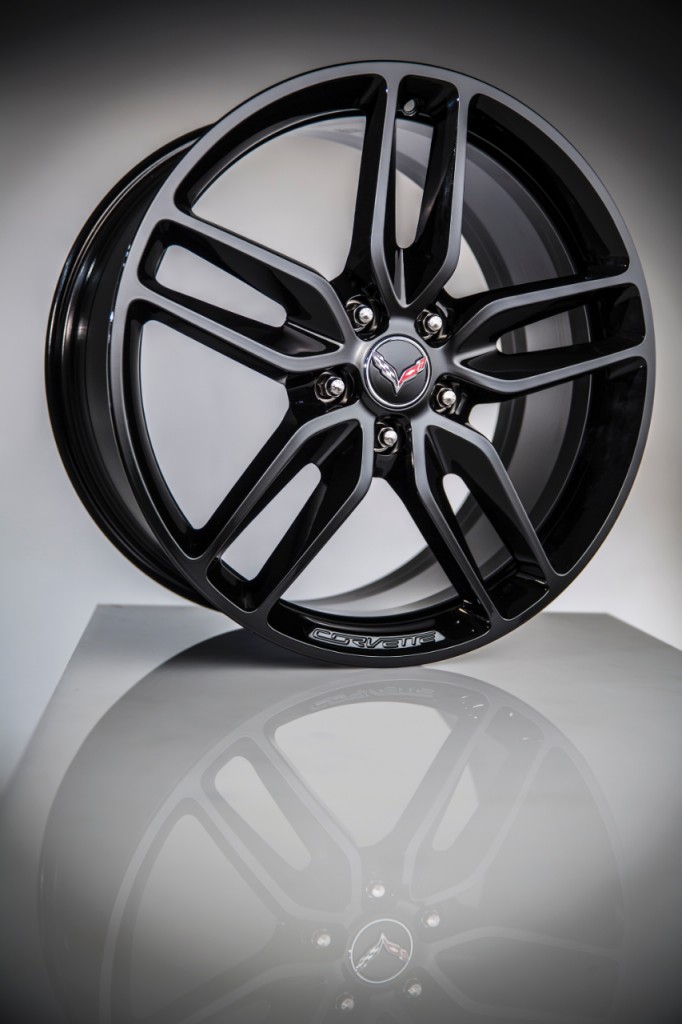
The Corvette Stingray rides on new 18 x 8.5-inch front and 19 x 10-inch rear wheels, while models with the Z51 Performance Package roll on 19 x 8.5-inch front and 20 x 10-inch rear forged aluminum wheels. New Michelin Pilot Super Sport run-flat tires developed specifically for the seventh-generation Corvette deliver comparable levels of grip than the wider tires of previous models.

As a result, the track-oriented Corvette Stingray with the Z51 Performance Package is capable of 1g in cornering acceleration – comparable to the 2013 Corvette Grand Sport. Significantly, that is achieved with narrower and lighter wheels and tires. The reduced “footprint” reduces rolling resistance, steering effort and road noise, contributing to a more nimble feel, more immediate steering response and greater touring comfort and efficiency.

Dimensionally, the new Corvette’s wheelbase is approximately an inch longer than the previous generation, with front and rear tracks that are almost an inch wider. Those changes provide a more stable feel, particularly at high speeds, while the turning radius is decreased by approximately two feet for greater maneuverability in tight turns.

The Corvette Stingray features standard 35mm-piston Bilstein monotube shocks that connect to dual-path aluminum shock mounts that separate the shock rod and shock body load paths. The Z51 Performance Package comes with 45mm-piston Bilstein dampers for more aggressive body control and track capability. Z51 is available with the third-generation Magnetic Ride Control, which features a new twin-wire/dual-coil damper system that reacts 40 percent faster, enabling improved ride comfort and body control.

The new electric power steering system offers variable ratios and variable effort to tailor responsiveness and feel for each driving situation. It also delivers more precise control and feedback to the driver, along with greater variability of effort for high-performance driving and greater on-center sensitivity and linearity. Steering feel was further improved by increasing steering column stiffness by 150 percent, increasing intermediate shaft torsional stiffness by 600 percent, and mounting the steering gear to the front cradle structure. As a result the steering system is five times stiffer than the previous generation.

A smart electronic limited-slip differential (eLSD) is included in the Z51 Performance Package and continuously makes the most of the torque split between the rear wheels. The system features a hydraulically actuated clutch that can infinitely vary clutch engagement and can respond from open to full engagement in tenths of a second. It shifts torque based on a unique algorithm which factors in vehicle speed, steering input and throttle position to improve steering feel, handling balance and traction.

“The electronic limited-slip differential transforms the Stingray by optimizing handling for the driving situation,” said Mike Bailey, vehicle systems engineer, chassis. “By continuously modulating the torque split between the rear wheels, the eLSD can improve traction accelerating out of corner, improve stability on the highway and enhance steering turn-in and responsiveness.”

The eLSD is fully integrated with StabiliTrak and Performance Traction Management systems. Its calibrations vary among three modes, based on the Drive Mode Selector setting:
• Mode 1 is the default setting for normal driving and emphasizes vehicle stability
• Mode 2 is engaged when electronic stability control is turned off in the Sport or Track Driver Modes. This calibration enables more nimble turn-in and traction while accelerating out of a corner
• Mode 3 is automatically selected when Performance Traction Management is engaged. This calibration has the same function as Mode 2, but is fine-tuned to work with Performance Traction Management.

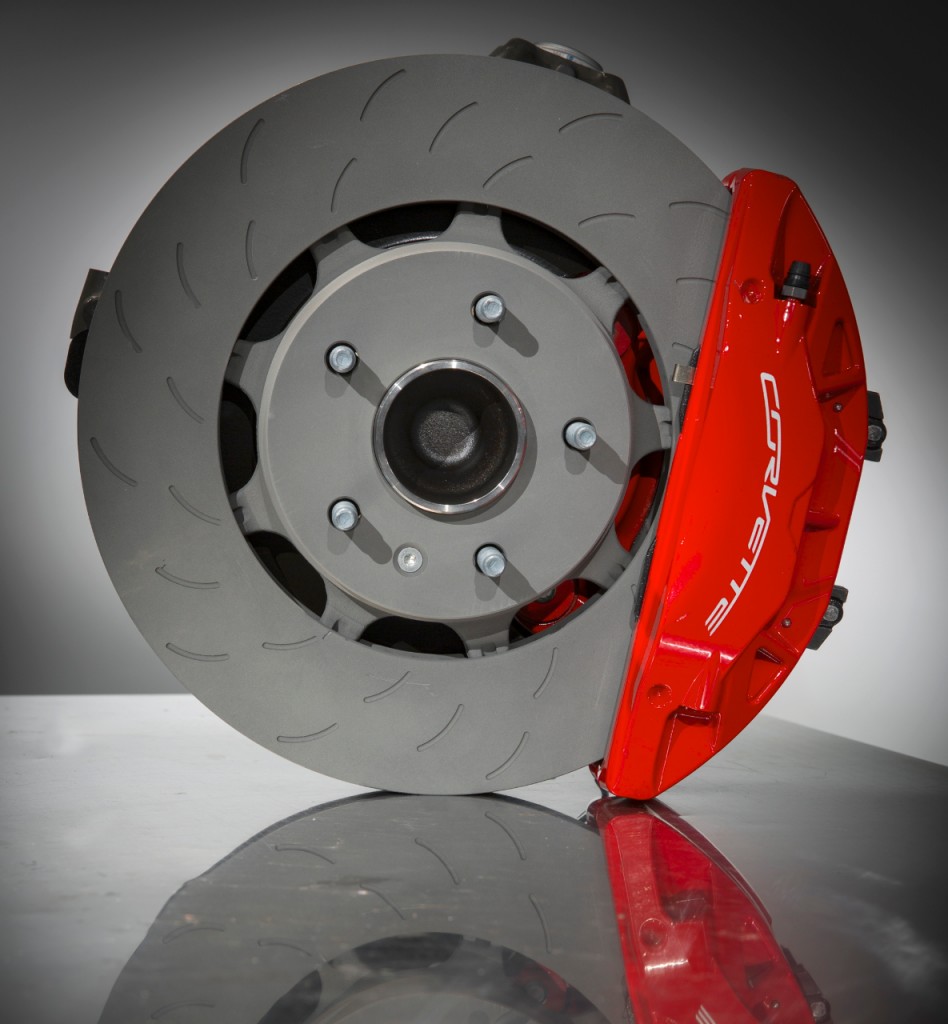
Standard Brembo brakes, with four-piston fixed calipers derived from racing, deliver exceptional stopping power on the street or track. System highlights include:
• 12.6-inch (320 mm) front rotors and 13.3-inch (338 mm) rear rotors are standard and have 35 percent more swept area than previous-generation brakes. Consequently stopping distance is improved 9 percent
• Dual-cast, slotted 13.6-inch (345 mm) front rotors and 13.3-inch (338 mm) slotted rear rotors are included with Z51 Performance Package. They have 6percent more swept area than the previous-generation Grand Sport and are cooled front and rear for improved track capability. Consequently stopping distance is improved 5 percent
• All brake packages have fixed front and rear calipers are stiffer for more even pad wear, reduced drag and improved modulation.

Founded in 1911 in Detroit, Chevrolet is now one of the world’s largest car brands, doing business in more than 140 countries and selling more than 4 million cars and trucks a year. Chevrolet provides customers with fuel-efficient vehicles that feature spirited performance, expressive design, and high quality. More information on Chevrolet models can be found at www.chevrolet.com.

Source: FULL ARTICLE at Automotive Addicts

Video: Porsche Museum highlights history of the 911 RSR

By Jeremy Korzeniewski

Filed under: , , , , , ,

1973 Porsche 911 RSR

Porsche has amassed quite an impressive trophy case in just about every racing series it has ever entered, and one of its most dominant machines has to be the 911 RSR from the 1970s. Taking part in various GT-class competitions, the 911 RSR managed to take home three international and seven German victories in 1973, its very first year of competition.
Not one to downplay its racing successes, Porsche has released an informative video detailing the 911 RSR‘s impressive heritage. The 1973 RSR model owned by the Porsche Museum is detailed beautifully on video, and we have to say it looks absolutely stunning in its vintage Martini Racing livery.

Have a look at the video below for some historic racing action, along with static shots of one of our favorite Porsche models ever created.

Continue reading Porsche Museum highlights history of the 911 RSR

Porsche Museum highlights history of the 911 RSR originally appeared on Autoblog on Sat, 12 Jan 2013 19:00:00 EST. Please see our terms for use of feeds.

Permalink | Email this | Comments

Source: FULL ARTICLE at Autoblog