Previously, the only release date known for Company of Heroes 2 was March 12, 2013 (the same day as Blizzard’s StarCraft II: Heart of the Swarm). After the sale of developer Relic from the now defunct publisher THQ to SEGA, we’d heard next to nothing about when we’d finally get a chance to play the long-anticipated WW2-themed RTS.
Today that has changed.
SEGA and Relic have officially changed Company of Heroes 2’s release date to June 25th. The press release doesn’t get too specific about the reasons, other than stating, “Relic Entertainment is using the additional time to help Company of Heroes 2 meet the high standard set by its predecessor, the highest rated strategy game of all time.” Executive Producer Jonathan Dowdeswell also added, “We hate to disappoint our fans with a later than expected date as we know they are eager to play but we feel the additional time will help the team deliver the high quality sequel they deserve.”
The new Command & Conquer — formerly known as C&C: Generals 2 — is real, and we’ve played it. The early alpha version was rough, but it gave us a good idea of what we’re in for with this free-to-play, multiplayer-only reboot of one of PC gaming’s most famous RTS series.
What led to the name change, when this gameplay is still so clearly set in the near-future C&C: Generals universe and not the slightly further-future Tiberium universe of the 1995 original? Developer Victory Games says it came from the philosophy that this isn’t just a game, but a “platform.” While the part we played, which is planned for a 2013 launch, will be Generals-themed, but the plan is to use this same technology to introduce new components set in the Tiberium and Red Alert universes — and even a whole new still-unseen C&C variant that Victory has on the drawing board.
Bioware made it big riding on the back of Baldur’s Gate, and its success became the basis for add-ons, sequels and spin-offs that established Ray Muzyka and Greg Zeschuk as legends in the gaming industry. A mix of undiluted 2nd edition D&D rules along with party combat dynamics, well-paced leveling and a strong, character-driven narrative produced an experience so satisfying, its remains a benchmark other RPGs are measured against. Overhaul Games, fresh off the slick remake of MDK2 HD, aimed its sights considerably higher in the Bioware back catalog and produced a long-requested and highly anticipated update to this crown jewel of gaming. Baldur’s Gate Enhanced Edition ($20, buy-only) introduces official native high-resolution visuals, new story content, multiplayer support and a gladiator-style combat mode for quick action. It delivers on these promises, but like most translations, something of the original spark is lost in the process.
1) Character creation is a step down memory lane with D&D 2nd edition rules used throughout.
Overhaul Games, who started out life as a division of online game distributer Beamdog, petitioned Bioware for over a year before being given access to the sacred Infinity Engine source code, the lifeblood from which Baldur’s Gate, Icewind Dale and Planescape flowed. What followed were hundreds of bugs fixes and improvements as the engine was refitted for modern OS and hardware environments along with visual upgrades to the artwork and interface graphics.
The technical improvements are largely successful. The game runs in crisp high resolution without lag and supports widescreen monitors natively, feats the original game can only perform with substantial end-user modification. Engine improvements from later games in the series, such as Shadows of Amn, have been retroactively fitted so additional class kits and subraces are available to round out character creation. The experience cap has also been raised, giving a little headroom for point gobbling multiclass builds.
Combat is a mix of RTS mob management and RPG clickfest.
Gameplay is largely the same, with characters arrayed on the right side of the screen, mode selections to the left, and actions across the bottom. Control is more like an RTS game than a traditional action RPG, focusing on mob attacks using a pause-go command flow to issue orders to your party or relying on AI. Quick slots let you pick preferred weapons or items via function keys and despite its age, the ergonomics of the layout are easy to appreciate. In some ways, they surpass the radial menu paradigm Bioware used for the subsequent Neverwinter Nights series.
Ironclad Games, developers of the critically acclaimed Sins of a Solar Empire, continue to change their Dota-style game Sins of a Dark Age. Originally it had one player operating as the player Commander, building bases like a traditional RTS while the other heroes ran around and battled the enemy team. Then Ironclad removed the base building, giving the player Commander more time to focus on the fight. And now they’ve changed Sins yet again and removed the player Commander altogether.
This news comes alongside the announcement that, in conjunction with Infinite Game Publishing, they’re rolling out Founders Editions, which allow you to purchase immediate early access to the Sins beta, as well as acquire additional items depending on what level you purchase. To find out why Sins continues to change, how the studio plans to make their game standout in a space where League of Legends and Valve’s Dota 2 dominate, and learn more about the Founders Package program, we conducted an email interview with Ironclad co-founder and producer, Blair Fraser.
Since even indie devs take time off for the holidays, there weren’t a lot of new games this week. Luckily, this month’s Ludum Dare about villainy produced enough games for two weeks of great games.
Ore Chasm
I started playing Ore Chasm earlier today and looked up to find that two hours had passed. The game feels a bit like Minecraft as you dig down underground to mine more ore, but instead of crafting new items with all your metals you upgrade your mining laser (which also lets you fly around the stage like you’ve strapped on an awesome jetpack.) If that weren’t enough, the game is also multiplayer. It’s by far the most robust game I’ve seen coming out of this round of Ludum Dare.
Demon Quest
Demon Quest is a point-and-click adventure where you play as a demon who’s looking to earn their demon degree. It’s not the deepest or longest adventure game but for a 48-hour game jam product it’s got an impressive visual flair.
Dig-Dug Dungeon
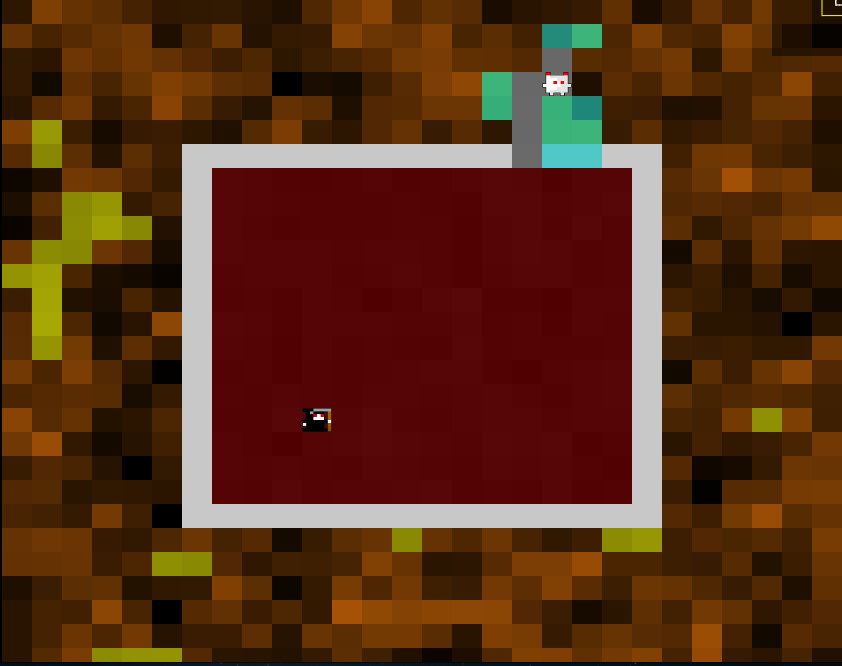
Dig-Dug Dungeon re-imagines Dig-Dug as an RTS, and the results are surprisingly addictive. You spawn more minions to dig around the map to earn gold and destroy all the pesky heroes looking to defeat the reaper commanding your base.
1500 GMT (Dow Jones) Russian stocks close with minor changes; ruble-traded MICEX adds 0.12% to 1473.53, while dollar-based RTS sheds 0.15% to 1513.62. Source: Fox Business Headlines