Tag Archives: opinion

Russia backtracks on statement about Assad 'losing control' of Syria

Russia issued a clumsy denial Friday of a statement from its point man on Syria, who said a day earlier that Syrian President Bashar Assad is losing control of the country. The Foreign Ministry insisted it is not changing its stance on the embattled Syrian regime.

Russia‘s explanation — that the official was characterizing the opinion of the Syrian opposition rather than stating Russia‘s position — did not jibe with the words of Deputy Foreign Minister Mikhail Bogdanov, who was quoted by all three leading Russian news agencies as saying Thursday: “there is a trend for the government to progressively lose control over an increasing part of the territory,” and adding that “an opposition victory can’t be excluded.”

The Foreign Ministry insisted in a statement Friday that Bogdanov was referring only to the claims of the “Syrian opposition and its foreign sponsors forecasting their quick victory over the regime in Damascus.”

“In that context, Bogdanov again confirmed Russia‘s principled stance that a political settlement in Syria has no alternative,” the ministry’s spokesman, Alexander Lukashevich, said in the statement.

Bogdanov was speaking before the Public Chamber, a Kremlin advisory body. His statement marked the first official acknowledgment from Moscow that Assad’s regime may fall.

It was certain to have been seen as a betrayal by the Syrian ruler, further eroding his grip on power amid opposition successes on the ground and recognition of the Syrian opposition by the United States and other world powers. On Friday, European Union leaders planned to express strong support for a recently formed coalition of opposition groups, but stop short of calling on member states to offer diplomatic recognition.

While Bogdanov’s statement seemed to signal Russia‘s attempt to begin positioning itself for Assad’s eventual defeat, the Foreign Ministry‘s backtracking on that clearly indicated that Moscow has no intention yet to stop backing its ally.

This was reinforced by Syrian Deputy Prime Minister Qadri Jamil, who was in Moscow on Friday to meet with Bogdanov and his boss, Foreign Minister Sergey Lavrov. “There have been no changes in Russia‘s position,” Jamil told journalists after the meeting. “Russia stands for dialogue and against foreign interference.”

Bogdanov’s comments were quoted verbatim by state-owned Russian news agencies RIA Novosti and ITAR-Tass, and also by Interfax. The Foreign Ministry on Thursday turned down the AP’s interview request.

Facing questions about Bogdanov’s statement during a briefing later Friday, Lukashevich insisted that there has been no shift in the Russian position on Syria. He said that Moscow is continuing to call for a political dialogue between the Syrian government and the opposition on the basis of the agreement reached at an international conference in Geneva in June.

“Our only goal is to end the violence in Syria as quickly as possible, start a dialogue between the Syrians, between the government and the opposition, and work out a formula for advancing a political process,” Lukashevich said. “There hasn’t been and there won’t be any retraction from our principled line on the Syrian affairs.”

The ministry’s denial came about 22 hours after Bogdanov spoke, a long delay given that the deputy minister’s remarks were reported by Russian and international media and drew worldwide reaction.

Georgy Mirsky, a leading Mideast expert with the Institute for World Economy and International Relations, a top foreign policy think tank supported by the Russian government, said that Bogdanov may have slipped up by failing to coordinate his statement with Lavrov, the foreign minister. The clumsy denial issued by the Foreign Ministry could have been ordered by President Vladimir Putin himself, Mirsky said.

“Bogdanov went very far, and the question is whether he coordinated his statement with Lavrov,” the analyst said. “If he didn’t, he may have gotten himself in trouble. They might have reported it to Putin, and Putin might have called Lavrov.”

Mirsky said it would be difficult for Putin to dump Assad. “It would amount to a loss of face, look like caving in to Western pressure. That’s not in his character,” Mirsky said. “Russia is going to lose Syria anyway. But if it’s lost as a result of Assad’s ouster or killing or a coup by his own men, it wouldn’t look like Putin’s defeat. But he would look very bad indeed if even he doesn’t wait for Bashar Assad to go away.”

The U.S. quickly commended Russia on Thursday for “waking up to the reality” by acknowledging the Syrian regime’s impending fall, but Lukashevich lashed back, saying that “we haven’t fallen asleep.”

“We haven’t changed our position and we won’t,” he said.

Asked about plans mentioned by Bogdanov to evacuate thousands of Russian citizens from Syria, Lukashevich answered evasively that Russia is prepared for any possible developments, but refrained from any specifics.

“We have relevant plans for any difficult situation, and they are being constantly adapted to the rapidly changing situation,” he said. “Especially in Syria, where we are seeing conditions for … our diplomats and compatriots becoming increasingly difficult, naturally we have plans.”

Russia maintains a naval base at the Syrian port of Tartus, serving Russian navy ships on missions to the Mediterranean and hosting an unspecified number of military personnel. Russia also has an unspecified number of military advisers teaching Syrians how to use Russian weapons, which make up the bulk of Syrian arsenals.

Syria is Russia‘s last remaining ally in the Middle East and has been a major customer of Soviet and Russian weapons industries for the last four decades, acquiring billions of dollars’ worth of combat jets, helicopters, missiles, armored vehicles and other military gear.

Russia has joined with China at the United Nations Security Council to veto three resolutions that would have imposed sanctions on Assad’s regime over its bloody crackdown on the uprising that began in March 2011. Moscow also has continued to provide the Syrian government with weapons despite strong international protests.

Asked if Beijing also foresees Assad’s demise and whether it plans to evacuate its citizens in Syria, the Chinese Foreign Ministry said it would take unspecified steps to protect Chinese nationals and appealed anew for a ceasefire and for a negotiated political transition.

China is deeply worried about the continuing violent conflict in Syria and always believes that a diplomatic settlement to the Syrian issue is the only way out and also serves the shared interest of the international community,” Chinese Foreign Ministry spokesman Hong Lei said at a daily media briefing.

At an EU summit of heads of state and government, a draft document said leaders will endorse further contacts with the Syrian opposition coalition. The head of the body, moderate cleric Mouaz al-Khatib, briefed EU foreign ministers Monday in Brussels on the situation.

“We must now set ourselves the objective of forcing Bashar Assad to leave as quickly as possible,” French President Francois Hollande said on his way into the summit.

Source: Fox World News

The Ads for the Dodge Dart? They’re Smart, and Here’s Why [The Ad Section]

By Don Klein

The Ads for the Dodge Dart? They’re Smart, and Here’s Why [The Ad Section]

Award-winning ad man-cum-auto journalist Don Klein knows a good (or bad) car commercial when he sees one; the Ad Section is his space to tell you what he thinks of the latest spots. The ad’s rating is depicted via the shift pattern at the bottom, but everyone has an opinion when it comes to advertising, so hit Backfires below and tell us what you think, too.

Dodge’s portfolio of television commercials for the 2013 Dart isn’t just an ad campaign; it’s a miniature film festival that both educates and entertains. It’s got action, drama, humor, excitement, and a killer soundtrack. The casting and acting are top-notch too, as are the occasional cameo celebrity appearances. Yet these commercials are so jam-packed with relevant product information, they could be used as training videos for dealership personnel. You know what’s wrong with them? Nothing.

Hitting a creative home run is difficult even when the assignment is relatively uncomplicated. But in Dart’s case, the agency (Portland-based Wieden+Kennedy), had to accomplish a number of difficult objectives, including several that are intangible. Cool, for example, is a difficult quality to bestow by simple assertion, especially when the product’s name conjures up images of an ancient, slant-six powered econobox. Yet these commercials are definitely cool.

First, a little background. Compacts account for approximately 15 to 20 percent of U.S. auto industry sales, yet Chrysler hasn’t been a player in this arena since the last Neon rolled off the assembly line in 2005. In addition to contributing unit sales, compacts play the important role of introducing buyers to the brand: It’s a lot easier to keep happy customers in the tent than it is to lure converts after they’ve had a good experience elsewhere. And while Chrysler’s been asleep at the switch regarding this critical category, its competitors clearly haven’t: Ford, Chevy, Honda, Toyota, VW, and Mazda are just some of the marques that have been honing their compact game. (Have you driven a Ford Focus—or the ST?)

Comparison Test: 2013 Dodge Dart Rallye vs. 2012 Ford Focus SE
Instrumented Test: 2013 Dodge Dart Limited 1.4T DCCT
Instrumented Test: 2013 Dodge Dart Limited 1.4T Manual

And as every player knows, if you come to the party late, you’d damned well better bring something worth waiting for. But how many times has that been tried in car advertising before? A million? Three million? At least. And it rarely works, because most of the time, those commercials start out showcasing the end result of their alleged greatness and rely on a voiceover to explain how they got there. But the Dart commercials start at the beginning and show you how they achieved their goal with easy to digest, snack-sized visuals that illustrate the copy points.

And the journey isn’t always pretty. For example, in the spot called “How To Change Cars Forever”, we suffer along with the designers (all young and hipster-like) as they chug coffee, skip meals, and pull all-nighters until they’re satisfied. We cheer them on from our couches when they destroy not-quite-there sketches and prototypes, “ignore the committees,” and literally kick the finance guy out the door, all to the pumping beat of Jay-Z and Kanye West’s “No Church in the Wild.” This is car building the way we would do it! Less compromise! More power! Cool apps! Tom Brady! Low price! I want one!

5th Gear RatingOf course it’s just an ad. But advertising is still the way most of us get our information about the things we buy. True, enthusiasts will dig deeper, do their own research, and listen to the voices they trust most. If that weren’t true, Car and Driver wouldn’t be in business. But if car companies relied just on enthusiast buyers, they wouldn’t be in business. Like it or not, advertising plays a major role in the auto industry, and Chrysler’s betting heavily on the Dart campaign to deliver prospects to their showrooms. I have no doubt that these commercials will do just that. Whether they’ll be happy with their Dart—we’d avoid the bummer-tastic dual-clutch gearbox, for example—is another matter entirely.

Source: Car & Driver

Israel's foreign minister charged with breach of trust

Israel‘s powerful foreign minister was charged Thursday with breach of trust, but escaped more serious charges in a fraud and money-laundering case that could jeopardize his political career and upend the Israeli political system just a month before parliamentary elections.

The decision by Israel‘s attorney general capped an investigation into Foreign Minister Avigdor Lieberman that stretched back more than a decade. Lieberman, a close ally of Prime Minister Benjamin Netanyahu, is expected to come under heavy pressure to resign.

Netanyahu had no immediate comment, while Lieberman planned an announcement Thursday evening. In a brief statement, Lieberman’s attorneys said they respected the decision and would study it. Lieberman in the past has denied all accusations and alleged they were politically motivated.

The Soviet-born Lieberman is head of Yisrael Beitenu, an ultranationalist party that is especially popular with immigrants from the former Soviet Union. With a tough-talking message that has questioned the loyalty of Israel‘s Arab minority, criticized the Palestinians and confronted Israel‘s foreign critics, he has at times alienated Israel‘s allies while becoming an influential voice in Israeli politics.

Yisrael Beitenu and Netanyahu’s Likud Party recently joined forces and are running together on a joint list in the Jan. 22 parliamentary elections. Opinion polls have predicted the list would be by far the largest bloc in parliament and lead a new coalition government.

While Lieberman was cleared in the most serious allegations against him, Thursday’s decision nonetheless could force him to step down and throw the joint list into disarray.

The decision was a reversal for Attorney General Yehuda Weinstein , who last year had notified Lieberman that he intended to indict him on charges that included fraud and money laundering.

Prosecutors have long suspected that Lieberman illicitly received millions of dollars from businessmen and laundered the cash through straw companies in eastern Europe while he was a lawmaker and Cabinet minister. In his decision Thursday, Weinstein said the case was not strong enough.

“I am convinced that there is no reasonable chance of a conviction in the offenses Lieberman is suspected of and that case should be closed,” Weinstein said in his decision.

Instead, Lieberman was charged with the lesser offense of receiving official material from the investigation against him from the former Israeli ambassador to Belarus.

The envoy had received the documents from the foreign ministry, which sought additional information on Lieberman from Belarus authorities. The ambassador, Zeev Ben-Aryeh, reached a plea bargain in the case earlier this year.

Israeli law is unclear about whether Lieberman must resign. There is a legal precedent for politicians to step down when they face charges that compromise public trust in them. But Lieberman could decide the charges don’t warrant that he resign.

Law professor Emanuel Gross said that because Weinstein did not make a recommendation as to whether Lieberman should step down, the foreign minister’s political future remained unclear. He said Weinstein might be asked for a ruling, and if he refuses, the matter could head to the Supreme Court.

Israel Radio’s chief political commentator, Hanan Kristal, said Lieberman would likely resign before the attorney general is forced to take action, perhaps by ordering Netanyahu to fire his foreign minister. “I assume (Weinstein) doesn’t want to get to that,” he said.

Court rulings in other, more serious criminal cases against Cabinet officials forced them to resign. Facing the prospect of an indictment, former Prime Minister Ehud Olmert announced his decision to step down in 2008 before formal corruption charges were filed against him. Olmert this year was cleared of most charges, but convicted of breach of trust.

The blunt-talking Lieberman, a native of Moldova, has amassed power with support from immigrants from the Soviet Union and other Israelis drawn to his broadsides against Israeli Arabs and dovish groups, as well as the Palestinians and Western Europe.
Source: Fox World News

Girl with leukemia taken from Phoenix hospital appears safe

The family of an 11-year-old leukemia patient whose mother unexpectedly took her from a Phoenix hospital last month has a history of removing the child from medical facilities against the advice of doctors, police said Wednesday as the parents claimed the girl was being treated in Mexico.

The child, Emily, had been receiving chemotherapy at Phoenix Children‘s Hospital for about a month before her mother removed her on Nov. 28 while she was still being treated. An infection forced physicians to amputate her right arm and insert a catheter through her chest to deliver medications.

The child’s mother removed an IV tube from the device and took her from the hospital, concerning doctors that she could succumb to a deadly infection, said police Sgt. Steve Martos.

Since then, Emily’s parents have refused to provide police in Arizona with any information on the child’s whereabouts or treatment, but her mother and father have asserted in television interviews that she is under the care of doctors in Mexico. The girl appeared in an interview Wednesday on ABC‘s “Good Morning America,” the first time police have seen her since she was taken from the hospital.

“I am here, and it kind of feels good because the doctors really love me so much,” said a bright-eyed and smiling Emily, who wore a pink, knitted cap in what appeared to be a medical facility that wasn’t identified.

Martos said that until Emily’s parents provide authorities with proof that the child is safe, their investigation will remain open, and criminal charges are still being considered, given what he called a troubling pattern of potential medical neglect.

He said the girl’s father was in Phoenix on Wednesday and was interviewed by detectives but refused to provide any information about her whereabouts.

“There’s a simple solution. Provide us with information that Emily is not at risk of dying due to infection,” Martos told The Associated Press, adding that authorities are reviewing whether there is “some neglect or abuse on behalf of the parents if they’re failing to provide proper medical care.”

He said Emily’s parents have previously twice removed her from separate California hospitals against the advice of her treating doctors, and that the child was in “unbelievably horrible medical shape” when she arrived last month at the Phoenix facility.

Border Patrol agents stopped the family’s car in October as they were crossing from Mexico into Arizona and noticed Emily appeared extremely sick, Martos said. The child was immediately transported to a hospital in nearby Yuma, then flown to Phoenix Children‘s Hospital, he said.

“These are some of the red flags that cause us some concern,” Martos said. “Obviously there are questions we have as to how well they have been taking care of this child.”

The mother, Norma Bracamontes, appeared with her daughter Wednesday on ABC and blamed the hospital for complications that led to her daughter’s arm being amputated. The family and Emily were being intimidated by the hospital over bills, she said.

“Emily, you’re not going to go home because your mom and dad, they haven’t filled (out) all the forms, so blame them that you’re going to remain here stuck in the hospital,” Norma Bracamontes said hospital officials told her daughter.

Phoenix Children‘s Hospital released a statement Wednesday, saying privacy laws prevent officials from disclosing patients’ financial information or details regarding treatment.

“However, we steadfastly disagree with the assertions brought forth regarding the quality of care Emily received and will vigorously defend our actions regarding her treatment,” the statement read.

Hospital spokeswoman Debra Stevens said clinical decisions are never based on ability to pay and Phoenix Children‘s provides services either free or at reduced rates to patients who can’t afford them.

“Emily’s health and well-being continues to be our primary concern,” Stevens said in an email to the AP.

“Children with her condition require ongoing treatment and monitoring, so we invite her current physician to contact Emily’s Phoenix Children‘s pediatric oncologist to ensure continuity of care. This is customary when a patient seeks a second opinion or moves from inpatient to outpatient care.”

Emily’s father, Luis Bracamontes, said last week in an interview with NBC News that his daughter was safe and being treated by doctors in Mexico.

“Unfortunately they are still being uncooperative with us,” Martos said. “It’s bizarre that they will talk to the media but at this point are unwilling to talk to investigators.”
Source: Fox US News

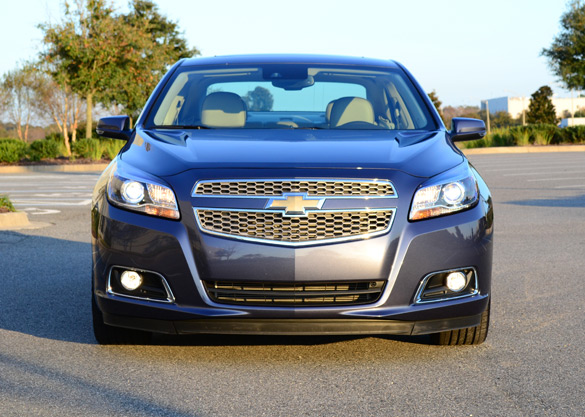
2013 Chevrolet Malibu LTZ 2.0L Turbo First Drive


All-new for 2013, Chevrolet brings their redesigned entry-level midsized Malibu sedan to the game eager to run with the competition. In most respects the all-new Chevrolet Malibu is a modest attempt to keep the segment on a level playing field with some added refinement, sports-appeal and luxury without inflating the price. In many ways Chevrolet has accomplished this task but has to face its tough and relentless competition head-on in a perpetual battle.

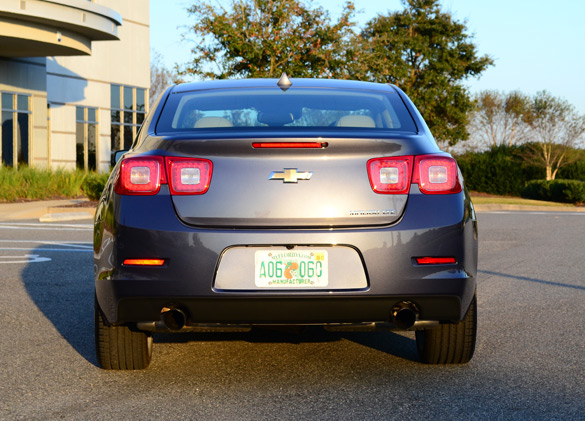
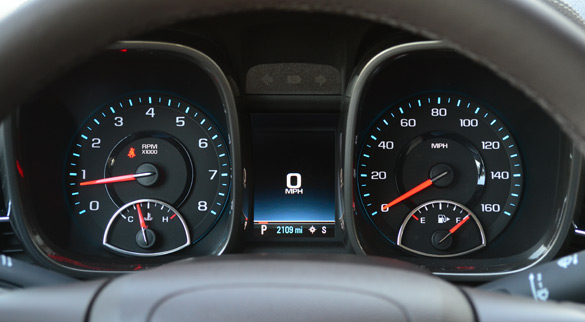
Completely redesigned inside and out, the new 2013 Chevrolet Malibu gets a new-found recognition from the re-sculpted front fascia to the Camaro-inspired tail lights. You cannot deny broadcasting Chevrolet’s aim to use the sporty appeal of the Camaro and trickle the design into the new Malibu. If the tail lights do not give it away then the new gauge cluster, similar to the Camaro’s also, will do the trick.

Most times it is a good thing to incorporate an automotive brand’s new, fresh look into many, if not all, of its vehicles. The Malibu shares many of those qualities with an added bonus of getting the sporty Camaro’s unique characteristics throughout. Still, the new 2013 Chevrolet Malibu is an affordable sedan improved in just about every aspect over its predecessor.

I had the chance to drive the new 2013 Malibu LTZ trim equipped with the 2.0-liter 4-cylinder turbocharged engine, producing a healthy 259 horsepower at 5500 rpm and 260 lb-ft of torque at a low 1700 rpm. The new turbo engine, same as found in the turbo version of the new Cadillac ATS and Buick Regal GS, only slightly less power in the Malibu, works exceptionally well for Chevy’s new cash-cow sedan. Although the EPA fuel numbers are a bit short from direct competition, the 2.0-liter turbo 4-banger is the better choice of powertrains for the Malibu compared to the 197 horsepower 2.5-liter engine as well as the Eco variant of the Malibu with the same 2.5-liter in addition to a 15-hp electric assist motor. You will surely get better EPA fuel consumption figures from the 2.5-liter mill and Eco version of the 2.5, but with slightly less power and low-end grunt.

All 2013 Malibu trim levels (LS, LT, Eco and LTZ – varying multiple number stages) get a 6-speed automatic transmission directing power to the front wheels. A manual shifting mode is somewhat of a novelty as it only offers rocker-buttons (up and down) atop of the shift knob. It is rather cumbersome to use the controls, which my thought would to completely eliminate them or at least offer shift paddles for the sportier LTZ trim or turbo engine-equipped Malibu. Aside from the quirky manual-shift control, GM’s 6T70 6-speed automatic transmission is up to the task for detecting driving styles and performing smooth shifts. During my time in the peppy 2.0-liter Turbo Malibu, the transmission quickly adapted to my heavy foot and held gears longer, similar somewhat of a sport mode. After driving in a more civilized fashion for about a half a mile, the transmission was back on its normal shifting duty.
EPA figures for my Malibu Ecotech Direct-Injection Turbo 2.0-liter engine come in at a 21 mpg city and 30 mpg highway. Those are not so thrilling figures for a 4-cylinder engine even with 259 horsepower. Possibly to make up for fuel efficiency, the new 2013 Malibu has decent performance taking only 6.3 seconds to make it to 60 mph from a dead stop and landing a respectable 0.86g skid pad lateral accel. Much of the new Malibu LTZ with the turbo engine’s handling abilities is due to a sport-tuned suspension and optional 19-inch aluminum wheels shod in 245/45R all-season tires at all four corners. The sport-tuned suspension follows traits of the Camaro, the rear end is a bit disturbed by some additional unwanted bounce. Basically, the rear shocks, in my opinion, are not dialed in like a front-wheel-drive sedan should be. Over-all ride quality of the new Malibu LTZ turbo is excellent giving the driver a sense of added stability at highway speeds.

Distinguishing the new 2013 Malibu from different trim levels is left to the wheels style, LED tail lights (standard on LTZ trims), and the exhaust pipes (dual exhaust on the Malibu Turbo). 18-inch wheels are standard on LTZ trims as well as leather appointed seats, front heated seats, auto-dimming inside rearview mirror, chrome door handles and front grill with chrome and silver accents.

Chevrolet’s new MyLink system, standard on all trims except the LS, is a new infotainment system integrated into a color 7-inch touch-screen. The new MyLink system proved to be very responsive and mostly user-friendly. The MyLink system can be optioned out with a full-on navigation system. Though, most consumers will be happy to get turn-by-turn directions downloaded from GM’s OnStar system, which will give you a perception of having a navigation system in a MyLink configured Malibu only when specific directions are requested via OnStar. The MyLink also combines sync with your smartphone to access Pandora app or your own music library as well as Bluetooth integration, streaming audio and data services. Connecting my iPhone 4S proved to be a seamless integration with the MyLink system, something Chevrolet gets right. Remote keyless access and remote start found on my Malibu LTZ also prove to be quite the convent amenity, especially during those cold mornings when you need to pre-heat the cabin and defrost the windows.

Inside of the new 2013 Malibu all trim levels get a much-improved interior with many color accented materials, mostly plastics and padded vinyl, simulating a well-appointed cabin. The seating positions and comfort was also a step above its predecessor with just the right amount of bolstering in the front seats for a mid-sized sedan. The subtle color scheme of the interior was also perceived as a premium classification for the interior in addition to the soft leather seats with accented trim.

The cabin remains fairly quiet isolating the buzz and most of the turbo whistle from the direct-injection turbo 4-cylinder engine. Rear seating room is much wider than I remember in previous generations of the Malibu. However, rear leg room can quickly be cut short dependent on the front seating positions, which allow the front occupants to adjust aft almost until the front seat-back touches the rear seat bottom.

The automotive enthusiast appeal of the all-new 2013 Chevrolet Malibu is alive and thrives much in its sporty driving characteristics and few Camaro-styling cues. Given the tough and relentless competition, much of which have received complete redesign this year, the 2013 Chevy Malibu has its work cut out. The new 2013 Malibu does, however, shine in the aspect of a powerful turbocharged engine and a premium-feel that you can get in a well-appointed package all for a competitive price.
My new 2013 Chevrolet Malibu LTZ 2.0 Turbo was well-equipped with an Electronics and Entertainment Package (19-inch wheels, Pioneer premium audio system, rear vision camera, 120-volt power outlet and universal home remote), LTZ Premium Package (HID headlights, keyless push button start, EZ key passive entry system and memory driver’s seat & outside mirrors settings) , Advanced Safety Package (forward collision alert and lane departure warning) and Cocoa Fashion Trim brings home a $33,820 as-tested price tag including a $760 destination charge. At the entry level, a new 2013 Malibu LS can be had at a starting price of just $22,390.

2013-chevrolet-malibu-ltz-turbo
2013-chevrolet-malibu-ltz-turbo-1
2013-chevrolet-malibu-ltz-turbo-side
2013-chevrolet-malibu-ltz-turbo-rear-side
2013-chevrolet-malibu-ltz-turbo-front
2013-chevrolet-malibu-ltz-turbo-rear
2013-chevrolet-malibu-ltz-turbo-wheel-tire
2013-chevrolet-malibu-ltz-turbo-dashboard
2013-chevrolet-malibu-ltz-turbo-gauge-cluster
2013-chevrolet-malibu-ltz-turbo-front-seats
2013-chevrolet-malibu-ltz-turbo-rear-seats
2013-chevrolet-malibu-ltz-turbo-door-trim
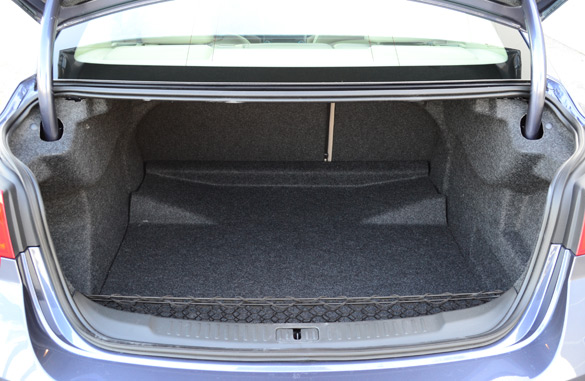
2013-chevrolet-malibu-ltz-turbo-trunk
2013-chevrolet-malibu-ltz-turbo-engine

Copyright: 2012 AutomotiveAddicts.com
SPECIFICATIONS

Price: Base Malibu LS MSRP $22,390 / Base Malibu LTZ $27,830 / As-Tested Malibu LTZ $33,820
Engine: 2.0-liter Turbocharged inline 4-cylinder 259 horsepower @ 5500 rpm / 260 ft-lbs. torque @ 1700 rpm
Turning circle: 37.4 ft.
Track: f/r-62.2/62 ft.
Legroom: f/r-42.1/36.8 inches
Headroom: f/r-39.0/37.5 inches
Fuel tank: 18.5 gallons
EPA Fuel Estimates: 21 mpg city / 30 mpg highway
Curb weight: 3,500 lbs. est.
0-60 mph: 6.3 seconds

Source: Automotive Addicts

Egypt: military warns of ‘disastrous consequences’

Egypt‘s military warned on Saturday of “disastrous consequences” if the crisis that sent tens of thousands of protesters back into the streets is not resolved, signaling the army’s return to an increasingly polarized and violent political scene. The military said serious dialogue is the “best and only” way to overcome the nation’s deepening conflict over a disputed draft constitution hurriedly adopted by Islamist allies of President Mohammed Morsi, and recent decrees granting himself near-absolute powers. “Anything other than that (dialogue) will force us into a dark tunnel with disastrous consequences; something which we won’t allow,” the statement said. It was read by an unnamed military official on state television. Morsi had called for a dialogue Saturday to discuss how to resolve the disagreement as his vice president suggested that a Dec. 15 constitutional referendum could be delayed. But the main opposition leaders declined to attend, saying talks can only take place if Morsi rescinds his decrees and cancels the referendum. Most of the public figures at the meeting were Islamists, with the exception of liberal opposition politician Ayman Nour. And at least three members left the talks soon after they started. Ahmed Mahran, a lawyer who was among them, said: “It was a one-way conversation,” accusing presidential advisers of refusing to listen. Egypt‘s once all-powerful military, which temporarily took over governing the country after the revolution that ousted autocratic leader Hosni Mubarak, was largely sidelined weeks after Morsi was elected. Weeks after he was sworn in, Morsi ordered the two top generals to retire and gave himself legislative powers that the military had assumed in the absence of a parliament, which had been dissolved by the courts. The current crisis was sparked Nov. 22 when Morsi granted himself authority free of judicial oversight, alleging that judges loyal to the former regime were threatening the constitutional drafting process and the transition to democracy. But the move touched off a new wave of opposition and unprecedented clashes between the president’s Islamist supporters led by the Muslim Brotherhood and protesters accusing him of becoming a new strongman. At least six civilians have been killed and several offices of the president’s Muslim Brotherhood torched in the unrest. The two sides also have staged a number of sit-ins around state institutions, including the presidential palace where some of the most violent clashes occurred. With the increasing polarization and the specter of internal fighting looming, the military began reasserting itself, with soldiers sealing off the presidential palace with tanks and barbed wire. Its warning on Saturday marked the first time the military returned to the political fray. Failing to reach a consensus, “is in the interest of neither side. The nation as a whole will pay the price,” the military said, adding it “realizes its national responsibility in protecting the nation’s higher interests” and state institutions. Images of the military’s elite Republican Guards unit surrounding the area around the palace also showed one of the most high-profile troop deployment since the army handed over power to Morsi on June 30. A sit-in by Morsi’s opponents around the palace continued Saturday, with protesters setting up roadblocks with tanks behind them amid reports that the president’s supporters planned rival protests. By midday Saturday, TV footage showed the military setting up a new wall of cement blocks around the palace. The president has insisted his decrees were meant to protect the country’s transition to democracy from former regime figures trying to derail it. Muslim Brotherhood leaders, meanwhile, made their highest profile appearances since the dispute began. The group’s top leader Mohammed Badie and his powerful deputy Khairat el-Shater held press conferences Saturday alleging there was a conspiracy to topple Morsi but presenting little proof. Badie said the opposition has accused his group of violence but is instead responsible for the attacks on Muslim Brotherhood offices. He also claimed that most of those killed in last week’s violence at the Palace and other governorates were members of the Brotherhood. “These are crimes, not opposition or disagreement in opinion,” he said. Meanwhile, with a dialogue largely boycotted by the main opposition players, members of a so-called Alliance of Islamists forces warned it will take all measures to protect “legitimacy” and the president, in comments signaling continued tension. “We will not allow the revolution to be stolen again,” el-Shater said. “Our main job is to support legitimacy and stop the plot to bring down the president.” Mostafa el-Naggar, a former lawmaker and protest leader during the uprising that led to Mubarak’s ouster in February 2011, said the conspiracy alleged by the Brotherhood “doesn’t exist.” El-Naggar added that the Brotherhood and military statements suggested the crisis was far from over. “The military is saying it is still here and will interfere when necessary. This is believed to be when there is widespread infighting,” he said. Meanwhile, he said Morsi and his group are threatening to widen the conflict by portraying the opposition as conspirators against Islam. “As it stands, Egypt is captive to internal decisions of the Brotherhood,” he said.
Source: Fox World News