Tag Archives: NDK

Holidays, Mir and… burgers

Burger Party

On the second week of March, I went for some vacations in the mountains. I came
back tired but refreshed.

And then I read the free software news to catch up on what happened while I was
away.

I am not going to comment on whether it made sense to create Mir instead of
working on Wayland. What actually happened is I was left flabbergasted by such a
waste of energy from some people whose smartness is only surpassed by their
unwillingness to compromise and cooperate, on all sides.

My mind was still in the mountains and I didn’t feel like diving into yet
another uprising in our geeky, Whoville-sized, world, didn’t want to pick a side
and argue endlessly.

Feeling a bit depressed, I decided to try something different. The family now
owns a Nexus 7 tablet. The kids (and their parents) enjoy playing games on it.
You may remember I wrote games in the past. I thought it would be a
nice change to write an Android game, I also liked the idea of being able to get
people I know to try my stuff.

There was only one problem with this idea: I am not fond of Java. I looked if it
were possible to use Python to write Android games, but it does not seem to be
doable right now. I considered using the NDK instead, so that I could use
C++, but in the end decided I should start with the more widely-used tools. I
downloaded the Android Developer Tools and settled for the libgdx game
development library.

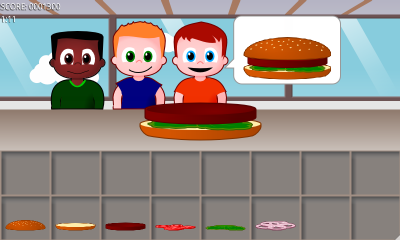
I decided to start small, with a “Burger” game. It currently looks like this:

It’s been only a week of evening hacking, so it is a very early version. I
really enjoy the process of working on this little project though, it does a good job
at keeping my mind busy with something positive.

Some observations on the technical side:

  • Java is actually not that bad. My last adventure with this language was before
    the introduction of generics. Generics makes the language more enjoyable.
  • Java is not that bad, but I miss Qt signal-slot system. Creating event classes and
    writing the same code over and over to register/unregister listeners gets old
    very quickly. I wrote a crude signal-like class to make life easier.
  • LibGDX is a lot of fun, even if the doc is way behind Qt or the KDE library
    docs. Being able to run your game on your development machine without going
    through an emulator is a huge time-saver.
  • Writing Java with Eclipse is almost too easy. The helpers to add missing
    imports, the auto-completion and the continuous building are amazing. The
    refactoring tools are also impressive.

…read more
Source: FULL ARTICLE at Planet KDE

Marcin Juszkiewicz: Nine years of embedded Linux

Nine years ago I bought Sharp Zaurus SL-5500 as my first Linux PDA. And due to this I am where I am.

I could say that it started two years earlier when I saw PalmOS devices at local geek meetings. But it took me over year before Palm m105… Then was Sony Clie SJ30 — gorgeous device. High resolution, memory card, 16bit colour. Too bad that applications did not make use of it.

So I went for Linux. There were two options: Zaurus or iPaq. Went for former one as it had keyboard. It was good choice.

Quickly started development of packages and joined OpenEmbedded team. Then became one of OpenZaurus developers. After year or something took over release maintenance and released few last versions. 3.5.4(.1) were the best tested releases of OZ ever — I had over hundred testers for each RC image and they provided installation reports, bug reports and fixes. And it had unified installer for whole range of devices (took me several months to get it polished and few guys added own tweaks). When Ångström distribution started I was the one who officially ended OpenZaurus development.

And all that was in free time. But in mean time I created my consulting company. CELF was my first customer 😉

One nice evening I got question on irc and due to that I left dark side of IT and went from PHP programming to embedded Linux full-time. OpenedHand had interesting projects and clients with many devices. Imagine operating system + kernel + Python + GStreamer in 16 megabytes of flash… And I managed to get it done. While working for them I used proper developer boards (not only customer devices) and there were funny moments…

When we worked with ST Microelectronics on NDK-15 (later replaced by NHK-15 from ST Ericsson) I had to merge two kernel trees from two separate teams. Took me 2 days of mangling 20-30MB diffs but got it done. There are people at ST-E which reminded me this during one of Linaro Connects ;D

Also on GUADEC 2007 when we presented new interface for Openmoko phones NDK-15 had to wait for me as no one at stand was able to get it running (U-Boot config needed changes).

But then Intel acquired OpenedHand… The craziest trip of my life was return from London to my parents place. For three months I even had @linux.intel.com email but never used it due to problems with Intel corporate network and Linux (do not ask).

Next was Bug Labs and their BUG device. I cleaned their Poky trees, migrated to latest version and later to use OpenEmbedded directly. Less challenges but I also had few other customers at that time to keep me busy. Some of them were OH customers before and went to me for help.

Time passed, 2010 came. One day Canonical made another attempt to seduce me and this time I decided that it looks like good opportunity so I accepted. Sent BUG 2.0 prototype back to NYC and few weeks later I made crazy train …read more
Source: FULL ARTICLE at Planet Ubuntu