By NewsEditor
Saying that he was “speaking for all white people,” Chris Matthews apologized to MSNBC vice president Val Nichols and political contributor Michael Steele for being victims of racism.
By NewsEditor
Saying that he was “speaking for all white people,” Chris Matthews apologized to MSNBC vice president Val Nichols and political contributor Michael Steele for being victims of racism.
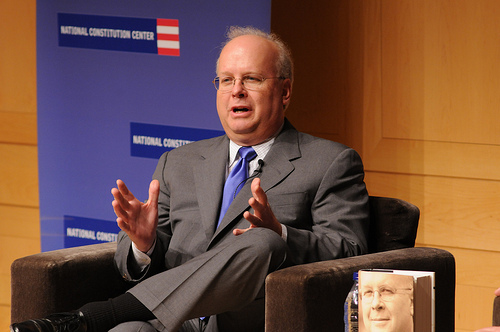
Yow.
Talk about a political disaster.
The other day I closed a piece on Karl Rove by saying that in launching what he called the “Conservative Victory Project” Mr. Rove had made a big mistake.
A really big mistake.
The group, described here in the New York Times as “intended to counter other organizations that have helped defeat establishment Republican candidates over the last two election cycles,” has had a horrific reception among conservatives
Now?
Yesterday the big mistake became bigger. Much bigger. A thunderstorm became Katrina.
Yesterday, American Crossroads spokesman Jonathan Collegio went on Washington, D.C. radio station WMAL’s Mornings on the Mall show hosted by Brian Wilson and Larry O’Connor.
And among other things casually dismissed Brent Bozell, the president of the Media Research Center as a “hater” — and worse.
Read More at spectator.org . By Jeffrey Lord.
Photo credit: National Constitution Center (Creative Commons)
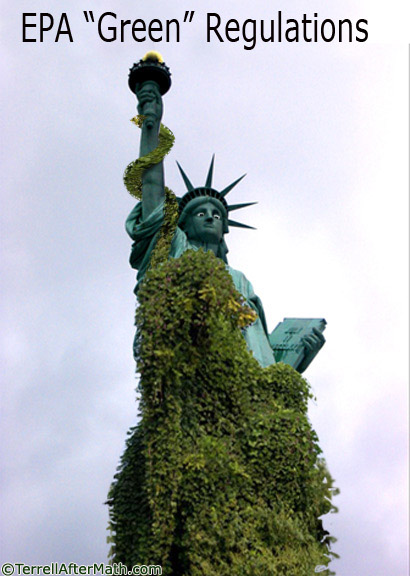
Concerned American citizens who don’t know the facts about how our government uses taxpayer dollars are being misled because the truth is not reported by the media. Before the massive economic stimulus bill passed in 2009, VP Joe Biden insisted “We have to spend more money to keep from going bankrupt.” That was three and a half years ago, and Americans are still paying the bills.
We have a consistently anemic economy and high unemployment as well as increasing energy and healthcare costs. Is the government corrupt, or is it incompetent where handling taxpayer dollars is concerned? That stimulus money was supposed to lead to shovel-ready jobs – immediate economic growth – but as the president himself chuckled, “Shovel ready was not as shovel ready as we expected.”
Just last week, Obama shut down the Jobs Council that apparently was created as a photo op used to dupe the public into believing they were trying to get people back to work and recharge the economy.
In the case of the energy market, the government’s decisions have cost taxpayers billions of dollars. Let’s look at some under-reported facts.
Ten months ago, another Obama-backed solar company in California, Solar Trust for America, declared bankruptcy after receiving $2.1 billion in loan guarantees from the Department of Energy (DOE). According to the Washington Examiner, Energy Secretary Steven Chu boasted the deal was “the largest amount ever offered to a solar project.”
Through the massive economic stimulus, the Obama administration basically funneled money to their Democratic allies; and even with all the evidence of failure, the media protects the administration, disregarding American citizens in the process. It sounds good to ‘invest’ in green energy and the future of America, but government typically rewards companies that are loyal to those who make the policies. Crony Capitalism 101.
Reports have noted that $80 billion was set aside in the 2009 Obama stimulus; and instead of creating desperately-needed jobs, the administration funded politically preferred energy projects. The DOE immediately provided over $35 billion in loans, loan guarantees, and conditional commitments to renewable energy companies before the American public knew what was going on. Sadly, many still don’t know.
Money was poured into companies that had poor track records. More than 36 companies have received money from generous U.S. taxpayers and have either gone bankrupt or are in the process of major cuts and layoffs. One spectacular failure is Brightsource Energy, which used $1.6 billion in taxpayer money.
First Solar received $1.46 billion. Next, Solyndra, a solar manufacturer, received a $535 million loan guarantee from the DOE and went bankrupt. Fisker Automotive, the electric vehicle manufacturer, received a $529 million DOE stimulus loan and has gone through layoffs. Evergreen Solar received $527 million.
Abound Solar received $400 million and has declared bankruptcy. Battery maker A123 received a $249 million stimulus grant from the DOE and has had layoffs. Ener1 received a $118.5 million stimulus grant; now, they are bankrupt. (Ener1 was on the White House list of 100 Projects that are Changing America.)
A few other glaring green energy failures include: Johnson Controls ($299 million), A123 Systems ($279 million), Babcock and Brown ($178 million), LG Chem’s subsidiary Compact Power ($151 million), ECOtality ($126.2 million), and Mascoma Corp. ($100 million). See Heritage Foundation’s extended list.
THIS ISN’T NEWSWORTHY? Even an AP report showed Solyndra hemorrhaging hundreds of millions of dollars years before the Obama administration signed off on the $535 million loan! The California-based company was the first renewable-energy company to receive a loan guarantee under a stimulus-law program to encourage green energy. Obama looked at the “investment” into Solyndra as a model.
At the time, Michigan Republican Fred Upton, chairman of the Energy and Commerce Committee, warned:
“In this time of record debt, I question whether the government is qualified to act as a venture capitalist, picking winners and losers in speculative ventures and shelling out billions of taxpayer dollars to keep them afloat.”
Solyndra announced bankruptcy on August 31st, 2011; and in October, the Media Research Center released a study that exposed ABC, CBS, and NBC because they rarely mentioned it. It was just the opposite of their reporting on Enron, an energy company with Republican ties during the Bush administration:
“In just the first two months of 2002, the ABC, CBS and NBC evening newscasts cranked out 198 stories on the Enron debacle, compared to just eight (at the time of this study) on Obama’s Solyndra, which is a 24-to-1 disparity.”
How about investing in the private economy? There is no substantial proof green jobs are going to be successful in the near future. The green energy loan program was supposed to create 65,000 jobs, but reports could claim only 3,545 jobs.
The Obama White House and DOE stuck with Solyndra because its largest financial backer was George Kaiser, a major financial donor to Obama. Accuracy in Media’s Roger Aronoff stated: “This goes against the media narrative that Obama operates on a higher ethical plane than previous scandal plagued politicians.”
An entire month after Solyndra declared bankruptcy, a Pew survey found 43% of Americans “had never even heard of the scandal.” As for MSNBC, their primetime lineup went months without even acknowledging Solyndra.
Will this administration relent on its agenda? Just three months ago, Obama told an audience in Wisconsin that they’d continue to gamble with taxpayer dollars on green energy projects, confessing that “some of the businesses we encourage” with government loans “will fail” like Solyndra.
Bankruptcies and failures won’t diminish the Obama administration’s drive to keep spending our money as long as the media refuses to hold them accountable.
Photo credit: terrellaftermath

On February 3, 1913 — just a few days shy of 100 years ago — the 16th Amendment to the U.S. Constitution was ratified, enabling Congress to impose a graduated income tax on Americans. Since that time, reports CNSNews.com, federal revenues have grown by an astounding 267,869 percent, in large measure as a result of this revenue stream.
CNSNews.com’s parent organization, the Media Research Center, asked Pete Sepp, executive vice president of the National Taxpayers Union, to calculate how much federal revenue had increased in the era of the income tax. “He found that the U.S. government estimates it collected $921 million in direct revenues for tax year 1912, compared to the $2.468 trillion it collected in 2012,” the website writes. “That outlandish increase would be even bigger if you take out postal receipts, which accounted for about $250-$275 million for 1912.”
Of course, the dollar was far more valuable in 1912 than it is today. In terms of 2012 dollars, the federal government took in just $21.4 billion in 1912, making the increase in revenue over the last century 11,533 percent in real terms — still an almost unfathomable amount.
Not all of this revenue is derived from the income tax. The Internal Revenue Service brings in about 59 percent of all federal receipts. Approximately four-fifths of that comes from the individual income tax, with the remainder coming from the corporate income tax. All but a small fraction of the remaining revenue is derived from social insurance (e.g., Social Security, Medicare) taxes, most of which are similar to the income tax in that they are based on earnings and are withheld from individuals’ paychecks. In fact, without the constitutional amendment that made the income tax possible, these taxes — and their method of collection — could not exist.
Americans’ first taste of income taxation occurred during the War Between the States. The tax was modified in the immediate postwar period and was finally allowed to expire in 1872.
Tariff revenues then became the federal government’s primary revenue source, but the tariff brought in far more than was necessary because it was not being used purely as a revenue-raising measure. “The reason the tariff was so high was, ostensibly, to protect America’s burgeoning industries from foreign competition,” John Steele Gordon wrote in the Wall Street Journal.
Of course, the owners of those burgeoning industries — i.e., the rich — were greatly helped by the protection, which enabled them to charge higher prices and make greater profits than if they had had to face unbridled foreign competition.
But the tariff is a consumption tax, which is simply added to the price of the goods sold. And consumption taxes are inherently regressive. The poor, by definition, must spend all of their income on necessities and thus pay consumption taxes on all of their income. The rich, while living in luxury, bank most of their income and largely escape these types of taxes.
This naturally caused some resentment among the poor and middle classes, who viewed the tariff as a means to further enrich a few wealthy individuals at the expense of the masses.
Read More at The New American . By Michael Tennant.
Photo Credit: 401K 2012 (Creative Commons)
