Tag Archives: ISP

ISP did not throttle YouTube traffic at peak hours, telecom regulator finds

Allegations that an ISP throttled traffic from YouTube and other Google properties at peak hours were unfounded, according to the French telecommunications regulator.

Any problems with access to YouTube and other sites at peak hours were simply due to the overall volume of data flowing between the ISP, Free, and the rest of the Internet, said the regulator, Arcep.

Following a complaint from the French consumer association UFC-Que Choisir last September that Free appeared to be throttling traffic from YouTube, Arcep began an investigation, questioning the companies involved and their transit providers, and studying traffic flows.

Arcep spent six months studying traffic flows at Free, finding that Free and Google exchange traffic directly, via peering, and indirectly through a number of international transit providers, and that both routes are congested during peak hours, as they are at other ISPs.

To read this article in full or to leave a comment, please click here

…read more

Source: FULL ARTICLE at PCWorld

Could MetaCert Help The Misplaced 'War on Pornography' In The United Kingdom?

By Ewan Spence, Contributor

There’s a huge amount of discussion happening in the UK this morning around online pornography and the threat of David Cameron’s Government bringing forward legislation in an ill-conceived ‘war against pornograpy’ – with headline grabbing ideas of every ISP blocking online pornography by default, and search engines forced to return no results for a list of search terms determined by the authorities. …read more

Source: FULL ARTICLE at Forbes Latest

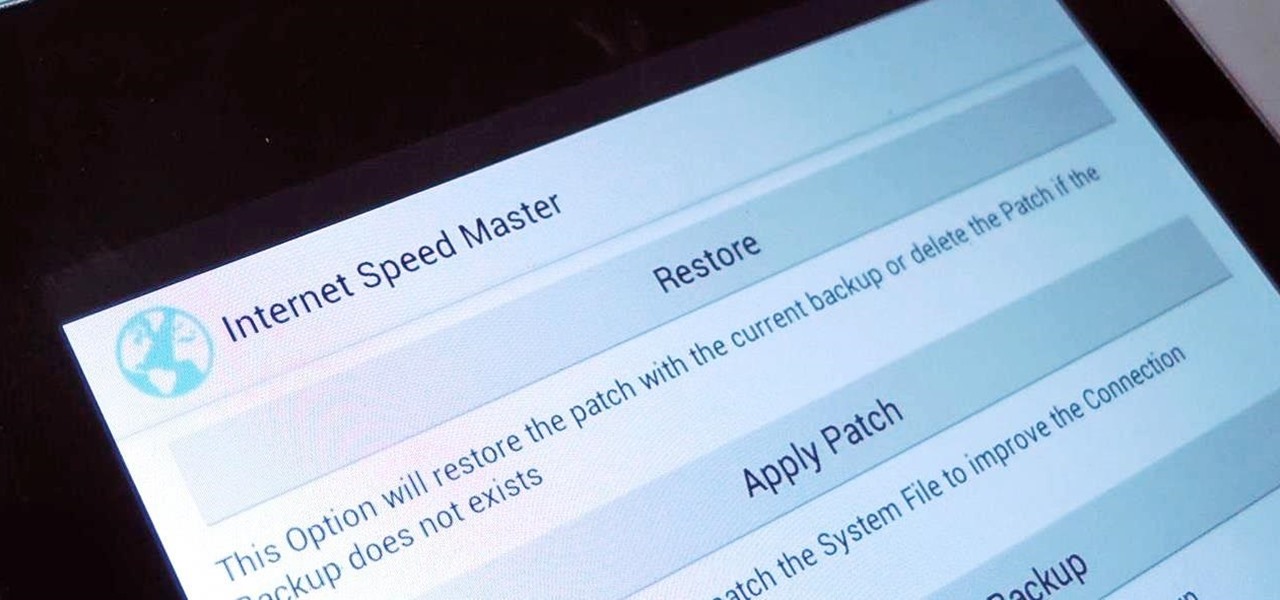
How to Optimize & Speed Up Web Surfing on Your Nexus 7 Tablet with This Super Easy Mod

Even if you have the fastest internet connection in the world, it’s not going to be fast if your Android device isn’t optimized to use all of the bandwidth. I have pretty fast speeds at home, but every now and then my web surfing on my Nexus 7 tablet is halted in its tracks—for seemingly no reason.

If you’re also having intermittent Wi-Fi or cellular data connectivity issues on your Nexus 7, before you call your ISP’s or cellular provider’s support line, try out this quick Android tweak. Hopefully, it will fix your Android’s networking woes once and for all.
Video: .
How This Mod Works… more

…read more

Source: Wonder How To

Sony ISP launches world's fastest home Internet, 2Gbps

A Sony-backed ISP in Japan has launched a 2Gbps Internet service, which it said is the world’s fastest for home use.

So-net Entertainment began offering its “Nuro” fiber-based service on Monday to homes, apartments, and small businesses in Tokyo and six surrounding prefectures. Nuro will cost ¥4,980 (US$51) per month on a two-year contract, plus a ¥52,500 installation fee that it is currently offering for free for those that apply online. The upload speed is 1Gbps.

The company said the service includes rental of an ONU (optical network unit) designed to handle the high speeds. ONU devices are commonly used in homes and business to convert fiber to broadband Internet. Individual users of the service are unlikely to see 2Gbps speeds on their devices, as it exceeds the capacity of most consumer network adaptors.

The Japanese government has strongly backed fiber connections to private residences, and the country is now among the world leaders. About 25 percent of Japanese households are currently connected, the second-highest rate in the world, according to data from regional FTTH, or Fibre to the Home, organizations. The UAE is the highest at over 70 percent.

To read this article in full or to leave a comment, please click here

From: http://www.pcworld.com/article/2034643/sony-isp-launches-worlds-fastest-home-internet-2gbps.html#tk.rss_all

How Google Hopes to Liberate America From Cable Captivity

By Evan Niu, CFA, The Motley Fool

Motorcycle Police Chase Video

Source: Google.

Thus far, the company’s big push into becoming an Internet service provider, or ISP, has mostly been relegated in

Filed under:

Let’s face it: America is being held captive. That’s the case that law professor Susan P. Crawford makes in her book Captive Audience, which describes the current monopolistic state of the telecommunications industry.

When it comes to the Internet, a technology that has unarguably revolutionized the world and the global economy, America severely lags behind other countries. We’re talking about a technology that America created, yet the average American is relegated to inferior speeds compared with other parts of the world, and many rural areas don’t even have broadband service.

A sad status quo
In many ways, Internet access can be considered a necessary utility nowadays, much like electricity. Unfortunately, the people who can afford it are paying too much, while there’s still a large chunk of the population that can’t afford it at all.

One reason for this sad status quo is that the sector inherently requires an oligopoly structure. Not everyone can afford spending $19.7 billion on infrastructure, which is what AT&T dropped on capital expenditures last year, in addition to the $20.3 billion spent in 2011.

Along the way, the industry became segregated into wired and wireless sectors. Comcast and Time Warner Cable dominated the wired side, while AT&T and Verizon primarily call the shots in wireless.

With wired connections, most of the networks around the country are built with antiquated copper wires. Some companies have built high-speed fiber optic networks, but that’s a costly upgrade. Verizon began building its FiOS network in 2006 but has since reversed course and won’t expand beyond its current obligations. It simply wasn’t worth it to invest in FiOS, since it would still be too hard to compete.

Barring a consumer uprising, there’s little incentive for wired incumbents to invest heavily in fiber optic networks when they can hinder competition in other ways.

Enter Google Fiber.

Liberation!
The search giant’s gigabit fiber optic service promises Internet speeds up to 100 times what the average American has and represents a truly disruptive threat to the wired telecom sector.

Source: Google.

Thus far, the company’s big push into becoming an Internet service provider, or ISP, has mostly been relegated in Kansas City, which straddles the state line between Kansas and Missouri. Kansas City has a little over 600,000 people, combining both sides. The company just announced its plans to expand Google Fiber deep in the heart of Texas, bringing the service to Austin. The Live Music Capital of the World boasts a population of more than 820,000.

For fortunate residents within Google Fiber‘s growing footprint, the decision is a no-brainer compared with current offerings. Google hasn’t finished pricing in Austin yet, where I live, but I’m currently paying about $60 per month before taxes and fees for a 20 Mbps connection from Time Warner Cable. The Kansas City pricing is $70 per month for a Gigabit (1,000 Mbps) connection. Boost my speed by 50 times for an

From: http://www.dailyfinance.com/2013/04/13/how-google-hopes-to-liberate-america-from-cable-ca/

Global Colocation Solutions Provider CyrusOne Sponsors Global Peering Forum 8.0

By Business Wirevia The Motley Fool

Filed under:

Global Colocation Solutions Provider CyrusOne Sponsors Global Peering Forum 8.0

Attendees to share technical knowledge on the latest in data center connectivity

DALLAS–(BUSINESS WIRE)– Global colocation solutions provider CyrusOne (NAS: CONE) will be a sponsor at the Global Peering Forum 8.0 on April 8 to 11 at the Loews Coronado Bay in San Diego, Calif.

“We are pleased to be involved in this global event,” said Josh Snowhorn, vice president and general manager, Interconnection at CyrusOne. “This will be the eighth Global Peering Forum, bringing together almost 200 peering coordinators negotiating and managing the interconnections that make the Internet so robust.”

Best-in-Class Facilities and Networks

CyrusOne’s Texas IX peering and interconnection platform enables enterprises, content companies and ISP‘s to exchange traffic in a customized data hall, designed for maximizing power usage effectiveness (PUE). It dynamically enables peering within a single location, within a metro at multiple facilities or city-to-city, to more quickly and affordably pull content from the edge of the Internet to the heart of the data center.

“Our industry-leading IX design encompassing the latest Brocade and Infinera hardware allows mass scale interconnections,” said Snowhorn. “Bringing this webscale technology to our data centers brings a true paradigm shift in the way an enterprise connects their production and disaster recovery environments.”

In addition to bringing the first-ever statewide IX to the United States, CyrusOne specializes in highly reliable enterprise data center colocation, engineering facilities with the highest power redundancy (2N architecture), and power-density infrastructure required to deliver excellent availability. CyrusOne has designed 24 carrier-neutral data center facilities across the United States, Europe, and Asia that give customers the flexibility and scale to perfectly match their specific growth needs.

The data center provider is renowned for exceptional and personalized customer service and for building enduring customer relationships and high customer satisfaction levels. Customers include nine of the global Fortune 20 companies and more than 100 of the Fortune 1000.

For more information about CyrusOne, call 1-866-CYRUSONE (1-866-297-7663) or visit www.cyrusone.com. Connect with us on Google Plus, LinkedIn, Twitter, and Facebook.

About CyrusOne

…read more

Source: FULL ARTICLE at DailyFinance

How the world’s largest cyberattack slows down your Internet use

Websites take longer to load. Netflix cuts out. Normally you can blame those annoyances on a slow Internet connection speed, but this week, it’s the result of the largest global cyberattack in history.

The European nonprofit spam filtering company Spamhaus reportedly is fending off DDoS, or distributed denial-of-service attacks, that briefly took the site offline (it is now back up) and is causing widespread congestion on the Web.

Spamhaus creates blacklists of servers that spammers use to send messages for e-mail providers, so providers can then filter spam for their users. The company had recently added the Dutch website hosting company CyberBunker and its ISP, A2B Internet, to its list.

The attack began March 18. Spamhaus was overwhelmed with traffic in a clear DDoS attack, and turned to the security team at CloudFlare to get the site back up and running. CloudFlare disclosed the technical details of the attack on March 20.

To read this article in full or to leave a comment, please click here

…read more
Source: FULL ARTICLE at PCWorld

NTT Communications to Address Wholesale Market Trends and Opportunities at Capacity Latam Conference

By Business Wirevia The Motley Fool

Filed under:

NTT Communications to Address Wholesale Market Trends and Opportunities at Capacity Latam Conference


NTT Communications to Highlight Experience and Global Leadership at Keynote Panel and Technology Workshop

NEW YORK–(BUSINESS WIRE)– NTT Communications and its wholly owned U.S. subsidiary, NTT America, the global data and IP service arm of Fortune Global 500 telecom leader Nippon Telegraph & Telephone Corporation (NTT), today announced their participation as Gold Sponsor at the Capacity Latam Conference in Sao Paulo, Brazil. At a time when the telecommunications industry in Latin America is booming and the region is making a concerted effort to lower costs and expand access, NTT Communications is proud to provide insight and leadership on the key issues shaping the broadband and IP transit industry in the area.

The event, currently the largest of its kind for the Latin American wholesale telecommunications sector, is expected to draw more than 180 service providers and carriers from more than 40 countries. Conference sessions are scheduled for March 19-20. This year marks the tenth anniversary of the Capacity Latam 2013.

As part of its involvement this year, NTT Communications also is sponsoring a Technology Workshop on Monday, March 18, focused on Software-Defined Networking (SDN). The day-long workshop is designed specifically for technical specialists and will cover a variety of issues related to SDN, including the effect on networks from a global ISP‘s perspective, itsnetwork operations centers (NOC), personnel and equipment requirements, and the technical implications on partners and customers.

On Tuesday, March 19, Michael Wheeler, executive vice president of the NTT Communications Global IP Network (GIN) business unit at NTT America, will speak as part of the keynote panel “Adapting for Success in Latin American Wholesale” on the challenges and opportunities global carriers are facing in Latin America. As wholesale business models across the world are evolving, global IP providers are faced with the challenge of moving from traditional revenue streams to new models that consider a more competitive landscape and the adoption of emerging technologies.

“With all of the changes afoot in Latin America and the number of devices and customers connected to IP networks growing exponentially, successful service providers in this region will have an established infrastructure of high bandwidth, next-generation equipment and industry expertise to meet the ever evolving, growing demand,” said Mr. Wheeler. “Improving Internet services and bandwidth capacity …read more
Source: FULL ARTICLE at DailyFinance

Users don't want gigabit Internet speeds, Time Warner Cable exec says

You don’t want gigabit Ethernet in your home, you just think you do. You may be jealous of the Kansas City residents who are enjoying gigabit Ethernet through the Google Fiber project. You may hope that your community takes up the Federal Communication Commission’s recent ‘Gigabit City Challenge.’ But the truth is, when it comes time to slap down your hard-earned cash for gigabit Ethernet, you don’t want it.

Or at least, that’s what Irene Esteves, chief financial officer for Time Warner Cable, claims. During the Morgan Stanley Technology Conference on Wednesday, Esteves said only a sliver of TWC’s customer base subscribes to the ISP’s top-tier Internet speeds. “We just don’t see the need of delivering that [gigabit Ethernet] to consumers,” Esteves said, as reported by The Verge.

At first glance, Esteves’ comments sound, well, insane. Who wouldn’t want a super-fast Internet connection plugged directly into their home, assuming the price is reasonable? Continuing, Esteves said that very few of the company’s customers subscribe to TWC‘s faster broadband plans. Let’s dig into that a bit.

The fastest speeds TWC delivers to homes, based on a quick examination of the company’s offerings in New York City, is 50 Mbps (down) for $75 per month. That’s a far cry from Google Fiber’s 1Gbps (1024 Mbps), which costs $70 per month—$5 per month less than Time Warner‘s 50 Mbps plan.

To read this article in full or to leave a comment, please click here

…read more
Source: FULL ARTICLE at PCWorld

ISPs Plot '6 Strikes' to Stop Your Illegal Downloading

By Evann Gastaldo Many of the biggest Internet Service Providers have a new plan to keep customers from illegal downloading, and they’re rolling it out over the next few days. The “six strikes” Copyright Alert System involves six notices, sent with increasing urgency, that your ISP suspects you of peer-to-peer piracy. A Time… …read more
Source: FULL ARTICLE at Newser – Home

FCC Broadband Performance Report Shows Improvement But Misses Big Picture

By Mark Gibbs, Contributor

The Federal Communications Commission (FCC) just released their third “Measuring Broadband America” report: “2013 Measuring Broadband America—February Report” which found: … that five ISPs routinely delivered nearly one hundred percent or greater of the speed advertised to the consumer, even during time periods when bandwidth demand was at its peak, while the average ISP delivered 96 percent of advertised download speed during peak usage periods. …read more
Source: FULL ARTICLE at Forbes Latest

Want to unblock port for particular site

By Vaibhav.T

Dear All

We have one Centos Server on Asterisk platform.We are trying to open one particular site from client machines which is our client portal.We have to upload data on that.When we trying to open that site somewhere its blocking and not opening.We did tracert and found one router down outside india.Did emailed to our ISP and they said its our server issue.I Tried to open that site with Data card and its working fine.Please let me know how can i check which port is blocking.

Thank You

Source: FULL ARTICLE at The UNIX and Linux Forums

Review: UnoDNS frees you to stream from other countries

I am writing these lines while listening to Pandora. If you’re in the US, this probably doesn’t sound very exciting. I, however, am not in the US–I’m in Israel, a country in which Pandora is not officially supported. I can also do all sorts of other US-only tricks, such as watch Hulu, enjoy Netflix video streaming, and jam to Rdio and Spotify. All of the computers on my home network can enjoy the same content, and I didn’t have to install any software or flash my ADSL router with custom firmware for this to work. This is all thanks to innovative $5/month (eight-day free trial) service UnoDNS–and before you ask, no, it is not a VPN.

You see, circumventing geo-restriction is nothing new. For as long as content has been geographically restricted, there have been individuals determined to get at that content, even if they are in the “wrong” country. The usual solution is to use a VPN, which is a sort of a virtual tunnel your Internet connection goes through. You send all of your Internet traffic via a VPN server, and it goes out the other end from a server in the US, UK, or another country of your choice. The service you’re talking to thinks you’re in that country, and you get to enjoy the content.

That sounds like a nice solution, but in reality, it’s cumbersome. For starters, most services and websites are not geo-restricted. If I just want to enjoy one or two specific sites, why should all of my Internet traffic go through a third party? Not only is this inefficient, but it can also slow things down. If I have a fast ADSL connection (100Mbps, for example), my VPN provider can easily become a bottleneck. Everything has to go via that one server, which has a hard time keeping up.

UnoDNS stops working whenever your ISP changes your IP address, but updating it for your new address takes just one click, and can be automated.

UnoDNS gets around this by doing something amazing–and that is not a word I use lightly. Instead of forcing all of your traffic through a VPN server, UnoDNS has you configure custom DNS servers on your computer. This is a simple operation that doesn’t require installing any software. In fact, many routers let you configure your own DNS servers on the router itself, which is how I enabled UnoDNS for my entire home network in one fell swoop (Android and iOS devices included, as long as they’re on WiFi). This saves you time spent individually configuring each device.

To read this article in full or to leave a comment, please click here

Source: FULL ARTICLE at PCWorld

Answer Line: An obscenely slow Internet connection when you're paying for a fast one

Interronator is paying Time Warner for 20mbps Internet service, but is only getting about .7 (note the decimal point).

[Email your tech questions to answer@pcworld.com or post them on the PCW Answer Line forum.]

Almost no one gets the Internet performance that their ISP advertises. Variables make Internet speeds impossible to predict, and the providers advertise the best possible theoretical speed.

But the difference between the advertised speed and the real one should be reasonably close. If you’re regularly getting less than 70 percent of what you were promised, and the price you’re paying isn’t amazingly low, you’ve got a serious bottleneck.

To read this article in full or to leave a comment, please click here

Source: FULL ARTICLE at PCWorld

Security and privacy talk mix with glitz and glam at Mega launch

Megaupload founder Kim Dotcom relaunched his empire yesterday with Mega.co.nz, and celebrated with a
glitzy launch event at his mansion outside of Auckland.

The event featured a performance by local musician Tiki Taane and his father, as well as a dramatisation of an armed offenders squad raid.

A helicopter with ‘FBI‘ printed on the side at one point circled the crowd as men in black abseiled down the side of the Dotcom mansion. At the event,
Dotcom spoke about why Mega was to be trusted with users’ files, given that a significant number of Megaupload users had lost theirs.

“Well, of course I understand that some of our customers will have concerns because of what happened before. And there will be some that say, ‘Hey, we’ll
wait a little bit and see what happens here before we sign up and become customers,” Dotcom said.”But there will be the early adopters. And it will be
those who try it out, and I think once they see how great Mega is, the word will spread quickly and more people will sign up. And I’m actually more
concerned about how I can manage the current growth because there are so many people signing up.”

When asked why Mega was a safer business than Megaupload had been, Dotcom told the audience at Mega’s launch that the service has been “scrutinised by
lawyers like no other internet start-up in history.”

“Every single pixel of this website has been checked for some kinds of issues. Our lawyers have made sure that we are fully compliant with the law,” he
said. “So I don’t think that we need to worry about any kind of takedown anytime soon.”

On privacy and encryption, a Computerworld reporter suggested that perhaps, given that Mega was encrypting all files, the Government would make attempts to
outlaw encryption. However Dotcom reiterated that privacy was a “basic human right.”

“It’s in the United Nations‘ charter of human rights, so I think it will be difficult to outlaw encryption,” he said.

Chief technology officer of Mega, Mathias Ortmann, said the encryption code was open source and as such would be subject to peer review.

“We expect the security community to take a long and hard look and comment on possible weaknesses and implementation errors,” Ortmann said.”To crack the
key by simply trying all possible keys is definitely impossible, the universe is not old enough for that.”

More than 50% internet traffic is piracy, Dotcom says.

When asked about how Mega would prevent abuse, Dotcom said that Megaupload had not been responsible for the actions of its users.

“They are trying to blame us for an internet phenomenon. This wasn’t a Megaupload phenomenon, that there was piracy on Megaupload,” he said. “You can ask
any ISP that connects users to the internet, ‘How much piracy traffic do you have on your network?’. And anyone who will tell you less than 50% is a liar.”

Every internet company has to deal with piracy issues, Dotcom said, including reputable organisations like YouTube.

“Why are they coming here, to New Zealand, [to] rip me out of my house when everyone has to deal with the same issues? They can’t blame me for the actions
of third parties.” “If someone speeds in a car they bought you don’t go to the car manufacturer and say, ‘We’re shutting you down.'”

Dotcom also spoke of sister service Megabox, which is yet to be launched. Megabox is to be a service designed for musicians to upload music and get
royalties when their music is played on the website.

“Megabox is still under development,” he said. “It will take at least another six month before that site goes live. I’m a perfectionist and I’m not going
to release a product that I’m not 100% sure of. And Megabox still needs some improvements. But it’s going to be an awesome site, it’s definitely going to
change the music industry.”

Dotcom said Megabox would give the power back to the artists and creators of content. Artists using Megabox will keep the “lion’s share” – 90% – of revenue
from the service for themselves, he said.

Now that Mega is launched, Dotcom said he will be taking a break from the limelight.

“I am getting tired of seeing myself in the news,” he said, “so I can’t imagine how a lot of New Zealanders feel.””The next time you hear from me will
probably be when I am in court, fighting my case if it comes to that. I’m going to take myself a step back.”

To read this article in full or to leave a comment, please click here

Source: FULL ARTICLE at PCWorld

Software Developer Who Cleverly Outsourced His Job To China Betrayed By His Digital Footprint

By Kashmir Hill, Forbes Staff An unnamed U.S. company using Verizon as its Internet service provider (ISP) asked for Verizon’s help in figuring out why a user based in China was establishing a VPN connection to their network on a daily basis. They assumed it was a hacker. A digital investigation revealed that not to be the case.
Source: FULL ARTICLE at Forbes Latest