Tag Archives: DOMA

Real Weddings: Couples Who Got Married This Weekend (PHOTOS)

By The Huffington Post News Editors

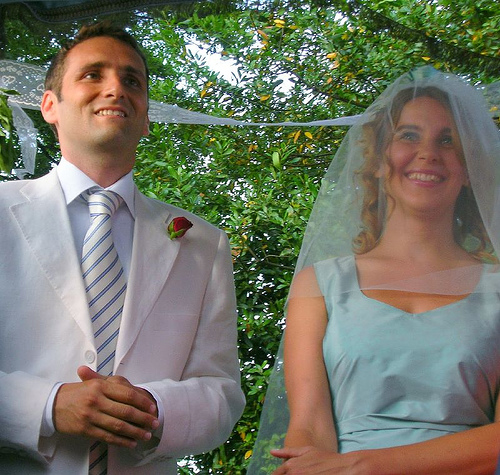
It’s been nearly a month since the Supreme Court struck down DOMA and Prop 8 and here at HuffPost Wedding, we’re oh-so-happy to see more and more Real Weddings photos coming in from same-sex couples!

Click through the slideshow below to see some real wedding moments captured by those who attended them. If you go to a wedding, tweet a photo to @HuffPostWedding or email it to us the Monday morning after so we can feature it on the site.

Missed last week’s weddings? You can see them here.

Read More…
More on Real Weddings

…read more

Source: FULL ARTICLE at Huffington Post

Proposed Constitutional Amendment That Would Help Zimmerman

By William Baldwin, Forbes Staff

Constitutional Amendments Here are six constitutional amendments that would, if passed by two-thirds majorities in each house of Congress and ratified by three-fourths of the states, give the citizens some basic rights to life, liberty and the pursuit of happiness.

The first would help George Zimmerman, the defendant in the Trayvon Martin homicide case.

1. No person shall twice be put in jeopardy of criminal conviction for the same offense.

Defendants usually can’t be retried after being acquitted. But there’s a well-recognized exception for politically unpopular defendants.  The police officers who beat up Rodney King were retried after being acquitted. In similar fashion, Zimmerman, after being acquitted in state court of killing Martin, could be tried in federal court for the crime of showing animus to Martin while killing him.

The government also gets a lot of flexibility by discovering a dozen different offenses in the same set of facts (killing someone, conspiring to kill him, depriving him of his rights by killing him, using a weapon to kill him, committing child abuse by killing him, etc.).

A constitutional amendment, if enforced by the courts, would stop this nonsense.

2. Private property shall not be taken for public use without compensation.

There are several ways for the government to acquire real estate without paying for it. It can make the property you own worthless by declaring it to be in need of “historic preservation” (in Manhattan, even a gas station can be landmarked). It can get a conservation easement for free by imposing 20-acre zoning. It can convert a large plot into a wildlife refuge by finding a snail darter or owl on it.

It would be helpful to have a rule stating that parkland has to be paid for.

3. No search warrant shall be issued unless the police show a judge that the person to be searched has probably committed a crime.

That would put a stop to the NSA snooping on every phone call.

4. The Supreme Court’s judicial power extends to cases or controversies, not to advisory opinions.

The last thing a democracy needs is a body of platonic elders decreeing what they would or would not like in the way of legislation. But that’s the direction we veer off in when the judicial branch takes trumped-up cases. The judiciary’s bad habits started with Griswold v. Connecticut, a 1965 case in which Connecticut pretended to enforce an ancient law forbidding contraceptives. It continued with a factitious dispute that resulted in the recent DOMA ruling.

We should amend the Constitution to create three branches of government. In this system, Congress would repeal DOMA.

5. The president shall faithfully execute the laws.

With this written into the document defining our government, we would avoid a repeat of King George III—some monarch overriding the legislature on a whim. If the executive branch wanted a postponement of a healthcare law, it would have to get a statute passed.

6. To get a criminal conviction, the government must demonstrate that the defendant had criminal intent.

As defense lawyer Harvey Silverglate argues in Three Felonies a Day, there are so many criminal statutes, and so much vagueness in the way they define crimes, that everyone is guilty of something. The only reason we are not all in jail is that prosecutors wisely use their discretion to go after only really bad people.

The Russian legal system is like this. Everything is illegal, but the government prosecutes only those people it has good reason to prosecute, such as political opponents.

Maybe, if we had a Bill of Rights, the U.S. would have a government of laws and not of prosecutorial caprice.

…read more

Source: FULL ARTICLE at Forbes Latest

GLAD Alert Same Sex Couples Need To Act Quickly To Preserve Refund Rights

By Peter J Reilly, Contributor

It has practically become an annual tradition for me to remind same sex married couples to consider filing amended returns for open years.  This may be the final year.  The Supreme Court will be ruling on DOMA soon, probably in June.  If you and your spouse filed your 2009 returns as single or head of household and would have saved tax with a joint return, you need to act very quickly in order to preserve your right to a refund.  Fortunately, GLAD (Gay and Lesbian Advocates and Defenders) has provided some material to make the process a little easier.  Pay particular attention to the link to “Tax Time and Preserving Your Federal Rights”. …read more

Source: FULL ARTICLE at Forbes Latest

Bill Clinton To Receive GLAAD’s ‘Advocate For Change’ Award

By The Huffington Post News Editors

Bill Clinton will be honored with the inaugural “Advocate for Change” Award at the GLAAD Media Awards in Los Angeles.

GLAAD officials pointed to the former U.S. president’s recent advocacy work for marriage equality in both New York and North Carolina, as well as his impassioned Washington Post editorial calling for the Supreme Court to strike down the Defense of Marriage Act (DOMA), in announcing the award.

President Clinton‘s support of the LGBT community and recognition that DOMA, the so-called Defense of Marriage Act, is unconstitutional and should be struck down shows that the political landscape continues to change in favor of LGBT equality,” GLAAD‘s Wilson Cruz said in a statement on the group’s website. “Leaders and allies like President Clinton are critical to moving our march for equality forward.”

Read More…
More on Bill Clinton

…read more
Source: FULL ARTICLE at Huffington Post

The 1996 Testimony That Should Have Stopped DOMA Before It Started (VIDEO)

By The Huffington Post News Editors

Almost 17 years after its passage, the Supreme Court heard oral arguments this week on whether the 1996 Defense of Marriage Act is constitutional. While the justices reportedly met DOMA with skepticism, the only argument you really needed to hear came in July of 1996 — before the anti-gay marriage measure became law — when civil rights leader and Rep. John Lewis (D-Ga.) delivered impassioned testimony from the House floor, declaring that “you cannot tell people they cannot fall in love.”

(Watch the video above.)

Lewis appeared on MSNBC earlier this week, where he expressed hope that the Supreme Court would take the opportunity to finally get it right.

Read More…
More on Gay Marriage

…read more
Source: FULL ARTICLE at Huffington Post

Could This Supreme Court Case Affect Your Portfolio?

By Doug Ehrman, The Motley Fool

Filed under:

The Supreme Court heard oral argument yesterday and today on the constitutionality of a provision in the Defense of Marriage Act. While the issue of marriage equality stokes intense social debate, the question I’d like to look at today is whether the law is hurting some of the companies you either own or are considering buying.

The corporate take on DOMA
One gauge of the corporate perception of DOMA is that 278 parties, including both corporate employers and other interested organizations, have put their names on an amicus brief filed in the case to give their views on the impact of DOMA on the way they treat their employees. The appendix of companies that joined the brief is longer than the brief itself.

Some corporate leaders have taken more vocal stances. At the Starbucks shareholder meeting earlier this year, CEO Howard Schultz responded to one critic who argued that Starbucks’ views on marriage equality cost the company money:

It is not an economic decision. … If you feel, respectfully, that you can get a higher return than the 38% you got last year, it’s a free country. You can sell your shares of Starbucks and buy shares in another company. Thank you very much.

Along similar lines, Goldman Sachs CEO Lloyd Blankfein recently recorded a commercial in support of marriage equality in which he notes that “equality is just good business and is the right thing to do.” He also points out that his position is the one shared by the majority of Americans. Goldman Sachs, which has one of the most conservative images on Wall Street, is just one of many financial firms sharing its view on the topic.

The financial impact
As the amicus brief makes clear, the need to navigate the provisions of the Defense of Marriage Act has had a real cost on companies that must address the issues it creates. Having to compete in the global marketplace has made finding and keeping employees and making them feel included a key part of worker productivity and company profitability.

Measuring the exact financial impact of the law is hard. With opposing groups supporting boycotts against companies on either side of the marriage equality issue, balancing lost revenue from one group of customers or another becomes almost impossible to do with any precision.

Yet the administrative costs of dealing with the law are real. MassMutual Financial’s general counsel Mark Roellig explained that in order to handle the disparate treatment of employees that the law requires:

You have to keep separate sets of books. You’ve got to continually be adjusting. And then also picking up the potential legal risk if you make a mistake. So it’s ongoing administrative costs that are pretty significant.

Because different states have different rules, insurance laws vary, and at the federal level there are a whole new set of standards. Signing the brief is a statement from dozens of major corporations that in their view, …read more
Source: FULL ARTICLE at DailyFinance

Supreme Court Arguments Leave Anti-Gay Movement Humiliated: Salon

By The Huffington Post News Editors

It didn’t take long for the empty truth about the discriminatory Defense of Marriage Act to be exposed Wednesday, and there was little equality opponents could do. At the Supreme Court hearing, Elena Kagan, the newest justice, went to the House Report from Congress when it passed the law in 1996, and summarized DOMA’s entire legal underpinning: “Congress decided to reflect and honor a collective moral judgment and to express moral disapproval of homosexuality.”

Read More…
More on Conservatives

…read more
Source: FULL ARTICLE at Huffington Post

DOMA Repeal Won’t End Financial Uncertainty For Gay Couples

By The Huffington Post News Editors

NEW YORK — Among those fighting for the recognition of gay marriage, the prospect of the Supreme Court striking down the federal Defense of Marriage Act prompts hopes for equal treatment: The same medical insurance and retirement benefits companies and the government now offer to married straight couples could soon be available to gays and lesbians.

Should the highest court reject the law, gay and lesbian couples would remain vulnerable to discrimination in terms of employer-provided benefits, legal and financial experts told The Huffington Post.

Even if DOMA disappears, and with it the official federal definition of marriage as the union of one man and one woman, employers could still exclude gay couples from their benefit plans, said Todd Solomon, a partner with the Chicago law firm McDermott, Will & Emery.

Read More…
More on Gay Marriage

…read more
Source: FULL ARTICLE at Huffington Post

Press Briefing by Principal Deputy Press Secretary Josh Earnest, 03/27/2013

By The White House

James S. Brady Press Briefing Room

12:39 P.M. EDT

MR. EARNEST: Two quick announcements at the top before we go to your questions. They’re both scheduling announcements, actually. The first is, at 3:00 p.m. today the President will host a swearing-in ceremony for the new director of the United States Secret Service, Julia Pierson. That will be in the Oval Office, and we’ve arranged for a pool to be there to witness it. So that should be pretty good.

The second thing is about tomorrow. Tomorrow, the President will hold an event here at the White House where he will stand with mothers who want Congress to take action on common-sense measures to protect children from gun violence. The event will take place in the East Room. And in addition to the mothers on stage with the President, there will be law enforcement officials, victims of gun violence, and other stakeholders. So that will be tomorrow. I don’t know the exact time, but we’ll have more on that on the guidance tonight. So, yes, here in the East Room in the White House.

With that, Julie, I’ll let you get us started.

Q Thank you. Just a couple things on DOMA. Did the President get any update from the Solicitor General following the oral arguments today? And was there anyone from the White House who was there to witness the arguments, like yesterday?

MR. EARNEST: It is my understanding that the President has been kept apprised of the arguments made at the Supreme Court on these issues, both through reading the coverage of you and your colleagues but also based on briefings that he’s gotten from his legal staff here at the White House.

It’s also my understanding that the White House officials who attended yesterday are the White House officials also attended today. So that was Valerie Jarrett, Kathy Ruemmler, the Counsel of the White House, and Kathleen Hartnett, who’s an associate counsel here at the White House.

Q There seemed to be, in sort of the initial reading of the justices’ questions, a sense that they were also questioning the constitutionality of DOMA. Did the President, in the short period of time that’s passed since it was wrapped up, have any reaction to the proceedings today?

MR. EARNEST: I haven’t heard from him about his reaction to the proceedings today. I know that going into the proceedings that he had full confidence in his team at the Justice Department and others who were responsible for preparing the arguments, and had total confidence in the people who were prepared to walk in there and deliver them. But in terms of his reaction for how it played out, I didn’t get one.

Q We’re seeing a little bit more from the President, at least publicly this week, on immigration reform — the interviews today, the event on Monday. …read more
Source: FULL ARTICLE at The White House Press Office

Supreme Court DOMA Case: Justices Question Whether They Can Even Decide Dispute

By The Huffington Post News Editors

WASHINGTON — A majority of Supreme Court justices on Wednesday morning appeared skeptical of the constitutionality of the Defense of Marriage Act (DOMA), which defines marriage for federal purposes as between a man and a woman. Whether the justices believe they have the power to make any decision in this case, however, remained murky.

It was the second day in a row that the high court heard arguments dealing with same-sex marriage. At issue Wednesday in United States v. Windsor was whether it was constitutional for the U.S. government to refuse to recognize same-sex marriages that had been recognized by the states.

Justice Anthony Kennedy, who said Tuesday that the children of same-sex couples “want their parents to have full recognition and legal status,” seemed troubled by the fact that DOMA refuses to recognize even those same-sex unions that are already recognized by states.

Read More…
More on Video

…read more
Source: FULL ARTICLE at Huffington Post

Challenges to Same Sex Marriages Now At Supreme Court

By Kelly Phillips Erb, Contributor

On December 11, 2012, I posted the piece that follows about the Supreme Court‘s grant of cert to hear cases on same sex marriages. I’ve often said that I thought the arguments would come down to financial and tax matters and, at least as it applies to DOMA, that’s the case. Since these cases are at the Supreme Court this week, I’ve been asked a lot of questions about why the cases are at the Supreme Court level, why they matter and what it all might mean. I’m posting that December article again, in its entirety, without edits. I have not annotated the article to reflect the current arguments (though I am reading the Prop 8 transcript today). I plan to do an update but for now, here’s your quick primer: On Friday, the Supreme Court of the United States granted certiorari on two same sex marriage cases. Those cases include Hollingsworth v. Perry, a challenge to California’s controversial Proposition 8 measure, and a case out of New York, U.S. v Windsor, which considers the constitutionality of the Defense of Marriage Act (DOMA). As noted on the blog before, lawyers and judges like to use Latin. So here’s a quick primer: granting certiorari (or “granting cert” for the really cool hipster lawyers) means that the Supreme Court will hear the matter. Some cases have what’s called “original jurisdiction” in the Supreme Court; those cases, which are defined by statute (28 U.S.C. § 1251) go straight to the Supreme Court. The typical case associated with original jurisdiction would be a dispute between the states. Most cases, however, don’t go that route. To be heard at the Supreme Court level without having original jurisdiction requires the losing party at the appellate level to file a petition seeking a review of the case. If the Supreme Court grants the petition and decides to hear the matter, it’s called a writ of certiorari. And that’s what happened here. The two matters, Proposition 8 and defense of DOMA, feel interrelated since on a basic level, they both touch on same sex marriage. But on legal grounds, they’re very different. Proposition 8 was put on the ballot in California in 2008 (wow, was it really that long ago?) and added a new provision to the California Constitution which provided that “only marriage between a man and a woman is valid or recognized in California.” In other words, it was a ban on same-sex marriage. The matter went to court and was initially upheld (though existing same-sex marriages were grandfathered). In 2010, U.S. District Court Judge Vaughn R. Walker overturned Proposition 8 in Perry v. Schwarzenegger finding that the law violates same sex couples’ rights to equal protection and due process under the US Constitution. That decision was affirmed by appellate courts in 2012. I had a sense in 2010 – and I believe it to still be the case today – that even if the Supreme Court hears Proposition 8 (and now we know it will), …read more
Source: FULL ARTICLE at Forbes Latest

Court's Marriage Ruling Could Save Same-Sex Couples Big Money

By CNNMoney

Filed under: , , , , ,

Emmanuel Dunand/AFP/Getty Images

By Blake Ellis

Should the Supreme Court overturn a federal law that defines marriage as solely between a man and a woman, some married same-sex couples will save $8,000 or more in income tax, a new analysis finds.

This week, the court will hear a case challenging the Defense of Marriage Act, a 1996 law that prevents same-sex couples from receiving more than 1,000 federal benefits that opposite-sex married couples receive.

This includes the right to file federal taxes jointly — which, depending on income, gives some married filers a “bonus” of thousands of dollars, while penalizing others.

A same-sex couple with combined income of $100,000, in which one person earns $70,000 and the other makes $30,000, currently pays an extra $1,625 a year by filing separately rather than jointly, according to an analysis H&R Block conducted for CNNMoney. The calculations assume a standard deduction, no children and no tax credits.

The extra tax liability jumps to nearly $8,000 when one spouse earns all $100,000 and the other reports no income. In this case, couples filing jointly owe tax of $11,858, while a same-sex couple filing separately owes $19,585 — a 65 percent difference.

Cutting Tax Liability in Half

“[There’s] a myth that any time married people file jointly they are worse off than filing singly, and that’s just not correct at all — sometimes they get a marriage bonus,” said Jackie Perlman, a principal analyst at H&R Block Inc. (HRB).

That’s because filing jointly merges the two incomes, shifting some of the higher-earning spouse’s income into a lower tax bracket. In some scenarios, couples would even cut their tax bills in half by filing jointly — typically when incomes are low, Perlman said.

As the gap between incomes shrinks, however, the difference in tax liability is less pronounced. In H&R Block’s scenario, no extra tax is owed when each spouse earns an income of $50,000 and they file jointly instead of individually.

Other couples would end up owing more by filing jointly, especially if they miss out on deductions or credits like the Earned Income Tax Credit and the Child Tax Credit because, when combined, their income is no longer low enough to qualify or receive the full benefit.

Sponsored Linksadsonar_placementId=1505951;adsonar_pid=1990767;adsonar_ps=-1;adsonar_zw=242;adsonar_zh=252;adsonar_jv=’ads.tw.adsonar.com’;

Another major tax issue at stake in the DOMA case is the estate tax. Currently, surviving spouses in federally-recognized marriages don’t have to pay taxes on their deceased spouse’s estate, while same-sex widows pay a 35 percent estate tax on anything in excess of a $5 million exemption.

The case challenging DOMA was filed by New Yorker Edith Windsor, who sued to get back the $363,000 in estate taxes she paid when her …read more
Source: FULL ARTICLE at DailyFinance

Military's same-sex couples seek overturn of DOMA

The death certificate read “single,” although the fallen soldier was not.

When it came time to inform the next of kin, casualty officers did not go to the widow’s door in North Carolina, nor did she receive the flag that draped the casket of her beloved, a 29-year-old National Guard member killed by a suicide bomber in Afghanistan.

Because federal law defines marriage as the union of a man and a woman, the military did not recognize the marriage of Army Sgt. Donna R. Johnson and Tracy Dice Johnson at all, rendering Johnson ineligible for the most basic survivor benefits, from return of the wedding ring recovered from the body to a monthly indemnity payment of $1,215.

“You cannot imagine the pain, to actually be shut out,” said Dice Johnson, an Army staff sergeant who survived five bomb explosions during a 15-month tour in Iraq. “Not only is one of their soldiers being disrespected. Two of them are being disrespected.”

As the Supreme Court prepares to consider the constitutionality of the Defense of Marriage Act, gay marriage advocates are focusing particular attention on the way they say the law dishonors gay service members and their spouses, who are denied survivor payments, plots in veterans’ cemeteries, base housing and a host of other benefits that have been available to opposite-sex military couples for generations.

If the high court strikes down the DOMA, the ruling could bring sweeping changes to the way the military treats widows and widowers such as Dice Johnson, the first person to lose a same-sex spouse to war since “don’t ask, don’t tell” was lifted in 2011.

Although they can now serve openly, gay and lesbian service members “are anything but equal, and it’s the DOMA that is really what’s standing in the way,” said Allyson Robinson, a West Point graduate who serves as executive director of OutServe-SLDN, an advocacy group for gay, lesbian, bisexual and transgender service members and veterans that filed a brief urging the court to strike down the law.

On the other side stands the Chaplain Alliance for Religious Liberty, an association of faith groups that screen chaplains for military service. It has asked justices to uphold the DOMA on the grounds that pastors and service members from religions that oppose homosexuality would find their voices silenced and their opportunities for advancement limited.

“The military has no tolerance for …read more
Source: FULL ARTICLE at Fox US News

DOMA Justice Rally In Boston Tomorrow

By Peter J Reilly, Contributor

This is same sex marriage week in the Supreme Court.  The Perry case, which addresses California’s Proposition 8, will be heard tomorrow and the Windsor case, which addresses DOMA (The Defense of Marriage Act).  I’m a little torn about the Perry case.  Despite the merits of the issue, I hate to see the Supreme Court overturn a referendum.  DOMA, on the other hand is just plain dumb.  Conservatives have to tie themselves up in knots to defend it, since it has always been up to the states to say who is or is not married  At any rate, GLAD (Gay & Lesbian Advocates & Defenders) is sponsoring a rally in Boston tomorrow. On March 26th and 27th, the U.S. Supreme Court will consider two cases about the freedom to marry. These two cases – which concern the discriminatory Defense of Marriage Act (DOMA) and California’s Proposition 8 – are fundamentally about whether gay and lesbian Americans can enjoy the same freedoms and opportunities as everyone else. …read more
Source: FULL ARTICLE at Forbes Latest

Conservatives Should Oppose DOMA

By Peter J Reilly, Contributor

Two very big gay marriage cases will be heard by the Supreme Court in the next week.  Hollingsworth v. Perry is about California’s Proposition 8, which created a state constitutional amendment to ban same-sex marriage.  The other United States v. Windsor is about DOMADOMA, the Defense of Marriage Act holds that regardless of state law same-sex couples will not be treated as married for purposes of federal law. …read more
Source: FULL ARTICLE at Forbes Latest

Marriage And Faux Federalism

By Breaking News

Marriage SC Marriage and Faux Federalism

George Will opens his recent column criticizing the Defense of Marriage Act (DOMA) on federalism grounds by quoting from a 1948 Supreme Court case: “[U]nder the Constitution, the regulation and control of marital and family relationships are reserved to the States.”

What he doesn’t point out is that the citation for that argument is a 1930 decision written by that arch living-constitutionalist Justice Oliver Wendell Holmes, who asserts that “the domestic relations of husband and wife and parent and child were matters reserved to the state.” The Court’s understanding of regulation and control presumed a definition. Therein lies the rub.

DOMA, which is being challenged before the Supreme Court next week, was an attempt to preserve in place the ability of the federal government and the states to address marriage appropriate to their respective spheres of authority. The very definition (as even Justice Holmes assumes) had never been questioned, though the regulation and control (the cases cited above were divorce disputes) varied state to state.

What Congress did in 1996 was to preserve this relationship consistent with federalism. It did not impose a national definition (which would require, as many at the time and since have called for, a constitutional amendment) but instead defined marriage for purposes of provisions of other federal law only.

There’s no federalism controversy here; federal law defines terms for federal law all the time (it is impossible to see how it could not do so) and to do so is not to assert a new federal power. To the extent there might be constitutional problems, it would be a challenge to the underlying laws themselves or to the definition violating some other provision (e.g., equal protection claims in the Due Process clause). But it’s not a federalism issue.

Read More at heritage.org . By Matthew Spalding.

Photo credit: loungerie (Creative Commons)

…read more
Source: FULL ARTICLE at Western Journalism

DOMA Challenges Prompt Windfalls For Gay Couples

By The Huffington Post News Editors

SAN FRANCISCO — For Mina Meyer and Sharon Raphael, two women in their 70s who fell in love more than four decades ago and have been married for more than four years, the U.S. Supreme Court‘s pending consideration of a law that prohibits the federal government from recognizing unions like theirs is about more than civil rights. It’s about buying a new roof for their California home, replacing their 2005 Toyota Camry, and ensuring Meyer doesn’t take a financial hit if Raphael dies first.

The Supreme Court will hear oral arguments this month in a challenge to a provision of the Defense of Marriage Act, or DOMA, that denies legally married gay and lesbian couples federal benefits available to heterosexual married couples, including tax and Social Security benefits. A decision is not expected until the end of June, but accountants and tax attorneys anticipating the 18-year-old law‘s demise are already encouraging same-sex couples like Raphael and Meyer to seek prospective tax refunds, back retirement payments and other spousal subsidies they may have been denied.

Read More…
More on LGBT

…read more
Source: FULL ARTICLE at Huffington Post