Tag Archives: CPU

AM-NV SysMonitor P./A. II X2-X6 Pack 1.0 (Plasmoid Script)

Thumbnail

AM-NV SysMonitor P./A. II X2-X6 Pack 1.0
(Plasmoid Script)
The AM-NV SysMonitor Athlon II X2/X3/X4 & Phenom X2/X3/X4/X6 Single GPU based on the EG-SysMon-QC.

System information and hardware monitor. Monitors CPU, memory, HDD, network traffic, and much more.

This Addon’s use the /etc/os-realese files to show you your Distribution.

Its works only with KDE 4, nVidia GPU’s, AM2+/AM3(+) CPU’s and was Optimized for Athlon II X2/X3/X4, Phenom II X2/X3/X4/X6 and Single Core NVidia based Grafikcards.

Tested with Asus M5A88-V EVO, Phenom II X4 960T, openSuSE 12.1, sensors version 3.3.1 with libsensors version 3.3.1 and MB Sensor atk0110

Other Versions for the Bulldozer Series will follow soon.

The “Themes” should actually be displayed the CPU Modelname.
Although the preview is on AMD Processor Model Unknown, that’s my CPU name. This is an AMD 960T drilled on X6, so “AMD Processor Model Unknown”.

Contents:
AM-NV-SysMonitor_Athlon_II_X2_S-GPU_English-Edition-v.1.0.skz
AM-NV-SysMonitor_Athlon_II_X3_S-GPU_English-Edition-v.1.0.skz
AM-NV-SysMonitor_Athlon_II_X4_S-GPU_English-Edition-v.1.0.skz
AM-NV-SysMonitor_Phenom_II_X2_S-GPU_English-Edition-v.1.0.skz
AM-NV-SysMonitor_Phenom_II_X3_S-GPU_English-Edition-v.1.0.skz
AM-NV-SysMonitor_Phenom_II_X4_S-GPU_English-Edition-v.1.0.skz
AM-NV-SysMonitor_Phenom_II_X6_S-GPU_English-Edition-v.1.2.skz
changelog
readme
Athlon_II_X2-X4_Karamba-Priview.png
Athlon_II_X2-X4_Plasma-Priview.png
Phenom_II_X2-X6_Karamba-Priview.png
Phenom_II_X2-X6_Plasma-Priview.png

The following are required:

SuperKaramba Version 0.57
x86info
cpupower
libsensors version 3.3.1
sensors version 3.3.1
KDE 4
NVIDIA GPU
AM2+, AM3 and AM3+ Mainbords

Installation:

KDE4 Plasma Desktop:

1. download the AM-NV-SysMonitor_Phenom-Athlon_II_X2-X6_S-GPU_English-Edition_Pack-v.1.0.tar.gz file, extract it where you want.

2. Click on Add Widgets –>> Get new widgets –>> install applet from local file –>> SuperKaramba: Karamba desktop design –>> your download folder –>> AM-NV-SysMonitor_Phenom-Athlon_II_X2-X6_S-GPU_English-Edition_Pack-v.1.0 –>> AM-NV-SysMonitor_XXXXX_II_XX_S-GPU_English-Edition-v.1.X.skz

3. Now you can choose the Theme in your Plasma Desktop, thats all.

Downloadlink fixed

changelog:
AM-NV SysMonitor Athlon II X2 Single GPU English-Edition:

Version 1.0:

First release

AM-NV SysMonitor Athlon II X3 Single GPU English-Edition:

Version 1.0:

First release

AM-NV SysMonitor Athlon II X4 Single GPU English-Edition:

Version 1.0:

First release

AM-NV SysMonitor Phenom II X2 Single GPU English-Edition:

Version 1.0:

First release

AM-NV SysMonitor Phenom II X3 Single GPU English-Edition:

Version 1.0:

First release

AM-NV SysMonitor Phenom II X4 Single GPU English-Edition:

Version 1.0:

First release

AM-NV SysMonitor Phenom II X6 Single GPU English-Edition:

Version 1.2:

CPU Cores read interval=10000 changed to interval=1000

Version 1.1:

Add a readme file
Add the changelog file
Add a Logofile
Fixed the maindata.xml

Version 1.0:

First release

[read more]

job recommendations:

[more jobs]
…read more

Source: FULL ARTICLE at KDE Apps

Flash breakthrough promises faster storage, terabytes of memory

In the ongoing quest for faster access to data, Diablo Technologies has taken what could be a significant next step.

Diablo’s Memory Channel Storage (MCS) architecture, expected to show up in servers shipping later this year, allows flash storage components to plug into the super-fast channel now used to connect CPUs with memory. That will slash data-access delays even more than current flash caching products that use the PCI Express bus, according to Kevin Wagner, Diablo’s vice president of marketing.

The speed gains could be dramatic, according to Diablo, helping to give applications such as databases, big data analytics and virtual desktops much faster access to the data they need most. Diablo estimates that MCS can reduce latencies by more than 85 percent compared with PCI Express SSDs (solid-state disks). Alternatively, the flash components could be used as memory, making it affordable to equip servers terabytes of memory, Wagner said.

Other than on-chip cache, the memory channel is the fastest route to a CPU, Wagner said. Not only do bits fly faster over this link, there are also no bottlenecks under heavy use. The connection is designed to be used by many DIMMs (dual in-line memory modules) in parallel, so each component doesn’t have to relinquish the bus for another one to use it. That saves time, as well as CPU cycles that would otherwise be used managing the bus, Wagner said.

To read this article in full or to leave a comment, please click here

…read more

Source: FULL ARTICLE at PCWorld

Need a suitable substitute motherboard…

By CMil

After finally having the chance to do some diagnostic work, I’ve come to the conclusion that the motherboard in my old office computer is done. It’s a Hewlett Packard xt973 with the ASUS A7V8X-LA motherboard and an AMD Sempron CPU. Pretty sure it’s a micro-ATX form factor board; measures 9.6″ x 9.6″, has 3 PCI expansion slots and 1 AGP slot. It also suppports a multi-format SIM card/memory card reader in the front panel of the computer and a host of USB ports front and back. Lastly, there are ethernet and 1394(?) ports on the back, as well as PS2 mouse and keyboard ports. Is there a reasonably affordable replacement motherboard that would pretty much be plug-and-play? I’m not married to the AMD processor, as this will not be primarily a gaming computer. But that’s not to say I would prefer an Intel, either. I just want to put in the board, plug all the stuff in, install windows on a new hard drive and get to work. I’m not running any cards inside the box, so expansion slot format is not an issue, although I think I would like PCI and PCI-E. Also, if the board came with or would accomodate a faster CPU, That would be fine, too. I’ve put a lot on the plate with this post – I hope someone with a LOT of patience AND knowledge picks it up! Thanks in advance – Chris:coffee:

…read more

Source: DoItYourself.com

Jhosman Lizarazo: Lanzamiento de Canonical por $ 32 millones para campaña de Crowdfunding de Ubuntu Phone

Canonical esperae dar un impulso a la carrera de super-teléfono con 32.000.000 dólares campaña crowdfunding audaz.

Patrocinador comercial de Ubuntu es el objetivo de recaudar fondos para el desarrollo y la producción de un nuevo Ubuntu-marca móvil llamado #UbuntuEdge durante los próximos 30 días.

Ubuntu Edge será más que “sólo” un teléfono inteligente – que va a ser un ‘super-teléfono, lo suficientemente potente como para hacer doble como un PC tradicional cuando está conectado a un monitor externo. Esto, dicen Canonical, hará que sea “el primer dispositivo verdaderamente convergente del mundo ‘.

Pero primero $ 32 millones tiene que deberán reunirse en los próximos 30 días. Si se cumple este objetivo los teléfonos Ubuntu Edge se producirán en una edición limitada de producción de 40.000 e hizo disponible en mayo de 2014.

Especificaciones de Ubuntu Edge

Ubuntu Edge no habrá ningún ol ‘run-of-the-mill móvil. Canonical están elaborando un dispositivo de comunicación que es de alta costura, quieren fuera de Apple.

Las normas provisionales para ello cuenta con componentes de gama alta, algunos casi nunca se usan en los móviles de los consumidores.

  • ‘Multi-core CPU’
  • 4GB RAM
  • 128GB SSD
  • 4.5″ Sapphire Crystal screen (1280×720 HD resolution)
  • Dual cameras (8mp rear, 2mp front)
  • MHL connector (supporting HDMI)
  • Long-life silicon anode battery
  • Dual-LTE, NFC, Dual-band WiFi & Bluetooth 4
  • GPS, Barometer, Compass, Proximity Sensor, Gyro, etc

Sabio OS Ubuntu Edge, tal vez lo más sorprendente que se arranque dual Ubuntu Touch y Android. Será capaz de alimentar una experiencia de escritorio Ubuntu completa en un monitor externo.

Video Promocional

La mayor campaña promocional de todos los tiempos

El proyecto, en vivo por IndieGoGo, es el único mayor campaña de crowdfunding en la historia.

El Pebble smartwatch – hasta la fecha el más exitoso recaudador de fondos – tiene más de $ 10 millones de dólares en Kickstarter de 68.929 partidarios, muchos de los cuales eran promesas de más de $ 100. Canonical necesita 40.000 partidarios de “pre-compra” de un teléfono de 810 dólares para cumplir su objetivo.

Aunque la campaña no logra su objetivo aún podría ser útil al demostrar demanda. Si esto lo suficientemente alto como podría boya el interés de las compañías de telecomunicaciones más cautelosos y fabricantes de teléfonos.

Mark Shuttleworth concluye que inorder para hacer el futuro de la telefonía móvil convergente suceder que tendrán que “… romper todos los registros de crowdfunding historia.

“Pero si hay suficientes entusiastas que quieren lo último en rendimiento, almacenamiento, pantalla, batería y ancho de banda, Ubuntu Edge será el catalizador para la innovación impresionante, y una muestra del futuro del teléfono.”

¿Va a donar?
Colabora! http://www.indiegogo.com/projects/ubuntu-edge


Translate from omgubuntu in Spanish

…read more

Source: FULL ARTICLE at Planet Ubuntu

Jono Bacon: Announcing the Ubuntu Edge

Last week many of you will have seen the teasers that were shared on www.ubuntu.com. As you can imagine, our community, the press, and others picked up on this with rampant curiosity of what was to come. I am delighted to see the news is now out there, and boy, is this exciting.

In a nutshell, today we are kicking off an Indigogo crowdfunding campaign to fund a fully converged device called Ubuntu Edge.

Can’t see the video? See it here!

The Ubuntu Edge will dual boot Ubuntu and Android, and will transform into a PC when docked with a monitor, with the full Ubuntu desktop and shared access to all the phone’s files. For this it needs the power of a PC, so Ubuntu Edge will be equipped with the latest, fastest processor, at least 4GB of RAM and a massive 128GB of storage.

Every week on my weekly Q&A many of you ask when you can buy a fully converged Ubuntu device in which you can use it as a phone and boot a desktop, and here it is. Now is the opportunity to not only buy one, but to contribute to showing your support for an Ubuntu converged device by contributing to the campaign.

The Ubuntu Edge is not only functionally powerful though. This beautifully crafted device replaces the traditional glass screen with a pure Sapphire crystal, so tough it could only be scratched by diamond. It will also pioneer the use of long-life silicon anode battery technology. A special dual-LTE solution will allow high-speed roaming with access to 4G-LTE broadband in both Europe and the US.

I know many of you who are reading this will be interested in the technical specs, which are:

  • Dual-boot Ubuntu Edge into either Ubuntu or Android
  • Becomes a fully integrated Ubuntu desktop PC when docked
  • Fast and powerful device with multi-core CPU and at least 4GB RAM
  • 128GB of storage for photos, music, content
  • 4.5in 1,280 x 720 HD display with pure sapphire crystal screen, the hardest natural substance after diamond
  • Cameras made for low-light, fast response and close up pictures: 8mp rear camera, 2mp front
  • Faster connection all over the world with dual-LTE, dual-band 802.11n Wi-Fi, Bluetooth 4, NFC
  • Connect to HDMI TVs and monitors easily with MHL connector, 3.5mm jack
  • GPS, accelerometer, gyro, proximity sensor, compass, barometer
  • Stereo speakers with HD audio, dual-mic recording, Active Noise Cancellation
  • Silicon-anode Li-Ion battery
  • 64 x 9 x 124mm.

(specifications are subject to change)

All in all this is a beautiful powerhouse for running a fully converged Ubuntu experience – not just a phone, but a phone and your desktop all in one package that looks and feels uniquely Ubuntu.

The Campaign

For the next 30 days our goal is to reach $32 million, an unprecedented amount raised in a crowd-sourcing campaign. Fortunately we have an incredible global community, and we are asking each of you to contribute what you can to the campaign.

The idea is simple: by committing $600 (£394) on day one, or $810 (£532) thereafter, you will receive one of these ground-breaking mobile devices in …read more

Source: FULL ARTICLE at Planet Ubuntu

Inserting data – from one file to another?

By rveri

Hi Experts,

I have a config file (file1) & a data file (file2) :

– The file1 I want to modify : to replace “2nd fields c7? & m7? from the data from file2,
-The below CPU line fields need to fill by file2’s 1st colmns correspoding data.
– The below MEM lines to be replaced by file2’s 2nd columns corresponding data.

file1

Code:

CPU(%)

c75

c76

c77

c78

c71

MEM(%)

m75

m76

m77

m78

m71


file2 (having the data)

Code:

1.86% 51.98%
11.63% 47.61%
0.26% 45.53%
0.76% 47.27%
18.6 37.4


The desired output to be look like this:

Code:

CPU(%)

1.86%

11.63%

0.26%

0.76%

18.6

MEM(%)

51.98%

47.61%

45.53%

47.27%

37.4


Thanks,

———- Post updated at 04:37 PM ———- Previous update was at 04:32 PM ———-

Dear moderator: can you please correct the subject line to:
Inserting data – from one file to another?

Moderator’s Comments:
Done.

…read more

Source: FULL ARTICLE at The UNIX and Linux Forums

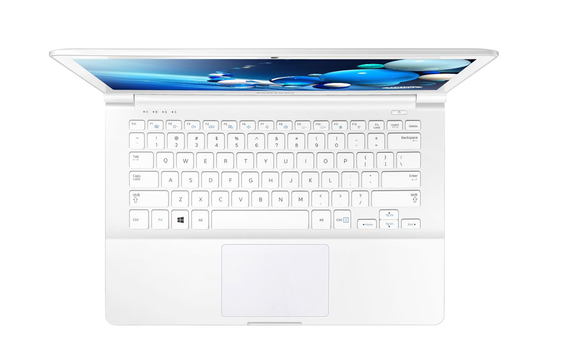
Samsung is taking pre-orders on its Ativ Book 9 Lite

Samsung announced this morning that it is taking pre-orders on its Ativ Book 9 Lite notebook PC, which was first announced on June 20. One of the most interesting features of the new notebook is the custom AMD CPU, which Samsung is describing as a “white-label” quad core.

“It’s something we wanted that was outside [AMD’s] roadmap,” Samsung PC Product manager David Ng told me in a briefing on Friday. Asked why Samsung chose to partner with AMD for this custom CPU, Ng replied “A huge part of it was the superior integrated GPU in AMD’s parts.”

Samsung
The Ativ Book 9 Lite will be available in two colors: “Marble white” or “ash black.”

Be that as it may, Samsung tapped Intel’s new Haswell chips to power its flagship notebook—the Ativ Book 9—which made waves last month when Samsung revealed it would come equipped with a 3200 by 1800-pixel, 13.3-inch touchscreen.

The Ativ Book 9 Lite will also have a 13.3-inch touchscreen, but this one delivers a more down-to-earth resolution of 1366 by 768 pixels. And while Samsung has not announced pricing or availability of its flagship notebook, the Lite model is selling for a reasonable $800 and is expected to reach customers beginning July 28.

To read this article in full or to leave a comment, please click here

…read more

Source: FULL ARTICLE at PCWorld

Cpuset usage

By millsy5

I want to assign different processers to execute each of my files. My system uses FreeBSD. There is a command called taskset which works on Linux but not FreeBSD.

I came across another command called cpuset which looks like it performs a similar function. I’ve read the cpuset man page and I think I am running the command correctly but I just want to confirm it. I want to do the following:

file1 executed using processor 1
file2 executed using processor 2
file3 executed using processor 3
etc.

For this example file1.txt simply echoes ‘file1’ to the screen and file2.txt echoes ‘file2’ to the screen. The code I executed is:

Code:

# cpuset -l 0 ./file1.txt
file1
# cpuset -l 1 ./file2.txt
file2
#


It looks like it’s working but I just need to confirm that I am seting the CPU affinity correctly.

From: http://www.unix.com/unix-advanced-expert-users/221811-cpuset-usage.html

100W LED driver

By jhonn

Is it ok to drive a 100W LED using a 150W boost converter(its for a flashlight, so it must use batteries)? i plan using 12 18650 batteries, 2 parralel packs of 6 batteries in series, that would give 22.2V if each battery is at 3.7V, then the converter will boost the voltage up to 32V. Is it ok if i only use this boost converter and no other regulation ?Also, i need something to cool it, and a CPU heatsink is not even enough to cool 40W.I appreciate your help, thank you.

From: http://www.doityourself.com/forum/electrical-c-d-c/493766-100w-led-driver.html

AMD's revenue drops 31 percent as CPU sales plummet

Advanced Micro Devices reported a 31 percent drop in revenue for the first quarter as it continues to battle a weak PC market and lackluster demand for its chips.

Sales in AMD‘s Computing Solutions group, which makes processors for PCs and servers, plummeted 38 percent from last year to US$751 million. Its graphics chip business did slightly better, with sales down 12 percent to $337 million, AMD announced Thursday.

Overall revenue for the quarter, ended March 30, was $1.09 billion, AMD said. It reported a net loss for the quarter of $146 million, or $0.19 per share, an improvement on its loss of $590 million, or $0.80 per share, a year earlier.

It’s a tough time for the PC industry as a whole, with the economy stumbling along and more people turning to smartphones and tablets for their computing. PC shipments were down almost 14 percent in the first quarter, research firm IDC said last week. That was the biggest year-on-year quarterly decline IDC has ever recorded.

To read this article in full or to leave a comment, please click here

From: http://www.pcworld.com/article/2035727/amds-revenue-drops-31-percent-as-cpu-sales-plummet.html#tk.rss_all

Ps complete output

By devesh123

HI ALl
I am creating a script where i can print ps output to find out most CPU utilised process.but in ps -ef we can get arg list only up to 80 character.

Code:

ps -ef | more
UID PID PPID C STIME TTY TIME CMD
root 0 0 0 Feb 20 ? 0:40 sched
root 5 0 0 Feb 20 ? 3642:11 zpool-rpool
root 1 0 0 Feb 20 ? 5:49 /sbin/init
root 2 0 0 Feb 20 ? 0:00 pageout
root 3 0 1 Feb 20 ? 910:25 fsflush
root 551 1 0 Feb 20 ? 0:17 /usr/lib/utmpd
root 9 1 0 Feb 20 ? 1:23 /lib/svc/bin/svc.startd
root 11 1 0 Feb 20 ? 4:48 /lib/svc/bin/svc.configd
root 66 1 0 Feb 20 ? 2:03 devfsadmd


I am not getting complete list of argument as -f option limits it to 80 character only.
Can anyone share me command by which i can get complete argument for all process at anytime.

From: http://www.unix.com/shell-programming-scripting/221509-ps-complete-output.html

CPU usage for 5 mins

By senthil.ak

Hi Experts,

Please help me in find the right way to create a script for the below task.

Task – I need to create a alert script for CPU usage and I only need to alert when there is a process hold the CPU high for more than 5 mins.

Initially five mins one use the ps command five mins once like below to get the high CPU usage

Code:

ps -eo pcpu | sort -nr | head -1 | awk '{print int($1)}'


But the problem is this script will also alert the process which momentary spike and come to normal. So i am using the line below to calculate the idle CPU then the process count. Is there any better way to deal this, please help me with your ideas?

Code:

sar -u 12 20 | tail -1 | awk '{print int($8)}'


Its a red hat Linux machine

From: http://www.unix.com/unix-dummies-questions-answers/221197-cpu-usage-5-mins.html

What makes a “lightweight” desktop environment lightweight?

Over the last few days I was wondering what is a “lightweight” desktop. And I must say I couldn’t come up with an answer to that question.

I was considering various things like “being memory efficient” which I discarded for obvious reasons. First of all it’s difficult to measure memory usage correctly (I haven’t seen anyone, who provides numbers, doing it correctly, this includes especially Phoronix). And then it’s comparing mostly apples to oranges. Loading a high-resolution wallpaper might make all the difference in the memory usage. Also if desktop environment Foo provides features which are not provided by Bar it’s obvious that Foo uses more memory. But still it’s apples vs oranges. It’s not a comparison on memory, it’s a comparison of features. And of course one might consider the Time-memory-tradeoff.

So is it all about features? Obviously not. If there is a feature a user needs and uses it cannot be bloat. The fact that a desktop environment has only few features cannot be the key to being lightweight. Being evil now: many people say GNOME is removing features, but nobody would say that GNOME is lightweight.

What about support for old systems? That’s not lightweight, that’s support for old hardware. And it’s something which doesn’t make any sense given Moore’s law. Which raises the first question: what is old hardware? One year, two years, ten years? Is it a moving target or is a Pentium III for all time the reference? Optimizing for old hardware means not making use of modern hardware capabilities. But does that make sense to not use modern hardware if it is available? Using the GPU for things the GPU can do better than the CPU is a good thing, isn’t it? Parallelize a computation on multi-core if possible is a good thing, isn’t it? But if you do so, you are optimizing for modern hardware and not for old hardware. So saying you are good for old hardware, implies you are bad on new hardware? Also I’m wondering how one can optimize for old hardware? Developers tend to have new hardware to not have problems like this. And how can one keep support for old hardware when the complete stack is moving towards new hardware? Who tests the kernel against old hardware? Who provides DRI drivers for obsoleted hardware which doesn’t fit into modern mainboards (who remembers AGP or PCI)? Who ensures that software is still working on 32 bit systems, who would notice such a breakage for example in the X-Server? So lightweight cannot be fit for old hardware. And remember: optimizing for old hardware is not the same as optimizing for modern low-end hardware. Even the Raspberry Pi has a stronger CPU (700 MHz) than the oldest Pentium III (450 MHz) – not to mention things like OpenGL…

What’s it then? Let’s ask Wikipedia. For Xfce it tells us, that “it aims to be fast and lightweight, while still being visually appealing and easy to use”. Unfortunately there’s no

From: http://blog.martin-graesslin.com/blog/2013/04/what-makes-a-lightweight-desktop-environment-lightweight/

Intel Is Helpless

By Evan Niu, CFA, The Motley Fool

Filed under:

Following the gloomy estimates out of market researcher IDC on the sad state of the PC market in the first quarter, Intel shares dropped by as much as 3%, since the bulk of Chipzilla’s business is still tied directly to the PC market.

Bulls will point to the company’s upcoming line of chips based on its Haswell architecture as a possible catalyst to reinvigorate growth. Intel’s latest and greatest silicon is expected to offer modest CPU performance gains of 5% to 15% (assuming same clock speed as the previous-generation Ivy Bridge) and more impressive integrated GPU performance improvements of 30% to 50%, all while improving power efficiency and battery life. CEO Paul Otellini recently said that Haswell would offer “the single largest generation-to-generation battery life improvement” in the company’s history.

The problem? None of that matters.

Of course performance increases every year. That’s a given. There’s no doubt that Intel continues to create the most powerful consumer microprocessors known to man. When it comes to manufacturing prowess, the company remains unrivaled. But those aren’t the types of things that will sway the average consumer in the market for a computing device, who is increasingly switching to smartphones and tablets.

In some ways, Intel is facing performance oversupply. Most of that raw power likely isn’t being tapped by casual users anyway, so consumers are turning their attention to lower-cost mobile devices where Intel still has no traction. Intel’s fate remains inextricably linked to Microsoft‘s , and Windows 8 is absolutely bombing with the average user. Having a cutting-edge processor does no good if a consumer hates the interface.

J.P. Morgan analyst Mark Moskowitz concurs. He believes that though Haswell may spur some demand within the Ultrabooks, it won’t be enough to offset the broader declines that the PC industry is facing. Of particular concern were shipments in the Asia-Pacific region. Units fell 13% there, which is the first double-digit decline posted in that geography. Moskowitz also thinks that OEMs will start looking for price breaks amid soft demand.

Haswell is more of a threat to NVIDIA than anything else, primarily at the low end of the discrete GPU market. NVIDIA has held up admirably to the threat of integrated graphics, and its high-end discrete GPUs will always blow integrated solutions out of the water.

Last year, NVIDIA investor relations exec Rob Csongor emphasized to me that investors should focus more on the difference between integrated performance and discrete performance, since that difference is where NVIDIA conveys its value proposition to gamers and enthusiasts. With Haswell, that difference will get smaller.

Despite Intel‘s attempts to crack mobile, it still has little to nothing to show for it. Within the PC market that Intel still leans on (63% of revenue last quarter), Intel is helpless.

When it comes to dominating markets, it doesn’t get much better than Intel’s position in the PC microprocessor arena. However, that market is maturing, and Intel finds itself in

From: http://www.dailyfinance.com/2013/04/11/intel-is-helpless/

What is the PC Version of Defiance Like?

Defiance is an odd beast. It’s half shooter, half MMO, and half TV show, and it’s available on consoles and PC. It has dynamic in-game events that will allegedly influence the TV show, plus a whole separate system of in-game rewards you can unlock by inputting codes from watching ads (sigh). On the bright side, the PC version offers a better experience than the console versions. But by how much?

OS: Windows XP or later

CPU: 2.0GHz Core 2 Duo or better

RAM: 2GB or more

Videocard: DX9.0c-compatible Radeon HD 2900, Nvidia GeForce 8600, Intel HD 4000 (Ivy Bridge integrated) or better

Continue reading…

Source: FULL ARTICLE at IGN Video Games

Running same script through cron gives different output

By a1_win

Hi All,

I am running the below shell script through cron and surprisingly it gives different output

Code:

$uname -a
Linux 2.6.18-194.3.1.7.3.el5xen #1 SMP Fri Jul 30 00:08:45 EDT 2010 x86_64 x86_64 x86_64 GNU/Linux


Code:

$ echo $SHELL
/bin/bash


Code:

shell script:

cat sar_cpu.sh

#!/bin/bash

hdr=1
while true; do
sar -u 10 1 | awk '/user/{if(hdr){print $1,$2,$4,$6,$7};next} /^[0-9]/{print $1,$2,$4,$6,$7}' OFS=, hdr=$hdr >> /sar_cpu_`date +%m%d%y`.csv
sleep 5
hdr=0
done


Code:

Output when the script runs through cron:

$ cat sar_cpu_040913.csv

20:09:01,CPU,%nice,%iowait,%steal
20:09:11,all,0.00,0.05,0.00
20:09:22,all,0.00,0.03,0.00
20:09:33,all,0.00,0.05,0.03
20:09:44,all,0.00,0.03,0.00
20:09:55,all,0.00,0.03,0.00
20:10:06,all,0.00,0.03,0.00
20:10:17,all,0.00,0.03,0.03
20:10:28,all,0.00,0.03,0.00
20:10:39,all,0.00,0.03,0.00
20:10:50,all,0.00,0.03,0.00
20:11:01,all,0.00,0.25,0.02
20:11:12,all,0.00,0.00,0.00
20:11:23,all,0.00,0.02,0.00
20:11:34,all,0.00,0.03,0.03
20:11:45,all,0.00,0.02,0.00
20:11:56,all,0.00,0.05,0.00
20:12:07,all,0.00,0.05,0.00
20:12:18,all,0.00,0.05,0.03


I get the expected output when the script is run manually as below:

Code:

$ ./sar_cpu.sh &
or
$ nohup ./sar_cpu.sh &


Expected output:

Code:

$ cat sar_cpu_040913.csv

05:35:27,PM,%user,%system,%iowait
05:35:37,PM,0.18,0.00,0.03
05:35:48,PM,0.20,0.00,0.15
05:35:59,PM,0.15,0.03,0.03
05:36:10,PM,1.13,1.68,0.55
05:36:22,PM,0.08,0.00,0.03
05:36:33,PM,0.10,0.03,0.00
05:36:44,PM,0.23,0.50,0.00
05:36:55,PM,0.33,0.03,0.03
05:37:06,PM,0.15,0.00,0.00


Any suggestions please as to what is going wrong while executing the same script through cron?

Thanks for your time!

Regards,
a1_win

…read more

Source: FULL ARTICLE at The UNIX and Linux Forums

Bloomberg: Next Xbox to Use AMD-Based CPU

Rumors of the next Xbox’s use of an AMD-based CPU have been circulating for months, and now, Bloomberg is lending credence to the claim. According to the news organization’s anonymous sources, the system will utilize a chip based on AMD‘s Jaguar APU architecture. While the report offers no additional detail, it falls in line with purported specs leaked earlier this year, which claimed the system would utilize a 1.6GHz 8-core AMD CPU.

If true, the next Xbox would be comparable to the PlayStation 4, which Sony has confirmed will use an 8-core AMD processor based on the same Jaguar architecture. Whether or not Microsoft’s silicon will outpace the PS4 in terms of clocking speed or number of cores, however, remains unknown.

Continue reading…

…read more

Source: FULL ARTICLE at IGN Tech