Tag Archives: Anu Bhagwati

The Problems Of Women In Combat – Part 2

By Jude Eden

Fallujah Iraq Dec 8 2004 1 The Problems of Women in Combat – Part 2

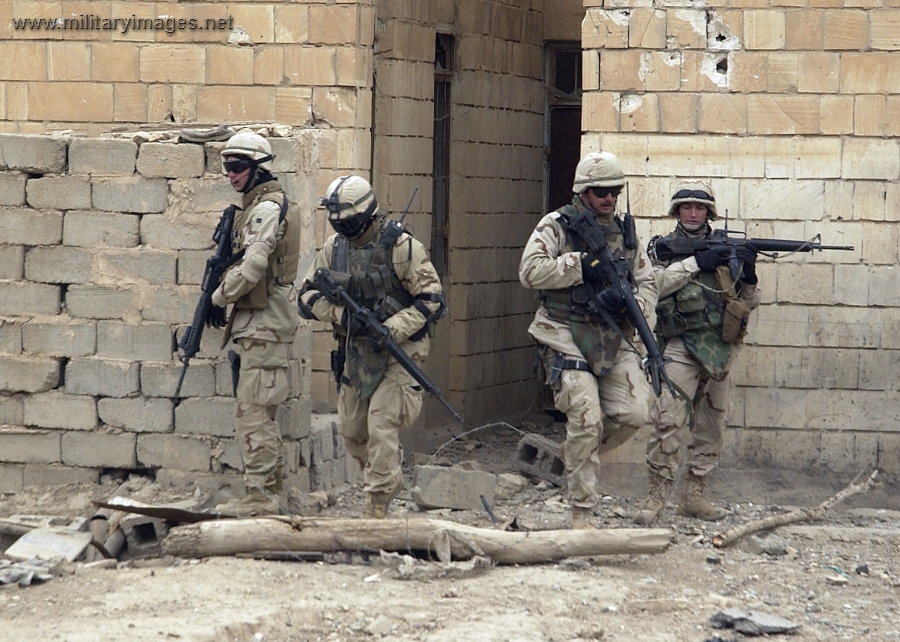
In continuing the discussion of opening combat roles to women, we have the argument that women are already there, deploying and fighting in hot zones.  This is true, and it gives us a record of the problems we are already experiencing as a result.

Wasted:  Valuable Time, Training, and Resources

I talk about several of the female-only issues for which extra accommodations have to be made in my previous article.  We are not equal except in our rights under Constitutional Law.  Nature has no regard for equality, and each one of us is born differently from each other.  We are diverse and dissimilar in our talents, physical aspects, intellect, and emotions; and the sexes are inherently different.  We know, for example, that women are much more prone to certain types of infections.  For a woman on patrol, setting up an ambush (or, as the infantry do, living in abandoned buildings with no running water), hygiene is a constant problem.  A urinary tract infection can quickly become a kidney infection (debilitating in itself) and then kidney failure if left unchecked.  Suddenly, a woman needs to be evacuated for a problem that has nothing to do with combat and to which men are not susceptible.

Then there’s pregnancy.  Margaret Wente writes: “One study of a brigade operating in Iraq found that female soldiers were evacuated at three times the rate of male soldiers – and that 74 percent of them were evacuated for pregnancy-related issues.”

It costs approximately a million dollars per individual to get trained through bootcamp and to be made ready for deployment.  Those are taxpayer dollars spent on someone who has to turn around and leave the combat zone to have a baby (for which our tax dollars also pay), having nothing to do with combat.

Changing Our Best Instincts: Protecting Women, Mothering Children

We know that rape is a tool of torture for the already savage enemy we’re fighting.  In one TV interview, a woman suggested that if women are willing to take that risk, we should let them.  She also absurdly claimed that men are raped as much as women when captured, which is patently false.  But the idea that men shouldn’t worry any more about women in battle goes against the very best primal male instinct.  In every country from Canada to Israel where women are in combat (and in American units where women are in theater), the men will tell you they are more protective of the women.  It’s different from men’s protection of each other, and it distracts from mission completion.  The pro-WICs would have men thwart this wonderful and thoroughly ingrained instinct. A world in which men don’t feel a strong need to protect women when they’re in the most dangerous and hostile of environments would be a nightmare.  We would rightly call those men brutes.

We’re also thwarting mothers’ nurturing instincts.  Women are already training to kill and leaving their children to deploy, even when they are the sole caregiver (turning care over namely to grandparents).  This sets a bad precedent and hurts children.  There will always be war, and it’s bad enough for fathers to leave their children to fight necessarily; but to allow mothers to choose this path over motherhood is bad for everyone.  There are many noble capacities in which women with children can fight for this country, such as administrative jobs stateside.  We don’t need to deploy mothers to battle; we shouldn’t.

The Career-Hungry

A small handful of high-ranking females have instigated this policy change in order to advance their own careers.  In this interview, Anu Bhagwati, a former Captain, complains about women not being able to be promoted to certain ranks, claims that women aren’t getting proper recognition for action in combat (a claim also made here), and claims that it’s harder for them to get combat-injury-related benefits from the VA.  Regarding the latter, I know females who are receiving combat-injury-related benefits; so if there are some who are not receiving them but should, the bureaucratic, inefficient, fraud-riddled VA should be confronted.  Administrative changes could certainly be considered to take care of veterans as we should – regardless of sex – for injuries sustained in battle thus far.  As for recognition of action, this is also a bureaucratic aspect that can be addressed through the chain of command without changing the policies on women in combat units.  And finally, as to rank, cry me a river.  The military is about preparing for and executing war, not advancing your career at the cost of readiness for war.

The careerists are also on the hook for the double standard that we currently have for the sexes, which inherently lowers the standards overall.  Even if one standard is imposed, it’s likely it will be an overall lower standard.  As the Center for Military Readiness points out, “The same advocates who demand ‘equal opportunities’ in combat are the first to demand unequal, gender-normed standards to make it ‘fair.’”  Enormous pressure from Washington is already on the military brass to fill quotas of race and sex; and the higher they get, the more politically motivated the brass’ decisions.  Whereas imposing one higher standard would in fact result in fewer women serving in these roles, the political pressure to prove diversity will result in more unqualified women (and men) attaining positions for which men are more qualified.  But go against the diversity status quo dictated by Washington, and you can kiss your rank and career goodbye.  The purges have already begun.

The word “discriminate” has several meanings, including “to distinguish particular features, to be discerning; showing insight and understanding.”   We should absolutely be discriminating in our criteria for war preparation, and the lives of our men in uniform depend on us taking an honest, discerning look at who adds to military readiness and who detracts from it.  We should absolutely not open the combat units to the myriad problems we face already with women deploying to the theatre of war.

Source: FULL ARTICLE at Western Journalism

Sexual misconduct a major reason behind military commander firings

Brig. Gen. Jeffrey Sinclair, fired from his command in Afghanistan last May and now facing a court-martial on charges of sodomy, adultery and pornography and more, is just one in a long line of commanders whose careers were ended because of possible sexual misconduct.

Sex has proved to be the downfall of presidents, members of U.S. Congress and other notables. It’s also among the chief reasons that senior military officers are fired.

At least 30 percent of military commanders fired over the past eight years lost their jobs because of sexually related offenses, including harassment, adultery, and improper relationships, according to statistics compiled by The Associated Press.

The figures bear out growing concerns by Defense Department and military leaders over declining ethical values among U.S. forces, and they highlight the pervasiveness of a problem that came into sharp relief because of the resignation of one of the Army’s most esteemed generals, David Petraeus, and the investigation of a second general, John Allen, the top U.S. commander in Afghanistan.

The statistics from all four military services show that adulterous affairs are more than a four-star foible. From sexual assault and harassment to pornography, drugs and drinking, ethical lapses are an escalating problem for the military’s leaders.

With all those offenses taken together, more than 4 in every 10 commanders at the rank of lieutenant colonel or above who were fired fell as a result of behavioral stumbles since 2005.

The recent series of highly publicized cases led to a review of ethics training across the military. It also prompted Army Gen. Martin Dempsey, chairman of the Joint Chiefs of Staff, to conclude that while training is adequate, it may need to start earlier in service members’ careers and be reinforced more frequently.

Still, officials struggle to explain why the problem has grown and they acknowledge that solving it is difficult and will take time.

“I think we’re on the path. I think the last two defense secretaries have made this a very high priority and have very much held people accountable. But we’ve got a ways to go,” said Michele Flournoy, a former undersecretary of defense under President Barack Obama.

She said the military must enforce a “zero tolerance” policy and work to change the culture so service members are held accountable and made to understand that their careers will be over if they commit or tolerate such offenses.

“The policy is in place,” she said. “I don’t know that it’s as evenly and fully enforced as intended.”

For top officers, the numbers are startling.

Eighteen generals and admirals, from one star to four stars, were fired in recent years, and 10 of them lost their jobs because of sex-related offenses; two others were done in by alcohol-related problems.

The figures show that 255 commanders were fired since 2005, and that 78 of them were felled by sex-related offenses. A breakdown: 32 in the Army, 25 in the Navy, 11 in the Marine Corps and 10 in the Air Force.

Alcohol and drug-related problems cost the jobs of 27 commanders — 11 in the Navy, eight in the Army, five in the Marine Corp(s and three in the Air Force.

“It’s troublesome,” said Rear Adm. John Kirby, the Navy’s top spokesman. “Navy leadership is taking a look at why personal conduct seems to be a growing reason for why commanding officers are losing their commands. We’re trying to get to the root causes. We don’t really fully understand it.”

He and other military leaders agree that poor leadership, bad judgment, and ethical lapses, rather than operational failures, are growing factors in the firings. But Kirby said it’s not clear whether that has anything to do with the strains of the past 10 years at war or simply reflects deteriorating morals among the general population.

U.S. Defense Secretary Leon Panetta ordered the ethics review in November. He said that “when lapses occur, they have the potential to erode public confidence in our leadership and in our system for the enforcement of our high ethical standards. Worse, they can be detrimental to the execution of our mission to defend the American people.”

Anu Bhagwati, executive director of the Service Women’s Action Network, said there is more focus on this issue now than ever in the past, but that there really is no sufficient deterrent in place. She said a major problem is that military commanders are responsible for deciding what cases should move forward.

She said military lawyers, who are trained and have a greater appearance of impartiality, should make such an important legal decision.

The statistics gathered and analyzed by the AP represent a very conservative estimate of the problem. While the Army, Navy and Marine Corps provided details for all military commanders who were lieutenant colonels or commanders and above for 2005 until now, Air Force officials said they could only provide data for colonels and above from 2008 until today.

Also, the figures reflect only officers who were in command positions. The numbers don’t include what could be hundreds of officers fired from other jobs, such as administrative or other military posts. Military officials said they only collect data on officers in command who are fired.

The reasons for the firings are also murky. In some cases, no reason was listed; in other cases, it was vague — such as “ethics” or “leadership” or for fostering a bad command climate.

There also are varying degrees of publicity when such action is taken.

In Sinclair’s case, the charges and impending court martial have received extensive coverage. The five pages of allegations, which involve his conduct with five women who were not his wife, include one count of forcible sodomy, two counts of wrongful sexual conduct, six counts of inappropriate sexual relationships, and eight counts of violating regulations. He could receive life in prison if convicted.

But in many other cases, particularly of those below the rank of general, there is little public notice if the senior officer is in the Army or Air Force. The Navy, however, issues a public statement every time a commander is removed from a job.

The figures also highlight the Navy’s reputation for being quick to justice. Although it is the second smallest of the four military services, the Navy has relieved the most commanders, 99, over the past eight years. By comparison, it was 83 for the Army, 41 for the Marines and 32 for the Air Force.

Dismissing a commander from a job does not mean that officer is forced out of the military. In some of the more serious cases, officers may be discharged or forced to resign. But in many other cases, service members may go on to another job for some time.

Still, a dismissal often signals the end of an officer’s career, and with no chance for promotion, officers will often retire or leave the service.

The Army is the largest of the military services, reaching a peak of about 570,000 active duty soldiers at the height of the Iraq war. It is supposed to cut 80,000 troops by 2017. The Marine Corps is the smallest service, with about 202,000 at its peak during the wars and is set to slim down to about 182,000. The Navy has about 322,000 active duty forces and the Air Force has about 328,000.

The other reasons for dismissals by the services cover a broad range of offenses, from assault and drug and alcohol use to being a poor or abusive leader. There are also instances of fraud as well as a few cases where Navy officers commanding a ship have hit something, such as a buoy or another ship.

Four generals have lost their jobs in recent years as a result of public scandals. All were dismissed while Robert Gates was defense secretary:

–Gen. Michael Moseley, the Air Force Chief of Staff, was dismissed in 2008 for failing to address several nuclear-related mishaps by the service.

Army Lt. Gen. Kevin Kiley and Army Maj. Gen. George Weightman were dismissed because of the poor outpatient treatment of wounded soldiers at Walter Reed Army Medical Center in 2007.

Army Gen. Stanley McChrystal resigned after members of his staff made disparaging remarks about Obama’s national security team, including Vice President Joe Biden. A Pentagon investigation later cleared him of wrongdoing.

Source: FULL ARTICLE at Fox US News